A Daily History of Holes, Dots, Lines, Science, History, Math, Physics, Art, the Unintentional Absurd, Architecture, Maps, Data Visualization, Blank and Missing Things, and so on. |1.6 million words, 7500 images, 4.9 million hits| Press & appearances in The Times, Le Figaro, Mensa, The Economist, The Guardian, Discovery News, Slate, Le Monde, Sci American Blogs, Le Pont, and many other places… 5000+ total posts since 2008.

Author: JF Ptak

  • Beauty and Confusion in the Details: Grenade-Throwing and Rifle Practice (1918)

    JF Ptak Science Books   Quick Post

    Here are another couple of enjoyable, interesting, and somewhat endlessly mine-able images from an archive of WWI news photo service agencies, all of which are from 1918.  Photographs were made by pools of photographers working for several different photographic news agencies. The content of the images were generally secured and approved by the Committee for Public Information (CPI), which came into existence by executive order under President Woodrow Wilson on April 13, 1917, and which was charged with the task of wining the hearts and minds of the people of the U.S., to gain public support for the war and for American participation.  

    The way that many newspapers obtained the war images that they published in their papers was via a semi-centralized pool of war images.  The newspaper would request, say, a photo of German prisoners, and would contact one of these photographic agencies—for example, say, the Central News Photo Service of 26-28 Beaver Street, NYC—and purchase the rights for republication, and then print it in the newspaper along with the story.  In almost every case the photo would be accompanied by a caption mimeographed onto an attached piece of cheap paper, or have the information stamped on the reverse.

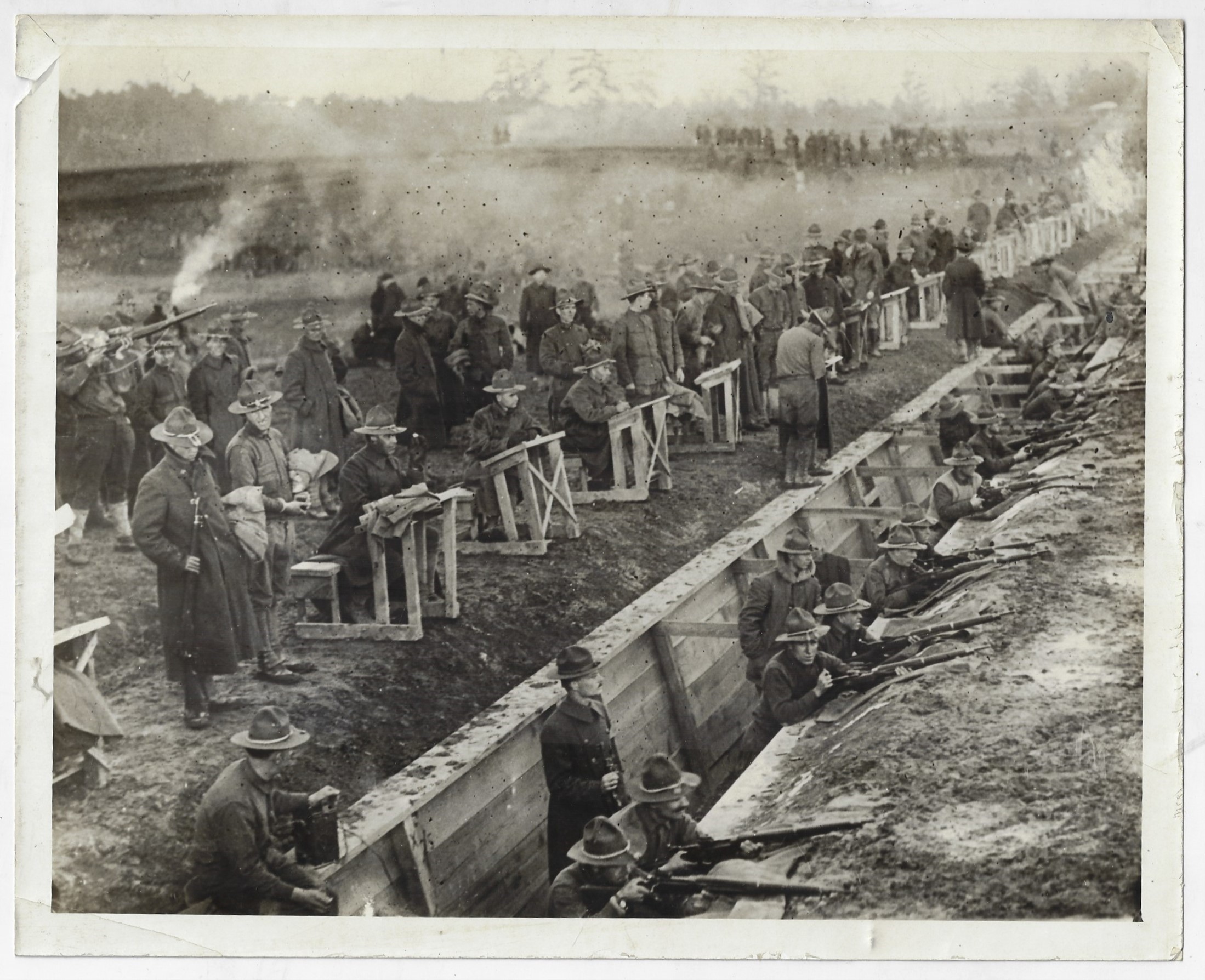
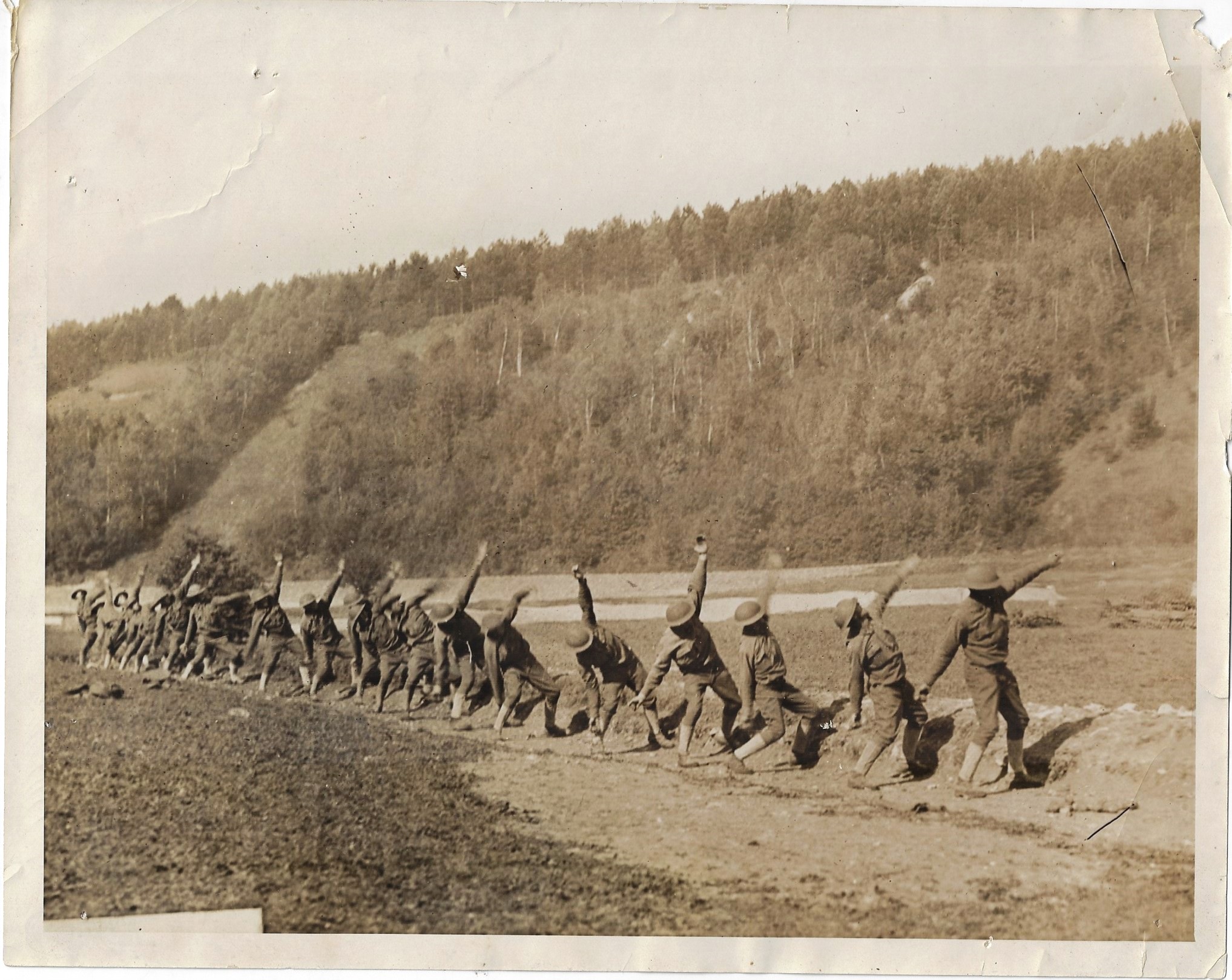
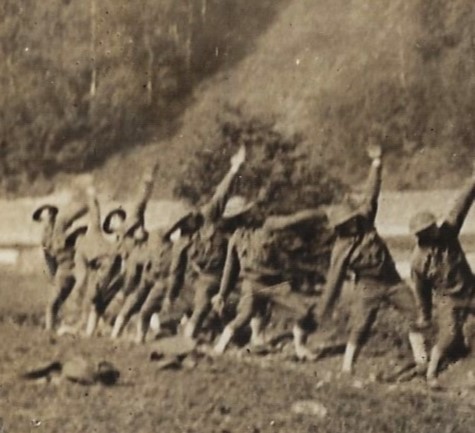
    I’d like to share the following two images of U.S. soldiers practicing their trade–the top features grenade throwing, and the bottom shows a pit at a rifle range.  The Doughboys heaving the grenades were doing so according to plans and design, and in spite of its apparent awkwardness, must’ve worked well. The detail image is challenging for sure, the soldiers seeming to be just about entangled among themselves. 

    WWI photos hand grenade

    asns

    WWI Photos hand grenades _2_

    The scene in the rifle pit seems more orderly if not somewhat  more distressed:

    WWI Photos rifle practice

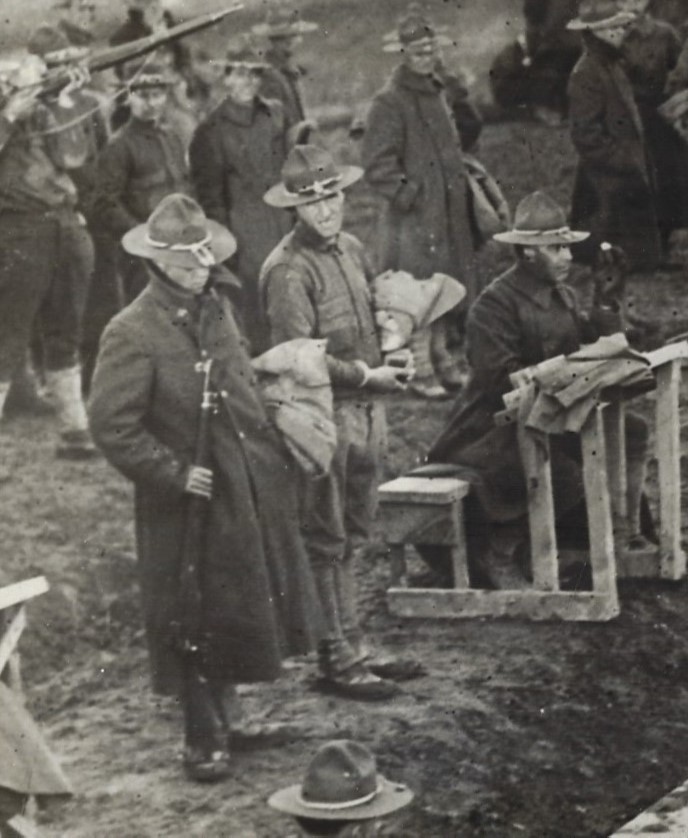
    And as usual with these large group photos, there are many smaller fine images waiting in the detail:

    WWI Photos rifle practice

    ·Posted by :

    ·in:

    —

  • Rare First-Hand Account of the Japanese Surrender in Japan and the Philippines

    JF Ptak Science Books  

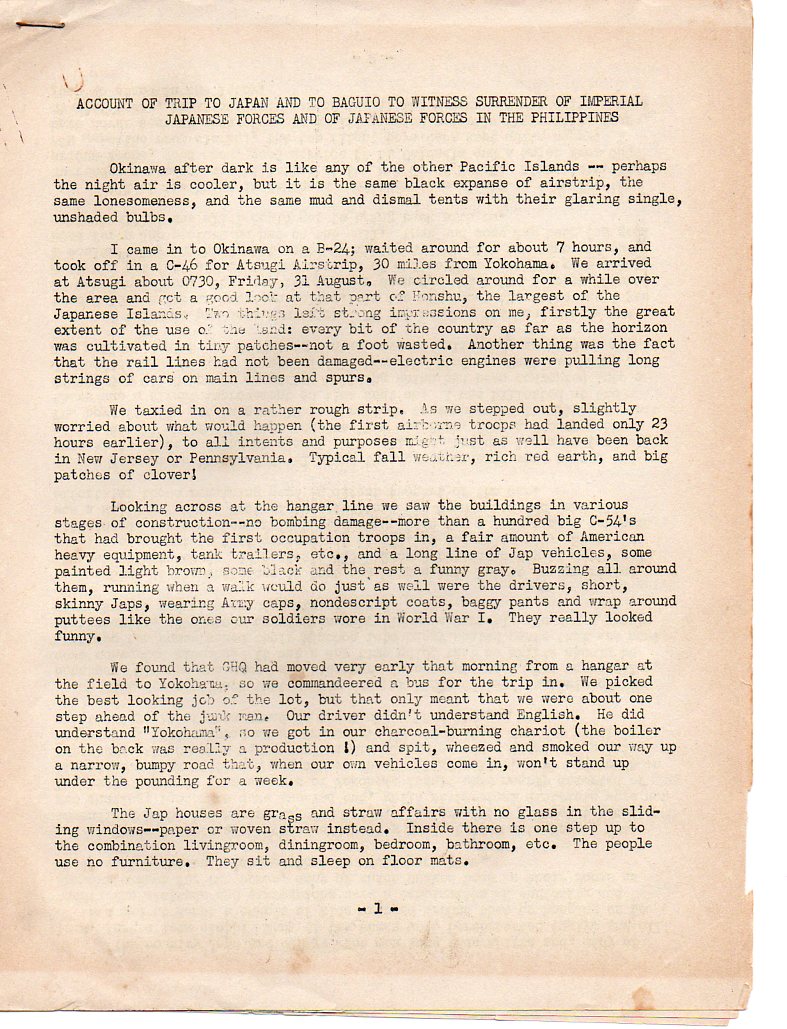
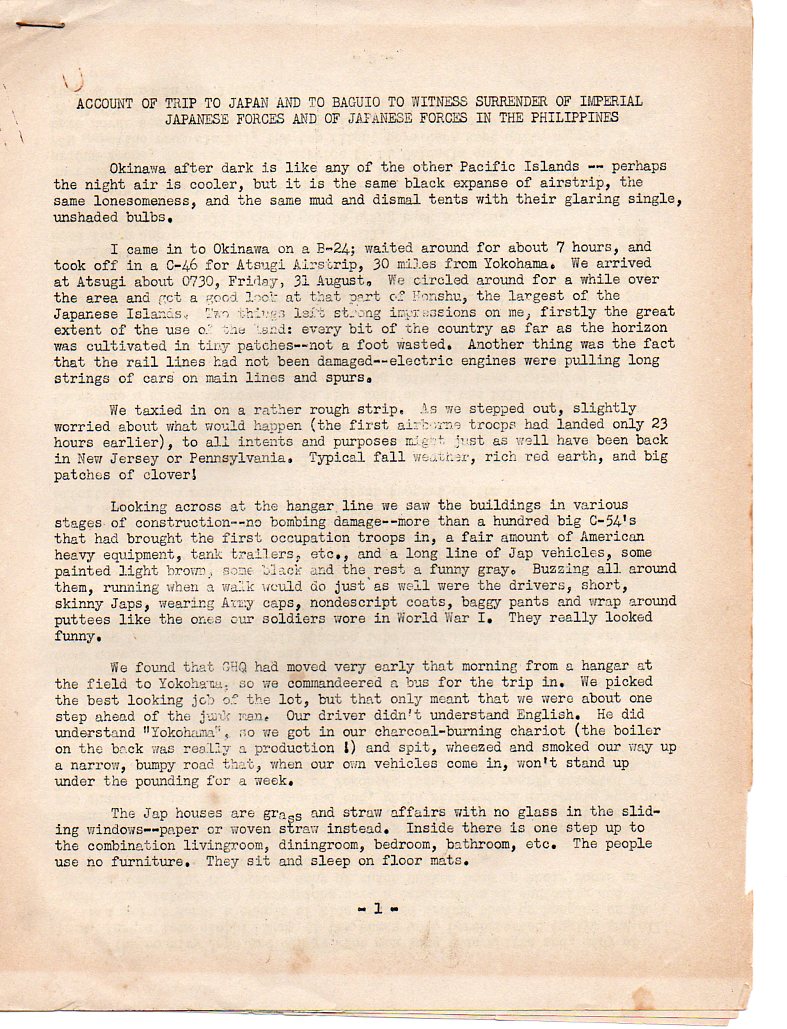
    Deglin _1_I’m doing a quick-share of this five-page document written by Lt. Col. Theodore Deglin (“PRO AFWESPAC”, Public Relations Officer, Armed Fores Western Pacific, Philippines), called “Account of a Trip to Japan and to Baguio to Witness Surrender of Imperial Japanese Forces and of Japanese Forces in the Philippines”. Its an interesting perspective coming from a PR guy who settled into the role of a public relations officer for the commanding officer of U.S. forces in the Philippines.  After serving as public relations director for Madison Square Garden (1935-1942), T.L. Deglin became a Lt. Col. in the U.S. Army (and later a full colonel) in a public relations capacity, finding himself a witness on 2 September 1945 to the Japanese surrender on the U.S.S. Missouri. He and his party then leaves immediately for Baguio (in the Philippines) to bear witness and report on the surrender of Japanese forces in the Philippines, including the arrest of the Beast of Manila, General Yamashita. What follows below is his full five-page (1750 word) description of those events.  The report is an offset-printed production, so it did see some sort of distribution, but I can find no mention of it anywhere. 

    An example of Deglin’s reporting from the desk of the USS Missouri:

    • “General MacArthur is a terrific showman. Every move of his is dramatic and beautifully timed. He spoke briefly, then instructed the Jap foreign minister to sign for the emperor of Japan and the Japanese government. The skinny, bespectacled, top-hatted minister, Shigemitsu, limped forward, pulling his game leg after him. He sat down, facing MacArthur, and had trouble getting the leg under the table. He fiddled around, picked up a pen, put it down, looked at his watch, looked around, looked at his watch again until everyone was slightly nervous, and the general looked quite irritated. Frankly, I could think of only one thing: that a kamikaze plane was going to dive out of the clouds at this time and blow us all over Tokyo Bay. No such excitement, however; the old boy signed both copies of the surrender document and limped back to his position. Then General Umezu, chief of staff for the Imperial Japanese Army, signed quickly.”

    Here’s an example of Deglin’s reporting from Baguio:

    • “The conference room was set up with a long table. On one side were a dozen high, hand-carved chairs. On the other side were four wooden folding chairs. The newsreel cameras, still photographers, and radio broadcasters were all set up in their places. Then the Japs were brought in. They were led to the side of the table where the small chairs were and started to sit down but were instructed to remain standing. They were kept standing for nearly 10 minutes; then the top generals came in and sat down. After them came a group of 15 brigadier and major generals. Then the correspondents were herded in—about 35 of them.
      The ceremony was partially designed for the radio broadcast. The surrender document was read, Yamashita was asked if he understood the terms (an interpreter stood behind him), he answered “yes,” the documents (four copies) were signed, the generals filed out, and Yamashita was turned over to the MPs for delivery to New Bilibid Prison near Manila. Incidentally, when he left Baguio he wore a string of ribbons. Guess who has them now!

    The rest of the document appears below:

    ·Posted by :

    ·in:


  • Roosevelt as Hiding in Hitler’s Shadows (1940 anti-Roosevelt campaign literature)

    JF Ptak Science Books  Quick Post

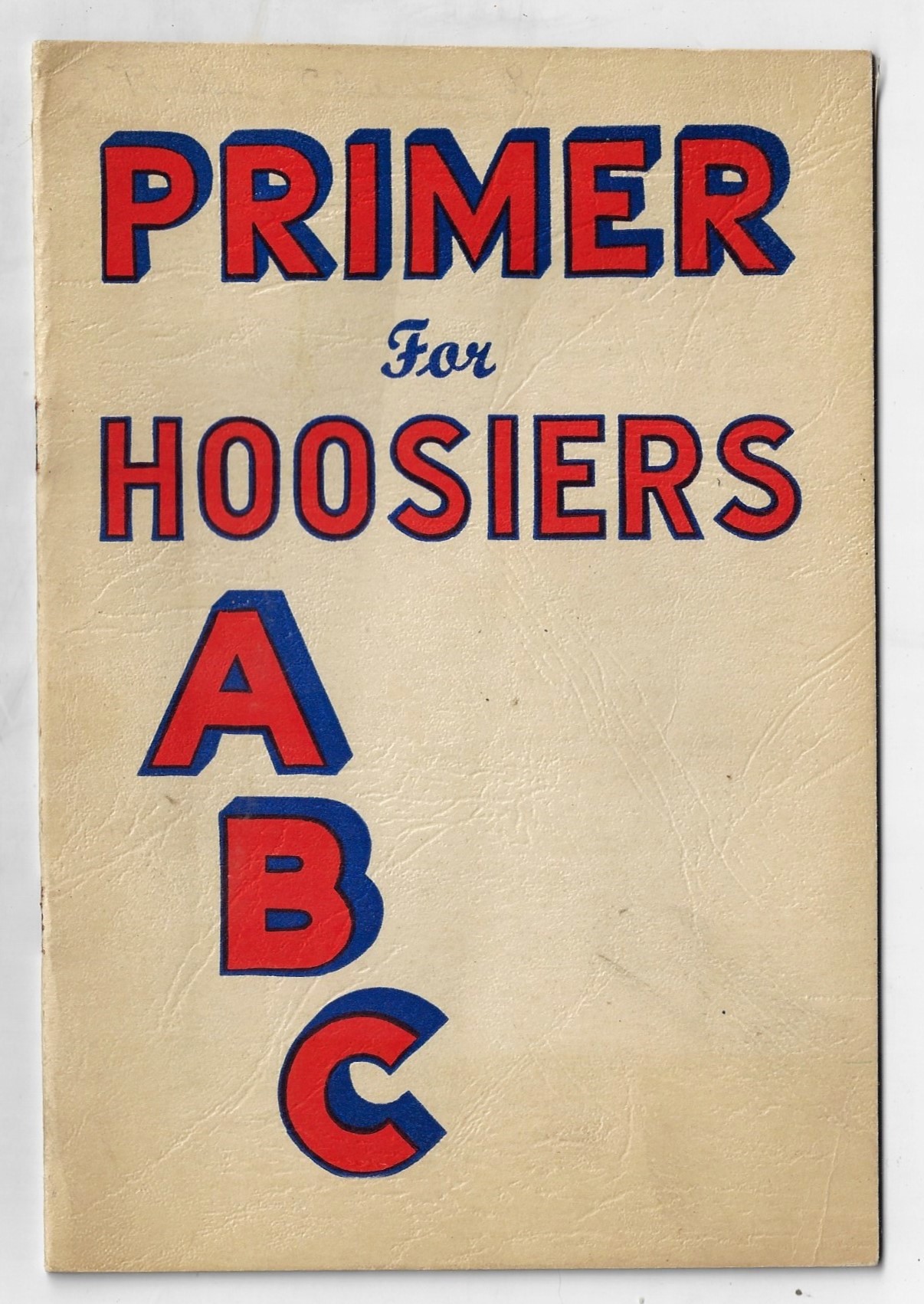
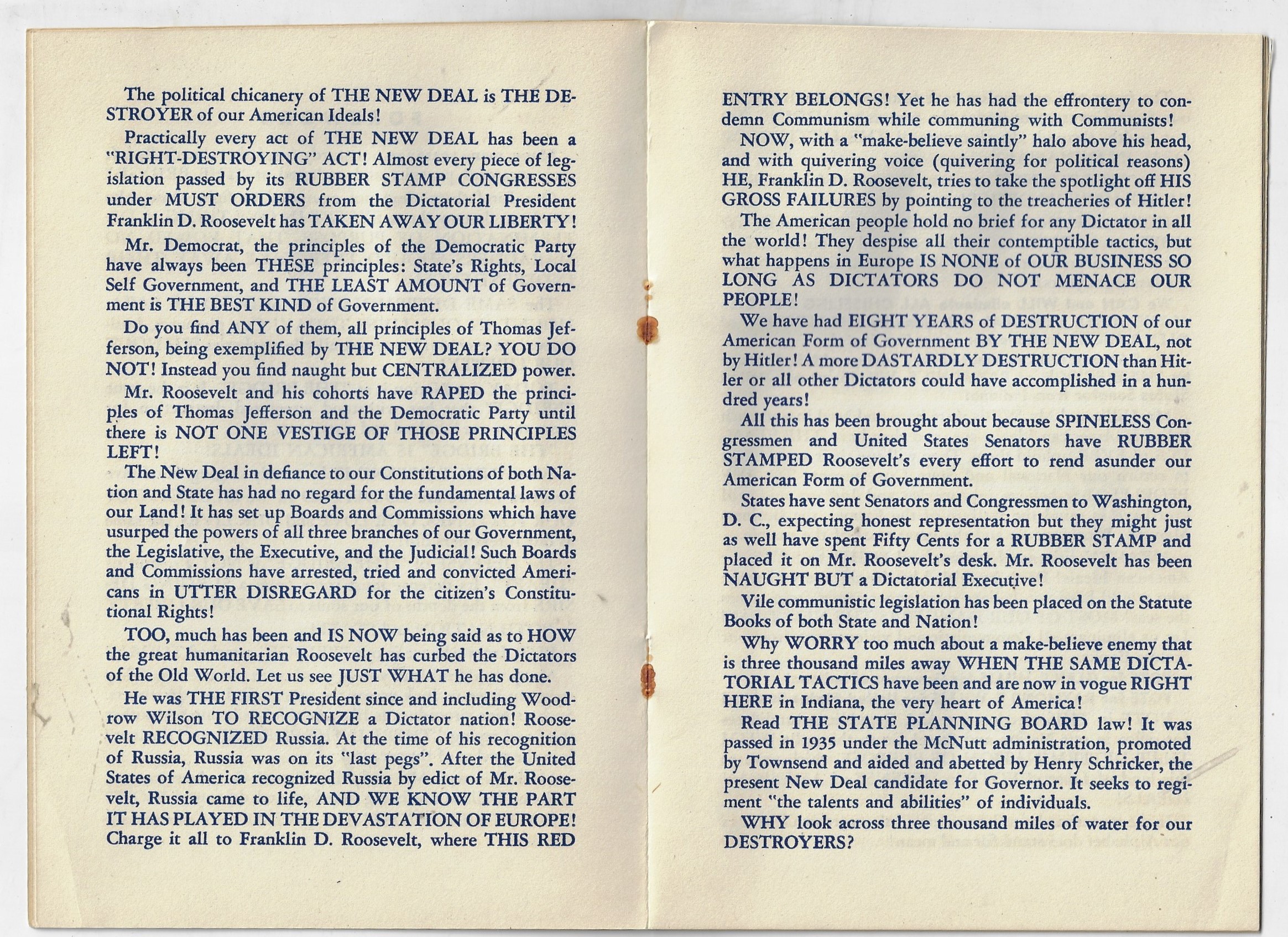
    FDR diatribe _2_I’ve together a little collection of 75 or so anti-FDR pamphlets from 1936-1944, though “anti-” is probably a little too temperate to describe the vast majority of them. Most are ripping, tearing, rending, insulting, vicious, accusatory…you get the picture. This one is special as it has FDR hiding behind Hitler. The author, Charles R. Parker, writes in his Republican-backing pamphlet on the campaign of 1940 that “Roosevelt tries to take the spotlight off HIS GROSS FAILURES by pointing out the treacheries of Hitler!…what happens in Europe is none of our business”.

    He continues: “We have eight years of destruction of our American form of government by the New Deal, not by Hitler! A more dastardly destruction than Hitler or all other Dictators could have accomplished in a hundred years!”

    It goes on like this for the length of this short, stubby, and not-well-written piece, until it falls off its own cliff.

    Roosevelt’s win in 1940 was his “weakest”, taking 85% of the electoral votes and 55% of the popular vote over Wendell Wilkie (who would be dead before the end of the war. I can’t find much about Mr. Parker, though for me he has written one of the best (where “best” equals “worst”) of the worst appraisals of Roosevelt. He finishes off the pamphlet stating “We can only vote one of two ways! We can either Vote American and choose Life, or anti-Amreican and reap Death.”

    FDR diatribe_1_

    ·Posted by :

    ·in:


  • The Domestic Front, WWI (1918)

    JF Ptak Science Books  Quick Post

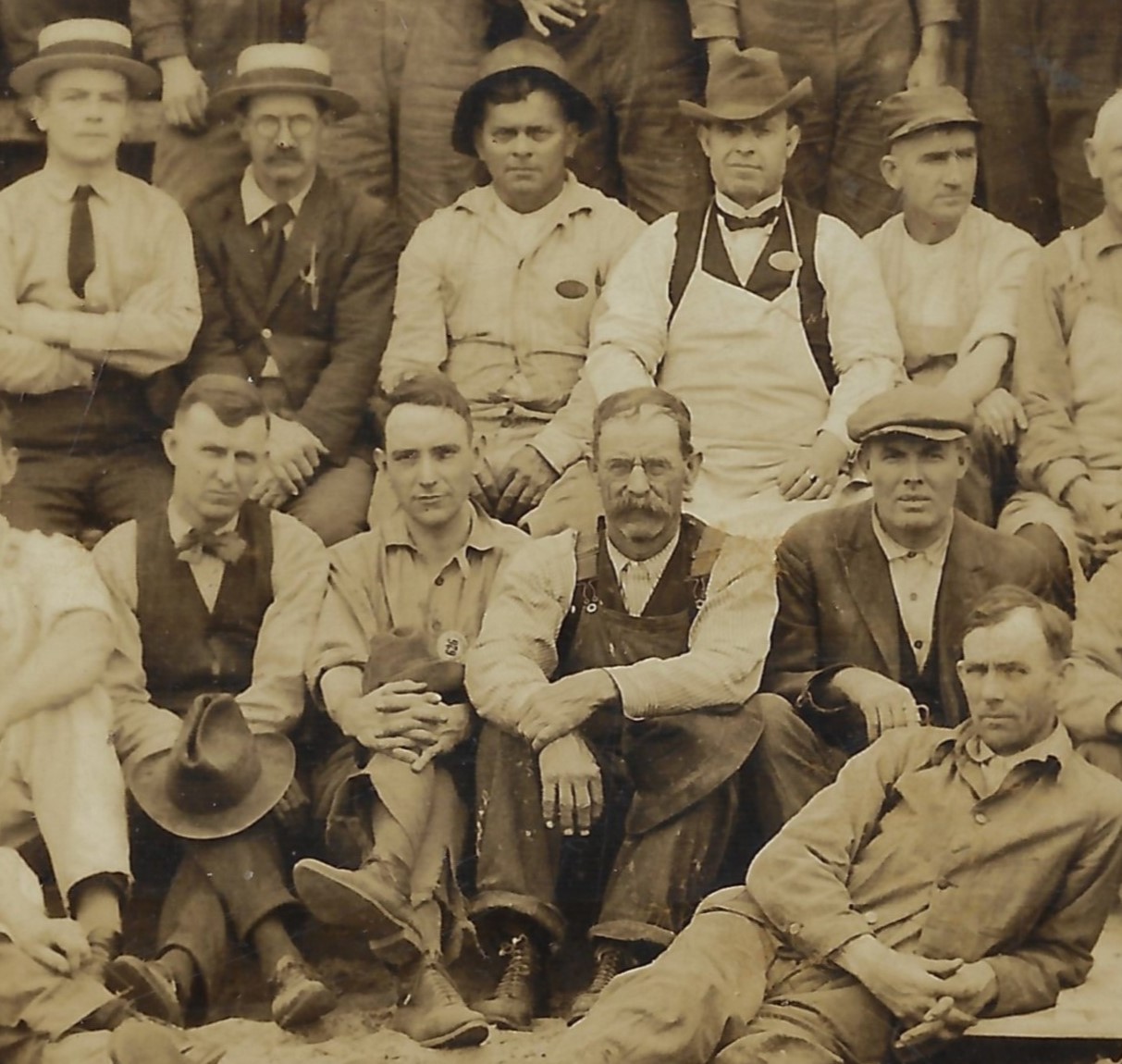
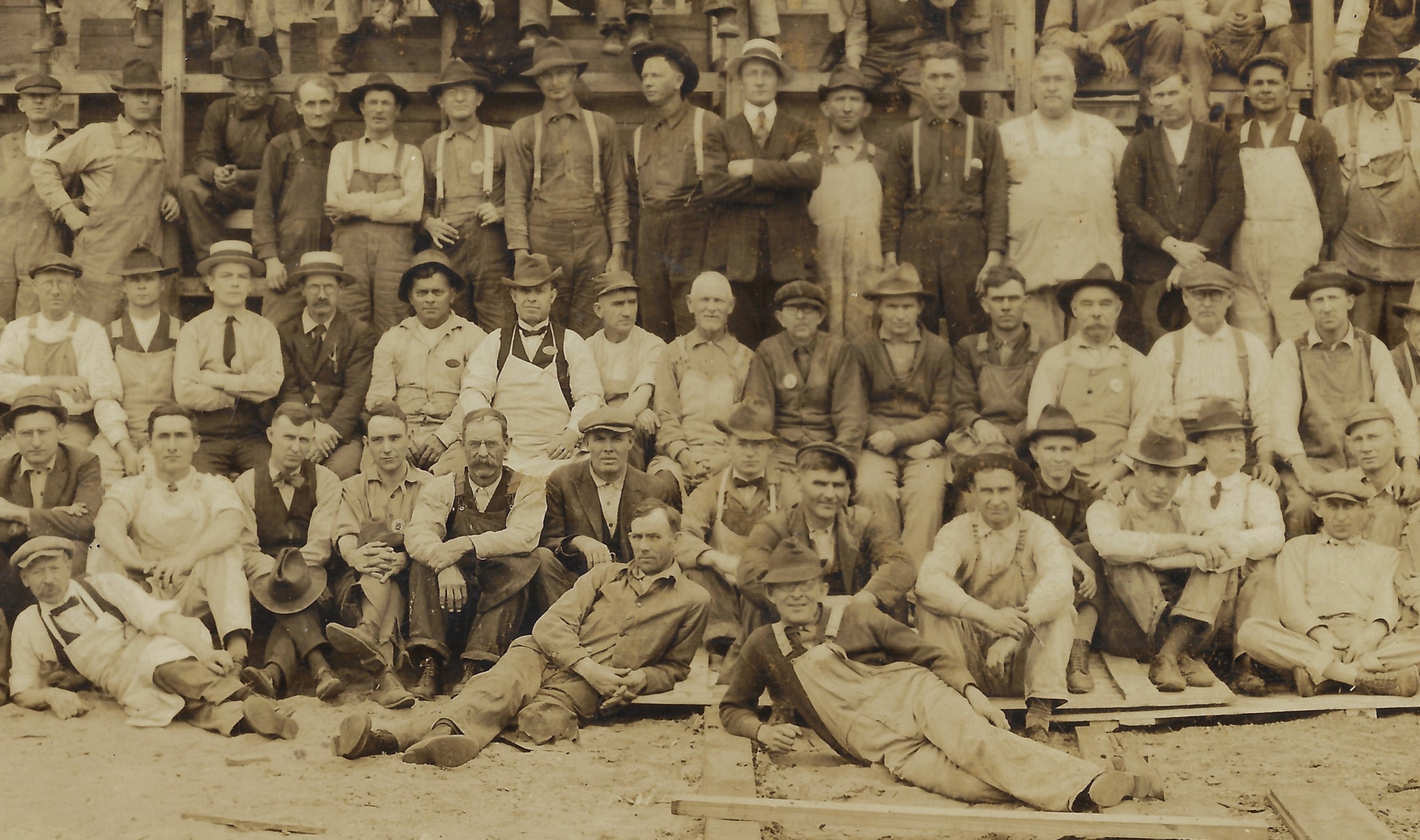
    This is yet another fantastic image from the small (800-item) News Photo Service archive here.  I’d say only 15% of it focused on the domestic end of the war, and there were very few posed images of them–this was an entirely unusual image, so far as this archive is concerned.  Every face a story, here, and I don’t have any doubt that someone could dive into this photograph and make up a character for each one of these men, none of whom are identified. Id like to say that this was a woodshop for aeroplanes, as that is how the image struck me on first exposure, but I have no proof of that. That said, identified or not, this is a terrific photo.  

    WWI Photos Group Large Aero _1_


    WWI Photos group large aero 3

    ·Posted by :

    ·in:

    —

  • Cell vs. Cell: Photoelectric Cell and Shooting a Prisoner for Escaping their Cell (1930)

    JF Ptak Science Books  Quick Post

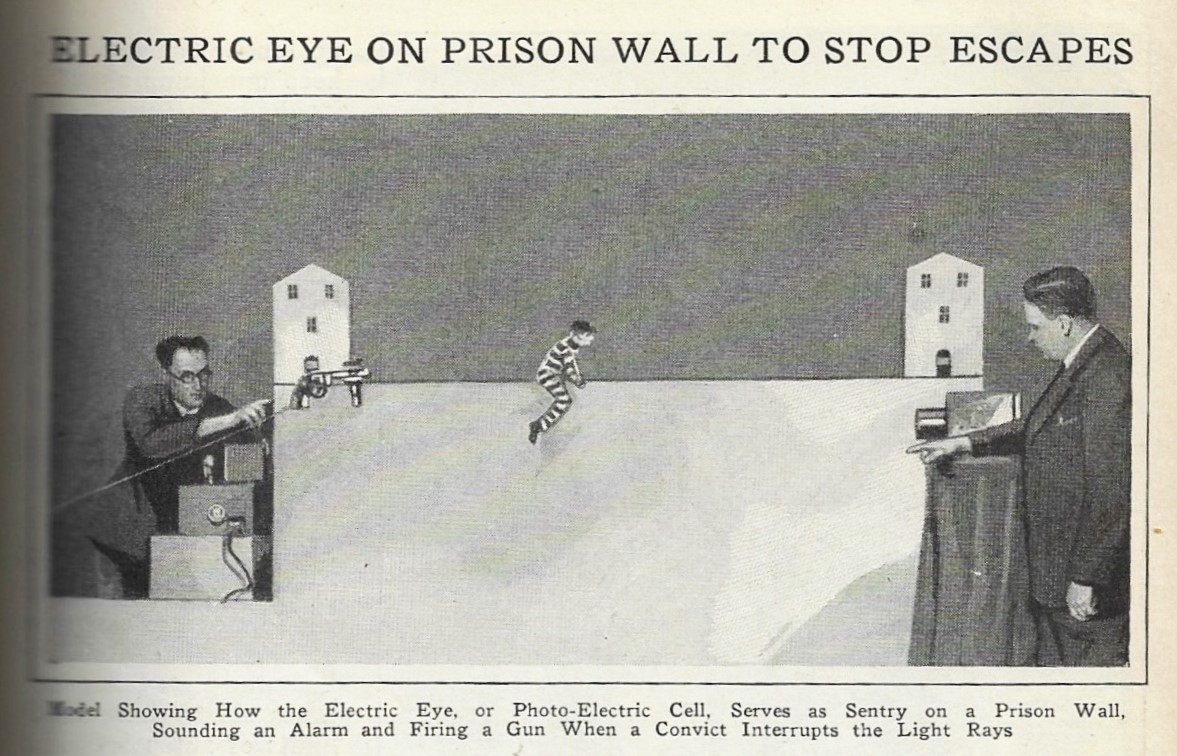
    The photoelectric cell was a mature invention (appearing in 1883) when it became armed and lethal in 1930.  Popular Mechanics published this photo (explained with only a caption and a paragraph) in its July 1930 issue. We see that should a prisoner make a dash up and over the prison wall, they interrupt the “electric eye” sentry which we read (1) fires a pistol positioned along the wall and (2) sounds an alarm, simultaneously.  It seems as though the alarm system could be reconstituted at the base of the wall, sounding an alarm before the prisoner got to the wall (let alone up and over it), rather than shooting as the alarm sounds.  The consequences of this idea–which I suspect was never implemented–were, well, rather extreme.

    Pop Mech 1930 Convict Killer

    ·Posted by :

    ·in:

    —

  • Non-Silhouette Silhouettes and Dirigible Mooring Masts (1930)

    JF Ptak Science Books  Quick Post

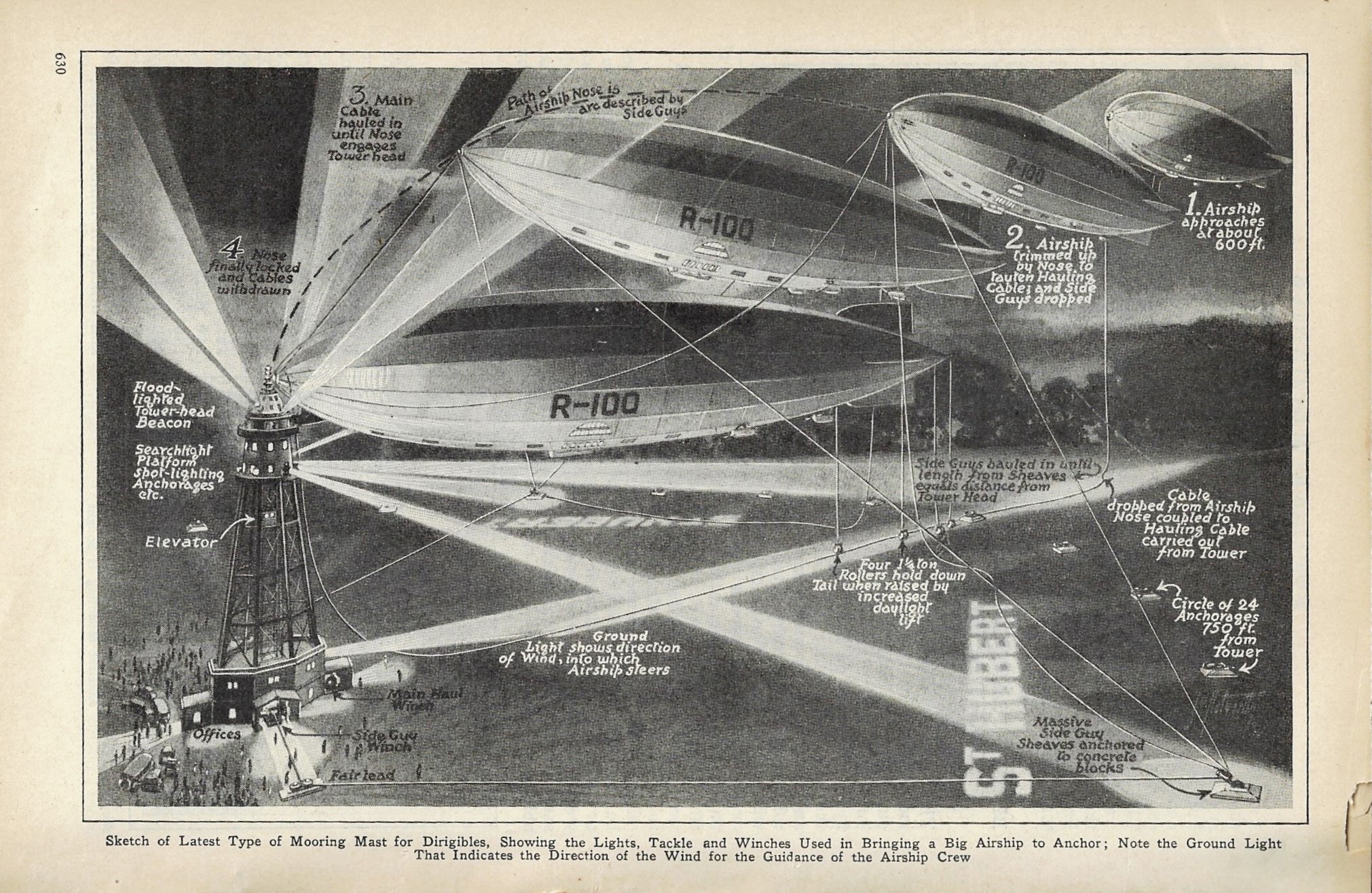
    Just a very quick entry here on some interesting and arresting images relating to flight, all from the July-December 1930 volume of Popular Mechanics. The first is a full-page illustration for October (1930) showing an improved method for anchoring dirigibles–in this case, for demonstration purposes, it is His Majesty’s Airship airship R-100, which was over 700′ long and moved along at about 80 mph, and was less than a year old. Unfortunately, this protocol for moving though the air was nearly exhausted–it was fateful for this note on the mooring masts appeared in October as this was the month of the R-101 disaster, which effectively brought the end of the R-100, which was scrapped soon afterwards.  

    • “Sketch of Latest Type pf Mooring Mast for Dirigibles, Showing the Lights, Tackle and Winches Used in Bringing a Big Airship to Anchor: Note the Ground lights That Indicate the Direction of Wind …” 

    Pop Mech 1930 Dirigible Mast

    The other image of aviation interest is a chart of airplane types and how to identify them in silhouette–except that they are not in silhouette. Still it is a handy chat, and I reproduce it here:


  • Early References to the Holocaust and Auschwitz (1943)

    JF Ptak Science Books  Post 2835

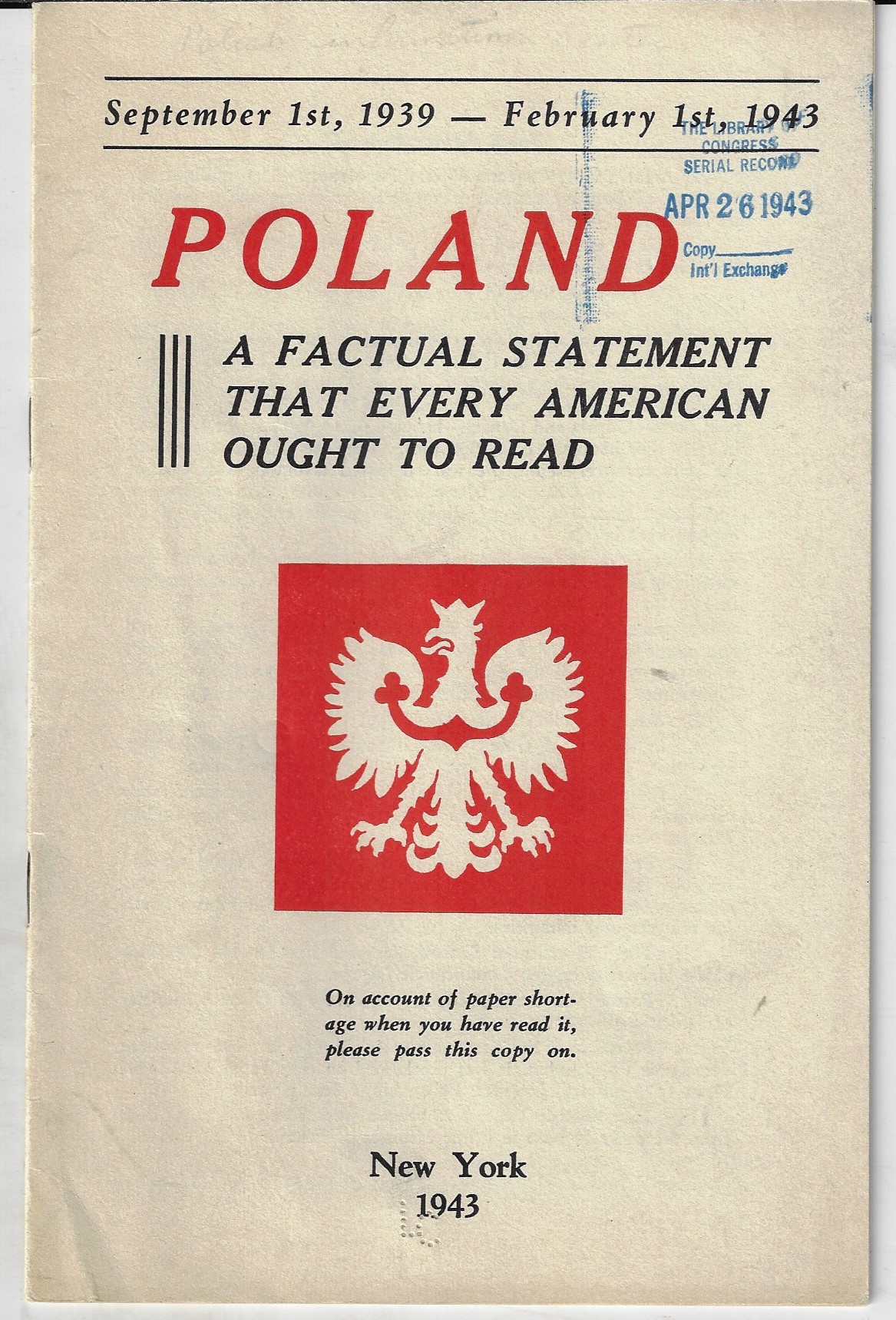
    Poland  factual statementPoland, a Factual Statement that Every American Ought to Read (published by the Polish Information Center, 151 East 67th Street, NYC) sounds like a semi-dry academic pamphlet, waiting to be ignored. But it was printed in 1943, and the audience then would no doubt have been interest in what the hell was going on there.  It turns out that there is some extraordinary reading to be done in its quick sixteen pages, not the least of which is a notice of the murder of a million Jews and a description of camp life in Auschwitz (Oswiecim). As there are only five copies of the work located in libraries worldwide (according to WorldCat/OCLC) I thought I’d reproduce its most significant section , the “German Reign of Terror” (pp 12-15). This leads with these numbers of crimes committed by the Germans: To forced labor in Germany (1,000,000 Poles); to the Government General (700,000 Poles); shot and murdered (1,200,000 Poles), starved to death (about 500,000 Poles). “It staggers the imagination to think that every tenth human being in German occupied Poland had already been shot or hanged tortured to death, starved…or deported to Germany.”

    There are other stories of mass executions, as well as a short description of Auschwitz: “More than 60,000 Poles have been murdered in the concentration camps of the Government General and the Reich. Oswiecim is the most gruesome on Polish territory. It was set up in July 1940 and consists of ten barracks, each of which is supposed to contain 400 prisoners, but actually houses 1,000 men. Prisoners wear thin cotton uniforms in winter as in summer. They were only given shoes on October 15 and had no caps before December. On arrival they had to fill out answers to 32 questions about their life, family, health, wealth and political activities. Two weeks suffice to break men above 45 years. Younger men lose their vigor and youth within half a year…”

    And this: “The Jewish population is closed up in ghettos and suffers no less than the Poles. Particularly in the last six months the Jewish population has suffered an unheard of persecution amounting to a process of willful extermination. Losses in Jewish population up to 1943 exceed one million persons killed.”

    • Note: I don’t know enough to speak about the obvious demarcation in this report between “Poles” and “Jews” except to say that it exists in the text and that I’m aware of it.  

    And so, here is the scan of the “German Reign of Terror” section:

    German Reign of Terror

    In his message to Poland broadcast on May 3rd, 1941, Prime Minister Churchill said: “Every day Hitler’s firing parties are busy in a dozen lands. Monday he shoots Dutchmen, Tuesday Norwegians, Wednesday French and Belgians stand against the wall, Thursday it is the Czechs who must suffer, and now there are the Serbs and the Greeks to fill his repulsive bill of execution. But always, all of the days, there are the Poles.”

    Let us be frank: for many reasons the world still is not fully aware of the enormity of Polish suffering nor does it realize the importance of Poland’s contribution to the Allied fight for common victory.


    ·Posted by :

    ·in:

    —

  • A Chinese Kingdom in North America (1753)

    JF Ptak Science Books  Quick Post

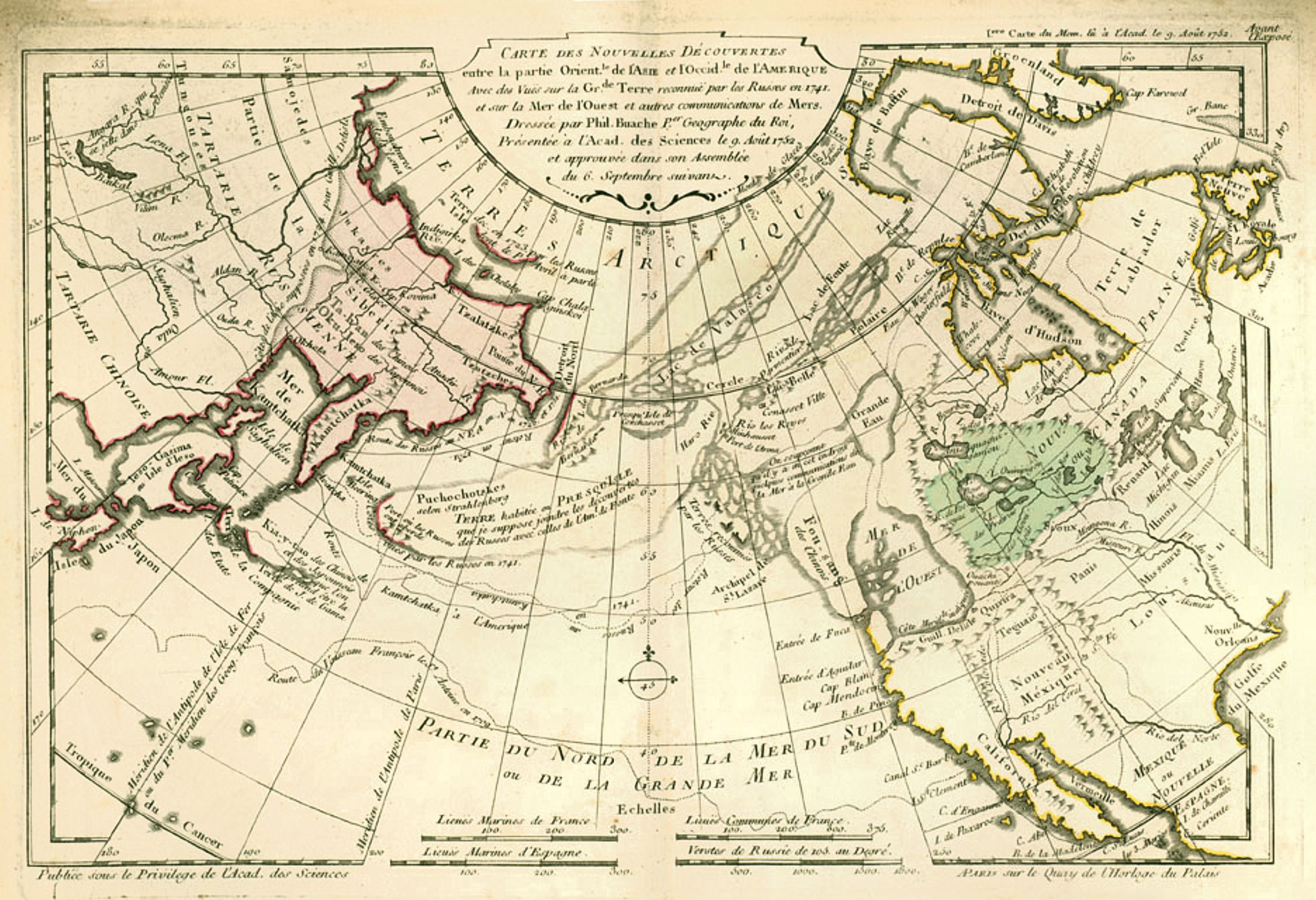
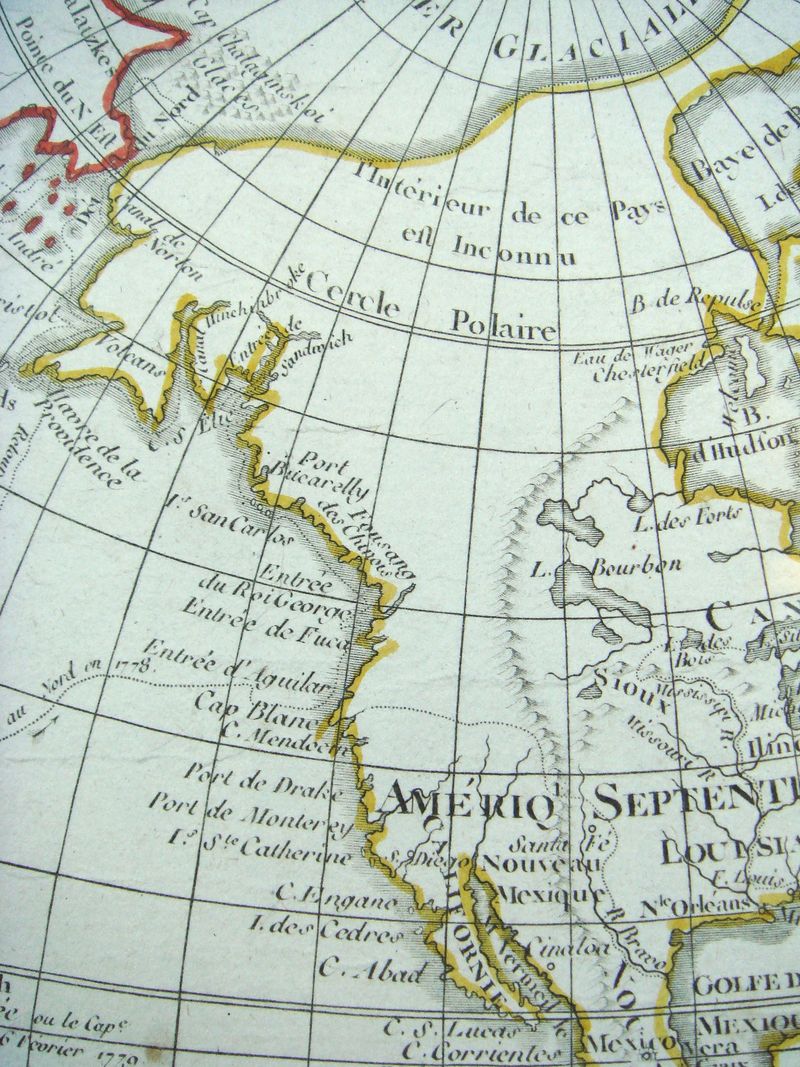
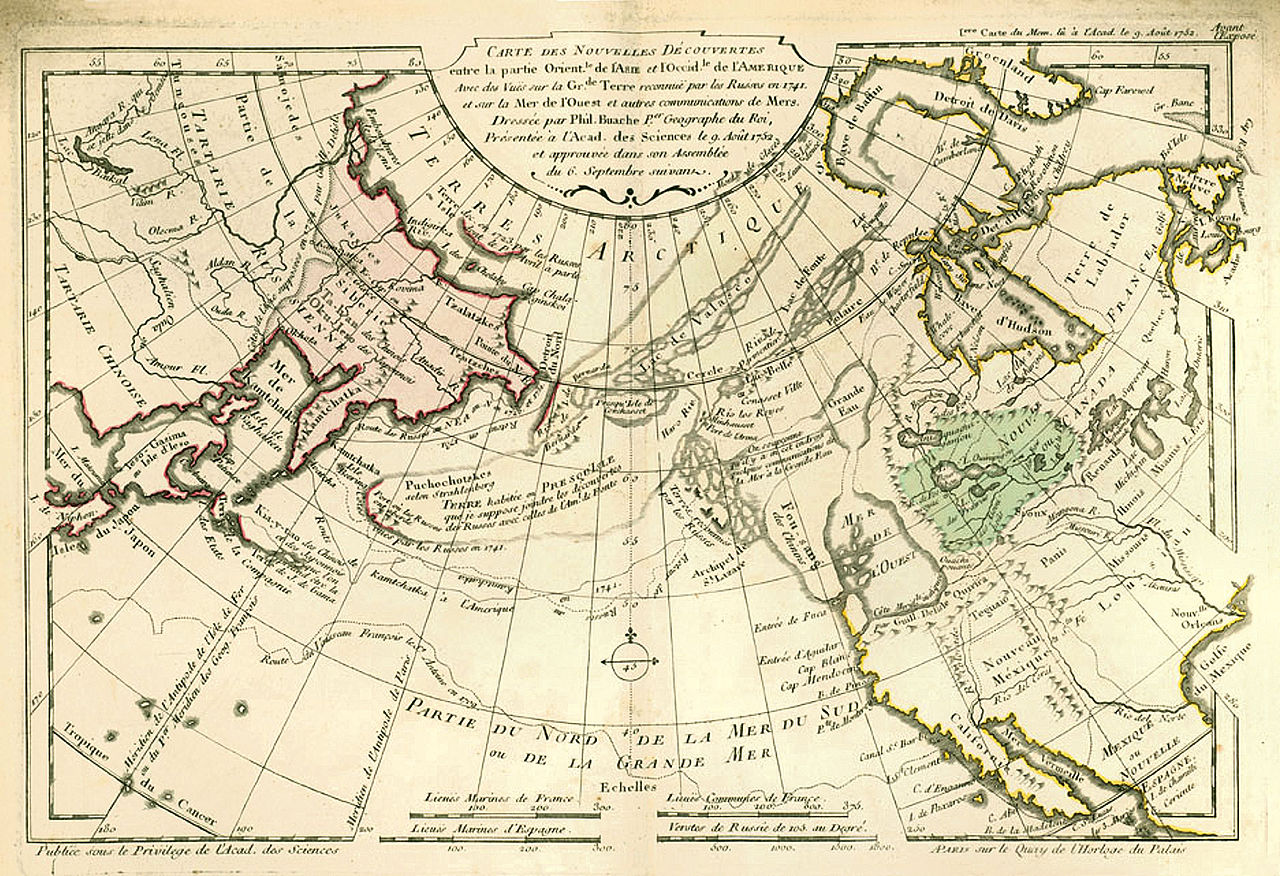
    Here’s a good example of the mapping of a non-existent entity: the Kingdom of Fusang, or the Chinese/Fusang people, located in British Columbia/Washington state, appearing in the considerable Philippe Buache’s map, Carte des Nouvelles Decouvertes…(1753).  It is a wonderful map that also has a lot of suggested possibilities of realities in the not-much explored Pacific Northwest of North America.  What we see appearing above the huge landmass of “Californie” (mostly the entire west coast of the present-day U.S.) is the island-like “Fou-sang des Chinois”.  This area stretches from about the 47th to the 59th parallels, and is contiguous to another hypothesized entity, the “Mer de l’Ouest”, which is an enormous body of water about the size of Hudson Bay. This is also connected to another very large body of water, the “Grande Eau”, which in turn has connections leading to the Atlantic ocean, thus forming the much-hoped-for and dreamed-of Northwest Passage.

    Fusang three

    • Click to clarify and enlarge

    Source  https://en.wikipedia.org/wiki/Fusang#/media/File:Buache1753Map.jpg

    I’m not faulting M. Buache whatsoever in telling this little tale of prospective Geography–he produced (for his time) an excellent map of not very well understood and distant places. 


  • From Children’s Games to the Lake of Fire: Fun and Hell by Mr. Bruegel (Alpha & Omega, Part II)

    JF Ptak Science Books  Post 2834b

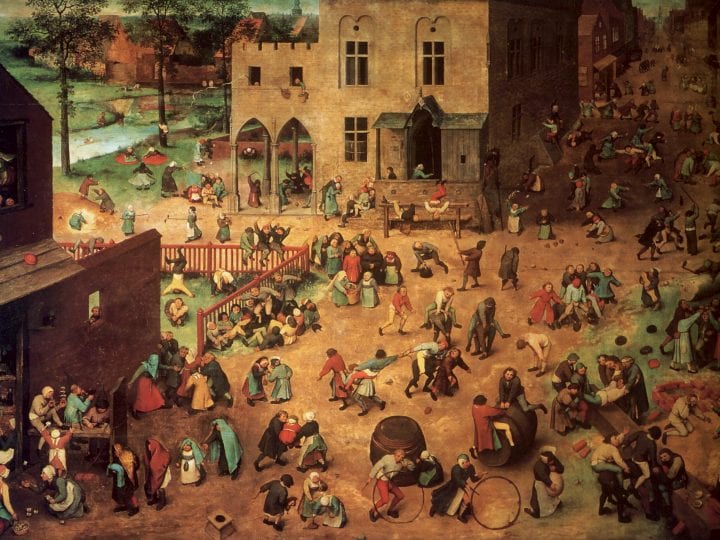
    Being quite filled up with Bruegel’s orderly disaster of death’s chaos control, I went to the other end of his work, to the Alpha of his death Omega: Children’s Games (1560). It is the opposite of The Triumph of Death painting (the preceding post), showing some 200 kids at play, involved in at least 80 different games—it is a visual dictionary of fun and hope. The viewer goes from one game or kid cluster to the next, experiencing a fun slow climb to the mountaintop—and in the other, with death being death and all that, it leads the other way along a road of broken glass.

    Bruegel children

    for a good and expandable view of the painting, see: https://artsandculture.google.com/asset/children%E2%80%99s-games-pieter-bruegel-the-elder/CQEeZWQPOI2Yjg?hl=en

    I’m sure these kids at play were thinking “ars longa, vita brevis” as they lost themselves in the easy complexity of whatever it was they were doing—well, no, they didn’t think that because they didn’t need to, as they were alive in it.

    The game clusters seem to be distributed evenly, and in spite of all of the divergent action, everything seems to be orderly in spite of the sweaty irregularities of the kids. The composition reminds me of the ultra careful construction of engraved illustrations in 18th and 19th century encyclopedias—like those of Abraham Rees Cyclopedia… and J.G. Heck’s Iconographic Encyclopedia—where the pages are filled to the edges with related and unrelated objects though by their arrangement there seems to be plenty of unused space.

    I can only recognize a game here and there—there are a number of experts who have gone through the painting and identified every aspect of every game, as the painting really is a social geology as much as it is anything else.

    For interesting reading see:

    In closing this short share I’d like to mention another fantastic Renaissance work featuring children’s games: the games played by Gargantua in Rabelais’ 1534 work Gargantua and Pantagruel, as there are at least 145 of them (217 in the revised edition), and they appear in a list! Again, there’s only a few here that I recognize straightaway, though they all can be found and explained.

    From the text (being nearly all of chapter 22):

    “Then blockishly mumbling with a set on countenance a piece of scurvy grace, he washed his hands in fresh wine, picked his teeth with the foot of a hog,
    and talked jovially with his attendants. Then the carpet being spread, they brought plenty of cards, many dice, with great store and abundance of
    chequers and chessboards…”

    “There he played.
    At flush.

    At love.
    At primero.

    At the chess.
    At the beast.

    At Reynard the fox.
    At the rifle.

    ·Posted by :

    ·in:

    —

  • From Children’s Games to the Lake of Fire: Fun and Hell by Mr. Bruegel (Alpha & Omega, Part I)

    JF Ptak Science Books  Post 2834a

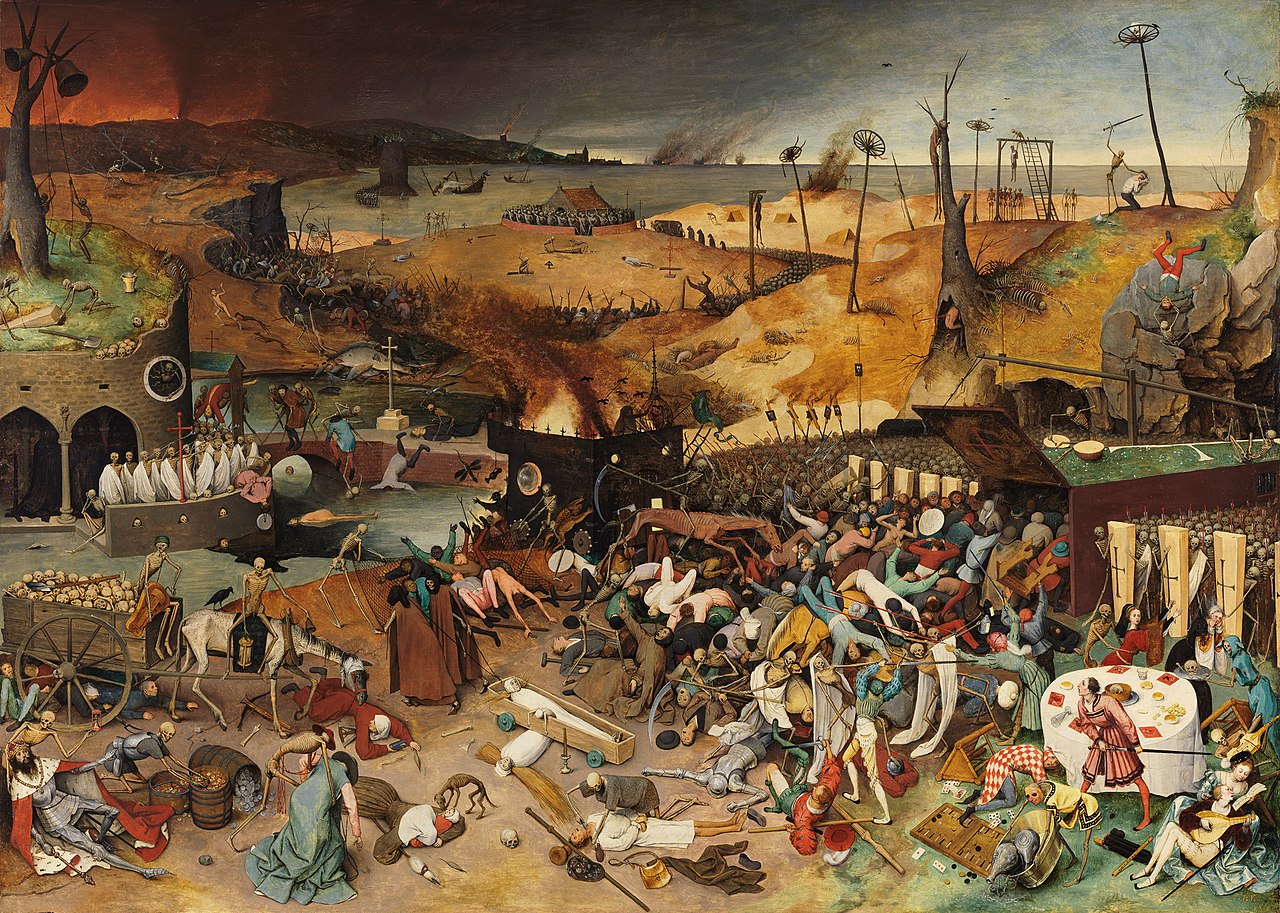
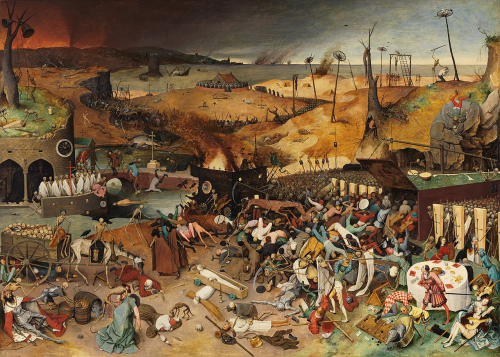
    Somehow I was drawn to take a close look at Pieter Bruegel (the elder’s) massively complex painting, The Triumph of Death (painted ca 1562), in which people were skeletonized by skeletons, killed in fantastic grotesqueries. No doubt I found my way there thinking about COVID-19, and the 1918 Influenza Pandemic, and naturally to the time of the London plague and then the Black Death, winding up on Bruegel’s bitterblack doorstep. In the painting’s many nooks and crannies and its deep minutiae, there is no regard for hope to be found, no possibility of god’s grace to comfort and possibly save the doomed, nothing by the delivery of myster-horrories leading to the lake of fire.
    Bruegel triumph of death

    There is just so much going on in this painting, so many scenes that you’d expect to see an overall narrative, except that there is none, just hundreds of people being taken by Death and its skeleton minions, led off to the gate of Hell. There are dozens of individual passions being crushed and morals observances being made, but they all seem to stand apart and clear.

    I did a quick survey to see if there was an overall census of this apocalypse, but I didn’t find one, surprisingly, which probably means I didn’t look hard enough. That said I thought it would be quicker to make my own scan of what is going on in the painting, starting in the near-center, where we see the spiked opening of the cave of Hell, surrounded by the armies of the dead. In the foreground is a very bad litany of very bad things, people being hanged and burned and drowned and stabbed and knifed and strangled broken on the wheel, those looking out to a deeper field of burning houses and a burning armada, everything burning or set to burn—everything was on fire, leading to the place where the fire was on fire.

    Continuing the survey in the image’s far left-bottom, we see a king in his finery being shown an empty hour glass; to his left a skeleton in armor poking around in bags of gold and silver coins, while just nearby is a cardinal being led to eternity by a skeleton wearing a cardinal’s hat. Further on we see a very strong denial of the absence of mercy, in this case a starving dog nibbling on the face of a dead baby still in its dead mother’s arms, and this right next to someone being overpowered and having his throat slit.

    Behind the king there is a skeleton crew operating a wagon full of the dead—one of the skeletons plays a hurdy gurdy while the other sits daintily astride the starving horse pulling the dead crate. Nearby people are being gathered in a net—like, well, people being led of to hell in a net—which seems a better end than what is going on around them, a diatribe of death by hackings and assorted other nastiness.

    On the opposite side of the painting from the king, on the far right corner, is a pair of, what, friends or something singing and playing, completely oblivious to the larger scene and even to the lute-playing skeleton leering and hovering over them. To their left is particularly disturbing figure—a skeleton wearing a human face with no eyes is tipping over a brazer filled with flasks, this taking place next to an upset backgammon board and a fallen deck of cards.

    Rounding it all out, in the center of the painting, we finally see Death itself, riding a red horse, horse of war, the symbol of fire, of blood, and one of the four horses of the apocalypse. Death charges on, and in this horrible commotion leads his hundreds of skeletons into what was probably a generic scene of generic people doing generic things appropriate to their generic-icity, the great an overwhelming triumph over mortals seeming abandoned by their god.

    So, there it is—I just ran out of steam in thinking of a census of what was happening in the painting, settling for a summary. Its just a little too nasty for right now.

    The cure for this painting is to have a look at Bruegel’s superb painting of children’s games, which comes up next.
    ·Posted by :

    ·in:

    — —