A Daily History of Holes, Dots, Lines, Science, History, Math, Physics, Art, the Unintentional Absurd, Architecture, Maps, Data Visualization, Blank and Missing Things, and so on. |1.6 million words, 7500 images, 4.9 million hits| Press & appearances in The Times, Le Figaro, Mensa, The Economist, The Guardian, Discovery News, Slate, Le Monde, Sci American Blogs, Le Pont, and many other places… 5000+ total posts since 2008.

Category: Women, History of

  • A Map of the Kingdom of Corsets, 1939

    JF Ptak Science Books  Quick Post

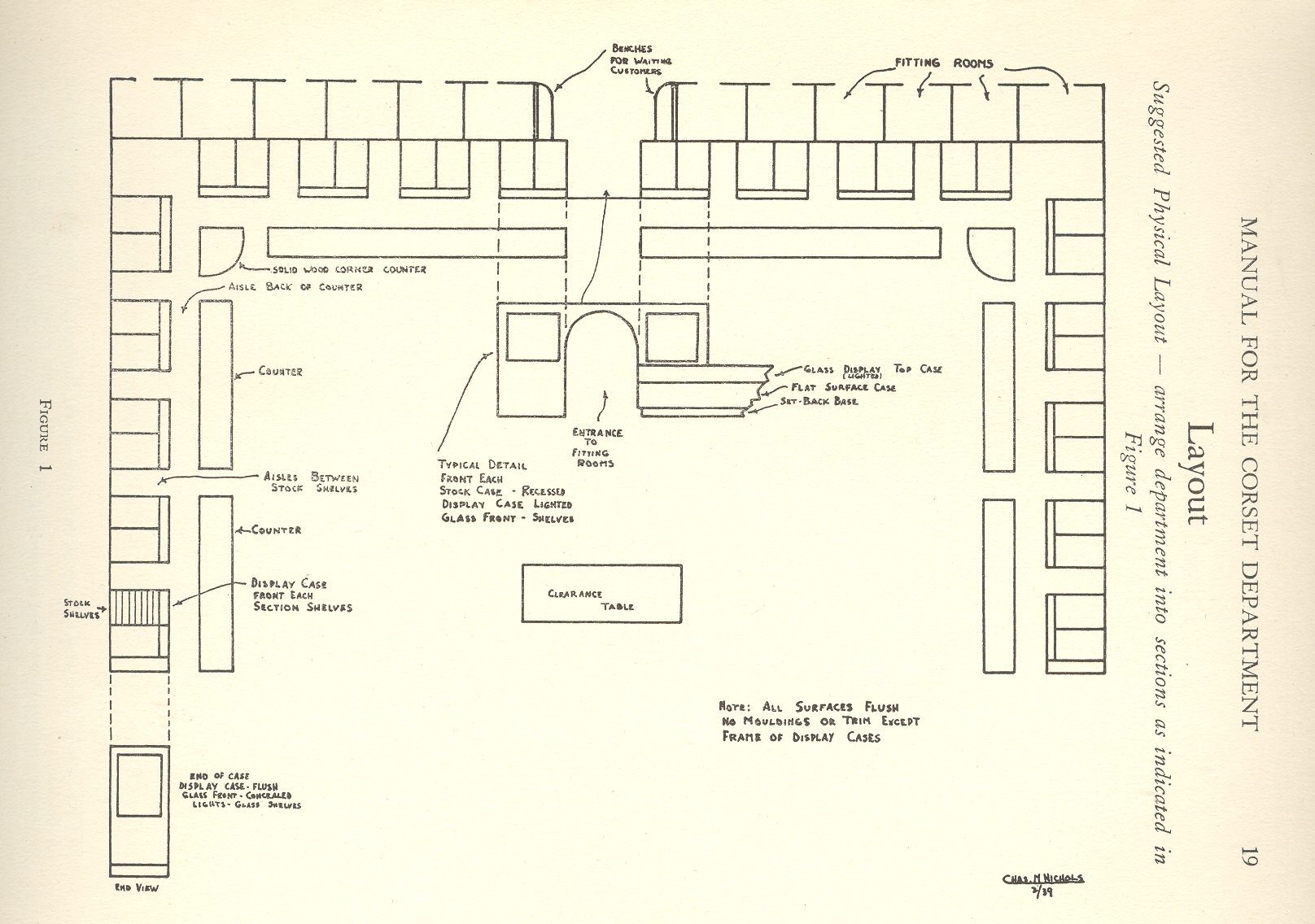
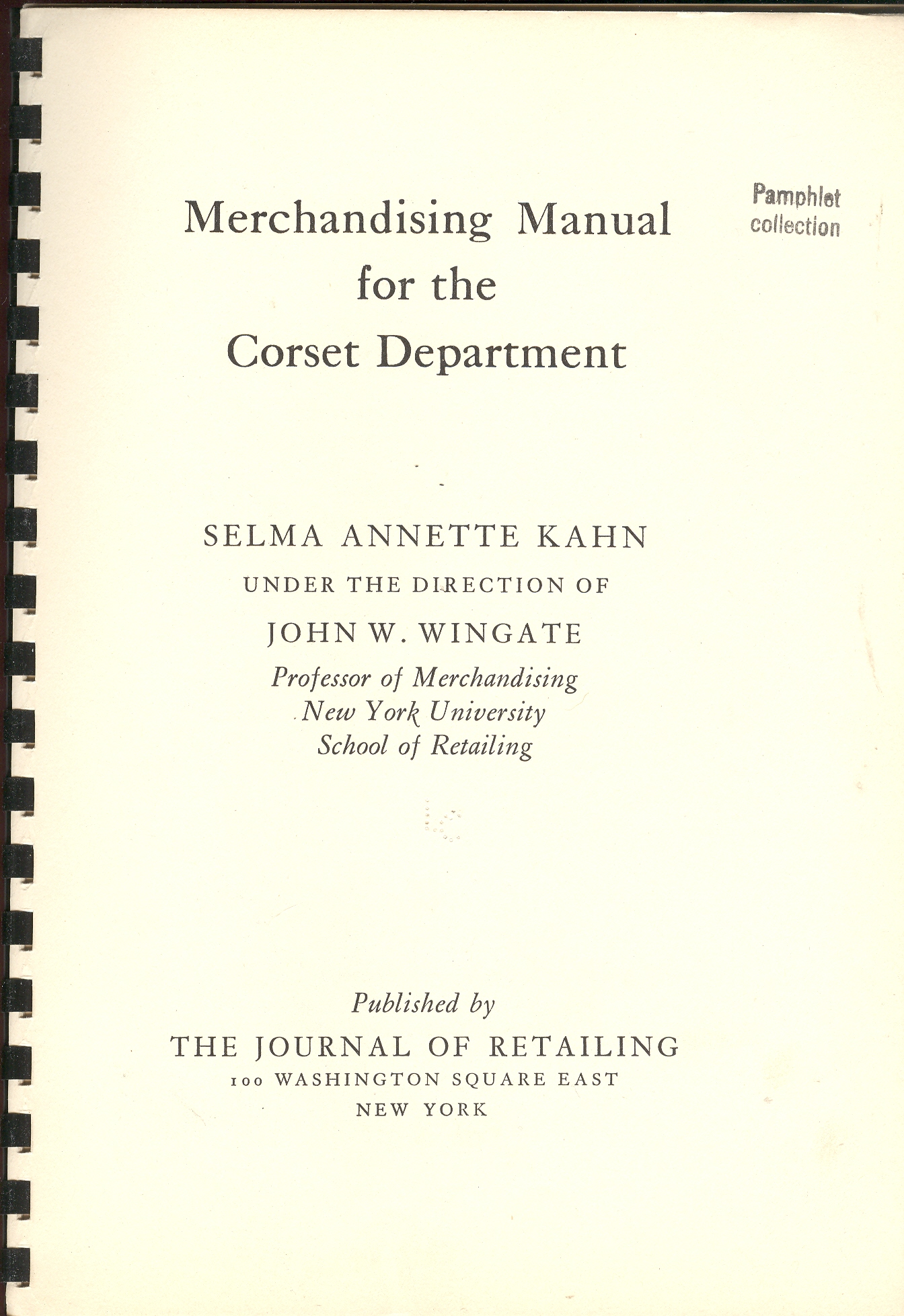
    + blog 10.26 corset tpThis finely produced, 75-page pamphlet lists all you need to know about marketing and maintaining a corset department in 1939–all except how to actually get back to 1939 to utilize this font of knowledge.  It was published with great seriousness for a serious business by the School of Retailing at New York University, a serious object for serious people.   Among the many things I’ve never thought of before thinking with this pamphlet were corset maps–and one of these happens to appear in this publication,  a map of an idealized corset department, which to me looks to be large, sanitized and medicinal, an oddly institutionalized presentation of an intimate something, something more of artistry and chance and possibility than an orthotic. 

    I should think that I would like to make a Kingdom Map for his image, some day.  It looks to me ready to accept the responsibilities of landforms or ideas or statistics or changes or comparisons in place of its plain nature of counters and countertops and display cases, empty boxes waiting for something a little more invigorating to depict.  Or maybe not, maybe the chance of display of transformations is enough to suit its peculiar, perhaps singular, needs.

    Or maybe on the Corset Map  instead of  substituting land and sea for corsets and boxes, one could substitute the noises of a quiet house at night, or the sound of heavy boots in a brittle-dry snow in the deep cold.  Or maybe a map of the discovery of children’s laughter, or inconvenient pauses in conversations through the history of human speaking…or a map of lost ways.

    Maybe the Corset Map could be used for a template for the things we will forget and the things we’ve forgotten, in which case the boxes need not be filled in, giving us a new version of the Bellman’s Map from Mr. Dodgson, a new subcategory of maps–the blank map.  Or it could be the outlines for a map of the places that you meant to say something, but didn’t.  Perhaps it could be used to outline where and how many times that people tell/told you that they’ll miss you if you step away, making hollow boxes of simple loneliness because we can’t be there all of the time.

    Or maybe the corset map is just a corset map.

    [This item is available for purchase, here.] The other surprise is how expensive these undergarments were.  For example, the Lily of France and Mme. Irene Corset Company (NYC) sold a girdle “for the heavy figure” (liberally sprinkling the word “heavy” throughout the description of the product like, well, sprinkles) for $132. The $132 corset is equal to about $2000 in today’s currency, or roughly a 15:1 increase. There were girdles and etc. in all price ranges, but the (1939) $30-$60 range seems to have been the most common; even still, the $30/low-medium quality item is about $430 in today’s dollars, and the cheapest of them all at 5 bucks goes in today’s economy at 75 dollars or so.  I’m not familiar with the value of undies today, but this sure sounds like a whole hell of a lot of money. 

    $132 for underwear in 1939 was a tremendous amount of money for the average person—even for the upper-middle class, it was a bunch, considering that you could buy a decent new car for $700.  It would also be equal to a half year’s worth of an average house rent ($28/month) and 1320 gallons of gasoline. 

    + blog 10.26 corset map
     

    It sounds like it was very expensive to keep the up with the idea of an ideal figure, which of course was partially create by this same sort of company, creating both need and demand for its product. 

    1939 Price Comparisons:

    Wages per year, average:  $1,730.00
    Minimum wage: 30 cents/hour
    Milk, by the gallon: 35 cents
    Postage stamp, 1st class: 3 cents
    Dow Jones: 131
    Gas, average price of a gallon:  10 cents
    Bread, by the loaf:  8 cents
    Hamburger Meat, by the pound: 14 cents
    Automobile, new, average:  $700.00
    House, new, average: $3,800.00
    House rent, average: $28.00/month


  • Selling to “Simple” Women, 1939: “She’s Not Interested in Bloody Meat”

    Post 882 (revised; part of the History of Women Series; also see Women Meat Pioneers.)

    Women--bloody meat
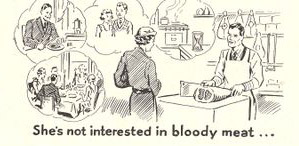
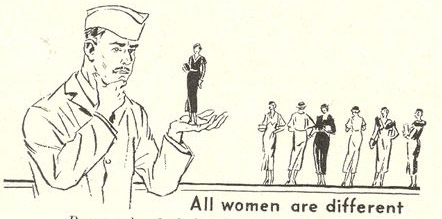
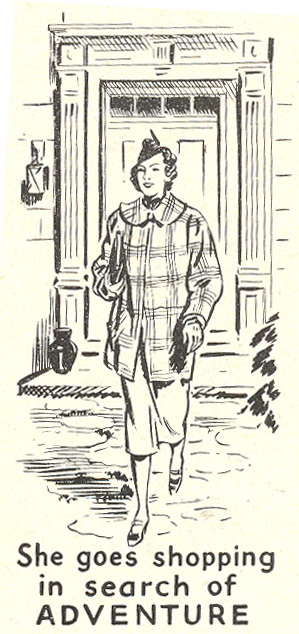
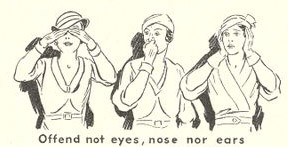
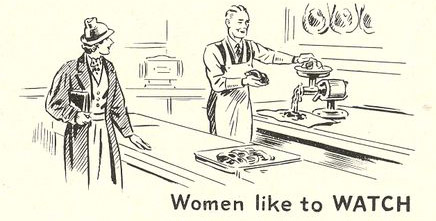
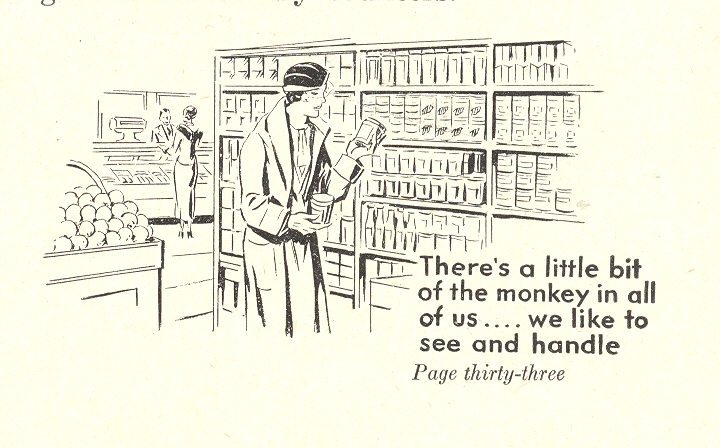
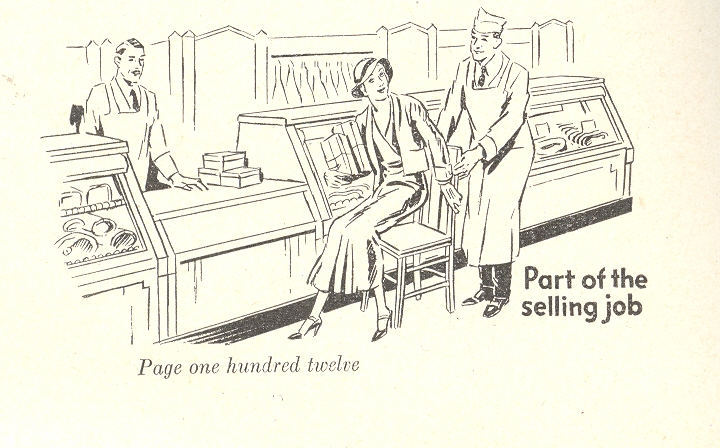
    These sales-happy customer relations images from a  modern food merchandising catalog (Modern Merchandising, 1939) come at an interesting time in the history of eating—or lesser yet, the history of buying food.   The pamphlet addresses the growing idea of the super market, a notion still new in the minds of consumers —it seemed as large to the consumer familiar with the 1920’s concept of a market as it seems tiny to the megamarket people of the present.The illustrations–all quite small, margin-inhabiting affairs, space killers, no bigger than 1×2 inches–are there to help the grocer deal with women customers and better understand “them”. 


    Women--all different 

    Women--shopping


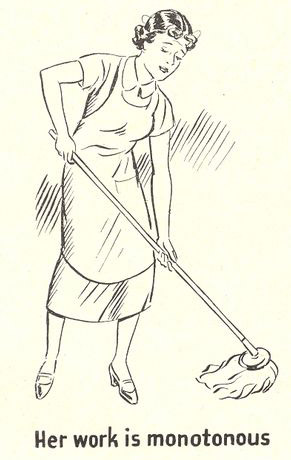
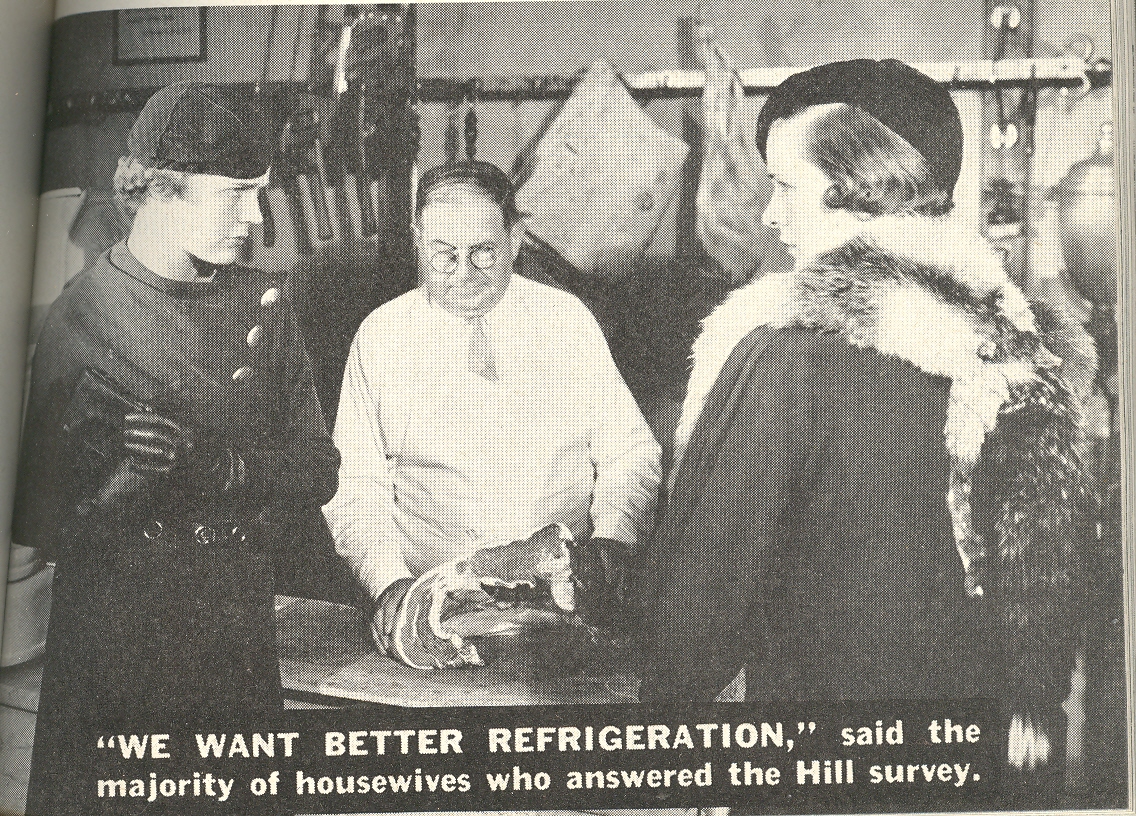
    I’ll address the interesting merchandising changes here in another post—right now I’d like to focus on the marginal drawings in the bottom corners of the text.  They may be small and offhanded–generally they are less than two square inches–but the messages they delivered, marginalia or not, were very strong.  Over and over again these bits demand the sub-class of women, emphasizing their trivial, ephemeral interests—bits of Nothing reinforcing large bits of Something.  

    Women--offend not eyes

    The messages beneath the images, collectively: “women judge meat by appearance:; “there a little bit of the monkey in all of us…we like to see and handle”; “offend not eyes , nose nor ears”; “part of the selling job”; “women like to WATCH”; “her work is monotonous”; “she goes shopping in search of adventure”; “she’s not interested in bloody meat”. They present cascading reactions: they’re somewhat funny to my eyes, and then uncomfortable, and outrageous, and then simply sad that their solemn pronouncements on the status of women would be so acceptable, their as-yet unidentified sexism and bitter “racism”a non-sequitur.

    Women--like to watch
    .

    + women monkey 


    + women sitting down 


    Women--her work


    + women want more refrig


  • Deathly Equality: Liberty & Lung Cancer, Cigarettes and Women’s Rights, 1929

    JF Ptak Science Books LLC  Post 662

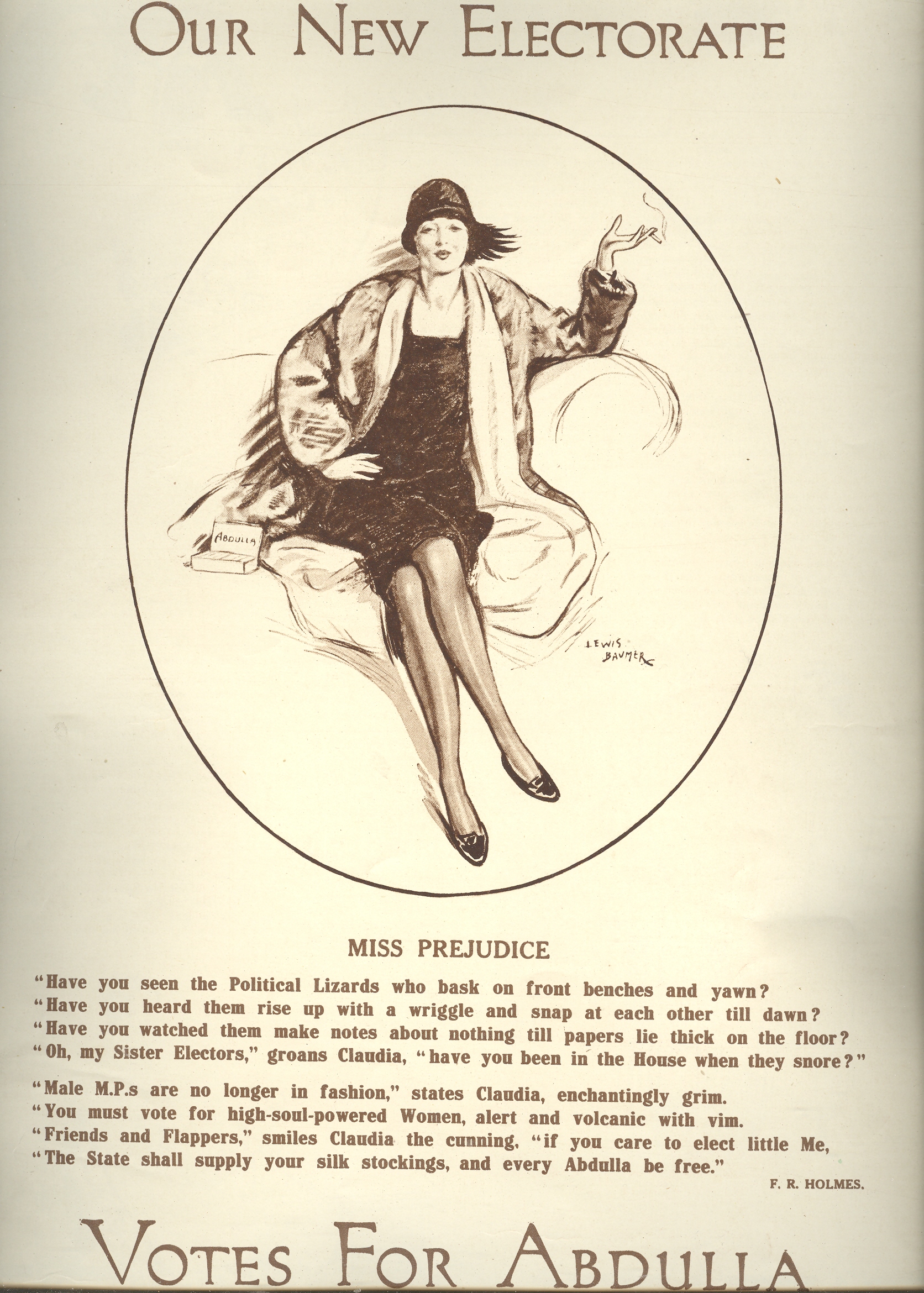
    Blog--june 23 electorate Abdullah Cigarettes has a twisted reliance with the recognition
    of the social equality of women and making money.  Mostly it was making money.  Someone there at Abdullah corporate figured out
    that there was an easy way of increasing their sales without spending huge
    amounts of money on market development—open their market interests to
    women.  And in the case pictured here,
    from The Illustrated London News of 1929, the Abdullah people were making a
    direct appeal to the literal empowerment of women via the national right to
    vote.  This came a little post facto, as
    women were given (?) the right in 1918*, though it seems that there were no ads
    reaching out to women in GB until 1926/7, voting rights or not. 


    There was very good money to be made with cigarettes, which were/are
    basically the non-kosher hot dogs (or worse) of the tobacco industry, the
    tobacco equivalent of the utilization of the pig’s squeal, the remnant of other
    products that was filled with profit.  For
    the overwhelming part of the history of tobacco smoking by the Western world,
    the tobacco that was gathered and stuffed into a paper roll and smoked was the
    lowest form of utilizing the product, the vice of the poor. This degraded
    spectacle was soon morphed into an enormous social advantage and gigantic
    economic opportunity for the producers.

    It wasn’t just Abdullah, of course; nor was Abdullah the
    first on the scene:  that “honor” belongs
    to Helmar Cigarettes, which in 1919 posted an advertisement for a  pack of its cigs buried in a sea of female
    faces. The tobacco companies didn’t embrace the notion of the growing
    recognition of women, but did follow it, taking advantage of the new and
    growing rights and their new marketability and giving everyone free access to
    the same deadly diseases.  Exploitation
    of the emergence of the new social power was the key to making money for those
    companies. 


    In the U.S.,
    Marlboro started mild ads directed at women in 1926, tempting its gentle
    readers with ad copy like this: “Has smoking any more to do with a woman’s
    morals than has the color of her hair? Marlboros now ride in so many
    limousines, attend so many bridge parties, and repose in so many
    handbags.” George Washington Hill followed this lead but was more bold,
    pushing Lucky Strikes right to the forefront (in 1927) of the menace.


    All of this worked very well:  tobacco revenues in the U.S. went from
    $12  million in 1926 to $40 million in
    1930, this based largely on the new female marketization, tempting women’s new
    economic and political power with the power of the cigarette, dressed in the
    fashion of subverting the power structure, just like flapper’s dress, bobbed
    hair and slacks. 


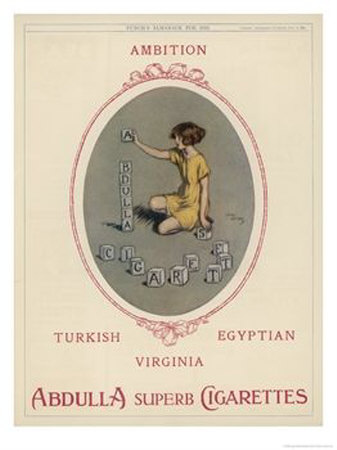
    Blog--june 23--abdulla kidAbdullah also blurred the age barrier for smokers by pushing
    their product with images of what seem to be ‘tweens, a move that expands the
    concept of nastiness. (It should be remembered that the baseball player Honus
    Wagner demanded that his picture be removed from the baseball cards distributed
    with Sweet Caporel cigarettes because he thought the tobacco company was trying
    to corrupt the young with it—the result was that his card is among the rarest
    and most expensive of all baseball cards.) I don’t think that there’s much room
    for negotiation in this image—it plainly is directed at the young.  But of course it was all a nasty business,
    top to bottom—even the American Medical Association got into the act, publishing
    their first cigarette ad in their journals in 1933—a practice that would last
    to 1952.  The cancer connections were
    there, but the lobby by the concerned national interests of the tobacco
    companies were fierce, and the first warning labels about the cigarette/cancer connection
    didn’t appear on packages of cigarettes until Surgeon General Jesse Steinfeld’s
    tenure in 1970.** (Fat and heart diseases kills more, but so do hospitals.  Lee Iococa fought seatbelts in his cars for
    years, and on and on into the night goes this song.)


    I wonder why there hasn’t been more recognition of the
    earlier history of lung cancer—particularly since it really doesn’t seem to
    exist in the 19th century and before.  The disease only starts to show up in the
    1920’s, after men had been smoking cigarettes for 20 years or so.  The epidemic of lung cancer rose with the
    consumption of cigarette–it is of particular forensic interest to look at lung
    cancer rates among men and women from 1950-1980.  These stats are a surprise to no one, the
    rate of cancer among women spiking in the 1950-1980 era, when their habits were
    mature from long use of the liberating agent. 
     Cigarettes was just one of many
    ways in which women expressed their modernism—but is almost certainly the
    deadliest. 

     *American women would get the vote two years later, in 1920;
    that follows the New Zealand
    lead, which granted women the right to vote in 1893.  Ah how many times the Kiwis beat the rest of
    the world to the punch for the correct political behavior!  On the other hand, women in Mexico got the vote in 1948; in Kuwait,
    they waited a little longer, until 2005. 


    ·Posted by :

    ·in:

    —

  • Women in the War Effort: London, 1918

    JF Ptak Science Books LLC  Post 465
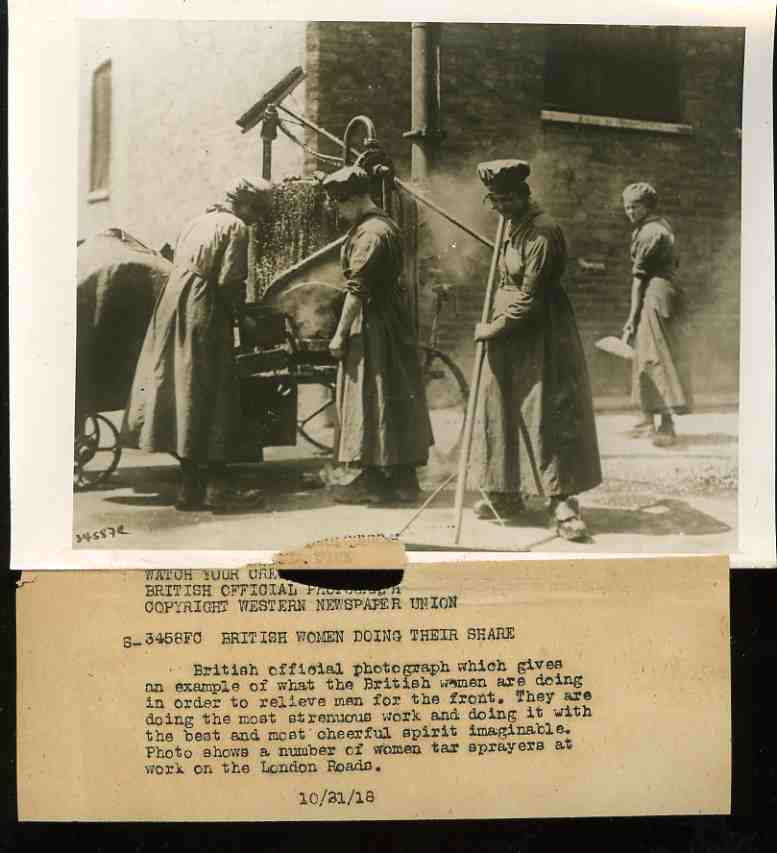
    0 blog jan 10 brit women strt371

    In England,
    women were welcomed to the (paid) workforce during the years of the First World
    War (1914-1918)—their employment in traditionally male positions enabled those
    they replaced to go out to the front and die for their country.  Thus the women seen here in the News Photo
    Service Agency photograph (taken in 1918), working at spraying tar in the
    streets of London,
    were appreciated, and tolerated.  For
    women in England the War
    blasted away the contrivances of formally scheduled employment:  something like 12% of fall women in England were
    working as servants and house cleaners.  
    Come the War, women were offered jobs of revolutionary stature in a wide
    range and variety of work.  The Civil
    Service employment for women went from 33,000 in 1911 to 102,000 in 1921, and trade
    union membership rose 160% (357,000 in 1914 to 1,000,000 in 1918 (with men
    showing a 44% increase at the same time); for the most part, though, employers
    took advantage of the situation, and the women still generally earned less than
    half of the salary as comparable male workers did (or the men they
    replaced). 

    0 blog jan 10 brit women strt372

    When the end of the War came,
    so did the appreciation for the women replacement workers—there was bitter feelings
    in the post-war period because of the weak British economy and a scarcity of
    jobs.  So the women who took the jobs of men
    to help the country’s war effort and free up hundreds of thousands of men for
    war service became an atavistic action, “taking” the jobs of men who had gone
    out to fight for their country. This of course cost many women their jobs, but
    the damage had already been deeply done to the pre-1914 British world of the
    sexual politics of business-being-done, though it would take World war Ii to
    really ingrain the appearance of women in the workforce into the national
    psyche.

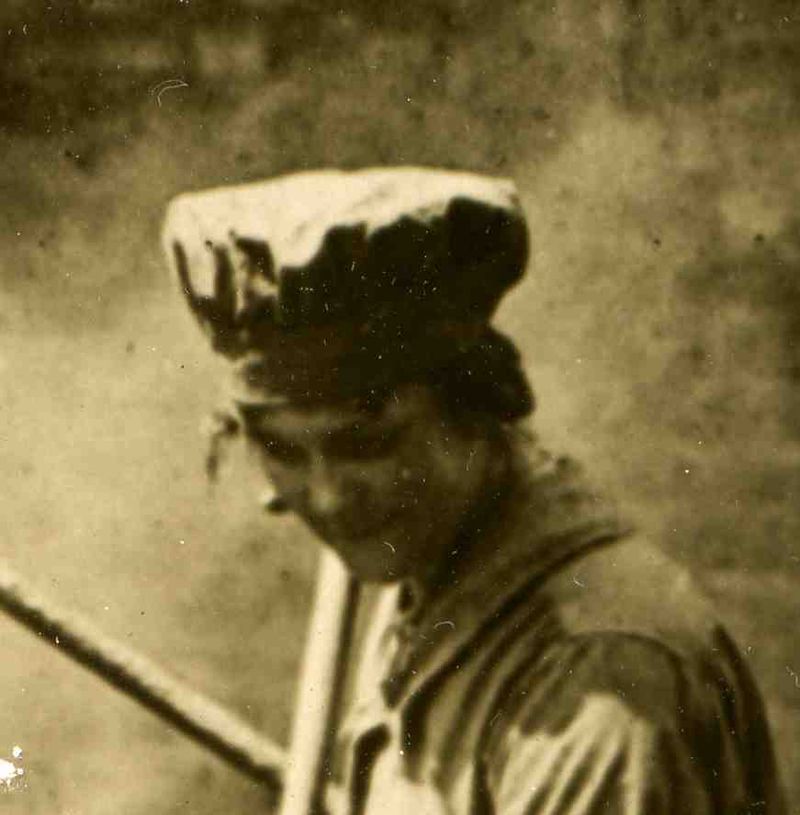
    (Madonna of the tars, right)

    0 blog jan 10 brit women strt373


  • Meekness as a Quality of Woman, 1685: on Patriarchy and the Enslavement and Subjugation of Women

    JF Ptak Science Books LLC  Post 409

    “‘Love is strong as death,” and so is the obedience and reverence paid to the ashes of the dead, ruling husband”

    The Ladies Calling, in Two Parts by the Author of The Whole Duty of Man, The Causes of the Decay of Christian Piety, and The Gentlemans Calling, by Richard Allestree, printed in Oxford in its popular eight impression in 1685, was hardly a novel or unique approach to the coaching of the supplicating and correct behavior of women.

    Its eight printings in a dozen years (assuming that the print run was at least largish, this would qualify as a best-seller in today’s market) was a testament to its somewhat mirror-like expectation of the social visions of the time, also making it hardly alone in its challenges to the neo-individuality of the female sex. It was pretty much what was to be expected, a “normal” vision of the actions of women, including as ever the not-so-faint aroma of the codification of sexuality, or at least the value of women as sexual objects.  (It is true that well-married women did have a sort of power through the husband, but if the promise of children was broken or if there was something not quite right in the private life, the wife could be gotten rid of very easily, and her power by association would be gone)

    The titles of its eight chapters pretty much tell the whole story:   Of Modesty,  Of Meekness, Of Compassion, Of Affability, Of Piety, Of Virgins, Of Wives.Of Widows. The message, or, rather, the demand:  be compassionately meek, religious and observant, happy, virginal until wifely and then wifely until death, and then acting properly after the death of that  which gave you nearly purpose. Be true and faithful and genuflectorial and obedient to your god and husband, and not necessarily in that order at all times.  Ideally, the woman would obey the callings and creations of the church representing the whims of the creator; though there were some times when the husband would be needed for elucidation and guidance to even the teachings/programs of the religious authority.  The creation of patriarchy had been at least a 2000-year-old process in the 17th century, and this book was yet another in the subtle changes to the regulation of that wall. 

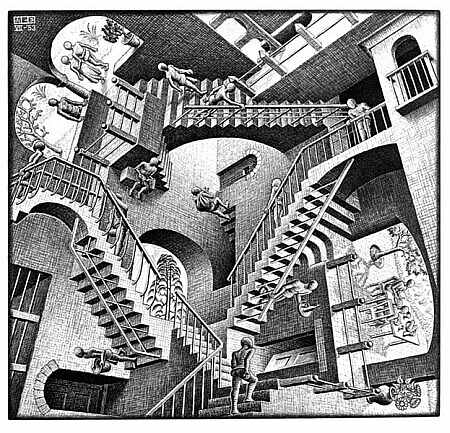
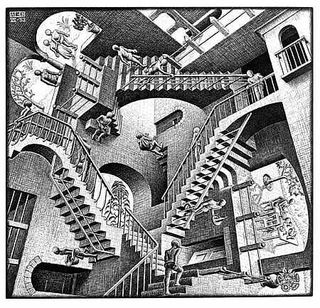
    The following two sections are pulled from the chapter on Meekness (and illustrated by an architect of Catch-22edness, M.C. Escher, on the inescapable logic of cohesive subjugation):
    Escher-mc-relativity-7400006

    “1. In the next place we may rank Meekness as a necessary feminine Vertu; this even nature seems to teach, which abhors monstrosities and disproportions, and therefore having allotted to women a more smooth and soft composition of body, infers thereby her intention, that the mind should correspond with it. For tho the adulterations of art, can represent in the same Face beauty in one position, and deformity in another, yet nature is more sincere, and never meant a serene and clear forhead, should be the frontispiece to a cloudy tempestuous heart. ‘Tis therefore to be wisht they would take the admonition, and whilst they consult their glasses, whether to applaud or improve their outward form, they would cast one look inwards, and examine what symmetry is there held with a fair outside; whether any storm of passion darken and overcast their interior beauty, and use at least an equal dilligence to rescu that; as they would to clear their face from any stain or blemish.”

    “3. And first for the Meekness of the Understanding, it consists in a
    pliableness to conviction, and is directly opposite to that sullen
    adherence observable in too many; who judg of tenets not by their
    conformity to truth and reason, but to their prepossessions and
    tenaciously retain’d opinions, only because they (or some in whom they
    confide) have once own’d them; and certainly such a temper is of all
    others the most obstructive to Wisdom.”

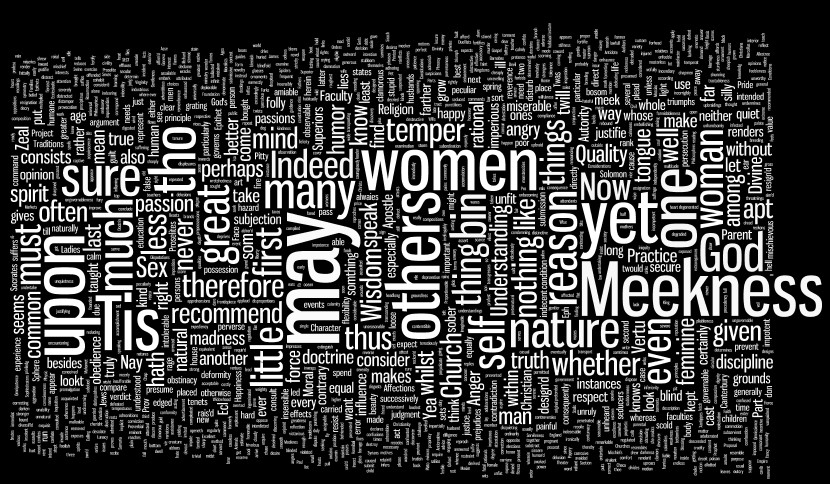
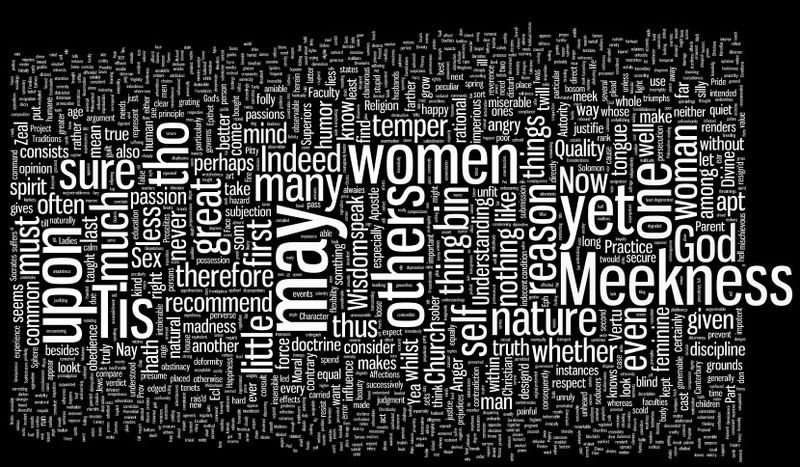
    The following is a Wordle Word Map of Meekness, featuring a vaguely three-dimensional 5,000-word
    word map of the contents, the words weighted, the most often occurring
    words appearing largest, and so on.  I’m not sure exactly what I’m learning from it, or learning more than I’d learn from reading two paragraphs of the chapter. 
    Wordle--meekness 5000

    Some further quotes from this work, including the seven remaining chapters:

    Of Modesty
    “That the Obligation to Moral & Christian Vertues is in it self universal, and not confin’d to any Sex or Person, is not to be denied: yet, as in human Constitutions there are often Precepts, which (tho not exclusive of any, do yet) more peculiarly and eminently level at som particular rank or order of Men; so in the laws of God and Nature, there appears the like distinction. That all-wise Creator, who hath put peculiar proprieties and inclinations into his Creatures, hath accordingly design’d their actuating and improving them: and altho in mankind, which differs nor in species but in gender, the variety may seem less; yet there is still enough to found som diversity, either in the kind or degree of duty”

    Of Compassion
    “But this is yet more unnatural in the female Sex, which being of softer mold, is more pliant and yielding to the impressions of pitty, and by the strength of fancy redoubles the horror of any sad object; yea so remarkable is this tenderness, that God, when he would most magnify his own compassion, illustrates it by that of women, as the highest human instance. Indeed such a propension have women to commiseration, that they are usually taxed with an excess in it; so that any imprudent lenity is Proverbially called, A womanish Pitty, and therefore it may be thought an impertinence to exhort them to that which they can scarce avoid.”

    Of Affability
    “But hitherto we consider Affability only in its ethnic dress, as it is a human ornament; ’twill appear yet more enamoring upon a second view, when we look on it as bearing the impress of the Sanctuary, as a divine Vertu. And that it is capable of being so, we have the autority of St. Paul, who inserts it in the number of those Christian Graces which he recommends to his Roman Proselites; condescend to them of low estate, Rom. 12. 16. and that we may the better discern its valu, ’tis observable that he links it with the most eminent Vertu of Humility; for it immediatly follows his Precept of be not high minded. Indeed ’tis not only joined with it as a Friend or Allie, but derived from it as its stock and Principle: and certainly a more divine extraction it cannot have, Humility being the Alpha and Omega of Vertues, that which laies the foundation, (without which the most towring Structure will but crush it self with its own weight) and that which perfects and consummates the building also, secures and crowns all other Graces; which when they are most verdant and flourishing, are like Jonas his gourd, that may afford some shadow and refreshment for a while, but are apt to breed that worm which will destroy them. When once they are smitten with Pride, they instantly fade and wither; so necessary is humility both for the acquiring and conserving, all that is good in us.”

    Of Piety
    “Piety is taken for our more immediate entercourse with God, in things purely divine, as Adorations, Praiers, Aspirations, and all pantings and breathings of the soul after him; and in this notion ’tis more particularly called Devotion. And this is comprehended it: the other, as a part in the whole; nay indeed, as an effect in its cause; for where Piety has not first formed and modelled the soul, there can be no true Devotion.”

    Of Virgins
    “Virginity is first in order of time, and if we wil take S. Pauls judgment in respect of excellence also, 1 Cor. 7. And indeed she that preserves her self in that state upon the account he mentions v. 33. that she may care for the things that are of the Lord, that she may be holy both in body and in Spirit, deserves a great deal of veneration, as making one of the nearest approaches to the Angelical State, And accordingly in the primitive time, such a Virginity was had in a singular estimation, and by the assignment of the Schoolmen, hath a particular coronet of glory belonging to it.”

    Of Wives
    “In that of a Wife her duty has several aspects, as it relates, first to his Person, secondly to his Reputation, thirdly to his Fortune.”

    Of Widowhood: 
    “THE next state which can succeed to that of Marriage is Widowhood, which tho it supersedes those duties which were terminated merely in the person of the husband, yet it endears those which may be paid to his ashes. Love is strong as death.”

    “Love is strong as death.”  So is obedience, or obedient love, or meekness rapped up in a quilt of obedient love in a field of affable, modest, pious modesty, commanded by the male even in death.

    I said earlier that the idea of patriarchy and the war on gender is a 2500-year-old process.  It is remarkable to think about the advances in equal rights for women in the last 115 years, especially in the light of the introduction of money into the equation.  Within the last 400 years or so the concept of private acummulation of property came along to the not-wealthy classes mostly (perhaps) as the standard practice of the transfer of dowry/property/children from the women to man via marriage. (I say “115” and not “100” years because, at Tahakopa, on 28 November 1893, New Zealand became the first country to grant voting rights to women on a national basis–hats off again to NZ for being first again in so many important categories.) That said, and with the extraordinary weight of money, the subjugation part was very well entrenched until relatively recent times.  As a matter of fact in the history of patriarchy this would represent only about 3% of the timeline of subjugation–1.5% if you were being honest about it. 

    So in the history of the enslavement of women,  and of all the billions of lives of women that have been lived during that time over 25 centuries, it is only within the lifetimes of living grandmothers that the true superior progress in achieving equality of rights for the sexes has been made.  If that sort of realization doesn’t illuminate the darkly myopic views of people who would want to continue ruling via exploiting differentiation, I don’t know what will.  That for 2500 years something was “normal” and acceptable; and then in the last 115 or so years, it became less so, and now in the last 50 years it is a recognized embarrassment and mistake to anyone with a brain.  Condensing backwards vision like this is an interesting practice, especially when you put it up alongside other, contemporary issues that smack of this sort of discrimination, like California’s Proposition 8.  I just hope that it won’t take a hundred years for the majority of the people living in this country to recognize that we were being stupid.  I trust that New Zealand won’t take nearly this long. 
    ·Posted by :

    ·in:

    —

  • Skinny II: Morals, Class Warfare & Letting Someone Else Pick up your Dropped Fork

    JF Ptak Science Books Post 406

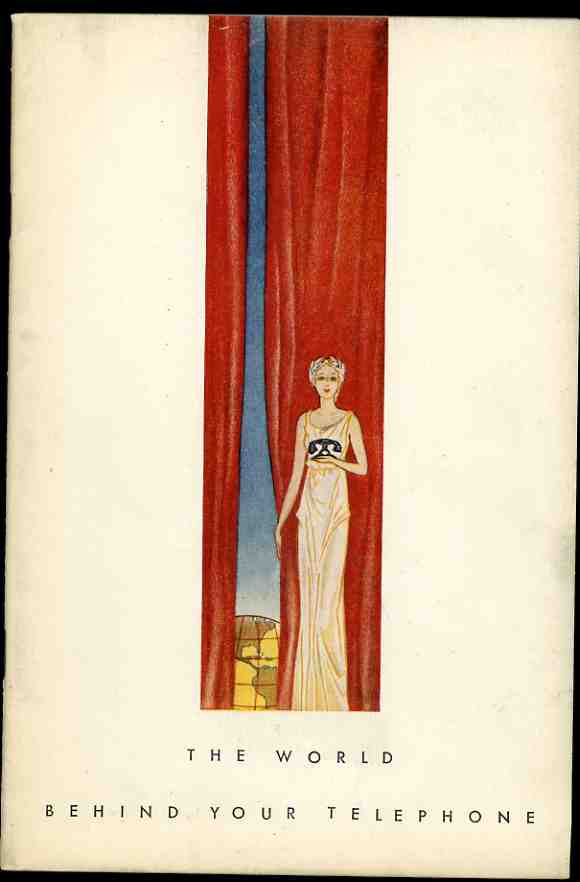
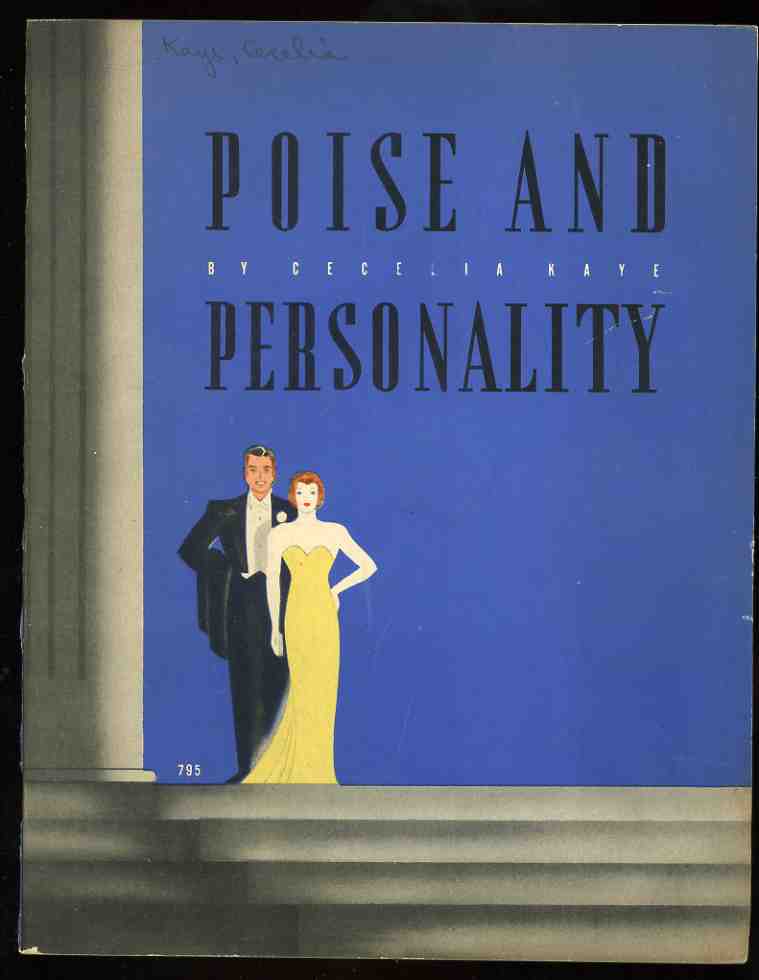
    Yes, these two pamphlets are beautifully designed, real works of production art, speaking elegantly and skinnily to their skinny, elegant times.  The World Behind the Telephone is a straightforward look at the stuff going on behind the scenes that made the telephone “go”–the woman holding the telephone is remarkably tall and angular, holding back the curtain of an even taller and skinnier doorway, beckoning the viewer into the unseen telephonic world.  Poise and Personality features more skinny people, and offers the skinny on some excruciatingly class-conscious tips on expected behavior and the division of the classes.

    0--blog---Nov 29 skinny156

    0--blog---Nov 29 skinny157

    “Social poise does not consist of a mere set of mannerisms” it reads, but beware:  “avoid careless and loose forms, which are in bad taste”.  There are all manner of pinkies-up logics and societal sniffing splayed throughout these pages, from the chapter improbably titled “Preccedence [sic] in Introductions”, to “Sensitivenesses” (“being sensitive is a luxury and the price runs high”), “Inferiority Complexes (“if you are afraid of people, talk to them with a smile…”), “Personality development” (“undoubtedly there is a native something that differs in each of us”), “Poise” (“…people are unhappy because they are nervously conscious of a lack of ability to mix with strangers….consequently they are unable to appear calm and balanced”. 

    Yes, it is a product of its time.

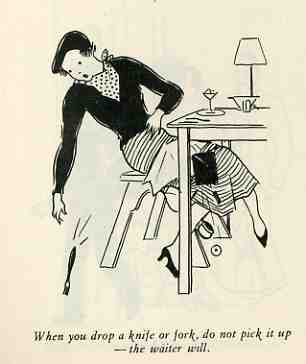
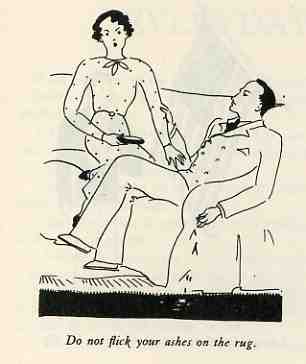
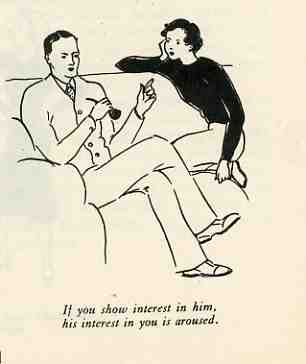
    There are some troubling and insensitive things in here as well, pamphlet being delivered of it times or not.  Letting the waiter pick up your fork is one; do not drop your ashes on the floor is another.  The more subversive ones though are on dating behavior and gender wars, the subjugation of women as it was in 1938 firmly on display.  “If you show interest in him, his interest in you is aroused.” Oh dear sweet creator, the woman is only of interest to the man if she reflects his interesting bits back to him.  Why not have the guy date a mirror?  That way nothing will be lost in all of that wasteful biological differentiation. 

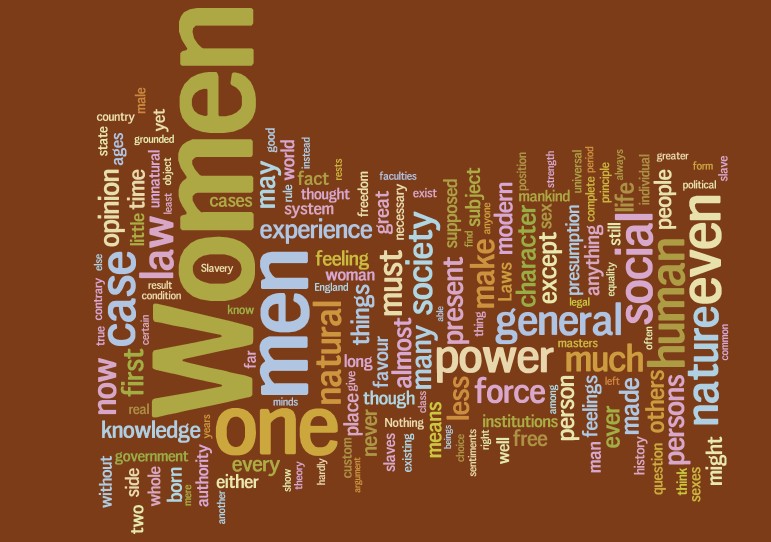
    Here’s an early classic on the subject:  John S. Mill’s On the Subjugation of Women, an oldie but still a goodie. 

    0--blog---Nov 29 skinny158 0--blog---Nov 29 skinny159

    0--blog---Nov 29 skinny160

    Just for good measure, and really not related to this post, I’ll throw in a word map generated by Wordle.net of Mill’s Subjugation of Women (I like how “slavery” happened to pop up in the middle of the “O” in “women”):

    Wordle--subjugationfixed

    ·Posted by :

    ·in:

    — —

  • An Empty Interest in Applying for the Women’s Branch of the KKK. ca. 1925

    JF Ptak Science Books LLC Post 298

    Blogwomen_kkk_3
    I just very recently made a post about a sub-category of blank and empty
    things: blank special-purpose
    diaries. I didn’t think that there would
    be much that would follow it, but already I’ve found several interesting relational
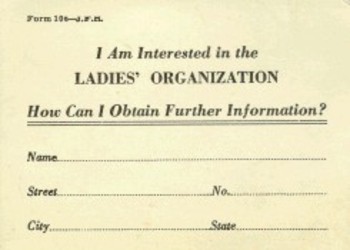
    objects.   This very understated and interesting object lacks the name of the organization for the ladies:  and that name was the Ku Klux Klan, which changes everything about this innocuous-looking piece of ephemera. 

    How many of these forms for the Women’s branch of the Ku Klux
    Klan (WKKK) were filled out in the 1920’s and 1930’s?

    At least 500,000. And more, as this was the number of women members of the Klan, which  was about a
    quarter of the entire roll of the KKK.

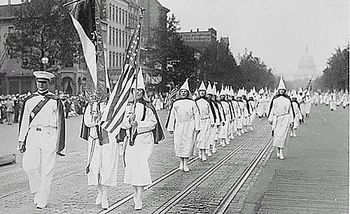
    KkkwomendcEvidently the WKKK was one of the largest social organizations for women in
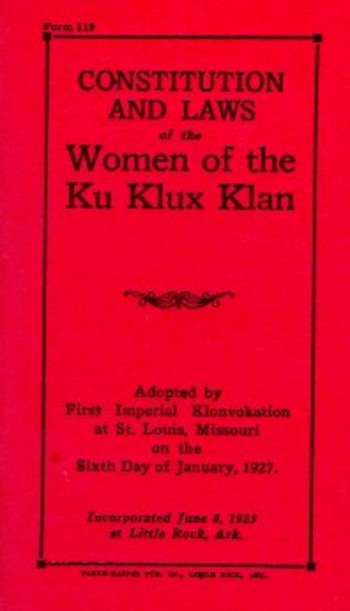
    the U.S.
    in those decades. In 1925 more than
    35,000 KKK members paraded down Pennsylvania
      Avenue;
    three years later, another huge parade
    took place, this time prominently featuring the WKKK. The KKK after all
    supported women, after its fashion, and actively sought them as an auxiliary force,
    seeking their right to vote as well. And
    by the right to vote it meant literally RIGHT voting—no voting for anyone or
    anything that was not “100% American”, which excluded everyone that was not
    native-born, white and (sort of) Protestant, voting against anything that was in
    any way in favor of Blacks or Jews or Catholics or immigrants and so on from a long
    list of “undesirables”.

    The emptiness of this application for possible membership has as much hope in its emptiness as its possibility of hate in its completion.

    Kkkpamphletowmen

    A few interesting works on this subject include:

    Blee, Kathleen. Women of the Klan: Racism and Gender in the 1920s. Berkeley: University of California Press,
    1991.

    McGehee, Margaret T. “Beneath the Sheets: An Intellectual History of the
    Women of the Ku Klux Klan (WKKK), 1923–31.” MA thesis, University
    of Mississippi,
    2000.

    Seaver, Darcy L. “Women in the Hood: Women in 1920s Ku Klux Klan
    Publications.” MA thesis, University of Wisconsin–Madison,
    1992.


  • Straps, Forceps, the Chamberlens and the Subjugation of Women

    JF Ptak Science Books LLC Poat 157

    Blogonbstetrics271
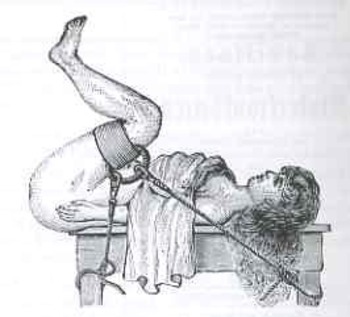
    I’m really not sure about how to interpret this image.  At first glance I thought it was part of a delivery procedure, but it turns out that this was the rigging for a woman undergoing a gynecological examination.  The woodcut appears in the first volume of Sammelband von 7 Kleinschriften zu gynakologischen Spezialthemen, 1858-1901, and more exactly in the contribution by Ludwig Neugebauer on an examination with a “speculum bivale l’ecarteur vaginal a trios branches…”  published in 1884.  I know that the prissy prejudices brought about with the coming of Queen Victoria in 1837 still had another 17 years to go at this point, which could explain why, perhaps, a doctor would want an aid in helping a woman maintain an examination position without him having to touch his patient, but, well, just look at the massiveness of the restraints!  Also, the woman’s arms are *inside* the ropes—not down, not holding the ropes, but inside the binding, restrained.  Either way, it isn’t good, treating the woman—in either case of pregnancy or obstetric examination—as the inferior vessel.

    This is also part of a long history of the subjugation of women—the medical aspects of that indoctrination were perhaps somewhat more heinous than the social/legal/ethical/pedagogical/moral constituents.  This illustration, even coming at the end of the Victorian era and approaching the dawn of encroaching bits of equality for (white) women, is a fair example of their subordinate status.

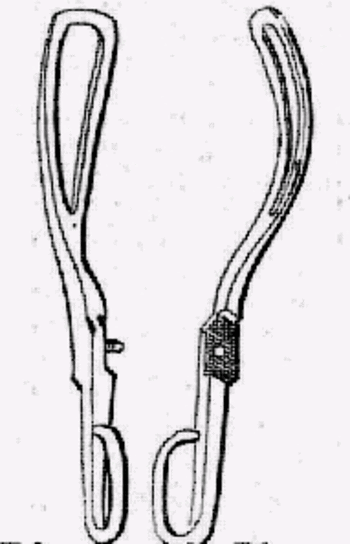
    I just happened upon this picture during the course of my business day—a random image compiling these thoughts.  If I were to try and choose another example of the medical aspect of the subjugation of woman I think that I would choose the story of the Chamberlen family.  For several generations, beginning around 1680, this family of medical doctors practiced a secret—their secret—in delivering breeched babies.  Breeched babies are those who were born feet first, which was usually a death sentence for both the child and the mother.  Patriarch William Chamberlen invented a device that would greatly aid in delivering babies in this position—the forceps.  And evenForceps
    though everyone today knows what these things are, the Chamberlens kept them a secret from the inquisitive medical world for more than a century.  Their instrument was shrouded—literally!—in secret(s), used under cover, with ceremony, conveyed to the delivery area in a box and brought out with no witnesses.  The Chamberlens felt their invention to be their own, for their own particular use and monetary gain, and the rest of the world be damned, and at least three generations (grandfather, father, son) kept the family secret. If their family could not be in charge of such a delivery then there would be no use of their extraordinary invention.  This of course would save their income from being chipped away by other physicians or midwives or whatever competent person could be found to utilize the forceps—their economic gain coming at the cost of (savable but imperiled) pregnant women who would either pay the Chamberlens for aid in their breeched births or, well, probably die.     To what degree this revolting behavior damaged other people can not be calculated. I’m not even sure about how to translate this into something more recognizable—would it be like Robert Koch keeping his isolation of Bacillus anthracis (1877), or  tuberculosis bacillus (1882) a secret?  Or Wilhelm Roentgen shrouding his discovery in secrecy somehow? (I know, I know, this is impossible.)  Or isolating a secret, proprietary cure for cancer?

    There is a large part of me that believes that if the Chamerlens had figured out something like this that affected only men, a silver bullet for something or other, that their secret wouldn’t stayed a secret for 100 hours, let alone 100 years.