A Daily History of Holes, Dots, Lines, Science, History, Math, Physics, Art, the Unintentional Absurd, Architecture, Maps, Data Visualization, Blank and Missing Things, and so on. |1.6 million words, 7500 images, 4.9 million hits| Press & appearances in The Times, Le Figaro, Mensa, The Economist, The Guardian, Discovery News, Slate, Le Monde, Sci American Blogs, Le Pont, and many other places… 5000+ total posts since 2008.

Category: Technology, History of

  • An Underground USS “Monitor”, 1878

    JF Ptak Science Books   Quick Post

    Doing work underground has long fascinated me: tunnels, mining, sapper military ops, though almost entirely human-made, not so much for natural formations like caverns and such.  Particularly interesting are the big machine brought down/assembled to do some big cutting or drilling or pounding job.  Case in point: this sharp-toothed whale:

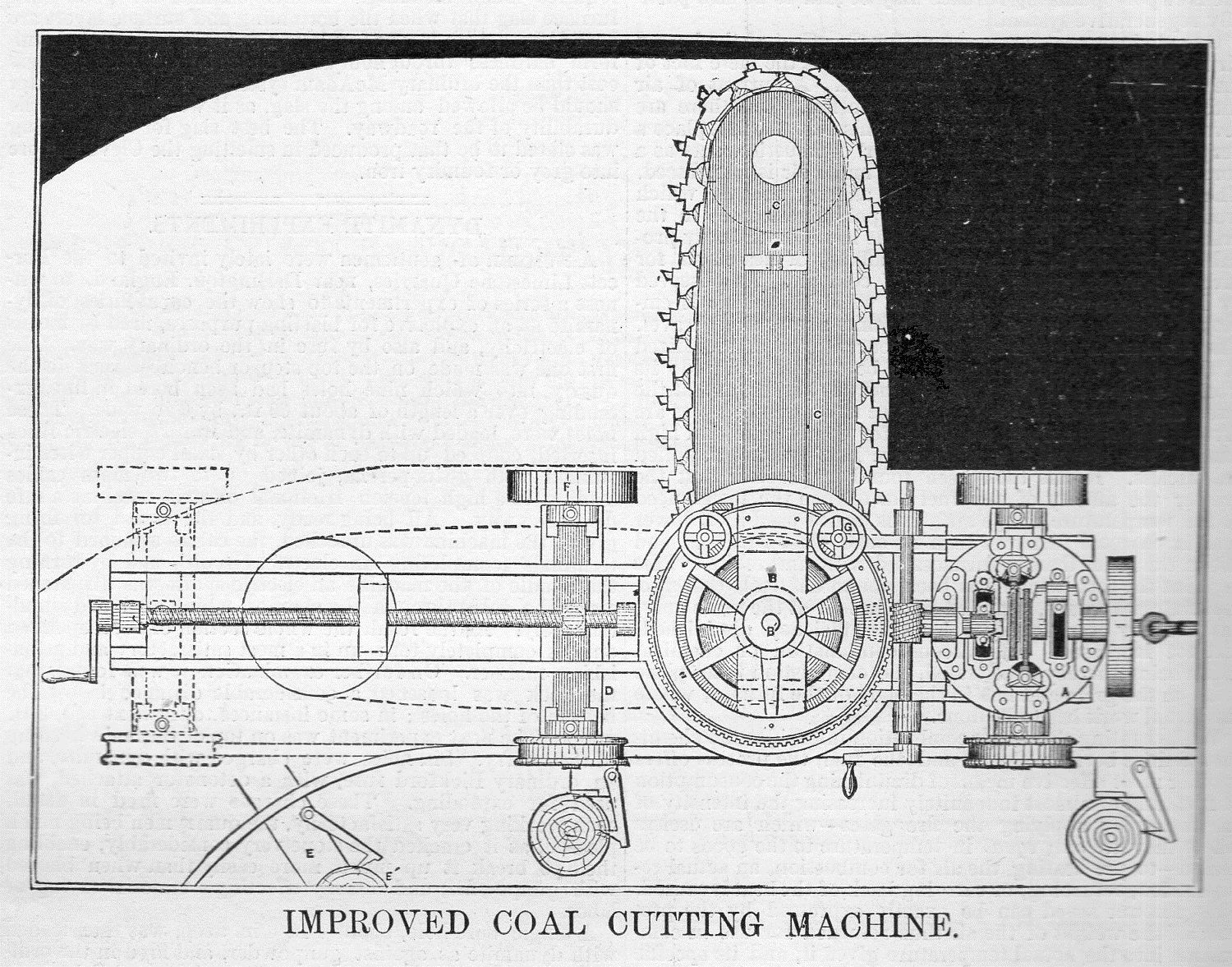
    COal cutting machine194

    The beautiful diagram for this beast appeared in Scientific American Supplement No 107, January 19, 1878, and is a cut of the machine looking straight down.  This was a monster for its time, weighing in at 3,800 pounds, and could make a clear cut into a vein of coal that was 4′ long and 2.5′ deep, and could move along a face of coal 60′ long in one hour.  It no doubt was a tremendous boon for the men who would have been in there working the coal by hand.  This was the invention of Horace Brown, and was called the Monitor Coal Cutter, no doubt because it was long and low, looking as though it wasn’t 4′ high, giving it a silhouette similar to the Civil War ironclad warship (designed by the very busy John Ericsson).

    And for all of its weight and force and potential the machine moved along a railtrack that was only 29″ wide.  

    ·Posted by :

    ·in:


  • A Finely Designed Microscope Ad, 1890

    JF Ptak Science Books  Quick Post

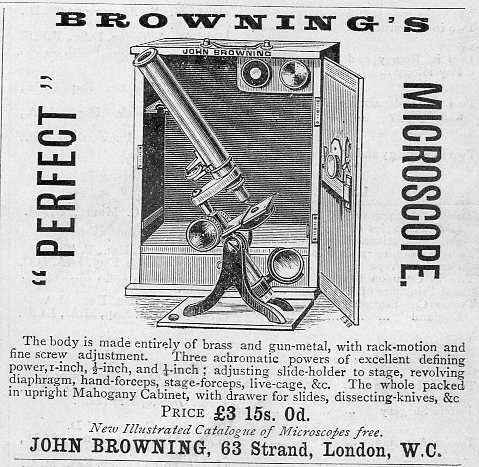
    I’m just stopping for a moment in the MArch 16, 1890 issue of Nature to admire this lovely add for Browning’s “Perfect” Microscope.  In the issue it is about two inches square–it is just a nicely designed thing. 

    Microscope154


  • An Electrical Thermometer and its Problems (1881)

    JF Ptak Science Books  Quick Post

    [I apologize for the fuzziness at the top of the image here but I couldn’t get the volume of Nature flat enough on the scanner to avoid the degradation.]

    In the wonderland world of early applications of electricity to anything comes this marvelous image of an electrical thermometer from Nature for March 17, 1881.The original image is only about 3″ tall, and I could not resist reproducing it in what is almost a 1:1 ratio. As pretty as it was/is, the implementation was a bit of a picture of a soggy sandwich.

    Electrical thermometer072

    Evidently the platinum screws running up the side of the thermometer (at every 3 degrees, though it could be refined to <1-degree increments), were connected to an alerting operator like a bell or some such thing.  That way, if something was being heated to a certain temperature and the temp changed, an alarm would sound, and the whole process could be viewed remotely.  Why this would be necessary I am not so sure–even the author admitted that the whole thing would be very cumbersome with the large number of insulated wires being tracked into the observing station.  In any event, the image is striking, if not the idea.  

    ·Posted by :

    ·in:

    —

  • Survival of Features: Darwin in Architecture and Art, 1875

    JF Ptak Science Books  Quick Post

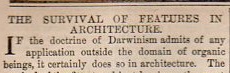
    Architecture darwin065 det[Source: Building News, April 2, 1875]

    This is a curious pair of articles, both of which appeared 13 and 16 years after the publication of Darwin’s On the Origin of Species.. (1859). The “survival of the fittest” used in conjunction with good and bad architecture is somewhat loosely affiliated with Darwin though it employs a term that was actually coined by Herbert Spencer in his book on Darwin and evolution that was published in 1864. (Here it is: “This survival of the fittest, which I have here sought to express in mechanical terms, is that which Mr. Darwin has called ‘natural selection’, or the preservation of favoured races in the struggle for life.”-Herbert Spencer, Principles of Biology of 1864, volume 1, page 444.) It is an interesting idea that employing the ideas of evolution to areas of study like art and architecture, and not without some merit.  

    ·Posted by :

    ·in:


  • The First (?) Electric Calculator, 1817

    JF Ptak Science Books   


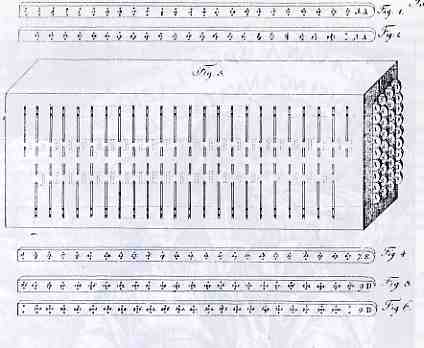
    One of the most unexpected monuments–to me at least–in the history of modern computation is the fantastic electrical calculating machine that shows up in the vast, dense, and bibliographically complicated work by Georg Heinrich Seiferheid (1757-1818), Sammulung Electrischer Spielwerke fur junge..., published over the years 1791 to 1817. 

    0 blog march 9 computer659

    Mr. Seiferheid was an experimenter, innovator, inventor and writer, and wrapped up in one complicated ball, publishing his major and minor bits under the heading of this one large work over a period of least 16 years.  And don’t let the title fool you:  in the vein of Chandrasekhar’s Newton’s Principia for the Common Reader, there wasn’t all that much in these volumes by Seiferheid for kids, just like in the Chandrasekhar book, which ratcheted the phrase “Common Reader” way, way up.  Even taking into account the level at which children were educated in the applied and natural sciences/philosophy, which demanded more from the 18th and 19th century kids than out grade school do now, Seiferheid’s work is obvious far removed from that.  Perhaps it was because he had a large number of gadgety trinkets that hung through the work like plumb lines that the word junge was included–I really don’t know.  The vastness of his reach though into all manner of mechanical and electrical objects is very impressive–Seiferheid evidently constructed electrically powered guns, clocks, and of course this fantastic calculating device. The calculator was much similar to the machine invented (although no version of it survived) by Wilhelm Schickard (1592-1635)  in 1623, followed by that in 1643 of the overwhelming Blaise Pascal (with the “Pascaline”) and then again in 1675 of Gottfried Leibniz (1646-1716) who produced the “Stepped Reckoner”—the Seiferheid machine was more complex, and of course, electric, a true and terrific innovation, creating for its maker the sobriquet of “grandfather” of the modern computer.  

    * I have found very little biographical data on this man; even the very reliable Poggendorff has only about 15 lines on him:  he was born in Wurtemberg, was a professor of physics at the Gymnasium at Schwabisch Hall, and that’s about it for the personal data.  He did write four other books in addition to this ten-volume magnum opus. 


  • Big Sparks: an Early Electric Piano & Sorta-Telegraph, 1767

    JF Ptak Science Books   Post 2230

    The description of one of the electric piano-like instruments1 occurs early on in the history of electricity, and in the case of the Jesuit Giuseppe Marie Mazzolari, it is a narrative that found its way into print in 1767. Mazzolari was actually a contributing editor of this work which was a compendium of  state-of-the-art/science tour of mid-18th century thinking and accomplishment, making his Electricorum Libri VI2 is a semi-encyclopedic testament to the period of scientific achievement and progress. Another outstanding and unexpected contribution in this book though was made by Joseph Bozzoli (1724-1783) who made the suggestion of using electricity to transmit information–that would have been a sort of electric telegraph, using encoded sparks in a Leyden jar to transmit info from one end of the electric circuit to another, which is very cool stuff 70 years before the first certified electrical transmission of data, and nine years before Tiberius Cavallo, who is generally considered to be the first to make this suggestion.  

    Oddly the book–or references to it–do not seem to show up very often in the standard histories of electricity.

    Notes 

    1.  This is actually an electric cymbalo (“Cymbalum Electricum” as it is called in the illustration in the book), but the issue is the same, being a description of the first electric keyboard instrument.  It is called a cimbalom, cymbalom, cymbalum, ţambal, tsymbaly, tsimbl, santouri, sandouri, and so on, and is a type of hammered dulcimer. A slightly earlier description occurs in Jean-Baptiste Thillais Delaborde’s  Le Clavessin électrique avec une nouvelle théorie du méchanisme et des phénomènes de l’électricité (Paris, 1761)  “Delaborde built a working model of his innovative instrument and organized performances, however, even though the press was sympathetic to the clavecin électrique, it was never developed further and was soon forgotten.”–Wiki

    2.  Mazzolari’s book isn’t in six volumes–“Libri VI” or “Libri sex” is simply the notation for the book being divided into six major sections, or books in Old School antiquarian parlance.  


  • Lowering the Mediterranean, 1930 (!)

    JF Ptak Science Books (continuing an earlier post) 

    A Monumental and Potentially Fantastically Bad Idea: Draining the Mediterranean

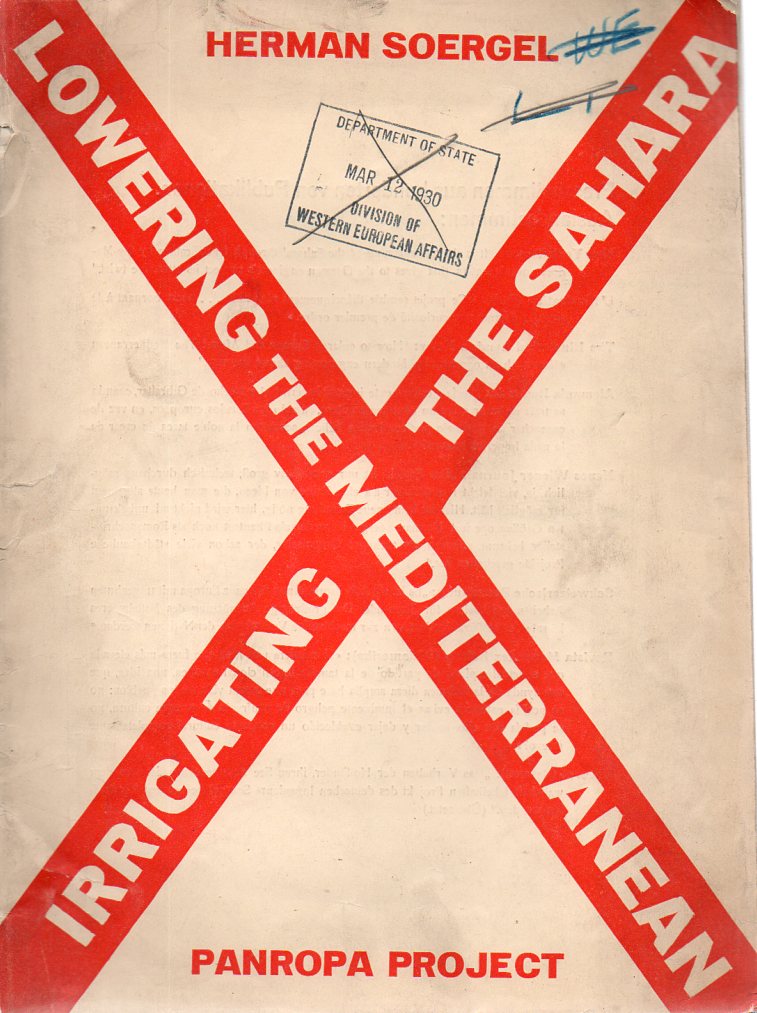
      Soergel403 [Image source: private collection.]

    “Simply the thing I am shall make me live.”–from Jorge Luis Borges, “Shakespeare’s Memory”

       
    It would be a Purgatory, or worse, to suddenly wake up one morning with another person’s memory–worse yet than to have wished it, only to find that you didn’t want it at all.  This evidently works out with memories high and low, though it is tempting to want to wish to see what the inspiration looked like for one idea located in a particular memory.  Or maybe not.  But I am curious about when and here the author of the pamphlet above got his idea, and what it looked like to him–did he hear or see or smell something that prompted the inspiration for this reverse-monumental jolt?

     It is interesting to pursue a loose thought like this to its not-necessarily logical end.  Such is the case with the self-styled Paneuropic ideas of Hermann Soergel (1885-1952), the author of the above. Soergel was a Bauhaus architect and author of a number of works on design and far more ethereal, floating-castle ideas. His most spectacular contribution—incubated in the mid-1920’s and still clinging by its fingertips as an idea among some current thinkers—was to put a dam across the straights of Gibraltar.  The dam would generate electricity of course, but most importantly to Soergel, it would also empty an enormous amount of water from the Mediterranean leaving vast new expanses of land to be developed and colonized over generations into the future.  The water of course would have to go somewhere, and that somewhere was the Sahara Desert, somehow in its wake creating farmable and productive lands. Soergel was creating a certain, very wide, fantastical future of uncertain monumental prospects.
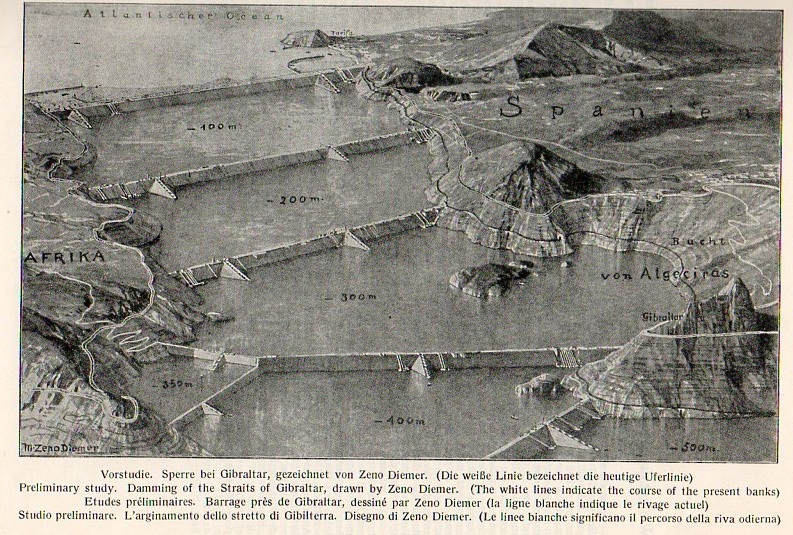
    Soergel405
    A “brief outline” of the idea was published in this four-language pamphlet, Lowering the Mediterranean Irrigating the Sahara (Panropa Project), which was published by J.M. Gebhardt in Leipzig in the very bumpy year of 1929. (The Weimar years in Germany were already into deep bumpiness; the rest of the world would follow suit in October of that year.)  To be fair, Soergel didn’t plan on emptying the entire Mediterranean, just a bunch of it–at least enough to be able to rename it.

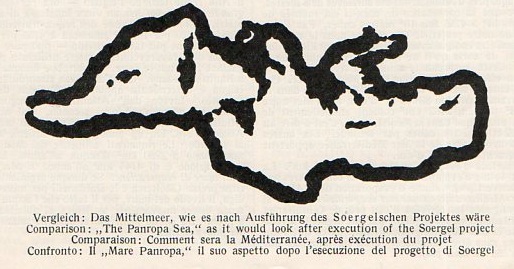
    [Here’s a map of the new Mediterranean, or the Mediterranean that would be made to go away.  As you can see at this point Sicily and Italy become enormous, and the Greek Islands are combined to form one large land mass–this last bit alone is enough to form total and complete reisstance to this idea. Also at this stage perhaps 150 or so miles of new lands have been reclaimed from the sea all along its former borders–more so in Turkey.  There is no mention as yet of any new islands that are formed in the sea water’s wake.]
    Soergel404

    The master plan at work was that the world would be divided into three economic spheres in the future, all beginning with the letter “A”:  American, Asia, and the new land to be created by Soergel, “Atlantropa”, which was the former Europe expanded into the new dry beds of the Mediterranean and North Africa.  And also of course Egypt, which would be covered with “thousands” of canals and become semi-submerged by the new borders of the meandering sea.  This would be the way for Europa to compete with the rest of the world in the future. 

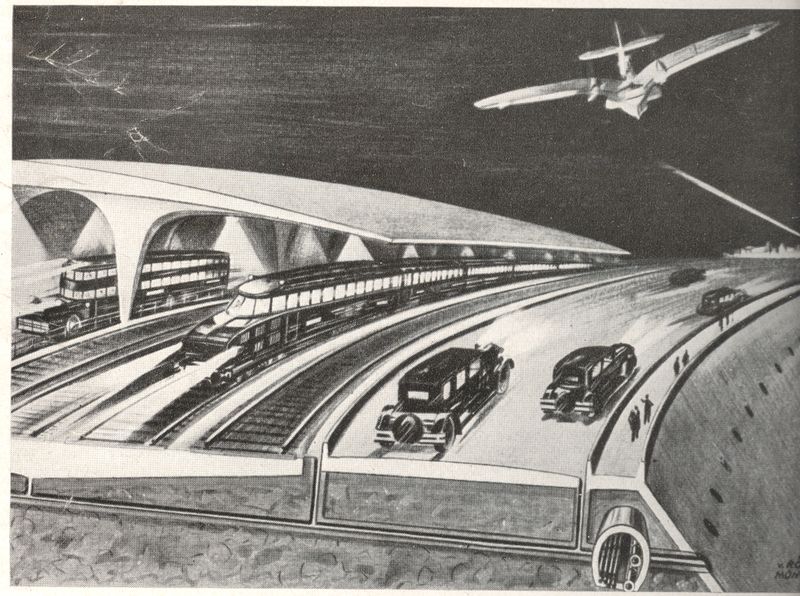
    [I should point out that the image above comes from the Illustrierte Zeitung (Leipzig) for August 1931, and is a drawing by an artist named “AS. Christ” depicting a cross section of one of the bridge/dams of Soergel’s Panropa’s ideas.]

    Perhaps it is actually three steps to get from the idea of damming up the straits of Gibraltar to the osmosis of Shakespeare’s memories into someone else’s brain—a squinting acquiescence of the middle touch being the brilliant Jorge Luis Borges.  You see it was in the Argentine master’s last published story, “Shakespeare’s Memory”, that we meet Herr Soergel (as Hermann Sorgel) again.  But so far as I can remember Soergel exists only as a fictional character, with no reference to his real-life self.  In this wonderful story, Soergel inherits the memories of William Shakespeare—these bits come to him slowly but surely, until they start to conflict with his own memory, and things get difficult.  The man with Shakespeare’s memories winds up phoning strangers on the telephone, giving them away at random, until Soergel is left with his own mind again.  Superior as Bill’s memories were, they still weren’t Hermann’s, who wanted his own life back in the end. 

    And so from the titanic, pan-europic technodream of Bauhausian Hermann Soergel to the dead brains and living memories of William Shakespeare, all through the fingers of the beautiful Jorge Luis Borges.  
    ==Blog July 21==shakespeares memorie

    I’m sorry to report that at the end of it all, near the end of the pamphlet, Soergel releases his opinion on the political importance of his project.  And yes, his aim was to form an alliance between the new PanAmerica (of the “three Americas” with the new Pan-European African Union to thwart “the yellow peril” which “arises from the racial antipathy of India, China and Japan.  Soergel writes that “the fate of occidental civilization…will be settled on the Mediterranean”.  

    After it is all said and done, perhaps the best reiew of the work by Soergel is provided by the graphic designer who put the Big Red X on the cover of his work.  It fits. 

    Some of the works by Soergel include the following:

       Atlantropa. Fretz & Wasmuth, Zurich / Piloty & Löhle, Munich 1932

    Vorwort zu: Wayne W. Parrish : Technokratie – die neue Heilslehre , Piper, München 1933

    Die drei großen A, Amerika, Atlantropa, Asien , 1938. The three large A, , Atlantropa, Asia, 1938

    Atlantropa-ABC. Atlantropa ABC. Kraft, Raum, Brot. Kraft, Raum, Brot. Erläuterungen zum Atlantropa-Projekt , Arnd,Leipzig 1942 

    Some works about  Soergel: 

    Alexander Gall: The Atlantropa project. Die Geschichte einer gescheiterten Vision. The story of a failed vision. Herman Sörgel und die Absenkung des Mittelmeers .

    Herman Sörgel and the lowering of the MEditerranean . Campus, Frankfurt am Main 1998. 

    Wolfgang Voigt: Atlantropa. Wolfgang Voigt: Atlantropa. Weltbauen am Mittelmeer. Building the Mediterranean world.Ein Architektentraum der Moderne . An architects dream of modernity. Dölling und Galitz. Hamburg  1998.


  • Space Station, 1783

    JF Ptak Science Books   Quick Post

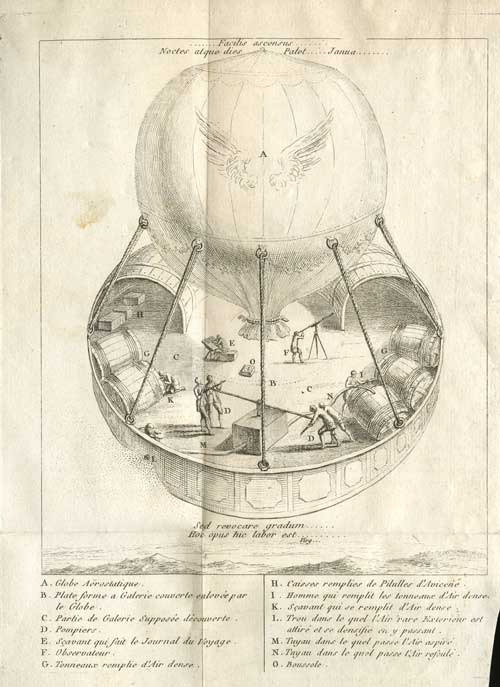
    Balloon air station[Image source: Lily Library, here.]

    This is perhaps the earliest image of a flying observatory, appearing rapidly in print in the same year as the revolutionary first flight by the Montgolfier brothers. It isn’t a “space” station, of course, but it was close to being one in the 18th century. (The title of the work:Lettre à M. de ***. Sur son projet de voyager avec la sphere aërostatique de M. de Montgolfier. Avec figure, which was printed in Paris by Marchands de Feuilles Volantes in 1783.) From what we can see of the platform there is an astronomer, someone taking notes, barrels of provisions, and five crew members operating an air pump, as well as two sheds. 

    The interesting quote at the bottom  from Virgil’s (Aeneid vi) “sed revocure gradum hoc opus hic labor est” and in English, “It is easy into Hell to fall, but to get back from thence is all”.

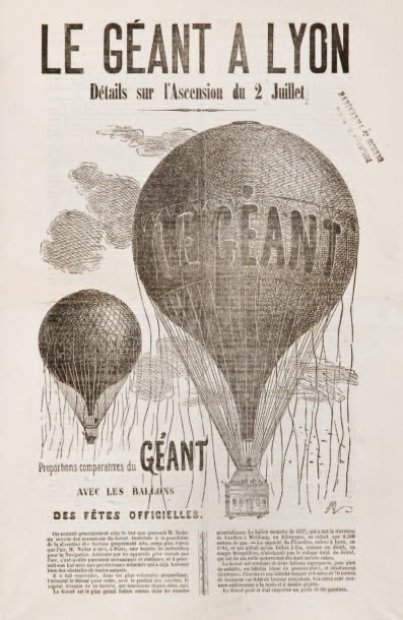
    It does remind me some of the Nadar “le Geant” balloon, which was a six-bedroom monster that saw only two flights before crashing–it was however the largest thing ever to fly up to that point. (Nadar was the first person to make aerial photographs among many other photo-firsts–and outside that he was the first to host an Impressionist exhibit of art.)

    Balloo nadar[Source, Druot catalog, here.]


  • The First Printing of an Interaction of a Child with a Telephone (1880)?

    JF Ptak Science Books  Quick Post

    The first practical and public and successful demonstration of a working telephone occurred on 10 March 1876. Four years and five months later, after an explosion of interest and use and application of perhaps the greatest technical invention of the 19th century, after many lawsuits and many different interpretation of patents and additions to the field of telephony, an unusual note appeared in the pages of Nature.  It is singular, I think–and I can say this after having read about the early years of the telephone for many years–that this article may contain the first conversations by a child on the new invention.  The conversation was all one-sided, and mostly imaginary, but still it must count for a first-something in regards to children. 

     [Source:  Nature, September 9, 1880, page 442.]


  • Bikes and Bubbles (1884 & 1890)

    JF Ptak Science Books  Quick Post

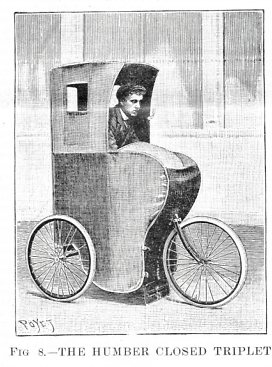
    Bike triplett187


    [Image source: Scientific American, September 15, 1902. This has nothing to do with the following, but it is a neat-looking bike, and I wanted to share…]

    C. Vernon Boys (1855-1944) was a British physicist and fine experimentalist and contributed this exemplary article on the physics of bicycles.  The article–“Bicycles and Tricycles in Theory and Practice”–appeared in the journal Nature (March 20, 1884), when the no-longer new-ish journal rapid-published the breaking and thoughtful science news of the day every week.  Generally articles in the early decades would seldom range over two pages–of course, the pages were dense, and in two columns, with usually 80 lines per column and ten words per line, so each page could be filled with 1600 words, which is four times the general length of a novel.  In any event Boys’ article ran nine columns, or about 7,000 words, which is a fairly meaty article.  

    I should point out that in addition to much else, Boys’ wrote a great classic of popular science, Soap Bubbles: Their Colours and the Forces Which Mould Them, in two editions of 1890 and 1911–and has stayed in print ever since.  It is a great book.  The full text can be found at the Internet Archive, here.

    ·Posted by :

    ·in: