A Daily History of Holes, Dots, Lines, Science, History, Math, Physics, Art, the Unintentional Absurd, Architecture, Maps, Data Visualization, Blank and Missing Things, and so on. |1.6 million words, 7500 images, 4.9 million hits| Press & appearances in The Times, Le Figaro, Mensa, The Economist, The Guardian, Discovery News, Slate, Le Monde, Sci American Blogs, Le Pont, and many other places… 5000+ total posts since 2008.

Category: Technology, History of

  • DIY Pocket Baseball Game, 1876

    JF Ptak Science Books   Quick Post  Follow Me on Pinterest

    Following up on a post from yesterday on a make-it-yourself baseball history calcul-computer is this glorious spinning arrow pocket game board from 1876.  An enthusiast could easily cut and paste their way to their very own baseball game for lost moments on the train or in line at the Piggly Wiggly.  Enjoy.


    ·Posted by :

    ·in:

    —

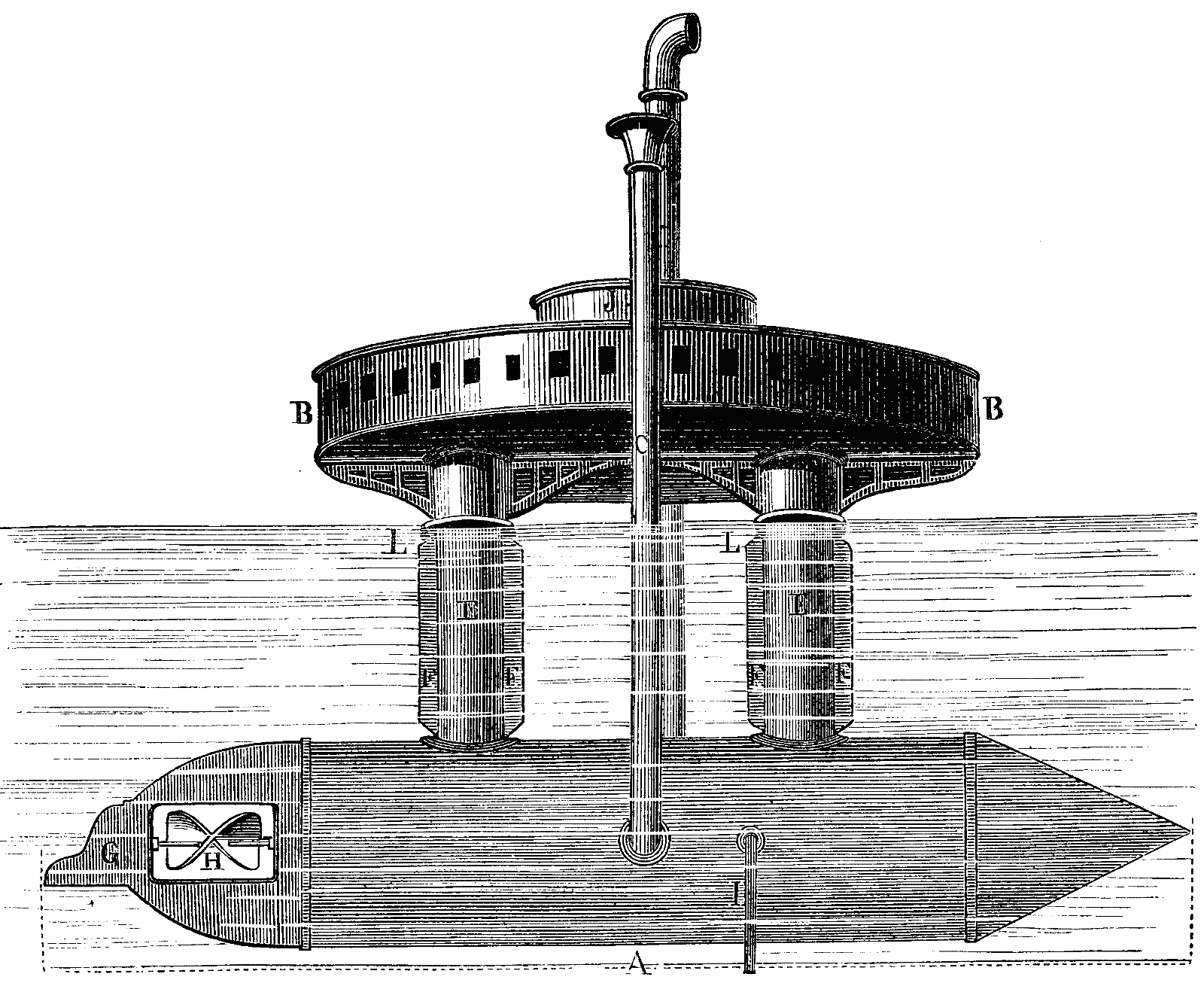
  • A Few Circular Ships (Some Submerged and Semi-Sugmerged) 1868-1880

    JF Ptak Science Books      Post 2017

    I’ve noticed a few interesting articles on the circular ship from mid-late 19th century; I don’t really have much to say about them except that I appreciate their structure and, well, beauty, and so I’m just sharing them here. 

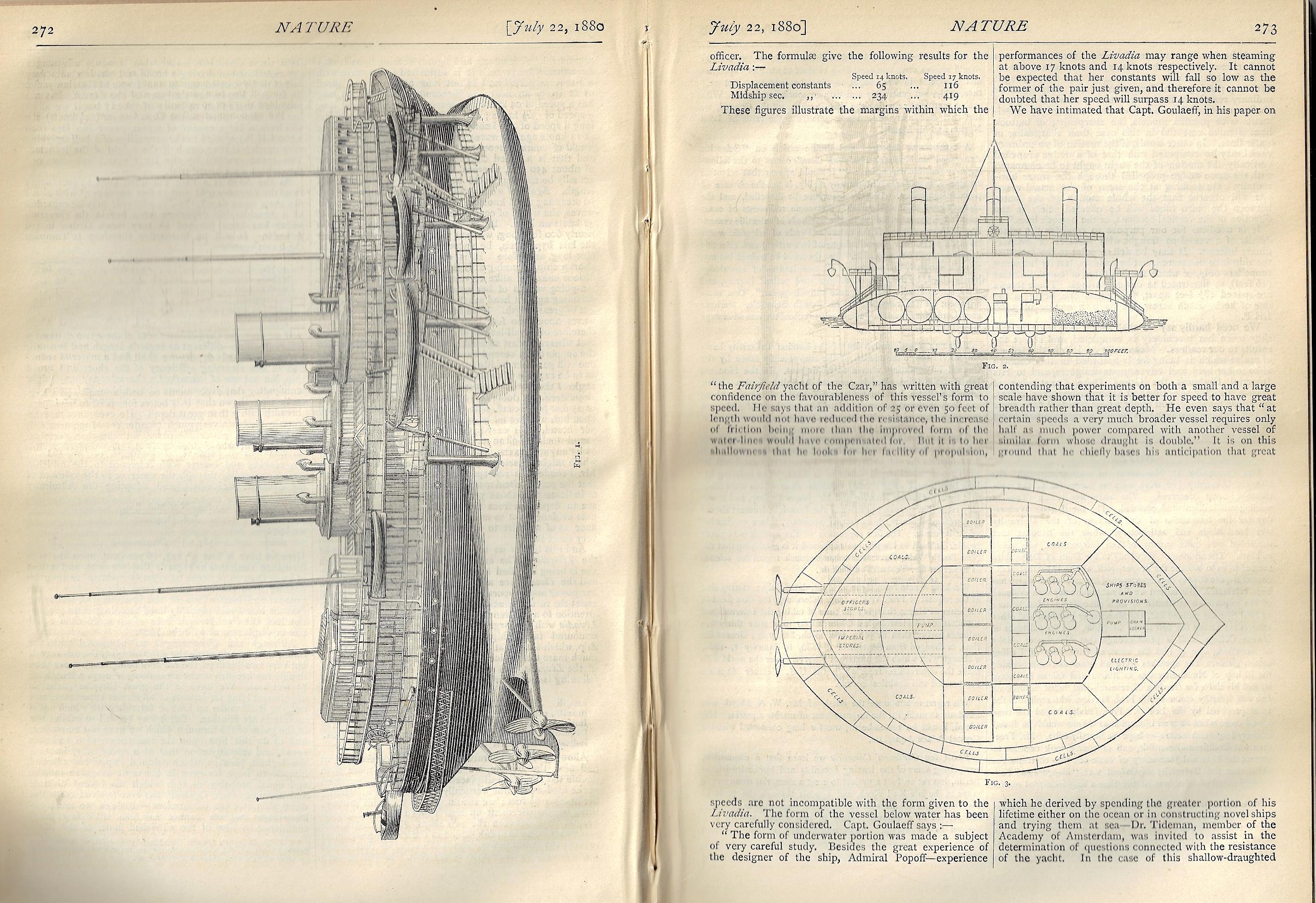
    First is “The Russian Imperial Yacht, ‘Livadia’”, which is an article in Nature, July 22, 1880, appearing on pp 270-274, with several large illustrations, including an elevation and a plan of the ship.  

    Nature 1880 Lividia

    “The Livadia was an imperial yacht of the House of Romanov built in 1879–1880…intended for service on the Black Sea…a radically novel ship conceived by Vice Admiral Andrey Popov, designed by naval architect Erast Gulyaev and built by John Elder & Co. of Govan on Clyde. The Livadia continued Popov’s line of circular shipsalthough this time Popov sacrificed geometrical perfection for seagoing capabilities. She had a beam of 153 ft (47 m) against overall length of only 259 ft (79 m). An extreme example of tumblehome architecture, she sported a conventionally shaped superstructure mounted on a wide, flat-bottomed, turbot-shaped submerged hull or pontoon. The Livadia turned out a surprisingly maneuverable and stable ship with a respectable maximum speed of 15.7 knots and her efficiency was comparable to conventional ships. Her performance at sea trials surprised most naval architects and was attributed to the favorable placement of the propellers.”–Wikipedia

    Next is this fantastic set of drawings for a proposed circular semi-submerged ship, the work of Donato Topmmasi of Paris, and which appeared February 24, 1877, in the Scientific American, page 115.

    Submerged ships tommasi a


    ·Posted by :

    ·in:


  • The Electric Titan Robot Tank Monster, 1916

    JF Ptak Science Books  Quick Post

    “The Electric Engineer”, by Herbert C. Crocker, was an article in the December 1916 issue of Illustrated World, and featured this extraordinary idea:

    Robot tank627
    “This mechanical marvel may furnish the warring armies of Europe with a new engine of destruction”, page 504.

    “King Grey”, the creation of Vern Pieper of Alton, Illinois, turns out not to be an extraordinary giant as depicted in the cover art, but a giant on the humanish scale, topping out at nine feet tall and 750 pounds, “a marvel of steel plates, knuckles and cog wheels”, that would have its own guns and haul a small armored cart. It looks quite a bit like a more-famous British steampunk version of this idea from mid-century.

    Robot tank626


  • The Spine of Society and the Beginning of the Grid, 1878

    JF Ptak Science Books

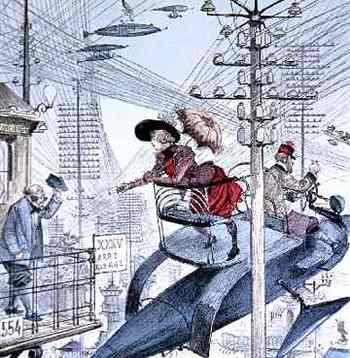
    Robida

    I’m interested to know what anyone might know about the use of
    metaphors relating large-scale societal techno advances and biological
    functions?  I have no doubt that they go back to modern-ancient times
    (say to William Gilbert (1544-1603)  and his vis electrica)—but I’m
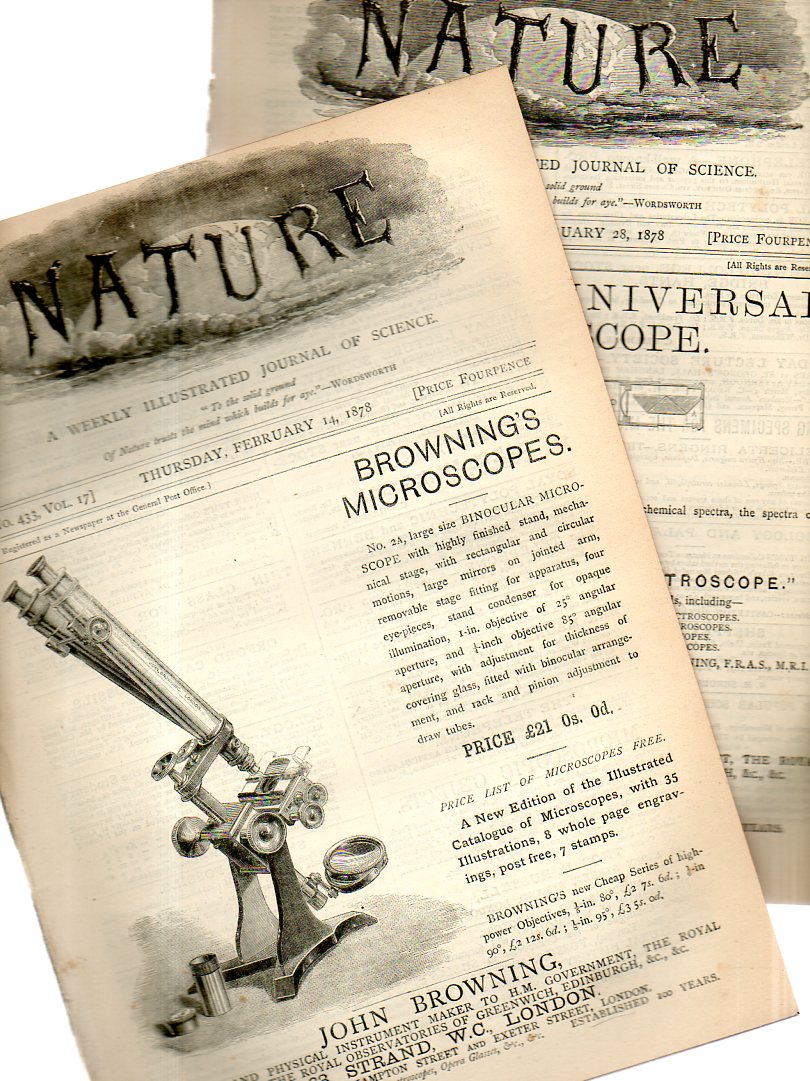
    stopped today by seeing this paper by J. Norman Lockyer called “Social
    Electrical Nerves” (in two issues of  Nature for 14 and 28 February
    1878).  In this paper the great astronomer looks at elements of the
    “grid” as it was and seeing how the new networks of police and fire
    communications via telegraph  interacts with the existing electrical
    systems.  It seems to me an early use of  nervous system/electrical
    grid, in spite of the fact the first “electrical highways” (as Lockyer
    puts it 120 years before our own “information superhighway”) appeared
    in England 32 years earlier though apparently without these biological
    metaphors. 

    • [This article,which appeared in two parts, is available for purchase via our blog bookstore, here.]

    Robidatelephone_lines
    The work pictured above is the electrically-draped world of the future,
    at least according to the vision of the wonderful Albert Robida, who
    was actually at work on these visions just at the time of the
    publication of the Lockyear paper . (Robida produced at least a trio of
    interesting and lovely and occasionally prescient works:  Le Vingtième
    Siècle
    (1883);  La Guerre au vingtième siècle (1887); and Le Vingtième
    siècle– La vie électrique
    (1890)).   Many of Robida’s visions of
    electrical connectivity seem to me to move beyond the nervous system
    metaphor and become a kind of societal “skin”—which is not terribly far
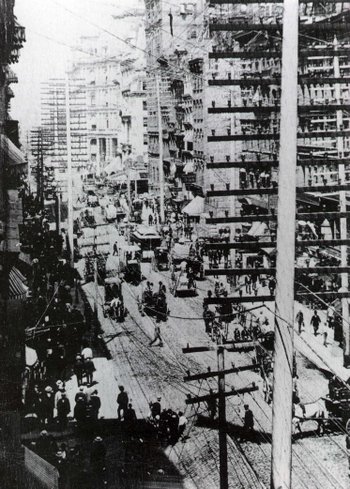
    from the truth, especially when looking at images of congested
    metropolitan centers ca. 1910, when utility poles fairly well sagged
    under 20 (!) horizontal crossbars carrying a dozen lines apiece.   At
    the very least, you knew that something or other was happening (fast
    forward to the massive ductworks of Terry Gilliam’s masterpiece,
    Brazil.) 

    Social electric616

    And now that the wireless age is starting to get ridges in its
    fingernails (the “wireless” age being at least 115 years old,
    beautifully borne by Heinrich Hertz and Marconi), are our bio-electrical  metaphors giving way?

    ·Posted by :

    ·in:


  • On Using the Pocket Spectroscope to Foretell Weather, 1884

    JF Ptak Science Books    Quick Post

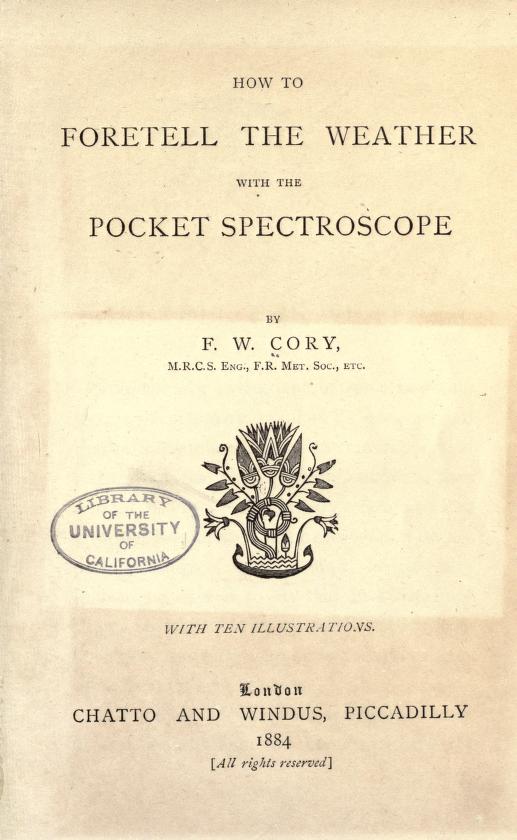
    I was working my way through an edition of Nature for 1884 (23 October, page 606) when I found a review of F.W. Cory’s How to Foretell the Weather with the Pocket Spectroscope (1884).  The title was enough, and the review even more so–I knew this was an obscure work, but not so much anymore, as the entire book is located online! Sometimes I get used to the sci-fi aspect of the intertubes, but when I make discoveries like this I am reminded all over again how magnificent all of this is. 

    Howtoforetellwea00coryrich_0005[Source:   University of California Libraries via Internet Archive, here.]

    ·Posted by :

    ·in:

    —

  • The Camera Obscura at War, 1885

    JF Ptak Science Books  Quick Post

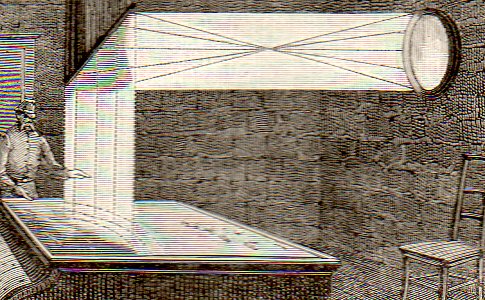
    I’m fairly well certain that I have never seen an image of a camera obscura being used for military purposes–until today.  I found “The Camera Obscura in Torpedo Work”, in the great scientific journal Nature, for 26 February 1885, pp 389-340.  Here’s a detail:

    Poker592
    the full article follows.  It makes sense, kind of a cyber-tool, a steampunk hologram in a way. And there it is.

    If you’d like to own the original article you may purchase it via our blog bookstore.

    ·Posted by :

    ·in:

    —

  • Q: When is a Stringed Instrument a Trumpet?

    Marigini trumpet578JF Ptak Science Books  Quick Post

    A:  When it is a triangularly-based monochord called the “Trumpet of Marigni”.  It was designed 500 years ago to sound like a trumpet by virtue of the single string and the tremulations of the bridge.  I’m not so sure what it sounds like (though it sounded like a trumpet) but it certainly is a beautiful thing seen in profile. 

    This appears in A Course of Lectures on Natural Philosophy and the Mechanical Arts, by the encyclopedic polymath, Thomas Young.

    An 1845 version of the work and the engravings is available online–I’m using the engravings from the first edition that I have in hand, which are much cleaner than the later reprint. (I should say that the text is the same for the description of the illustrations so far as I can tell, though position and so on is different.)

    ·Posted by :

    ·in:

    —

  • The Future of Sucking, Part II–Supersonic Travel Tunnel

    JF Ptak Science Books    Post 2090 (continuing an earlier post)
    Follow Me on Pinterest

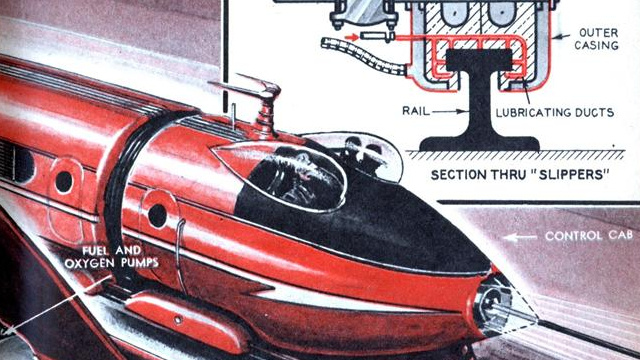
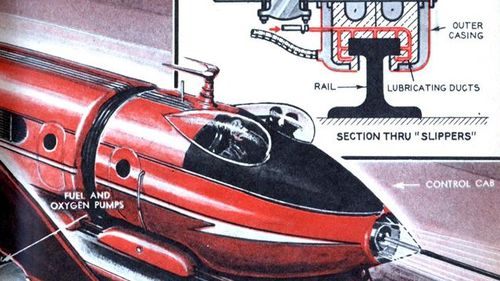
    I found a report by John Prather in 1945 continues a sluggish history of underground high-speed travel. There’s a scifi story by Jules Verne’s son, Michael, Un Express de l’avenir (An Express of the Future), written in 1888, and a 1913  novel Der Tunnel by Bernhard Kellermann, and a very pretty example, a New York-Los Angeles bullet train as found in Modern Mechanix in 1948:
    Tunnel NY LA 1948

    There’s also a very fine effort described in the wonderful Improbable Research website, an 1825 effort, describing a 5-minute ride from London to Edinburgh.

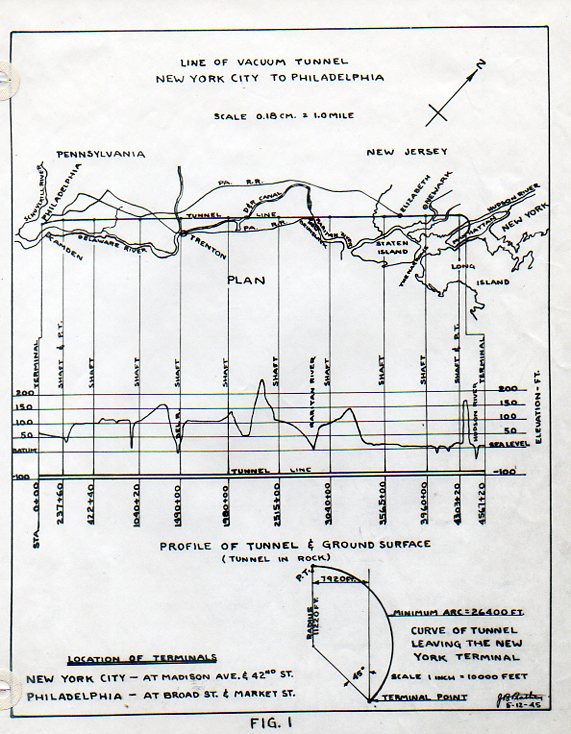
    John B. Prather launched an idea in 1945 for building a high-speed pneumatic passenger/freight train connecting New York City to Philadelphia.  His New York-Philadelphia Vacuum Tunnel, Preliminary Design Features and Economic Analysis (the original available on our blog bookstore) was exceptionally hearty. The idea is interesting in a removed, lets-not-do-it way because, well, it just doesn’t seem to make sense in the long run, at least beyond the building of the thing to show that it could be done.  And I don’t doubt that could be the case–I just don’t know why it was necessary. 
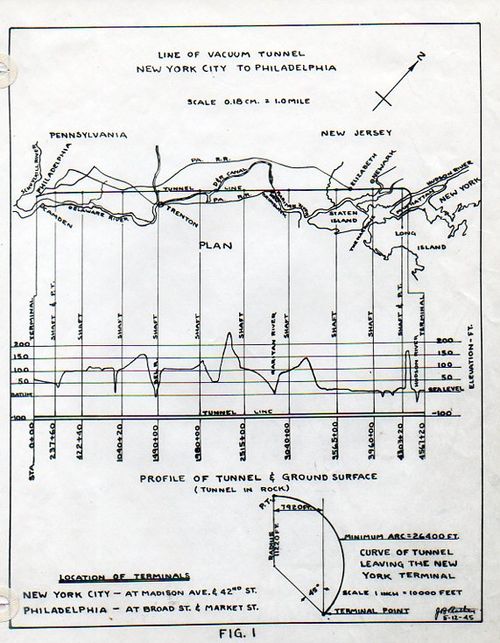
    Vacuum tunnel318 Mr. Prather’s approach seems to be the work of an engineer, or at least he had some help.  I doubt though that he had any help from a structural engineer or site geologist–his proposal was to build this tunnel 100′ down through bedrock when it could be found, a level hundred-feet  below the surface, from NYC to Philadelphia.   The tube would accommodate an aluminum-shelled  400′-long train that would be hauling 350 people and 175 tons of freight at speeds of 400-600+ mph, making the run between the two cities in about 20 minutes.  Not bad.  He figures too that all of the freight could be offloaded in 7.5 minutes.  This would make for  a very busy train, though Prather doesn’t tell us how many runs a day it would be making. This was all preliminary.

    The 16.2′-wide  tunnel would be 456,720 feet long, and would cost $173 million to excavate and $41 million to line with cement–according to the author.  The total cost for the ordeal would be about $334 million and would take 6 years, start to finish–that includes all of the tunneling, which would swallow/excavate/face 300′ per day. 

    I don’t see, really, how this could be so narrow a tunnel–I’m not an engineer but it would seem that wear, heat and the abuse and so on that a massive and dense 400′-long missile going 400+mph would require something that was more than 125% of the width of its trains. 

    There is however  precedence for a massive tunnel of something like this size being built in something like this time–the Delaware Aqueduct is 82 miles long and 13 feet wide, and was built during the Second World War (1939-1945) , so, perhaps if enough people and money were thrown at a project like the vacuum tunnel could actually be built (barring geological problems). 

    But it would all be worth it:  Prather suggests that the overall revenue from the operation of the train to be $196 million/year with $32 million in yearly operating expenses.  Which means that the whole thing could be paid for in three years or thereabouts.  So if the things was started in 1946, it would all be finished and paid for by 1956.

    I can understand his thinking, though, especially when you consider the impact of the year (1945) in which this paper was written.  The U.S. was came away from WWII by far more strong than any country on Earth, with its GDP being about 50% of that of the entire world–on the other hand, the federal deficit was 125% of the GDP, so perhaps in addition to being in an extraordinary position, investment was also somewhat gunshy.  And of course there’s the problem of whether Prather’s idea made any sense at all.  But I can understand the high times during which his project was announced. 

    I’ve looked at a number of proposals like this over the course of this blog–like almost filling up the Narrows between Staten Island and Manhattan with an airport and seaport, and making a series of transoceanic airports for flights between the continents, and dropping a gigantic shell filled with people from the top/interior of the Eiffel into a narrow hole filled with water, and covering Midtown Manhattan with a rooftop airport, and covering Midtown Manhattan with a glass-ish dome, and so on–and I know that it is good for at least one thing:  superb classroom discussion fodder of why something like this does or doesn’t make good physical/economic etc. sense.


    ·Posted by :

    ·in:


  • SunPunk, 1888

    JF Ptak Science Books   Quick Post

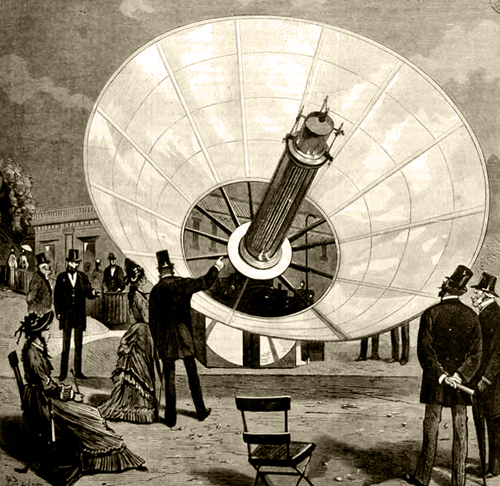
    Ericsson2[This image appears in his “The Sun Motor”, in Nature for August 1888.]

    A while ago I thought about an alphabet of variegated -punkisms since SteamPunk didn’t seem quite enough for things punky. (That post, Beginning an Alphabet of Science Fiction -punkism is here, though it didn’t get much leg.)  In addition to that alphabet there’s also FuturePunk, ElectroPunk, and AirPunk, among others–but tonight I’d like to introduce SunPunk to this mix.  There’s a possibility for a lot of indirect steam from SunPunk, and in this instance there is a lot of metal. the other thing, however, is that it was real.

    The work (above) is that of the very versatile John Ericsson (1803-1889), who among other things perfected the modern screw propeller and designed the USS Monitor (and who also has one of those Mystery Monuments in D.C.).  Ericsson was fascinated by the possibilities of solar power, and worked on the problem for 25 years, right up until his death.  The metallic bed of his creation would hold 100 sqft of mirrors “presented at right angles to the sun, at noon, int he latitude of New York, during summer, develops a mechanical energy reaching 1,850,000 footpounds per square hour”, which was enough to run a good engine.

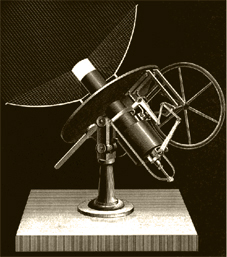
    Now the idea for using the Sun as a machine is ancient, with references and details appearing in the works of Euclid, and Archimedes, and Hero of Alexandria, though the first practical construction of one (outside of a solar oven and such) is relatively recent, by Augustin Mouchot in 1860.  Actually, Mouchot exhibited an incredible sun machine (his Sun Concentrator) in 1869:

    Mouchot2[Source: Land Art Generator Initiative, here.]

    His engine was indeed a beautiful thing, and it does have the elements of severe AirPunk, but I think it doesn’t have that certain weightiness of the Ericsson engine.


    ·Posted by :

    ·in:


  • Sporty Tubes–a Great DIY for Kids’ Wheels, 1937

    JF Ptak Science Books   Quick Post

    French soapbox474

    My eyes didn’t quite focus on this cover when I first saw it–I was in the process of reviewing several hundred pamphlets, and for some reason I saw mostly color and not so much form.  When I focused, I hoped that it would be exactly what it was–a do-it-yourself (mostly) catalog of designs for wheeled recreational toys for kids. Sportub, le Jeu Reel, was composed by William Derlaz and printed in 1937 in Geneva, and held the key to the design for a host of soap-box-derby things many of which were assured to cause minor fun injury.  It is complicated and simple at the same time, with enough information to shopw you how to build these things, with everything on one small page. 

    In its way this little pamphlet with its two dozen designs is nothing short of a little bit of sublime. 

    (As it turns out, this pamphlet is pretty rare–no copies show up in the massive WorldCat/First Search cataloging tool; and there are also no hits in Google.  If you wanted this, you may certainly have it, findable for sale in our bookstore section.)

    ·Posted by :

    ·in: