A Daily History of Holes, Dots, Lines, Science, History, Math, Physics, Art, the Unintentional Absurd, Architecture, Maps, Data Visualization, Blank and Missing Things, and so on. |1.6 million words, 7500 images, 4.9 million hits| Press & appearances in The Times, Le Figaro, Mensa, The Economist, The Guardian, Discovery News, Slate, Le Monde, Sci American Blogs, Le Pont, and many other places… 5000+ total posts since 2008.

Category: Psychology

  • Propaganda and Surrender Tickets, World War II, 1943-1945.

    JF Ptak Science Books  Post 1200

      Propag--25753

    A part of the payload dropped on German and Japanese forces were not metal and explosive, but paper. Hundreds of thousands of pieces of paper with real and imagined information, tickets to surrender, reminders of the coming of the end of the war, passages to a prisoner of war camp somewhere that would ensure the soldier’s survival of the Blogpropogwhere_are099rest of the war.  Convincing someone to surrender, or making it easier for them to not fight too hard and to surrender, is sometimes easier than to confront and kill them.

    For the most part these were distributed in a combination effort between the U.S. Army Air Force (USAAF) and the Royal Air Force (RAF), while the other major segment was done by the Supreme Headquarters of the Army Expedition Force (SHAEF) and the 8th U.S. Army.  There pieces of directed information were very persuasive, but of course they were hardly new—not even the delivery system (via aircraft) was an innovation. 

    These leaflets were more or less an “information” service relating factual events and presented in such a way to persuade and convince whomever picked them up that their cause was at this point futile.  In just about every case in the 150 items in my small collection as far as I could determine all of the statements made were indeed correct and accurate.  Leaflets were dropped by the ton during the war that were pure fabrication, intended to confuse the scare the recipient into surrender, deceiving them;  but not these. (For example, a famous use of deception in major confrontations was Operation Quicksilver and the creation of the First United States Army Group (FUSAG), a non-existent fighting enemy that was supposed to distract the Germans while real preparations were underway elsewhere for the invasion of Europe (D Day).
    Blogpropogon_german_soil100  
    There was a distinct threat of terror in many of these leaflets, though the terror would never come from the Americans or Brits—the Russians, however, were another story. (Remember that the U.S. gets into the war at the end of 1941; the British had been fighting since 1939; and the Russians, well, they had been fighting too since 1939 [starting out without chivalry and with cold malice against the Finns], but they did fight against the Nazis once they had been completely deceived by them,  losing 20 million people in the process.  The Germans had much more to fear from them than anything on earth. And rightly so.) The use of terror in propaganda is probably as old as warfare itself—for example the Mongol leader Tamerlane built a pyramid of 90,000 human heads in front of the walls of Delhi to persuade the inhabitants to just forget about fighting, and leave.   The British employed a terror tactic in the use of the Gurkas and their curved and menacing Kukri to great advantage; the Americans had the Phoenix Program in Vietnam (for the assassination of leading Viet Cong and their supporters), and so on, into the sunset.
    Blogpropogpunctured101
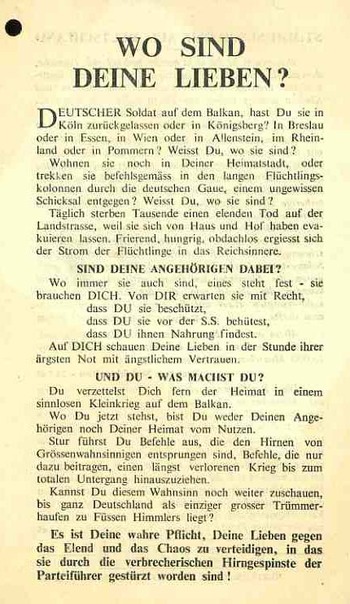
    I do not intend to try and write a thousand-word history of wartime psychological operations here—I just wanted to share some of the extreme emotions and humanity that surfaces in some of these leaflets.  The first (above), for example, translated, asks “Where are your loved ones?” (Sprint, 1945), and hammers away at the soldiers memories of home and family, and about what might be happening to that family now that the war is just about won by the Allied forces, and that the Russians were on their way to Berlin.  These family-driven, hollowing, haunting, nervous questions went, I suspect, to the very heart of anyone who picked it up.
     
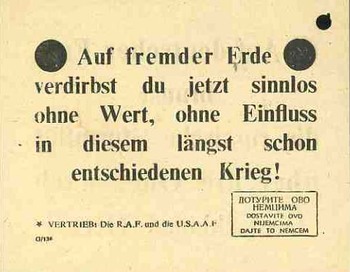
    The second, “Auf fremder Erde (etc.)” (Spring 1945), roughly translated, called the attention of the German soldier again to the Russians, “On German soil the Russian Deluge is Raging across the Oder toward the Heart of Germany!”  And “On foreign soil you are perishing relentlessly, without value, without influence, on this war which has long been decided!”

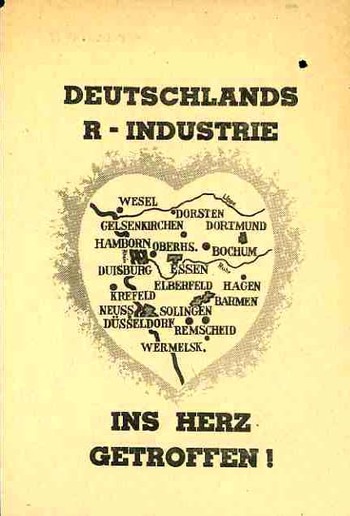
    The third leaflet, “Deutschland R-Industrie…” (3 April 1945) informs the German soldier that the hear of the German industrial region has been punctured and given up, and that supplies to soldiers in the field would no longer occur—that the fighting man was basically adrift, lost, forgotten, unreachable by everyone except the enemy.
    Blogpropogceased102_2
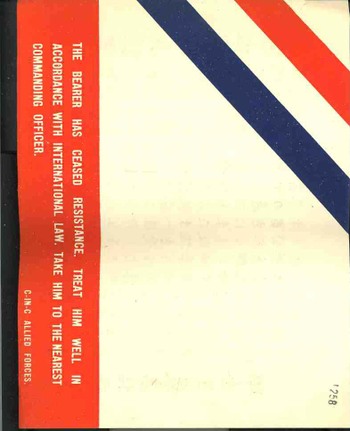
    The next example is a 10×8 inch surrender pass that was dropped on Japanese soldiers in the early spring of 1945, and tartly signed “C-in-C [Commander in Chief] Allied Forces”.  There is a very full explanation in Japanese on the back of the ticket, which has not been translated.  It seems rather remarkable to me that this was so well designed, and so attractive, and so large, and that it was dropped from a plane on thousands of Japanese troops.  As were they all, really—just about every one of the leaflets in y house are extremely well written and designed—epistles from a plane to induce surrender to a defeated, tired, dying set of armies.

    ·Posted by :

    ·in:

    —

  • Nazi Propaganda to the French–Leave France Behind and Join Us

    JF Ptak Science Books   Post 1156
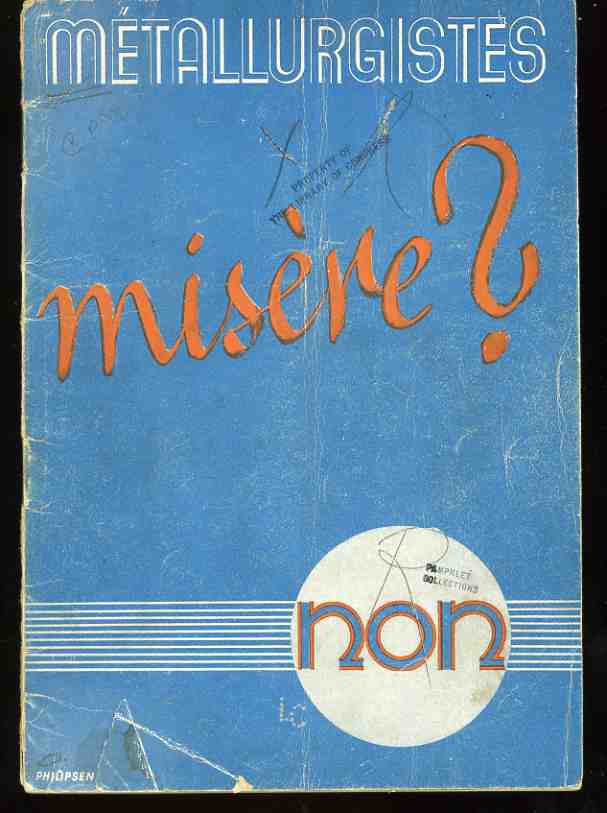
    0--blog-dec 9 vichy cvr220This appeal to practicing French metallurgists by the Nazi occupying force (Metallurgistes misere? Non 1943.) promised good wages, a clean place to sleep, and a livable future.  This included a life for professional metallurgists with a family, as well.  The Nazis were (blood) thirsty for practically-trained “help”, desperate for people with an expertise in occupied France to help contribute to their war effort, and this pamphlet was one means of trying to persuade (via propaganda) or purchase the tacit approval of these professionals.  The Nazis were promising a place to all of those who followed the call, a place in the resurrection of Europe, in the rebuilding of the European community under German/Nazi rule. 

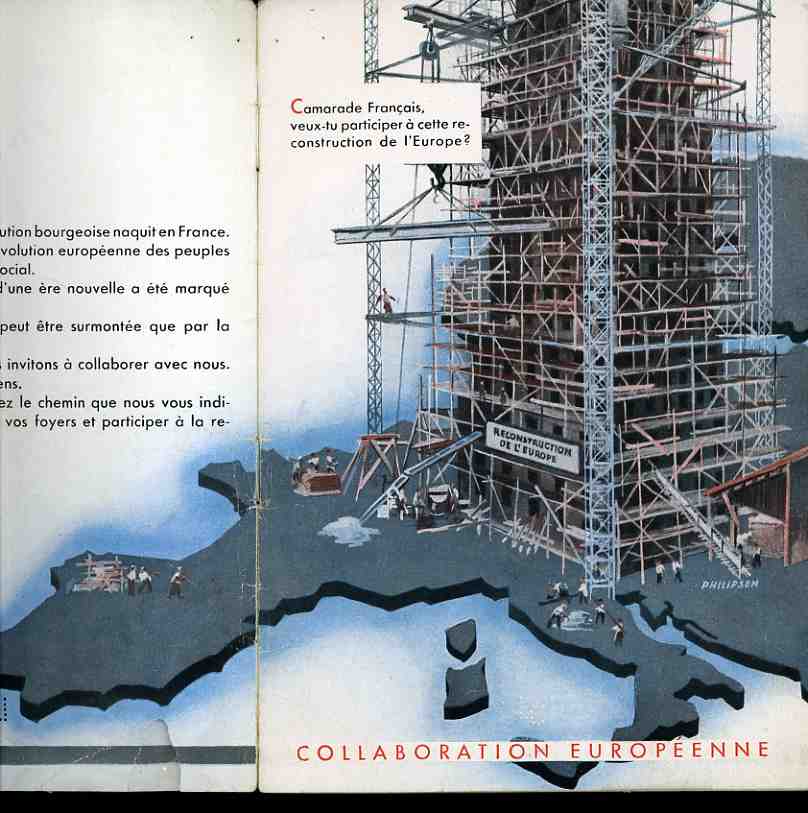
    There was one very odd problem in this pamphlet.  The map shows the creation of this very large allegorical structure, which naturally centers on Germany;

    0--blog-dec 9 vichy cvr219

    but strangely enough, none of the structure seems to touch French
    soil–so much for the “New Europe”.  As a matter of fact it looks as though there is a table with
    three men standing around it at just about the exact place that Paris
    would be.  I’m not convinced that this was intentionally represented
    this way, showing the French reader that France was not going to be
    part of the rebirth–not having France as a part of this new empire
    would seem to be unthinkable–perhaps.  Maybe the issue was to show the inductees that should they decide to stay at home they and their family and the rest of the country will be part of a destitute agrarian Medieval future, that France would not be part of the New Europe, rather than someone screwing up in the Nazi propaganda offices. The screwup is possible though–they were, after all, only Nazis.

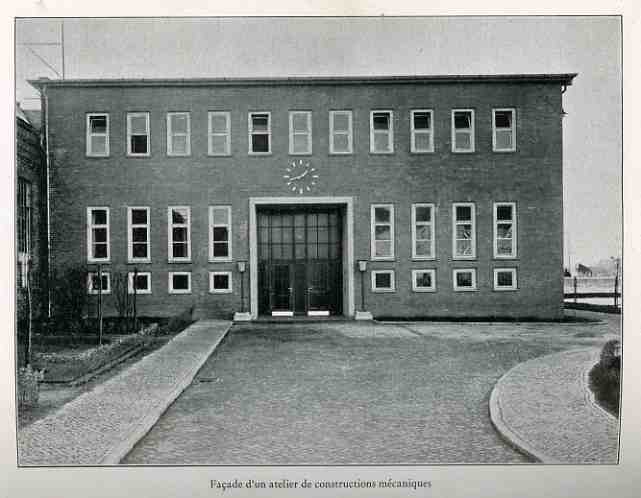
    Photos of the promised facilities:

    0--blog-dec 9 vichy clock222


  • Dreams of Mathematics

    JF Ptak Science Books LLC  Post 692  Blog Bookstore

    Thinking big thoughts in dreams is generally not a common thing, as anyone who has read their own semi-conscious half-awake memory notes of a dream-based inspiration could attest.  But it does happen: 
    ==Blog July 21=math dream
    Paul  McCartney1 dreamed the song Yesterday, Gandhi dreamed the source of non-violent resistance, Elias Howe
    dreamed of the construction of the first sewing machine, and Mary Shelley the creation of her novel Frankenstein…  For good or for ill, William Blake was evidently deeply influenced by his own dreams; on the other hand, Rene Magritte was deeply influenced by dreams but didn’t use any of his own for his paintings, or so it was said. Otto Loewi turned an old problem into not one in a dream, finding a solution to the prickish problem of whether nerve impulses were chemical or electrical (and resulting in the Nobel for medicine in 1935); the fabulous discovery of the benzene ring came to August Kekule in a dream as well.  Artists have been representing people in dreams and dreamscapes for many centuries: Durer depicted a dream in a 1525 watercolor, for example, and thousands of artists have depicted famous biblical dreams (Joseph of Pharo) for long expanses of time.

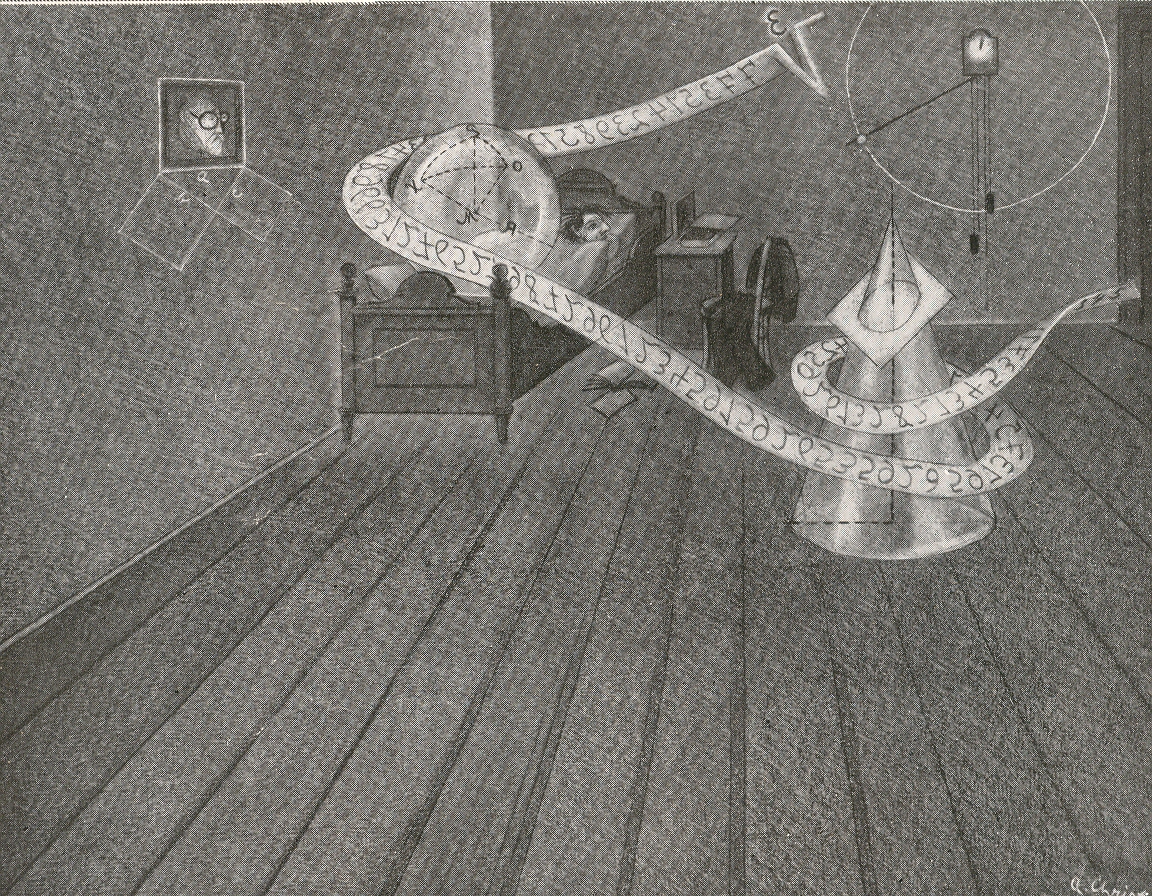
    What struck me, though, in this illustration found on the other side of the page of the Illustrirte Zeitung2 (for August 1932) that I used for yesterday’s post about damming Gibraltar and Shakespeare’s memories, was the depiction of someone dreaming mathematical thoughts…or at the very least, dreaming numbers.  People have undoubtedly dreamed much in mathematics, but I can not recall seeing illustrations of these dreams.

    I’m differentiating here from something like a Poincarean inspiration, or vision, or thunderstrike–I’m talking about drop-dead asleep sleep, dreaming sleep, REM and all that. Also I’m differentiating this from imaging mathematical thought, as in the work of Francis Galton in 1880 in which the subject of mentally seeing the process of mathematics is perhaps first addressed. I wrote a short piece on that here, way back in Post 9. )

    Photo

    The numerical sequence in this dream doesn’t look like anything to me:  the backwards radicand doesn’t strike anything common in my head.  The geometrical drawing under the portrait in the dreamer’s room though is the impossibly iconic Pythagorean theorem, and there is a nice picture of a conic section in the foreground; but the artist, who improbably signed the work “A. Christ”, doesn’t offer much of math in the dreamscape.  Still, it is a rare depiction of someone dreaming about math. 

    Notes
    1. “I woke up with a lovely tune in my head. I thought, ‘That’s great, I wonder what that is?’ There was an upright piano next to me, to the right of the bed by the window. I got out of bed, sat at the piano, found G, found F sharp minor 7th — and that leads you through then to B to E minor, and finally back to E. It all leads forward logically. I liked the melody a lot, but because I’d dreamed it, I couldn’t believe I’d written it. I thought, ‘No, I’ve never written anything like this before.’ But I had the tune, which was the most magic thing!” from Barry Miles (1997), Paul McCartney.
    2.  This is really a great sheet of paper, coming from issue 4492, pp 518-519.  Two pictures of dreams on one side, with three visionary images on the other (the Gibraltar dam, a sub-polar submarine, and a futuristic Indian railway/bridge.


  • What Things Are Not Department: Freeing Sex from Sin in A. Niphus, 1549

    JF Ptak Science Books LLC    Post 652   Blog Bookstore

    Blog--jun 15--love I suppose that one could write about virtually anything in
    terms of what that subject is not:  everything
    that is tangibly matter or energy could be something else, and everything not
    (like shadows and thought) are the stuff of being what they are and aren’t at
    the same time. 

    In 1549 Augustinus Niphus wrote a beautiful, not-so-little
    work on the subjects of beauty and love. Niphus (or Agostino Nifo,
    or Niphus Suessanus, or Niphus
    and sometimes  Nyphus) was born in the Kingdom of Naples

    around 1473, and was around 55 or so when he died in
    1538-1540.  He was a philosopher and
    historian of medicine in the high-Renaissance sense, was a great Aristotlean
    and Averroist,  and proved to be an able
    antagonist to the Christian churches on the subject of the blessed
    interpretations of millennially-dead Aristotle. 
    There are some who claim that Niphus was a little incoherent on the
    subject of Aristotle because, well, he taught the corpus aristotlelicum at university—but Aristotle at this point in the
    Renaissance was incredibly deeply ingrained in the curricula of all
    universities all across Europe, and was opne of the great basics of education. There
    was no escape.

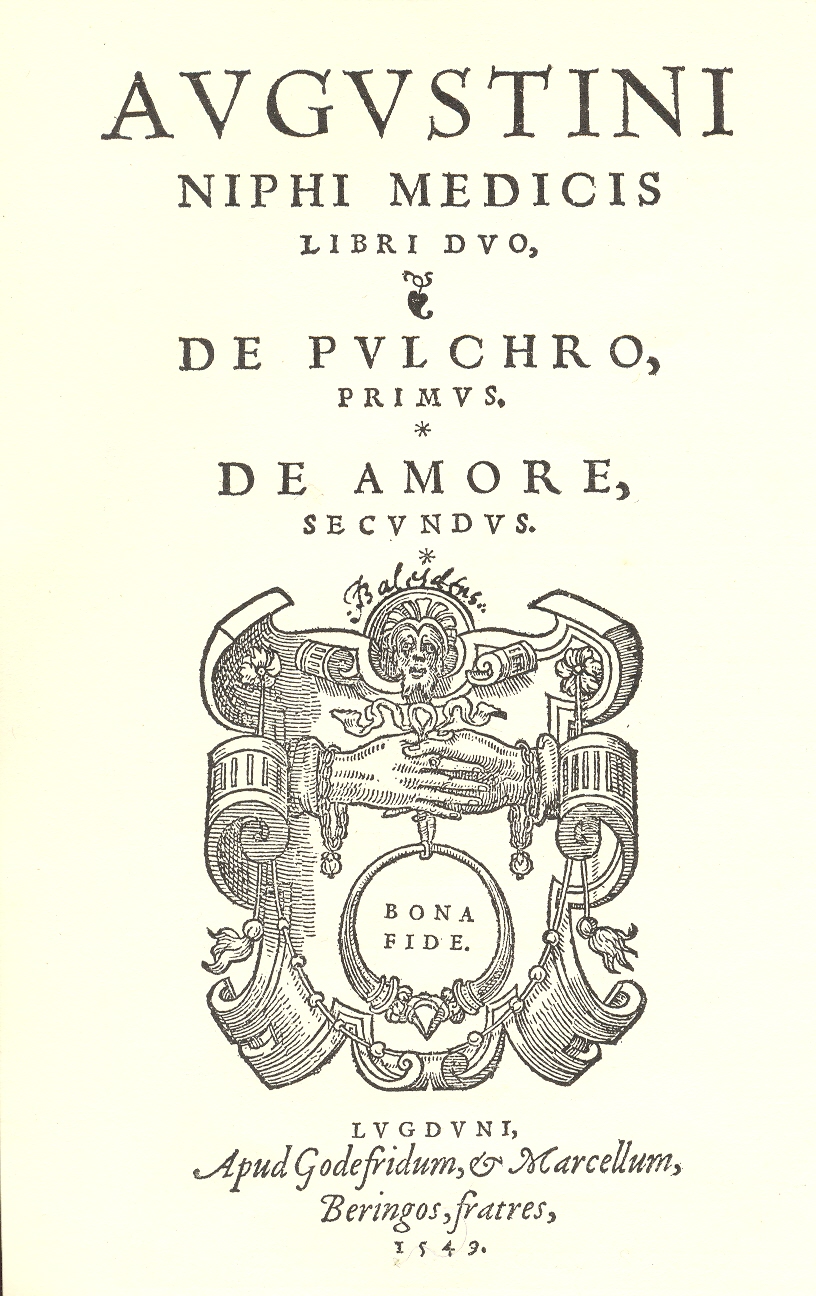
    But back to love.  Niphus’ Libri duo, de pulchero liber primus, de amore liber secundus was a
    277-page work printed at
    Lyon (Latinized as “Lugduni”) by the Berigens.  The publishers also provided Niphuis with a
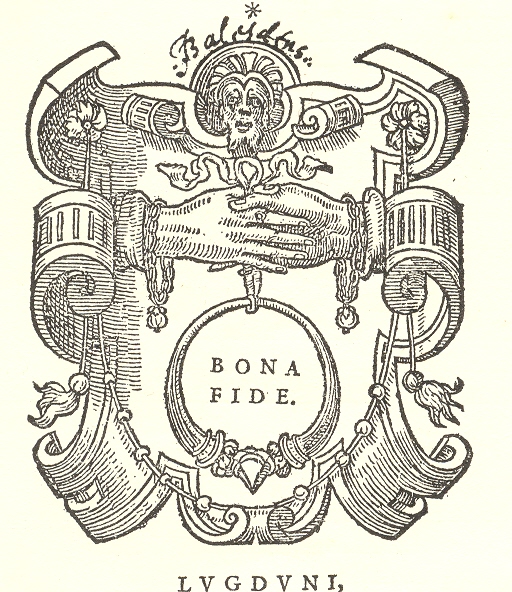
    beautiful title-page device showing the joing on hands under the watchful eyes
    of Christ, a love signified with an emblem announcing “bona fide”.  The book was about beauty (“pulchero”) and
    love (“amore”).  The first part of the
    two books deals with all levels of beauty and shows derivations on the subject
    from the most ancient philosophers./  The
    second part, on love, begins innocently enough on the philosophical and moral
    aspects of the emotion and institution, but then goes further, treating love in
    all of its aspects, including psychological and physical.  It is an enormously full treatment of the physiological
    side of sex, which was something that just wasn’t often encountered at this time.  

    Blog--jun 15--love det

    The main contribution of
    Niphus on love/sex was this—humans have a certain psychological and physiological
    disposition to sex, and how sex could not be considered sinful.  Not content with controlling the poor
    believing people’s thoughts with fear of eternal damnation, the church reached
    right into the very bedroom, specifying that sex was sinful, an abomination,
    dirty, laced with the potential of Satan himself, if not used for the purposes
    of procreation.  All other fruit was
    forbidden under dire threat of the
    Lake of Fire.  (And still
    is:  driving to the bagel store
    yesterday, Sunday morning, I tuned the radio to one of the preaching shows—an easy
    thing to do and sort of hard-to-miss on Sundays as I live in the Bible belt—and
    someone was railing away at “Satan’s fornicators”, which was “the basis of the
    Original Sin”, and on and on.  I don’t
    know how he got to the Original Sin part because the bagel shop is only a
    5-minute drive.) So the case made by Niphus was not popular in the minds of the
    social controllers—who knows what structurally-threatening powers might be
    unleashed in the libidinously un-hellish enjoyments of two people?

    I found this illustration in an old E.P. Goldschmidt (bookseller) catalog, and the old bookseller recognized the medical value of the work and wondered aloud why it hasn’t turned up in the major medical book collections.  I wonder about that, too. Be that as it may, Niphus should really show up as one of the great educators on the function of sex, and to physiologically and psychologically announce that sex was not the sin the church would have you believe it was.  Perhaps in a way, too, Niphus was among the earliest of those to release woman from thousands of years of blame as the proprietesse of selfish Satanic fornication–at least with Niphus, if sex were to be insisted upon as being a sin, there is the possibility of having two actors in the process, rather than having woman carry the blame for the entirety of the sin.

    ·Posted by :

    ·in:

    — —

  • The Tomb of Broken Dolls–an Appeal for Respect for Outgrown and Disabled Toys

    JF Ptak Science Books  Post 349

    “No two toys are ever broken in the same way or with the same emotional results.” RobertGraves, Poetic Unreason

    000-ebay--Nov 1 doll tomb975


     I first wrote about this fabulous idea–a tomb or memorial for broken and lost toys–on this blog almost three years ago–it still seems like an utterly fantastic practice.

    000-ebay--Nov 1 doll tomb975

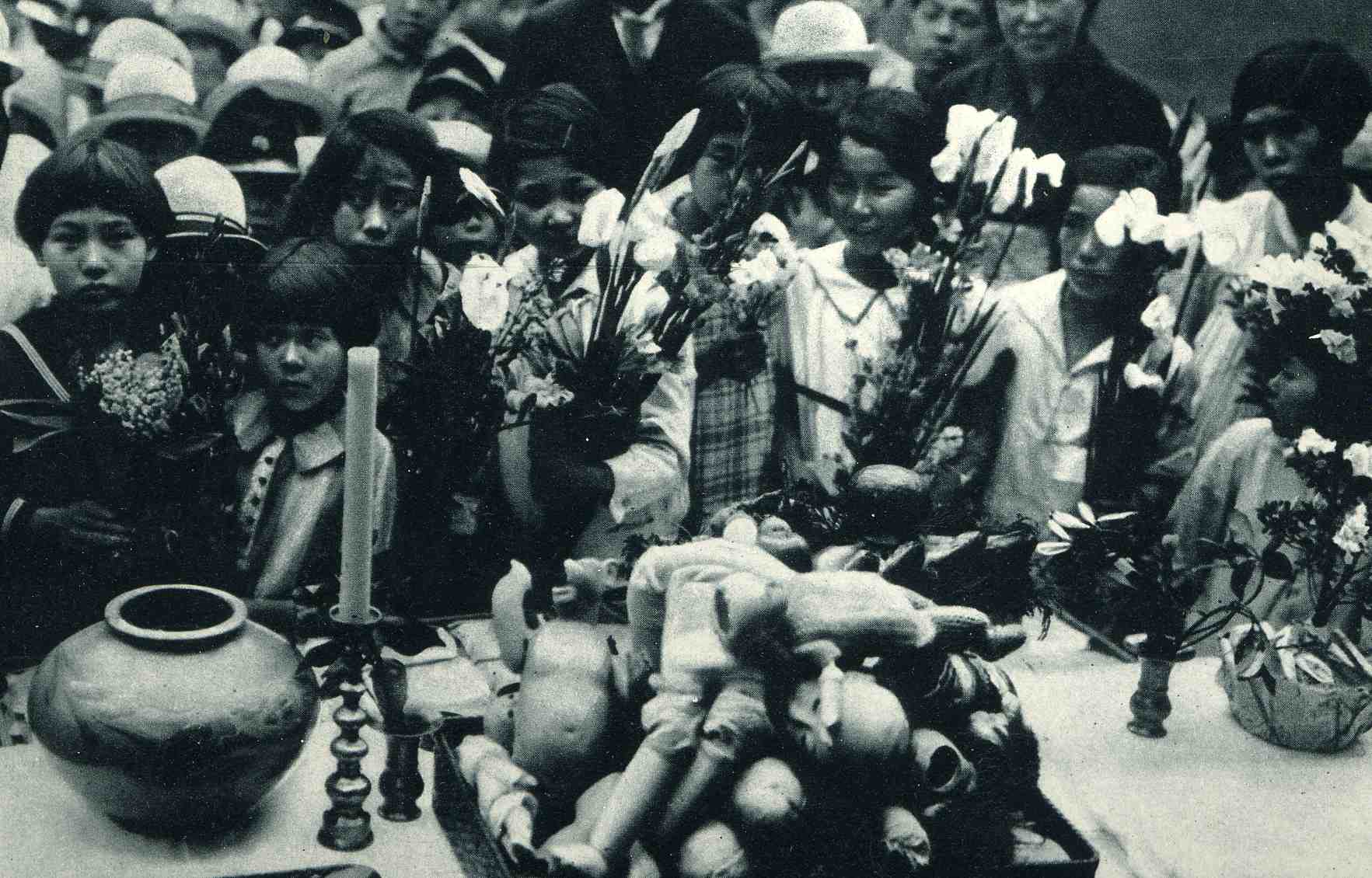
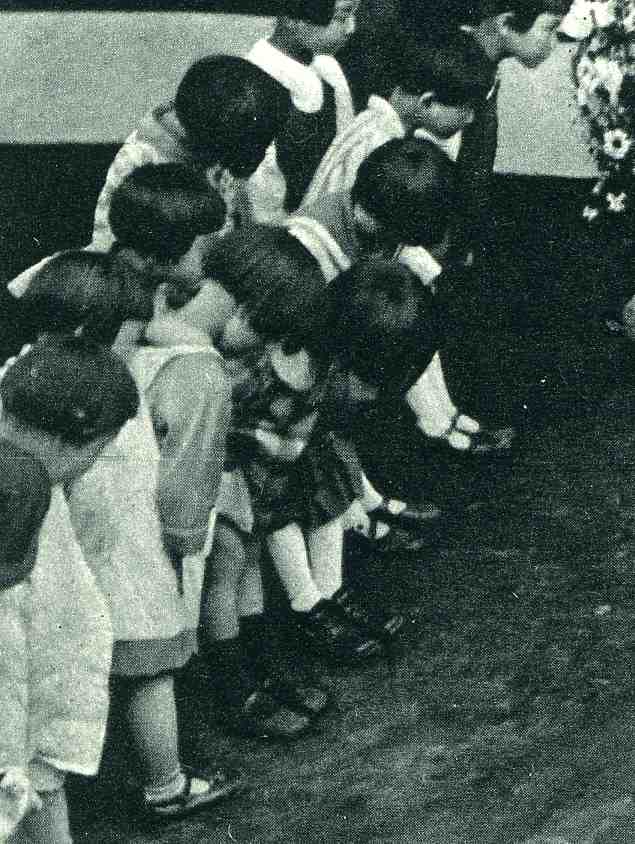
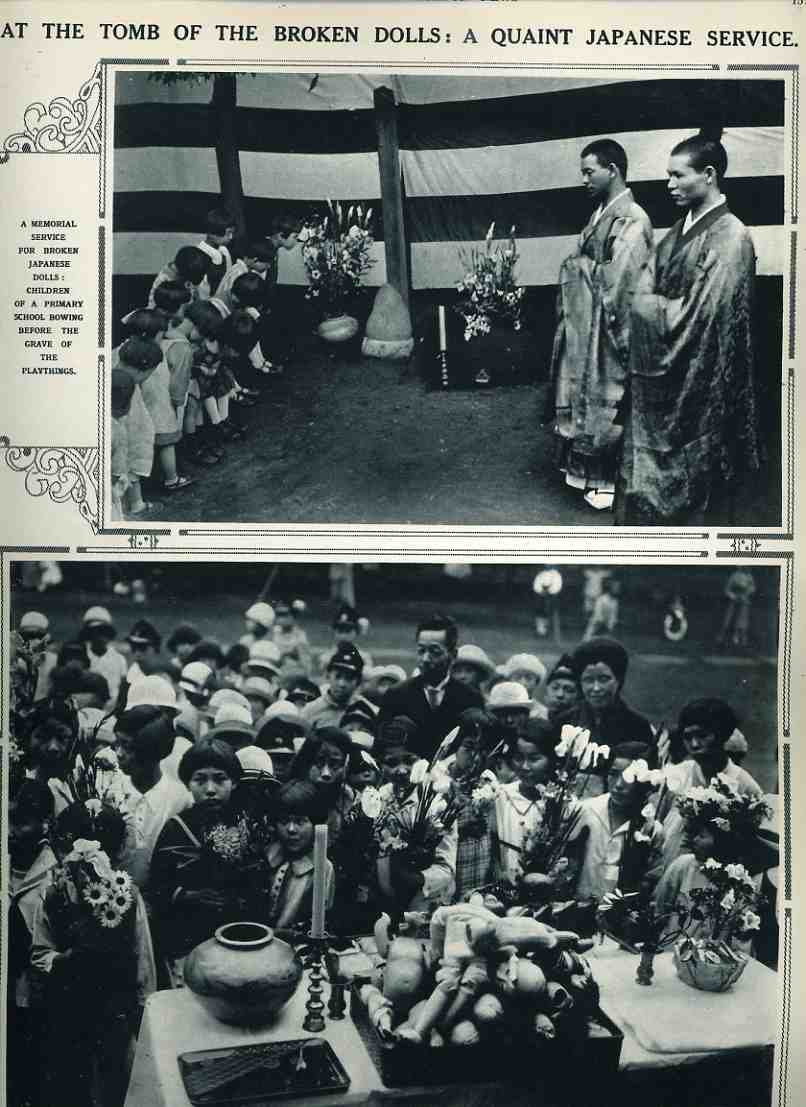
     This is an absolutely outstanding concept, and I simply have no notion as to why we don’t have such observations in the United States.  (The following two details are from the larger images, below, found  in the 27 July 1929 issue of The Illustrated London News, page 157.) The story provides these two pictures and unfortunately scant details of the ceremony which was held at the Imperial Primary School at Sugamo, Japan. 

    The first photo shows the detail of children offering flowers for the altar on which their tray of broken dolls is being venerated; and to the right is the detail of children bowing to the grave of “broken playthings”, though the markings on the (grave?) stone indicate that it is for dolls.  It also seems to be a marker for a mass of toys, not that each toy would have its own marker; I suspect it to be enough to have a place where allot of kids could come to venerate objects in which they might have invested countless hours of their time, effort, attention and affection.  That it is a shared place and experience makes the monument all the more so powerful.

    000-ebay--Nov 1 doll tomb976

    There are few better things to teach a child than to pay respects for something that has given them pleasure or helped them, or, say, for returning the love which has been showed them from their doll or toy.  It has always struck me as not-quite-right that a toy can be a beloved object one day and a dust-magnet the next, destined for the trash heap.  Certainly these are holy objects in themselves, and deserve a better and more kinder fate than being mixed with broken glass and greasy unmentionables. 

     000-ebay--Nov 1 doll tomb974


    Are there greater things to be concerned with?  Yes, of course, but only on the face of it–I think that helping kids understand the underlying dignity of inanimate objects such as their playthings could give them a greater awareness for the other seemingly invisible things that they will find throughout their lives. Further I think that a visible, constant reminder for these objects would be really more like a memory-monument for a period of time, a place in nearly everyone’s life in which held a certain purity and promise, a protected and beloved frailty of the human experience shared by all.  I can honestly think of no other monument that could reach across religious or philosophical or belief systems to arouse a feeling of common goodness than this. Everyone has had a toy that they’ve loved, and I have no doubt that if remembered these would be powerful emotions, and could be about the most common denominator we have on the planet.  I can think of no divisive element in such a monument of veneration.


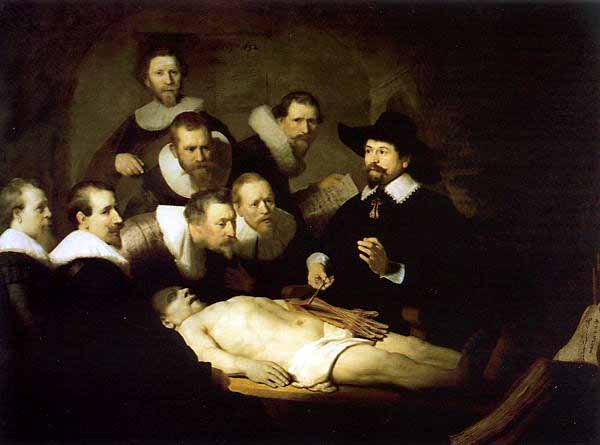
  • The Famous Painting of the Tulip Who Stopped Rembrandt’s Bones from Turning Into Jelly

    JF Ptak Science Books LLC  Post 345

    Blog--tulp rembrandt
    This ungainly title is actually a true statement–even the Tulip “who” rather than “which” part. Rembrandt did suffer from some sort of mental suggestion/annoyance which convinced him that his bones were turning into jelly. (Weird happens: Kurt Goedel thought that he was being poisoned through his food and finally through water.) His symptoms were addressed, and treated (I guess), by the Amsterdam physician Nicolaas Tulp (1593-1674), who saved Rembrandt from himself.

    Tulp, which means “tulip” in Dutch, was born Claes Pieterzoon, and was a Leyden-education physician who established a very respected and large practice in Amsterdam.
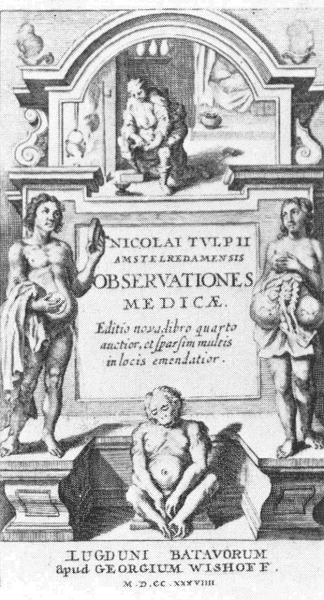
    He was additionally very interested in pathological anatomy, and in an early-CSI vein he frequently corresponded his diagnoses through postmortem dissection. In addition to his several published works is his magnum opus, Nicolai Tulpii Amstelredamensis Observationum medicarum libri tres.Cum aeneis figuris (Amsterdam, apud Ludovicum Elzevirium Elzevier, 1641), which contains much of medical interest (including what seems to be a description of diphtheria, a description of a bronchial cast, the description and illustration of the ileocecal valve and kidney stones, and a tapeworm, and the earliest European description of berberi  (see Major’s  Classic Description of Disease)). Additionally he takes on the ideas of monsters, describes a narwhal, and makes the first illustration of a chimpanzee (called an “ouirang atong”) in Europe.

    But he most famously survives all this by being the focus, the central figure, the catcher of light, in Rembrandt’s painting “The Anatomy Lesson”, which is really called “The Anatomy Lesson of Dr. Tulp”, which was painted in 1632. (I wonder how Dr. Tulp lived with this painting in his life for 42 years? ) In any event, it was he who evidently rescued Rembrandt from his dark place, or migraine, or depression—or at least he suggested how he could live his life with whatever he had in his head. 
    Tulp’s portrait appears in the frontis to each of his works, but certainly there would be almost no shock of recognition in them; on the other hand, with the Rembrandt, almost everyone recognizes the scene,  though very few would now who Dr. Tulp was and what service he performed to the art world.Rembrandt_anatomy_lesson_dr_tulp

    NOTE:
    In one of his very many remarkable letters, Vincent Van Gogh writes to his brother Theo in October 1885 about this painting, offering an insight on color: “Rembrandt’s “Lesson in Anatomy,” yes, I was absolutely staggered by that too. Do you remember those flesh colors – it is – de la terre – especially the feet….You know, Frans Hals’s flesh colours are also earthy, used here in the sense that you know…”

    Check out the website that annotates and includes illustrations of all of the works that Vincent references in his letters—his breadth was really astonishing, as is his memory, and of course his immense appreciation of color—and light– in general.


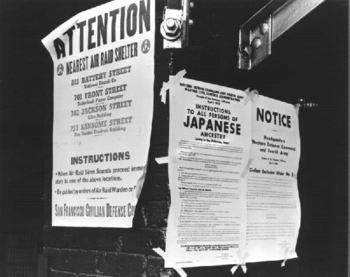
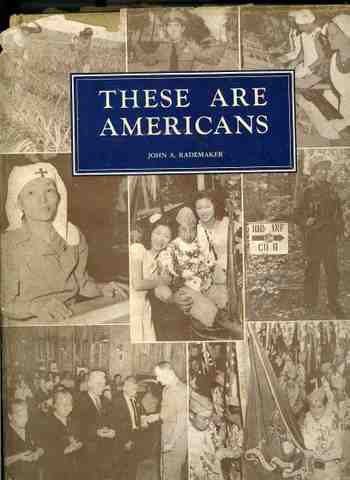
  • Deep Discrimination in a Classic of Anti-Discrimination: Japanese Americans and World War II

    JF Ptak Science Books LLC  Post 299

    1ebay_oct_4_these_are_americans744
    For another project of mine I’ve been reading about the
    Japanese internment camps (posting an earlier post here), and just started to
    read some post war material on the interpretation of those actions. The first book I turned to is regarded as a
    liberal (in the classic sense of the word) regard and homage to the Japanese in
    the Hawaiian Islands by John Adrian Rademaker, (a Professor of Sociology at the University of Hawaii 1944-1947), who in 1951
    published These Are Americans: The Japanese Americans in Hawaii During
    World War II
    . It documents the
    contributions made to the war effort by of people of Japanese ancestry living
    in Hawaii, including the Varsity
    Victory Volunteers, the 100th Infantry Battalion, and the 442nd RCT, and so far
    as I can determine is one of the earliest pioneering works to attempt to right
    the significant wrong done to these people.

    In the past I always thought of it as a photographic essay,
    and I’m sure that I never actually read the thing., But this time I, I did, and I was stopped
    almost immediately, half-way through the first sentence.

    It reads:

    “During World War II, I was one of a considerable number of
    persons who were directly concerned with the care and re-establishment of the Japanese Americans in the continental
    United States.”

     To be honest about it, I’m not sure what this means or where it came from.   The rest of the sentences in the 277 pages of
    this book are laudatory and informative and attempt to right the public opinion
    wrongs of the wartime Japanese-American persona. But “care and re-establishment” is awful and
    weird, and stupid—so much so I wonder if the phraselet was stuck in there by
    some zealot editor. Removing 110,000
    Americans from their lives and residences and families and communities and
    businesses, stripping them ¾ of whom
    were American citizens) of their rights, forcing them to sell whatever they
    couldn’t carry at fire sale prices, and then sticking them all in horse stalls
    or deeply removed and very difficult locations for three years is disgustingly-not
    “care and re-establishment”.

    Unless of course the author believed it, and if such is the
    case then he really didn’t understand what happened to those 110,000 people, sociologist
    or not; or at least didn’t get it in 1951.

    He did make a strong case overall for the American Japanese
    in Hawaii being loyal
    citizens/ Rademaker points out that 1,440
    Americans of Japanese Ancestry (AJA) who were detained by local authorities (excluding
    Federal efforts) out of a population of over 150,000 AJA in Hawaii. They were nearly all Issei (first generation immigrants)
    and Nisei (born in the USA)

    From December 7, 1941till the end of the war, some 1,440 AJAs were
    picked up by the authorities. This constituted nine-tenths of one percent of
    the AJAs in Hawaii. 879 of those were Japanese Issei, first-generation immigrants. 534 were
    Nisei. Nearly half of this number were
    released after preliminary hearings, with the rest being “kept” for other
    reasons, though they were simply community leaders (doctors, nurses, school teachers,
    benign) and that sort of thing. He
    states that no AJA in Hawaii was ever convicted or found to have committed any treasonable offense or
    committed any sabotage whatsoever.

    I’m just pointing out how odd this
    first sentence is in the face of the rest of the book. Was it meant to diminish the American government’s
    actions in rounding up and removing these people? (The government has had a very long history
    of doing exactly this, and doing it deathly well—just look at the hundreds of Indian “removals”, the entire
    institution of slavery, and many, many others, up to and including to a lesser
    degree the displacement of Katrina refugees.) Arrest and disappearing people is
    not “care and re-establishment”, period.

    For the record, another truly
    measurable aspect of AJA fortitude is their military participation during WWII
    which stands as follows (presenting the 100 Battalion of the 442 and then the
    442 as a unit):

    The 100th Battalion and 442nd Combat
    team:

    Killed in action  569.
    Died of wounds 81.
    Missing in action 67.
    Wounded in action 3,506.
    Injured in action  177.
    Total casualties  4,120.

    The 100th Battalion and the 442nd
    Combat Team won the following decorations:

    1 Medal of Honor

    1 Medal of Honor
    47 Distinguished Service Cross
    1 Distinguished Service Medal
    12 Oak Leaf Cluster to Silver Star
    350 Silver Star
    18 Legion of Merit
    16 Soldier’s Medal
    41 Oak Leaf Cluster-to Bronze Star Medal
    823 Bronze Star Medal
    1 Air Medal
    500 Oak Leaf Cluster to Purple Heart Medal
    3600 Purple Heart Medal
    2 Army Commendation Ribbon
    40 Army Commendation
    87 Division Commendation
    1 brigade Commendation
    12 Croix De Guerre (French)
    2 Palm to Croix De Guerre (French)
    2 Croce Al Merito Di Guerra (Italilan)
    2 Medaglia De Bronzo Al Valor Militare (Italian)

    Overall the 442—composed entirely of Japanese Americans, emerged
    as the most decorated combat unit of its size in the history of the United
    States Army —suffered an “unprecedented casualty rate of 314 percent and
    received over 18,000 individual decorations. Many were awarded after their
    deaths for bravery and courage in the field of battle. Among the decorations
    received by the 100th/442nd soldiers were one Medal of Honor, 52
    Distinguished Service Crosses, 560 Silver Stars, 28 Oak Leaf Clusters to the
    Silver Star, 4,000 Bronze Stars and 1,200 Oak Leaf Clusters to the Bronze Star
    and, perhaps most telling of the sacrifices made by these gallant soldiers,
    9,486 Purple Hearts.” The 442nd Combat
    Infantry group emerged as the most decorated combat unit of its size in the
    history of the United States Army.

    ·Posted by :

    ·in:

    — — —

  • The Propaganda of Restricting Infomration: Dorothea Lange’s Photos at the Japanese “Relocation” Camp, Manzanar, 1942

    JF Ptak Science Books Post 283
    Takenjap_poster After having written a number of pots dealing with overt propaganda issues—surrender leaflets, Nazi pamphlets on the impending invasion of Germany by Poland and Czechoslovakia, American reassurances about how to survive the coming nuclear holocaust by covering yourself with table linen, British home hearts and minds campaign about how well your loved one POWs are being treated by the Germans—I thought to write a little something on the other side of propaganda, which is simply to not publish information.  One case is that of the great social photographer and one of the dozen or so mainstays of perhaps the greatest American photographic collaborative ever—Historical Section of the Farm Security administrations*–Dorothea Lange.  Lange worked for the FSA—which had begun life as the ominously-named  Resettlement Administration, the photographic section of which was to document the good that the government was doing helping the drought and depression refugees find new life and hope elsewhere in the country outside of their own money-ravaged areas—taking mostly landscape and architectural pictures through the height of the Depression.  The time that she broke character (so to speak) and made portraits produced some of the most memorable or at least famous images from this period o American history, the most outstanding of which is the five-photo series of a female bean picker and her three children who were living out of the back of their wheel-less car in a potato-less potato field in California known as the Migrant Mother.  (The making of these extraordinary images is another story for another post—suffice to say that the narrative of the history of that photograph is exceptional.)  I’ve always felt that the Roosevelt administration viewed this image as being just a little too much reality than it wanted to exhibit.
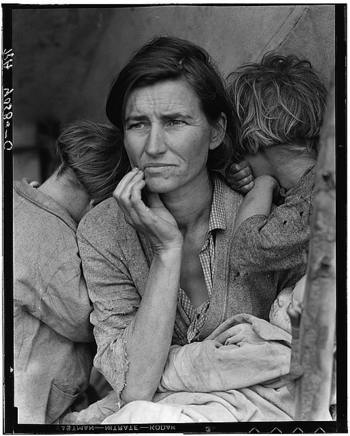
    Blogmigrant_mother


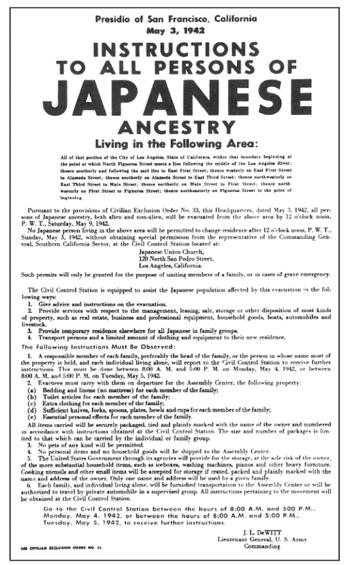
    This was positively the case with Lange’s photographs of the Japanese at the Manzanar concentration camp (relocation camp) in   where more than 10,000 American citizens of Japanese heritage were forced to live between 1942 and 1945.  This was one of  camps that were established by virtue  Franklin Roosevelt’s  February 1942 Executive Order 9066** to imprison more than 100,000 American (70,000 of whom were U.S. citizens, including children) for the duration of the war (compared to a  few camps that were designated to hold white American citizen of the other countries that were fighting, mainly of German and Italian descent, 1,500 and 300 of whom were actually imprisoned, respectively). It was a grave, undistinguished, embarrassing  move brought on by the hyper hysteria in the months following Pearl Harbor.

     
    The Japanese at the Manzanar concentration camp were from the west coast who were bused away from their homes and lives and businesses with extremely limited notice, and who were forced to sell nearly all possessions (including lands and businesses) at what were less than fire sale prices.  They were made to board buses and trains and were shipped to locations (mainly in California) where they were processed and sent further and deeper into the trying hinterlands of the west for their final destinations until the war was won.  (One of the processing centers was the Santa Anita racetrack, where thousands of Japanese were sent to live for periods in converted, just-painted horse stalls.)  Manzanar itself is well enough out there—removed, trying, desolate, difficult.  Beautiful, too , if you weren’t in prison there.  It was a high desert plateau with the snow-capped sierras, ringing the place; no grass, barely a tree, with extreme temperatures and a tough wind that was freezing in the winter and blew hot in the summer…tough enough to make it hard to keep the tar paper on the roof and sides of the thinly constructed barracks that held these people.  While every other relocation camp had barbed wire and guard towers, Manzanar had none—its location was so remote and difficult that it made the construction of these inferior barriers unnecessary. 
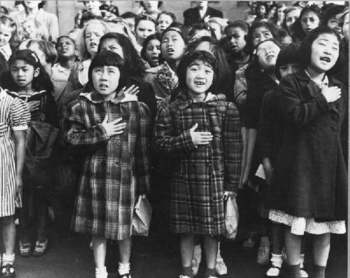
    ManzanarlangeslauteManzanarlangeposter

    As difficult was life was at Manzanar, and having being completely torn off of the American map and their way of life, the Japanese at the camp established irrigation systems and gardens, made their own furniture from bits and scraps, established a newspaper, created a government,  schools, police, and so on, making their life as orderly and hospitable as possible.  Dorothea Lange was allowed, after repeated requests to the US Army, to enter the facility and make a photographic record of what she saw.  And what she saw and photographed was the courage and dignity of the people that she find there in the mists of deprivation and devastation—her photos were remarkable for their sincerity and insight.

    And it was for precisely this reason that almost know of them were ever seen.  Bits and piece emerged here and there—four in Survey Graphic in 1942 (Vol. 31, No. 9, Sept. 1942), two others here, two others there—but they were almost entirely restricted.  As a matter of fact they were stamped “Impounded”, and relegated to the future.

    The FSA became the Office of War Information in 1942 as well, which might explain why this propagandistic move dismissing their existence for want of fairer reception of the American war effort at home..  It wasn’t until 1972 that 27 more of them were released and received a public showing at the Whitney in NYC in a show called Executive Order 9066, and which were reviewed in the NY Times by A.D. Coleman as  “documents of such a high order that they convey the feelings of the victims as well as the facts of the crime.”

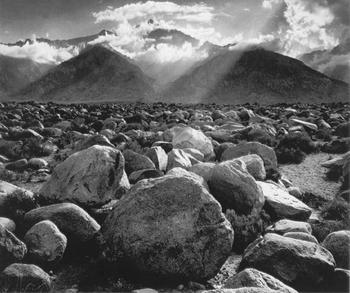
    Lange wasn’t the only big-name photographer zipping around Manzanar–Ansel Adams was there, too, as a friend of the camp administrator.  Adams had free access to the camp, and could basically come and go as he pleased, which didn’t sit well with Lange, who had a hard go of her permissions with the Army.  It was also something that she never let go of, either, as the Adams photos really didn’t get into the Being of the place like Lange’s did.  Actually, one of the great, iconic images made by Adams comes from this period, and as it turns out, its one of those odd sorts of photos that turns in the opposite direction of what the photographer was there “for”.  Mount Williamson is just a drop-dead shot to be sure.  It is also an image of what the Japanese in the concentration camp were looking out at.  Adams turns his camera around, around from the disgrace, and takes one of his greatest images. (I’ve listened to my wife Patti Digh, who is an (excellent) photographer, talk about photographers “making” photographs; I’m sure that before her I used “taking” and “making” photographs interchangeably.  But “making” it should be, as you’re not owning or lifting the image away.)   In this case, however, as monumental as Adams was or is, he definitely “took” this one.  Stole it. 

     An excellent book on these photos is found in Linda Gordon and Gary Okihiro, Impounded, Dorothea Lange and the Censored Images of Japanese American Internment (W.W. Norton, 2006). 
     Blogadams_manzanar


    *This incredible group included: Arthur Rothstein, Carl Mydans (up to the summer of 1936), Walker Evans (up to September 1937) Ben Shahn, Dorothea Lange (with interruptions up to 1942). Russell Lee, Marion Post Wolcott, John Vachon, Jack Delano, John Collier. This group produced upwards of 270,000 negatives, with 77,000 or so prints available at the Prints and Photographs room of the Library of Congress in a row of double-backed file cabinets.  Many thousands are available online at loc.gov  I am told by a reliable historian that I am wrong in thinking that Lange was fired because of her too-intolerably human photos, but for budgetary problems. 
    .
    **The following is the text of 9066, which basically authorized a 60-mile swath of the Pacific Coast as a military zone subject to national defense requirements, the principal object of which was to remove all Japanese residents from the area for fear of them being enemy agents and saboteurs.  To accompany this I mad a WORDLE text map of the document, just to see what popped up. 

    Wordleexecutive_9066 Executive Order No. 9066
    The President, Executive Order
    Authorizing the Secretary of War to Prescribe Military Areas

    Whereas the successful prosecution of the war requires every possible protection against espionage and against sabotage to national-defense material, national-defense premises, and national-defense utilities as defined in Section 4, Act of April 20, 1918, 40 Stat. 533, as amended by the Act of November 30, 1940, 54 Stat. 1220, and the Act of August 21, 1941, 55 Stat. 655 (U.S.C., Title 50, Sec. 104);

    Now, therefore, by virtue of the authority vested in me as President of the United States, and Commander in Chief of the Army and Navy, I hereby authorize and direct the Secretary of War, and the Military Commanders whom he may from time to time designate, whenever he or any designated Commander deems such action necessary or desirable, to prescribe military areas in such places and of such extent as he or the appropriate Military Commander may determine, from which any or all persons may be excluded, and with respect to which, the right of any person to enter, remain in, or leave shall be subject to whatever restrictions the Secretary of War or the appropriate Military Commander may impose in his discretion. The Secretary of War is hereby authorized to provide for residents of any such area who are excluded there from, such transportation, food, shelter, and other accommodations as may be necessary, in the judgment of the Secretary of War or the said Military Commander, and until other arrangements are made, to accomplish the purpose of this order. The designation of military areas in any region or locality shall supersede designations of prohibited and restricted areas by the Attorney General under the Proclamations of December 7 and 8, 1941, and shall supersede the responsibility and authority of the Attorney General under the said Proclamations in respect of such prohibited and restricted areas.

    I hereby further authorize and direct the Secretary of War and the said Military Commanders to take such other steps as he or the appropriate Military Commander may deem advisable to enforce compliance with the restrictions applicable to each Military area hereinabove authorized to be designated, including the use of Federal troops and other Federal Agencies, with authority to accept assistance of state and local agencies.
    I hereby further authorize and direct all Executive Departments, independent establishments and other Federal Agencies, to assist the Secretary of War or the said Military Commanders in carrying out this Executive Order, including the furnishing of medical aid, hospitalization, food, clothing, transportation, use of land, shelter, and other supplies, equipment, utilities, facilities, and services.

    This order shall not be construed as modifying or limiting in any way the authority heretofore granted under Executive Order No. 8972, dated December 12, 1941, nor shall it be construed as limiting or modifying the duty and responsibility of the Federal Bureau of Investigation, with respect to the investigation of alleged acts of sabotage or the duty and responsibility of the Attorney General and the Department of Justice under the Proclamations of December 7 and 8, 1941, prescribing regulations for the conduct and control of alien enemies, except as such duty and responsibility is superseded by the designation of military areas hereunder.

    Franklin D. Roosevelt
    The White House,
    February 19, 1942.
    ·Posted by :

    ·in:

    —

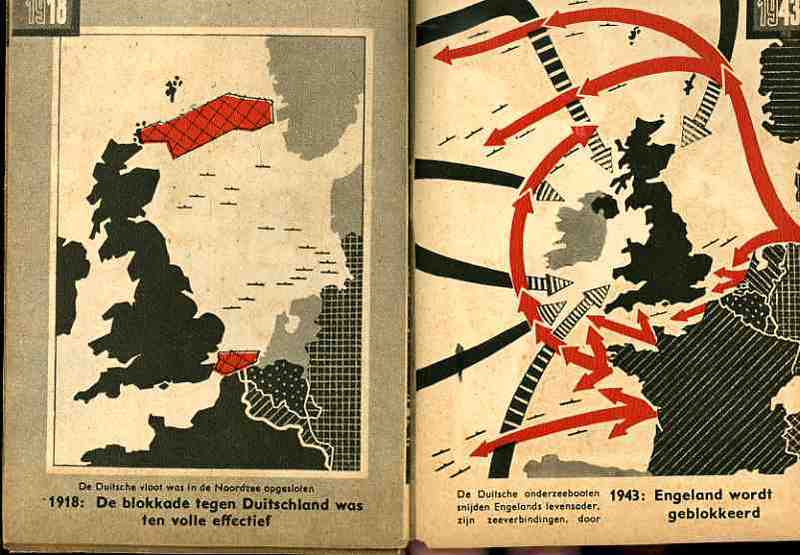
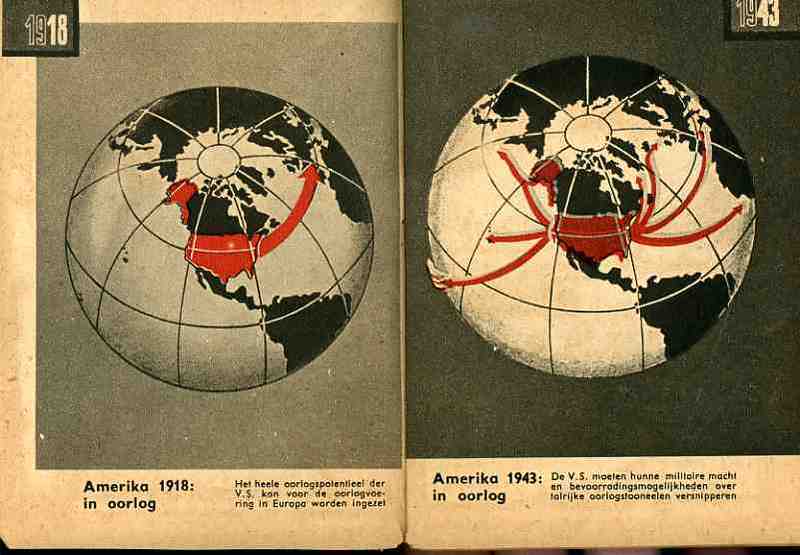
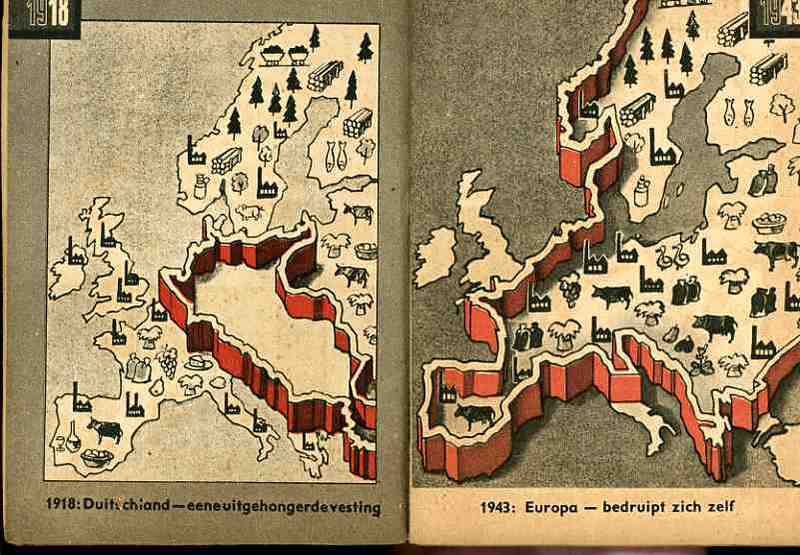
  • Maps as Propaganda: the Nazi’s Use of Maps in the Hearts and Minds Campaign in Occupied Holland and France, 1943

    JF Ptak Science Books  Post 193

    Nazi Maps D Propaganda1

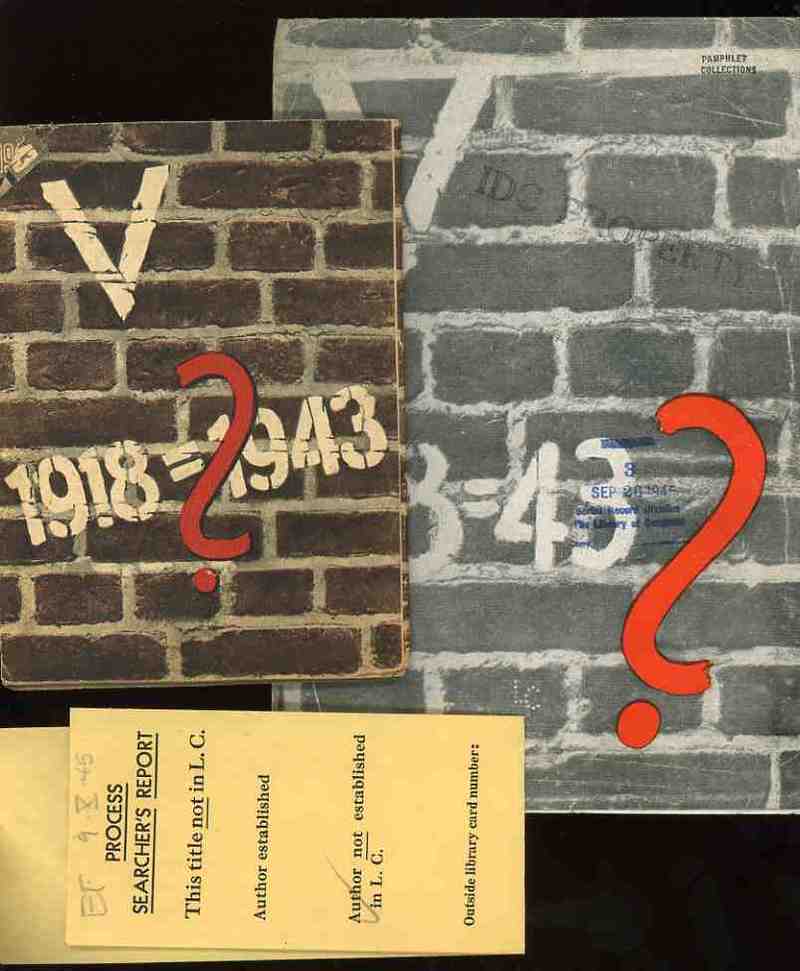
    These two, related, pamphlets were the products of the Nazi Propaganda engine and sought to affect the moral and intellectual stamina of the people in the occupied countries of the Netherlands and France in 1943.   Each stressed the enormous differences in the German state that took place in the 25 years between the end of World War I and the third year of the Nazi European part of World War II.  I’ve no idea whatsoever about the grander symbology  (if any) of these numbers associated with these two pamphlets (the Roman numeral for “5” and the 25 years of the difference and the “13” points (of the French propaganda) aside from the obvious mathematical implications.

    Nazi Maps D Propaganda2

    (The only interesting bit that I can find in the “18=43” from the French pamphlet is Luke 18:43 “Immediately the man could see again and began to follow Jesus, glorifying God. All the people saw this and gave praise to God.”. )   I find it curious that identical symbolism (?) was used for the two countries, and that the French version was simple comparative text (summarizing the differences in the two periods of time) while the Dutch version was mainly a picture book. 

    Nazi Maps D Propaganda3

    I would reprint the French version if it wasn’t so bloodily hateful.  (Suffice to say that this is so by looking at one example: in the last of the second issue of 13 points  Goebbels et alia wrapped themselves in the insulating fabric of the German “people” in the “resistance” against “Jewish saboteurs”—not the German political machine, and not the German military, but the German people, insinuating that the Nazi annihilation of the Jewish people was de facto sanctioned by the will of the German nation.  This is of course part and parcel of the fictitious and loathsome Protocols of the Elders of Zion (of which Henry Ford was a happy reader), a French work that was completely stolen and plagiarized by Imperial Russia in the early 1880’s and which, later,  Hitler used to both build his hate against the Jewish people and use (and acknowledge ) as the template for his early actions in the Nazi Party.)

    Nazi Maps D Propaganda4

    The maps used in the Dutch publication are fairly general and issue a stark warning about the growth of Germany–and how Germany continues to grow through war.  The first that we reprint, above, tries to get the point across to the occupied people that England has more problems to deal with than would concern their attention with the Netherlands.  The second part of the first map crazily shows the attack upon England and the effectively exhausting attention it has to pay to many points of invasion.  Ditto for the second map, showing the spread of American concerns–the U.S. in 1943 would have far more to deal with in many points in a two-ocean war than to concern itself with or have the ability to think about the liberation of Europe and the Netherlands.  The last map shows the supposedly extraordinary growth in Germany’s  industrial and agricultural capacity. 

    In short, the maps tell its readers to just keep quiet, the German nation is mighty, and just wait for the end of the victorious German war.  The maps also addressed non-readers–of course the Dutch literacy rate was extremely high, but you didn’t have to be able to read the description of the map to understand its blunt message. (This makes me wonder if the maps really weren’t intended for scare tactics against children.)  As Boss Tweed once infamously reported–that he had no fear of editorials because his constituency couldn’t read–he hadn’t counted on the political cartoons of Thomas Nast–which could be understood by a non-reader–and which wound up being one of the direct causes of his exposure and downfall. 


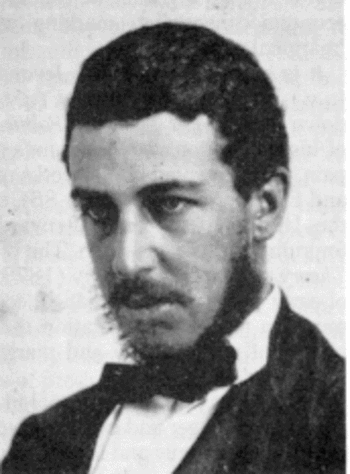
  • Seeing, Sight & Memory: Jevons, Bruno, Borges, Heller and Proust

    JF Ptak Science Books LLC  Post 12

    Can We See More or Less than We Used To Be Able To See?

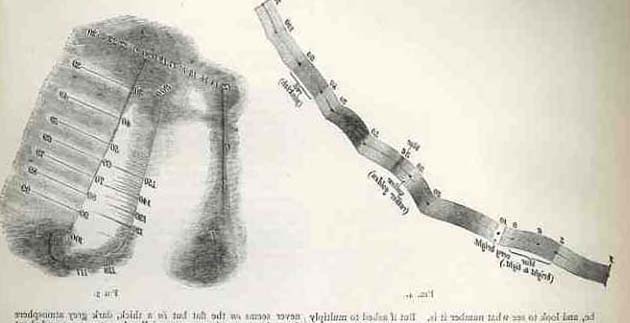
    Jevons An early study of attention and perception (or “How Many Items Can it Embrace at Once?”) popped out at me while muscling my way through another year of Nature magazine for 1871.  The article was by  W. Stanley Jevons  (“The Power of Numerical Discrimination,” 1871)  who contributes an interesting and very early experimental bit on the success of the brain to correctly formulate an accurate memory when in a flash shown a number of items. (That is to say, when shown a certain group of X-number of items instantaneously and then removed, how often will the mind be able to remember the correct number upon recall–and without committing them to memory per se or counting them?) In this fascinating study Jevons records not only right/wrong answers but how “close” the remembered fit is to the original number, and in effect is a pioneering scientific effort towards understanding our abilities and limits in information processing.
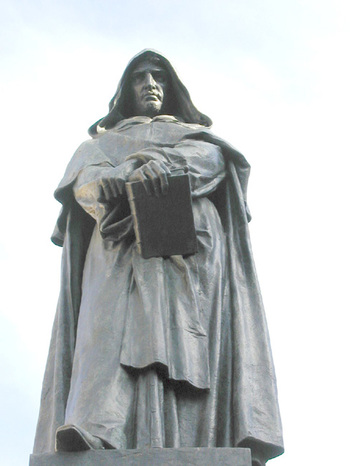
    Its important to distinguish Jevons’ experimental work on apprehension from earlier (and much earlier) philosophicalJevonsbruno_2 and semi-scientific work on memory formation and retention.  This of course goes back as far or as deep as you want to go—taking a stab at random we’ll use Simonides who while trying to organize poetry and other data in his head came upon the idea of using Mnemonics and using associative processes in art and poetry to establish his own history of memory. (I should point out that one of the early-modern experimenters in the formation of memory was Giordano Bruno  who wound up being tortured and burnt at the stake for other offense against The God while trying to formulate a truthful approach to science; evidently the memories that would be threatened by his scientific approach proved to be too much for the righteous in power, and he was removed before he could threaten corrective memory any further.) 

    It is interesting that many of the crimes of science punished by the Catholic Church during this period (1450-1650) were as much crimes against memory than they were crimes against the future—changing and challenging collective memory often proved fatal.

    Getting back to Jevons—who was a very smart guy and who applied himself to a number of fields, not the least of which was constructing a logic machine: his experiment proved to be a springboard for a host of others, some of which didn’t do Jevons justice, misreporting his finding, misrepresenting the stuffy, and so forth.  Perhaps the greatest of these was the greatest of the efforts based on his—Raymond Cattell —who for some reason stated in his very influential textbook of 1907 that humans can remember around 7 things (without counting) when the objects are flashed before their eyes.  And for a hundred years this figure stuck, even though the Jevons report issued a more complex summation, and saying, anyway, that the number was around 10. 

    And what bothered me a bit with the Jevons experiment is what people remembered when shown the objects (beans)—would his results have varied if subjects were asked how many were shiny or odd-colored or deformed or whatever rather than just a simple number, the results could’ve been more interesting.  (I don’t doubt that these issues have been taken up in the 20th century but haven’t looked).  Sometimes people are just looking in the wrong places—for example operant psychology labs tested rats via visual stimuli until it was discovered that rats were olfactory geniuses and that humans were using them wrong all along. 

    It would be interesting to know what the history is of human capacity for image formation.  Considering the growth of distractions and the enormous amount of true and trash stimuli—visual bombardment from television, outdoor advertisements, the sheer amount of  growth of human construction and interaction—have humans enhanced this spatial/memory information processing capacity?  Consider  the growth of (just) eye movements over the last few hundred years, with the visual sense being subjected (for all classes of people) to enormously and fractally-expanded print sources, television, digital communication and so on—has this expanded this neural capacity?  Has “space invaders” aided bean counting? 

    I don’t know, though I do wonder (literally) what the effect exponentially-growing mass input of (mostly junk) data  might be doing to our noggins.  Maybe the effects lean more towards dissolving privacy and reflective time—when does a person think if interruptive stuff is coming into your head at all points of the day, with the brain trying to interpret incomplete and ambiguous strings of sensory inputs? 

    Jevonsyossarian Seems scary to me.  Maybe memory is affected, maybe it makes it go away, shriveled because recollection is being eliminated.  Or demented like the wonderful Yossarian (his first name is John, btw) from Joe Heller’s beautiful Catch-22 who develops for himself a condition in which he remembers everything twice (whatever that means).
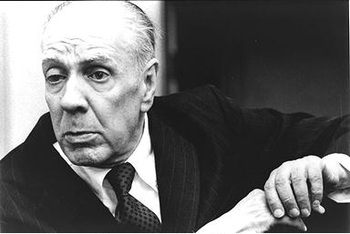
    It would be interesting to see a war of societies in which the sides were a culture that rememberJevonsborges7 nothing versus a culture that remembered everything.  The unspeakably lovely Jorge Borges wrote something touching on this in “Fumes the Memorist,” in which the humble narrator is capable of forgetting nothing, being able to recall explicitly everything within eyesight, perfectly—the problem is though that it takes a day to remember the events of another day.  What would happen in such a culture where everyone forgot nothing? 
    Memory Madeline single

    And I’ve just been dealing here with visual memory, really—and as Proust makes plainly clear (and Borges and other prove), vision isn’t everything.

    ·Posted by :

    ·in:

    —