A Daily History of Holes, Dots, Lines, Science, History, Math, Physics, Art, the Unintentional Absurd, Architecture, Maps, Data Visualization, Blank and Missing Things, and so on. |1.6 million words, 7500 images, 4.9 million hits| Press & appearances in The Times, Le Figaro, Mensa, The Economist, The Guardian, Discovery News, Slate, Le Monde, Sci American Blogs, Le Pont, and many other places… 5000+ total posts since 2008.

Category: Outsider Logic

  • Bad Titles Department: Huh? Confusing Nothingness, Making Stuff, and Radio Hair

    JF Ptak Science Books LLC  Post 537

    0 blog march 9 titlitle that which661
    There is a constant and imaginary warfare going on among certain categories in this blog:  mainly, its “bad ideas” vs. “outsider logic” vs. “impossible books”.  The result is that I just give up and fold them all into each other so I don’t have to think about them at all.  I also haven’t made many entries in these areas because, well, there’s just so many of them to deal with–but I can tell you that they would make a fantastic Mystery Books gallery show, especially if the viewers were made to supply their interpretation of what the written material was all about from their problematic, time-sucking covers and titles.  And I can tell you that reading the content sometimes doesn’t help to understand the title or the cover art, the logic of investigation passing through it all like a stony Bushism (where you know that something was said,  with words, but that’s about all). 

    Take for example Scorn Not That Which You Do Not Understand:  the title begs you to do so as you read it, though it took me a few turns to actually understand what it was saying.  The problem with the tiny pamphlet is that once you’ve read a few pages, you know a little less about the book before you knew it existed, which is a hard thing to do.  (The writing goes downhill after the title.) 
    0 blog march 9 titles making of things660

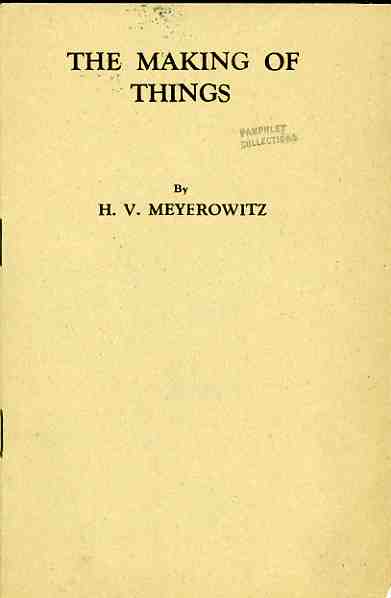
    The Making of Things made me not want to know what was being made, and so I have not to this day opened it, though I judge from outside appearances that it was published around 1940 and is at least three pages long.  The title is just so on-beyond simple that knowing what it actually refers to is bound to disappoint. 

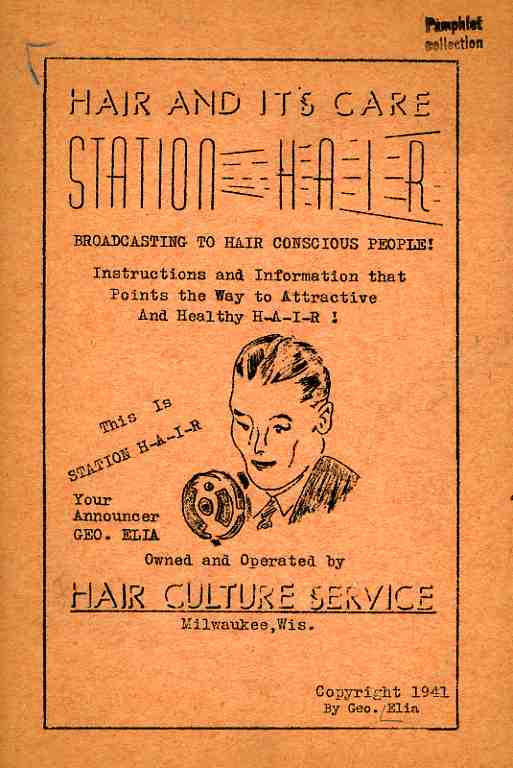
    Station Hair, Hair and its Care
    , is a written radio broadcast from Station H-A-I-R (brought to you by George Elia of the Hair Culture Service of Milwaukee Wisconsin, and evidently with offices in the Lake Wobegon region near Overthere, Minnesota), taches us all how to have healthy, radiant and attractive hair good enough for radio.  In the looks-made-for-radio genre, my own hair (or whatever it is) is definitely in the hair-made-for-radio department, so long as I get enough bootblack to color my scalp. 
    0 blog march 9 tittle hair662

    (This leads me to a semi-connected memory:  does anyone remember a street person in Manhattan, midtown, who was a drummer, with gigantic painted-on jet black eyebrows and painted-on black hair?  This wouild’ve been around 1970.  He was heavy, short, and would walk around with drumsticks and play on whatever was available, announcing, if I recall correctly, the famous drummer that he was immitating. He had to have been a famous street performer….Ring a bell with anyone.  Jeff?)
    ·Posted by :

    ·in:

    — —

  • Blank and Empty Things: the Case of pre-Biblical “Missing” Eclipses, Refuting Darwin, and the Geology of Wrongness

    JF Ptak Science Books LLC  Post 533

    0 blog march 5 darwin refutation654 A History of Blank and Empty Things #35.

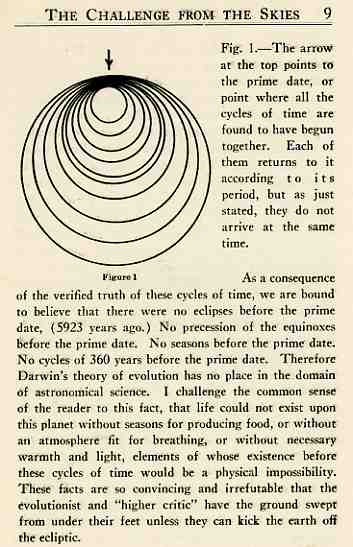
    Mr. R.R. Menke, the author The Challenge from the Skies, Planetary Motion and its Solemn Witness Against Evolution and Higher Criticism, self-published his biblico-religico-astronomical diatribe against Charles Darwin in Huntington Park, California, in 1925.  What he launches in 51 labored pages against one of the most elegant ideas in the history of science  is simply, well, shocking; shockingly eyebrows-catching-on-fire bad, so-bad-it-isn’t-even-bad bad.  Without reading the whole, um, thing, I do get the piercing whiff of a notion having to do with eclipses and the true date of seven (?) days of creation.  He uses some sort of chrono-alchemy layered in spreadable butter, the words made of microscopic asparagus, to prove his point that “as a consequence of the verified truth of these cycles of time, we are bound to believe that there were no eclipses before the prime date (5923 years ago)”.  No eclipses before creation.  AND no precession  of the equinoxes, “no seasons before the prime date, no cycles of 360 years before the prime date”.  Oh my.

    His conclusion, by virtue of this magnificently weighty evidence (and which he doesn’t even relegate to its own paragraph), is “Therefore Darwin’s theory of evolution has no place in the domain of astronomical science…”  And this is so not so much, evidently, that there were no eclipses, and no seasons, and no 360-year cycles (?!), but rather, at the base of it all, there was nothing. No earth.  And since the earth is only 60 centuries or whatever old Darwin just doesn’t work.  I have no idea why the eclipse business was necessary if Mr. Menke was going to argue that there was no “there” there for anything to happen, what with the impracticable nature of having something in nothing. 

    0 blog march 5 darwin refutation655

    There you have it.  There’s more, much more, but frankly it just isn’t worth the 20 minutes to dig out more.  I rarely read anything in Creation Sc__nc_ as there is nothing redeeming at all in it–I’m posting this today because it strikes me that this present work isn’t necessarily singularly bad, but rather representationally bad.  Since the entire belief/hope/prayer system or whatever the Creationists claim as the intellectual/moral basis to their Principa in explaining the stuff of the universe is painfully wrong, and bad, and potentially harmful, I wonder why we should distinguish the levels of badness and wrongness?  It isn’t as though  establishing a geology of wrongness will somehow categorize it all in such a way that something worthwhile could be discovered, like a miraculous toe-hold at the top of the  Sisyphusian hill they’re trying to slide up.  And so perhaps Mr. Menke’s work is just wrong, along with the rest of the others; perhaps the other side needs to deal with him as being one of their own more so than anyone else.  Certainly there are more elegant refutations than this unfortunate attempt, but that only makes the wrongness prettier:  a pig in a (white) wedding gown is still, after all, a pig.


  • Sublime Mundane: a History of High School Lunches and the Commercialization of Children’s Needs

    JF Ptak Science Books  LLC  Post 561

     blog 23 mar lunch724

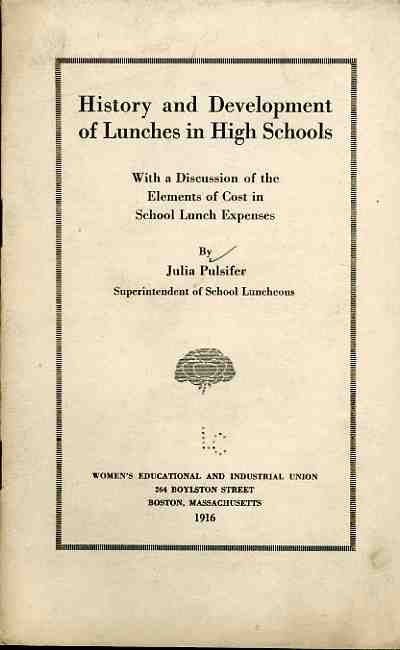
    This is another in a series of posts on the Sublime Mundane–books and pamphlets whose titles are nothing if not introductions to spectacular nothingness.  Sometimes these publications are indeed about disappearing wisps of lost lint, and sometimes not; sometimes the mundane and seemingly stupifyingly “normality” of their subject matter leads to something of deep depth.  Today’s pamphlet, left, fits the second category. 
    Part of the interest in this work–outside of its momentarily arresting title that has a potential for being a cascade of boredom– is that it so quickly rights itself into an important topic.  That’s not to say that it isn’t a boring topic, as my quick and semi-feeble research reveals.  It does get interesting though when you consider that it took so long for the recognition that, since all of these children in school have been brought together, that there wasn’t some sort of federally organized effort to make sure that the weakest members of this group had at least one decent meal a day.  That said, the earliest program were for students who could afford to pay for their lunches.  Perhaps it was assumed that, around the turn of the century, there were no lunch rooms per se and that children would eat wherever they could find the space, that many children were also going home for lunch, and that they were all being fed.  (I do remember that some classmates of mine in P.S. 29 would go home for lunch, and I remember wondering exactly what that was all about.  I can recall taking my brother for special every-so-often-Friday treats at Joe & Pat’s Pizzeria for three slices and two cokes for a dollar back there in 1968.  But I digress.)  It actually took a little time before children’s lunches at school were made to be free to those who needed it. 

    Which brings us to Marion Nestle’s Food Politics (Berkeley, University
    of California Press, 2002), who discusses the early commodification of children’s food: “School meal programs
    began during the Great Depression of the 1930’s. From
    the outset, they had two purposes: to help dispose of
    surplus agricultural commodities owned by the government
    as a result of price-support agreement with farmers ,
    and to help prevent nutritional deficiencies among low-income
    schoolchildren. Because chronic disease risk factors were
    not an issue at that time, the rules specified meals that
    used surplus commodities and were higher in fat, saturated
    fat, sugar, and salt—and lower in fiber—than recommended
    in later years.”  All of which is detestable and unwholesome and immediately transparent.

    Perhaps the really interesting stuff on feeding children at school starts here, in the 1930’s, and that with the commercialization of children’s biological needs, breaking the back of an agricultural finance Vintage-space-lunch-boxproblem in the school lunch rooms.  The lunch as commodity expands from massive leftover projects into something a little more insidious in the television age, when children not only get to dress their foods in the sorts of containers that they wanted (lunch boxes), but also were being deluged with displays of foods that they could select for themselves via television.  This commercialization process gets ramped up decade by decade, until in the 1990’s and 2000’s the lunchroom has in some cases become an extension of the t.v. commercial, and that local and state governments are counting the value of sugary waters, salt, and catchup packets while plying the rest of the arrested nutritional package with prepackaged conglomerate goodness.

    And such is the value of the sublime mundane, at least for me–these items are filled with possibilities invisible to their titles. 

    Even after all of this, I must confess that I would dearly like to have a Fireball XL5 lunch box to take with me into eternity.  All systems go!

    Some interesting links with more than you need to know about school lunch history:

    The Food Museum Online Exhibit:  School Lunch History
    School Lunch Programs in the USA (according to city)
    School Lunch Programs in Europe

    ·Posted by :

    ·in:

    — —

  • Things out of Place Department: the Moon

    JF Ptak Science Books LLC  Post 505

    Blog--things out of place
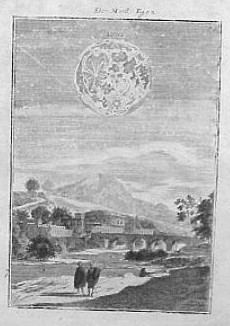
     This is a short entry in the “Things out of Place”
    department.  The image is lovely enough,
    and the depiction of the Moon is excellent, especially given the time of publication,
    which was 1683.  The Moon though, of course,
    is enormously out of proportion with the setting—I’m not sure why it needed a
    setting at all, but it has one, and it is odd. 
    The work is that of the prolific Manesson Mallet, who published this
    engraving as one of 677 in his massive Description de l’Univers, which appeared
    in five volumes.  I’m also not sure of
    how Mallet came to such greatness and capacity, as he started out his life
    (1630-1706) as a simple foot soldier under Louis XV, rising and rising in
    promotion and ability over the years until he became the chief inspector of
    forts.  He also wrote military books,
    including the three volume Les Travaux de Mars ou l’Art de la Guerre
    (1684), which he was somehow able to accomplish in the year after publishing
    his magnum opus.

    I really couldn’t figure out where to put his image, categorically speaking that is–it sort of fits into the small Extra Earth series, simply because the extra earths are big and way out of proportion.  But this is not “extra”, and not the earth, but it is out of proportion and belongs in the sky; and, taken out of context, the image is very unusual, in a naive surreal kind of way…


  • Naive Combat and the Romance of Secret Death Holds: Utopiaic pre-Gore Imagery of Intentional Violence

    JF Ptak Science Books    Post 487

    0 blog jan 26 roy rogers443


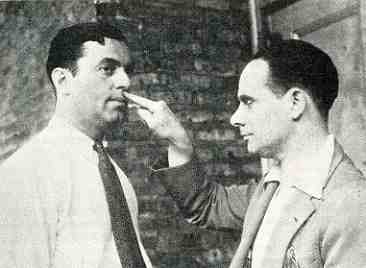
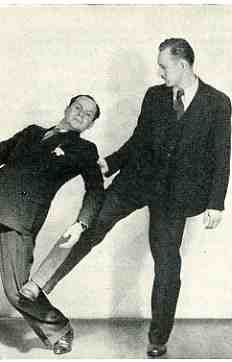
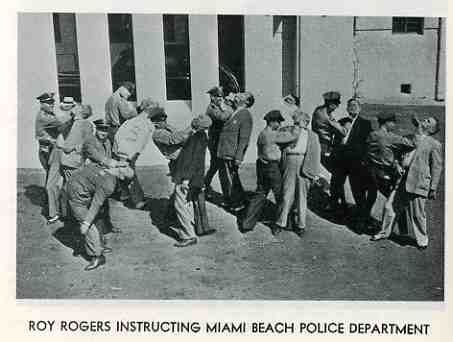
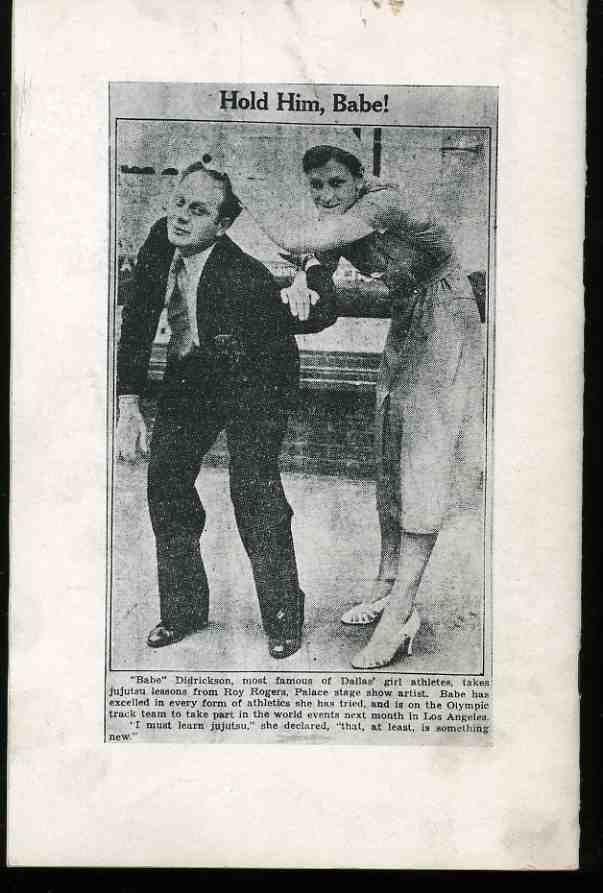
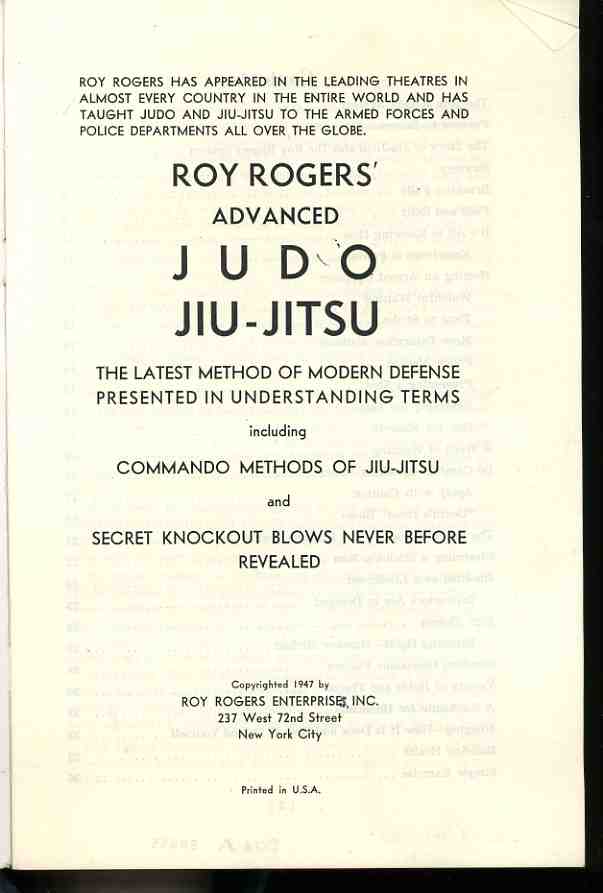
    Roy Rogers–not the singing cowboy but a black-shirted, black-suited, white-bow-tied private slickee cop–shows us here all of the secret and impossible moves from those fast-fighting sequences in those hundreds of 1930’s movies in which men would fight furiously and not lose their hats.  Or, the same guys would have no hats but would have wildly whipping grease-hair and would be knocked down with an open-fisted shot the chest, collapsing on conveniently-placed collapsing-couches.  But Mr. Rogers, who claims to have taught these methods “in leading theatres in in almost every country in the entire world” was serious about his craft, even though the images used to illustrate his serousness look naive and sweetly quaint to our 2009 eyes.  In a series of images that almost never show anyone with an open or grimacing mouth, Mr. Rogers tried to show his grasping audience the tricks of his trade, or the trade of his tricks,

    0 blog jan 26 roy rogers444


    with various methods of restraint, and head butts, and finger holds, and balance-upsetters, and, yes, even the “death” blow.  It is remarkable, really, how far things have progressed in the way of savage fighting in the last 62 years–things have gotten so ultra-modern, so (in the words of the lovely Anthony Burgess) ultra-violent, that these secret combat doings from 1947 look like baby-room wallpaper compared to the nastiness of today.  And yet teaching this stuff kept Mr. Rogers in white ties and jet-black clothing.

    0 blog jan 26 roy rogers445

    If only this sort of combat packed the modern nightmare with dread, what a better place we would wake to–for me, these are pre-gore images of violence which look strangely removed when viewing them from our post-gore world.  Blood as a result of violence in the movies of the 1930’s and 1940’s (and even into the ’50’s) was a rare commodity; blood after the late 1960’s was delivered by the buckets-full, and then by torrent. The delivery of the visual birth of administered violence is relatively new in the history of “entertainment”, and we might’ve moved a little beyond that, as well, as almost nothing is shocking anymore in our pictures of advanced and sometimes impossibly-violent violence.  I imagine that the thought of depicting violence in the movies via 2009 standards to Mr. Rogers back there in 1947 would’ve seemed as remote to him then as the possibility of a computer smaller than an automobile.  

    In any event, I find this to be a remarkable and quiet piece of Americana, capturing some of the stuff of life not normally captured. 

    0 blog jan 26 roy rogers441 0 blog jan 26 roy rogers442

    ·Posted by :

    ·in:

    —

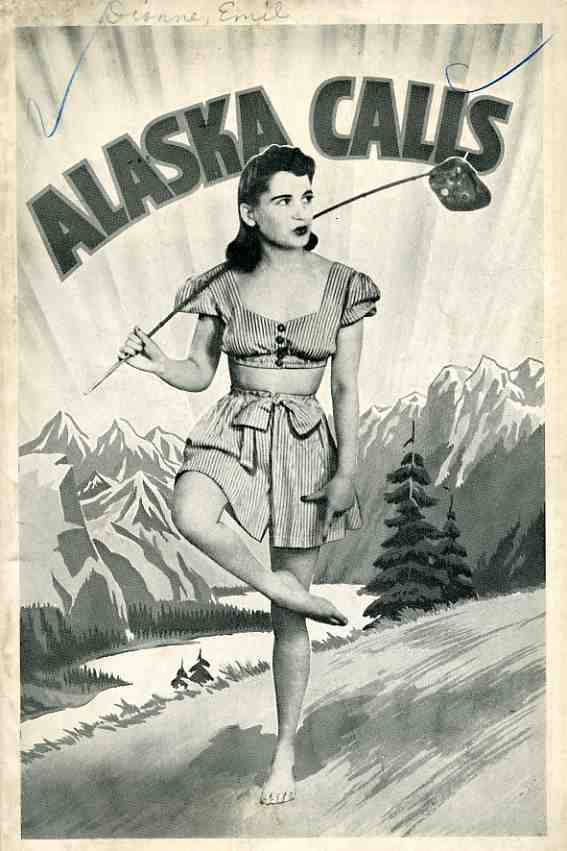
  • Alaska Calls: the Comma King Heads for the Hills. Naive Surreal Collection, Part 9.

    JF Ptak Science Books LLC  Post 478
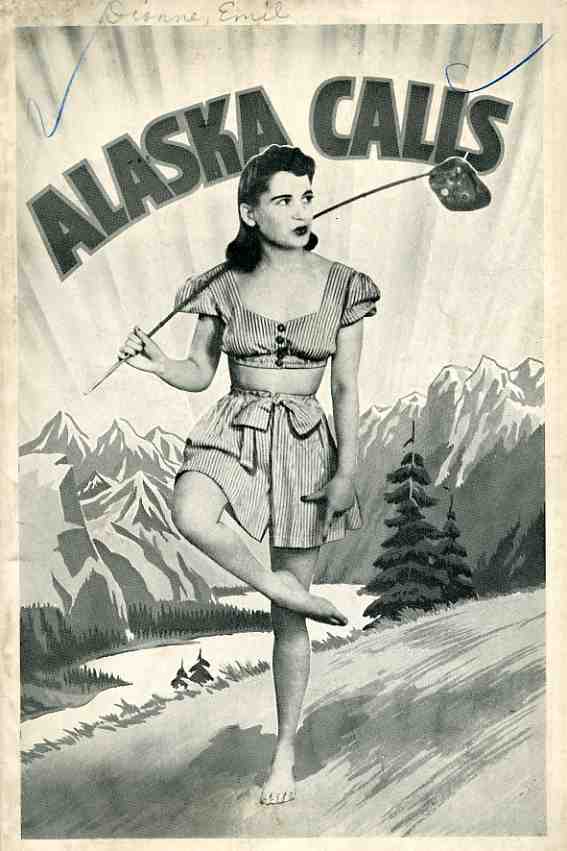
    0 blog jan 20 alaska calls392 So.  I really couldn’t tell what was going to happen in this pamphlet, a fine example from my Naive Surreal collection.  Unfortunately, it is a bit of only a lonely hearts tale, in spite of the monumentally-odd cover of the southern girl with hairy legs and a hobo switch and no shoes and a bare midriff in the wilds of Alaska.  The only thing that the text has going for it in the oddness department–with the exception of being badly written–is the enormous,use,of,the,comma.  I don’t know what the record is for the badly-employed use of the comma might be, but, well, this little story must be making quite a run for it.  In the dedication, for example, which is ten lines and 100 words long, there are 18 commas.  More follow.  Many more. 

    The cover must stand on its own–and it does. 


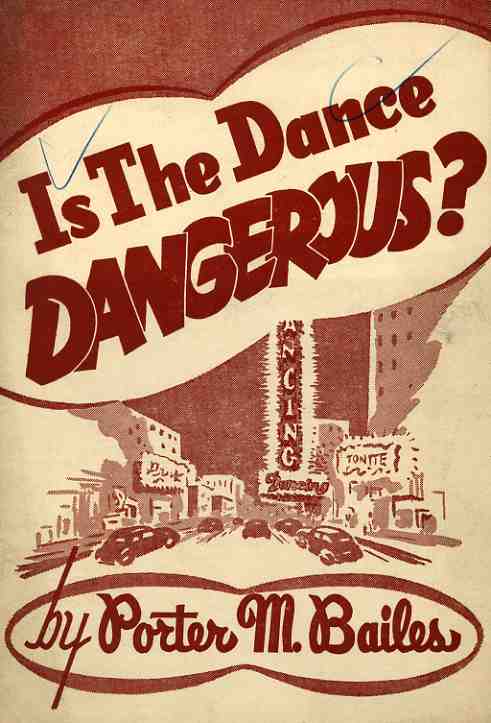
  • Is Dance Dangerous? The Naive Surreal Collection, Part 8.

    JF Ptak Science Books LLC  Post 477
    0 blog jan 20 dance danger391 In the history of questions, this  (“Is the dance dangerous?”) certainly must rank in the bottom tenth percentile.  Or at least I hope it does.  The question is the title of this small pamphlet, written by Porter Bailes (of the First Baptist Church of Tyler, Texas) in 1947, a work which is part of my Naive Surreal collection.  “If it’s doubtful, it’s dirty” is the major maxim that floats it way through this work, and proceeds to attacks it subject of “the”dance on its unholy, immoral, unnatural, imprudent, prayer-defeating nature. 

    “Can any one stretch the imagination as to think of Jesus as being congenial and at ease in the atmosphere that the dance creates? No! Dancing is not to the glory of god. It never made anyone feel the nearness of god.  It robs us of the desire to pray. A dancing foot and a praying knee are not found long on the same limb.”

    And also:

    “There are many fine people who dance.  They are fine not because they dance, but in spite of the dance.”

    And:

    “The dance does not involve any moral requirements.  The more lewd the people are, the more proficient they may become. The gestures of the dance demand lewdness.” 

    Lastly:  “the tine of the dance makes it dangerous. Its hours are unearthly and abnormal”

    And lastly last:  ” The position of the dance make it dangerous.  For two normal people to place their bodies in the close personal contact that the modern dance demands and not have impure thoughts and unholy emotions stirred, would be very unnatural.  In truth, it is against all the known laws of human nature.”

    This is last just for my examples:  there are 20 pages of this.  It is remarkable that, in this highly restrictive and judgmental work,  the paper is allowed to bend. 

    And not to be outdone, the author tells us that 97% of professional gamblers “attribute their habit to the practice of playing cards at home”.  “The risk is too great, young people” Pastor Bailes tells us, “for you to start gambling–even at home”.  He began to warm to this subject but I guess was saving this subject for later.


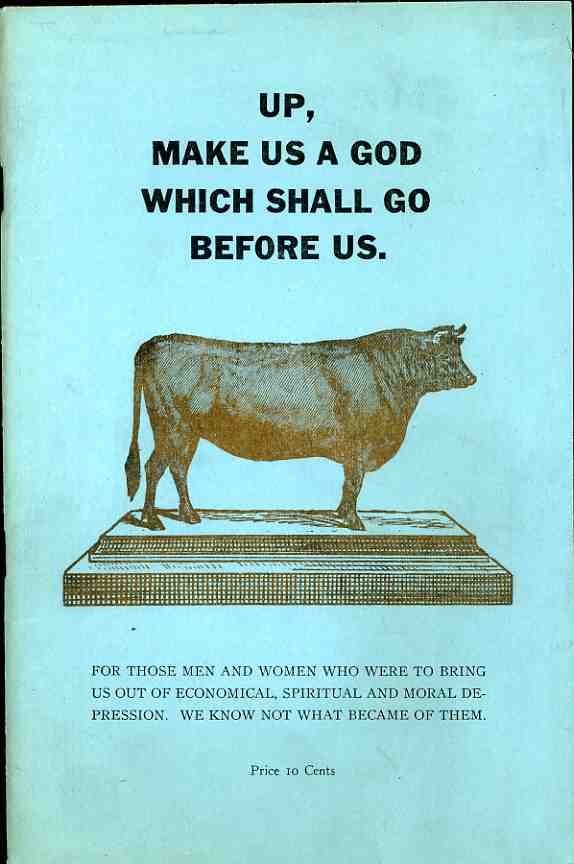
  • Fantastic and Inscrutable Titles: God and the Asylum of Ignorance. (Nazis by any other name…)

    JF Ptak Science Books LLC Post 454

    0 blog jan 02 Up341 Asa Turian, the author of this 1938 Outsider Logic pamphlet, was sort of steeped, in a light way, in gathering quotes from the moderns and the ancients–in the end, none of them seem to help. Ultimately he seems to me to create some new vocabulary to repackage the NSDAP, which even in 1938 was still gathering frothy American pro-Bund crowds at Madison Square Garden. (The scion of American Olympic sports and head of the International Olympic Committee, the  Nazi/racist Avery Brundage*, spoke to a crowd of 20,000+ American Bundists at The Garden in 1938, finding little fault with the Nazis.  He went on to a long and  distinct career– some of which in deep furtherance of his political ideologies–as did thousands of other pro-Nazis.)  The title is taken from Exodus 32:1 and is a plea, very late in the Depression, from Turian to find some sort of Moses to lead the United States out of the despairing economic situation.  He notes that although many people were talking about the depression, no one was talking  (like Mark Twain’s complaint about people discussing the weather) about what to do about it.  Which is odd because FDR had been hammering away at it for six years by the time this pamphlet was written.  No matter for Turian, who doesn’t bother mentioning Roosevelt.

    After quoting many, Turian suggests that the way out of the Depression was via a light Dictatorship (“an alternative between Democracy and Dictatorship by means of the separation of Government and Industry”) that defies simple explanation.  Half-way through this Bush-IQ-thin text the Democracy part of this partnership slips away, saying simply that “we must maintain our present form of Government and resort to Dictatorship as well”.  I think that the way this plays out is that a combination of democracy and dictatorship is just a dictatorship.  Industry is divided from government, and then  would be further divided “between Capital and Labor” and then “running it on a partnership basis” governed by the Corporate Dictatorship. He further suggests getting rid of money and putting the entire economy on a 100-billion (the unit of measurement not explained) “bartership basis”.  I have no idea how this barter would work overseas, as international trade doesn’t come up at all in Turian’s economic homage to liberation logic, though there is a lot of discussion of “state controllership” and “the status of the corporation dictatorship”.   There are some other societal revolutions that come and go, but the biggest of them all was the establishment of some sort of economico-religico tripartate God/Mammon/Something Else oracle to lead us away from all bad economic temptation.  Wow.   I’m not sure exactly what the author was getting at, but if you take away the barter bit, it sounds quite a bit like Nazism in different terminology.  I guess this just goes to show you that you can Reality-Compromised and still come up with either (a) your own version of Nazism or (b) a paint-by-numbers Nazi who changes the colors but not the numbers. 

    *I’d like to discuss Brundage more fully at some point.  For now, let’s just say that he was a man without quality.   It was Brundage who sold out Jim Thorpe in a rant against professionalism in the Olympics but who said nothing about the Olympic industry and paid Olympians in the Soviet Bloc.  It was Brundage who disqualified and exiled Tommie Smith and John Carlos in Mexico ’68 for their giving the Black Power salute but who said nothing at all about the Nazi salute in his highly cherished 1936 Berlin games.  And it was Brundage who cluster fucked the 1972 Munich Olympics–in ways too numerous to go into here–and who allowed the games to continue after a one day interruption following the murder of 11 Israeli athletes by the Black September Palestinian terrorist group.  Brundage, as President of the IOC, spoke at the ceremony the day the Olympics restarted, and unbelievably equated the massacre of the Israelis with the boycott of the racist all-white Rhodesian team: (the bold is mine, just in case):
    “The Games of the XXth Olympiad have been subject to two savage attacks. We lost the Rhodesian
    battle against naked political blackmail. I am sure that the public
    will agree that we cannot allow a handful of terrorists to destroy this
    nucleus of international cooperation and goodwill we have in the
    Olympic movement. The Games must go on….”

    Why the man wasn’t struck by lightning on the spot and turned into carbon sizzle is a sacred mystery. I am sure that a copy of the Protocols of the Elders of Zion must’ve been on his library shelf. Or half-shelf.

    The man was utterly shameful, and yet was the leading American for the Olympics for almost thirty years.

    ·Posted by :

    ·in:

    —

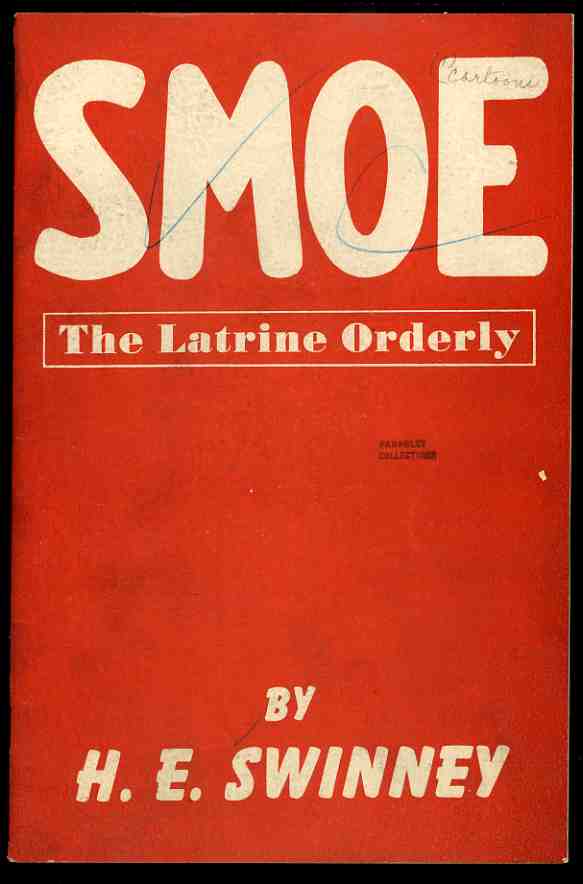
  • Private Smoe, Latrine Orderly, and a Sub-History of the Word “Latrine” in the Titles of Books in English

    JF Ptak Science Books LLC   Post 452

    0 blog dec 31 smoe334 Is it possible that James Steveson’s Paddington : report on the necessity of latrine accommodation for women in the Metropolis, published in 1879, is the first book published in English to use the word “latrine” in the title?! Well, in a lightly interesting and perhaps stupefying way, the answer is “yes”.  And this just to get to this very obscure graphic.cartoon book, Smoe, the Latrine Orderly, by H.E. Swinney, published by the Ledger Company in Fort Worth, Texas.  According to WorldCat/OCLC, the massive cataloging tool used by librarians everywhere, there aren’t any copies of this book in any library anywhere in the world.  I’m both surprised and underwhelmed.  The cartoons all appeared in the Fort Worth Army Air Field’s newspaper “Lone Star Scanner”, which is also a publication that doesn’t seem to have survived anywhere.  H.E. Swinney may be Sergeant H.E. Swinney, who was present at Pearl Harbor on 7 December and who fought his way through WWII, though I’m not sure.

    The pamphlet’s  jokes and cartoons I can appreciate as having been funny once upon a time, making people laugh as they snapped their newspapers over their eggs at the PX.  Maybe they made people laugh for a few years, but probably not much more.  It makes me think for just a little about the average age for how long jokes are “funny”.  I’d say that the Smoe funny lasted about 2 years 5 months and 5 days.  More or less.

    The word “latrine” is from the French and from the Latin before that, and appears fairly early in English (1642 according to my 1933 OED), but for whatever reason, it just doesn’t find its way into the title of any English books for more than two hundred years.

    The reason I’m spending any time at all on this little pamphlet is because its title is so entirely unexpected.  And that, as the man said, is all I have to say about that. 


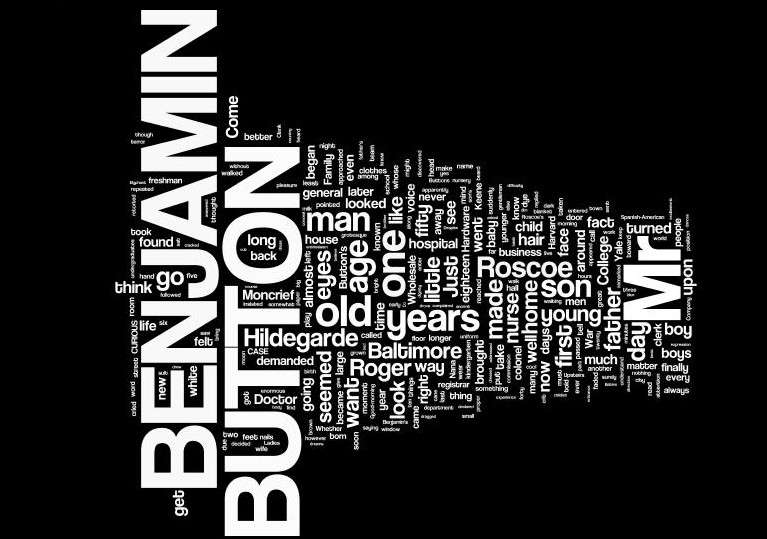
  • The History of the Future, Living Life Backwards, and a Wordle of Benjamin Button

    JF Ptak Science Books LLC  Post 451

    Beginning life with the final kiss of a Shakespearean comedy is far more complex than it is interesting.  The ordeal of Benjamin Button, a current movie based on the 1922 short story by Scott Fitzgerald (found in his collection Tales of the Jazz Age), presents some very curious aspects of the physics of life–especially if it is more than just Mr. Button who gets to live their life out again in reverse.  It also isn’t a very wide genre of literature, so far as I know.  Another good example of a life lived backwards is the book Time’s Arrow, by Martin Amis, who tells the story of a problematic character named Tod T. Friendly. (“Tod T. Friendly” is also “Todt Friendly” or “death friendly, taking a piece of his name from German, which evidently Mr. Friendly was.)  On the other hand, the novel Stuart, a Life Lived Backwards doesn’t make the cut, as Stuart does live his life forwards.  Christopher Homm, (homme?) written by C.H. Sissons in 1965, tells the story of the title character backwards, though his life is lived forwards as well.

    Wordle--button

    (CLICK to enlarge.)

    The idea of the future, or the having of a future, seems like it should be an ancient idea, and it is–though it isn’t necessarily a universal idea.  Mesopotamians, Babylonians, Mayans embraced the idea of vast distances of time; early Christian faith, o the other hand, doesn’t necessarily have a great future, what with time ending at Judgment Day.  Hinduism and Buddhism have a sense of the future, though there is some very problematic circularity involved with it.  The true scientist bits about the concrete possibilities of vast amounts of time extending into the millennia are found in Charles Lyell (Principles of Geology) who in 1830 took up some earlier work and made it possible to think of the age of the earth in terms of millions of years.  Charles Darwin was also a cultivator of the past and possible future, as was Hermann von Helmholtz, who predicted the ultimate age of the sun, meaning that time’s arrow had the possibility of being hundreds of millions of years long.  These were startling, epochal ideas, and all came within a period of thirty years, creating for the world a fluidity of scientific thought such as had never been seen.  The future came to life in the hands of novelists like Jules Verne, H.G. Wells and Aldous Huxley, not to mention the fabulous worlds of Robert Heinlein (who launched his terrific series of articles on the history of the future in the March 1941 issue of Astounding Science Fiction–just a month after John W. Campbell had evidently coined the term in the same magazine.  I can’t leave this without mentioning Edward Bellamy, a great trailblazer in this area of thought, and his work Looking Backwards, which was a view of a socialist utopia live din the year 2000 by an 1887 man who had fallen into a 113-year-long sleep. 

    But the difficult part of multiple people living their lives backwards comes in the multiplicity of changes that would be caused by two actors adjusting their behavior for the “future” based on lives they had already “lived”.  I can’t imagine the implications of the “butterfly effect” when spread across a broader spectrum than just Mr. Button.

    I haven’t seen the movie, but I have now read the Fitzgerald story, and the idea is very disturbing, like coming out of Alzheimer’s to climb right back in again.  The worst of it seems t take place not at the end of the reverse life, but right before–Mr. Button enters Harvard as a genius sportsman with his years of expertise and learning already under his belt–four years later, though, as a senior, he is struggling, his brain and mind slipping away, his knowledge restricted to that of a 16-year old boy.  And it just gets worse from there, though his ability to distinguish his diminishing capacity grows dimmer and dimmer, thankfully, the closer he comes to his cradle grave.  Its a difficult story to read.

    (In a cursory look I don’t see anything interesti9ng with anything read backwards in Mr. Button’s story.)

    ·Posted by :

    ·in:

    — —