A Daily History of Holes, Dots, Lines, Science, History, Math, Physics, Art, the Unintentional Absurd, Architecture, Maps, Data Visualization, Blank and Missing Things, and so on. |1.6 million words, 7500 images, 4.9 million hits| Press & appearances in The Times, Le Figaro, Mensa, The Economist, The Guardian, Discovery News, Slate, Le Monde, Sci American Blogs, Le Pont, and many other places… 5000+ total posts since 2008.

Category: mathematics, logic

  • Home Run Records and a Prime Number Oddity (1927-1974)

    JF Ptak Science Books  Quick Post  

     
    Follow Me on Pinterest 

    Babe ruth kids
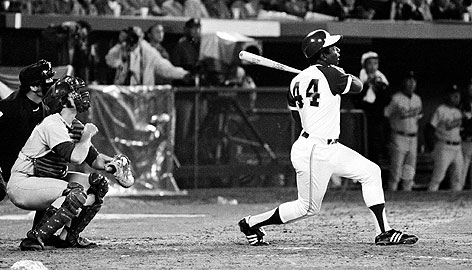
    Babe Ruth x Hank Aaron = the product of the first seven primes multiplied in succession.

    Babe Ruth hit 714 home runs over his long and incredible career, a record that would stand until the fantastic Henry Aaron broke it on 8 April 1974, hitting his own 715th home run. Multiplying the two numbers makes an interesting product:

    714×715=510510

    510510=2x3x5x7x11x13x17, which is the first seven primes.   And the first seven primes add up to 58, which is close to the record 60 single-season home run mark set by Ruth on 30 September 1927 off a .493 lifetime w/l pitcher in Tom Zachary, (but close doesn’t count). The average of those primes is 8.2–Aaron wore the number 44.  Again, “close” doesn’t count, but it is a fun observation. 

    Hank-aaron

    I must point out that this is not my own work–its a remembered bit from The Long Ago and I just can’t remember the originator. 


    ·Posted by :

    ·in:


  • Some Ancient Forms of Numbers

    JF Ptak Science Books  Post 2030

    With “all” of the recent talk about prime numbers I thought to post this elegant and small summary of the different ways of writing numbers.

    Number history316Above is a lovely detail of a collection of “ancient arithmetical characters”, including notations for the numbers 1 through 9 by “Boethius, Plenudes, al Sephadi, Sacro Bosco, Indian, Roger Bacon, and AL Sephadi”. 


  • A Fine Calculating Machine by Bollee, 1889

    JF Ptak Science Books  Quick Post

    Bollee
    [Source: http://www.rechnerlexikon.de/artikel/Bild:Bollee-mit-Maschine-CNAM1990.jpg]

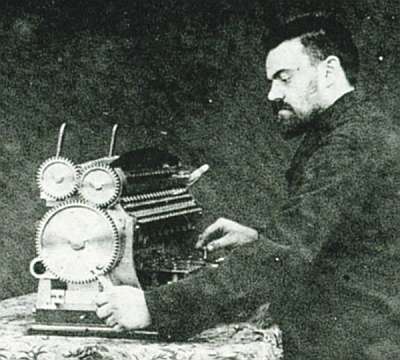
    This was a surprise, finding M. Bollee’s article (Sur une nouvelle machine a calculer) in this 1889 Comptes Rendus, pecking around in that big 10-pound volume looking for something else.  It was very easy to miss if you weren’t looking for it, just a few pages long in a 1000-page book.  But there it was, nestled comfortably in pp 737-739.  It these few pages Bollee describes his machine and with particular reference to his innovative approach to direct multipilication–a fine addition (ha!) to the long line of contributions by Babbage and Clement, Scheutz, Wiberg and Grant and Hamann. 

    Notes:

    Léon Bollée: “Sur une nouvelle machine a calculer”, in Comptes Rendus de l’Academie Sciences (Paris), volume 109, 1889, pp. 737-9.

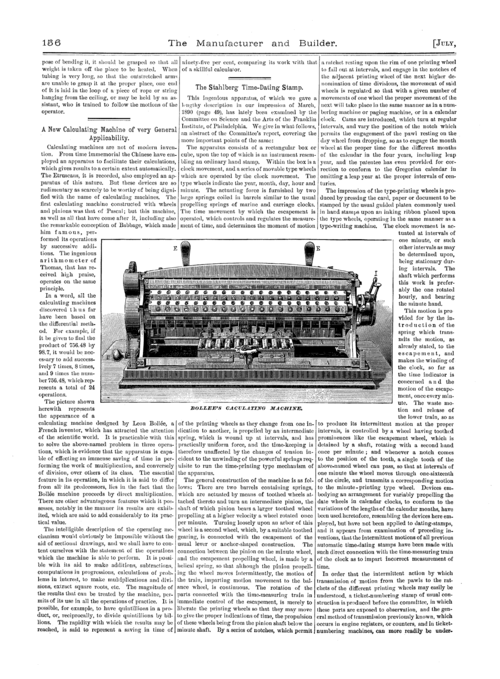
    An image of the machine from The Manufacturer and Builder:

    Bollee

    See:  the Making of America, http://digital.library.cornell.edu/cgi/t/text/pageviewer-idx?c=manu;cc=manu;rgn=full%20text;idno=manu0022-7;didno=manu0022-7;view=image;seq=0162;node=manu0022-7%3A21


  • Decimals, Holes & Dots in the History of Mathematics

    JF Ptak Science Books   Post 2011

    There is an interesting side note to this blog’s series on the histories of holes and dots–a mathematical aspect involving decimal points, decimal notation and placeholders.  This is exclusive of the number zero, however, which is an entirely different topic. 
     

    Reisch b

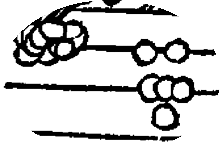
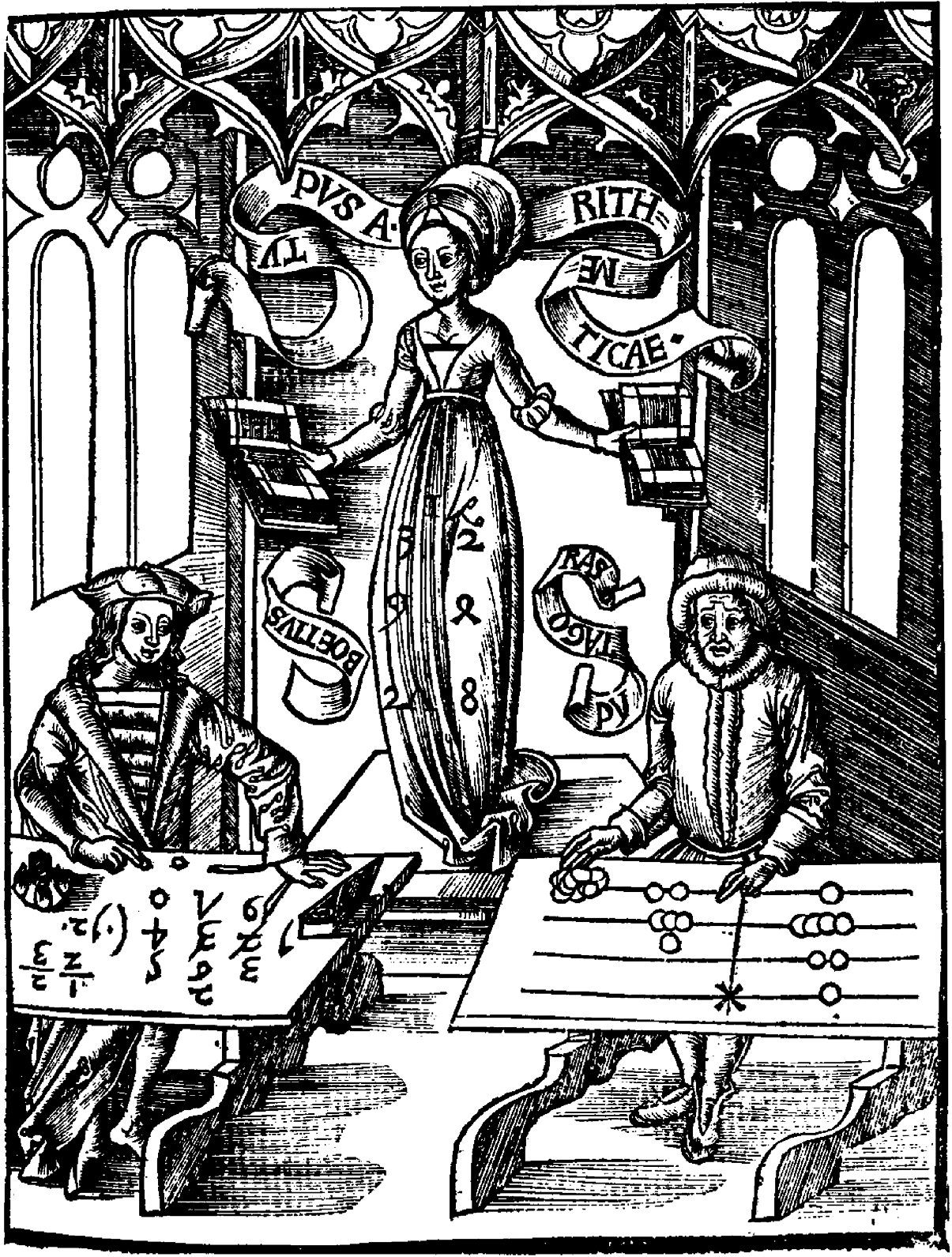
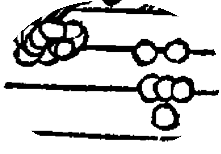
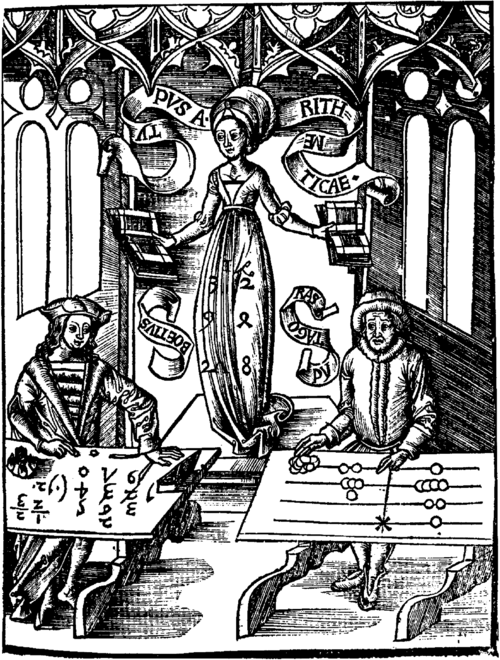
    The book that this  beautifully-illustrated counting board (below) is found is in Gregor Reisch’s  (1467-1525) Margarita Philosophica (1503)  and depicts (amidst much else in the greatly humanist volume) representations of the mathematicians Boethius and Pythagoras working math problems on the given tools of their day. The tools on the right seem to be circles, but they’re not–they’re counting stones, and for our intents and purposes here, they shall be dots, and in the history of dots in math and business reckoning they have had a strong and long life. 
    Reisch

    We can see in his expression that Boethius, on the left, is rather enjoying himself, knowing the superiority of his system of counting, which was the the Hindu-Arabic number notation–he definitely has a sly, self-appreciating smile on his face.  Pythagoras, working with the old counting table, definitely looks worried, or at least unhappy, unsettled.  Never mind that Pythagoras (570-495 b.c.e., none of whose works exist in the original, another sort of entry in our Blank History category) was at a definite disadvantage in the calculating department, being dead and all that for hundreds of years before the Arabic notation was more widely introduced in the West, probably being introduced by Pisano/Fibonnaci in the 12th century.  But it does fall to Boethius, the smirker, to have introduced the digits into Europe for the very first time, deep into the history of the Roman Empire, in the 6th century.

    The numerical stand-ins in the Reisch book with which Pythagoras worked were blank, coin-like slugs used as placeholders, and would be used in place of rocks or pebbles or whatever other material was at hand. It is interesting to note that the Latin expression, “calculos ponere”, which basically means “to calculate”or “to compute”, is more literally translated into  “to set counters” or “to place pebbles” (upon a counting board) or to set an argument2,  which is exactly what some of the Roman daily reckoners would do at their work. And also used, in this case, by the unhappy Pythagoras.

    The foundation for the .14159… that comes to the right of the integer 3 in pi is a relatively recent idea in the history of the maths–at least so far as the represrntation of the ideas in numbers and the decimal point is concerned. 

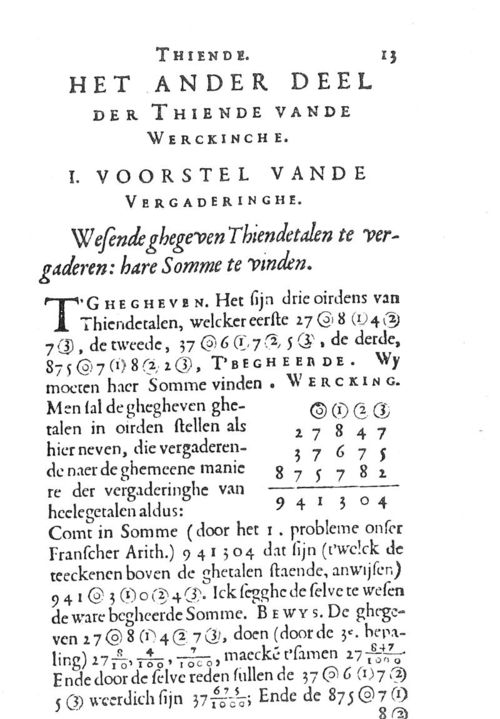
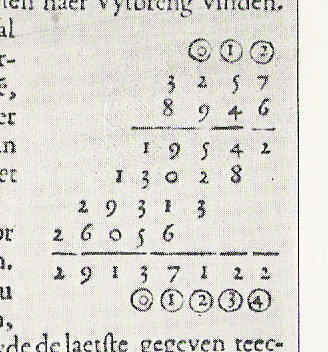
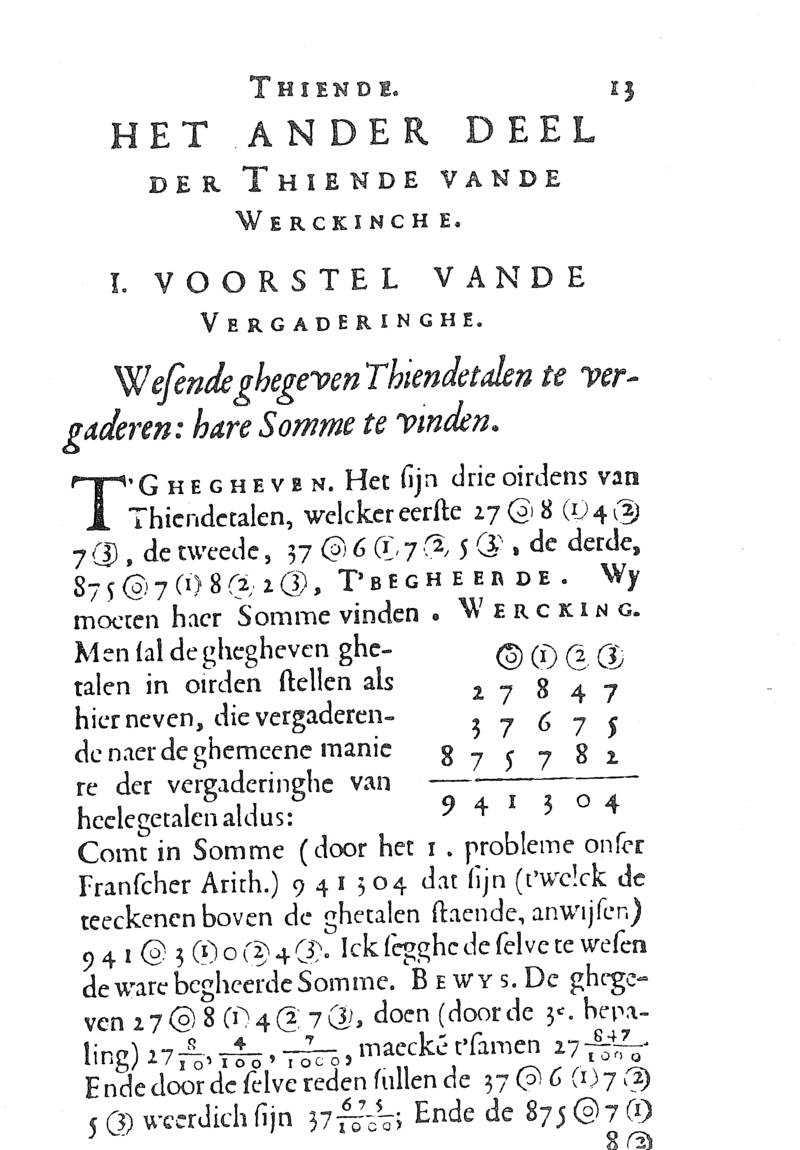
    Simon Stevin (1548-1620) introduced the idea of decimal numbers in his 36-page De Thiende (‘The Art of Tenths”1) in 1585, an idea that replaced much more cumbersome earlier methods of representation.  So, the number 3.14159 would be written in the Stevein notation as (where in this case numbers enclosed by brackets, i.e. “[9]” would have been represented in print as a 9 within a circle) 3[0]1[1]4[2]1[3]5[4]9[5].  It is also seen here:
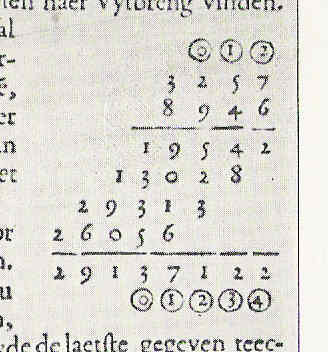
    Stevin decimal
    [Source:  math Words, here.]

    Stevin decimals[Full text available here.]

    The importance of the introduction of this idea is difficult to underestimate, according to many and by example the  The Princeton Companion to Mathematics by Timothy Gowers:

    The Flemish mathematician and engineer Simon Stevin is remembered for
    his study of decimal fractions. Although he was not the first to use
    decimal fractions (they are found in the work of the tenth-century
    Islamic mathematician al-Uqlidisi),it was his tract De Thiende (“The tenth”), published in 1585 and translated into English (as Disme: The Art of Tenths, or Decimall Arithmetike Teaching ) in 1608, that led to their widespread adoption in
    Europe. Stevin, however, did not use the notation we use today. He drew
    circles around the exponents of the powers of one tenth: thus he wrote
    7.3486 as 7�3�4�8�6�4. In
    De Thiende Stevin not only demonstrated how
    decimal fractions could be used but also advocated that a decimal system
    should be used for weights and measures and for coinage.

    This idea would be further developed by Bartholomeus Pitiscus (1561-1613) who was the first to introduce the decimal point in 16123.   It was a far more robust and simple was of dealing with decimal notation than anything that had come before.

    Notes:

    1. Decimal arithmetic: Teaching how to perform all computations whatsoever by whole numbers without fractions, by the four principles of common arithmetic: namely, addition, subtraction, multiplication, and division. 

    2. The Reisch book is remarkable: it is basically a Renaissance encyclopedia of general knowledge, divided into twelve books:  grammar, dialectics, rhetoric, arithmetic, music, geometry, astronomy, physics, natural history, physiology, psychology,  and ethics.

    3. Pitiscus was also the first to introduce the term “trigonometry” earlier in 1595 in a highly important and influential work he produced in 1595.


  • Found Art & a Massive Simplification

    JF Ptak Science Books   Quick Post

    Follow Me on Pinterest

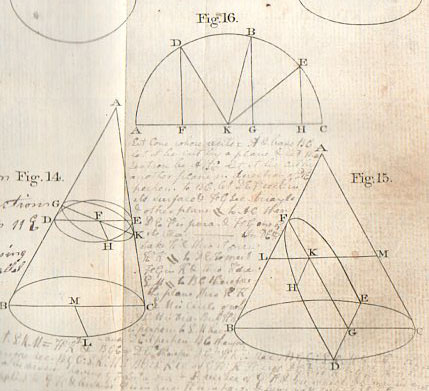
    I wrote yesterday about found poetry in Simson’s Elements of the Conic Sections (1804)–there was much more.  Some of the owners of this book used it pretty hard over the years (mostly in the early decades of the 19th century), and there are numerous examples of worked problems in the margins and in the folding engraved plates of illustrations of proofs.

    Found art list c230

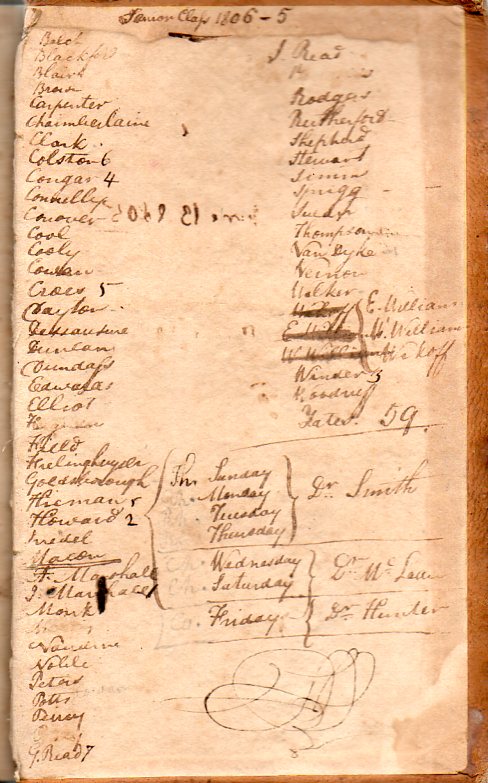
    They are beautiful works. But one of the other finds in this book is written out on the rear paste-down, which contains (on one sheet of paper) the entire 1806 class for the bachelor of arts degree at Princeton College for 1806. ( A little more information on these Princetonians is available at the General Catalogue, Princeton Universtiy–the list checks out to a man.)

    Found art list229
    It is interesting to consider that an entire attending class of what is today a very major institution could be easily listed on one 8×5-inch piece of paper.

    ·Posted by :

    ·in:


  • Photograph of a Street Abacus Seller, Russia, ca. 1860’s

    JF Ptak Science Books   Quick PostFollow Me on Pinterest

    Carrick abacus seller

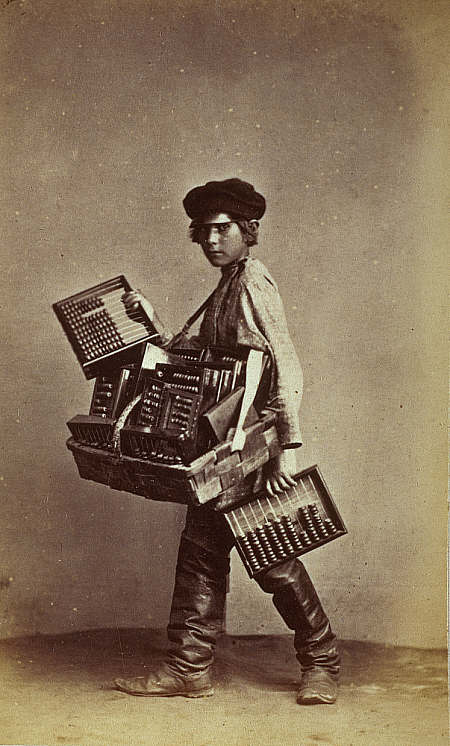
    In my travels in and out of imagery and books, I’ve kept a small space allocated in what is left of my memory palace for images of the working poor and the laboring classes.  Most of the world’s population of course has been and still is composed chiefly of the daily (and not so) laborer, but if you were to measure images that were made of these folks while at work or with the tools of their trade, and compare it to the rest of the images of more-exalted people spending their time doing more-exalted things, I would guess that the images of the working classes would be vastly outweighed by the rest, at least in the ancinet to early-modern times (of say 1925)–that is why it is so very interesting to see third-quarter 19th century photographs of these people.

    This image was made by William Carrick (1827-1878, born in Scotland but who spent his life chiefly in Russia) in the 1860’s, and is found at the National Gallery of Scotland, here.  Carrick made important contributions to the ethnography and the history of photogaphy, documenting the lifestyle and costume of Russian peasants in the country.  It is probable that he made his series cartes de visite images of itinerant trades people as a sort of postcard to the tourist and taveling class–but what happened of course is that he recorded in great detail bits of everyday life that was in general invivible to the main sttream of people who were in the image-making class.  And so Carrick produced images of knife sharpeners, and tool sellers, and milk haulsers, and woodcarvers and hackmen and chimney sweeps and so on, pictures of the people who made the city run.  I was particularly struck by this image of a boy selling abacuses/abaci–Im not sure that I ‘ve seen a photograph/engraving of a street vendor of this sort of instrument, but here one is–a boy in the ‘tween years, wearing boots way too big, with a woven basket full of abacuses/abaci. (The varities here have two ranks of four beads–one for quarter-rubles and the other for quarter kopeks–while the other wires hold ten beads apiece.)

    Maybe the boy isn’t a ‘tween–maybe he’s younger than that. Maybe the boy is a girl.  In any event, the basket looks heavy, and I’m sure the child returned home with a weary back at the end of the day. 

    Other images by Carrick can be found at LuminousLint.com; a short biography of Carrick is available at Oxford Art Online..


    ·Posted by :

    ·in:

    —

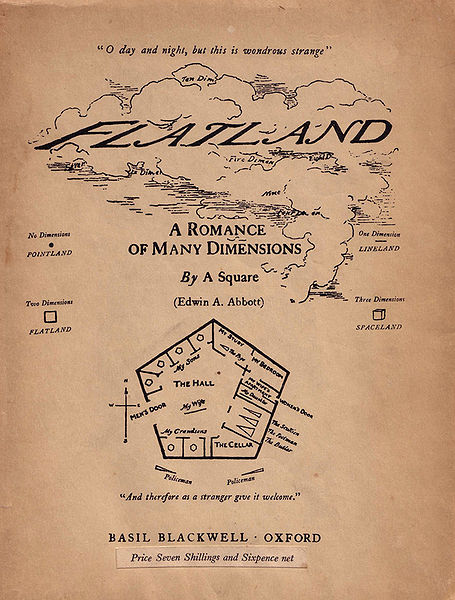
  • Word Art: the Geographical Vocabulary of Edwin Abbott’s “Flatland”

    JF Ptak Science Books   Quick Post  

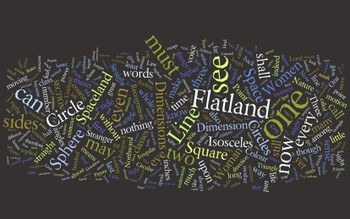
     Edwin Abbott’s slender Flatland, a Romance of Many Dimensions is perhaps one of the best books ever
    written on perception and dimensions, a beautifully insightful book that
    was quick and sharp, and in spite of all that was also a best-seller. 
    Written in 1884 when Abbott was 46 (Abbott would live another 46 years
    and enjoy the book’s popular reception), it introduces the reader to a
    two dimensional world with a social structure in which the more sides of
    your object equals power and esteem.  Thus the lowest class would be a
    triangle (three sides) while the highest (priestly) class would be
    mega-polygons whose shape would approach a circle.  Abbott’s magistry
    comes in explaining to the three-dimensional reader what it was like to
    be in a two-dimensional world.

    Wordleflatland

    Flatland

    ·Posted by :

    ·in:

    — —

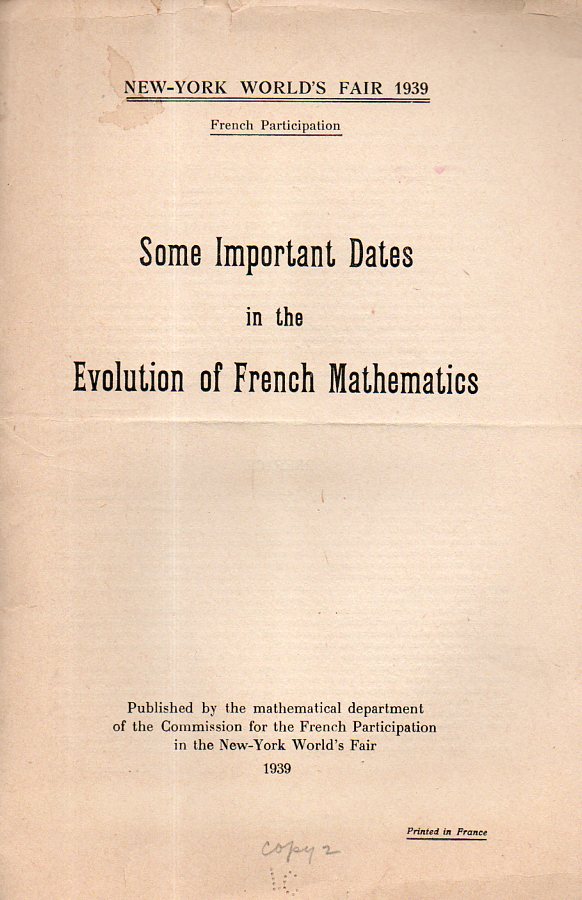
  • Some Important Dates in the History of French Mathematics

    JF Ptak Science Books       Reference Tool series

    This interesting, unusual, and scarce publication was printed for the New York World’s Fair, 1939, as part of the French pavilion.  It is only seven pages long, but its a useful seven pages, and very seldom seen. 

    Math french a202

    ·Posted by :

    ·in:

    —

  • A Note on the Very Very Quiet Beginnings of Pi

    JF Ptak Science Books   Quick Post

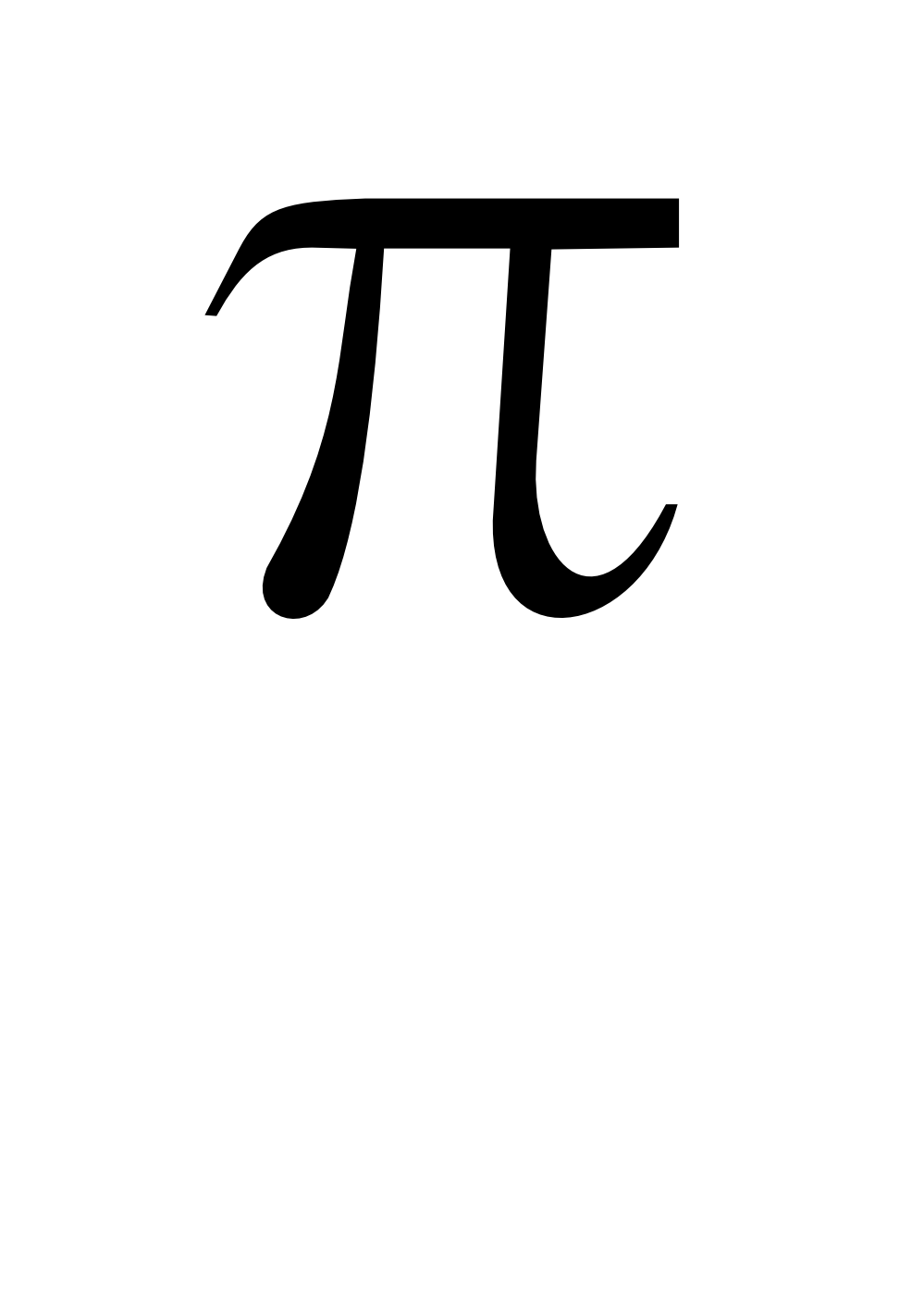
    It seems that for such a great number as pi the naming of had little (where “little” = “no”) fanfare in its introduction.

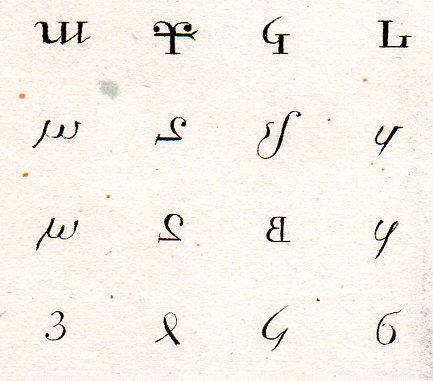
    Since it is just after 1:59 on this pi day of 2013 (3.14159…) it might be nice to have small bit of history on the first use of the symbol for pi. Pi the idea is ancient (on the ratio between the diameter of a circle and its circumference) but using the Greek symbol for the word is relatively new.  It shows up for about he first time here:

    on page 267 of William Jones’ (1675-1749) Synopsis Palmariorum…, which was in general a book for beginners in semi-advanced mathematics, and which was published in 1706.  Pi is represented as a square or the Hebrew letter “mem” in John Wallis’ Arithmetica infinitorum (published in Oxford in 1655), according to Florian Cajori in his A History of Mathematical Notations (volume II page 8), though William Oughtred had used the Greek letter in fractional form to designate the ratio as the periphery and the denominator as the diameter. Still, it was Jones who introduced the letter pi as the sign for the ratio, and he did it without saying very much at all about it.  Actually, he says nothing about it at all–just states the case, and that was it. 

    Cajori writes on to say that Jones used the symbol earlier in the book, but in a different context, and that the immediate reaction to the symbol (if there was a reaction) was also a bit of nothing, with many writers continuing to use different symbols to talk about pi for several more decades, and that it didn’t really come into use in general textbooks in German and French until nearly 1800. 

    And such was the quiet beginnings of

    Pi

    (Full text here.)


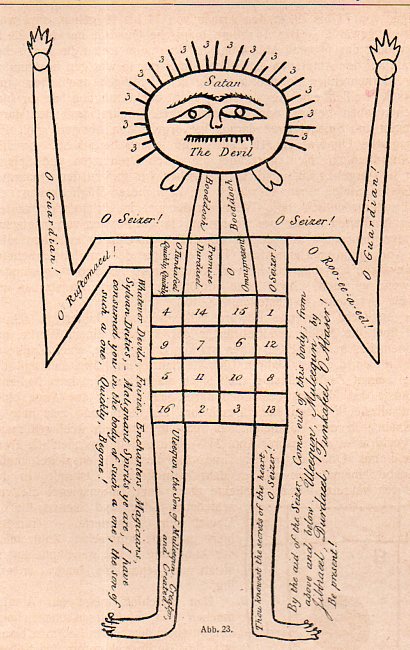
  • Magical Magic Squares of Some Advanced Age

    JF Ptak Science Books   Post 1987Follow Me on Pinterest

    Magic square 7096
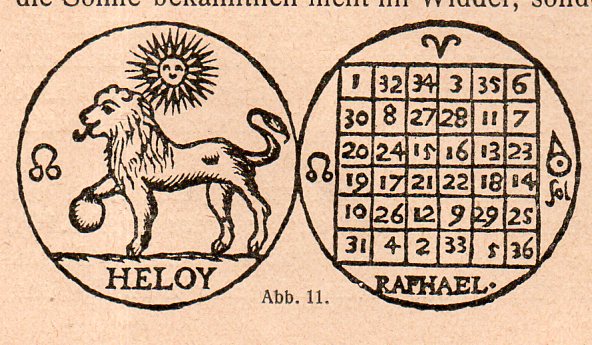
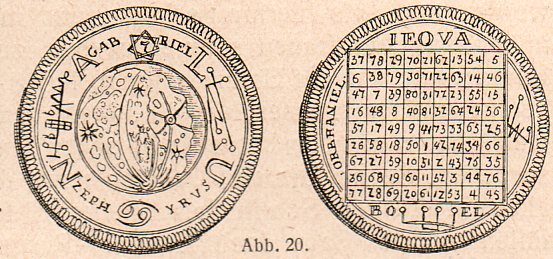
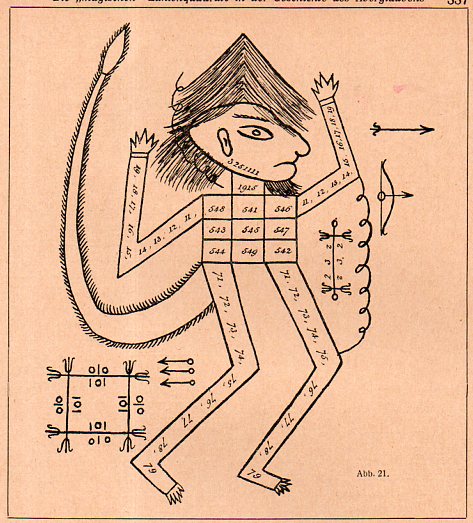
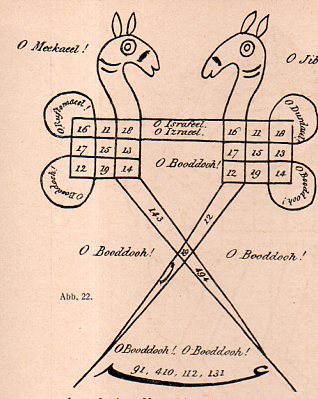
    I found these extraordinary magic squares lurking in the September 1915 issue of Himmel und Erde–seeing them was a shock to me, especially since I was expecting articles dealing with more technical and also astronomy-related issues, though treated as a history of astrology/astronomy aspect I guess that I should’ve have been too surprised.  The author, W. Ahrens (of  Rostock) had written on different aspects of the magic square in the South Pacific (“Etwas von magischen Quadraten in Sumatra und Celebes”) and more extensively on the Kabalah and magic squares (in “Hebraeische Amulette mit Magischen Zahlenquadraten” for example), and in general in his Mathematische Unterhaltungen und Spiele (1901). 

    Magic square 1090
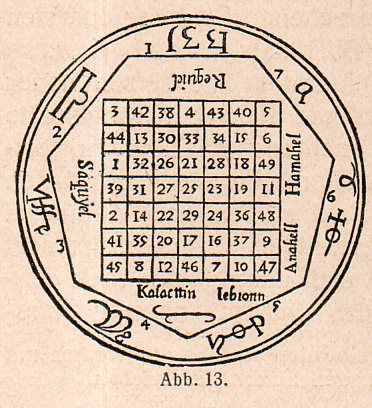
    (An interesting example of a “Venus” magic square, with seven cells).

    Magic square 4093
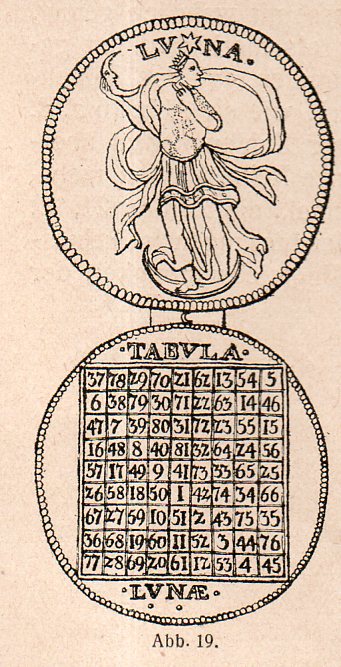
    (This magic square, a “Moon” or “Lunar” square, has nine cells, and also has a form of a “T” world map.  The names of the magic squares were adopted by Cornelius Agrippa (1486-1535) who constructed squares of 3,4,5,6,7,8 and 9 cells, naming them for the seven “planetary” astrological symbols, Saturn, Jupiter, Mars, the Sun, Venus, Mercury and the Moon.  The magic square as an idea seems to have been introduced in the west by Moschopulus of Constantinople in the earlier 15th century–the magic square itself though is ancient, alive and well in India more than 1500 years before its arrival in Europe). 

    Magic square 5094

    A magic square amulette from East India.

    Magic square 6095

    Magic square 3092
    Another 9-cell magic square, indentifying itself with “Lunae” and “Luna”. 

    Magic square 2091

    They’re all quite beautiful.


    “

    ·Posted by :

    ·in:

    —