A Daily History of Holes, Dots, Lines, Science, History, Math, Physics, Art, the Unintentional Absurd, Architecture, Maps, Data Visualization, Blank and Missing Things, and so on. |1.6 million words, 7500 images, 4.9 million hits| Press & appearances in The Times, Le Figaro, Mensa, The Economist, The Guardian, Discovery News, Slate, Le Monde, Sci American Blogs, Le Pont, and many other places… 5000+ total posts since 2008.

Category: mathematics, logic

  • Geometry of Art and Life

    JF Ptak Science Books  Quick Post

    “And it was then that all these kinds of things thus established received their shapes from the Ordering One, through the action of Ideas and Numbers.”[Plato, Timaeus ]

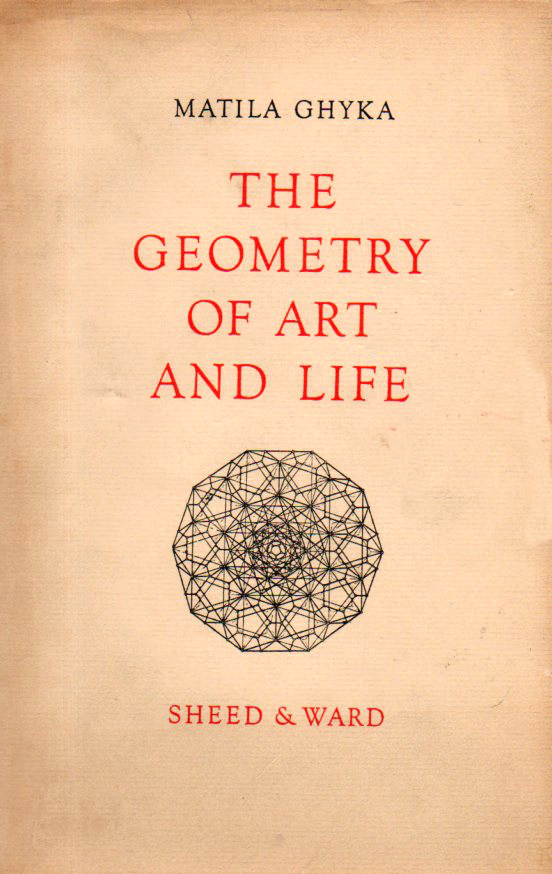
    Just a quick comment here about Matila Ghyka’s The Geometry of Art and Life, published by Sheed and Ward in 1946.  It is a beautifully-designed book, skinny even though it is 176pp (not long not short), and well and interestingly illustrated.  It addresses math and art, or math in art, finding recurrent spatial proportions there, and in music, with the maths being at the center of the creative and imaginative process.  The author goes further and dips into these themes in life/biology (that’s the “Geometry of Life” part), where he trods in familiar antique and old grounds of the Golden Section of logarithmic spirals, and then finds himself in a very interesting position in  chapter VII’s “The Transmission of Geometrical Symbols and Plans”. I’m not so sure that I like the book as a complete work, but the parts make for some very good reading.  

    Ghyka393

    ·Posted by :

    ·in:


  • A Quartet of Mathematical Gymnasts (1867)

    "A QUARTETTE OF MATHEMATICAL GYMNASTS. "
    
    This is a pretty devastating review of the work of four mathematicians/engineers that 
    appeared in the Scientific American on May 6, 1867:
    The article concludes: “We have a few other mathematical acrobats on our list, but as their summersaults were turned on another stage, we will not mention them at the present time, but we hope be- fore long to place them before the readers of the Scientific American. We will briefly observe, however, that one of them is not a thousand miles from the Navy Department, and he is still, we believe, accumulating figures with extraordi- nary cunning and industry.” It is pretty cutthroat beginning-to-end: "The errors which have lately been made in calculating the power of projectiles, the resistance of armor plates, and the force of steam vessels when used as rams, seem to indicate that a knowledge of first principles is more necessary for a correct appreciation of mechanical problems than any amount of abstract mathematical skill..."

    ·Posted by :

    ·in:


  • On the Power of Numerical Discrimination, 1871

    JF Ptak Science Books   Quick Post

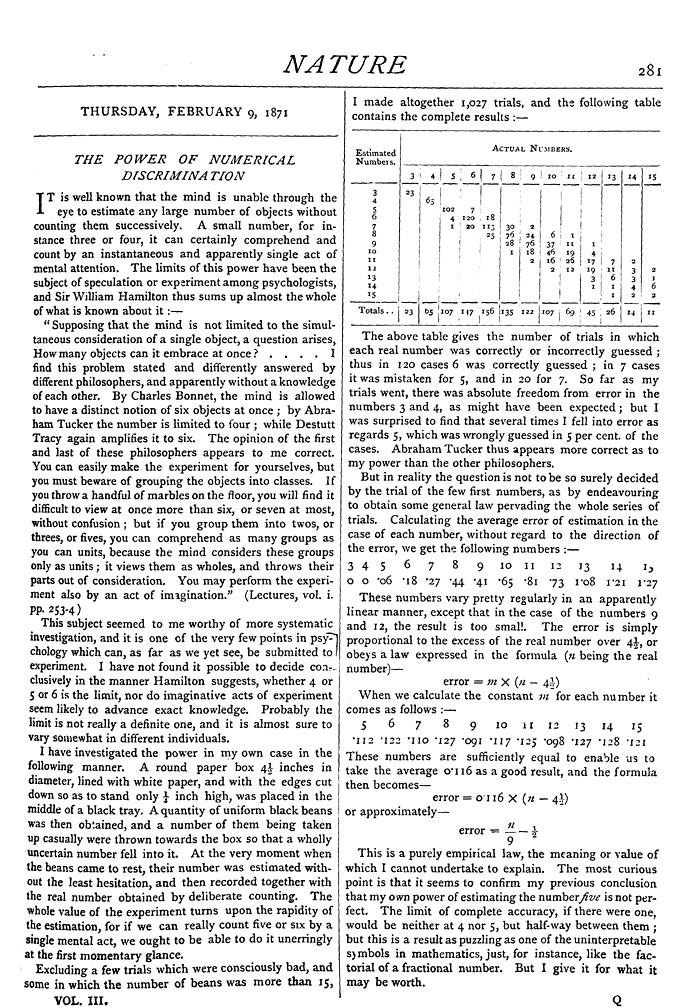
    I’ve written a number of posts on this site about W. Stanley Jevons, a very talent all-around smart-guy who worked in many different fields and at very high levels.  Today’s installment on the Jevons’ from is his paper “The Power of Numerical Discrimination”, published in the third year of Nature, and published in London in 1871. Jevons contributes a rather odd bit here on the success of the brain to correctly formulate an accurate memory when shown a number of items. That is to say, when shown a certain group of X-number of items instantaneously and then removed, how often will the mind be able to remember the correct number upon recall (and without committing them to memory per se or counting them?) In this odd and fascinating study Jevons records not only right/wrong answers but how ‘close” the remembered fit is to the original number. Pretty cool, and an early effort towards understanding our abilities and limits in information processing.  

    Jevons Numerical discriminationSee the rest of the article here.  


  • The Kingdom of Fingers

    JF Ptak Science Books  Quick Post

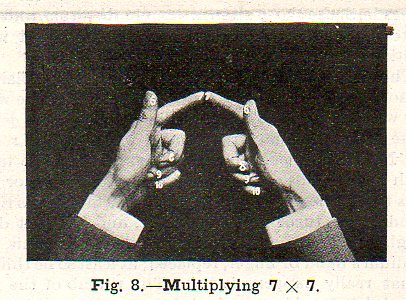
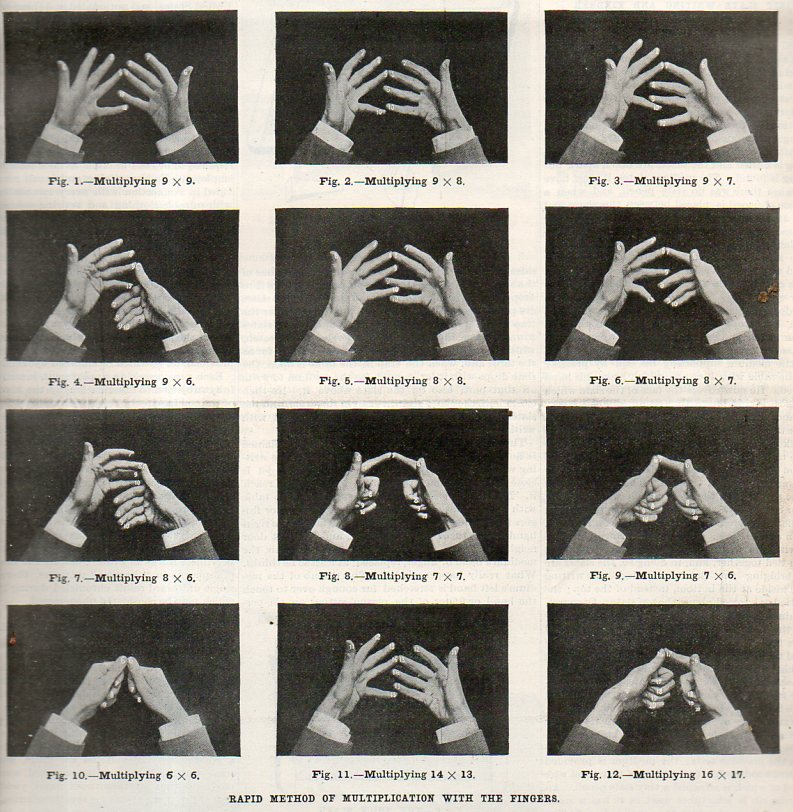
    “The Fingers as an Aid in Multiplication” is another wonderful find coming from a general browse in the great Scientific American (October 22, 1898, page 265). It is an interesting article, using the fingers so that the multiplication tables didn’t have to be memorized by kids–I think that they absolutely should be–but the images taken out of context can also be regarded in some sense for this blog’s “Found Absurdist” series.  (We are told that the system was devised by “a Polish mathematician”, Procopovitch–he is repeatedly referred to as “the Polish mathematician”.)

    • See “Digital “Computers 1450-1750: Memory and Calculating on the Fingers and Hands”, a post on this blog from 2008, here.

    Hand calculating300

    A detail from:

    Hand calculating299


  • M(art)hematics (Math Art), 1806

    JF Ptak Science Books   Quick Post

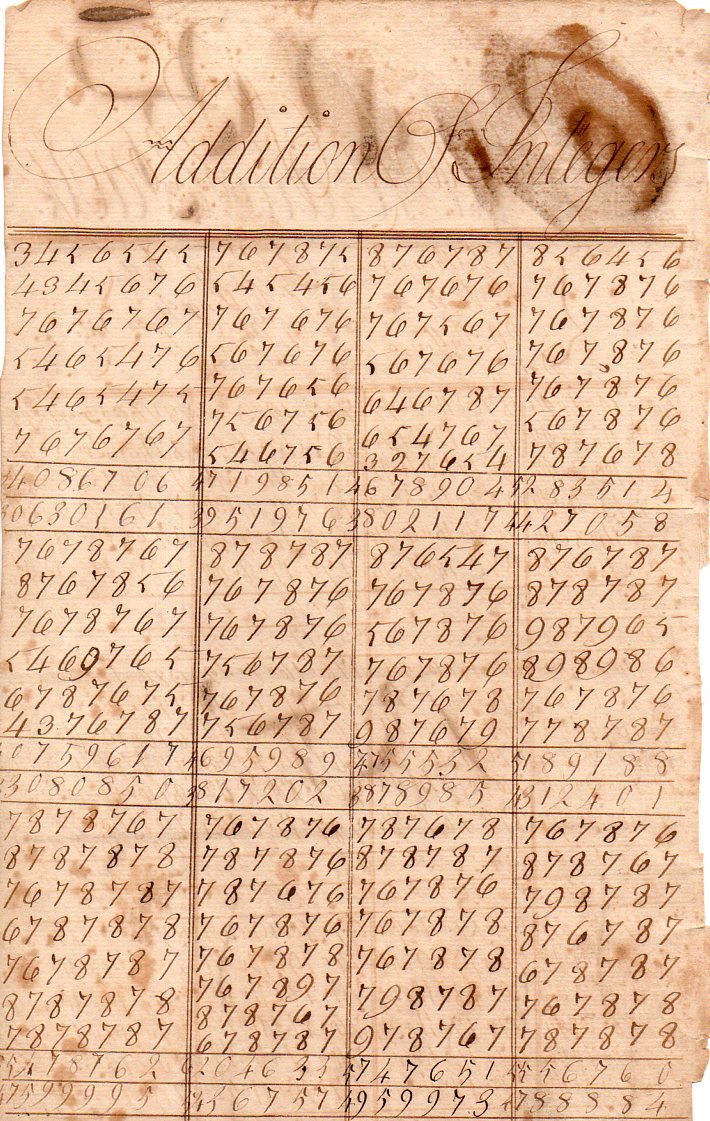
    Sometimes the rote and the routine as practice by young hands two hundred years ago can yield some surprising and beautiful results.  And so we find the beauty in these columns of arithmetic problems, practiced by a young girl in Philadelphia in 1806.  The work is determined and taken all together is just a lovely thing.  (And yes there’s a mistake here and there but it doesn’t matter, not really.)

    See also:  Mathematical Art, the End of Simple Multiplication (1814), here.

    Marthematics183

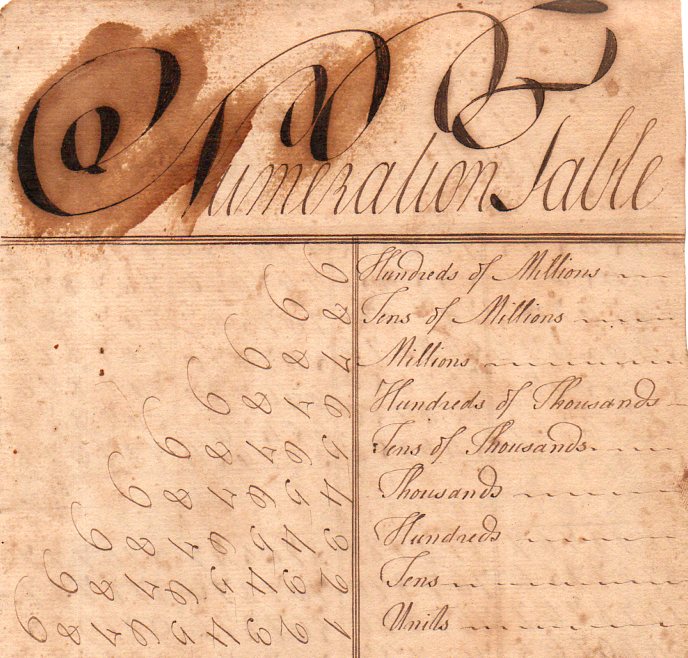
    And again in this “numeration table” where we see the 

    Marthematics184


  • The Eyes of Gemma Frisius

    JF Ptak Science Books   Quick Post

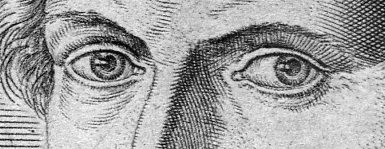
    Gemma Frisius176

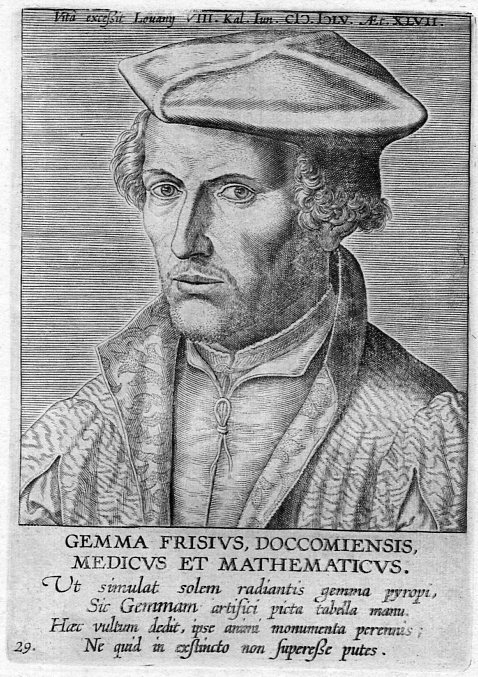
    This is a fine detail from a late 17th century print of Gemma Frisius (1508-1555).  He died young but with many accomplishments, not the least of which was being a mathematician of stature.  And a cartographer. And surveyor.  And instrument maker.  And physician. 

    In the original print (available for sale in our blog bookstore) Frisius’ eye occupy less than a half-square inch of paper–still they are powerful and direct in spite of their size.  

    The legend of the engraving read “Gemma Frisius, Doccomiensis, Medicus et Mathematicus.Ut simulat solem radiantis gemma pyropi, Sic Gemmam artifici picta tabella manu: Haec vultum dedit, ipse animi monumenta perennis; Ne quid in exstincto non superesse putes. Vita escessit Louany VIII. Kal., Iun. MCLV, Aet XLVII.”  

    Gemma Frisius175

    ·Posted by :

    ·in:


  • The Beauty of Mathematical Manuscripts, 1840

    JF Ptak Science Books     Post 2082

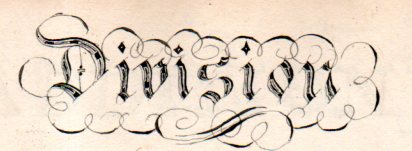
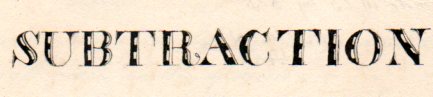
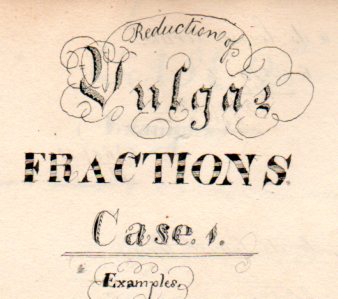
    From the warehouse comes this lovely find:  a manuscript notebook of a combination of elementary and slightly advanced mathematics, kept by a young person, written around 1840.  It is a beautiful work, and given that it is only about 100 pages long, it is a surprisingly and refreshingly thorough review of the mathematical necessaries of the mid-19th century.  

    Math beauty134

    Math beauty135

    Math beauty136

    Math beauty137


    Math beauty145

    ·Posted by :

    ·in:


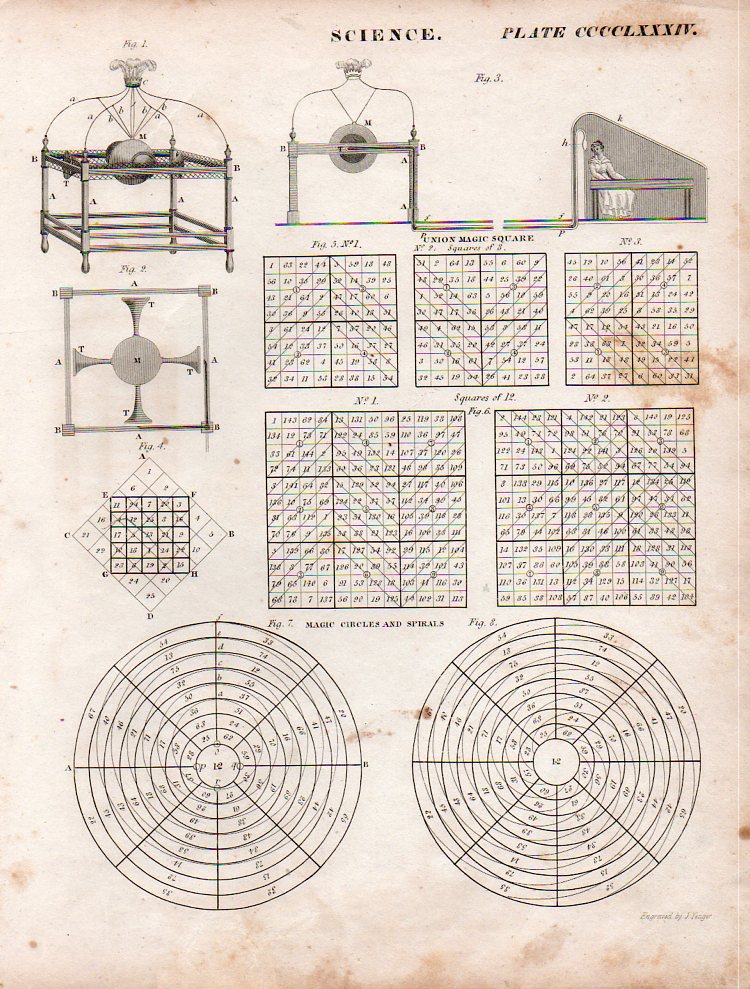
  • Math Magic: Magic Squares, Magic Circle of Circles, Magic Spirals

    JF Ptak Science Books

    [Associated posts: The Mother of all Renaissance Logical Graphs, The Knight’s Tour, Porphyry and Boethius and Census Art and the Display of Quantitative Data, 1860.]

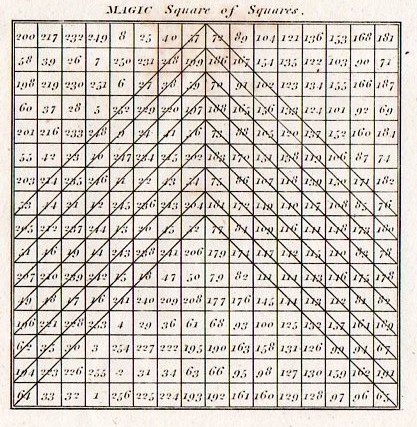
    Magic square and circles det sq881
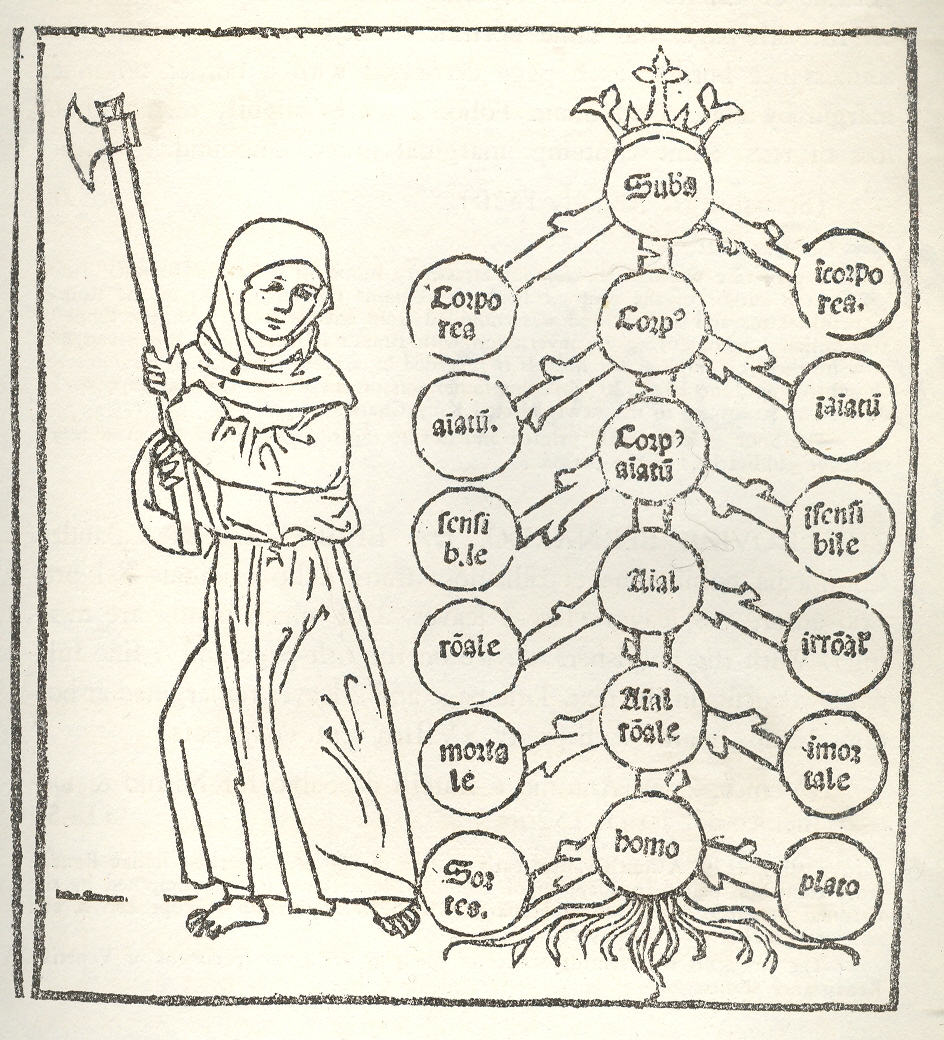
    Well now:  I don’t know what the provocation or inducement is here to hurtle this axe-swinging monk to attack Porphyry’s Tree1, though it would be interesting in a forensic sort of way to know what the tree’s section might reveal. The “tree” was a diagrammatic creation of a 3rd century Syrian mathematician/logician/philosopher named Porphyry who– much taken with Aristotle (and with the Categories in particular)– developed a systematic approach to the organization of thought in diagrammatic form.1--logic tree

    What’s inside a tree of logic and memory?  Is there a  xylem-y/phloem-y stuff besides a three-dimensional representation of the structure of organizational thinking?  Or is the 2-dimensional rip a fatal blow to other dimensions, and like Eddington’s Turtles, it’s a simple slice of Flatland all the way down?  

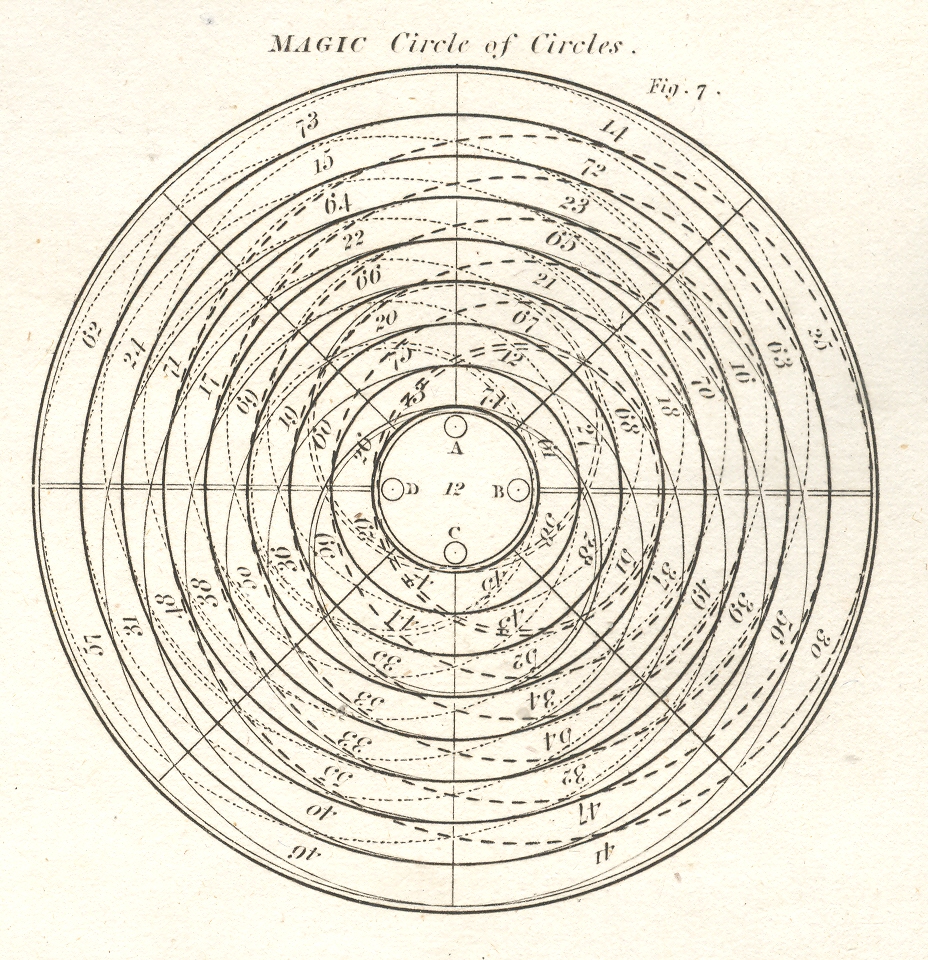
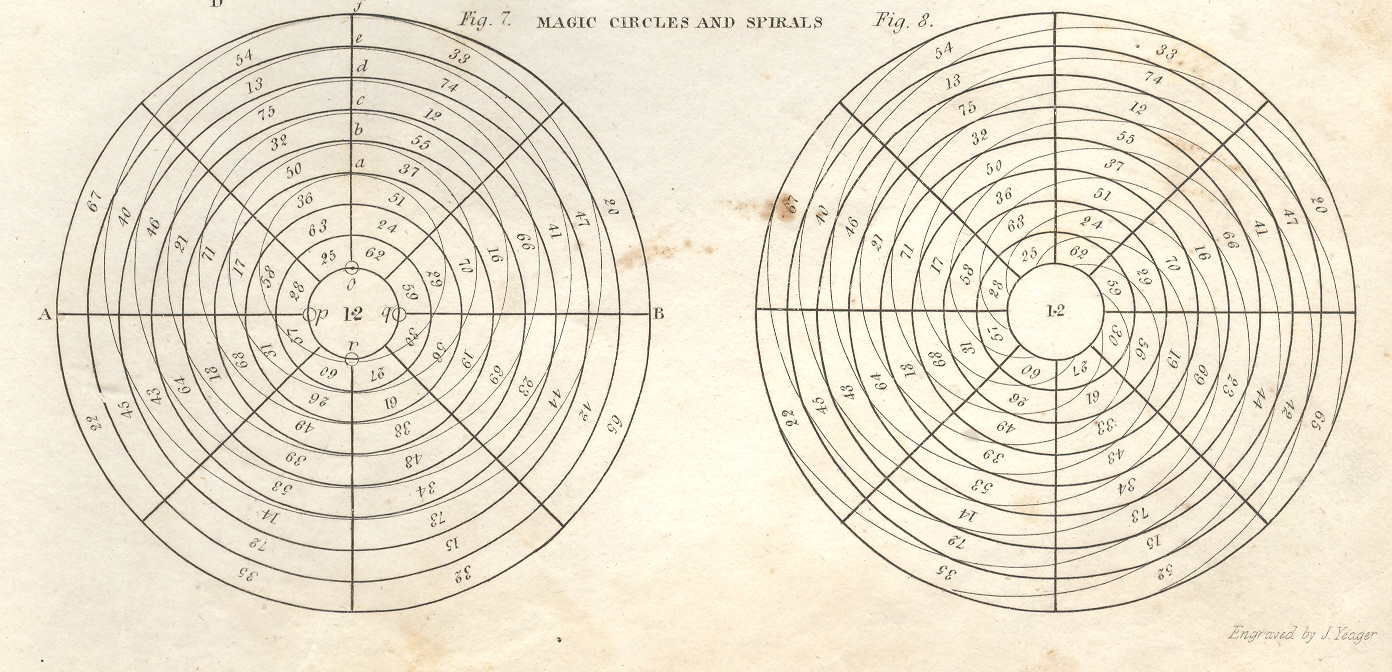
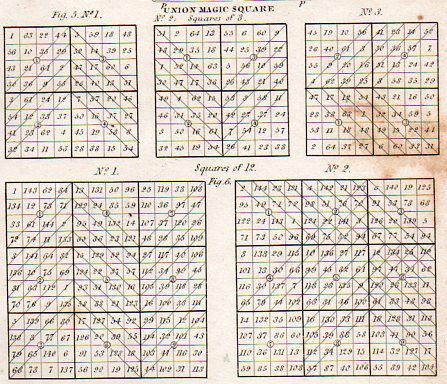
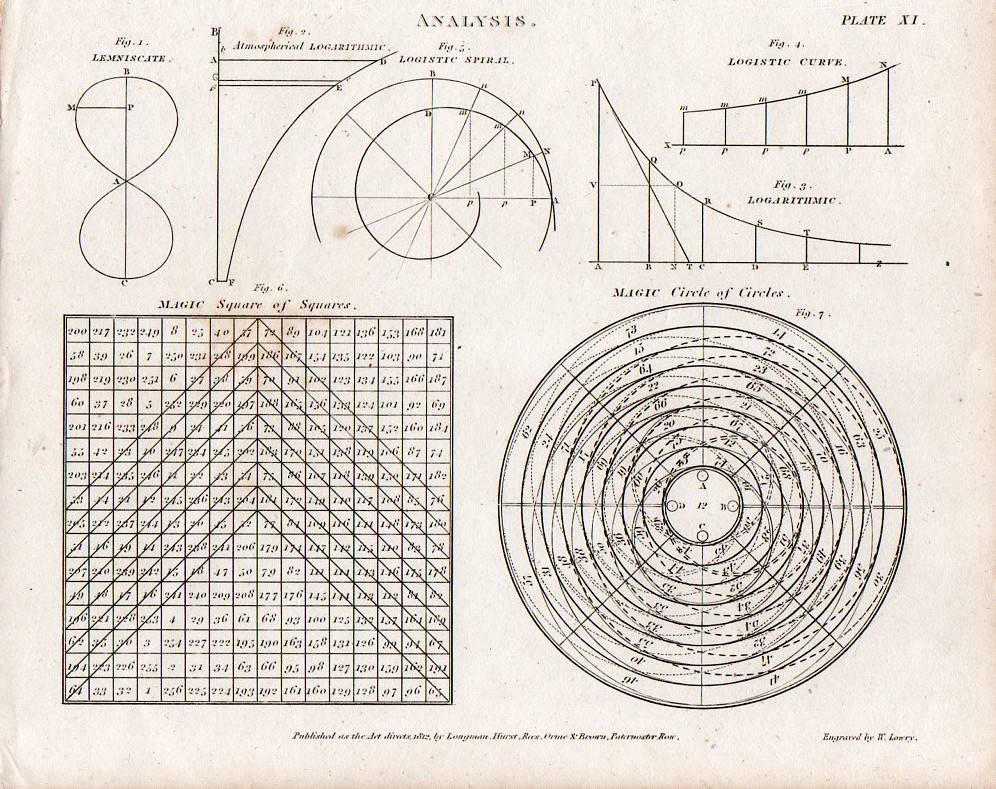
    Perhaps Porphyry’s tree rings would look like this, a magic circle or spiral, which would make some sense, and would bring to bear an associated use of turtles—or tortoises, I should say.  It turns out that perhaps the very first use of the magic circle, rolling back its origins through the Islamic world to India and to Persia and then to Japan,  and then finally to China where, in about 2000 BCE, the magic square appears in an image with the Emperor Yu,  inscribed on the back of a tortoise.

    1--logic tree magic circle 

    1--logic tree magic cricles

    [Magic circle source:  Abraham Rees Encyclopedic Dictionary , printed 1805-1815. The originals are available from our blog bookstore.]

    Magic squarezz and circles det883

    Magic square and circles880
    Magic squarezz and circles882

    Notes:

    1.This image appears in the rareDestructio sive eradicatio totius arboris Porphirii : magni philosophi ac sacrae theologiae doctoris eximii Augustini Anchonitani ordinis fratrum Heremitarum Sancti Augustini, cũ quadã decretali eiusde, published in 1503.

    ·Posted by :

    ·in:


  • Math Dreams and Mathmares

    JF Ptak Science Books  Post 692  (from 2009) Expanded

    This post was written five yers ago when I was excited to find an illustration of a dreamer and numbers with some mathematical content.  I thought that it was pretty unusual to find as an illsutrastion, even though I had read many stories of people being influenced byt their dreams, evem in the sciences, but that there were few images of the process.  In Post 692 I psoted a found image of such a thing that was just a simple advertisement in a German magazine.  There was also a series of images from Francis Galton on imaging arithmetical processes from Nature back in 1880, which may also be the first scientific article on synesthesia.  And there doesn’t seem to be a lot more than this, even in canonical illustration.  

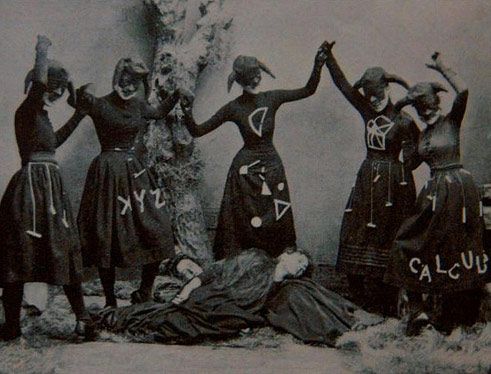
    So it came as a surprise today to find this photo to add to the small collection of math dreams and imagery of “doing” math (from ca. 1880):
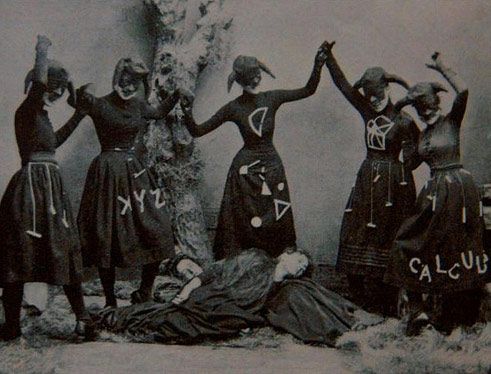
    Math nightmare

    Thinking big thoughts in dreams is generally not a common thing, as anyone who has read their own semi-conscious half-awake memory notes of a dream-based inspiration could attest.  But it does happen: 
    ==Blog July 21=math dream

    Paul  McCartney1 dreamed the song Yesterday, Gandhi dreamed the source of non-violent resistance, Elias Howe  dreamed of the construction of the first sewing machine, and Mary Shelley the creation of her novel Frankenstein…  For good or for ill, William Blake was evidently deeply influenced by his own dreams; on the other hand, Rene Magritte was deeply influenced by dreams but didn’t use any of his own for his paintings, or so it was said. Otto Loewi turned an old problem into not one in a dream, finding a solution to the prickish problem of whether nerve impulses were chemical or electrical (and resulting in the Nobel for medicine in 1935); the fabulous discovery of the benzene ring came to August Kekule in a dream as well.  Artists have been representing people in dreams and dreamscapes for many centuries: Durer depicted a dream in a 1525 watercolor, for example, and thousands of artists have depicted famous biblical dreams (Joseph of Pharo) for long expanses of time.

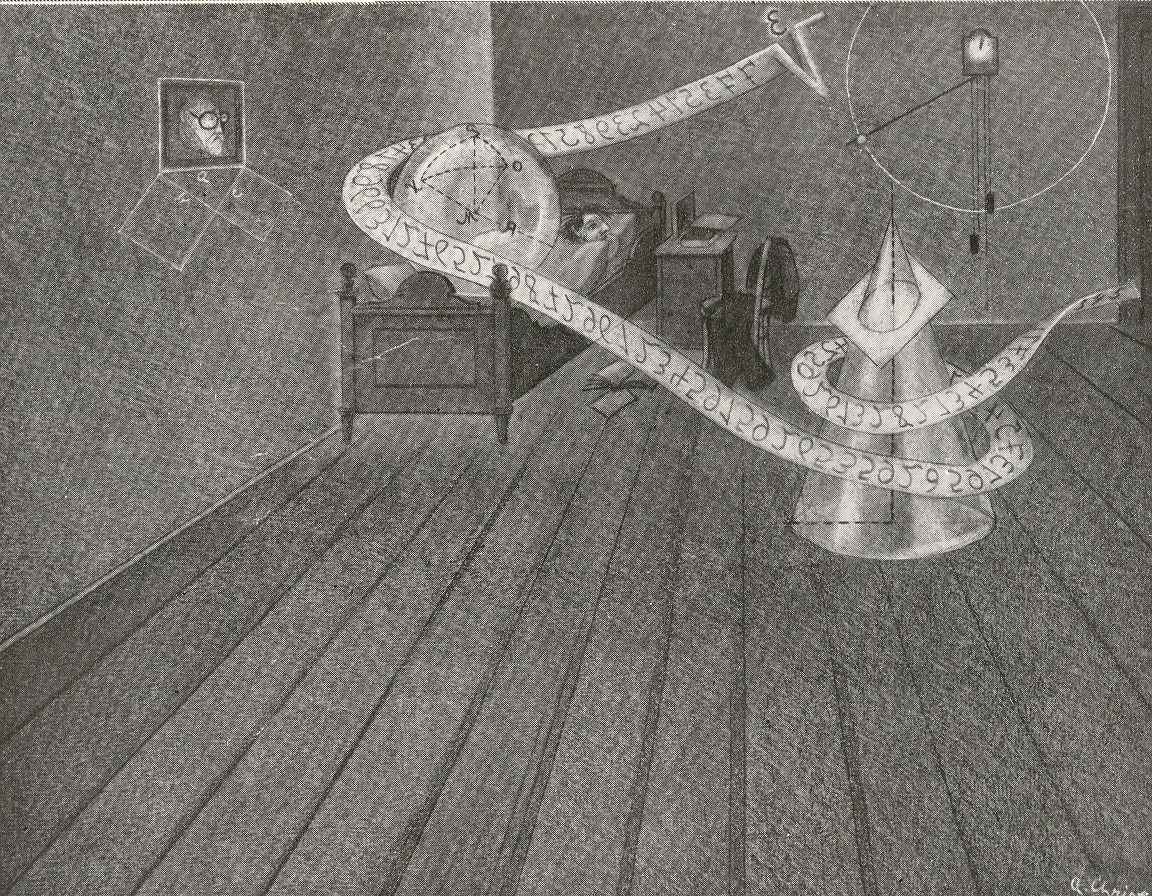
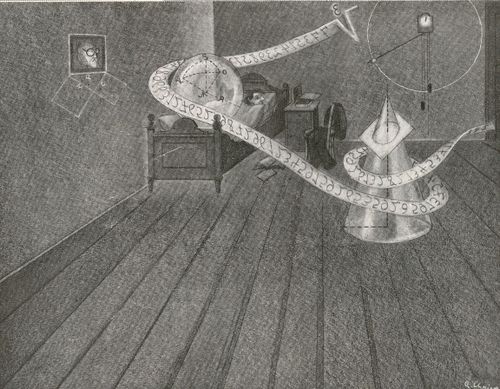
    What struck me, though, in this illustration found on the other side of the page of the Illustrirte Zeitung2 (for August 1932) that I used for yesterday’s post about damming Gibraltar and Shakespeare’s memories, was the depiction of someone dreaming mathematical thoughts…or at the very least, dreaming numbers.  People have undoubtedly dreamed much in mathematics, but I can not recall seeing illustrations of these dreams.

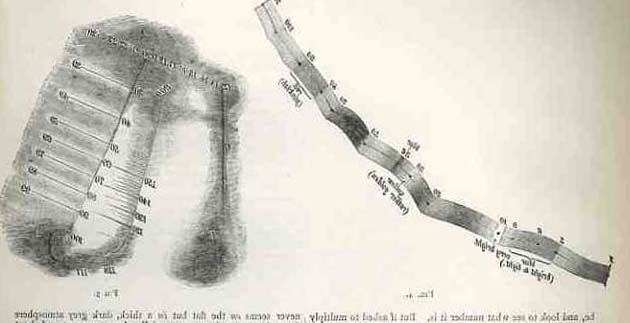
    I’m differentiating here from something like a Poincarean inspiration, or vision, or thunderstrike–I’m talking about drop-dead asleep sleep, dreaming sleep, REM and all that. Also I’m differentiating this from imaging mathematical thought, as in the work of Francis Galton in 1880 in which the subject of mentally seeing the process of mathematics is perhaps first addressed. I wrote a short piece on that here, way back in Post 9. )
    Photo

    The numerical sequence in this dream doesn’t look like anything to me:  the backwards radicand doesn’t strike anything common in my head.  The geometrical drawing under the portrait in the dreamer’s room though is the impossibly iconic Pythagorean theorem, and there is a nice picture of a conic section in the foreground; but the artist, who improbably signed the work “A. Christ”, doesn’t offer much of math in the dreamscape.  Still, it is a rare depiction of someone dreaming about math. 

    Notes
    1. “I woke up with a lovely tune in my head. I thought, ‘That’s great, I wonder what that is?’ There was an upright piano next to me, to the right of the bed by the window. I got out of bed, sat at the piano, found G, found F sharp minor 7th — and that leads you through then to B to E minor, and finally back to E. It all leads forward logically. I liked the melody a lot, but because I’d dreamed it, I couldn’t believe I’d written it. I thought, ‘No, I’ve never written anything like this before.’ But I had the tune, which was the most magic thing!” from Barry Miles (1997), Paul McCartney.
    2.  This is really a great sheet of paper, coming from issue 4492, pp 518-519.  Two pictures of dreams on one side, with three visionary images on the other (the Gibraltar dam, a sub-polar submarine, and a futuristic Indian railway/bridge.
    ·Posted by :

    ·in:

    —

  • The Beauty of Pi, Times Two (and More)

    JF Ptak Science Books  Quick Post 

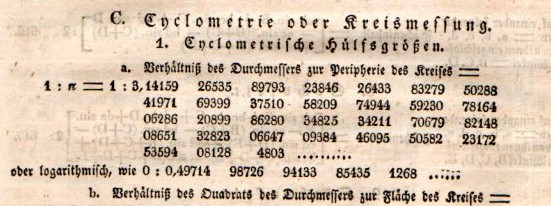
    Pi060

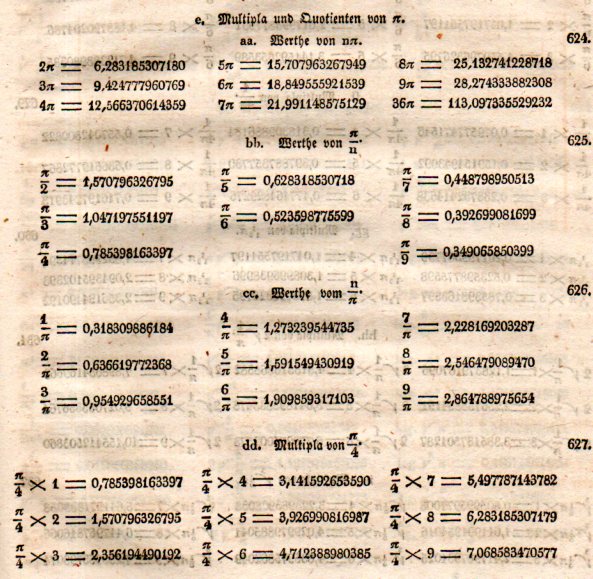
    Very little is pretty as pie, especially when there’s more than one.  Double that for pi.  I happened to be breezing through an 1829 book of mathematical formulas by C.P. Biel and found this lovely section on an extended computation of pi.It occurs on page 38, and carries pi out to 155 places–which for the time was very significant. (Pi was computed to 9 places  by Francoise Viete in 1579; 15 places by Adriaan van Roonan, 1593; 32 by Ludolph van Ceulen in 1596; 35 by Willebrord Snell in 1621; 38 by Christoph Grienberger; 75 by Abraham Sharp in 1699; 100 by John Machin in 1706; 137 by Jurj Vega in 1794; and 152 by Legendre in 1794.)

    In any event, it is a lovely display.

    And so to for the multiplication of pi:

    Pi061

    ·Posted by :

    ·in: