A Daily History of Holes, Dots, Lines, Science, History, Math, Physics, Art, the Unintentional Absurd, Architecture, Maps, Data Visualization, Blank and Missing Things, and so on. |1.6 million words, 7500 images, 4.9 million hits| Press & appearances in The Times, Le Figaro, Mensa, The Economist, The Guardian, Discovery News, Slate, Le Monde, Sci American Blogs, Le Pont, and many other places… 5000+ total posts since 2008.

Category: mathematics, logic

  • Putting “Art” into “Arithmetic” (1836)

    JF Ptak Science Books  Quick Post

    MultiplicaTION 292

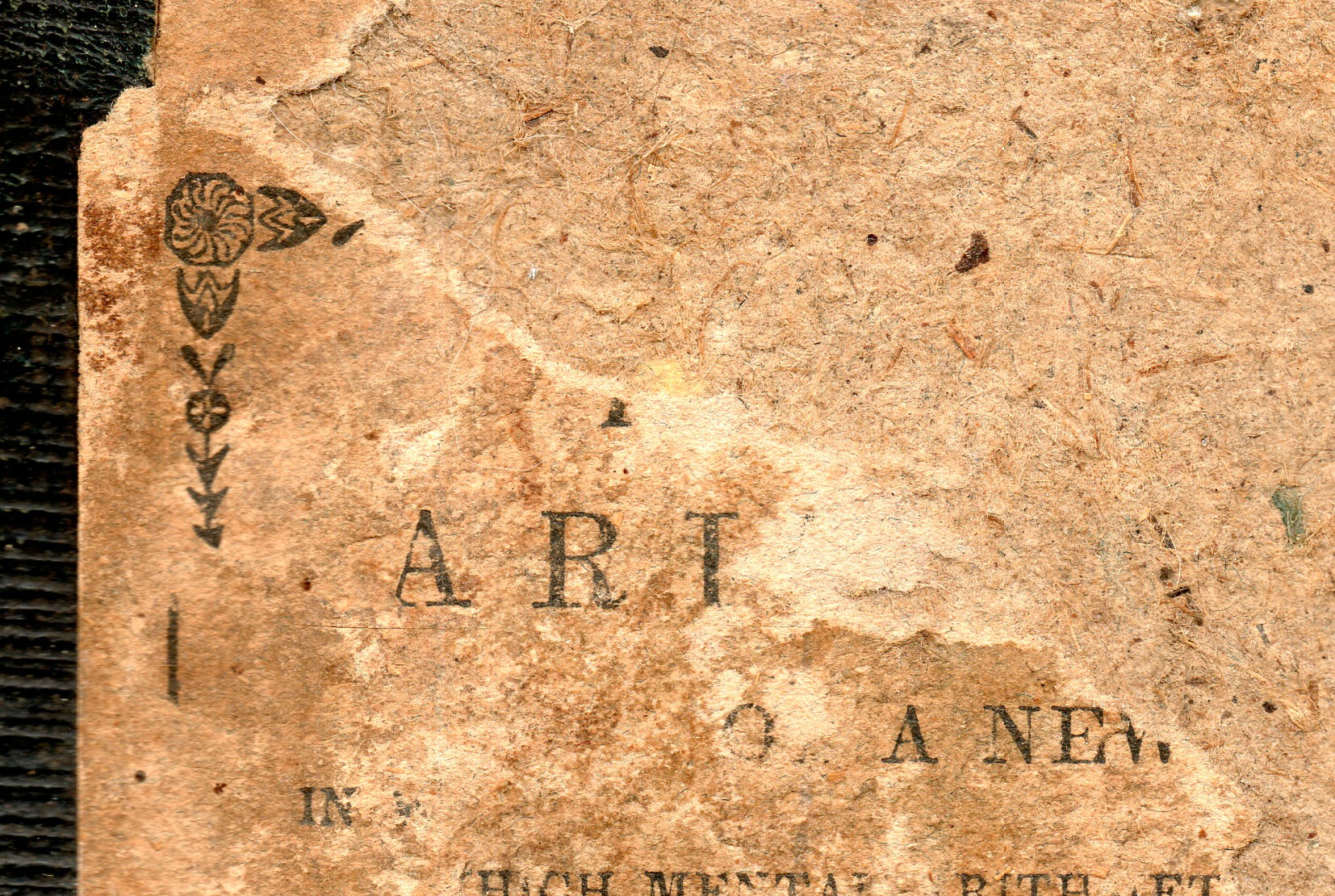
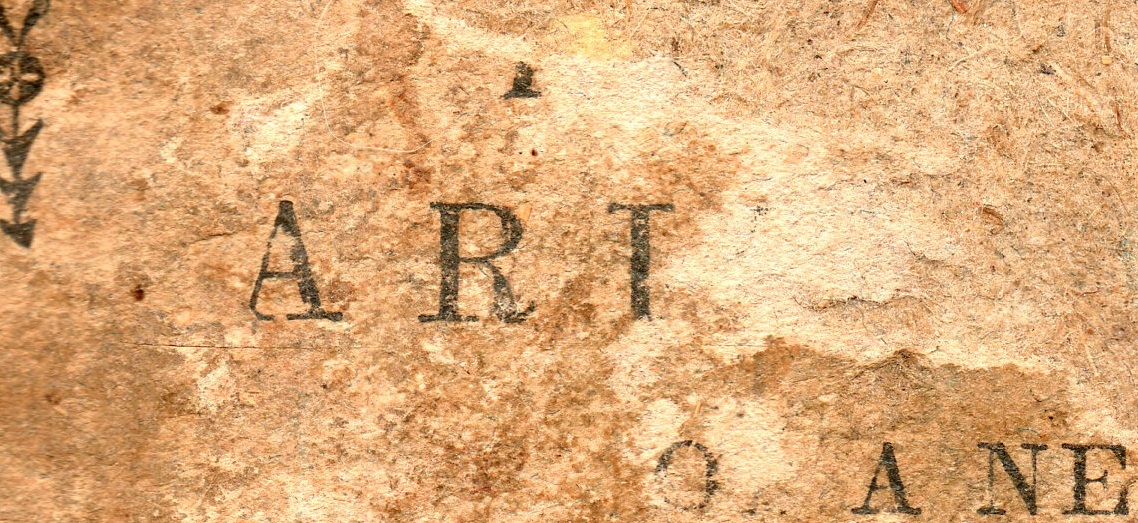
    I have a little pocket-sized book at home, a fine little arithmetic book by Roswell C. Smith, Practical and Mental Arithmetic on a New Plan in Which Mental Arithmetic is Combined with the Use of the Slate–it was published in Hartford, and this copy was printed in 1836, in its every energetic 53rd edition.  Mr. Smith wrote himself one fine and popular arithmetic tract, and the book is absolutely loaded with all sorts of info that could see a person through most aspects of figuring-life for years to come.  My copy is very very well worn, and although it is missing pieces of the paper cover and the surface of the books looks like the Somme, it is actually very smooth–worn and rubbed smooth from years of use.

    And just about the only word left visible from these years of being handled by little hands is the fragment “ART” from “Arithmetic”, which I thought was a lovely thing. 

    Multiplication290

    As a matter of fact there is plenty in this books that is perfectly fine and applicable at the rudimentary math stages–of course some of the units of measurement have long since fallen into obscurity (even by the late 19th century) the lessons remain useful, if a little stiff, especially when you’re asked to work out some of the results on your slate.

    But the issue remains that this tidily compacted work is a pretty thing to work with:


  • Saunderson’s Computer for the Blind (18th Century)

    JF Ptak Science Books 

    Blogblindsaunderson_calc

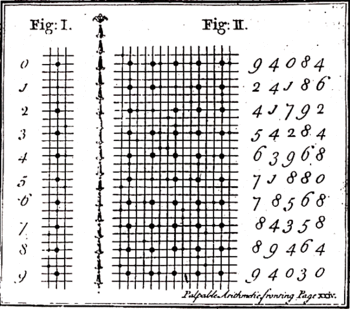
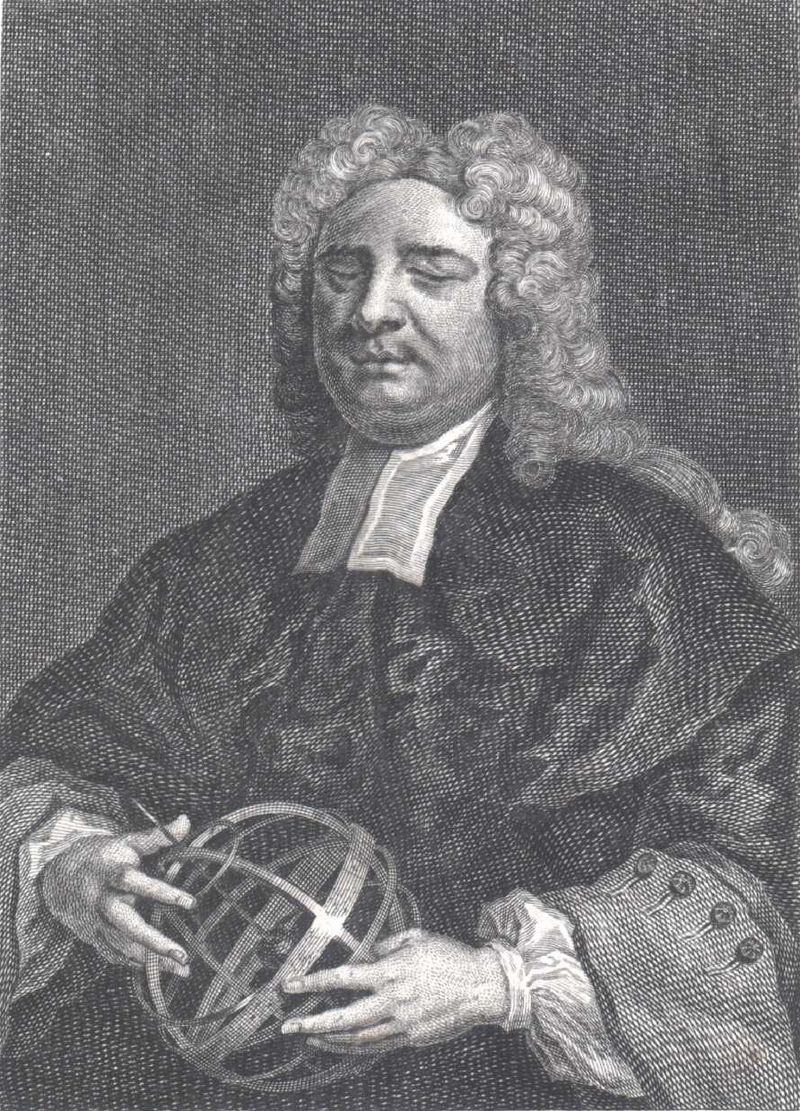
    Nicholas Saunderson (1682-1739)  was an extraordinary mathematical talent—he was also blind (from about the age of one), and invented, principally for his own uses, what I think is the first mathematical calculator designed specifically for the use of the blind.  He was supremely gifted and creative, and rose to become the fourth Lucasian professor at Cambridge, succeeding the expelled William Whiston, who had in turn succeeded Isaac Newton—Saunderson also held the post for one of the longest periods of time, 1711-1739.  HE was friend and associate to Newton, Whiston, Roger Cotes, Halley, De Moivre and others during a particularly rich intellectual period in the history of physics and the maths. 

    Blogblindsaunderson_geo

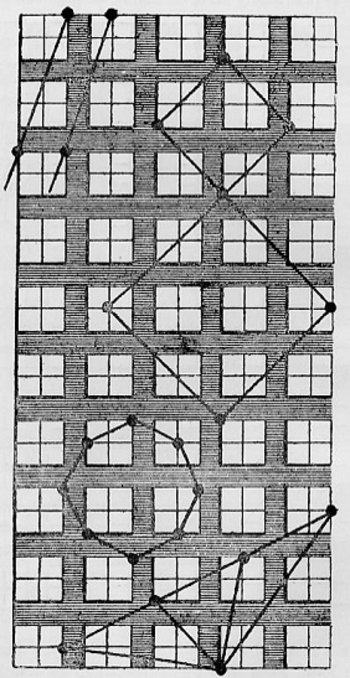
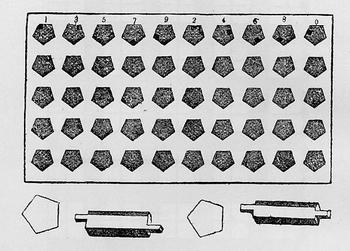
    His calculator was smart and simple, based on a cribbage-board –like device, that was able to perform arithmetical and algebraic functions—it consisted of nine rows and was worked with two pins, the positioning of the pins on the engraved board telling the user their value. (There was another calculator for the blind constructed by Meyer (below, left)  using a sort of reverse principle to the Saunderson model where it was the shape and placement (leaning or not, for example) of the pegs in the hole that annotated value rather than their placement on the board.


    Blogblindparis

    The Saunderson computer was described in his The Elements of Algebra…,1 published at Cambridge in the first edition just after the author’s death, in 1740.  The device was described in the book by John Colson (who succeeded Saunderson to the Lucasian chair), who commented that it was via the use of the device that Saunderson could compose his treatise on algebra. (At right is another Saunderson-based calculator allowing for the construction and study of geometrical figures).  

    Saunderson portrra

    [Image source for Saunderson portrait: https://en.wikipedia.org/wiki/Nicholas_Saunderson#/media/File:Nicolas_Saunderson.jpg]

    Notes:

    !.  Here’s a link for a later-n-the-century (1792) edition of the Saunders book  via the Internet Archive:  https://archive.org/details/selectpartsofsau00saun

    Also see MacTutor History of Mathematics biography of Saunderson, here: http://www-history.mcs.st-and.ac.uk/Biographies/Saunderson.html

    ·Posted by :

    ·in:

    —

  • Knots, Knots, and Knots (1871)

    JF Ptak Science Books  Quick Post

    “O time, thou must untangle this, not I.  It is too hard a knot for me t’untie.”–William Shakespeare, Twelfth Night


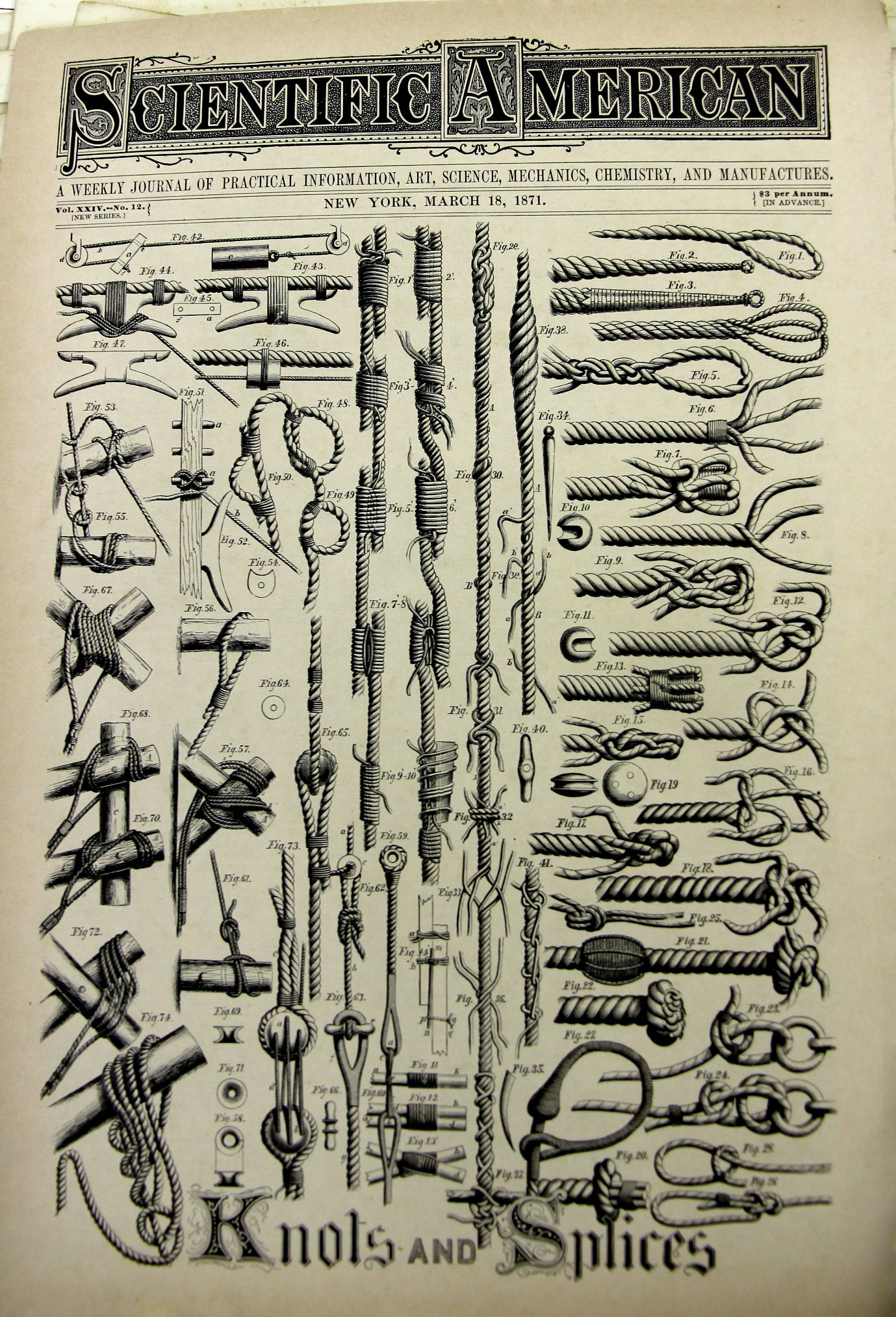
    Sci Am Knots and Splices

    This beautiful collection of knots and splices appeared on the front cover of Scientific American, March 18, 1871–a knot for every need.  Knots become ever more complex at about the same time in the hands of the great mathematician and teacher, P.G. Tait.  Tait was the major domo of knot classifiers so significant in the developing field of topology, and followed the work of Vandermonde, Gauss, and Kelvin.  But here, in 1871, these were just beautiful and useful knots having open ends, and not having anything to do with the Tait conjecture–that would come later.


  • DIY: 2-D Paper Math Models into 3-D Forms

    JF Ptak Science Books   Post 2516

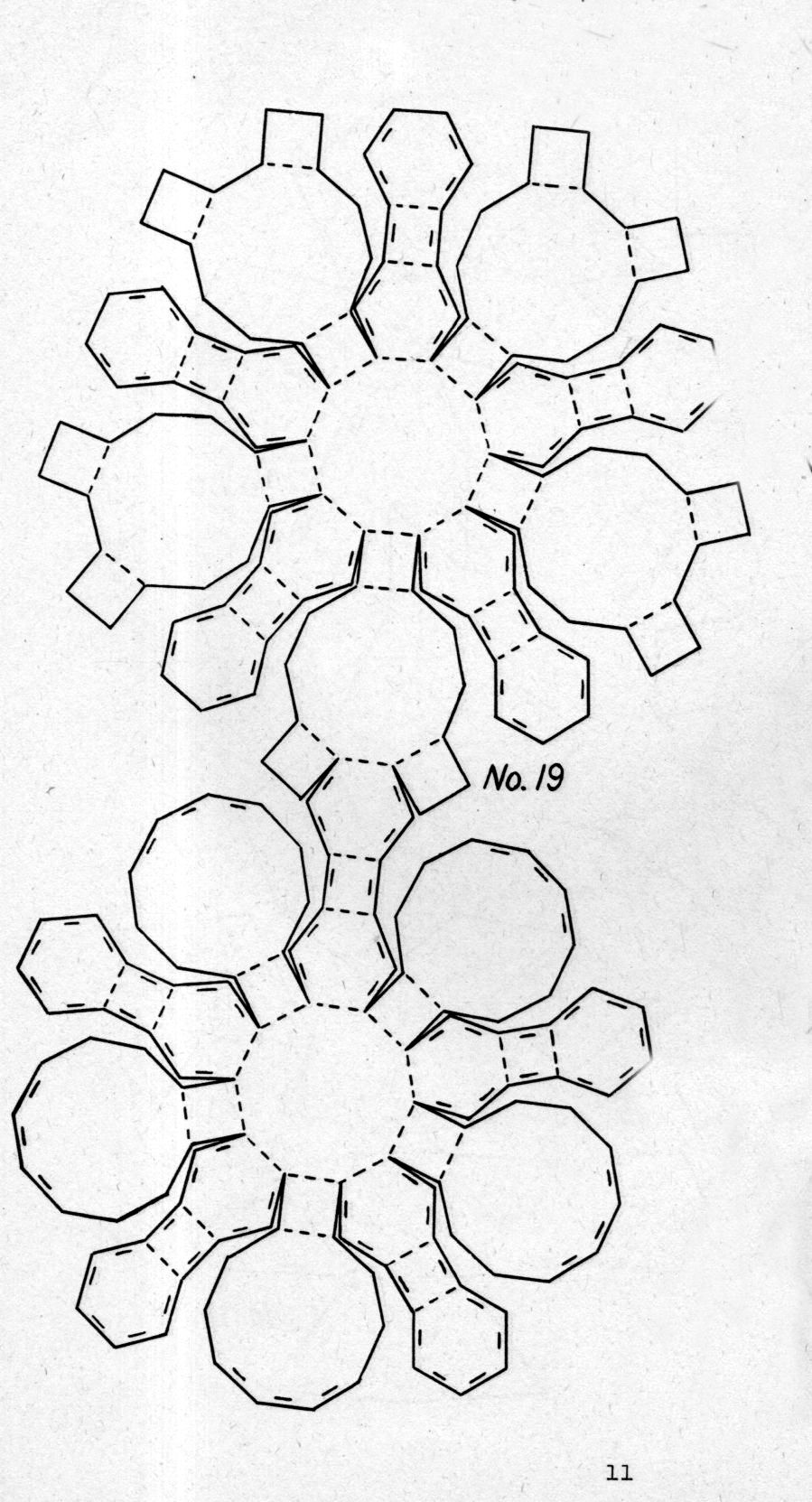
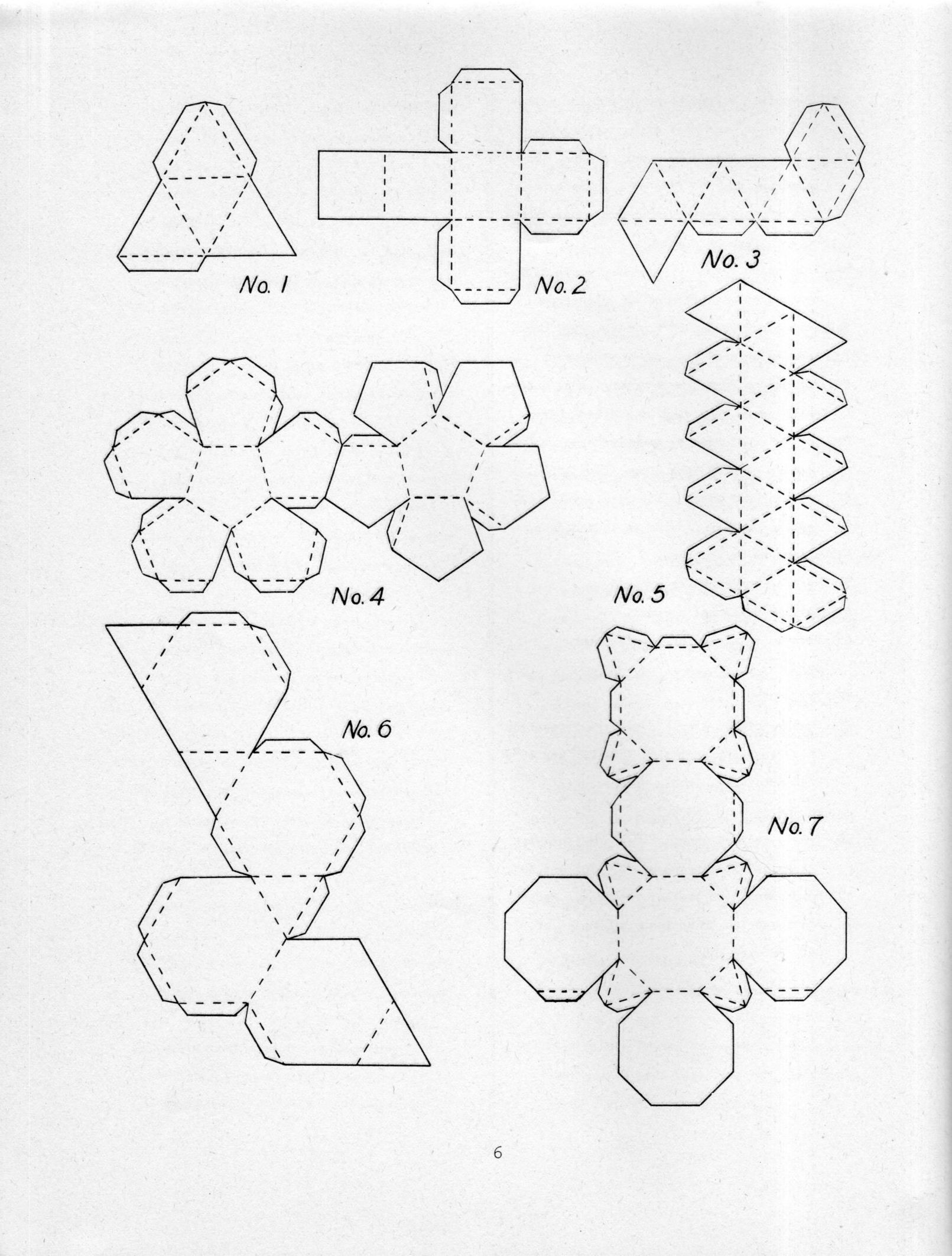
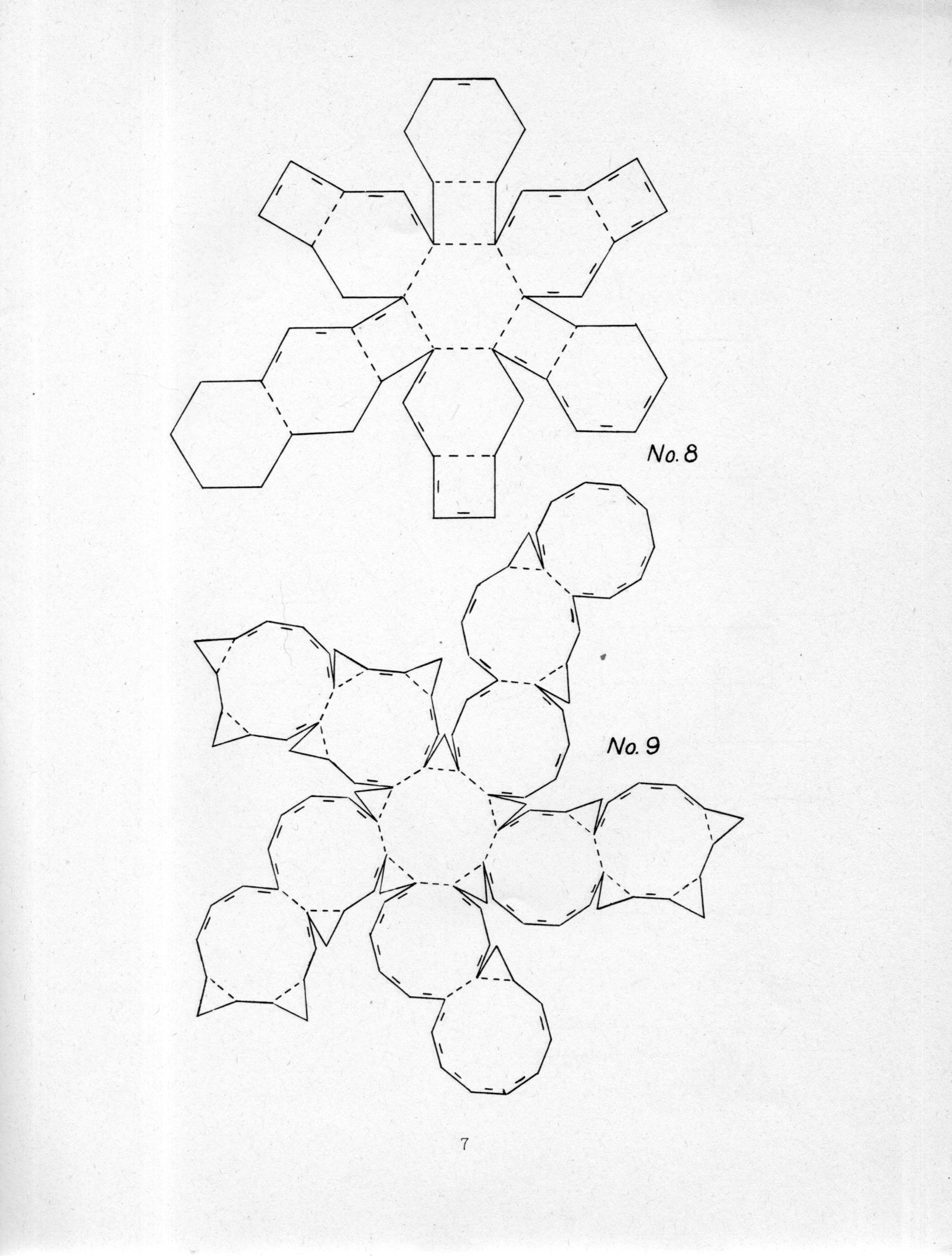
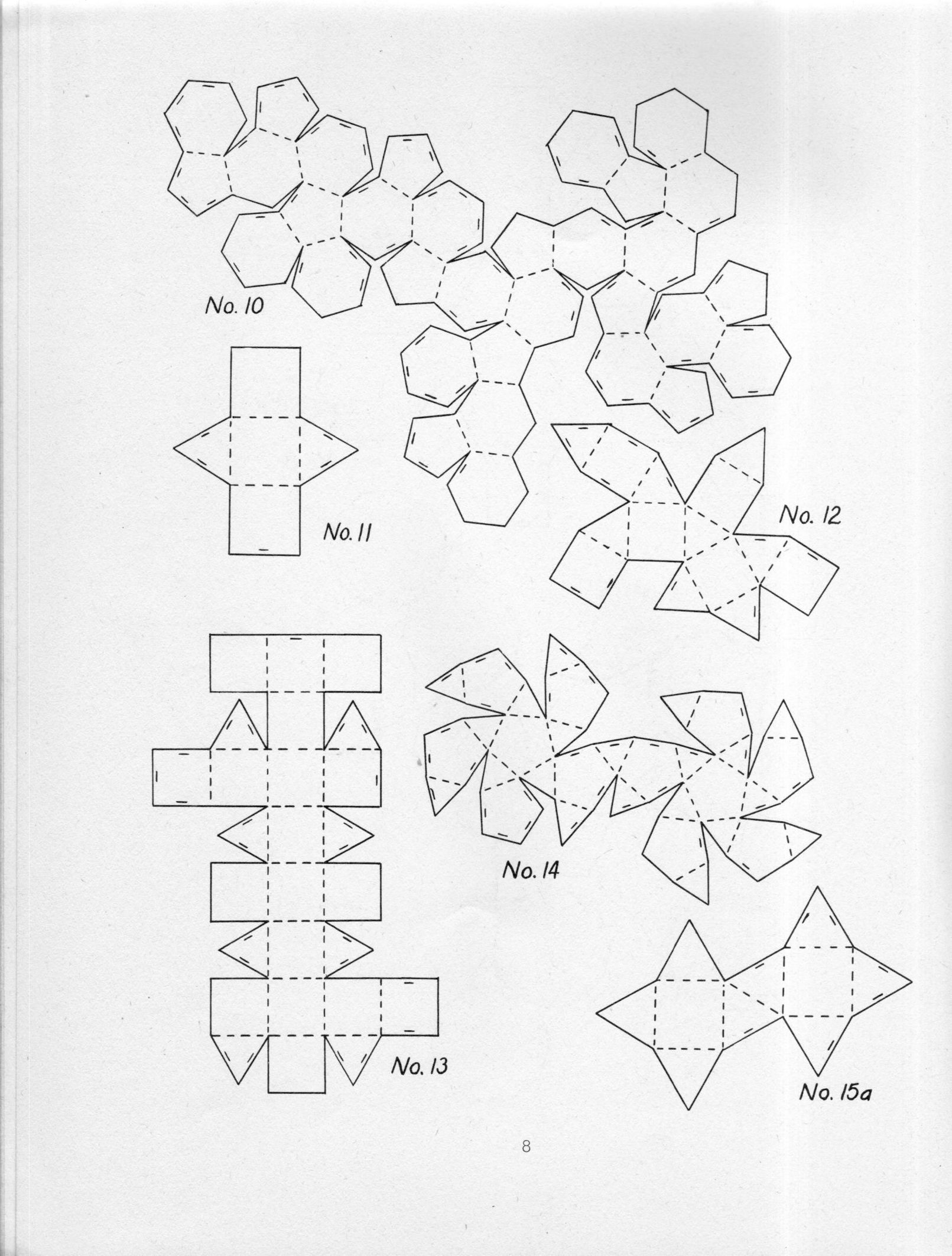
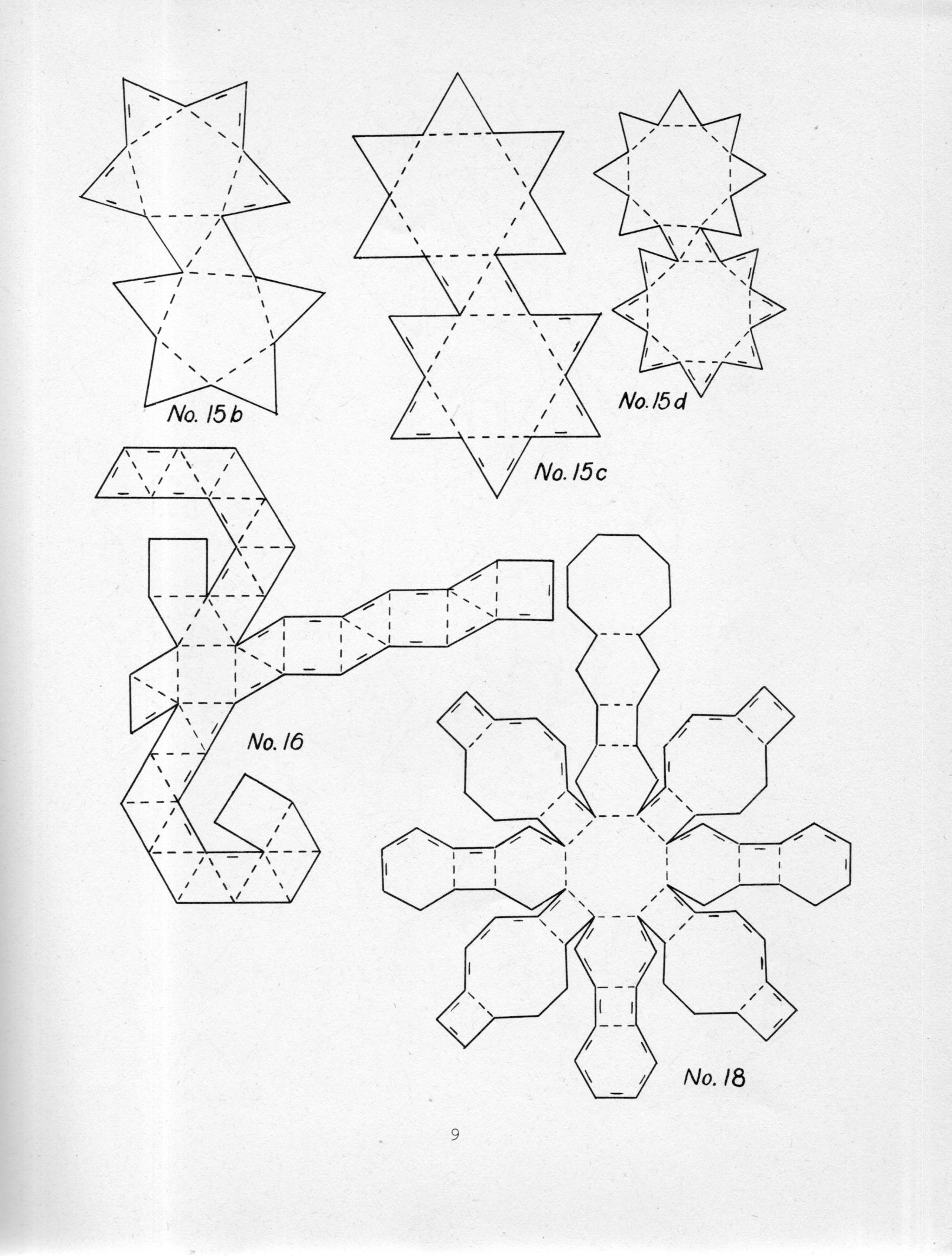
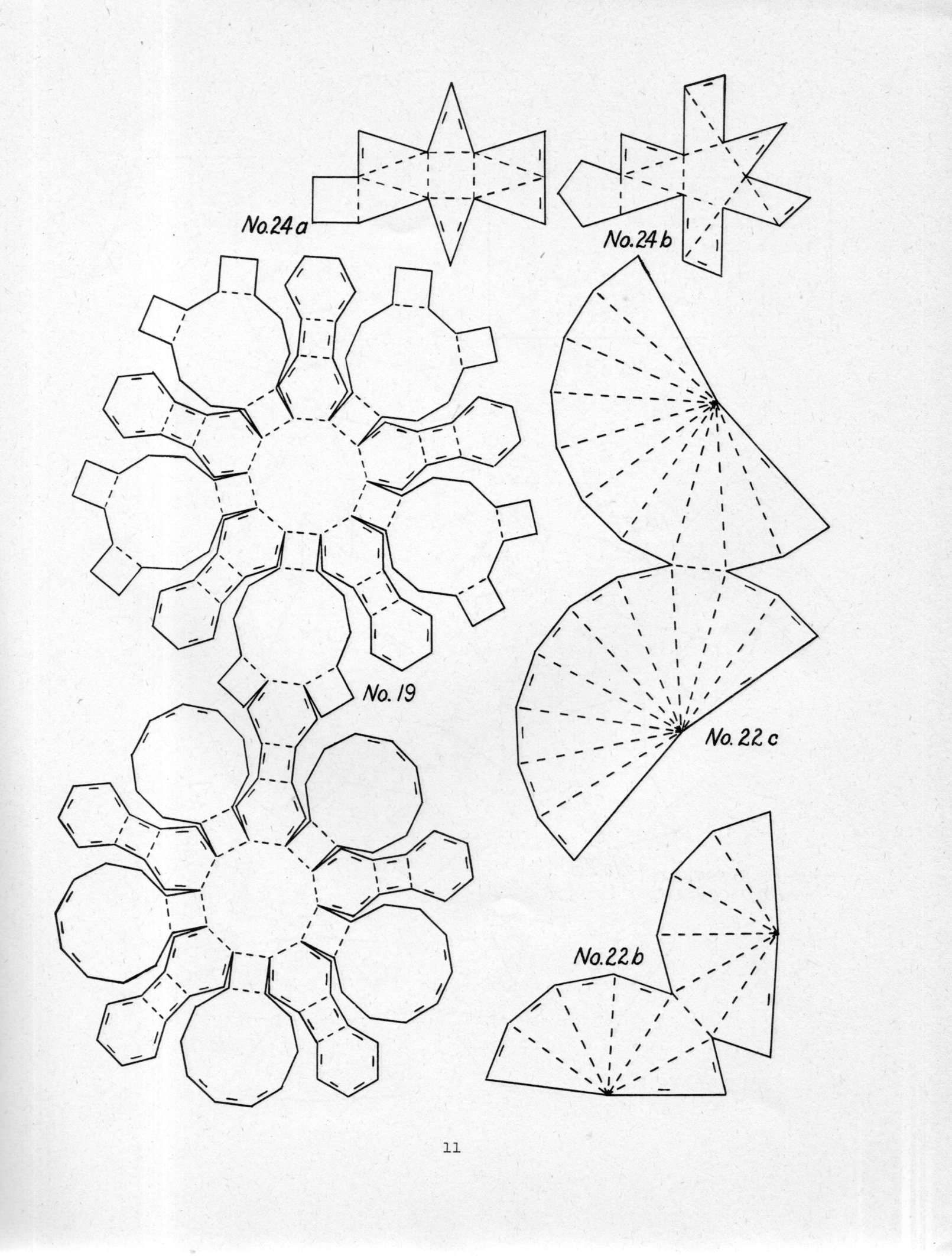
    I’ve missed this pamphlet for years–tall, slender, no spine title–until this morning, when it came to life.  It is the work of Miles C. Hartley, who deconstructed polyhedron for the purpose of reconstructing them in a classroom as “sensory experiments”. This was his method of keeping students interested in math, or at least keeping students interested in something that hopefully led to an interest in math. Hartley recognizes that many textbooks will include models for the five regular polyhedron, and stop there, the students “stalemated”. Hartley goes on to include 69 models, many of them fairly complicated, in the hope of creating a deeper interest in solid geometry and symmetry.  

    For example, this is a great rhombicuboctahedron, scooped out of the fourth image below, and which nicely fills a larger sheet of paper for cut-fold-paste:

    Polyhedron074

    If I could determine that the book was out of copyright and not just out of print I would just reprint the thing right here–but for now I’ve included the first 22 diagrams with scans tight enough to allow them to be printed, cropped, enlarged, and printed out again with each design on a 11×8 sheet of paper.  Enjoy!

    [Source: Hartley, Miles C., Patterns of Polyhedrons. This copy is the first edition of 1941, printed by Edwards Brothers lithography, 27x22cm, 29pp, and which seems to be fairly scarce. The reprints that are available in one form or another seem to all come from the “revised edition” of 1948 and 1951, which is the same size but with 48pp. I’ve not seen one of these and don’t know if the diagrams are just spaced differently or if there are more.]  

    Polyhedron069

    Polyhedron070

    Polyhedron071

    Polyhedron072

    Polyhedron073


  • Found Beauty in Mathematics, ca. 1895

    JF Ptak Science Books   Quick Post

    MATH ART134--dag

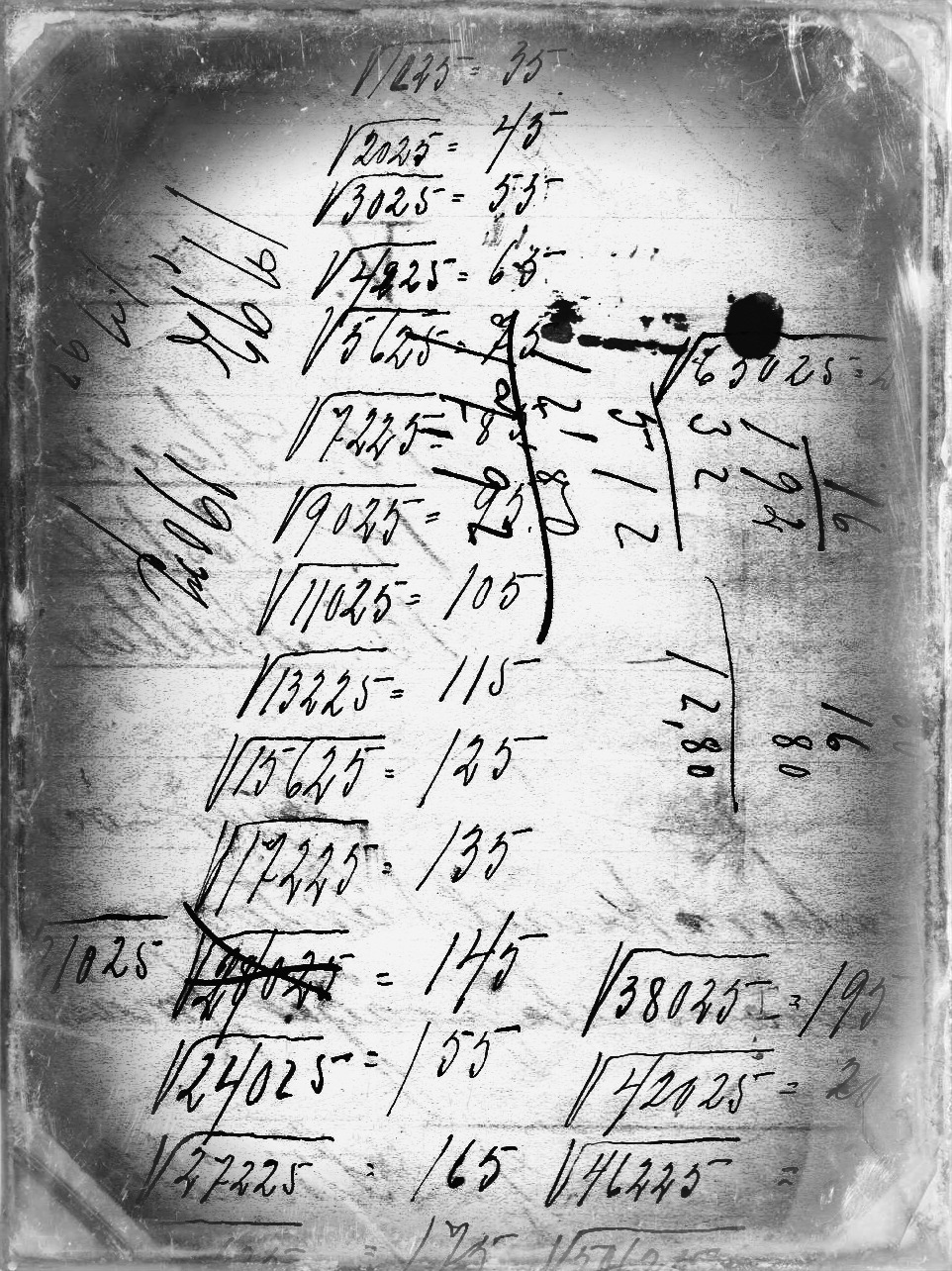
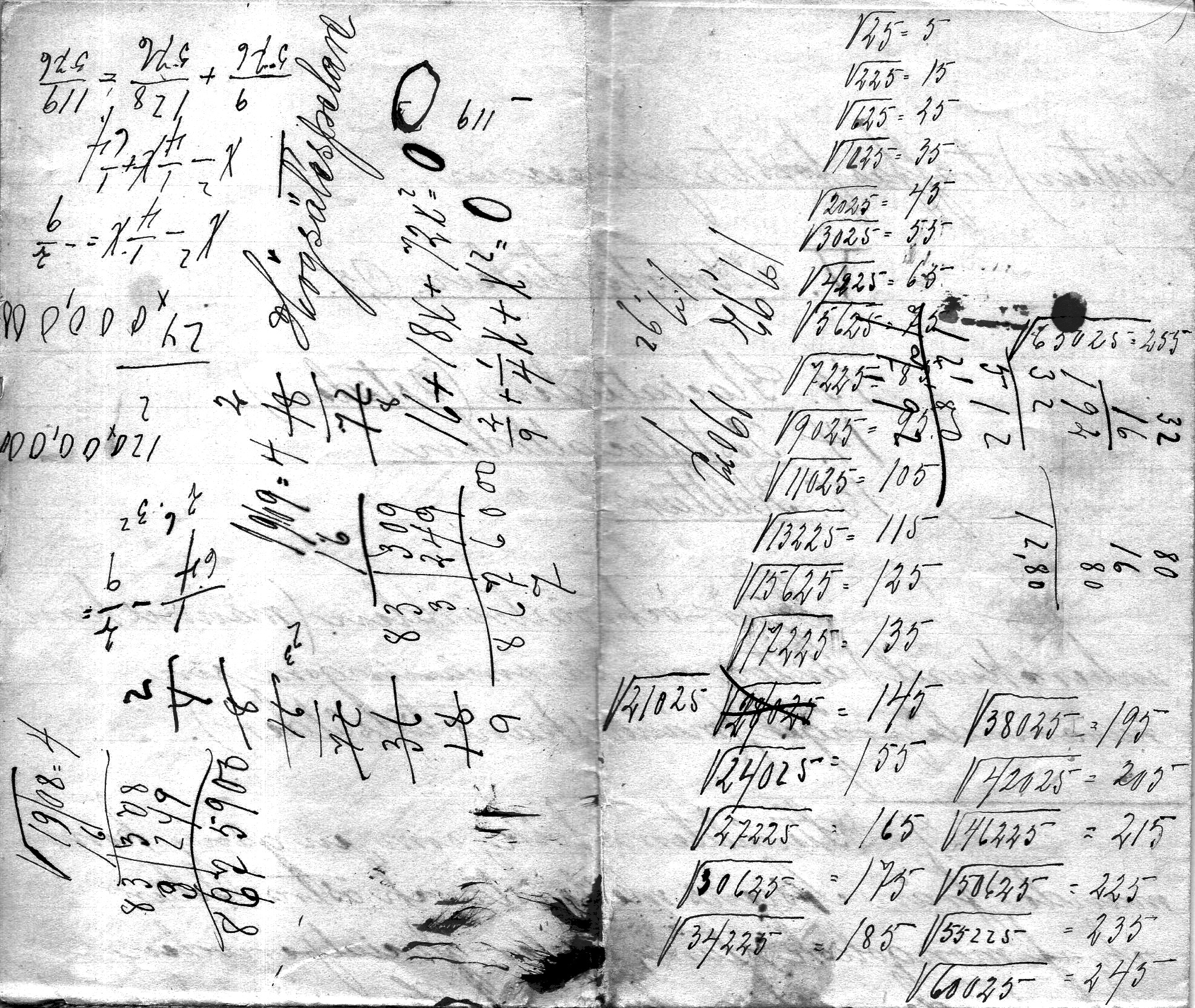
    This is a slightly manipulated image of the original (below) with an overlay of a daguerreotype process.  The math notes (square roots of numbers from 25-60,025 in 25 increments) occurs on the back of several pages of foolscap note “di geologiska formationrma” and by the footnotes it seems as though the notes are from 1893/5 or thereabouts.  In any event the calculations have a certain beauty to them. 

    MATH ART134

    ·Posted by :

    ·in:


  • Mathematical Beauty, 1840

    JF Ptak Science Books Quick Post
    I’m just revisiting an earlier post about the beauty of a found mathematical notebook–its quiet assuredness, its composition, its care, its trying….just lovely, speaking of the efforts of a young person back in 1840. 

    For more, see https://historyofideasblog.com/thesciencebookstore/2014/03/the-beauty-of-mathematical-manuscripts-1840.html

    Math beauty notebook

    ·Posted by :

    ·in:


  • A.M. Turing Catches a Baby Bunny

    JF Ptak Science Books   Quick Post    

    I was not going to write about this until it dawned on me that what happened here yesterday was a first in the history of computational logic–namely, that A.M. Turing was used to capture a baby bunny.  

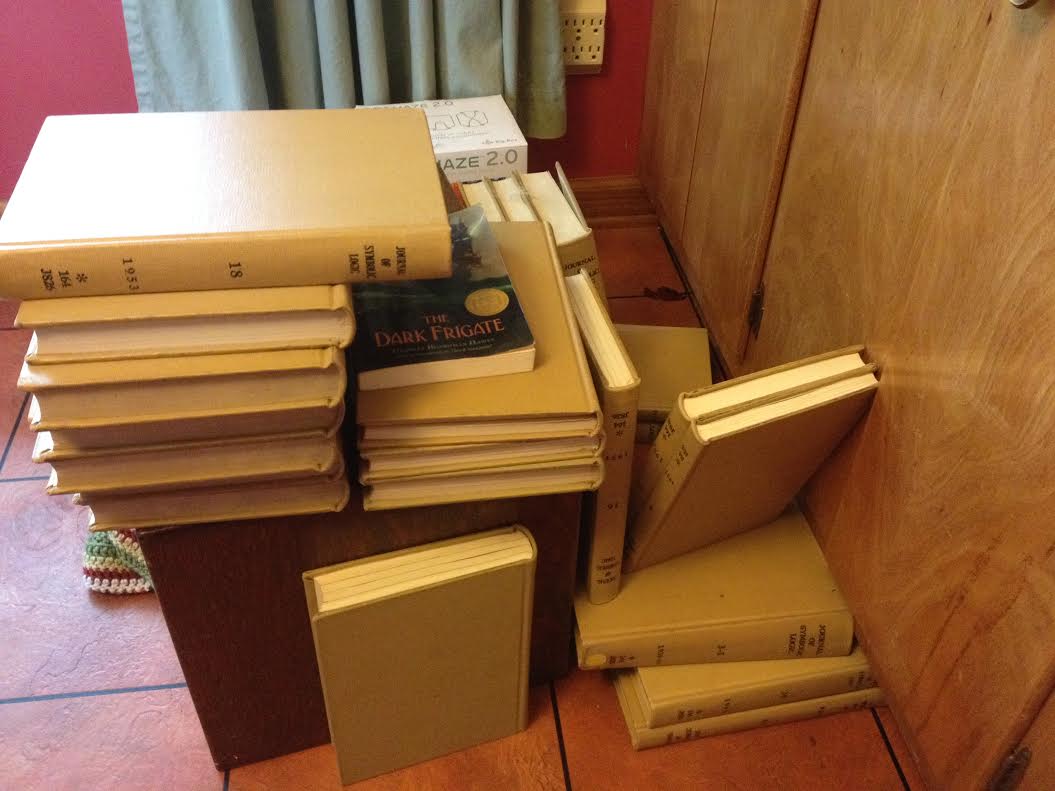
    Journal symbolic logic

    It was a cottontail, about 25 days old, and it got into our house of multiple cats, so it was imperative for us to find it before anything else did. The bunny was very scrappy and quick (as a bunny)–that is until it was confronted by the entry into the real world of computation and logic in the form of Turing’s “On Computable Numbers” (1933) and “Computability and Definability” (1937), at which point the bunny (nicknamed “Baby”) ran into a brick wall–actually, a thick wall, really.  

    After having cornered Baby in the kitchen I built a little fortress around it of dozens of volumes of The Journal of Symbolic Logic, which happily just happened to be on hand.  Faced with this new Gargantua, the bunny simply froze in a last-ditch effort to confuse me or blend-in with the red flooring, a tactic which simply didn’t work.  The bunny was scooped up thanks to the gigantitude of Turing, and was able to continue its life without the bother of cats.  

    Even if one doesn’t laugh, it might be tempting to do so with the addition of this footnote to the history of logic.  

    ·Posted by :

    ·in:


  • Competing Similarities

    JF Ptak Science Books   Quick Post

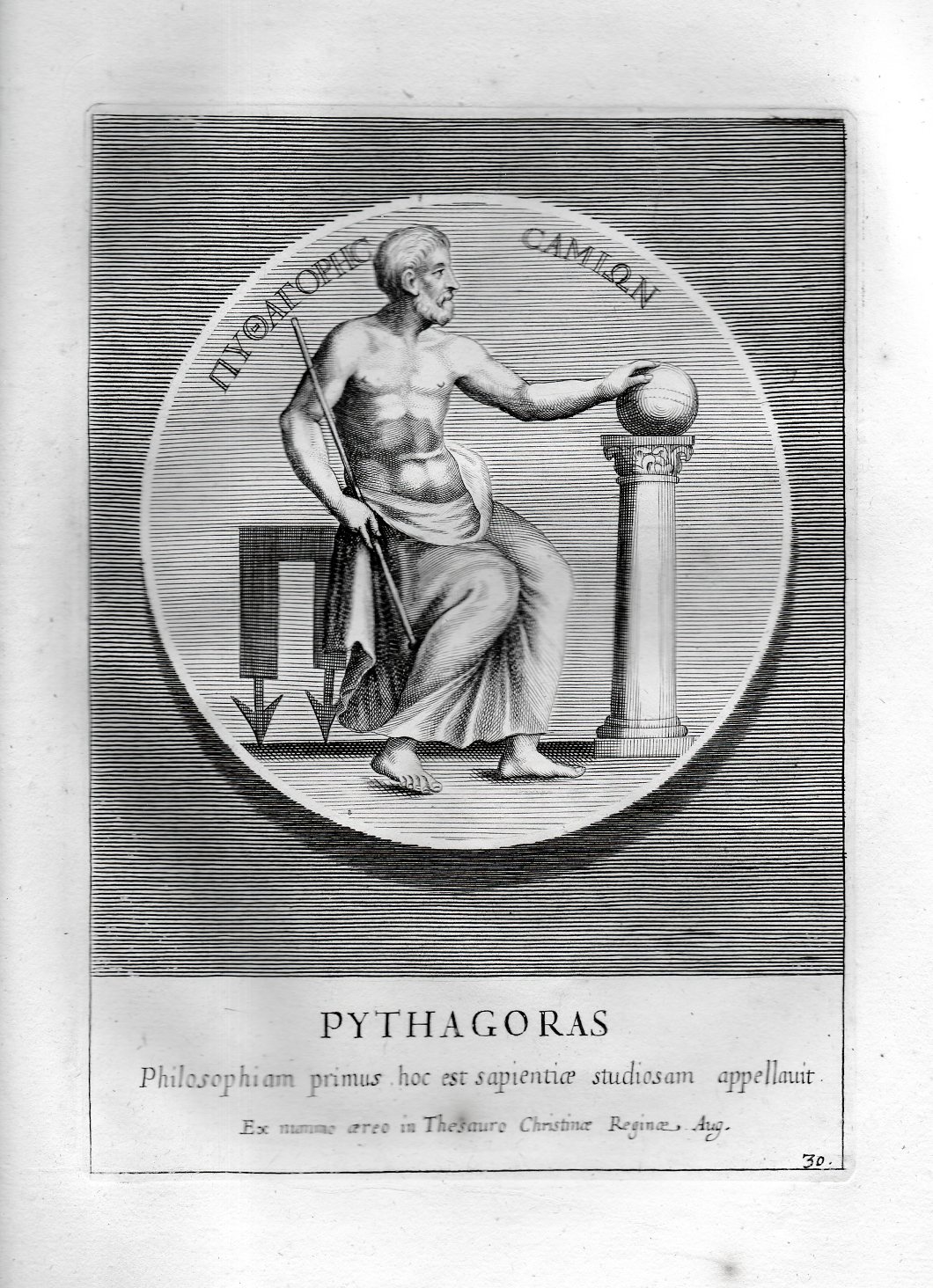
    This fine engraving of Pythagoras was printed in 1739  and appeared in Veterum Illustrium Philosophorum, Poetarum, Rhetorim et Oratorum Imagines…and published by Jo. Petri Bellorii, in Rome.  The engraving is very heavy and on a thick paper, and differs somewhat from  image that below, which is sharper, with greater detail. 

    Bike triplett188
     

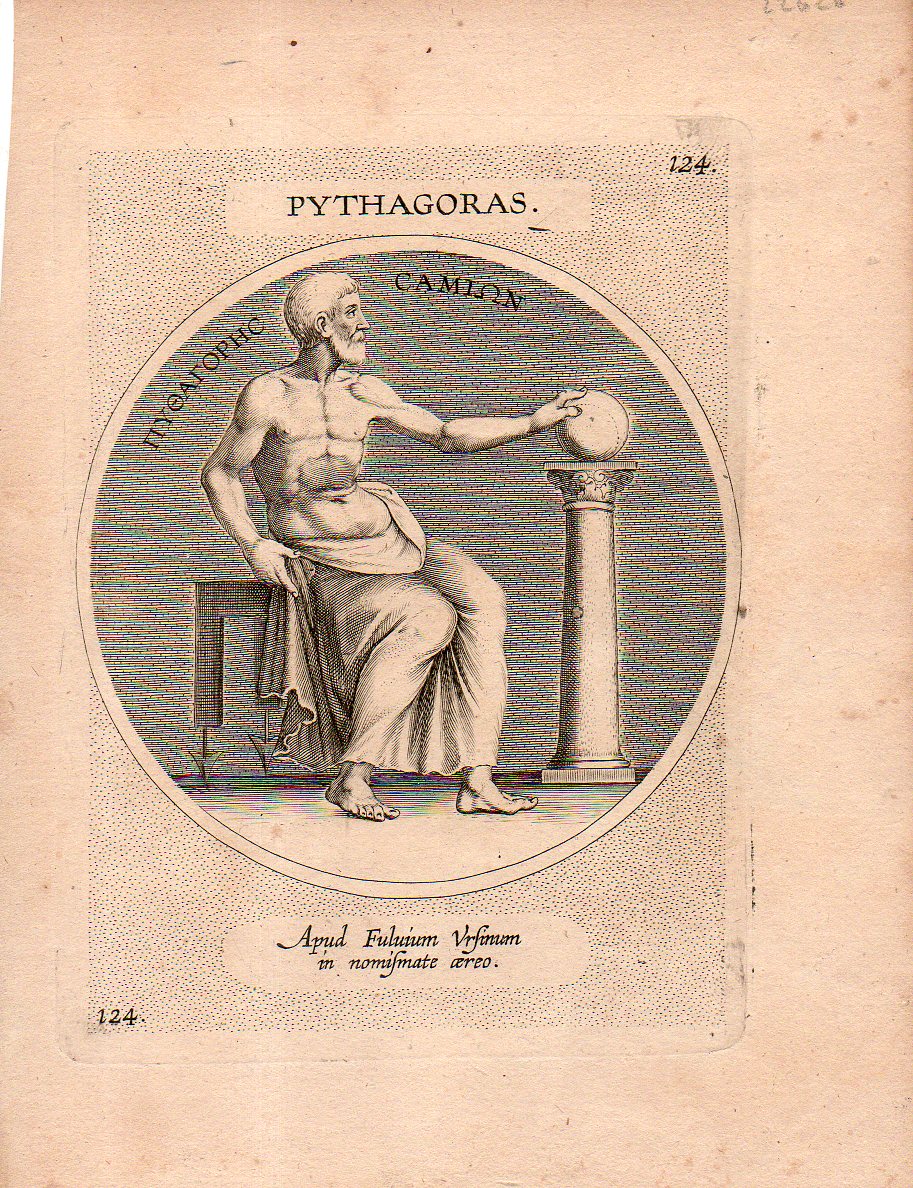
    This second image I think was executed by an engraver copying Theodor Galle, which would make it 16th century, though for the life of me the print doesn’t feel to me to be that age–it is old, for sure, and I would’ve guessed 17th century, but not 16th.  I’ve not found this image anywhere though I’ve found similar that point to Galle in the 16th c.  

    I’m just sharing this here because it is unusual in my experience to see competing similarities in antiquarian  images of scientists–except if you’re talking about Newton, which is a different case.  

    Pythagoras168


    ·Posted by :

    ·in:


  • A Beautiful Regression (1877)

    JF Ptak Science Books   Quick Post

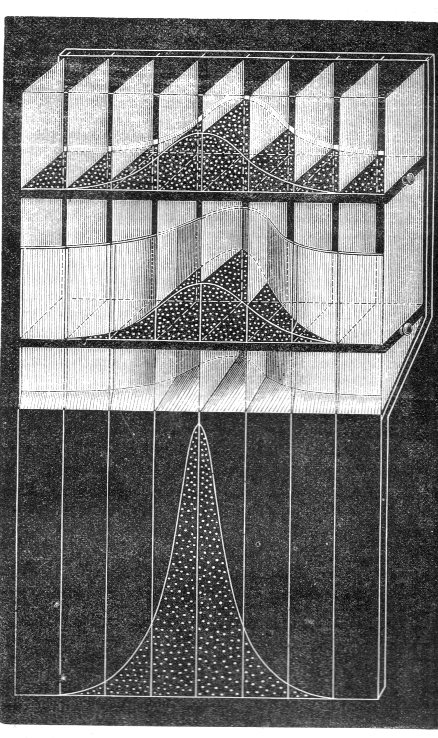
    This beautiful bit of data visualization was a significant development in the history of statistics and was employed in pioneer Sir Francis Galton’s “Typical Laws of Heredity, III”, which appeared in Nature magazine on April 19, 1877.  

    Galton707[Image: Francis Galton, “Typical Laws of Heredity, III”, Nature. p 513, April 19, 1877] 

    This contribution by Galton is the “first major step in the development of correlation and regression analysis” according to Judy Klein’s Statistical Visions in Time: A History of Time Series Analysis, 1662-1933, (page 131). She continues: 


  • 1 Over 1 & the “Rule for All Time Past and Future”

    JF Ptak Science Books  Post 2353

    That is a provocative title, or chapter heading, but that’s how it appears in a pamphlet I’m reading right now, a juicy thing that can lead to a memory palace of ideas…until you start reading the para below the head, when things get both more crystalline and fuzzy.

    John Alexander Henderson, a lightning calculator and professor of math at Delaware College in New York, produced this sprightly pamphlet eponymously titled Henderson’s United States Intellectual and Practical Lightning Calculator, the Unity and Decimal Method, which he published in St. Louis in 1879. (It is followed a few years later in another edition with a hundred new pages.) 

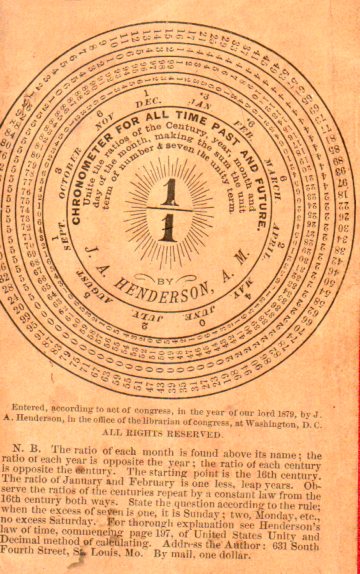
    What Mr. Henderson is getting at is a calculator for reducing a date to find out the day of the week a particular date falls on, from the 1st century to the 99th.  On the back cover of this pamphlet he provides a tickler for this enumerating device, which is explained in another publication (Henderson’s United States Unity and Decimal Method of Calculating). 

    Calculatort mental425

    And so in order to calculate the day of the week on which, say, November 26, 2014, occurs you would you the dial above as follows, but first an explanation of what is on the dial face: