A Daily History of Holes, Dots, Lines, Science, History, Math, Physics, Art, the Unintentional Absurd, Architecture, Maps, Data Visualization, Blank and Missing Things, and so on. |1.6 million words, 7500 images, 4.9 million hits| Press & appearances in The Times, Le Figaro, Mensa, The Economist, The Guardian, Discovery News, Slate, Le Monde, Sci American Blogs, Le Pont, and many other places… 5000+ total posts since 2008.

Category: Information, Quantitative Display of

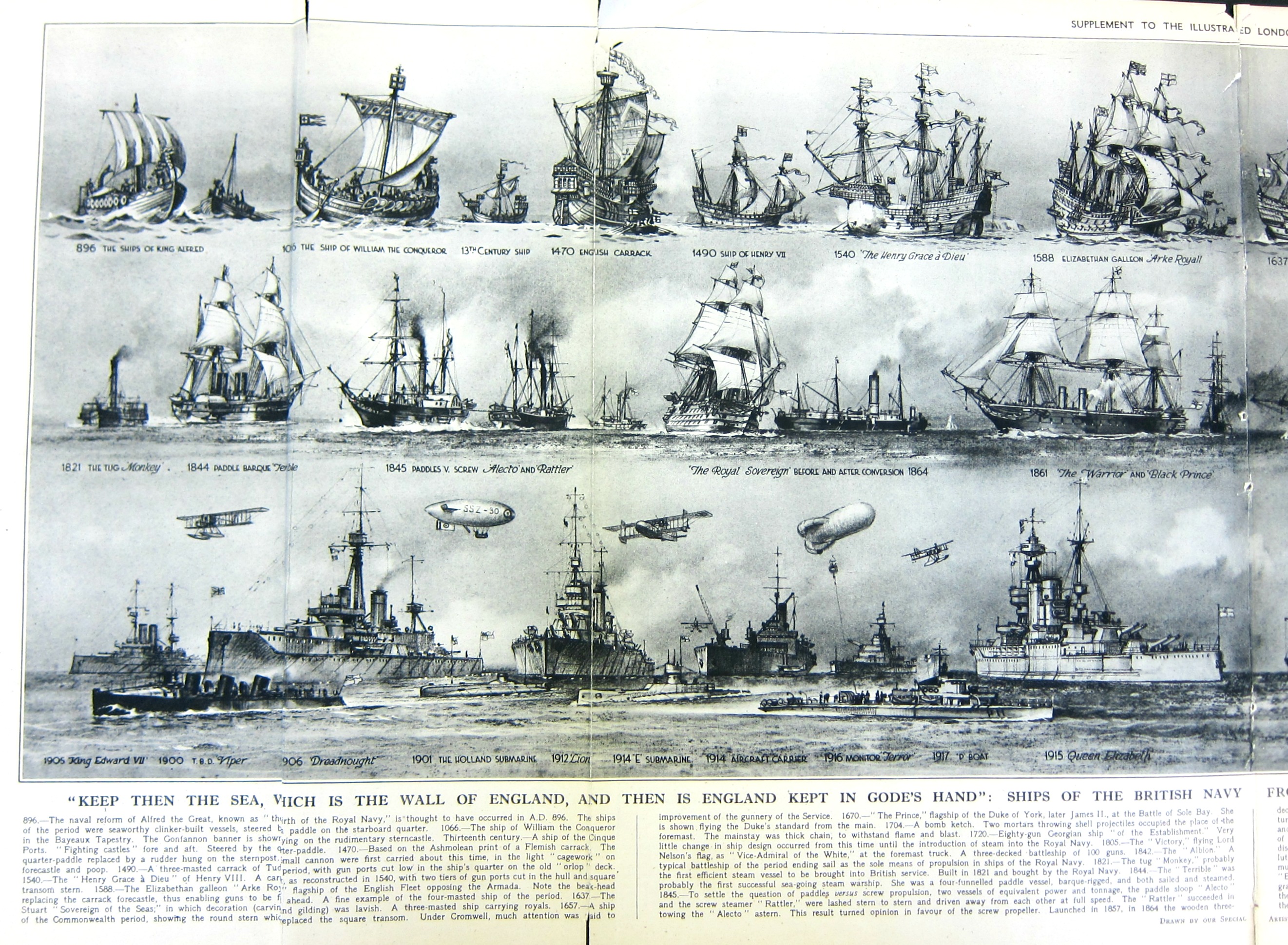
  • 1000-Year Panorama of British Naval History (1942)

    JF Ptak Science Books   Quick Post

    “Keep then the sea which is the wall of England, and then is England kept in Gode’s Hand, so that fore anything that is without, England were at peace withouten doubt.”

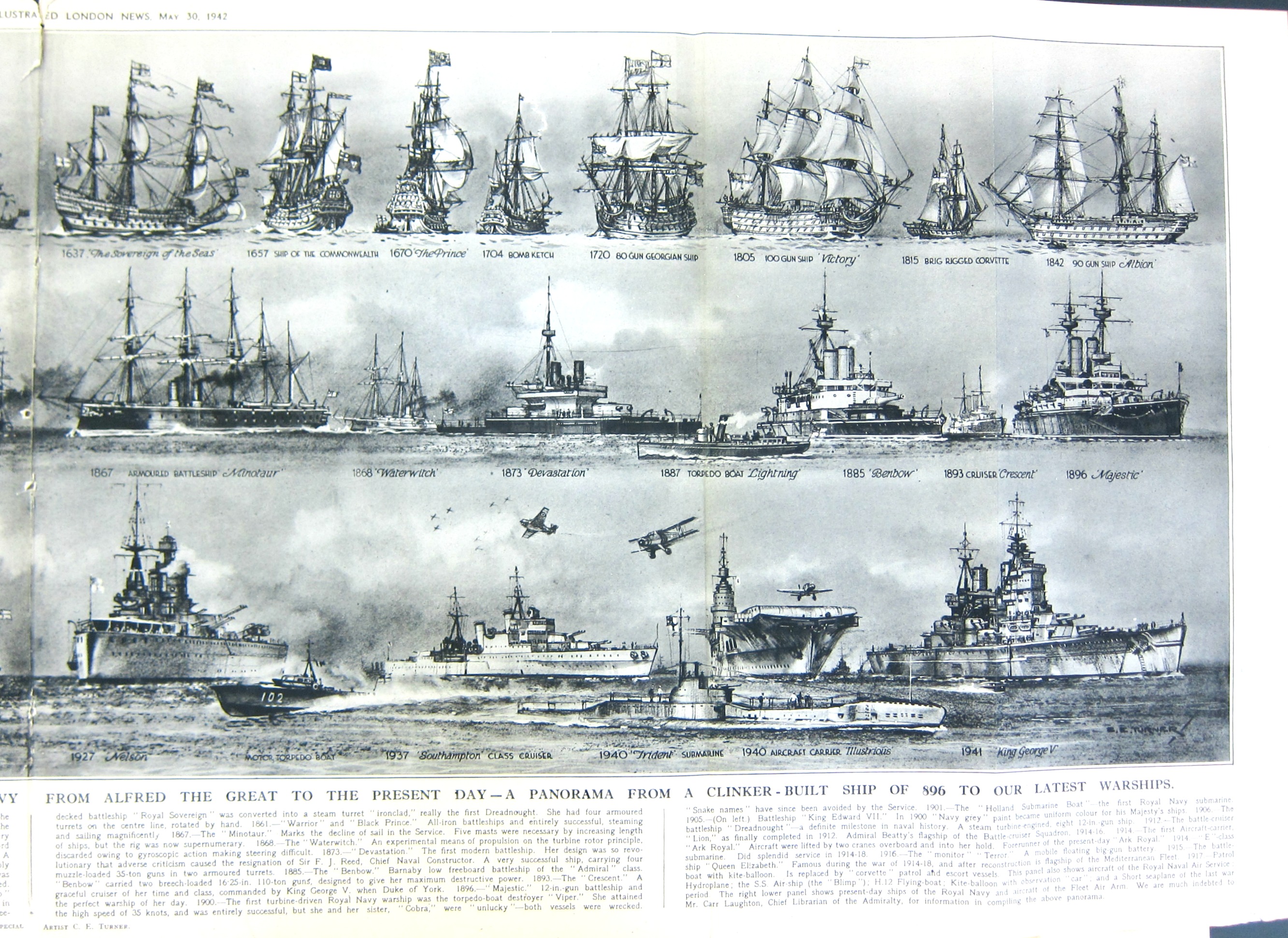
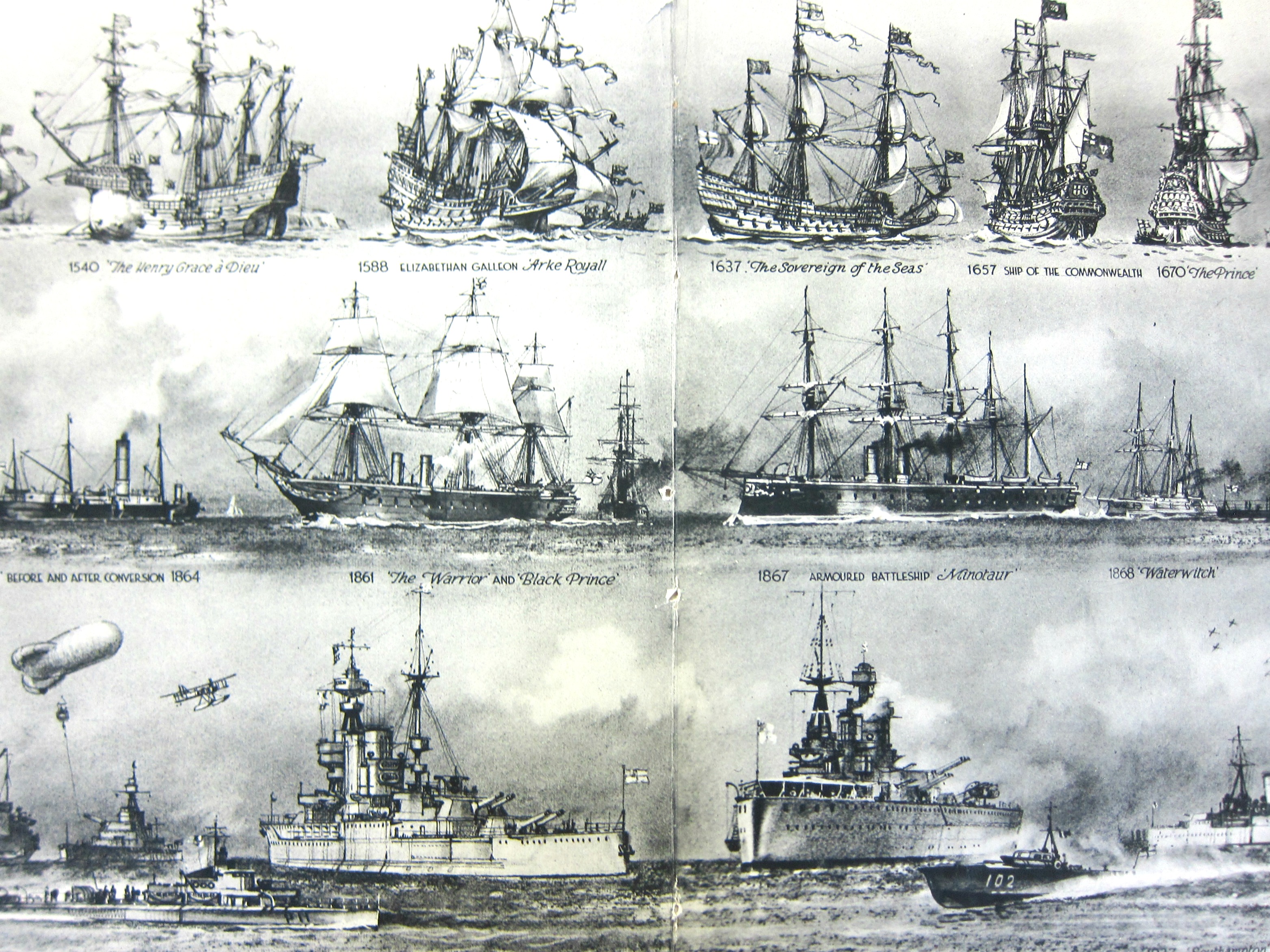
    This fantastic three-foot-long panorama was published as a folding centerfold for the Illustrated London News Supplement of May 30, 1942.  By the middle of 1942 I think it was pretty clear that Germany could not hope to compete with the U.K. in the production of ships, and especially in the area of submarines, where the Luftwaffe demanded and received the lion’s share of resources necessary for construction. The Battle of the Atlantic was being won, the blockade was working and intact, and the U.S. had entered the war militarily. No doubt it was a good thing for the reader’s of this popular magazine to be reminded of their stellar naval history at this point of the war. There are 45 ships and boats on this panorama, ranging from the times of Alfred the Great to the King George V.

    The following images are very expandable:

    ILN HMS History left panel

    ILN HMS history right panel


    The center section:


    ILN long chart HMS


  • Symmetry, Detail, Space, and Beauty

    JF Ptak Science Books  Quick Post

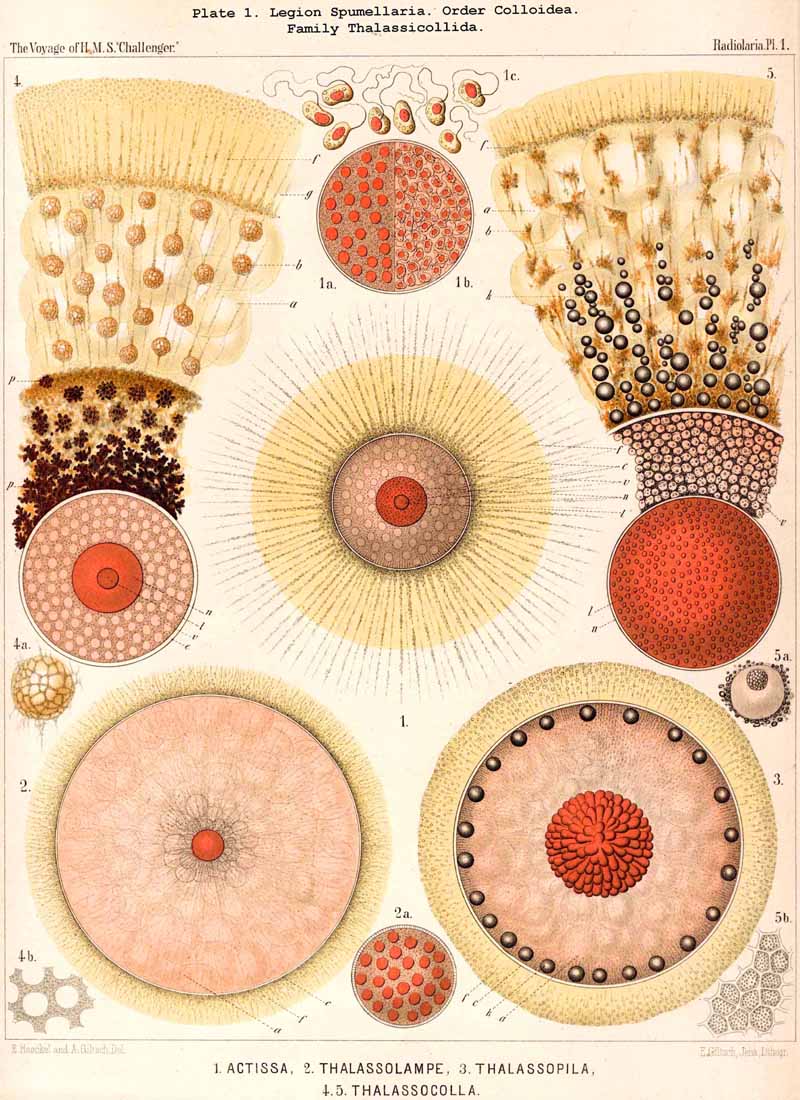
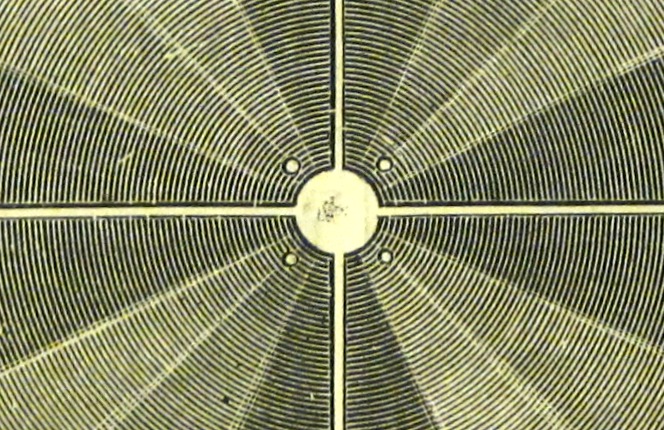
    In his long and vastly productive scientific life, Ernst Haeckel (1834-1919 ) produced extraordinary and beautiful work.  He was a busy man working over a number of specialties, writing more than 40 books and a large number of  contributions to scientific publications.  He is perhaps best remembered early on in his career for a popular defense of Darwinism, writing Natürliche Schöpfungsgeschichte, (1868, nine years after the publication of the Origin, and translated into English as The History of Creation in 1876) which was a successful attempt to get Darwin’s complex ideas into public discussion.  Next to that he is probably best remembered today for his biological work and for describing thousands of new species of life forms.  Today though he came up (again) in reference to the display of scientific images and data, which takes us to his fantastic work in the description of the radiolaria and the display of his results.  I was interested in symmetry and the filling-up-of-page-space without actually crowding the paper–in this, Haeckel was a master, his work is breathtaking.  Here are a couple of examples of his work, along with a link for more images coming from 19thCenturyScience.org:


    Haeckel 01


  • Measuring Things With Ships (Again)

    JF Ptak Science Books  Quick Post

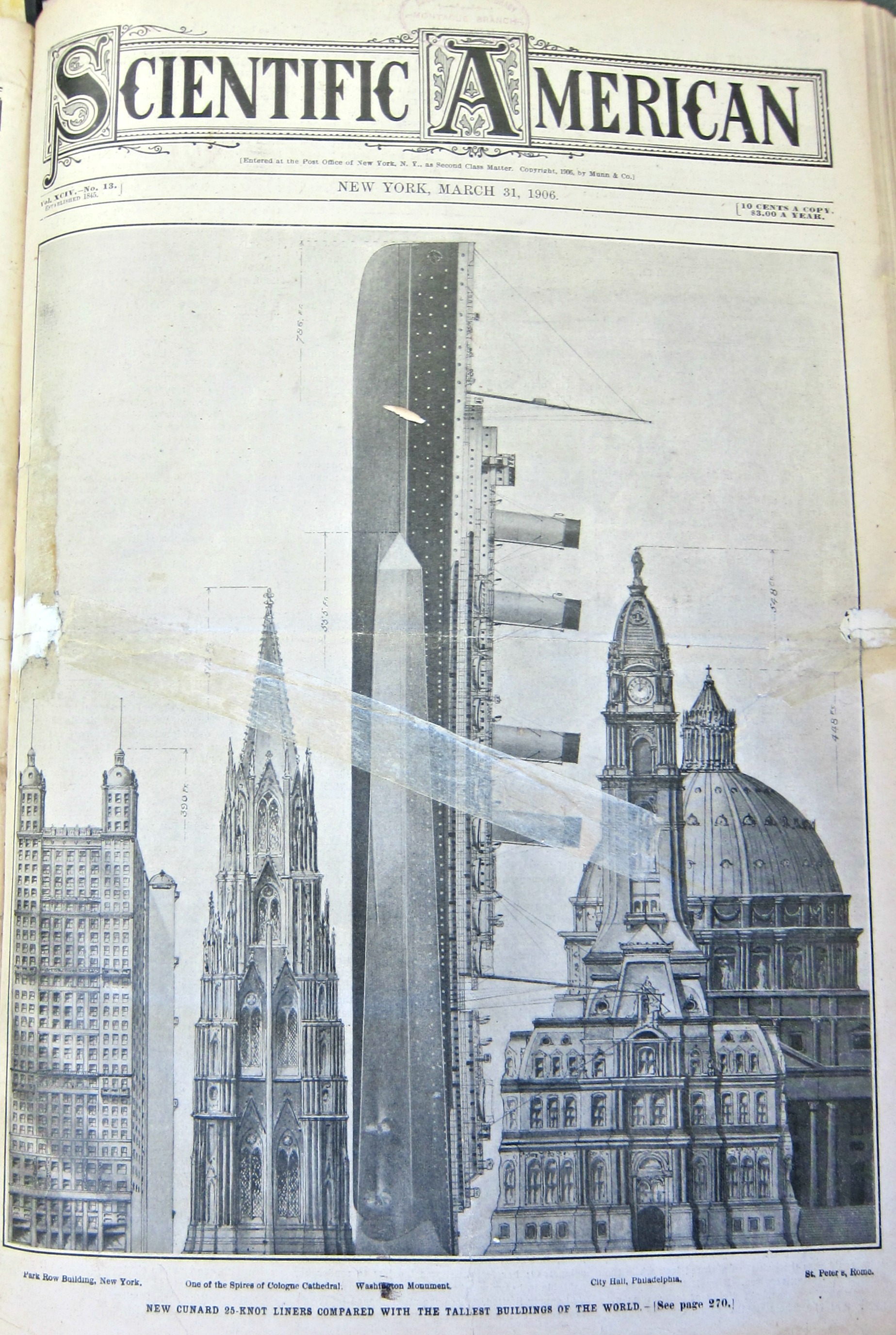
    I didn’t think that there would be many entries for a series on measuring things with ships–they do pop up here and there, as with this issue of the Scientific American for March 31, 1906.  There’s probably room for a History of Measuring Things By Uncommon Non-Standard Means series on this blog–after all, there are examples for ships as a measure, and there are other bits on this blog about measuring things in units of the Eiffel Tower, gargantuanly-oversized bread, enormous nails, collections of beef, Trinity Churches, miles of soldiers, and the like.  Here are a few examples: 

    • Measuring Things in Terms of Trinity Churches https://historyofideasblog.com/thesciencebookstore/2013/12/jf-and-so.html
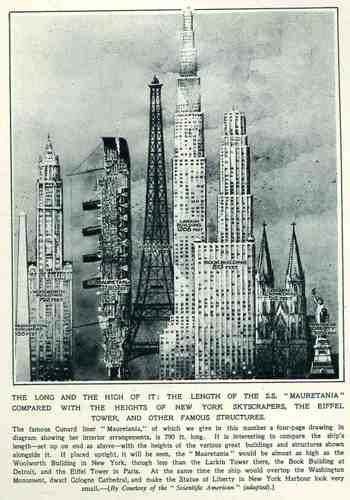
    • Ships in the Skyline    https://historyofideasblog.com/thesciencebookstore/2008/09/comparative-d-1.html
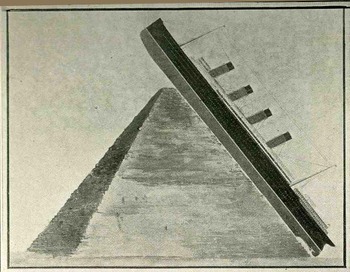
    • Ships on the Pyramid  https://historyofideasblog.com/thesciencebookstore/2008/09/jf-ptak-scien-3.html

    These units of measurement do seem a little odd, but they really have a capacity to humanize inescapably difficult numbers by putting them in context with a known entity, like Trinity Church.  In this new case of ship/measurement, the newest of the Cunard Line’s transatlantic ocean liners (that would be named Lusitania and Mauritania) is presented here on the front page of the Scientific American pressed up against structures that are presumably well known amongst its readers. 

    Scientific American ship standard


    Blog1sept_17_ship_city_btm_det572

    •  [Source:  https://historyofideasblog.com/thesciencebookstore/2008/09/jf-ptak-scien-3.html]

    Blog1sept_16_ship_skyline564

    • [Source: Ships in the Skyline    https://historyofideasblog.com/thesciencebookstore/2008/09/comparative-d-1.html}

  • Neo-Proto-Absurdist Art (?) in “Nature”, 1874

    JF Ptak Science Books   Quick Post

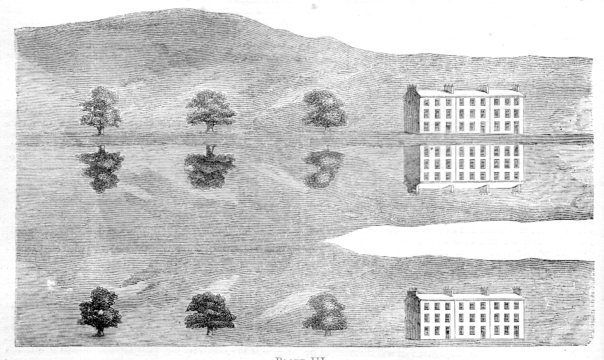
    Mirage025

    I found this delightful article while browsing volume 11 of Nature (1874)–J.D. Everett’s On Mirage. It actually appears in parts over two issues (November 19 and 26) and I’ve got to admit that I was attracted to it from the illustrations–the wood engraving appearing in the concluding part having neo-proto-Absurdist qualities six decades before that would become recognized as an art form.  I’ve included the image below from my copy as it is very sharp and crisp–I’ve also included links for the texts from the University of Wisconsin (though their scans of the images are not quite so fresh as the one below).  

    [Everett (1831-1904) was a distinguished physicist and is perhaps best remembered for his translation of a wonderful textbook by Augustin Privat-Deschanel, Elementary Treatise on Natural Philosophy: Physics (1882), a book I’ve found useful over time (along with Ganot’s Physics) for identifying period scientific instruments as both books are absolutely filled with images.]


  • The Big Stuff–Heavy Numbers, 1939

    JF Ptak Science Books   Quick Post

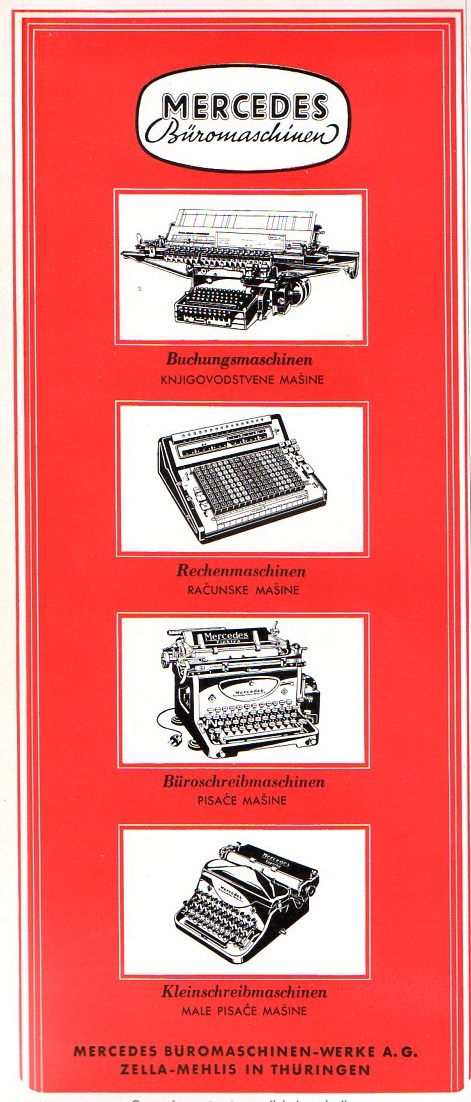
    Mercedes-Buromaschinen* evidently came into existence in 1906 in Berlin before moving on to other cities, including expanding into Zagreb and Beograb, Yugoslavia, which published this ad. It was big and red and covered a half-page in the Illustrirte Zeitung (Leipzig), where it appeared in print two months before the invasion of Poland in 1939. I I just wanted to share its redness, and of course the massive accounting machine listed first in the ad.  

    Burroughs machine021

    *Initially I thought that this was a generic/export name for Burroughs Adding Machines, but I was wrong. Reader Frank Wilhoit (thanks!) pointed out that the “bur” part of “buromaschinen” is simply the word “office”–so, office machines. Now that I look at it the accounting machine doesn’t look like the Burroughs machine as I thought it did–ditto for the calculator.


  • In the Fool’s Cap, a Map

    JF Ptak Science Books  Quick Post

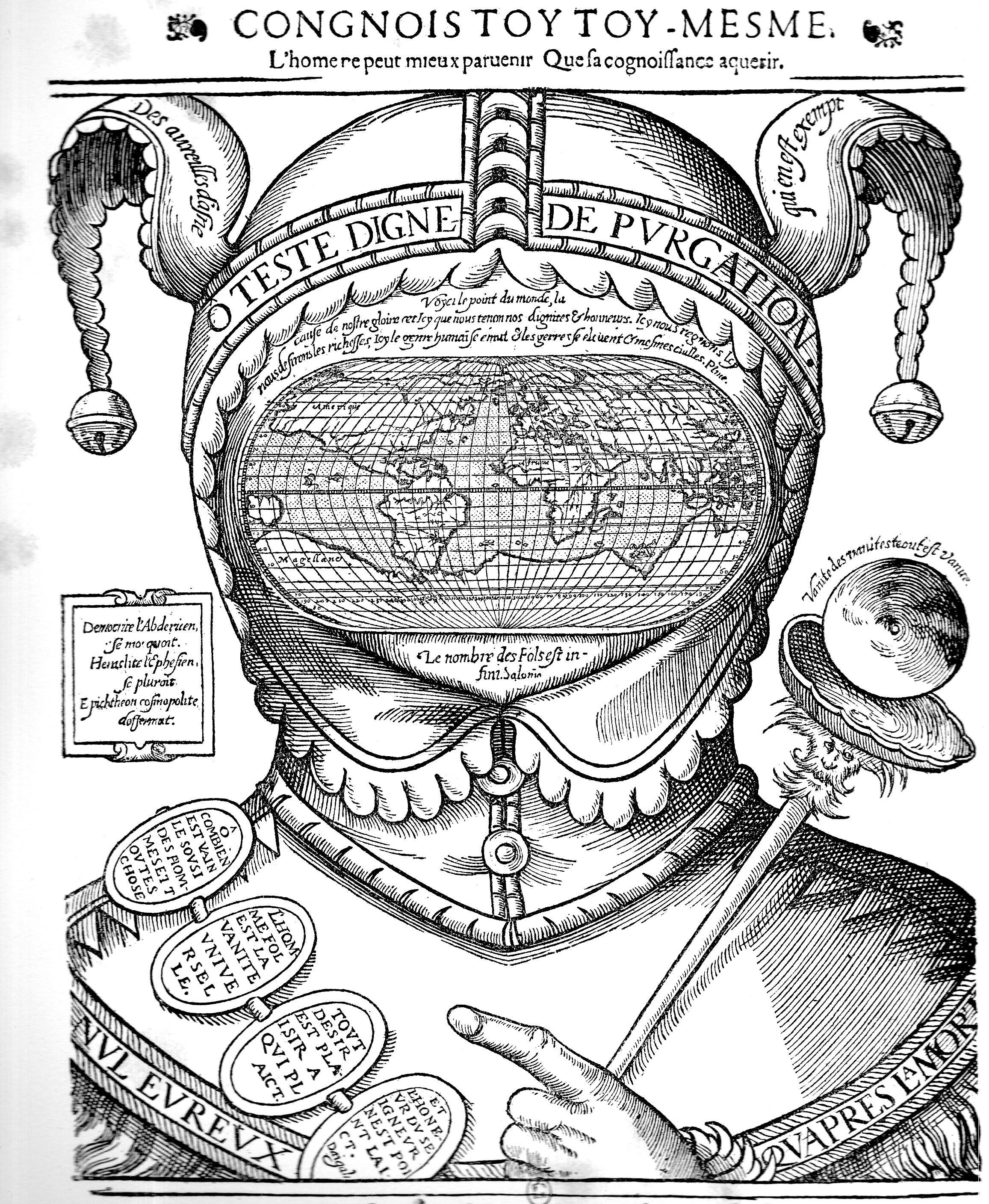
    Jester020

    I’ve known about this famous map/curiosity by Jean de Gourmont (ca. 1570) for some time, though I never seem to meet it out there in the world very often. Yesterday though I discovered that there was a fine 19th century reproduction of it in the studio, and so I thought I had a closer look now that I had a good copy in my hands.  

    And then when I looked the map up I found a number of good descriptions of it that pretty much took care of its description and interpretation. The baseline description is that it is mostly an allegory on the pursuit of knowledge, and of knowing, and thinking about the nature of knowledge–my read is that in the end, only a fool would think that the more they knew the less there was to know.  The famous Ortelius map (“Typus Orbis Terrarum”) in the face of the jester could represent a gridwork of what we think we know, though across the top of the image is the dictum from Socrates, “Know Thyself” (“Congnois toy [‘toi’] toy-meme”), which prepares us for what might be the dry hole in our soul if we spend too much time in the pursuit of knowledge of the world.

    One of the most interesting reads on this image can be found in  Literature, Mapping, and the Politics of Space in Early Modern Britain, by Andrew Gordon, Bernhard Klein, where the authors discus the mind-as-a-map, and bring into play a great passage from the immortal great-book-that-is-semi-unreadable Anatomy of Melancholy, by Robert Burton. They refer to the great map set in the motley, order set against “the spirit of disorder” and “the enemy of boundaries”, with Burton declaring on the essence of folly.


  • Seeing Mathematics as it “Happens”

    JF Ptak Science Books  (an earlier post from 2008 expanded and corrected  somewhat) 

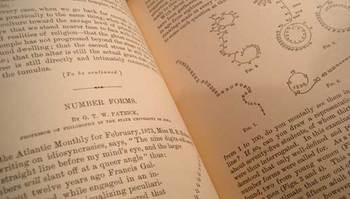
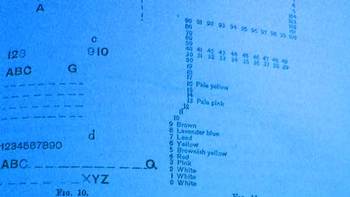
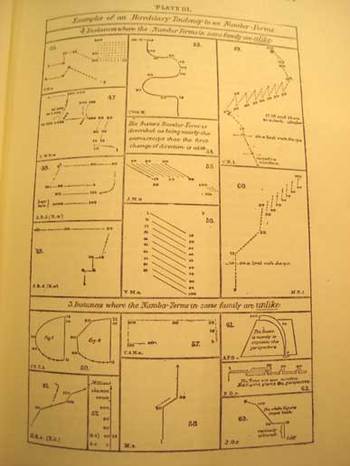
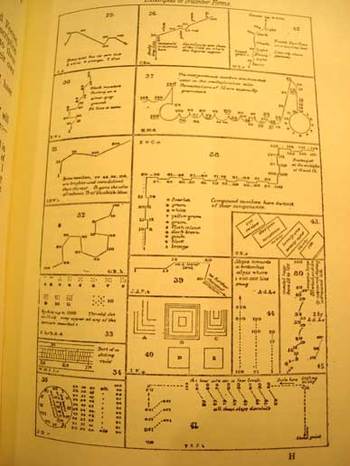
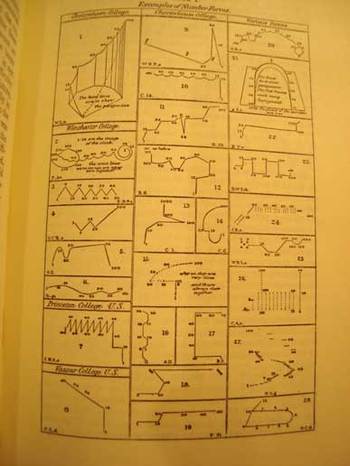
    I wanted to return and add a bit to an earlier notice concerning a series of drawings that I found utterly fascinating—what seems to be among the earliest illustrations of the active formation representing visualized human thought.  (I know that this titling is ungainly, but it seems to be the least inelegant solutions to stating the idea of what the images represent.)  In 1873 Miss H. R. Hudson wrote an article1 on her visualization of numbers–and later and more famously Sir Francis Galton approached this same issue first in an article in Nature2 that included a number of fascinating presentations of the “suspended” numbers.  Working further through this thesis he greatly expanded it, resulting  in a 26-page chapter called “Number-Forms” in his book Inquiries into Human Faculties and its Development 3(1883, with a second edition appearing in 1909).  Galton includes another 71 images of visualizing arithmetic, plus others on general images of mental images of numbers and letters—there is also a small but beautiful section on associations between colors and numbers and letters.  (These are all depicted in the first four images on this page.)
    Bloggalton1

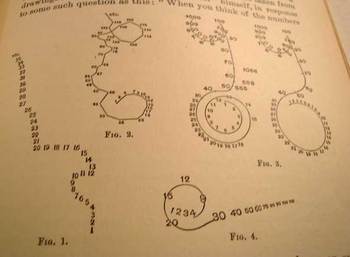
    G.T.W. Patrick (a professor of philosophy at the state university of Iowa) published one of the earliest papers in response to Galton’s work.  In “Number-forms”4, published in the Popular Science Monthly in 1893, Patrick addresses and expands Galton’s work somewhat, including another eighteen wonderful illustrations of similar images.

    But the path back to Galton is not quite a straight one.  Galton was initially concerned with imaging of numbers and numbers forms while people were performing mental calculations.  Patrick on the other hand asked his subjects if they had associative images in their mind of numbers—formally, he asked them if the number series of 1-9 presented itself in a visual, representative way in their minds.  In the second and third parts of his three-part inquiry, he asked the same question about letters and the alphabet, and then, thirdly, if they perceived any sense of color from letters and numbers, and what then what those exact relationships were.
    Bloggalton2_4

    It is interesting that in the studies of Galton and Patrick that over time in each of the subjects tested that (in Galton’s words) the images were “absolutely unchangeable except for a gradual development of complexity”.  Since I (like Galton, which is probably the only time I will ever be able to associate myself with this man
    in terms of familiar traits) have no such images in my head when I think about mathematics or numbers or letter or words in general, it is remarkable to me on the human scale that people who have these associations would have the same ones time after time.  A movable feast, as it were.  Of course it would make sense that this reference system would be constant—but for someone that doesn’t ‘see” these images at all, the fact that they are so flowing and lucid and unchanging is simply difficult for me to imagine. (In a few weeks I’ll return to this issue, looking at how some prodigiously gifted people “see” with their special attributes.)
    Bloggalton3_2

    Images below are from the Patrick paper:
    Bloggalton5

    Bloggalton6


    Bloggalton4blue

    Notes:

    1. “The nine digits will ascend in a straight line before my mind’s eye, and the larger numbers will slant off at a queer angle”, Atlantic Monthly for February, 1873.
    2. Nature, January 15, 1880. Follow the first link to a full reprint of the paper and a short article on it that appeared in this blog. 
    3.  Full text of Galton’s work appears at Gutenberg: http://www.gutenberg.org/files/11562/11562-h/11562-h.htm#1noshow
    4.  Popular Science Monthly,  February 1893 (pp 504-515). Full text of the article by Patrick  here: https://en.wikisource.org/wiki/Popular_Science_Monthly/Volume_42/February_1893/Number_Forms  I should also note that Patrick wrote a very early paper on the psychology of football in 1903, full article here: https://archive.org/stream/jstor-1412309/1412309_djvu.txt
  • A Beautiful Saw, 1877

    JF Ptak Science Books    Quick Post

    I found this ad on the back page of the last issue of the Scientific American before that of December 29, 1877, which carries the announcement and description of the invention by Thomas Edison of the groundbreaking  “talking phonograph”.  In any event, the saw image is beautiful:  

    Saw Sci American 1877 detail

    And the full ad:

    Saw Sci American 1877


  • The Aurora Borealis in the 19th Century

    JF Ptak Science Books  Quick Post

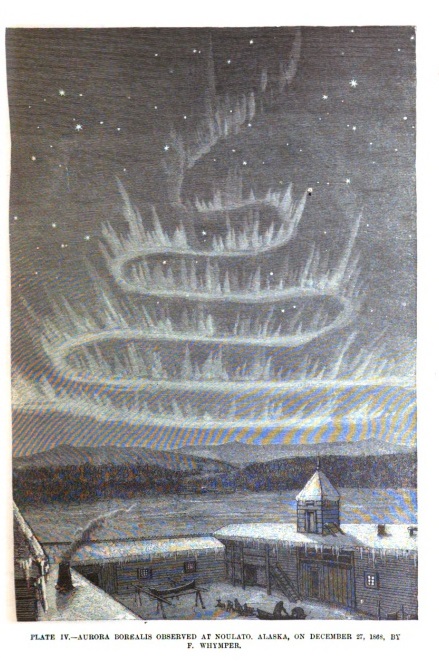
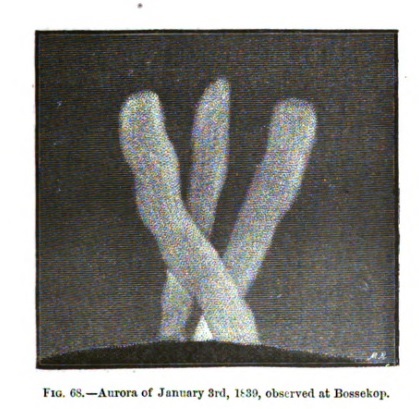
    Aurora borealis


    These wonderful images of the aurora borealis  occurs as plate 4 and a text illustration on page 113 in  Amedee Guillemin (1826-1893) and edited by Silvanus P. Thompson (1851-1916), the lovely Electricity and Magnetism, published in London, 1891. The aurora is about the most impressive displays in the Earth’s atmosphere, and little understood, really, until the 20th century–and it wasn’t until the 19th century that it was shown that there was a relationship between the Earth’s magnetic field and the aurora.  And remember, it wasn’t until the early 19th c that even the clouds were given scientific designations (by Luke Howard)–the aurora borealis was a more difficult matter. 

    [Sources for the images as well as the full text of the book: http://onlinebooks.library.upenn.edu/webbin/book/lookupid?key=ha001481470]


    Aurora borealis b


  • Cruises in Skyland! Uncle Sam, the Canal, and the Zeppelin (1912)

    JF Ptak Science Books  Quick Post


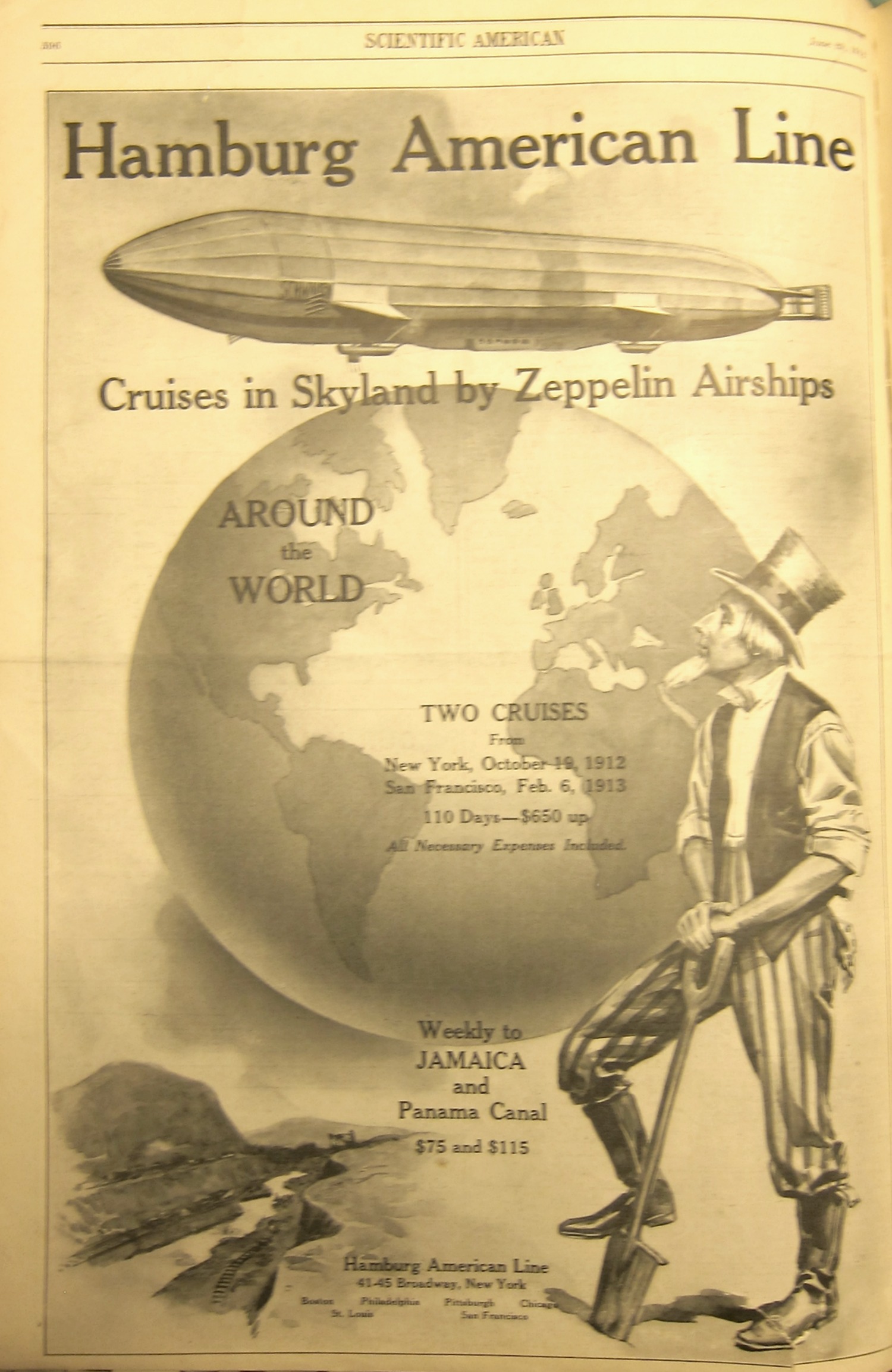
    Scientific American Zeppelin Uncle Sam single

    $650 doesn’t sound like much in today’s dollars, but in 1912 that 650 would be about equal to the average salary of a factory worker1; so, if you calculated the trip of 1/3 year at the average salary today of, say, $45,000, it feels more expensive.  It doesn’t translate all that well, really, but it does give a good idea of what that 650 meant in 1912.  

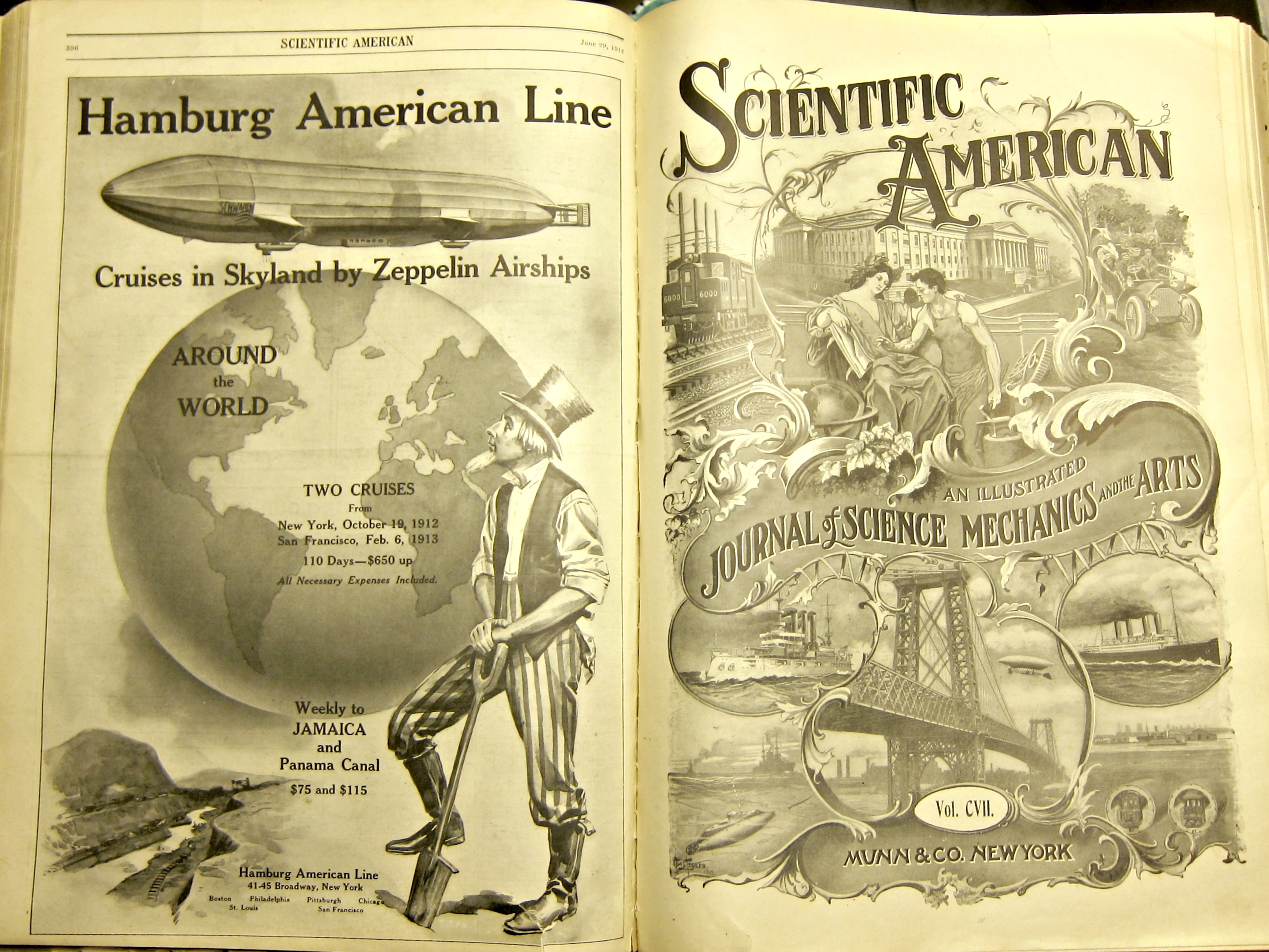
    Uncle Sam is taking a breather from his work on the Panama Canal, which is clearly under construction in the vignette at bottom left and something that wouldn’t open for business for another two years.  The Hamburg American Line was definitely associating the grand undertaking in Panama with its around-the-world cruise offering–the Panama engineering feat was certainly considered one of the wonders of the world.  The zeppelin flights were extraordinary in themselves, what with making transatlantic flights with 400-800 people (depending on the airship) who received three square meals a day, could rent their own rugs, go to the barber and to the ship’s library, and listen to the airship’s band.

    The bottom line here is that this is a great design, and as advertisements go it seems to be very effective.  

    (See http://www.gjenvick.com/PassengerLists/Hamburg-AmericanLine/Westbound/1912-11-01-PassengerList-PresidentLincoln.html#axzz43r2FHFKT for various passenger lists, activities, menus, and the like.) 


    Scientific American Zeppelin Uncle Sam


    Notes:

    1.  See an earlier posst, https://historyofideasblog.com/thesciencebookstore/2009/09/the-overworked-working-poor-of-1914-women-and-children-and-what-they-didnt-get-paid.html