A Daily History of Holes, Dots, Lines, Science, History, Math, Physics, Art, the Unintentional Absurd, Architecture, Maps, Data Visualization, Blank and Missing Things, and so on. |1.6 million words, 7500 images, 4.9 million hits| Press & appearances in The Times, Le Figaro, Mensa, The Economist, The Guardian, Discovery News, Slate, Le Monde, Sci American Blogs, Le Pont, and many other places… 5000+ total posts since 2008.

Category: Bad Ideas

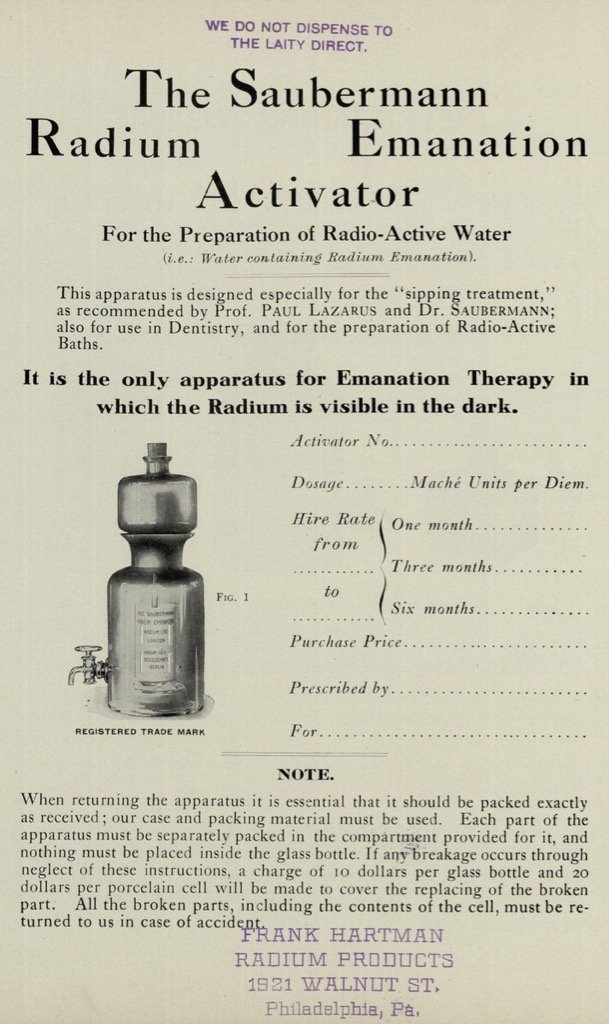
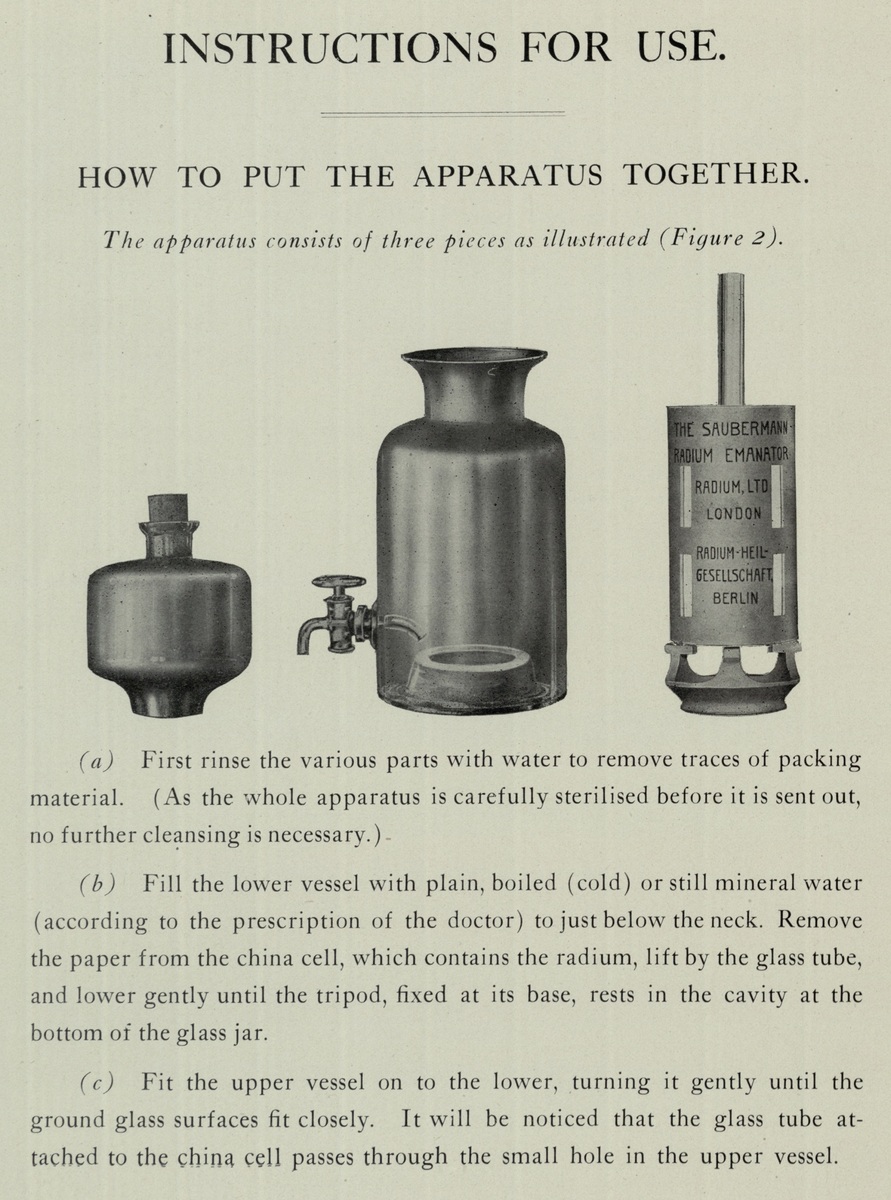
  • The Only Radium Cure that You Can See in the Dark–1900

    JF Ptak Science Books  Quick Post 

    I found this very arresting image on the wonderful Whewell’s Ghost history of science/medicine/tech roundup (https://whewellsghost.wordpress.com), edited by Thony Christie (of the excellent The Renaissance Mathematicus blog, https://thonyc.wordpress.com/ and twitter account @rmathematicus).  This cure-all was being sold by Radium Limited U.S.A. (25 West 45th St, NYC1) around  1900, which means that like many quake devices it hit the shelves for public consumption not long after a scientific discovery it sought to exploit–in this case the discovery of radium by Marie and Pierre Curie in 1898. The toxicity factors of radium at this stage was not yet known, though the new-remarkableness of radium led some to establish a for-profit belief that the stuff in all of its glorious newness should be taken internally for the treatment of whatever quack-inspired ideas came to mind. One shriveling aspect in the text is that when used in therapy the radium-infused radioluminescent elixir was the only one of its kind to be visible in the dark. Modern knowledge aside, it is probably a good thing to abide the anonymous non-soliphisms of (1) never drinking anything that you can’t lift with one hand, and (2) never drink anything that glows. 

    Radium Emanation

    The full pamphlet is reproduced by the College of Physicians of Philadelphia http://www.cppdigitallibrary.org/exhibits/show/radium/item/4351

    Notes:

    1.  The pamphlet has a hand-changed address of 22 W. 45th St, the original building now evidently gone, replaced by the Berkeley Building in 1917. Post-appropriately right across the street is the Cock and Bull Pub.) 

    Radium _2_[Source: College of Physicians of Philadelphia http://www.cppdigitallibrary.org/exhibits/show/radium/item/4351]

    ·Posted by :

    ·in:

    —

  • Electrocution in Trench Warfare (?), WWI (Patent for “Electrifying War”, 1917)

    JF Ptak Science Books  Post 2623

    In my limited knowledge of World War I I  have been exposed to various ways in which trench warfare was conducted–there was of course the infantry charge with guns and bayonettes, snipers, artillery bombardment, aerial bombing and strafing, land torpedoes, tank assaults, underground/sapper bombings (in which mines are laid underneath the trenches via tunnels, and of course gas, among other things, but I have not until today encountered electrifying to air in a trench to “incapacitate” soldiers.  And by “incapacitate”, according to my reading of the patent for this mode of warfare, I do think that it talks about electrocuting soldiers. With my limited non-interwebtube sources, I haven’t found any other references to this, so perhaps it was anomalous, or against the sense of decency of warfare that was even beyond the sensibilities of using poison gas.

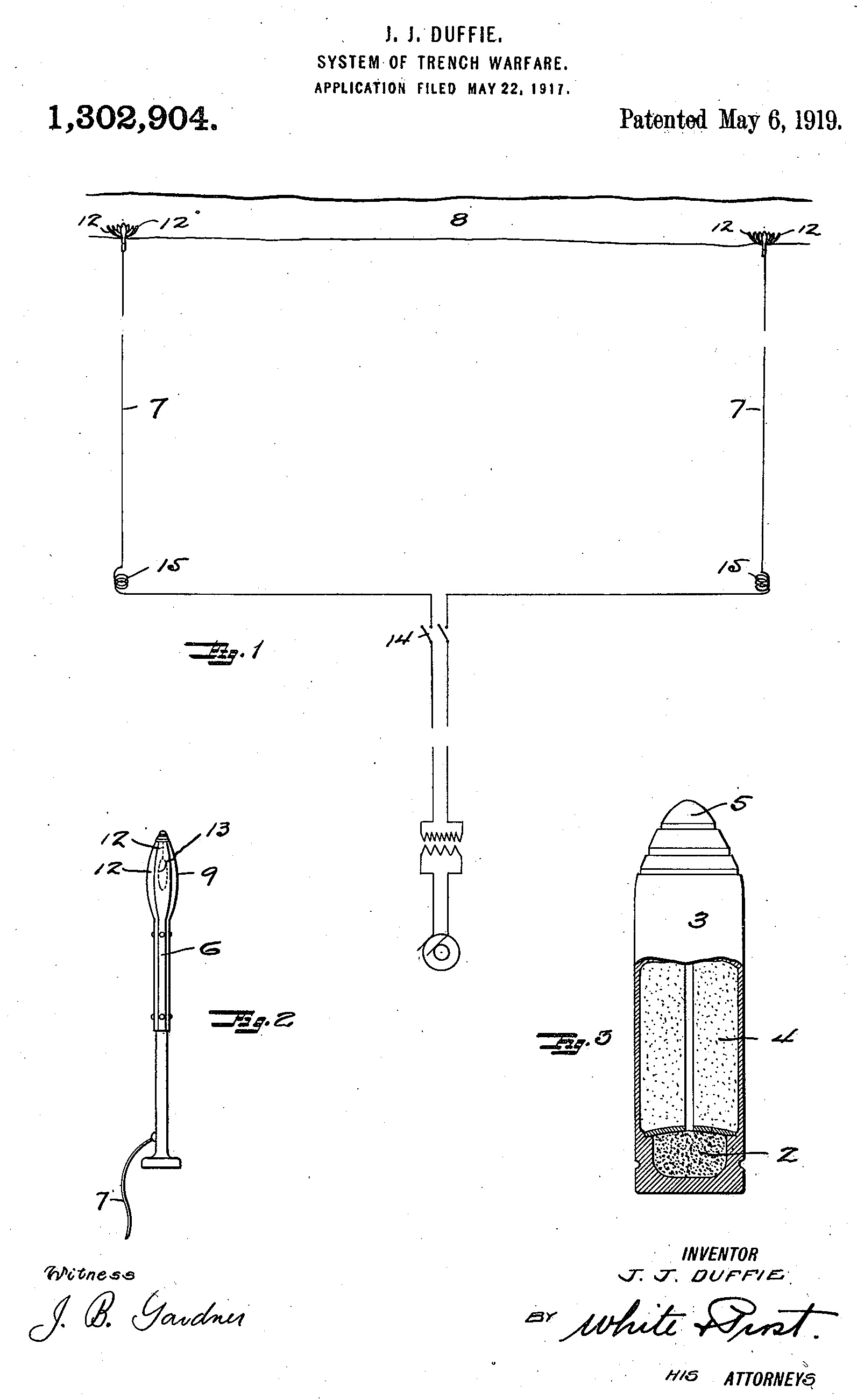
    Patent trench electrocution The work was by J.J. Duffie, US Patent 13029041, which was applied for in 1917 and granted May, 1919 (seven months after the war, though the idea could haven been used “patent pending”), and was called “System of Trench Warfare”, the patent stating  that “An object of the invention is to destroy or incapacitate that portion of the enemy occupying a trench” and “(a)nother object of the-invention is to provide a system for waging warfare by electricity”. 

    And so according to the patent, “The system of warfare of (the) invention consists in filling or charging the air over and in a trench or a section of trench with finely divided particles of an electricity-conducting substance and then causing a high potential electric current to flash through the conducting atmosphere in the trench. The conductive material may be mercury vapor or flake graphite or other substance which will remain in suspension in the air. This material is dispersed in trench from explosive shells provided either with time or impact fuses and by directing a barrage fire of such shells at the trench, the air will become very heavily charged with the conducting templates attached to opposite sides’of a source of high potential are then fired at the ends of the trench and by closing the circuit, the high potential current will are through the conducting material in the air, producing an are extending for the length of the trench section. The arc will have the effect of incapacitating the men in the trench.”

    I don’t understand how you would place the “conducting templates” at the ends of  the trench, but so be it. 

    The following explains the elements of the patent drawings:

    “Fig 1 is a plan view of a trench, with the electrodes forming part of my system disposed at the ends thereof.”

    “Fig.2 is an elevation partly section of charge 2. This charge may be exploded by a fuse or detonator controlled by the cap 5, so that the explosion of the charge may be timed or may be caused by impact. A sufficient number of shells are fired to completely fill the air in the trench with the conductive material, and then an electrode projectile 6 is fired at the trench at each end of the prepared zone or at suitable distances apart, depending upon the potential employed.”

    “The electrode projectile may be fired from a Lyle gun, such as is used in marine life saving work. Attached to the projectile is an electric conductor, preferably in the form of an insulated wire or cable 7, which is carried forward to the trench 8 by the projectile. The head 9 of the projectile is preferably formed of a plurality of. overlapping sheet metal leaves 12 covered on the outside with some insulating material and the cable 7 is connected to these leaves.- A small charge 13 of explosive within the head is exploded preferably by the impact of the projectile, causing the leaves to spread out, to present their clean surfaces to the charged air. A switch in the circuit is then closed, or is previously closed, causing the high potential current to bridge the highly-conductive gap in a flash. The cables and the outer surfaces of the electrode leaves are insulated to prevent grounding and the cables are arranged in coils 15, sot readily carried forward by the projectiles.”

    In closing the patent is described in ten different ways, including

    (7) “An explosive shell containing a charge of material which on the explosion of the divided form in the air in shell forms an electricity-conducting zone in the surrounding air. 8. The method of trench warfare, which consists ‘in making the. atmosphere in a trench electrically conductive and (passing a high potential current through a conductive atmosphere.”

    ·Posted by :

    ·in:

    —

  • The Modern Rancher: Bombing Sheep from Planes (1917)

    JF Ptak Science Books  Quick Post

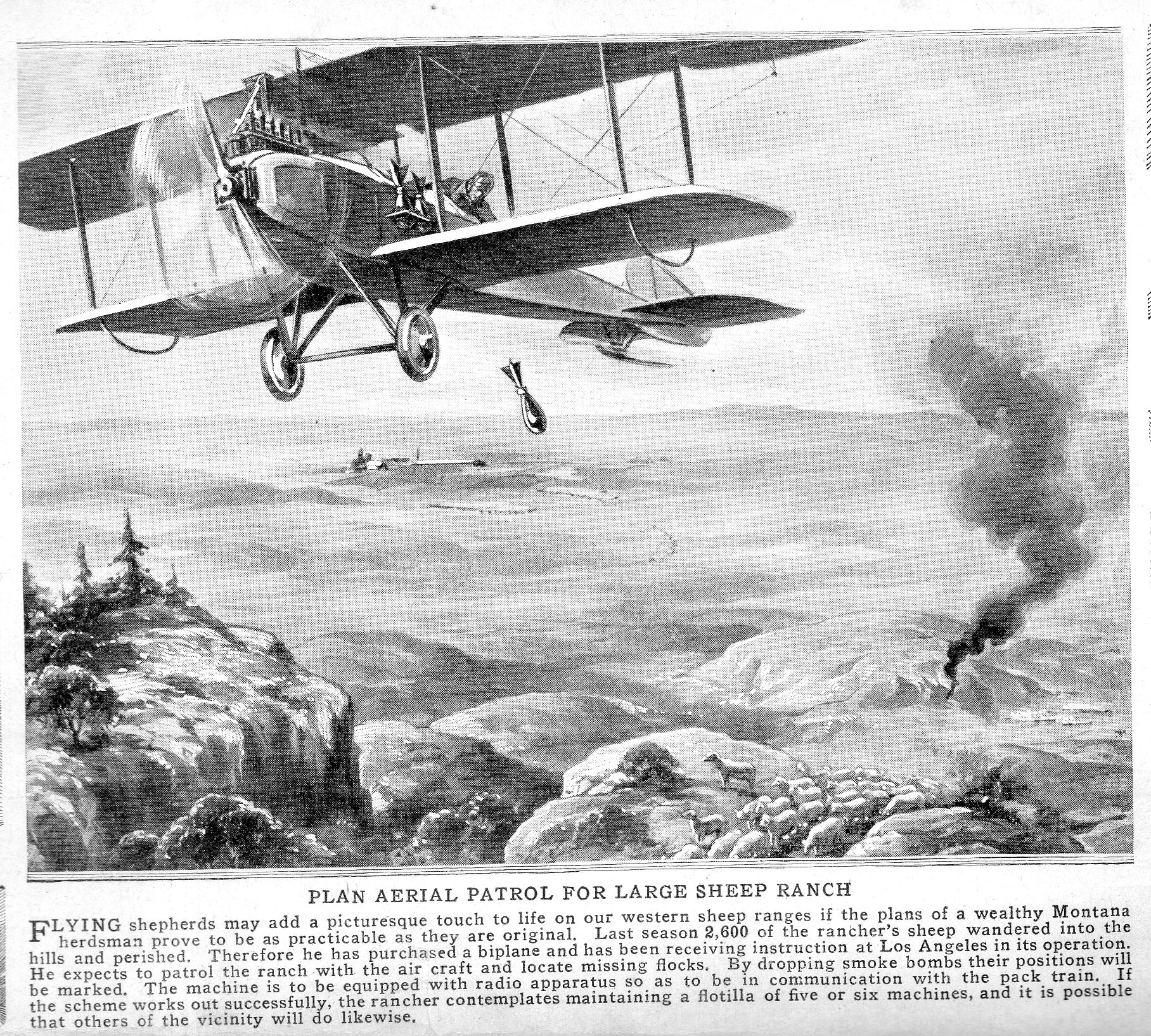
    I’ve made a number of posts to this blog on the history of aerial bombing, and throughout most of the early history of bombing (say up to the end of WWI) the vast majority of the uses of dropping bombs from airships and airplanes has been for killing people and destroying property and infrastructure. There has been an occasional stray article that I’ve found about delivering mail by non-exploding bombs–this to save time and fuel in landing/taking off (there have been other plans to deliver mail by rocket, but that is another story)–but the other uses of dropping b on things from the sky have been, shall we say, “limited”.  And then today I’ve stumbled upon this one–shepherding by dropping bombs near sheep.  This story, found in the pages of the June, 1917 issue of Popular Mechanics, details the plans of a wealthy Montana rancher to patrol his flock using aeroplanes and bombs. It is said in the caption that if the initial tests with the practice are successful that he may use six such planes at his ranch.  I’m looking for metaphors for this story, but the only thing I’m coming up with is adding a lot of exclamation points and underlinings to words like “leads” and “makes” in Psalm 23.

    Bombing sheep458

    ·Posted by :

    ·in:

    —

  • On the History of Tenderness to Children

    JF Ptak Science Books   Post 712 (from 2011, extended, with a full text scan of  Children Who Work in the Nation’s Crops by Gertrude Folks Zimand, National Child Labor Committee,  1939.)

    “The history of childhood is a nightmare from which we have only recently begun to awaken…” Lloyd Demause

    “Give me other mothers and I will give you a better world.” St. Augustine, (who does not mention fathers in this context). 


    The history of kindness to children is a wicked road to tread—I’m not sure why I’m even thinking about it had I the subject not been awakened by bumping into the map seen below.  Without any real directed reading on the topic  I’ve intuitively felt that “childhood” as an idea, as a part of human development in the Western world, was a young, newish innovation.  The simplest way to perhaps measure this is looking for representations of children as children in Medieval and Renaissance art—that is to say children drawn not as little/miniature adults, but drawn as children actually appear.  This does not happen very much at all in the early Renaissance, and virtually never happens in the Medieval.  Even when looking for images of Christ as a baby in early art it is far more likely to find him depicted as a little man than it is to see him as a child.  Children certainly seem to make more appearances as themselves in book illustration (excepting the obvious works on anatomy and childbirth) beginning in the early 16th century, and I’ve a number of reproductions here of children with learning-to-walk walkers and toys from this period. So at the very least the recognition of  the concept of difference in very very young adults as “children” in art took a much longer (and unexpected at least to me) time to develop as a concept.   And this is only the barest concept, at least recognizing childhood as a stage of development, which doesn’t necessarily say anything about the aspect of kindnesses expressed to them simply because of this stature.  That’s an entirely different story.

    One way  to measure this aspect of childhood–the history of kindness towards children–is in terms of how much work society allowed them to perform in the adult world—and again, it would be shown that it was discovered only recently.  As an issue of moral and responsibility, child labor was regulated first in England in a long series of Factory Acts  (13 separate acts from 1819 to 1961, including 1819, 1831, 1833, 1844, 1847, 1850, 1874, 1878, 1891, 1901, 1937, 1959, 1961) .  That first breathe of morality and responsibility towards happiness (where happiness means not being exploited) codified that children younger than nine were not allowed to work,  and that kids between the ages of 9 and 18 could only work up to 72 hours in a six-day week1.  Children were used freely and copiously for work in fields, in chimneys, in mines, and in tough bugger places that couldn’t be reached by full-grown adults, as well as in places that could use little hands, or suspended in places where a lightweight helper could be slung, and so on.

    Historically speaking, controlling children seems to have been the major part of dealing with a child:  from controlling its body function (with enemas and such), to movement (swaddling to completely restrict motion), to crying (dunking a crying infant in a pail of ice cold water to stop it from crying),and to mood (feeding fussy children liquor and opiates to make it docile. ) The severe beating of children was the great “other” option in dealing with all manner of childhood issues, the thorny crown of behavior modification. On this point Lloyd Demause in his “The Evolution of Childhood” examines 2000 statements of advice on child rearing prior to the 18th century and found that most  advocated severe beatings.  He noted that the severity of the beatings was common and “a regular part of the child’s life.” The instruments of behavior advocacy here included “whips of all kinds, the cat o’nine tails, shovels, iron and wooden rods, bundles of sticks, the discipline—a whip made of small chains–, and special school instruments like the flapper, made to induce raising blisters.” (Demause, page 41.) Rousseau—hardly alone among the great philosophers—advocated whippings and beatings from infancy; plenty of the great social thinkers from this period and earlier had little use or accommodation for children, even their own. 

    There’s also the controlling of the mind via images and fear and promise of retribution of hell, as well as the introduction of spooks, ghosts, goblins and other sorts of child-stealers and –eaters.  You’d think that the rough and tough and pretty scary stories of Brothers Grimm would be enough, but it doesn’t come close to the really scary guys:  Mormo, Canida, Poine, Sybaris, Acco, Empuss, Gorgon, Ephiatles and others were brought in to do the job of control that spanking and beating and hell couldn’t modify. 

    Then there’s the sexual misconduct and abuse, which was evidently deep and well practiced for thousands of years, with older Roman men and Athenian rent-a-boy being famous examples of something wider and established.  Just from reading a bit through some of the standard histories of childhood it is very easy to see the vast amount of sanctioned abuse that seems to constitute one of society’s many sorely soft and cancerous underbellies.
    ===blog==augu 12==hine

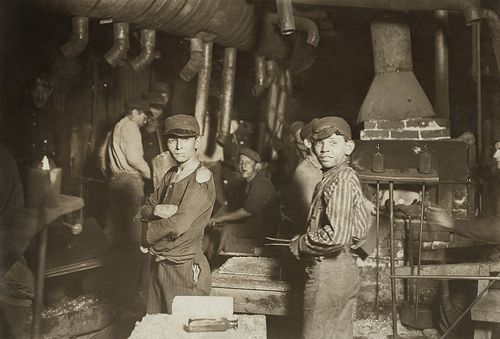
    Returning to child labor, for most people in the United States the grotesque nature of this activity was finally revealed to the great masses through the work of the legendary photographer Lewis Hine, whose documentary images of the conditions of children and the laboring classes was an extraordinary dose of reality.  It took the unimpeachable foundation of the photograph to hammer home to people that children were being subjected to rigorous labor abuse. (The photo above shows children working in a glass factory at midnight.)

    ===blog==aug 12--child work

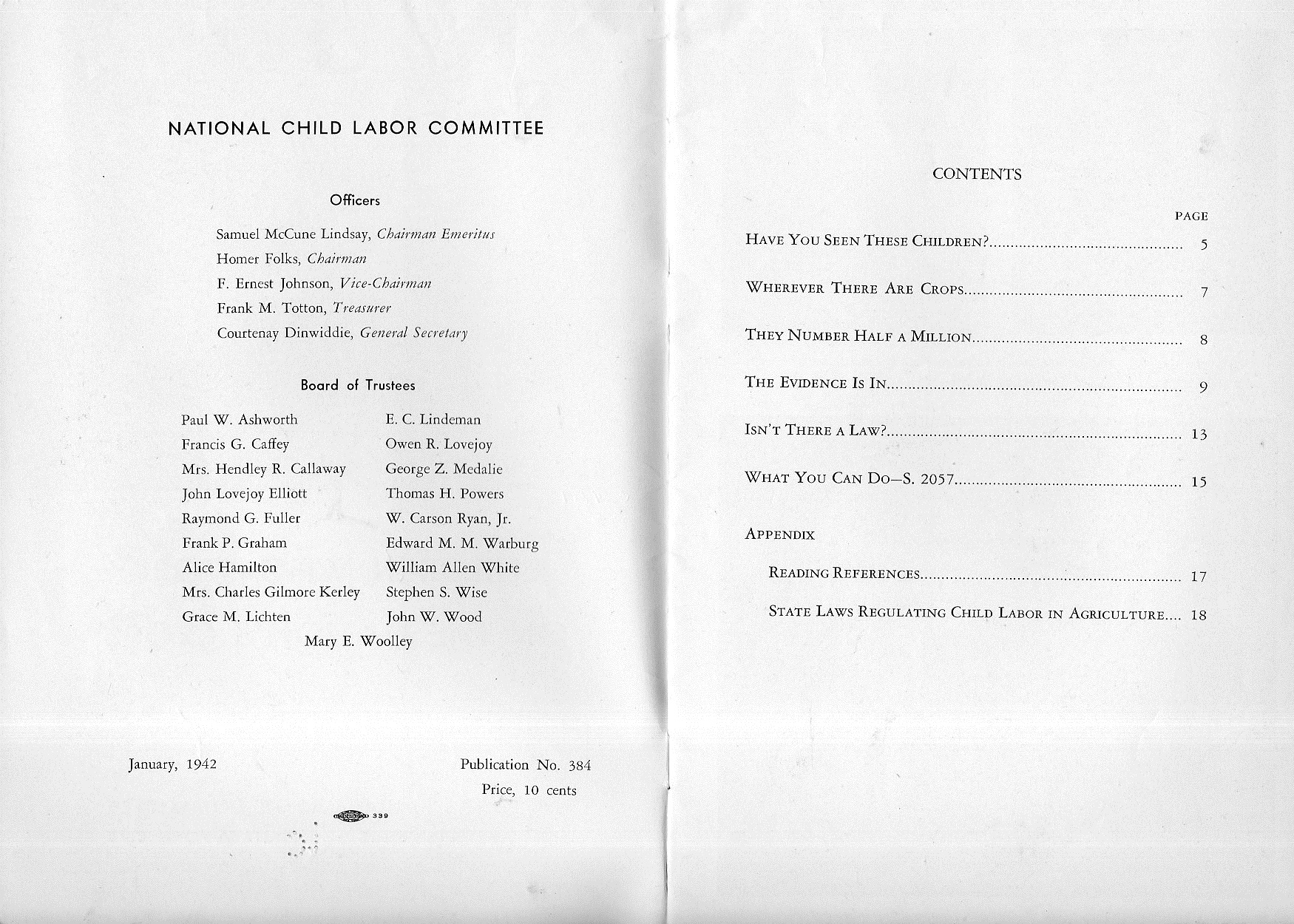
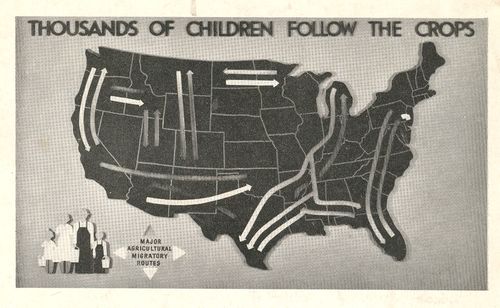
    But Factory Acts and Lewis Hine et alia made only incremental change in the exploitation of the very young–evidently economies large and small were addicted to the idea.  Which brings us to the map that started this thought: it appeared on the back cover of Children Who Work in the Nation’s Crops,  written by Gertrude Folks Zimand, and published by the National Child Labor Committee (NCLC) in 1940.  The map on the back cover shows the migration routes of the young workers:
    ===blog==aug 12--child work map
     

    There’s no surprise to what the map showed, though it was a surprise to see the map itself.  The NCLC is still around, and so are the children working in the fields.  The map has stayed pretty much the same. 

    The rest of the pamphlet does not pamper the brittle semi-hidden world of the child laborer.  I’ve included the entire work, below.  

    UNICEF states that there are still hundreds of millions of children being worked illegally throughout the world, and I can’t help but wonder who it is that assembles those free Happy Meals toys (watch that copyright!) which are purchased in the millions for a penny or so apiece.  When things like that are as cheap as they are, as impossibly cheap as they are, there must be someone, somewhere, paying the price.


    NOTES:

    1. The high points (taken from Wiki) of the Factory Act of 1833 stated:

    • Children (ages 14–18) must not work more than 12 hours a day with an hour lunch break. Note that this enabled employers to run two ‘shifts’ of child labour each working day in order to employ their adult male workers for longer.
    • Children (ages 9–13) must not work more than 8 hours with an hour lunch break.
    • Children (ages 9–13) must have two hours of education per day.
    • Outlawed the employment of children under 9 in the textile industry.
    • Children under 18 must not work at night.
    • provided for routine inspections of factories.

    Also, good reads on the history of childhood:

    G. Rattray Taylor, The Angel Makers
    David Hunt, Parents and Children in History
    George Payne, The Child in Human Progress
    Philippe Aries, Centuries of Childhood

    and

    Lloyd Demause,editor,  The History of Childhood.


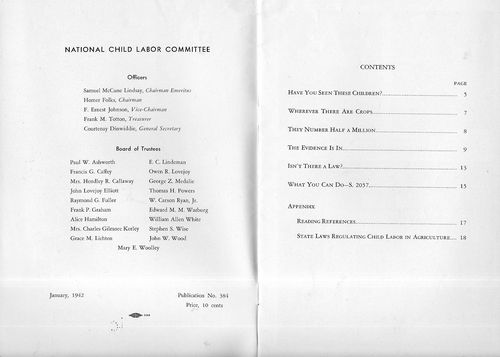
    Children Who Work in the Nation’s Crops 

    by Gertrude Folks Zimand, National Child Labor Committee, New York City  January 1942
     

    ===blog==aug 12--child work

    Children who work 1349


  • Gigantic and Unbuildable Architecture: Buckminster Fuller’s Midtown Manhattan Dome, 1968

    JF Ptak Science Books LLC  Post #115 (from 2008, extended a little)

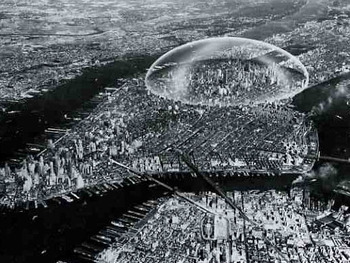
    Big_arch_city_fuller139
    Buckminster Fuller had a lot of good ideas but I’m not so sure that this is one of them.  I don’t have much doubt that versions of domed cities will exist in the not-dim future, though I do have doubts that they would be constructed to preserve the bones of antiquated ideas.  It seems logical to me that the retrofit of untold millions of cubic feet of city life just couldn’t make sense, even if the square footage was in Manhattan.

    Domed cities pop up here and there in speculative/science fiction in the 1960’s (though there is a far-deep reference to one from the 1860’s, though that one is under water), and there are many that are sprinkled like seasoning here and there in more modern formats, as with Stephen King’s Under the Dome made into a slappingly-silly tv show of the same name and The Simpson’s movie that Borrows Very Heavily from King.  There are others to be sure, though I am more interested in miniature domed underground cities or Lego-made Dyson sphere within a Domed Galaxy. 

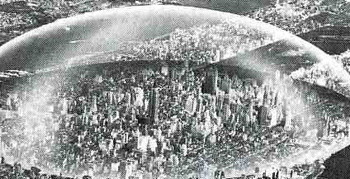
    Fuller’s idea (working with Shoji Sadao) is multiple orders of magnitude removed from the original idea of the arcade (like the passage Choiseul, located in the second arrondissement of Paris), envisioning the construction of a dome to encapsulate NYC from the East River to the Hudson along 42nd St, and from 64th to 22nd St:  that is two miles in diameter and, plus at least a half-mile high (or about 2.5 Empire State Buildings pile one on top of the other at zenith sector).  I’m not so sure how this would be built, or how things would be heated or (especially) cooled, or what the construction material was for the skin of the dome, or how people get in and out, or how you deal with heating and cooling, or how any noxious chemicals are expelled—but Mr. Fuller thought that the savings alone from snow removal from NYC streets would pay for the dome in ten years.  (That would maybe work out–the snow-removal analogy–if someone had asked Mr. Fuller exactly how much snow he was talking about…)  
    Big_archfuller_detail141

    Mr. Fuller also thought that the dome would protect the city (or this part f the city) from radiation fallout.  That could be true, assuming that of all the hundreds of nuclear warheads that the Soviets would’ve launched against NYC alone none of them would’ve found their target, except perhaps for the Ridgways or Staten Island, where the shock wave or winds produced by ensuing firestorms would not have disturbed the dome.  Of course if a warhead actually came close—or actually hit—the dome, the protection from radiation would be moot. 

    Source:  Buckminster Fuller in Think magazine, vol 34, Jan/Feb 1968.  AND of course the lovely work by Alison and Sky Michele Stone, Unbuilt America, McGraw Hill, 1976, pg. 99.


  • Lost Highways–Bad California Road Landscapes of Yesteryear

    JF Ptak Science Books   (Archive Post 1303, expanded)

    “There’s nothing so perfect as imperfection.”–Somebody.

    “The great unconquerables in the geography of human thoughts and ideas are the bad ones.”–Nobody.

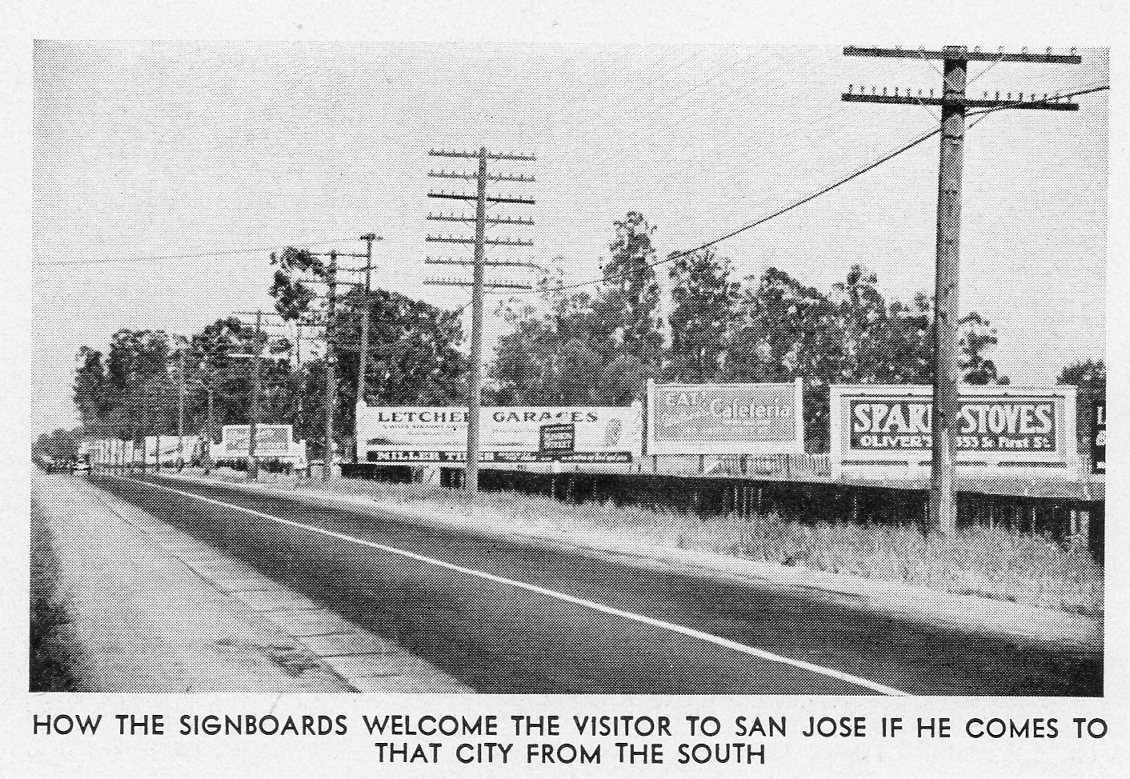
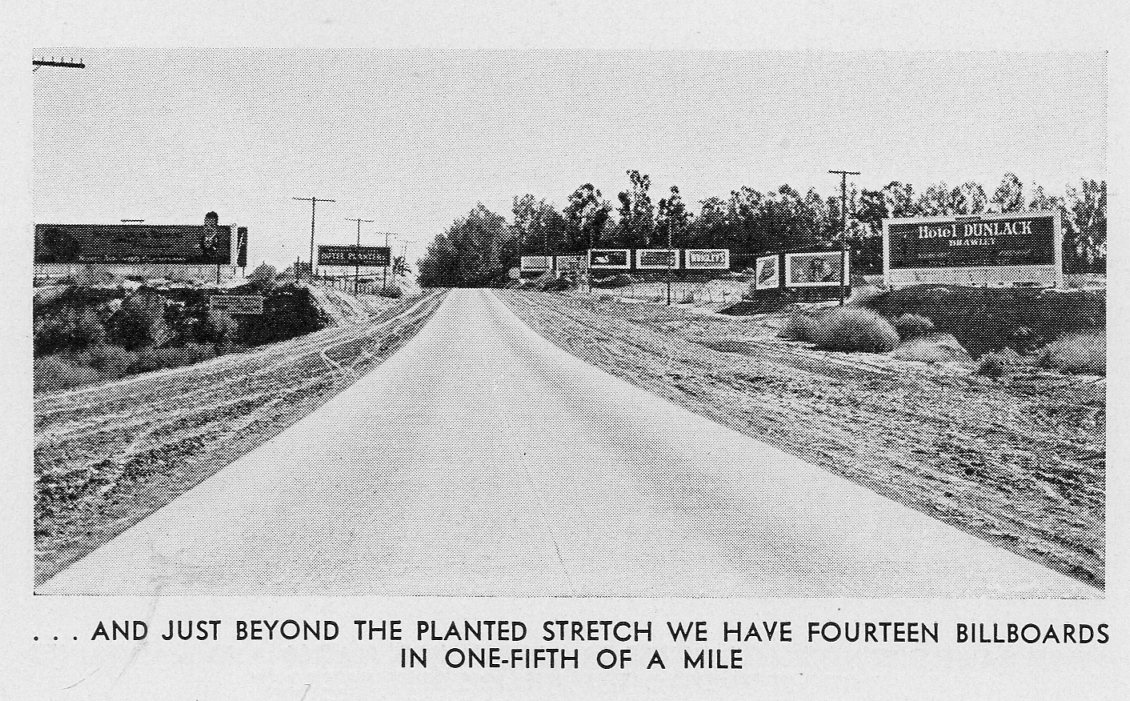
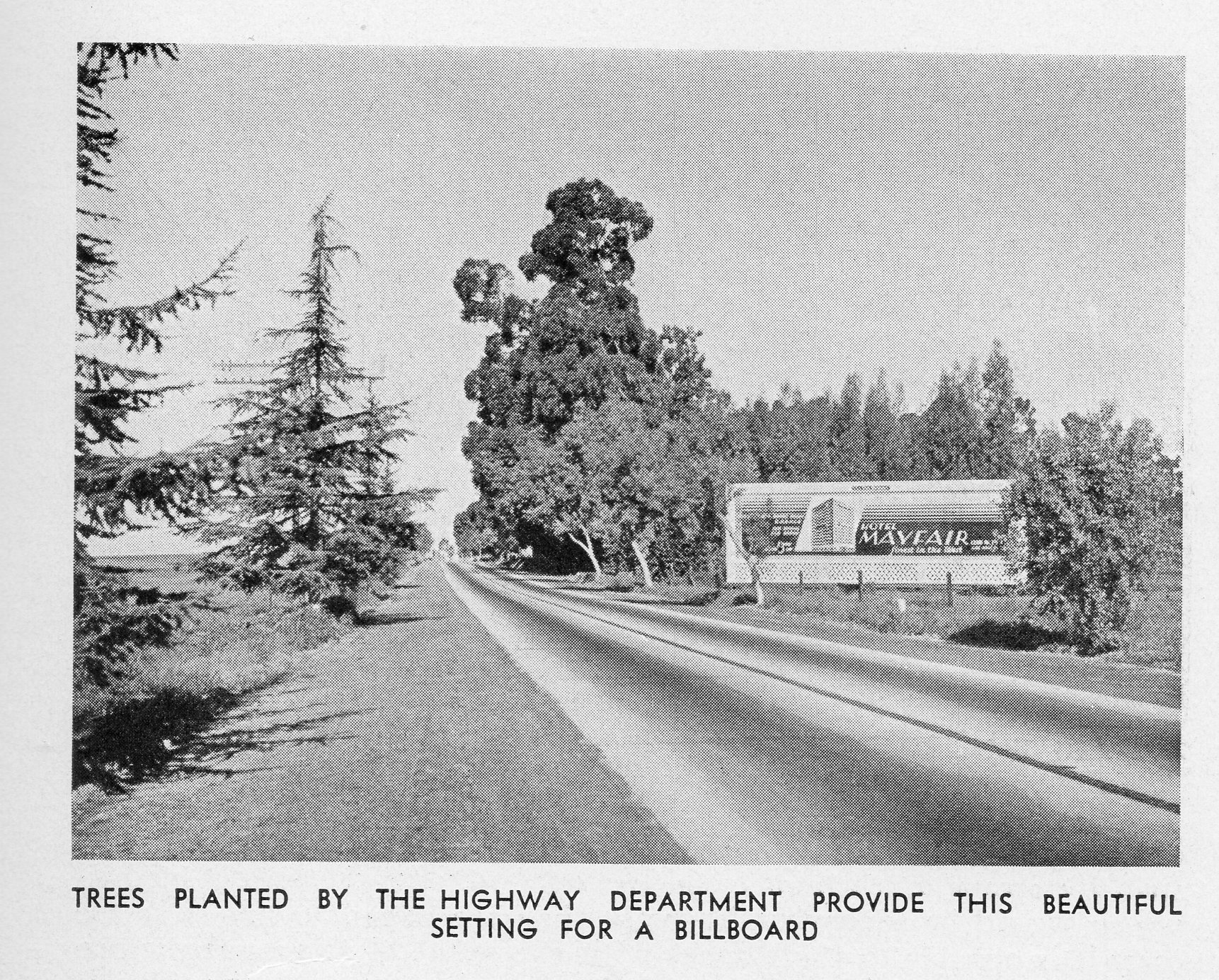
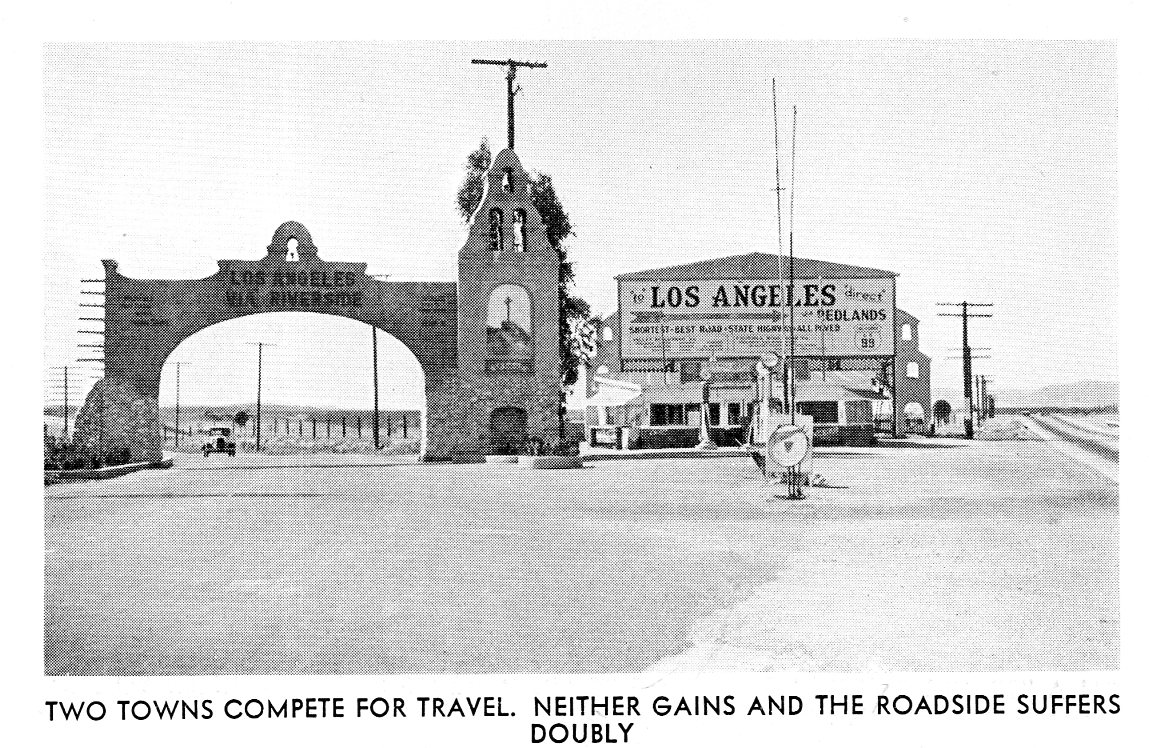
    California roadside d261

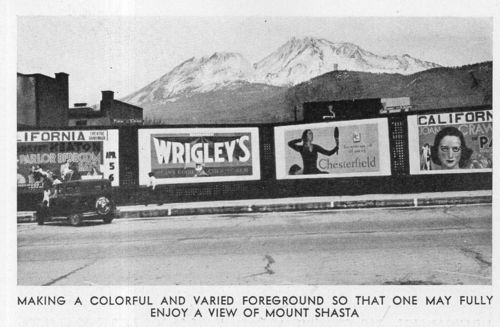
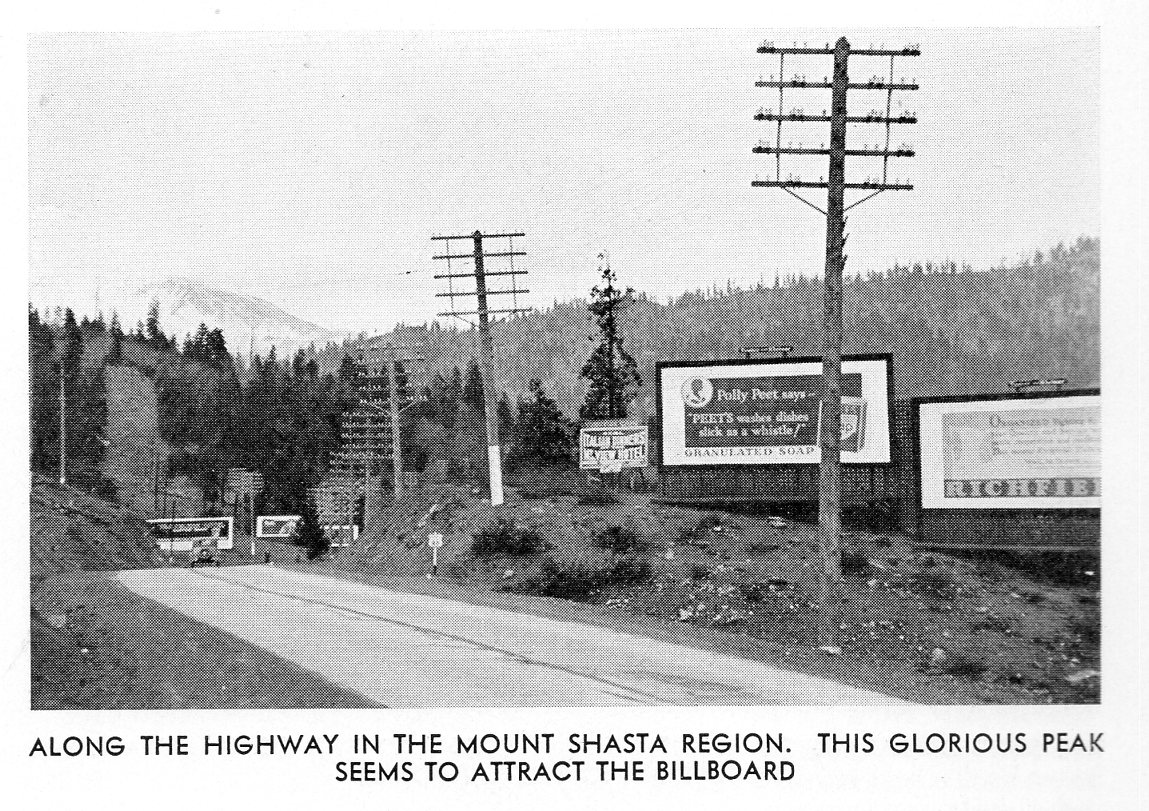
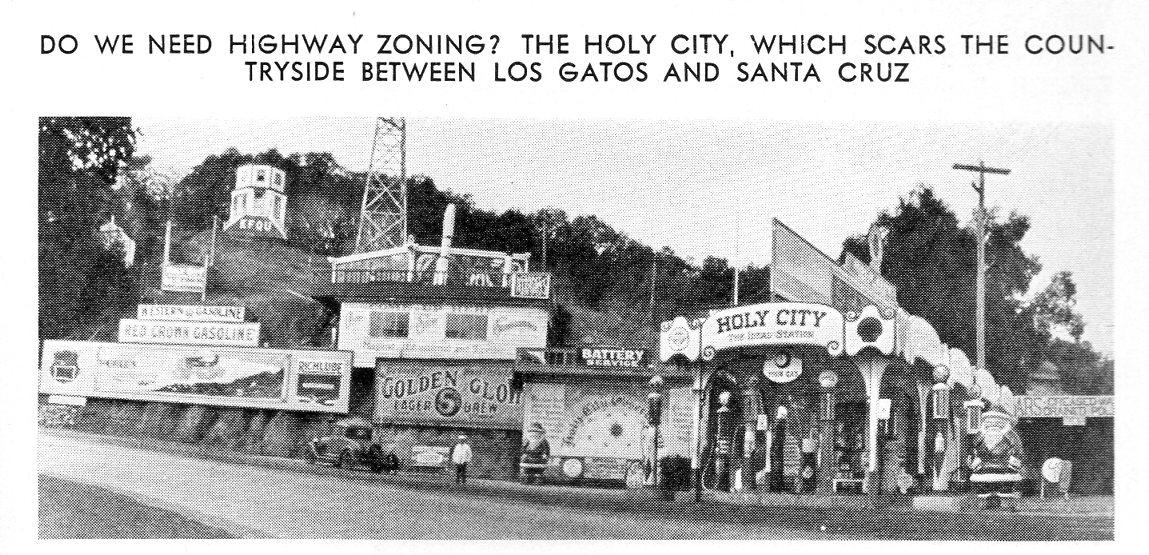
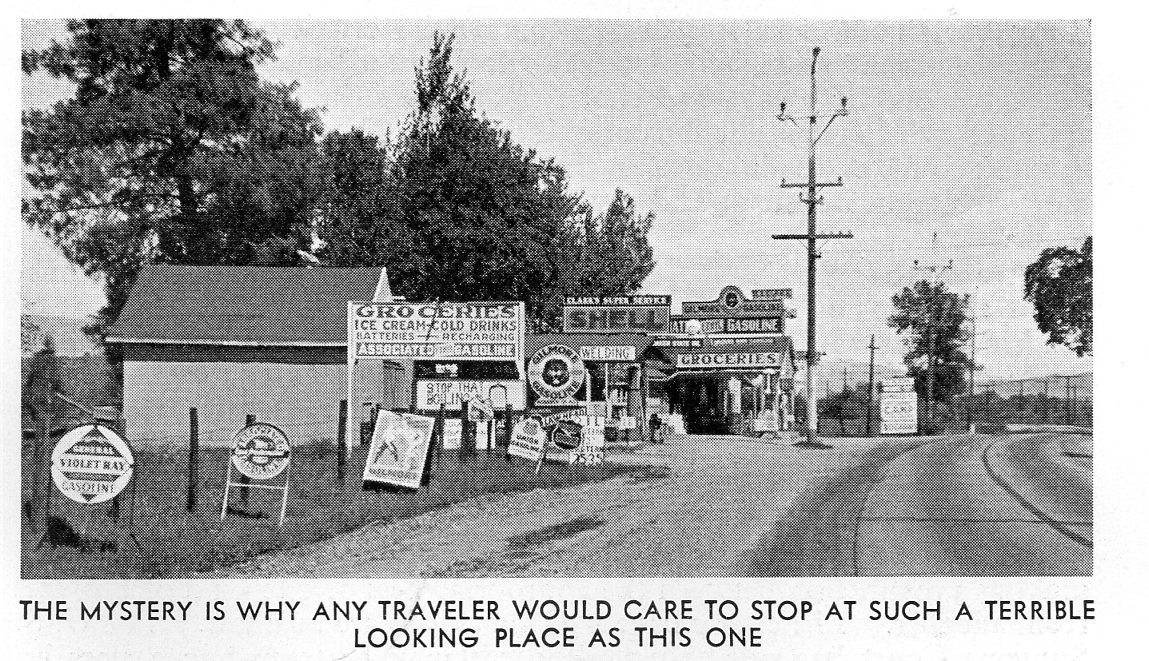
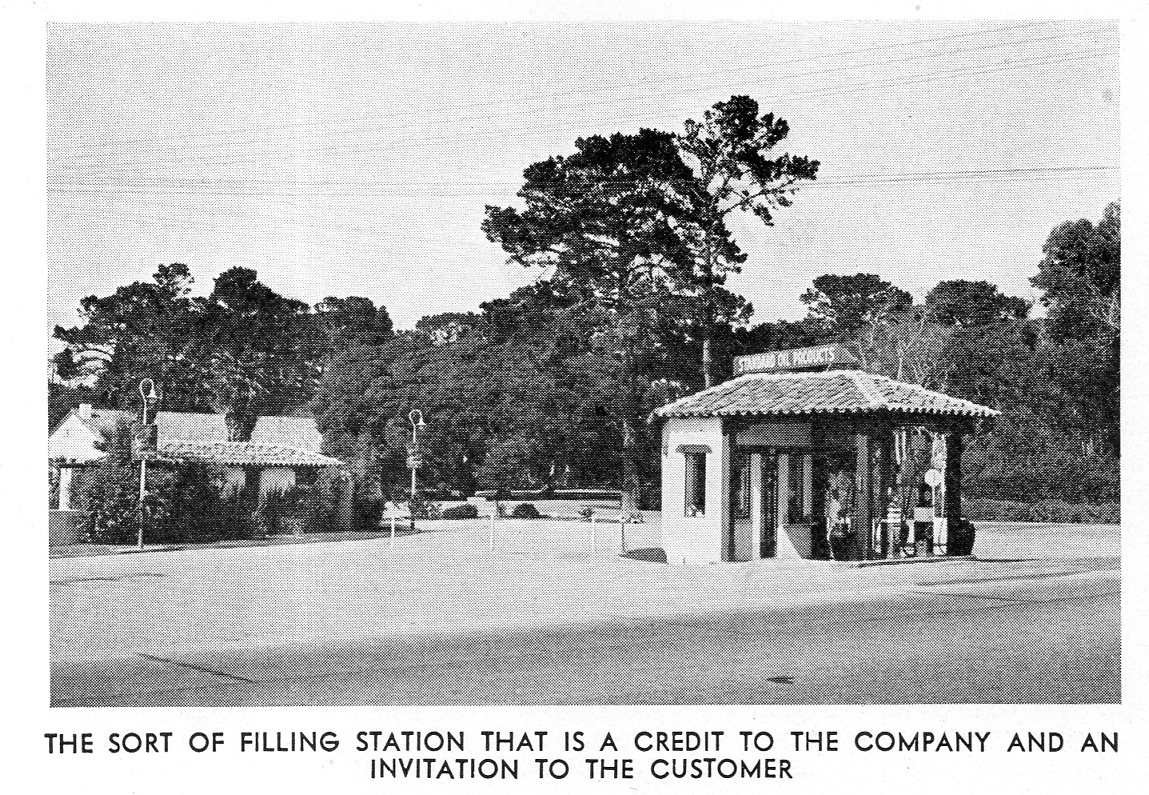
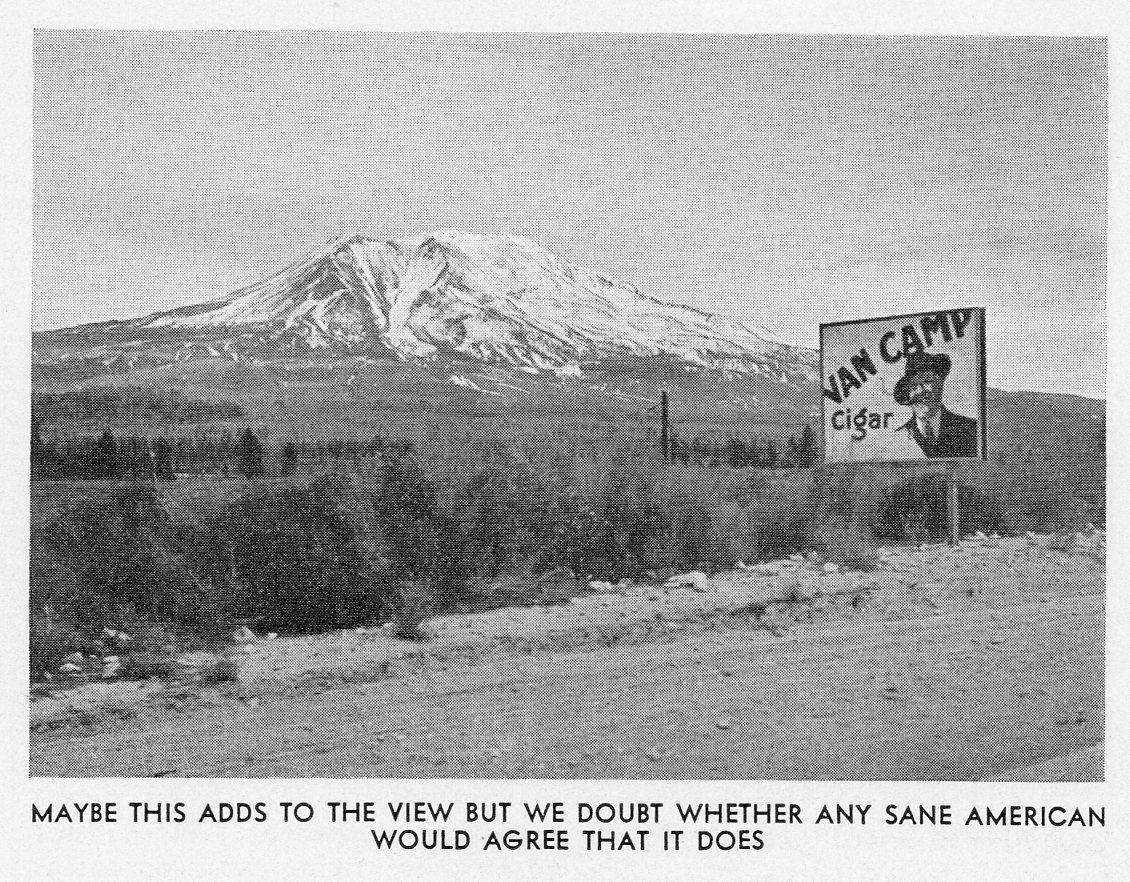
    [The captions for the images in this pamphlet are mostly facetious–the author/s were conservationists of sorts, interested in the landscape and visual culture of their state. They tried to make their case in some instances with sarcasm.]

    Bad ideas don’t so much go away as they get recycled. They can be replaced by good ideas or bad, but the ”original” bad ideas seem to linger on and on.  They are perhaps the indomitable inheritance of society, real and imagined.   

    Bad human-produced landscapes are an outgrowth of bad ideas, calamities large and small that come and go, the old replaced by something new that is good or bad or indifferent. With the landscape, the original landscape itself–apart from the idea that brought it about–is generally lost forever once it has been replaced.  There is no Bad Idea Spirit that brings it back whole again, unlike the generic Bad Idea, which can live on and on, unencumbered by history, like a Greek play or some deeper mythology.

    California roadside b259

    Theoretically society is supposed to learn from recognized bad ideas, so as to not repeat them etc., which is one reason why we keep track of them, in the vain hope that someday someone somewhere in the history of our future will kill particular bad ideas off one by one. 

    California roadside c260


    California roadside a258

    In the meantime we can dwell on what we have, though with the removed bad idea landscape, it is more difficult.  That’s why it is important every now and then to familiarize ourselves with them when the opportunity arises, which is just what happened with this innocuous-sounding pamphlet, The Roadsides of California, a Survey1 (1932)  Its not like it’s Pandora’s box–we can open this one and just a few, limited baddies come out, and fall limply to the floor.  But what we see is interesting, a slice of our memory of the horizon–a part of our “progress” that we’ve tried to excise–and what we can see now are the removed and forgotten things. 

    California roadside F263


    California roadside G264


    California roadside H265


    California roadside I266


    California roadside I267


    California roadside E262


    Notes

    1. This is actually an interesting pamphlet, an early attempt at removing the quickly generated ugliness that was cluttering new roads for the explosion of automobile travelers.  As quickly as cars were made in the new decade of the automobile, billboards and roadside attractions followed.  This pamphlet identified this phenomenon as a problem.


  • Wrong-Side French Art: Vichy Propaganda Posters, Dunkirk, 1940

    JF Ptak Science Books  Quick Post

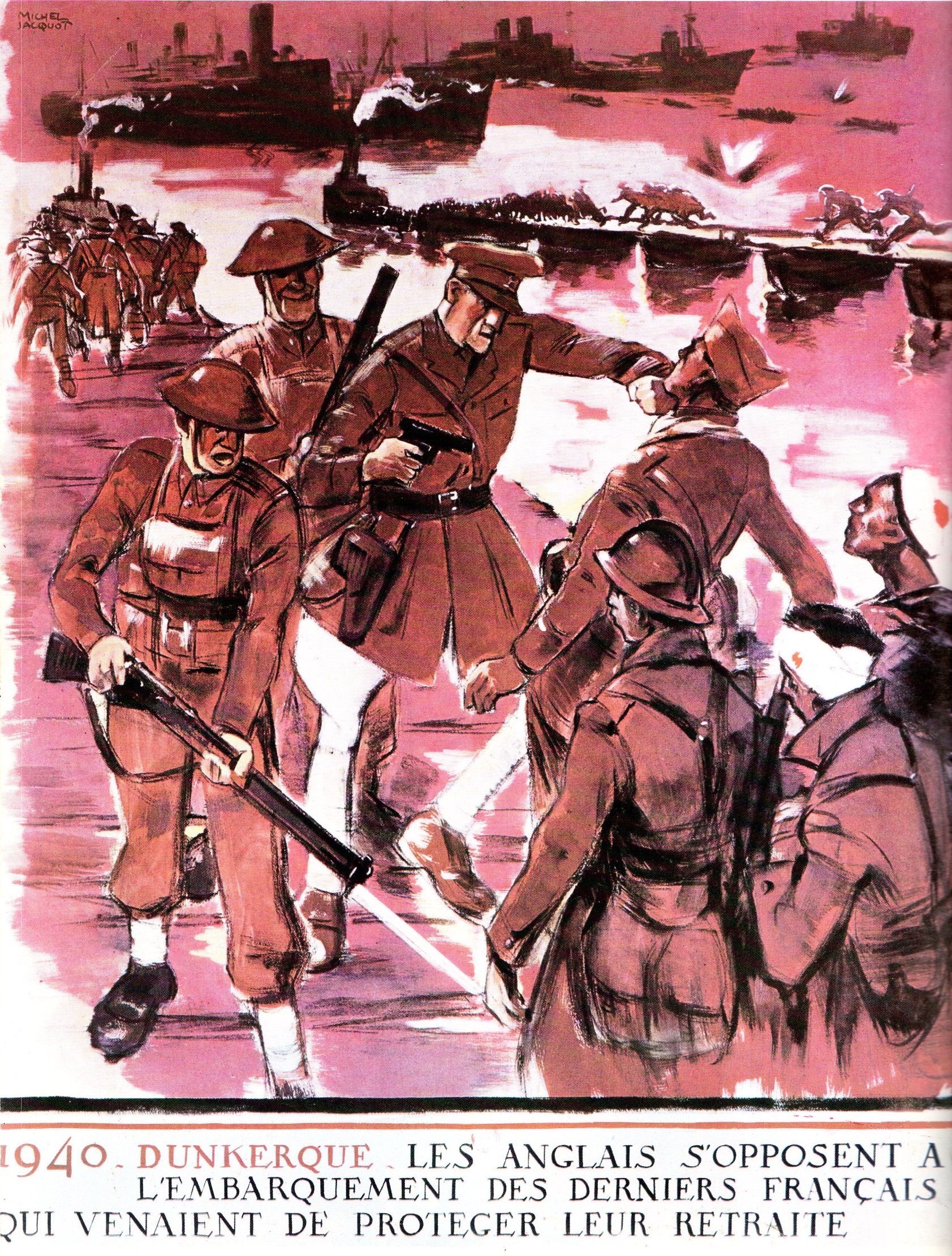
    Michel Jacquot seems to have been a relatively busy graphic designer/artist and collaborator with the Nazis during WWII (and before). One very striking and damning poster that he created was this scene of Brits forcing French soldiers away from evacuation vessels at Dunkirk forcing them to satay behind and guard the rear and (2) get eaten alive by the approaching Nazis.  All told, there were 338,226 soldiers evacuated from Dunkirk; the grim part of the miracle there was that 68,000 BEF were captured or killed and 40,000 French troops were captured–none of that happened because French troops were marauded by the Brits.  Jacquot tried a hearts-and-minds with this one, though it is unknown what effect it had in creating a hatred-thread among the French.  

    Dunkerque poster247

    [Source: illustration in Z. Zeman, Selling the war, Orbis Press, 1978.] “1940 Dunkerque. Les anglais s’opposent à l’embarquement des derniers français qui venaient de protéger leur retraite”, by Michel Jacquot.

    Jacquot also cooked this one up, a grim anti-Communist poster in support of the extreme Nationalist/National Socialist Parti Populaire Francais (the PPF) in 1943. The leader of the PPF was a former outted Communist named Jacues Doriot (1898-1945) who was a National Socialist, a Nazi supporter, a collaborator, a traitor to his country who broadcast for the Nazis on Radio Paris, and a person who co-founded the Legion des Volontaires Francaise (LVF), which was a unit of French soldiers who fought with the Wehrmacht.  There are some other posters, too, including some vile anti-Semitic ones, but you get a good-enough taste for where Jacquot was headed during the 1935-1945 period.  

    ·Posted by :

    ·in:

    —

  • Myopia and Disease of “America First!”

    JF Ptak Science Books   Post 2598

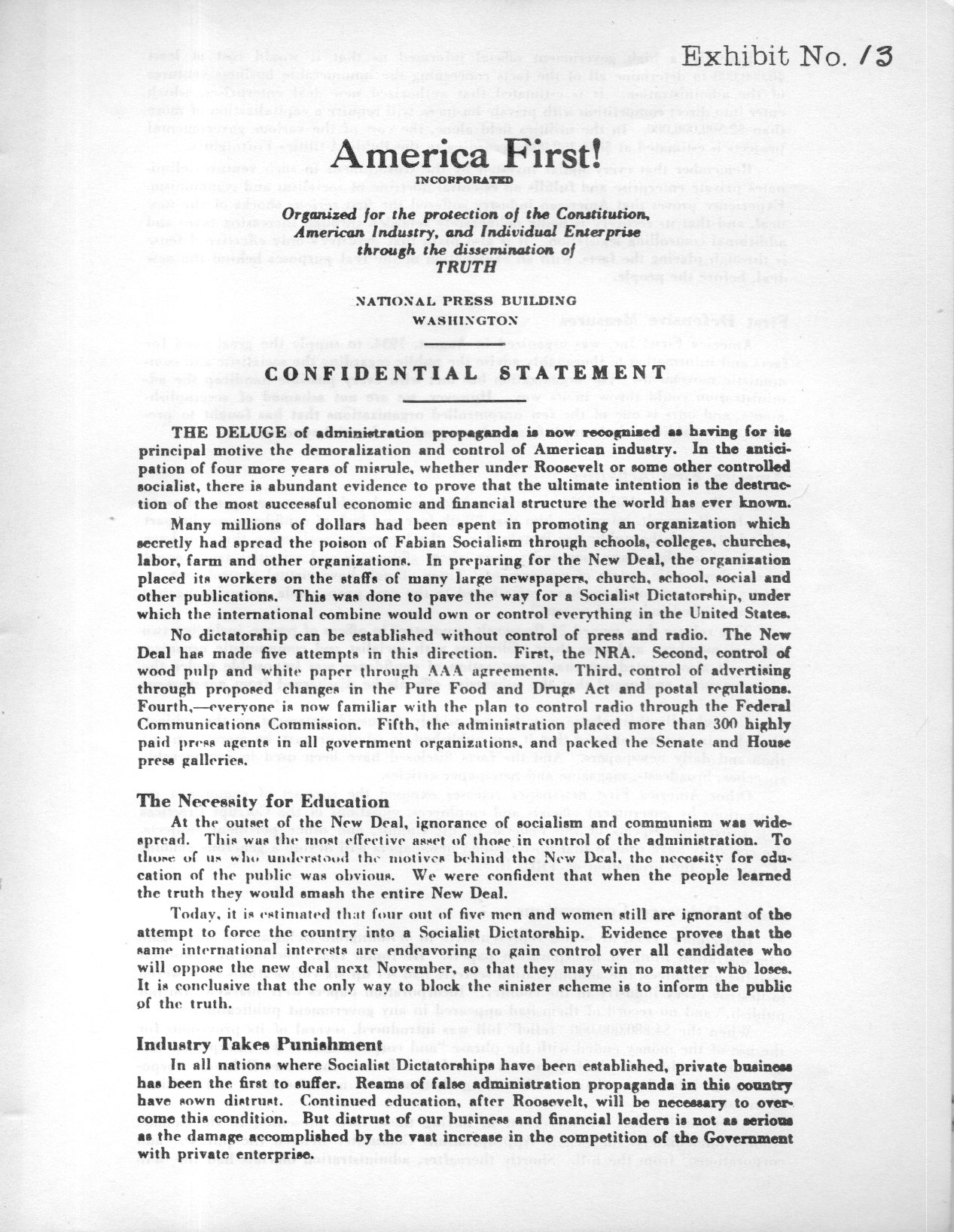
    America first one046This document, America First!…Confidential Statement, is a statement on this ostensibly-patriotic but actually loathsome and bilious hate organization–just goes to show that simply using “America” and exclamation marks does not make a patriotic organization.  If you chose to read the document you’ll see the a bit of the history of the organization, which was founded in 1934.  It was pretty much over by 1938 though there were some continued publications past the beginning of WWII. True was arrested in July 1942 on sedition charges, which was more or less the end of the organization and then, after a few years, the end of True himself. He was a vicious opponent of President Franklin Roosevelt, and an absolutely disgusting anti-Semite.

    In this piece, seen at left and below and reproduced in full, True attacks Roosevelt as a Communist/Socialist controlled by exterior forces bent on destroying the U.S. economic system. There was no appearance of his hatred of the Jews in this document, though that came in other venues, not the least of which was looking into Roosevelt’s “Jewish ancestry”. (This ideas was used by other people as well, as with the traitorous Ezra Pound when he made his racist/anti-Semitic radio broadcasts from Italy during the war, denouncing “Franklin Delano Jewsevelt” in addition to much more.)

    In the first two paragraphs alone there was a deluge of logical blasphemy such as is difficult to imagine.  For example, the principal of the “deluge of administrative propaganda” was no less than the “demoralization and control of American industry”, led by Roosevelt as a “controlled socialist” whose “ultimate intention is the destruction of the most successful economic and financial structure the world has ever known”. Roosevelt was intent on spreading the “poison” of Fabian socialism, seeding administrative operatives in newspapers, schools, and industry, to “pave the way for Socialist Dictatorship, under which the international combine would own or control everything in the United States”. This was to be done by FDR’s creation of agencies to control access to information: the NRA, control of wood pulp industry, control advertising via the Pure Food and Drug Act, controlling radio via the FCC, and of course implanting secret agent reporters in news agencies.  

    And so on and on this document drags its reader–even though it is only four pages long, it makes my eyes and brain feel as though it is forty.  

    True would be dead by 1946 (buried in an unmarked grave in the beautiful Oak Hill Cemetery in Georgetown D.C., home to some magnificent Tulip Poplars), two years after his trial ended in a mistrial due to the death of the judge. (It is possible that this document was an exhibit in the trial.) It turns out that America First! was replaced by a friend of the organization, two-star general George van Horn Moseley, who offered up his own fanatical and vicious “Americans for Constitutional Action”, a vomitous organization hell bent on genetic and ethnic cleansing to rid the U.S. of immigrants and the Jews (who Moseley described as a “syphilis”).  

    I bring this up now because of various noises I hear in the presidential campaigns which are leveraging fear and distrust and hate more so than in any campaign I have seen in my lifetime. The language may be different, but the sentiments are very closely related.  


    ·Posted by :

    ·in:

    —

  • Structures Thankfully Unbuilt–the Lincoln Memorial

    JF Ptak Science Books   Post 2595

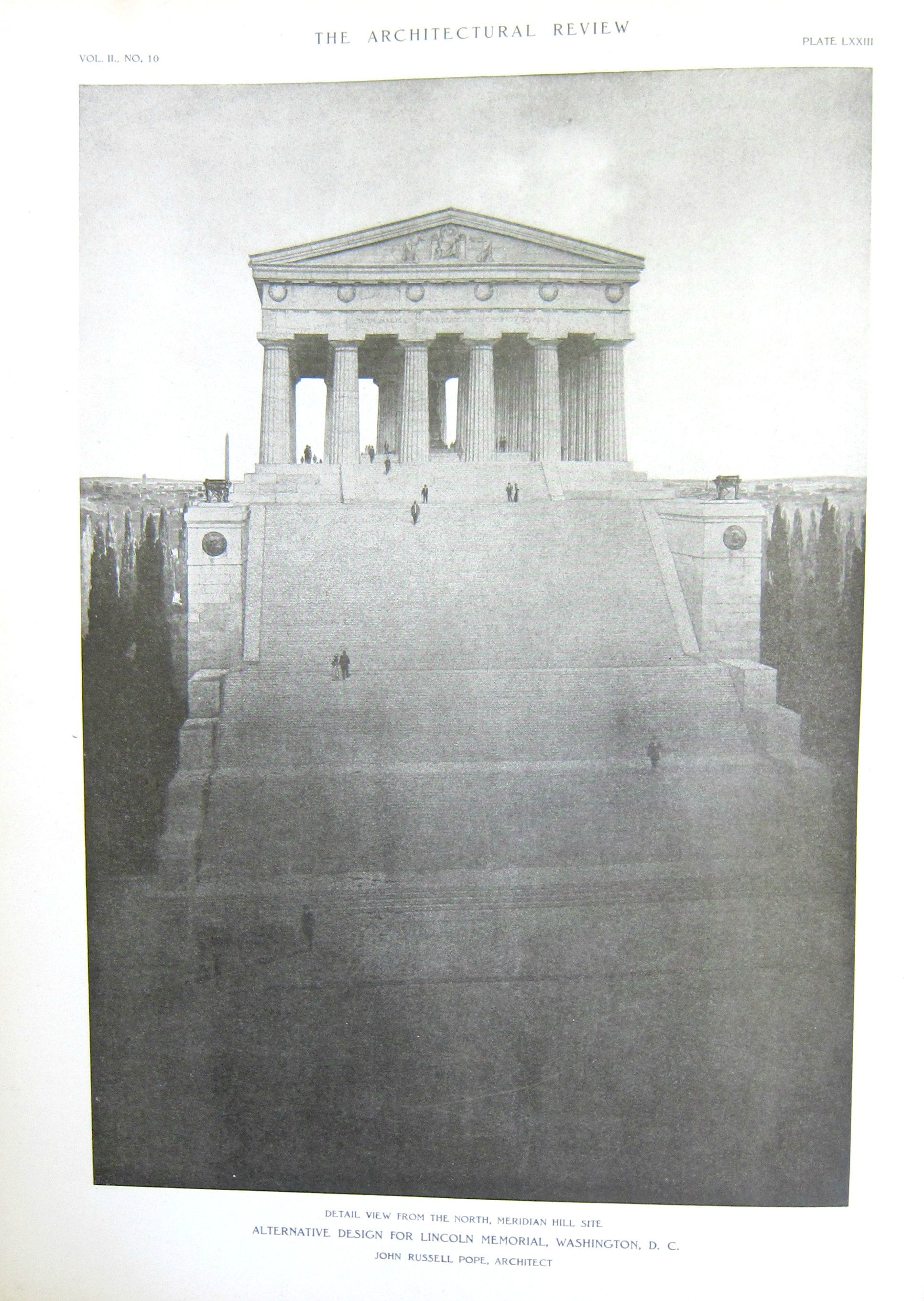
    John Russell Pope (1874-1937) was a “classical” Neo-classical architect whose designs had a profound impact on the way that people experience the U.S. past in Washington, D.C.  He created the Jefferson Memorial, the National Gallery  of Art, and the National Archives, buildings which have that particular beautiful geometry of Roman/Greek essence.  The designs that Pope submitted for the Lincoln Memorial, however, are quite a different story. They were magnificent, and gigantic, and in some ways very appropriate given the enormous nature of Lincoln.

    The plans were far too large–and unlike the other buildings, this one would have made Lincoln far more removed, and unreachable, than is worth the nature of the man. For example, in one of his proposals (just below) we see a Pantheon-like structure sitting at the top of stairs with probably 150 steps (if not more).  It is true that there are a lot of steps at Henry Bacon’s Lincoln Memorial today–58 to the pavement) but that seems just about right, as they give a little time for the statue of Lincoln to reverse-emerge at the top of the stairs.  Doubling the number of steps would be bad; nearly tripling them would have been terrible.  

    Lincoln Memorial big steps


  • Captain Marvel and the V-1

    JF Ptak Science Books  Quick Post

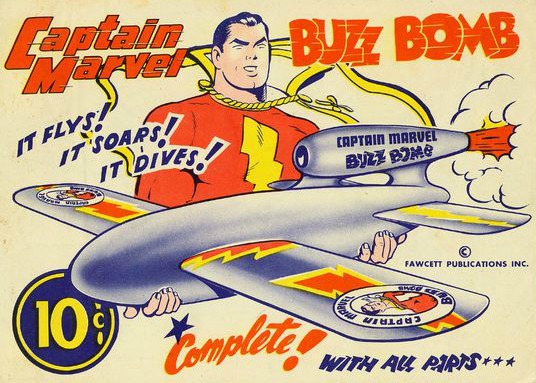
    Captain Marvel was once upon a time in the 1940’s a superhero more popular than Superman, though Superman is the obvious victor over time (and a long time at that). I don’t know what Captain Marvel is doing here hawking a paper punch-out flying “buzz bomb”, particularly since it seems to have been produced during WWII.1 It does seem unlikely to me that a flying toy modeled on the buzz bomb would be sold to kids during the war. After all, the “buzz bomb” was the German advanced weapon called the V-1, or Vergeltungswaffe 1, (“retaliation”, or “vengeance” weapon), or Fieseler Fi 103,  or Doodlebug, and was a flying bomb (on the order of a very primitive cruise missile guided by a gyroscope autopilot) launched against population centers in England by the Nazis during the June 1944-January 1945 period.  The bomb was about 27’ long and 17’ wide, weighed 4,700 pounds, and reached 400 mph with an 1,800 pound warhead.  Thousands of people were killed in the 8,000+ sorties of this foul-sounding beast–there was only a general sense of where it was going and where it might land, so the death and destruction it caused was indiscriminate.  Given all of this I’m assuming that the guesses on the year of production of this are wrong, and that it is a post-war bit, which would be in less bad taste than had it been actually produced in wartime.  It seems to me that most superhero/action hero types were busy punching Hitler or some such thing, and not selling a toy based on Hitler’s weapons when they were actually killing thousands.  In any event, I’m sharing this unusual image with its unusual story. 


    Buzz Bomb Capt marvel cover

    Notes: