A Daily History of Holes, Dots, Lines, Science, History, Math, Physics, Art, the Unintentional Absurd, Architecture, Maps, Data Visualization, Blank and Missing Things, and so on. |1.6 million words, 7500 images, 4.9 million hits| Press & appearances in The Times, Le Figaro, Mensa, The Economist, The Guardian, Discovery News, Slate, Le Monde, Sci American Blogs, Le Pont, and many other places… 5000+ total posts since 2008.

Category: Bad Ideas

  • A Different Sort of Motorcycle Sidecar (1917)

    JF Ptak Science Books   Quick Post
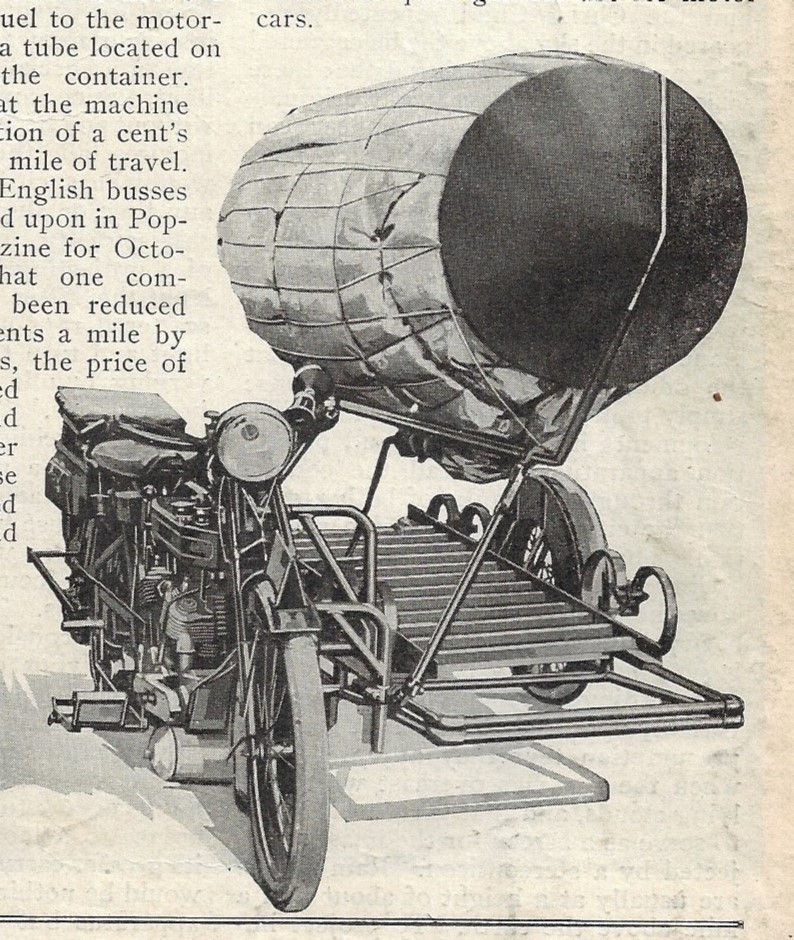
    Pop Mech 1917 gas powered motorcycleThis unlikely combination of vehicle and fuel source appeared in Popular Mechanics for June, 1917. 

    It was fueled by “illuminating gas” which was a hydrogen/hydrocarbon mix and which was made to fire street lamps and such, a destructive process introduced in the very early 19th c.  It is highly flammable. Highly.

    This suggestion for a 600 cubic ft power envelope for a motorcycle was supposed to save about two-thirds on fuel costs and replace the use of wartime gasoline, but…

    [For “illuminating gas” see the following 1869 entry from Scientific American: https://www.scientificamerican.com/article/illuminating-gas-what-it-is-and-how/]


  • Infiltrating Fascist Sympathizer Groups in the U.S. (1943)

    JF Ptak Science Books  Quick Post

    UndercoverJohn Roy Carlson (the pseudonym of Arthur Derounien, 1909-1991) was an investigative journalist and during WWII he went undercover and infiltrated many of the right wing/fascist/”patriot” groups operating in the U.S.  The result of that work as a  well-received book called Undercover, My Four Years in the Nazi Underworld of America1, which was published by Dutton in 1943 and which went through seven printings in its first two months of publication.  It wasn’t yellow journalism, either–it was an expose of Nazi and fascist sympathizers, who–even after Pearl Harbor–supported the ideas of fascism.

    Derounien was a busy man, joining and infiltrating such groups as:

    • National Socialist White People’s Party (formed by George Lincoln Rockwell in a shabby store front on Wilson Blvd in Arlington,Virginia, and renamed the American Nazi Party in 1960);
    • Christian Mobilizers (allied with the Bund, this was a militant arm of the Christian Front which had a more-militant spin-off in the American Unity Party);
    • America First Committee (a mixture of patriotic, isolationist far right-wing and Nazi sympathizers, infamously spearheaded by Lindbergh, the group disappeared on 7 December 1941; 
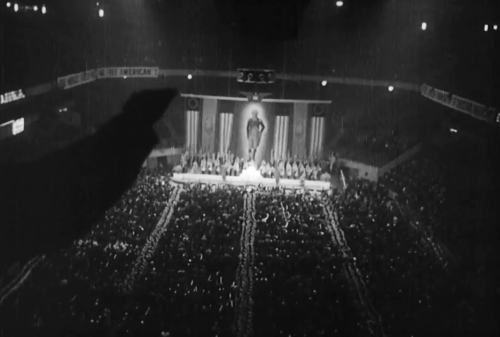
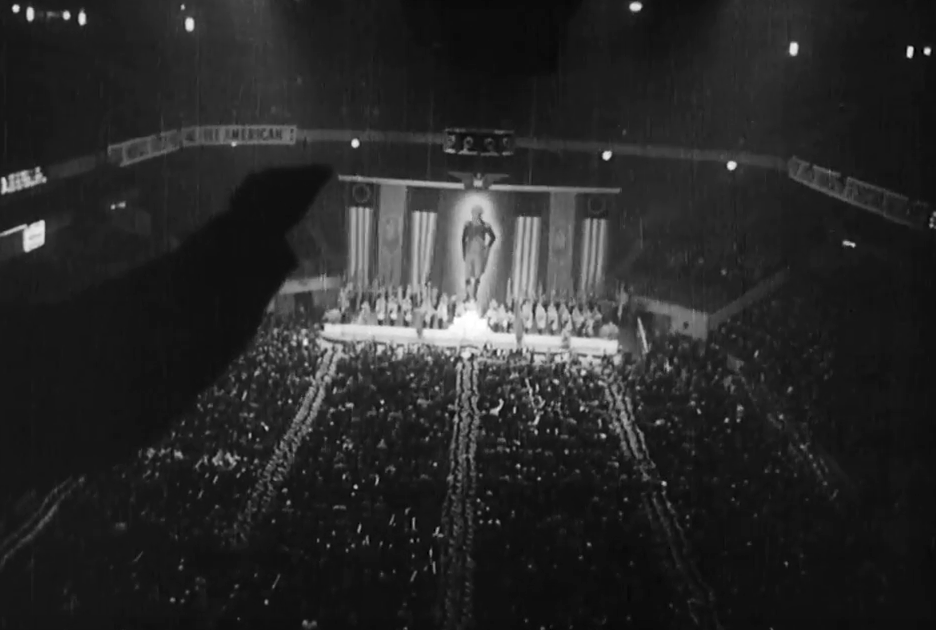
    • German American Bund, (a loud German-patriotic pro-Nazi group which filled Madison Square Garden in 1939 with 20,000 members, sweatily drenched in Hitler rhetoric, an enormous portrait of G. Washington, Brownshirts,  and swastikas: https://www.theatlantic.com/video/index/542499/marshall-curry-nazi-rally-madison-square-garden-1939/);

    plus the Gray Shirts (not to be confused with local boy Pelley’s Silver Shirts, abandoned after his jail sentence for sedition and replaced in the 1950’s with his new religion of UFOs and religious-something called “Soulcraft”), American Nationalist Party, American Women Against Communism, The American Defense Society, Anglo-Saxon Federation of America, National Workers League, Yankee Freemen, Flanders Hall, American Patriots, and others2–it was a very impressive undertaking. 

    Nazi Madison Square[German American Bund at Madison Square Garden, 20 February 1939.  Source: https://youtu.be/WpaYQqzFouw]

    His book had a very wide impact, contributing to some degree in bringing together thirty leaders of such groups to trials for sedition during wartime. Carlson had in the intervening year or so, 1943/4, been subject to many accusations and charges of being an enemy alien himself, or Communist, or something–accusations initiated by many of the groups that he exposed. So it seems that in preparing himself for the trials to come that in anticipation of more libels to come Carlson published this short broadsheet call Under Cover News, which appeared five days before D-Day, June 1, 1944.  In it he asked himself questions that he thought his detractors might ask, and answered them. 

    Note:

    1.  Full text is available here: http://dlib.nyu.edu/undercover/sites/dlib.nyu.edu.undercover/files/under_cover-%20john%20roy%20carlson-1b.pdf

    2. A fuller list of the organizations:
    American National-Socialist Party, German-American Bund, Christian Front, The Ultra-American, Nationalist Party,
    American Nationalist Party, American Women Against Communism, The Gray Shirts , America First Committee,
    No Foreign War Committee, Christian Mobitizers, American Destiny Party, American Brotherhood of Christians
    Congress, The Ethiopian Pacific Movement, Citizens Protective League, Social Justice Distributors Club,
    The American Defense Society, Anglo-Saxon Federation of America, Paul Revere Sentinels, Ra-Con Klub,
    Crusaders for Americanism, Inc.


    ·Posted by :

    ·in:

    — —

  • The Mystery of Suggested Promise–an Advertisement for Electrical Cure of Diseases (1885)

    JF Ptak Science Books

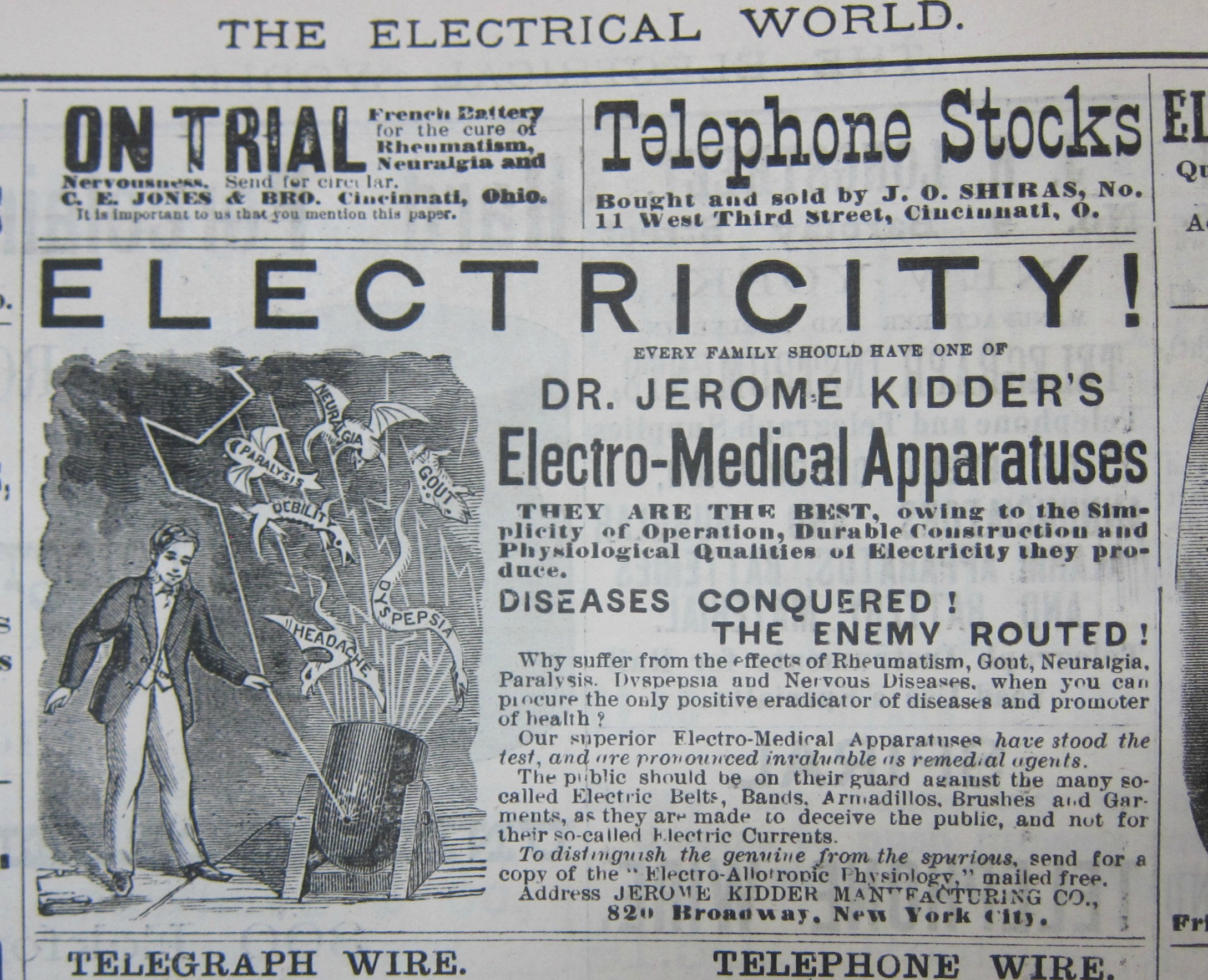
    I’m stepping right into the middle of this one–there’s a ton of material before and after this ad appeared in 1885 on the invention of the idea of curative factors of applying electricity in medical pursuits. It goes on to day of course but now the electrical stimulation will actually help rather than just simply electrically remove the money from your wallet. This ad happened to catch my eye while looking for telephone ads in the 1885 volume (#4) of Electrical World, mainly because of the graphics of the inventor, Dr. Kidder, happily satisfied and nonchalantly controlling a lightning bolt ignite the charge of a mortar–why a mortar, I don’t know. (There’s a slim chance for mortar-and-pestle, the mortar here being a siege weapon and the pestle being lightning issuing some sort of electrical wonder “pharmaceutical”, but I think that’s overthinking the image.) In any event the electric charge to the mortar spears various diseases and complains (including neuralgia, gout, paralysis, debility, dyspepsia, and headache) with electrical bolts/something, offering a cure to the afflicted with lightning speed. 

    Electricity Electrical world 1884 vol 4  electro medical

    I’m not sure of Jerome Kidder’s background as there are at least two I’ve found online that could be him, so I’ll just continue on personal history in ignorance. Seems to me though that he must’ve known that whatever it was he was peddling just didn’t work. 

    ·Posted by :

    ·in:

    —

  • A Bridge for Carrying a Ferry Over Water (1869)

    JF Ptak Science Books  Post 2755   

    I don’t mean to appropriate the past from my seat here in the future, raising my eyebrows over what definitely seems to be an Ig Nobel engineering effort, but, well, there are times when you distill a bad idea over a low flame that the bad idea distilled is still a bad idea. 

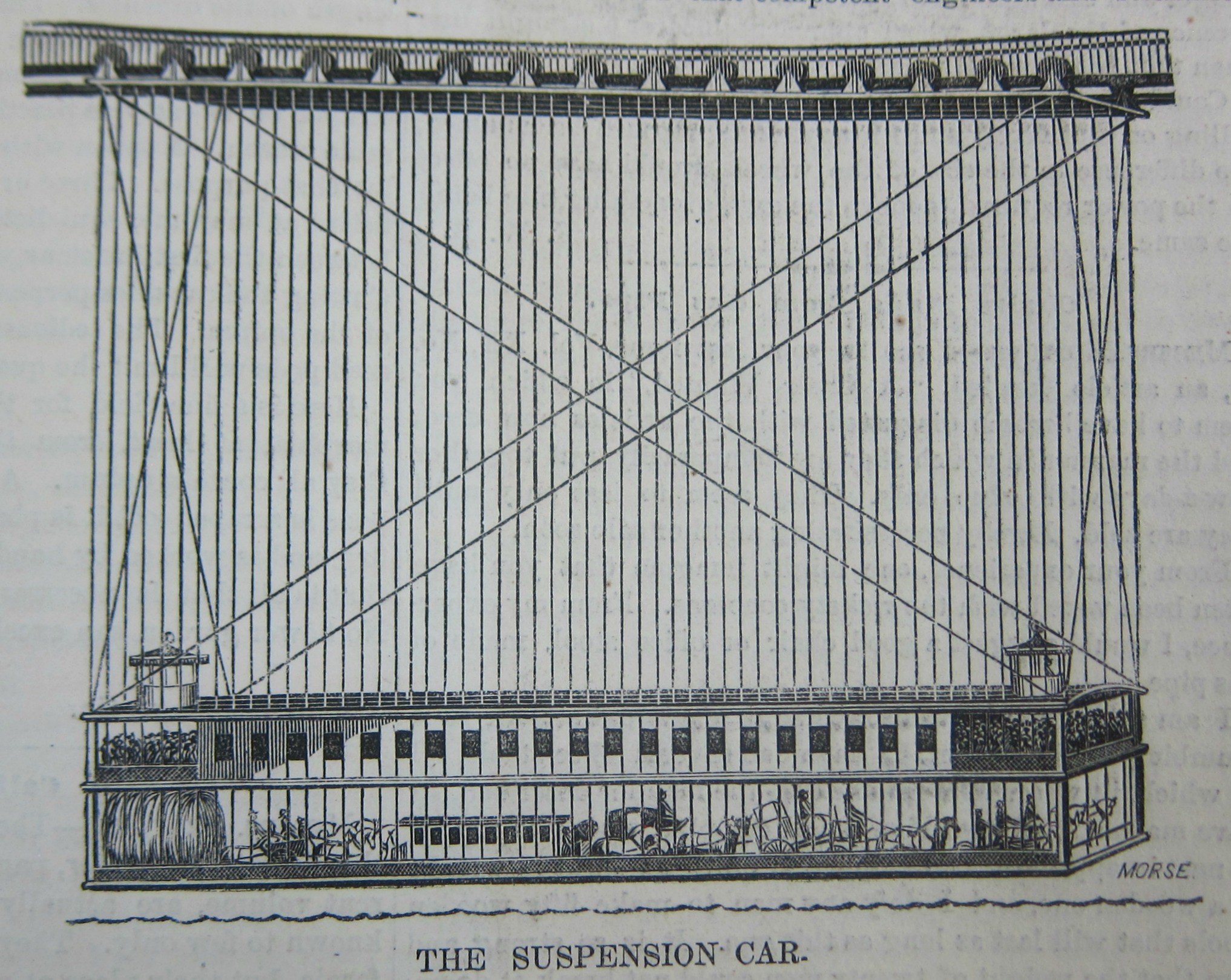
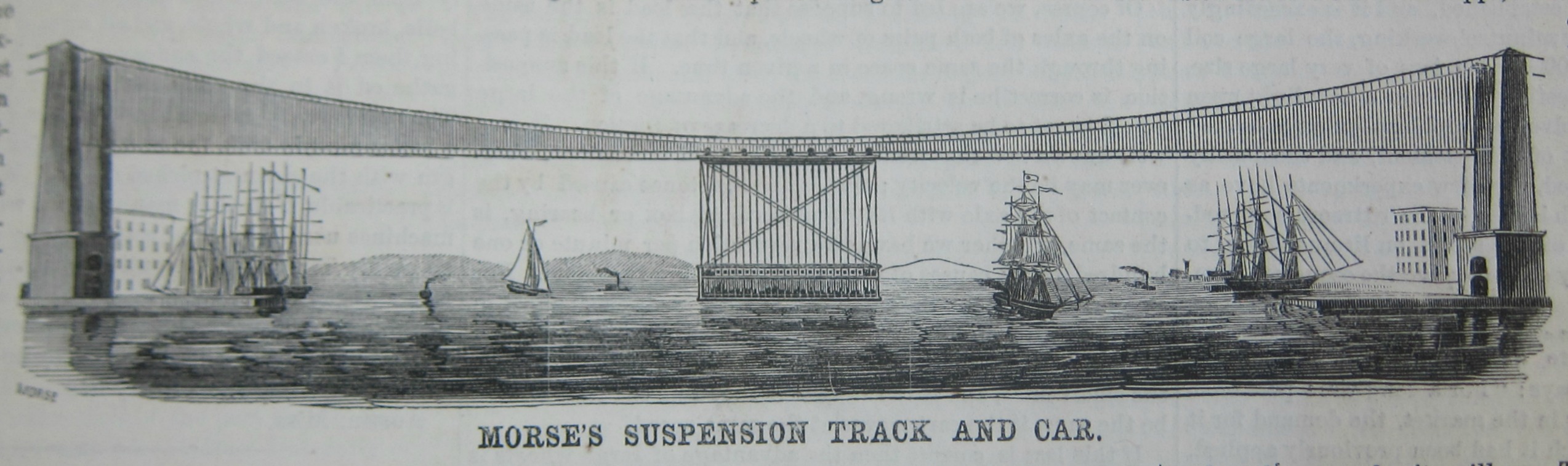
    I’ve tried to imagine the circumstance in which this bridge would make sense, particularly in light of the fact that it was a proposal by J.W. Morse to counter the Roebling plan to erect the East River (later “Brooklyn”) Bridge in about the same location. This is how this bridge plays itself out in my mind: a suspension bridge of some substantial size is constructed to carry a ferry from Manhattan to Brooklyn, even though it seems that a ferry would be able to get from one place to the other with not terrible fuss, except in the old style of using a boat it would be moving on/in the river rather than over it. The ferry wouldn’t need a bridge to cross the river if it didn’t wholly depend on one from completing its task, which ferries almost never do, being watercraft and all.

    Sci Am 1869 suspension ferry

    The details of the plan are a little shocking: that “car” hanging from the bridge cables measured 160’x40′ (6400 square feet) and two storeys high, and was meant to carry 5,000 people at one time (75,000 over a 12-hour period) along with another 500 horses and carts on the lower level. It was to make the trip in a minute or two, and would be moved from one point to the other at a few feet above the river.

    This might make sense if the river was choppy, or ice-bound, at which point it would be nice to use HyrdoplanePunk to get across the river. A bridge-as-bridge would accomplish this task without turning itself basically upside down and inside-out. 

    As I said it is not so good to judge application of technology by a modern standard; though in this case it seems as though if you were to look just slightly into the future from 1869 that you’d realize a continuous flow across the river would be highly preferable to a car shuttling a limited number back and forth. In addition to numerous other issues, I’m not sure how the engineer was dealing with the traffic and congestion caused by the fits and starts of 1,000 or 2,500 (let alone 5,000) people plus freight leaving the car/boat all at once, joining a crowd of people and horses and so on waiting to board, dozens of times a day.

    Sci Am 1869 suspension ferry profile

    At the end of it all, this bridge is also just not very attractive, and not made for the ages—it seems temporary, a short range solution to a long range issue, something soon to be dismantled, used elsewhere, and then scrapped.

    I should point out that there is a variety of bridge dedicated to this sort of transportation—it is evidently of French origin, and referred to as a pont a transbordeur, and seems to have some utility here and there, though that “here” and “there” did not include “Manhattan” and “Brooklyn”.

    • From the article:  “While plans have now been divulged to connect the island of Manhattan in New York with Brooklyn by means of a giant suspension bridge over the East River, Mr. J. W. Morse has devised a bridge which permits of a much lighter construction than a normal suspension bridge and is, consequently, much cheaper to build. Mr Morse’s project provides for transportation across the river in a giant platform, suspended by means of cables from a trolley running upon a gantry across the river. Measuring 40 X 160 feet, the platform has two stories: the top floor is for pedestrians while the bottom deck is intended for horses and carriages. While a normal suspension bridge requires extensive abutments and ramps to enable the road traffic to reach the bridge-deck level of almost 120 feet, Mr. Morse’s transporter bridge obviates the need for such provisions. The fact that the traveller [sic] hangs only 3 feet above the water-and hence is almost at street-level-makes it easy for heavily loaded wagons to cross the river, and will also be appreciated by the workman returning home on foot after a hard day’s toil in the factory or warehouse.” —Scientific American,  24 May, 1869

  • A Small Episode in the History of Irony: On-Beyond Common Sense Rules from the Successor Company Which Built the World’s Most Fatality-Stricken Railroad

    JF Ptak Science Books   Quick Post

    The Panama Railroad was flat-out more costly in the terms of human lives than any railroad ever built in the Americas.  Probably anywhere in the world, at any time, mile-for-mile. From 1851 until it was finished in 1855 the railroad linking the oceans was a thin ribbon of red that was 47 miles long and cost perhaps 12,000 lives. The Panama Railroad Company admitted to something like 1500 deaths or some such, I forget now–it was impossibly low, particularly since the only thing they seemed to do with the bodies of non-white laborers was bury them or sell them to medical schools far and wide…they most certainly did not count them. There is no record of perhaps 10,000 dead laborers, and there never will be.  

    The railroad was being built in an impossibly bad place, with no utilizable natural resources, no laboring population to hire, and so on, all the while taking place in fantastically bad circumstances. As much as landslides and accidents took the lives of workers, they also succumbed to smallpox, dysentery, cholera, various types of fevers, and a host of other killers. Melancholia and depression also took the lives of perhaps 1000 Chinese workers, who it seems took their own lives for terrible living conditions, terrible pay, and terrible human treatment. It seems too astonishing to be so, but I’ve read a number of accounts of the so-called “Chinese Tragedy”, and it bears up. 

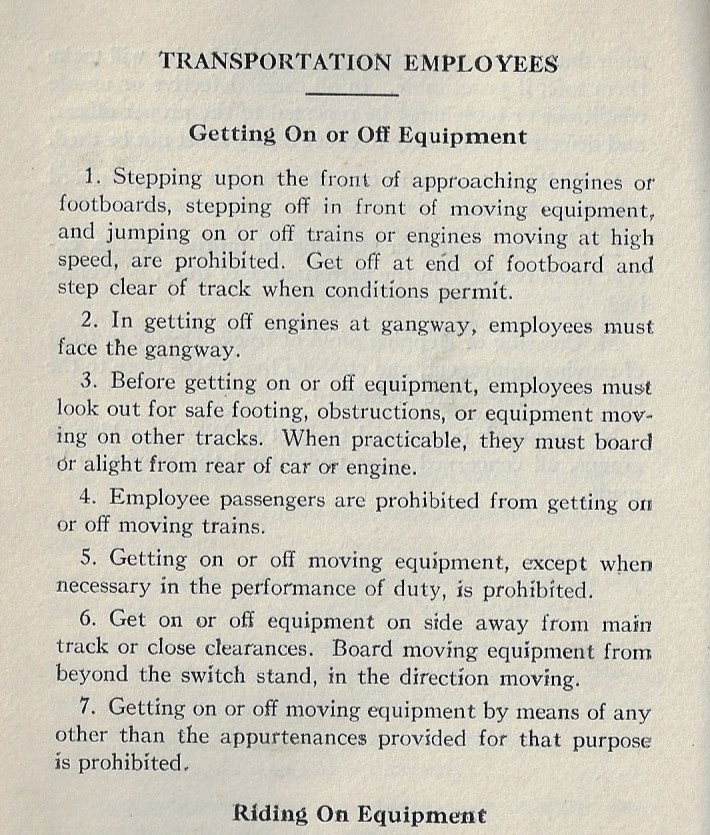
    And so all of this bubbled up when I found this very small and incredibly skinny hardback publication from the Panama Railroad Company called Safety Rules. It seemed terribly ironic. 

    Now this was not the same company though it carried the same company name as the originator, this rule book being published in the “C.Z.” (“Canal Zone”) in 1945, and 80-some years separated the two, but I couldn’t shake the terrible connection of opposites, especially given the breadth of the 255 rules in the rule book, many of which were incredibly obvious. I’ve included the first few rules in the book, #1 being not to hop off a moving train in front of it…that’s even a hard sentence fragment to write, let alone conjure why it was written in the first place.

    Panama RR

    ·Posted by :

    ·in:

    —

  • “Should Britain Fight?” An argument for Appeasement, 1938

    JF Ptak Science Books  Post 2753

    DocFile (2)


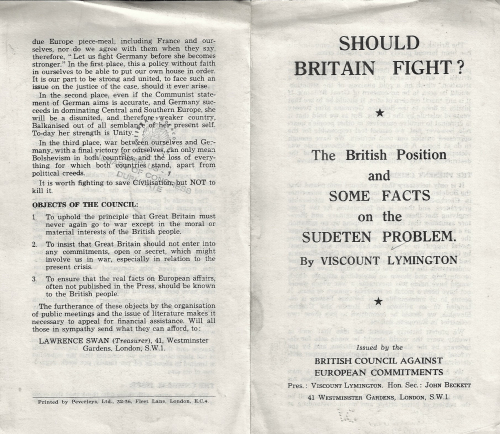
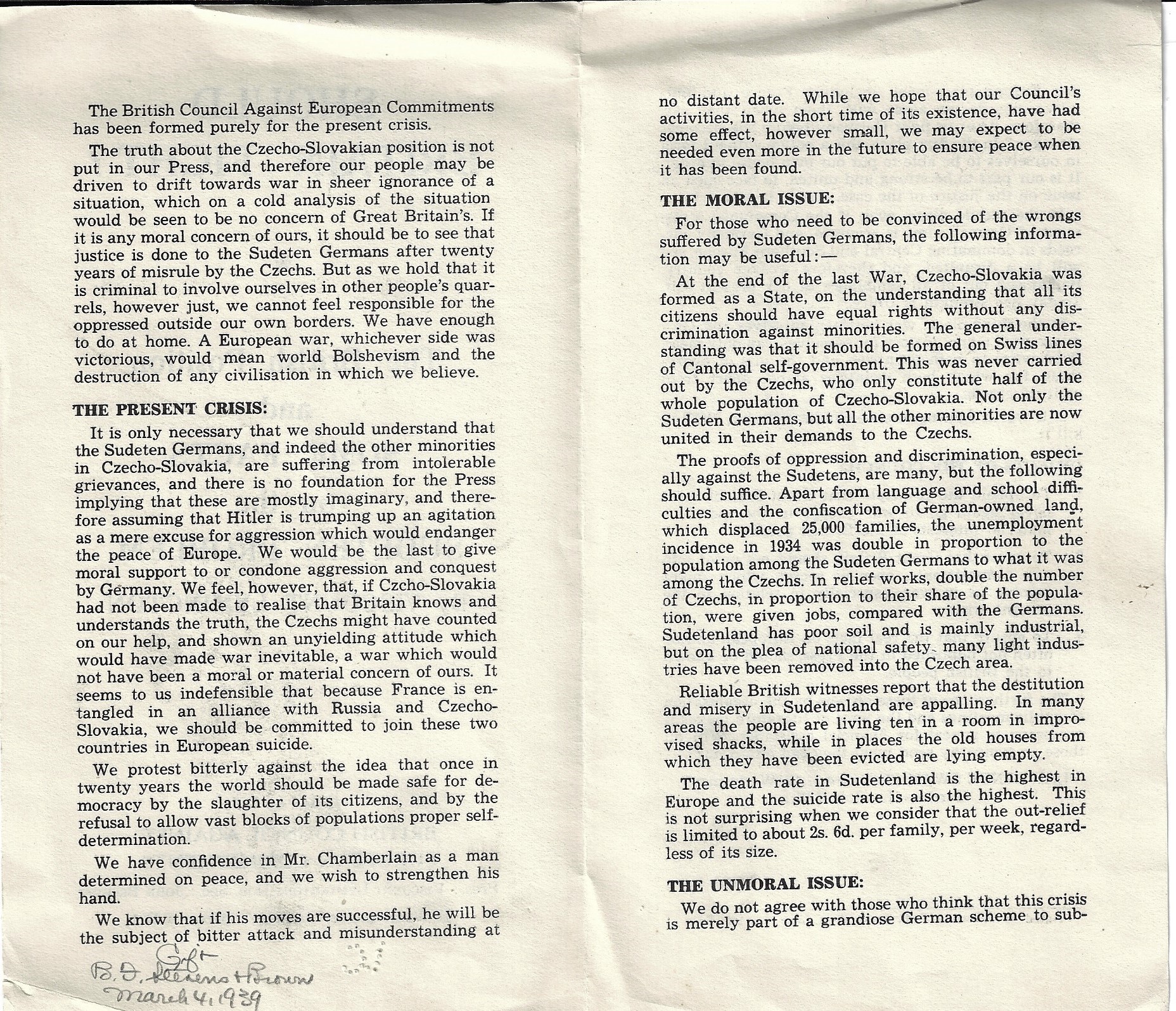
    There were some in Great Britain who just simply did not want to become involved in the European crisis, and who saw their way around the obvious to the in-obvious of what needed to be seen. That, or the source of info leading to this opinion was limited. Or, the information sources were good but the interpretation was limited. Or it was too early in the process of war…except in this case, in the pamphlet below, it was already 1938, and the issue was Hitler and Czechoslovakia.

    It is a little difficult to say when this was published in 1938–if it was published in the early Spring the Anschluss would not yet have occurred, and so no mention; but I have a feeling that this is post-Anschluss, and the event (of March 1938) is treated with silence, as it surely would not have fit very well with the writer’s denouncing of the diatribes against Hitler. My suspicion is that this was post-Anschluss and pre-Munch Agreement/Diktat (30 September), and that the entire business with Austria is left out of whatever thinking is going on here. There is a mention of strengthening Chamberlain’s hand though nothing specifically about the Munich meeting, so my general reaction is that this pamphlet was printed in the Summer of 1938. 

    The case that the author makes is that the Sudeten Germans “are suffering from intolerable grievances” and that anything to the contrary is a construction of “the Press” who were implying that the troubles were “mostly imaginary”, “therefore assuming that Hitler is trumping up an agitation as a mere excuse for aggression which would endanger the peace of Europe”, and so on. Any sort of European war coming as a result of  an involvement over Czechoslovakia, the author contends, would result in “world Bolshevism”, no matter the winning side. Thus the need for Great Britain to stay away from any possible conflict, and that its only “moral position” would be to see justice done to the Sudenten Germans.  Poland and Hungary would carve up their own slices of the rest of Czechoslovakia in October and November 1938, and then come March 1939 Germany would seep into what was left of the country, completing the death of the six-month Munich agreements. 

    And somehow the ending argument was that even if Central and Southern Europe were “dominated” by Germany, “she will be a disunited, and therefore weaker country, Balkanized out of any resemblance to her present self”.

    In any event, these sentiments were hardly unknown, in any country. The U.S. certainly had its fair share of groups espousing these beliefs, some –like the “America First” organization–held on to their keep-our-distance programs 28 months into the war, only disappearing on December 7, 1941.

    Here’s t he entire leaflet:

    DocFile (2)


    ·Posted by :

    ·in:

    —

  • Using a Stick to Find Fugitive Murderers (1693)

    JF Ptak Science Books Quick Post

    Here’s a quick bit, found in the title of a book that I bumped into–one could evidently hire a dowser to find “fugitive murderers” and “robbers” in addition to precious ore, and water, and treasures, and what-have-you. It appears in Pierre Le Lorrain,  l’Abbe de Vallemont’s  La Physique occulte, ou Traité de la baguette divinatoire et de son utilité pour la découverte des sources d’eau, des minières, des trésors cachez, des voleurs et des meurtriers fugitifs. Avec des principes qui expliquent les phénomènes les plus obscurs de la Nature (1693) which almost translates by itself to “Occult Physics, or the Treatise of the Divine Wand and its Use in Discovering Water Springs, Mining, Hidden Treasures, Robbers and Fugitive Murders. With principles that explain the darkest phenomena of Nature”. 

    The subject of dowsing is just something I cannot spend any time on, except to say that it was of particular interest at this time (in the late 17th century), and that in addition to this semi-spiritual mind-application of mining and etc. M. Le Lorrain (1649-1721) also includes astrological tables to help in the pursuit of the inexplicable. I don’t know how that was supposed to work outside of making his hocus pocus less approachable and more complex by showering it in complicated-looking astrological diagrams, showing that “science” was at work.

    In addition to all of the other gifts that Le Lorrain’s practice offered, finding robbers and “fugitive murderers” were among its talent set. And why not? Perhaps the practice was entirely removed and existed in a set of unexpected Umwelten. Perhaps the diving involved “need” as a confluence of the alignment of the stars and the specific needs of finding water, or criminals, each of which would offer its own vapor-need trails to the diviner.  (As it turns out it seems that need/vapor-need wasn’t too far off a guess, as Le Lorrain thought the connection to be invisible corpuscles.) In any event, that world is a secret one, with the answers to exactly what it is all about (present tense intended) probably answerable on a Ouija board, even though in other aspects of his life Le Lorrain was a man with a scientific background (writing on the Copernican cosmology and on magnets).  As I’ve already said a couple of times, I don’t understand this. 

    • An epigram on dowsing/diving, the rod being known in Latin as Virgula Divina. The rod makes an appearance here, in 1651, a hundred years after it makes its first appearance in general, in print. Water-finding by divination etc. is an ancient practice, though the special stick that is now associated with it seems not to be mentioned until much later.
    Virgula divina.
    “Some Sorcerers do boast they have a Rod,
    Gather’d with Vowes and Sacrifice,
    And (borne about) will strangely nod
    To hidden Treasure where it lies;
    Mankind is (sure) that Rod divine,
    For to the Wealthiest (ever) they incline.”–Samuel Sheppard, from Epigrams theological, philosophical, and romantick (1651) 


    ·Posted by :

    ·in:


  • Drinking, Drugs, and the Gold Cure (1891)

    JF Ptak Science Books   Post 2729

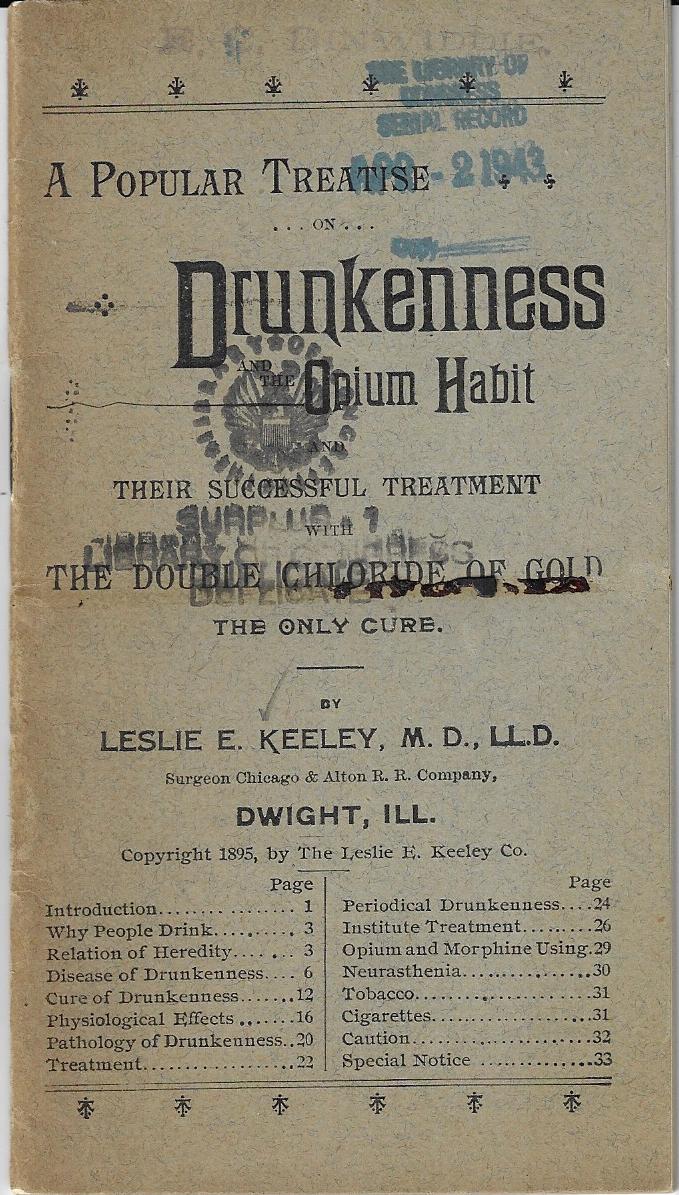
    Gold cureLeslie E. Kelley (1836-1900) was a doctor, lawyer, and a Civil War surgeon who opened his own surgical practice and stayed at it for a couple of decades before coming upon the idea of a cure for alcoholism. Seen through the lenses of his patented gold cure for alcohol addiction I think there is little room other than to see him as a quack1 (if not an uncommon one) in the history of medicine–he was however somewhat significant in this cure venture in that he was an early figure in describing alcoholism as a medical disease. People who stayed for weeks at one of the Leslie’s cure institutes were weened away from drink and given treatments including the double chloride of gold tonic, something that was shown to be “27.55% alcohol plus ammonium chloride, aloin and tincture of cinchona but no gold”. The patients also received dozens of hypodermic injections which were shown to be combination of “sulfate of strychnine, atropine and boracic acid” –(Wikipedia)   

    Dr. Kelley ran a persuasive campaign, with bulging results, with over 90 franchised Kelley institutes by 1893 and gin-blossoming to over 200 soon afterwards (data from Wikipedia).

    (Joe Nickell writes for the Center for Inquiry that “…the result of Dr Keeley’s medicines was to make patients experience fear, confusion, vomiting, and dizziness, among other ill effects” which may have induced or trained them into associating those symptoms with drinking. (See http://www.centerforinquiry.net/blogs/entry/historic_gold_cure_for_addiction/)  The remedy/cure of course did not work–and so far as how this was supposed to work to cure alcoholism, I do not know. The only thing that evidently did work was restricting and then eliminating the consumption of alcohol at the clinics. 

    Kelley claimed huge success; after some time, there was a big difference of opinion on his success rates. It was finally admitted that a large percentage of the “cured “ alcoholics going through his clinics relapsed–though there was an enormous draw-back to this admission. The brilliant and diabolical move from the Institutes’ part was to claim that those who were cured were cured even after relapse, as the return to drinking was a choice rather than the cured medical necessity.Redefining terms (and in this case, all terms) in language suitable to a specific goal is the penultimate defense before failure (the last line being simple denial).

    The last Kelley Institute to close did only in 1966, back in the small town where it all started, in Dwight, Illinois.

    The infallible, never-failing cure was said to also prove indispensable in curing tobacco and opium addiction.

    Notes:

    1. “A 1908 article in the Illinois Medical Journal stated that ‘Leslie Keeley was a common, ordinary quack with a useless remedy which made good by advertising and catching suckers’.”–Wikipedia


  • A Rolling Note on Unnecessarily Rolling Things: Rolling Houses of the Future (1938)

    JF Ptak Science Books   Quick Post

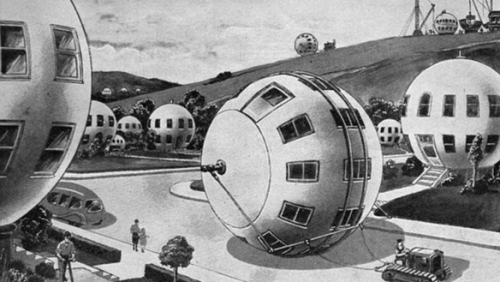
    There are many things that are rolling and rolled, though not so many of those are houses. “Rolling” as a word goes way back in English, to the 14th century at least, referring to a not-good sensation of the stomach, which no t surprisingly could be used very nicely in describing this Popular Mechanics idea from 1938 of the near-future. Much more useful in the history of rolling is log rolling, rolling your “r’s”, taking your tobacco to the rolling house, going to work at the mint in the rolling room, getting your seal legs for the rolling moment (and adjust ballast in the rolling chamber), hearing the rolling sound of waves, and such.


    Rolling_house_large

    It remains unclear to me why you’d need a house that could be rolled…after all, it couldn’t be rolled that far, and as we can see the tractor-of-the-future looks pretty much like a tractor-of-the-past, which also means that the house isn’t being rolled that far at 2 mph. Also for the sake of convenience the added track for rolling the rolling house is added to the center of the structure, which in this case is also where the first floor windows are, though in the other houses placing the tracks might be an issue because there the windows are not centered. And for some reason the houses look like they might be built on the hill in the background–that gives thought to the fancy that the houses needed to be rolled to get them down the hill and into place–of course they could just be built on site like most places, and therefore negate the rolling need.  There is one bit that does make sense–the crushing issue of the house rolling on top and over the driver of the tractor seems to be answered in the background, the artist allowing the driver to let the house roll down the hill ahead of him or her. Anyway, I’ll stop here with this wonderful image, and just roll along.

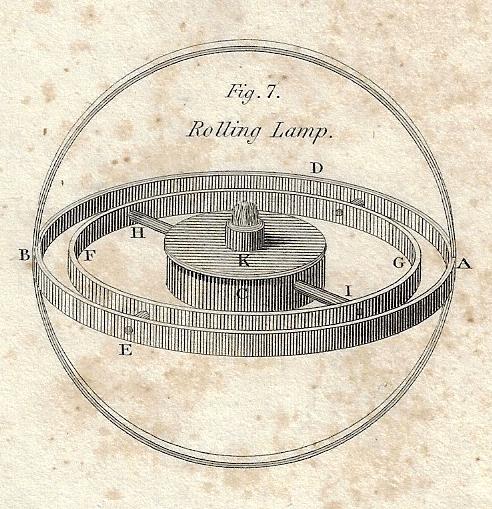
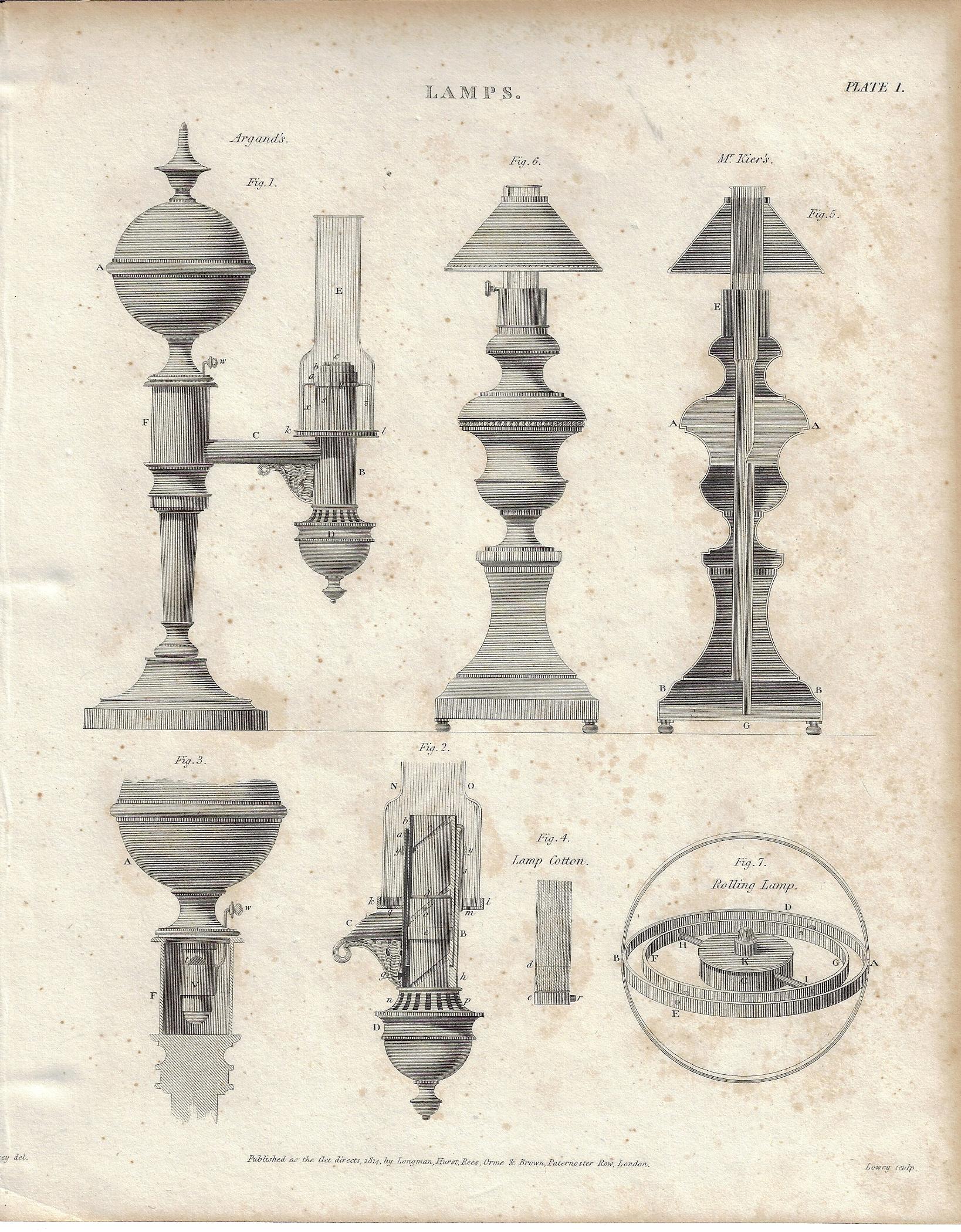
    Here’s a rolling thing that makes more sense, and is quite lovely as well, found in Rees Encyclopedia (1812):

    Rolling lamp 1809 detail

    This is a small detail from the general engraving on lamps:

    Rolling lamp 1809 large


  • An Indelicate Electrical Cure for Kidney Disease, Cramp, Lost Manhood, Paralysis, Indigestion, Dyspepsia, and Much Else (1880)

    JF Ptak Science Books   Post 2717

    Sometimes all one can do is say “wow!”Or “wow?”

    ++ebay--testi belt 1

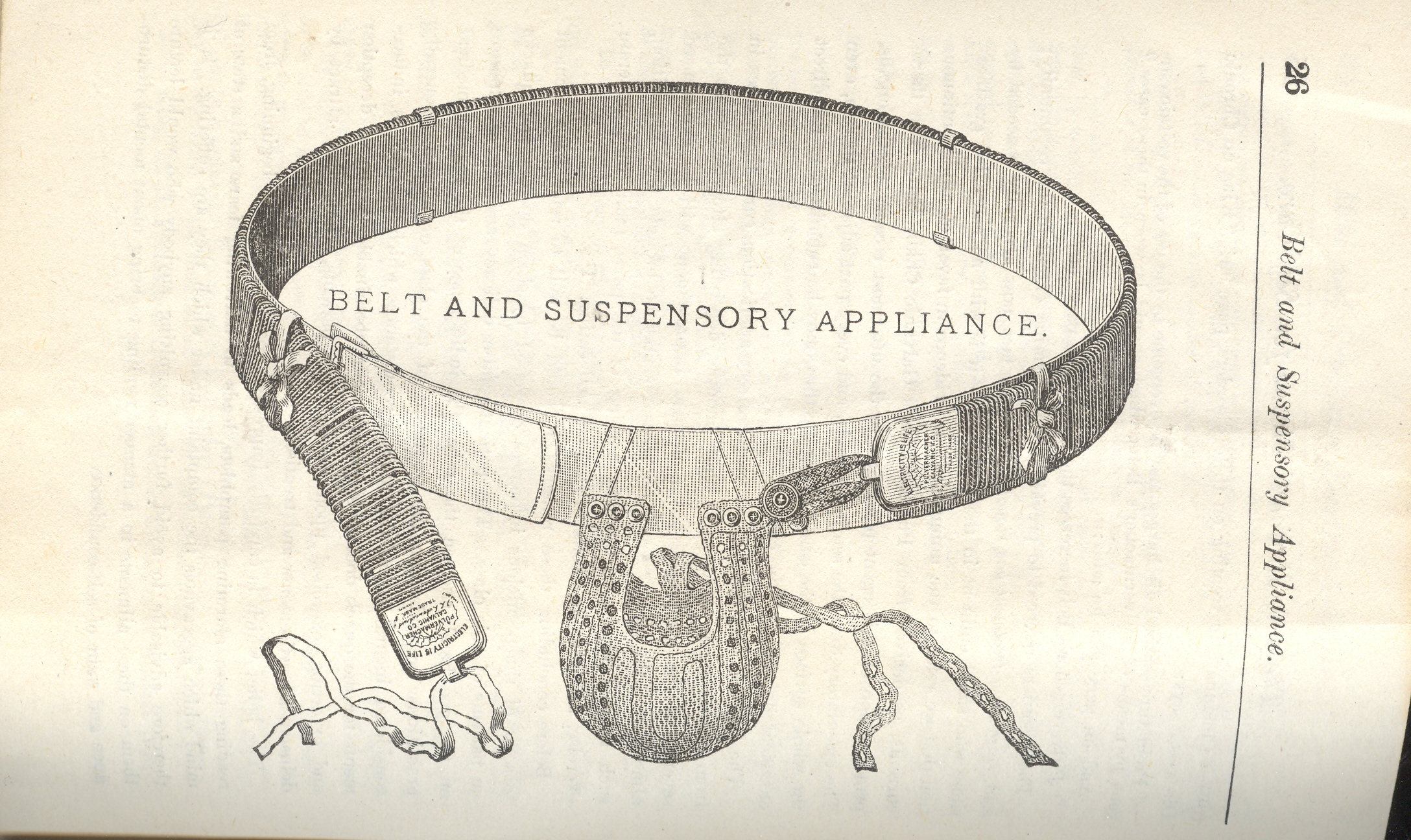
    And sometimes all that is possible is a trailing, eyebrow-arched, widening “wow…” that is somewhere between excitement/fear/curiosity/repulsion, which is the sort of response I had from reading bits of Pulvermacher’s Electric Belts &c/ Electricity Natures Chief Restorer, Self-Applicable for the Cure of Nervous and Chronic Disease without Medicine. Printed around 1880 or so, the slim pamphlet features a cure-all medical device fashioned from electric “belt” connected to a codpiece “suspensory” for a man’s vitals. It is one of many, perhaps hundreds, of electrical geegaws that climbed aboard the principles of Michael Faraday’s monumental invention of the induction coil (1831)–one can hardly imagine what Mr Faraday would’ve thought of this application of his great addition to the history of technology. This electrical stimulus was supposed to cure all manner of unspeakably lingering medical tragedies, including spermatorrhea, exhausted vital energy, female complaint, inflammation of the prostate gland, seminal weakness, kidney disease, cramp, lost manhood, paralysis, indigestion, dyspepsia, spinal complaints, nervous debility, and of course the “debilities of sexual self-pollution” (“the sexual sin (which) is the most destructive of all human vices…the greatest outrage against Nature’s sexual ordinances that man can possibly perpetrate”. 

    Isaac Pulvermacher’s (which is German for “gunpowder maker”) electrical medico-contraption was popular for several decades in the mid/late 19th century until it faded and trailed away at the turn of the century, though it was not for the lack of trying.  Pulvermacher had all manner of glowing letters of support for his product, though one wonders if they weren’t mostly cooked up on the back burner of a no-burner stove top, much in the way he invented this bizarre electrical device and pathologized aspects of male sexuality.


    ++ebay--testi belt 3


    ·Posted by :

    ·in:

    —