A Daily History of Holes, Dots, Lines, Science, History, Math, Physics, Art, the Unintentional Absurd, Architecture, Maps, Data Visualization, Blank and Missing Things, and so on. |1.6 million words, 7500 images, 4.9 million hits| Press & appearances in The Times, Le Figaro, Mensa, The Economist, The Guardian, Discovery News, Slate, Le Monde, Sci American Blogs, Le Pont, and many other places… 5000+ total posts since 2008.

Category: Bad Ideas

  • When the Catcher’s Mitt Was a Cage (1904)

    JF Ptak Science Books  Quick Post

    PAtent catcher cage detail


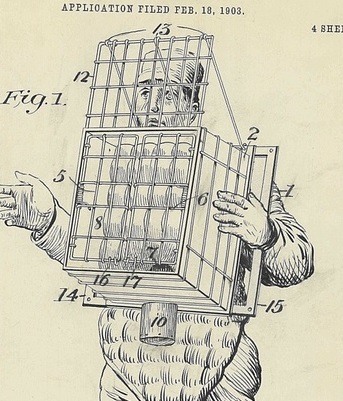
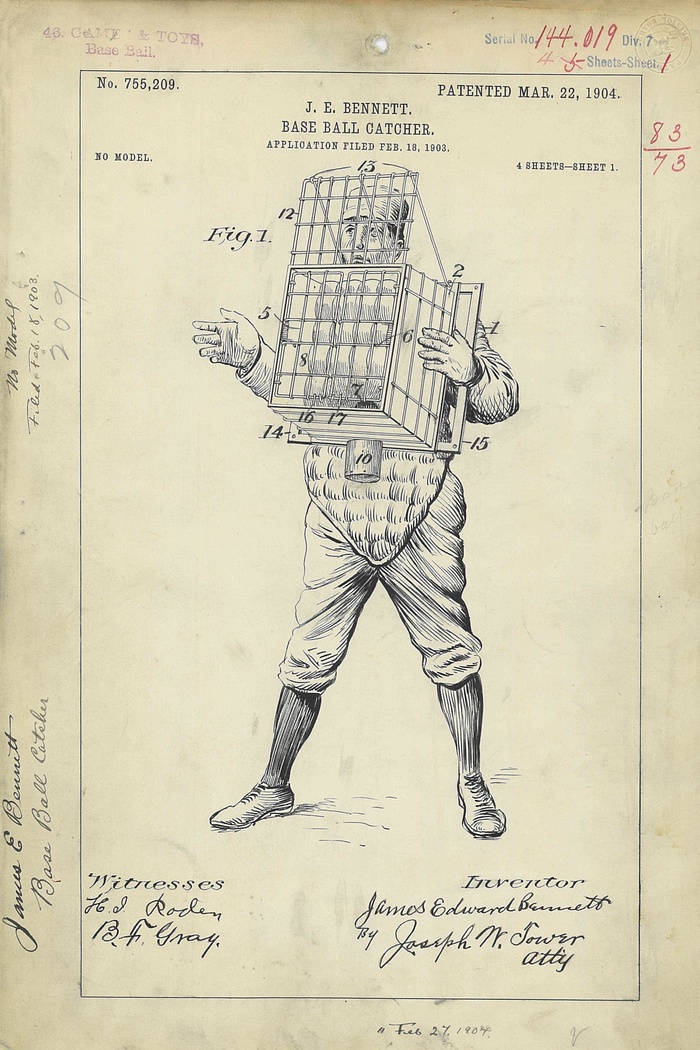
    In the history of baseball gloves–better still, in the history of the catcher’s mitt–there are few ideas that are as singular as the glove/mitt that isn’t a glove, or a mitt.  This was the patent report of the invention of J.E. Bennett in 1904, which proposed to replace the mitt with a cage.  The cage offered a receiving area easily double the size of a catcher’s mitt, with padding at the back of the cage to cushion the capture of the pitched ball, after which the ball would somehow be collected and deposited via that pipe.  I’m not sure what the catcher would do with pitched balls that were low, or high, but the cage certainly did not have any real versatility, particularly when comparing it to a real glove. It seems as though this idea didn’t go far, and that was a good thing. 

    http://www.theguardian.com/technology/gallery/2015/may/14/imagining-the-future-turn-of-the-century-us-patents-in-pictures

    Patent catcher cage


    ·Posted by :

    ·in:

    — —

  • The .50-Caliber Better Mousetrap

    JF Ptak Science Books   Quick Post    Daily Dose from Dr. Odd

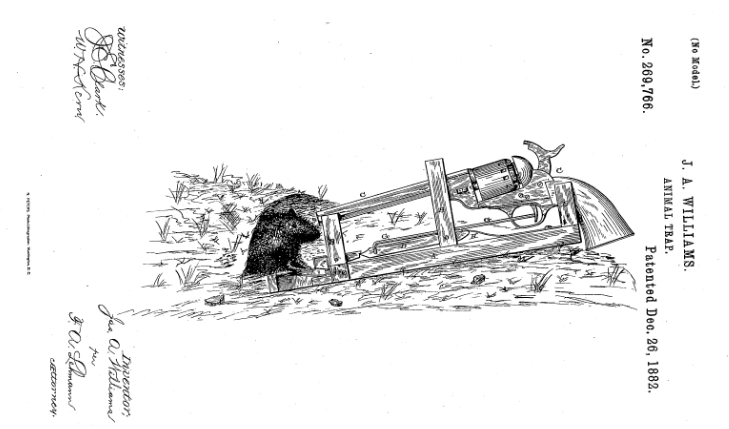
    Patent better mouse trap

      [Source:  Google Patents, https://www.google.com/patents/US269766?dq=patent:269766&hl=en&sa=X&ved=0ahUKEwiyw_r6277JAhUGSiYKHV_eCdkQ6wEILDAC]

    Well, there’s not much that one can say about this that the reader is not already thinking.  

    The idea was that of J.E. Bennett of Fredonia, Texas, who patented the “trap” in 1882.  He reports that this apparatus has been used before, as a house “alarm”. He states in the patent that  “I am aware that burglar-alarms of various kinds have been used, and which have been connected to windows and doors in such a manner that the opening of the window or door causes a pressure upon a lever which discharges a tire-arm; but in no case have the parts been arranged and combined as here shown and described.”  Indeed.  I think that this sort of “alarm” was declared illegal decades ago because its use employed depraved indifference.  Poor little critter.  

    ·Posted by :

    ·in:

    — —

  • U.S. Military Throws Its Black Soldiers Under the Bus, 1918

    JF Ptak Science Books   Post 2564

    “The increasing number of Negroes in the United States about 15,000,000  [sic] would create for the white race in the Republic a menace of degeneracy were it not that an impassable gulf has been made between them…”–“Secret Information Concerning Black American Troops”, Crisis, 1919

    During WWI U.S. troops included dozens of thousands of African Americans. Unfortunately a sizable percentage of the U.S. Army’s leadership perception of these fighters was that they were not dependable, and the difficulties of having Blacks fight alongside (or near) Whites was an issue too great in many cases to bear. So in order to send these troops into battle some were reassigned to the French army. And so it came to pass that regiments would be formed of U.S. soldiers wearing French helmets, carrying French weapons, using French kit, eating French rations, fighting with French soldiers under French leadership, but wearing U.S. Army uniforms. Many of these men went on to high honors, and some–like those comprising the 369th Infantry Regiment of the 93d Division (the Harlem Hellfighters) who were attached to the French 161st Division would achieve renown for never losing a man to capture, and never giving an inch of ground. 

    What were we thinking?

    That question is now easily answered, but not so much in 1918.  In 1919, however, W.E.B. DuBois published (and made “infamous”1) a 1918 memo that was intended for French military leadership on how to deal with the American Negro, a document known as “Secret Information Concerning Black American Troops”.  It was signed by a Colonel (Jean L.A.) Linard, who was a French liason officer at the AEF headquarters, and was a document detailing American expectations of the French in dealing with the Black soldier, and “which carried the imprimateur of Pershing’s staff”2. The document was signed by Linard and had a very whispy feel of it being of French origin, but the implications were that it was the U.S. Army communicating their interests to the French rather than Linard’s own initiative in translating U.S. attitudes towards Black people.  DuBois himself wrote in introducing the piece that “no one for a moment supposes he [Linard] was the author of it”3,4. 

    The French were being instructed on American interpretations of White-Black race relations, and to remember that extensions of social freedoms to the Black soldiers was unacceptable as “intolerable pretensions of equality”, and to abide by the guidelines in the corrupting document, as the French treatment of our Black soldiers was seen as being liberal and equal and so therefore divisive and dangerous.

    It is a miserable exhortation–so much so that after the war, when the French National Assembly was told of the Secret Information, the matter became a scandal.5 The contents of the document and the general awareness of the U.S. military to instill a Jim Crow existence in France was not entirely as “secret” as its name implies, as it was evidently known at least to the 369th in the spring of 1918. (Richard Slotkin wrote that “Harlem got hold of it within the month”6.) No doubt that this had a very negative impact on the soldiers who were being described in it and at the same time fighting and dying for their country.

    The introduction ends informing the French that their equal treatment of Black people was an “indulgence” that caused “grievous concern” and was an “affront” to U.S. national policy.  It really is nothing but all shades of bad:

    [Source, W.E.B. DuBois, The Crisis, volume 18, #1, overall number 103, May 1919. Full text here via Google Books: http://tinyurl.com/new4ppe]


    ·Posted by :

    ·in:

    —

  • Robot Boots without the Robot–German Coal Mining Iron Boots, 1920

    JF Ptak Science Books   Quick Post

    This post is from the “Oh Sweet Mother of Neptune” series, because that is that you say out loud when you see pictures like this.  

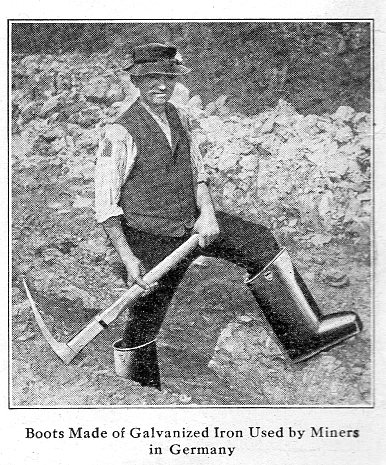
    German boots269

    Found in the January 1920 issue of Illustrated World is this photograph, illustrating yet another mysterious and bad turn of the many hard angles found in the Treaty of Versailles.  The worker with a pick is a coal miner, and yes, he is wearing galvanized iron boots.  

    It turns out that the Nuderlansitz coal mining region was flooded after the war, and after the draining came more water and a lot more mud. Seeing as there was a severe rubber shortage in Germany at the time, and that coal miners needed to mine, the suggestion pictured here were these galvanized iron boots.  

    No note is made in regards to the weight of the boots.

    ·Posted by :

    ·in:

    —

  • The Common Abomination: Repulsive Sheet Music Covers of African Americans

    JF Ptak Science Books   Post 2539

    I’ve written often on this blog on common and cascading racism found in marketing and entertainment in the 19th and 20th centuries.  It is shocking and repulsive to see no matter how you steal yourself for the experience, no matter how prepared you are for it, no matter how much you expected it–when you get there, when you see it, it is all still unbelievable.  

    I went to the terrific Lester S Levy sheet music collection at Johns Hopkins University looking for early aircraft images. Moving around the online archive I bumped into a racist-something having to do with a nationality; and then, for the adventure of it and to see what there was–if anything–to see, I did a quick entry in the search box for the occurrence of a racial epithet (“coon “) in the title of a song. I expected to find some bad stuff, but I was very surprised by the extent of the results and their deeply awful nature.

    Now I must make it very clear that the collection at Hopkins covers many thousands of items and each speaks to its time, and that JHU’s collection addresses the interests of the era–these images are nothing more and nothing less than what was not terribly removed from what was “normal” for the time. The Levy Collection is significant and important for many reasons–I just used it in this case to investigate a curiosity, pulling bits and pieces of the collection together from its many extending areas of interest.  There is no particular part of the collection that deals with racist material–these were parts of popular songs as they existed in the late 19th/early 20th centuries. 

    People no doubt laughed at these score covers, which were drawn so to attract interest and attention to help with making the item more attractive to purchase, an engagement in subjugation for making a nickel. What they look like today seems incredible, impossible, except of course that it wasn’t; and when it was, it was sort of nothing, just another common degradation that had to be endured by millions of men, women, and children.

    Anyway, this is what one slim sample of  what “normal” looked like at the turn of the century.

    [Warning:  highly offensive material follows.]

    Note: these are all hot linked to JHU–I contacted the curator of the collection to make sure that this was acceptable. I just couldn’t save-and-post dozens of times for all of these terrible things.

    ·Posted by :

    ·in:


  • Killing the Dead Poe, 1849

    JF Ptak Science Books   Post 2534

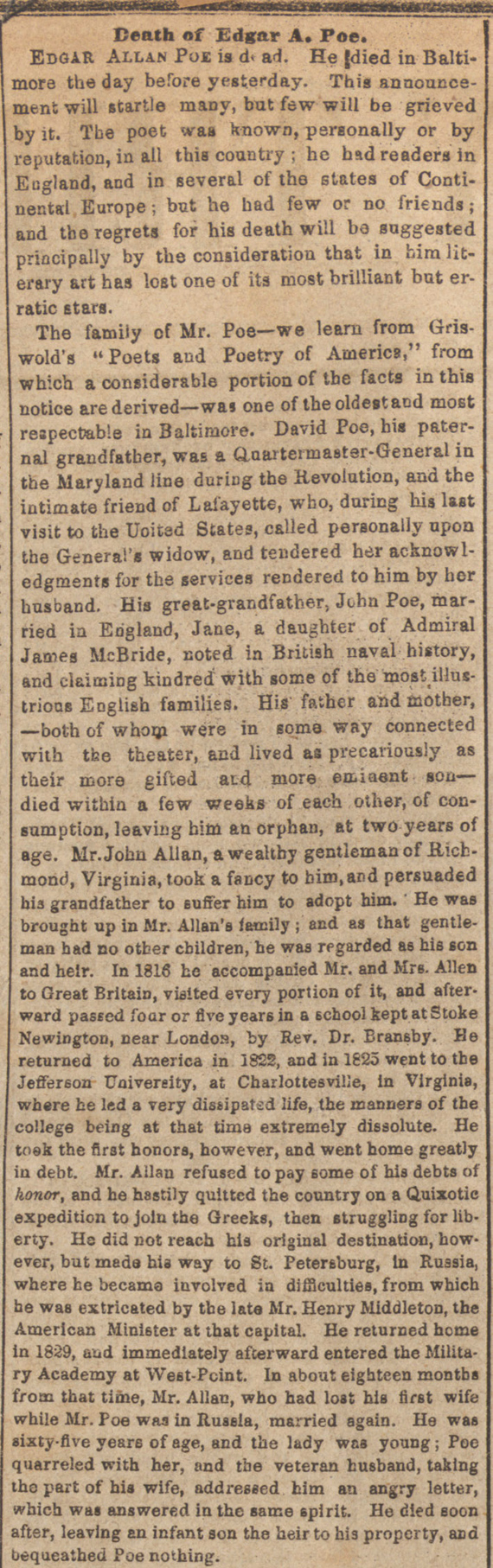
    Carl Sandburg (whose house is about 5 miles from here) wrote a long, light-but-heavy, airy three-volume biography of Abraham Lincoln that is said to have killed the president, again. Rufus Griswold, a once semi-friend of Edgar Allen Poe, became a bitter enemy whose hatred of the man extended pathologically deeply far into Poe’s death.  There are stories of cross-loved interests, and competition over a job, and the biggest (or more representative) thing–Poe’s lukewarm review of Griswold’s genre-twisting collection of American poetry, for which Poe was paid by Griswold, a bribe producing a coercion of Griwold’s work. Poe was evidently never forgiven for that, and probably never forgiven for being legions smarter and far more talented than Griswold–and for all of these real or imagined ills Griswold drove a stake through Poe’s eye in this very nasty obituary.  It was signed with a pseudonym, but it was soon discovered that Griswold was the author.  

    The obit is a diatribe, pure and simple, a revenge piece that pulled Poe from his grave and killed him again. You can tell that the long column will cleave Poe in two by the end of the second and third (short) sentences: “He died in Baltimore the day before yesterday. This announcement will startle many, but few will be grieved by it”.  You know at that point that whatever comes to follow will offer a rough ride, which indeed it was.  There’s a lot of stuff about his personal life, including a long an meandering section on his stepfather—and not one mention of anything that he wrote.  

    Griswold clawed his way into the heart of Poe’s remains like a meth addict tracking down a ten dollar bill under a soda machine, and proceeded to defame Poe and his life via forged letters, and thus creating Poe the madman/street-crawler/drug-addicted alchie who was a friendless and betraying  and brutal to anyone he knew. It took a while for Griswold’s crimes against Poe to be uncovered, but the damage was done, and life force thief Griswold was safely tucked into his own dirt nap.  No one deserves that sort of treatment, least of all Poe.  In the end the truth was outed, with Poe recognized as himself again, with Griswold becoming the pathological necro-killer.  

    Poe obitt


    [Image source: Awesome Stories,  https://www.awesomestories.com/asset/view/Poe-Obituary-by-Rufus-Griswold, reprinting the obit as it appeared in the New York Tribune, October 9, 1849.]


  • An Unusual RAND Document on the “Cuban Revolution” of 1961(?)

    JF Ptak Science Books  Quick Post

    • “The American people are entitled to know whether we are intervening in Cuba or intend to do so in the future…The answer to that question is no. What happens in Cuba is for the Cuban people to decide.”–Secretary of State Dean Rusk, April 17, 1961, 2 days in to the CIA-sponsored invasion of Cuba. 
    •  “I know the world thinks of us, we are Communists, and of course I have said very clear that we are not Communists; very clear.”–Fidel Castro,  “Cuban Revolution”. 1959 Year in Review. United Press International, the statement made on his tour of the U.S. in 1959.  

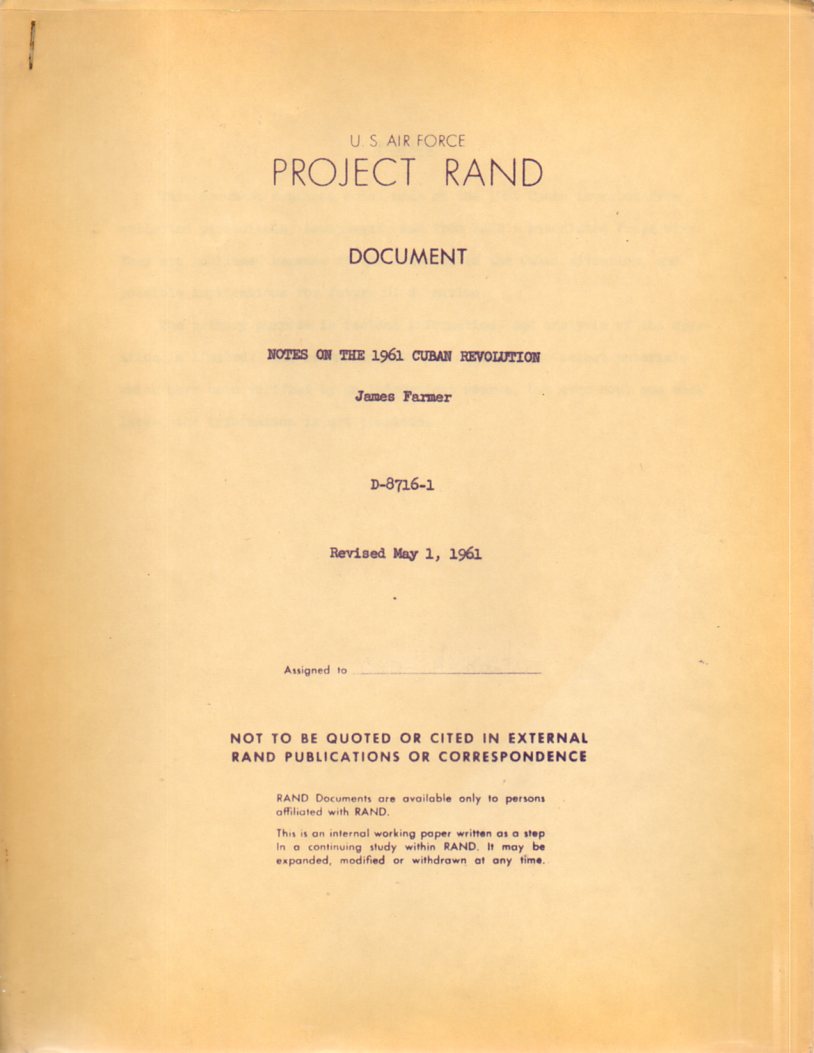
    James Farmer of the RAND Corporation wrote a summary of the U.S.-backed insurgency against Fidel Castro’s government in the infamous Bay of Pig campaign in his  Notes on the 1961 Cuban Revolution sponsored by the U.S. Air Force Project Rand Report, and published (May Day!)  May 1, 1961.  This is an internal document, or pre-print of the report, reproducing the document in some sort of photo-mechanical way, and it focused on the failures of the “Cuban revolution”—the same day as Castro’s May Day speech proclaiming his overwhelming victory against the counter-revolution. 

    Farmer states in his opening line:  “If tacticians and political scientists can learn from errors, the first 1961 Cuban Revolution should be invaluable”. 

    Farmer evidently was sending a message in this medium as he refers again and again to the “first 1961” Cuban Revolution.  He was not referring of course to 1953-1959 Castro-led revolution that ousted President Batista–rather it was a political statement by the author relating to what he assumed would be subsequent “movements” against the Cuban government. 

    Cuba448


    • For some reason the only references on the internet that I’ve found for this document come from me.  Also: there is no record of this work in the OCLC.  This item is available at the blog’s bookstore, here.  

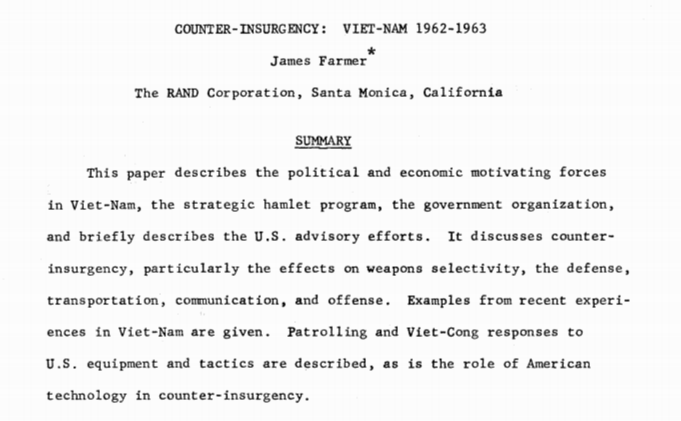
     Farmer also wrote a close and interesting appraisal of the “counter-insurgency” in Vietnam 1961-2, here:  http://www.rand.org/content/dam/rand/pubs/papers/2006/P2778.pdf

    Farmer Vietnam

    ·Posted by :

    ·in:

    —

  • Frank Lloyd Wright and the Benefits of a Bombed-Out London, 1940/1

    JF Ptak Science Books  (Expanding Post 1866 from 2012)
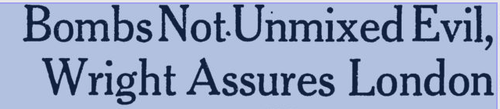
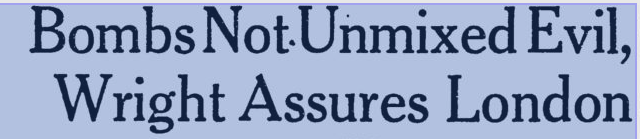
    Wright London bombing–article header from the Milwaukee Journal, 22 June 1941.

    • [I’ve written earlier on a related and very bad idea, Atomurbia, for atom-bomb-proofing American cities, here. The idea was to spread out the population and industry of the United States all over the country, so that there would be no centers of industry and no concentration of population, that every smallish city could be a target, thus making the many thousands of them un-bombable. This idea was the product of very influential people, and did not appear in a comic book.]

    Reading Nicholson Baker’s Human Smoke I found several unflattering and semi-unbelievable quotes from the unpretty Frank Lloyd Wright (see here).  Present at a MoMA exhibition he was sharing with D.W. Griffith (detailed in the publication Two Great Americans published by the museum in 1940), Wright chose the background of the Battle of Britain, in which German bombs were falling on cities in Great Britain cities killing thousands, to promote his city design idea of Broadacre.

    In development since 1932 (appearing in his book The Disappearing City) and kept on until his death in 1959, Wright’s idea for city /suburban development spread a “city” to its limits, nearly stripping it of its citiness and expanding it towards the horizon in a wide and low wave of a complete suburbia.  With this, Wright must have reasoned, Broadacre City must have seemed “bomb-proof” compared to the normal concept of the city, and decided to make the best of a horrible situation to promote his idea.

    And with this, he was quoted in November 1940 in the New York Times, saying:

    “I would not say that the bombing of Europe is not a blessing, because at least it will give the architects there a chance to start all over again”

    Wright is quoted in the Milwaukee Journal talking about the blessing-in-disguise of the terror bombing and the benefits it would give to the future and to city planning, saying that a few nights of bombing would have cleared the “slums and ugliness” that otherwise would have taken “centuries” (“”blasted out of the way in a few days”).

    I’ve never thought of Wright’s buildings as structures for people, even the lovely Fallingwater is iconically beautiful outside but not-so-people-friendly inside–it may be a minority opinion, but so it goes.  It is clear to me that for whatever record he was speaking to here in 1940 that he had no regard for the people who would have been in those destroyed areas; of course that was his executive orders, as all he was interested in was the idea of planning the city and responding to his own genius.

    He went on, this reported in Time Magazine for November 25, 1940, describing his bombing-as-a-benefit idea:

    “Broadacre is going to England as soon as there is a chance for it to be shown there. This will be immensely beneficial to England.” 

    To say that this was an idea best left to the imagination rather than in the pages of the Paper of Record goes without saying.

    And what of the architects whose buildings were lost during the Blitz?  Say, like Christopher Wren?

    “I don’t think that anyone will miss Wren’s work very much” (This, and the quote above, found in Baker, page 248.)

    And also this:

    ‘After all,’ says he, ‘what is St. Paul’s? An imitation of St. Peter’s in Rome. I don’t think anyone will miss Wren’s work much.” —Time Magazine, November 25, 1940

    I’ve had a problem with Wright for a long time, but had never bumped into this part of his thinking before.

    [Wright’s wrongs on the Bombing of Britain are also recorded in Peter Shedd Reed (ed), The Show to End All Shows: Frank Lloyd Wright and The Museum of Modern Art, 1940 (MoMA 2004, here), and here, in the Milwaukee Journal for 22 June 1941, and also in the News Chronicle of London in”How I would Rebuild London”]


  • Every U.S. Doctor Questioned About (Their) Cigarette Habits, 1946 (?)

    JF Ptak Science Books   Quick Post

    Seriously now–“every”?

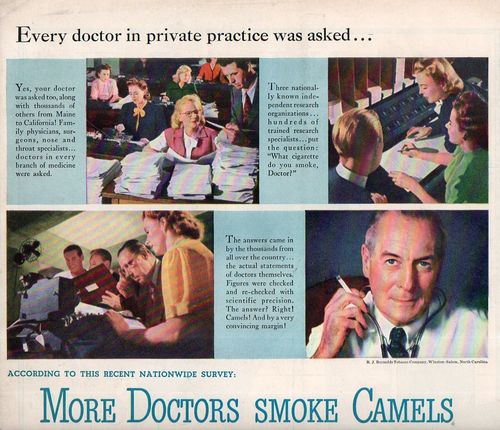
    Every Doctor076Every doctor in private practice, unquestioned about their smoking habits, and happily the ones that answered positively selected Camel Cigs are their cig of choice. 

    Every Doctor075

     This ad comes from my own run of LIFE magazine and dates from January 7, 1946. It was a a massive campaign, begun at least by 1946 and establishing the tag about “More Doctors smoke Camels than any other cigarette!”, and is widely viewed as one of the most successful campaigns of any cigarette ever undertaken, which means it probably killed more people than did any other advertising campaign. This means too that more doctors were dying of smoking-related cancers, too, than by any other cigarette brand. 

    Plus, all that unfiltered tarry smoke makes the doctor a delight to smell, as well, especially if they were smoking through coffee grinds, in spite of that white rounds coat.  

    See the fine Stanford Collection of ciggie ads, here. 

    ·Posted by :

    ·in:

    —

  • Inherent Racism and Selling TVs, 1950

    JF Ptak Science Books    Post 2484

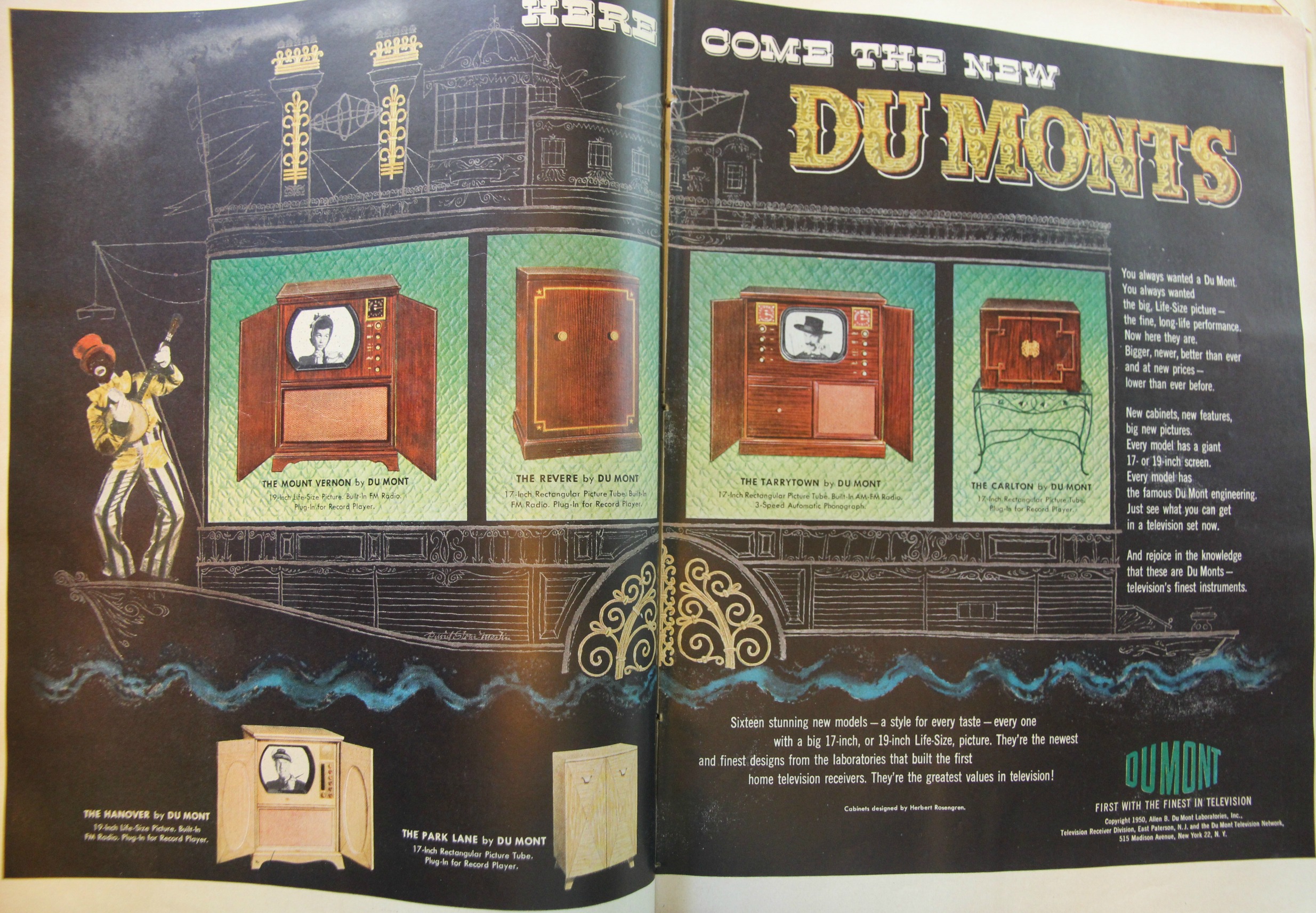
    I’ve written here a number of times on this blog about endemic, inherent, engrained racism, racism that is just so much a part of the culture that it can become an outrageous element  completely obtuse context. Another good example is this ad that I bumped into while looking for a nuclear-attack article in a September 1950 issue of LIFE magazine. It is just an ad for televisions, a big two-page spread in America’s leading popular magazine, which means it was expensive, and which also means that x-number of hours were spent on its production and design, and the best thing that the minds working on this was use that incredible black-face minstrel figure to grab a viewer’s attention to look at the tvs and link them to a particular entertainment-past.  Black-face, minstrel, Mississippi sidewheeler, Dumont. Nobody thought that there was anything wrong with this, and so the television maker connected itself with this visual horrorshow.

    TV Minstral

    Depictions of African Americans in this way came to be seen as wrong, but in another decade or two, probably a few years earlier than the Lovings’ case regarding their rejected attempt to be married because they were an interracial couple was settled in 1967, striking the illegality of interracial marriage.  Probably the offensive intolerances written about gay marriage will be seen in the same league of abhorance as this minstrel figure was seen with a few decades after its publication.  It has taken lifetimes of efforts to legally surpass social condemnation, restrictions and persecutory adjudications of the gay life, the marriage part of which was just today settled by the Supreme Court of the United States, recognizing that not allowing the marriage of two people of the same sex was discriminatory.  There are still horrendous and terrible things being said about that, now, as though (as I heard on a Conservative talk radio station) that “homosexual marriage” could lead to complete subjugation of normalcy, and that we could now well see the marriage of humans and animals. 

    Opinions stated for the public record like that will be hard to explain in the near future, just as the decision to use the minstrel is today.  I hope that it doesn’t take further decades for people to realize that opposition to same-sex marriage will seem just like those opposing slavery, opposing the vote for women, opposing casual relationship between Catholics and Protestants, and opposing interracial marriage, and so on into the unfriendly past; it is all the same argument of opposition and restricting the intellect from one to the next–only the issues change. 


    ·Posted by :

    ·in: