A Daily History of Holes, Dots, Lines, Science, History, Math, Physics, Art, the Unintentional Absurd, Architecture, Maps, Data Visualization, Blank and Missing Things, and so on. |1.6 million words, 7500 images, 4.9 million hits| Press & appearances in The Times, Le Figaro, Mensa, The Economist, The Guardian, Discovery News, Slate, Le Monde, Sci American Blogs, Le Pont, and many other places… 5000+ total posts since 2008.

Category: Art History

  • Found Poetry in the Words in Last Lines from Vincent van Gogh, 1889-1890

    JF Ptak Science Books    Post 2190

    See also an earlier post “In Closing: “a Kiss from Your Beethoven”. Artistic and Literary Valedictions from the Master”

    Van gogh

    As all of you no doubt know Vincent van Gogh carried on a voluminous correspondence, mostly with his brother Theo.  I sat down with the third (and final) volume of The Complete Letters of Vincent Van Gogh (Bullfinch Press, 2001) and read through his letters from St. Remy (June 1889 to May 1890, two months before his death 29 July 1890), as well as those from Auvers-sur-Oise (the last of which is dated one week before his death). The letters are remarkable, and were written mostly to his brother, but also to his sister, and mother, and some few others.  

    The letters are filled with fantastic observations and captured vision, comments on his artwork, technical aspects of painting, philosophy, and daily life.  And thinking.  It has always been interesting to me how people slow down a letter so it can come to a halt, and Vincent–in addition to being an excellent observer and word curator–knew how to write a letter, and it is enjoyable to step back from them a bit to look at their mechanics, especially when it comes to this slowing-down section.  So I’ve selected a few bits from what is usually the last part of the last sentence before the sign-off (hardly a rigorous process), just to see if there were the makings of a found-poem in them….and I believe there is. 

    “And believe me”

    “Good health.”

    “I shake your hand, and your wife’s too”

    “Next drawings next week”

    “And then it does one good to work for people who do not know what a picture is”


  • Finding a Common Face in 1506

    JF Ptak Science Books   Quick Post

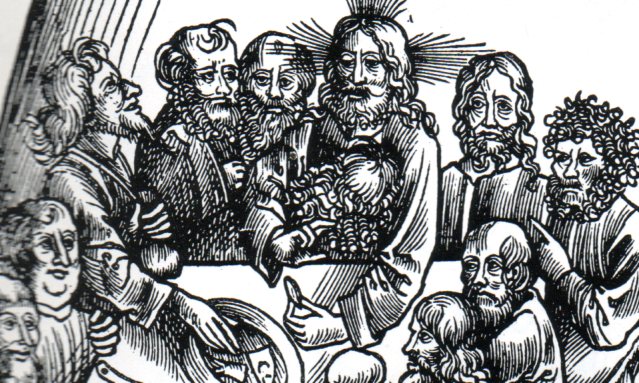
    The “thing” about Urs Graf’s art, for me, is the utter humanness of many of his figures–many of them, even the significant characters in his works, have a certain unexpected everyday quality to them, a common touch, right down to unruly Homer Simpson hairs on bald men, disciples or not.  

    Urs graf073

    This is a detail from Graf’s (1485-1527/9) Passionis Christi... which was printed in 1506, the date of which makes Graf’s achievement even more remarkable.  

    From Grove Art Online: Urs Graf  (b Solothurn, c. 1485; d ?Basle, 1527–9).

    “Swiss draughtsman, goldsmith, die-cutter, engraver, woodcut and stained-glass designer,painter and glass painter. He was the most original and gifted artist of the early Renaissance in German-speaking Switzerland. His highly imaginative drawings, created as independent works of art, are works of exceptional quality, vitality, expressiveness and often humour. For northern European art, Graf played an important role in the liberation of drawing from its traditionally subsidiary status as preparatory study for works of art in other media.”

    Here’s the full version of the print, showing the Last Supper and Christ washing the feet of the Disciples:

    ·Posted by :

    ·in:

    —

  • Russian Non-Representational Futurist Art–a Different Sort of Revolution, 1913

    JF Ptak Science Books   Post 2157

    “Colour is the keyboard, the eyes are the hammers, the soul is the piano with many strings. The artist is the hand which plays, touching one key or another, to cause vibrations in the soul”–W. Kandinsky, Concerning the Spiritual in Art,  translated by Michael T. H. Sadler, 1912.

    Russian futurist Natalia

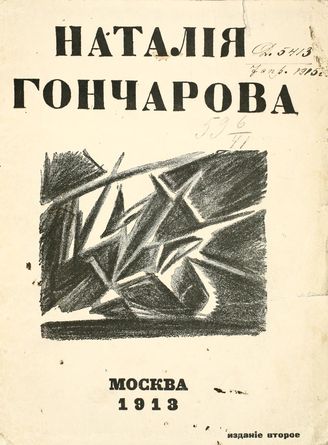
    I’m not sure exactly when the first published non-represntational/purely abstract book illustrations appear–perhaps it is with the Kandinsky book in 1912. Kandinsky is widely seen as being probably the first to produce art where there was “nothing” of the physical/representational world recognizable in the artwork–this around 1910/11. The trend was widely seen in the Impressionist movement of the 1860’s/70’s+ (and with James Whistler 30 and forty years earlier) though finding art like this in book form published contemporarily with the artwork itself is a fairly rare event.  By later 1911 and through 1912 completely non-representational painting was seen in the work of many, including Gelizes, Delauny, Kupka, Dove, Picabia, and others.

    What I found particularly interesting in this image by Natalia Goncharova (1881-1962) was that not only was it a book/pamphlet illustration, but it was on the cover, as well.  I know this must be very early for artwork such as this to be published in a book, but it strikes me as being very unusual that it is straight-away the first thing you see. 

    ·Posted by :

    ·in:


  • When You Leave out the Detail, Where Does it Go?

    JF Ptak Science Books   Post 2140   Part of the series on the History of Blank, Empty, and Missing Things.


    Follow Me on Pinterest

    When modern art was becoming modern, and artists were reveiling more of nature and life by using less of its components and using more of suggestion and motion and color–leaving out the “detail”–where indeed did that detail, well, go?
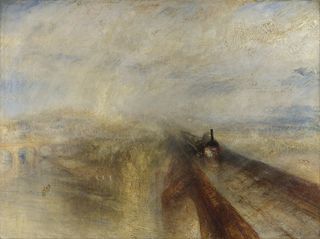
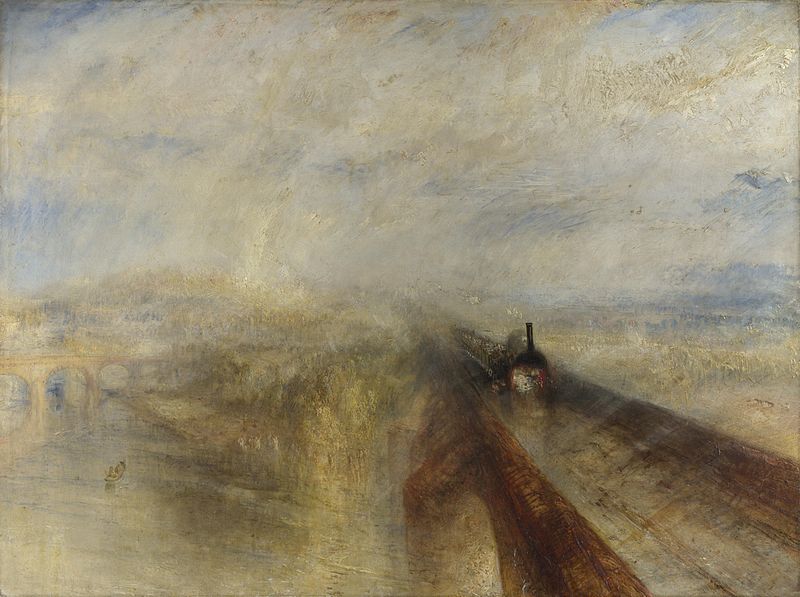
    Detail turnerIt is interesting to imagine a composite world to our’s, a place where that missing and removed detail goes.  For example, when JMW Turner painted a train passing over a river on a bridge, he was more suggestive of the scene than he was in reality-based descriptors.  [Rain, Steam and Speed – The Great Western Railway, 1844.]  The intricacies of realism and reproductional relativity is not there, the action and train and river implied, artistic impressions and whatever else was in the artist’s toolbox or mind’s eye. 

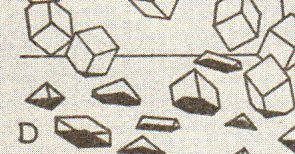
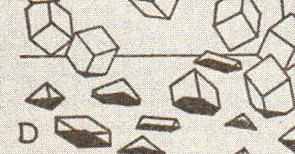
    Perhaps the seeping detail from one world to the next is more like the sphere entering the two-dimensional world of Flatland, or better yet the reverse of Charles Bragdon’s 1drawings of the footprints of 3-D objects passing through a 2-D plane…the detail of the Turner seeping through the canvas and into the opposing DetailWorld, falling like rain. Maybe it is a world of non-representational images and impressions awaiting the attention and arrival of detail to give it all a solid, easily distinguishable representation of the imagined world around the easel in that Other Place.
    Detail bragdon

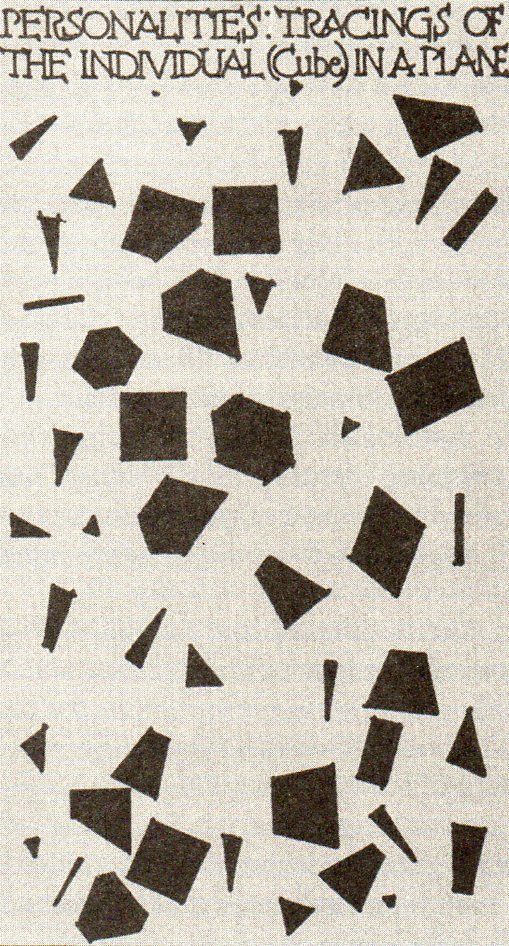
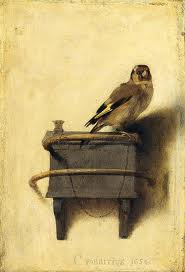
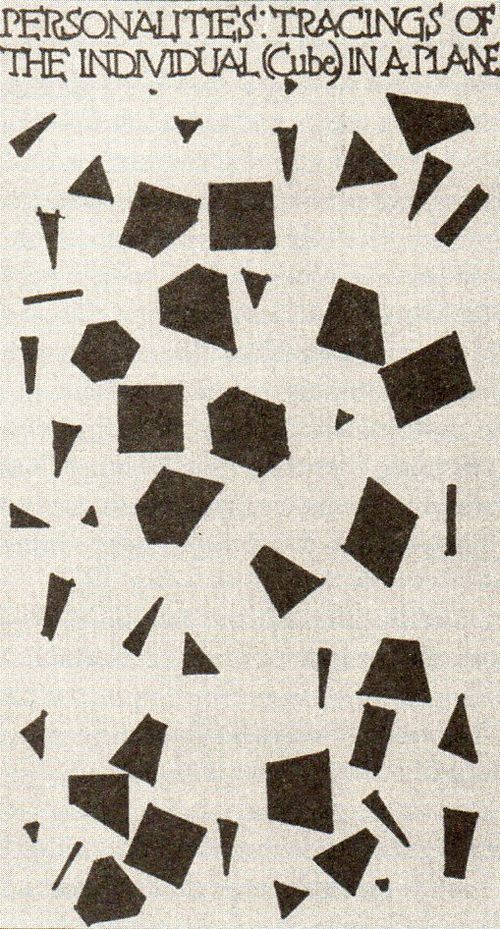
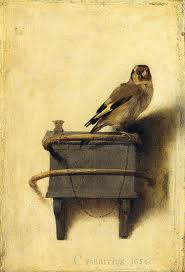
    Another beautiful image by Bragdon is from “Personalities: Tracings of the Individual (Cube) in a Plane” from  Man, the Square2 shows the “shadows” of the three-dimensional figures as they lived in their two-dimensional world.  It comes close to the impact of the cubes above, but really only depicts what two-dimensional creatures would see of the three-dimensional beings inhabiting their Bragdonesque world.  Blog--blagden 1 det349 All of this was put into my mind by seeing this image (The Goldfinch, 16540  by Carel Fabricius.  Clearly we can see a bird on a perch, chained to the upper rung, with another rung below, but as much as we can see  the detail  we don’t.  So much of this image is suggested and implied, hundreds of yers before Impressionism:  the face of the bird is barely there, the second rung dissolves into the wall, the shadows are muted and half-existent, and so on.  The details of the painting are as much missing as they are there.
    Detail fabricius

     And of course the world of detail would disappear more and more, until by 1911, it existed hardly at all, the representational world drifting off the canvas completely, for those who wanted that to be the case. 

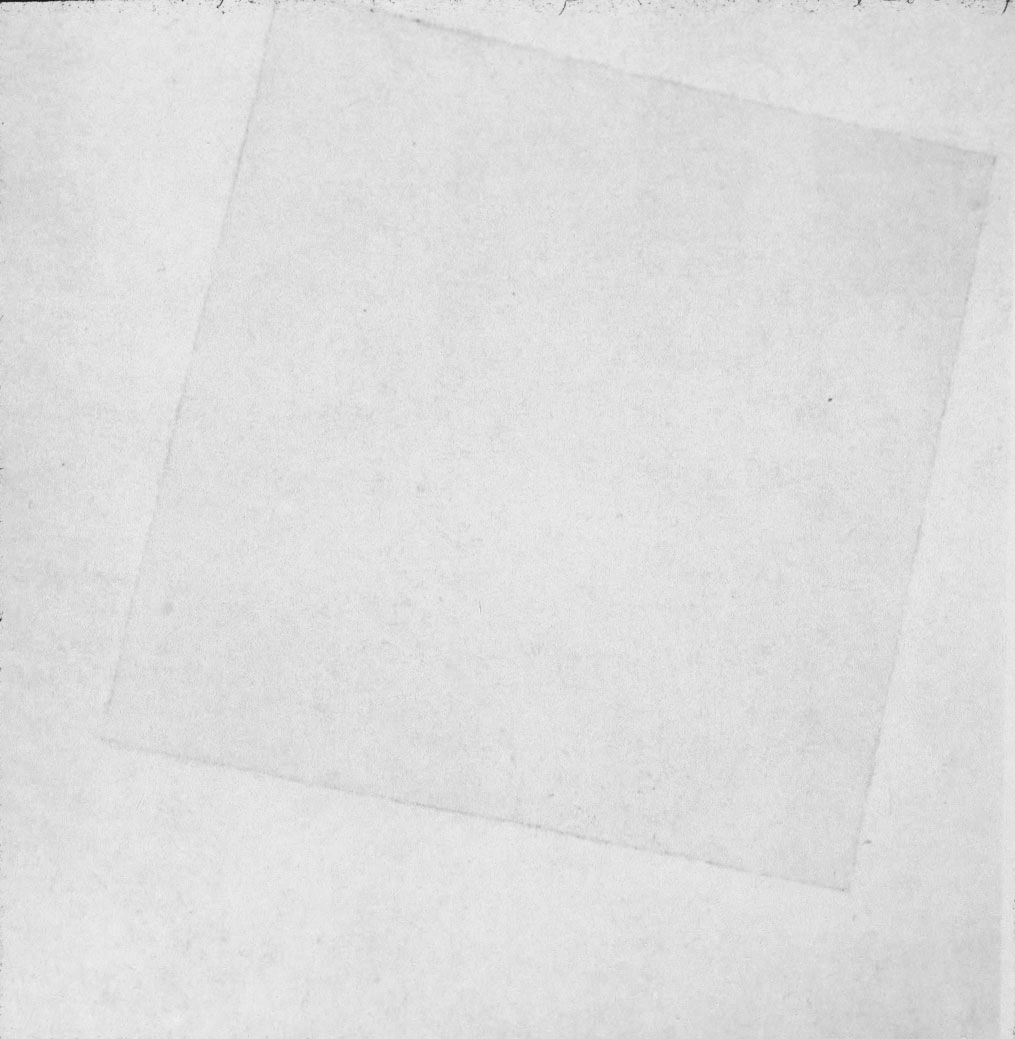
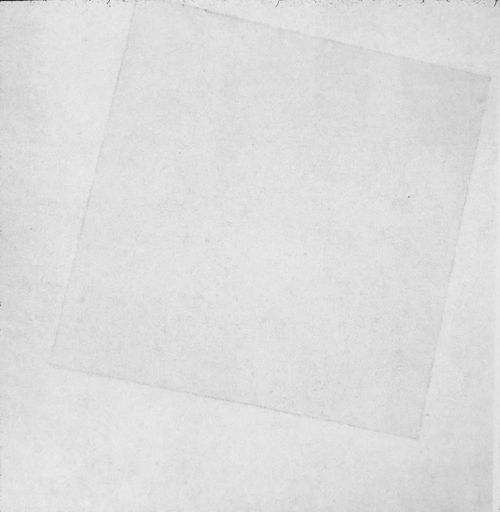
    Again, as much as say Kasimir Malevich made all of the detail go away in his Suprematist paintings like a white square on a white square (White on White, 1917/18, which I can say is not served well at all with images online or in books, as the artwork is really pretty textured and detailed),
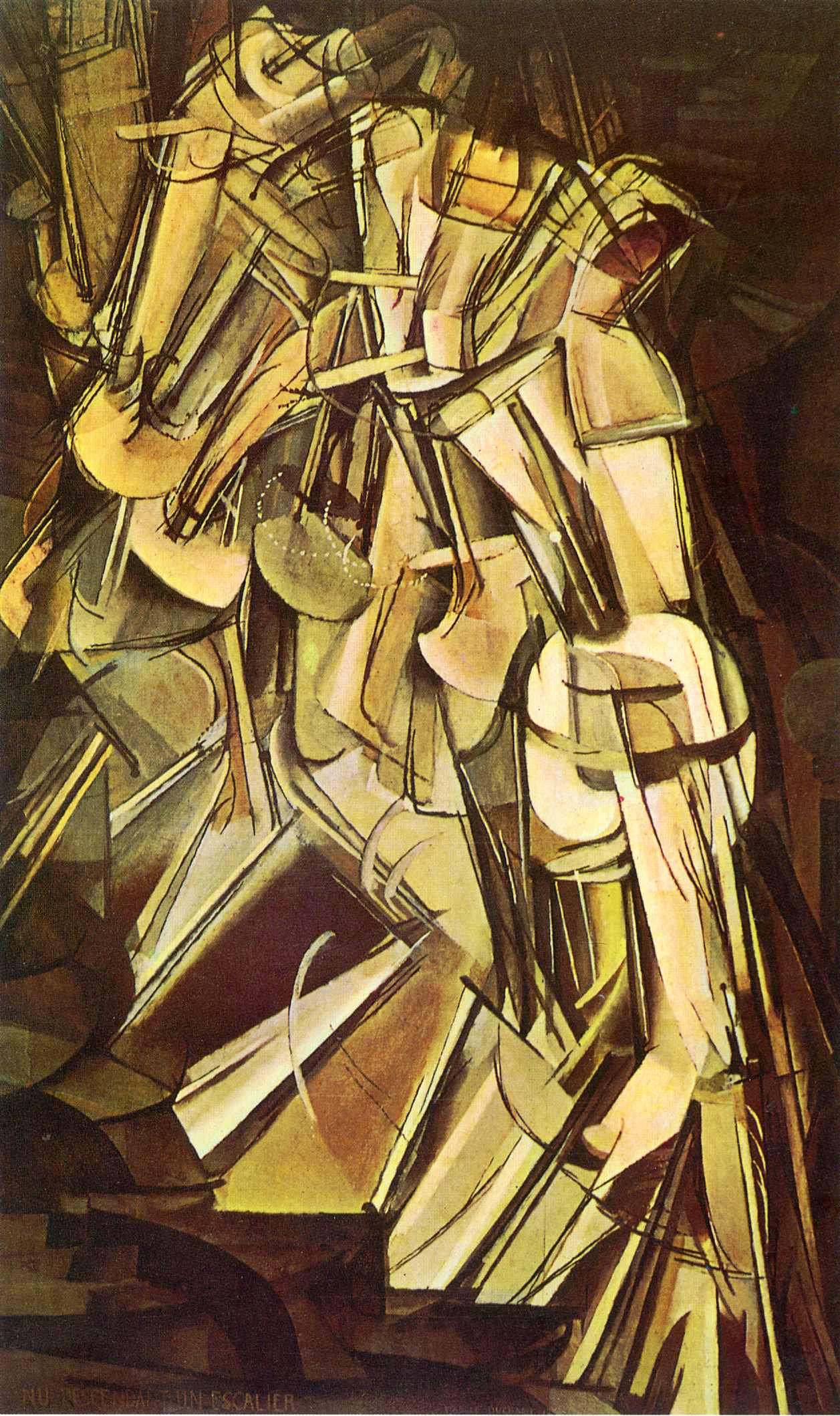
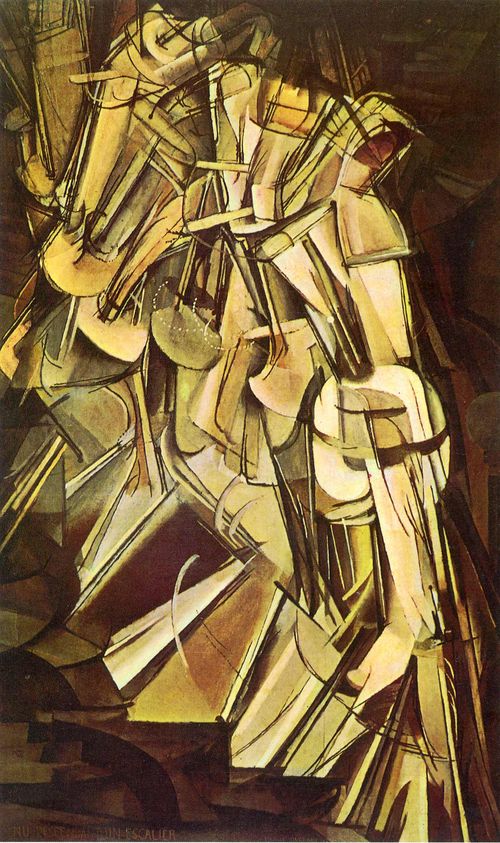
    Detail  white squareat about the same time ither artists like Marcel Duchamp were both taking away details of one sort while adding new details of another never-yet-done sort, as in his Nude Descending (1912), where we begin to see the representation of the fourth dimension in art:
    Detail duchamp

    Perhaps the rain of details into DetailWorld work in reverse for the unexpected details of stuff we can’t see in our world? 

    Well. We know that there is no DetailWorld, but I think it is certainly interesting enough to think of these revolutionary changes in art and trying to imagine the enormous amount of painterly stuff that the innovations/discoveries replaced, if they were to all go to one place.  In a way it is analogous to the changes in the mountain that I can see now from my living room window–mostly it is invisible when the patch of woods between our house and the mountain is all leafed out (seeing the forest for the trees), but with autumn and winter here at about the same time, it is easier to appreciate both the trees that I can see when I can’t, and the mountain that I can’t see sometimes when I can. 

    Notes:

    1.(Bragdon) A PRIMER OF HIGHER SPACE. (The Fourth Dimension). Rochester: Manas Press, 1913. 8vo, (12), 79pp, including 30 plates. 

    2. (Bragdon) MAN THE SQUARE. A Higher Space Parable. Rochester: Manas Press, 1912. 12mo, 34pp, 9 illustrations.  

  • On the Uncommon Black Sky in the Renaissance

    JF Ptak Science Books 
    Follow Me on Pinterest

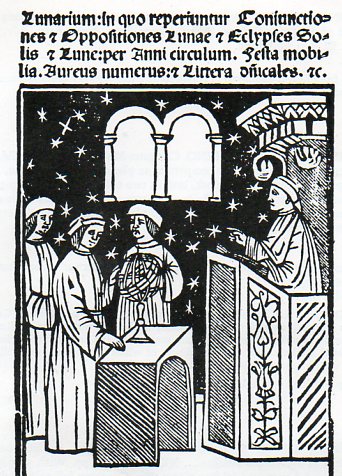
    A quick note here adding to a growing collection of “deep black” antiquarian images–this one, oddly enough, a simple black sky.  As it turns out, there are not that many old images of black skies, night skies…nor are there any great numbers showing dark room interiors, or inside of caves.  So when I come across an interesting old engraving/woodcut with a lot of black, it gains my attention.  And so with the following, which is the title page from the Spanish astronomer Bernardus de Granollachs, Lunarium: in quo reperiuntur Coniunctiones & Oppositiones Lunae…, which was a small pamphlet of 16 pages printed in Rome in 1516.  The booklet contained tables of conjunctions and oppositions of the Moon, as well as this gorgeous title page. 

    Lunarium811


  • Ultra-Modern Design in “Parade”, 1917: Picasso, Satie, Cocteau, Diaghilev

    JF Ptak Science Books  Quick Post

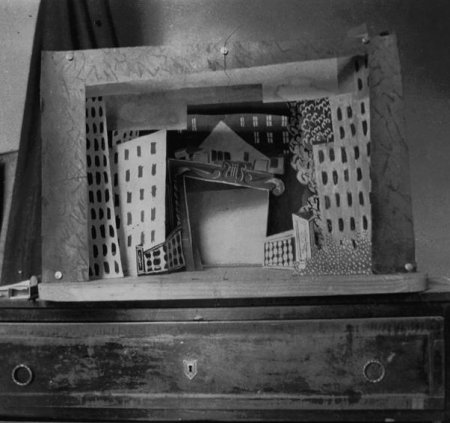
    One of the great powerhouse collaborations in the history of earlyish modernism came on 8 May 1917, in the performance of the 15-minute operette, Parade.  Spearheaded by Jean Cocteau, the piece used stage and costume designs by Picasso, was scored by Erik Satie, and performed by Diaghilev’s Ballets Russes. (It was not received indifferently–there was a major upset in the world of the critics and many hated negative response from the audience, evidently much like that received by Stravinsky’s Rite of Spring at its premier seven years earlier, also featuring Diaghilev’s Ballets Russes.)

    The image below is a maquette of the stage by Picasso:

    Parade--picasso marquette[Source]

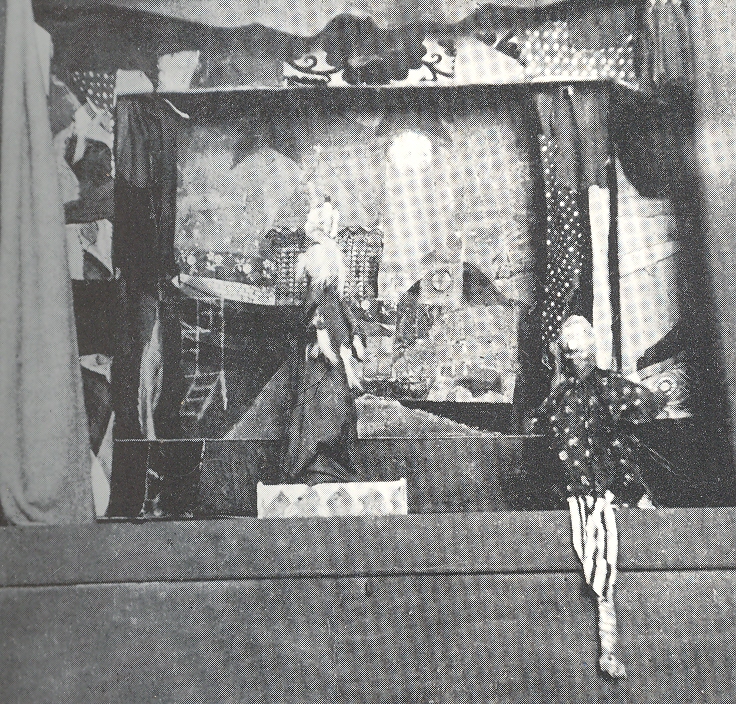
    The spirit of this object reminds me of Paul Klee’s private puppet theatre productions for his son Felix, which includes this fantastic stage:

    https://historyofideasblog.com/a/6a00d83542d51e69e20120a5033277970b-pi

     [Source: earlier post on this blog, here.]

    ·Posted by :

    ·in:


  • A Semi-Proto-Cubist Technical Work, 1908

    JF Ptak Science Books   Post 2130  
    Follow Me on Pinterest

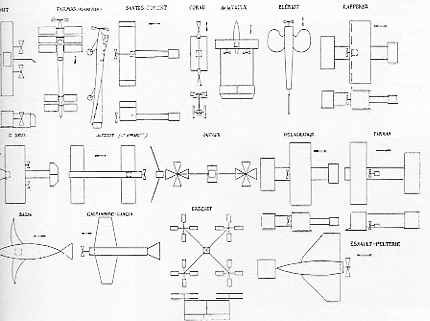
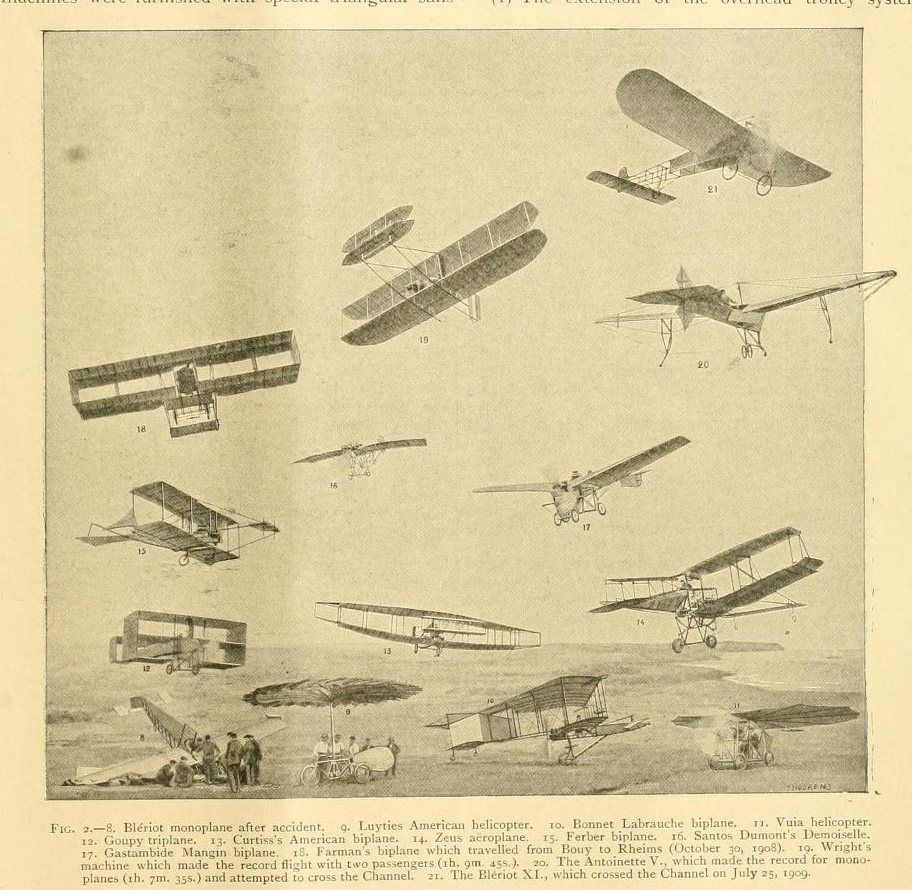
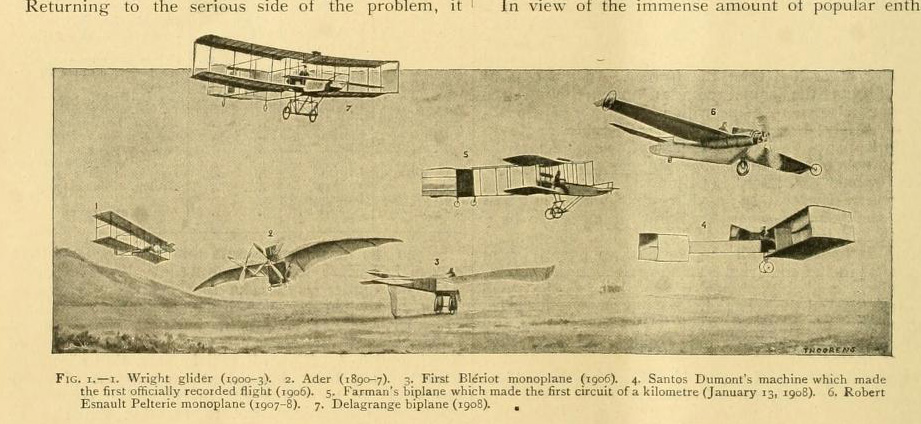
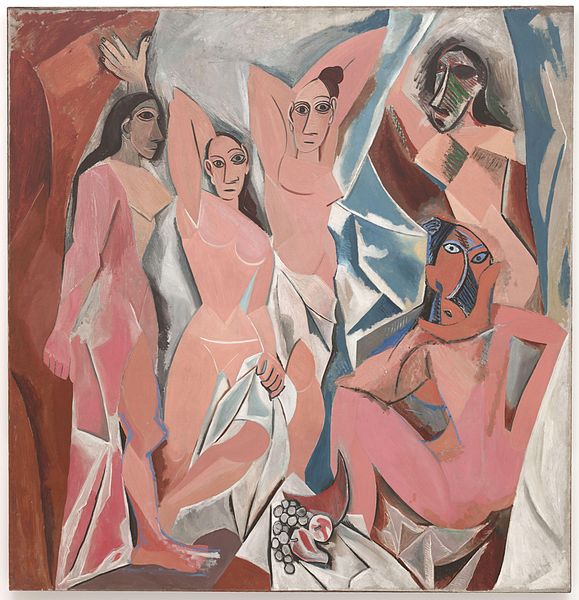
    This graphic from Nature magazine (volume 76, page 670, 1908) features a host of early flyers from five years or so following the first Wright powered flight.  The diagram, which was also made in the first few years of the Cubist movement (and only a year after Picasso’s Demoiselles), has a certain geometrical semi-proto-Cubist feel to it.  The slickee, hard-edged approach to depicting the flying machines and placing them on the single sheet gives the work a modernist artistic feel to it in the earliest period of 20th c modernism in the first movement of abstract art. 


    Aviation cubist
    The other thing is that so far as I can tell no major Cubists used the airplane as a subject matter in a painting in the first few years of the movement–which seems a little odd to me, given that it was such a major technological advance that took place in about the same time period as Cubism. 
    Just a year later another collective.montage appears ina quite different form;

    Nature aviation

    [Source, Nature, volume 81, page 399, 1909. And the detail, below:]

    Nature aviation 2

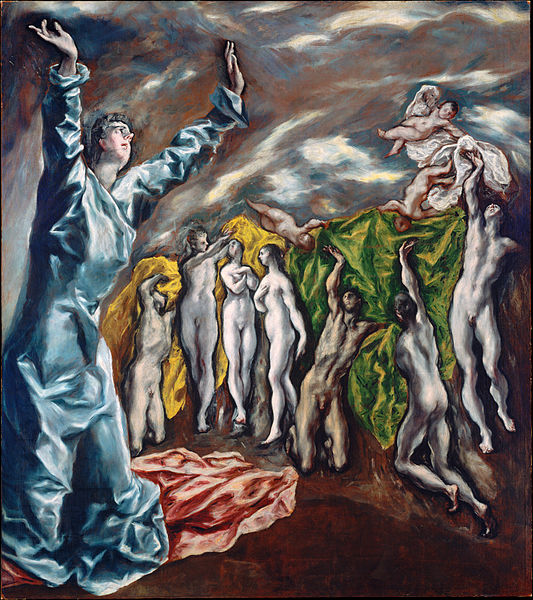
    And speaking of precursors, now that I have mentioned the Picasso I should also say something about El Greco’s The Opening of the Fifth Seal (or The Fifth Seal of the Apocalypse or The Vision of Saint John), painted three hundred years before the Demoiselles.  El Greco (1541 – 7 April 1614) was not of his own time, not really…
    Demoiselles_d'Avignon
    El_Greco,_The_Vision_of_Saint_John_(1608-1614)

    ·Posted by :

    ·in:


  • The Trained Neutrality of Killing

    JF Ptak Science Books   Quick Post

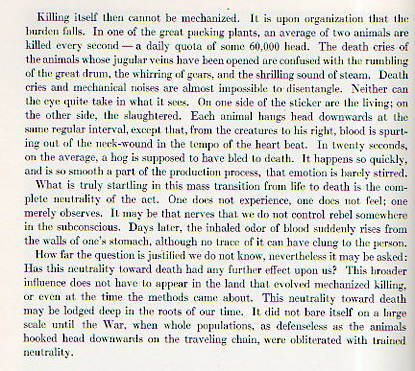
    Siegried Giedion wrote a terrific book called Mechanization Takes Command (and beautifully subtitled ...a contribution to anonymous history) in which he (sweepingly) looks at how mechanization took over from hand production in the life of social and technical world. 

    The book was published by Oxford University Press in 1948, and given that year, Giedion has something very interesting to say about killing.

    After investigating “The Mechanization of Death: Meat” and how over hundreds of years the hammer-to-the-head and skinning that transforms an “animal” into “:meat” turned from human to mechanical hands, he decided that “what is truly startling in this mass transition from life to death is the complete neutrality of the act”.  The animal=meat act and the mechanization of killing removes the “human” element of the act, and that “one does not experience, one does not feel; one merely observes” a killing that is not somehow dying.  He reckons that this experience may in general have made us more capable of desperate act of killing that do no longer seem so desperate. 

    It is a remarkable and early insight into the meat industry from an uncommon and unexpected source.

    Giedion738[Source:  Siegfried Giedion, Mechanization Takes Command, Oxford University Press, 1948, p.246.]

    ·Posted by :

    ·in:

    — —

  • An Interesting Three-Part Perspective, 1560

    JF Ptak Science Books  Quick Post 

    Follow Me on Pinterest


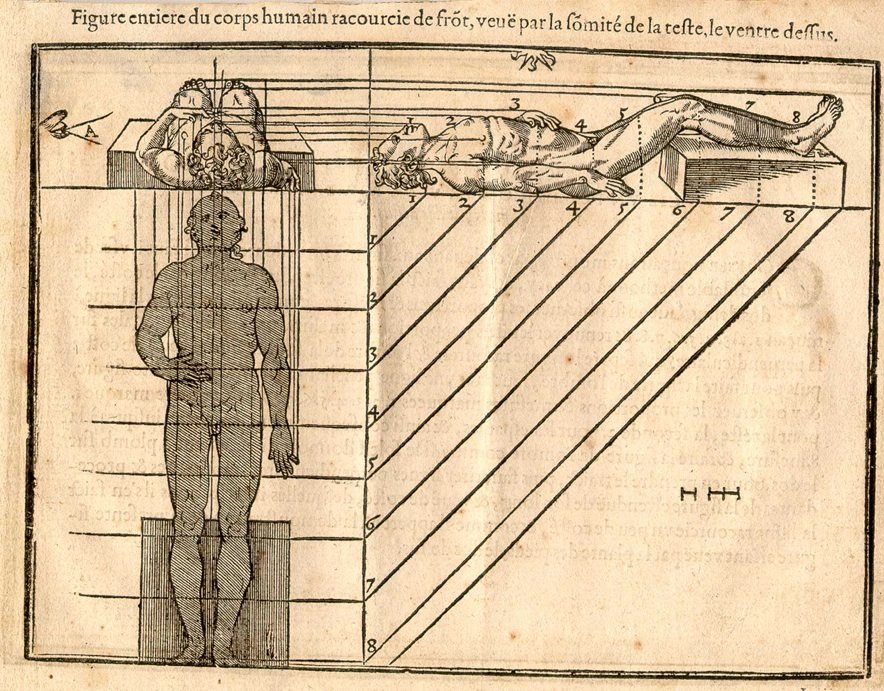
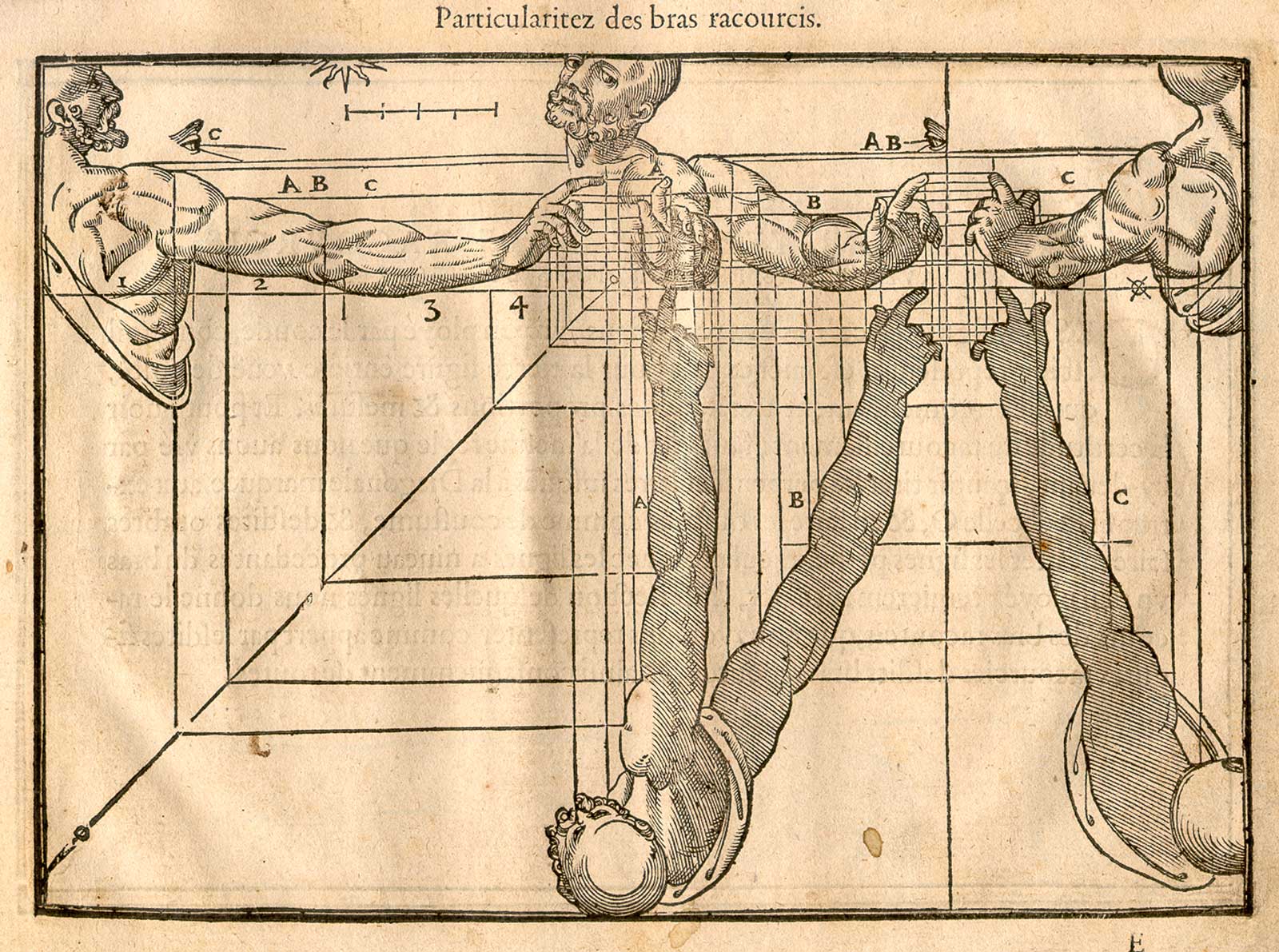
    I’m not sure if I’ve ever seen a 16th century human perspective drawing showing the body in plan and elevation and cross-section.  Jehan cousin the younger (1522-1595, in France), the son of Jean Cousin the Elder (1490-1560), a painter and sculptor, produced such an image in his Livre de Perspective, which was published in 1560. Well, the image definitely was published in 1560, though the artist may have been father and it may have been son–they worked closely together, and the Younger was taught at great length by the Elder, so much so that their work became indistinguishable. Nevertheless, the images I think are quite extraordinary, as we see below: 


    And so by Andreas Mantegna, a classic example:

    The following images come from the 1608 edition of the Cousin Perspective. a number of which are fairly unusual (all from the Library of Congress site, here):
    Cousin_p16

    ·Posted by :

    ·in:

    — —

  • Bubbles of Cubist and Steampunk Dada Futures from 1812

    JF Ptak Science Books   Post 2105

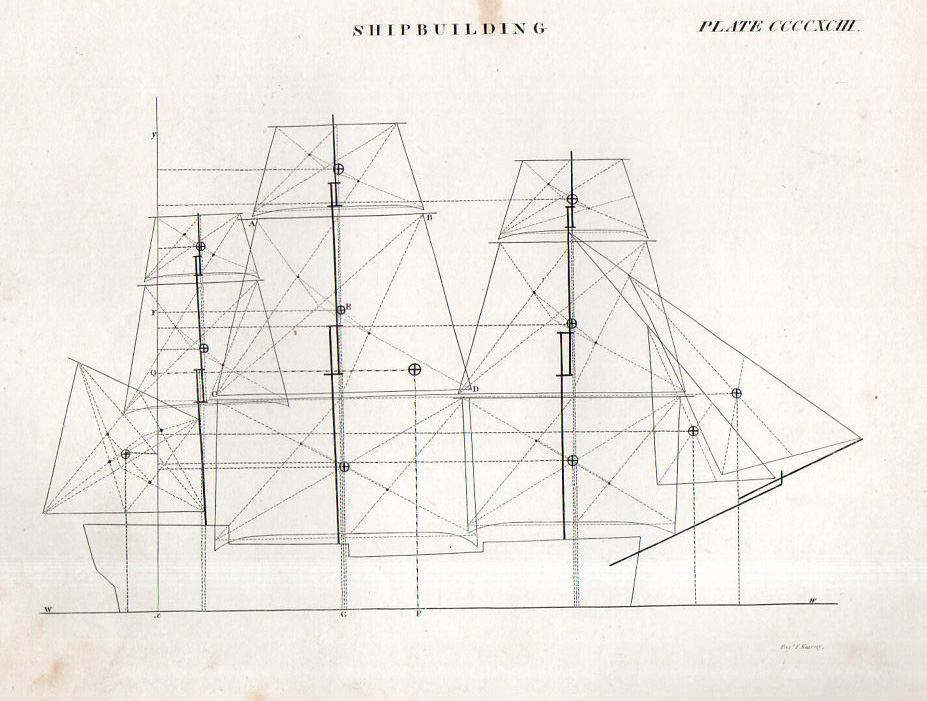
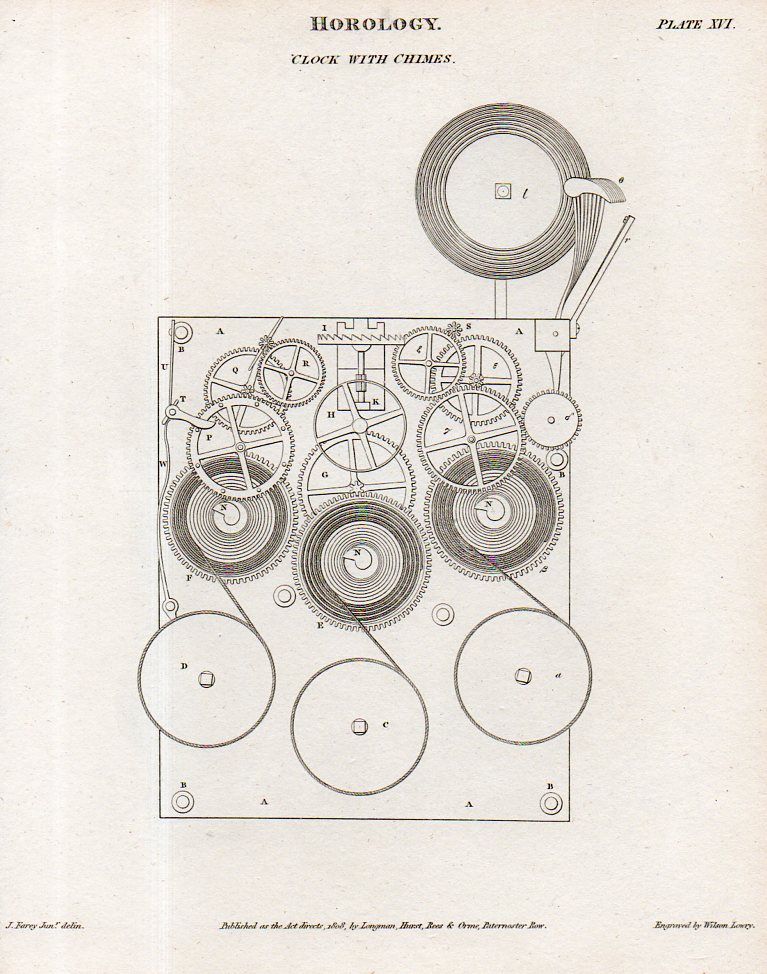
    I think that a pre-proto-neo-antiquarian or whatever Cubist representational form is very clear in the 1812 engraving, which was a relatively simple formulaic presentation of ship/sail construction found in Rhees’ Encyclopedia.  “Clear” of course to someone here in the print’s future, seeing what that form could actually become apart from showing the naval necessaries.  But it always puzzles me how an image like this could appear and someone didn’t take the next step and turn the thing into “art” of some sort.  That would all happen soon enough, the loosening of form and its representation via impressionistic and geometrical ways–Mr. Turner was already 37 years old when this print was published, and on his way (at least intellectually) to his magnificent Romantic career. 

    Cubist653

    Why wasn’t this art in 1812, aside from people not being quite ready for it?  Maybe there is no other “thing” apart from that.  It would take nearly another hundred years before the representational form of say a ship was lessened and stripped away, softened , modified, rubbed, erased, into something that is the object but really isn’t.

    Perhaps what we have here is a peep (like with Durer’s geometric man) into the future at modern art, a dissonance between abstraction and realism.  There is a regeneration of form taking place in this image, but it is only something on its way to creating a more idiomatic engineering representation of naval needs, and not a new art form–that would have to wait for Braque and Gris and Leger and Delauny and Villon and Picabia and Duchamp and the rest.  So this pre-non-Cubist engraving is not a key to a new vocabulary of vision–it is just a drawing of ship’s sails. 

    Here’s another example of pre-modern art peeping out from the pages of this same encyclopedia, this one being a Prehistoric Rayograph, or a proto-non-photographic example of Man Ray, but from 1810 (and which I wrote about here):

    Cubist-Dadaist655

    Which is a detail from:

    Cubist-Dadaist654

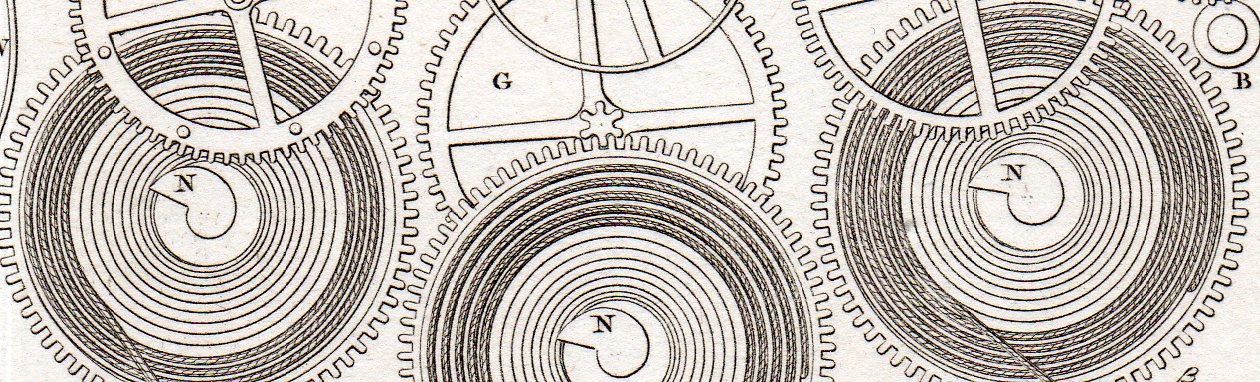
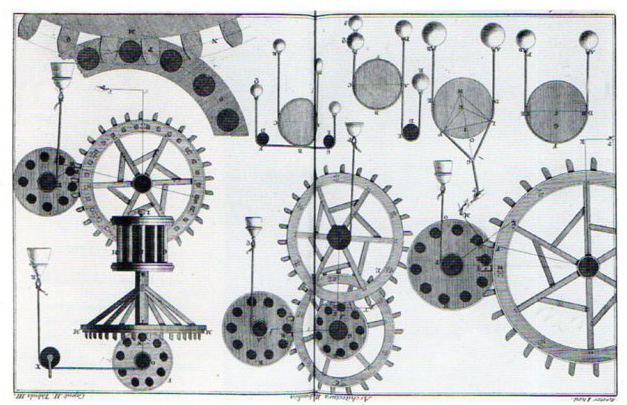
    The engraving below is another fine example of futuristic bubbles, this one a possible example of Steampunk Dada, and appears innocently (and beautifully, and importantly) in Architectura Hydraulica (1740),
    and titled “Demonstration of Friction”.  I’ve simply inverted it and
    removed some of the numerical notation–and then, suddenly, it becomes a
    sort of Steampunk Balloon Machine–a lovely collection of small
    balloons lifting large wheels and cogs, assembling some sort of
    something in mid-air, demonstrating very little friction, of lightness
    and airiness.

    Belidor upside down

    Seems to me that if you look hard enough that these examples are, well, kind of everywhere.  They just aren’t yet what they could’ve been.

    Notes:

    Here’s another example:  Geology of Images: Finding Pre-biotic, Neo-Dadaist Images in Antique Astronomy Prints (here)