A Daily History of Holes, Dots, Lines, Science, History, Math, Physics, Art, the Unintentional Absurd, Architecture, Maps, Data Visualization, Blank and Missing Things, and so on. |1.6 million words, 7500 images, 4.9 million hits| Press & appearances in The Times, Le Figaro, Mensa, The Economist, The Guardian, Discovery News, Slate, Le Monde, Sci American Blogs, Le Pont, and many other places… 5000+ total posts since 2008.

Author: JF Ptak

  • Straps, Forceps, the Chamberlens and the Subjugation of Women

    JF Ptak Science Books LLC Poat 157
    Blogonbstetrics271
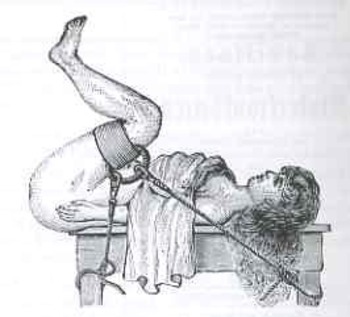
    I’m really not sure about how to interpret this image.  At first glance I thought it was part of a delivery procedure, but it turns out that this was the rigging for a woman undergoing a gynecological examination.  The woodcut appears in the first volume of Sammelband von 7 Kleinschriften zu gynakologischen Spezialthemen, 1858-1901, and more exactly in the contribution by Ludwig Neugebauer on an examination with a “speculum bivale l’ecarteur vaginal a trios branches…”  published in 1884.  I know that the prissy prejudices brought about with the coming of Queen Victoria in 1837 still had another 17 years to go at this point, which could explain why, perhaps, a doctor would want an aid in helping a woman maintain an examination position without him having to touch his patient, but, well, just look at the massiveness of the restraints!  Also, the woman’s arms are *inside* the ropes—not down, not holding the ropes, but inside the binding, restrained.  Either way, it isn’t good, treating the woman—in either case of pregnancy or obstetric examination—as the inferior vessel.

    This is also part of a long history of the subjugation of women—the medical aspects of that indoctrination were perhaps somewhat more heinous than the social/legal/ethical/pedagogical/moral constituents.  This illustration, even coming at the end of the Victorian era and approaching the dawn of encroaching bits of equality for (white) women, is a fair example of their subordinate status.

    I just happened upon this picture during the course of my business day—a random image compiling these thoughts.  If I were to try and choose another example of the medical aspect of the subjugation of woman I think that I would choose the story of the Chamberlen family.  For several generations, beginning around 1680, this family of medical doctors practiced a secret—their secret—in delivering breeched babies.  Breeched babies are those who were born feet first, which was usually a death sentence for both the child and the mother.  Patriarch William Chamberlen invented a device that would greatly aid in delivering babies in this position—the forceps.  And evenForceps
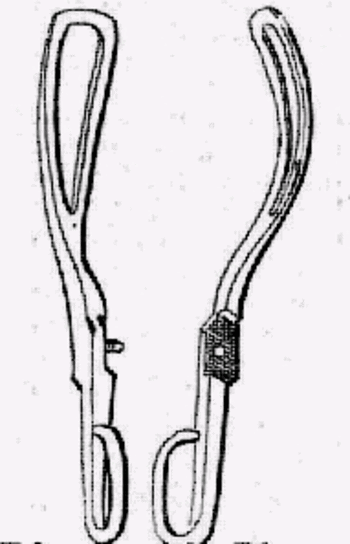
    though everyone today knows what these things are, the Chamberlens kept them a secret from the inquisitive medical world for more than a century.  Their instrument was shrouded—literally!—in secret(s), used under cover, with ceremony, conveyed to the delivery area in a box and brought out with no witnesses.  The Chamberlens felt their invention to be their own, for their own particular use and monetary gain, and the rest of the world be damned, and at least three generations (grandfather, father, son) kept the family secret. If their family could not be in charge of such a delivery then there would be no use of their extraordinary invention.  This of course would save their income from being chipped away by other physicians or midwives or whatever competent person could be found to utilize the forceps—their economic gain coming at the cost of (savable but imperiled) pregnant women who would either pay the Chamberlens for aid in their breeched births or, well, probably die.     To what degree this revolting behavior damaged other people can not be calculated. I’m not even sure about how to translate this into something more recognizable—would it be like Robert Koch keeping his isolation of Bacillus anthracis (1877), or  tuberculosis bacillus (1882) a secret?  Or Wilhelm Roentgen shrouding his discovery in secrecy somehow? (I know, I know, this is impossible.)  Or isolating a secret, proprietary cure for cancer?

    There is a large part of me that believes that if the Chamerlens had figured out something like this that affected only men, a silver bullet for something or other, that their secret wouldn’t stayed a secret for 100 hours, let alone 100 years. 

  • Language of Flowers

    JF Ptak Science Books LLC   Post 156

    Today we make a handy little post on understanding some of the rudimentary and occasionally fickle meanings of the feelings and emotions associated with flowers–otherwise known as the Language of Flowers.  I post this without editorial comment.  Perhaps it will be useful to someone.  ALSO:  there is a reverse index of emotions:flower in part two of this post. 

    Abatina       Fickleness
    Abecedary    Volubility
    Acacia    Secret,  chaste love
    Acalia                Temperance
    Acanthus    Art
    Aconite                Misanthropy
    Agrimony    Thankfulness
    Almond    Promise
    Aloe               Grief
    Althea, Frutex        I am deeply in love.
    Amaranth         Immortality, or piety.
    Amaranth (Globe)    Immortal love
    Anemone            Fading hope.
    Angrec    Royalty
    Apple-blossom    Preference
    Arbor vitae    Everlasting friendship.         
    Auricula, Scarlet         Pride. You are proud.
    Bachelor’s button       Hope in love.
    Balm         I long for your society.
    Balsamine          Impatience; or, pray come.
    Bay Leaf           I change but in dying.
    Bay wreath    Glory
    Bee orchid    Industry
    Bells of Ireland    Luck
    Bird’s foot trefoil    Revenge
    Box    Constancy
    Broom    Humility
    Bulrush    Docility
    Buttercup    Riches
    Cabbage    Profit


    ·Posted by :

    ·in:


  • The Mermaid–Not Exactly a Disney Creature, 1822

    JF Ptak Science Books  LLC   Post 155
    Mermaid
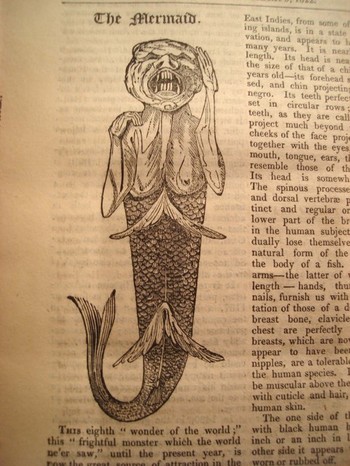
    Contrary to common belief and image saturation, the Mermaid was not
    exactly a cuddly, whimsically enchanting, luxuriously beautiful
    creature, as this woodcut from the British The MIrrour (1835) magazine
    attests.  The mermaid is old and world-wide, but in British
    storytelling, it is mostly an ominous creature, creating havoc,
    provoking doom and destruction, and perhaps even devouring ships (as
    they could be enormous in size, 150 feet and up).  The syrienic
    beauties of John Waterhouse and Frederic Leighton et al,
    with beauty and intrigue dripping from their brushes, had little to do
    with most of the legends of these creatures.  This is one of the most
    fascinating of these images that I’ve seen–in a pitched battle between
    The Kraken and this 150′ mermaid, I think that the she-demon would win.

    ·Posted by :

    ·in:


  • Simple Sublimity: Images of Disappeared Common Objects. Traffic Lights, 1936

    JF Ptak Science Books LLC  Post 154
    Blogtraffic262

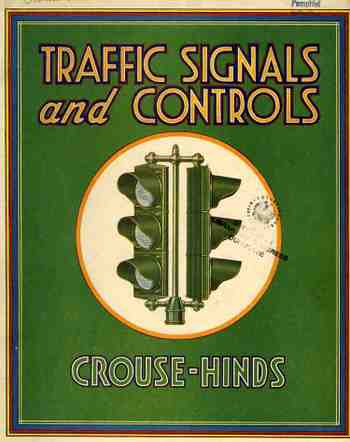
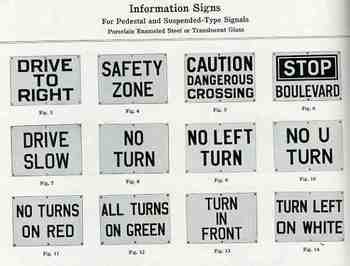
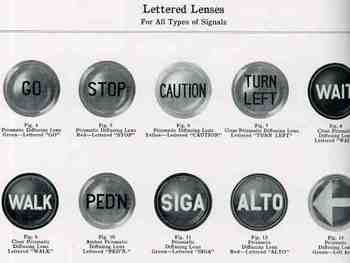
    These images are about as basic as it gets for the common, everyday, overlooked objects from the disappeared past.  They come from the Course-Linds manufacturer’s catalog for traffic lights and other control systems called, yes, Traffic Signals and Controls, published in Syracuse (NY) in 1936. It is a beautifully designed catalog—excellent illustrations laid out perfectly on their pages, with all of the data you’d ever need to order these things for your municipality. 
    Blogtraffic263

    What I find so fascinating about the images here is that they depict ubiquitous objects that today would today—given their ephemeral nature—be exceptionally difficult to find. 
    Given this catalog, today they are not.


    Blogtraffic260

    Blogtraffic259_2


  • Subduing Insanity with Narcotic Induced Sleep: Mental Illness Treatments in 1845

    JF Ptak Science Books Post 153
    Blogdrugs_crazy254
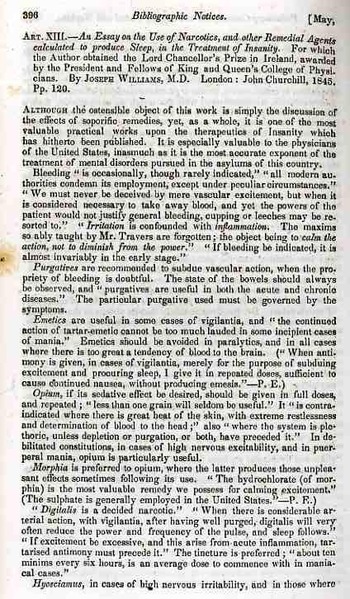
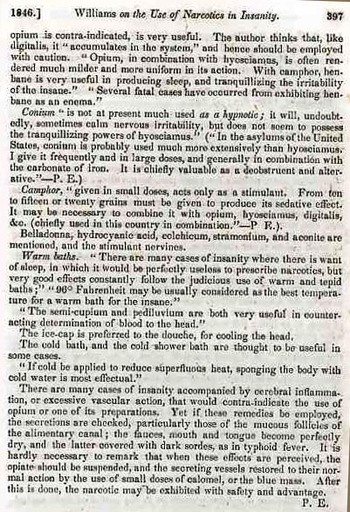
    This book review on the use of narcotics in treating the insane appeared in the New York Journal of Medicine for 1846.  The book, “An Essay on the Use of Narcotics, and other remedial Agents calculated to produce Sleep in the Treatment of Insanity….”, by Joseph Williams, M.D., and published in London in 1845.  The theory behind the sleep treatment was that the basic mechanism of insanity was “cerebral inflammation” or “excessive vascular action” in the brain—inducing deep sleep, evidently, was a good way to combat the over-active brain.

    The article itself comes at an odd time in the history of the treatment of the insane.  It came almost 40 years after the establishment of  McLean Hospital (first known as the “Asylum for the Insane,” a division of the Massachusetts General Hospital), which opened on Oct. 1, 1818, and was the first hospital dedicated to the treatment of the insane in the U.S.  It came 70 years after the great advances of Benjamin Rush, who elevated the “Mental Patient” from chains on the floor to the status of medical or nervous illness or disease.  The use of narcotics over this period seems to have surged and waned.  In 1879, in an article in the New York Times, the reputation of the Asylum for the Insane on Ward’s Island in NYC was considered—and one of the high points was that it had (largely) discontinued the use of narcotics. (There were still problems, of course, what with the asylum being overcrowded, housing 1100 in an institution meant to house 700, and where the chores and even nursing positions were staffed by the inmates, who were feed on 32 cents a day.)  As late as 1921, though, Jacob Alter Goldberg notes in his Social Aspects of the Treatment of the Insane, that there was a new, sharp increase in “toxic narcotic” treatments of the insane.  Of course, I guess one could replace “narcotic” with some sort of other misplaced treatment, like shock therapy, or Freudian mélanges, or something.  Each age must necessarily have their entry in the encyclopedia of embarrassments
    Blogdrugs_crazy255 . 

    In this article we find sleep assaulted by the use of the following:  purgatives (“to subdue vascular action when the propriety of bleeding is doubtful’), emetics, opium (to be used “in cases of high nervous excitability and in puerperal mania”), morphia (“the most valuable remedy for calming excitement”), hyosciamus (“to produce sleep, tranquilizing the irritability of the insane”).  It is weird to see that the last sentence in the description of hyosciamus reads “some fatal cases have occurred from exhibiting henbane as an enema”.  A narcotic enema?  Still to come in the review is conium (“I have used it frequently and in large doses…it is chiefly valuable as a deobstruent and alternative”, followed by camphor, Belladonna, hydrocyanic acid, colchirum, stramonium aconite, and others.  “Warm baths’ makes an appearance (“90 degrees may be considered to be the best temperature for a warm bath for the insane”), as do cold baths, and the applications of ice caps. 

    I’m not so sure about what to make of it all, the sleep treatment of insanity I mean—after all, Joseph Lister only makes his epochal pronouncements on cleanliness in the operating theatre 15 or so years after this paper, which seems today to be the most rudimentary thing that one could do in treatment in the surgical room, so treating extra blood in the brain through drug-induced sleep doesn’t seem all that far away from the realm of possibility back there in early Victorian England.

    I don’t think I’ll forget the toxic narcotic enema any time soon, though.  Or the word “deobstruent”. 


  • Crowds and the Press of Humanity: WWI German Prisoners, November, 1918

    JF Ptak Science Books   LLC  Post 152

    Blogcrowdsphoto_ww1249_2
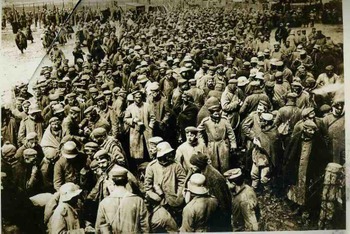
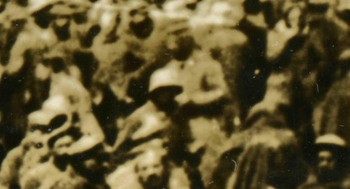
    This image comes from a collection here of First World War news service photographs,  showing German prisoners being readied for transport home, and dated 20 November 1918.  This group had evidently surrendered just before the armistice was signed, and was sent directly and instantly  to a staging area for transport back to the Fatherland.  The way that many newspapers obtained the war images that they published in their papers was via a semi-centralized pool of war images.  The newspaper would request, say, a photo of German prisoners, and would contact one of these photographic agencies—in this particular case, it was the Central News Photo Service of 26-28 Beaver Street, NYC—and purchase the rights for republication, and then print it in the newspaper along with the story.  In almost every case the photo would be accompanied by a caption mimeographed onto an attached piece of cheap paper, and in this case it reads:  “Waiting to Return Home/a photo just received showing a batch of enemy troops who surrendered just before the signing of the armistice, joyously discussing the coming of peace and the opportunity of returning home to their families.”
    Blogcrowdsphoto_ww1_detail_long251

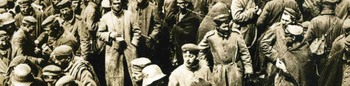
    I seriously doubt that the copy editor could read the minds of either the photographer or the troops in the photo.  I would imagine that they were definitely joyous about going home ALIVE to their families, but when looking really closely at the picture the thing that seems to dominate the actions of the people is food.  Or cigarettes.  But mostly when looking hard at the faces in the photo, the men just look tired.
    Blogcrowdsphoto_ww1_detail_super253

    Looking very closely at these types of images has always been fascinating; look close enough, under high magnification, and the large photo becomes composed of dozens of smaller photos.  The whole is an assemblage of vignettes, each in themselves a work of art.

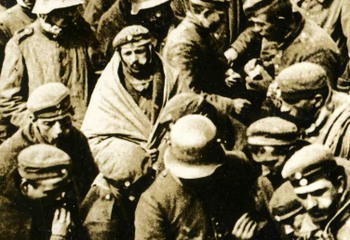
    Continuing in a more odd tone, I’m also reasonably convinced that after looking at hundreds of faces in a photo like this that you’ll find a picture of yourself.

    Blogww1_crowd258_2

    I did.  This section is a 3200 dpi scan of a 15×10 mm section, and I am undoubtedly and unquestionably the bald bearded man (one of the few people in the image without a hat) at center-bottom. 


  • Beautiful Technical Illustration: Heck’s “Iconographic Encyclopedia”, 1851

    JF Ptak Science Books   Post 151

    J.G. Heck wrote and compiled a fascinating and complex work entitled The Iconographic Encyclopedia of Science, Literature and Art, and was published in America for the first time in 1851 following Spencer Baird’s translation from its original German.

    Blogtunnel_full239

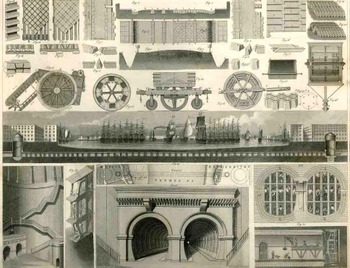
    The key to his work is the amount of data displayed on each of the 500 engraved plates illustrating this work and the way in which it is arranged.  The design and layout of the 30,000 items on these 500 plates was a work of genius, and for my money it is easily the best-presented complex means of the display of data and objects that was published in the 19th century.   

    Take for example this illustration in the technology section (a subdivision of the applied arts which is a sub division of the plastic arts) and, continuing in this complicated scheme, was Plate 1 from Section X Number A1 with a description found in the text on a dozen pages in Section 2 of Volume 2 on section pages 134-150 and overall page numbers 835-851 (!).  The plate contains 35 figures, very finely executed and rendered (many of the other of the 500 plates have 100 or more figures), and is in general related to the construction of roads and tunnels (and further, part of the “communications” section).

    This of course would be a perfect Hypertext candidate.

    Blogtunnel_top240

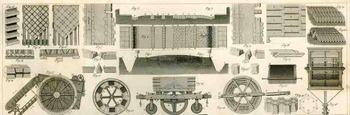
    The illustration itself contains an enormous amount of information.  The row along the top third or so is dedicated to street construction and paving stone, showing stones in plan and profile, as well as a cross section and ground plan of a “typical” street (including sidewalks).  It is interesting to note the detail of the cross section and the stonework that is placed beneath the horse and wagon section of the street.  There are some other beauties here as well–details of wooden paving blocks, the plan for a Laves of Hanover road, different ways of cutting stone blocks—but we won’t deal with those right now, except to point out that there are several renderings of street cleaners and road rollers (of Shettenmann and another of Schaefer) used to border the street section from the tunnel section. 

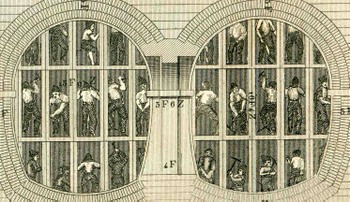
    Blogtunnel_middle241 The middle section of the engraving is of course a cross section of the Thames tunnel of the beautifully-named Isambard Kingdom Brunel (begun in 1825 and completed 1843, the tunnel 35 feet wide (11 m), 20 feet (6 m) high and 1,300 feet (396 m) long, running between Wapping and Rotherhithe at a depth of 75 feet (23 m)).  The representation here is only one inch high and ten inches long but is loaded with just fabulous detail, no the least of which are the (less than) 1mm tall workmen that can still be seen in the tunnel.

    Blogtunnelbig_detailig247
     
    The enlarged detail shows a section of the tunnel being built according to Brunel’s new specifications:  a larger, shielded tunnel being constructed around the interior construction of 12 individual tunnels (each about tall enough to allow a (short) man to stand erect. 

    In short, the engraving is a superb example of *correct* design of great artistic  ability, all accomplished while displayed heaps and gobs of interconnected, complex information. 


  • Weird and Bad Ideas Department: Shell’s Happy Herbicide, 1960

    JF Ptak Science Books  Post 150
    Blogbizarre_shell_mower244_2

    This image appeared on the inside cover of Scientific American for May 1960.  Our happy diver (with a mask but no way for air intake) is mowing some sort of nefarious weeds in a pretty and clear environment.  This was Shell Chemical Company’s advertisement for their new chemical herbicide Aqualin, sort of an underwater napalm.  Of course the human weed eater wouldn’t want to be around (see below) when the liquid mower was applied, but he surely gives a homey, care-free face to their new acutely toxic chemical application. 

    Here’s some interesting, acute data on this amazing New Mower! (from  the Cornell University website):

    • Aqualin (product discontinued by Shell Chemical Co., Chemical Intermediates); Magnacide H Herbicide. FORMULATION(S): 92% acrolein, 0.78 kg ai/l (6.5 lb ai/gal.
    • Important Weeds Controlled: Used to control submerged and floating aquatics as well as algae.  Also kills snails.  Toxic to seeds.  Some fungicidal effects.
    • ACUTE TOXICITY/DERMAL:  LD50 = 50 mg/kg (rat); 30 mg/kg (mouse); 562 mg/kg (rabbit, undiluted); 1022 mg/kg (rabbit, 10% aqueous solution).  Severe skin irritant. Causes vesiculation and a chemical burn if not removed immediately.  1 ppm of acrolein in air produces detectable nose irritation in 2 to 3 min and is intolerable in 5 min.
    • FREQUENT SYMPTOMS AND SIGNS OF POISONING: HEADACHE, DIZZINESS, NAUSEA, and vomiting are prominent early symptoms of excessive exposure to these gases.  Acrolein is a strong irritant causing BURNING SENSATIONS in the nose and throat, TEARING,COUGH, and sometimes hoarseness and wheezing.  DROWSINESS, TREMORS, double vision, and weakness are the common early manifestations of central nervous system impairment.  Tremors may progress to myoclonic movements, then to generalized SEIZURES, UNCONSCIOUSNESS, and death.


    ·Posted by :

    ·in:


  • Fantastic Titles: “Mud, Its Romantic Story”, 1935

    JF Ptak Science Books LLC   Post 149

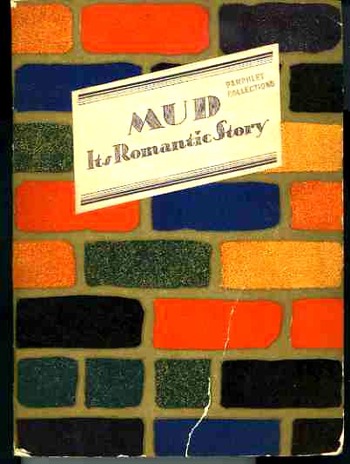
    Blogmud236I have a collection of some fantastically-titled pamphlets and books.  After considering their reaching, speculative, bizarre and surreal titles, they fall into a number of sub-categories, including:


    –titles with question marks “?” (like the two wonderful pamphlets simply entitled “What ?” and of course the two that have no titles but question marks);
    –title with exclamation points “!” (these two marks actually don’t occur very often at all in titles, especially when the title itself already has a built in question/exclamation mark);
    –titles that include the phrase “the history of…” or “the story of….” so long as that history/story is (very) unusual;
    –titles that demand something or other of  “America”  (i.e., “Will America be Invaded?” or “America, Mussolini or Moscow” or “Sandbags, Worms and America”);
    –title pages with American flags.

    This excludes a lot of the general naïve-surreal and historical pamphlet collection, but these, I think, would make a great exhibition of book of books, simply because so many of them have an unquestionable “what in the _” reaction capacity to them.

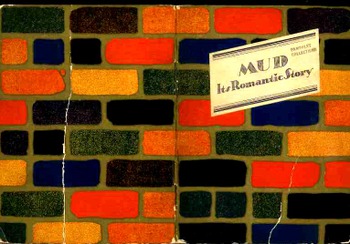
    This pamphlet, Mud, its Romantic Story, (by Richard G. Collier, for the Common Brick Manufacturer Association of America, Cleveland, Ohio)  is a prime example:  a terrific title and a beautiful design.  Point of fact though is that it is a lively little history of brick making in America.  The good content almost takes away from the fantastic title, but so it goes.

    Blogmud2237

    So from time to time I’ll post these titles here even though they really don’t have much to do with the supposed mission of this blog—I’m sure that they’ll be entertaining. 

    ·Posted by :

    ·in:


  • Nails and Screws: Beautiful and Well-Designed Simplicity

    JF Ptak Science Books  Post #148

    Here we have two glorious, lovely examples of craftsmanship of simple things. The first is The Republic Steel Corporation (Chicago) manufacturer’s catalog for their production of nails and other wire goods.  It is about fifty pages long, and a third or so of it is devoted to the history of nail and nail-making as well as the history of the company.  The rest is all about the product.  And mostly about nails.  All sorts.  It is just fantastic!  I must say in all the years of my own nail consumption I didn’t know that there were so many different sorts of nail POINTS (diamond, blunt, chisel, needle, duck bill, side, and so on) ion addition to the various widths and lengths and special uses.  The points just never entered into the equation to me, but, of course, it is very important. 

    Blognails_cover225

    And speaking of special uses, there are a number of interesting specified nails in this catalog that, I think, are long gone from modern hardware store  shelves, as the needs they addressed are gone:  beer case strap nails (oh my god I love the sound of that) AND beer case hinge/lock/latch nails AND beer case cleat nails, basket nails, shade roller pins, pole marking and dating (!) nails, barbed berry box nails, and egg case fasteners are among what I imagine to be extinct nails. 

    Blognails_barre227

    Then there’s the beautifully designed Southington Hardware Manufacturing Company’s screw catalog, called, wonderfully, Screws, (Wood, Sheet Metal, Phillips Head, Slotted Head), catalog 41 (with prices) for 1935.  There’s page after page (actually, forty-five pages) of very detailed specifications (dimensions of heads, diameter, thread and tolerance, each description accompanied by two (or more) engineering drawings of the screw itself. 
    Now THIS is a way to describe a product.

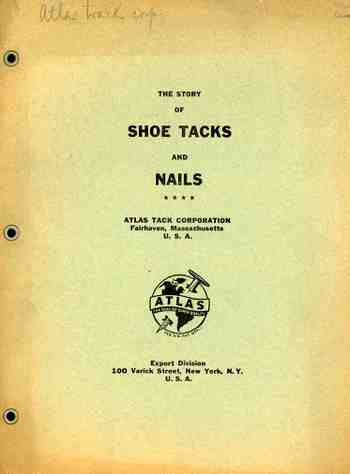
    This is followed up by a concise, nine-page (3,500 word) pamphlet published by the Atlas Tack Company (Varick St, NYC) on the history of shoe tacks and nails, bound, I’m happy to say, with metallic eyelets.  It contains pretty much all you need to  know on the history of shoe tacks, and I’m 100% behind the publication of odd-obscure histories such as this.  (I own perhaps a hundred “different” histories like this, including the massive non-classic “The History of Refrigerated Nuts”.) 

    Blognails_screws231