A Daily History of Holes, Dots, Lines, Science, History, Math, Physics, Art, the Unintentional Absurd, Architecture, Maps, Data Visualization, Blank and Missing Things, and so on. |1.6 million words, 7500 images, 4.9 million hits| Press & appearances in The Times, Le Figaro, Mensa, The Economist, The Guardian, Discovery News, Slate, Le Monde, Sci American Blogs, Le Pont, and many other places… 5000+ total posts since 2008.

Author: JF Ptak

  • An Image from the Big Book of Big Groups of Convicts (1911)

    JF Ptak Science Books  Quick Post

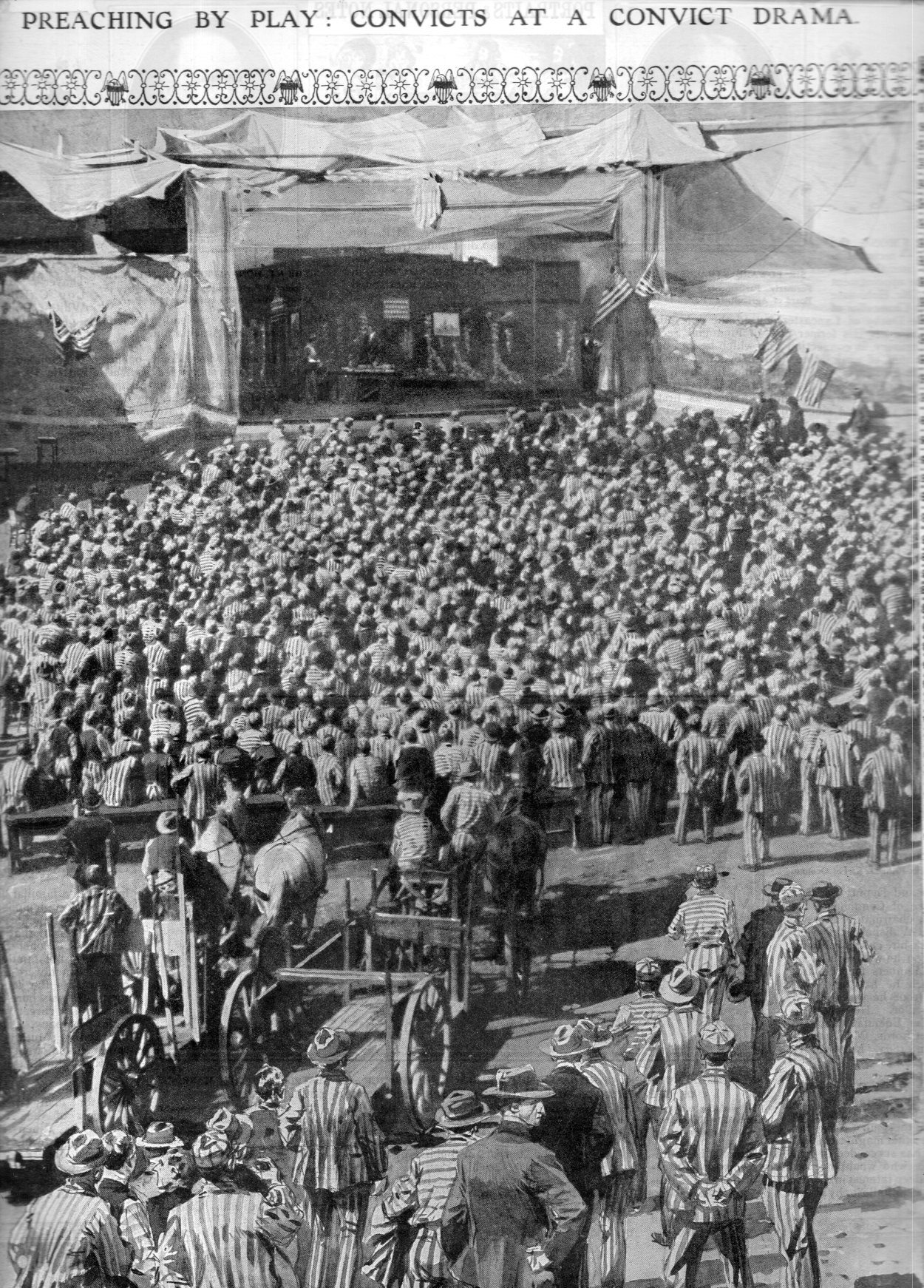
    The imaginary Big Book of Photographic Firsts is thick and brickish with data on the first times “things were done” in photography. That would include processes, papers, uses of chemicals, lenses, materials for the camera, and so on, not to mention the long lists of the first time certain sorts of images were made: the first photograph (and not necessarily the first Daguerreotype), the first photograph of a face/Moon/Sun/Sunset/full-body portrait/first outdoor image/first image from a height/first image from a balloon/first photo of a dead person/and so the list continues. This came up tonight while looking at the photo below, a mass photograph of prisoners, which caused the thought about when the first pictures of convicts were made (and then of course the first images of a prison, and the first for a mass of prisoners, etc.). As it turns out the earliest convict photos are pretty early, in the early 1840’s (Daguerre’s announcement coming in 1839 and almost immediately became an active technological meme). The individual photos of prisoners were fairly haphazard, though, with no forensic value for several decades, when Alphonse Bertillon came by in the 1870’s and created standards by which all prison portraits/mug shots were made. Unfortunately I was not able to find anything on the earliest mass photographs of prisoners by my imaginary “press time”, so I’m posting this photo and its half-story as is—hopefully I’ll come back to it with some data back-fill to make it right. In the meantime, though, all I wanted to do was to share the image, which I think is extraordinary in its own right.

    Convicts108

    [Source: The Illustrated London News, October 29, 1911, page 669.]

    [And to further complicate the story of this photo it seems to be 2/3 photo and 1/3 drawing, making it a montage–the third or so closest to the viewer is definitely a drawing; the rest of it is definitely a photograph. There’s a lot of people in this photo, and almost everyone has a hat.]

    ·Posted by :

    ·in:


  • A King-Hell Review of the U.S.: “Who Reads an American Book?” (1820)

    JF Ptak Science Books   Post 2474
    Criticism109

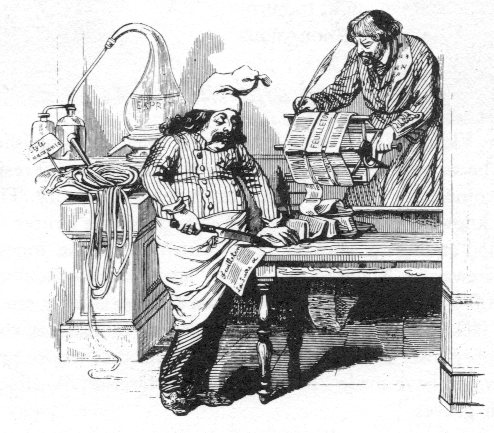
    Sydney Smith was a cleric and critic; I don’t know much about the former, but I have seen some of the later, and it could be insightful and acidic. Here’s an example that I had seen years ago and then bumped into again this morning, a massive and stinging observation on the United States, in general. It comes in a review of a seemingly brickish/factoid work by Seybert, and is a data-trove publication of statistical information, and appears in The Edinburgh Review.

    After a lengthy appreciation of the work, Smith can hold himself no more. It is in the final two paragraphs of the review in which he freezes everything stock still, wanting whomever was reading his words to answer his series of questions so that they can form the answers themselves–but no matter, Smith provides the answer in the end, impatient for someone else to do the thinking.  That’s okay–the man made a good point.  

    In my experience if this wit is remembered at all it is for the opening fragment about the American book–that actually comes way at the end of the page-long paragraph; and it is really in the rejoinder, the final bit of that long sentence ending the paragraph, where the real venom sits, waiting for its victim to step into it.

    “…In the four quarters of the globe, who reads an American book? Or goes to an American play? or looks at an American picture or statue? What does the world yet owe to American physicians or surgeons? What new substances have their chemists discovered? Or what old ones have they advanced? What new constellations have been discovered by the telescopes of Americans? What have they done in mathematics? Who drinks out of American glasses? or eats from American plates? or wears American coats or gowns? or sleeps in American blankets? Finally, under which of the old tyrannical governments of Europe is every sixth man a slave, whom his fellow-creatures may buy, and sell, and torture?”

    “When these questions are fairly and favourably answered their laudatory epithets may be allowed. But till that can be done we would seriously advise them to keep clear of superlatives.” –Review of  Adam Seybert’s Annals of the United States, published in The Edinburgh Review (January, 1820).1

    Ouch.  I wanted to get to the main quote straight-away in this short blog post; it is preceded by some rougher stuff, as insightful as the above but not as committed to the overall social memory:

    “…The Americans are a brave industrious and acute people but they have hitherto given no indications of genius and made no approaches to the heroic either in their morality or character. They are but a recent offset indeed from England and should make it their chief boast for many generations to come that they are sprung from the same race with Bacon and Shakspeare and Newton. Considering their numbers indeed and the favourable circumstances in which they have been placed they have yet done marvellously little to assert the honour of such a descent or to show that their English blood has been exalted or refined by their republican training and institutions. Their Franklins and Washingtons and all the other sages and heroes of their revolution were born and bred subjects of the King of England and not among the freest or most valued of his subjects. And since the period of their separation a far greater proportion of their statesmen and artists and political writers have been foreigners than ever occurred before in the history of any civilized and educated people. During the thirty or forty years of their independence they have done absolutely nothing for the Sciences for the Arts for Literature or even for the statesman like studies of Politics or Political Economy…”

    The entire review is worth a read–it is a good overview of the data, and is also peppered with choice nuggets, like this one on Florida:

     Notes:

    1.  The review is reprinted in The Literary and Scientific Repository, and Critical Review, Volume 1, by Charles Kitchell Gardner, pp 177-186.

    • Read a short, interesting insight into the book that Smith was reviewing here, by Eric Salughter.
    ·Posted by :

    ·in:


  • Daily Dose from Dr. Odd: Japanese Skeleton Cruiser in Californa Desert 1945

    JF Ptak Science Books  Quick Post  Daily Dose from Dr. Odd series

    It seems to me a lot of effort and material went into constructing this mock-up of a Japanese cruiser, but maybe not.  Perhaps that is just what was required.  In any event it is an odd image.   

    Japanese cruiser105Source:  Popular Mechanics, January, 1945.

    ·Posted by :

    ·in:


  • A Remarkbly- and Completely-Disappeared Invention from 1890

    JF Ptak Science Books 

    I’ve written a number of times on this blog about my interest in collecting the artwork of children–kid art from say before 1900–and how difficult it is to actually find examples. Most of that has been serendipitous, finding scribbles and drawings of notebooks, and ledgers,  and free endpapers of schoolbooks, that sort of thing.  There are a number of reasons for this scarcity–the greatest being lack of paper, and pencils, or paints; that, coupled with the stuff needing to survive multiple generations of house cleans and moves and so on, well, it just means that not a lot has survived. 

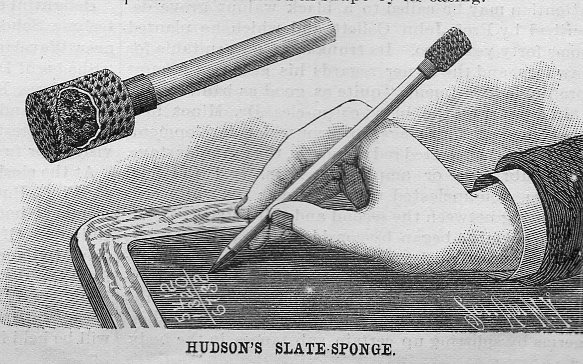
    Scientific american slate pen sponge102[Source: Scientific American, September 13, 1890]

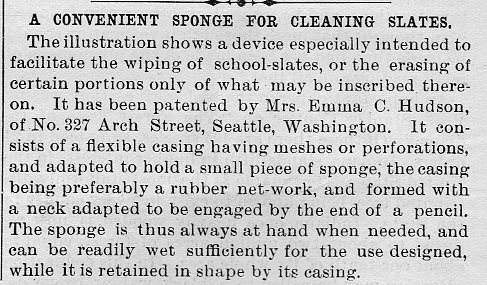
    Lack of paper or paper being too expensive was a big deal, and so kids used slates, which means that very little has survived on the slate itself.  And to further point out the ephemeral nature of slate-written/drawn material, I present the slate eraser sponge! It is a little bit of a thing that fits over the slate stylus and allows a really thorough erasure/sponging of anything on your slate.  No only was the slate stuff gone, it was double-gone. 

    This is also an invention that is remarkably well nested in the dustbin of abandoned and unnecessary useful inventions that worked superbly for about two decades, and were never heard from again. 


    And the text:

    Scientific american slate pen sponge103


  • Not-Quite-a-Racing Line of Underpowered Convertibles (1928)

    JF Ptak Science Books  Quick Post

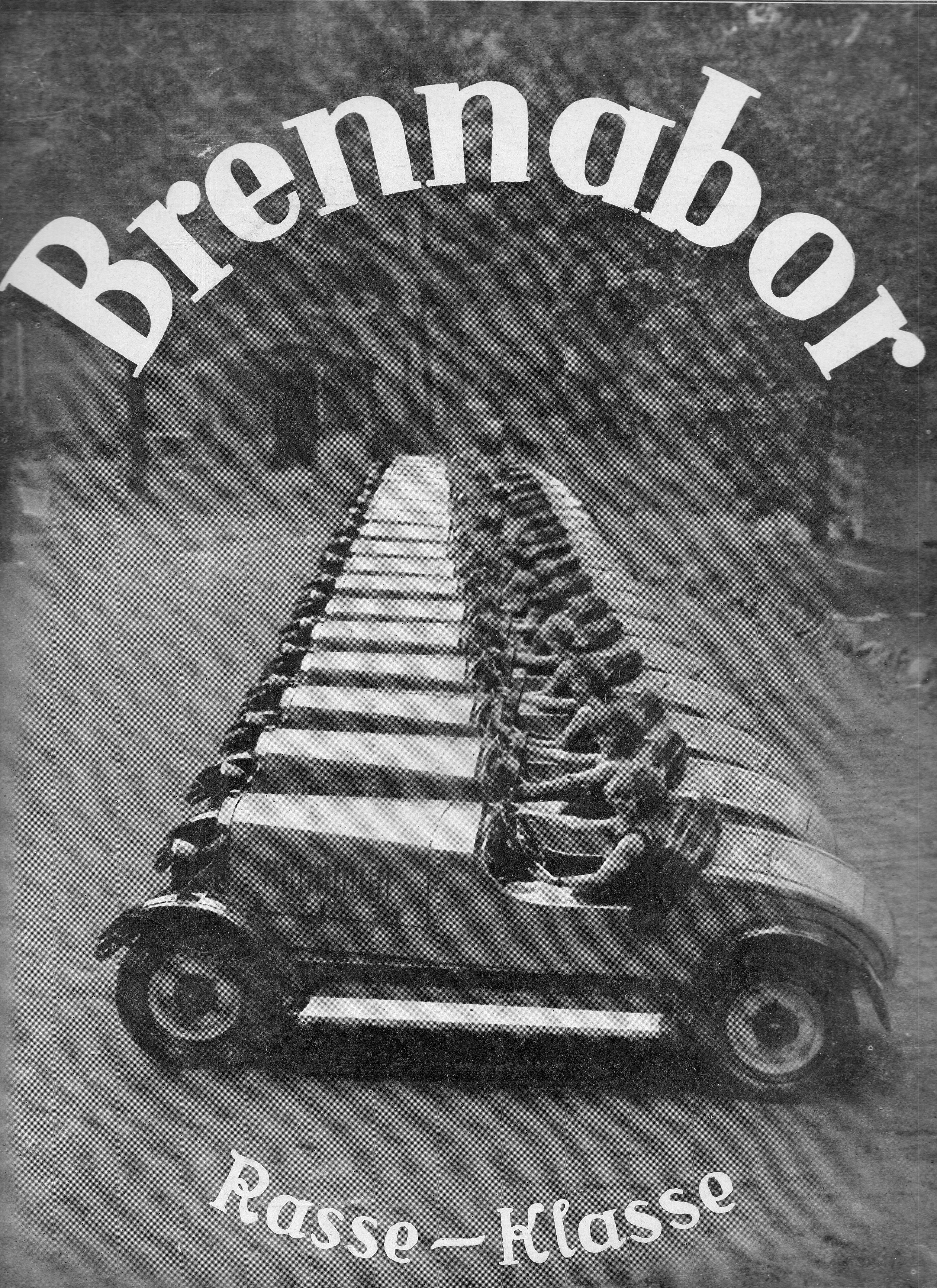
    Well, I really don’t have much to say about this ad except that I like the design and that it is not typical featuring nothing but women drivers in tanktops behind the wheel of the car you’re trying to sell.. It looks as though there are 20 cars in a row here, stretching back like 120′ or so from the camera.  The women are at the wheel of one of Brennabor’s four cylinder, 70 horsepower sports-ish vehicles, capable of seating two (not-big) people.

    Poster  brennabor089

    Source: Illustrirte Zeitung (Leipzig), ca. 1927/8


  • Technology–a Beautiful Tunnel Image of 1890

    JF Ptak Science Books   Post 2472

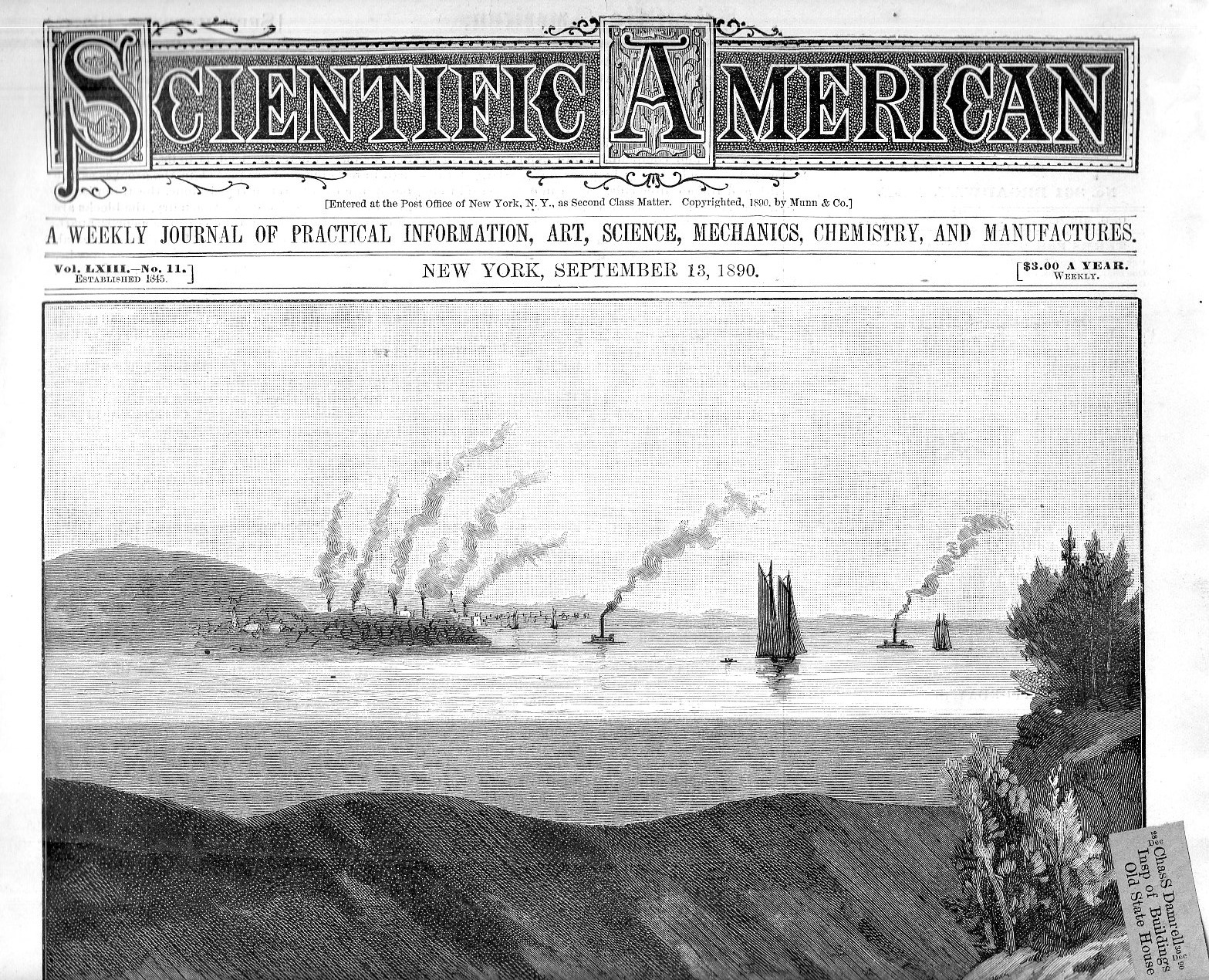
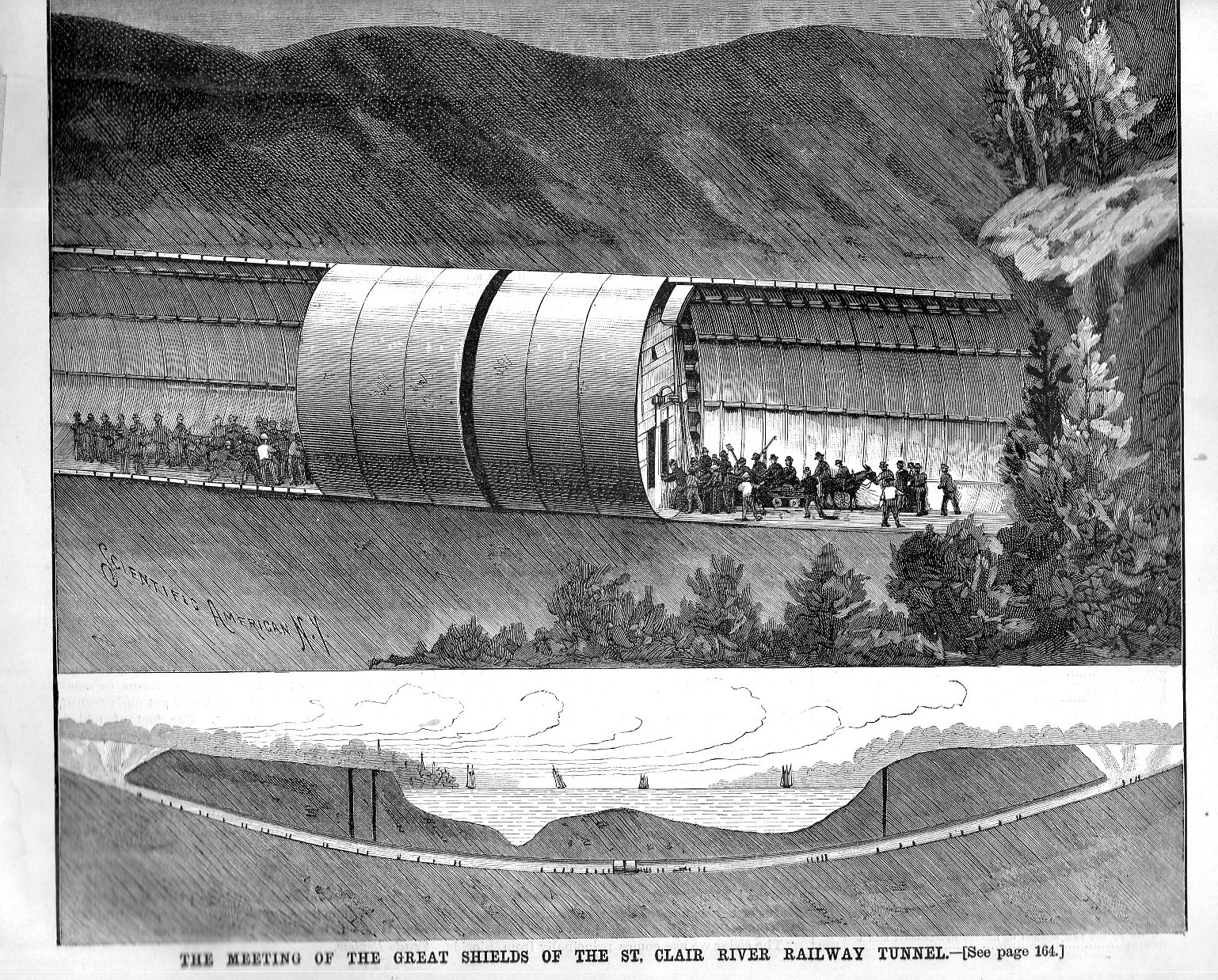
    Life going on underground has always been very interesting to me–particularly so when a good tech story is accompanied by great art.  This is certainly the case with the cover story for the September 15, 1890 issue of Scientific American, featuring the St. Claire Tunnel between Ontario and Port Huron, Michigan. This was the world’s first “full size” (that is, large enough for a train) tunnel and spanned (?) 6,025′ between tunnel portals and 2,290 of river width, making for a great technological achievement.

    [The issue is too large for the scanner so it is reproduced in two scans with a gap in the middle.]

    Sci american 1890 st claire094

    Sci american 1890 st claire092

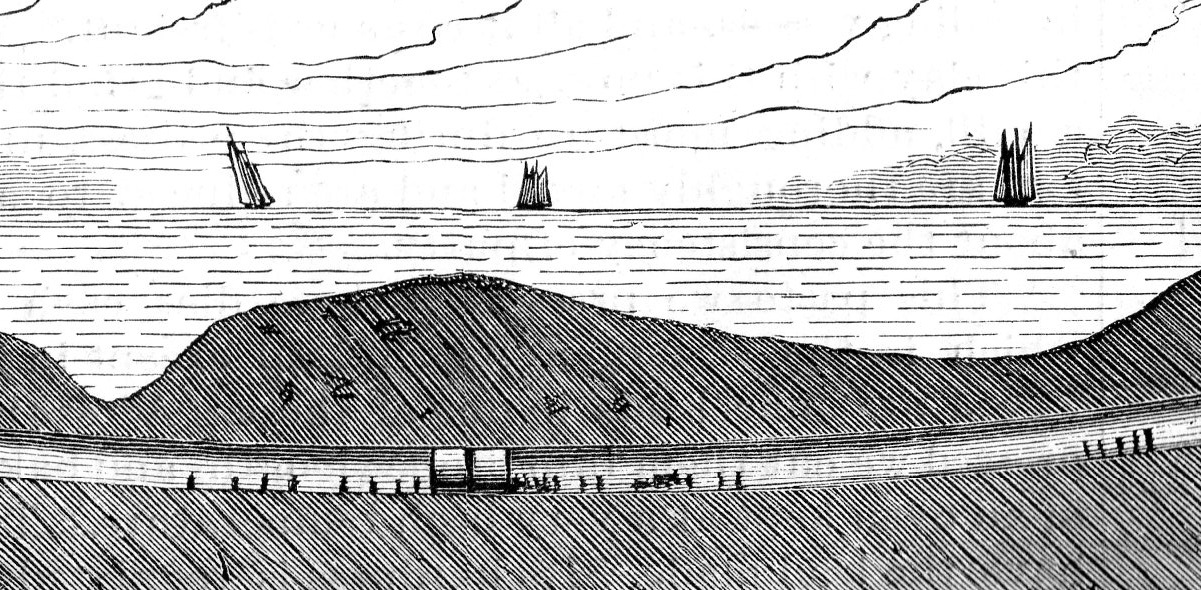
    The Scientific American celebrates the meeting of the two tunneling halves, each just about to join their excavation efforts at midway under the river. It is interesting that the artist would include those 40 tiny figures at work around the “Great Shields”, which were functioning as a sort of enclosure for the working going on to remove the earth.  Better yet is the smallish inset at bottom depicting the scale of the venture–in Real Life those images of people in the inset are only 1mm tall. 

    Sci american 1890 st claire093

    • This issue is available for purchase via the Blog Bookstore, here. 
    • We have nearly 4000 Scientific American issues available, overall, some bound as half-year issues, some as single weeklies, from 1845-1930 or so.  If you have any interest in this journal please send an email…

    ·Posted by :

    ·in:


  • “Fluid Influence”, Magnetism, Clairvoyance, and Chewing Gum (1910)

    JF Ptak Science Books   Quick Post     Daily Dose from Dr. Odd

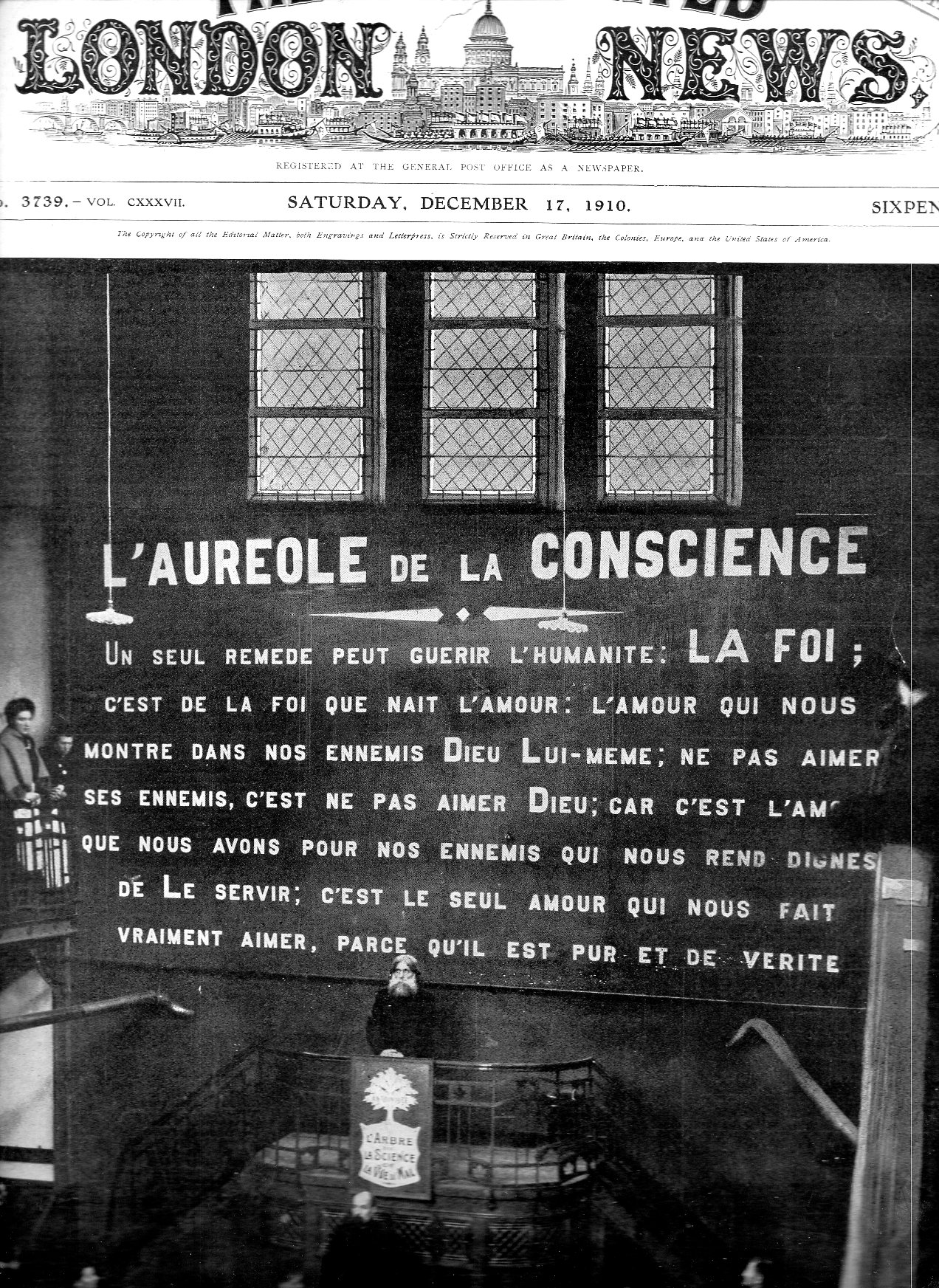
    I was quite taken with the sign behind the preacher in this picture. The photograph decorated the front page of the Illustrated London News, December 17, 1910, and showed the healing/clairvoyant “Antoine the Healer”, with a definite Rasputin-ish look to him. His deal was “fluid influence” in the good and evil fluid influence of magnetism, of reckoning the good/bad magnetism between people, and of course communicating with the good fluids in people.  Or something like that–I have no idea what he was talking about with the fluid/magnetism stuff.  In any event he collected 160,000 signatures of the faithful and whomever to present to the government of Belgian the case for Antoine and his fluids and Antoinettes as a recognized religion.

    Antoine088

    “Antoine’s followers obey him unhesitatingly in everything. In appearance he is a tall, rather round-shouldered man, with grey hair; he wears a black frock coat, but is always without a hat. He chews gum continually.”–The World’s News, January 14, 1911, pg 13. [Source: http://trove.nla.gov.au/ndp/del/article/128264839]

    In any event it was the enormous sign behind Antoine that attracted my attention–the fluid magnetism stuff is not so interesting, or attractive. 


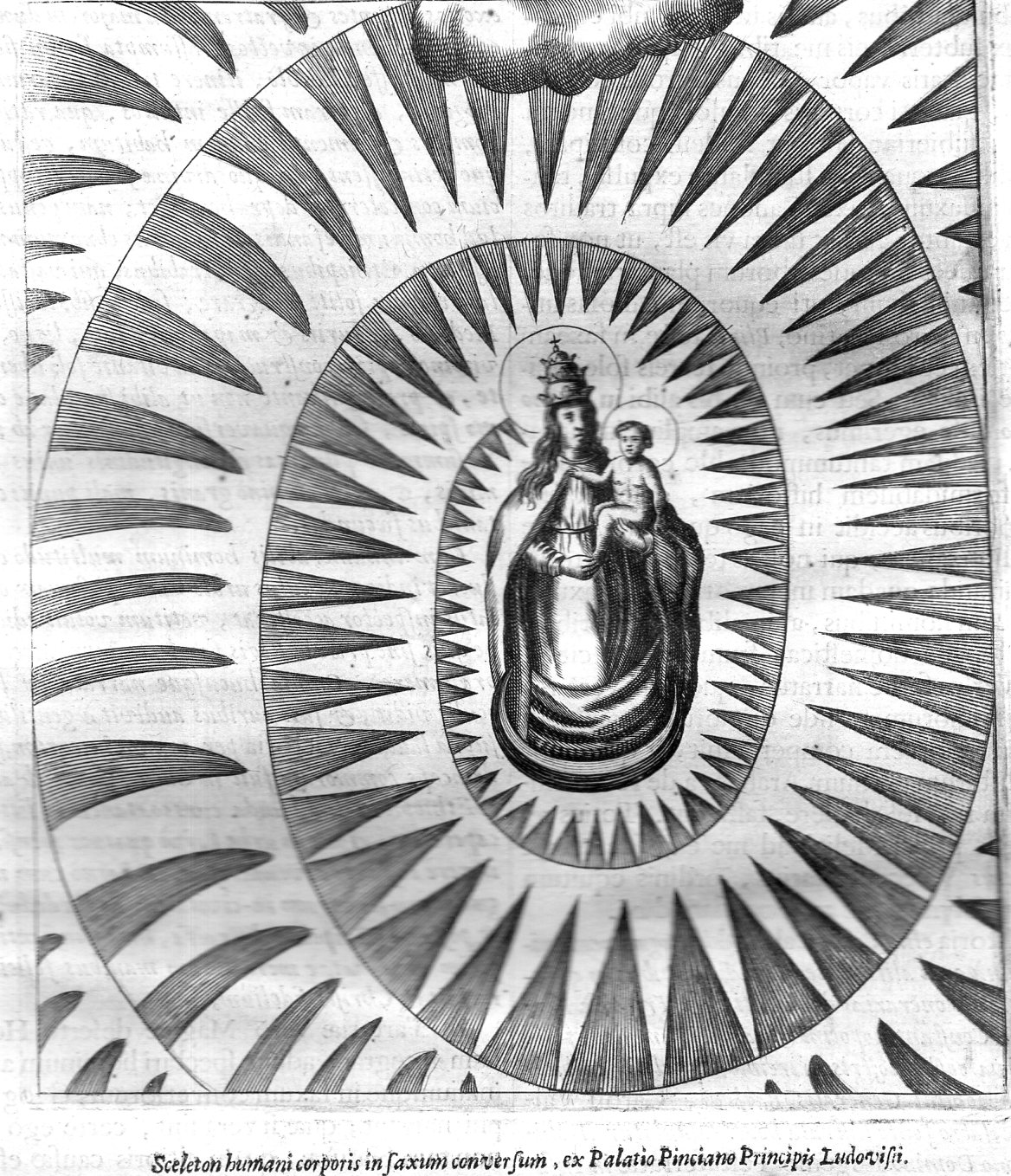
  • A Stone-Cold Alphabet and Geometry from Fr. Kircher, 1668

    JF Ptak Science Books   Quick Post

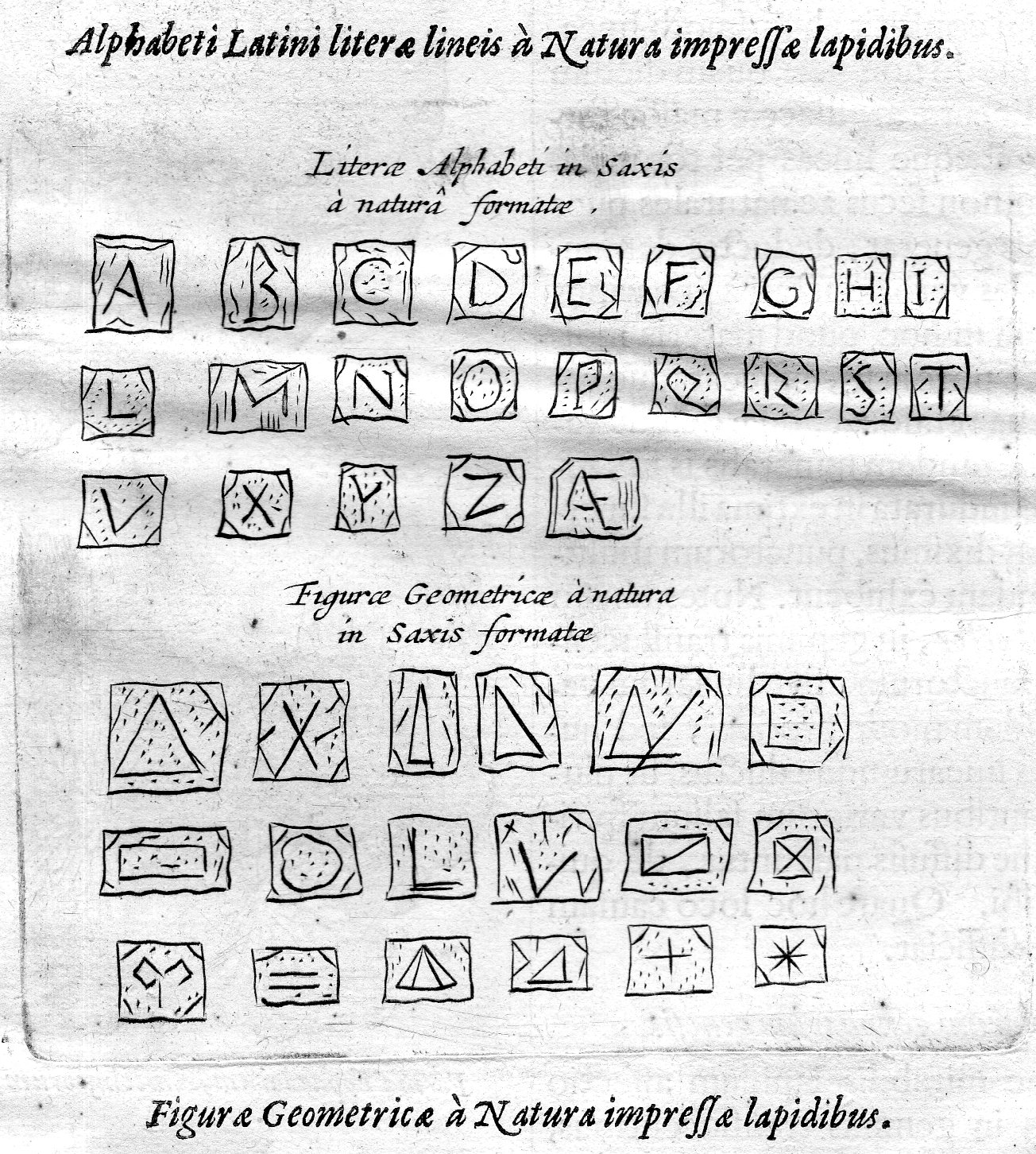
    This is another in a series of posts on images found in the glorious Fr. Athansius Kircher’s masterpiece, Mundus Subterraneus, printed in 1668. (One of the main posts on these images occurs here; there are many more if your search under Kircher’s name in the Google box at left.)

    This fine example of the depth of his observation finds the great Jesuit finding things in rock and mineral samples like agate–in this case he looks at a collection of samples that display found letters of the alphabet and geometrical shapes.

    Kircher alphabet 085

    • The original of this image may be purchased via the blog bookstore, here.

  • Illustrious Crowded-but-not-So Technical Engravings, 1851

    JF Ptak Science Books

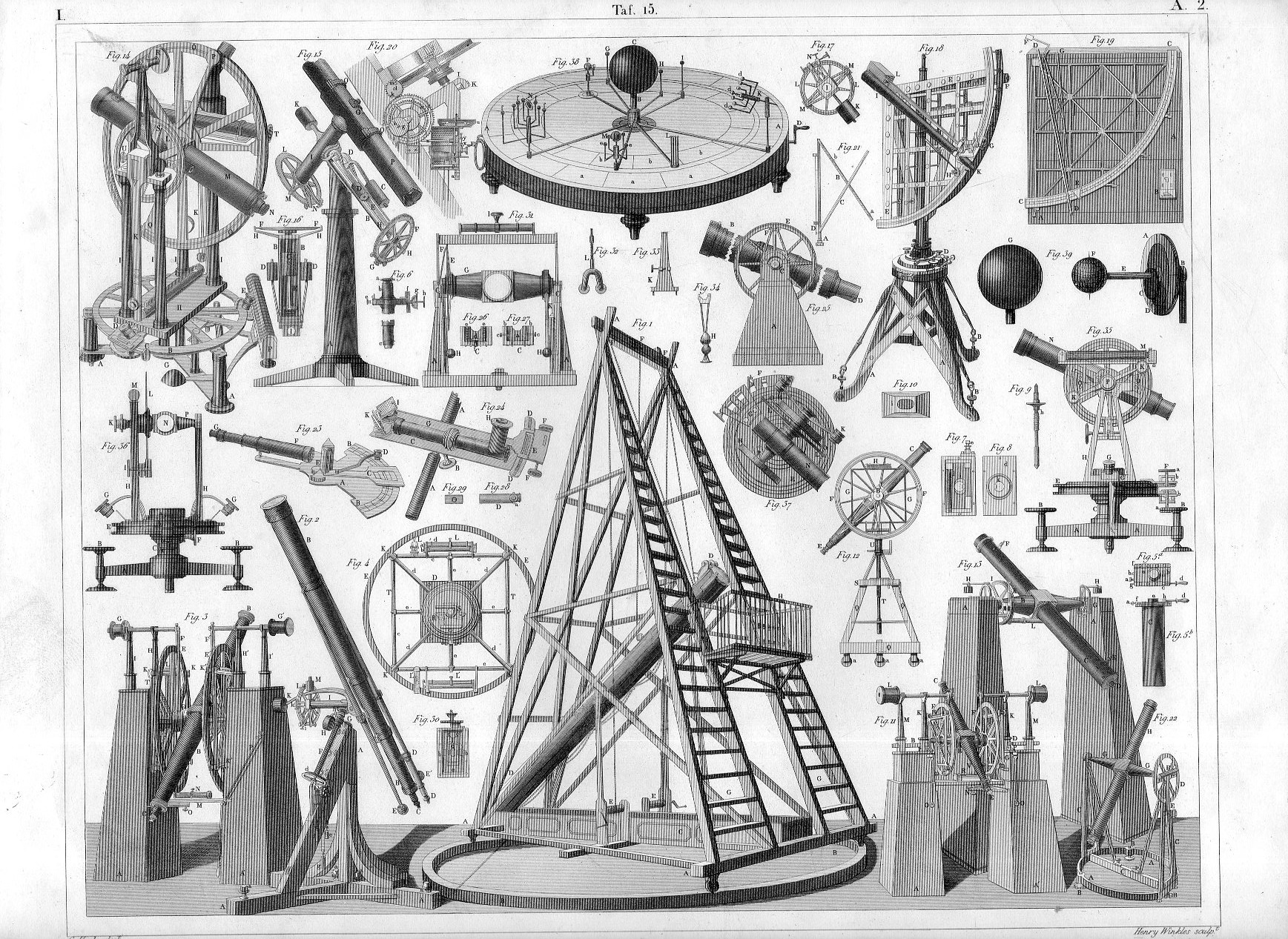
    J.G. Heck wrote and compiled a fascinating and complex work entitled The Iconographic Encyclopedia of Science, Literature and Art, and was published in America for the first time in 1851 following Spencer Baird’s translation from its original German.

    The key to his work is the amount of data displayed on each of the 500 engraved plates illustrating this work and the way in which it is arranged.  The design and layout of the 30,000 items on these 500 plates was a work of genius, and for my money it is easily the best-presented complex means of the display of data and objects that was published in the 19th century.

    Here are some general examples of scientific instruments and experimental display apparatus in the physical and chemical sciences. 

    • All are available for purchase via the blog’s bookstore, here.

    Heck astronomy077

    ·Posted by :

    ·in: