A Daily History of Holes, Dots, Lines, Science, History, Math, Physics, Art, the Unintentional Absurd, Architecture, Maps, Data Visualization, Blank and Missing Things, and so on. |1.6 million words, 7500 images, 4.9 million hits| Press & appearances in The Times, Le Figaro, Mensa, The Economist, The Guardian, Discovery News, Slate, Le Monde, Sci American Blogs, Le Pont, and many other places… 5000+ total posts since 2008.

Author: JF Ptak

  • Ghost Train of World War I

    JF Ptak Science Books   Post 2441

    There is an image that I have in my head of a grey train car of WWI.  There were trains that would pull into stations of large cities, trains with cars of wounded soldiers back from the front, with Red Cross designations on the car sides.  Crowds would come to the station to see and cheer the wounded soldiers.

    There were some trains that would pull a car at the very end of the line, a car with no cross. It was in these cars that the shell shocked soldiers would sometimes be brought back home.  

    “War neurosis” and “combat stress” was generally what was known as “shell shock” (not named until 1917 by Charles Myers), and what we’d more commonly referred to today as post traumatic stress syndrome (PTSD).  Shell shock was little understood during the war, and soldiers who manifested the behaviors associated with it were often accused of cowardice, and desertion, and in some cases faced disciplinary action that could end in jail or (in some cases) death. They certainly weren’t necessarily treated as “wounded”, and so it seems for the most part they were treated as separate cases.

    Given what was known of shell shock the treatment to the modern eye can look severe, odd, and austere, and wrong–soldiers were subjected to electro-shock therapy, physical routines leading to exhaustion, solitary confinement, and simple incarceration. In other cases the condition would be recognized as a defense detriment and in order to alleviate it the soldiers would be sent back from the front for a few days’ rest. The problem with shell shock though would continue to grow, and could be seen as a threat to a fighting force in general, and therefore some of the official responses to it left no doubt that succumbing to shell shock was a serious business, and that soldiers so afflicted would be treated differently from other wounded soldiers.2

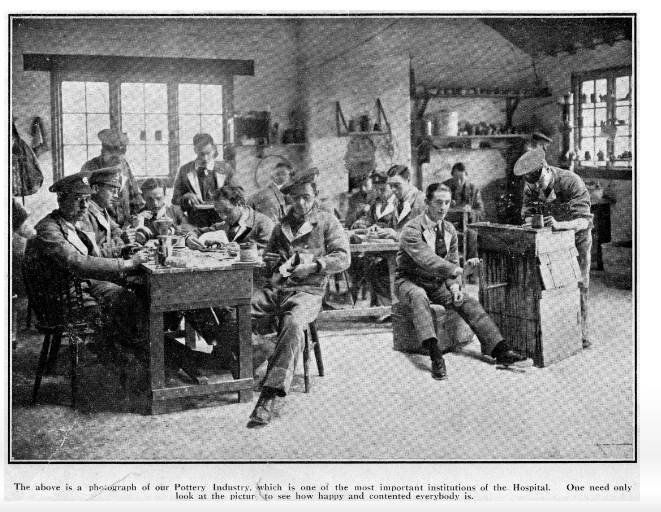
    By 1917 though Major Arthur Hurst devised a new method for treating the shell shocked soldier, with a major emphasis establishing the condition as caused by battle, and not a flight-not-fight syndrome.  At the Seale-Hayne Hospital, in Devon, Hurst treated some 300 soldiers over the course of 15 months, from April 1918 to July 1919, and seemed to have caused some real improvement.  That said, there were many detractors of his methods, and many more who questioned its effectiveness–to that end there seems to be no longitudinal data to support much of a claim for long-term success in Hurst’s treatment.

    He did however make a major contribution to the treatment of PTSD by attempting to deal with it medically, and also employing a large dose of occupational therapy in additiion to many other proactive responses to shell shock. In another interesting and pioneering move Austin made use of motion picture cameras to record the before/after effects of his treatments. This however has also come into question because some amount of the “before” images were dramatized1. 

    I found these videos of the Hurst treatments on youtube, and whether some of the “before treatment” footage was acted or not, the images are very jarring:

    [Source: Youtube, https://www.youtube.com/watch?v=IWHbF5jGJY0]

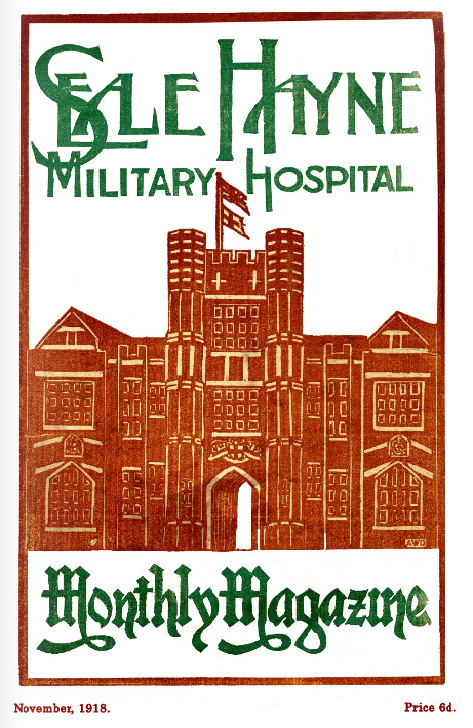
    There are also a few samples of the magazine/newspaper produced at  Seale-Hayner Hospital during this time, with contributions by the patients, some of which is reproduced below: 
    WWI Project Seale Hayne

    • More photographs are available here:  http://seale-hayne.com/?flagallery=seale-hayne-military-hospital
     

    WWI Project Seale Hayne Nov 1918


    And more:
    http://www.seale-hayne.com/books/mag1st/#p=1
    http://www.seale-hayne.com/books/magWW1/#p=2

    The poet Siegfried Sassoon (1886–1967)  described victims of shell shock in his 1917 poem “Survivors”, written while Sassoon was himself being treated for the condition at the more-enlightened Craiglockhart medical facility in Edinburgh, and published in Counter-Attack and Other Poems (1918):

    NO doubt they’ll soon get well; the shock and strain
    Have caused their stammering, disconnected talk.
    Of course they’re ‘longing to go out again,’—
    These boys with old, scared faces, learning to walk.
    They’ll soon forget their haunted nights; their cowed
    Subjection to the ghosts of friends who died,—
    Their dreams that drip with murder; and they’ll be proud
    Of glorious war that shatter’d all their pride…
    Men who went out to battle, grim and glad;
    Children, with eyes that hate you, broken and mad.

    Notes:

    1.  “From 1917 to 1918, Major Arthur Hurst filmed shell-shocked patients home from the war in France. Funded by the Medical Research Committee, and using Pathé cameramen, he recorded soldiers who suffered from intractable movement disorders as they underwent treatment at the Royal Victoria Hospital in Netley and undertook programs of occupational therapy at Seale Hayne in Devon. “ From: “War Neuroses and Arthur Hurst: A Pioneering Medical Film about the Treatment of Psychiatric Battle Casualties”, by Edgar Jones, Journal of the History of Medicine, May 2011,  http://jhmas.oxfordjournals.org/content/early/2011/05/19/jhmas.jrr015,

    2. “When evacuation to the base hospital is necessary, cases should be treated in a separate hospital or separate sections of a hospital, and not with the ordinary sick and wounded patients. Only in exceptional circumstances should cases be sent to the United Kingdom, as, for instance, men likely to be unfit for further service of any kind with the forces in the field. This policy should be widely known throughout the Force.”–Report of the War Office Committee of Enquiry into “Shell-Shock”, 1922.

    • See also a good entry “War Psychiatry”, in WWI Online, http://encyclopedia.1914-1918-online.net/article/war_psychiatry

    ·Posted by :

    ·in:

    —

  • 1066 And All What?

    JF Ptak Science Books Quick Post

    1984

    I picked up another Book-with-a-year-for-a-title book today, Eric Burn’s 1920, the Year that Made the Decade Roar (Pegasus, 2015).  This series has a special interest in our house, and something I’ve paid attention to for a long time.  For me, I’ve enjoyed finding Big Years for the History of Stuff, mainly in the history of science and technology and arranged some mental data around them. (Years when tons-of-stuff happened, like 1543, 1859, 1932, 1939, 1948.) So naturally seeing 1920 made me think of the scitech achievements for that year, and frankly there was only one that popped into my head:  Robert Goddard’s “Methods of Reaching Extreme Altitudes”, one of the few big papers that uses the word “extreme” in the title.  There’s another effort by A.A. Michelson late in his career where he measures the diameter of a star other than the sun for the first time. And then there’s the coming of Richardson Numbers with Lewis Fry Richardson (a long-time favorite of mine, along with Goddard)–so there are several major and near-major papers for a year that I haven’t thought about too much, especially in the social area, where this books takes place, so it should be an interesting read.

    There’s a good hundred+ titles of books that are years–the ones I can speak to and suggest include the following (chronologically listed, of course):  1215 (Danzier), 1861 (Goodheart), 1913 (Ham), 1919 (Dos Passos), 1919 (Klingaman), 1939 (Overy), 1945 (Beevor), 1945 (Dallas), 1968 (Kurlansky), 1984 (Orwell), 1985 (Burgess), and 2001 (Clarke). For some reason there’s nothing here for 1066. 

    It seems as though there are at least 26 years of the 20th century that have a book dedicated to them–and probably there are more.  It would be an interesting collection to see them on two shelves! (The years that I can see offhand include 1900, 1912, 1913, 1914, 1916, 1919, 1920, 1923, 1929, 1932, 1933, 1934, 1939, 1940, 1941, 1942, 1945, 1948, 1954, 1959, 1960, 1967, 1968, 1969, 1984, 1985.)

    Movies with years-as-titles is another story…

    ·Posted by :

    ·in:


  • Crazy Eyes and the Piano, 1904

    JF Ptak Science Books  Quick Post

    This is a rare entry in this blog’s “Crazy Eyes” series, and appeared in the Illustrirte Zeitung 17 March 1904.  In the original the ad measures only 1×3″, but it does have a strong impact, just because of those eyes.  Otherwise I would guess that most people would pass up the opportunity to “Teach yourself piano in a few days” via a method contained in a 25-mark book “that the world has never before known”.  I’ve got to say, it is a pretty effective little ad. 

    Crazy eyes piano270

    See this link for another bit on crazy eyes, including a crazy-eyed Mercedes driver, Barney Google, and Superman:  https://historyofideasblog.com/thesciencebookstore/2014/05/crazy-eyes-in-advertising.html

    Crazy eye mercedes

    ·Posted by :

    ·in:


  • Robot Boots without the Robot–German Coal Mining Iron Boots, 1920

    JF Ptak Science Books   Quick Post

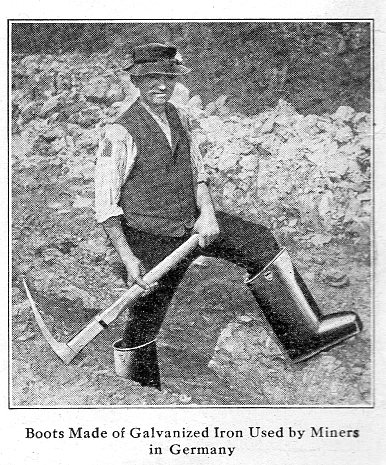
    This post is from the “Oh Sweet Mother of Neptune” series, because that is that you say out loud when you see pictures like this.  

    German boots269

    Found in the January 1920 issue of Illustrated World is this photograph, illustrating yet another mysterious and bad turn of the many hard angles found in the Treaty of Versailles.  The worker with a pick is a coal miner, and yes, he is wearing galvanized iron boots.  

    It turns out that the Nuderlansitz coal mining region was flooded after the war, and after the draining came more water and a lot more mud. Seeing as there was a severe rubber shortage in Germany at the time, and that coal miners needed to mine, the suggestion pictured here were these galvanized iron boots.  

    No note is made in regards to the weight of the boots.

    ·Posted by :

    ·in:

    —

  • A Peek into the Very Near and Short-Lived Flying Future, 1928-9

    JF Ptak Science Books    Quick Post

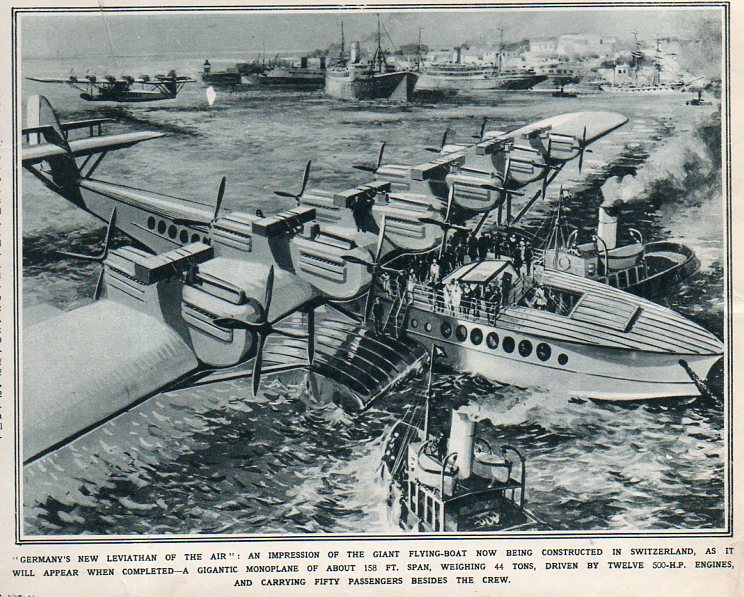
    AIRPLANE GIANT964

    This mammoth German aircraft appeared in the pages of the Illustrated London News on 31 March 1928, a sneak-peek into the future. It may have been a shock to British aviation sensibilities–it was supposed to dwarf the largest such plane that the Brits had (the Calcutta) : 158′ to 93′ wingspan; 44 tons to 9 fully loaded wright; engine power, 6000hp to 1500hp, with  twelve very impressive 500 hp fore-and-aft engines.  

    The plane made an appearance in real-life in the air in July 1929 as the Dornier Do X,  the largest and heaviest flying boat in history, with pretty much the stats that appeared on it a year earlier. (Stuff happens) and the Dornier is broken up for scrap by 1937.  


  • The Grande Lux of the Brooklyn Bridge

    JF Ptak Science Books  Quick Post

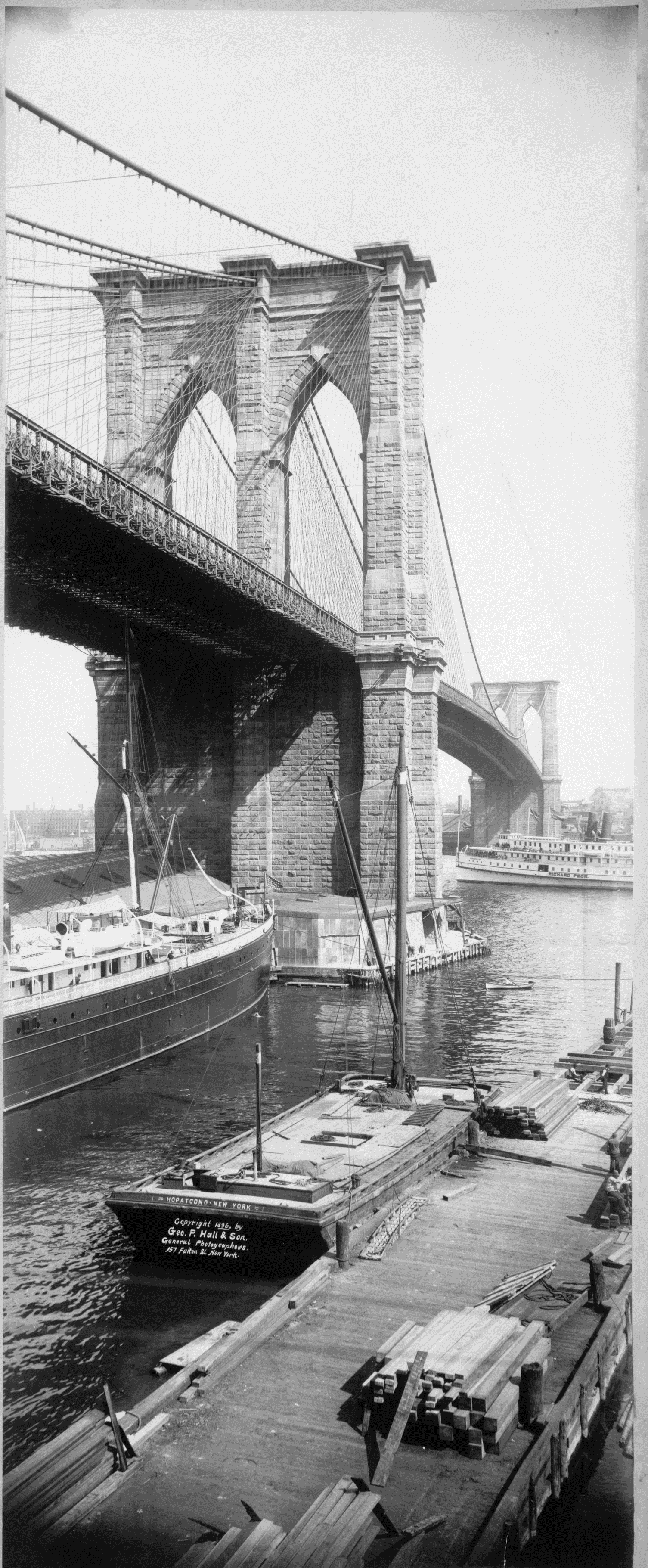
    Brooklyn Bridge Tall

    Brooklyn Bridge, 1896. 

    I find this a very moving image of the bridge, encompassing the small bit of uneven workmens’ construction material in the bottom/foreground of the image, which for me was it center, and which caused my eye to scan from there to the top of the tower.  The full mega-file of this beauty is a vertical panorama 40″x12″, and it seems as though you could push this to at least 60″x18″, and perhaps a full double to 80″x24″–it is impressive just seeing it on a monitor this big–in the Grande Lux tapestry version, I am sure it would fantastic.  [Source, Library of Congress, http://www.loc.gov/resource/cph.3c04634/] 


  • The Common Abomination: Repulsive Sheet Music Covers of African Americans

    JF Ptak Science Books   Post 2539

    I’ve written often on this blog on common and cascading racism found in marketing and entertainment in the 19th and 20th centuries.  It is shocking and repulsive to see no matter how you steal yourself for the experience, no matter how prepared you are for it, no matter how much you expected it–when you get there, when you see it, it is all still unbelievable.  

    I went to the terrific Lester S Levy sheet music collection at Johns Hopkins University looking for early aircraft images. Moving around the online archive I bumped into a racist-something having to do with a nationality; and then, for the adventure of it and to see what there was–if anything–to see, I did a quick entry in the search box for the occurrence of a racial epithet (“coon “) in the title of a song. I expected to find some bad stuff, but I was very surprised by the extent of the results and their deeply awful nature.

    Now I must make it very clear that the collection at Hopkins covers many thousands of items and each speaks to its time, and that JHU’s collection addresses the interests of the era–these images are nothing more and nothing less than what was not terribly removed from what was “normal” for the time. The Levy Collection is significant and important for many reasons–I just used it in this case to investigate a curiosity, pulling bits and pieces of the collection together from its many extending areas of interest.  There is no particular part of the collection that deals with racist material–these were parts of popular songs as they existed in the late 19th/early 20th centuries. 

    People no doubt laughed at these score covers, which were drawn so to attract interest and attention to help with making the item more attractive to purchase, an engagement in subjugation for making a nickel. What they look like today seems incredible, impossible, except of course that it wasn’t; and when it was, it was sort of nothing, just another common degradation that had to be endured by millions of men, women, and children.

    Anyway, this is what one slim sample of  what “normal” looked like at the turn of the century.

    [Warning:  highly offensive material follows.]

    Note: these are all hot linked to JHU–I contacted the curator of the collection to make sure that this was acceptable. I just couldn’t save-and-post dozens of times for all of these terrible things.

    ·Posted by :

    ·in:


  • A Glorious if Not Accurate Map of Ocean Currents 1675

    JF Ptak Science Books   Quick Post

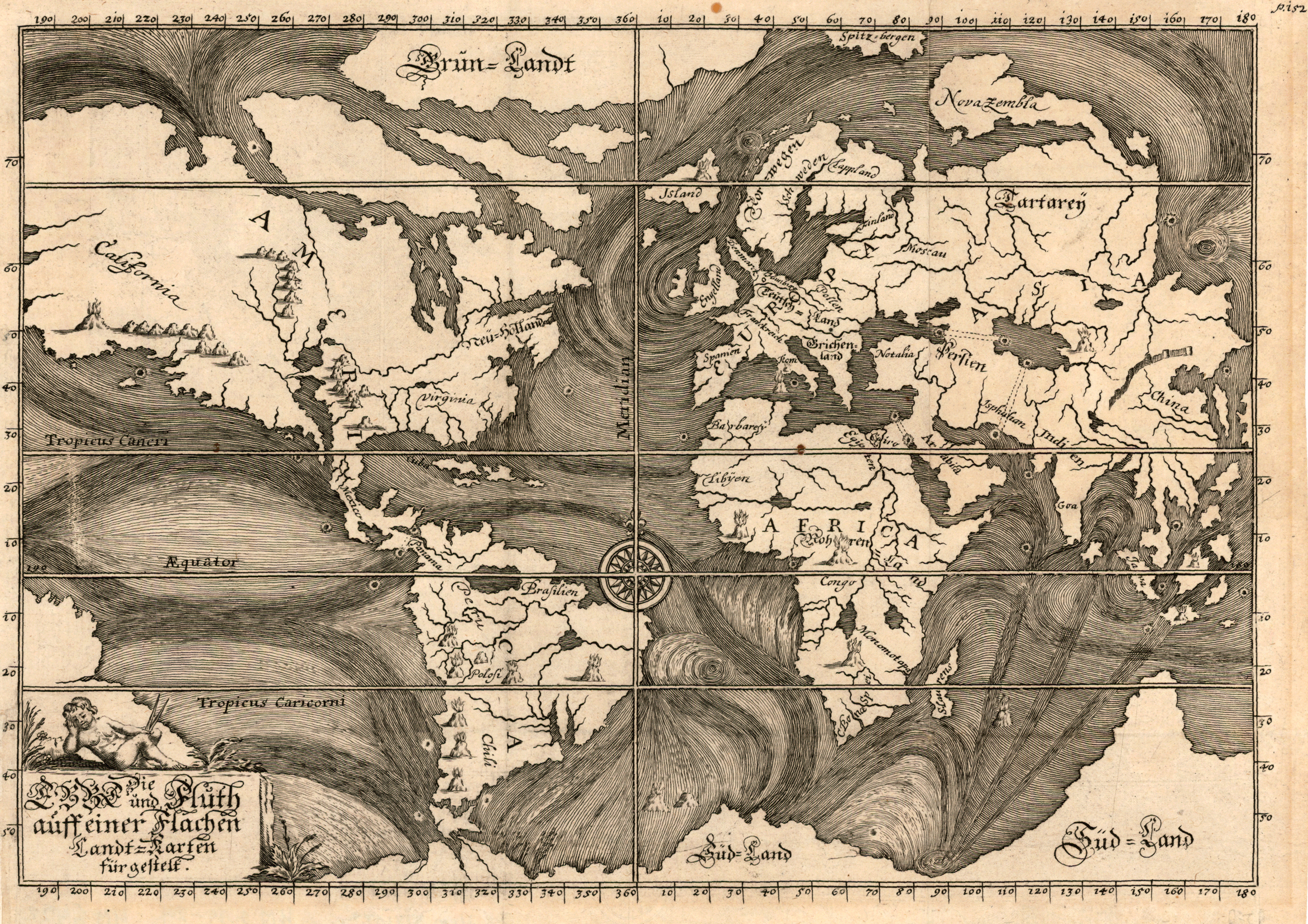
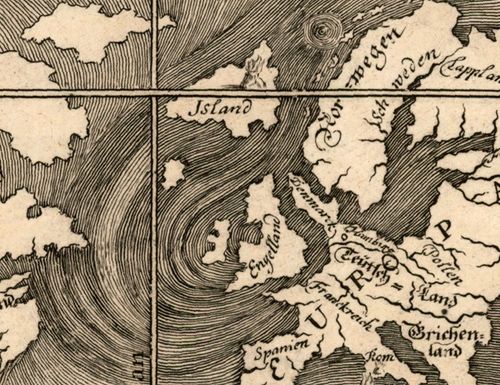
    I’m interested in this fabulous map,“Die Ebbe und Fluth auff einer flachen Landt-Karten fürgestelt” by Eberhard Werner Happel.  Happel’s  (1647-1690) map was a very early thematic effort at depicting the course of the currents of the oceans, and may or may not have been very heavily dependent upon the work of Athanasius Kircher, who produced a remarkably similar map, but a few years earlier.  

    Map ocean Heppel 1675[Source: Pirnceton University http://libweb5.princeton.edu/visual_materials/maps/websites/thematic-maps/quantitative/hydrography/hydrography.html

    Happel was a polymath much in the line of Kircher, and as gifted as he was (producing novels and popular works on the natural sciences in a number of books numbering many thousands of pages) he was not at the Kircher-level of polymath. Perhaps he was more on the line of a sub-Robert Burton (Anatomy of Melancholy) though not quite there, either. He did an extraordinary amount of writing in his slim 43 years, though not necessarily at the highest level of intellectual achievement (as with the other two). 

    In any event, the map is beautiful.

    And the details of high artistic forms:

    Map ocean Happel 1675 b

    and so:


  • The Art of Quarreling, 1879–Just in Time for the Presidential “Debates”

    JF Ptak Science Books   Quick Post

    “The art of disputing with dignity and decorum if it ever existed is a lost one”–Mr. Punch

    This tongue-in-cheek article appeared in the sharp and occasionally cutting demi-satire English journal, Punch, or the London Chiarivari, in February 1, 1879. It has some fresh and poignant words for advice for quarrelers, which I think in today’s vernacular would be applicable for debaters, and particularly the debater-like folks battling it out for their respective party’s nomination for the U.S. presidency.  It seems though that this present crew has gotten along using these rules without having necessarily been exposed to them. 

    In fear of being redundant and overstating the over-obvious, here are some of the most important rules to quarreling, according to Mr. Punch: 

    1) “In the first case as a sort of preliminary training for this pastime it is essential to divest yourself of all sense of good feeling fairness and self respect and get rid of all such fatal weaknesses as courtesy and openness to conviction …”

    2)  “Secondly you must set up an opinion. We say set up advisedly because the establishment of an opinion like the purchase of a carriage is an act of pure volition and has no necessary relation to the intellect or conscience. The more arbitrary and irrational this opinion the better for the special purpose in contemplation. The conviction or assumption that you are the greatest Wisest and best of mankind is very promising principle to start with.”

    3) “You must then discover somebody of a contentious turn of mind whose pet opinion is diametrically opposed to your own. You will have no difficulty in this.”

    And so on. 

    And the rest of it, in situ:


    ·Posted by :

    ·in:


  • When U.S. Forces Occupied Los Angeles (1848)

    JF Ptak Science Books    Quick Post

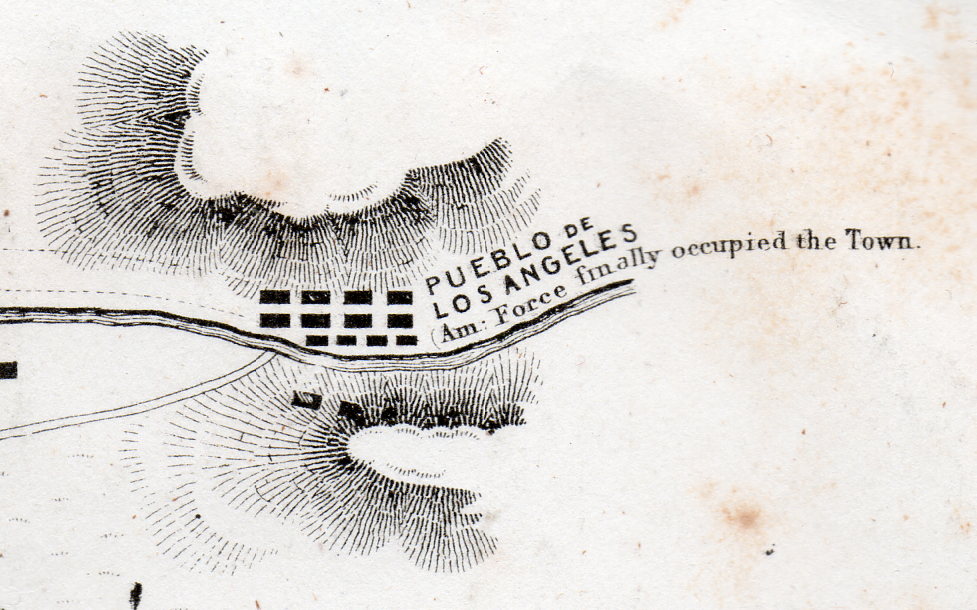
    Battle Los Angeles 1848926[Detail of a one square inch area in the original.]

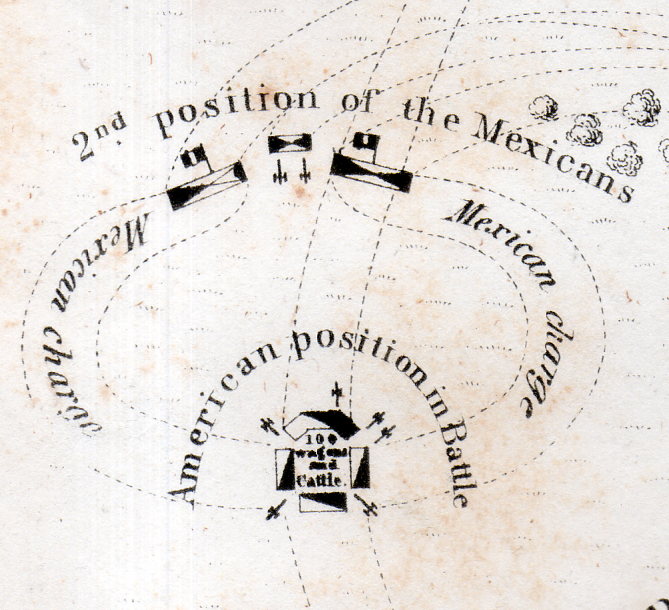
    This lovely map has a few tiny bits of unexpectedly weird details–I mean they’re historically accurate and all, it is just that removed and presented apart from the context of the rest of the map the details take on a peculiar–and attractive–surreal quality.

    Battle Los Angeles 1848927[Detail of a one square inch area in the original.]

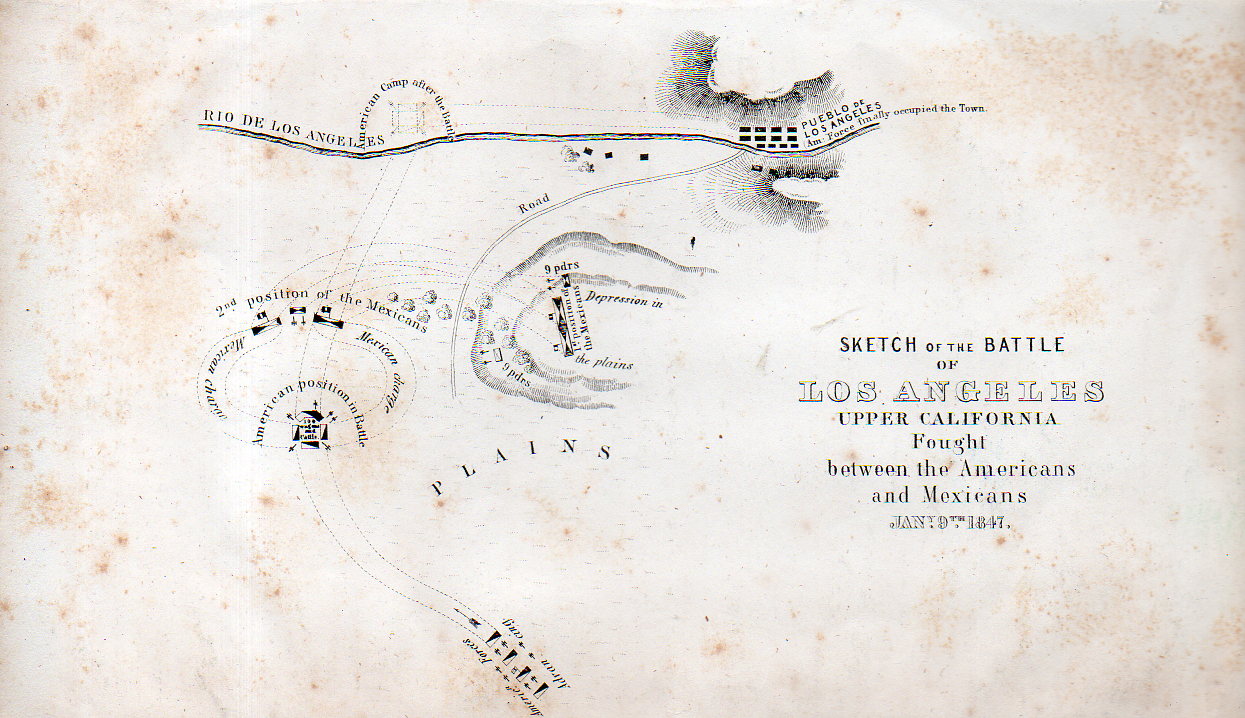
    The map is a Sketch of the Battle of Los Angeles Upper California fought between the Americans and Mexicans, Jan 9, 1847, and published in 1848. The map depicts the grounds of the Battle of the San Gabriel River, a victory for the United States, which resulted in the retaking of Los Angeles from the Californos a couple of days later, on January 10.  

    Full explanations of the battle can be found in a number of places, but this one is pretty concise and clear. 

    ,Battle Los Angeles 1848925

    Origin:  EMORY, W[illiam] H[emsley] (1811-1887). Notes of a Military Reconnaissance, from Fort Leavenworth, in Missouri, to San Diego, in California, Including Parts of the Arkansas, Del Norte, and Gila Rivers…Made in 1846-7, with the Advanced Guard of the “Army of the West.” Washington: Senate Executive Document No. 7 [30th Congress, 1st Session] Wendell and Van Benthuysen, Printers, 1848.  (13 x 22.2 cm; 5-1/8 x 8-3/4 inches). A bit of foxing, otherwise a good copy of this map.  

    This map is available from our blog bookstore, here.