A Daily History of Holes, Dots, Lines, Science, History, Math, Physics, Art, the Unintentional Absurd, Architecture, Maps, Data Visualization, Blank and Missing Things, and so on. |1.6 million words, 7500 images, 4.9 million hits| Press & appearances in The Times, Le Figaro, Mensa, The Economist, The Guardian, Discovery News, Slate, Le Monde, Sci American Blogs, Le Pont, and many other places… 5000+ total posts since 2008.

Category: Technology, History of

  • BioPunk: Human Robots, 1900-1923

    JF Ptak Science Books  Quick Post #425

    I found this extraordinary image via collection of Finkiyaya on Pinterest, which is an interesting source for the unusual relating to the uncommon.  There is no attribution, but help came from correspondent Jeffrey Weston, who advised that the helmut belongs to none other than the ferociously active publisher/editor/thinker and creator of the term “science fiction”, Hugo Gernsback.  This was supposed to deliver a more powerful thinking and concentration experience to the user by delivering a flow of O2 , shutting off sound and auditory distraction, and by making the wearer focus their vision through a kind of horizontal pinhole slit. Gernsback I am sure did not use one of these things while working on his dozens of simultaneous projects, but he thought that it might help the rest of us–in today’s world, perhaps all we need to do to achieve this iolsation is turn off the electronics and sit at a clean desk.  In any event, the mask removed a fair amount of the human experience from thinking, and probably focused a LOT of attention on not-hearing and trying to see through those tiny slits. 
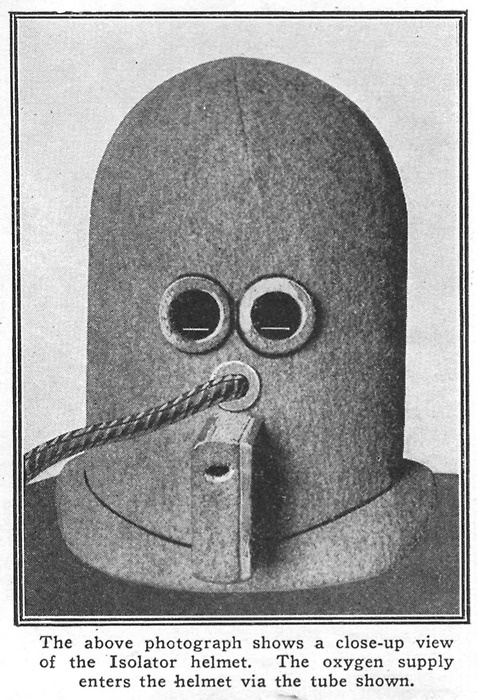
    Sub,arine helmet[Source: Pinterest account of Finkiyaya, here]

    [I wonder if Wilhelm Reich read about this as he was fiddling around with his “orgone accumulator” (read: “box”).   Even the crown prince of American Black Comedy, William Burroughs, could not wrestle this Reichian thing outside its impossible cellulosity of weird. As odd as Gernsback’s thing is, Reich’s goes on-beyond-zero with his, thinking that his siting-coffin collects/regulates an etherless ethery thing called orgone which was the seat of many and remarkable things, not the least of which was a controller of cancer and the weather.  It sounds sort of like a water-cycle thing but for a thing that influences thought and consciousness and biological systems as well as our ocean of air–that’s a long pull for a box with a chair in it.]

    Now three’s plenty in this helmet to suggest itself to the history of masks, but that is an enormous diversion, because I was really just looking for complements in the mechanical helmet world.  I could not resist though including this magnificent mask made by someone of the Sukuma ethnic group of Tanzania:

    Sukuma_mask_TAA

    It is interesting to note hwo the Isolator mask eprforms up to its name, isoalting human qualities to a high degree, muhc like the Sukuma mask.  There is a real encapsulating experience going on with these helmets and suits, looking far more robotic and alien than anything else. 

    And a last visit to Gernsback:
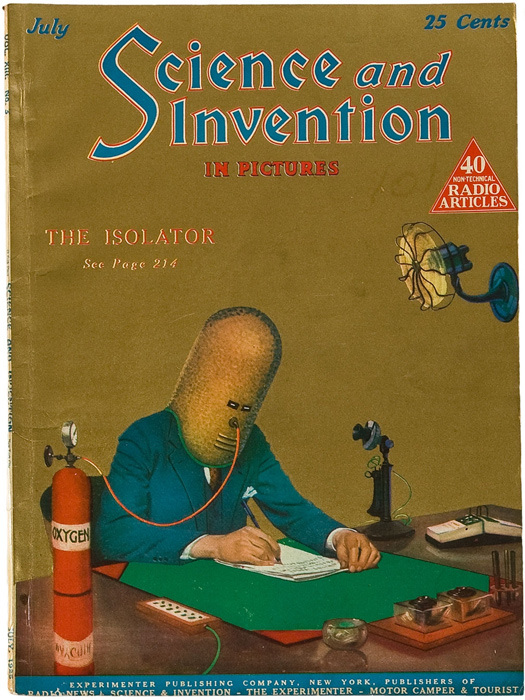
    BioPunk Isolator
    [Source: LaughingSquid, here.]

    And another (source here):

    Gernsback isolator

    How could any of this possibly go wrong?


  • Elevated IronPunk, 1868

    JF Ptak Science Books   Post 2018

    Follow Me on Pinterest


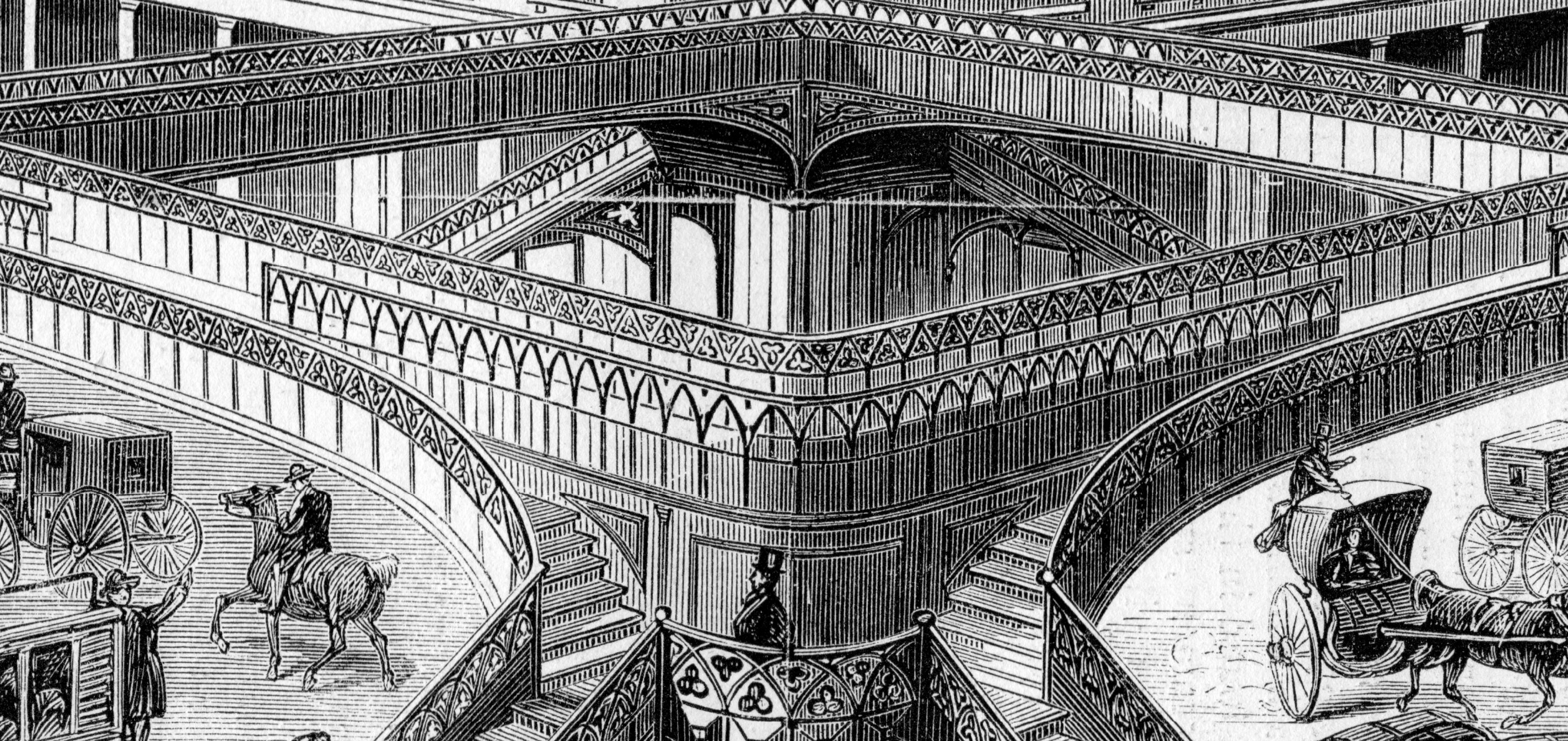
    Ironpunk walkway detailed detail

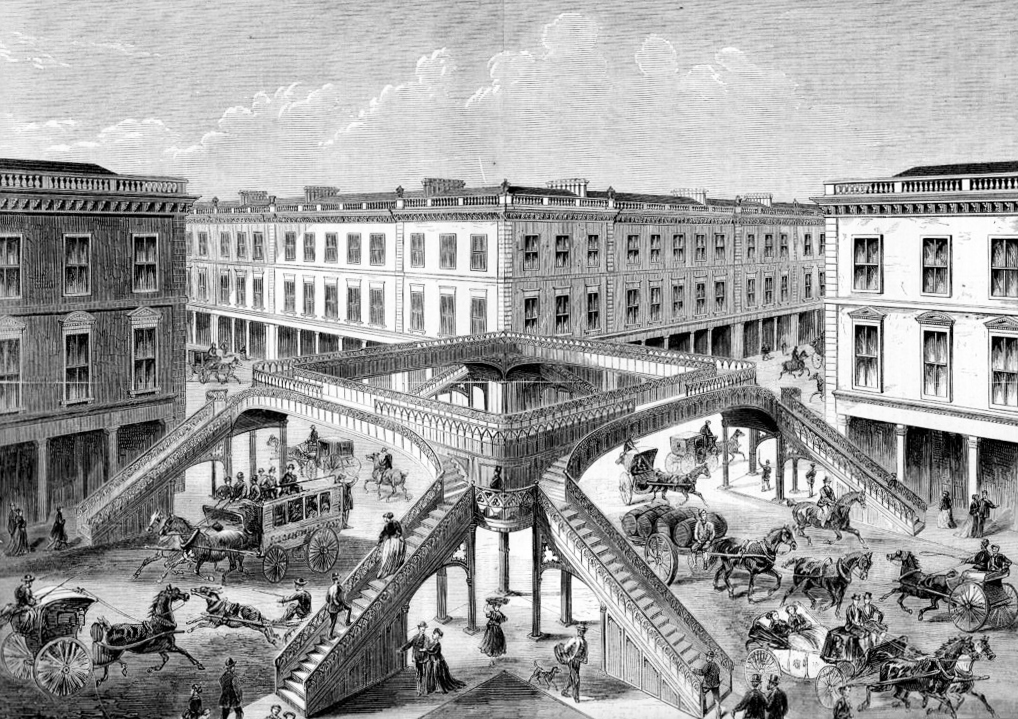
    Here we have an enormously IronPunk-laden solution to the pedestrian vs carriage traffic problem, playing out in a somewhat Escher-like way, drawn by the engineer Joseph Mitchell for a crossing “over Broadway, New York”.  It was published in Engineering, a magazine published in London, in 1868, intended as an example of what could be done to make London’s streets safer–evidently, they weren’t all that safe. 

    Ironpunk walkway244

    The article reports that there were 164 street deaths in London in 1867. These included 48 accidents with carriages; 59 children (6 months to 15 years); 12 women (including a 110 year old); and 44 daily workers (“in the pursuance of their calling, as carmen, bakers, coachmen, laborers”).  The article insists that the dead were of the “humble class” with some degree of intoxication involved.

    All (read “many”) things considered, London had a population of 3.3 million in 1871 (with NYC at 942,000 for he same period, not including the city of Brooklyn which held 340,000) and considering the state of traffic safety, 164 deaths (one every other day or so) was perhaps not too terribly high–except of course to the dead and their families.  In modern London with a population of 8 million there were 3,227 traffic fatalities in the city in 2009, and 116 pedestrian deaths. That’s more than half as many as 1871 with 150% more people.  Probably this is all apples and oranges…though in 1871 pollution from the traffic wasn’t really killing anyone–which is not true in 2013.

    Here’s an elevation of a structure that was actually built in NYC, an elevated quad-crossing”the first practical experiment in overhead street crossings”:

    It was 17’8″ high, 14′ wide, with access via 30 steps, and crossed one of the busiest intersections of Broadway.  It was intended to save people from their carriage-laden fate–but people hated it, and stayed away in droves, which I think was the lasting lesson for the Brits.  I guess people preferred to trust the traffic and dash across the street rather than make the 30-step climb up and then descend to the other side–too much effort.

    ·Posted by :

    ·in:


  • Notes on the History of Lines: Sight Lines

    JF Ptak Science Books   Quick Post    History of Lines 

    These are particularly fine and relatively early printed images depicting a specific kind of line of sight–this one, a positioning, rather than a line of sight in fire control, or radial velocity, EM radiation or acoustics wave propagation, or targeting…this instrument was used to establish an imaginary line in perceived objects. 

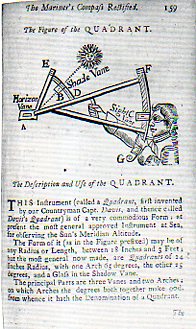
    Sextant 237This is a detail from Andrew Wakley’s  The mariner’s compass rectified : containing tables, shewing the true hour of the day, the sun being upon any point of the compass ; with the true time of the rising and setting of the sun and stars, and the points of the compass upon which they rise and set … With the description and use of those instruments most in use in the art of navigation. Also a table of the latitudes and longitudes of places, published in 1763 and reprinted many times after that. (Full text is available from Google books and also from the Haithi Trust which offers a text version of the book as well.)

    The full page from which the detail is drawn:

    Sextant 236


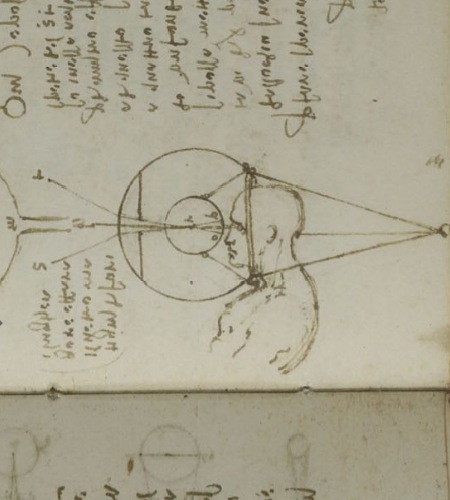
    There is a certain continuum in developing sight lines that comes to mind, as with this famous image drawn by Leonardo in 1508, perhaps the first modern interpretation of how the eye functions, kept privately in manuscript, the result of theory and experimentation:

    Leonardo eye

     Which leads us to the sigh lines of Albrecht Durer, illustrating (some 17 years later) the use of a perspective tool, the vielo, in his work The Drawing Manual published in 1525:

    http://www.oneonta.edu/faculty/farberas/arth/Images/ARTH_214images/Durer/durer_perspnude_large.jpg


  • Suggestions of Magnificence: Bloated and Bumpy SteamPunk Aviation, 1830’s.

    JF Ptak Science Books      Post 2004

    Question: What is 150’ in diameter, weights 80 tons, carries 60 scientists,
    a cannon, a big rooster, an escape pod for women, and makes transcontinental
    flights? 

    Answer:  nothing.  

    And so: what is ten times bigger, and carries ten times more people? Bigger but still the same nothing–though a more-magnificent nothingness. 

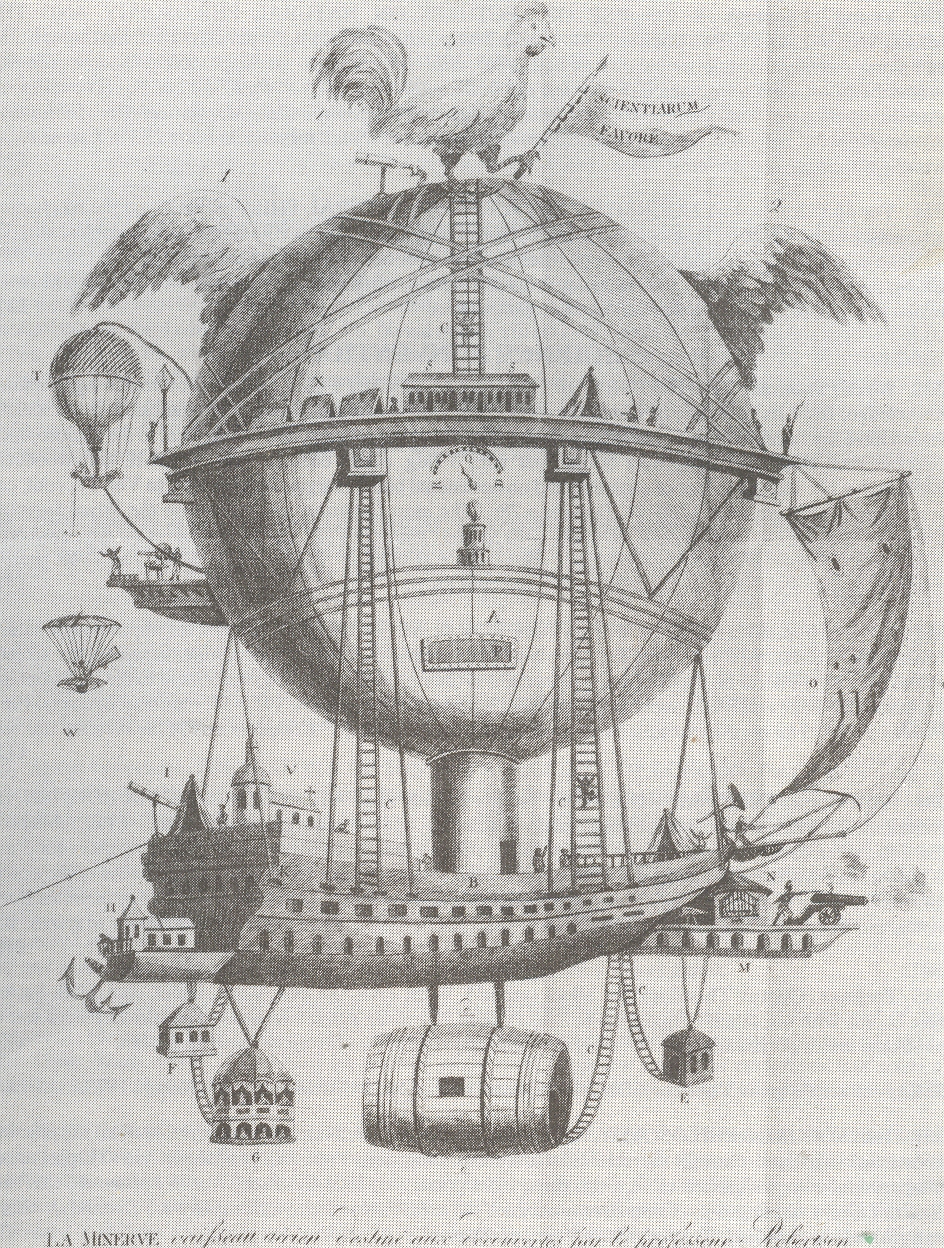
    Blog--May 20--minerveA The first example  did however live in print as the great balloon La Minerve, the  prankish gesture of the Belgian optico-magician,
    physics experimenter/exhibitionist  and
    general experimenter  (and probable
    crumbun)  “Dr. Roberston”, who was
    actually Étienne-Gaspard Robert (1763-1837). 
    Robert did have vast experience with balloons—he was Commandant des
    Aerostiers during the war, serving under General Jourdain in Belgium and Holland
    in 1803/4, providing valuable observations on the enemy troops and movements
    from tethered (and not) balloon observing stations;  he is also regarded by some as the inventor of
    the parachute.  He had a wide interested
    in optics and toys, making a very profitable tour with Brewster mirrors,
    demonstrating all manner of specters and floating bodies and such for a paying
    audience.

    Blog--May 20--minerveB

     He came up with this sci-fi-ish idea
    in the early 19th century, and published his dream broadsided swipe
    at other aeronauts in 1820 under the title of La Minerve, vaisseau aérien, destiné aux découvertes et
    proposé à toutes les Académies de l’Europe par le physicien Robertson. 
    There was nothing about this balloon that
    would’ve worked, and Robertson knew it, intending his pamphlet to be more of
    caricature of existing attempts in flight than as a science fiction
    creation.  (The pamphlet reads a little
    mean-spirited to me regarding the Minerve; other sections, which dealt with
    single-occupant air-transport devices of imaginative construction, seem less
    so.)

    In any event, Roberston provided large creature comforts for his travelers,
    not the least of which was a ship (which seems to be 175 feet long) holding 60
    scientists and providing enough space for long-distance sleeping arrangements,
    laboratories, observation decks, a kitchen, food supplies, water and the
    like.  There is a (large!) cannon in the
    bow of the Minerve, which is also topped by an enormous cock (I figure it to be
    50 feet from tail to beak), a gigantic and heavy symbol for vigilance (at what
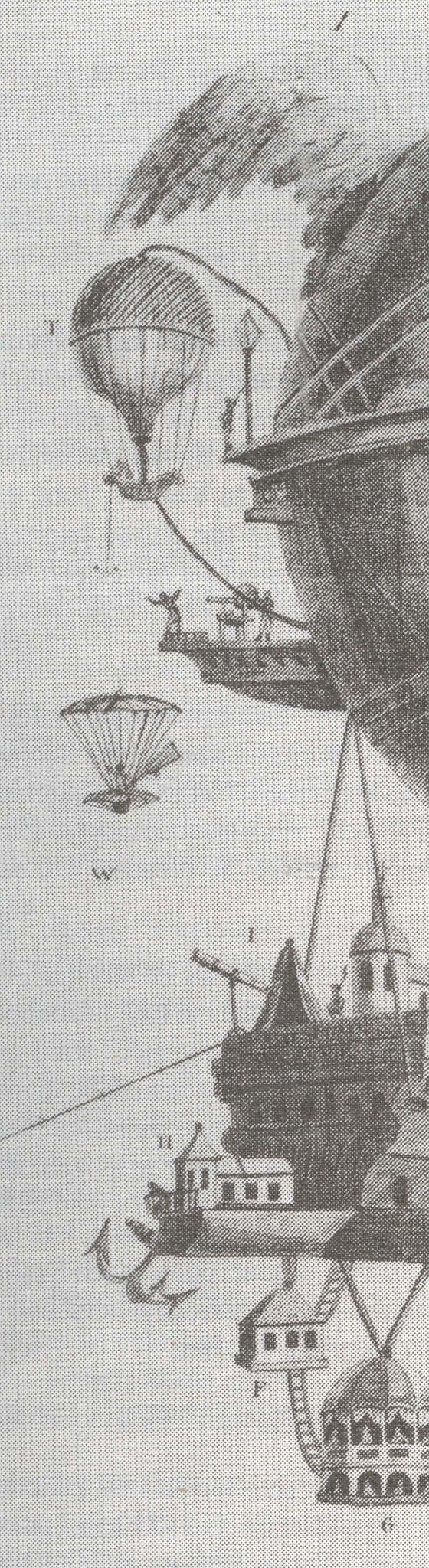
    price?) .  There are several small out buildings,
    as well as a smaller balloon that housed the women who accompanied the all-male
    crew on these long distance jaunts.

    There is an enormous anchor where the power source for forward motion should
    be.  Alas!  Roberston has provided no means of thrust,
    trusting the winds to take the massive balloon to-and-fro.

    (“Minerva” is the Roman goddess of poetry, medicine, wisdom, commerce and crafts,
    as well as the goddess of warriors.  She also
    invented music.)  

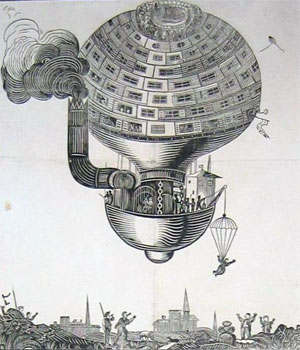
    And the next example of the magnificent nothing, the Great Monster, appeared in 1837.  It was supposed to support 80 houses, steam powered with a large coalhouse and raintanks; it supported gardens and other ammenities, and was to support upwards of 1,000 people–it would be crowded, though, even though the thing was supposed to be 14,000 feet in diameter and 682′ high.  It was huge, tall, and travelled at 100 mph

    Even though the Minerve was a smaller undertaking, its 19th-century Baroque crenulations and insistence upon levels of dangling laddered bits make it a peculiar favorite in spite of the 2.5-mile diameter of the monsterosu Great Monster.Ballon-monstre-1837-f2


  • A Few Mechanical Men–Anthropomorphic SteamPunk

    JF Ptak Science Books    Quick Post

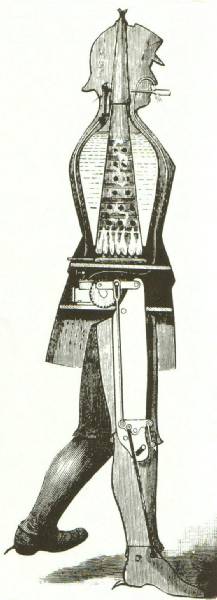
    In 1893 George Moore unrolled his papers and derived this wonderful mechanical man, a gas-fired steam-boiler-driven, half-horsepower, six-foot tall 5-mph dromedary.  It was made of “heavy tin”, had spikes on its heels for added traction, a  fire-funnel surrounded by water and connected in some way to a small but powerful motor.  The exhaust of course would exit through the nostrils. Or, in another version, the exhaust would come out via the machine’s cigar.


    Mechanical man steam george moore
    Earlier than this very striking machine came the 7’9″ steam man proposed by Zadick P. Deddrick.  The patent for the invention was granted in 1868, and was made to haul a rockaway carriage, the machine dressed as a man so as to not frighten horses int he street.  http://www.davidbuckley.net/DB/HistoryMakers/1868DederickSteamMan.htm


  • Von Braun on German Liquid Rocket Development, 1945

    JF Ptak Science Books Post 1994

    Von braun title157I was prepared to just list this for sale in the books for sale section of this blog and be done with it–until I semi-realized that this famous (or at least significant) report is not to be found available online. Von Braun is far from being of interest to me–I don’t need to know his part of the space program from 1946-1977, though I am interested in his what he was doing from 1936-1945 when he was trying to kill London.

    Again, I’m no expert on this man, but reading between the lines of his politically whitewashed account of German/Nazi flying bomb program makes me wonder about his enforced/codified forgetfulness and suggestive memory.

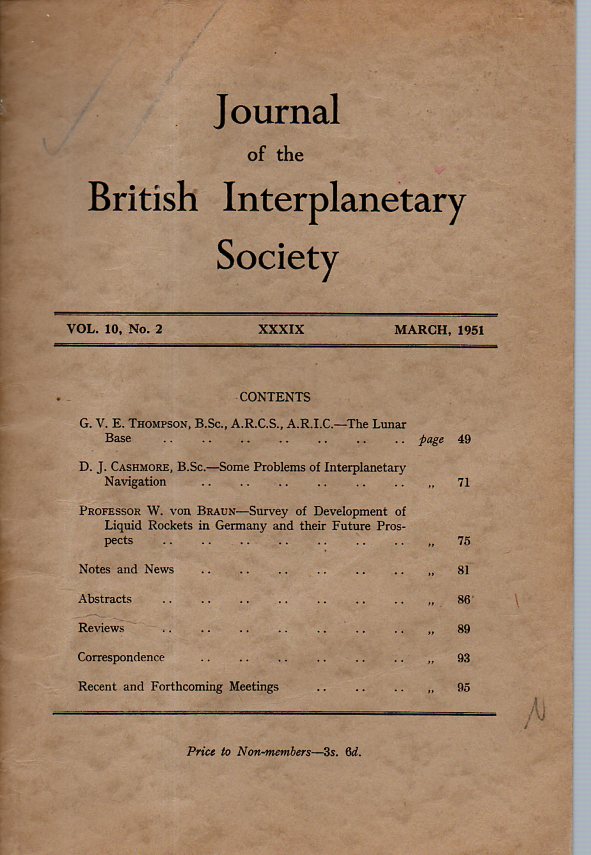
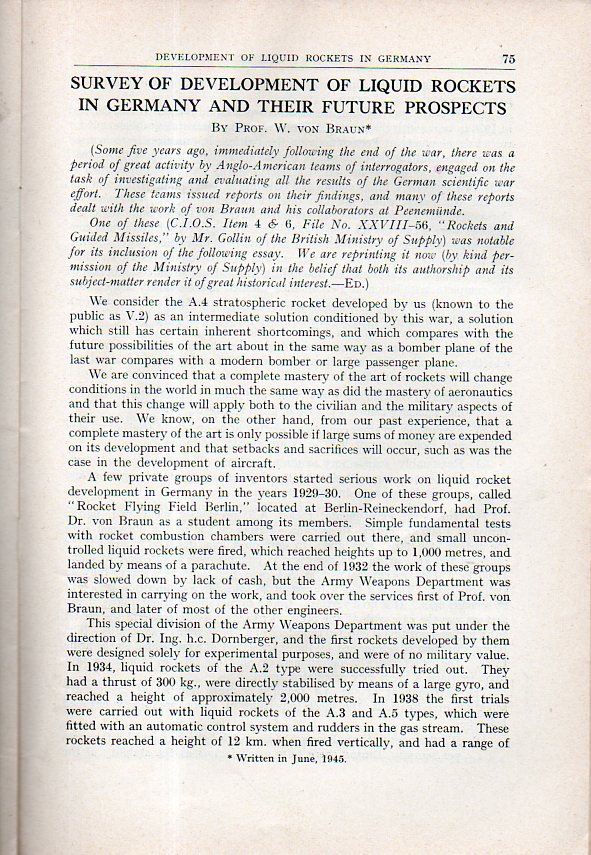
    The paper in hand is his “Survey of Development of Liquid Rockets in Germany and their Future Prospects”, a six-page effort that appeared in the Journal of the British Interplanetary Society on March, 1951. It is a reprint of a reprint of a report that he wrote for his Anglo-American interrogators in the summer of 1945, when he and the Allies were scurrying around and trying to figure out what to make of the post-war world with all of that valuable German technology-ops out there in the wind.

    In any event, von Braun wrote out this history and prognostication (as there is a big chunk of the paper devoted to future space travel and such) for them in 1945 which then found itself in print by at least 1946. There are many glosses. For example, his use of the A.-prefix determination throughout the course of the document to refer to the V-weapons though it is noted in the first sentence of the report (and no doubt by an editor), that the A.4 “is known to the public as the V.2”. (Perhaps that has the scent of freshness to it, to rid the report of a small part of its scrubbiness…or not.)

    He writes occasionally in the third person, and also makes the case that the development of the rocket complex at Peenenemunde was for research in high-flight/super-fast travel, when the place had always been intended for military applications. He does mention that the A.4 had severe problems with the guidance system, but that was acceptable since they were given large-target areas to bomb–such as “London”.

    It is an interesting read for what it says about the future of vast fast travel, as well as for what it does not say about defeat and responsibility and the use of slave labor and bombing large civilian areas. But that’s not what he was talking about, here.  Or basically ever.


    Von braun 1151


  • Speculating on Ned Ludd as a 2013 Figure

    JF Ptak Science Books  Post 1991  Follow Me on Pinterest

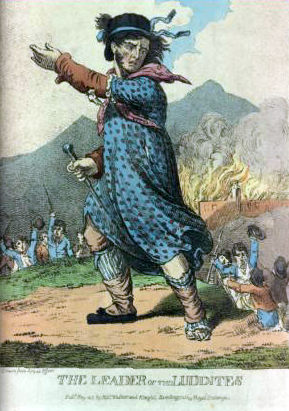
    LudditeIf the young Ned Ludd had fallen asleep and somehow managed to stay in a reverential dreamland for the past 225 years or so, I wonder what he would think, awakening in 2013. Where would his ambitions lie, assuming that he awoke with the old fire still intact?

    Certainly the strength of his convictions would be displaced to some new area beyond smashing the machines that took away the jobs of workers and helped secure them as the lowest-end of a very new man-machine interaction that keep workers working hard for less money.  Seeing that machines are everywhere, it would be a hard thing to reject, what most jobs in most areas depending upon a pile of machines that like the cosmological pile of turtles of James Jeans reaches all the way down and all the way up.

    Ned Ludd may not have been real, but his name and at least imagined riotous activities against machines were real enough to give the Luddites their name.  I think it is commonly believed today that a Luddite is simply anti-tech, but back at te turn of the 19th century and into its second decade, the Luddites were a definite force intent on destroying the very new machines that were taking away the jobs of skilled workers.  In the 18-teens, it seems that most of the historical interest in this movement concentrates on their actions against machines in the textile industry: these were proto-“strikes”, very physical labor protests against industry selecting machines over man.  The threat grew so intense that following the threatening acts of  the late 1780’s attempting to protect industrial property from this sabotage, that in the war year of 1812 the  Destruction of Stocking Frames, etc. Act 1812 (52 Geo 3 c. 16), also known as the Frame-Breaking Act was passed by an act of Parliament, which made it a capital offense to destroy mechanized looms. It was intended to break the back of the Luddite movement and preserve industry, and in the progress of the life of the limited act (it was designed to expire after two years), saw the execution of some 60-75 people for  acts of violence against property.  (The sentencing end of this act is a little difficult, as it seems that judges imposing sentences tended not to cite this act, though the result was the same.)  The Frame Breaking Act was replaced by another less lethal act which sentenced lawbreakers to 10-20 years “exile” in Australia, but that too was short-lived and replaced by another flavor of the act that brought back the death penalty. 

    For whatever reasons, the Luddites seem to have been broken, or absorbed, or exhausted, by the end of the second decade of the 19th century.  Mr. Ludd it seems never had a birth date and didn’t seem to die, and may not have been an actual person.  But as I said if he had slept for 225 years and entered consciousness again, today, it may well be the current evolution of human-machine interaction may be too advanced for him to address.  Perhaps Ludd would be interested more in the coming future of human/machine development, when human bodies are disposable, and i hta tcase would fight for the right of humans to retain their humanity.  But where would that fight start? Would he have rejected artificial hearts in the 1960’s? Artifical hips?  Would heart stents be a part of this encroaching history of the mechanization of humanity? And if that was so, would the innovations of Joseph Lister in sanitizing the operating theatre also be an unfavorable development?  Would spectacles count? Haring aids?  Canes” Wheelchairs?  It does get very sticky, unless Mr. Ludd decided to draw the line in the sand at the future transmission of consciousness or whatever into a new non-carbon-based receptacle to cheat death. 

    Maybe Ludd would aim lower and higher at the same time, deciding that the computer and its veiny internet was the real culprit of contemporary human demise, seeing the world wide web as more a primitive attempt at a global consciousness that robs all of its users of their individual humanities.  Of course he would have to become something on the lines of an alchemical adept in order to  know how he and his confederates could hack and destroy the internet, causing what might be monumental collapse of the economic world as we know it, launching a new/old era of agrarianism. 

    Or maybe Ludd has something entirely different on his mind, like Captain Ahab not really thinking very much about The Whale at all, his mind elsewhere, concentrating just on the contract for hunting up a commission rather than an intellectual and hyper-spiritual trophy.

    Philip K. Dick might have had a place for Ludd in one of his stories, which is about as much harm as he could do, unless resurrected by a super-evil-rich-nogoodnic with a mask and a cape intent on committing his Geniusopathia to Digiocide. 


  • Aircraft Silhouettes, 1930

    JF Ptak Science Books   Quick Post  
    Follow Me on Pinterest


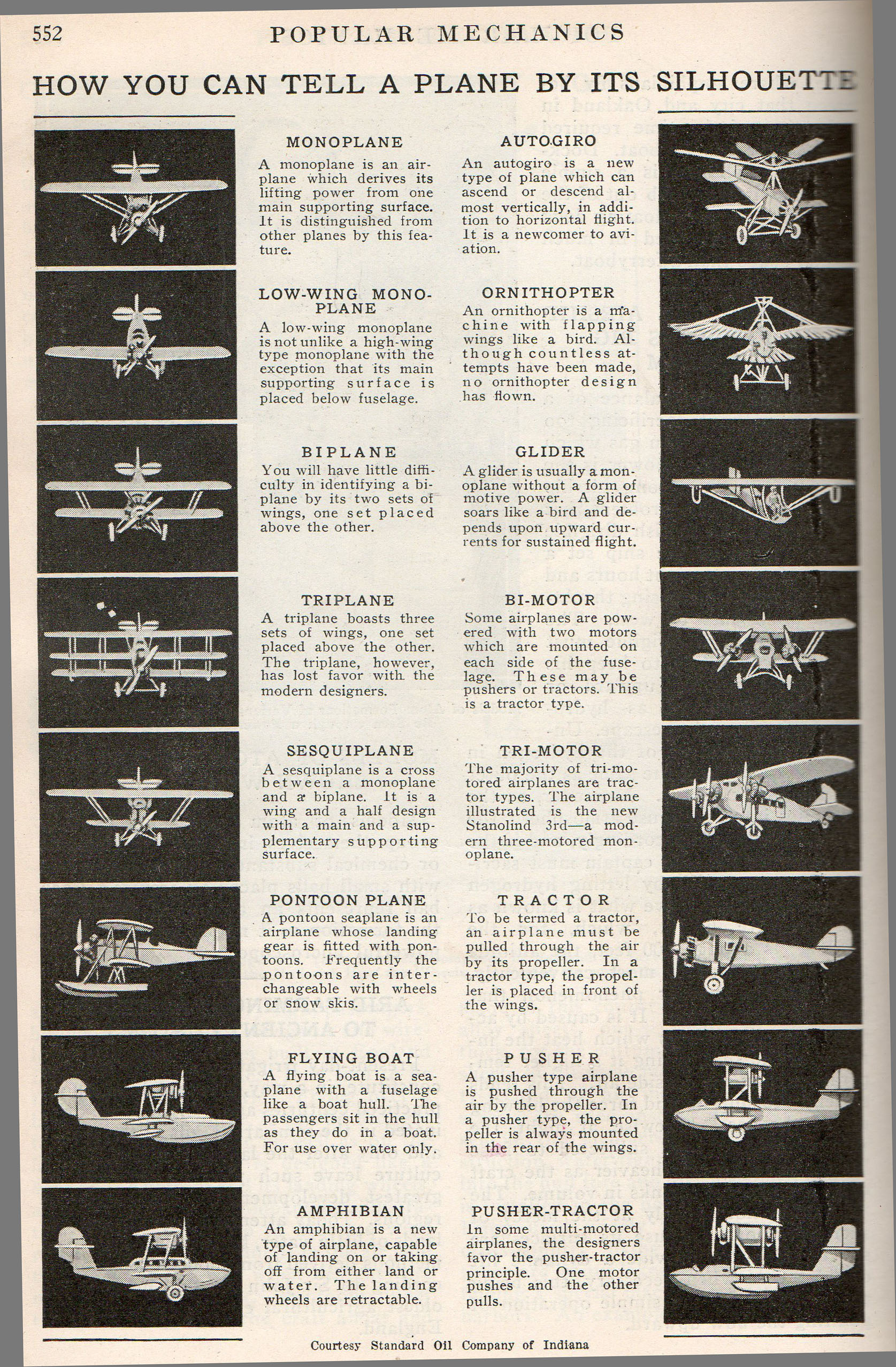
    I just found this in the October, 1930 issue of Popular Mechanics and like all of these sorts of identifiers it struck me as potentially useful.  At the very least, it is interesting, and so I pass it along:

    Airplane silhouette part b

    Larger images of the silhouettes below:


    ·Posted by :

    ·in:


  • An Underwater Bridge at Gibraltar, 1930

    JF Ptak Science Books   Quick Post  
    Follow Me on Pinterest

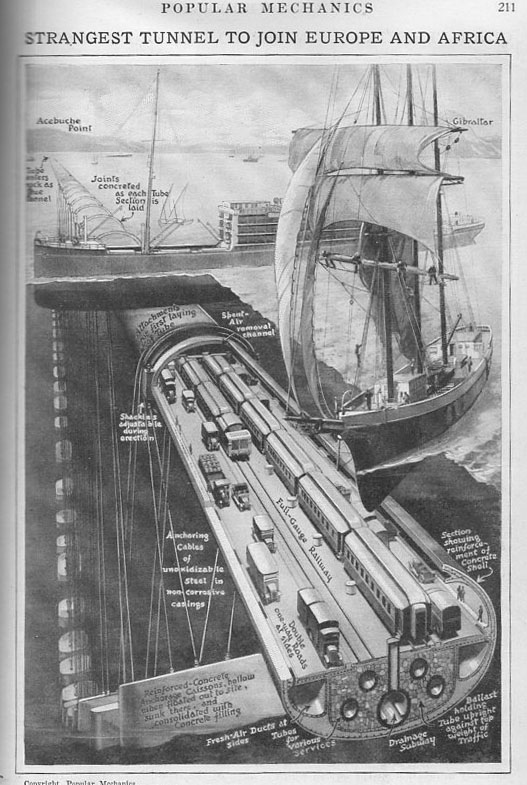
    This is an interesting image without a story, though its implications are huge and the engineering involved is incredibly substantial. It appears in the September 1930 issue of Popular Mechanics, and shows a  “huge concrete tube” connecting Africa and Gibraltar.  the interesting part, the “strange” part of the title of the illustration), is that the tunnel is basically like an underwater bridge.  When the idea of the tunnel was first proposed by the Spanish government in 1930 it was found that the rock between the two continents (and actually about where the two continents meet) was extraordinarily hard–too hard for the contemporary technology to deal with. One proposal to get around the tunneling aspect was to lay the tunnel above the bottom of the channel, which is what we’re looking at in this image. 

    Tunnel to africa147

    ·Posted by :

    ·in:


  • A Piece of Tech Future and Children Knowing Everything, 1876

    JF Ptak Science Books   Post 1985Follow Me on Pinterest

    Telephone 1876 lockyer detail
    There are many facets in the history of the future that sound very familiar and true, making it shocking to realize what a long timeline some presumably modern things have.  For example, take the issue of the superiority of children to understand newly-arrived technological innovations. It seems as though children need to be shown exactly once how to access a certain segment of a program or how to program the television. It is perhaps a modern conceit that this issue belongs with us in the present and to the children of these children, somewhere in unfolding technological future.  But this was certainly the case in 1876, with the (very) new technological breakthrough, the telephone.

    Alexander Graham Bell was not the first to the invention of the telephone–this is one of those breakthroughs that was ‘in the air” (like the electric telegraph, and the hypothesis on the background radiation of the creation of the universe, and television, and Cubism), and in several issues of the standard-keeper scientific journal Nature for 1876 there are several articles discussing the telephone which do not mention Bell. For example Antonio Meucci in 1849, Charles Bourseul in 1854, Johann Philipp Reis in 1860, Elisha Gray in 1874, and Thomas Edison in 1875, all came close to the practical application of the idea of the ‘speaking telephone”, but it was Bell who ruled the day with the superior design and the patent award. It was Gray who came closest of all to winning the future, beaten in the accounting department at the Patent Office by Bell by only a few hours, both his and Bell’s patents received on 12 February 1876. (Gray’s patent was actually received earlier in the morning than Bell’s, but it was Bell’s attorney who insisted on his patent being recorded immediately in the accounting ledger, with Gray’s patent entered into the books two hours later, resulting in the awarding of the telephone patent to Bell. Ouch). 

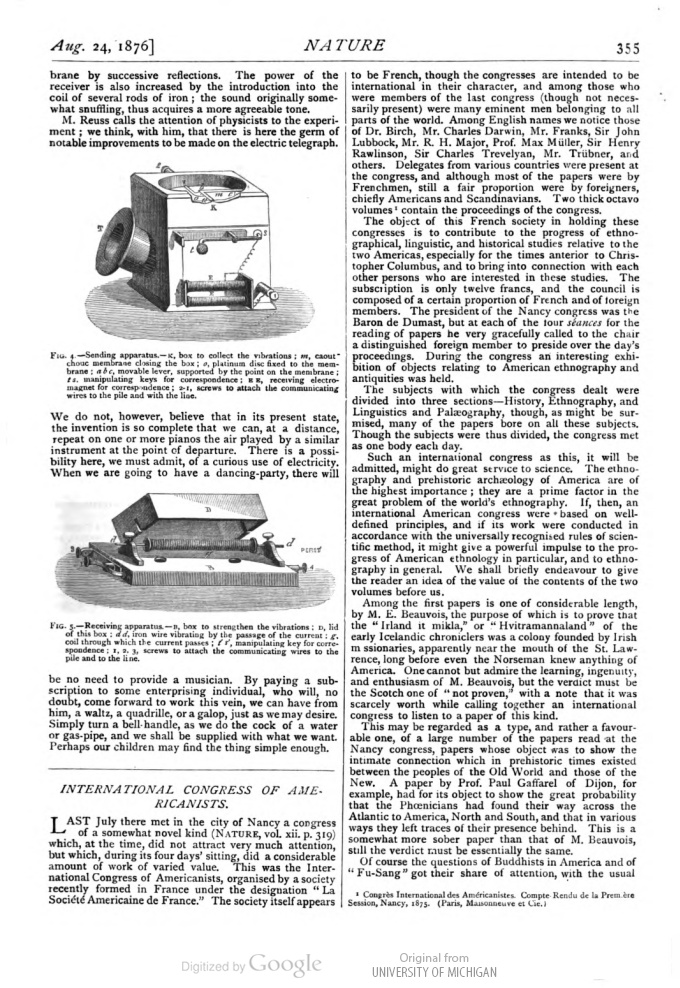
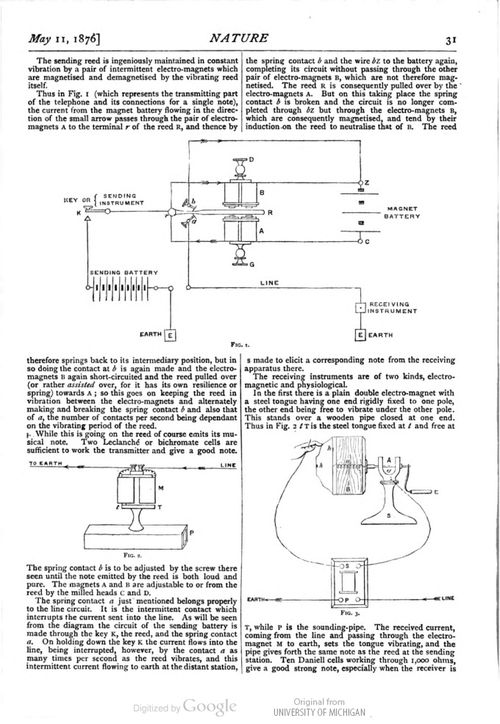
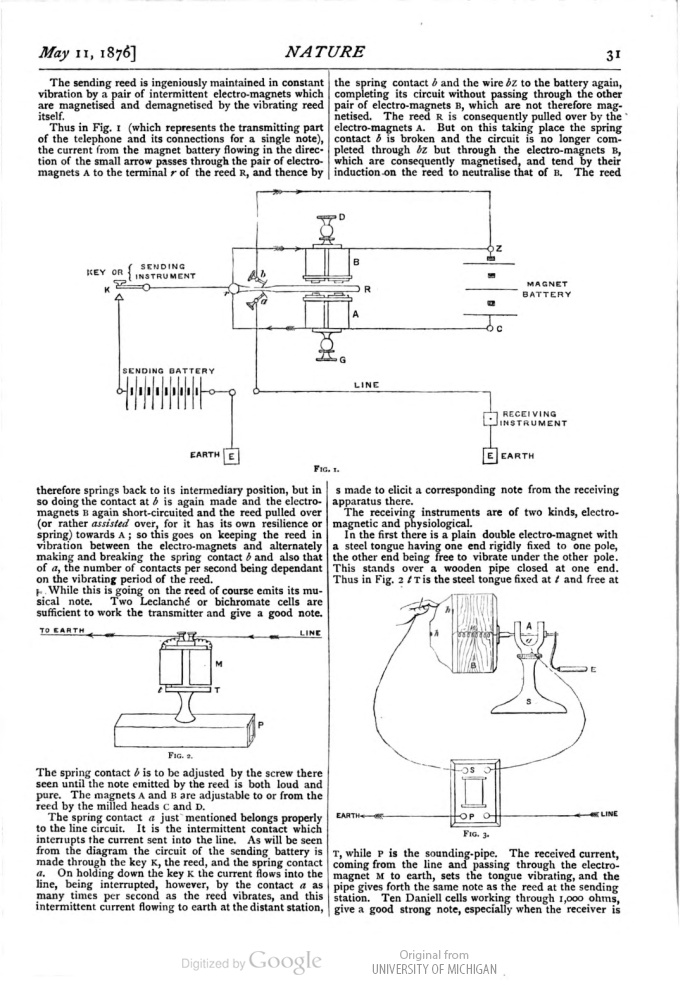
    The August 24, 1876 issue of Nature contained a compact article (uncredited but written by the editor, the esteemed astronomer/astrophysicist Norman Lockyer) on the recent extravagances in electrical development, and included a long section on the telephone.  Bell’s name was not mentioned, and Lockyer concentrated on the work of Reuss and Gray. He also wrote about the use of the telephone, which does not yet involve the use of the instrument for voice communication.  As in an earlier article in the same journal by J. Munro (“On the Telephone, an Instrument for Transmitting Musical Notes by Means of Electricity”.London, Nature:  May 11, 1876.  Pp 30-32 and concentrating mostly on the Gray telephone), Lockyer discusses one application of the telephone in the transmission of music. (He does mention the remarkable experiments of Bourbouze, who in 1870 attempted to use the Seine as a conductor between two stations, those being two bridges, each outfitted with electric piles, enabling the transmission of information without wires–but that’s for another post). 

    Lockyer writes about “the germ of notable improvements to be made on the electric telegraph”,  that

    “in its present state, the invention is so complete that we can, at a distance, repeat one or more pianos the air played by a similar instrument at the point of departure. There is a possibility here, we must admit, of a curious use of electricity. When we are going to have a dinner party, there will be no need to provide a musician. By paying a subscription to some enterprising individual, who will, no doubt, come forward to work in this vein, we can have from him, a waltz, a quadrille, or a gallop, just as we may desire.  Simply turn a bell handle, as we do a cock of a water or gas-pipe, and we shall be supplied with what we want”.

    Lockyer finishes with this great line:  “Perhaps our children may find the thing simple enough“. 

    My initial reaction is great surprise, that this feeling about children coming to understand a new technology quickly/instantly reaches (in evidence) back to 1876.  How far back in time does this sentiment or realization reach?  Is it ancient?  I’ve never really thought about it, but now that I have, a little, and been presented with hard evidence that the sentiment reaches back into the 19th century, that it might as well reach all the way back, deep into dusty history–even pre-dusty.  In any event, even though it is a little difficult for me to ascertain Lockyer’s real feelings about the use of the new instrument, his reaction to children and technology seems to be an honest belief. 

    (I actually have a series of original early papers on the telephone (1876-1878) including the one below, offered on the bookstore section of this blog, here).

    Telephone 1876 lockyer

    Telephone 1876 munro