A Daily History of Holes, Dots, Lines, Science, History, Math, Physics, Art, the Unintentional Absurd, Architecture, Maps, Data Visualization, Blank and Missing Things, and so on. |1.6 million words, 7500 images, 4.9 million hits| Press & appearances in The Times, Le Figaro, Mensa, The Economist, The Guardian, Discovery News, Slate, Le Monde, Sci American Blogs, Le Pont, and many other places… 5000+ total posts since 2008.

Category: Technology, History of

  • A Short Notice on Some Short but Very Important Flights–the Wrights, 1902

    JF Ptak Science Books    Post 2823

    Illus Zeit 1902 wright bros

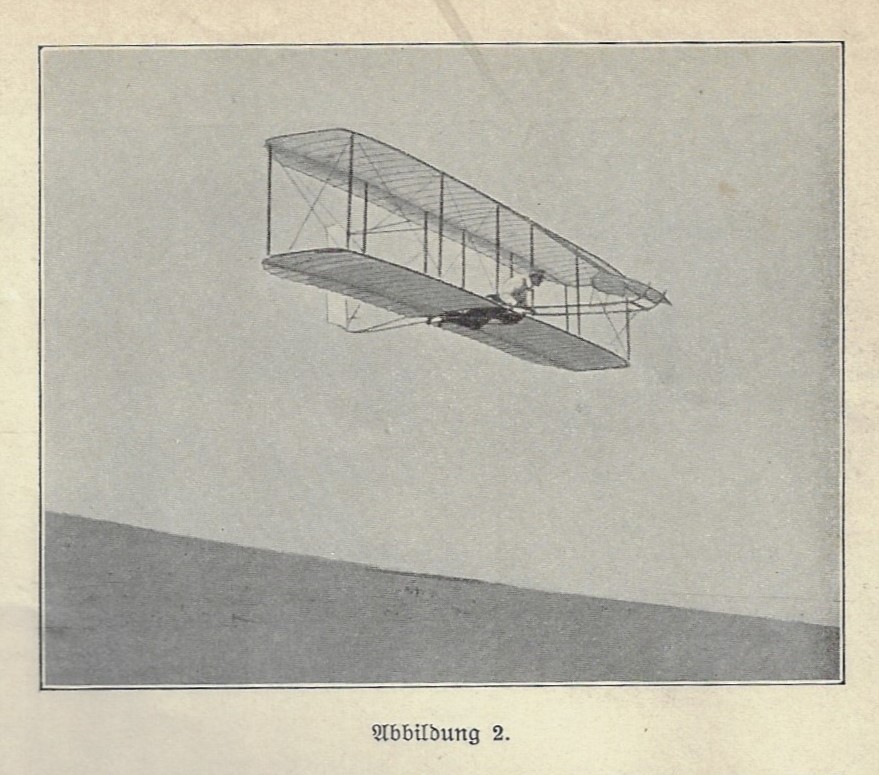
    Here’s an interesting piece of reporting by (Professor) Raimund Nimfuhr (Czech, 1874-1954) on the Wright brothers gliding experiments in late September/October 1902.  The two men transported their 1902 aircraft to Kill Devil Hills near Kitty Hawk , N.C., and carried out between 700 and 1000 gliding tests, with great success. This story on their efforts appeared a few months later on 5 March 1903 in the Illustrirte Zeitung (Leipzig), with an unusual accompaniment of five photographs.  

    The Wright’s received very circumspect coverage during this time, what with the certain level of disbelief that accompanied early reports on flight. As it turns out when the brothers made their great and historic powered flight a year and two months later the local papers near the Wright community in Ohio gave the achievement scant notice.  The reverential Scientific American gave the Wright flight an inside notice—it wasn’t front cover material for them. (The papers were a little shorted though because the results of the experiment were leaked to the local Norfolk paper, and the rest of the world got scooped.)

    In this short notice, “The latest advances in practical flying art”, Nimfuhr takes the first two paragraphs to review a bit of aviation history and to remark that “practical activity in flying has become increasingly common”, with a “feverish activity” particular to the “New World”. He states that the importance of Otto Lilienthal had not yet been recognized for what it was, with Europeans paying the price in wasted experimentation for not employing Lilienthal’s results—this he states is not the case in the New World, which has made good use of the Lilienthal experimentation.

    When he gets to the den Bruden Wright, Nimfuhr starts by saying that their 1902 glider was almost exactly like that of the second type of Octave Chanute, though he almost immediately states that the Wright machine was a “brand new, significantly improved machine”. He describes the wings and the method of controlling die gleilfluge, and then on th=o a description of some of he “700” flights they made, the longest being 189 metres (with time aloft at 26 seconds). Nimfuhr does take great care to describe the exacting control the Wrights had on the glider, which “promptly obeyed the slightest movement of the rudder”. He ends saying that the Wright glider is not the “ideal”, and that in order to fly several kilometers or into a headwind, an engine was necessary, though as things were in March 1903 the Wrights had made a “very significant advance”.
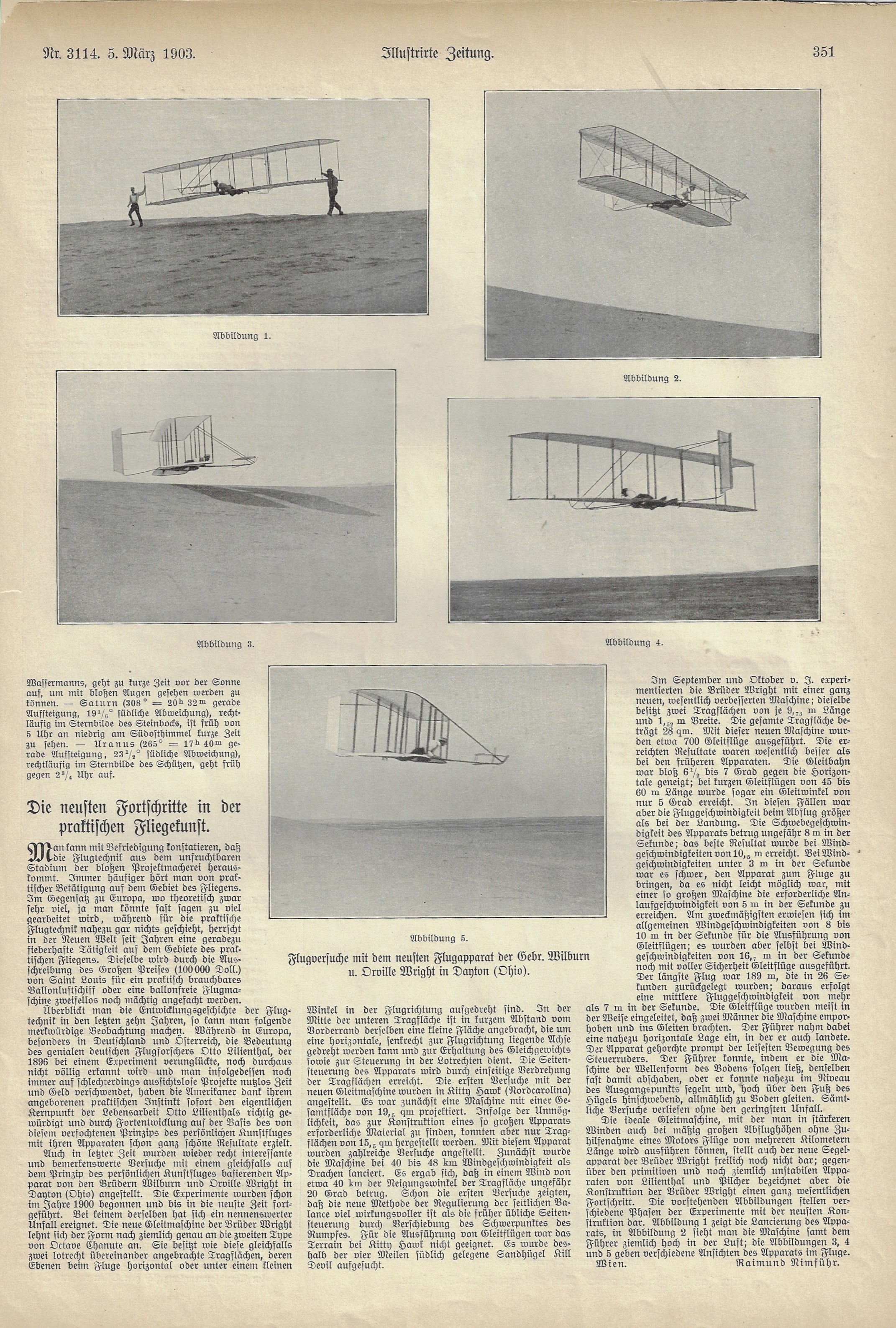
    Illus Zeit 1902 wright bros


  • The “Invisible” Made Far Less So: How a Cat Falls and Lands on its Feet, 1894

    JF Ptak Science Books  Quick Post

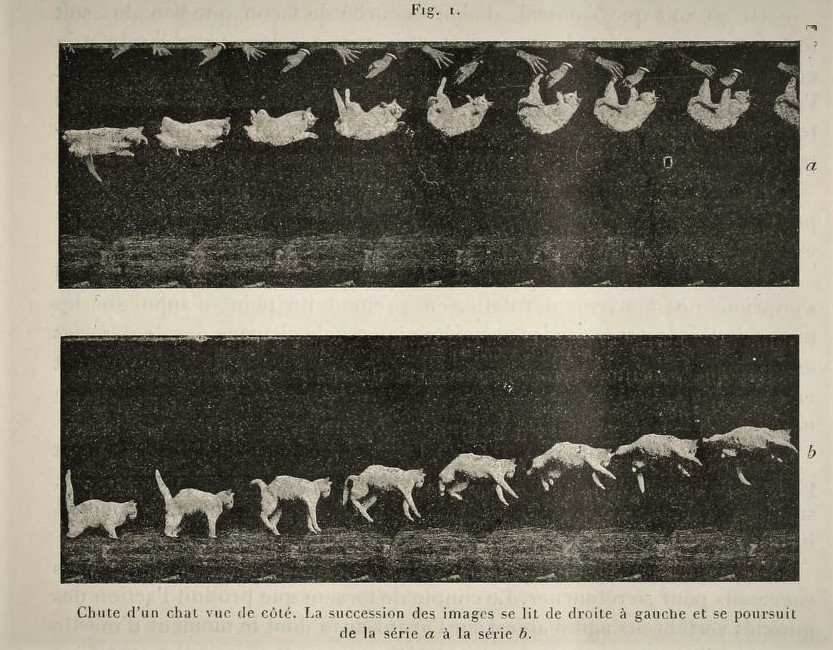
    Marey cat 1894

    • Source: Etienne Marey, “Des mouvements que certains animaux exeutent pour retomber sur leurs pieds, quand ils sont precipites d’un lieu eleve”, in Comptes Rendus de l’Academie des Sciences, vol  CXIX, 1894, p. 714. (This paper is reproduced a few weeks later in the more popular science journal La Nature on 10 November 1894.)

    Aha!

    This is the famous falling/dropped/thrown cat experiment in which Marey shows that when dropped with its back towards the ground a cat will respond and right itself via muscular reaction to land on its feet, all of the time. It was not a trick of “air pressure” or other such thing which Marey dismissed, as once the action of the fall is slowed so that the whole of the activity can be intelligently observed, and it was by the animal’s movement alone that brings it to land on its feet. It is Marey’s instrumentation that takes the day, using a camera capable of making 60 images per second, which was a huge advance over his chronophotographic gun of 1882 which made 12 images/second. Marey remarks that this animal action is true in other animals, giving the examples of rabbit and dog.

    Marey is a rather stiff writer and takes his time to explain himself in extended detail—this isn’t an entertaining story though the results are of course fantastic.

    That piece of needling aside, Marey is one of my favorite 19th century science figures. He worked across numerous fields, though I think his great importance is in the invisible-to-visible part–that he was able to make was were essentially moving pictures of complex and/or fast action, displaying motion in shockingly easy manner. His work opened as much of a new and surprising world as that of Lippershey/Galileo and Co. with the telescope and Janssen/Leeuwenhoek/ and the others with the microscope.  

    For further reading see G. Gbur’s Falling Felines and Fundamental Physics, Yale, 2009.


    ·Posted by :

    ·in:


  • Glorious Tech: Napier Bones of Words, a Calculating Money, and a Scroll-Fed Typewrtier (1916)

    JF Ptak Science Books   Quick Post 

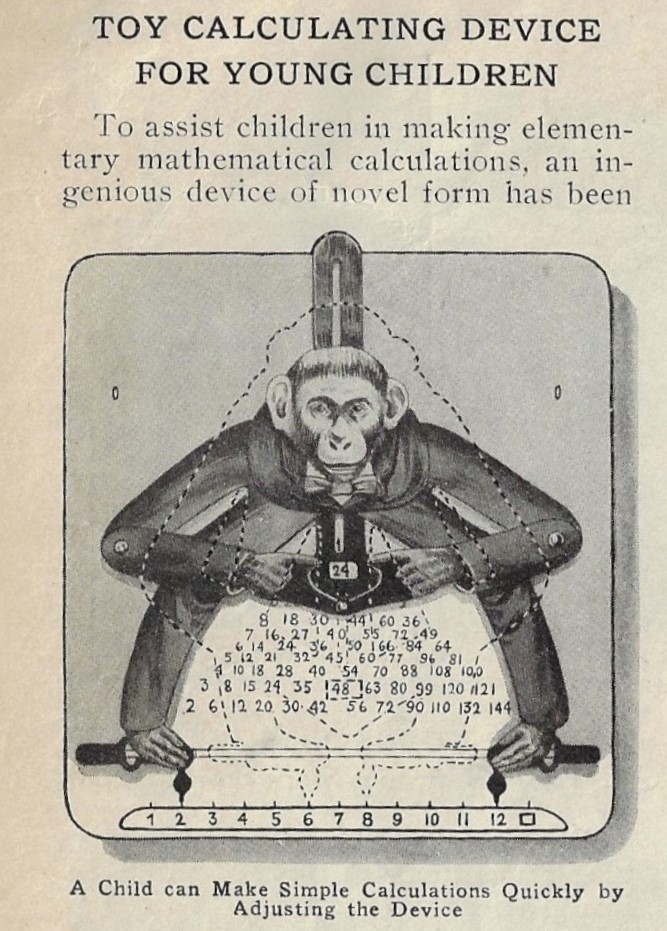
    Pop Mech 1916 toy calculator monkeyI noticed three interesting devices in just a few dozen pages of each other in Popular Mechanics for 1916. The first was a calculating monkey adding machine/toy for kids–this is something I had never seen before and had I been aware of it 30 years ago I certainly would’ve used it in my store. The “toy” is actually pretty sophisticated, as it will add and subtract, multiply,divide, and extract square roots, which was more powerful than any machine I needed at the time for the store.  


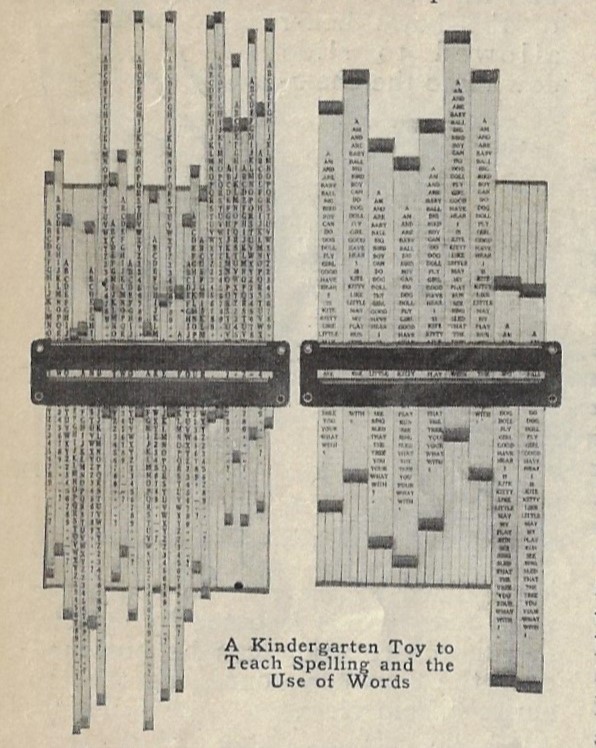
    The next piece of machinery was this Napier’s Bones-like device intended for kindergarten use. The device on the left uses a set of movable wooden strips with the alphabet printed on them; so by sliding the strips you can produce a simple or complex word, the result displayed in the open line of the rectangular piece of wood that holds the whole thing together. On the right is a set of strips with words on therm–used in the same fashion, the child could select a series of words to make simple sentences.  I like these two devices immensely,  (Unfortunately I have no information on this or the calculating monkey.)

    Pop Mech 1916 sliding wooden words

    The third item is a wonderful device, though this one not for kids–it is an electric automatic typewriter, punching out letters from a piano scroll-like master copy fed into a receiving typewriter. (Again, no manufacturing info here, and I don’t know how the typewriter would have responded to page breaks.) 

    ·Posted by :

    ·in:

    — —

  • An 8,000-mile Cruising Range Flying Wing, 1943

    JF Ptak Science Books  Quick Post

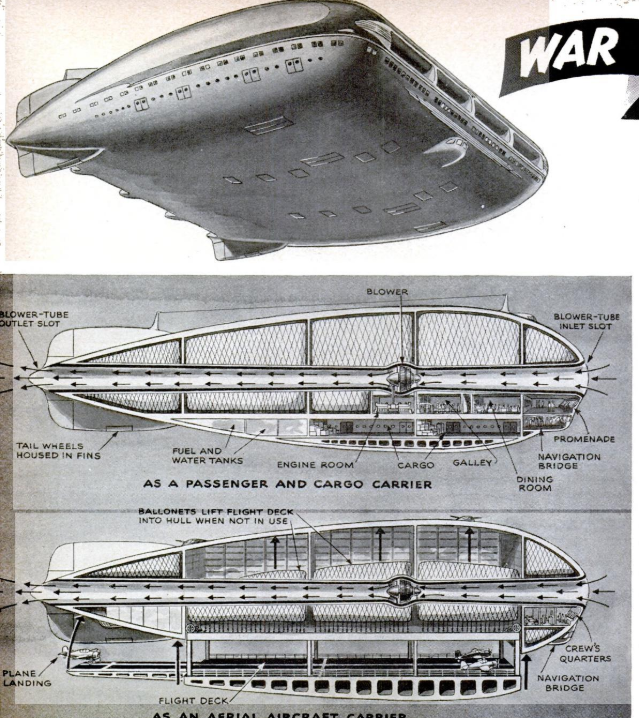
    This is not the first appearance of a proposed “flying wing”, though it seems to me that it is one of the biggest. This version—the idea of Horace Chapman Young (of the Aerodynamic Research Corporation) and Eric Langlands—appeared in the pages of Popular Science magazine in February 1943. It is a “combination of airship and airplane”, and was filled with helium and hope. It is also 69′ tall, and 250 feet long (!), one version of the aircraft of which was made to handle an airport of 12 planes on a 180’x200′ airstrip, which brings just that part f the plane in at a little under a half acre. It pulled and pushed itself through the air at a not-blazing 30-75mph—however, it was supposed to keep that speed for a cruising time of 270 hours, which is enormous. I like the idea of this beautiful beast, from its slightly manta-ray face down to its 30mph takeoff speed.

    Pop Sci 1943 fEb flying wing


  • Found-Abstract Art and the Coming of the NCC-1701: the Capazza Lenticular Airship, 1909

    JF Ptak Science Books  Quick Post

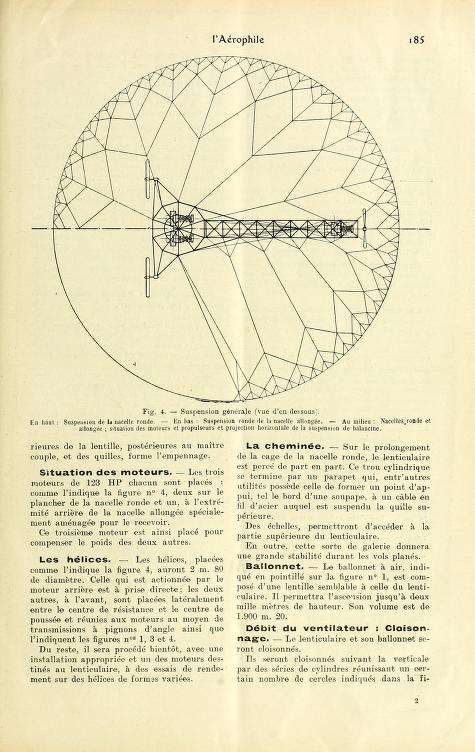
    Smithsonian Aeroph Capazza cross sectionHere’s another early aviation post, as I seem to be a little stuck this morning in the 1908-1911 period…or suitably enough down a small rabbit hole to keep me from doing my mailing duties.  This is a fascinating period with tremendous steps forward in technology taking place just five years after the first successful Wright powered flight test–it is hard to imagine the Wrights were roundly ridiculed in their efforts and worked for the most part in deep privacy; and yet here, just 1500 days or so later, there are hundreds of aeronauts and a dozen or so journals devoted to tech aspects of flight.

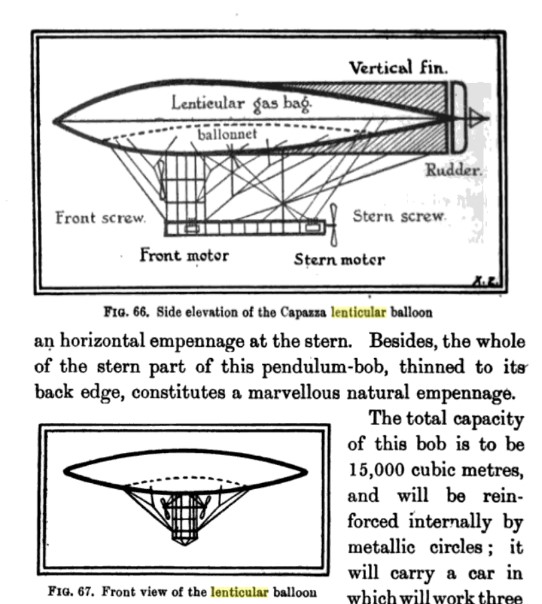
    What caught my Star Trekian eye here in this May 1908 article in l’Aerophile was the lovely found-abstract plans for supporting the envelope of Louis Capazza’s lenticular airship, a composite balloon/aircraft. The firm of Adolphe Bayard-Clement was the planned producer of the airship (they were the first to go into general production of an airplane, the Santos-Dumont Demoiselle 19) though it never was built. It was certainly intriguing–it was lighter than air, non-symmetrical, top be powered by three 120 hp engines supplying power to three screws fore and aft–it was lovely in its way, and of course given it plan and profile immediately suggests to me the Starship Enterprise, though I may be alone in that.  

    And here’s the Found-Abstract art end of the deal–the structure for the non-symmetrical support for the balloon/plane envelope:
    SMithsonian Aeroph Capazza planeur _1_ plan

    Tech info (and image source, above) see Berget, Conquest of the Air, 1909, pp 183-186. 

    Images sources (below):  https://archive.org/details/larophile16besa/page/182


  • Atlas of the Engines–the Antoinette Aero Motor, 1908

    JF Ptak Science Books  Quick Post

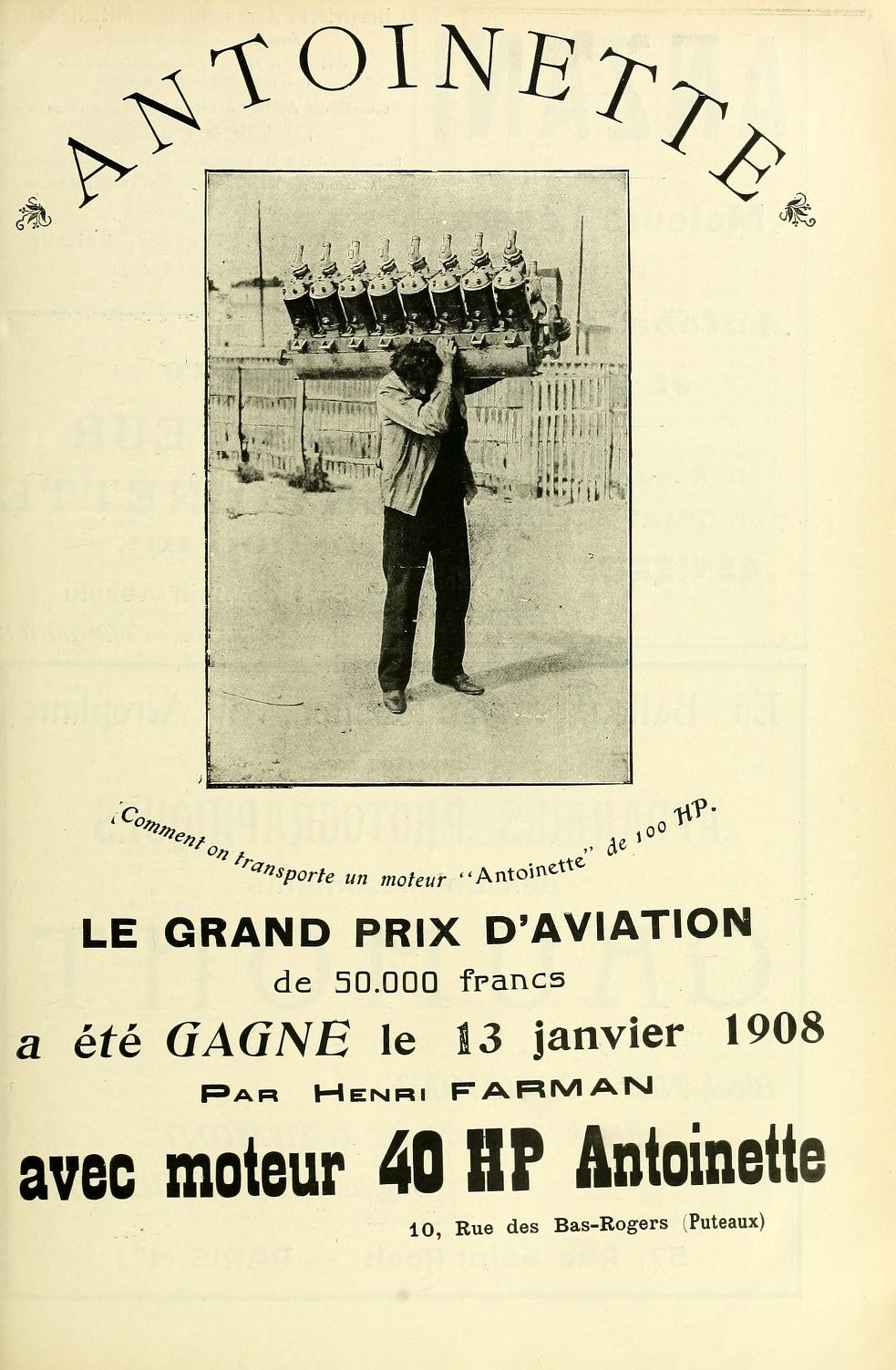
    Smithsonian aeroph antoninette 90hpI couldn’t but help to share this terrific advertisement found in the page of Aerophile magazine for 1908 (via the “Unbound” section of the Smithsonian Institution and Internet Archive. This is the famous “Antoinette” engine, designed and construction by Leon Levavasseur in an aircraft-building partnership with  Jules Gastambide (whose daughter’s name became that of the series of engines). As you can see the man supporting the engine is not having an easy time of it (assuming the guy is 5’8″ 150 lbs or so), though this was a far-advanced aircraft engine for the day, a V-16 (?) developing 100- horse (the Wright’s 1903 engine was 12hp 180lbs but did its job perfectly).  In any event this was an interesting demonstration of comparative lightness and power, delivered in January, 1908.  (I’m reasonably sure that this is not the 40hp engine of the Farman flight…)

    Source: https://archive.org/details/larophile16besa/page/28)


  • A View of Manhattan from the Top of the Brooklyn Bridge, 1877

    JF Ptak Science Books   Quick Post

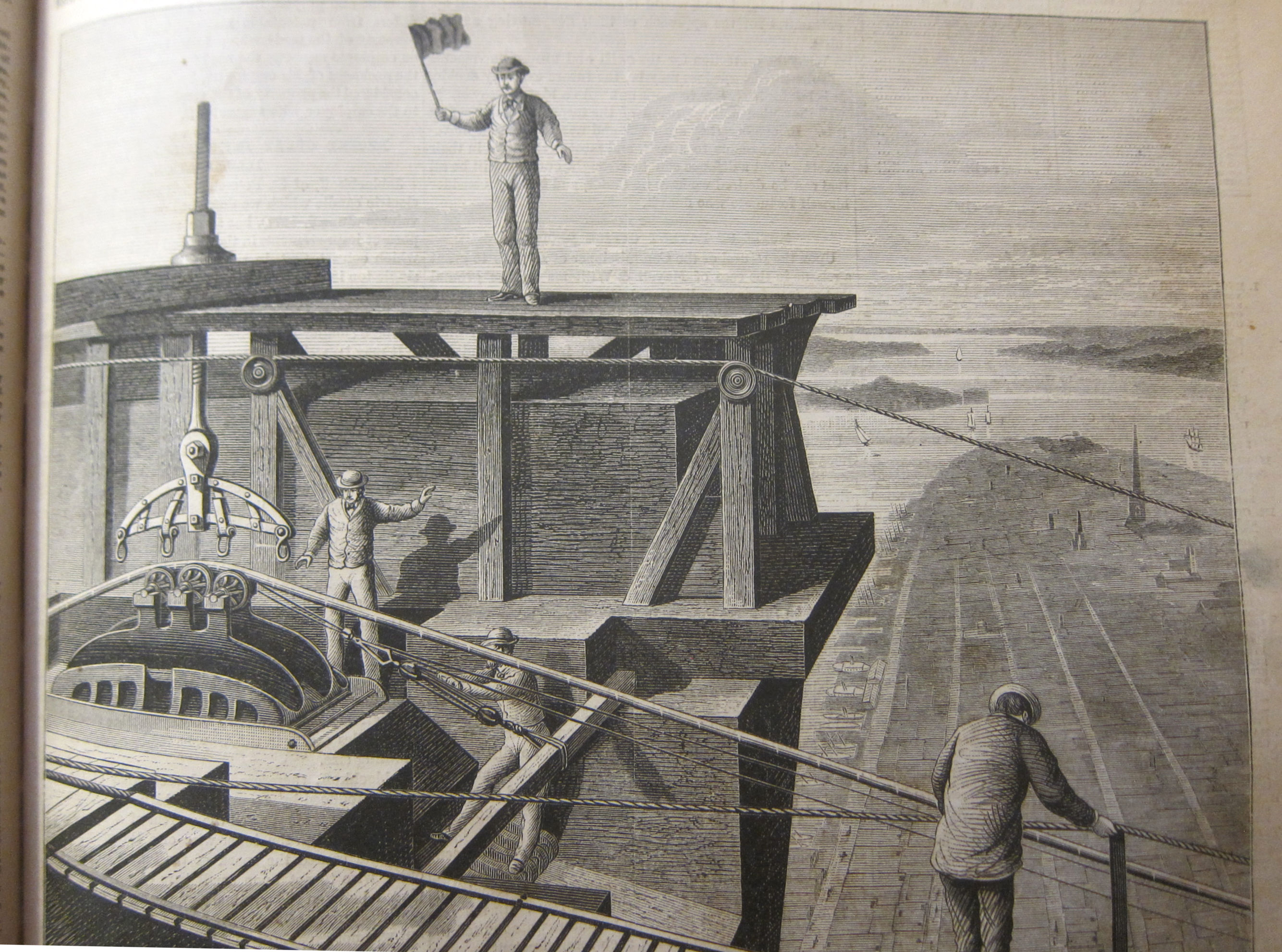
    Yes,  this is indeed a wonderful and celebratory view of Manhattan from the top of the East Tower of the under-construction East River (“Brooklyn”) Bridge. The thing about this is that the view seems to be too good, the tower too tall…unless there is something odd about the perspective and bird’s eye view of it. From this vantage point we’re looking south-east towards the battery and then Governor’s Island and then out to Jersey and Brooklyn with Staten Island in the distance.  Now the steeple we see downtown is Trinity Church, standing there at 284′; given that the tower is 278′ tall,  this perspective completely dwarfs the church for reasons I do not know. I’m not sure what’s going on–perhaps this is more a suggestive view than an actual you-are-there rendering.   The source:  Scientific American, October, 1877.                         Sci Am 1877 Brooklyn Bridge


  • The Biggest Big Wheels (1896)

    JF Ptak Science Books  Quick Post

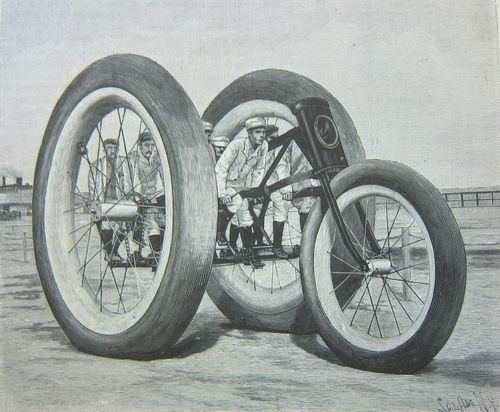
    Even Scientific American–the 1896 source of this small article on this big bike–was impressed with the virtuoso nature of bigness in this invention, stating in the open paragraph that “in this age of big things one is always prepared for the construction of a mammoth engines, ships, buildings…” but this practice was “invaded by the bicycle world”. The trike was “colossal–no other word can describer it–” at 17′ long, powered by eight people (four per rear wheel), with a 6′-diameter front wheel and 11′-diameter (!) rear wheels (with 1/2-inch diameter spokes)  and weighed in at 3000 pounds. It was a beast. The function evidently did not follow form, as there was no discernible use for it except to be displayed during parades and other social events. 

    Sci Am 1896 giant trike

    ·Posted by :

    ·in:


  • Bridges Never Built: the Hudson River Bridge (Midtown) 1896

    JF Ptak Science Books   Quick Post

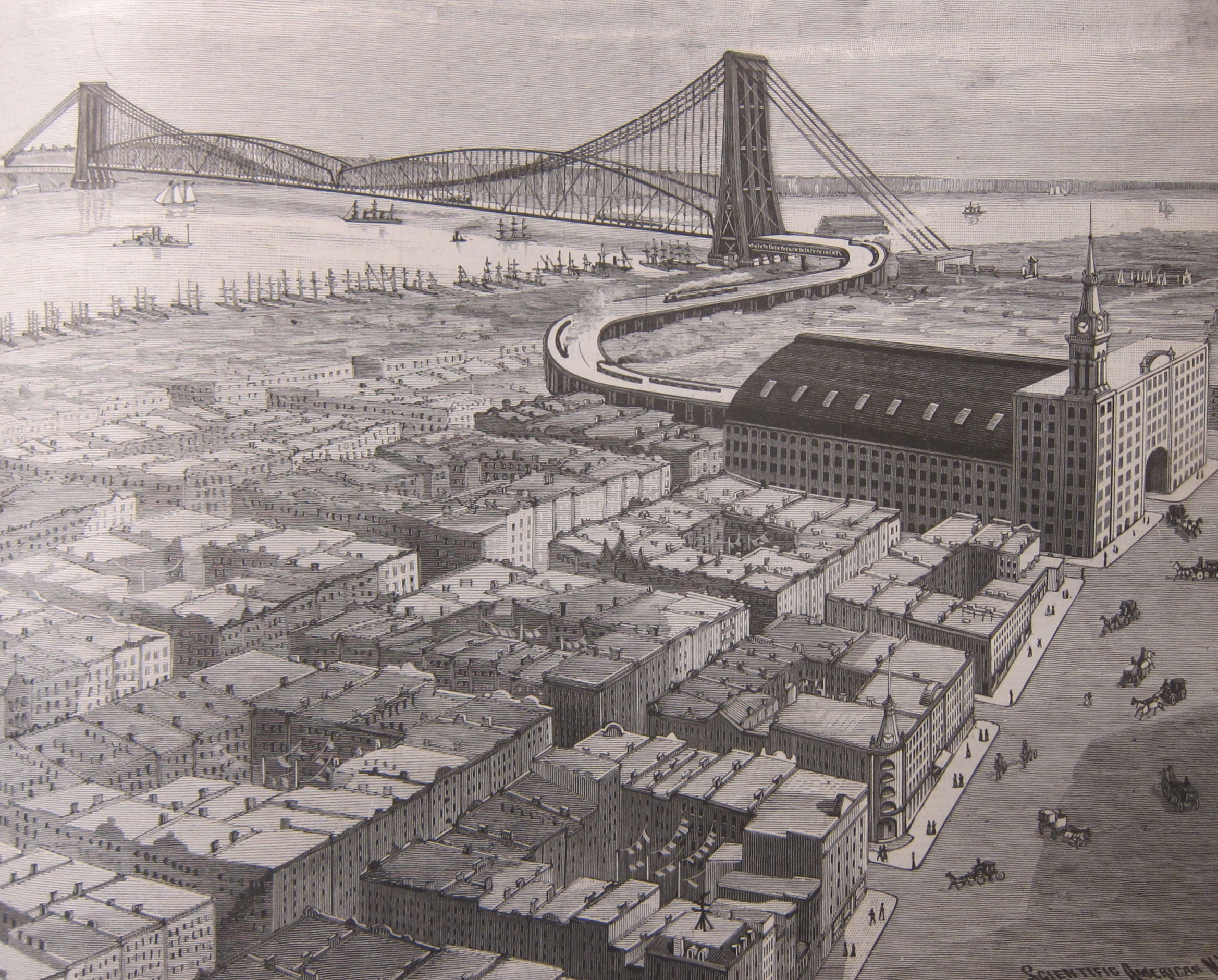
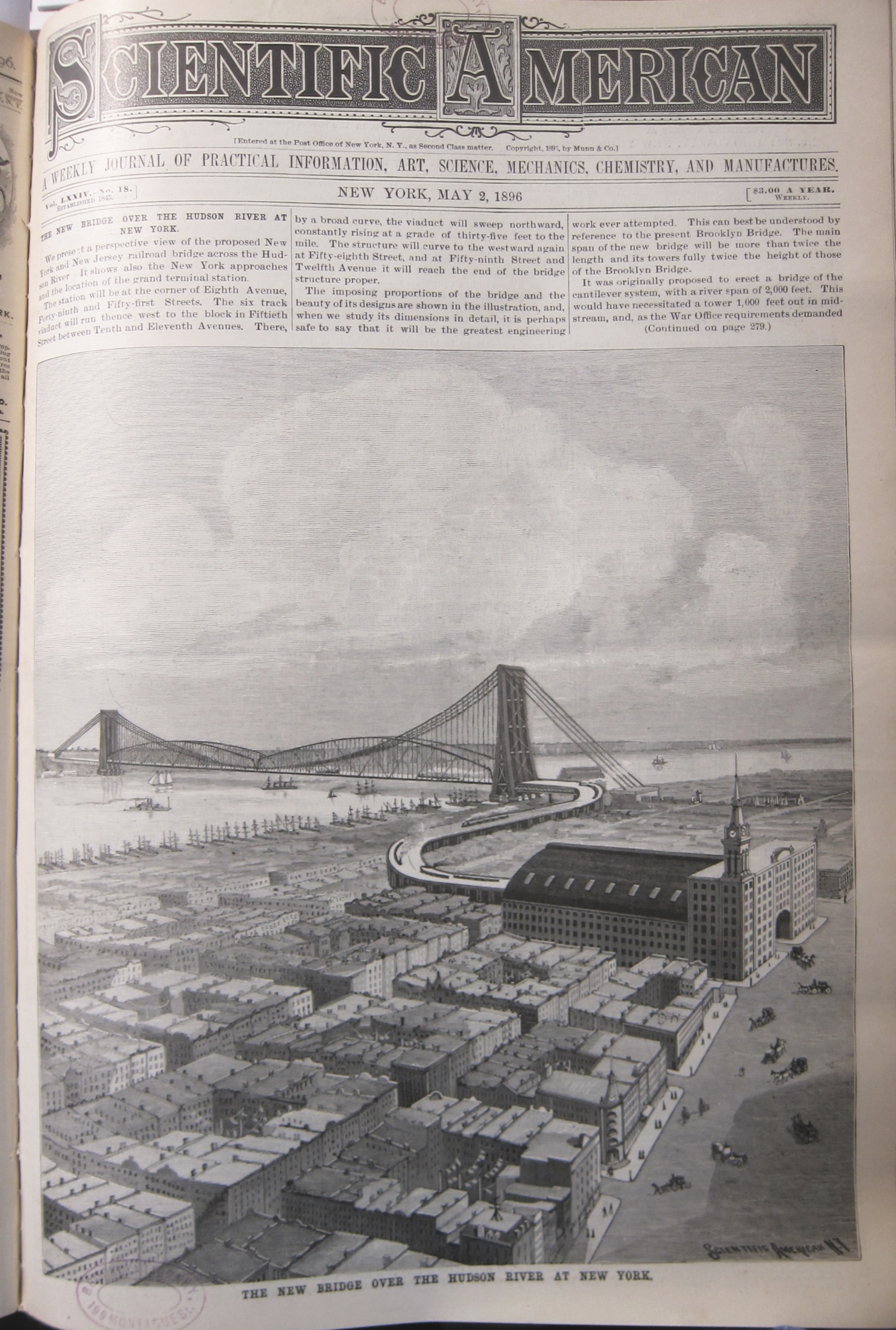
    This beauty appears in the pages of Scientific American for 1896, and discusses a proposal for a bridge to connect Manhattan to Jersey, and to do so spectacularly. The plan was for the bridge to be twice as tall and twice as long as the Brooklyn Bridge, making it “one of the greatest feats of engineering” ever.  The terminal and approaches would’ve been an issue in a few decades later had it been built, as they occupied a fair piece of land from about 59th/11th & 12th and 51st/8th, plus the ramping for six-rails-wide railway access.  The time would come for a bridge in 1929 when the work on the existing Hudson River Bridge (now known as the George Washington Bridge) would be built further north in Washington heights. In any event, this 1896 bridge was quite lovely.  

    SciAm 1896 Hudson River Bridge


    SciAm 1896 Hudson River Bridge

    ·Posted by :

    ·in:


  • Great Images Found in “Popular Mechanics”, 1942

    JF Ptak Science Books  Quick Post/Annual Image Series

    I’ve posted many times on interesting  images that I’ve found in many different journals, my favorite and most commonly used sources being Scientific American (1845-1920), Journal of the Franklin Institute (1828-1960), Popular Mechanics (1920-1950), Science and Invention (1920-1940), Popular Science (1880-1920), and that sort, though I prefer those listed as I have them here and they’re a delight to browse…you learn something every time you open the volume. While saving and naming a scanned image just now, dropping it into place according to publication/year, it occurred to me that I could create a simple series of posts on selected images per given year by journal/magazine. This would give the images some context (or at least more so than as stand-alones) and it would also be very easy to do since the work is already done. 

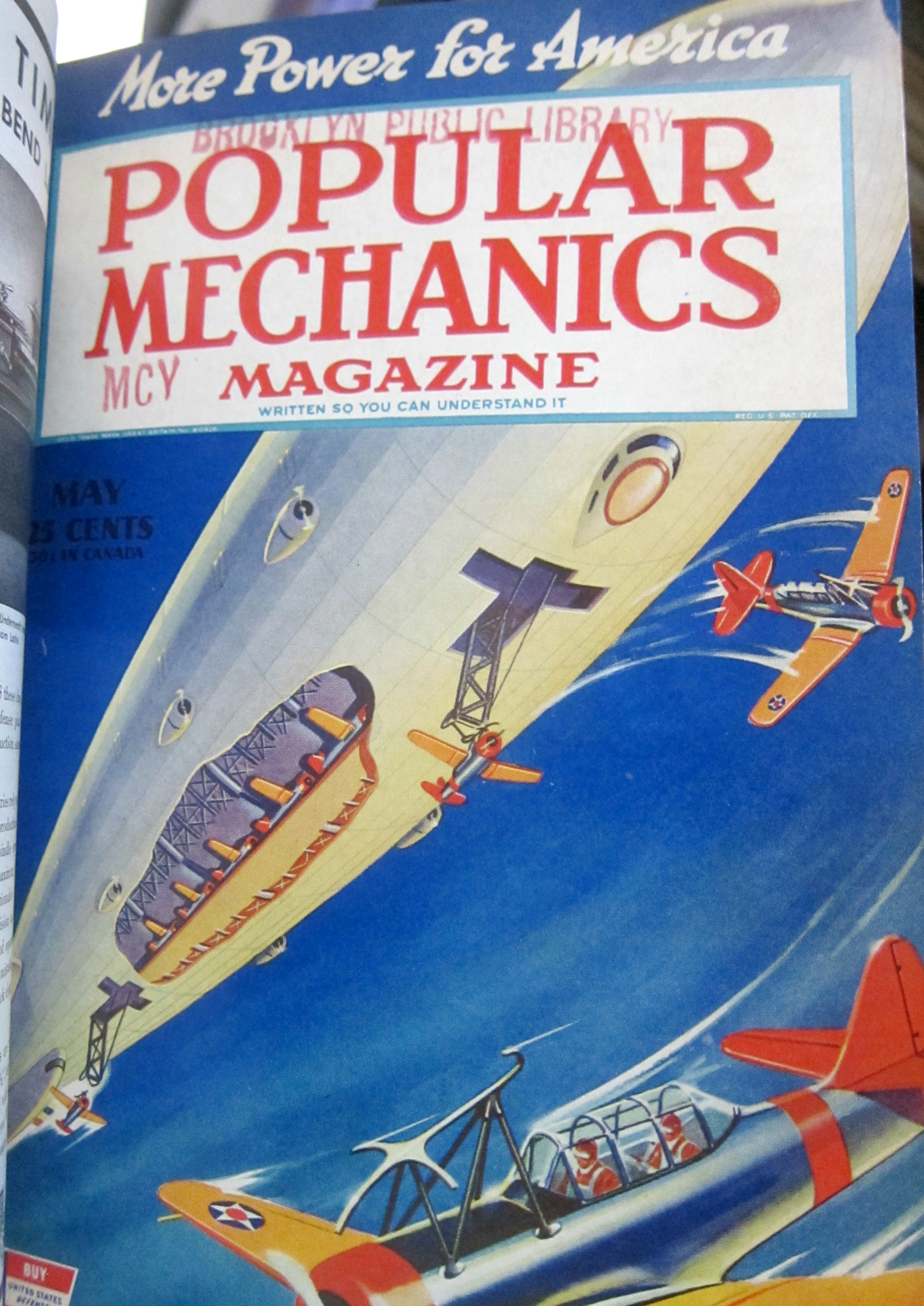
    The first of the series will be for Popular Mechanics, January-June, 1942. The volume is heavily war-related, and offhand I’d say the general impression is that most of that is defensive (coastal defense, air raid wardens, gas masks) than offensive (attack plans, fighter planes, warships, etc.).  Here’s a sample:

    Pop Mech 1942 invasion scenario