A Daily History of Holes, Dots, Lines, Science, History, Math, Physics, Art, the Unintentional Absurd, Architecture, Maps, Data Visualization, Blank and Missing Things, and so on. |1.6 million words, 7500 images, 4.9 million hits| Press & appearances in The Times, Le Figaro, Mensa, The Economist, The Guardian, Discovery News, Slate, Le Monde, Sci American Blogs, Le Pont, and many other places… 5000+ total posts since 2008.

Category: Technology, History of

  • In Living Black & White: T.V., 1944

    JF Ptak Science Books   Post 2887

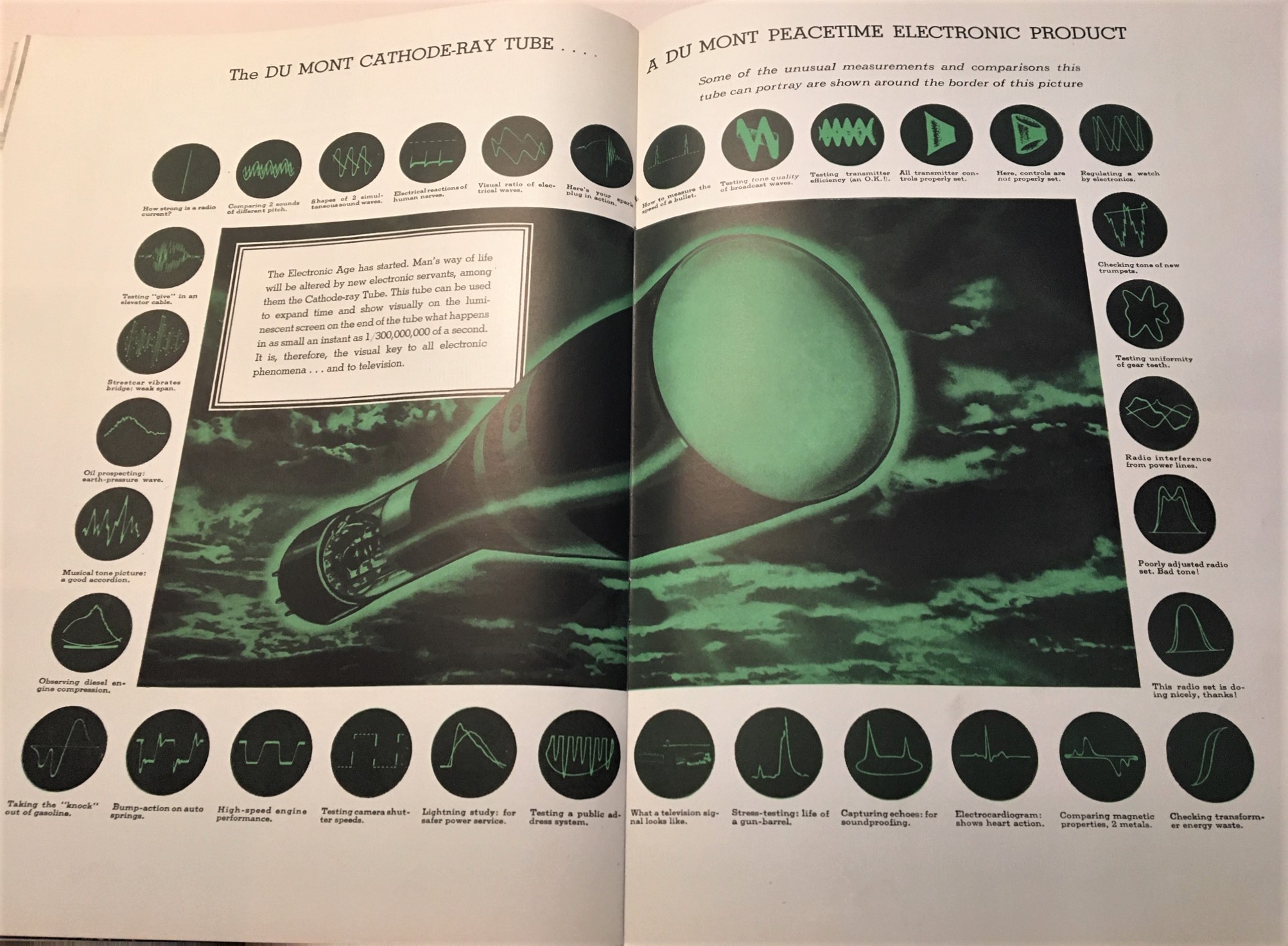
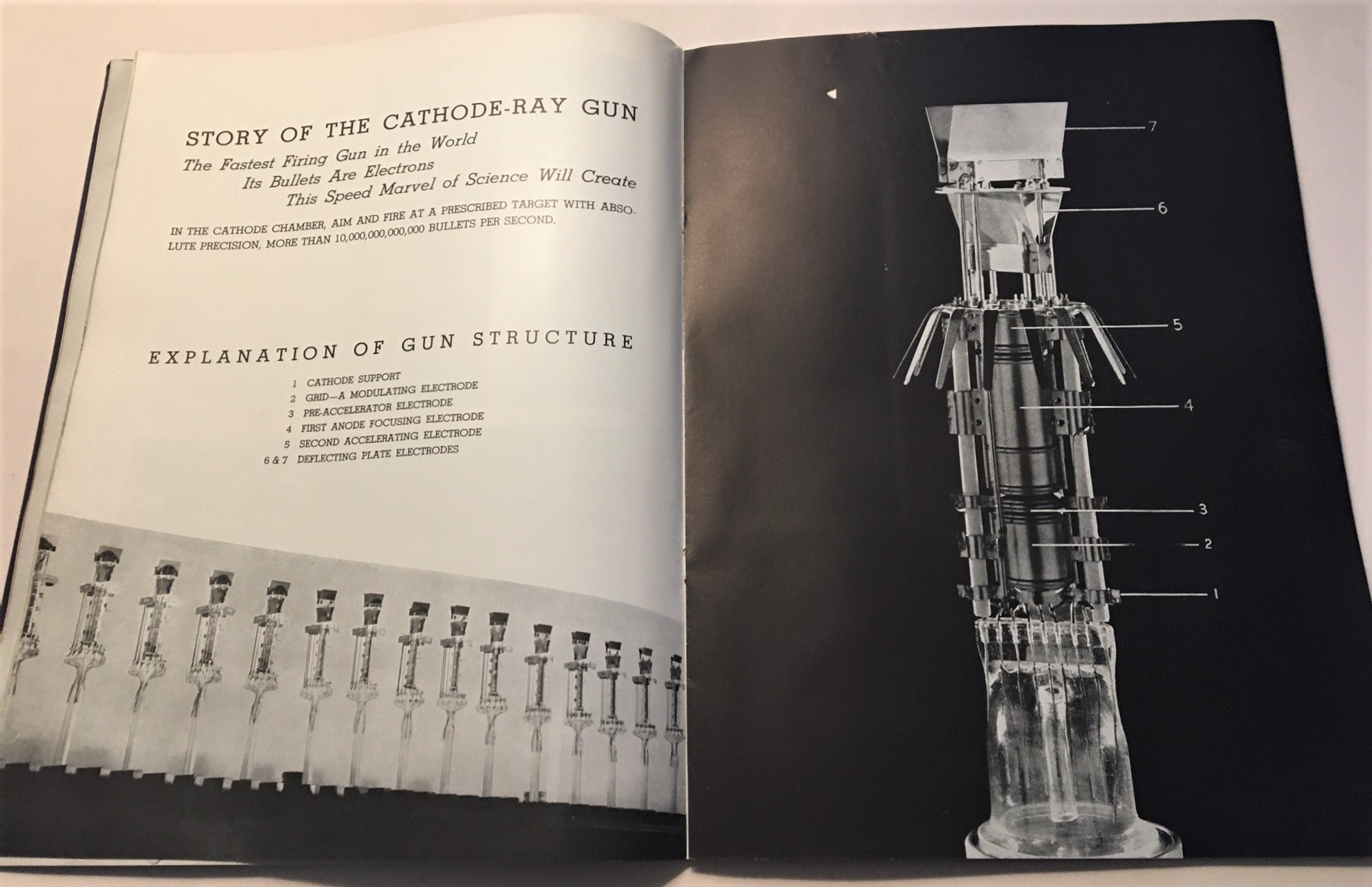
    I didn’t expect such a good photo-essay of the Du Mont labs and assembly facilities after the very odd first few pages of the manufacturer’s 1944 brochure. It started the history of the cathode ray tube at Genesis and then had a couple of pages of cartoonish timelines, but then settled into the turf and surf of their business. Well, nearly so, anyway–there were a few odd bits with the introduction of a sort of scary-looking “Alex Electron” showing how television images were made, otherwise this was an engaging assembly-line view of television manufacturing.  

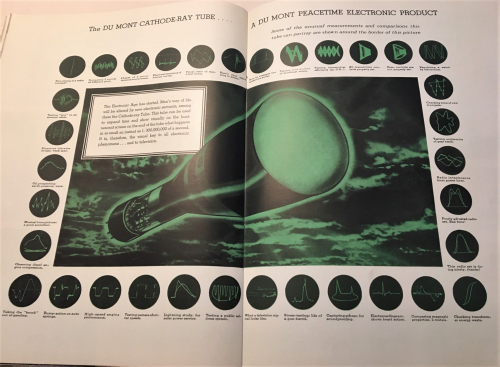
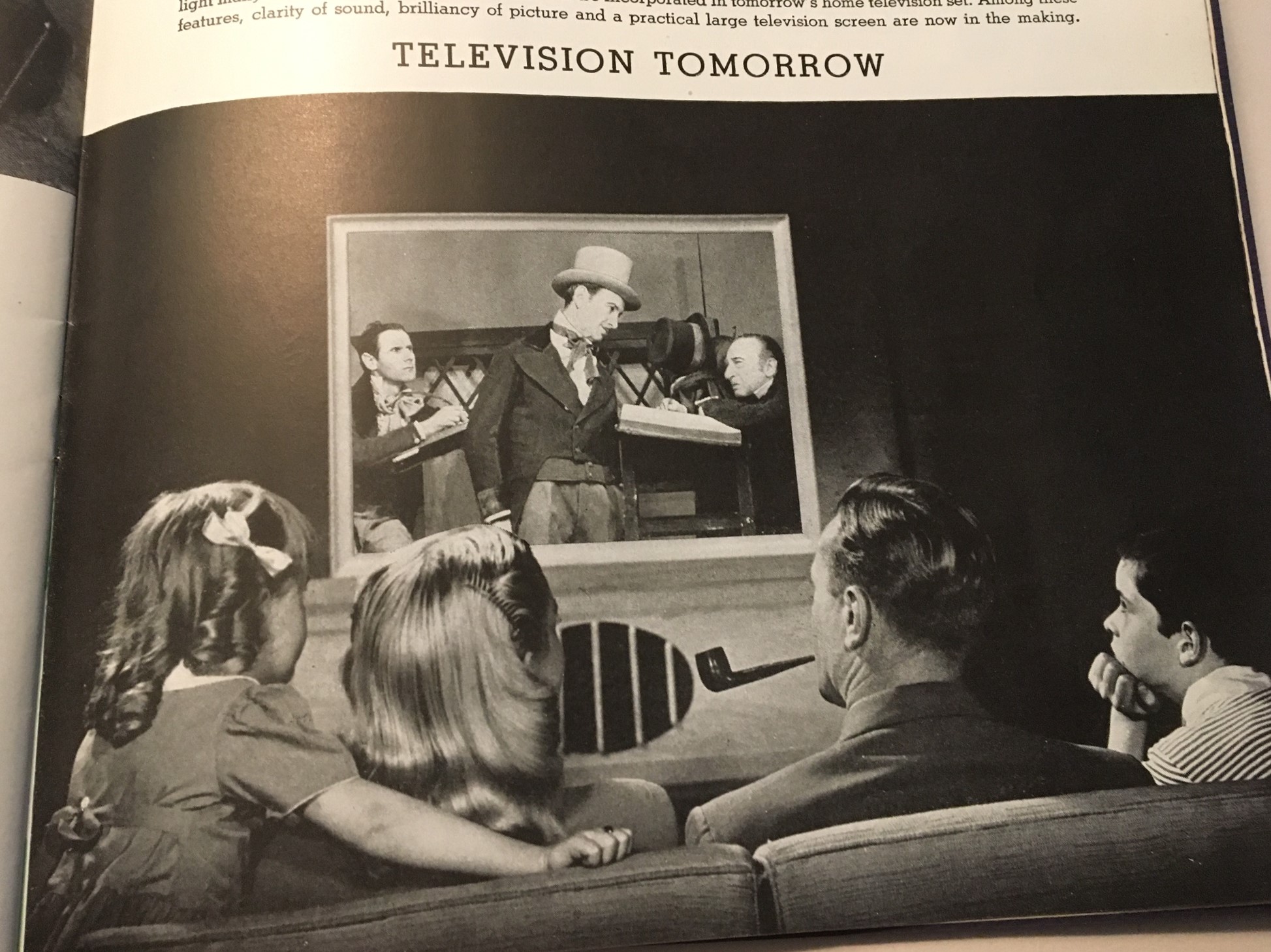
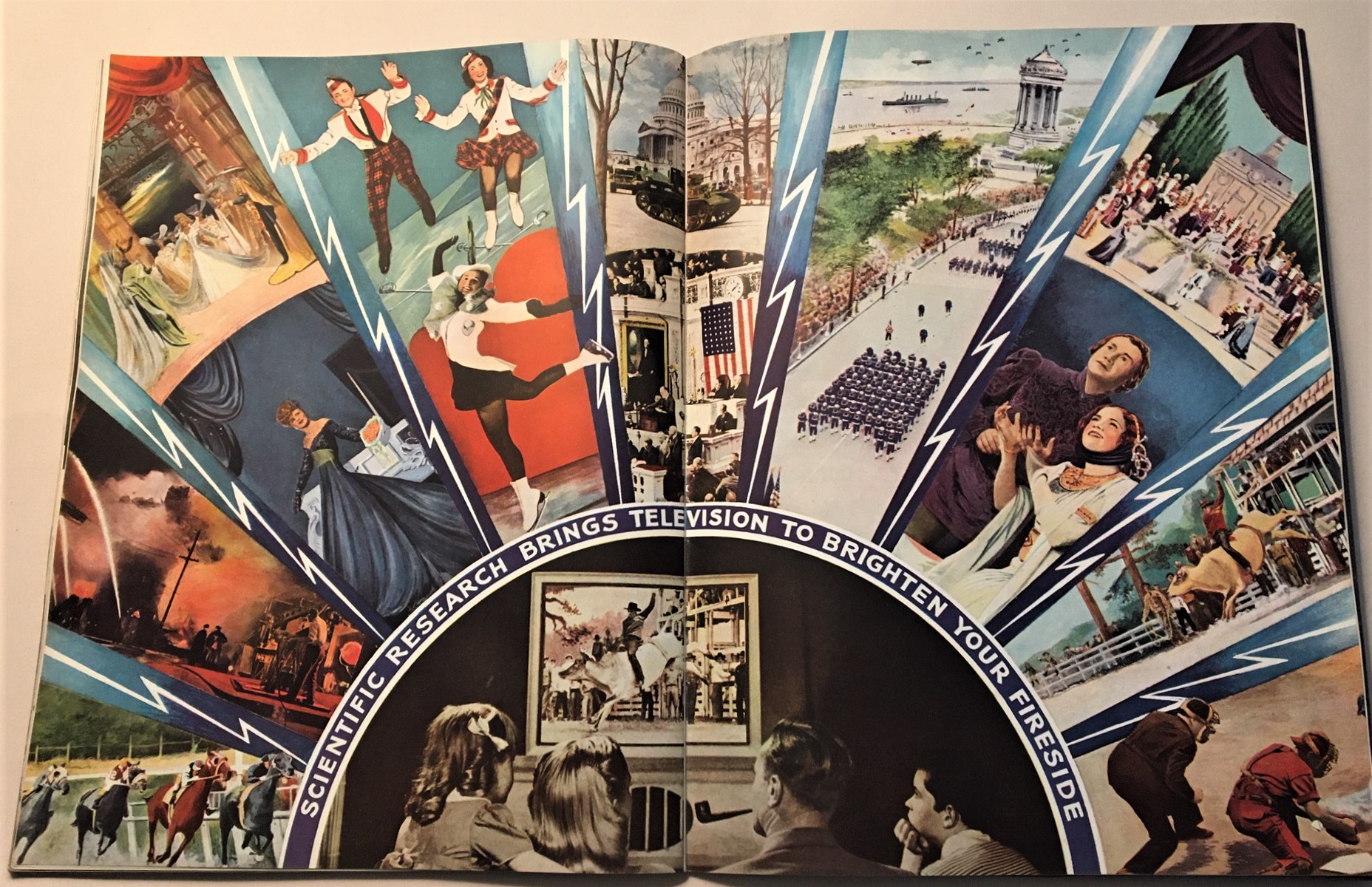
    It did have this gloriously colorful display, including a look at the television of the future:

    Dumont _2_

    It did prompt me to check out the history of the word “television” for its first and early appearances in the OED,  and there I found the following:

    • 1900   Cent. Mag. June   Through television and telephone we shall see and hear one another as perfectly as though we were face to face.
    • 1900   Electrician 31 Sept. 822/2   At the afternoon sitting on Friday, M. C. Perskyi read a communication on ‘Television’, describing a number of apparatus based on the magnetic properties of selenium.

    Dumont _5_

    • 1926   Glasgow Herald 20 Dec. 11/8   Mr. John L. Baird, a native of Helensburgh,..recently invented an apparatus which makes television possible.

    • 1930   J. Buckingham Matter & Radiation 122   We have heard so much about Television lately that we are apt to forget that no portion of the apparatus used is novel to scientists.
      Dumont _4_

    • 1948   N. Wiener Cybernetics 10   Television was destined to be more useful to engineering by the introduction of such new techniques than as an independent industry.

    • 1957   Technology Mar. 9/2   The solution of the major problems in colour television, the public introduction of which is now more a question of economics than of technical difficulty.

    Dumont _3_


  • The Biggest Big Wheels (1896)

    JF Ptak Science Books  Quick Post

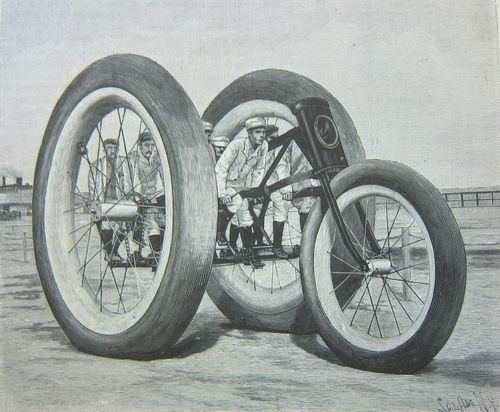
    Even Scientific American–the 1896 source of this small article on this big bike–was impressed with the virtuoso nature of bigness in this invention, stating in the open paragraph that “in this age of big things one is always prepared for the construction of a mammoth engines, ships, buildings…” but this practice was “invaded by the bicycle world”. The trike was “colossal–no other word can describer it–” at 17′ long, powered by eight people (four per rear wheel), with a 6′-diameter front wheel and 11′-diameter (!) rear wheels (with 1/2-inch diameter spokes)  and weighed in at 3000 pounds. It was a beast. The function evidently did not follow form, as there was no discernible use for it except to be displayed during parades and other social events. 

    Sci Am 1896 giant trike

    ·Posted by :

    ·in:


  • An Audio Internet for Six (1888)

    JF Ptak Science Books  Post 2838

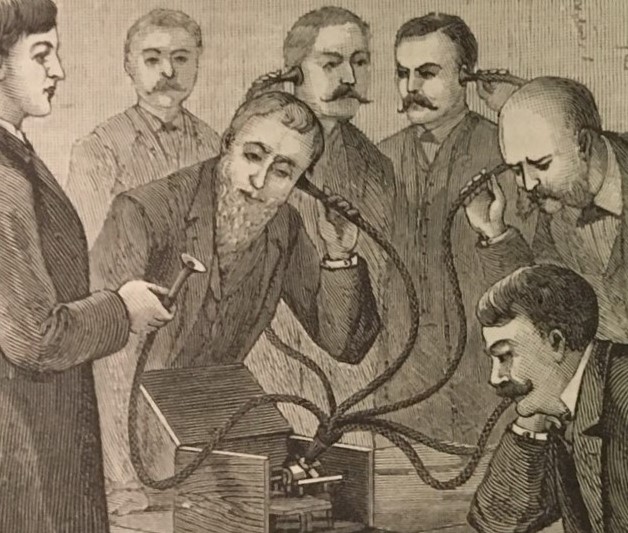
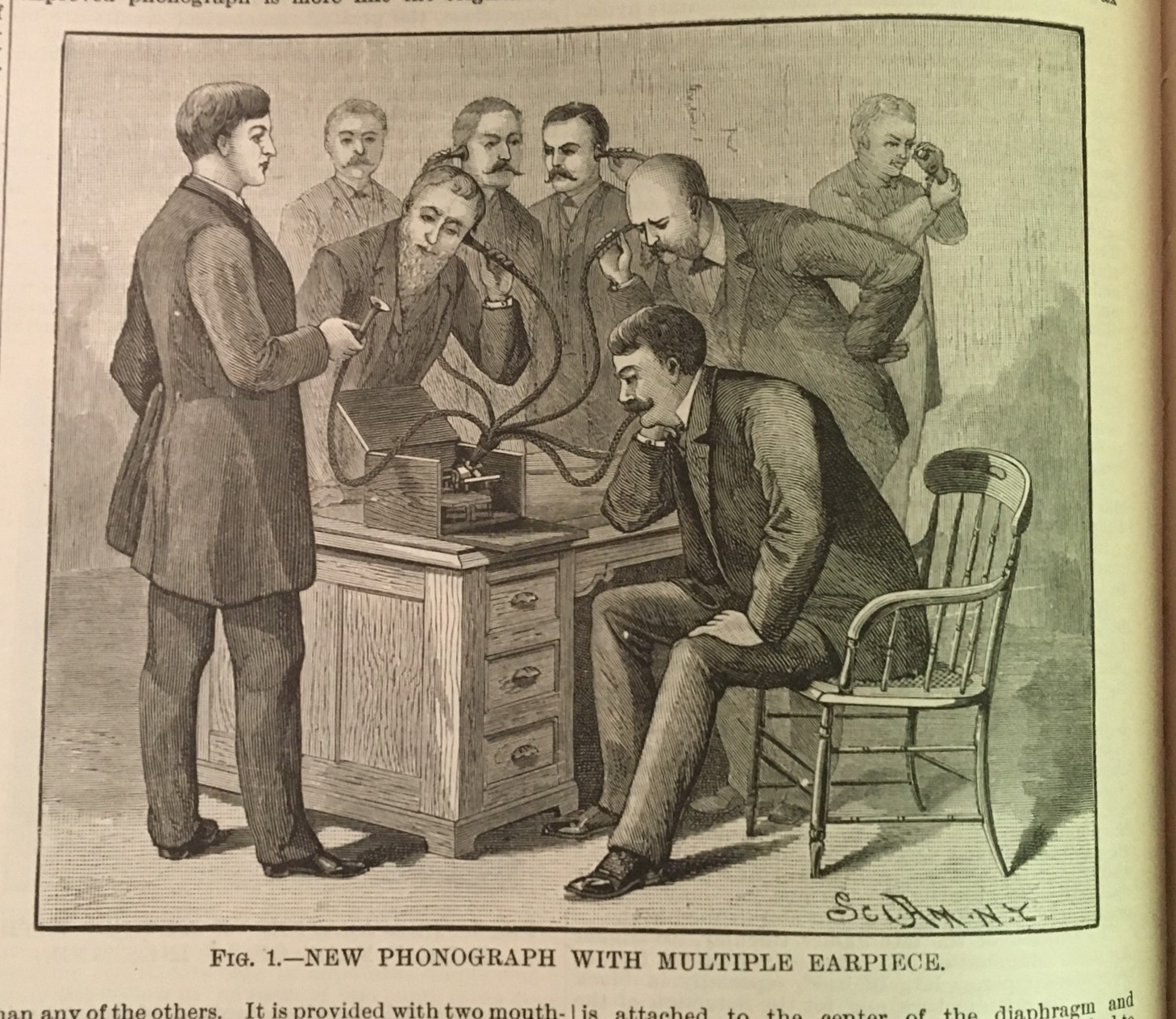
    This device isn’t so much a six-person internet as it is…well, it isn’t that at all. It was however one of the first times where a group of people could share a recorded piece on their own earphones, though.  This was Thomas Edison’s new photograph of 1888:
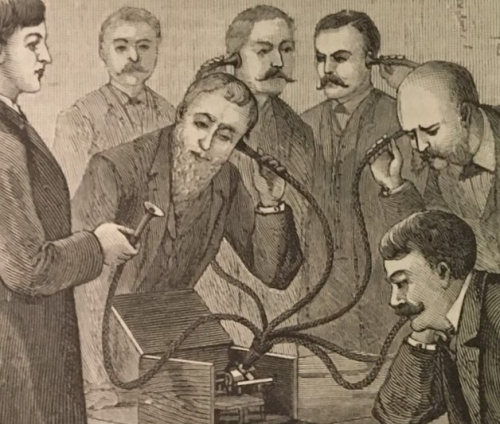
    Sci Am SUpp 1888 Edison phonograph _2_

    Thomas Edison–who in a furious few years in the mid 1870’s–invented the light bulb and the phonograph  (the later coming as a direct byproduct on work done on the telephone and telegraph)..He celebrates his phonograph in the North American Review (May 1878)  and then lists what he saw as the readymade faits acomplis of the phonograph, the first of which was weirdly/spectacularly worded:   “1. The captivity of all manner of sound-waves heretofore designated as fugitive, and their permanent retention.”  Do you hear a soundtrack with that description?  I did.  He proceeded with less fanfare: “2. Their reproduction with all their original characteristics at will, without the presence or consent of the original source, and after the lapse of any period of time. 3. The transmission of such captive sounds through the ordinary channels of commercial intercourse and trade in material form, for purposes of communication or as merchantable goods. 4. Indefinite multiplication and preservation of such sounds, without regard to the existence or non-existence of the original source. 5. The captivation of sounds, with or without the knowledge or consent of the source of their origin.
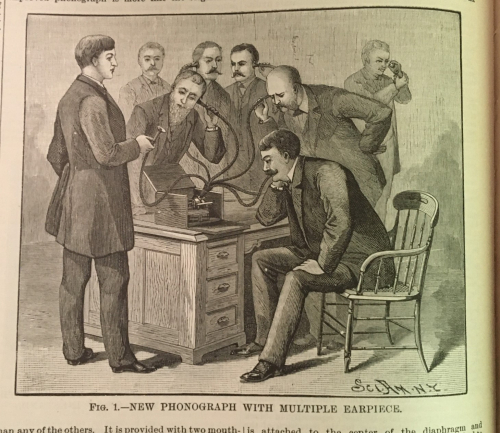
    Sci Am SUpp 1888 Edison phonograph _2_


    Edison then goes on to list what he saw as distinct “possibilities” for the use of the phonograph in the not-too-distant future. There are ten major prospects, the “bookish” aspect and the first major assault on the way we read is listed fourth (though he wasn’t necessarily weighting his list in any way).  Some of the others in this list (all of which cam to fruition) include: 1.Dictation and letter writing—using the phonograph to record letters and correspondence, which was baldly aimed at the business and corporate trade as the machine was relatively difficult to operate and expensive. 2  Phonographic “books”. I noticed that that Edison did not change the word “book” in any way, even though the book is no longer there with the application of the phonograph, just the read and spoken words.  “Books may be read by the charitably-inclined professional reader, or by such readers especially employed for that purpose, and the record of such book used in the asylums of the blind, hospitals, the sick-chamber, or even with great profit and amusement by the lady or gentleman whose eyes and hands may be otherwise employed; or, again, because of the greater enjoyment to be had from a book when read by an elocutionist than when read by the average reader.” 3. Family records. “For the purpose of preserving the sayings, the voices, and the last words of the dying member of the family [emphasis mine] as of great men the phonograph will unquestionably outrank the photograph.”4. Toys:  “A doll which may speak, sing, cry, or laugh, may be safely promised our children for the Christmas holidays ensuing. Every species of animal or mechanical toy such as locomotives, etc. may be supplied with their natural and characteristic sounds.”

    Edison continued, writing on the phonograph’s application for the study of elocution, speaking clocks, language preservation (as in documentation of the proper way of speaking a certain language, something that would’ve come in handy in the spike of disappearing languages at the end of the 19th century), telephone recorders and pedagogical lessons.

    There was a lull in activity on the phonograph for Mr. Edison between the machine’s invention and 1888—this was the first major iteration/improvement the man made on his machine in nearly 10 years. The most significant reach was replacing the surface of the recording foil cylinder with wax, which was more reliable. In any event, in this picture (published in Scientific American Supplement in March 1888, we see the new instrument, equipped as it was for six private listeners.
    ·Posted by :

    ·in:


  • A Double Dose of Dirigibles

    JF Ptak Science Books   Quick Post

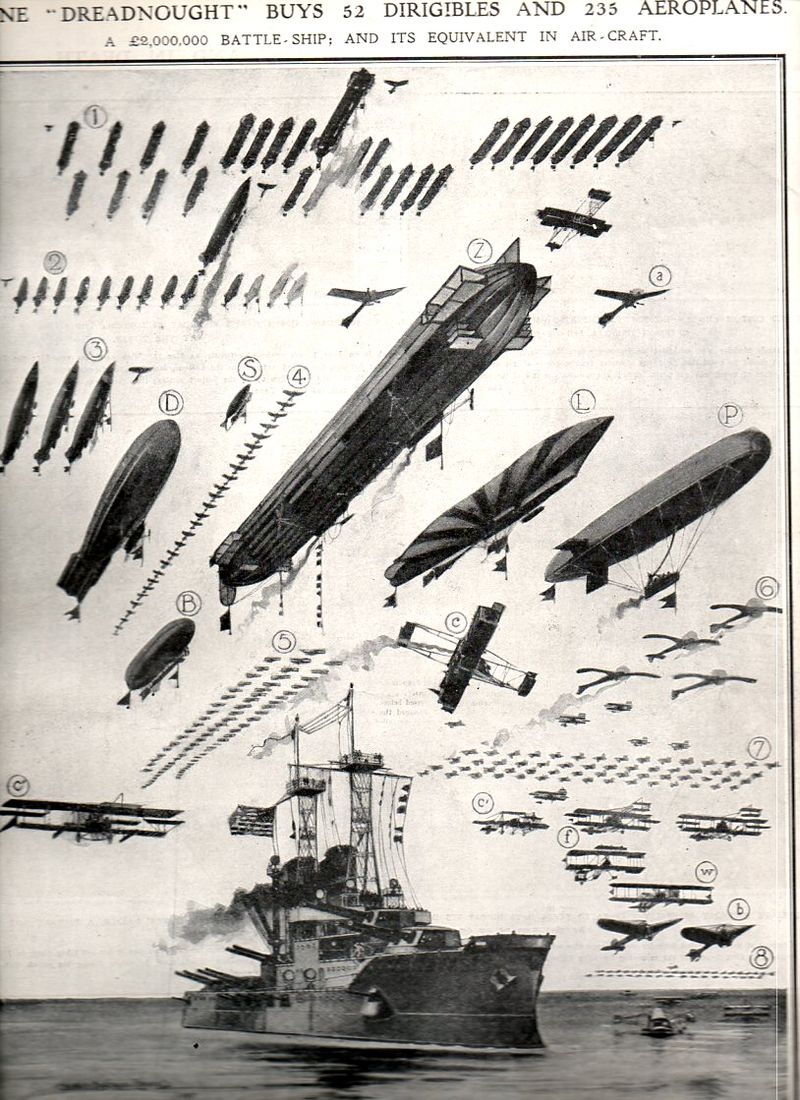
    There’s nothing quite so satisfying as seeing a representation of quantitative data where the graphical displays are flying.  “One Dreadnought Buys 52 Dirigibles and 235 Aeroplanes” is a full-page diagram appearing in the 3 June 1911 issue of the Illustrated London News , making a very strong point that in the new age of aviation the 2 million pounds it would cost to produce one battleship could also (or rather) buy a lot of aircraft. 

    You may notice that the ship is flying a U.S. flag–this is because the graphic appear a month or so earlier in the U. S. publication Scientific American, and the ILN is simply reprinting the info  In any event the image enumerates U.S. and international aircraft, making for a lovely representation of a broad range of airplanes filling up the same sky. 


    Dirigibles and dreadnoughts _3_


  • An Early Design for a Convict-Powered Revolving Turret on a Ship (1871)

    JF Ptak Science Books   Post 2878

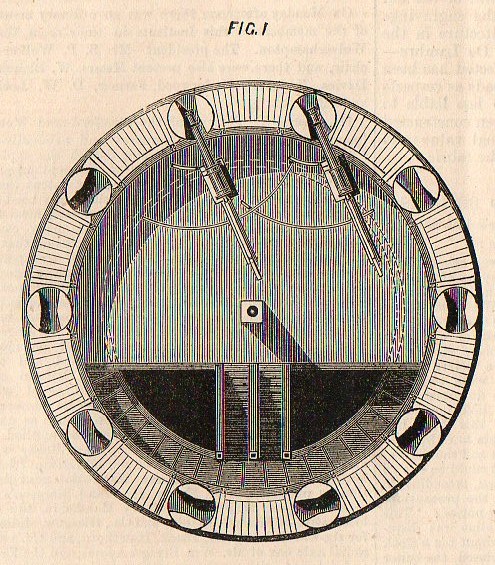
    This image (from the Illustrated London News for April 26 1871) shows a plan of the top floor of a revolving battery designed by M. Baltard in 1831.  This idea is probably ancient, though it really only had major technological legs by the 19th century. Even though Baltard is given some fair credit for the modern rediscovery of the revolving turret–and in this short article he is given premier status–there were earlier engineers at work before him.  For example, in the earliest part of the 19th century Col. John Stevens designed a saucer-shaped floating battery that was supposed to be able to fire in any direction; T.R. Timbly–slightly after Baltard–applied in the U.S. Patent Office in June 1843 for a device he called a “metallic revolving fort”.  Then came the great John Ericsson–very long on accomplishments but very short now in modern memory, he is also one of those memorialized men in marble in DC for whom people have almost no modern recognition–who in 1854 produced an “impregnable battery revolving cupola”, which led to his great innovation on the Monitor.  And as we recall, the Monitor’s defeat of the Merrimack in Hampton Roads in 1861 spelled the coming end of the wooden ship of the line–metal ships with mounted revolving turrets fore and aft would prove entirely too far superior to the 19th century wooden ship.

    Technical drwg--revovl turret circular540

    ·Posted by :

    ·in:

    —

  • Cell vs. Cell: Photoelectric Cell and Shooting a Prisoner for Escaping their Cell (1930)

    JF Ptak Science Books  Quick Post

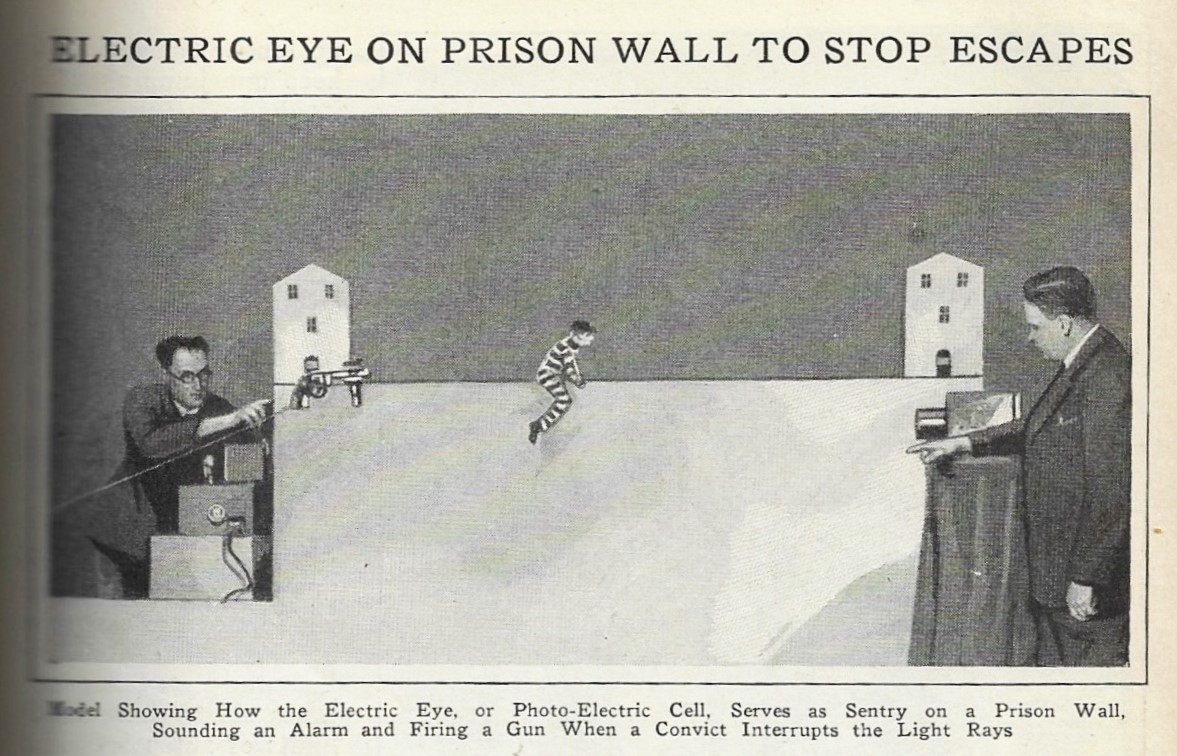
    The photoelectric cell was a mature invention (appearing in 1883) when it became armed and lethal in 1930.  Popular Mechanics published this photo (explained with only a caption and a paragraph) in its July 1930 issue. We see that should a prisoner make a dash up and over the prison wall, they interrupt the “electric eye” sentry which we read (1) fires a pistol positioned along the wall and (2) sounds an alarm, simultaneously.  It seems as though the alarm system could be reconstituted at the base of the wall, sounding an alarm before the prisoner got to the wall (let alone up and over it), rather than shooting as the alarm sounds.  The consequences of this idea–which I suspect was never implemented–were, well, rather extreme.

    Pop Mech 1930 Convict Killer

    ·Posted by :

    ·in:

    —

  • Non-Silhouette Silhouettes and Dirigible Mooring Masts (1930)

    JF Ptak Science Books  Quick Post

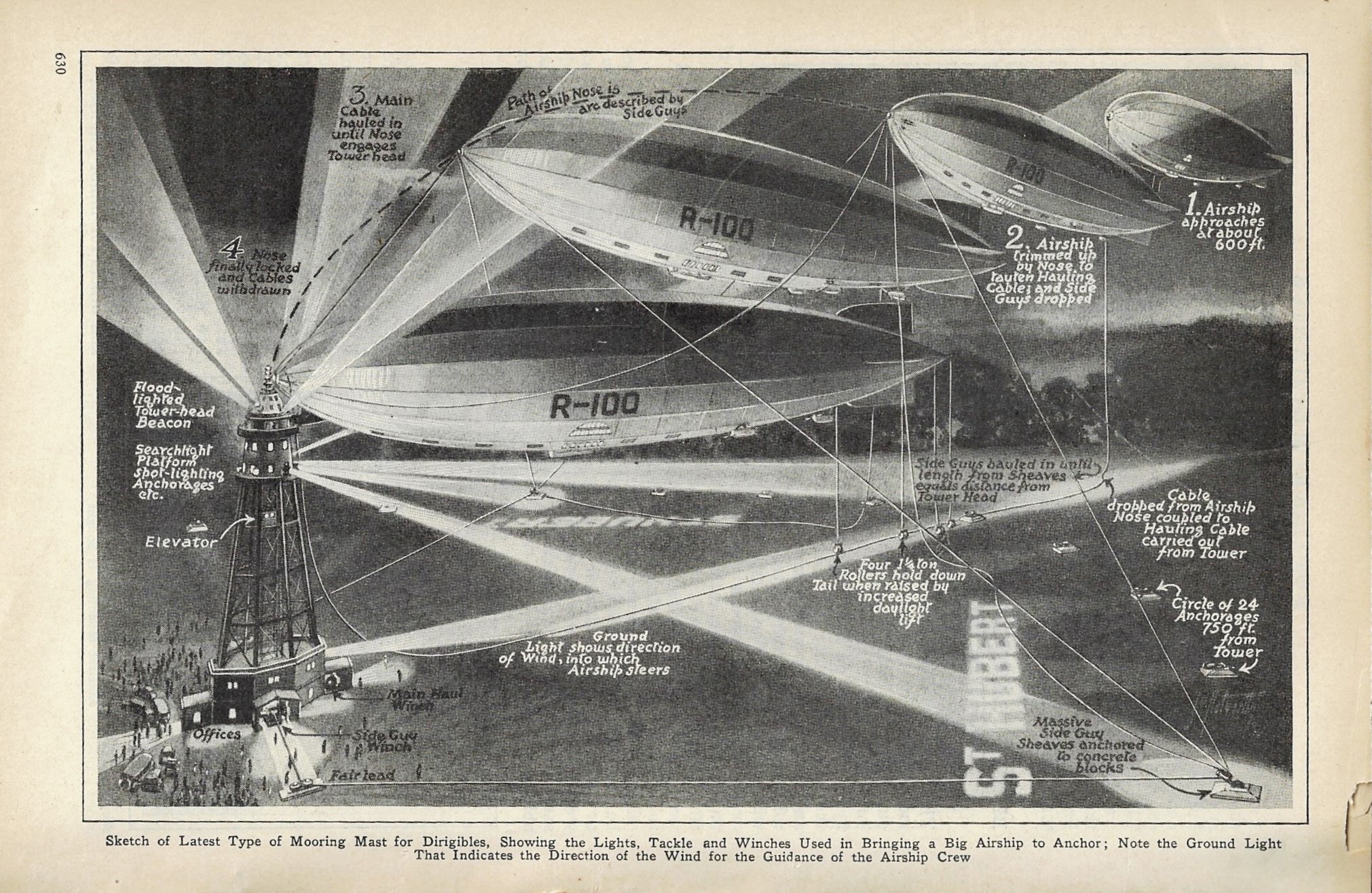
    Just a very quick entry here on some interesting and arresting images relating to flight, all from the July-December 1930 volume of Popular Mechanics. The first is a full-page illustration for October (1930) showing an improved method for anchoring dirigibles–in this case, for demonstration purposes, it is His Majesty’s Airship airship R-100, which was over 700′ long and moved along at about 80 mph, and was less than a year old. Unfortunately, this protocol for moving though the air was nearly exhausted–it was fateful for this note on the mooring masts appeared in October as this was the month of the R-101 disaster, which effectively brought the end of the R-100, which was scrapped soon afterwards.  

    • “Sketch of Latest Type pf Mooring Mast for Dirigibles, Showing the Lights, Tackle and Winches Used in Bringing a Big Airship to Anchor: Note the Ground lights That Indicate the Direction of Wind …” 

    Pop Mech 1930 Dirigible Mast

    The other image of aviation interest is a chart of airplane types and how to identify them in silhouette–except that they are not in silhouette. Still it is a handy chat, and I reproduce it here:


  • A Great Road Locomotive (1873)

    JF Ptak Science Books  Quick Post

    JFI 1873 road locomotive _1_

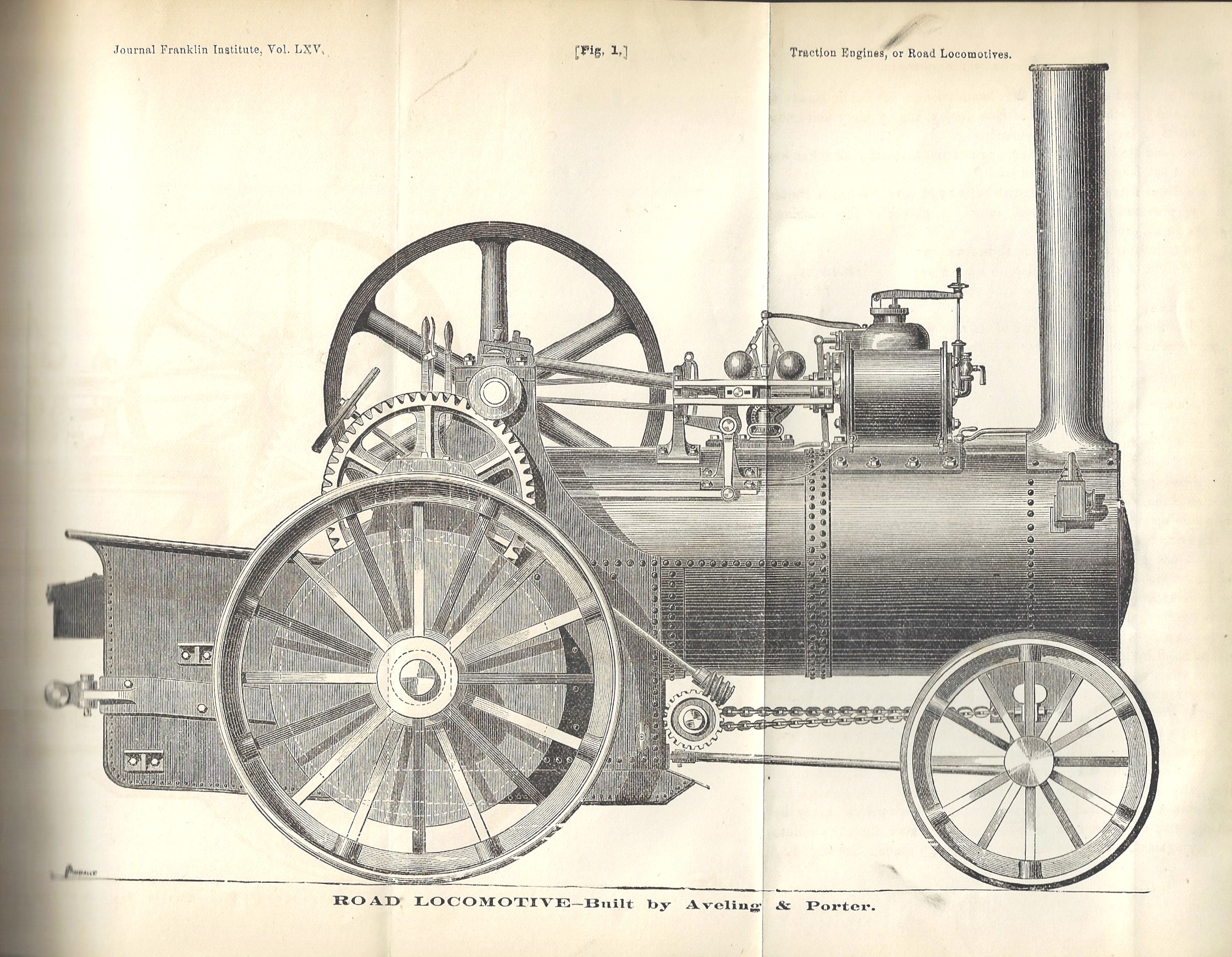
    I found this fine illustration in an 1873 volume of the Journal of the Franklin Institute, a “road locomotive”, the first one produced by the firm Aveling & Porter, who, we are told, “had previously done no real work”. This certainly looks like real work to me.  The specifications found in the article paint an even larger picture than the picture of the machine does it credit. The boiler, for example, is 8′ long, meaning that the machine overall is about 11′ long; the boiler’s diameter is 30″, which makes the vehicle about 10′ tall. The big wheel is big: 60″ in diameter (supporting a 10′ height) and very heavy, weighing 450 pounds.  The overall weight on this beast is 11,648 lbs.

    Source: Thurston, R.H. “Traction Engines or Road Locomotives. The Past, the Present and the Future of Steam on the Common Road”.  Journal of the Franklin Institute, volume 95, 1873, pp 17-43.  

    ·Posted by :

    ·in:


  • An Early, Instantaneous, 3-D Modeling Device (1836)

    JF Ptak Science Books  
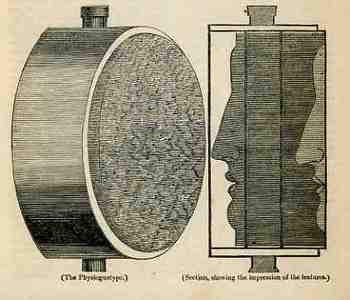
    Blogphysiog320 In the “Spirit of Discovery” section of the British weekly magazine The Mirrour of Literature, Amusement, and Instruction for 22 October 1836 is a short notice on the “physiognotype”, “a machine for taking casts, lately invented by a gentleman in Paris” [The patent application for this device seems to be the work of Richard Rettford, UK patent # 6732, 1834.] We’re accustomed to these devices now as they’ve been for sale in toy shops for decades—but in 1836 it was a real breakthrough for making instantaneous three-dimensional models of small things.  In 1836 there really wasn’t any simple way of producing a direct, proportional model like this in 3-D except for encasing it in plaster and then casting from that mold.  Two-dimensional modeling was easier, and there were numerous devices constructed for this purpose as people pursued the still-hot rage of physiognomic forecasting, with simpler means (like shadow portraits) being hundreds of years earlier.  (Photography remember is still three years away from being announced and another few years from being sort of accessible to middle-class folks.) 
    This device was simple and cool, and it worked.  It was basically a board with a mesh of tiny holes drilled into it through which were placed knitting needles (it looks as though it was 12” around or so and four inches deep), bound in wood, with the enclosure encased by a bladder of warm water (“to ensure that the needles moved with the greatest facility”)—this last bit was really a good idea.  You were left with a “brush of needles”, very densely packed, and very easily disturbed.  The author writes that the process took about two seconds, didn’t hurt at all, and caused “a sensation that cannot well be described”.  (Though he did state that if the instrument wasn’t warmed by the water the process would’ve felt like putting your face in the snow…does that mean it felt like putting your face in warm snow?) 

    I’ve tried, briefly, to see where this invention went, but it seems not to have advanced far beyond the reach of quack medical practioners and magicians.  It seems as though something like this could’ve been useful in the machine shop for modeling (replacement) parts without having to take the machine itself apart to do it.  I guess that it could’ve been used by haberdashers, cobblers, and all sorts of other craftspeople and small manufacturers, but it seems as though it actually wasn’t.  It looks like a dandy piece of thinking, to me. 

    ·Posted by :

    ·in:


  • Blindfolded Chess Players, Dropped Cats, and Channels that aren’t Canals (1894)

    JF Ptak Science Books   Quick Post

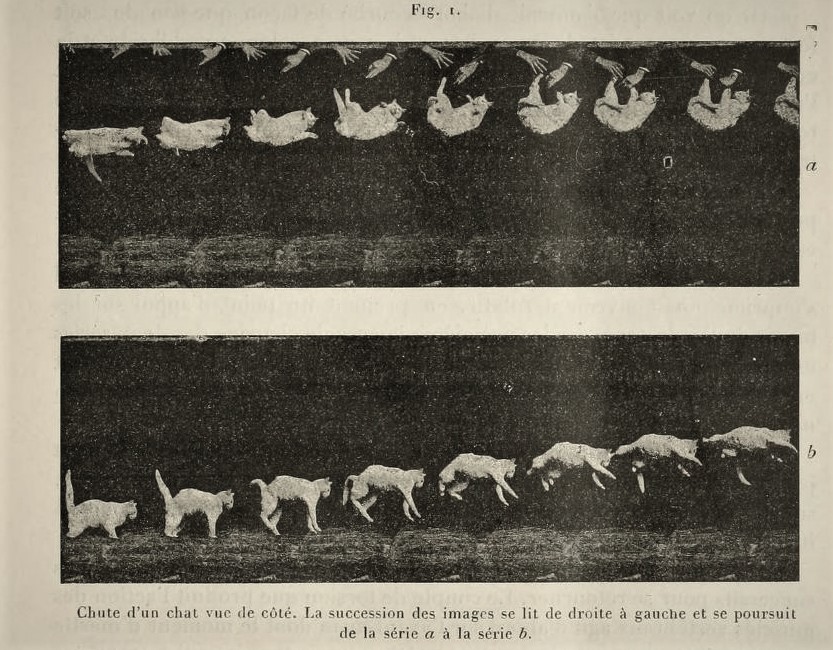
    Okay, here’s another entry in an occasional series on antiquarian sci journal issues with multiple interesting bits in them. The example today is a slender (23pp) but crammed (1500 words per page) weekly issue of the venerable journal Nature (volume 51,  22 November 1894)–it initially raised my interest for a two-pager Francis Galton paper on synesthesia and super-abilities entitled  “Psychology of Mental Arithmeticians and Blindfold Chessplayers”.  This irresistible paper shared space with a famous paper by another great 19th c polymath, Etienne Marey,  “Photographs of a Tumbling Cat”, being a full page (four strips) of “chronophotography” of a cat being dropped upside-down showing the progress of how the cat rights itself in a short distance to landing on its feet. Marey (along with Edweard Muybridge) helped create and establish the motion picture–this paper came a dozen years or so after his groundbreaking work appeared in the 1880 and 1882 volumes of the Comptes Rendus…de l’Academie des Sciences (Paris). 

    Marey cat 1894

    • [Source: this image is from an already-scanned version from an issue of the Comptes rendus but is identical to the top half of the Nature image.]

    This Nature issue isn’t done yet! There’s also the article “Schiaparelli on Mars” (pp 87-90) including a full page of about 2000 words on “The Canals or Channels”,  though the editor  points out in a footnote that “canale” in the original Italian version should be translated as “channel” or “strait”, and not canal, a sentiment that didn’t have enough impact in preventing the avalanche of the Martians-on-the-loose syndrome that was building steam. This was also right about the time that astronomers as a whole began to doubt the existence of Martian seas (first brought into the conversation by Secchi in 1858). 

    Anyway, there it is, a wonderful Victorian super-issue of beautiful Nature. (Oh yes, there’s also two book reviews of works on (Hamilton and Taits) quaternions.  

    The full text is available at Hathi Trust:  https://babel.hathitrust.org/cgi/pt?id=uc1.c2754927&view=2up&seq=112