A Daily History of Holes, Dots, Lines, Science, History, Math, Physics, Art, the Unintentional Absurd, Architecture, Maps, Data Visualization, Blank and Missing Things, and so on. |1.6 million words, 7500 images, 4.9 million hits| Press & appearances in The Times, Le Figaro, Mensa, The Economist, The Guardian, Discovery News, Slate, Le Monde, Sci American Blogs, Le Pont, and many other places… 5000+ total posts since 2008.

Category: Social History

  • Statistics as “Stutterings”; Dickens on People-Reduced-to-Numbers

    JF Ptak Science Books   Quick Post

    I found this in the Alex Cashman’s lovely site, Mathematical Fiction (here). The except is from Charles Dicken’s Hard Times (1854)1, and in it we see Dickens making another in a long series of assaults on what he thought to be a disturbed social layering of dealing with the underclasses and the working poor.–and this time in the form of an entire novel. In the instance sited below (of interest right now because of its maths connection),  Dickens makes a case  for the”success” for the government of the fictitious city of Coketown to see a relatively small percentage of people in that city starving to death on its streets to be not a success at all. The character making the complaint is Sissy Jupe, whose fault at school came when asked the percentage of the starving/dying responded by saying it really didn’t matter, because people were starving anyway, and whether it was one or a thousand dying from something as fixable as hunger meant all the same thing. She was presented with the “statistics”2 from her teacher, but to Ms. Jupe it came to her ear as “stutterings”, which is what Dickens felt the numbers were.  Dickens was attempting to make those people suffering in the streets less blank, less hollow, and more than a number.

    Notes:

    1.  It should be pointed out here that this is Dickens’ 10th novel, the 42-year-old already having a enormous success with his writing and an even grater one in his storytelling. To this date, Dickens had already written The Posthumous Papers of the Pickwick Club (Monthly serial, April 1836 to November 1837; The Adventures of Oliver Twist (Monthly serial in Bentley’s Miscellany, February 1837 to April 1839); The Life and Adventures of Nicholas Nickleby (Monthly serial, April 1838 to October 1839); The Old Curiosity Shop (Weekly serial in Master Humphrey’s Clock, 25 April 1840, to 6 February 1841);  Barnaby Rudge: A Tale of the Riots of ‘Eighty (Weekly serial in Master Humphrey’s Clock, 13 February 1841, to 27 November 1841); A Christmas Carol (1843);The Chimes (1844);  The Cricket on the Hearth (1845); The Battle of Life (1846);The Haunted Man and the Ghost’s Bargain (1848); The Life and Adventures of Martin Chuzzlewit (Monthly serial, January 1843 to July 1844);  Dombey and Son (Monthly serial, October 1846 to April 1848);David Copperfield (Monthly serial, May 1849 to November 1850); and Bleak House (Monthly serial, March 1852 to September 1853).  Remarkable.

    2. “Statistics” as a word has been in use for a long time, finding air as early as 1787, at least so far as the sense in which it is used here. There are earlier references, but they actually refer to the “state”, as in “statecraft” and government and such, and not for interpreting a collection of data.

    The selection from Dickens below:
    ·Posted by :

    ·in:

    —

  • Frederick Soddy’s Economics and the Protocols of the Elders of Zion (1939)

    JF Ptak Science Books       Quick Post on Anti-Semitism & Propaganda

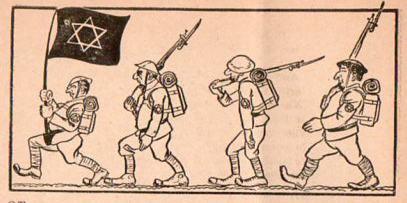
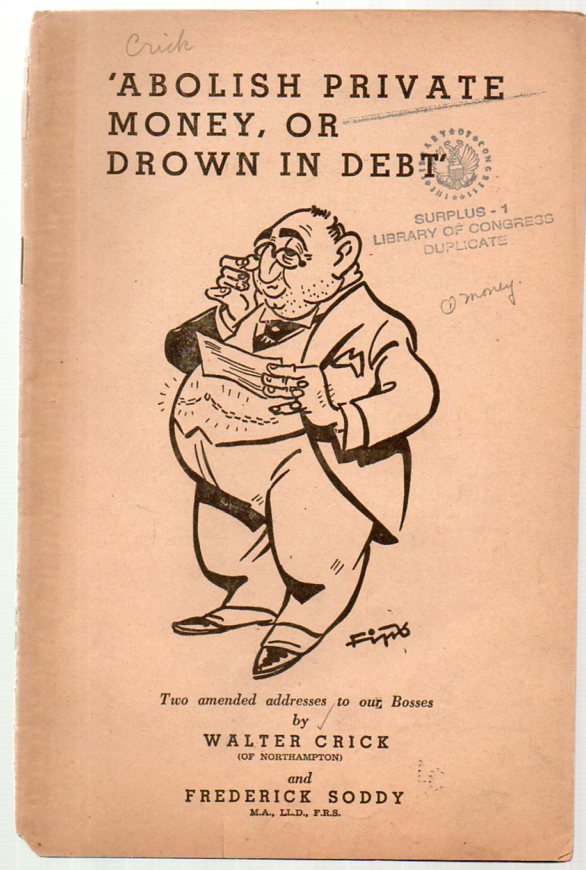
    Soddy700Frederick Soddy, Nobel Prize in chemistry (1921) and one of the fathers of nuclear fission, was also an economist.  Well, an anti-economist of high order, an anti-economist preaching anti-economics on the order of the altruistic anti-economy, ideal anti-economist, material- and Left- and Nationalist-economics, and so on.  He is the author, along with Walter Crick (who happens to be the uncle of Francis Crick of DNA fame), of a clumsily-titled pamplet-y takeoff of his major works on anti-economics, Abolish Private Money, or Drown in Debt (1939)  It was published by the Nationalist Press Association (147 E 116th Street, NYC), an arm of the American Nationalist Party, and which also published such works as Are all Jews Liars? (1940), The Jew and Peril and the Catholic Church (1936, also published by the American White Guard), Why are Jews Persecuted for their Religion (1940), and other titles.

    Soddy also quotes from The Protocols of the Elders of Zion, and did so five years after The Times ran a blistering and complete denunciation of the rabid anti-Semitic creation that seems resistant to contradictory evidence to its belief. And still he seems to have kept his belief in the document, like any other object demanding of belief and not-critical thinking, kept it alive like millions of others. 

    I did not know this about Soddy, and I am sorry for it.  The cover illustration is disgraceful, though there is no place in the text that I have seen that is actually and outwardly anti-Semitic. The illustrations, however, are.

    Soddy701I really have no idea about what Soddy is talking about in his “scientific” and anti-economic theory that money and banks are the ruin of the way a country (and the world) conducts business.  Its structure brings immediately to mind–probably wrongly–the brilliant/odd/goofy contribution of T.E. Lawrence to the Encyclopedia Britannica on guerrilla warfare and his attempt to make a “science” of it.  But the overall flavor of the Soddy/Crick thing is not very good (and that leaving out the anti-Semitic part, which is something else, entirely)>.

    ·Posted by :

    ·in:

    —

  • Children at Work, 1934, an Appeal by the Great Dorothy Kenyon

    JF Ptak Science Books    Post 1834

    “There is work that profits children, and there is work that brings profit only to employers. The object of employing children is not to train them, but to get high profits from their work.” –Lewis Hine, 1908

    Children work584

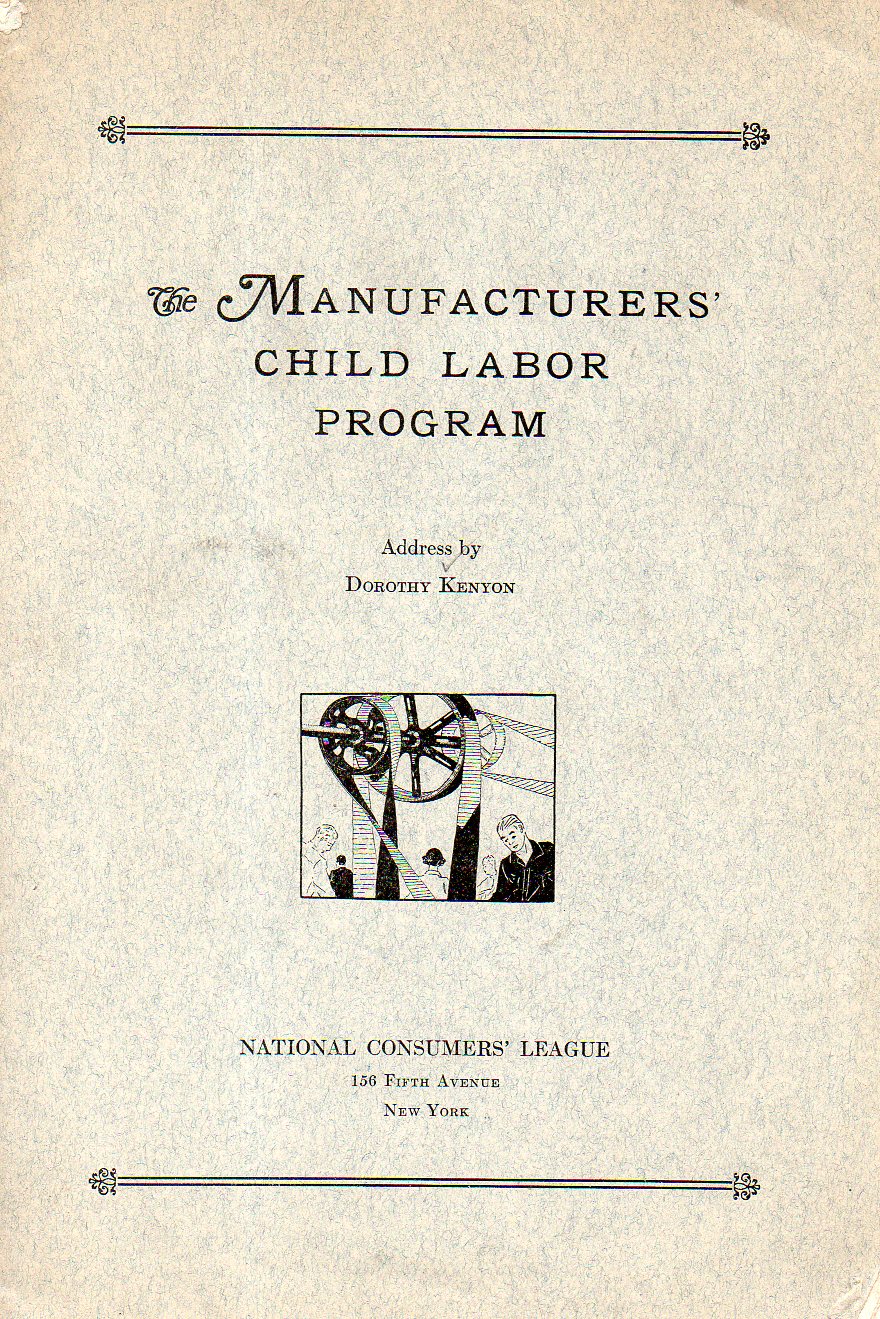
    Children work583This is an appraisal of the working conditions of children in 1934–a third of the way through the century, thirty years before the ‘sixties, not horribly long ago, not of a Dickensian era, not even a Sinclair-Lewis-ian one.  Recent.  The author, Dorothy Kenyon–1888-1972, a feminist, civil rights lawyer, judge, maverick, speaker, activist, and all around force of nature who stood strong and firm and tall while being accused of Commie blather by Joe McCarthy–made  a very strong case for people to take a close look at the still-dismal conditions of child labor in the U.S.

    Exposing the conditions of children, young child, hard at work in 40-75 hour a week jobs may belong to the documentarian photographer Lewis Hine (1874-1940), whose long series of images made between 1908-1917 (and working for the National Child Labor Committee) depicted the varied working conditions of some of the 2 million kids under the age of 16 working in the U.S.  He made photographs, and photographs to this generation of American newspaper and magazine reader were still relatively new-ish, half-tones coming into wide use only in the 1890’s, making short work of speculation.

    Hine–who gives us the quote to lead this short post–was a school teacher and sociologist  who was extremely aware of the plight of the children around him–well, children, and immigrants, and laborers; people without voices, or representation, poor working people.  He was a pioneering photographer whose images of these classes of people were revolutionary, a tremendously important documentarian of a societal symptom that was pretty much misdiagnosed, or at least was chosen as something to not be seen.  That was hard to do when you had actual photographs of the grim situation. 

    ·Posted by :

    ·in:


  • The Sounds of Slavery: Slave Bells, 1830’s.

    JF Ptak Science Books   Quick Post

    Fresh from a short post on Richard Wagner writing and publishing an interesting piece on the future of music, and then months later writing a diabolically-bad and ruthlessly hateful pamphlet on Jewish people, I came to this–a pair of books with illustrations of another sort of ruthless control, this one mental, legal and physical.

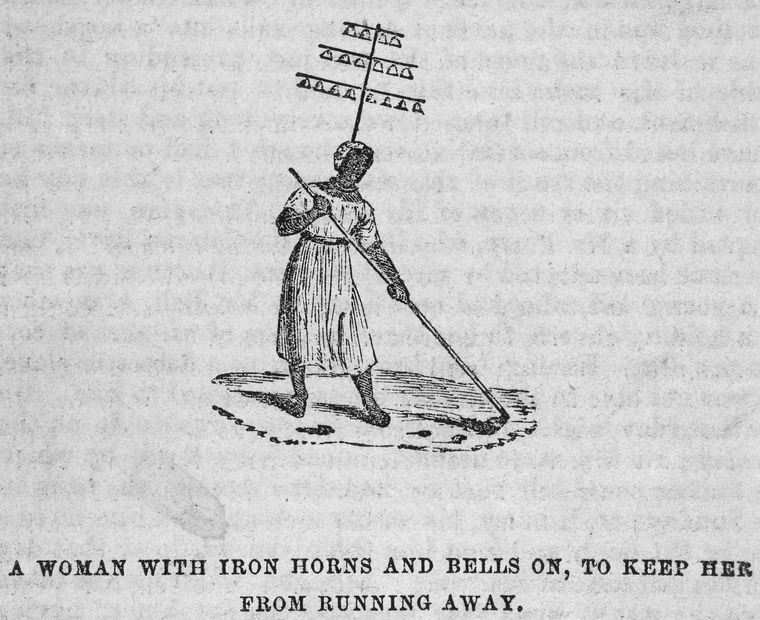
    Moses Roper‘s1(b. 1815-1891)  A Narrative of the Adventures and Escape of Moses Roper, from American Slavery, (Philadelphia: Merrihew & Gunn, 1838) details a life-long series of vast mistreatment, punishment and torture while a slave.  He was a mulatto, and of very fine and fair skin, and so endured a particularly hard treatment from a number of different masters, changing masters 17 times. But he escaped, finally (after more than a dozen attempts) and made his way from Florida to New York, and then ultimately to England.  His book has few illustrations, but those that are there are unforgettable.

    A woman with iron horns and bells on, to keep her from running away.
    [Source: New York Public Library Digital Collections, here.]
    Illustration
    [Source: Documenting the American South, here.]

    ·Posted by :

    ·in:

    —

  • The Care of the Dead, WWI, 1916

    JF Ptak Science Books     Post 1852


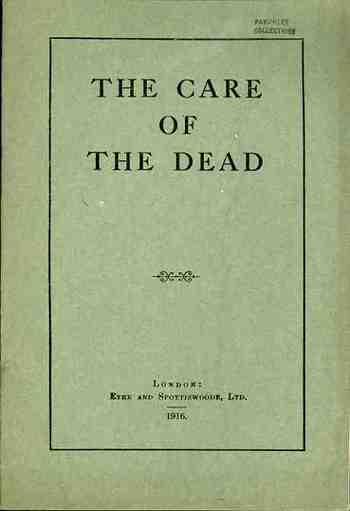
    Blogsept_2_dead478 The Care of the Dead, published by Eyre and Spottiswoode in London in 1916, is a quiet, spare pamphlet, on what was happening to the fallen British soldier in France and Belgium.  It is a big topic–physically the little paper-wrapper work seems barely strong enough to support the implications and heaviness of its title–and I’m sure the issue would’ve been the most important questions in the minds of the families of the hundreds of thousands of dead British soldiers*–the pamphlet really does seem to be feather-light under the solidity of its title. 
    Reading though this  work gave me an insight into the depth of what millions of war dead means–and an insight I think that I’ve never had before.  The anonymous author writes about touring the battlefields of France in 1915 and 1916, driving in an automobile, “the eye of the traveler along the roads is struck by many low crosses sticking out o the ground–in the fields, in cottage gardens, in corners of farm yards and orchards, even on roadside strips of grass.”

    Where the ground has changed hands a good deal in the course of a war, you may see, within a few hundred yards of each other, the gabled and eaved cross of the Germans, with “Hier ruht in Gott” and a name painted in white on a dark ground, the beaded wire wreath of the French, with its “Requiescat” or “Mort pour la France: and the plain-lined cross of the English, white or brown or just the unpainted wood, “In loving memory” of officers or men…”  Now I’m sure I read any number of accounts of the views of battlefields from commanders’ line and soldiers’ views and the like; but I don’t think I’ve had the perspective of an officer driving around a no-longer-a-contested-battlefield in a car and being struck by the appearance of the little white crosses, well, everywhere.  I have a very crisp imagined image in my head, now, with this 92-year-old war memory described from the driver’s seat of a car. 

    ·Posted by :

    ·in:

    —

  • The Very Seat of Solitary Utopian Anarchy–a Radical Approach from Scranton, 1878

    JF Ptak Science Books     Post 1848

    “In 1873, when Morse advocated an end to all political rule, Alcott commented about Morse in his journal.  ‘Once, I might have accepted fully his doctrine of Individual Sovereignty, ignoring all interference from institutions conventions and creeds of all kinds, as during the Fruitlands and non-taxpaying periods of my life.  It was putting this logic to its ultimate consequences, and individual issues,—abolishing the social and political order altogether. . . .  It left me an outcast and a vagabond.—  The sincere victim of a half-truth seen in the light of an idea at last’.”–Amos Alcott, friend of Sidney H. Morse (author of the pamphlet below), from the site Alcott.net 

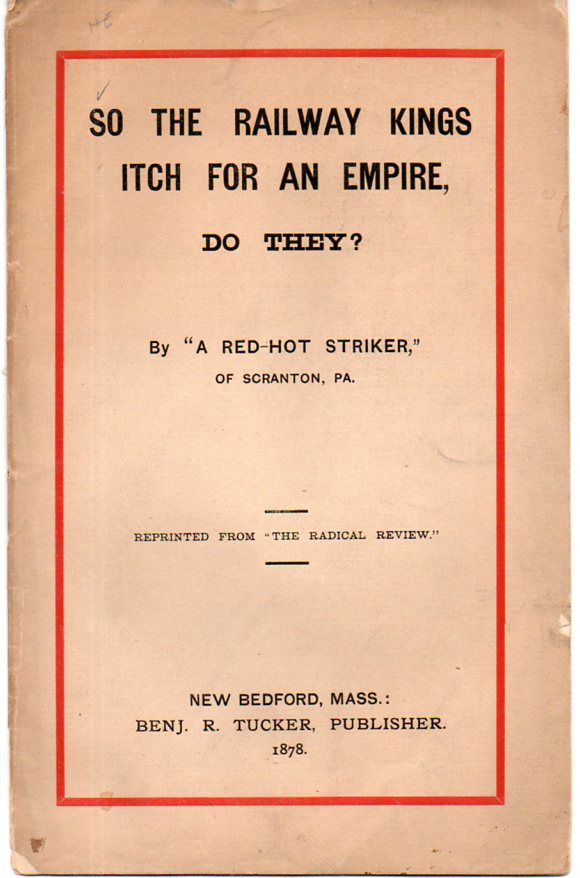
    I just could not resist this pamphlet, all dressed in white and red, catchy and playful title…I thought it would be a nice catch for my Daily Dose of Dr. Odd series, until I realized straight away that it was a serious publication.  Well, the mood of the discourse was a little common and jocular, but the message certainly wasn’t. 

    Radical620[The original is available from our blog bookstore, here.]

    The author was Sidney H. Morse (“The Red-Hot Striker”) and the piece was a rant against big money, monopoly/combinations and The Ruling Class. It was published in “The Radical Review”, which was published by the anarchist and free-thinker Benjamin Tucker, in 1878.  The executive summary for this short piece is plain–first, there should be no “executive”, and second, most of all of this revolves around free Communism and the statement “it takes a great many poor men to make one rich man”. 

    It seems that Mr. Morse (fl. 1870-1900) might have left many of his radical thinkers behind (like Mr, Alcott, above) when he went free-range and advocated no government or controlling system whatsoever, every person their own entity.  I’m not sure so that most people could get away with that thinking even left to themselves in a themself universe, every person in their own Utopian-solitary-anarchy. Seems as though the expectations of whatever this was, (no expectation or all-expectation) , was just too expectant.


  • 1937 Anniversary of the Black Settlement and Town of Mound Bayou, Mississippi, 1937

    Mound bayou619JF Ptak Science Books  Quick Post

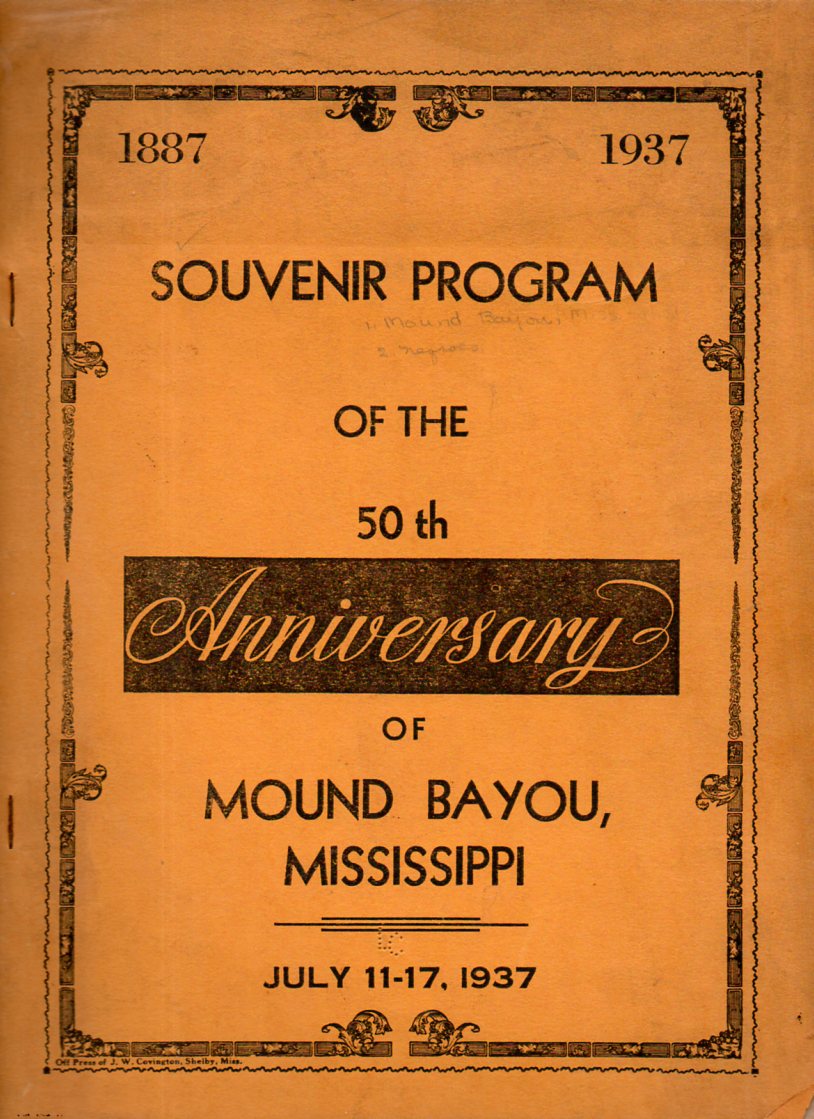
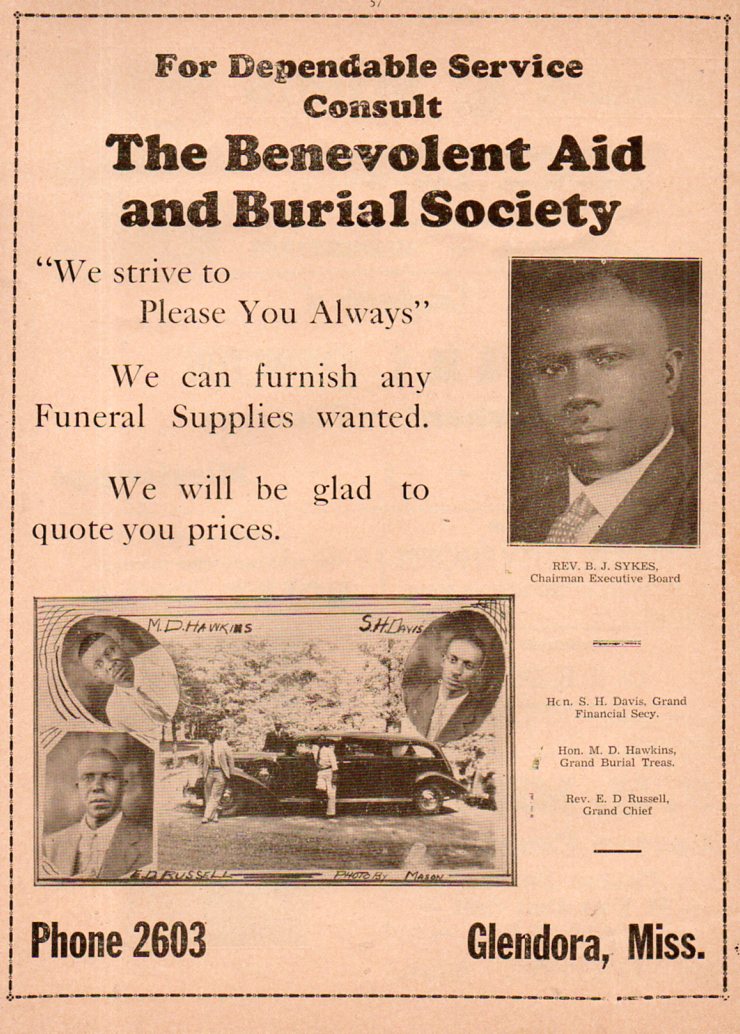
    There is something terribly American, full of hope, and trust, and celebration in this anniversary celebration pamphlet for the city of Mound Bayou, Mississippi. (I talked to someone in town administration this morning and the “Mound Bayou” is pronounced as one, quick, word: “Moundbayou”, with equal pronunciation emphasis.)  The Souvenir Program for the 50th anniversary of the establishment of the town (July 11-17, 1937) is filled with town history, and advertisements, and photographs. 

    Isaiah T. Montgomery was one of the founders of Mound Bayou, clearing out the bottomlands in the wilderness of northwest Mississippi, the town populated by Freedmen.  But here at the time of the anniversary, in 1937, with the failure of cotton prices and the Depression being at its height or depth, the majority of the people living in Mound Bayou were sharecroppers, with most property lost.

    Mound bayou617
    But that didn’t matter too much to the people of Mound Bayou.  As is stated on page 47 of the pamphlet:

    “The real significance of Mound Bayou…cannot be measured by the number of acres we own, neither by the size and number of businesses we operate, the strength of our financial institutions, nor by the eminence of or native sons and daughters. But the true significance of Mound Bayou lies in the fact that we are able to demonstrate to the world that the Negro can and does live as a law abiding citizen under the authority of the “bone of his bones and flesh of his flesh”.  The reading continues:  “We have no jail because we don’t need one. Int he entire community dwell 8,000 Negroes and we have not had a capital crime in thirteen years.  Petty crimes are infrequent.”

    The original document is available at our blog bookstore, here.


    ·Posted by :

    ·in:


  • H.L. Mencken and the Anarchist, 1933

    JF Ptak Science Books   Quick Post

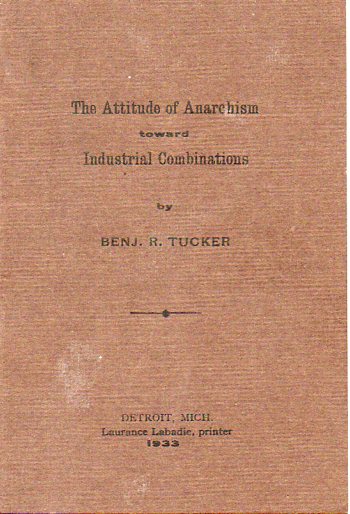
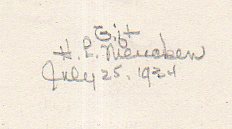
    Tucker mencken605The long-spirit anarchist (and “Unterrified Jeffersonian”) Benjamin R. Tucker (1854-1939) wrote  “The Attitude of Anarchism toward Industrial Combination” in 1926, but we see it here printed in Detroit (by Lawrence Labadie) in 1933.  It is interesting to see on the inside of this tiny pamphlet that the anarchist Tucker’s work was sent to H.L. Mencken, as a gift from the printer.  It wouldn’t stay long in Mr. Mencken’s possession, as he sent it (along with a number of other works by Tucker that I can’t lay my hands on at the moment) to the Library of Congress in July 1934 (and coming into my possession as part of a purchase of “the Pamphlet Collection” 65 years later.).  I’m  not so sure about what Mr. Mencken would have thought of most of it, only that he didn’t keep it for long, I think, despite what might seem to be his “Tory Anarchism” and general oppositionist stances. left and right, whatever they might have meant at the time.

    The full text of the pamphlet is found here, and the original found for sale at our blog bookstore, here.

    Tucker mencken607

    ·Posted by :

    ·in:


  • Racial Boycott, Los Angeles, 1889: Fear of the Chinese and of Undertaker’s Flies

    JF Ptak Science Books  Quick Post

    This piece of propaganda and racial attack appeared in Los Angeles in 1889.  The National Bakers Union called for a boycott of The Original Coffee House for purchasing their baked goods from a “scab” bakery identified as Brown’s Restaurant and Bakery.  Their crime was magnified by using Chinese people instead of making use of “hundreds of capable and deserving White People” were seeking employment.  The union also made a connection between the next-door undertakers (and the possibility of the seepage of vermin and such) with the use of the Chinese workers.

    Source:  I originally found this post at the Bay Radical website, here, though the image above is a high resolution download from he Library of Congress, here, from their Chinese in California collection.

    The undertakers seem to have survived whatever it was that the Bakers Union threw at them, advertising themselves in 1889 (following), and telling folks to call, day or night, by ringing Number 61:

    “PECK & McCOY, Undertakers and Embalmers, No. 40 NORTH MAIN STREET. Telephone 61. Day or Night, from Los Angeles Herald, Volume 31, Number 145, 25 February 1889 — Page 6 Advertisements Column 1 [ADVERTISEMENT], California Digital Newspaper Collection, here. “

    The Chinese population in L.A. had grown markedly since 1850, and by the mid-80’s there were some 3,000 living in Chinatown in a city of about 50,000 people.  There was a notorious riot and massacre of Chinese people there, in Chinatown, a result of a white man killed accidentally int he crossfire of a gunfight between two rival Tanns.  The establishment went crazy and exacted a gross revenge, burnign amd looting, and killing 19 men and boys. 


    ·Posted by :

    ·in:


  • Appeasement, Hitler’s Promise, and Peace in our Time, 1938.

    JF Ptak Science Books    Post 1802

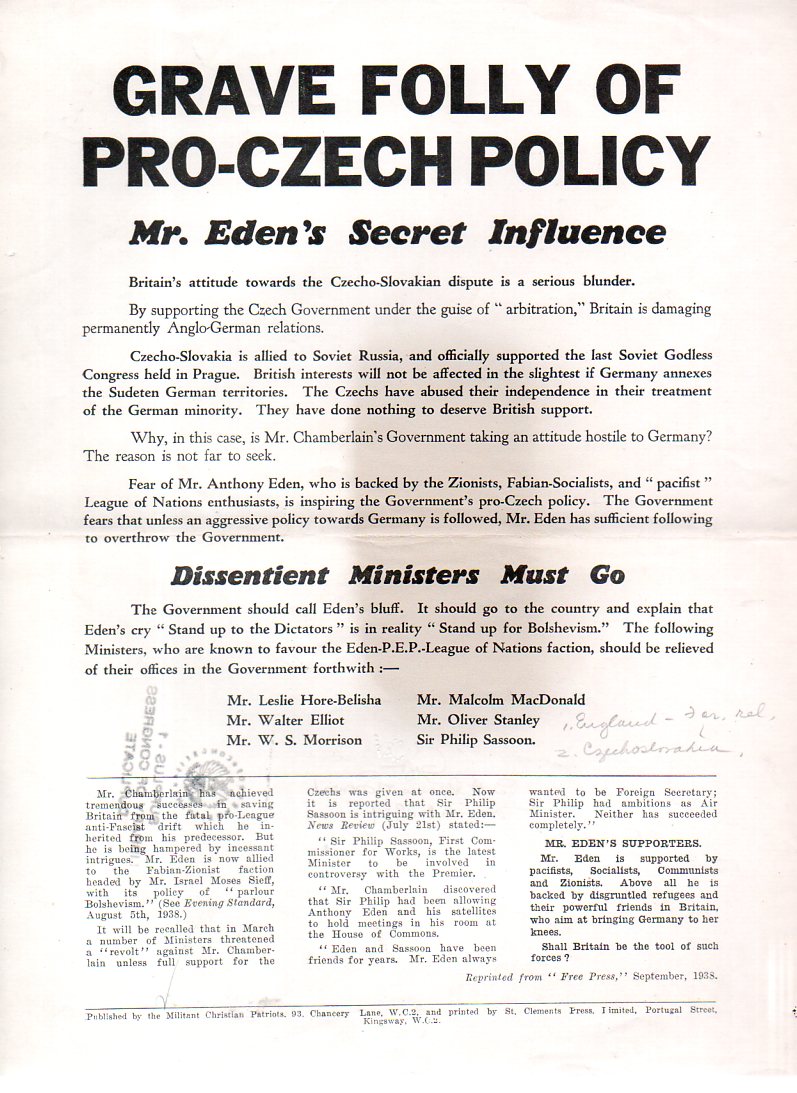
    Here’s a slathering piece of propaganda published by the Militant Christian Patriots (of London) on how the British government was dealing with the Nazi/Seudeten problem in September 1938.  In their gunsights was Anthony Eden, who was seen by this group as a Bolshevist supporter, and who as the Foreign Minister of the United Kingdom under Prime Minister Neville Chamberlain was against the appeasement policy of the government towards Nazi territorial acquisitions, particularly in this case with Czechoslovakia.  Eden. identified here as “backed by the Zionists, Fabian_Scoailists and “pacifist” League of Nations enthusiasts” was a multiple threat, and seen to be capable of directing national policy towards a confrontation with Germany over the looming Czech problem.
    Propaganda anti-czech491[The original is available from our blog bookstore.]
    On the other hand, Neville Chamberlain, who was the Prime Minister of the United Kingdom at this time (and from May 1938-May 1940), was seen as a better ideological fit with his issues and policies of appeasement of the German nationalist needs and territorial rape. Chamberlain certainly gave what Christian Militants wanted–a free hand to Hitler in Czechoslovakia (and more), and perhaps an acknowledgement of defeat to the Nazi nation.  Winston Churchill certainly thought so:

    “We have suffered a total and unmitigated defeat… you will find that in a period of time which may be measured by years, but may be measured by months, Czechoslovakia will be engulfed in the Nazi régime. We are in the presence of a disaster of the first magnitude…we have sustained a defeat without a war, the consequences of which will travel far with us along our road…we have passed an awful milestone in our history, when the whole equilibrium of Europe has been deranged…”  Winston Churchill, MP, 1938

    The Christian Militants saw it all differently, tending to agree with Hitler on the Czech matter, and seeking to keep the U.K. out of confrontation and thus away from war by giving Hitler (and then Mussolini) what they demanded to satisfy their growing national needs. 

    “I am asking neither that Germany be allowed to oppress three and a half million Frenchmen, nor am I asking that three and a half million Englishmen be placed at our mercy. Rather I am simply demanding that the oppression of three and a half million Germans in Czechoslovakia cease and that the inalienable right to self-determination take its place.” -Adolf Hitler’s speech at the NSDAP Congress 1938

    Eden resigned his position earlier in the year, in March 1938, but stayed in the fray.  As everyone knows things went badly at the end of the month of September, 1938, with Chamberlain letting everything go and appeasing Hitler in the Munich Conference (known to the Czechs as the “Munich Dictates” and worse) in which bits of Czechoslovakia were given to Germany in a series of meetings in which that country was not invited.

    A large crowd on an airfield; British Prime Minister Neville Chamberlain presents an assurance from German Chancellor Adolf Hitler.

    And so the P.M. returned to the home country having done nothing in Germany but give away a part of someone else’s country, all in a feeble attempt at maintaining peace for Europe’s key players.  He landed at Heston Aerodrome and held a piece of flimsy paper in his hand, which was battered by a tiny wind, and declared that there would be “peace in our time” because Hitler’s signature said it would be so, all of which was a “prelude to peace” in Europe as a whole:

    “My good friends, this is the second time there has come back from Germany to Downing Street peace with honour. I believe it is peace for our time. We thank you from the bottom of our hearts. Now I recommend you go home, and sleep quietly in your beds.”

    Less than a year later it would all come crashing down, the appeasement policy (such as it was) a shambles, and the world plunged into war.  Chamberlain would last as P.M. for a little longer, until May 1940, when he was at last replaced–by Winston Churchill. 

    ·Posted by :

    ·in:

    — — —