A Daily History of Holes, Dots, Lines, Science, History, Math, Physics, Art, the Unintentional Absurd, Architecture, Maps, Data Visualization, Blank and Missing Things, and so on. |1.6 million words, 7500 images, 4.9 million hits| Press & appearances in The Times, Le Figaro, Mensa, The Economist, The Guardian, Discovery News, Slate, Le Monde, Sci American Blogs, Le Pont, and many other places… 5000+ total posts since 2008.

Category: Social History

  • History of Fear: Money and Failure in 1933

    JF Ptak Science Books  Post 2317                                                            History of Fear series

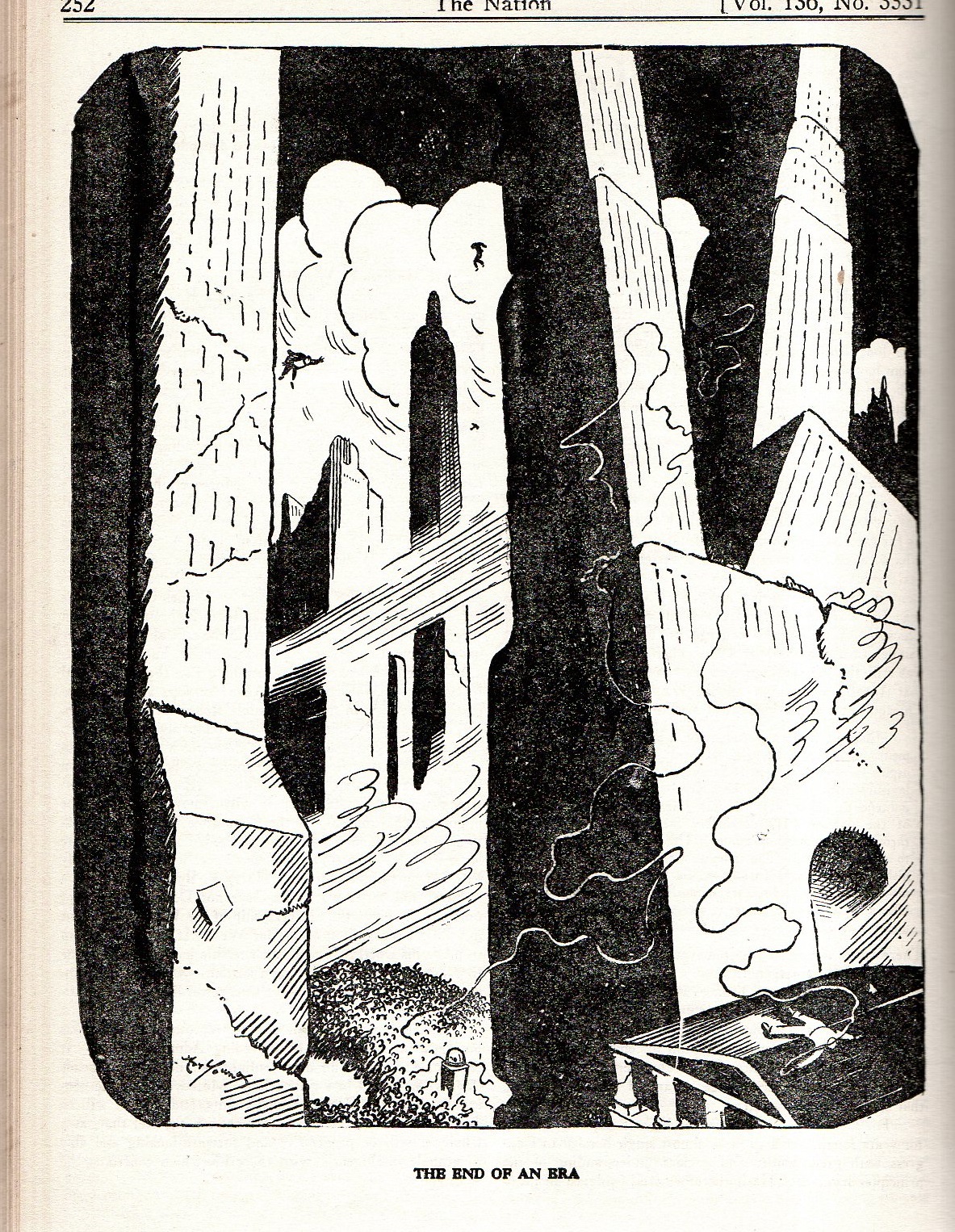
    What this toughly bleak political art is referencing was the gloom and doom of the corruption of the economy, with fortunes and family savings lost, of despondencies, of mass failure. It appeared in The Nation for the issue of March 8, 1933, the first issue printed in the newly inaugurated Roosevelt presidency, four days after the famous inaugural “The only thing we have to fear is fear itself” speech. [See here for text of the speech as well as audio.]
    Nation jumpers317

    So in the first 1100 days or so of the Depression, there was plenty of fear to fear, not the least of which was booming unemployment. The average rate of unemployment for this period went from 3.2% in 1929 to:1930: 8.9%;1931: 16.3%; 1932: 24.1%; 1933: 24.9%; 1934: 21.7%; 1935: 20.1%; 1936: 16.9%; 1937: 14.3%; 1938: 19.0%; 1939: 17.2%.

    There was also the general malaise and partial breakdown of the production of the country as a whole, as measured by the U.S. Gross Domestic Product, which (in current dollars) looked like a retracting landscape, with the pre-crash 1929 figures being $103.6 billion, followed by 1931 at $76.5, 1932 at $58.7, 1933 ($56.4), 1934 ($66 billion and the beginning of the Roosevelt era and through 1937 a period of fantastic recovery and growth); 1935 at $73.3, 1936 at $83.8, 1937 at $91.9,1938 at $86.1, 1939 at $92.1, 1940 at $101 (which was the year that mobilization began in earnest, with huge/record spikes in production); 1941 at $126.7, 1943 at $198.6, 1944 at $219.8, 1945 at $223.

    (And just because I have the figures at hand, the amounts of government spending during the Hoover years were 1929: $9.4 billion; 1930: $10; 1931: $9.9;1932: $8.7; then under Roosevelt in 1933: $8.7 billion: 1934: $10.5; 1935: $10.9; 1936: $13.1;1937: $12.8; 1938: $13.8;1939: $14.8, followed by the war years and buildup, which in itself was explosive growth 1940: $15.0 billion;1941: $26.5;1942: $62.7;1943: $94.8;1944: $105.3; and 1945: $93.  The average government spending as a percentage of GDP under Roosevelt increased to 15% in the 1933-1939 period from 11% under Hoover; during the mobilization the average expanded to about 35%. )

    So, the social commentary by the artist was really a slapping announcement to all readers that the crash of 1929 was still crashing, that the economy was still failing, and that things were getting worse.  Welcome to Washington, Mr. Roosevelt.  
    ·Posted by :

    ·in:

    —

  • “The Nation” and the Scottsboro Case, Alabama, 1933

    JF Ptak Science Books   Post 2315

    I’m here again with The Nation, a marvel of social reporting and interpretation.  I was recently able to have 40 years of it come my way, and I have the luxury of sitting down with the odd volume and breezing through it–though it isn’t much of a breeze.  It is shocking to me how much of what they cover is absolutely new and fresh to me, especially since I thought I knew something about the decades that I’m pushing through right now (1919-1945).  

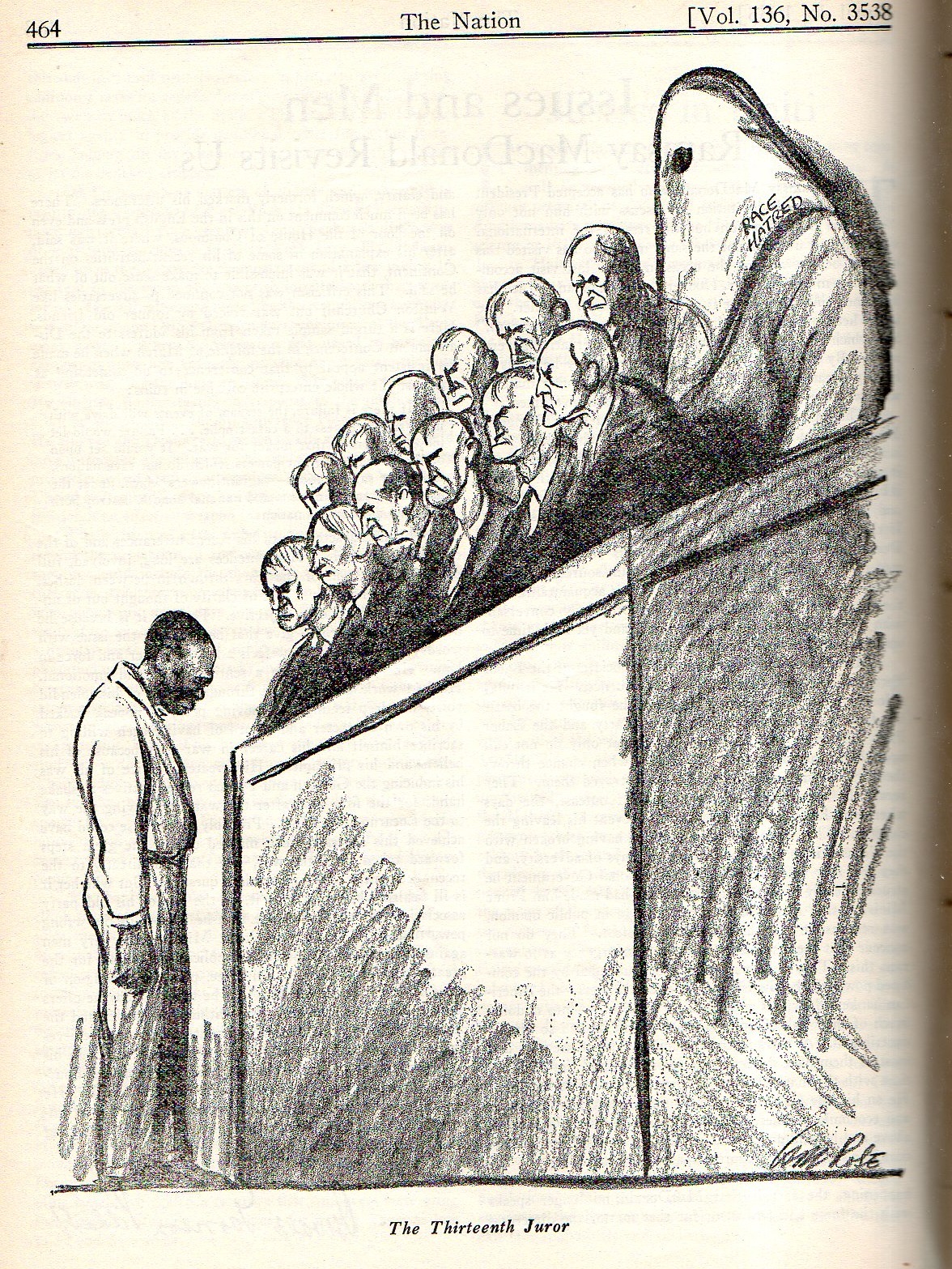
    Nation  lynching316I opened tonight almost immediately to this commentary on the Scottsboro Boys case–and it doesn’t take much to figure out what is going on, even if you never heard of it before,  This illustrate an article on Haywood Patterson, one of the nine African American teenagers who were accused of raping two white women in the state of Alabama in May 1931 and the legal morass and bitter institutional racism that he and the rest of the accused had been dragged through. It is a complicated set of cases –but the fact that there were trials and that there was some sort of legal sensibility to the matter was in itself noteworthy, because the case was highly inflammatory, enraging parts of the population who wanted immediate justice-and-punishment. 

    That didn’t happen in public, but it could be argued that is what was attempted by the Alabama criminal justice system–a judicial lynching.  The cases of these men went back and forth for a number of years, the men being convicted, and then sentenced to death by electrocution, and then appealing, and finding parts of the judgment overturned,  and then starting again, finishing again, overturning again, and other complications.  

    The cases made their way through to 1935 with sentencing in 1937, at which point the death penalties were overturned, but replaced by long prison sentences. 

    Haywood Patterson escaped the electric chair, but was sentenced to 75 years for a crime for which there was no evidence.  He wound up escaping in 1948, and wrote a book about his case (The Scottsboro Boy) in 1950; soon afterwards he was in a bar where he had an argument with a man and knifed him to death; Patterson was subsequently arrested and convicted of manslaughter, and would die of cancer in prison in 1952.  

    Mr. Patterson was evidently the first Afircan American in the history of such cases in the state of Alabama to not be executed for the crime. 

    [Image source:  “The South Speaks”, by John Henry Hammond, Jr., in The Nation, April 26, 1933, opposite page 465.]

    Lead Belly’s Scottsbor Boys”: 


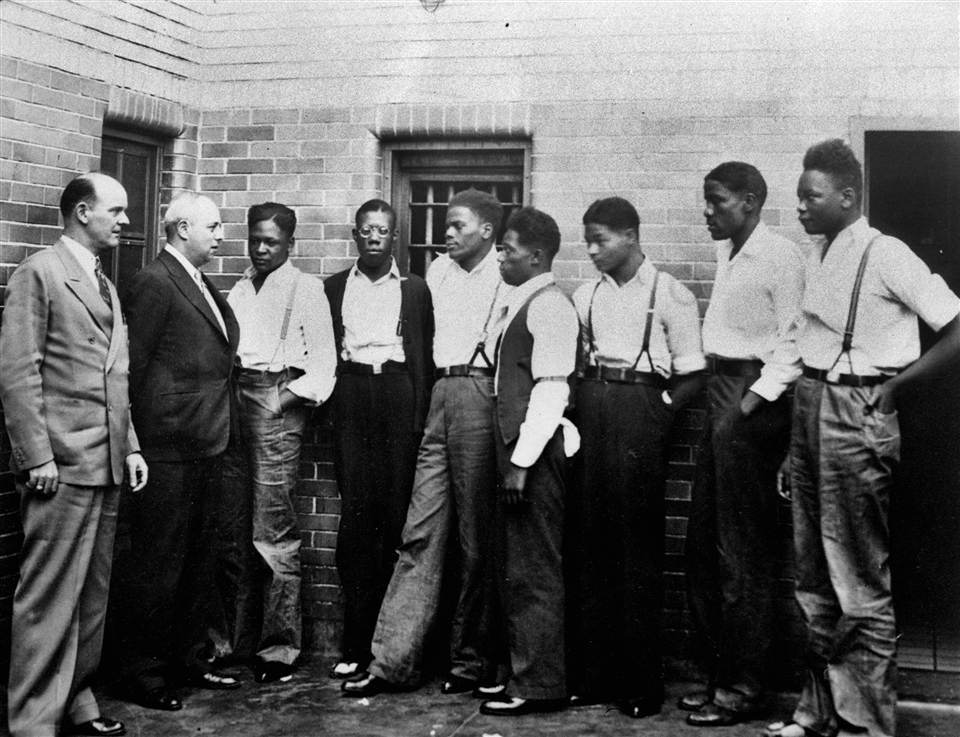
    Scottsboro photo

    [Source:  NBC News.  http://www.nbcnews.com/news/other/alabama-pardons-scottsboro-boys-after-82-years-f2D11634806]

    “In this May 1, 1935 file photo, attorney Samuel Leibowitz, second left, meets with seven of the Scottsboro defendants at the jail in Scottsboro, Ala. just after he asked the governor to pardon the nine youths held in the case. From left are Deputy Sheriff Charles McComb, Leibowitz, and defendants, Roy Wright, Olen Montgomery, Ozie Powell, Willie Robertson, Eugene Williams, Charlie Weems, and Andy Wright. The black youths were charged with an attack on two white women on March 25, 1931.”–Source as above.

    [Source: Emory University, here http://www.youtube.com/watch?v=TmsYLmqx3wg]


  • Dorothea Dix’s Report on the State of the Indigent Insane in the U.S., 1848

    JF Ptak Science Books  Post 2254

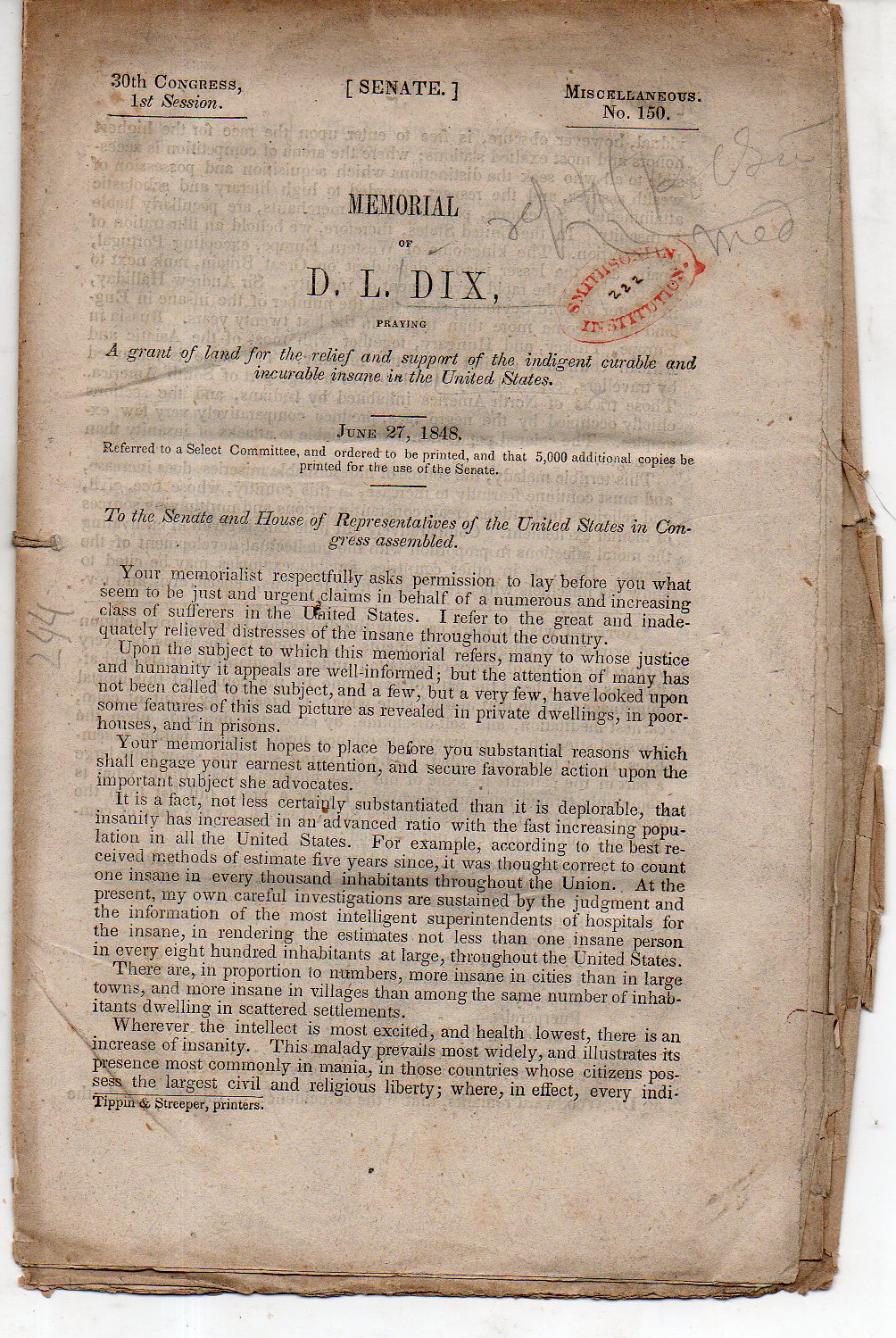
    Dorothea L(ynde) Dix (1802-1887) was an nurse and ultratrian, a very-much-practiced humanitarian who for years fought for the stabilized and just treatment of people with disabilities, mainly and for extended periods of time and travel for those suffering from mental diseases and development.  The pamphlet that I’ve reproduced below is a generalized statement for her appeal before the U.S. Congress based on her 30,000 miles of travels throughout the country, visiting nine states and inspecting the ways in which “the indigent curable and incurable insane” were treated.  She gathered data on how these people were kept–state by state–and also the reasons for their being admitted to whatever facility they found themselves in.  This is pioneering work on behalf of a class of people who really needed the help, and her report in general is not pretty story, a version of the Willowbrook story without the cameras, 120 years earlier. 

    DIx131

    I’ve linked the text from the copy from the National Medical Library (located here, though the front page above is from right here) which has a very elegant access to the 32-page document.  My own copy (available for sale via this blog’s bookstore, here) is a decent copy that was once in the library of the Smithsonian Institution before being sent to the Library of Congress, where it slept in a very dusty and unused assembly of odd and odder pamphlets (called The Pamphlet Collection) before coming to me.

    DIx130

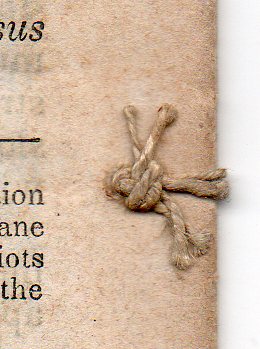
    I’m including an unlikely image from my copy–the bit of string and the knot that held the pages of this document together.  Rather than the stitching normally found in these pamphlets issued by U.S. goverment printers Tippin & Streeper (identified in tiny 3-point print at the bottom of the front page) this one has only a single side-saddled stitch, with a tenuous double knot, holding the sheets of paper together. It was almost as though the thing was constructed for impermanence–it wasn’t, of course; it was just bound quickly and with little thought.  Somehow it kept itself together.  

    Dix’s plea before Congress outlines very harsh conditions, as well as some of the semi-standards of the day for how a person could find their way into such a state to begin with, listing in the third page of teh work some of the reasons for commitment (in 1843) to the Massachusetts State Hospital (followed by the number admitted)

             Intemperance        239
             Ill  health       279
             Domestic  afflictions   179
             Religious   148
             Property  98
             Disappointed affections  64
             Disappointed ambition  33
             Epilepsy     45
             Puerperal      47
             Wounds on the  head    21
             Abuse of  snuff and tobacco     8

    And here an extract by Dix on some of what she found in Georgia (from page 22):

      "Georgia has, so far as I  have  been able to  ascertain, fewer insane, in
    proportion to population, than either North or South Carolina, but there
    is not less injudicious or cruel management of the violent cases through-
    out the State; chains and ropes are employed to increase  security  from
    escapes, in addition  to closed doors,  and the bolts and bars which shut
    the dreary cells and dungeons of jails and other receptacles.   I have
    seen the deep scars of former wounds produced by chains and blows ;
    and  those who have received patients  transported to  the State hospitals,
    are as  much at a loss for any decent language for describing  the condition
    of these unfortunate beings as myself.  Their condition is indeed inde-
    scribable.   Patients have not seldom been transported to the hospital in
    'open carts, chained and bound  with heavy cords..."

    The whole document is fascinating, and well worth a quick read.

    Notes:

    The document:  Memorial of D.L. Dix, Praying a grant of land for teh relief and support of the indigent curable and incurable insane in the United States, June 27, 1848, 30th Congress, 1st Session, Miscellaneous Document No. 150, 32pp.

    ·Posted by :

    ·in:


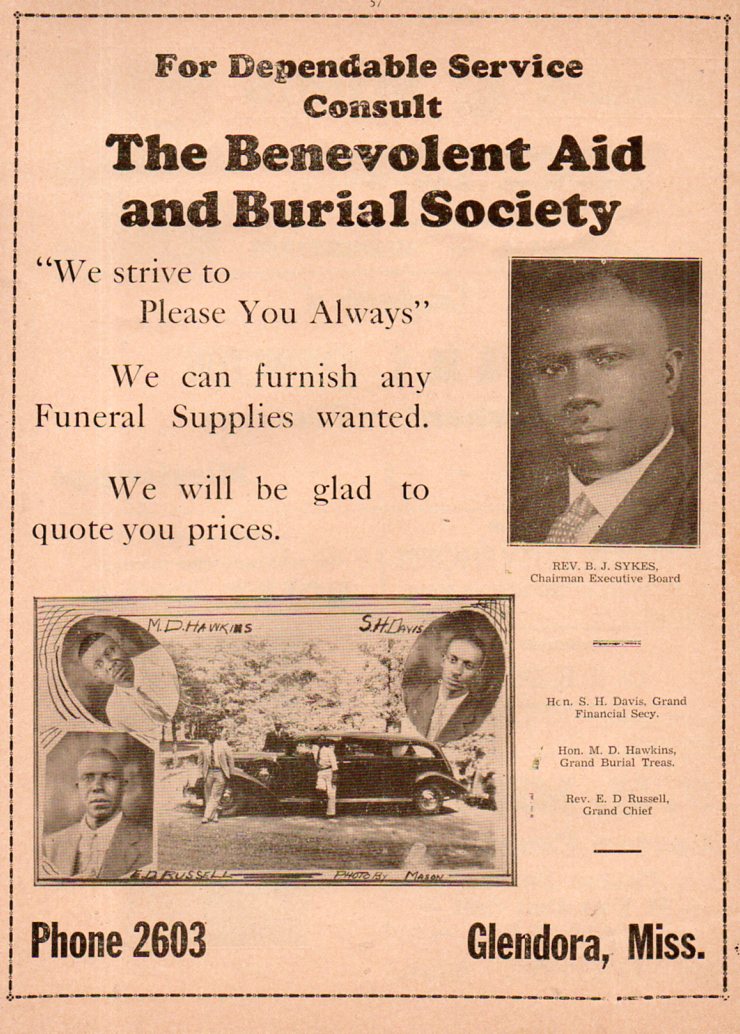
  • The Benevolent Aid and Burial Society (1937)

    JF Ptak Science Books  Post 2167

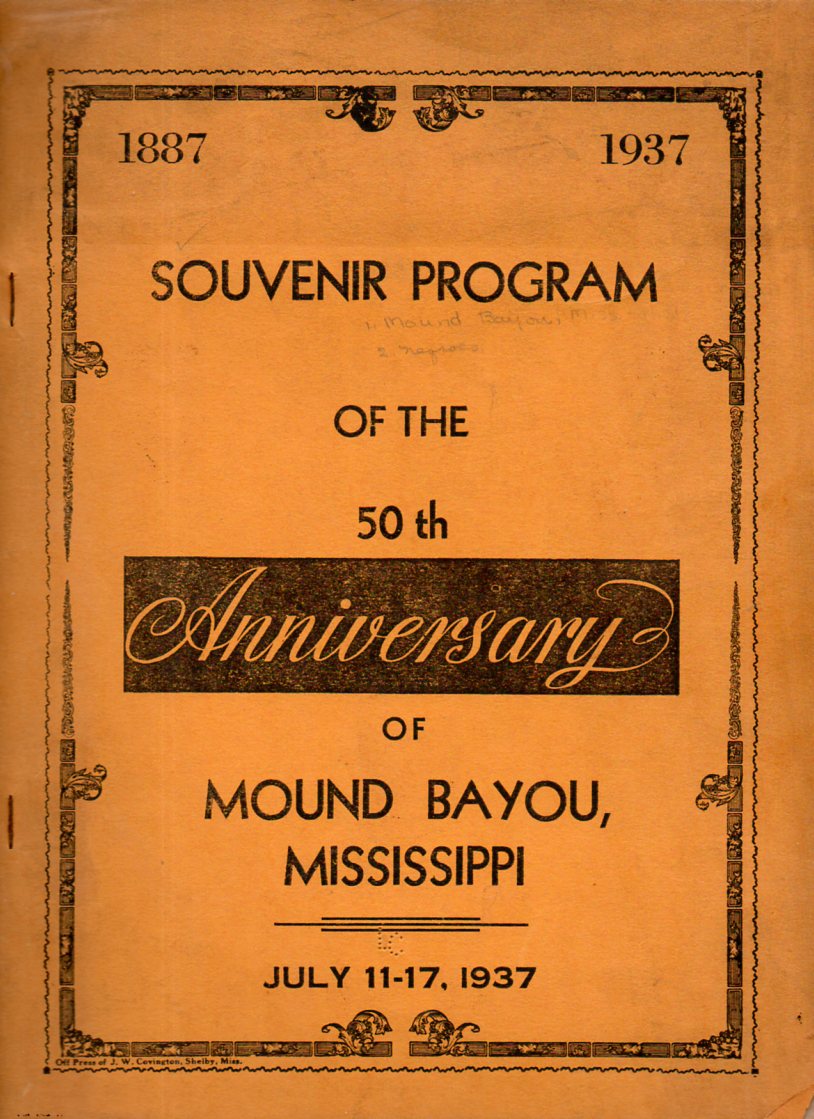
    There is something terribly American, full of hope, and trust, and celebration in this anniversary celebration pamphlet for the city of Mound Bayou, Mississippi–an African American town founded in 1887.  The Souvenir Program, for the 50th anniversary of the establishment of the town (July 11-17, 1937), is filled with town history, and advertisements, and photographs. 

    Mound bayou619

    [Souvenir Program of the 50th Anniversary of Mound Bayou, Mississippi, July 11-17, 1937.  Shelby, Miss. : Press of J.W. Covington,   12×9 inches, 59pp, illustrations, with articles, and numerous local ads.  This was formerly part of the Library of Congress Pamphlet Collection, coming to the library form the White House (so marked on the back of the cover, stamped “By Transfer/the White House/August 17, 1937”).]  

    Isaiah T. Montgomery was one of the founders of Mound Bayou, clearing out the bottomlands in the wilderness of northwest Mississippi, the town being populated by Freedmen.  But here at the time of the anniversary, in 1937, with the failure of cotton prices and the Depression being at its height or depth, the majority of the people living in Mound Bayou were sharecroppers, with most property lost.

    Mound bayou617

    ·Posted by :

    ·in:


  • Marches of Women and Children, the Great Passaic Textile Strike (1926)

    JF Ptak Science Books   Post 2154

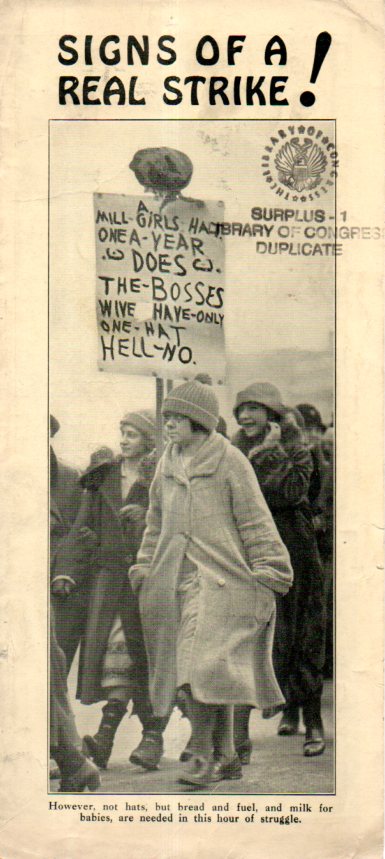
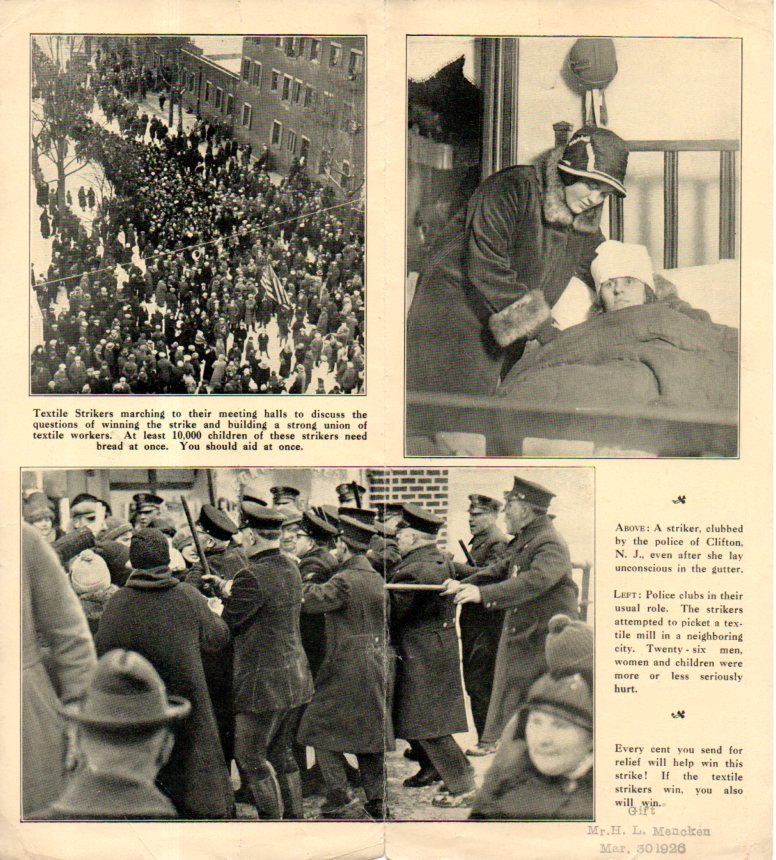
    I’ve come across two telling pieces of ephemera on the history of work, of women and working, and of labor unions, and they both address the textile strike in Passaic, New Jersey, in 1926.

    Strikers cvr011

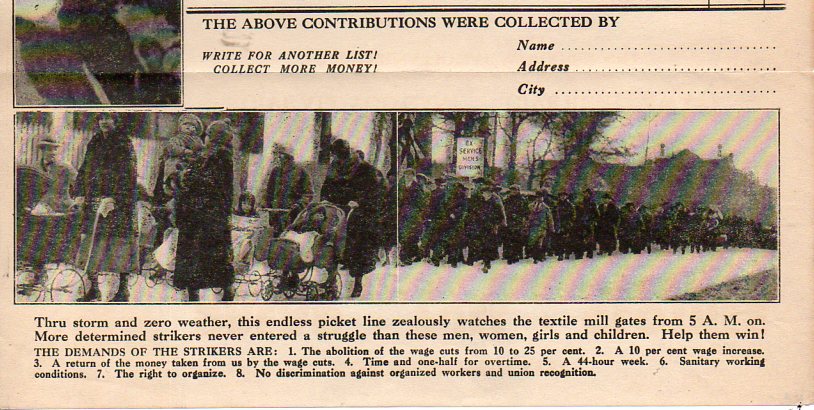
    The pamphlet was an appeal to like-minded people to contribute to a fund to help relieve the dire conditions of the textile worker strikers.  There were more than 16,000 people involved in this sometimes-brutal strike, people who were trying to stay even in their lives, looking for a little more money and a little better working conditions than what they had.  The Passiac (a working city just south of Patterson in an industrial triangle section of the state) strikers were moving against a number of textile (wool and silk) mills there, trying to force management to pay them something closer to the $1400 annual income for a family of four to survive. 

    Most workers there were making $1,000-$1,200 a year ($800-$1,000 if the worker was a woman, and about half of them were) for 50+ hours of labor per week.  The result was that the workers could not afford good housing and food, and those disadvantages paid off in high rates of tuberculosis, very high incidence of child mortality, and a low average life expectancy.  The strike began slowly in January 1926, with the mills responding with vicious attacks by paid thugs and by police.  It was a long and involved process for the strikers, with the strike lasting its way for another 14 months, finally getting choked out in March 1927.  It looks like there were some victories, but those seem mainly pyrrhic to me–at the end of the process many of the strikers were hired back but soon terminated, replaced by other workers who agreed to work for less.


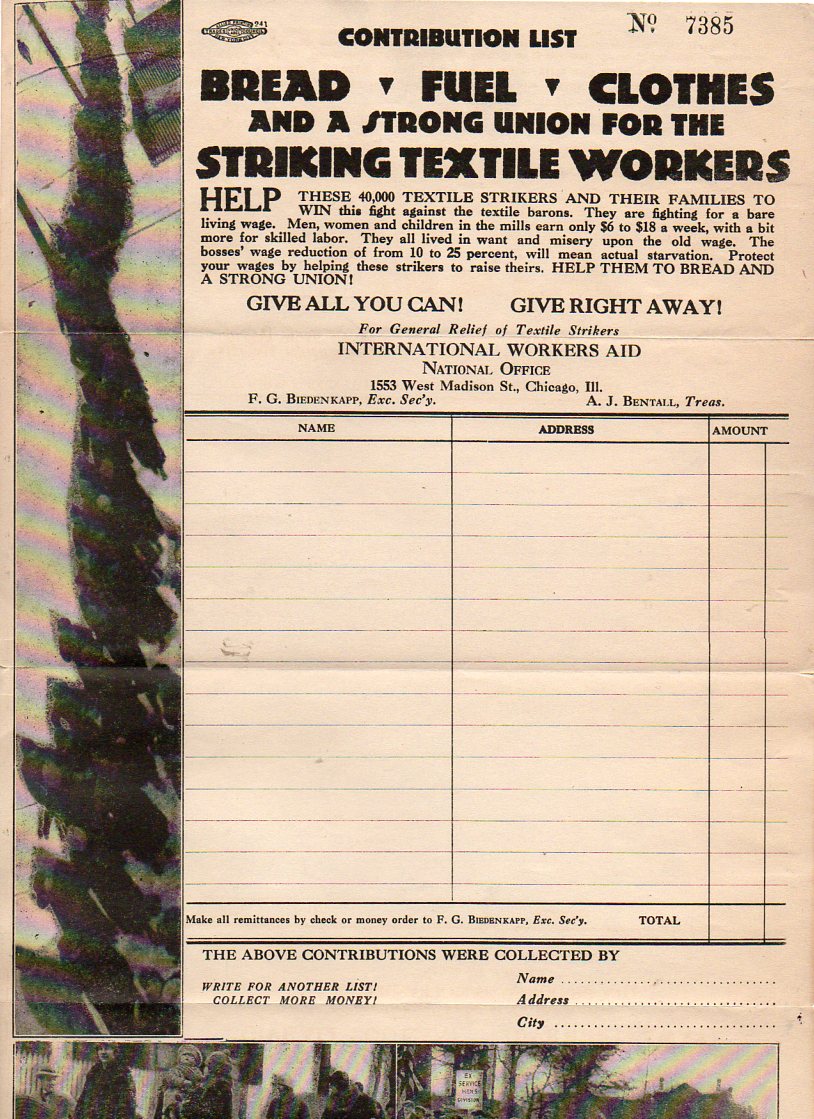
    Strikers cvr012

    The second item is a broadside–it was the communal effort involved with keeping the strikers (and the strike) going in the face of hunger and goons and police.  The strikers needed money to live, as there was certainly no money coming in, and since there was obviously no union, there was no general fund from which any of these families could draw food money from). they needed money just to buy food and pay for housing.  So the call for “Give all you can!” and “Give right away!” were as desperate as they sounded.  My guess is that there would be a representative of the International Workers Aid society national office going from factory to factory, or door-to-door, soliciting for money for the Passaic workers’ relief.  The strike was no doubt a very nasty business, with a victory only a victory once there was more food on the table, less illness, and far fewer babies dying from preventable causes. Probably this looked like a victory to others so far as the future of fair labor/pay was concerned, but not so much for the strikers who brought this about.

    Passaic strike277

    Passaic strike278
    There’s quite  a bit written on this strike, and most seem to say that it was an important event in the history of “labor relations”, and that it was the first time that a Communist-led strike succeeded in the United States, (There is a complex legacy as to who the leadership was for this strike, but the end result is that, at the end, the Communists were in charge.)

     It is also interesting to note that both of these items were given at some point to H.L. Mencken, who gave it right away to the Library of Congress, where it wound up in a forgotten “Pamphlet Collection”, and then sold to me (years afterwards).

    Passaic strike279


  • An Eloquence on the State of Indian Affairs, and Alcohol, 1871

    JF Ptak Science Books  Quick Posts

    [Electronic source here.]

    In the Report of the Board of Indian Commissioners for 18711 I found the following report of a meeting held between General S.J. McKinney (Superintendant of Indian Affairs for Washington Territory) and Chief Napoleon at the Tulalip Reservation in Washington Territory:

    “Napoleon, the Chief, came forward with much and laid before…a bunch of split sticks, saying ‘these represent the number of Indians killed by white men in the past year, all Indian chiefs, fifteen of them, and yet nothing has been done by the government to the white men who killed them. They killed them by selling them whisky. I do not speak of them because I have a bad heart, but because I want you to know what kinds of men live about us. The whites now scare all of the Indians, and we wonder when they will kill all of us.’”


  • Baseball Sheet Music from the Library of Congress

    JF Ptak Science Books  Quick Post   Follow Me on Pinterest


    Base ball rag [sheet music]


    I’ve pulled up the first two dozen pieces of baseball sheet music from the American Memory Project at the Library of Congress. Please follow this link to full images and descriptions at the Library site, where there are more than a hundred others. 

    ·Posted by :

    ·in:


  • America at Work: a 1903 Film of the Soft Underbelly of Journalism

    JF Ptak Science Books   Quick Post

    News
    [Source: the Library of Congress, here.  Watch video.]

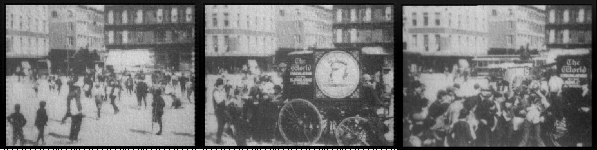
    This is a 53-second insight into one of the primary interfaces of the American news industry and the user–the interface being a mode of distribution–in this case, the paperboy.  The film’s source  is the American Memory Project at the Library of Congress, and is the creation of the American Mutoscope and Biograph Company in 1903. It is filmed in New York City (the LC description guessing that it is Union Square) and shows the delivery wagon for the New York World approaching a drop-off point for the new dailies. (The World, 1860-1931, was published by Joseph Pulitzer at the time that this movie was made.) It is quickly swarmed by the paperboys (along with a few men); the carriage is stopped, and a man begins tossing bundles of the folded paper into the crowd.  There is chaos, and confusion; there is shoving, grabbing, pushing, and fighting. Towards the end of the film the boys stand by to watch two other boys in a true fight. It is a visualization of an unpretty memory of youthful competition for the chance to make a few nickels and who wind up being point-men for an enormous news agnecy which must have had little regard for their being.  What a weak thing this is. 

    ·Posted by :

    ·in:


  • Mapping a Timid Whispered Revolution, 1938

    JF Ptak Science Books  Quick Post 


    Socialist New Party180


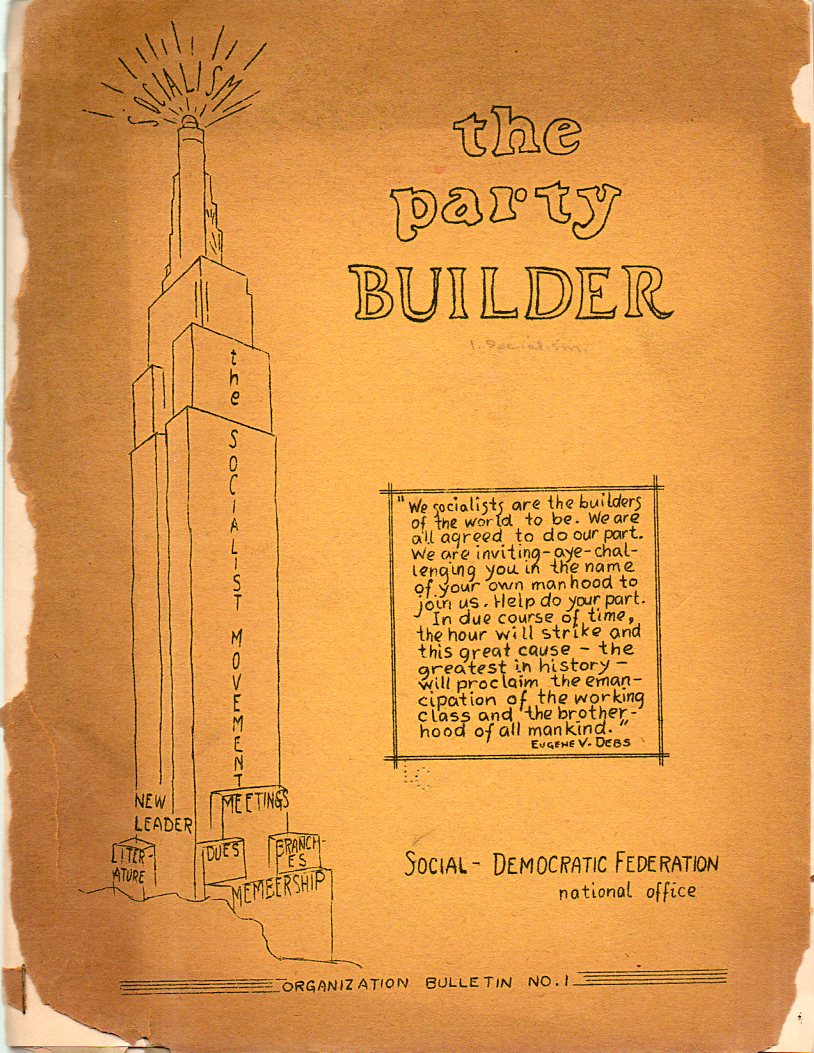
    Socialist New Party179The Part Builder, Organization Bulletin No.1  
    published inn 1938 by the Social-Democratic Federation’s “national office”, is an odd, semi-Outsider kind of publication, a skinny ingenuous cluster of littleness and naivete and homemade hope.  “Socialism” is a beacon of something (light or radio/television waves?) at the top of the Empire State Builind-like structure of the formation of the movement, as we can see in the quick-crude drawing on the left side of the pamphlet’s cover.  

    Maybe it an odd thing to use the new Empire State Building as a symbol for the movement, maybe not–the SDF was a splinter group that cleaved itself away from the Socialist Party in 1936 because it seems that the SP was too revolutionary/pro-Communist for the old line folks who formed the SDP. So maybe the building stood for something that the Communists and parties didn’t–I don’t know, and I’ve never been very good in following the histories of smallish political parties down their rabbit holes of formulations and re-constitutions and inter-tribal micro-warfare, so I really have no great insight into the symbolism. And perhaps given the rudimentary nature of the publication, maybe the symbolism went only so far as it was a thing that the artist/illustrator could actually sort-of draw.

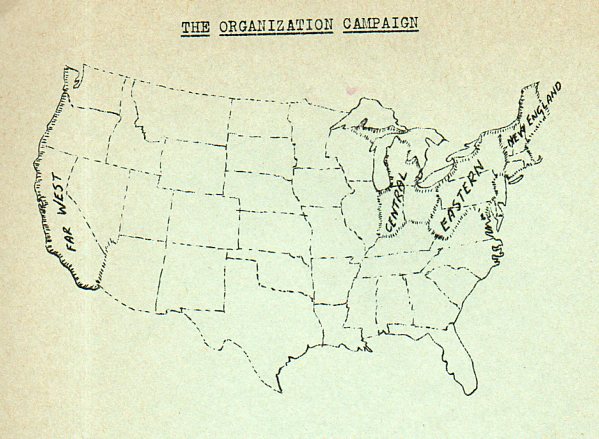
    The main object of interest in this sad little pamphlet though was the U.S. map that appears on page two–it is striking in its way, a silent stab at making claim to potential SDF members in a very quietly outlined American map.  The regional labels are so small and tentative, and the vast inner ocean of undefined America is so, well, vast, that the map seems more one of timidity than anything else, a whispered revolution. 


  • Medical and Public Health Films, 1940’s & 1950’s.

    JF Ptak Science Books   Quick Post

    I bumped into these interesting video time capsules at the fantastic National Library of Medicine site for digital projects.  They are mainly mid-20th century films made for soldiers (on malaria, keeping yourself clean, nutritional behavior in the field in tropical lands, so on) though there are some public service announcements dedicated to the public. 


    view


    The Inside story  “This film outlines the most common emotional illnesses that may be
    suffered by a civilian upon entering a military service and suggests how
    the individual serviceman can deal with them. Anxiety can be caused by
    isolation from family and familiar circumstances, the pressures of
    military training, lack of privacy in barracks life, and worry about
    performing one’s duty. Footage of a sailor in the above situations is
    shown. A navy psychiatrist reassures a troubled seaman, helps him to
    understand what is happening to him, and gives him material to read that
    will guide him in his recovery. The seaman shares his reading material
    and his new self-knowledge with his buddies. They too suffer in
    greater or lesser degree from some of the effects of anxiety. Animation
    is used to illustrate the workings of the unconscious mind.”


    view


    Fight syphilis  “This film outlines the individual’s role in combatting syphilis through
    education, blood tests, prompt medical treatment, and avoidance of
    quacks. Shots includes montage of quack remedies for venereal disease”.