A Daily History of Holes, Dots, Lines, Science, History, Math, Physics, Art, the Unintentional Absurd, Architecture, Maps, Data Visualization, Blank and Missing Things, and so on. |1.6 million words, 7500 images, 4.9 million hits| Press & appearances in The Times, Le Figaro, Mensa, The Economist, The Guardian, Discovery News, Slate, Le Monde, Sci American Blogs, Le Pont, and many other places… 5000+ total posts since 2008.

Category: Social History

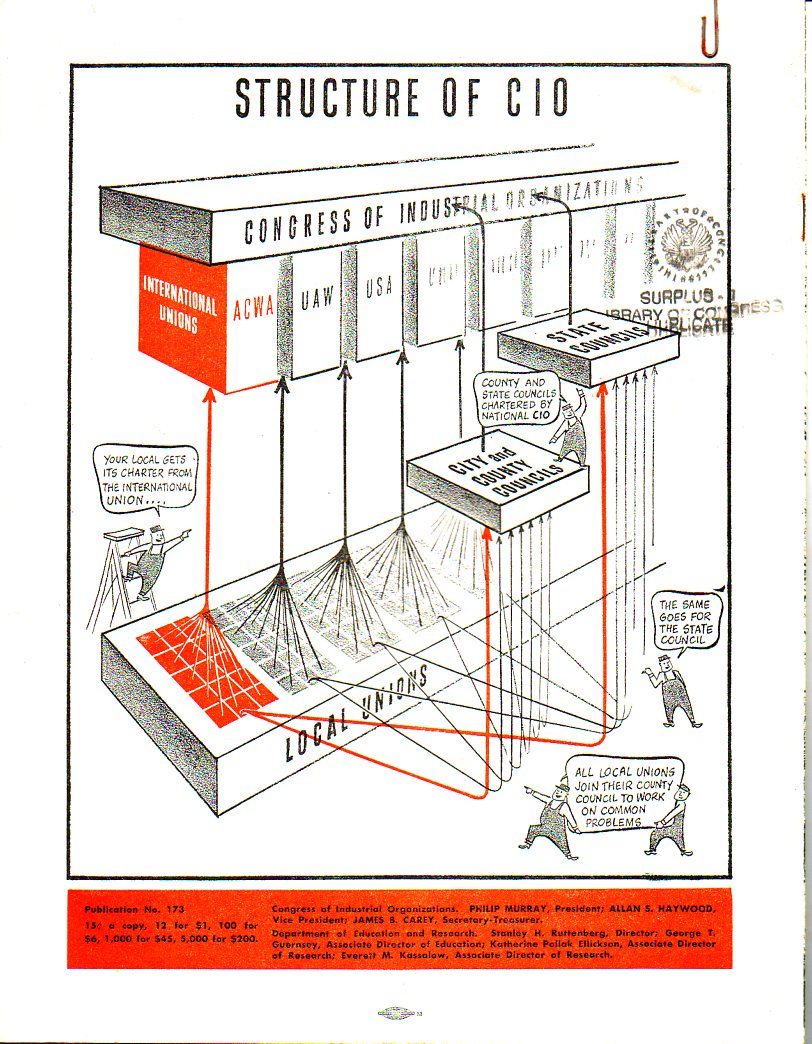
  • A Sinister-Looking-Yet-Positively-Intended Pamphlet Cover

    JF Ptak Science Books  Quick Post

    This design has all the trappings of a modern right-wingish hatchet job screed publication denouncing and de-deifying the CIO (the other part of the AFL-CIO). As it turns out this gritty, demanding, and offsetting design is the cover for a pro-CIO publication, published by the organization itself.  The shattered sky raining coal tar and blood is falling on what sorta looks like a collection of imitation  Soviet-y working folks.  To me the art indicts the CIO for something, and that “something” is not good.  But inside it is all wine and roses and fighting the good fight for teh working class. It is just a very odd job, badly done.  

    Covers CIO009

    And the back cover:

    Covers CIO010


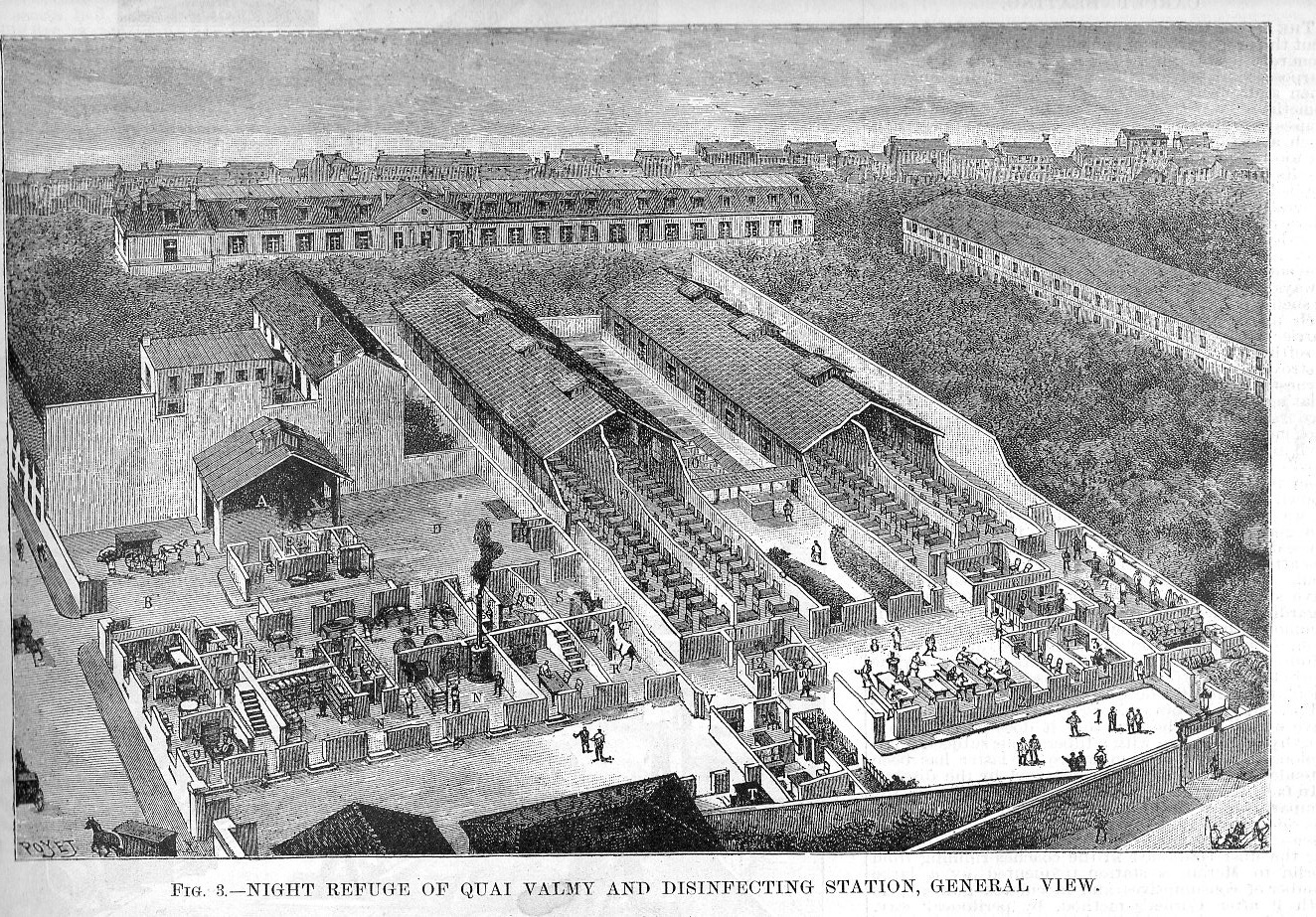
  • A Cross Section of Poor Relief: Paris, 1892

    JF Ptak Science Books  Quick Post

    Disenfection station431

    [Source: Scientific American Supplement #842, February 22, 1892]

    Browsing through the Columbian year of 1892 in the Scientific American Supplement I came across this interesting social-architectural cross section and story of poor relief (for men) in Paris.  It was seen as a great of comfort for men who had none, and model for how men of no means could be accommodated and assisted.  The poor refuge at Quai Valmy would be the nighttime home of 200 men for three consecutive nights every two months. They were provided with a bed, clean bedclothing while their own clothing was disinfected and washed, dinner, and a breakfast, and then sent again on their way.

    The description of the experience follows (the bold numbers refer to the numbers in the cutaway view):


  • A Note on Franklin Roosevelt and the Holocaust, 1942

    JF Ptak Science Books   Post 2564

    FDR Jews secret

    For all of the greatness of the man, Franklin Roosevelt for whatever reason came up decidedly short on the issue of accepting German Jewish immigrants seeking to escape Nazi Germany (in the 1930’s) and then later, during the war, having a terrible record in the response to the concentration camps (1940-1942) and (somewhat later) on the identification of the extermination centers.(1943-1945).  It is certainly a large stain on this legacy, a despondency that is confused, confusing, and highly open to debate. 

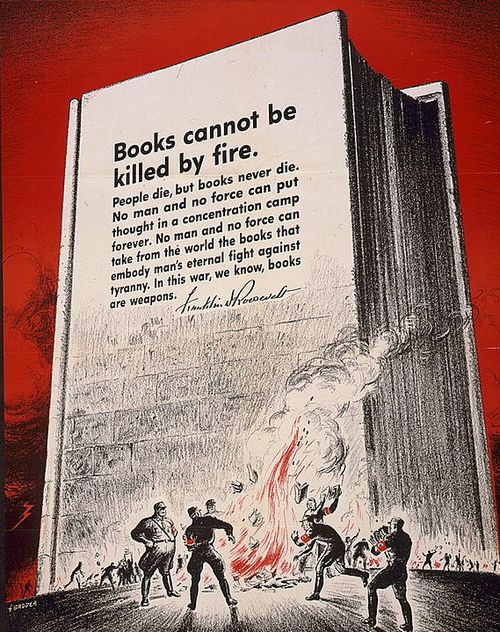
    This came to mind when I reviewed an older post on this blog on books/propaganda issued by the government printing office–in particular, the “Books are Weapons” series, which is a collection of strong images used in connection with Roosevelt’s statement about books/weapons:

    Books are weaponsWhat struck me today for the first time is FDR’s use of “concentration camp”, which is surprising to me–at least the “me” at my level of understanding FDR and the Holocaust–because when this poster was issued by the Government Printing Office in 1942 Roosevelt had spent very little public time on the issue.  And in the course of the next 24 months or so, Roosevelt had more evidence of the gigantic crimes being perpetrated by Germany but still had very little publicly to say on the matter.  1942 though seems to be early for this sort of statement–and to find it in a mass-produced vehicle like this poster was a jolt. 

    The text on the monolithic book that stand free and tall and immobile in spite of the Nazis in the foreground and their small pyre of burning books:

    • “Books cannot be killed by fire. People die, but books never die. No man and no force can put thought in a concentration camp forever. No man and no force can take from the world the books that embody man’s eternal fight against tyranny. In this war, we know, books are weapons.” –Franklin D. Roosevelt. 1942 (the date referenced from the Library of Congress page on this poster http://www.loc.gov/pictures/item/96502725/   Another post on this blog shows two other variations on this poster:  https://historyofideasblog.com/thesciencebookstore/2014/09/books-are-weapons-in-the-war-of-ideas.html)

    This is a very long story, but for right now it seems a relatively certainty that the situation of the Jews in Germany and the rest of Europe was fairly well known and established within the Roosevelt White House, and even so too to some extent in the popular press. By 1943 there was probably no doubt whatsoever with what was going on–in an example of Roosevelt’s association with the contemporary knowledge of the Holocaust the FDR Presidential Library offers the following O.S.S. document on the destruction of the German Jews:


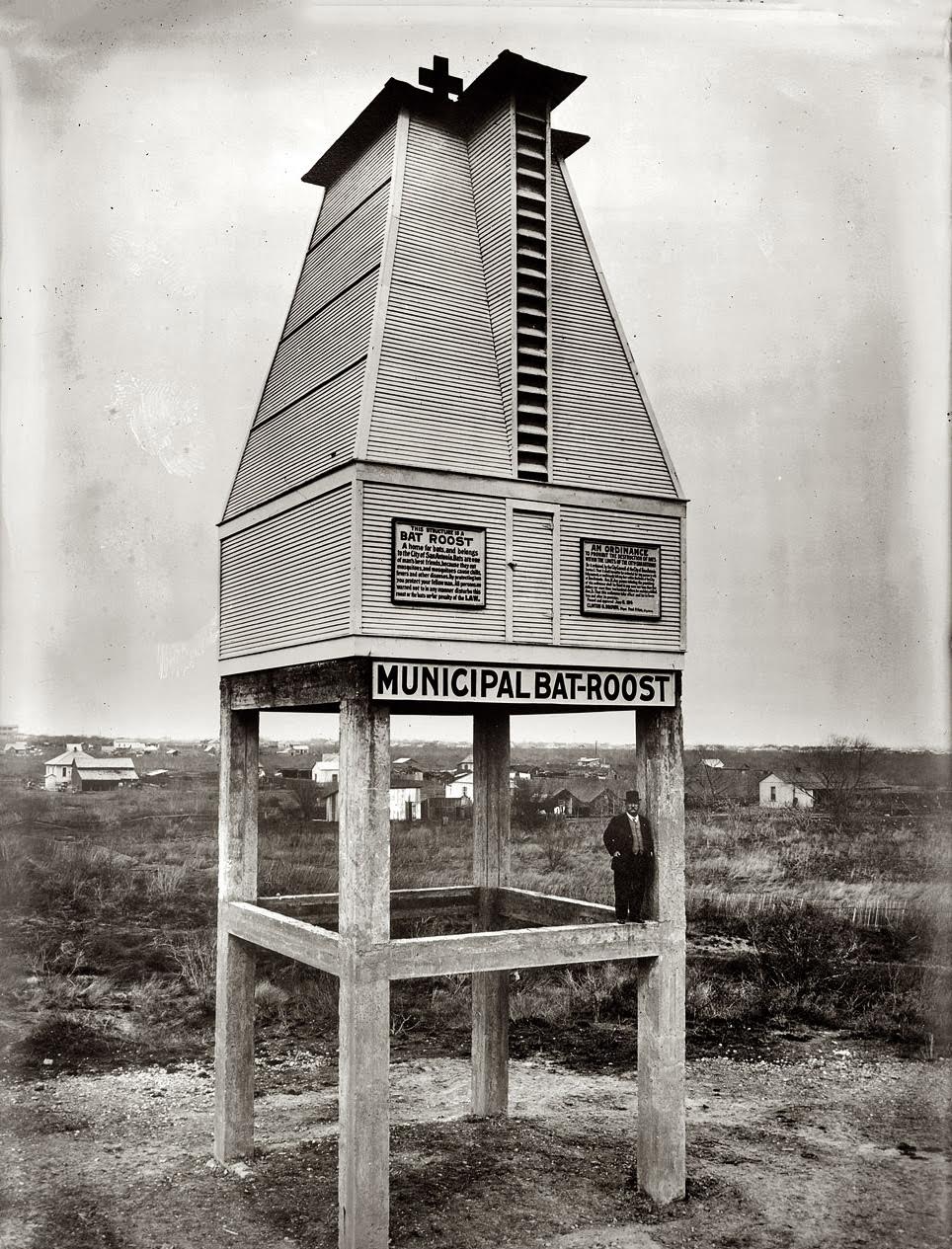
  • An Odd & Architecturally Symphonic Structure Dedicated to Bats, Malaria, & Guano (1916)

    JF Ptak Science Books  Quick Post

    Bat house

    [My thanks to Eric Renner and Nancy Spencer for sending this photo my way!]

    The idea of Dr. Charles A.R. Campbell (1865-1931) was that malaria was transmitted person to person by mosquito so a good way of combating the disease was to get rid of mosquitoes–perhaps the most dangerous animal in the world to humans–and a superior way of doing that was by introducing mosquito-ravenous bats.  And that is what he did as San Antonio’s health officer–through some amount of trial and error he introduced these “hygiestatic bat roosts” in Hill County, including this enormous 1916 structure. There were difficulties at the outset in attracting bats to the roost, so one of the ways of getting around this problem was to design the structure to look like the evidently all-time premium bat-attractor, the church steeple–I doubt that this had anything to do with the ultimate success of attracting bats, but the resulting profile surely was a winner.

    I believe that that is Dr. Campbell leaning against one of the massive (20×20″?) legs of the roost.  Bats don’t weight that much, but that lumber-rich roost did, and so did the guano they produced. Evidently the guano was harvested as high end fertilizer, with more than two tons removed from this roost alone.

    There’s much more to this story, of course–I really just liked the photograph:  see http://www.reformation.org/campbell.html and  http://www.batcon.org/resources/media-education/bats-magazine/bat_article/386

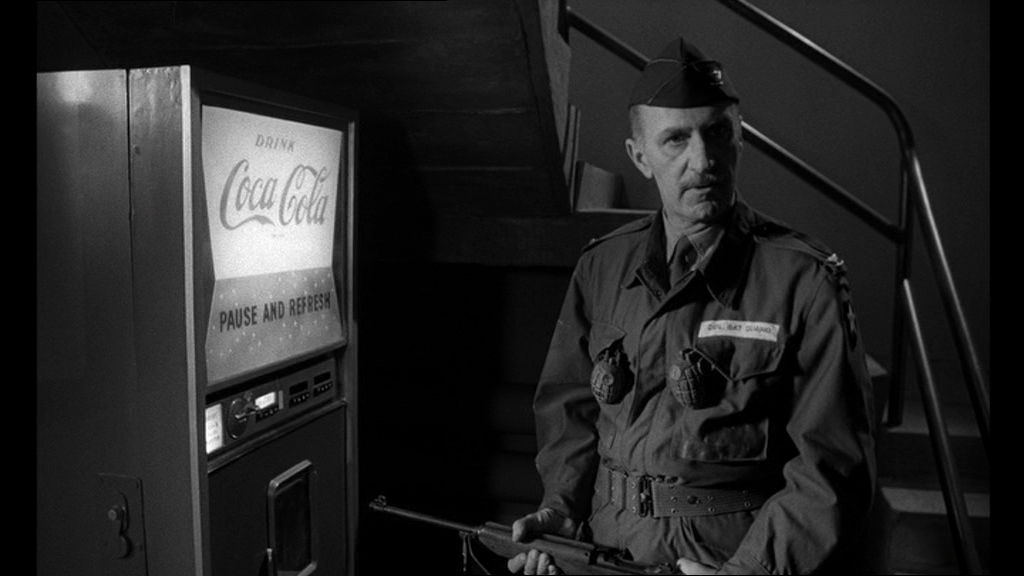
     I can’t mention bat guano without a brief sidetrack to Col. “Bat” Guano, from Dr. Strangelove, just because:

    Bat guano
    [Source: http://41.media.tumblr.com/VVa3lael6qyun4xkM8d9CxGuo1_1280.png]

    ·Posted by :

    ·in:


  • The Found Poetry of Gustav Eiffel’s Labor Relations (1888)

    JF Ptak Science Books                                   

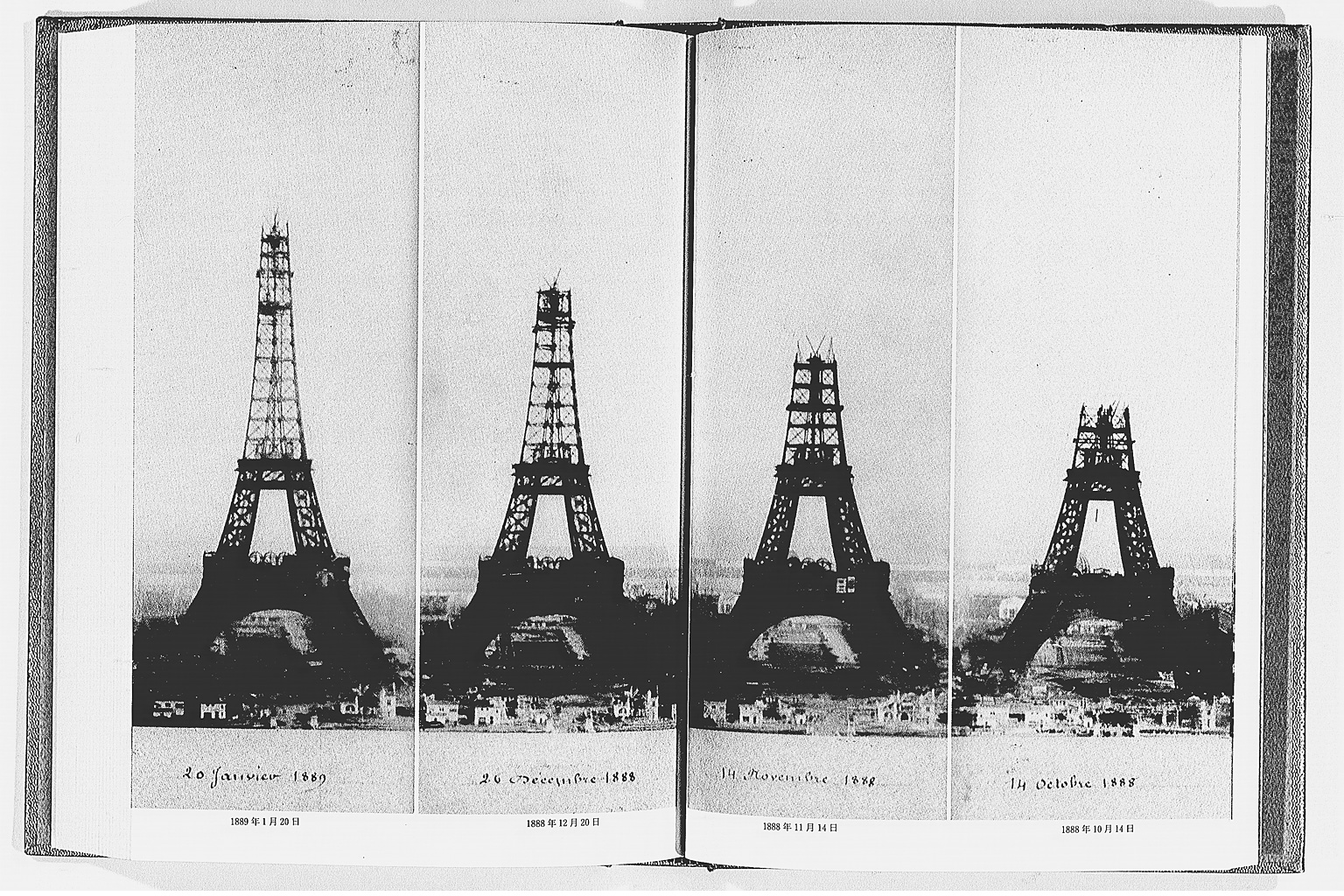
    Eiffel tower under construction sequence[Source; http://www.ndl.go.jp/exposition/e/data/L/158-002l.html]

    This is another in an uncertain series on Found Poetry (a cousin to the Found Book Art series), with this fragment found in the history of technology/labor relations category.  IT seems that in the early and problematic history of the remarkable Eiffel Tower, M. Gustave Eiffel had a few problems with his workers constructing the tower.  Soon after a three-day negotiating session ending the strike of September 19, 1888 (in which workers asked for a four-cent per hour pay increase and where Eiffel slowly met their demands but parsing the raise out one center per month for four months) there was another attempt at a strike, just before Christmas of the same year.  One of the demands floated by Eiffel et Cie was that the workers engaged in the construction at greater heights should receive a higher pay, what with the rain and wind and the possibility of a fatal trip-and-fall.  Eiffel responded with the following efficient answer, set here to some sort of metre:

    The professional risks remained

    the same

    whether a man fell from 40 meters

    or from 300 meters,

    the results were the same–

    certain death.1

    This was a winning argument, and kept his workers working without compensation for working at a higher height,  and the tower’s completion on schedule. 

    Notes:

    1.  Eiffel’s Tower, by Jill Jones, Penguin, 2009, pg 49.

    ·Posted by :

    ·in:


  • On the Dreadful Nature of Unseen Point-Blank Racism

    JF Ptak Science Books  Post 2572

    I’ve written a number of times about tertiary,  massively incorporated examples of racist behavior in the pre-WWII United States. Impossibly bad stuff that we would never think of as having any place anywhere today was sort of every place everywhere 75+ years ago.  The racist imagery seems to spontaneously occur in places where there just wasn’t any “point” for it, but there it was, a sort of non-sequitur of half-conscious social quiet-loathing.

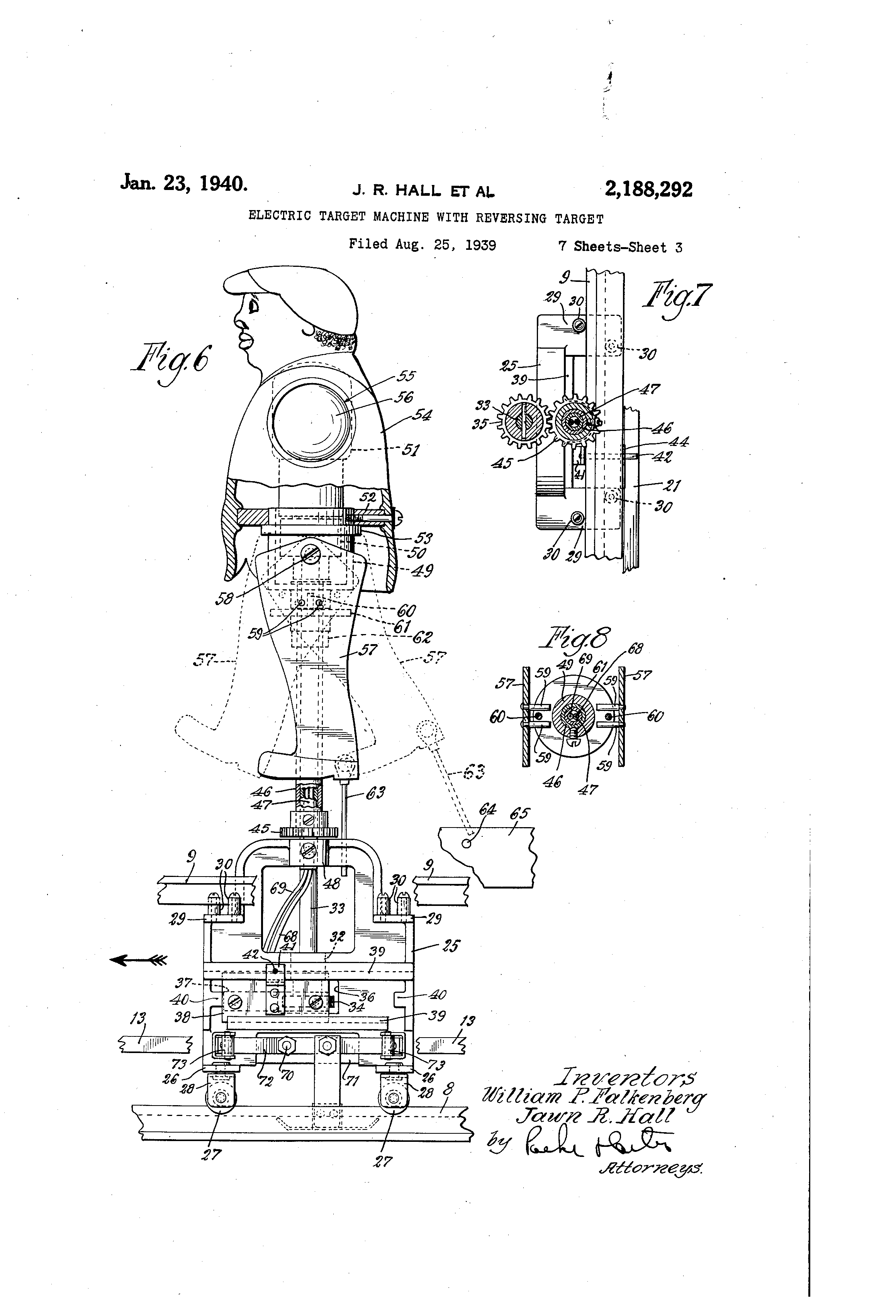
    Tonight’s examples were inspired by a Twitter post by Ward Harkavy (https://twitter.com/WHarkavy) on an incredible piece of social propaganda: a patent for rifle shooting game in which the target is an African American. (It is interesting in and of itself that the inventor thought enough of his invention to patent it so that no one would steal his idea.)

    There it is: the “Electric target machine with reversing target”, by William P. Falkenberg and James R. Hall, U.S. Patent # 2188292 A, 1939/1940. “Our invention relates to an improvement in electric target rifle ranges and has for one purpose the provision of an improved target”, the target being  Black man. Well, a Black man carrying a chicken, though it could be that “or any other suitable target”, whatever that was.  (The folks applying for the patent actually used the word “negro” with a small “N”, even though by about this time the fight to deprive African Americans of even the capitalization of the name of the race was over by about 10 years, though there were obvious pockets of resistance.)

    “…simulate a negro [sic] carrying a chicken,

    or any other suitable design.”

    Patent Negro shooting gallery a


     From the patent report:

    • “…#54 which may for example simulate a negro carrying a chicken, or any other suitable design.”
    • “We illustrate, however, means for reversing the movement of the target structure in response to every hit so that the negro, if hit, may reverse his direction of movement.”

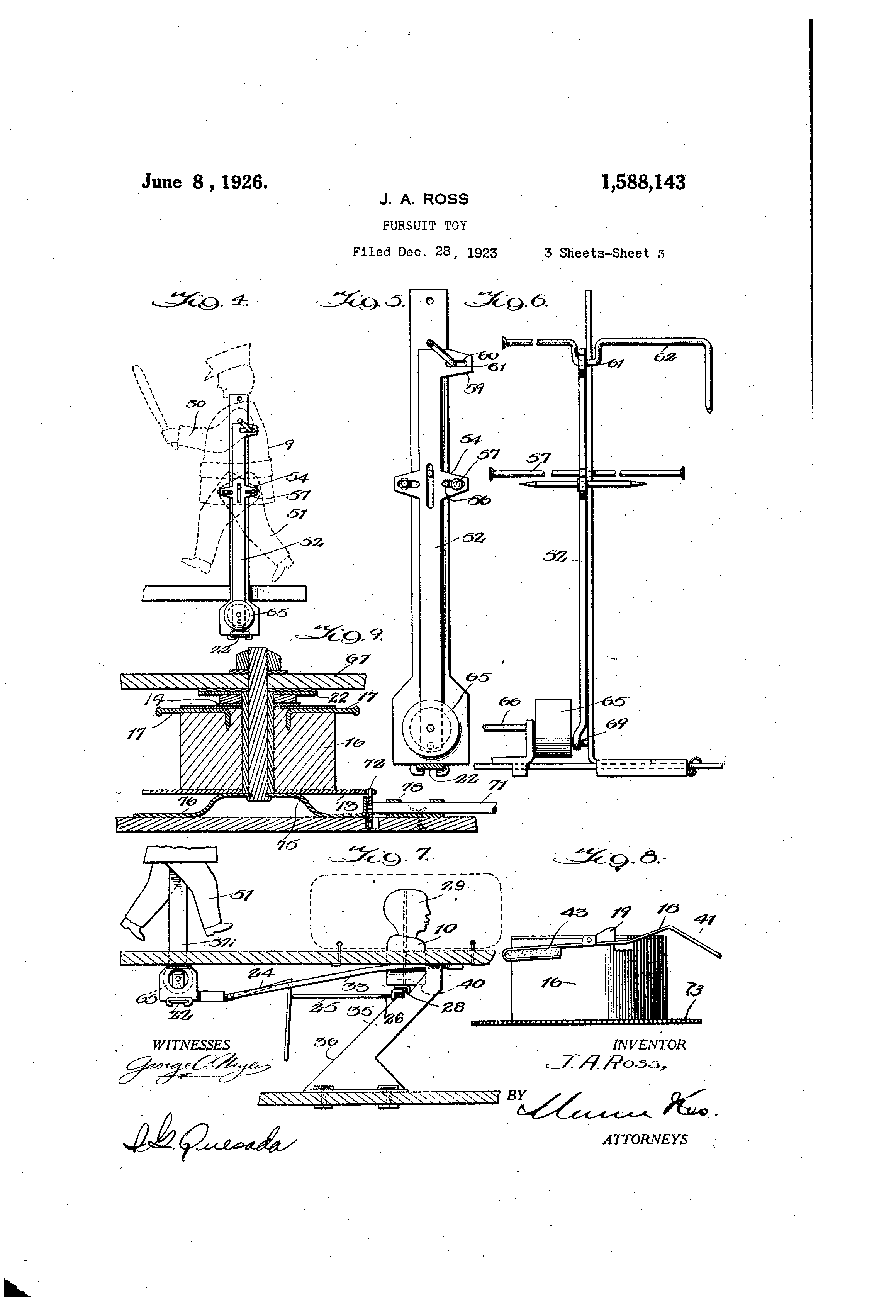
    I did a quick search on Google Patents and found a few more examples of this extreme passive-aggressive form of racism.  The second is from 1923,  a “Pursuit toy”, U.S. Patent # 1588143 A, by Joseph A. Ross, 1923.  The toy consisted of a cop who would spin ’round and ’round trying to catch/club a Black man whose head would pop up from a sewer cover.  The figure that the cop was chasing according to the report was “in the Form of a negro [sic] or any fugitive”.  The profile of the toy shows a cutaway of the patrolman (with raised baton) and the African American head (in the drawing beneath) coming up and through the manhole cover.  

    Negro Patent toy police pursuing Negro


    ·Posted by :

    ·in:


  • A Tiny Peep at the African American in the Great Depression & Dust Bowl Migration, 1935

    JF Ptak Science Books  Post 2571

    The Negro Transient

    [Source: http://newdeal.feri.org/opp/opp3513.htm]

    I found this article, “The Negro Transient”, by Herbert C. Jenkins, in Opportunity, Journal of Negro Life, January 1935, while looking for support material for an F.S.A. publication on immigration of “drought sufferers” and the indigent poor.  It is an interesting account of an African-American experience of part of the Dust Bowl, with a number of interesting collections of data and stats for “travelers” in the St. Louis area in 1935.  These “travelers” of course were folks who took it hard from the Depression and from the great  and dismal drought that killed many American farms throughout the Mid-West and West, and so they hit the road looking for the opportunities that dried up and blew away at home.  The new sense of “home” would be defined as anywhere there was work or benefit, which were difficult things to find in the sixth year of the Great Depression.  

    One of the Roosevelt administration’s aid to helping this large population on the move across the country was the 1933 creation of the National Association for Travelers and Transient Service, which was an outgrowth of regional Traveler Aid societies, many of which were formed in the 19th century and focusing their attention on immigrant issues and the poor. The federal program did its level best to provide shelter, food, medical aid, education, and other services to help and even improve the state of the homeless, the poor, and the Dust Bowler–in many cases the widespread assistance to people in need was unprecedented. 

    The fascinating part of the story in Opportunity was the African American angle on population-in-motion.   The author, Herbert C. Jenkins, reports that “The November issue of the Transient, a bi-monthly publication issued by the National Association for Travelers Aid and Transient Service, states that there were 249,975 individuals under care in Federal Transient Bureaus October 15, 1934.”  And “As in every movement of nation-wide scope Negroes contribute their quota to this transient army. There are no available figures at hand to show the percentage of the number under care in various bureaus, but because of the traditional “last to be hired and first to be fired” policy which exists in industry they doubtless constitute a substantial number of these wanderers.” Jenkins proceeds to establish data that gave a peek into the African American part of the issue.

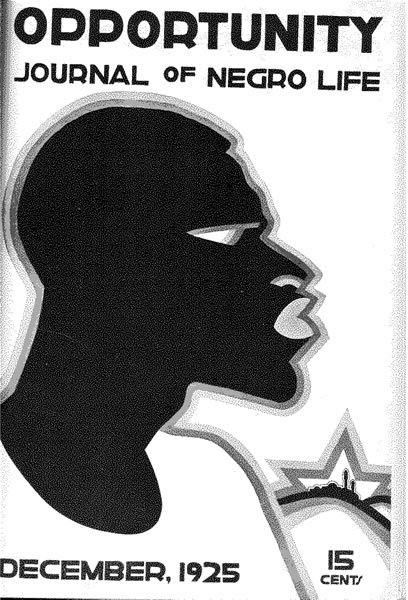
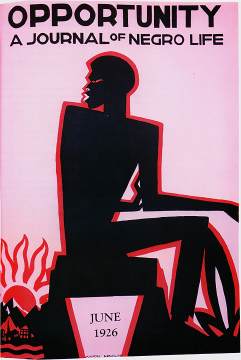
    Opportunity cover 1926 b

    http://sites.davidson.edu/littlemagazines/wp-content/uploads/2010/08/Cover1925.jpg


    Opportunity cover 1926


    ·Posted by :

    ·in:

    —

  • Concentration Camps in Poland, 1921

    JF Ptak Science Books  

    The name of the concentration camp comes to us from the Cuban war of independence (1895-1897) with its first appearance in print (according to the OED) in 18971, when the Spanish imprisoned and impressed Cuban families in large compounds. The idea and the terminology was again used shortly thereafter in the Boer War (1899-1902), this time seemingly with more cruelty and savagery. These were the people who had escaped the systematic and revolting scorched earth policy initiated by Field Marshall Kitchener2 (who was in command of events after 29 November 1900), where the Boers were simply hunted and killed, or if not killed, then imprisoned; farms were destroyed, towns torched, livestock killed.  In general, the country of the Boers (all of whom were seen as guerrillas) was being taken and killed.  The survivors of this onslaught were sent to the concentrations camps.  

    Concentration camp009

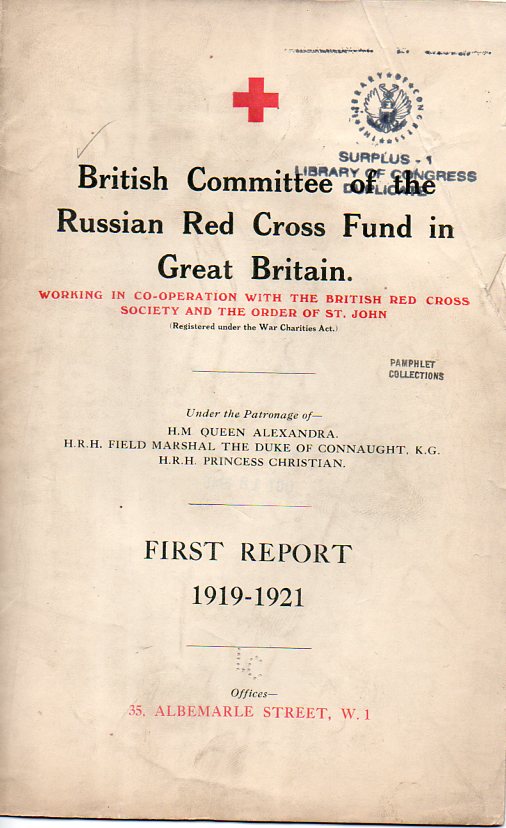
    This more modern 1921 reference to a concentration camp comes to us from British Committee of the Russian Red Cross Fund in Great Britain, First report, 1919-1921.  This was a tough time for the people of Russia–the Soviet Union–who were on the beginning of a mostly long-arc downward.  Just seven years beyond the beginning of World War I they were experiencing enormous “hardships” brought about by fighting the war, complicated by the 1917 Bolshevik revolution and the resulting civil wars.  Then of course there was the end of the war, and the beginning fo the war with Poland in 1919/1920.  And then another in a series of natural/mostly-unnatural famines in 1921.  This particular famine–killing about 5 million people in this year–was brought about mostly by the Revolution and prodrazvyorstka–the practice of forcing peasant farmers into selling whatever “surplus” food they produced to the state at the state’s prices, and also by being forced to supply food to the Red Army and to urban areas.  Add a drought to this mix, and it lead to absolute disaster for the peasantry

    Russian Red Cross Fund wasn’t yet concerned with the Povolzhye Famine, not yet, addressing the plight of the country’s response to six long hard years of war, civil war and war again–a poor country made poorer and more miserable, this fund made some attempt at relieving at least a small burden of this impossible situation within the country.  

    What caught my eye was in the discussion of providing relief to the camps of Russian refugee expatriates, the report detailing some of those in Cyprus, Estonia, Latvia and Finland.  And Poland.  The Polish camp, however, was different, and described the attempt to send relief to the 140,000 in “the Concentration Camps”, and then describing another of 110,000 “Russians who have been interned according to the Riga Peace Terms, and that the Poles are quite unable to do anything for them”.    (This pamphlet is available for purchase through our lbog bookstore.)                      

    The reference took me by surprise–I knew a tiny bit about the Russia/Poland War at this time but hadn’t realized the extent of it, nor the extent of the Russian refugees in the country nor the amount of soldiers (and their families) within the concentration camps.  These are not the extermination camps that would appear in Poland two decades later, but the conditions of the people in the camps led to the deaths of thousands.  

    Notes:

    “Concentration Camp”, from the Oxford English Dictionary:

    A camp in which large numbers of people, esp. political prisoners or members of persecuted minorities, are deliberately imprisoned in a relatively small area with inadequate facilities, sometimes to provide forced labour or to await mass execution.The term was first used during the Cuban war of independence (1895–8) to denote camps in which rural Cubans were interned by the Spanish military authorities, and was subsequently used of the camps instituted by Lord Kitchener during the Boer War (1899–1902). Concentration camp is now most strongly associated with the several hundred camps established by the Nazis in Germany and occupied Europe from 1933 to 1945, among the most infamous being Dachau, Belsen, and Auschwitz.

    1897   Orleans (Indiana) Progress 20 May   American citizens must not be starved or otherwise executed in Spanish concentration camps in Cuba.
    1901   Parl. Deb. 4th Ser. 90 180   The policy of placing the women and children confined in the concentration camps in South Africa, whose husbands and fathers are in the field, on reduced rations.
    1927   C. Chapman Hist. Cuban Republic iv. 81   All Cubans (men, women, and children) were ordered to move into garrisoned Spanish towns or concentration camps.
    1934   Ann. Reg. 1933 173   Germany..For dealing with the masses of prisoners special concentration camps were opened.
    1940   H. G. Wells Babes in Darkling Wood iii. i. 234   The White Paper of Nazi atrocities in the concentration camps and elsewhere.
    1941   Manch. Guardian Weekly 31 Jan. 82   They make raids on Jewish families and demand contributions, with the threat that refusal to comply will mean the concentration camp.
    1945   M. K. Doherty Let. 16 July in J. Cornell & R. L. Russell Lett. from Belsen (2000) iii. 36   Within a stone’s throw of the unutterable squalor and filth of theconcentration camp..were the magnificent quarters provided for units of the German Army.

    2. Kitchener (who full title without his bloody shoes on was Field Marshal The Rt. Hon. Sir Horatio Herbert Kitchener, 1st Earl Kitchener, KG, KP, GCB, OM, GCSI, GCMG, GCIE, ADC, PC) described his vision for ending the Second Boer War in the Parkenham’s history: his aim was to  “flush out guerrillas in a series of systematic drives, organized like a sporting shoot, with success defined in a weekly ‘bag’ of killed, captured and wounded, and to sweep the country bare of everything that could give sustenance to the guerrillas, including women and children…. It was the clearance of civilians—uprooting a whole nation—that would come to dominate the last phase of the war.”

    ·Posted by :

    ·in:


  • “Bohemian Workers in a Tradition of Misery”

    JF Ptak Science Books  Quick Post

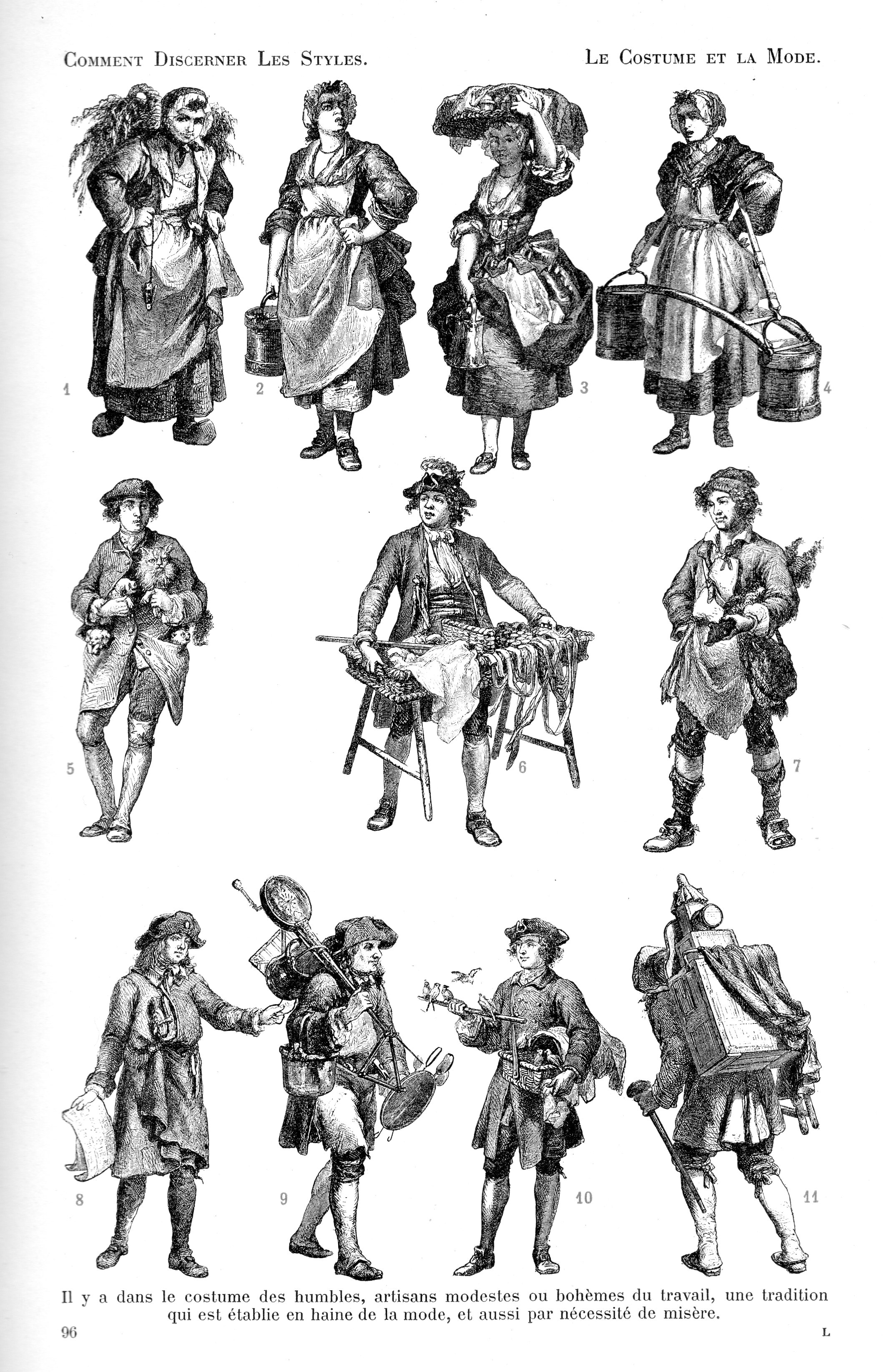
    This is a rather poetic approach to describing and naming street vendors during the reign of Louis XVI–of course these sorts of descriptions tend to be so in another language.  “La boheme  du travail une sorte de tradition de la misere, la defroque prend sur le dos de ces irreguliers du travailuine mem forme  et une meme coleur…” is how these images are described by L(eon) Roger-Miles’ in Comment Discerner les Styles du VIIIe au XIXe Siecle…etudes sur les formers et les Variations dans le Costume et la Mode, by L(eon) Roger-Miles, volume III, and published in Lyon around 1900.  Bohemian workers in a tradition of misery (or thereabouts) is how this is described–common people of a remedial ability, trying to make a penny.  Street vendors.  

    • Earlier in this blog I wrote on a more-fanciful description of professions in “The Dance of Work: Satires and Grotesques of the Professions, 1700”, here. 
    • Also, another interesting bit, “The Alphabet of Professions, 1850”, here


    And what these people are selling:  (1) oyster seller (with a stubby knife hanging from a string); (2) a kernel seller (which I think refers to corn); (3) a cream and milk seller; (4) water carrier; (5) petseller, with pockets filled with puppies and kittens; (6) ribbon seller, when ribbons were much more popular and played roles in courtship; (7) rabbit skin seller; (8) lottery seller; (9) I believe is a clothing cleaner, fabric cleaner, who would boil materials and such; (10) bird seller; and  (11) a magic lantern performer.  Perhaps the most interesting to me in this group is the last, a guy hauling around a magic lantern and slides, offering up optical performances to whatever audience he could muster.  

    Professions278

    ·Posted by :

    ·in:


  • “Has several marks of lashing, and has irons on her feet”: Dickens’ Check-List of an American Tragedy: Slavery, 1842

    JF Ptak Science Books   Post 2531

    Charles Dickens made a tour of the United States in the first half of 1841–the results of his visit were a critical appraisal of U.S. society and culture, and in general he didn’t like much of what he saw. He published his impressions and observations in 1842 in his American Notes, and it was in chapter 17 (the final chapter) that Dickens undertakes a  thunderingly blistering condemnation of the U.S. institution of slavery–he found it repugnant and inhuman, and a demonstration of a hypocritical American way of life.  There was plenty that he didn’t like about the U.S., but it was the slavery issue that really set him on fire.

    Here’s the beginning of the chapter:

    CHAPTER XVII
    SLAVERY

    “The upholders of slavery in America—of the atrocities of which system, I shall not write one word for which I have not had ample proof and warrant—may be divided into three great classes.”

    “The first, are those more moderate and rational owners of human cattle, who have come into the possession of them as so many coins in their trading capital, but who admit the frightful nature of the Institution in the abstract, and perceive the dangers to society with which it is fraught: dangers which however distant they may be, or howsoever tardy in their coming on, are as certain to fall upon its guilty head, as is the Day of Judgment.”

    “The second, consists of all those owners, breeders, users, buyers and sellers of slaves, who will, until the bloody chapter has a bloody end, own, breed, use, buy, and sell them at all hazards: who doggedly deny the horrors of the system in the teeth of such a mass of evidence as never was brought to bear on any other subject, and to which the experience of every day contributes its immense amount; who would at this or any other moment, gladly involve America in a war, civil or foreign, provided that it had for its sole end and object the assertion of their right to perpetuate slavery, and to whip and work and torture slaves, unquestioned by any human authority, and unassailed by any human power; who, when they speak of Freedom, mean the Freedom to oppress their kind, and to be savage, merciless, and cruel; and of whom every man on his own ground, in republican America, is a more exacting, and a sterner, and a less responsible despot than the Caliph Haroun Alraschid in his angry robe of scarlet.”

    “The third, and not the least numerous or influential, is composed of all that delicate gentility which cannot bear a superior, and cannot brook an equal; of that class whose Republicanism means, ‘I will not tolerate a man above me: and of those below, none must approach too near;’ whose pride, in a land where voluntary servitude is shunned as a disgrace, must be ministered to by slaves; and whose inalienable rights can only have their growth in negro wrongs.”

    Then comes this incredible listing of runaway/escaped slaves—in attempting to identify their “property” properly, the slave owners described the various injuries made to the slaves’ bodies and how they happen to have been bound before their flight to freedom. It is an unknowing self-indictment, each ad a testimony to cruelty and viciousness.

    “The following are a few specimens of the advertisements in the public papers.  It is only four years since the oldest among them appeared; and others of the same nature continue to be published every day, in shoals.

    ‘Ran away, Negress Caroline.  Had on a collar with one prong turned down.’

    ‘Ran away, a black woman, Betsy.  Had an iron bar on her right leg.’

    ‘Ran away, the negro Manuel.  Much marked with irons.’

    ‘Ran away, the negress Fanny.  Had on an iron band about her neck.’

    ·Posted by :

    ·in: