A Daily History of Holes, Dots, Lines, Science, History, Math, Physics, Art, the Unintentional Absurd, Architecture, Maps, Data Visualization, Blank and Missing Things, and so on. |1.6 million words, 7500 images, 4.9 million hits| Press & appearances in The Times, Le Figaro, Mensa, The Economist, The Guardian, Discovery News, Slate, Le Monde, Sci American Blogs, Le Pont, and many other places… 5000+ total posts since 2008.

Category: Social History

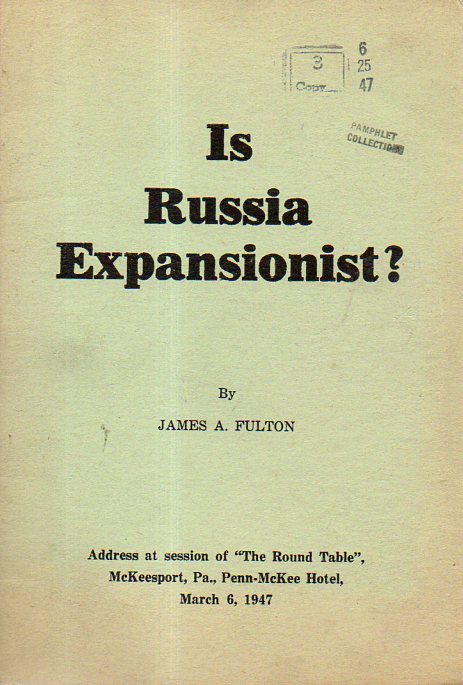
  • Unusual Q and Unexpected A (1947)

    JF Ptak Science Books   Quick Post

    NO

    Russia expansionist223

    James A.  Fulton (b. 1874) asks Is Russia Expansionist? Address at session [sic] of “the Round Table”, McKeesport, Pa and his answer is very much to his own liking: NO! No doubt self-published and then printed in 1947 Mr. Fulton asks his long-sentenced question in the first few pages and then answers it in the remaining text–his evidence is that Russia and its territories have “ups and downs” over the centuries, citing gains/losses in Turkey, Finland (somehow!), Poland (ditto!), Ukraine, and such.  It is a difficult argument to read–not doubt Mr. Fulton had his sympathizers, though in 1947 I doubt that he had many.  (The pamphlet is not “around”, and given everything going on in 1947 I don’t doubt its unpopularity–WorldCat/OCLC locates 3 copies.)


    ·Posted by :

    ·in:


  • Warsaw Uprising(s), 1943. And 1944.

    JF Ptak Science Books

    This is bound to be a great smoothing-out of a complex issue, but, well, that’s okay: I think that in spite of the simplification the result is the same. The bottom line of the Second Warsaw Uprising (August/September 1944) is that the Soviet Union allowed the Polish Home Army to fail, watching from its position across the Vistula as the Nazis and Poles slugged it out, both exhausting themselves, the Nazis ultimately defeating the Poles, eliminating most of the Soviet concern for the Polish military and government, allowing the Soviet Union to take the country over more completely when the time came a few months earlier.  It was the Soviet’s choice to see two enemies annihilate themselves to have more control over Poland and immediately turn it into a vassal state when it rolled into Warsaw in January, with 85% of the city destroyed and 600,000 of the city’s population  dead.

     Warsaw774

    With this in mind,  where was the Polish Home Army or the Americans or the Brits-or anyone–when the first Warsaw Uprising occurred? Absent.1 This battle–generally known as the Warsaw Ghetto Uprising–took place about three years after the Nazis established it as a means of control for the city’s 400,000 or so Jews. In the intermediary years hundreds of thousands of Jews had been “deported” (that is, sent to the concentration camps to be exterminated or worked to death), so that by the time of the Uprising only 60,000 people remained in the Ghetto.  And by this time there was no doubt in anyone’s mind who lived there (and perhaps too in Warsaw as a whole) what the euphemism of “deportation” actually meant.  The battle started off well for the home defence (the ZOB2) but, ultimately, with little access to resource and with nowhere to actually retreat or regroup in the few acres that remained of the original Ghetto, whoever was left in the Ghetto were either killed or captured by 16 May.  The German commander, SS Brigadefuhrer Jurgen Stroop reported on that day that “the former Jewish quarter in Warsaw is no longer in existence”:

       “Progress of large-scale operation on 16 May 1943, start 1000 hours.
       “ 180 Jews, bandits, and subhumans were destroyed. The former Jewish quarter of Warsaw is no longer in existence. The large-scale action was terminated at 2015 hours by blowing up the Warsaw Synagogue.
        Total number of Jews dealt with 56,065, including both Jews caught and Jews whose extermination can be proved. “

    Stroop was arrested and hanged in Poland, in Warsaw, in 1952.

    Warsaw775

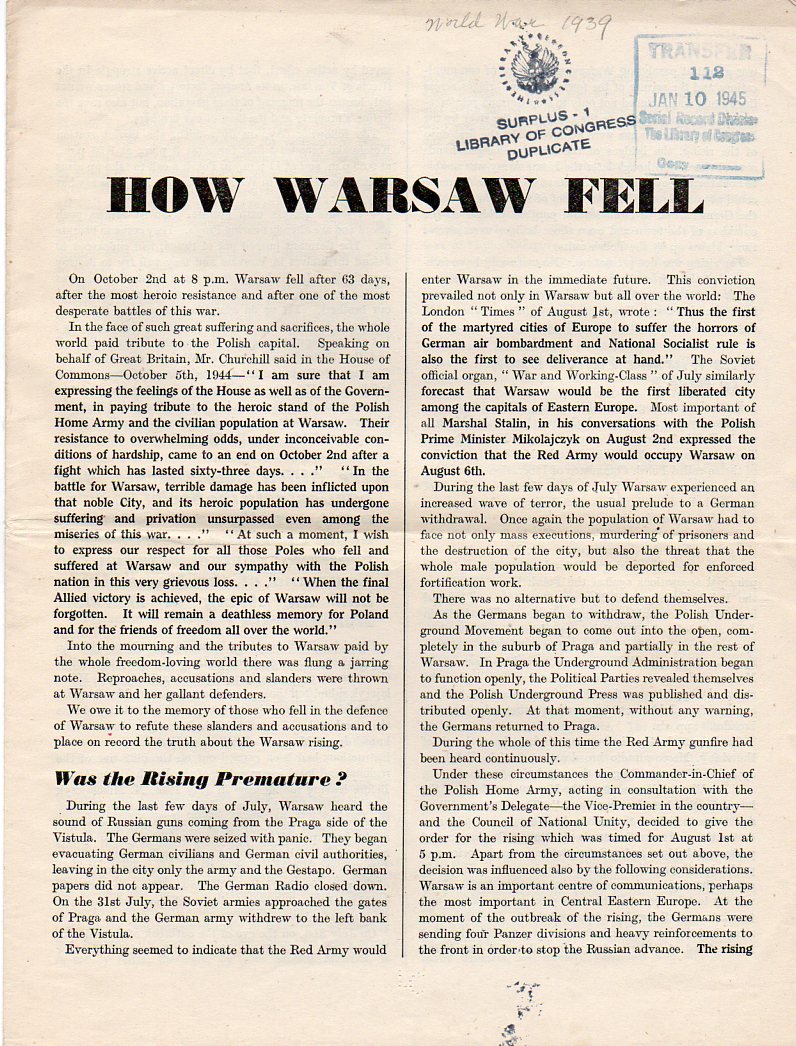
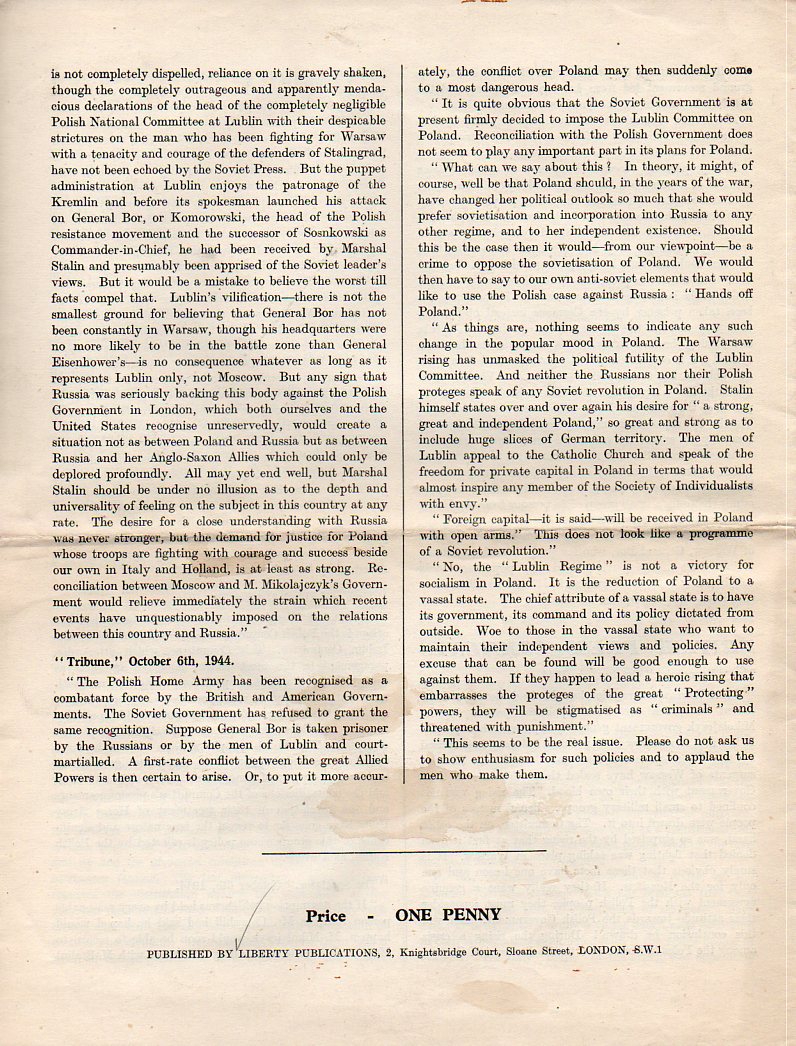
    So, this 6-page pamphlet, published by Liberty Publications in London at the end of 1944 (and received by the Library of Congress on 10 January 1945), detailed the misery of the non-recognition of the second Warsaw Uprising and the reason(s) for it. It details the travesty, the disinterest, and the political accomplishment of the Soviet Union gained by its criminal inaction. There is of course no mention whatsoever of the first Warsaw Uprising.  Selfish inaction breeds itself, consumes others and then–like yeast–consumes itself.

    Notes

    1. “WHEN THE revolt in the ghetto broke out in April 1943, all of Warsaw was aware of the fighting. The news of the revolt was transmitted to the Allied capitals by the Polish underground, but no help came for the Jewish fighters – not from the US or England, nor from the Soviet Union; not even a sign of recognition or an acknowledgement by the Allies of the battle raging in the ghetto. The Jewish fighters in the Warsaw Ghetto were unknown soldiers, isolated from the world. Only two years later, after the end of the war, did their valiant battle receive universal recognition.”–“Who Defended The Warsaw Ghetto?”, by Moshe Arens, in the Jerusalem Post, 29 April, 2003.

    2.  The ZOB  was the Zydowska Organizacja Bojowa, led by Mordechai Anielewicz, and ZZW (Zidowski Zwiazek Woskowy) led by Pawel Frenkel.

    ·Posted by :

    ·in:

    —

  • The King and the Swastika (1941)

    JF Ptak Science Books  Post 2607
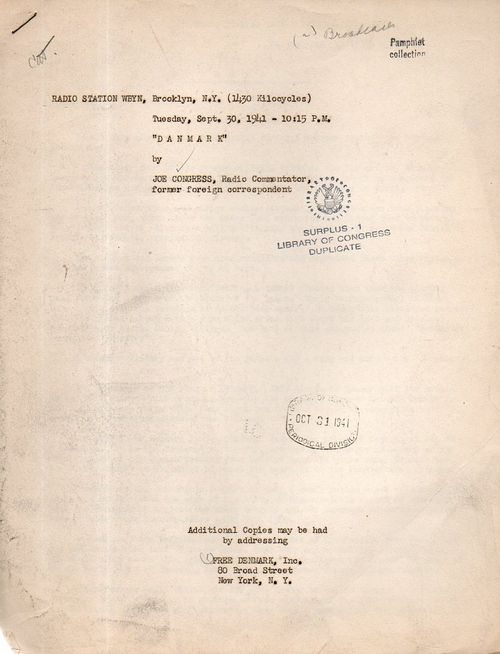
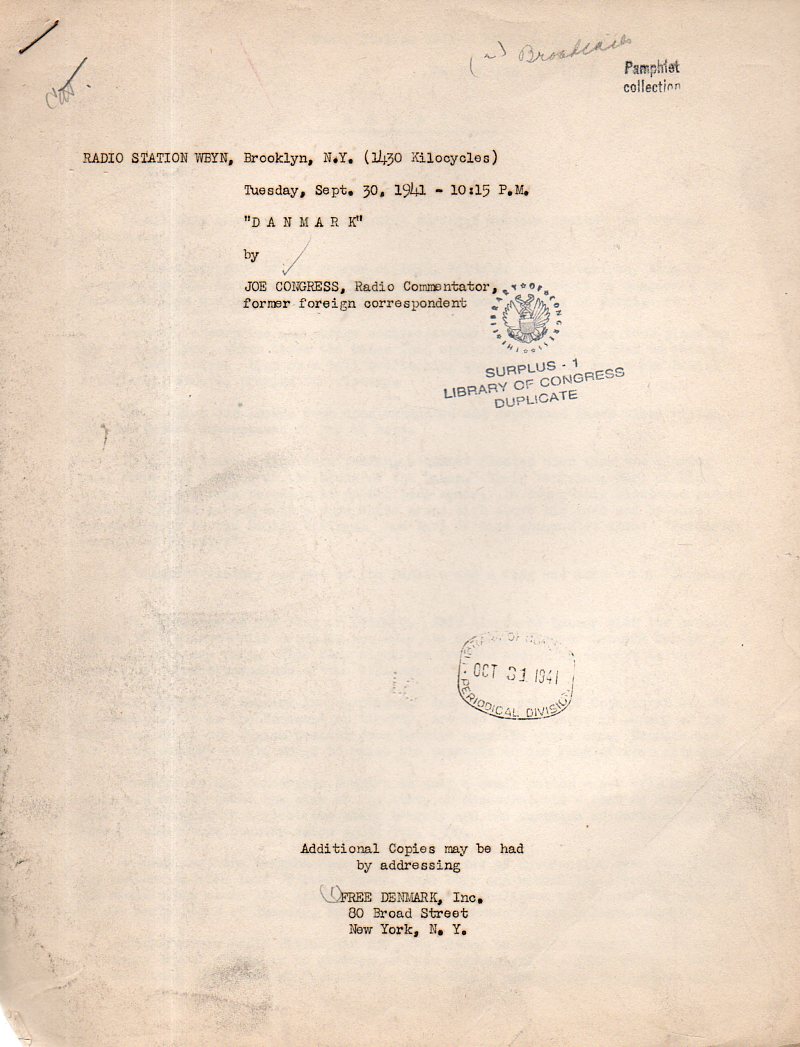
    Denmark 1941 164This is certainly an early telling of this story, now so often repeated–it occurs in the address “Danmark”, given by Joe Congress on the radio station WBYN (1430), Brooklyn, on September 30, 1941, at 10:15 p.m. The address came about a year and a half after the occupation of Denmark by Germany (April 9, 1940)–there was an mortifying existence between the Nazis and the Danes from that point out to the end of the war.  It is in this broadcast where Congress tells the story of the King of Denmark and the Nazi flag.

    The king, Christian X (1870-1947), observed a Nazi flag flying from a public building in Copenhagen, which was “a rank violation of the terms which Adolf Hitler imposed on Denmark”. The King, riding on a horse, reigned it in, and addressed a German officer standing by the building with the flag:


    “Take it down !” the King ordered a German officer in front of the building.

    “Orders from Berlin,” replied the officer.

    “The flag must be removed before 12 o’clock; otherwise I will send a soldier to do it,” the monarch declared.

    “The soldier will be shot,” warned the Nazi officer.

    “I am the soldier!” said the King.

    The Swastika came down.

    It is  a terrific story, and Congress heaps the praise on the king and on the Danes in general–but, on the other hand, he laments that there’s little of this behavior going on presently in Denmark, and talks about the neutering of the police and branches of government.  He does however talk about the growth of patriotic songs and poetry, which has become a new resistance weapon for the Danes.  

    Congress asks, “do not the Danes sing today, as they did years ago:

    Fill up holes of ignorance, and bury

    narrow selfishness beneath the sod. 

    Of the meek and soft evoke a people

    That will bend its will alone to God.”

    Evidently they did, because Congress reports that in the growing community sings of Copenhagen that hundreds of thousands of people were turning out to sing in the squares and parks–10,000 stood in Faelldepark. It is a patriotic weapon “that the Nazis cannot match”. 

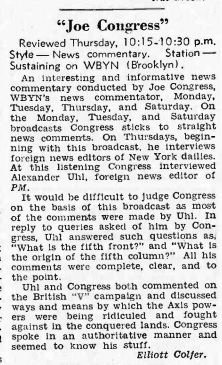
    I looked up Mr. Congress and found this review of his broadcast, in Radio-News, for Auguast 9, 1941. It is remarkable in the small-world category because in this shrt review there is mentioned an interview with Alexander Uhl, foreign editor for PM newspaper, and someone who works and papers are here in  my store.  
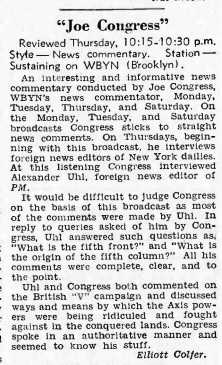
    Denmark Joe Congress Radio News

    Source: Radio Station WBYN, Brooklyn, NY (1430 Kilocycles). “Danmark”, by Joe Congress, September 30, 1941. Transcript printed by Free Denmark, Inc., 80 Broad Street, NYC.  My copy was received by the Library of Congress less than a month later. 
    ·Posted by :

    ·in:

    —

  • Schooling a Racist California Senator, 1920

    JF Ptak Science Books  Quick Post

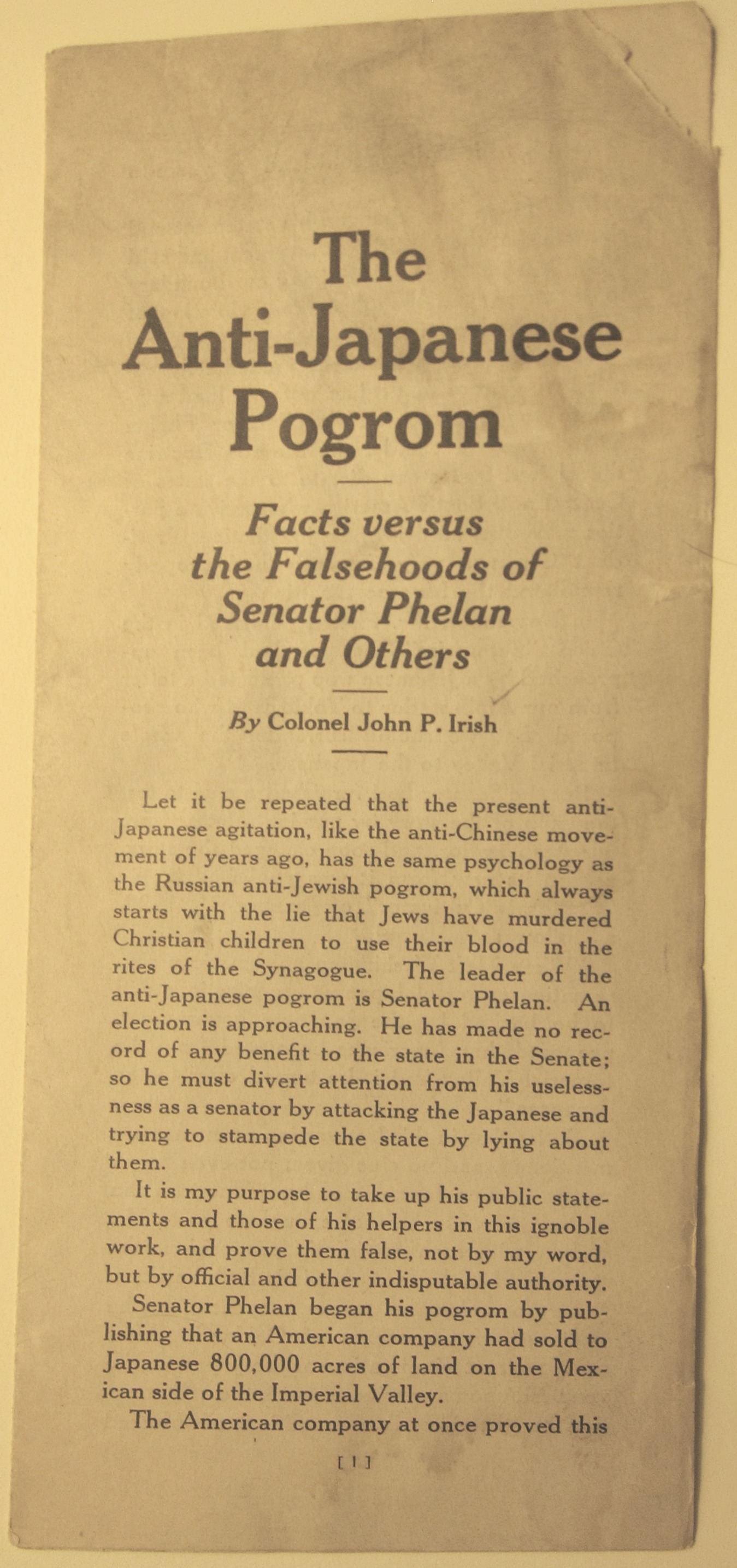
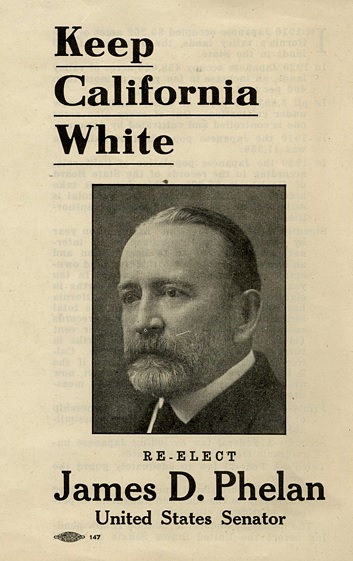
    The title of this little pamphlet is provocative–the content is even more so, and the description of the pogrom is more so yet.  The author, Col. John P. Irish (1843-1923), was a Iowan transplanted to California, and a fire-breather, an orator and agitator for immigration, rights for the Japanese, votes for women, and other causes. The “Senator Phelan here is  James D. Phelan (1864-1930), who was mayor of San Francisco 1897-1902 and the Senator 1915-1921, a racist used “Keep California White” as a campaign slogan for his lost reelection bid in 1920.  

    Japanese pogrom

    Full text here: https://archive.org/details/antijapanesepogr00iris

    This was evidently republished (at least in part)  on August 30, 1920, in the L.A. Times under the unlikely title of “Col Irish on the Japs”.  

    Japanese Pogrom  Phelan poster

    [Source:  University of California, Irvine:  http://www.lib.uci.edu/sites/all/exhibits/immigrant/index.php?page=section_1]

    Irish writes some very strong stuff, saying that the present anti-Japanese movement “has the same psychology as the Russian anti-Jewish pogrom” and that its leader was Senator Phelan. Irish states that Phelan “has no record of any benefit to the state in the Senate” and that he must “divert attention from his uselessness as a senator by backing the Japanese and trying to stampede the state by lying about them”. Irish then spends the rest of his short pamphlet refuting the anti-Japanese program of Phelan.  

    Good on Col. John P.Irish.  

    ·Posted by :

    ·in:


  • Join the Young Communist League of Great Britain! (1937)

    JF Ptak Science Books  Quick Post

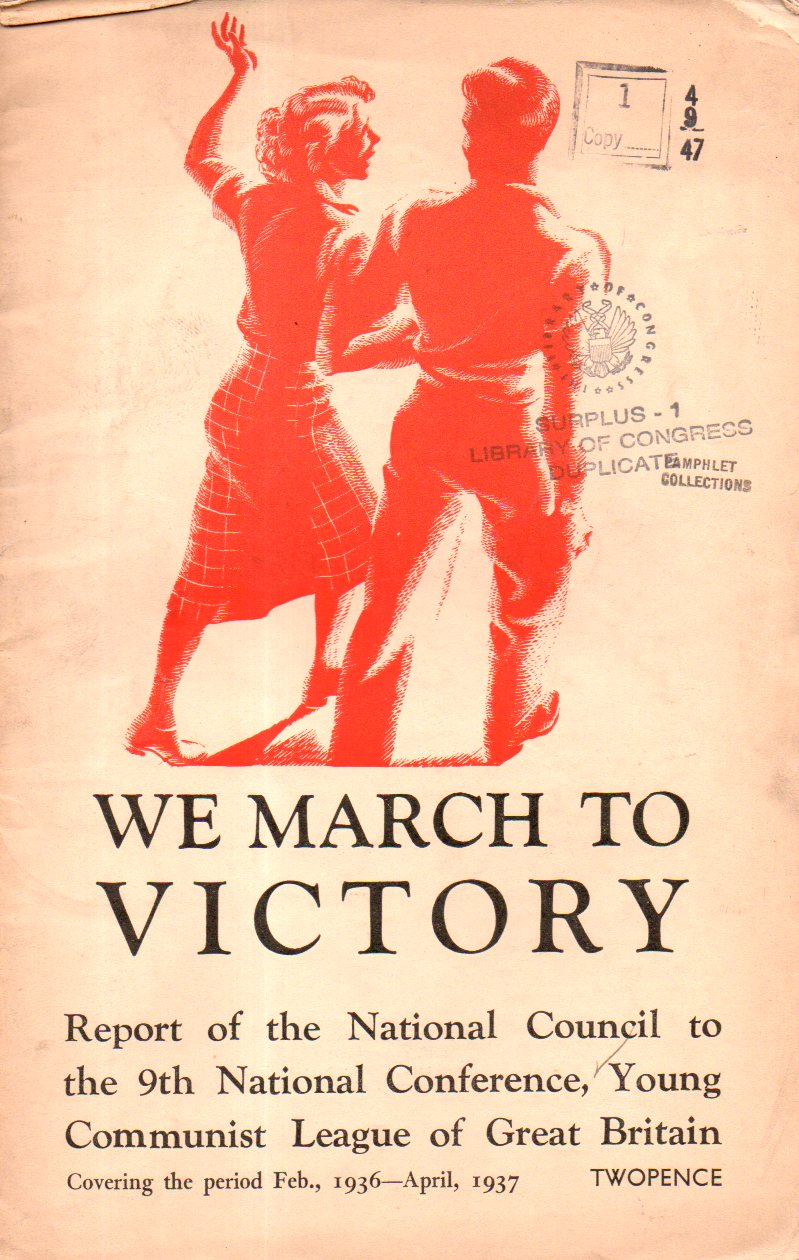
    Oh to be young and free and red! This pamphlet told of the joys and works of the Young Communist League of Britain, a youth version of the Communist Party of Britain.  It was launched in 1922 and somehow survived until 1988.  This pamphlet was published in 1937, which is probably the low point for the Stalinst Soviet Union for the decade of the ‘thirties, which was very low, and enforced-famine-stricken, and murderous, as just about any in the history of worst decades.  There’s a lot in the pamphlet about fighting the Fascists in Spain, and not much more. 

    Communist march to victory142


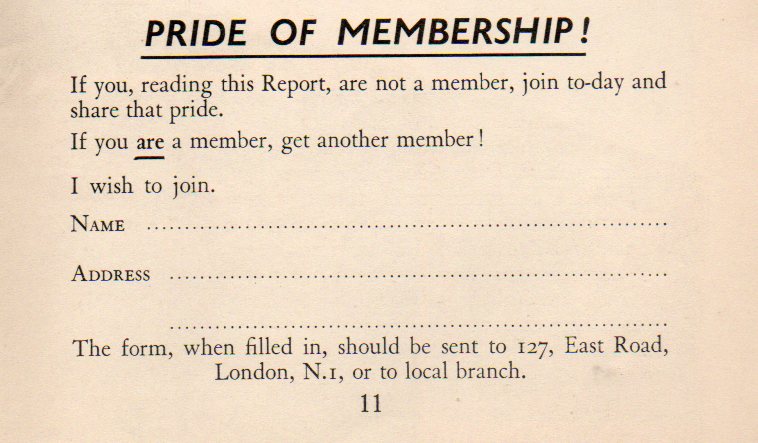
    Become a member today! Be aware to fill in the form before mailing it out! (It looks like today that address is a two-storey apartment building.) 

    Communist march to victory143


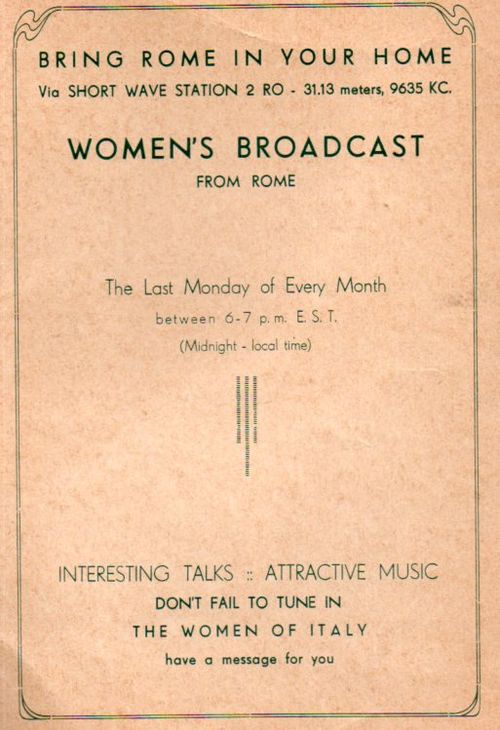
  • “Bring Rome in Your Home”–Fascist Women of Italy Radio Broadcasts, 1937

    JF Ptak Science Books   Post 2603

    Women of facism103

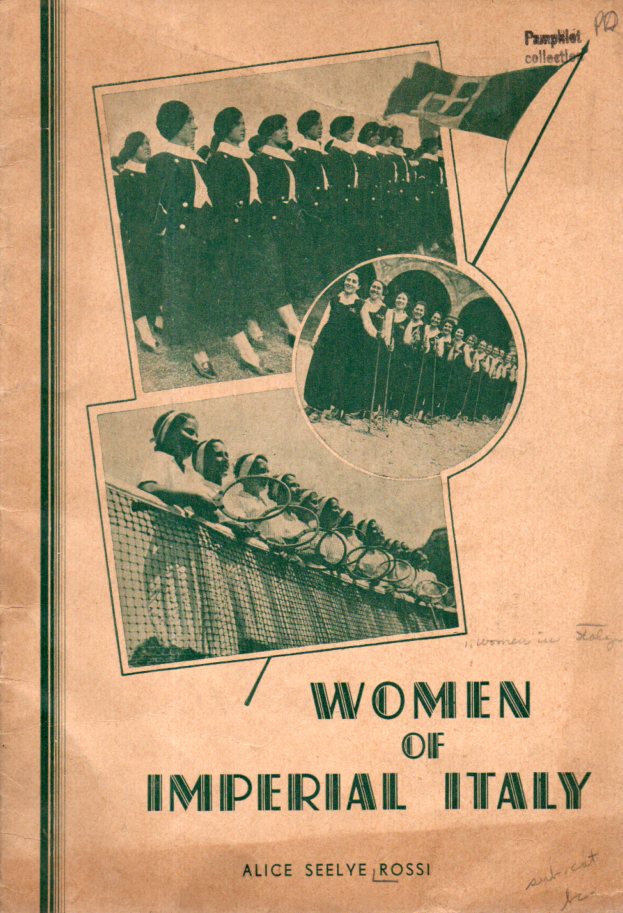
    [Source: Women of Imperial Italy, by Alice Seelye Rossi; printed in Rome, 1937.]

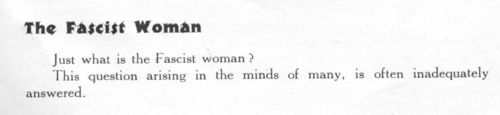
    Not anymore. Probably not so much in 1937, though I am sure that the picture of the “fascist” in the “fascist Woman” was prettier and rosier than what people would come to know by 1942.  In 1937, when this pamphlet was published, the “women” were broadcasting far and wide–one aspect of radio propaganda from the Fascists in Italy, a hearts-and-minds attempt at a part of the coercion of Italia imperiale that occupied the years 1935 until the end of the war. By 1937 Mussolini’s National Fascist Party (in power since 1922) had extended itself by occupying Libya and by invading Ethiopia; Albania, Greece, and Yugoslavia would come between 1939-1941, as would France, when Italy entered the war in 1940 and entered into the country at the tail-end of the German invasion. So the broadcast heard here in 1937 was the beginning of Italy looking for the “Fourth Shore”, and deep into Mussolini’s Fascist state. (Ezra Pound would also do his level best to look the part of traitor that he was, lobbying the Italians for years before being allowed to get on the air to broadcast to the Allies on his misunderstood and inscrutable economics, vicious and virulent anti-Semitism (offhandedly addressing the U.S. president as “Franklin Delano Jewfeld/Jewsevelt”), and general attempts to tell the U.S. population to not support the war effort against the Fascists and that instead they should be down on their knees praising Mussolini, who he saw as another Thomas Jefferson. And so on.)  

    I’ve shared the few pages in this brief pamphlet on the Fascist Woman as it appears in the pamphlet. For the great majority of people living in the U.S., Europe, Great Britain,  Australia, New Zealand, Canada, and many other places, the idea of the “fascist” would change dramatically in about a year, and then spin its grinding way downward until the start of the war in 1939. 


    Women of facism102


    Women of facism101


    ·Posted by :

    ·in:

    — —

  • The History of Being Horizontal–on Lying Down and Being Flat

    JF Ptak Science Books    (Expanding an earlier effort, Post 1870)

    • See also an earlier post to this blog relatign to this topic: Post-Renaissance People-in-Bed-in-Title-Pages,  https://historyofideasblog.com/thesciencebookstore/2012/08/post-renaissance-people-in-bed-in-title-pages.html

    0--blog---Nov 24--skinny114


    I don’t have much to comment on in these images, just that they are striking and came to me in short order, and that they are all pretty narrow things.  They could fall easily into aSkinny category, or perhaps better still, they might slide nicely into the prototype for a series of posts on The History of Lying Down.  Or perhaps a combination of the two, or one being a sub-category of the other.  Certainly a history of humans lying down would be fairly massive, but scaling it down to late 19th century images of skinny and lying down might narrow the field a bit. 

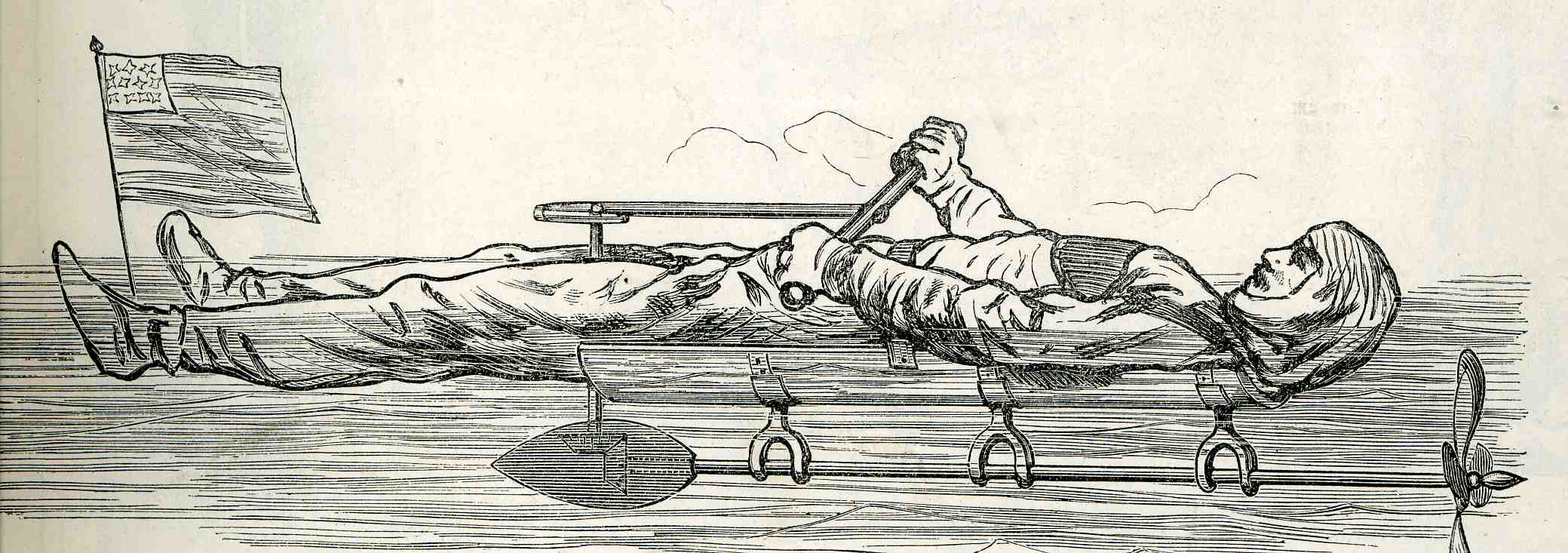
    The first, (above),  is from Illustrirte Zeitung (Leipzig), and published in 1878; it depicts an American effort at simplified swimming, though sometimes when you simplify an already-simple thing, the results are fairly complex.  I haven’t much of an idea about how this would make sense, seeing that the body’s strongest muscles are not being used at all; further, judging by the flag, this guy is moving feet-first, and the whole procedure, despite body suit, look as though it would be terrifically cumbersome and bloaty.  And with the geartrain, plus the weight of the driveshaft and propeller, I don’t know how anyone would keep afloat.  Or how someone would keep their neck in that position for any period of time. In the world of Good Ideas, this would be an Anti-Good Idea. 

    0--blog---Nov 24--skinny116

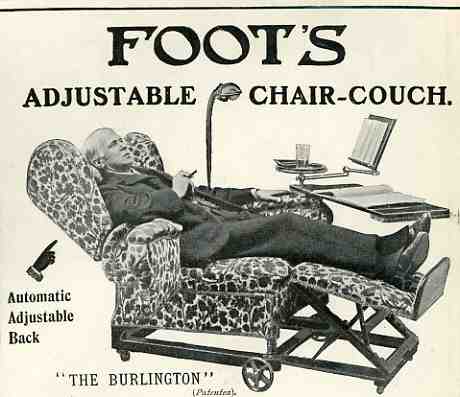
    Foot’s Adjustable Chair Couch, which I found in The Illustrated London News for September 1902, was remarkable for its cushion-y formlessness, accepting the reader to itself like a body with a goiter.  There’s just something terribly wrong with it, reminding me somehow of undeserved and needlessly- rewarded comfort–too much comfort foully a perfectly reasonable invention like The Chair. 

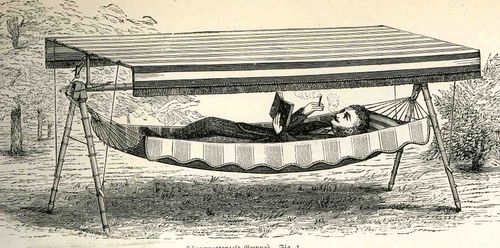
    Next is this skinny, low, light semi-automated shaded hammock; little, narrow, and maybe comfortable to fit a 120-pound person.  This appeared in the Illustrierte Zeitung, again, for 1892.

    0--blog---Nov 24--skinny115


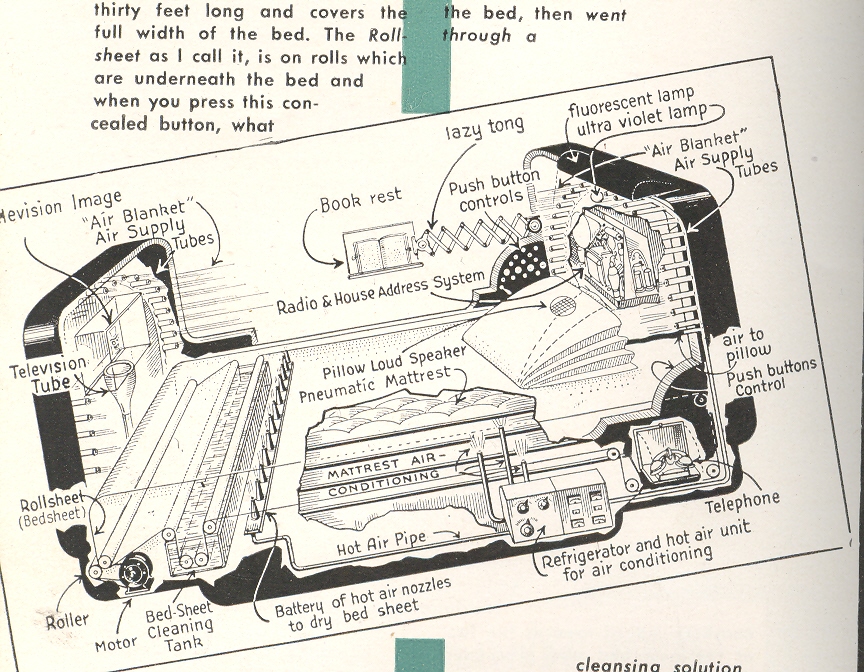
    And for the 20th century contribution, there is this overflowing fabulosity from Hugo Gernsback–this is the only-tongue-in-check effort amongst these entries.  The “electronic bed” appeared in a small 1945 pamphlet called Bizarre, and it is just that, and is certainly not hiding behind any lesser or ambiguous title.  It seems to be a parody of  small magazines and their advertising sponsors,  and copyrighted by the very far-reaching Gernsback, who in 1926 started the first magazine dedicated to the genre of science fiction (Amazing Stories) and for whom the World Science Fiction Society’s annual award for Science Fiction Achievement is named (the “Hugo”).  Gernsback evidently had a taste for cheeky parody, producing similar magazines to this called Quip, Forecast, Jolliers, Tame and Newspeep.

    Bed electronic


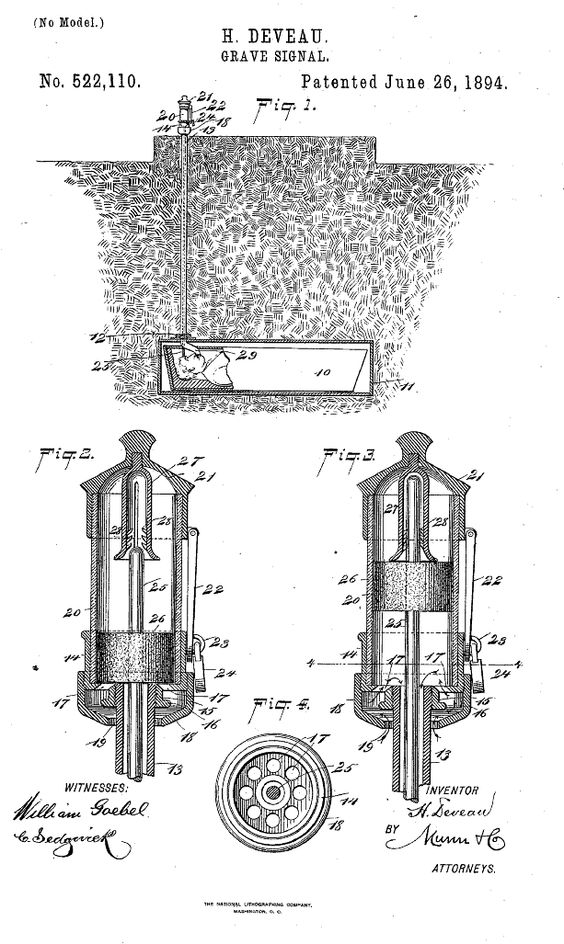
    There is good lying down, and there is “bad”–that is, the lying down that we don’t want to do, the lying down that we try all of our lives to postpone; that is, the lying down for the Big Sleep.  Since it was difficult to absolutely diagnose death in some cases before the 1950’s, there were some people who went to extreme measures to ensure that if they were buried prematurely that they would have some recourse int eh situation–for example,with the patent granted below, a buried person could activate a signal from the grave with very minor movements of the mouth, thus hopefully alerting some passerby to the fact that the dead isn’t:

    Bed coffin signal

    There are endless varieties of lying down–these are just five examples. The world is full of possibilities that are good, bad, and indifferent. Some are very bad (like the restraint beds for the institutionalized insane in the 19th century) and near-bad (the sleeping accommodations of 18th century sailors), and of course the fantastic Renaissance beds of the rich and famous, and so on.  


  • Myopia and Disease of “America First!”

    JF Ptak Science Books   Post 2598

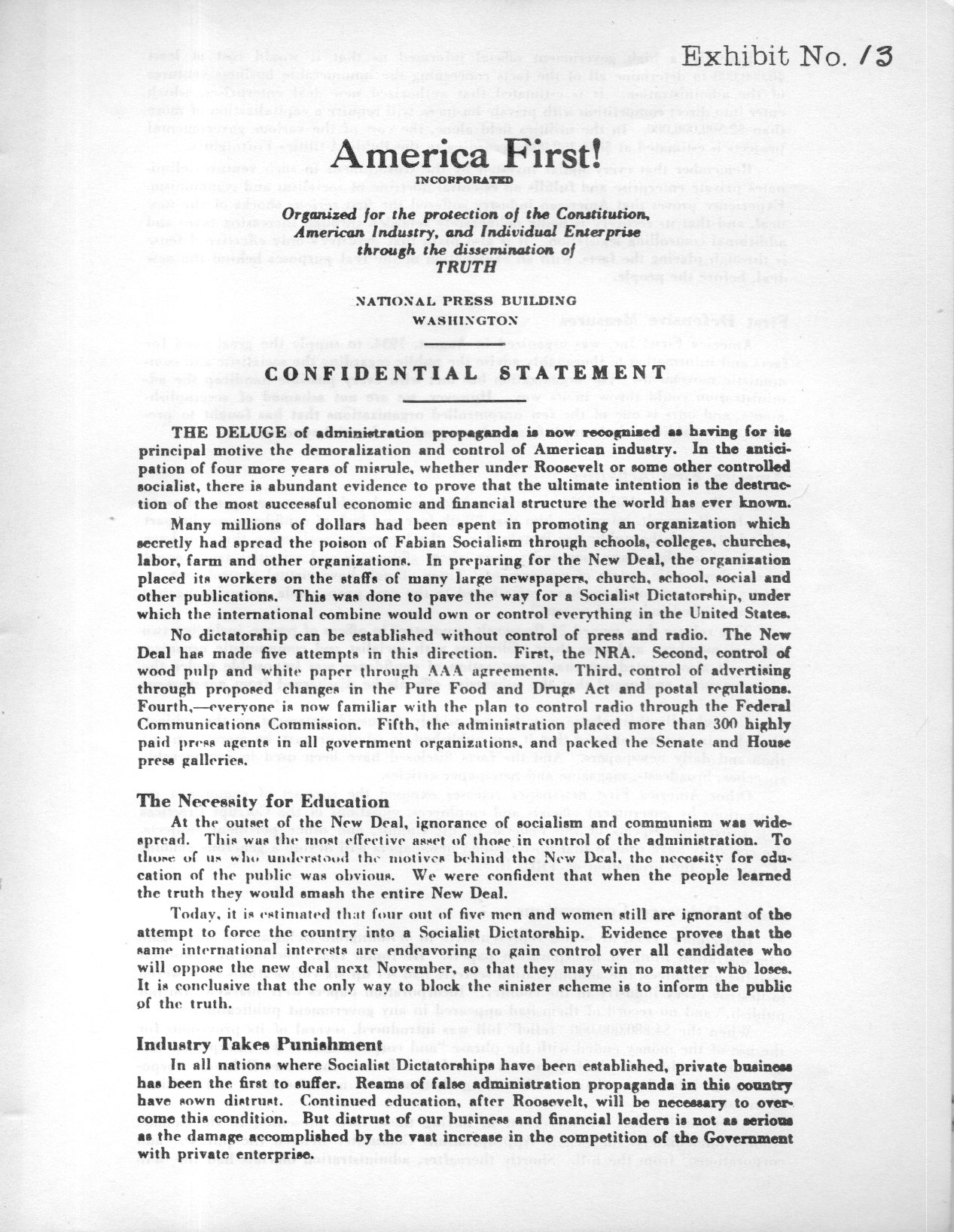
    America first one046This document, America First!…Confidential Statement, is a statement on this ostensibly-patriotic but actually loathsome and bilious hate organization–just goes to show that simply using “America” and exclamation marks does not make a patriotic organization.  If you chose to read the document you’ll see the a bit of the history of the organization, which was founded in 1934.  It was pretty much over by 1938 though there were some continued publications past the beginning of WWII. True was arrested in July 1942 on sedition charges, which was more or less the end of the organization and then, after a few years, the end of True himself. He was a vicious opponent of President Franklin Roosevelt, and an absolutely disgusting anti-Semite.

    In this piece, seen at left and below and reproduced in full, True attacks Roosevelt as a Communist/Socialist controlled by exterior forces bent on destroying the U.S. economic system. There was no appearance of his hatred of the Jews in this document, though that came in other venues, not the least of which was looking into Roosevelt’s “Jewish ancestry”. (This ideas was used by other people as well, as with the traitorous Ezra Pound when he made his racist/anti-Semitic radio broadcasts from Italy during the war, denouncing “Franklin Delano Jewsevelt” in addition to much more.)

    In the first two paragraphs alone there was a deluge of logical blasphemy such as is difficult to imagine.  For example, the principal of the “deluge of administrative propaganda” was no less than the “demoralization and control of American industry”, led by Roosevelt as a “controlled socialist” whose “ultimate intention is the destruction of the most successful economic and financial structure the world has ever known”. Roosevelt was intent on spreading the “poison” of Fabian socialism, seeding administrative operatives in newspapers, schools, and industry, to “pave the way for Socialist Dictatorship, under which the international combine would own or control everything in the United States”. This was to be done by FDR’s creation of agencies to control access to information: the NRA, control of wood pulp industry, control advertising via the Pure Food and Drug Act, controlling radio via the FCC, and of course implanting secret agent reporters in news agencies.  

    And so on and on this document drags its reader–even though it is only four pages long, it makes my eyes and brain feel as though it is forty.  

    True would be dead by 1946 (buried in an unmarked grave in the beautiful Oak Hill Cemetery in Georgetown D.C., home to some magnificent Tulip Poplars), two years after his trial ended in a mistrial due to the death of the judge. (It is possible that this document was an exhibit in the trial.) It turns out that America First! was replaced by a friend of the organization, two-star general George van Horn Moseley, who offered up his own fanatical and vicious “Americans for Constitutional Action”, a vomitous organization hell bent on genetic and ethnic cleansing to rid the U.S. of immigrants and the Jews (who Moseley described as a “syphilis”).  

    I bring this up now because of various noises I hear in the presidential campaigns which are leveraging fear and distrust and hate more so than in any campaign I have seen in my lifetime. The language may be different, but the sentiments are very closely related.  


    ·Posted by :

    ·in:

    —

  • Horse Stall Internment “Camps”, 1916

    JF Ptak Science Books    Post 2594

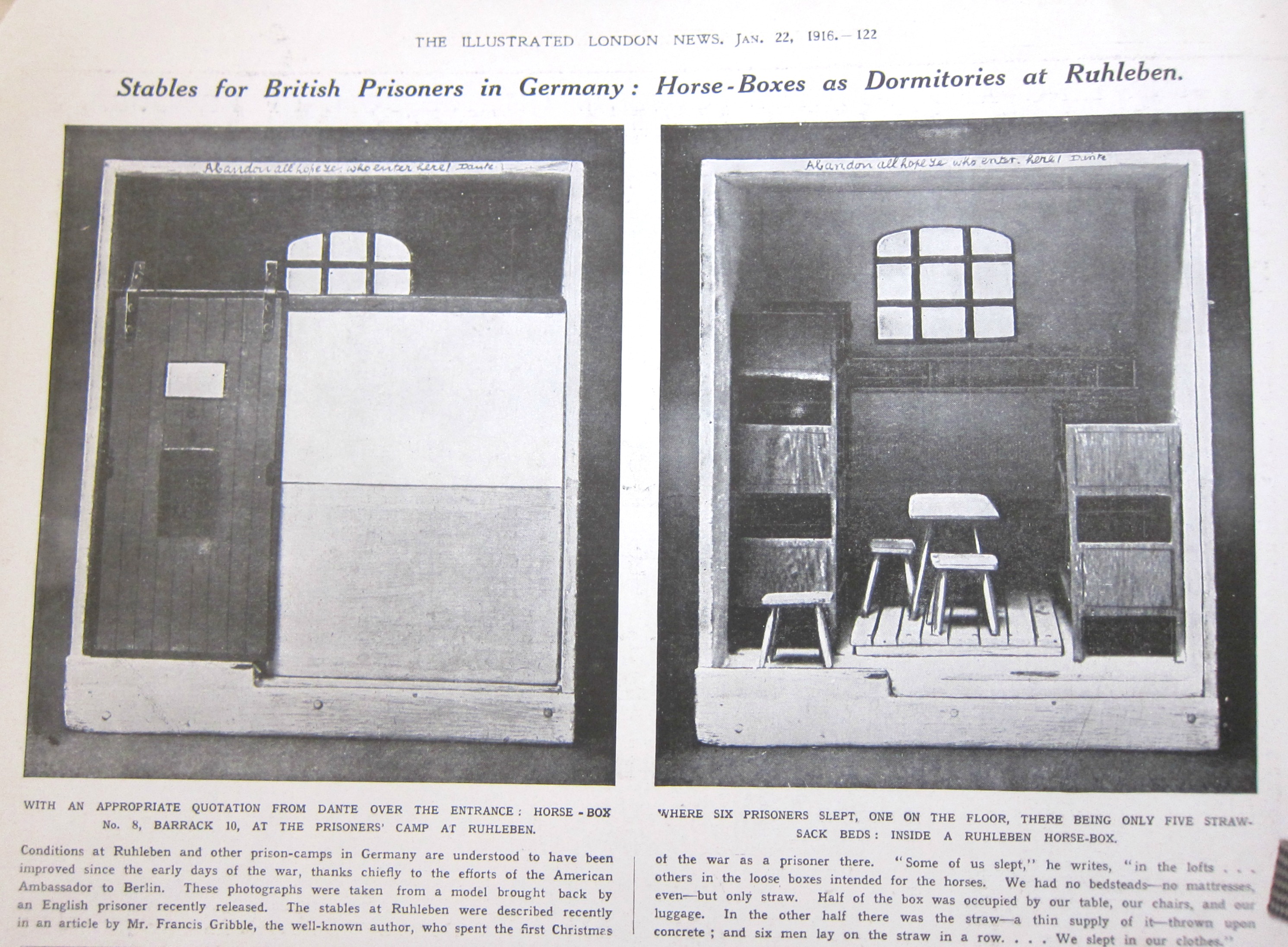
    Internment Camps POW

    A year and a half into WWI there appeared in the Illustrated London News1 these two pictures of a an internment camp in which British POWs were held. The photos are of a wooden model made by a former internee, Francis Gribble, who also wrote an account of the time he spent there2. The “dormitories” at the German city of Ruhleben had previously been horse stalls, 6’x8′ enclosures which slept and kept five or six soldiers. I include info on Gribble below, as well as a link for the full text of Gribble’s account.

    It seems as though horse stalls were a common convert for concentration and internment camps of one form or another, including here in the U.S. when 120,000 Japanese were rounded up, shipped off, and jailed during WWII. One of the first stops for the “internees” was Tanofran3 race track in San Bruno, San Francisco, California, where Japanese immigrants and Japanese-American U.S. citizens alike were kept in horse stalls and barracks before being shipped off to more permanent facilities out in the middle of nowhere.   

    There’s something about the “race” in “racetrack” that seems very peculiarly ironic.


    ·Posted by :

    ·in:

    —

  • A Grisly Visit With a Contemporary Account of Jack the Ripper, October 1888

    JF Ptak Science Books  Quick Post

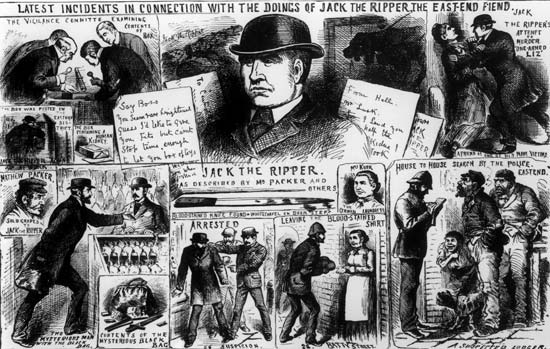
    “LATEST INCIDENTS IN CONNECTION WITH THE DOINGS OF JACK THE RIPPER THE EAST-END FIEND.”

    Ripper online

    [Image source via Victorian Contexts: http://victoriancontexts.pbworks.com/w/page/47425374/The%20Whitechapel%20murders]

    I am pretty certain that I haven’t made a single post (of 4,500 or so) on an odious/horrendous matter for the sake of it odiousness–excepting, I think, this post on Jack the Ripper. I won’t bother with the history of the madman as I am sure everyone is well acquainted with pieces of it.  I bumped into it using a new online find, a paywall site, which is very useful for on-the-spot usage though not so when it comes to reproducing one of its images–so, I needed to find a friendly place to share the image from and found one in Victorian Contexts (see link above). The first magazine to pop up in this new browse was The Illustrated Police News  (London, England), and the first thing I searched for was The Ripper, and so came this issue for Saturday, October 27, 1888; Issue 1289. It just so happens that this issue dealt mainly with the infamous Lusk Kidney, which was a human kidney evidently sent by Jack to the home of  George Akin Lusk, (“a builder who resided at 1 Alderney Road, Mile End. Since his appointment as head of the Whitechapel (or Mile End) Vigilance Committee”1), and which was a cause of enormous excitement. In the fine tradition of other illustrated newspapers/journals, The Police News told much of hte highlights of the story in pictures, right on the front page. Perhaps this was to entice people into buying the paper, and perhaps it was a very elementary entry point for part of the readership that had limited reading ability–I don’t know. But the front page is certainly sensational, whatever the  motivation. 

    The contents of the letter accompanying the mailed box of the human kidney:

    ·Posted by :

    ·in: