A Daily History of Holes, Dots, Lines, Science, History, Math, Physics, Art, the Unintentional Absurd, Architecture, Maps, Data Visualization, Blank and Missing Things, and so on. |1.6 million words, 7500 images, 4.9 million hits| Press & appearances in The Times, Le Figaro, Mensa, The Economist, The Guardian, Discovery News, Slate, Le Monde, Sci American Blogs, Le Pont, and many other places… 5000+ total posts since 2008.

Category: Information, Quantitative Display of

  • The Phonic Graphing Phonograph of Fleeming Jenkin, 1878

    JF Ptak Science Books   Post 2331

    Fleeming Jenkin was a very considerable man with a huge range of interests and talents, along the lines of a William Thomson/Stanley Jevons.  His main deal though and the place where he earned his keep was in engineering, and here he was virtuosic.  I call him up now because of an article that appeared in the 1878 issue of Nature magazine, entitled “The Phonograph”.  The instrument was invented by Edison in 1877 (and patented in February 1878)–it was an extraordinary thing with great promise, though not so much in the ways we think of today. In any event, Jenkin was able to produce one for himself–to reverse engineer it–from descriptions he read of the machine in the newspapers, which is a big accomplishment.  

    What he set to do with it was impressive–he began to study the components of speech. And not just by audio comparison–he devised a method to make transverse sections of the recording wax so that they could be magnified and allow him to study the visual differentiations made by speech in the medium.  Now that is very good–making the phonograph into a phonic graphing machine.  

    Here’s the article, written by Alexander J. Ellis, as it appeared in the May 9, 1878 issue of Nature:  


  • The Arms in the Rings of Saturn

    JF Ptak Science Books    Quick Post

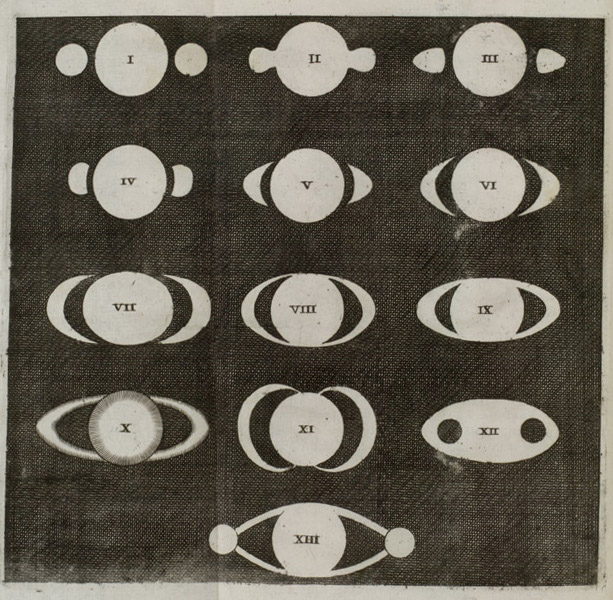
    Huyghens Saturn 4 finished

    [Image Source Smithsonian Institution, Dibner Library, here: http://www.sil.si.edu/DigitalCollections/HST/Huygens/huygens-ill32.htm]

    Christian Huygens (1629-1695) worked across many fields, including astronomy, biology, math and physics, and was extraordinarily productive, making numerous contributions in the physical and theoretical areas, as well as being a prolific author and correspondent. 

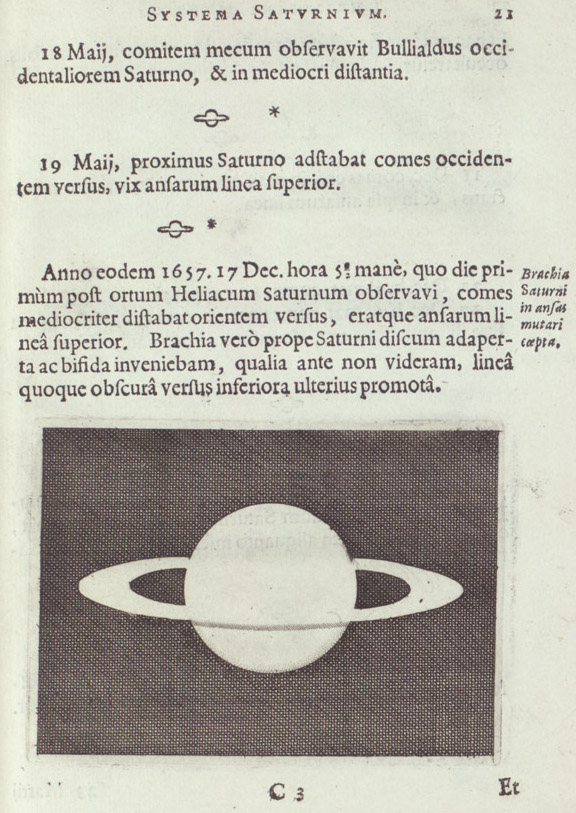
    These images were published in his Systema Saturium…, published in the Hague in 16591, which was his fundamental work on the planet and in which he announces the discovery of its rings–this was a very considerable element, because the “arms” encompassing the planet had been a mystery to a generation of astronomers, from Galileo onward. The roman numerals relate the belief in the structure of the rings according to observer, so I was made by Galileo in 1610,  II by Scheiner, 1614; III by Riccioli,1641-1643. IV-VII by Hevelius; VIII and IX by Riccioli, 1648-1650; X by Divini, 1646-1648. XI  by Fontana in 1636;  XII  by Gassendi in 1646, and  XIII by Fontana and others from 1644-1645. (This list identifying the rings of Saturn over time come from notes I had taken and misplaced, though the original I am sure comes from published work by Ronald Brashear, head of Special Collections at the Smithsonian.)

     Here’s Huygen’s own beautiful and modern image of the planet, from his page 21 of his work above:

    Huyghens Saturn 3

    [Source Smithsonian Institution, Dibner Library, here: http://www.sil.si.edu/DigitalCollections/HST/Huygens/huygens-ill32.htm]

    And then, here, a more modern image courtesy of the Cassini-Huygens spacecraft;

    Saturn cassini[Source: Jet Propulsion Laboratory, here.]

    Notes:

    1. From the title page:  Christiani Hvgenii … Systema Satvrnivm; sive, De causis mirandorum Satvrni phænomenôn, et comite ejus planeta nova. Hagæ-Comitis, ex typographia A. Vlacq, (1659).


  • A Good Example of a Bad Map, 1867

    JF Ptak Science Books  Post 2327

    When I had an open shop I almost always maintained an antique map/print part in the front,airy, high-ceiling space and had my hardcore science stock in the back. (People who were after that sort of book/info had tunnel vision, generally, so location hardly mattered, so long as the books were there, a trait and characteristic I highly admired.) Generally speaking this was not true with the map/print buyers, or at least the occasional purchaser, so they had “pretty” dedicated to their comfort.  

    Over the years I heard many thing from people trying to noodle out the reasons for old maps, and all of that was fine, and even the not-self-flattery comments flowed by like a lazy stream with a snapping turtle in it.  The one comment I did not like and which I always corrected had to do with how “bad” a map of North America (or wherever) was when it was drawn in say 1783.  Long story short, the maps were spectacular given the era and the technical capability and the amount of information on hand. (Also if people were told they needed to go out right now and make a map with standard 19th c mapmaking/surveying instruments, most had absolutely no idea how to procede.)  There aren’t all that many “bad” maps floating around, except for those determined to be misleading that have been issued by various intelligence and mapping agencies around the world.

    That said, there are some badly designed maps, and when you have a map with a badly constructed premise for presentation that makes the thing difficult to use, you have created a “bad map”.

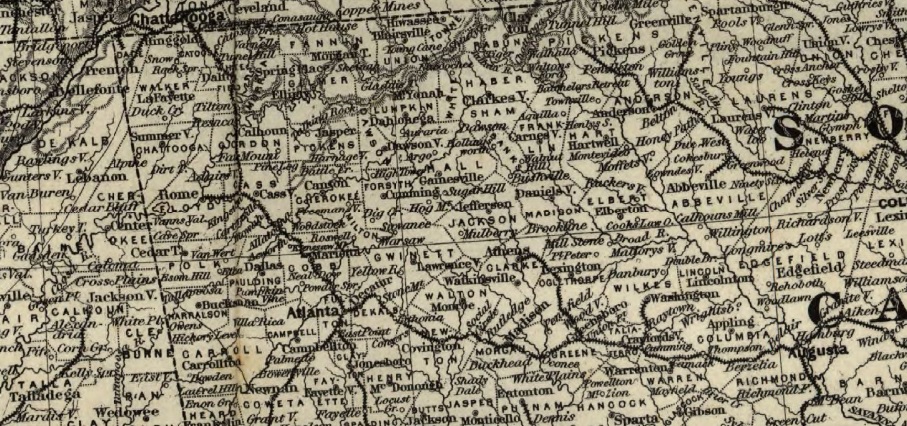
    I say this because I just bumped into one, and here’s a detail of what I’m talking about:

    BaD MAP

    Just because you pack data onto a map doesn’t make it good, and this one is about as gritty as a half-cooked cornmeal pancake.

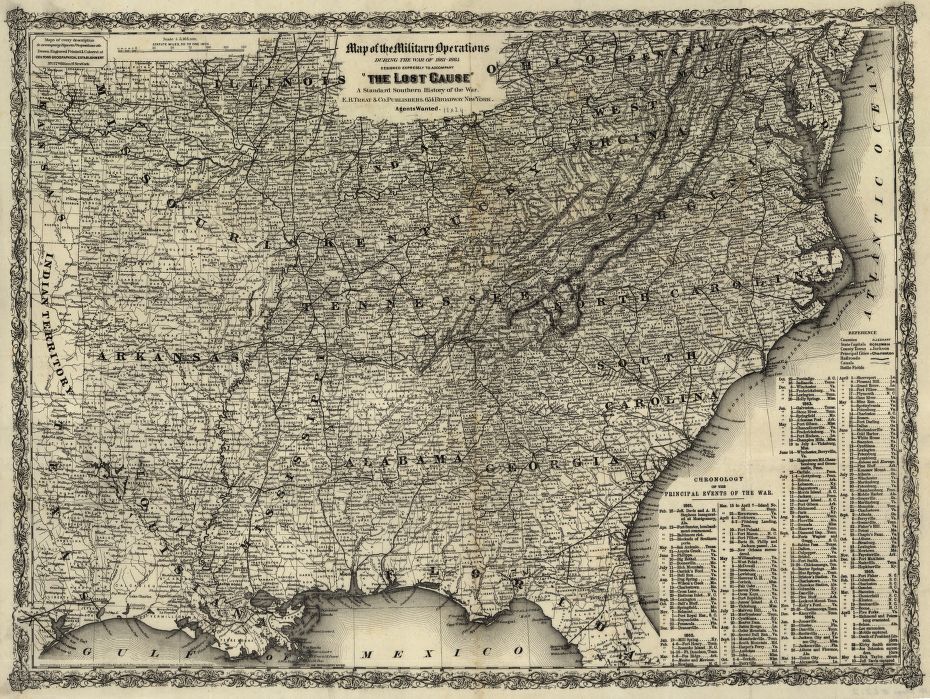
    So, when you have the time and the capacity and the data and you produce a map that is unyelding and impenetrable in spite of all the good it has going for it (not the least of which is interest), then you have created a bad map.  

    Source: Library of Congress

    “Map of the military operations during the war of 1861-1865 designed expressly to accompany The lost cause,” a standard southern history of the war.  George Woolworth Colton, 1827-1901, and published in New York by  E. B. Treat & Co., ca. 1867.

    Bad map 2


  • Graphic: Strength of Nazi Army, The Nation, 1943

    JF Ptak Science Books    Quick Post

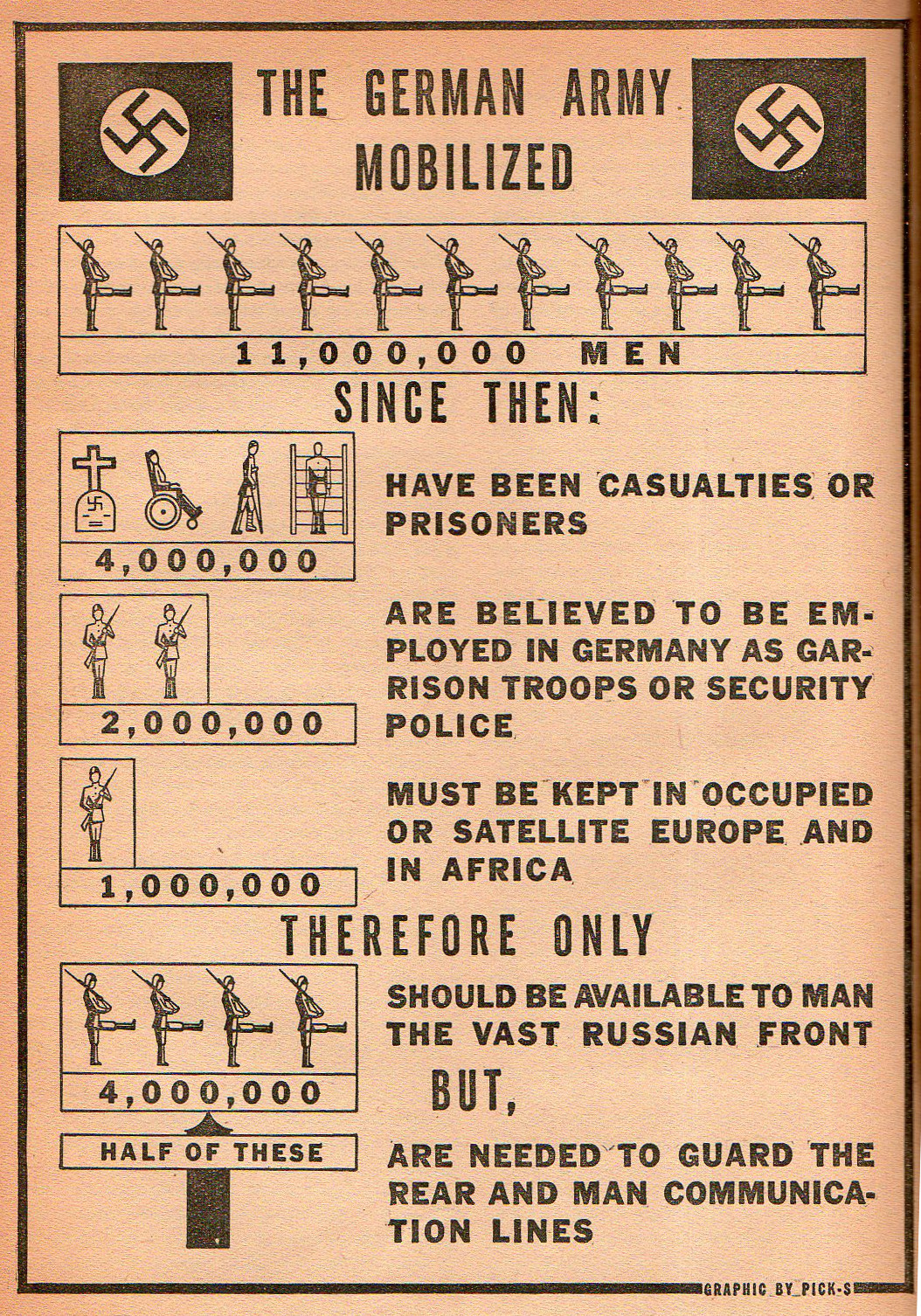
    The U.S. was just beyond its first year in the combat part of WWII when this infographic was made and published in The Nation on January 2, 1943, and no doubt that it was of some considerable interest to portray the Nazi war machine with a little more alacrity. 1942 was a tough year in the history of the war, and the Nazi army was looking large and gray and tough-to-beat. The editors of The Nation sought to put a little more perspective in the viewing of the Wehrmacht in an attempt to show the actual fighting force size. It is an interesting result, though the display itself is actually somewhat intimidating, with the message a little lost in the shadow of the strong banner:

    NATION graph gernman army314


  • A Wireless Telephone, 1880

    JF Ptak Science Books  Post 2323

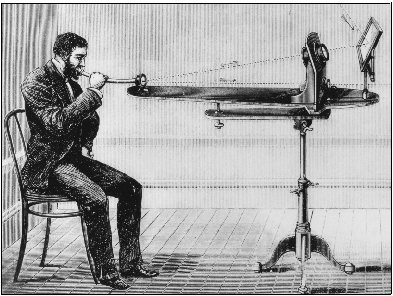
    Photophone

    Alexander Graham Bell was already mega-famous by the time he unveiled what he considered to be one of his greatest inventions.  Working at his L Street lab as well as from his home (which was just a few blocks away from my store in Georgetown, which was at the 34th & Volta Place, also just a few doors away from Alger Hiss’ old place, and a few doors the other way from Warren Christopher’s house where he slipped and fell on his last day in DC on the snowy steps and sidewalk that he never shoveled, and so on) he developed the photophone.  In the day, in 1880, when it was completed he considered the work so substantial and filled with so much potential that he left his plans on deposit in a sealed something-or-other until he announced the results for real, which came at a public lecture on August 27, 1880.  (This perhaps for the big taste of legal trouble he got into with his telephone–troubles and contentiousness that would continue for years. Also there was something in the air about this, so to speak, with an article in Nature attesting to rivals of the ingenious invention coming in the 23 May issue of the same year.) In any event, he found this invention to surpass his telephone and phonograph–except that few people today recall the instrument, much less what it did1.  

    It was a fantastic thing, an elegant device utilizing his discovery of the photoacoustic effect–basically, transmitting wireless telephone conversations, transmitting speech on light rays, a feat that would not be utilized until the last two decades of the 20th century, a precursor to fibre-optic communication–it was just decades away from practical application.  

    In his article in Nature of September 23, 1880, electrical pioneer Sylvanus Thompson writes (opening that weekly issue) that “sounds can be transmitted from one station to another wherever a beam of light can be flashed; …we may expect the slow spelling out of words in flashing signals of the heliograph to be superceded by the more expeditious whispers of the photophone” (page 481). Actually it seems that this paper beat the sponsor organization of Bell’s August address into general print, though The Electrician seems to have bested them both with an article on September 18.

    Bell was happy.  According to Ben Richmond at Motherboard, Bell wrote a lovely note to his father on his success: 

    “I have heard articulate speech by sunlight! I have heard a ray of the sun laugh and cough and sing! …I have been able to hear a shadow and I have even perceived by ear the passage of a cloud across the sun’s disk.”

    Notes:

    1.  Wiki quotes Donald J.C.  Phillipson and Neilson, Laura, entry on Bell in the  Canadian Encyclopedia online. “Of the 18 patents granted in Bell’s name alone, and the 12 he shared with his collaborators, four were for the photophone, which Bell referred to as his ‘greatest achievement’, telling a reporter shortly before his death that the photophone was “the greatest invention [I have] ever made, greater than the telephone.” Wiki and Philipson/Neilson.  


  • In the Enigma Machine Family: the Hagelin Cryptographic Machine, 1942

    JF Ptak Science Books   Post 2320

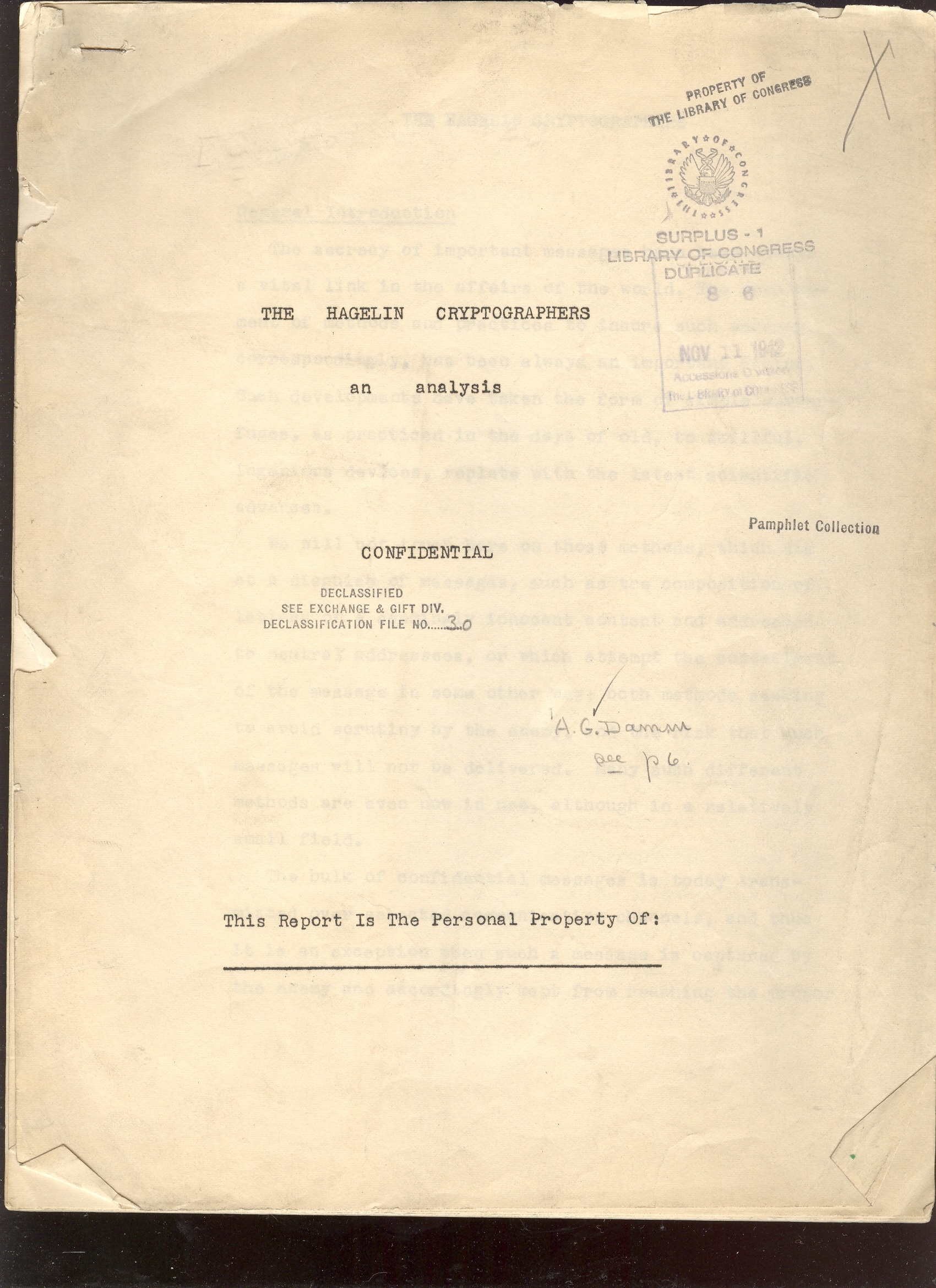
    This is a general report on the origin, development and status of the Hagelin “cryptographers”–a word used here to describe the physical machines (rather than the people working on codes). After his father invested in Aktiebolget Cryptograph, Boris C.W. Hagelin (1892-1983) took over ht leadership of the company in 1925, producing several fine models of encoding crypto machines, using Arthur Scherbius’ (as in the “Scherbius  Principle”, 1878-1929) rotor designs, some of which were marketed under the name “Enigma” (models of which were purchaed by the Wehrmacht in 1926 and modified for heavy use in the ’30’s and through WWII).  The company produced 140,000 units during WWII (while headquartered in the U.S) and is still in business today as Crypto AG, in Zug, Switzerland.

    Books--hagelin

    (The Hagelin Cryptographers, an Analysis. Stamped  CONFIDENTIAL, mimeographed in New York, by Ericsson Telephone,  1942.)    

    Sections in the document include “Models Built at Express Demand of the French Authorities”, “Evolution of Hand Cryptographer Type C-362”, “Hagelin Cryptographer Models” (BC-38 and C-362), “Methods of Operation”, “Superiority of Hagelin Cryptographers over Competing Makes”, and others, including a final section “How to Sell Cryptographers”. There is a mention of the “Enigma” machine on page 14, which is limited to mentioning that it is not sold outside of Germany. Although the Swiss firm founded by Boris Hagelin has manufactured, and continues to manufacture, many kinds of cipher machines, the words “Hagelin machine” will normally inspire thoughts of their unique lug and pin based machines.


  • On the Power of Numerical Discrimination, 1871

    JF Ptak Science Books   Quick Post

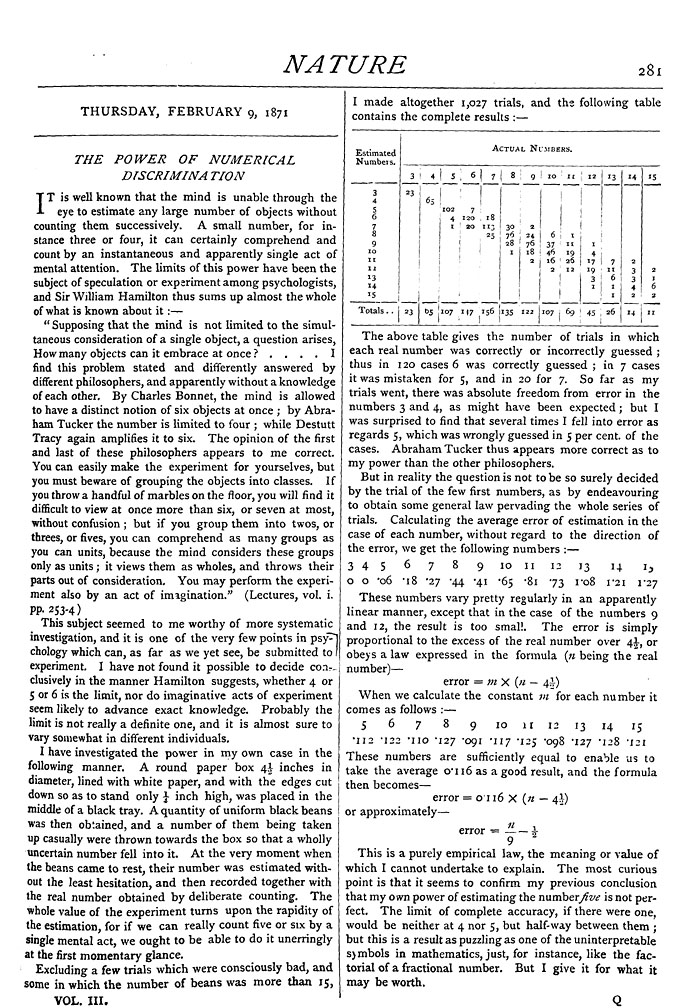
    I’ve written a number of posts on this site about W. Stanley Jevons, a very talent all-around smart-guy who worked in many different fields and at very high levels.  Today’s installment on the Jevons’ from is his paper “The Power of Numerical Discrimination”, published in the third year of Nature, and published in London in 1871. Jevons contributes a rather odd bit here on the success of the brain to correctly formulate an accurate memory when shown a number of items. That is to say, when shown a certain group of X-number of items instantaneously and then removed, how often will the mind be able to remember the correct number upon recall (and without committing them to memory per se or counting them?) In this odd and fascinating study Jevons records not only right/wrong answers but how ‘close” the remembered fit is to the original number. Pretty cool, and an early effort towards understanding our abilities and limits in information processing.  

    Jevons Numerical discriminationSee the rest of the article here.  


  • Unusual Elevations

    JF Ptak Science Books  Quick Post

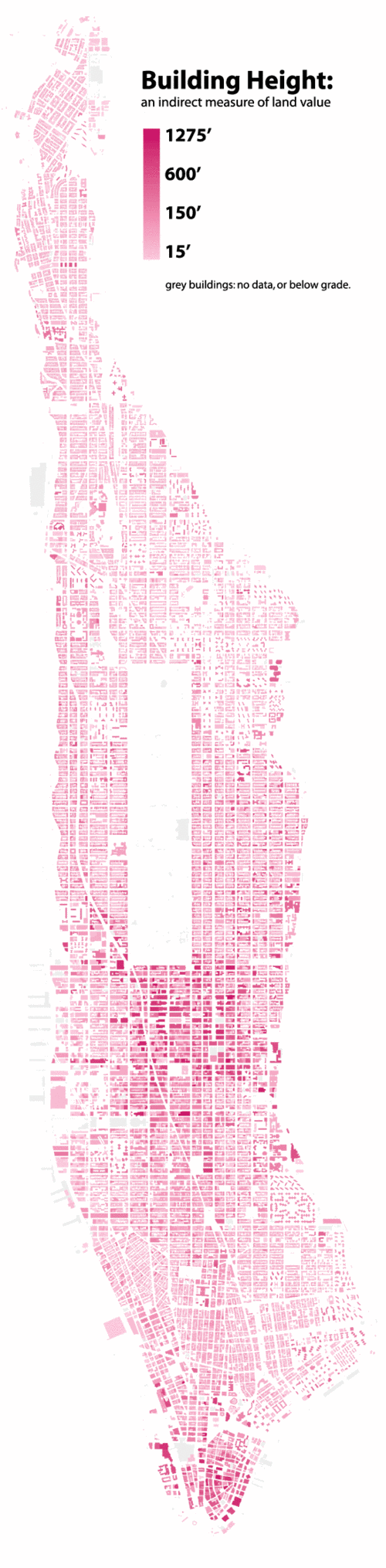
    It has seemed to me that an elevation map of the United States may be an interesting way of collecting and categorizing regional similarities and differences. For example, high desert folks probably have more affinity to one another than suggested by state maps–so to for Eastern states high elevation people in the Appalachian chain, similarities indicated more so by the number of feet above sea level than a state lines between North Carolina and Virginia (and so on). So far as I can tell no such map exists–but it came back to mind seeing this wonderful and innovative map of Manhattan building heights, brought to us by Bill Rankin of Radical Cartography.  


    Map manhattan-heights


  • Books are Weapons in the War of Ideas

    JF Ptak Science Books  Post 3210  

    “Dort, wo man Bücher verbrennt, verbrennt man am Ende auch Menschen” (“Where they burn books, they will in the end also burn people”).–Almansor, Heinrich Heine. 

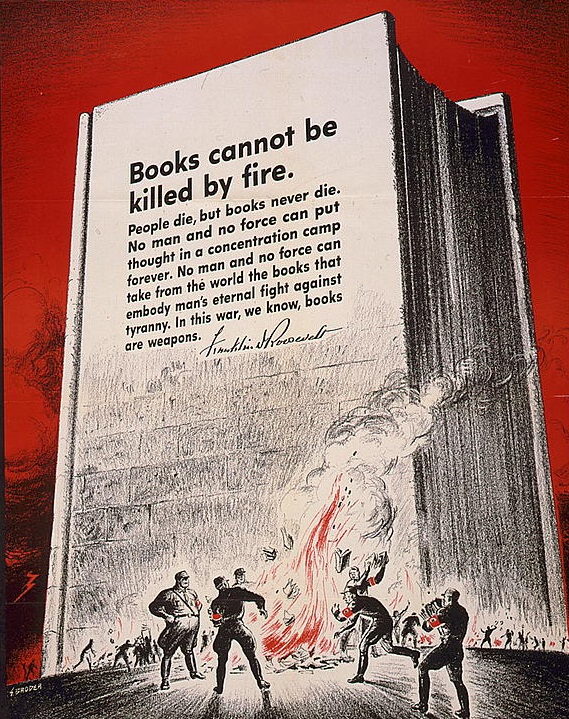
    Books are weapons309


    Independent and provocative ideas are usually the first things to be attacked by totalitarian regimes, and the Nazis not only did that in spirit but in action, and unfortunately part of a long and very bleak history of killing ideas and books. 

     Books have been destroyed for as long as they have been made, for reasons as varied as those for their writing:  the motivations for biblio-devastation are ever-reaching.  Perhaps the most astounding and appalling of them all resides in the fetid memory and fouled grave of the Chinese emperor Shi Huang Ti (third century BCE), who in his 49 years of life liquidated nearly every book in China, psychotically determined to make himself the most-remembered person in history by eliminating history itself.  Not to be outdone by books, he eliminated authors as well.  And scholars.

    Authors not only have been killed for their works, some have followed them directly into the flames.  Michael Servetus, who has a complicated history and who was found wanting in his relationship with church orthodoxy on many levels, met his end on a pyre with his books.  One of those books, a medical text, challenged the (religious) orthodoxy of the brain being the seat of all power and wisdom of the body, stating that it was the heart that pumped the blood and not the head, providing another chink in the armor of theological doctrine.  Pissed as the reigning Christians were with this belief, this book probably was not the thing that most annoyed them, but it also didn’t help his case, either.  But no matter, he and his books were burned together to ashes for reasonable and logical thought.  There were many others before and after this.

    The great example in the history of burning books in the West is probably Florentine Savonarola’s “Bonfire of the Vanities”, which saw th eworks of Ovid, Propertius, Dante, Bocaccio and many other classics condemned to flame

    The Nazis were interested in not being interested except for the burning of pacifist lit, degenerate art-inspired literature and art books, anything by Jewish people in any field whatsoever (including the sciences, and hence the creation of the “Jewish physics” of Albert Einstein, any works that denigrated the German people or history or anything that could possibly address action against the German state…and on and on. The infamous book burnings took place mostly on May 10, 1933 and again on June 21, functioning under the umbrella of the Main Office for Press and Propaganda of the German Student Union which asserted the great incendiary “Action against the Un-German Spirit”, though of course the orders and instructions for such a miserably fetid melange came from further up the National Socialist food chain. Some of the writers included in the burning and forbidden edicts included Victor Hugo, André Gide, Romain Rolland, Henri Barbusse,  Ernest Hemingway, Upton Sinclair, Theodore Dreiser, Jack London, John Dos Passos, Helen Keller, Joseph Conrad, D.H. Lawrence, H.G. Wells and Aldous Huxley,  James Joyce, Fyodor Dostoyevsky, Maxim Gorki,Isaac Babel, Vladimir Lenin, Vladimir Nabokov, Leo Tolstoy, Leon Trotsky, Vladimir Mayakovsky, and Ilya Ehrenburg.

    It was a pretty inclusive list, and brought the idea of a German intelligensia to wobbly and shattered knees, a prosaic and sickly-sweet German temporalism not so much unlike the music Hitler enjoyed and the very basic things that he painted.

    The response to these actions worldwide was curt and devastating, as is easily imagined, and provided simple platforms for other areas of anti-Nazi hearts and minds offensives.

    The very striking and simple image above was something I just found in the April 24, 1943 issue of The Nation—not much more needed to be said. (The Nation had since 1932 been very vocally anti-Hitler, with issue after issue featuring articles from the earliest periods of Hitler’s Germany detesting what actions the man was taking in that country, as well as gritty and effect political cartoons featuring blood and rats and the like.)

    There were other variations on this theme, like the one below, being made into a poster and using a quote from Franklin Roosevelt, and set in stark contrast to the Nazi book burnings:
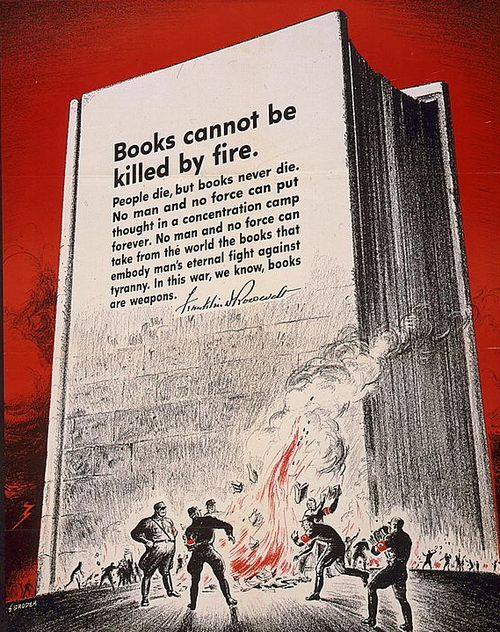
    Books are weapons 2

    [Books are weapons…poster, 1940-1945, via the Library of Congress]

    And another version, suggesting what sorts of books could be used in this war:
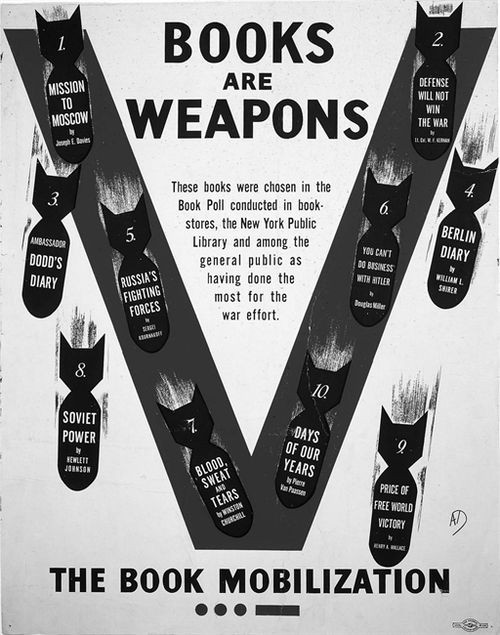
    Books are weapons 3

    Goebbels proclaimed that the flames of the books burning in Berlin were an expression of the German people–that the flames illuminated “the end of an old era and light of the new”.  An anti-Phoenix. 

    [Source: jonathanevincent blog, here.]

  • On a Certain Part of the History of Echoes

    JF Ptak Science Books   Quick Post

     There is a wonderful, short paper by Lord Rayleigh in the August  21, 1873 issue of Nature on echoes, “Harmonic Echoes”, echoes which have a life of their own, seemingly, after their initiation….echoes with 5 or 10 or more reverberations, echoes which seem to advance, or recede or both.  

    The mythological, beautiful nymph, Echo, a creature of Greek invention–or discovery–was much in love with her own voice and thus some of this interest in repetitive reverberations.  Echo was interested in Narcissus, which means that between the two of them, there was more more than enough interest in them for anyone outside themselves, but neither could get enough of themselves. And with Echo there were others who couldn’t get enough of her, though she denied herself to everyone. And so the tragedy.  Pan wants her, the old lech, and is denied, and becomes enraged which leads to her tragedy of being torn to pieces. She is resurrected, a little bit, her voice surviving everything else, repeating the last words of others.  

    I’ve repeated below a story on the Rayleigh paper which in some respects is as interesting as the original.