A Daily History of Holes, Dots, Lines, Science, History, Math, Physics, Art, the Unintentional Absurd, Architecture, Maps, Data Visualization, Blank and Missing Things, and so on. |1.6 million words, 7500 images, 4.9 million hits| Press & appearances in The Times, Le Figaro, Mensa, The Economist, The Guardian, Discovery News, Slate, Le Monde, Sci American Blogs, Le Pont, and many other places… 5000+ total posts since 2008.

Category: Aviation & flight

  • Defining What “Flying” Is, or Was (1894)

    JF Ptak Science Books  Post 2899    

    What does “flight” mean, anyway? How much do you have to be off the ground for something to be “flying”? If the answer is “two feet off the ground for 500 feet”, then Hiram Maxim did indeed succeed in being the first to construct a heavier-than-air aircraft that “flew”. Perhaps this definition might be a little broad, or narrow, though it does make falling sound like flying, too.
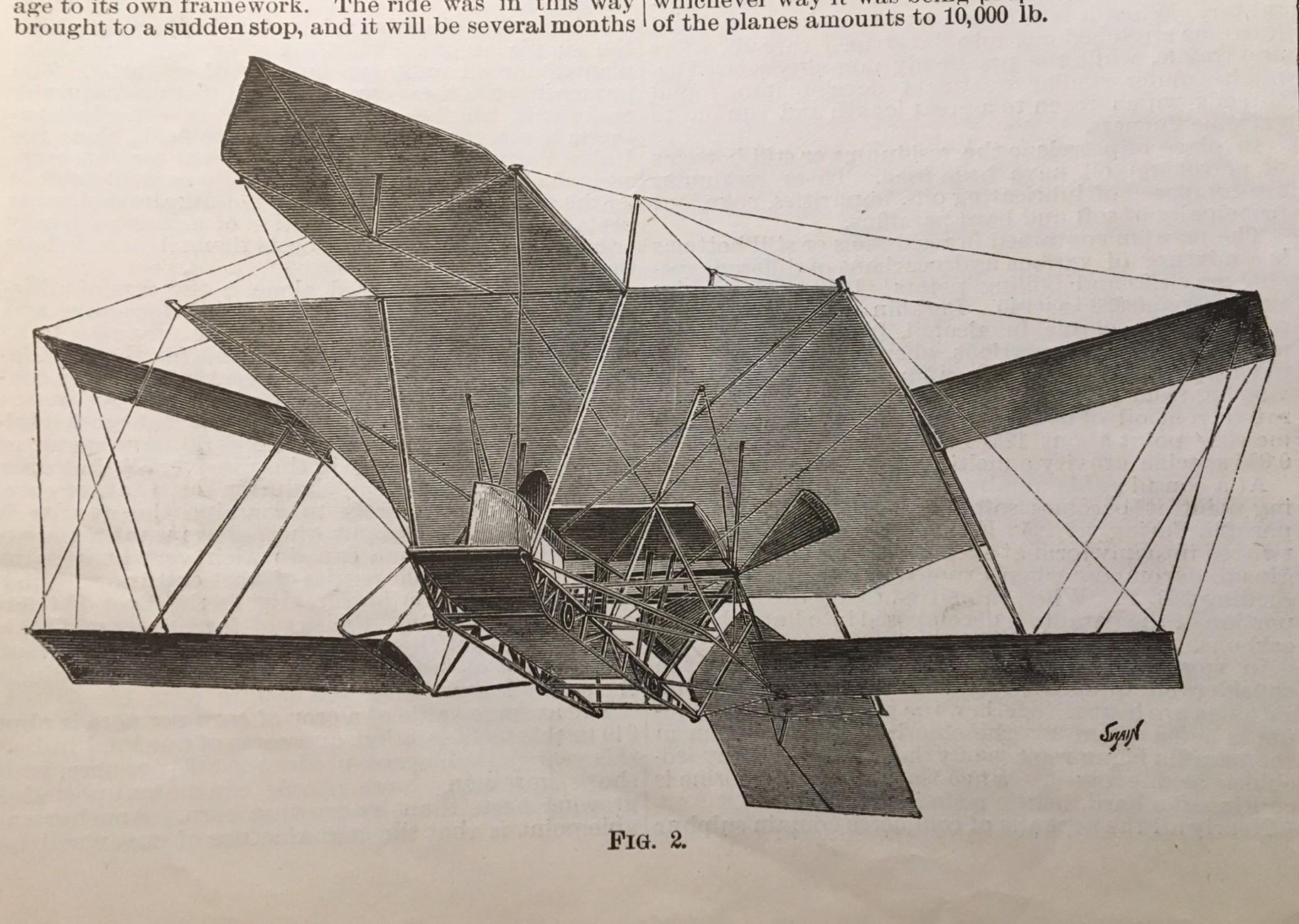
    IMG_2168In any event, that is what Mr. Maxim (1840-1916) did on 31 July 1894 with his enormous aeroplane as reported in the Scientific American of 15 September 1894 (“Maxim’s Flying Machine”).  He invested a good amount of money in the project funded by his tremendously successful “Hiram gun”, creating a number of aircraft before settling in on a great beast of a flying machine in 1894.

    The image of the aircraft is a perspective looking up at it, as though it were in flight. It wasn’t, though it was a semi-romantical thought and presentation. It had big numbers: 7000 pounds, 17.5′ diameter propellers, 2 steam-powered 180hp engines, 120′ long and 105′ wide, and 8” cylinders with a 5” stroke. Big numbers.

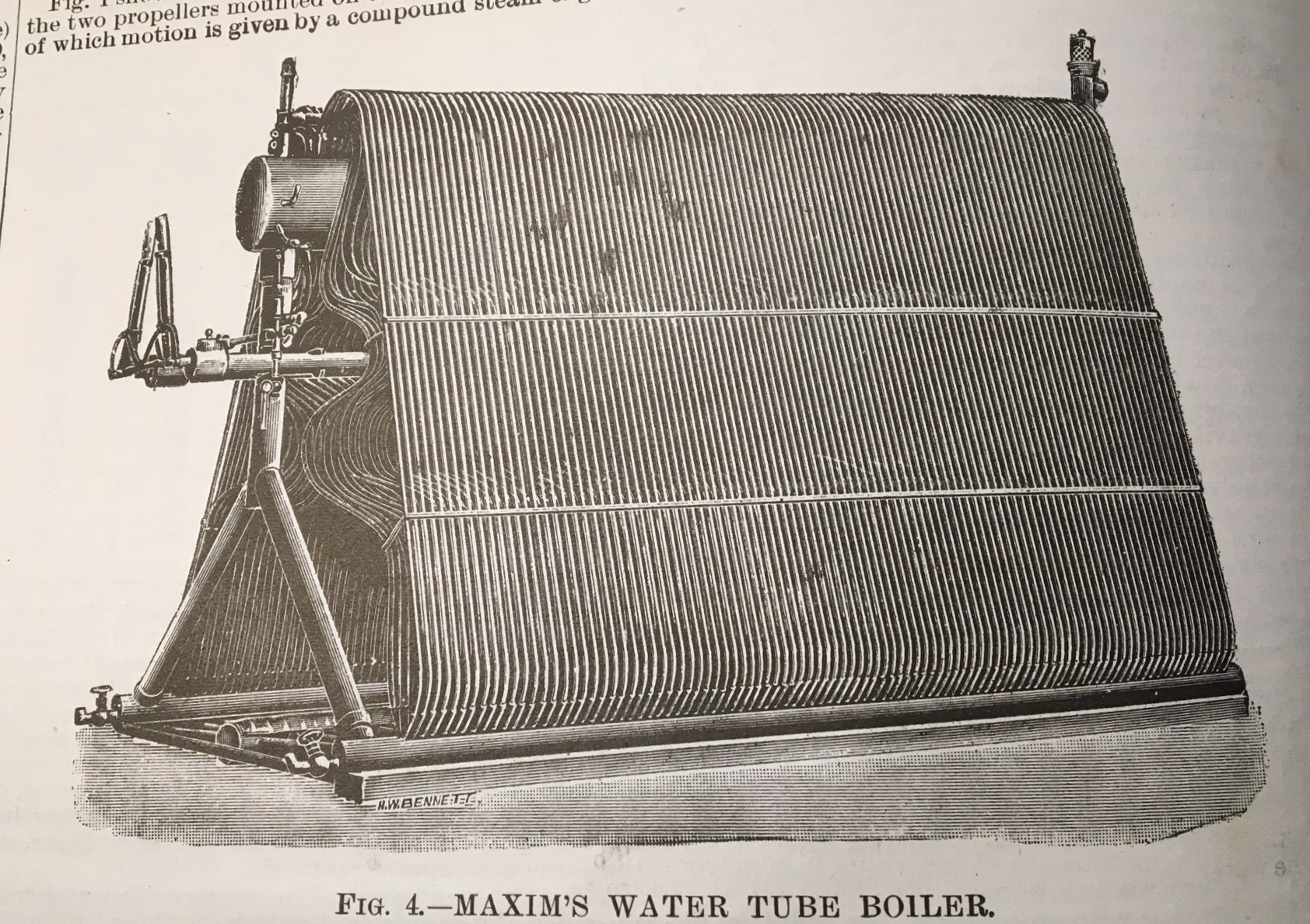
    One of the images that really struck me though was the steam chamber, which looks absolutely huge (though I can’t find dimensions for it), but you can make it out on the aircraft’s bow. For test runs 600 pounds of water were needed—2500 pound were needed to generate lift. IMG_2169
    So back to the “flight” issue; Mr. Maxim was on board the 3-person-crew aircraft on the day of the test. The aircraft was tethered to an 1800′ wooden rail to prevent it from actually taking off if it could…I think mainly because they were really just testing lift, as controlled flight was still yet another enormous issue. The aircraft did manage to achieve lift two feet above the rail, but the force was so great it ripped up the rail and crashed. (Mr. maxim found himself in a somewhat similar position to that of Frankenstein when overpowered by the monster which he himself had fabricated and endowed with life.”) No one was hurt, though the aircraft was decimated. As the writer in the Sci Am stated, “the ride in this way was brought to a sudden stop, and it will be several months before it can be renewed”. It isn’t anything like the Wright’s flight nine years later, though some do consider this Maxim experiment to constitute a “first flight”.

    One thing is certain: it was a lovely and impressive thing that Maxim built–it wasn’t elegant by any means, though it had a certain crushing charm to it.  

    Here’s a photo of the aircraft (with a person standing right there in front of it, for scale):
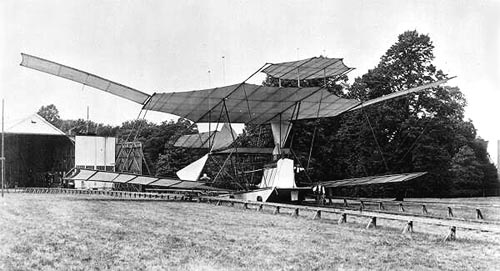
    Maxim aeroplane

    (Image source: ctie.monesh.edu.au/hargrave/maxim.html)

  • Light Bombs, 1913

    JF Ptak Science Books  Post 2897

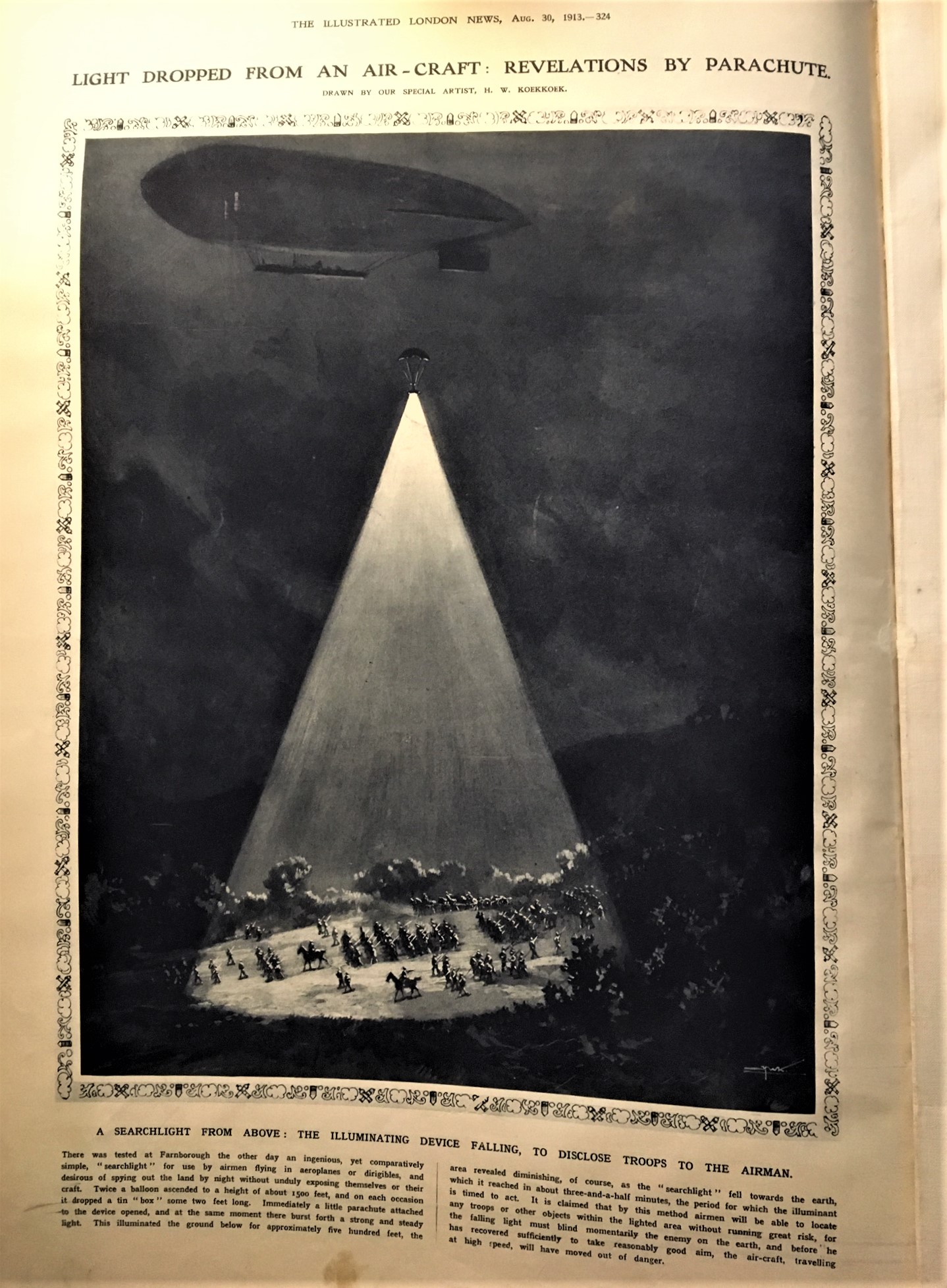
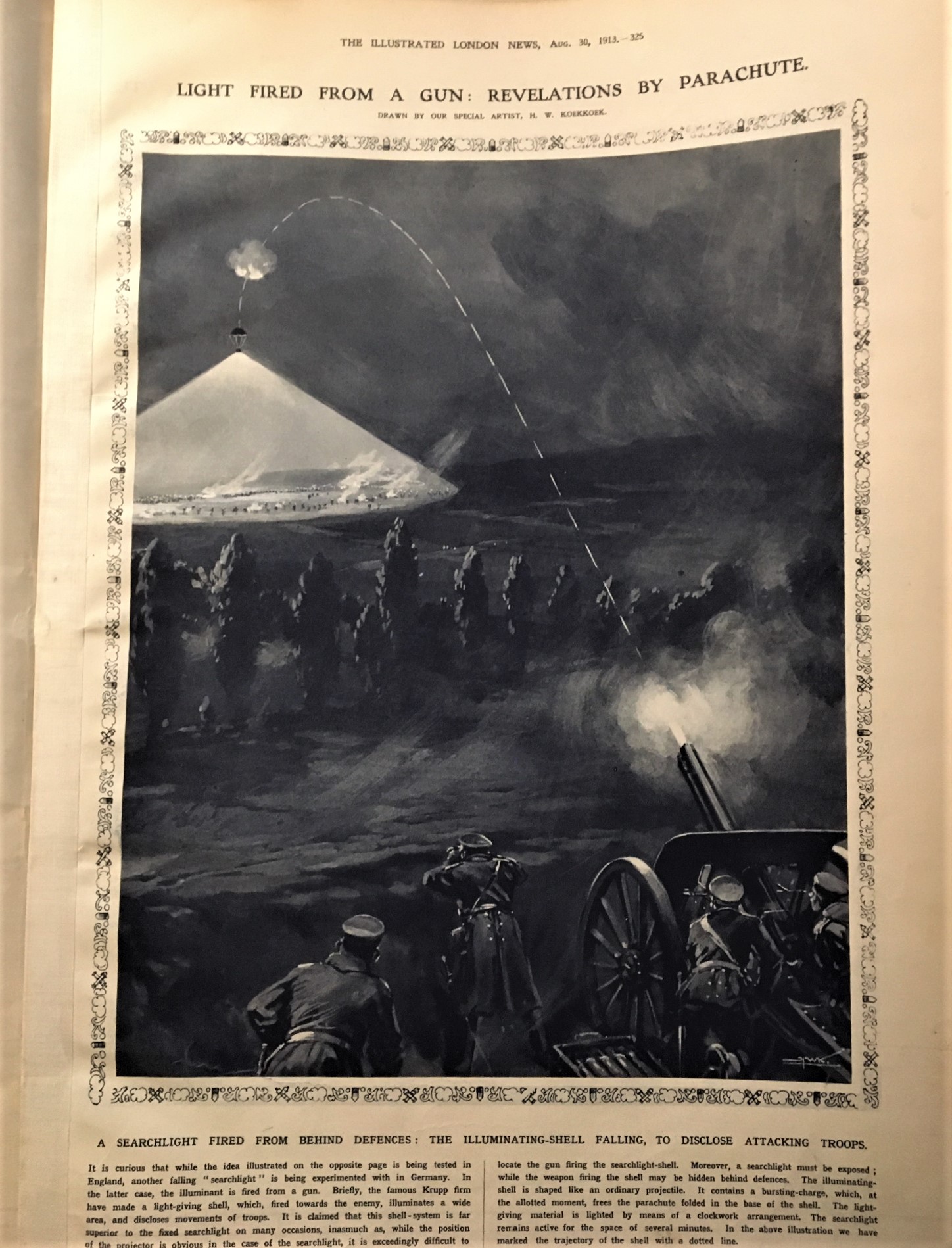
    In the earliest periods of the history of bombing it seems as though the among the first generations of “bombs” dropped from flying machines were “light” or light sources, as we can see in this pair of illustrations from the Illustrated London News for 30 August 1913. These weapons appeared almost two years after Lt. Giulio Gavotti dropped an actual explosive from his plane on 1 November 1911 in a battle of the Italo-Turkish War1. Not that the exploding bombs weren’t  heavy (they weren’t) but that the feature of the weapon dropped in the 1913 case was capable of generating a penetrating or at least illuminating light.  We are told in the legend of the print that the light-bomb dropped from the dirigible was attached to a parachute which opened immediately, and from the height of 1500 ‘ at release the writer states that it would take the weapon three minutes to descend to the ground. (Of course the illuminated area would get together an tighter in descent, though it seems like there would be a good minute of so where there was some intelligence gathering possibilities.)

    Even though this package wasn’t exploding, it did provide the observers from above time to gather information on the position of the enemy and relay that data so it could be employed in tactical or strategic manners.  

    Notes:

    1. Lt. Gavotti (1882-1939) actually dropped four four-pound grenades from a height of 600′ from his Etrich Taube monoplane in action against the Ottoman Turks in Libya. This was the first instance of bombing from a heavier-than-air aircraft, bombs being dropped from balloons for several decades already by the turn of the century. Dropping bombs from balloons was deemed an illegal act of war and outlawed in the Hague Convention of 1899–but as the Wright flight was still a few years away at that point there was no provision established for bombing from aircraft that didn’t yet exist.  There were other instances of bombing from aircraft before the start of WWI, with the first instance during the Great War occurring when German Zeppelins bombed the city center of Antwerp a few weeks after the war began on 24 August 1914. The Brits launched an aeroplane attack  against two Zep bases in Cologne and Dusseldorf in response, and, well, and so on, raids and bombs becoming more sophisticated, cities becoming targets, and the race to destruction became developed. 

    ILN 1913 Light BombILN 1913 Light Bomb


  • The USAF “Flying Saucer” Prototype (1954)

    JF Ptak Science Books   Quick Post

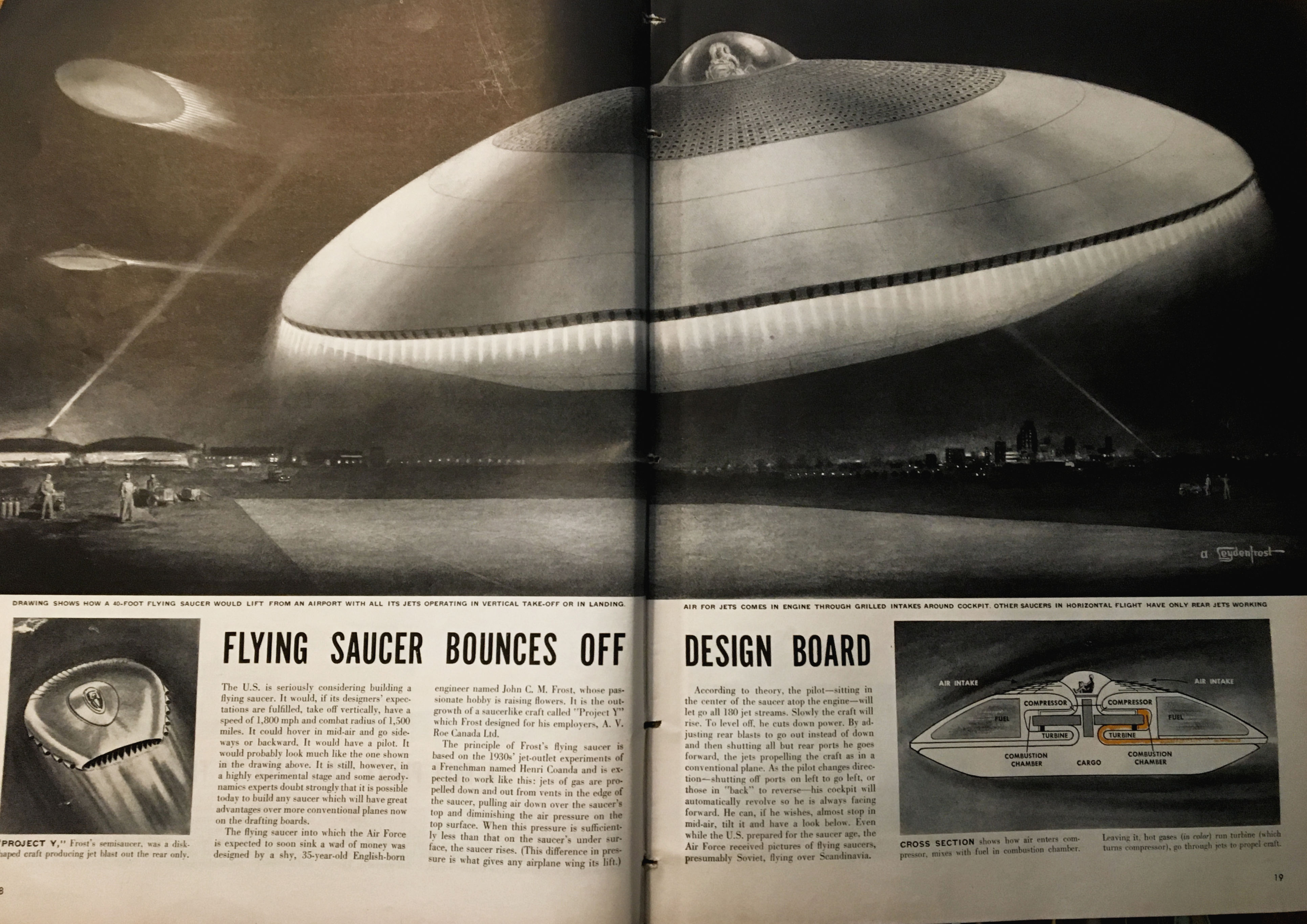
    Appearing as a splashy double-page spread in LIFE magazine for May 31, 1954 is the great “Project Y” USAF flying saucer. It was the continuation of the work carried out by John C.M. Frost (1915-1979) who was a superior engineer who worked for de Haviland and Avro Canada, and who continued his VTOL work with the Air Force under the “Project Y”. This aircraft was to fly 1500-2000 mph and have a 1500 mile range. Of course, this particular aircraft didn’t get very far for Frost, a person with numerous successes, but it did experience some fair amount of attention.

    Life 1954 Flying Saucer

    ·Posted by :

    ·in:

    —

  • A Double Dose of Dirigibles

    JF Ptak Science Books   Quick Post

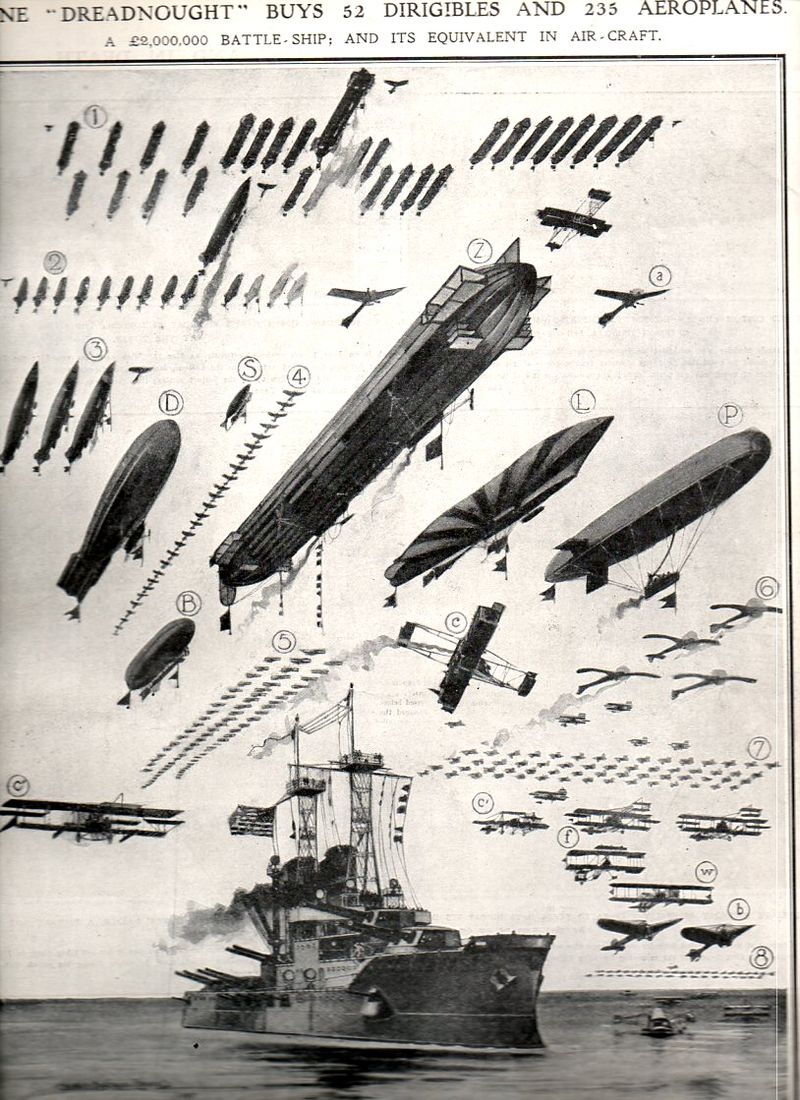
    There’s nothing quite so satisfying as seeing a representation of quantitative data where the graphical displays are flying.  “One Dreadnought Buys 52 Dirigibles and 235 Aeroplanes” is a full-page diagram appearing in the 3 June 1911 issue of the Illustrated London News , making a very strong point that in the new age of aviation the 2 million pounds it would cost to produce one battleship could also (or rather) buy a lot of aircraft. 

    You may notice that the ship is flying a U.S. flag–this is because the graphic appear a month or so earlier in the U. S. publication Scientific American, and the ILN is simply reprinting the info  In any event the image enumerates U.S. and international aircraft, making for a lovely representation of a broad range of airplanes filling up the same sky. 


    Dirigibles and dreadnoughts _3_


  • A World of Untranslatable Colors and no Color Vocabulary (1638)

    JF Ptak Science Books  Post 2837

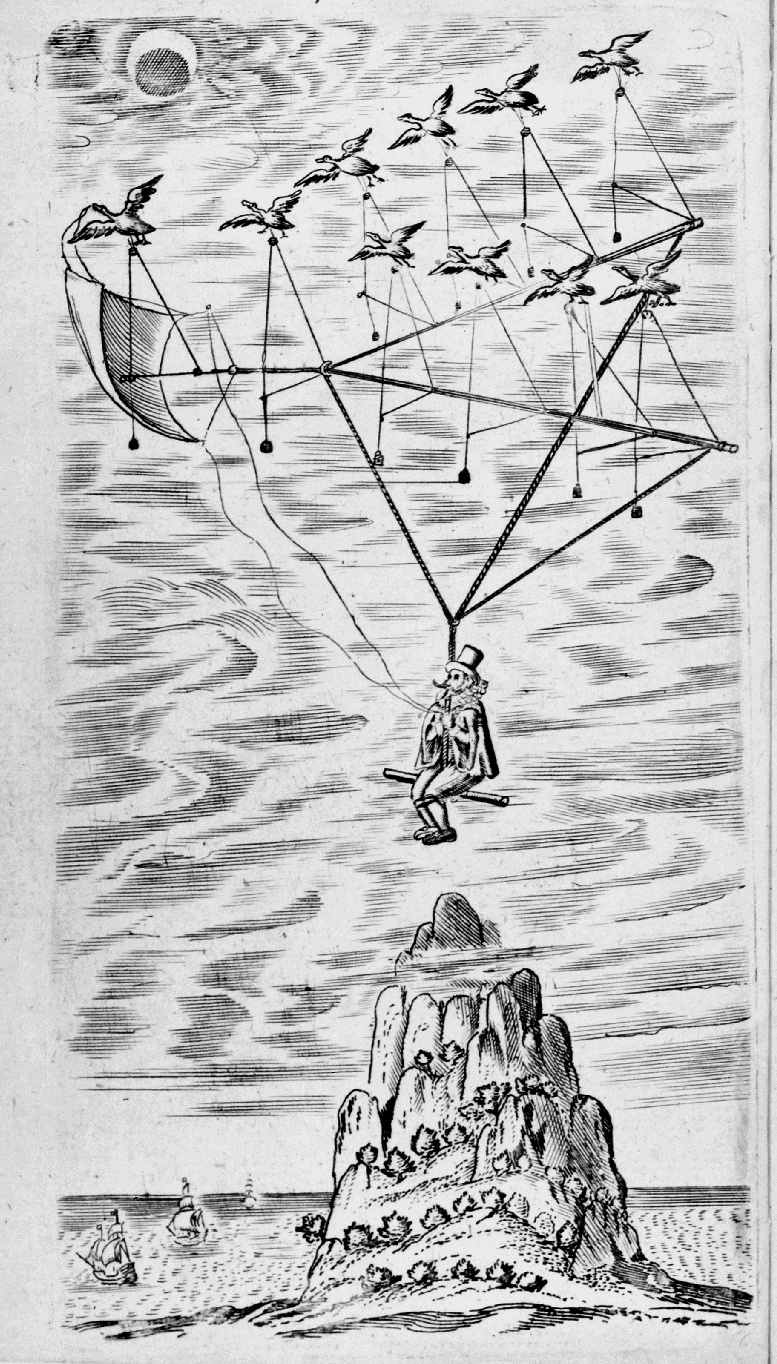
    Godwin (1)There was something that caught my eye as I paged through an online copy of Francis Godwin’s The Man in the Moone or A Discourse of a Voyage Thither by Domingo Gonsales (1638), something beside this work being about the first English language trip to the Moon. There were other earlier trips made to our friendly neighbor before Godwin (whose work was published posthumously) like the late Greek Lucian first century ACE).  And there were contemporaries who wrote in other languages, like Cyrano and Kepler (Somnium, 1638); Aphra Behn’s farce (The Emperor of the Moon 1687) and Margaret Cavendish  (The Blazing World 1688); and John Wilkins (The Diversity of a World in the Moon, (1638) to name a few…and then there’s the wide world of the plurality of worlds, like the wonderful Fontenelle…and of course later there were trips to the Moon made by Verne and Wells, and so on.

    Godwin’s book is short and quick, deceptively simple but not so—there’s a bit of introduction where we are shown a little bit of the influence of Galileo’s Sidereus (1610), and the frontis depicts the flying machine by which the intrepid traveler, Senior Gonsales flies off to the Moon. This is a craft powered by a sort of wild swan, which struggles mightily to free itself of the Gilbertian great magnet, but once free of that, the “flight” took twelve days. Our traveler may also be the first one to get to the Moon by accident: he flees a fiasco in which he kills someone in a duel winds up in St. Helena, and then has a problem with the British fleet off Tenerife, from which he flies off again with his bird machine…he hadn’t intended to go to the Moon, but that is what happened.  

    Here’s what I found so interesting: once he gets there, Gonsales tries to describe clothing and—even more fascinating—he tries to find words for colors that he has never seen before. Marvelous.

    “[T]heir colour and countenance [was] most pleasing, and their habit such, as I know not how to expresse. For neither did I see any kind of Cloth, Silke, or other stuffe to resemble the matter of that whereof their clothes were made; neither … can I devise how to describe the colour of them ….

    It was neither blacke, nor white, yellow, nor redde, greene nor blew, nor any colour composed of these.

    But if you ask me what it was then; I must tell you, it was a colour never seen in our earthly world, and therefore neither to be described unto us by any, nor to be conceived…. Only this I can say of it, that it was the most glorious and delightfull, that can possibly be….”

    And that, I’m afraid, is where I left off. As I’ve said elsewhere on this blog I only give each one of these post an hour’s time maximum, and after my fumbling around in the Godwin, I’m about at my limit. This much-studied book deserves a lot more than what I can give it here in 700 words, but this will have to do for now, for me. The bottom line here is that I don’t think that I’ve ever read anything by anyone before, say, 1920 and the real birth of the sci fi genre (with which I’m am not very familiar) that tries to describe a color that was without description. 

    [Image source: Wikipedia Commons.]

    Oh, before I go, Godwin also introduces us to the imaginary language of the Lunarians, which he describes as being beautiful, and very expansive, as the vocabulary can change given its tone. (He also notes that only one language is spoken on the Moon, which he credits as an advantage over the terrestrial polyglot.) This is also part of a long history of imaginary languages in early literature (for example, More’s Utopia and Rabelais’ Gargantua…)  The Lunar world is a Utopia, and evidently part of that blissful state is maintained by trading out ill-behaved Lunarian children with well-behaved children of Earth. 


  • Non-Silhouette Silhouettes and Dirigible Mooring Masts (1930)

    JF Ptak Science Books  Quick Post

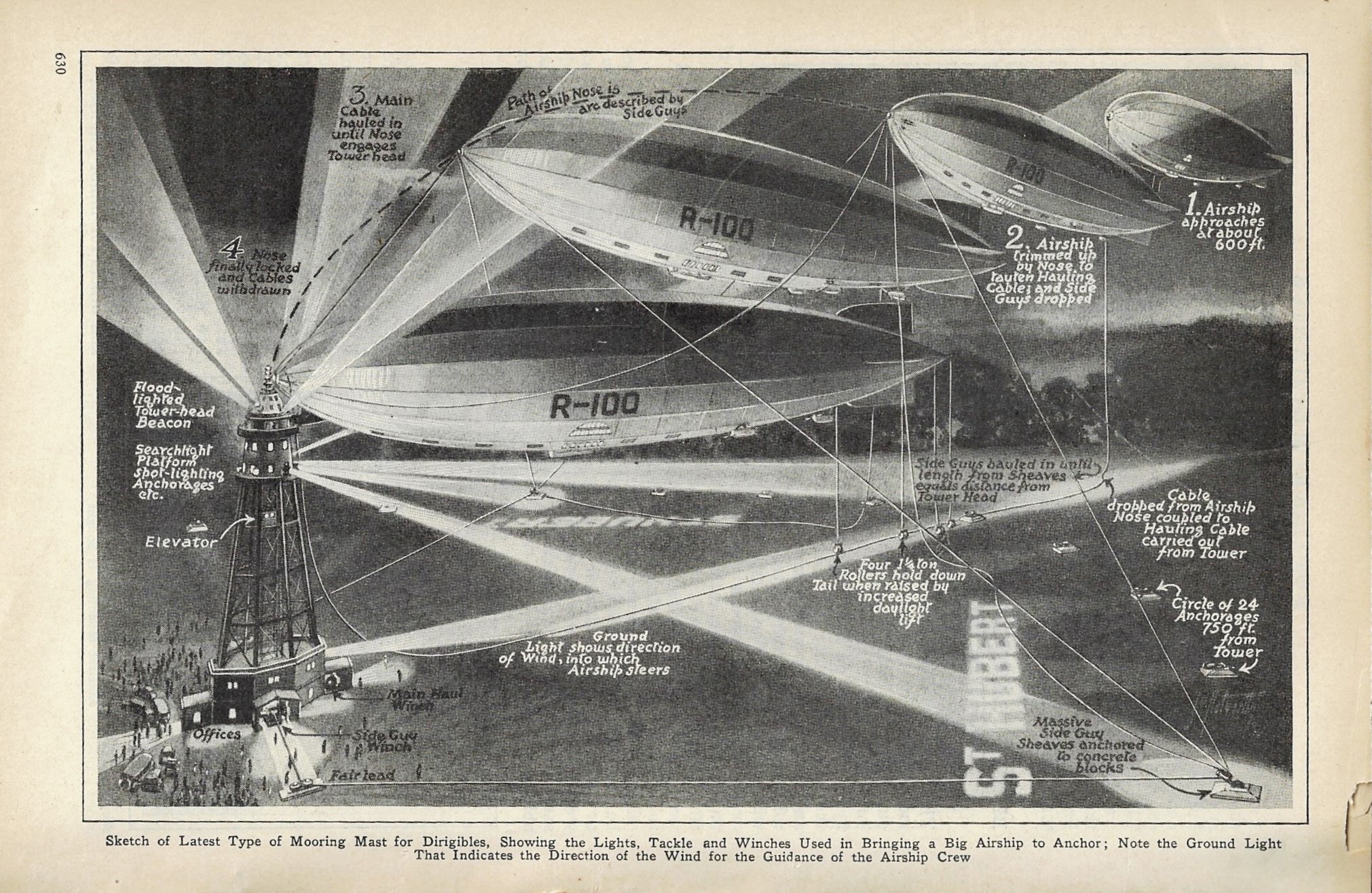
    Just a very quick entry here on some interesting and arresting images relating to flight, all from the July-December 1930 volume of Popular Mechanics. The first is a full-page illustration for October (1930) showing an improved method for anchoring dirigibles–in this case, for demonstration purposes, it is His Majesty’s Airship airship R-100, which was over 700′ long and moved along at about 80 mph, and was less than a year old. Unfortunately, this protocol for moving though the air was nearly exhausted–it was fateful for this note on the mooring masts appeared in October as this was the month of the R-101 disaster, which effectively brought the end of the R-100, which was scrapped soon afterwards.  

    • “Sketch of Latest Type pf Mooring Mast for Dirigibles, Showing the Lights, Tackle and Winches Used in Bringing a Big Airship to Anchor: Note the Ground lights That Indicate the Direction of Wind …” 

    Pop Mech 1930 Dirigible Mast

    The other image of aviation interest is a chart of airplane types and how to identify them in silhouette–except that they are not in silhouette. Still it is a handy chat, and I reproduce it here:


  • A 10,000-Ton Aircraft from the Future of 1934

    JF Ptak Science Books  Quick Post

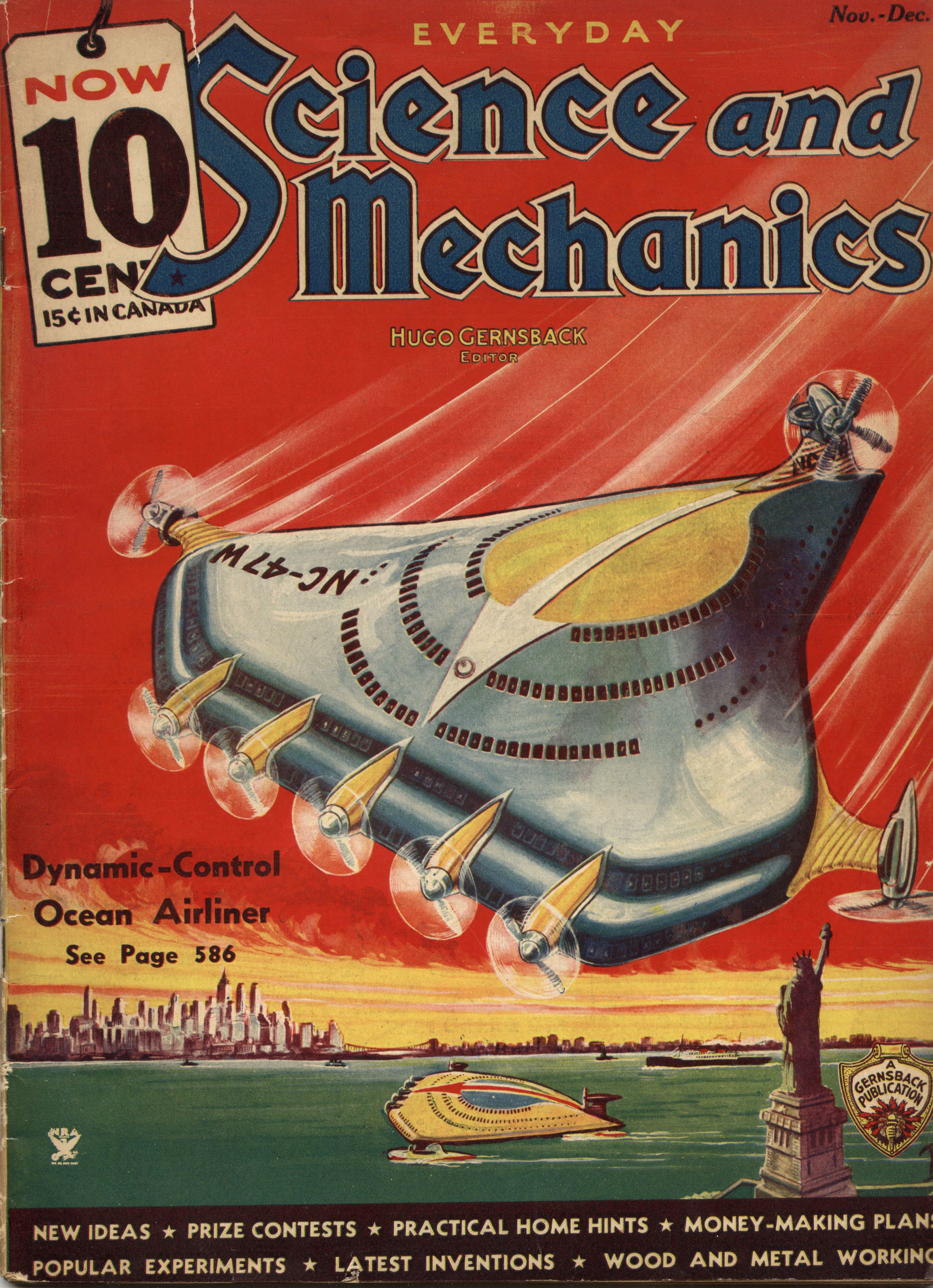
    Science and Mechanics 1934 ocean liner big file

    Science and Mechanics 1934 ocean liner big file

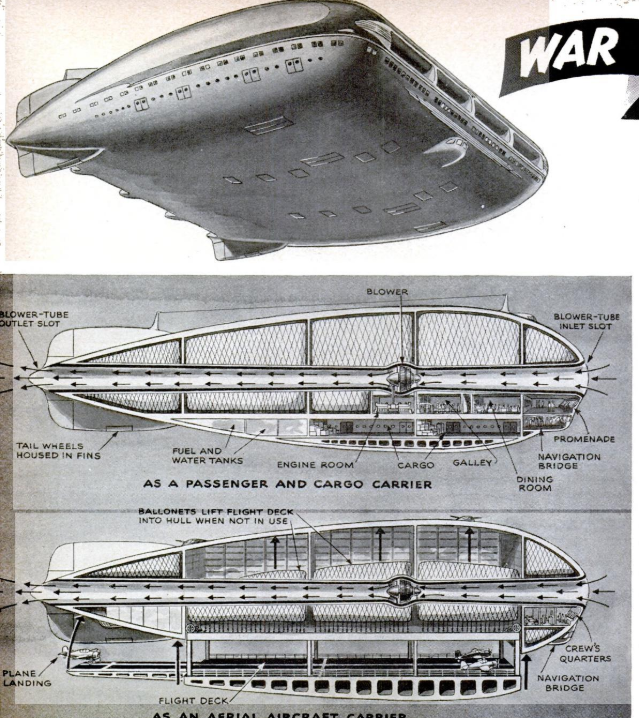
    Hugo Gernsback–(1884-1967)  the very busily creative pioneer in science fiction, author, and editor of some of the finest sci fi, pre-sci fi, and pop science journals from the ‘teens into the 1940’s—though big and very heavy in this consideration of a future flier. The aircraft seems to be enormous, though about the only spec given here is that it would weight 10,000 tons, and that it would probably appear by 1952, if not sooner.

    That’s a lot of tons to be thinking about being airborne, back there in 1934. To put things in perspective the Boeing 747 weighs in at 370 tons (give or take), which nattily works out that it would take 370 747s to equal the weight of the monster Gernsback was thinking about.

    This bit of speculation is found in the page of Everyday Science and Mechanics (Nov/Dec issue for 1934), with Gernsback reasoning for such a spectacular aircraft being based on a logical progression of heavier-than-air aircraft sizes:

    “The tendency at the present time in airplane building is toward constantly increasing size. It is probably realized by all who have concerned themselves with aircraft that the larger machines are not very far in the future. From the earliest Wright airplane, which weighed approximately 1/2 ton, to the present record holder, the DOX, which weighed fifty tons, took a period of some 26 years. The 10,000 ton airplane, projected on a like time-scale, would, therefore, make its appearance not later than the year 1952. However, with the nature of the present-day technique, it is quite possible, at this moment, that the 10,000 ton plane will be here much sooner.”

    Or not.

    That brings us to the other bit of specification mentioned in the article—the tail propeller on this aircraft was 75′, so, using that as a measuring device the plane was about 600’x 600′ and about 150′ tall. The aircraft’s mission was basically like that of an ocean liner, though flying. I guess stripped down it would have made an excellent troop transport, being capable of flying in, what, a vast amount of materiel as well as probably 2-3,000 troops.

    This aircraft still classifies as a mega-behemoth, and there hasn’t been anything in the air (as a heavier-than-air aircraft) that comes anywhere close to this.


  • Nazi Propaganda Against the B-17 (1943)

    JF Ptak Science Books  Post 2824

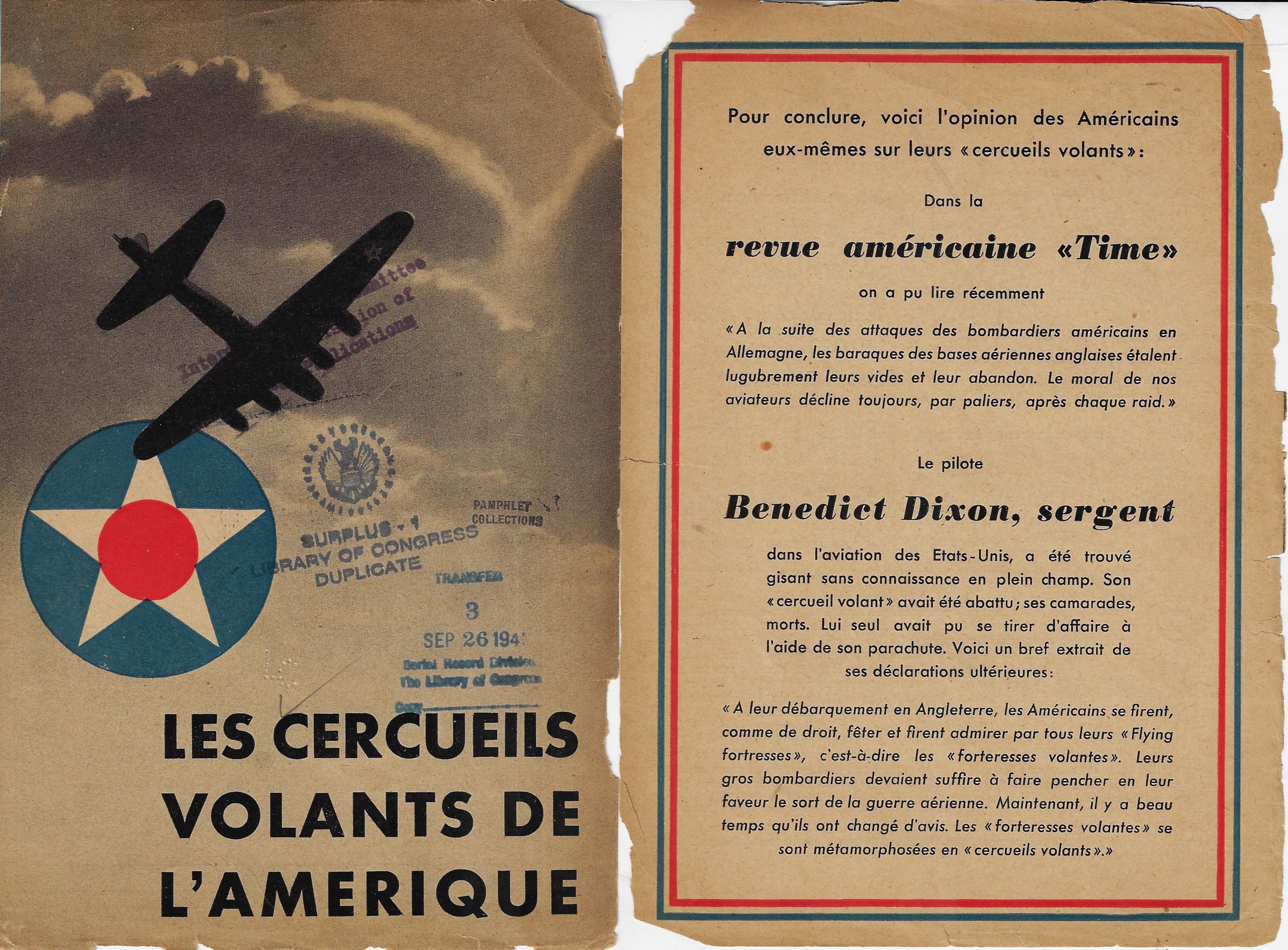
    This is quite the piece of anti-U.S. Propaganda, printed in 1943 and targeted so to speak against the B-17 Flying Fortress. (I’m not sure why this is in French, though no doubt it was focused on occupied territories in France and Belgium and other areas reached by Lingua Franca.) This was a difficult piece to work through given my tender spot for this aircraft–I’ve long admired it, and was even a passenger on one many years ago (it was much louder than I expected). As a piece of propaganda I would have expected to see more copies of this here and there, but as it turns out there is only one copy (at Nanterres) located by WorldCat–this in mind I’ve reproduced the whole of the very short work.

    B 17 propaganda _1_[Front and rear covers.]

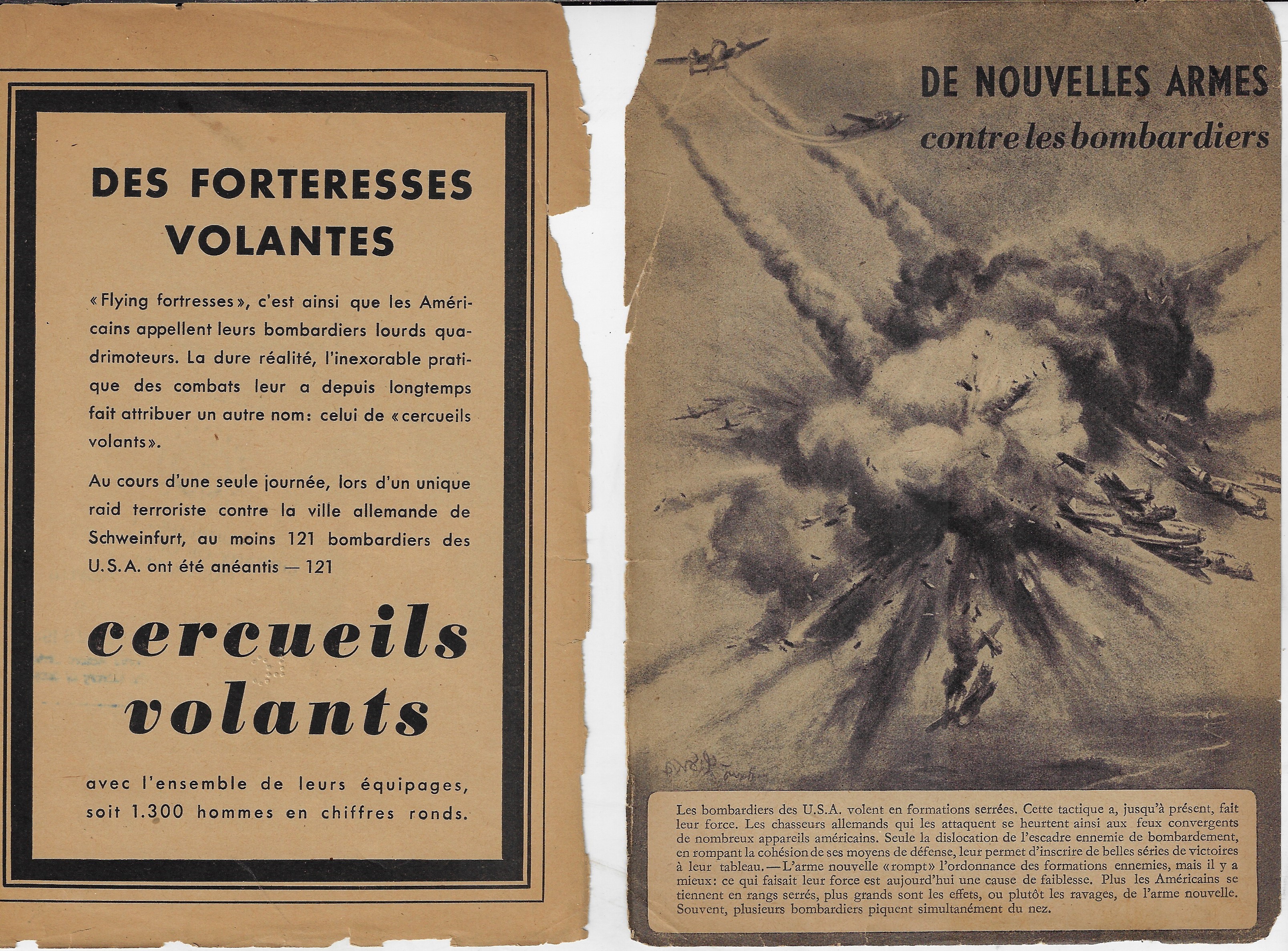
    The little pamphlet got to business straightaway, claiming on the back of the title page that the “Flying Fortress” suffered terribly at (“terrorist raid”) Schweinfurt—true enough for the 8th Air Force, though the numbers aren’t quite right. The author tells us that the “Flying Fortress” was actually “the Flying Coffin”. “This is how the Americans call their heavy four-engine lighters [the “Flying Fortress”]. The harsh reality, the inexorable practice of fighting has long since given them another name: that of flying coffins. C’est ainsi aue les americains appelent leurs bombrdiers lourds quadrimoteurs. la dure realite, l’inexorable practique des combats leur a depuis longtemps fqit attribuer un autre nom: celui de cercueils volantes.”)

    In the explosive scene on the page there’s a picture of mass destruction of B-17’s being blown out of the sky—this a result of the (“tight”) formation flying that the writer says used to be a strength, but now with new (German) weapons would prove to be the 17’s weakness. (“The greater the function, the bigger their devastation.”)

    B 17 propaganda _2_The next scene, a two-pager, is heartbreaking and brutal. “Voila ce qui les attend” it shouts–”this is what awaits them”! And then, boldly beneath the scene, the pamphlet repeats the Flying Fortress is the Flying Coffin claim.

    ·Posted by :

    ·in:

    — —

  • A Short Notice on Some Short but Very Important Flights–the Wrights, 1902

    JF Ptak Science Books    Post 2823


    Illus Zeit 1902 wright bros

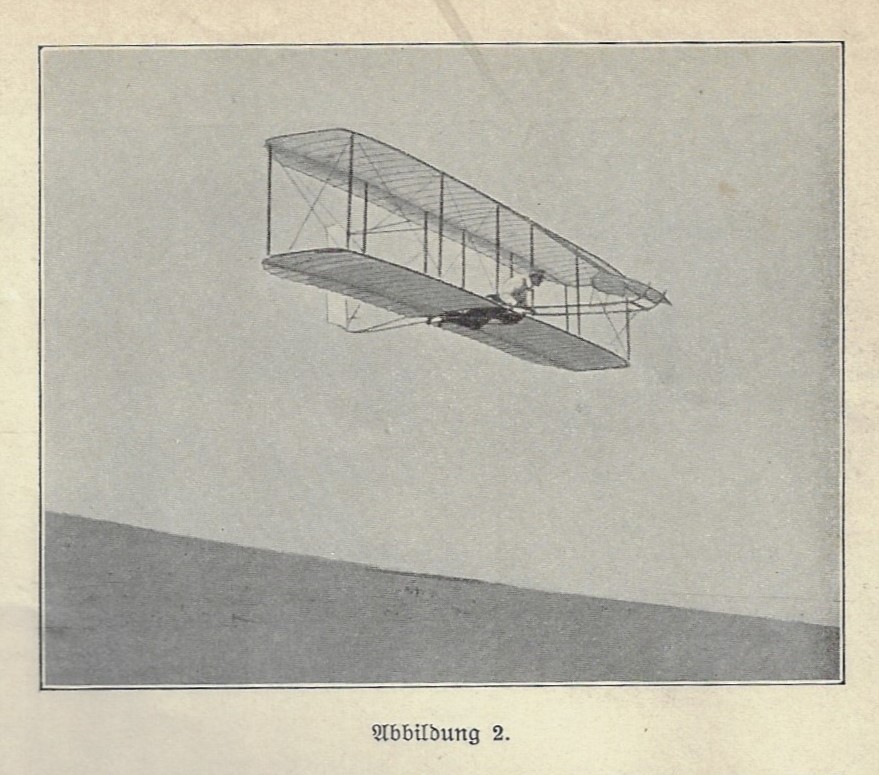
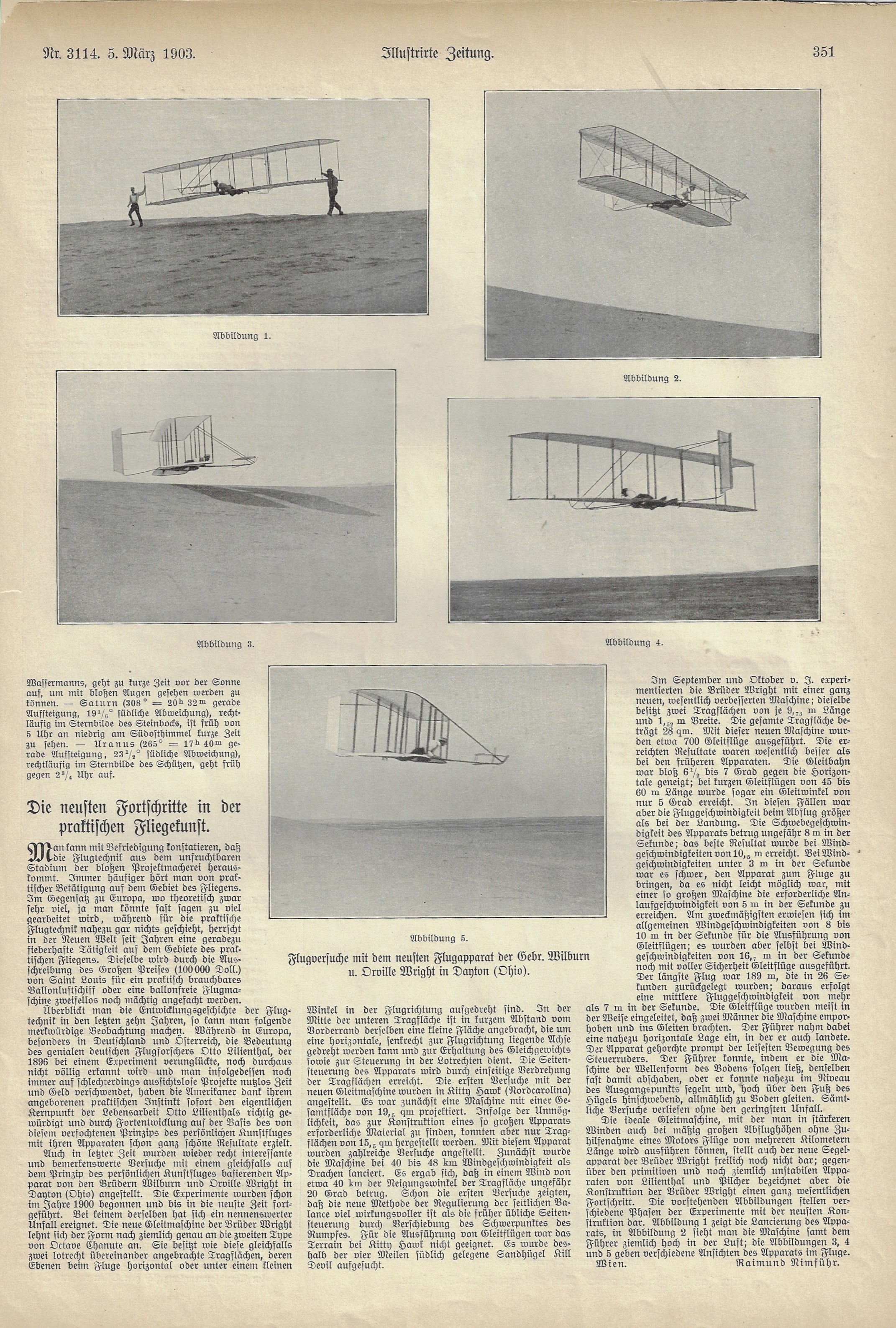
    Here’s an interesting piece of reporting by (Professor) Raimund Nimfuhr (Czech, 1874-1954) on the Wright brothers gliding experiments in late September/October 1902.  The two men transported their 1902 aircraft to Kill Devil Hills near Kitty Hawk , N.C., and carried out between 700 and 1000 gliding tests, with great success. This story on their efforts appeared a few months later on 5 March 1903 in the Illustrirte Zeitung (Leipzig), with an unusual accompaniment of five photographs.  

    The Wright’s received very circumspect coverage during this time, what with the certain level of disbelief that accompanied early reports on flight. As it turns out when the brothers made their great and historic powered flight a year and two months later the local papers near the Wright community in Ohio gave the achievement scant notice.  The reverential Scientific American gave the Wright flight an inside notice—it wasn’t front cover material for them. (The papers were a little shorted though because the results of the experiment were leaked to the local Norfolk paper, and the rest of the world got scooped.)

    In this short notice, “The latest advances in practical flying art”, Nimfuhr takes the first two paragraphs to review a bit of aviation history and to remark that “practical activity in flying has become increasingly common”, with a “feverish activity” particular to the “New World”. He states that the importance of Otto Lilienthal had not yet been recognized for what it was, with Europeans paying the price in wasted experimentation for not employing Lilienthal’s results—this he states is not the case in the New World, which has made good use of the Lilienthal experimentation.

    When he gets to the den Bruden Wright, Nimfuhr starts by saying that their 1902 glider was almost exactly like that of the second type of Octave Chanute, though he almost immediately states that the Wright machine was a “brand new, significantly improved machine”. He describes the wings and the method of controlling die gleilfluge, and then on th=o a description of some of he “700” flights they made, the longest being 189 metres (with time aloft at 26 seconds). Nimfuhr does take great care to describe the exacting control the Wrights had on the glider, which “promptly obeyed the slightest movement of the rudder”. He ends saying that the Wright glider is not the “ideal”, and that in order to fly several kilometers or into a headwind, an engine was necessary, though as things were in March 1903 the Wrights had made a “very significant advance”.

    Illus Zeit 1902 wright bros


  • An 8,000-mile Cruising Range Flying Wing, 1943

    JF Ptak Science Books  Quick Post

    This is not the first appearance of a proposed “flying wing”, though it seems to me that it is one of the biggest. This version—the idea of Horace Chapman Young (of the Aerodynamic Research Corporation) and Eric Langlands—appeared in the pages of Popular Science magazine in February 1943. It is a “combination of airship and airplane”, and was filled with helium and hope. It is also 69′ tall, and 250 feet long (!), one version of the aircraft of which was made to handle an airport of 12 planes on a 180’x200′ airstrip, which brings just that part f the plane in at a little under a half acre. It pulled and pushed itself through the air at a not-blazing 30-75mph—however, it was supposed to keep that speed for a cruising time of 270 hours, which is enormous. I like the idea of this beautiful beast, from its slightly manta-ray face down to its 30mph takeoff speed.

    Pop Sci 1943 fEb flying wing