A Daily History of Holes, Dots, Lines, Science, History, Math, Physics, Art, the Unintentional Absurd, Architecture, Maps, Data Visualization, Blank and Missing Things, and so on. |1.6 million words, 7500 images, 4.9 million hits| Press & appearances in The Times, Le Figaro, Mensa, The Economist, The Guardian, Discovery News, Slate, Le Monde, Sci American Blogs, Le Pont, and many other places… 5000+ total posts since 2008.

Category: Absurdist, Unintentional

  • What Things Aren’t and What They Might Be

    JF Ptak Science Books   Post 2616  (Another in a series of “Found” Things–“Found-Poetry”, “Found Landscapes in Antique Images”, etc.)

    “If I had a world of my own, everything would be nonsense. Nothing would be what it is, because everything would be what it isn’t. And contrary wise, what is, it wouldn’t be. And what it wouldn’t be, it would. You see?” –  Lewis Carroll, Alice’s Adventures in Wonderland & Through the Looking-Glass

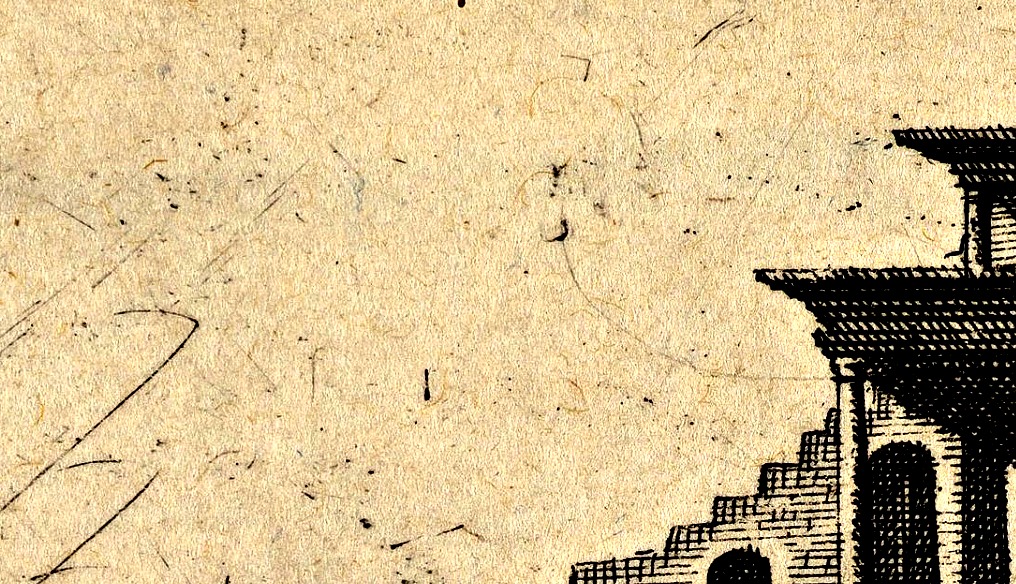
    There are times when great expanses of seeming nothingness in prints is disgracefully overlooked, simply because they usually have nothing to do with the subject matter and are meant not to be an interrupting influence–that, or they are slightly more than the almost-nothing that they are to provide perspective or depth or contrast or an object for comparison.  These are moments in art for wide interpretation, since they have so little value in themselves. It would be interesting, I think, to treat these are runaway pieces from their artwork, open to a found-experience–and so, in this case of Roman architecture, the solids of nothing become a frammenti, and can be described in found narrative of visual escapes, or even by simply giving the fragment its own title, so that it can have an independent existence.    

    The following four details are from engravings (all reproduced in full, below, in a montage) from Ruinarum variarum fabricarum delineationes pictoribus caeterisque id genus artificibus multum utiles, ca.1550:


     The Aphrodesia of Ancient Air; or, a Macro Microcosm Awaiting a Sky Microscope:
    Ruin visual poetruy detail _1_


    ·Posted by :

    ·in:


  • The High Majesty of Magisterially-High Kitchen Appliances (1935)

    JF Ptak Science Books  Quick Post

    Not only do the following illustrations appear in very uncommon muted pastels (for a high Depression-era publication1) it also seems as though the subtle colors underline and accentuate the screaming boasting nature of their images.  That’s the way it seemed to me when I flipped through the pamphlet and came upon Babel-like kitchen appliances. Perhaps it is the color, plus the design, and the odd perspective that give the stuff a regal/towering impression.  Or it is something else. 

    And so, the Zenith Unction of Refrigerator Beauty:

    Refrigerator400

    And the Withering Beauty of Pastel Height:

    ·Posted by :

    ·in:


  • What Do I Do With 40,000 Dreams?

    JF Ptak Science Books   Quick Post

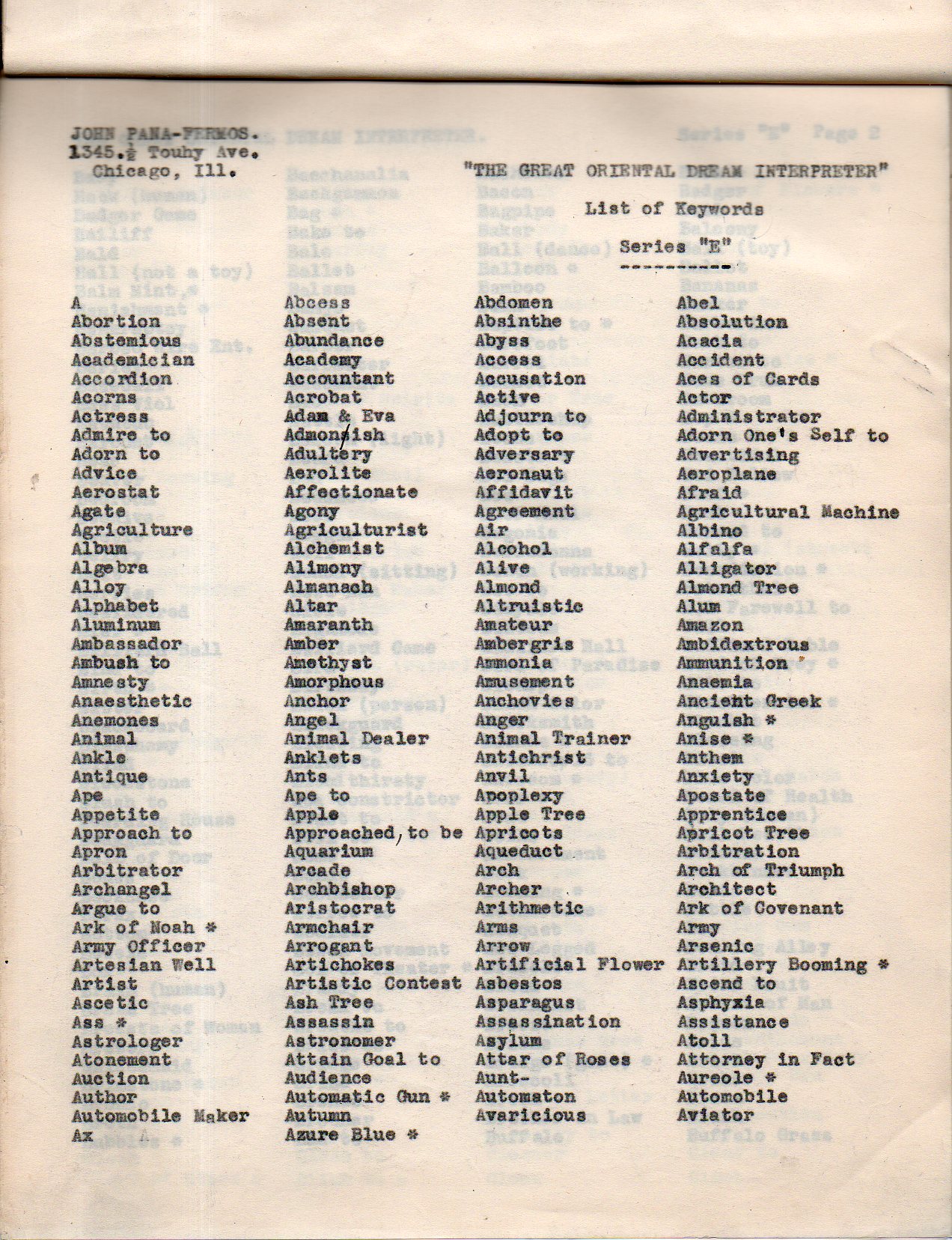
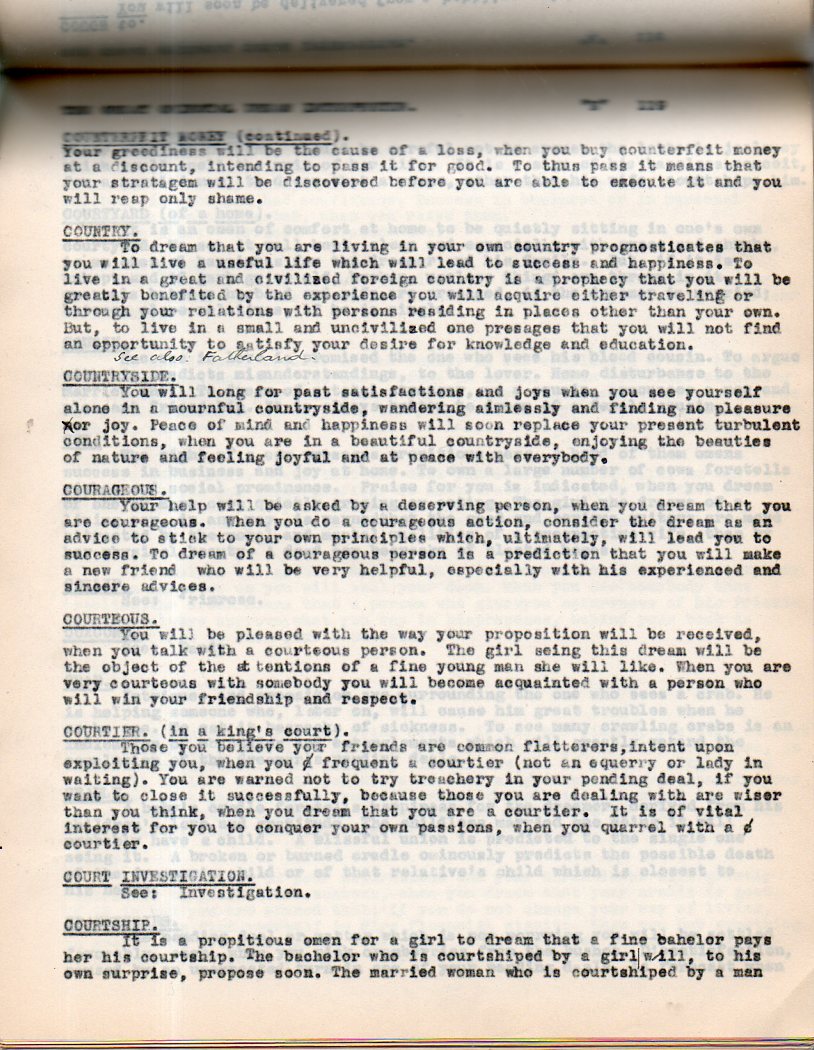
    Dreams398I have on my desk a carbon copy of a manuscript sent to the copyright office and then on to the Library of Congress, where it went into (I guess) a dead-end collection called the “Pamphlets Collection” (which is not THE pamphlet collection, something that would no doubt contain many millions of items), and then after a number of decades that collection came to me.  In any event, that is why I have it–but now, after having discovered it after owning this material for 17 years, I wonder what it is I do with it.

    The work is by Yohanna Ibn al Farmouzi, The Great Oriental Dream Interpreter, a Practical Encyclopedia of Dream Interpretations, and copyrighted in 1936  (by John Pana-Fermos, which is Al Farmouzi, Americanized). The subhead reads: “Based upon the study of over 40,000 dreams, extending over a period of forty-six years” with an index of 2,644 keywords (but then confusingly moves on to say “the interpretations of Eleven Thousand Dreams”).  In any event, whatever it is that is going on in the manuscript is orderly, neat, fairly well-written, and big.  The typescript is 498 pages long, and I estimate contains about 250,000 words, which is a substantial thing.  

    All that said, it is one man’s work on dream interpretation, which means that the reader depends on his insight to lead a conversation on a LOT of different topics.  Perhaps it is of interest simply for its extensive index/categorizer of dream elements, which runs 15 single-space pages of four columns.  

    Mr. Pana-Fermos did publish pieces of this work–one part is a 1000-dream analyzer of 50pp, and another is a love-dream bit.  But there is nothing it seems to match this massive work. 

    I’m just not sure where it should go.  No doubt it would be very interesting to some set of people.  


      Dreams399


  • Gigantic and Unbuildable Architecture: Buckminster Fuller’s Midtown Manhattan Dome, 1968

    JF Ptak Science Books LLC  Post #115 (from 2008, extended a little)

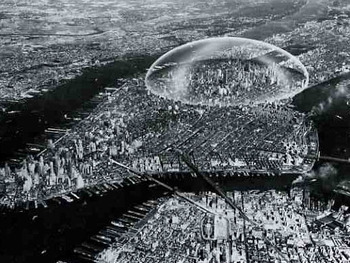
    Big_arch_city_fuller139
    Buckminster Fuller had a lot of good ideas but I’m not so sure that this is one of them.  I don’t have much doubt that versions of domed cities will exist in the not-dim future, though I do have doubts that they would be constructed to preserve the bones of antiquated ideas.  It seems logical to me that the retrofit of untold millions of cubic feet of city life just couldn’t make sense, even if the square footage was in Manhattan.

    Domed cities pop up here and there in speculative/science fiction in the 1960’s (though there is a far-deep reference to one from the 1860’s, though that one is under water), and there are many that are sprinkled like seasoning here and there in more modern formats, as with Stephen King’s Under the Dome made into a slappingly-silly tv show of the same name and The Simpson’s movie that Borrows Very Heavily from King.  There are others to be sure, though I am more interested in miniature domed underground cities or Lego-made Dyson sphere within a Domed Galaxy. 

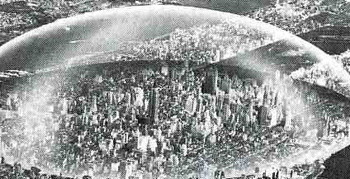
    Fuller’s idea (working with Shoji Sadao) is multiple orders of magnitude removed from the original idea of the arcade (like the passage Choiseul, located in the second arrondissement of Paris), envisioning the construction of a dome to encapsulate NYC from the East River to the Hudson along 42nd St, and from 64th to 22nd St:  that is two miles in diameter and, plus at least a half-mile high (or about 2.5 Empire State Buildings pile one on top of the other at zenith sector).  I’m not so sure how this would be built, or how things would be heated or (especially) cooled, or what the construction material was for the skin of the dome, or how people get in and out, or how you deal with heating and cooling, or how any noxious chemicals are expelled—but Mr. Fuller thought that the savings alone from snow removal from NYC streets would pay for the dome in ten years.  (That would maybe work out–the snow-removal analogy–if someone had asked Mr. Fuller exactly how much snow he was talking about…)  
    Big_archfuller_detail141

    Mr. Fuller also thought that the dome would protect the city (or this part f the city) from radiation fallout.  That could be true, assuming that of all the hundreds of nuclear warheads that the Soviets would’ve launched against NYC alone none of them would’ve found their target, except perhaps for the Ridgways or Staten Island, where the shock wave or winds produced by ensuing firestorms would not have disturbed the dome.  Of course if a warhead actually came close—or actually hit—the dome, the protection from radiation would be moot. 

    Source:  Buckminster Fuller in Think magazine, vol 34, Jan/Feb 1968.  AND of course the lovely work by Alison and Sky Michele Stone, Unbuilt America, McGraw Hill, 1976, pg. 99.


  • Looking for Found-Poetry of the GENIAC in Wordless John Cage Compositions

    JF Ptak Science Books  Post 2611

    When I typed “compose” for this post it meant something slightly different, especially since I was going to sub-head it with a quote about John Cage: 

    “HPSCHD, a piece for 7 harpsichords playing randomly-processed music by Mozart and other composers, 51 tapes of computer-generated sounds, approximately 5,000 slides of abstract designs and space exploration, and several films1.”

    Really? How could anything possibly go wrong here?  Seriously though, I like John Cage and he gets a “pass” for all of the work that I don’t get or understand.  He came up when I was working on the remnants of a box that contained further remnants of an early educational electric toy/computer called the “GENIAC”.  This was a creation by the very versatile Edmund Berkeley and appeared first in 1955, about a decade or so after the appearance of the first “-IAC” computer, the ENIAC, a revolutionary machine begun in 1943 at the Moore School of Electrical Engineering at the University of Pennsylvania.  The GENIAC (and later, the BRAINIAC) were DIYs for kids in the 1950’s and 1960’s, and in addition to the 100+ electrical circuits you could make there was also the possibility of making music, which puts it way out front in the history of DIY electronic sound.  

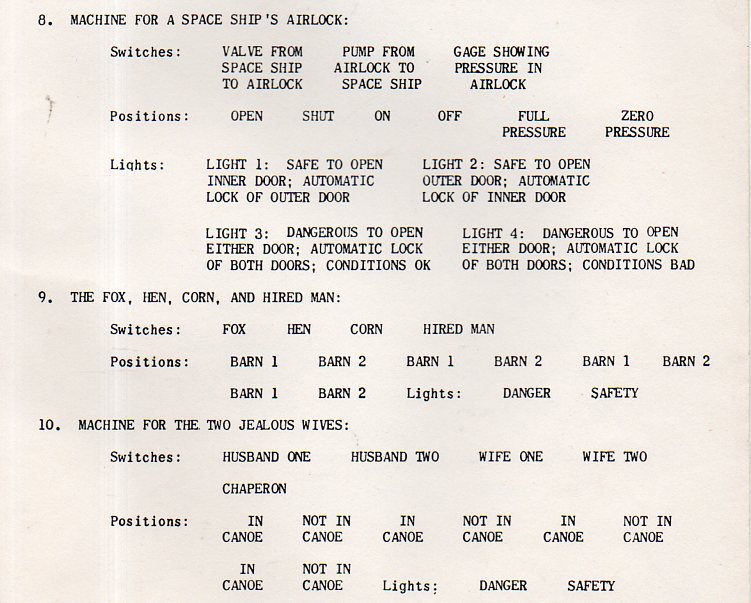
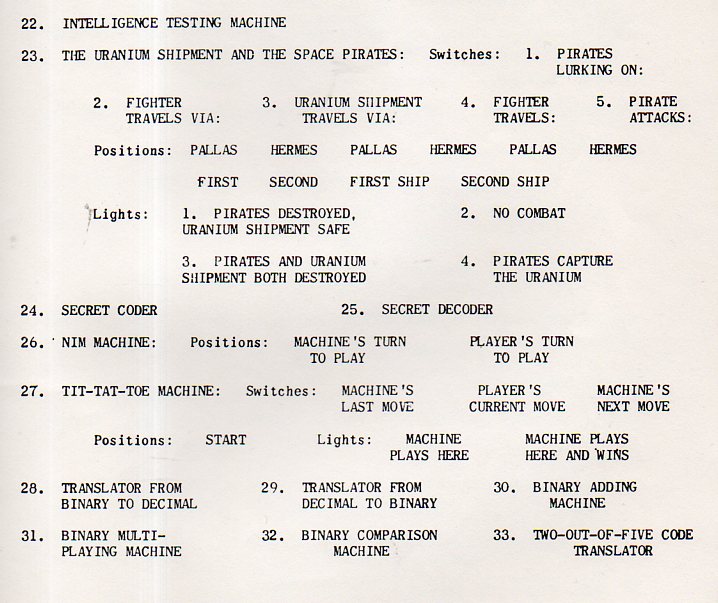
    But what I was going for here in the labels sheets for the GENIAC was to scrounge out some found-poetry–there really isn’t any, except perhaps for the silent John Cage type, or a repetitive/cascading Steve Reich/”Come Out”2 variety found here:

    “George Calling Tom, George Calling Dick, Tom Calling George, Tom Calling Dick, Dick Calling George, Dick Calling Tom.”

    Overall there may be some found-poetry, just in the variations of classifications of the labels that your were supposed to cut out. On page one we have labels for “the hall light”, “the porch light”, “the burglar alarm”, “the automatic oil furnace”. 

    Things get more interesting on the back of the first page, as we move from the mundane to the not-so:

    “Private signalling channels”, “machine for a space ship’s airlock”, “the fox, hen, corn, and the hired man, and then “machine for two jealous wives”. 

    That was certainly different from the obverse.  

    Geniac227


    Things get more interesting still on page three:

    Geniac228

     At the end of the day, I think there is only scant poetry, and that is found in the structure of the label sheet–that said, I think the whole thing taken together is a Visual Thing itself, because the four page booklet (11×8.5″/page) is actually (anopithsographically (!)) printed on one sheet on paper and on one side only, so the effect is seeing this on a 11×34″ sheet of paper with all of these seemingly-disparate bits on it, which is pretty cool.  

    Notes:

    1.”Computer-Based Algorithmic Composition”, Michael Edwards , Communications of the ACM, Vol. 54 No. 7, Pages 58-67   http://cacm.acm.org/magazines/2011/7/109891-algorithmic-composition/fulltext

    2.  If you don’t want to hear the whole thing (few will) but want to hear the effect, start at the beginning for 15 seconds, then advance a minute, then another, and so on.  

    ·Posted by :

    ·in:


  • Disk-Dirigible Star Trek “Enterprise”, 1932

    JF Ptak Science Books  Quick Post

    An indulgence: I’ve posted a few things on this site of old and/or found tech that reminds me of the USS Enterprise (NCC-1701-D). Here is one that popped up in the pages of Popular Mechanics for May 1932–an airship designed by Guido Tallei that was effectively a flying saucer, a dirigible-disk. There was another design from him from 1931 that was similar to this except that it looked a LOT like a sleek underwater-swimming penguin.  


    Enterprise flying disk 1932April, 1932, Popular Mechanics


  • Outsider Logic, Part 17: Monkey on the Brain

    JF Ptak Science Books   Quick Post

    There are hundreds and hundreds of pamphlets like the one below in the store’s Outsider Collection–honest work that somehow has gone a little astray, or over-the-side, or reached too high, or fell too low, or some such thing. Sometimes I read in the work a little, and sometimes not–the present pamphlet is in the later category, which means I really have no idea what the author is channeling, except that I know it is fairly evangelically religious and capitalist. I don’t know why the human head profile is on the cover, and I also don’t know what it means. But no doubt it was something encapsulating, something representative to the work as a whole, otherwise it (probably) wouldn’t be there. If I was 25 years old I might stop to read the 193-page work a little; but I’m not, so I won’t.

    (P.S.: the covers are velveteen.)

    Americanism vs communism130


  • A Fine and Deep Brightness in Soil and the Beauty of Yellow (1936)

    JF Ptak Science Books   Quick Post

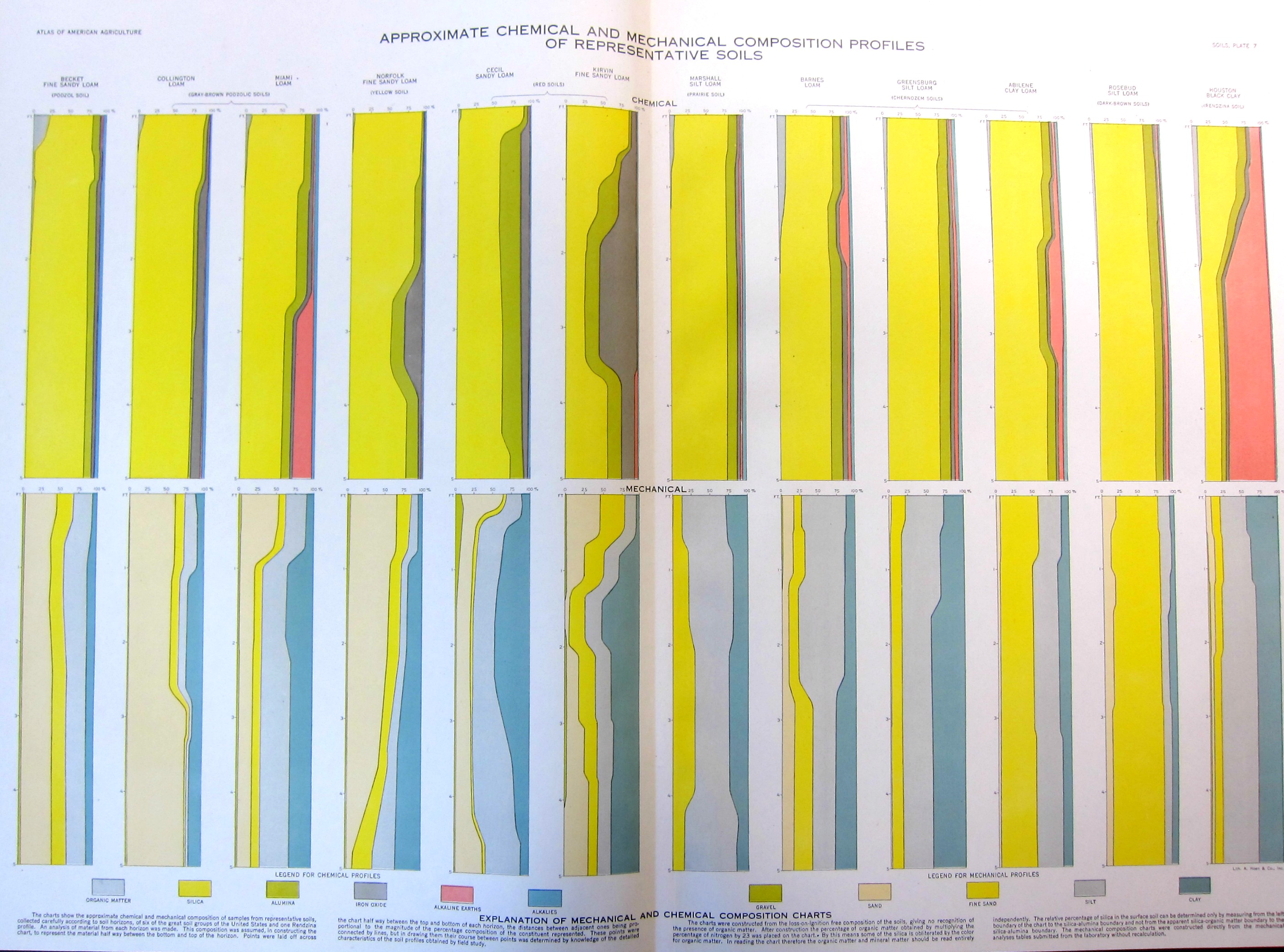
    This yellow is similar to the cover of Dr. Seuss’ One Fish, Two Fish…, the color yellow symbolizing courage/nobility in Japan, wisdom in Islam, and a deity-color in Hinduism; the color so fond of many great writers like London and Doyle, and Harte and Stevenson that they employed in in titles of the books.  The favorite color of Van Gogh1, and perhaps not-so-favorite of Shakespeare (appearing in references to bile and melancholy and falling leaves), it is usually a positive color–except that it also can signify cowardice, ego, caution, and illness (malaria, jaundice). 

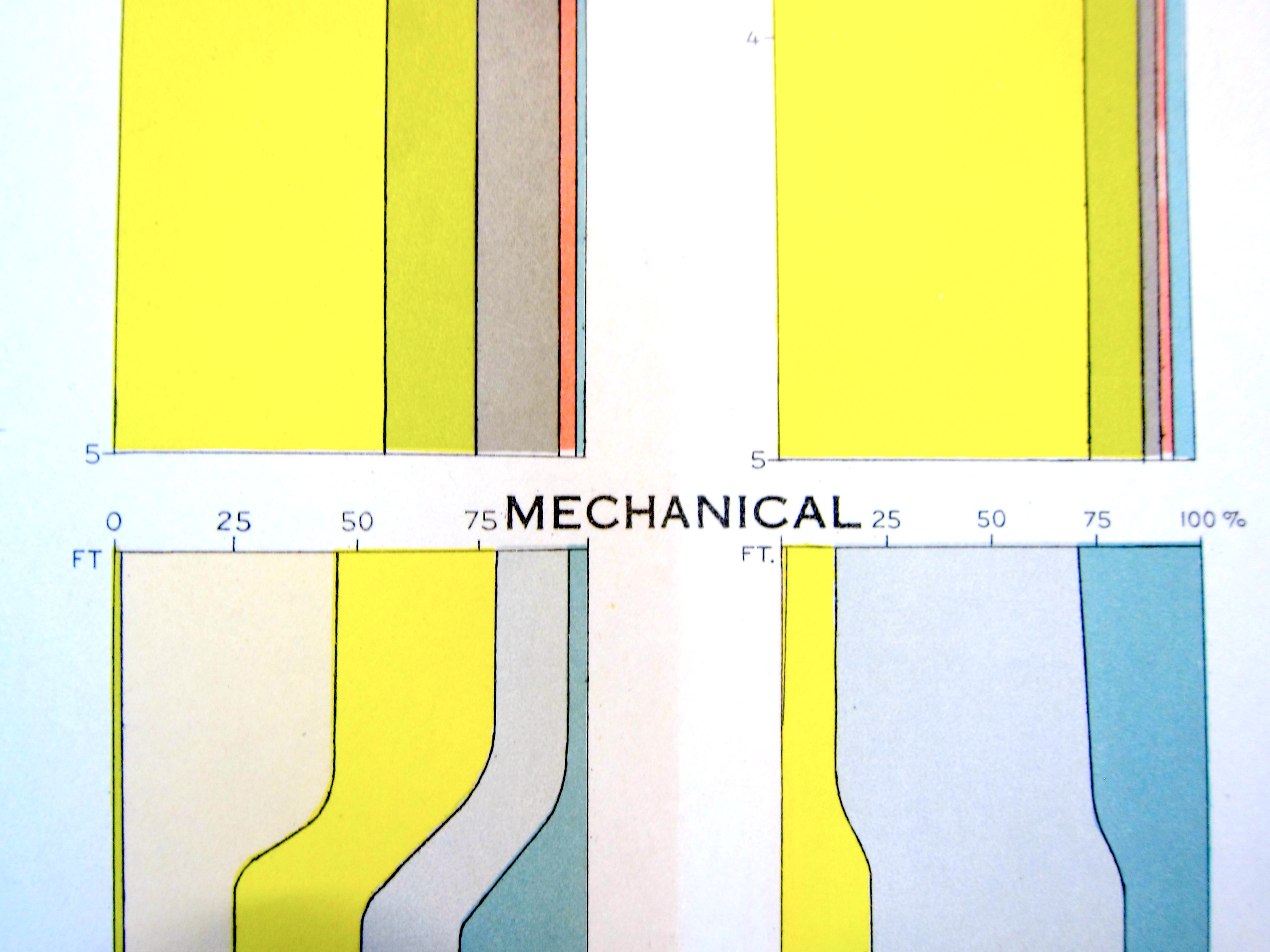
    And so, yellow. The yellow here is a color of soil, and a beautiful yellow it is, the chart a piece of found-art in itself, a found-Abstraction.  It actually was published in the Atlas of American Agriculture, lithographed by A. Hoen, and published in 1936–a particularly bad year for U.S. western soils. 


    Mechanical color b

    And a detail:

    Mechanical color


    Notes:

    1. The Van Gogh museum’s “Van Gogh Letters” is a must-visit if you are interested in his correspondence. http://vangoghletters.org/vg/  Actually the word “green” pops up about 15% more often than “yellow” as the most often mentioned color in the correspondence, though I think that the scholars say that his favorite color hands-down was yellow.  


  • The Found-Abstract Art of Comets, 1867

    JF Ptak Science Books    Quick Post

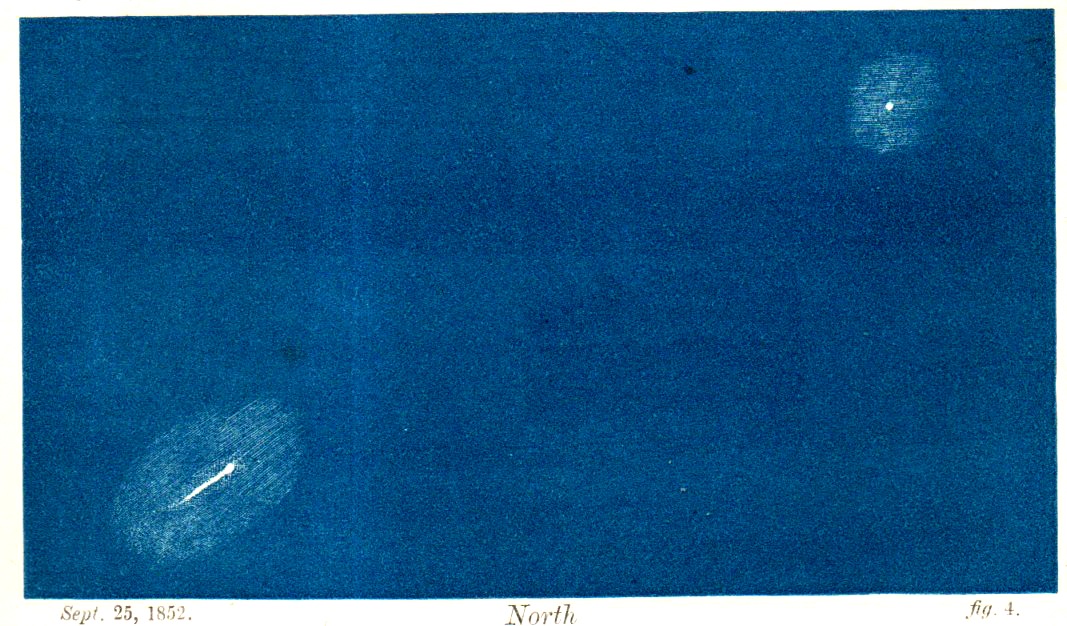
    Some of the most interesting Found-Art images in the history of science belong to astronomy, and within that, some of the most expressive and least-populated images of great appeal and haunting beauty are for early images of comets.  And so it goes for this (“tinted”) engraving of Biela’s Comet, which illustrated an article by London-born W.T. Lynn (at the time with the Royal Observatory, Greenwich) which was published in the April, 1867 issue of The Intellectual Observer.  The comet was named for Wilhelm von Biela who discovered the periodic nature of the comet (6.6 years, it had been identified as early as 1772), and had disappeared by the 1850’s, but not before breaking up into at least two large pieces, which is what we are looking at below:

    Bielas comet100

    And the full image:


  • The Society of Linoleum and the Loneliness of Italian International Design

    JF Ptak Science Books  Quick Post 

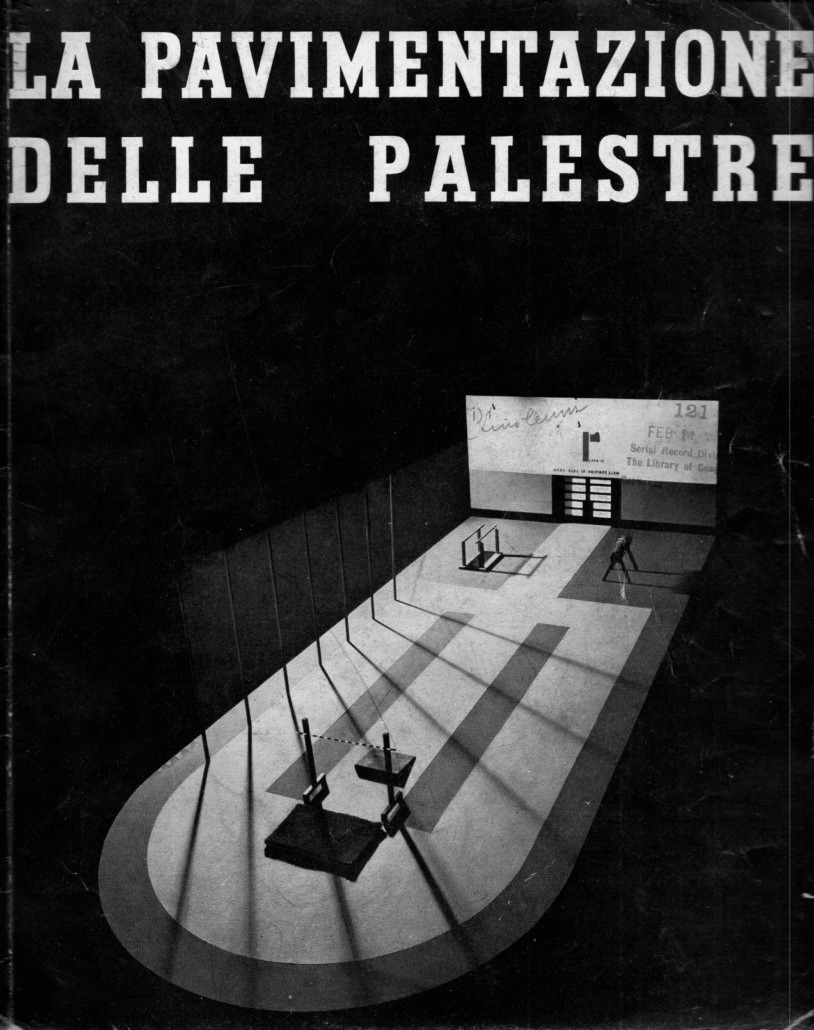
    I’ve encountered a few items like this in the massive pamphlet collection I purchased years ago–works on building and design in Fascist Italy that happen to be very, well, “lonely”. The few examples I’ve noticed have had a definite definite Rene Magritte qualities–mostly absent of people, spare human touches, and a sense of fear and foreboding.  It is hard to imagine that a pamphlet like tonight’s entry–La Paviemntazione delle Palestre (Gym Flooring/Pavement) could excite such a variety of observation and emotion, but it does.  The cover pretty much confirms this–it is striking, and dark, and maybe even a little vengeful–and all they are talking about is equipping gym floors with linoleum:

    Italian Linoleum090

    Impressionante, vero?