A Daily History of Holes, Dots, Lines, Science, History, Math, Physics, Art, the Unintentional Absurd, Architecture, Maps, Data Visualization, Blank and Missing Things, and so on. |1.6 million words, 7500 images, 4.9 million hits| Press & appearances in The Times, Le Figaro, Mensa, The Economist, The Guardian, Discovery News, Slate, Le Monde, Sci American Blogs, Le Pont, and many other places… 5000+ total posts since 2008.

Category: Absurdist, Unintentional

  • Found Art: Tunnels of Wind and Water

    JF Ptak Science Books  Quick Post

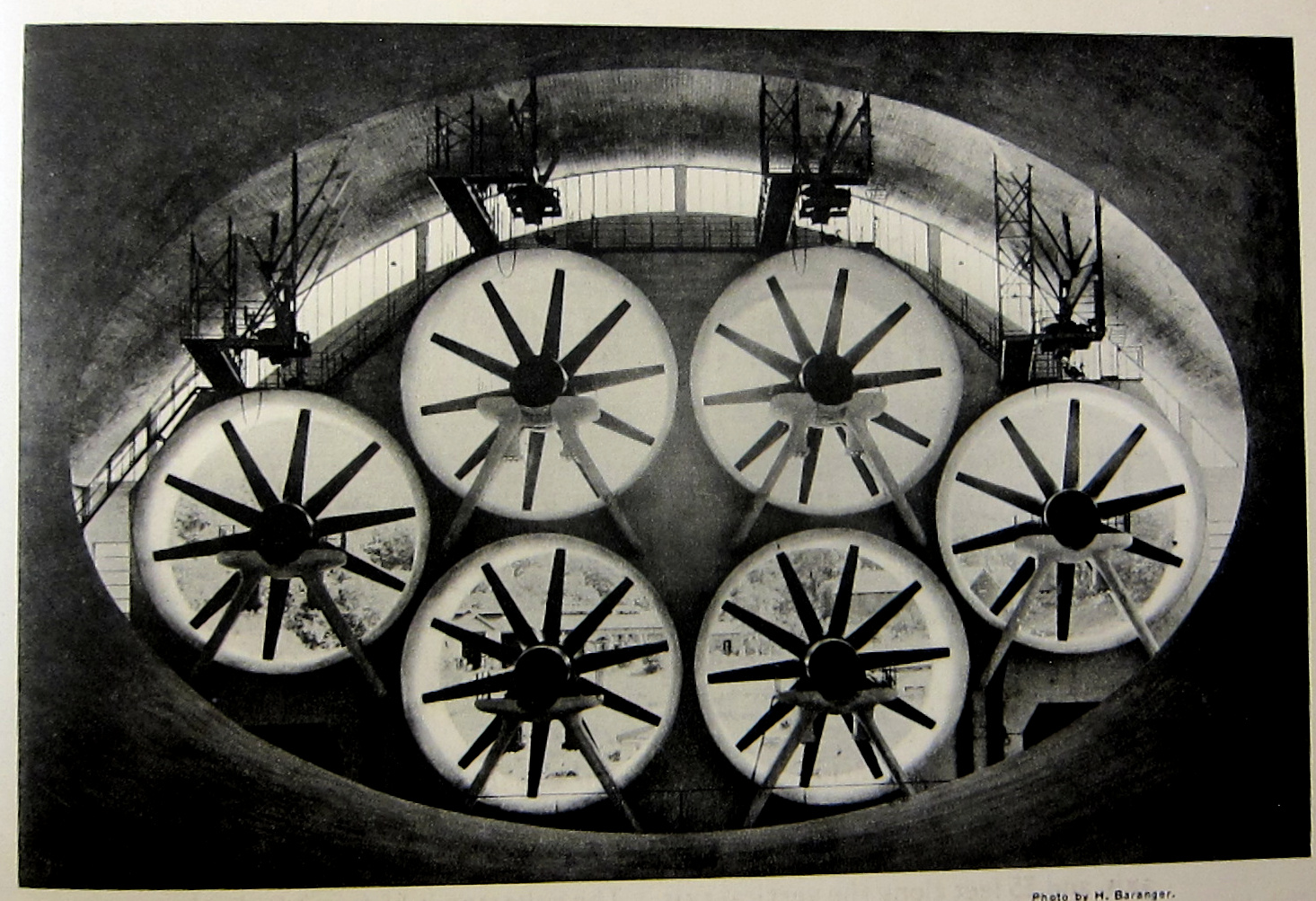
    This addition to the Found Art category (sub-cat of the Found-Dadaist thread) comes today from Creations Techniques Francaises (“French Engineering Achievements”, 1935), which is a pretty straightforward semi-propagandist/glowy work with two gems tucked inside. The first is a lovely image of the business-end of an aeronautical wind tunnel designed by Le Marec for full-sized aircraft at Chalais-Meudon, an elliptical structure 81’x55′:

    Books French tech wind tunnel

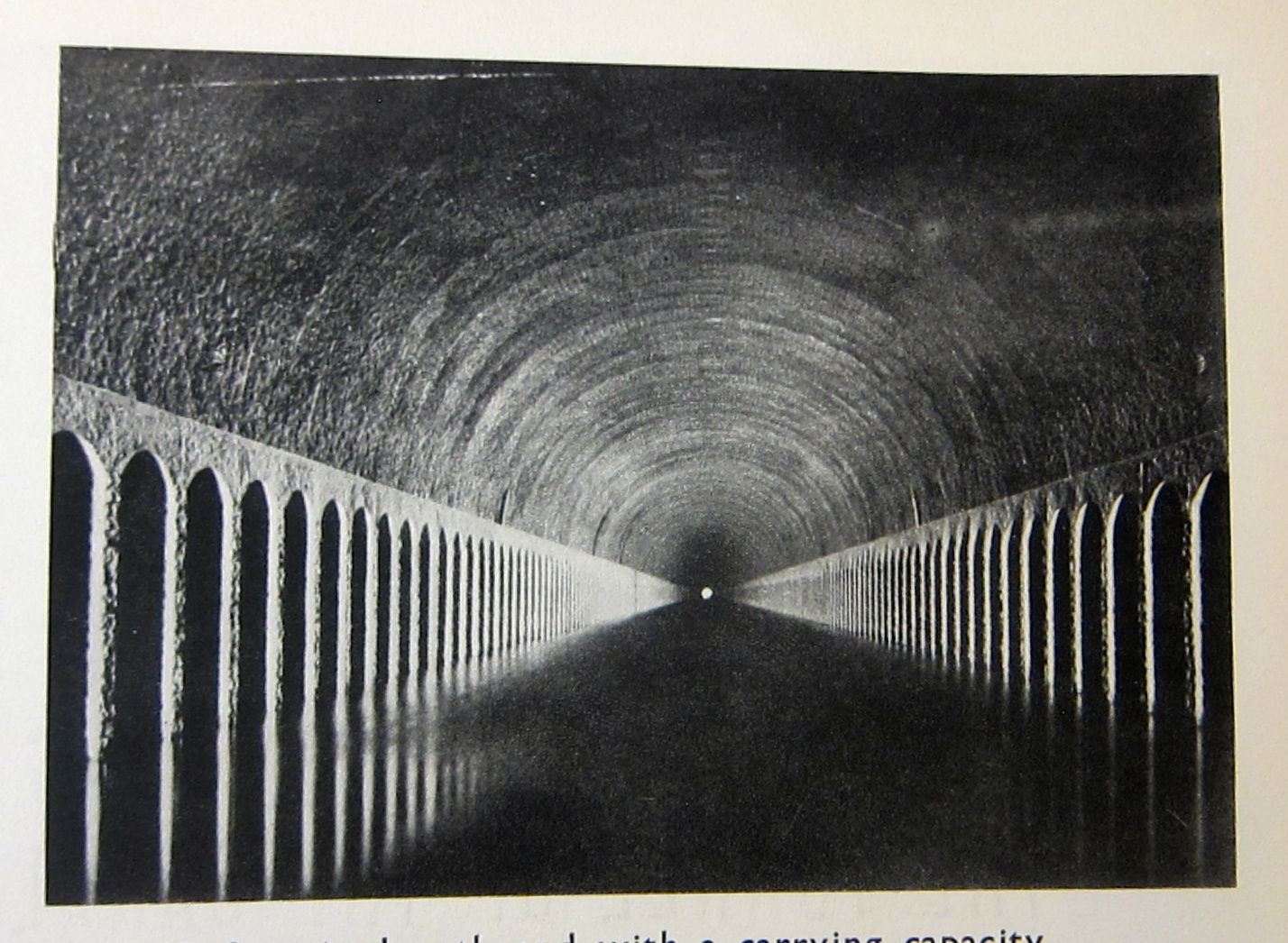
    The other tunnel is found a few pages later in the Rove Canal/Canal du Rove (opened in 1927), which is 4.6 miles long and 72′ wide, which at the time was the longest underground canal in the world. The picture below is an image made at one end of the tunnel, the point of light in the distance is the other end, 4.6 miles away:

    Books French tech wind tunnel

    ·Posted by :

    ·in:


  • Found Dadaist Image, Lost in the Beauty of Sound on the Sea (1854)

    JF Ptak Science Books  Quick Post

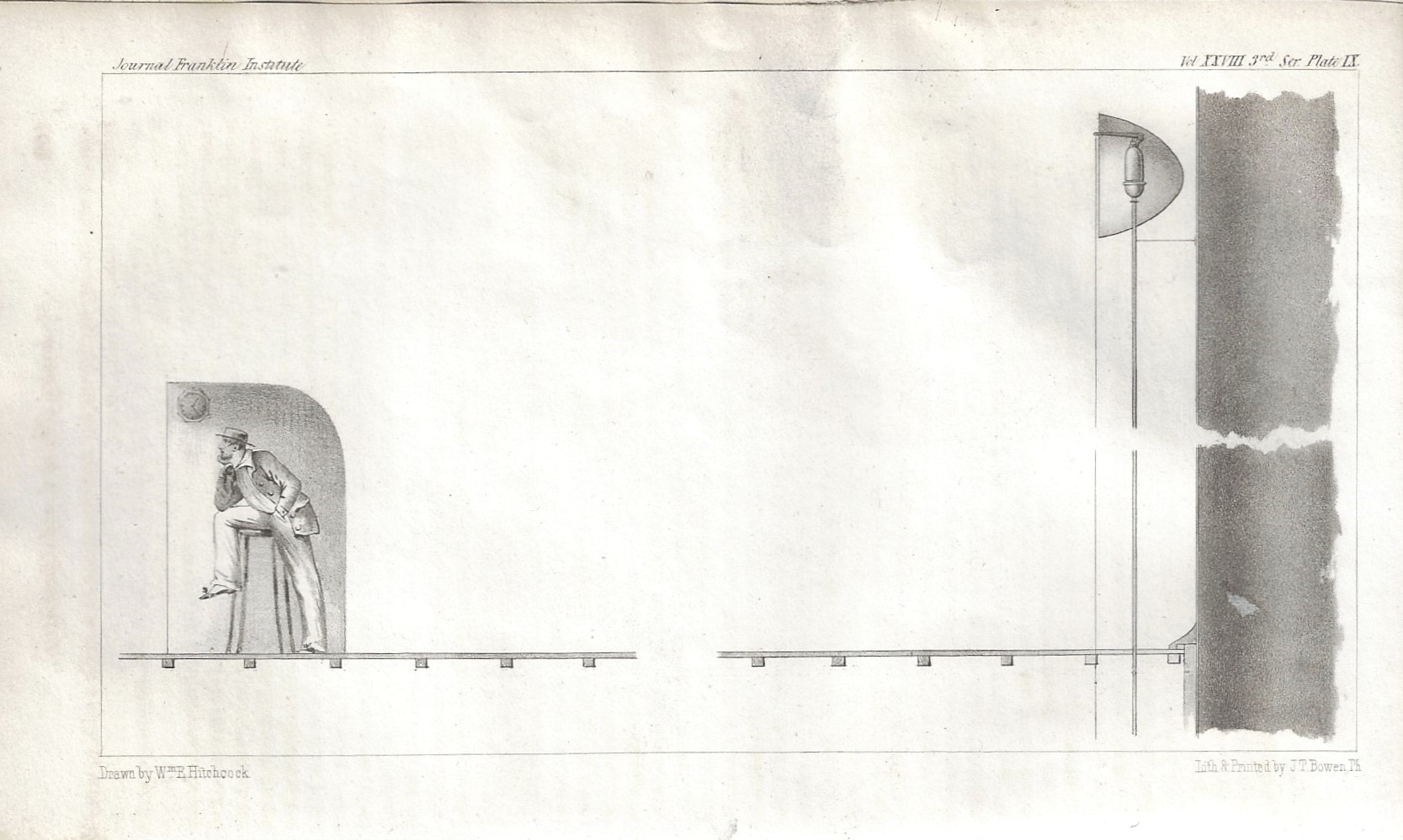
    This fantastic image was found in an 1854 article1 on pre-wireless  ship-to-ship audio communication. The point of the article of course was deadly serious: using a steam-driven whistle not only for signalling to other ships (a la the truncated communication systems between trains on their whistles) but also employing it as a type of RADAR where you may be able to determine what foggy things lay ahead by virtue of their echo, among other things. The article describes the scene below as an effective arrangement for the broadcasting whistle (on the mast or funnel at left) and the “signal-man” in his “pent-house” at left, though I don’t see any instrumentation for the guy. That structure was supposed to shield his hearing from the audio blasts which were to be heard at a distance of five or six miles (and which were to be sounded every few minutes)–the hut seems a little flimsy for that purpose.  In any event, removing the image from its context presents us with something very spare and very creative:

    Found Dadaist audio com ships

    Notes:

    1. John C. Cresson, “Remarks upon the Use of Phonic Signals in Navigation”, pp 397-400, in the Journal of the Franklin Institute, Philadelphia, Vol 28 (third series), volume 58 (overall), July-December 1854.

    ·Posted by :

    ·in:


  • Circles Great and Small, 1892

    JF Ptak Science Books   Quick Post

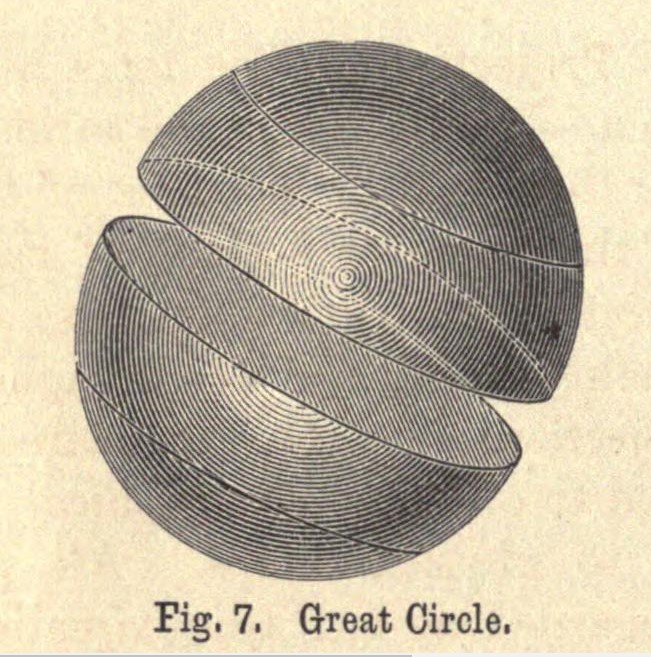
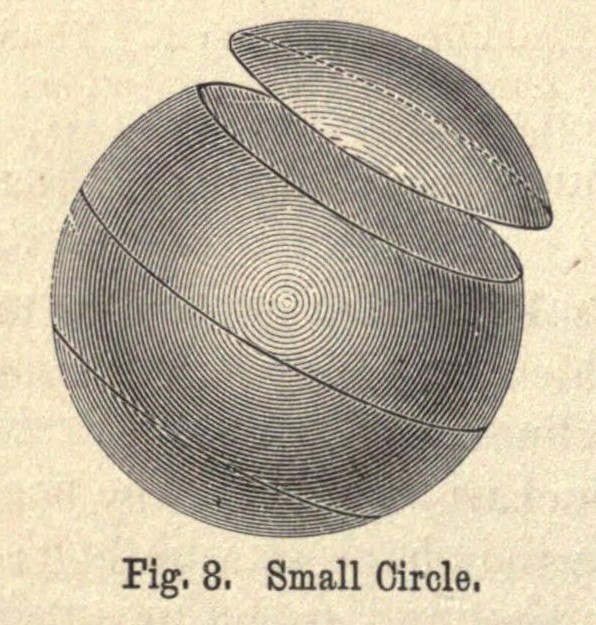
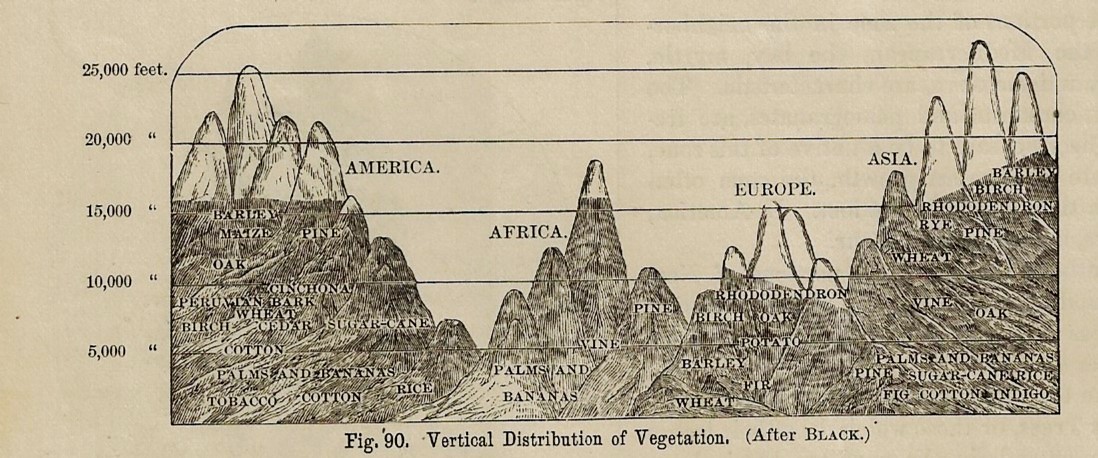
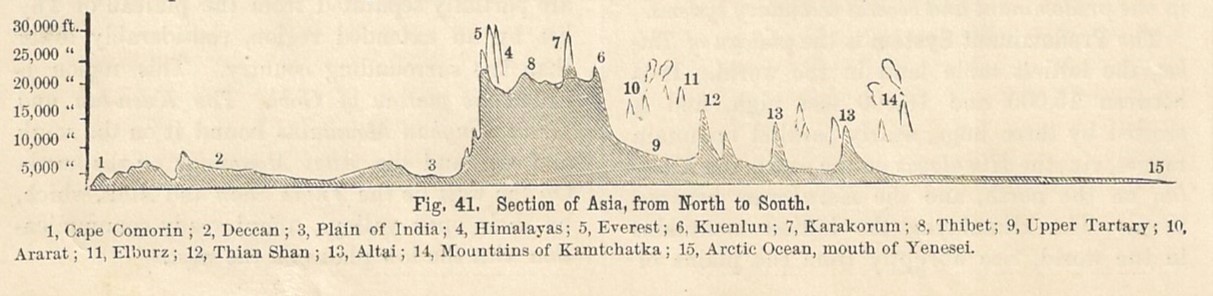
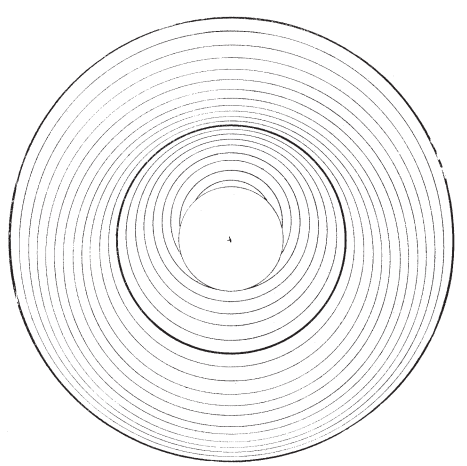
    I found these lovely illustrations in a grade-school books by Edwin James Houston, The Elements of Physical Geography, for the Use of Schools, Academies, and Colleges, printed in 1892. The first  two images are found-Abstracts and appear in the section on globe construction; the other two are cross sections showing the relative heights at which vegetation is found, followed by another cross section showing the heights of mountains. All are quite small in the original, no larger than 2″ x 4″–they are lovely when enlarged, especially the “Great Circle”.  

    Mountains great circle Houston 1892


    Circle small


    Mountain cross section Houston _2_


    Mountain cross section Houston _2_


  • What is the World’s Most-traveled Book?

    JF Ptak Science Books    Post 2778

    What is the world’s most traveled book? This question came to mind after I received an order for a book that had been sent to me from Florida after it arrived there from London, sending it off to someone in Baltimore. Does it go back to London after that and continue its travels?

    Is the Most Traveled Book (MTB) a category of book, or a single title, or a single copy of that title? Is it thousands of people moving the book, or is it just the single book making the trip? If it was just a title, then the number of miles packed on Stephen King books traveling back and forth to the beach or wherever by millions of people over several decades would probably outweigh the travel of all of Homer on a galactic scale. My preference is for the single copy scenario. Also: I’d like this to be a published book rather than not, simply because the boundaries get a bit too misty for me.

    Dr strangelove code bookThe closer we come to the present time, the easier it would have been for a book and a person who might have been traveling with the book, to travel. It increases the chance for people to travel with a book, and with the invention of the middle class, it would encompass more people the chance to come in contact with books and travel with or send them. And of course it is the mode of transportation and the creation of parcel post that would add orders of magnitudes of miles to category—for example you could receive a book from London and send it out to Tokyo where it might be sent to Wellington all in two weeks. In 1822, raking in that sort of mileage would have been nearly impossible for almost all circumstances. No doubt books were carried to Botany Bay from London and then back again, perhaps over and over as the property of the ship’s surgeon or some such, but that would be years worth of travel.

    Maybe it was books carried by people who were professional travelers or at least traveled a lot, like Napoleon or Alexander going to “work”.

    Is it a travel book, like Herodotus, Sterne, Twain, Stark, (or even Kerouac who had the words right in the title?), Xenophon…Cervantes?

    Perhaps it was literature—no doubt Shakespeare, Dante, Sophocles, Euripedes, and Aeschylus have been hauled about for pleasure. What about professional books? I doubt that copies of Newton, Galileo, Copernicus, and so on have traveled very much on their own (though the ideas contained in them are probably among the best-traveled of that sort), but I suspect that anatomies (Vesalius, Gray) have some miles in them. There are no doubt other reference books like that that could have traveled save for their size (like Audubon, which could have been useful in the field but which would have needed their own caravan). There are unliekly titles that have made their way around the world (like Darwin’s Lyell making the long trip on the Beagle), but that book ended its travels when Darwin got home.

    And what about military strategy books like Lao Tsu, Sun Tzu, Clausewitz, Thucydides? If in the field their owners could have lugged them far and wide, passing them along after enforced/sudden “retirement” or when their usefulness ran out.

    What might establish the peripheries of this question are books that keep intact a belief system, or way of life, a secret-or-not codification of a state of well-being? A Bible? Alcoholics Anonymous? Probably that is the first place to visit, the religious book, though offhand it seems that the travel of this sort of book wouldn’t transcend one owner. The Bible and company are enormously popular books and have been printed no doubt in terms of billions of copies, so they have a much better chance of being the leader of the category by sheer numerical possibility. On the other hand some of them were tremendously popular but relatively short-lived, like the “Little Red Book”, which was carried by most Chinese for decades, though I doubt that the work as an inherited object was inter-generational.

    Maybe the best traveled book simply comes down to one that belongs to an aircraft pilot of 40 years’ experience who has been flying with a single title because that is what they had with them on their very first flight, and has become a good luck token. Perhaps it is a King book, or Robert Pirsig; and maybe it is The Cat in the Hat which was an intended gift for a child, the pilot keeping the original as a charm for a successful first flight, and giving away another copy of the book, and so it has made thousands of flights. Maybe the book is never actually read—its just an icon.

    Or perhaps it is an instruction booklet on the reading of nuclear codes and attack plans that has been basically airborne since 1960. This is far less romantic than a Dr. Seuss book, but more, well, “practical”.

    And maybe the most traveled book is less-traveled than the most-traveled map?

  • Found-Abstract Art in Acoustics (with a Nod to Duchamp)

    JF Ptak Science Books  Quick Post 

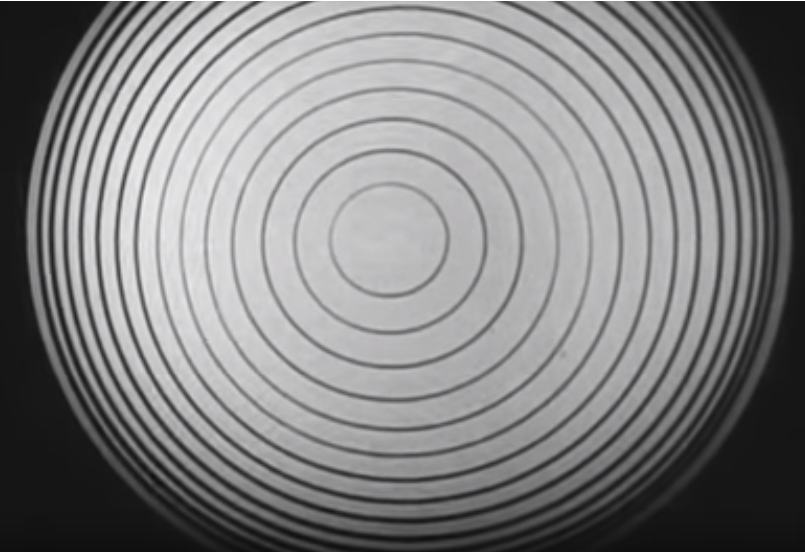
    Just yesterday I posted on Found-Abstract art  (https://historyofideasblog.com/thesciencebookstore/2018/10/found-art-in-electrical-hardware-1885.html) in a cross section of a conduit of telephone wires from 1885. Just now in research a bit on Tesla I found the following diagram for a classroom demonstration in acoustics (appearing in Nature, 11 February 1892) which could easily be added to a list of unintentional/unrecognized pre-Abstract Art art. If you varied the disks in black and white and motorized the whole thing you could imagine it another decade in the future as a work by Duchamp. As it is, it is an ingenious piece of thinking (the whole article follows):

    FOUND ABSTRACT ART 1892 nATURE CIRCLES

    And one still of many from Mr. Duchamp’s “Anemic Cinema”, 1926: 

    Duchamp circles

    For a video of the film: https://youtu.be/dXINTf8kXCc

    Also a nice piece on Duchamps optical experiments from Hyperallergic: https://hyperallergic.com/323582/duchamps-spinning-optical-experiments/


  • Faux Outsider Speculative History of Rattling Musical Jaw Bones, or Something

    JF Ptak Science Books  Quick Post

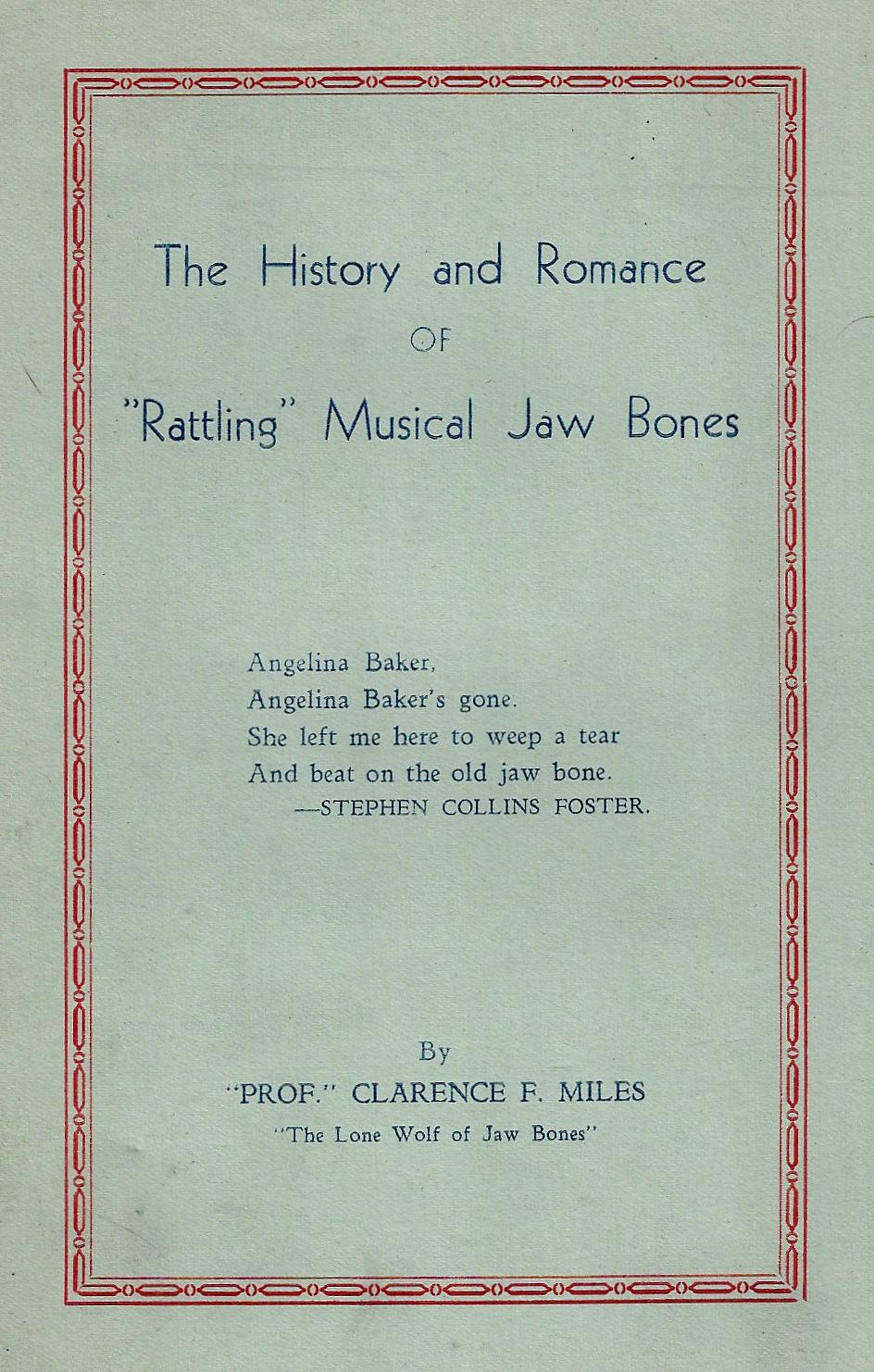
    Books cover rattling jaw bonesWell, here I am, uncertain about posting this odd piece about an odd subject, oddly written in odd style, with odd logic, all wrapped up in a big flat ball of buttery odd.

    At first I thought that this was a true Outsider adventure–that, or a work of a somewhat deep personal dialog that should have stayed deep, and private. In the end I’ve decided that it is a work of Speculative Outsider Fiction, though the subject may be real, but the presentation is purely performance. I think.  

    The work was written by “Prof” Clarence F. Miles, and pertains to horse jaw bones made into a tambourine-type instrument, and has some connection to Stephen Foster1.

    The History and Romance of “Rattling” Musical Jaw Bones,  (1936), “First and only edition, Bulletin No. 1, being the third part of a history of jaw bones” is boasted on one of the sub-title pages, even though it is stated immediately afterwards that “this is my first history of Jaw Bones”. This is an early display of this logic–there are for example the following section headings: “The Last Half of the Second and Last Section of Supplement No. 3” which of course followed the final section called “Second and Last Section of Supplement No. 3” both of which are preceded by  a chapter head  reading “Third Supplement to the First and Only Edition of Bulletin No 1 which is my book the history and romance of rattling jaw bones”! All of those sections fight each other for space in just over three pages. This pamphlet contains powerful displays of such battle construction made even more remarkable by the great brevity of the work, which is only 36 pages, about 10 of which are repetitious bits and chatter. 

    There are also numerous non-sequitur forays into unchartered waterless waters where the unexpected and the unconnected are frequently obtained and connected by brute force: 

    "The above evidence is conclusive proof that Mr. Charles Darwin wasted the five years of his life between the years 
    1831
    and 1836 that he spent as naturalist on the surveying ship H. M. S. Beagle on a voyage around the world
    and that the
    research work performed upon rattling jaw bones by the Stephen Collins Foster Institute of Rattling
    Musical Jaw Bones
    has knocked Mr. Darwin's famous or infamous theory into a cocked hat and the cocked hat
    can be found in the middle of
    next week. Deny it if you can."

    At the end of the work, and after much repetition of the title and the necessity for this history of jaw bones, the author
    states in the third to last paragraph that he hadn't even begun to write the history of jaw bones in his history of jawbones
    book. "From now on I start writing jaw bones at the exact point where jaw bone science ends and the jaw bone skill
    begins", which is a great line. He continues, "I will raise jaw bones to their rightful and exalted station and watch my
    style, speed and dust in accomplishing it".  

    There's more, but I think I've now exhausted my interest, though I do salute Mr. Miles for his great dexterity.

    Notes:
    1. "The quijada, charrasca, or jawbone (in English), is an idiophone percussion instrument made from the jawbone of a
    donkey, horse or mule cattle, producing a powerful buzzing sound. The jawbone is cleaned of tissue and dried to
    make the teeth loose and act as a rattle."--Wikipedia

    ·Posted by :

    ·in:


  • The Aching Beauty of a Work on Telephone Pole Marking Systems (1938)

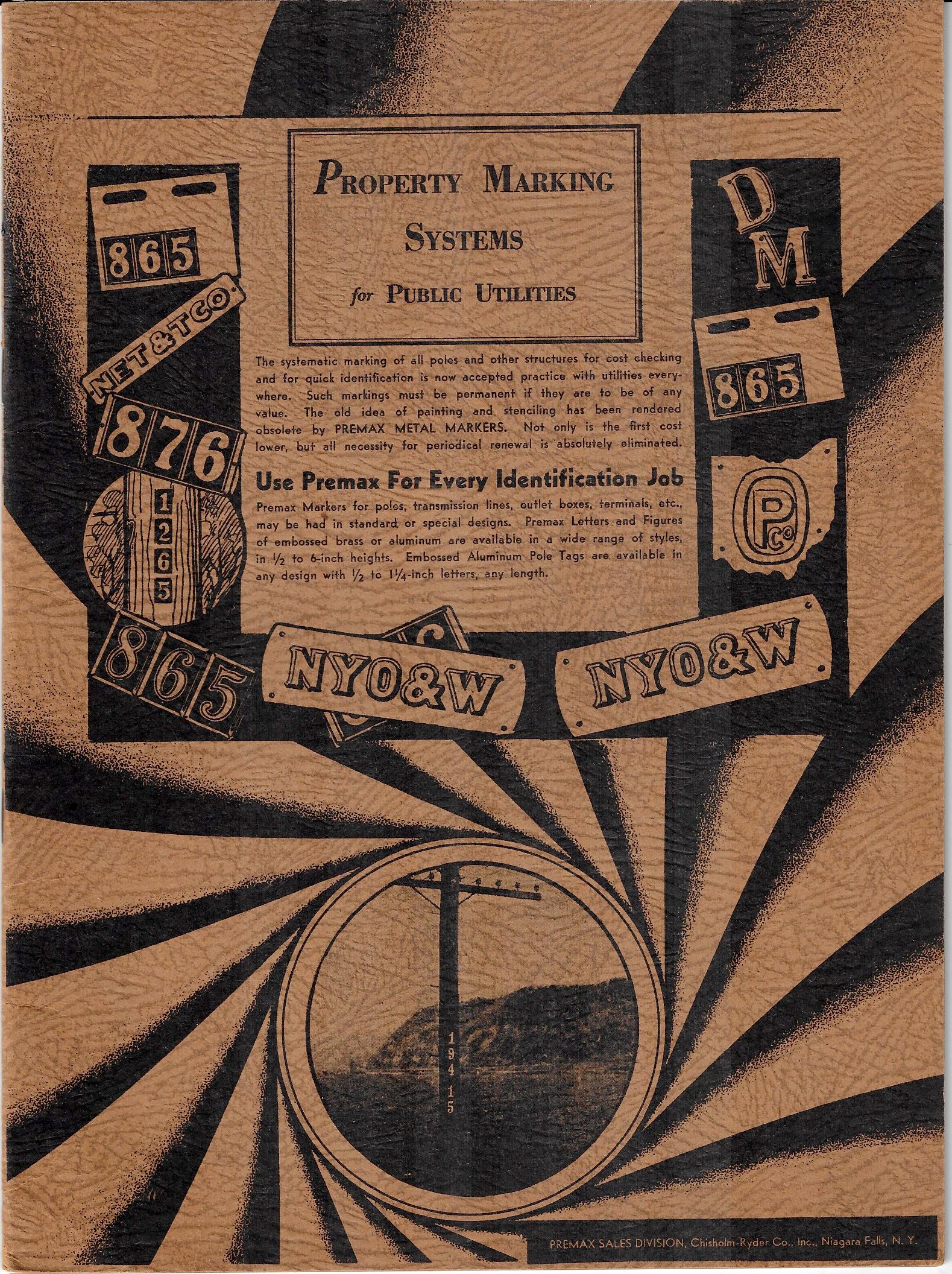
    Books markers coverJF Ptak Science Books  Quick Post

    Over the years I have reported on inspiring and near-perfect minor-major works on minor-minor topics, excellent considerations on the sublime mundane.  These have included efforts from 75+ years ago on the correct method of flagpole painting, zipper repair, maintenance of the reverse of billboards, and the like. Marvelous works exhausting exhausting topics, or seeming so.  How much can you write on the correct way of using a screw, or blasting a stump, or dealing with a puddle of unknown origin? Well, the answer is that quite a lot can be said about these things, especially if you look at the mechanics of the things, or the failure analysis (if there is any)…a lot.  Most of what these pamphlets talk about is the very basics of zipper repair or ladder repair or screen repair–and that is usually communicated over 20-30pp or so. And the remarkable thing is that the information is useful, even if you didn’t have a direct application for it. 

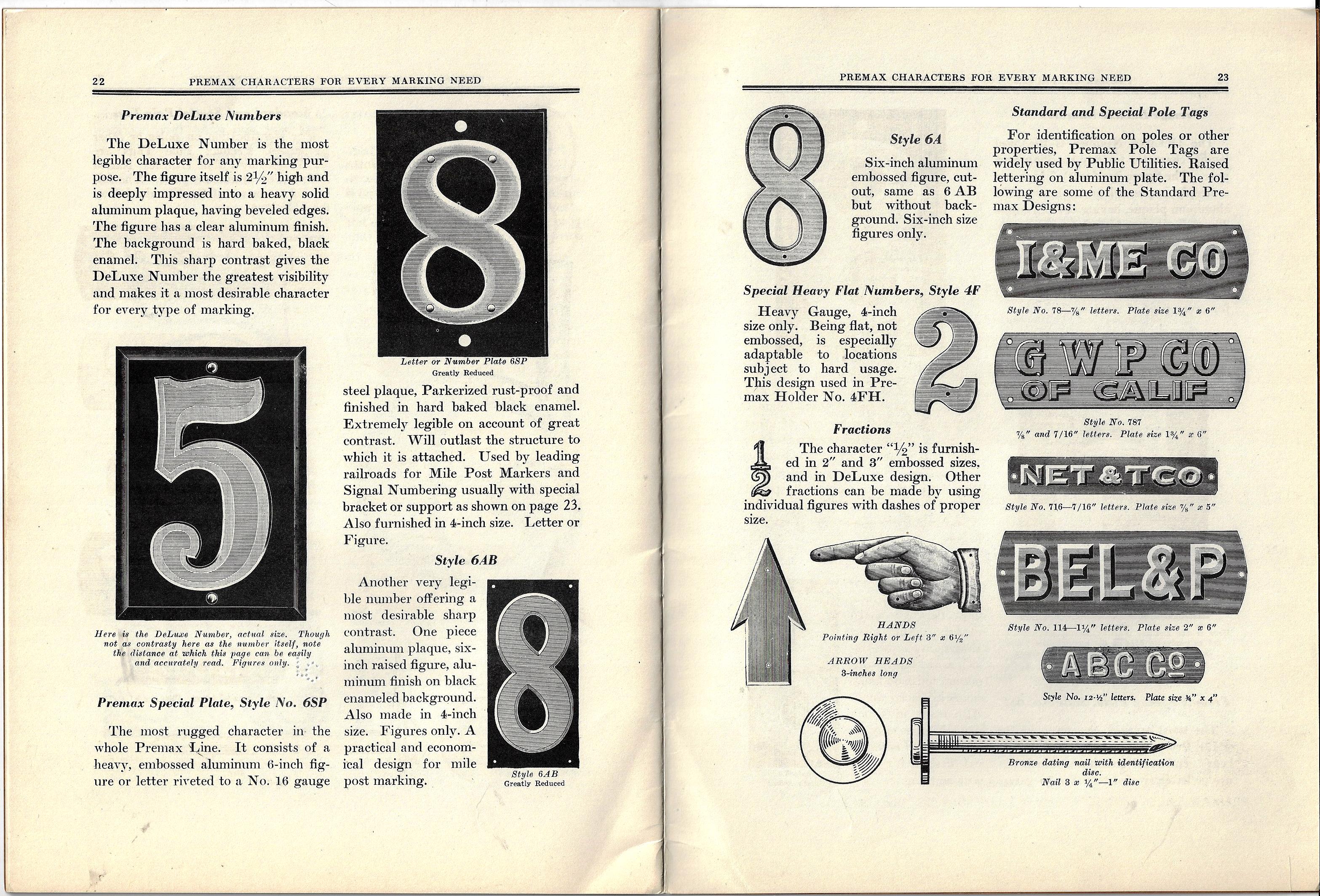
    Today’s installation is a somewhat Dadaist-looking pamphlet on telephone pole marking systems. Is there anyone who hasn’t noticed the found-art pummeled into telephone/utility poles and wondered what the numbers meant? This booklet, far from enchantingly-titled Property Marking Systems for Public Utilities, published by a manufacturer of such numbers and symbols back in 1938, answers these questions and tells the story of how you, too, can mark your poles in an efficient and modern manner.  

    I think the thing is achingly beautiful. 

    I think that if you engage these things as antique paper versions of the endlessly useful  DIY Youtube videos, they take on a higher glory.

    And of course this one to me has a lot of those found-Dada elements…

    Books markers


  • Faux Outsider Speculative Political Theory Performance art, 1887

    JF Ptak Science Books   Quick Post

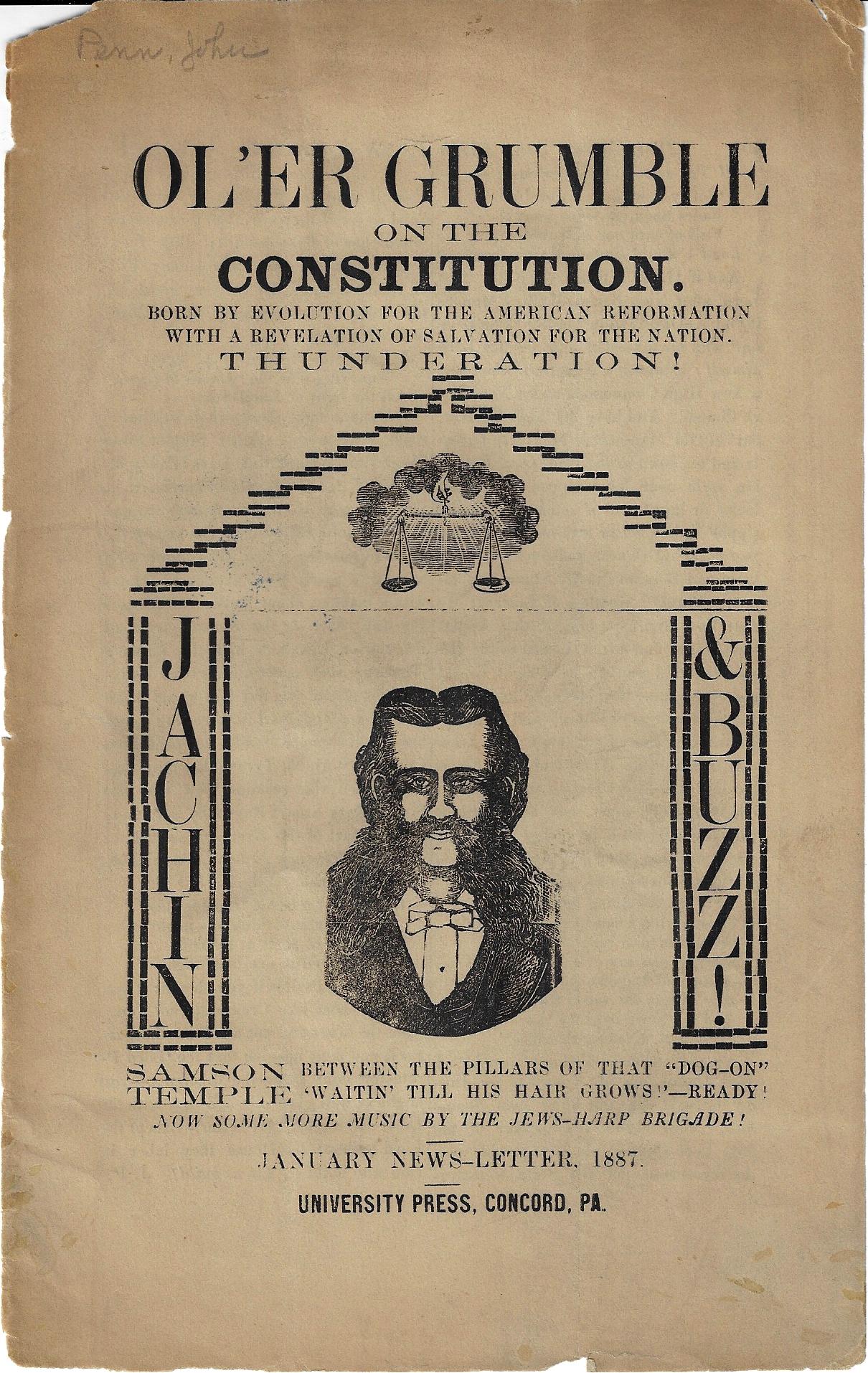
    Having just finished a similar post (“Faux Outsider Speculative History of Rattling Musical Jaw Bones, or Something”) I think that there may be room enough in this blog garden for a series of Faux Outsiders to Accompany the True Outsider Speculatives. For this one, though, I just can’t read the thing because the whole thing comes off in slightly wobbly, gelatinous manner, though I do like the cover art. The pamphlet starts on page 401 volume II, though it is unclear if this pagination actually means something. After the introductory page, we are introduced to a newsletter, which begins with volume II no. 2 for the first month of “Julian Year 6600”.

    So I’ll just reproduce the cover and the first page of the newsletter, and consider my service complete.

    Books cover ol'erNote:

    “According to the Bible, Boaz and Jachin [names used in the design on the cover] were two copper, brass or bronze pillars which stood in the porch of Solomon’s Temple, the first Temple in Jerusalem.”–WIkipedia

    ·Posted by :

    ·in:


  • Found Poetry on Buried Bees (1865)

    JF Ptak Science Books   Quick Post

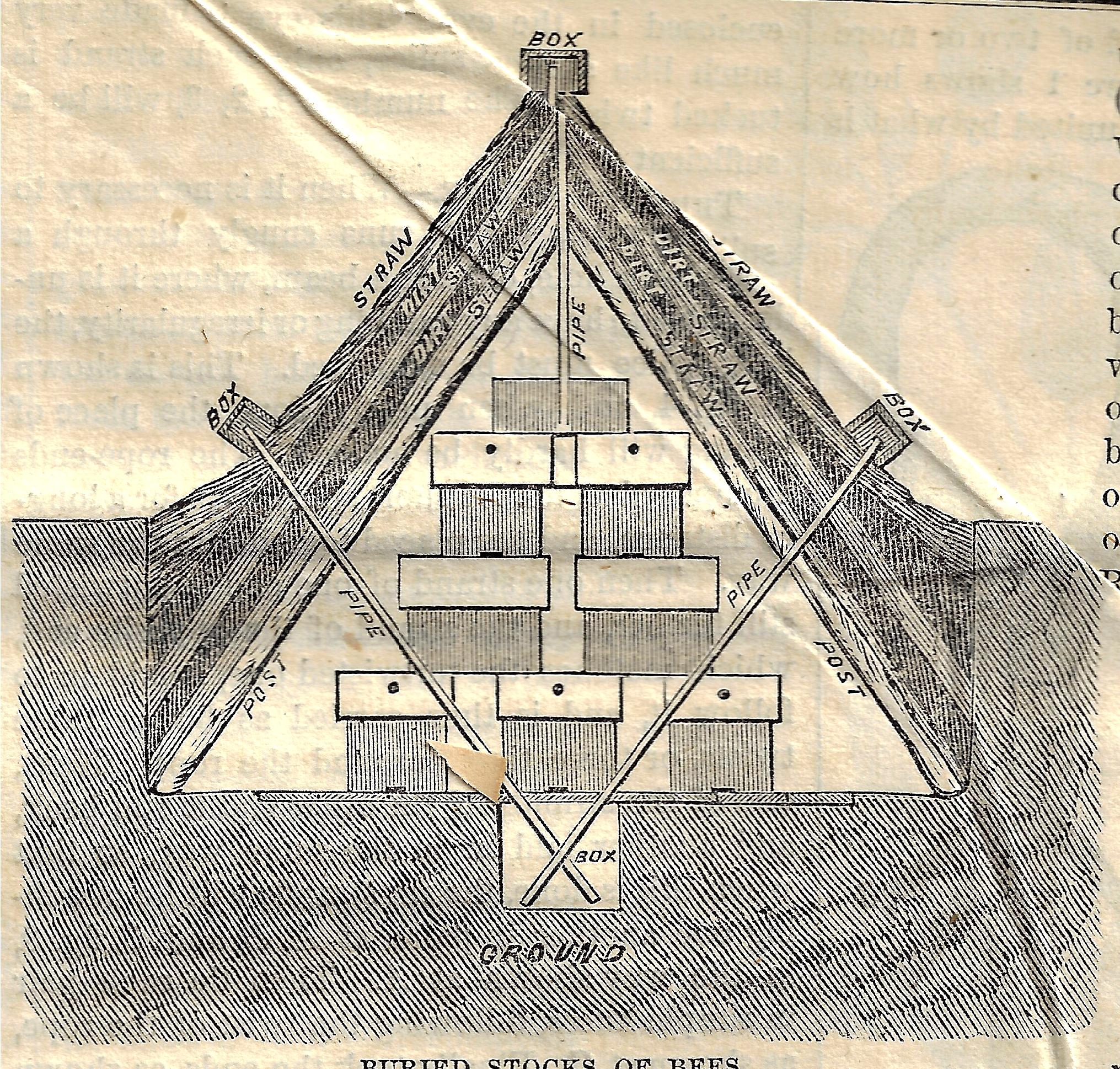
    I found this report in an issue of the American Agriculturalist (1865), waiting quietly to be arranged and re-arrange, but hopefully not mis-arranged.  In any event, the title was quite outre (“Burying Bees”) and so was the caption of the article’s illustration (“Buried Stock of Bees”) which stopped me for various out-of-context reasons, all before I found the dry-but-lyrical descriptive text.  So I lifted a bit of that directly, and poemized it in placement only. The result:

    Bee underground

    Bees may be buried when flowers are gone,

    and left until they come again.

    Weak stocks may be wintered,

    but they are usually more trouble than they are worth,

    because they are annoyed and kept weak,

    if not robbed by the stronger stocks,

    and because they consume proportionally more honey to keep them warm.

    While in the ground each bee eats its own allowance.

    They are not annoyed by the mice,

    nor disturbed by the changes of the weather

    but really are at rest; nor is the expense much compared with preparing

    and placing bees in a  room, or cellar, or watching out of doors,

    following which we buried our stocks last winter.

    ·Posted by :

    ·in:


  • The Coloring Book of Hell–Hell in Black & White (ca. 1600)

    JF Ptak Science Books   Post 2676

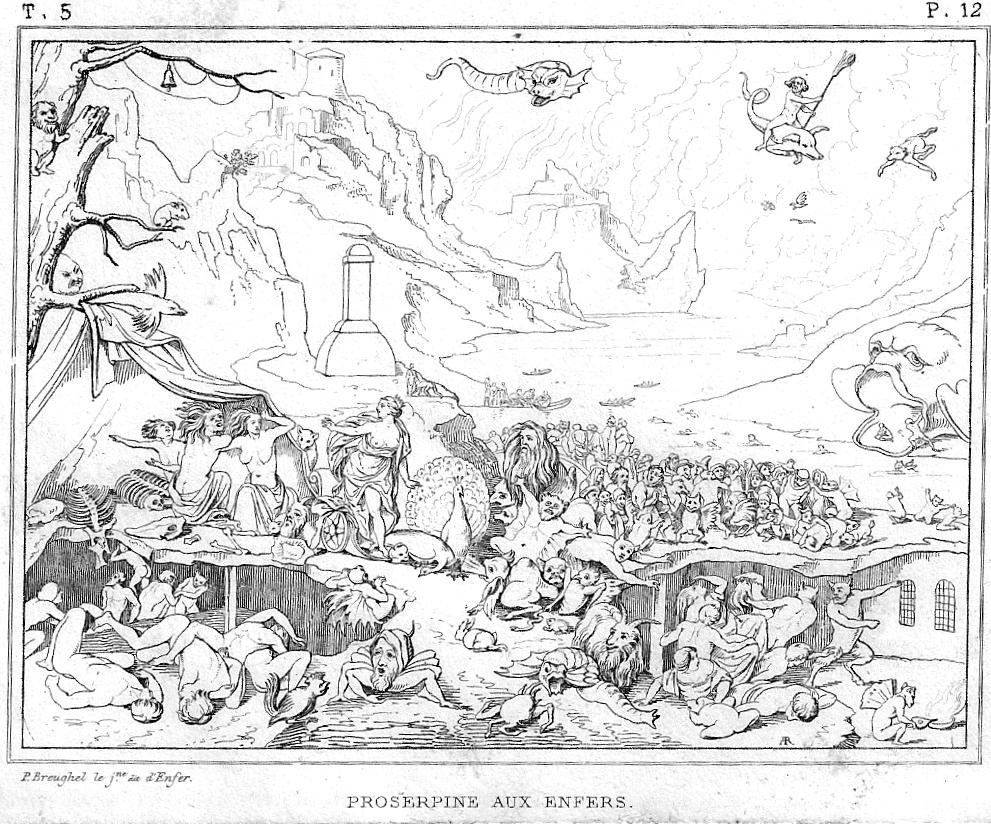
    If you were to wish a foul curse upon the soul of the dead in Hell, then it is Prosperine/Persephone who would carry it out. The Hitman of Hades had the capacity to inflict damage upon the already damaged, what with being the Queen of the Underworld and wife of Hades. She is also the daughter of Zeus and the harvest goddess Demeter, so there is also that life/death struggle bit going on in the background. 

    Brueghel hell

    This image is made from the painting by Pieter Brughel the Younger (1564-1638), son of Pieter Bruegel  and part of the dynastic family of painters. (They spelled their surname differently, depending upon the time and the user.) The legend of the engraving tells us that “P. Breughel [sic] le jne, dit l’Enfer” was also known as the “Hell Brueghel” for his interest in depicting that place, and he certainly does live up to the nickname.  Even though the engraving is pretty small (about 3×5″) it does communicate at least the sense of what the painting delivered, which was a very detailed and massive account of the underworld.  Even though the engraving is only a shadow skeleton of the original, we do get a sense of Mr. Cash’s lake of fire, and though we see the torments of the damned we generally do not see what it is they are suffering from.  Prosperine is at center left, having just arrived in Hell (according to the description1 of the plate found in Museé de peinture et de sculpture, ou, Recueil des principaux ..., volume 12, 18312, and behind her we see a river with boats dispensing new arrivals; at right, background, we see a gaping Hell Mouth though without fangs/teeth, which has at least one newly-damned trying to climb his way back into the mouth to perhaps retrace his steps to the surface of the regular world.  The image is creepy enough without the color and great detail of the original, what with the dozens of horrified dead falling about and a floating pig-snake flying above.  

    The imagination ran high on the imaging of Hell, mostly for ever and ever–Dante, Botticelli, Japanese Hell Scrolls, Bosch, and on and on, though the flavor of it slacks off a bit when most of the image is white.  So, if you were of a mind to do so, here’s your chance to color in one version of Hell as you please.  

    Notes:

    1.  “PROSERPINE AUX ENFERS. Le peintre Pierre Breughel le jeune est souvent désignésous le nom de Breughel d’Enfer parce qu’il aimait à traiter des incendies et des sujetsdiabcliques. On en voit un exempledans ce petit tableau où il a représenté Proserpine à l instant où elle arrive aux enfers tandis que tous les autres artistes anciens et modernes se sont pliis à retracer le moment où Pluton enlève la jeune déesse des riantes plaines de la Sicile. La fille de Cérès descend de son char et parait vouloir s’éloigner de l’ endroit où sont assises les trois furies, Alecto, Mégère et Tisiphone. Mais en détournant la vue de dessus les impitoyables déesses elle trouve partout des figures monstrueuses qui Iourmentent les mortels. Le lointain offre la vue de bautes montagnes d où sort un grand fleuve sur lequel on aperçoit plusieurs barques remplies des âmes des mortels qui viennent de quitter la terre. Ce charmant tableau peint sur cuivre fait partie delà galerie de Dresde. Il n avait jamais été gravé.”

    2.  I have the full set of 22 volumes for sale elsewhere on this blog–if anyone is interested in owning it, send me an email.