A Daily History of Holes, Dots, Lines, Science, History, Math, Physics, Art, the Unintentional Absurd, Architecture, Maps, Data Visualization, Blank and Missing Things, and so on. |1.6 million words, 7500 images, 4.9 million hits| Press & appearances in The Times, Le Figaro, Mensa, The Economist, The Guardian, Discovery News, Slate, Le Monde, Sci American Blogs, Le Pont, and many other places… 5000+ total posts since 2008.

Category: Absurdist, Unintentional

  • Mouldy Elegance (1864)

    JF Ptak Science Books  Quick Post

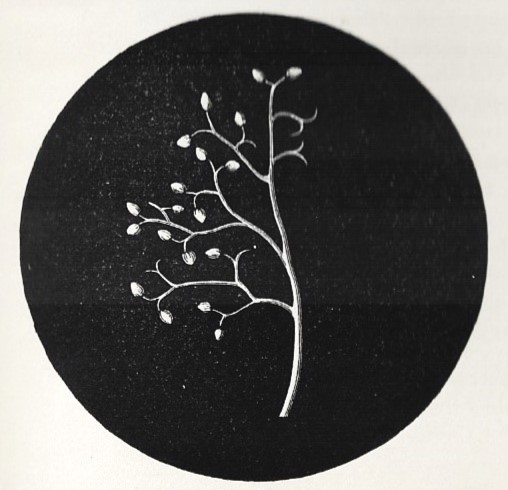
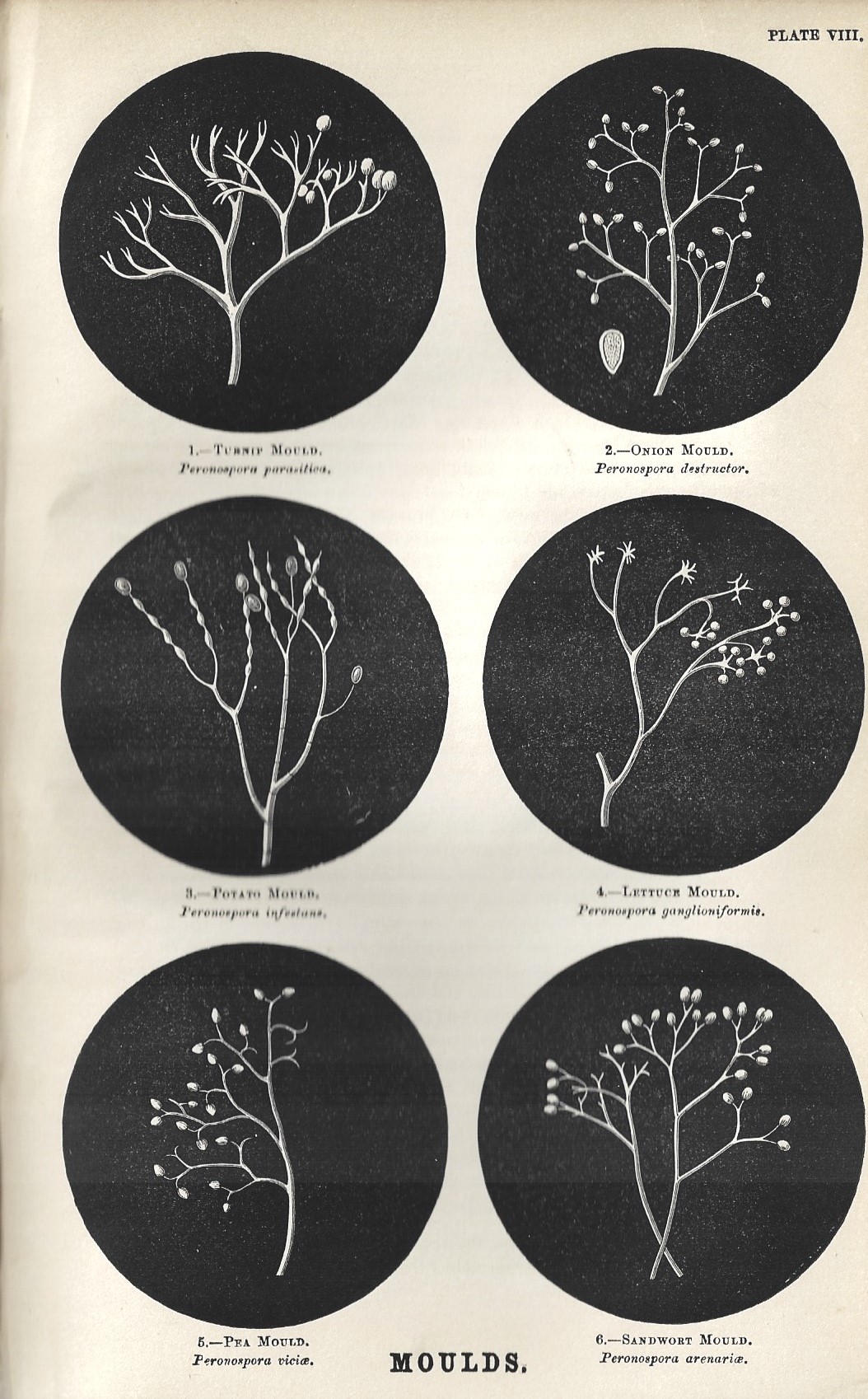
    I started to call this mini-post “Beautiful Mould” but thought better of it, since moulds can cut both ways (so to speak)–“elegant” is a good descriptor and fairly correct.  In any event this image is used for the article “Moulds” and it appeared in the journal Popular Science Review, and published in 1864. Just about everything about the illustration is lovely, including the design in the display of the six samples.

    Here’s a detail of one of the six:

    Pop Sci Rev 1864 Mould full

    And the full plate:

    Pop Sci Rev 1864 Mould full

    ·Posted by :

    ·in:


  • The Earth and an Inter-celestial Mjölnir (1951)

    JF Ptak Science Books  Quick Post 

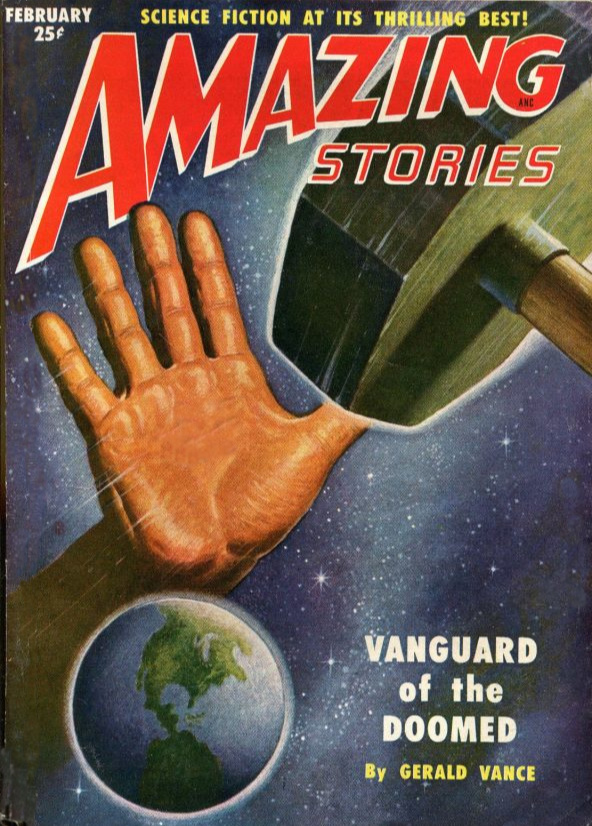
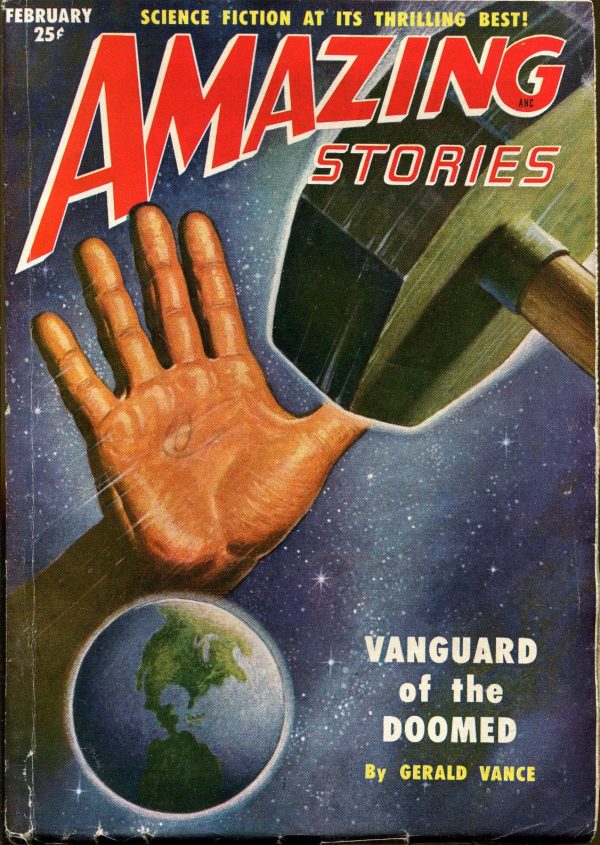
    There is a longish thread through this blog collecting images of The Earth Doomed–that, and the Exploding Earth, or Cracking Earth, or the Earth spinning into infinity; they are joined by other Odd Earth images such as the Earth as a square, or tiny Earth, and so on. They really need to be collected into one category, but if you are interested just use the google search box for the site using “Earth” and survey the image section, which should put you in touch with some unusual bits. This morning I found the image below, which is a great cover in Amazing Stories for a story by Jack Vance (February 1951). Unfortunately I don’t have the time to read it, but I appreciate the artwork, though  I doubt this is Thor’s Mjölnir  as is teased in the title to this post…except that if there was a mega-hammer out there making its way through the not-so-voidy-void it would probably be powerful enough to _________.

    Earth doomed sci fi


  • A Famous Book and its 170-Word Title (1828)

    JF Ptak Science Books  Quick Post

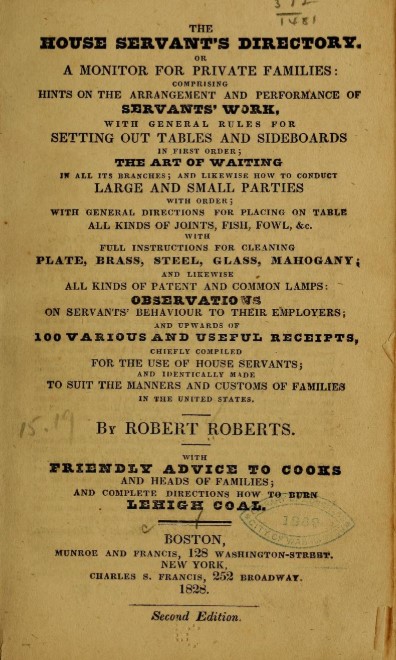
    Books covers robert roberts Before I recognized the importance of this book I was attracted to its endless title, which always seems to be truncated when looking for a version to cut-and paste: The House Servant’s Directory, or a Monitor for Private Families: Comprising Hints on the Arrangement and Performance of Servants’ Work, with General Rules for Setting Out Tables and Sideboards in First Order; the Art of Waiting in all Its Branches; and Likewise how to Conduct Large and Small Parties with Order; with General Directions for Placing in Table all Kinds of Joints, Fish, Fowl, &c.. With Full Instructions for Cleaning Plate, Brass, Steel, Glass, Mahogany; and Likewise all Kinds of Patent and Common Lamps: Observation on Servants’ Behaviour to their Employers, and Upwards of 100 Various and Useful Recipes Chiefly Compiled for the use of House Servants; and Identically Made to Suit the Manners and Customs of Families in the United States…with Friendly Advice to Cooks and Heads of Families, and Complete Instructions on How to Burn Leigh Coal. 

    I enjoy the stab of a three-word-long book title–but if the title can’t be short, then just let it all go, I say.

    Mr. Roberts is recognized to be the first African-American author of a book intended for commercial enterprise, and it evidently did quite well–when he died 32 years after the appearance of this second edition, he left an estate of $7,000, which was a considerable sum in 1860. (A skilled carpenter in 1860 might make $500/600 or so for a filled-up year of 52 60-hour weeks; a free African-American would have made far less–here I’d guess that they would make a fraction of a white unskilled laborer’s wages, if there were jobs like that to be had, and make $100 or so a year. So Mr. Roberts was able to live his 80-year life and support a family of 12 and still was able to save a lot of money.)

     There’s a lot of wide interest in this book, not the least of which is “The Art of Waiting all its Branches”.

    See the full text here, via the Library of Congress:

    https://archive.org/details/houseservantsdir00robe/page/n7


  • Cracks in the Road and What They Mean–a Short Diversion in the History of Lines (1943)

    JF Ptak Science Books  Quick Post   (Part of the History of Lines series) 

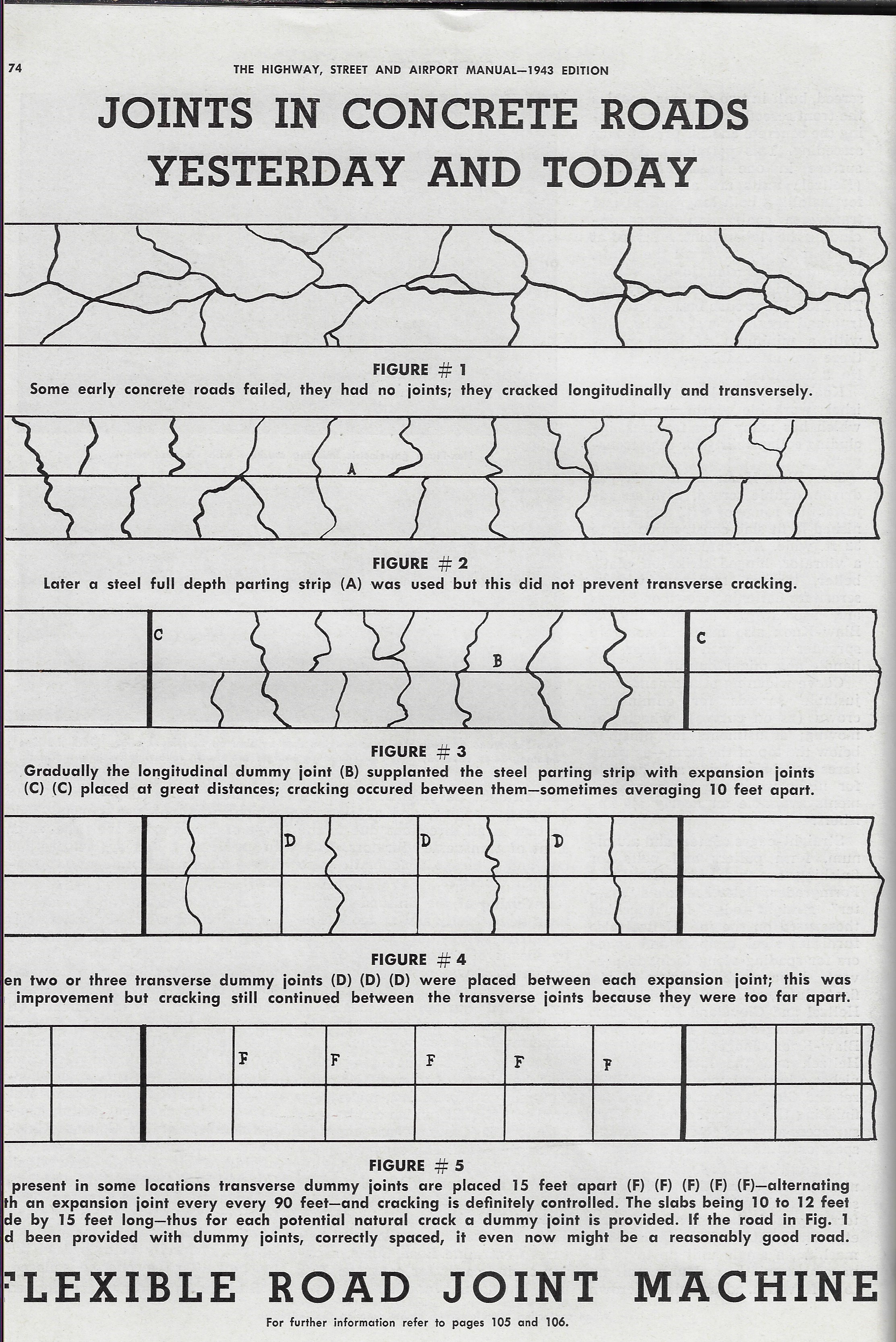
    This part of tonight’s entertainment comes from the unlikely source: The Highway, Street and Airport Manual, Equipment, Methods, Materials (1943), published by Public Works Magazine, and shares an ad that displays the results of various types of concrete road paving failure with the placement of joints. (And, yes, I’m sorry to say that I’m equating “lines” with “cracks”.) It is pretty interesting stuff in a similar vein of the history of painted road lines (longer and more complicated than expected), alpha-numeric utility pole designations, the design of manhole covers, the placement of cable and electrical lines on utility poles, and the like–very obvious and present things in the daily social life of organized public conveniences, but probably mostly overlooked for their constant presence.

    And so, cracks in the street:

    Road concrete failure _1_

    The full two pages of text:


  • Found-Art in a Beautiful Book about Pipes

    JF Ptak Science Books  Quick Post

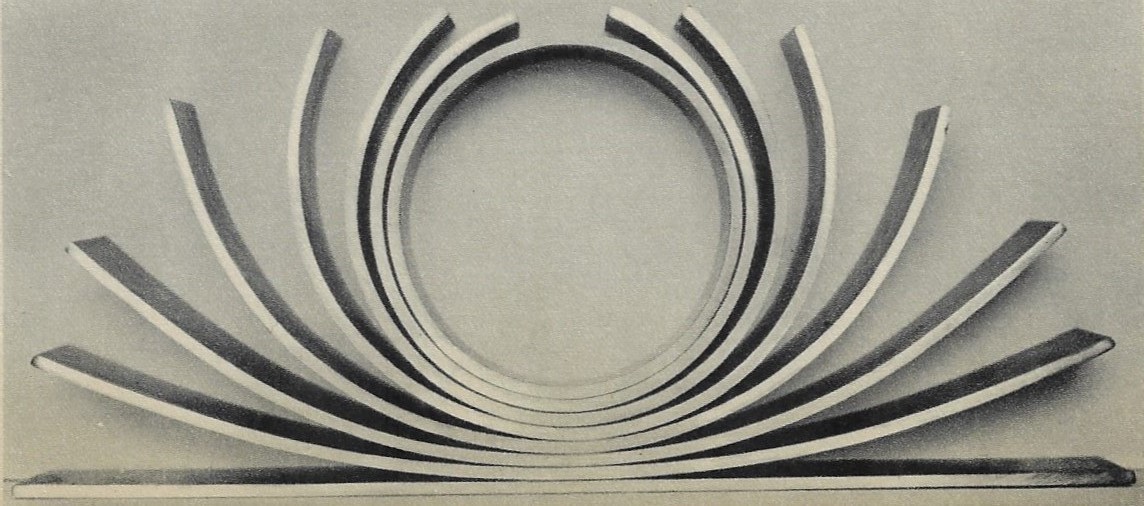
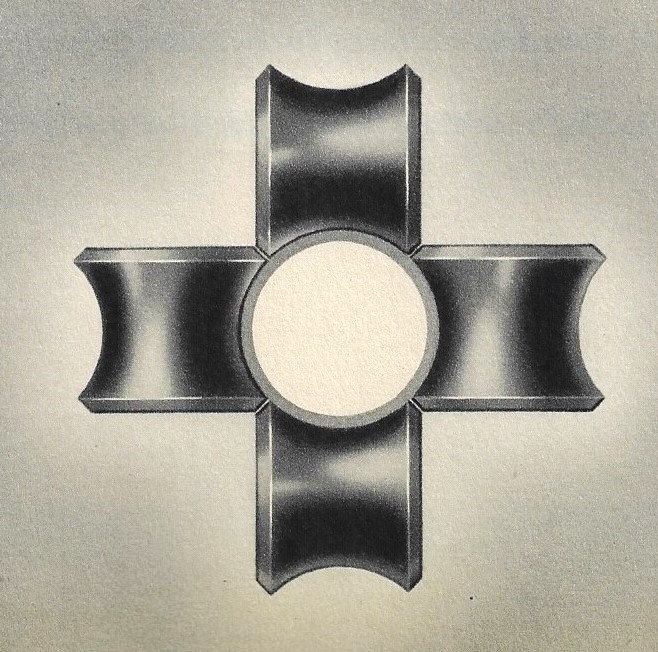
    In the long-developing series on Found Art (categorized here under “Absurdist, Unintentional”, a header that certainly needs changing) is today’s entry: two designs in the unintentional abstract, like a sort of colorless color school Barnett Newman…or perhaps not, maybe they’re more like Duchamp readymades, though heavier. In  any  event,  The  Pipe  of  Progress,  published  by  the  advertising  department  of  Republic Steel in  1940,  is unexpectedly  quite  lovely,  which  a number  of  Bernice-Abbott-like photos  plus  the  already-mentioned  Found  Art.  For  example,  here’s  a cross  section  of  pipe  in  the stages  of  pre-wielded  shaping:                

    Books covers pipes _2_

    And another image showing a cross section of  pipe as it is cold-shaped to its final diameter by one of the series of rollers

    Books covers pipe detail roller

    And the cover of the work:


  • The Human Trust Fund (1929)

    JF Ptak Science Books  Quick Post

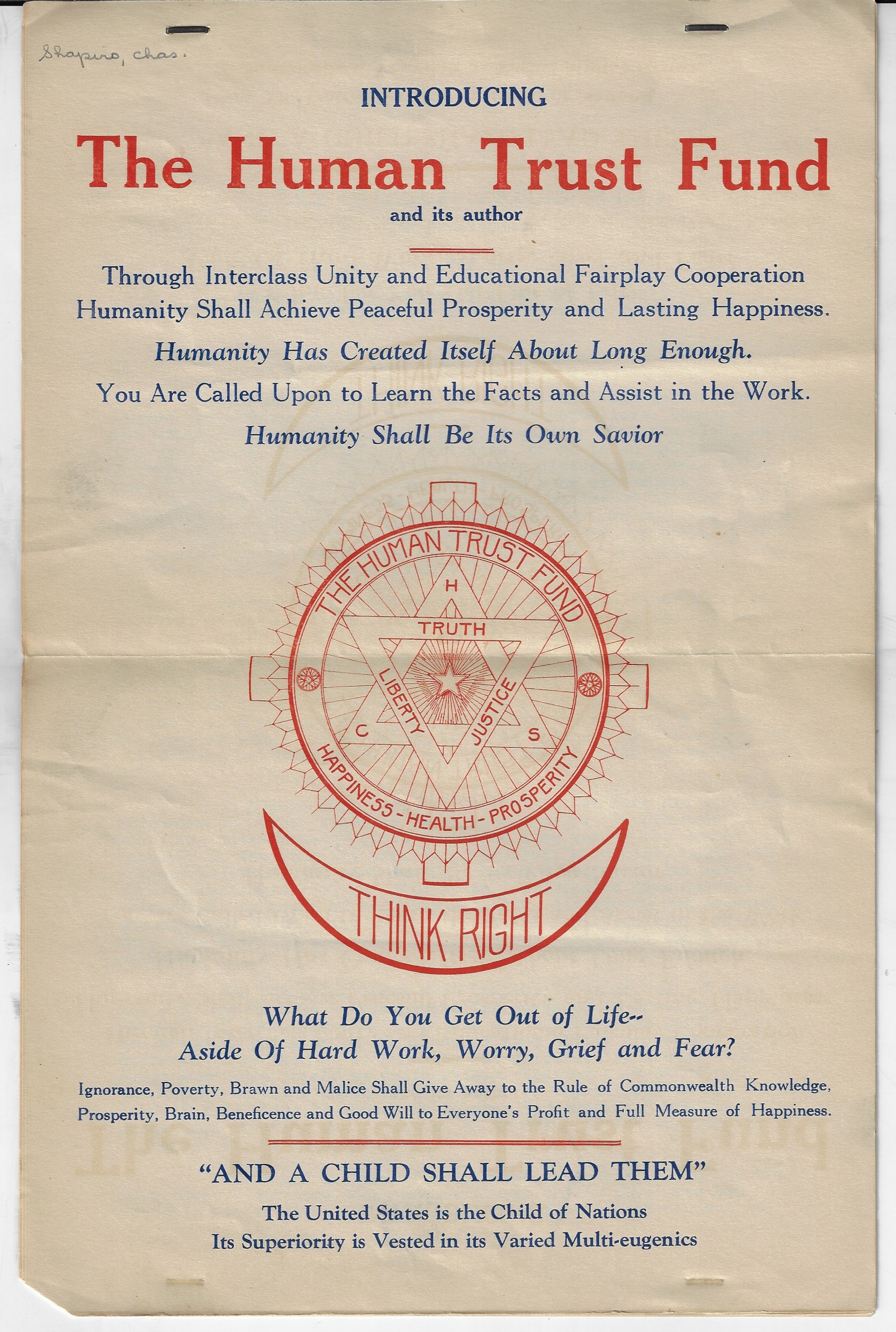
    No, not the work of George Costanza, but of someone else, a Chicago native who had an idea for saving the country, for saving humanity. I haven’t read but the first and last pages, and I think that that was about enough–I’m not at all sure what the author’s play was here, but whatever it was, he tried.  In any event, this pamphlet (13″ x 8″ and 24 leaves) was printed in 1929–there’s no mention of The Depression that I could see (the epithet “Great” wouldn’t be applicable for another 15 months or so)–and once belonged to the great but problematic H.L. Mencken, who didn’t own it for long. This pamphlet is part of my Outsider Logic Collection, in the Department of Gallant Tries. 

    Books covers human trust

    ·Posted by :

    ·in:


  • Found-Semi-Documentary Photography (Georgia, 1898)

    JF Ptak Science Books   Post 2795

    Sometimes “surprises” are quick to come to recognition, and sometimes they are slow, and sometimes they do a fast-creep into existence. The following surprise is a combination of the three—it may not have developed into the “something” I thought it nearly was, or is, but given the initial shock in seeing them, there probably is a “there”, there.

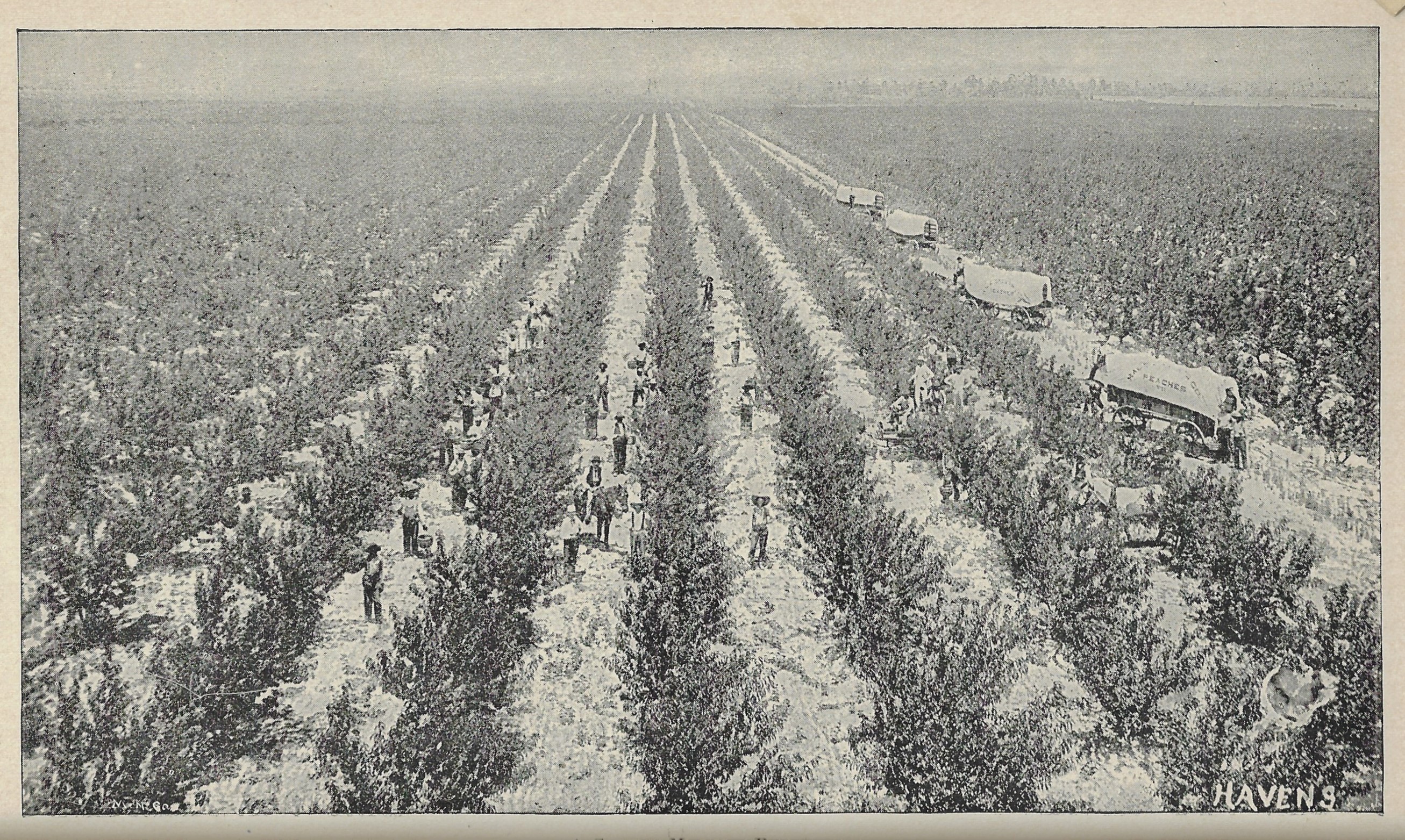
    I’m speaking of the illustrations for what is mostly a benign work, Georgia, its Resources, Condition and Opportunities, Preliminary Pamphlet, which on the face of it has very high potential for boredom and nothingness. It was published though in Atlanta in 1898, which gives it some hope—it also had in a sub-sub-heading that it was sponsored by the “Georgia Immigration and Investment Bureau”, which breathes some life into the thing.

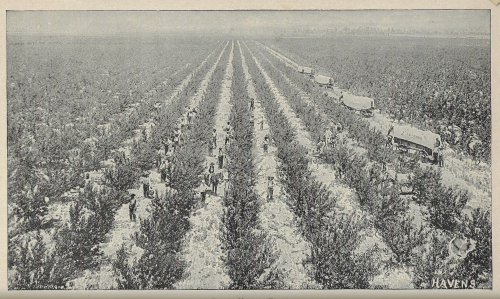
    On opening the pamphlet immediately gave up its prize—photographs. And this was the first photo I saw:
    Georgia resources _3_

    Now I know this is supposed to be a propaganda piece for the state to attract money and people to come to Georgia, showing the abundances and state of agriculture as they were in 1898, which should have put a bright coat of shining sheen over whatever was to be pictured–but a photo like this had a very photo documentary effect, far more so than the photographer or editor ever intended it to be. It was a pride photo back in 1898, not an unblinking-photo-eye.

    But the mystery is also the insight, something for us to consider 121 years into the future of these scenes which displayed what was supposed to be the Happy Normal. So the “Square Mile of Peaches” photo showing abundance seems to have the feel of an abundant silent crisis receding in its own mist, sinking into the short horizon.

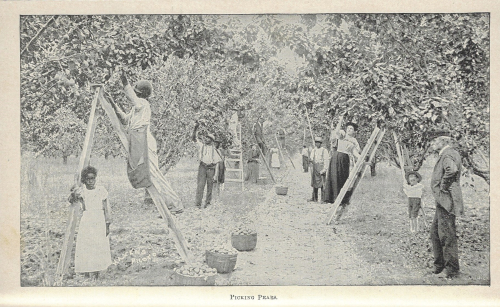
    And this:

    Georgia resources _2_

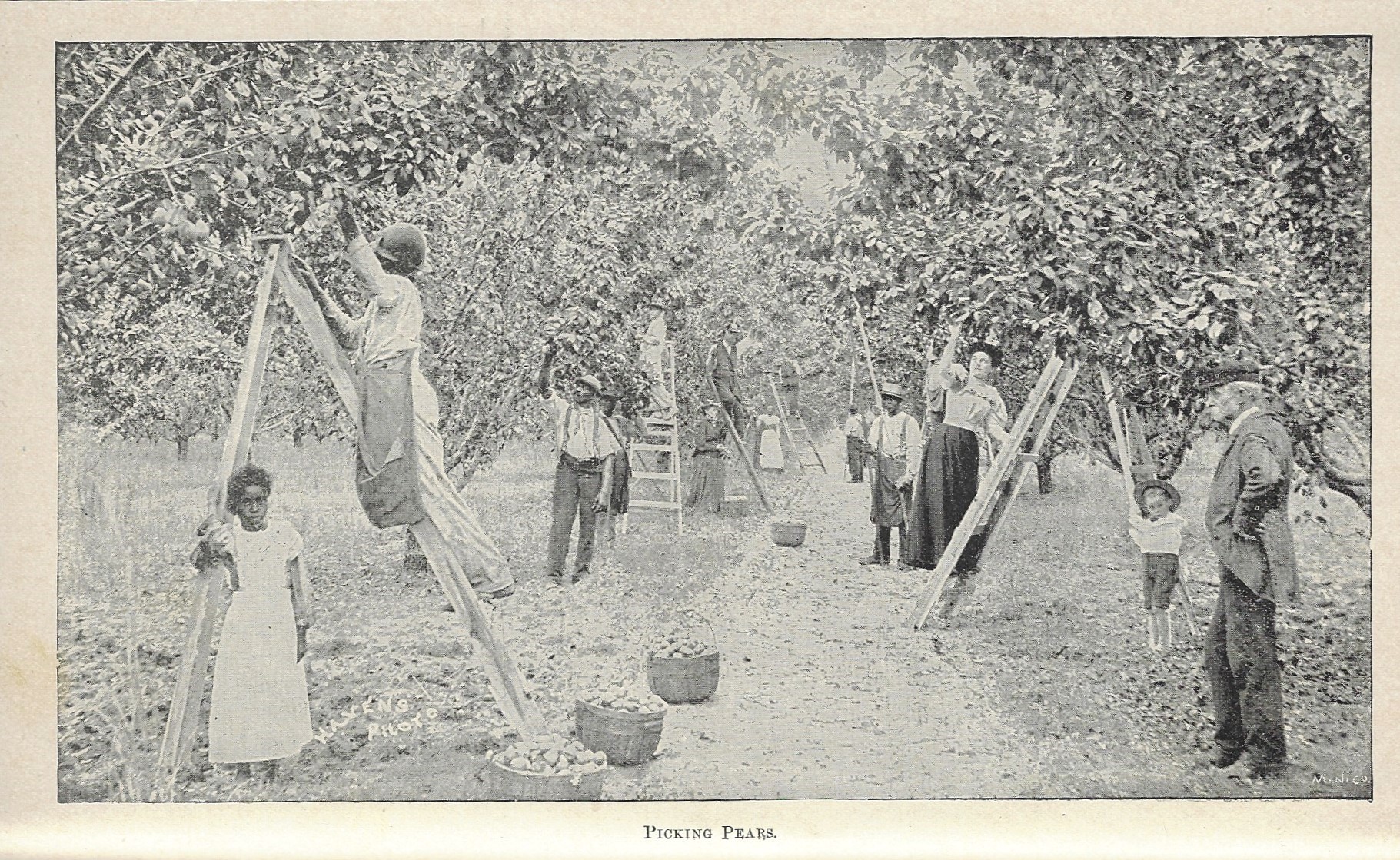
    What I wonder was the message in showing the formal but informal arrangement of the white and black people working together picking pears? “Integrated” is certainly not the word to use here—no doubt it was more like an agreement to perform some sort of work where the races were in close proximity with all race rules observed and maintained.

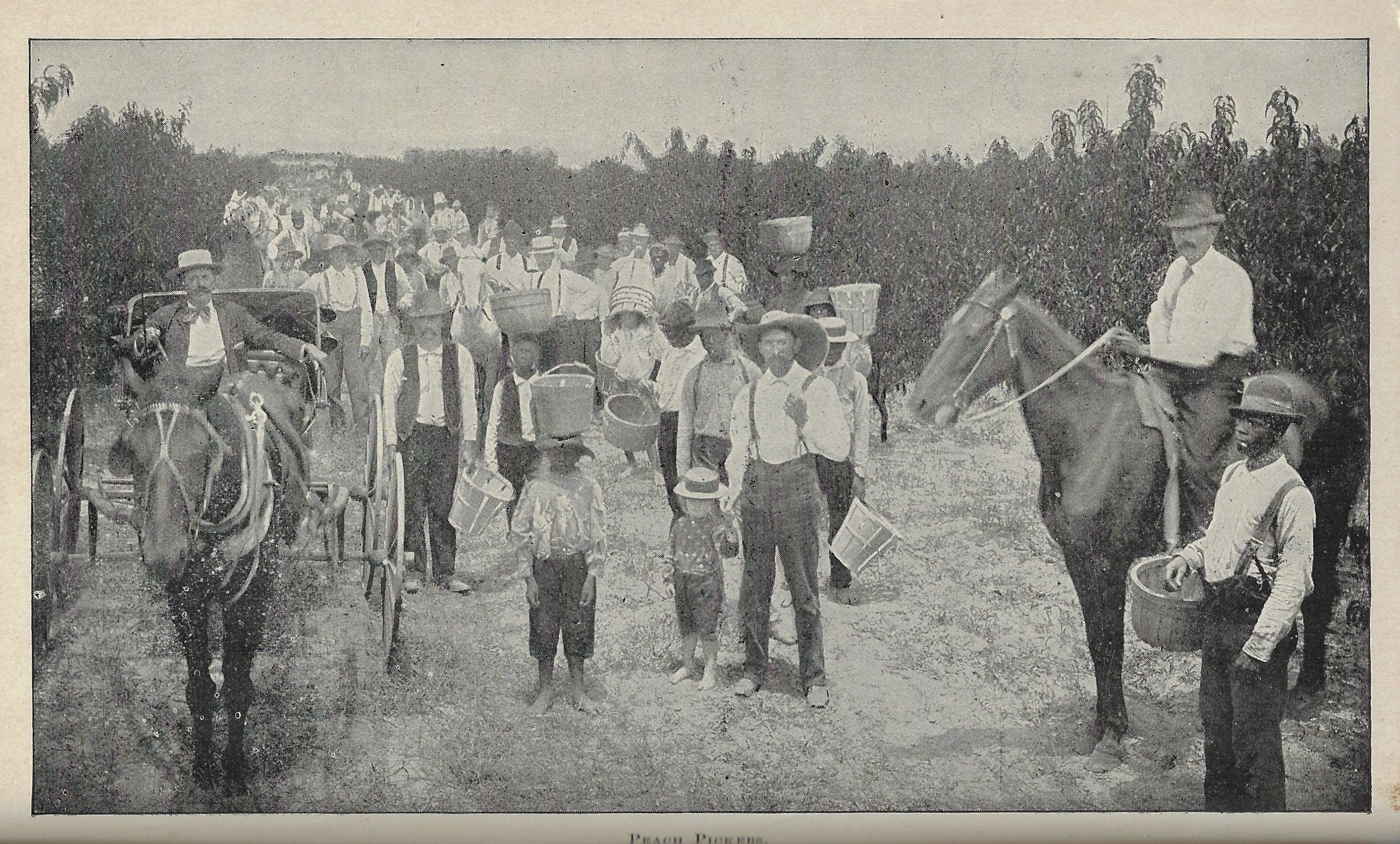
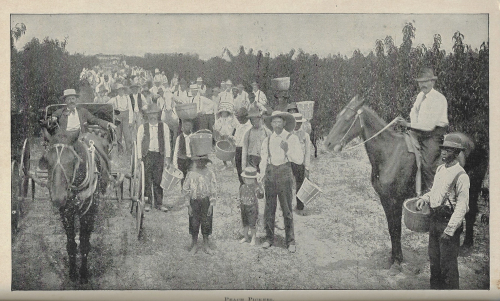
    There were many photos lie this in the pamphlet—of the thirty or so in the pamphlet only these three emerge to tell a story differentiated from the work they illustrated.

    They are Found-Semi-Social-Documentary images, sort of…I’m not sure, really what they are. They were certainly very different from what I expected, and in memory remind me a little of Annan, Mayhew, Hines, Riis, Parks, and Lange, but only by accident. They reveal something that is beyond the quickly posed environment.

    They are a little mysterious in interpretation—and they were certainly a surprise.
     

    Georgia resources _2_


  • Found-Art Sci-Art: Fractalian Wing of a Borges Library?

    JF Ptak Science Books   Quick Post

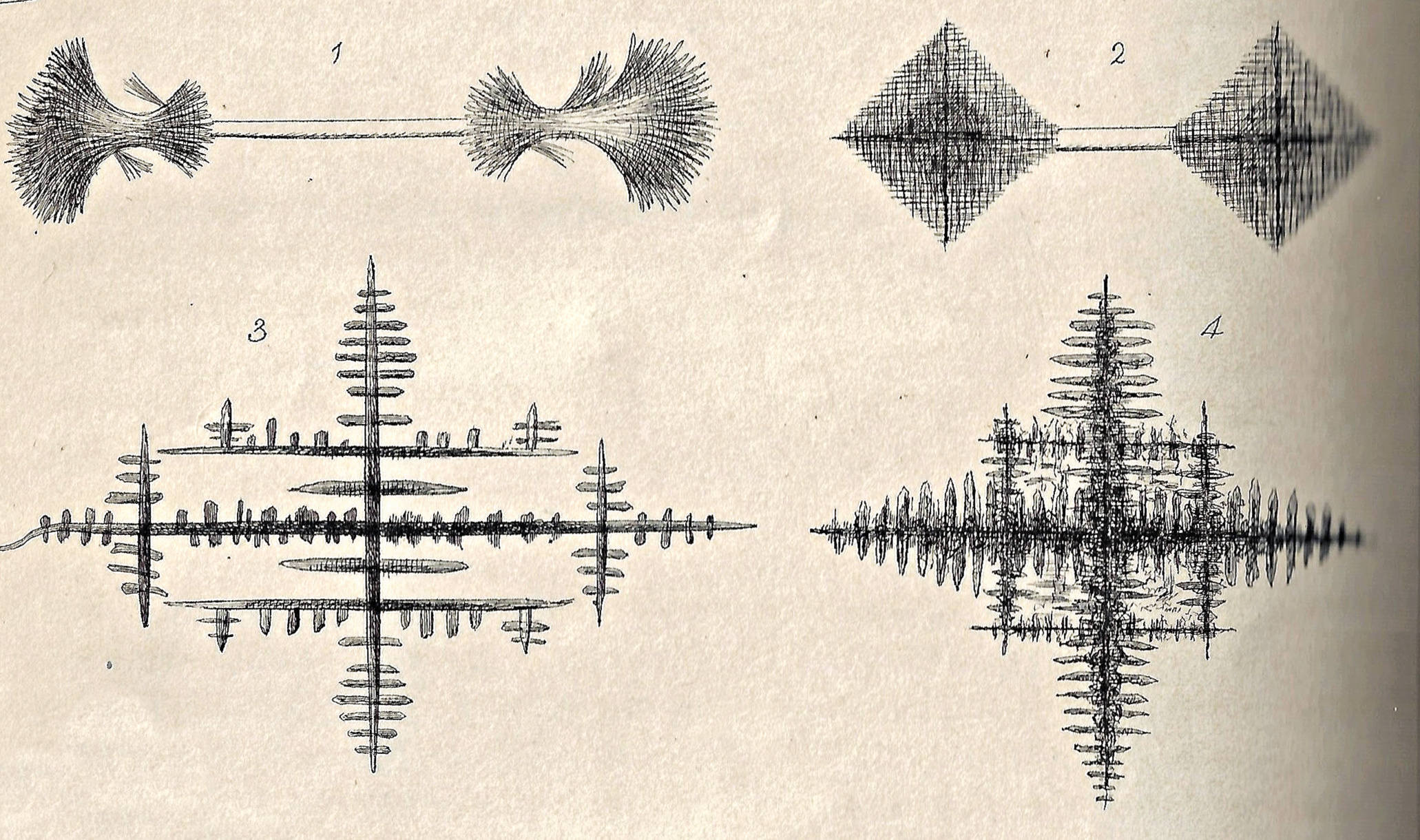
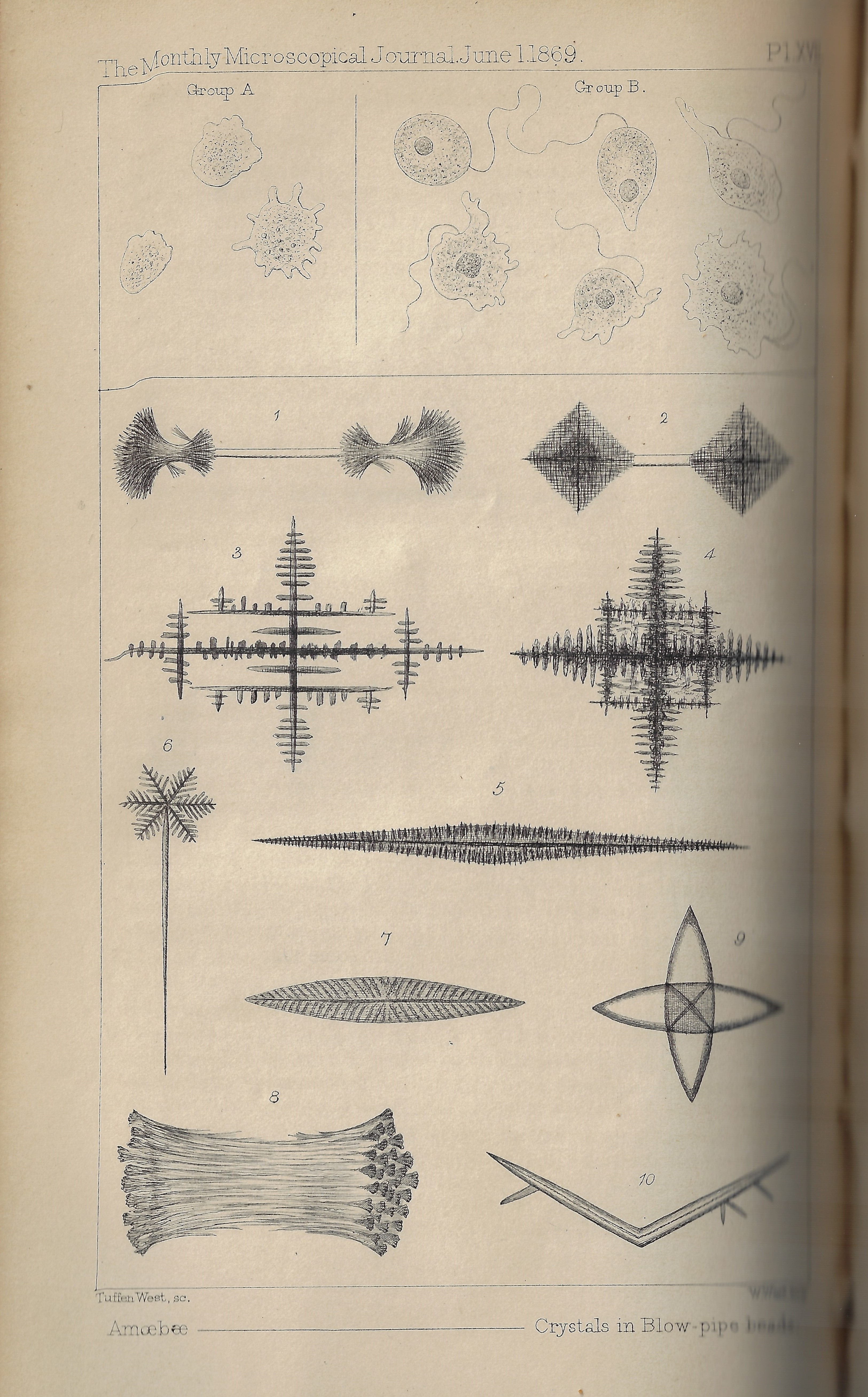
    The title for the source of this image–“On Crystals Enclosed in Blow-Pipe Beads”–is nearly as lyrical as the image itself, and obscurely residing in The Monthly Microscopical Journal, volume 1, published in London in 1869.  What is unusual in this instance (at least for my experience) is that the author, H.C. Sorby, takes a moment to remark on the “extreme beauty”, which is generally not the case, a mention regarding beauty seldom appearing. Removing a part from the whole (seen below) the crystals challenge the imagination, and if you take a moment it is possible to see that crystal #4 is one small fractal-like section of the tip of one linear crystal section of #3, which in tern is a small part of #2, which again is a micro-section of #1. 


    Found art microscopical monthly 1869.jpg copy

    Full image, following, with each of the individual crystals displayed:

    ·Posted by :

    ·in:


  • Found Art: Artwork on the Walls of Environments in Comic Books (Spaceship Art 1951)

    JF Ptak Science Books  Quick Post

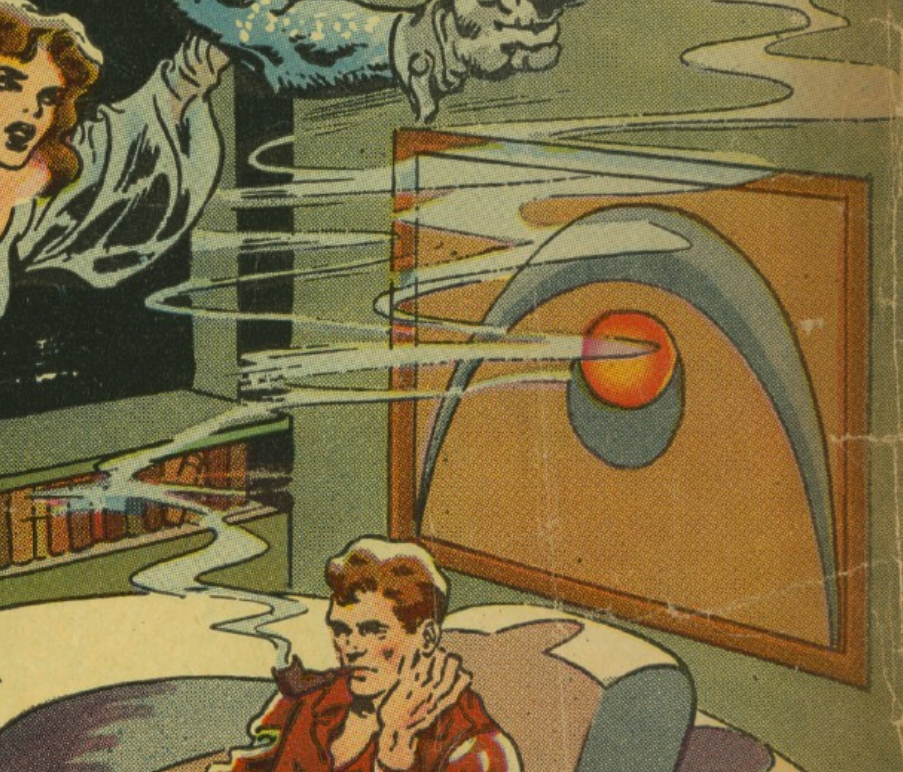
    It seems to me that comic books have a place, sort of, in my work in the history of science and culture. They were issued and purchased in huge numbers, in the millions and tens of millions, and no doubt were perhaps one of the most significant ports of entry to national/mass culture in the pre-digital era for kids and beyond. How else is a relatively-unfiltered national theme going to reach a child in 1951? There’s early t.v., some radio, maybe newspapers (with daily and Sunday comics)…and not much else, outside of comic books. So it may be interesting when it was that a first or early appearance and introduction of a major idea is delivered to a young reading world–like the first mentions of concentration camps (which appear in comic books long before they appear in school textbooks), the first use of the atomic bomb and its effects on Hiroshima, and that sort of thing. (Some of these offhand pursuits resulted in very unusual finds, like one that I reported on for what must certainly be about one of the first appearances anywhere of “E=mc2″ in this exact form appearing in a comic book in 1945–and this where it was being written on a chalkboard by Einstein, making it also perhaps the earliest visual connection of E with the equation together in print before Einstein first writes using the exact equation in 1946…that sounds like all sorts of wrong and a bit goofy, and there’s a lot of the use of “perhaps”, but the story seems to be accurate.)

    Anyway, maybe there’s something useful in these found bits, and maybe not. I’m addressing this today because of another found bit and perhaps a new and probably very shrt and shallow category: artwork found on the walls in comic books.  I must say I’ve never thought of the issue until half-a-coffee ago, when I spotted a framed artwork in the study of  a space detective in the first issue of, of course, Space Detective #1, 1951. The space detective in question is The Avenger, helped along by his aide etc. Tina, and secretary Dot, as they solve crimes on Earth, Venus, and Mars–in this first adventure they are going after Mars bandit Maag, which led them to another adventure in stopping Venusian opium trade. Anyway it is all a very long way from Sam Spade (sooo close to “Sam Space, Earth Detective”) and Picard’s interplanetary-though-still-in-San-Francisco Dixon Hill.  

    In any event, here it is, the art:

    Artwork in comics--Opium Smugglers of Venus  Space detective #1 1951

    (Image found at the extremely useful and massive Digital Comic Museum https://digitalcomicmuseum.com/preview/index.php?did=10240&page=3)

    It seems like an awfully slow bus to Abilene to get us to this point, talking about a forgotten little splotch on two forgotten pages of a forgotten comic book from 1951, but as I said, artwork in ephemeral mass publications like this have never been on my radar (and probably with just cause) though perhaps they went unnoticed because they just didn’t appear? Hard for me to say as I am not a comic book person outside of looking for specific odd things, but my initial reaction to seeing the art must’ve rubbed up against some unconscious collected memories to show itself as being unusual, so maybe there’s a little bit of “there” there.  


    ·Posted by :

    ·in:


  • The Dimming of the Harsh Light and the Beauty of Manual Work

    JF Ptak Science Books  Quick Post

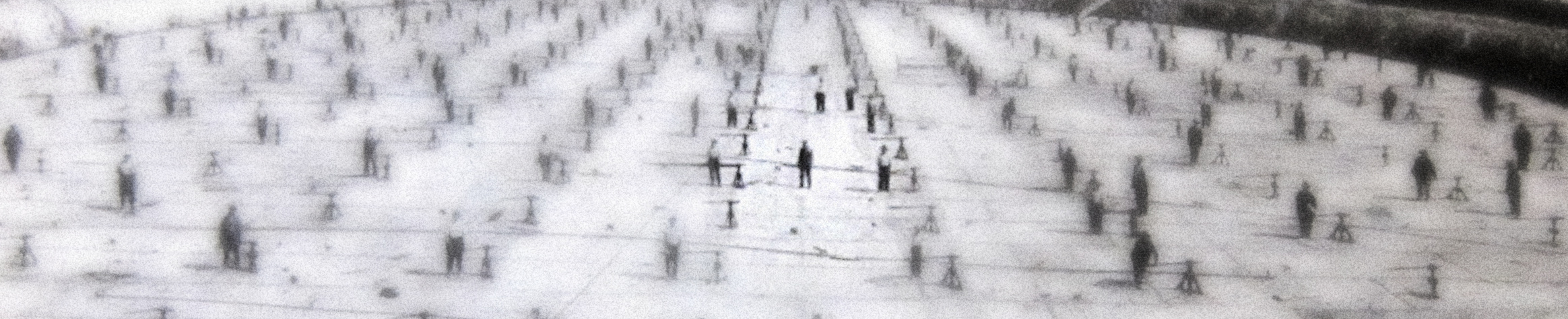
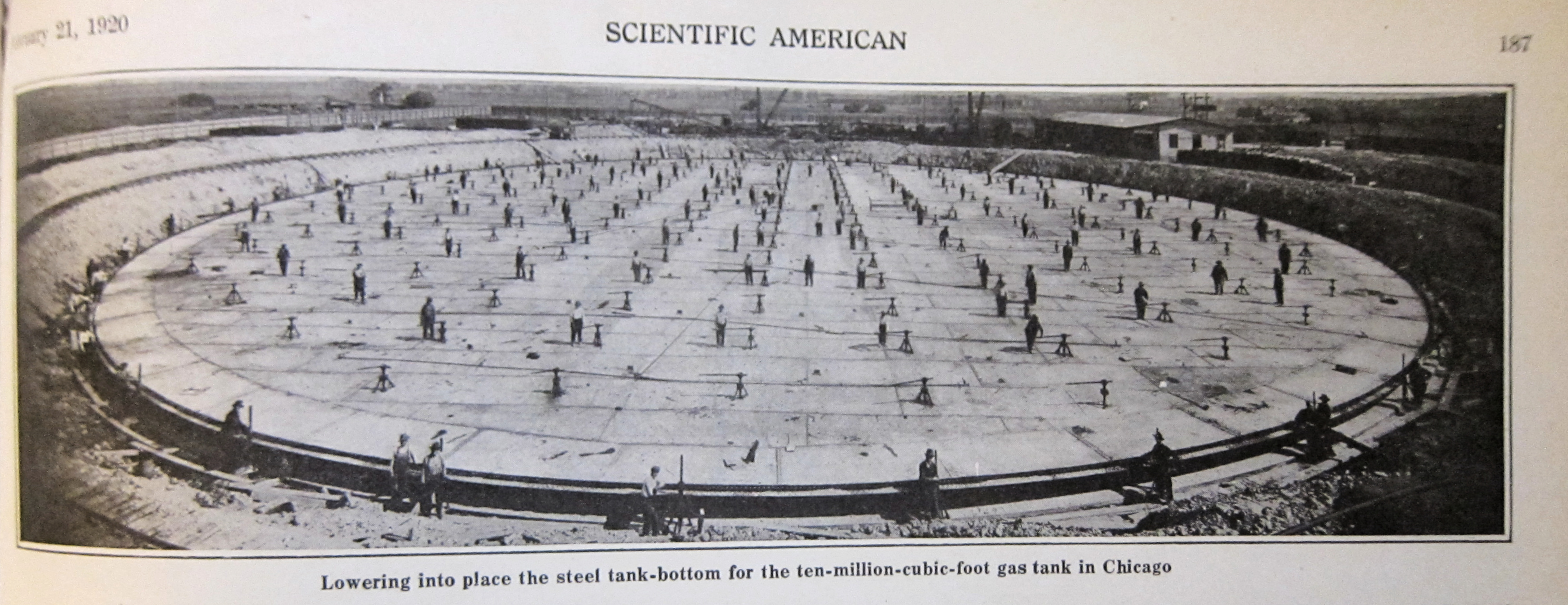
    This slightly altered detail is from the central perspective of a photo of workers completing the base for a 10 million cubic foot gas tank1 in Chicago, and appeared in the Scientific American on 23 January 1920. It is a great photo of the beginnings of a considerable project, and the full image (below) stands on its own as a visual accommodation of a segmented space soon to be occupied by something enormous. That said, the guy in the middle of it all caught my attention in all of this. Was he a standard laborer out of position amidst the 200-odd other people there as the shot was being made, wondering where it was he was supposed to be? Or was that a foreman, or somebody else with the freedom to walk around as the great mass fell into position to take care of the job at hand? 

    Notes

    1. It was a big tank: 10,000,000 cu ft is about 75,000,000 gallons, weighing in at about half-a-billion pounds, which is a lot. By spacing out the guys on the perimeter of the base I make it that the circumference of the structure was about 400′. 

    Sci Am 1920 tank base man


    Sci AM 1920 tank base