A Daily History of Holes, Dots, Lines, Science, History, Math, Physics, Art, the Unintentional Absurd, Architecture, Maps, Data Visualization, Blank and Missing Things, and so on. |1.6 million words, 7500 images, 4.9 million hits| Press & appearances in The Times, Le Figaro, Mensa, The Economist, The Guardian, Discovery News, Slate, Le Monde, Sci American Blogs, Le Pont, and many other places… 5000+ total posts since 2008.

Category: Absurdist, Unintentional

  • Found Art in the Annalen der Physik (1902)

    JF Ptak Science Books   Quick Post

    Malevich it isn’t, though pre-Abstract art pre-Malevich it may be:
    Annalen Art 1902 _3_
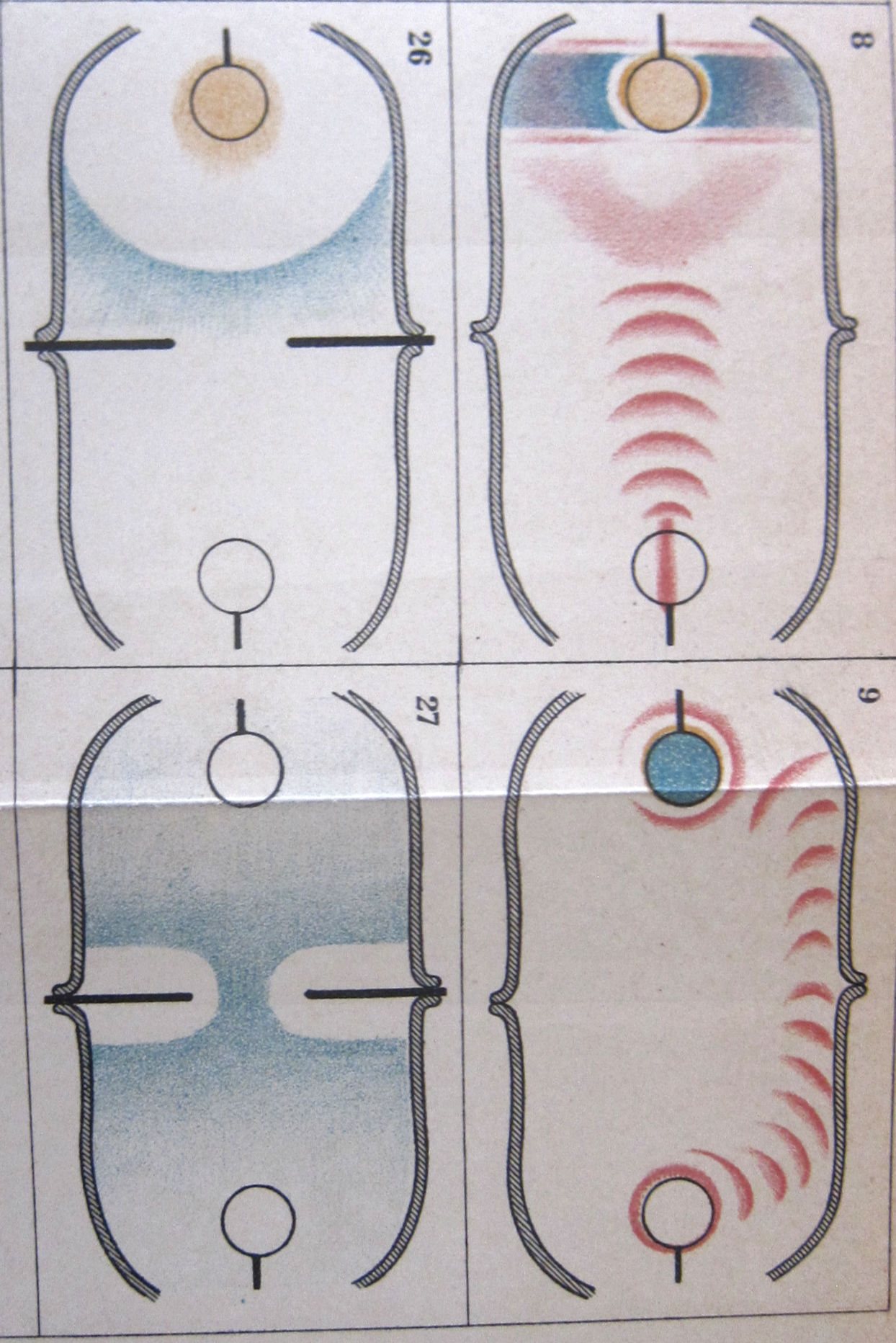
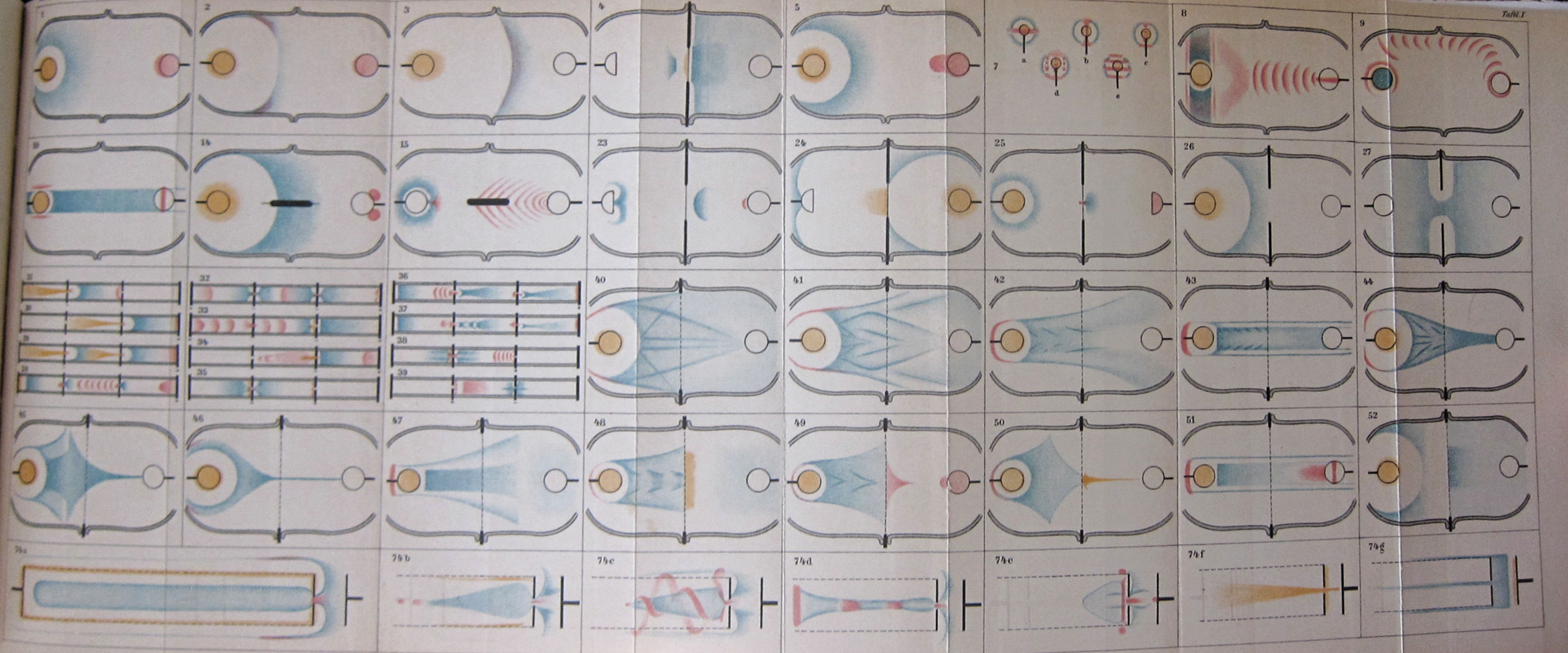
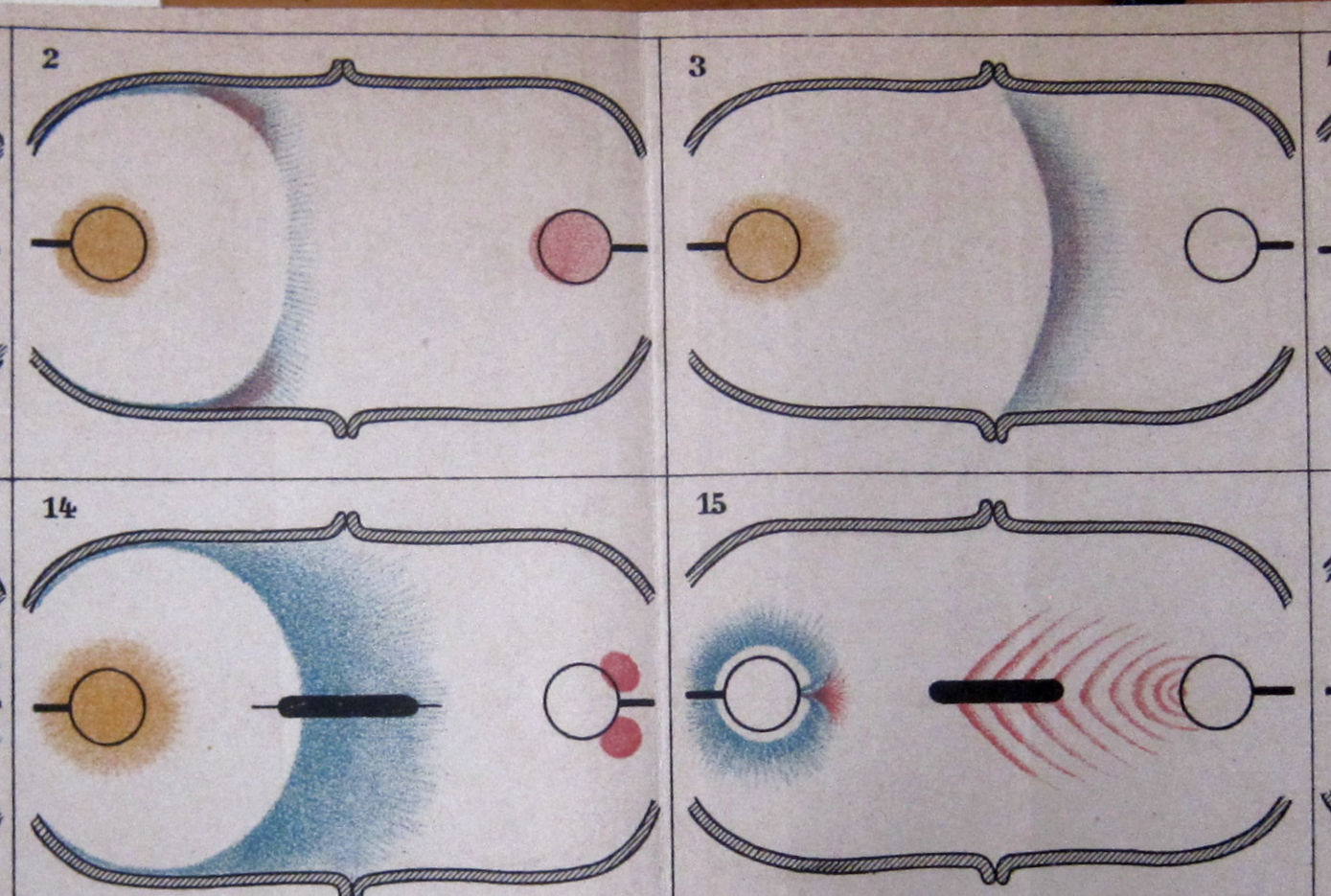
    There are some good papers in this 1902 volume of Annalen der Physik, including Planck (“Ueber die Natur des weissen Lichts his paper on white light),  Stark, Quincke, Drude, Exner (“Ueber den Gleichgewichtszustand eines schweren Gases”)–I was drawn instead to the two big folding plates for O. Lehmann’s “Gasentladungen in weiten Gefassen” ( a longish 29-page paper in series IV, vol 7. pp 1-29, 1902.).  
    Annalen Art 1902 _1_

    Interestingly Lehmann writes about the dangers involved with these experiments–he’s using considerable pieces of glassware, some 40cm wide and 60 cm long (!) with glass as thick as 5-10 mm. That means there would be (and was!) a lot of large pieces of flying glass if the vacuum created in the tube crushed it, resulting in a sharp little explosion. He states (more or less) at the bottom of the page in a footnote: ” “The experiments are brilliant demonstration experiments at the same time, but it must be expressly pointed out that working with such large evacuated vessels is by no means without danger. It was shown that the 5–10 mm thick air pump bells with an internal width of more than 40 cm, which are commercially available, are unable to withstand the pressure of the outside air permanently. Such an egg, 40 cm wide and over 1 m long, was smashed by the air pressure soon after the vacuum was created, fortunately without causing any further damage, since I had covered it with thick cloths as a precaution, which did not allow the glass fragments to penetrate , Another vessel, 45 cm wide and 60 cm long, the parts of which had initially been individually tested for strength, withstood the full air pressure for about 6 hours, even during the passage of the discharges. But after it had stood untouched for about 5 hours, it was suddenly violently crushed into countless small fragments that flew up to 15 m, partly through the window panes. All fragile objects hit were damaged and individual pieces of glass even bored into the wooden doors of cupboards and other wooden parts, with such force that they got stuck in them.”

    Anyway the patterns of discharges produced in the tubes were beautiful and can certainly stand on their own in the Found Art department. And so far as the Annalen goes, this is some of the most visually beautiful work produced by the journal over its long 220 year history.  
    Annalen Art 1902 _3_

    ·Posted by :

    ·in:


  • The Epicenter of Visualized Geography: School! (1889)

    JF Ptak Science Books  Quick Post

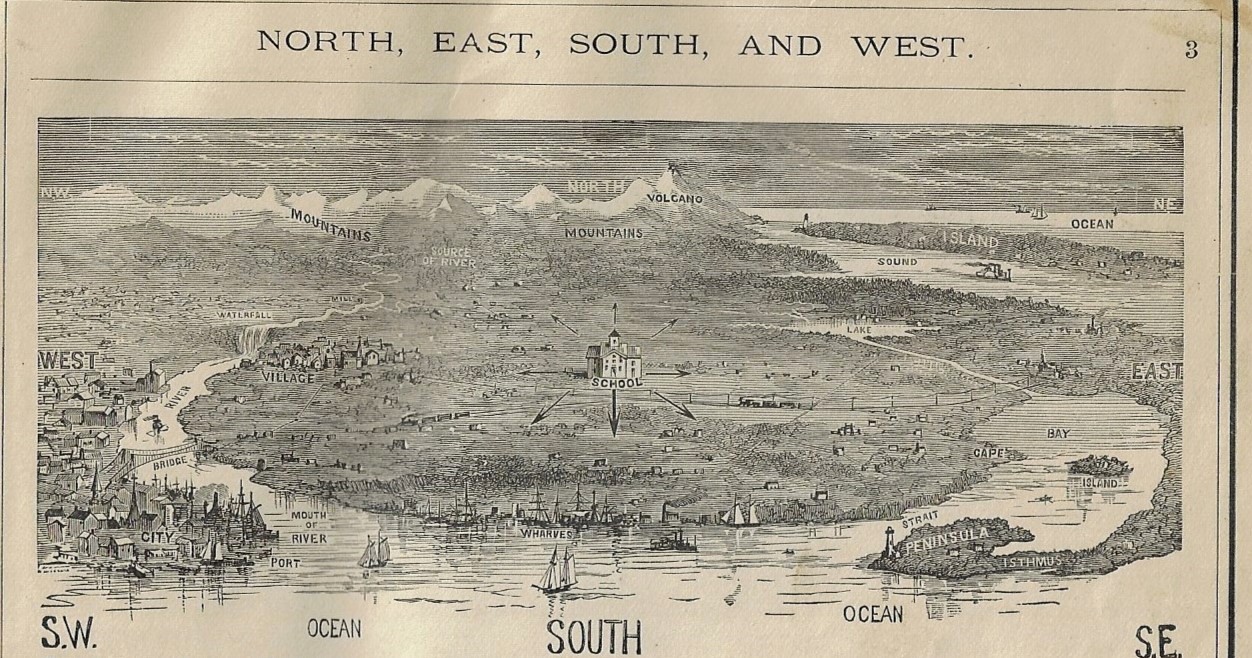
    At the center _2_Knowing of my interest in antiquarian children’s art, a new friend sent me a 19th century school geography which sports several tattoos of artistic efforts made by small hands. The canvas is the book, and the artwork (and annotations) were occasional scribbles and doodles that speak to the overall essence of kid art, and which have more or less looked the same-ish for centuries. (The subjects will change, but the manner seems to me to remain constant.) In this case the child chose James Moneith’s Elementary Geography (1889) to work in and on, and it is here in the opening pages that we see the exacting placement of “school”. As much as I am interested in the Found Art in this book, I’ve gotta say that this printed image was nearly as surprising–it is also one that I do not recall seeing, even in these popular multi-editioned geography textbooks.  The image graphically displays a dozen or two of the central words in the study of geography, and at the center of it all, with directional arrows point all the way around, was “School”. You can’t really argue much with that. 

    At the Center of Geography School


  • Howl’s Moving Castle, 1774

    JF Ptak Science Books  Quick Post

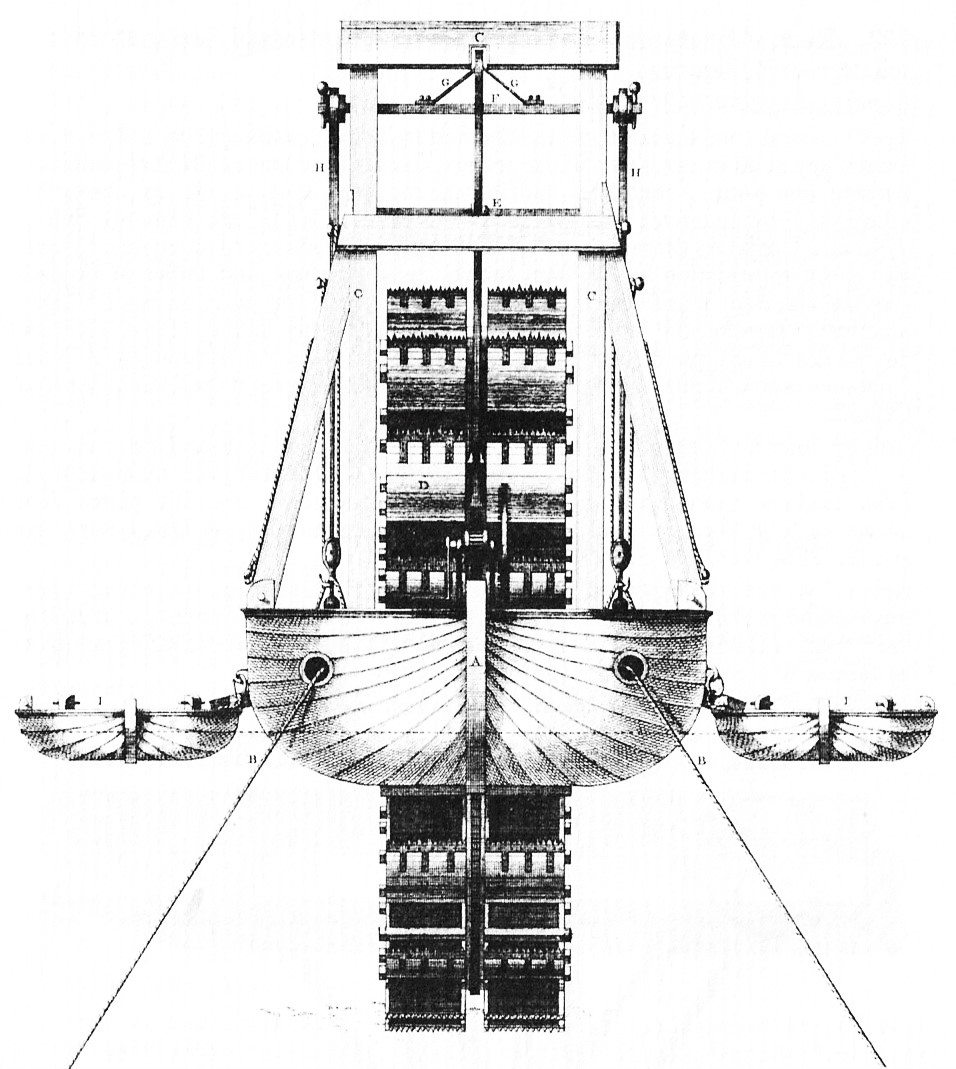
    Howls Moving CastleThis really has nothing to do with Hayao Miyazaki.’s world, though it does look as though it could be part of it—absent the need for and presence of water and imagining the anchor lines as legs. That’s what I see, anyway, in this beautiful plate of a river/port dredger. It is found in the French edition of Corneille Redelyheid’s La noivelle machine a creuser les ports et les rivieres (printed by the author in the Hague in 1774). The document (only 16pp long) describes the vessel and its uses—the engraving shows the scoops/bucket ladders in the middle of the boat—they would gobble up whatever the target was, with the refuse deposited in the two skiffs on either side of the boat. Its a lovely object, and if you close your eyes halfway the vessel takes on a vague absurdist patina, as though it was a massive SomeThing being propelled or skipped about on long excessively skinny legs. I like it.

    ·Posted by :

    ·in:


  • Found-Abstract Art and the Coming of the NCC-1701: the Capazza Lenticular Airship, 1909

    JF Ptak Science Books  Quick Post

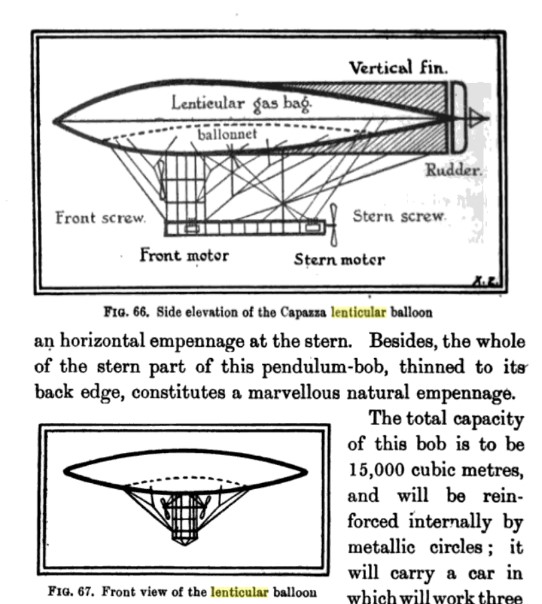
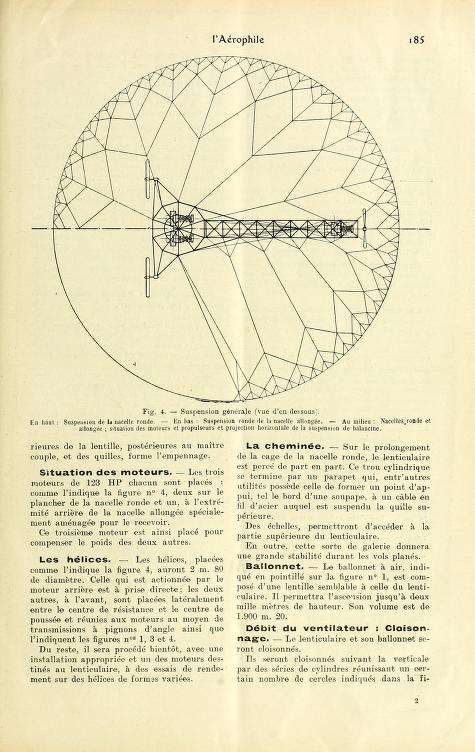
    Smithsonian Aeroph Capazza cross sectionHere’s another early aviation post, as I seem to be a little stuck this morning in the 1908-1911 period…or suitably enough down a small rabbit hole to keep me from doing my mailing duties.  This is a fascinating period with tremendous steps forward in technology taking place just five years after the first successful Wright powered flight test–it is hard to imagine the Wrights were roundly ridiculed in their efforts and worked for the most part in deep privacy; and yet here, just 1500 days or so later, there are hundreds of aeronauts and a dozen or so journals devoted to tech aspects of flight.

    What caught my Star Trekian eye here in this May 1908 article in l’Aerophile was the lovely found-abstract plans for supporting the envelope of Louis Capazza’s lenticular airship, a composite balloon/aircraft. The firm of Adolphe Bayard-Clement was the planned producer of the airship (they were the first to go into general production of an airplane, the Santos-Dumont Demoiselle 19) though it never was built. It was certainly intriguing–it was lighter than air, non-symmetrical, top be powered by three 120 hp engines supplying power to three screws fore and aft–it was lovely in its way, and of course given it plan and profile immediately suggests to me the Starship Enterprise, though I may be alone in that.  

    And here’s the Found-Abstract art end of the deal–the structure for the non-symmetrical support for the balloon/plane envelope:
    SMithsonian Aeroph Capazza planeur _1_ plan

    Tech info (and image source, above) see Berget, Conquest of the Air, 1909, pp 183-186. 

    Images sources (below):  https://archive.org/details/larophile16besa/page/182


  • “Found Art” in Architectural Engineering (1868)

    JF Ptak Science Books  Quick Post

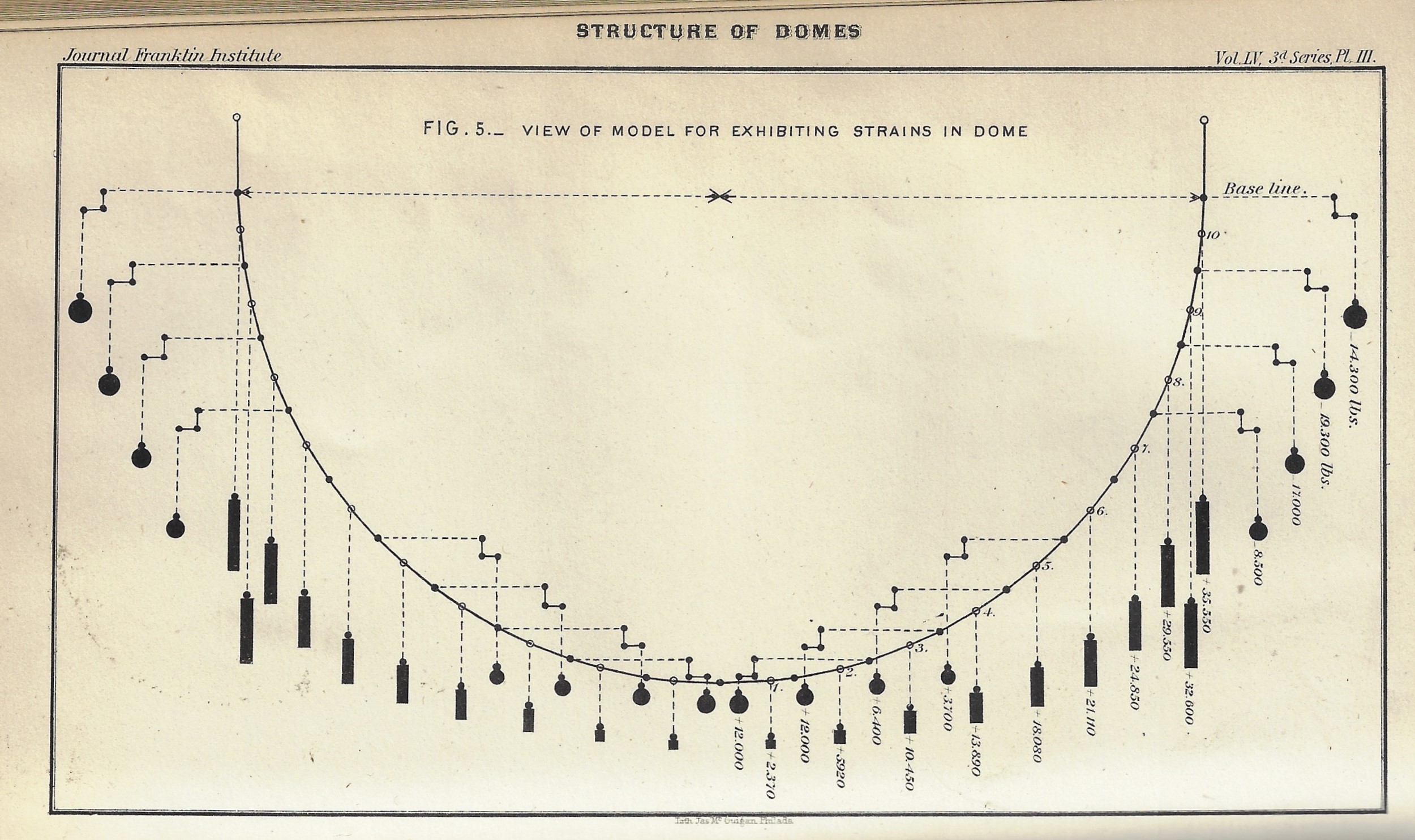
    Aha! Another lovely image for the long “FOund Art”/”Found Dadaist” categories on this blog, this being an engineering simulation for the building of domes.  The image was found as an illustration in “The Supportive Power of Piles, Both as Wood and Iron, and the Use of the Latter, Either as Piles or Columns of Support for Foundations”,  found on pp 98-110, and pp 170-182, in the Journal of the Franklin Institute, vol 55 (3rd series), 1868.  

    JFI 1868 domes _2_

    ·Posted by :

    ·in:


  • Strange Things in the Sky Department: Floating Arms

    JF Ptak Science Books   Quick Post  (An entry in the “Found Absurdist” category)

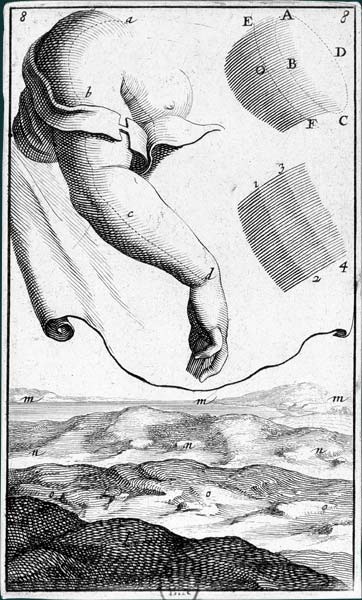
    There’s a series on this concentrating on unusual things found “floating” in the sky, bits and bobs that are odd, or visual non sequiturs (“sequuntur”?) that just happen to use a landscape as a decorative visual for the viewer, and so on. There are many varieties of this atmospheriana, including floating cities, bombing ladies, eyeballs, hands, extra-earths, alien populations, and the unexpected like. Today’s entry is less involved than those, showing a disarticulated arm and shoulder floating above a gentle landscape…all this is, in real life, is an engraving showing a number of different varieties of engraving, all presented on one leaf rather than using several. The explanation for the image is boring, but the stand-alone of the unexplained floating arm isn’t.


    Bosse odd

    Source:  Abraham Bosse, 1604-1676 (printmaker and artist), in his classic work on engraving and illustration, Traité des manières de graver en taille-douce…, 1645.

    ·Posted by :

    ·in:


  • Found WordArt in Milling Machines: An Improved Smut Machine with Cast Iron Concave (1851).

    JF Ptak Science Books   Quick Post

    He said we were turning lunchtime into a 42nd street smut shop. —OED, [1977, Zigzag Apr. 28/3]

    “Smut” is best appreciated when it’s unexpected smut. And that’s what this smut is in this post, the smut found in the 1851 volume of the Journal of the Franklin Institute, italicized in a running page header:

    JFI 1851 SMut MAchine _1_

    After the initial surprise of seeing it, you pretty much remember that “smut” has a number of definitions outside of the ones that you’d remember. (Like walking along 42nd St in Manhattan to get to the library, though as a young teen back in 1969 you really didn’t see any exposed smut, though you could sure smell it when the smut-palaces that peddled the stuff had their doors wide open for a summer breeze that sucked the stale smutty putrefaction of smutty smut air onto the sidewalk—so I think I smelled smut before I actually saw any. Thanks, Deuce!)

    The real point is that “smut” has a number of meanings before we get to Forty Second Street: plant fungus (“A smutted grain”), a type of coal, soot, and so forth. There is one definition—of a “smut” being a tiny insect–from the Oxford English Dictionary where the quotation of its use is sort of a beautiful terror/horror stand-alone, and it comes from the New York Daily News (of course!) in 1899:  “A trout..grubs in the weeds, chases larvæ, and revels in almost invisible smuts.”–Daily News 28 Dec. 6/4  

    Then there are the extended employments of “smut” that are stumpy and poetic, the  “compounds of smut” as indexed by the OED (which is a memorable phrase all on its own):  smut bag, smut corn, smut fungus, smut mill, smut machine, smut spore, smut book, smut-note; smut shop, smut-hunting, and etc.

    So like a limited version of the Seussian turtles-all-the-way-down concept of language/cosmology, “smut” can handle at least a few feet of this endless tower of word towers. 

    JFI 1851 Smut machine _3_

    ·Posted by :

    ·in:


  • Found Perspective Art (1868)

    JF Ptak Science Books  Quick Post

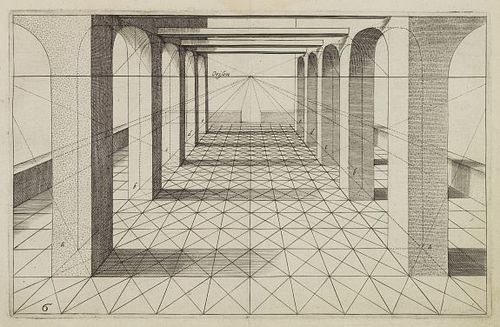
    Johannes Vredeman de Vries (ca.1527-1604, “The King of Architects” among the Dutch, at least), in his dedication to the reader (“To the Studious Viewers of Optics”) in his great classic on perspective writes:

    Vredman“My eyes and mind took pride
    In Sacred Optics. Thereunto allied
    was a fructifying labor,  forty years
    I plied this art devoutly, Here appears
    a doctrine worn by time. That art is famed
    For trustworthiness which trusty rules have framed…
    This art, which guides the eye and soothes the brain,
    with images, but never cheats the sight
    with lying views…”

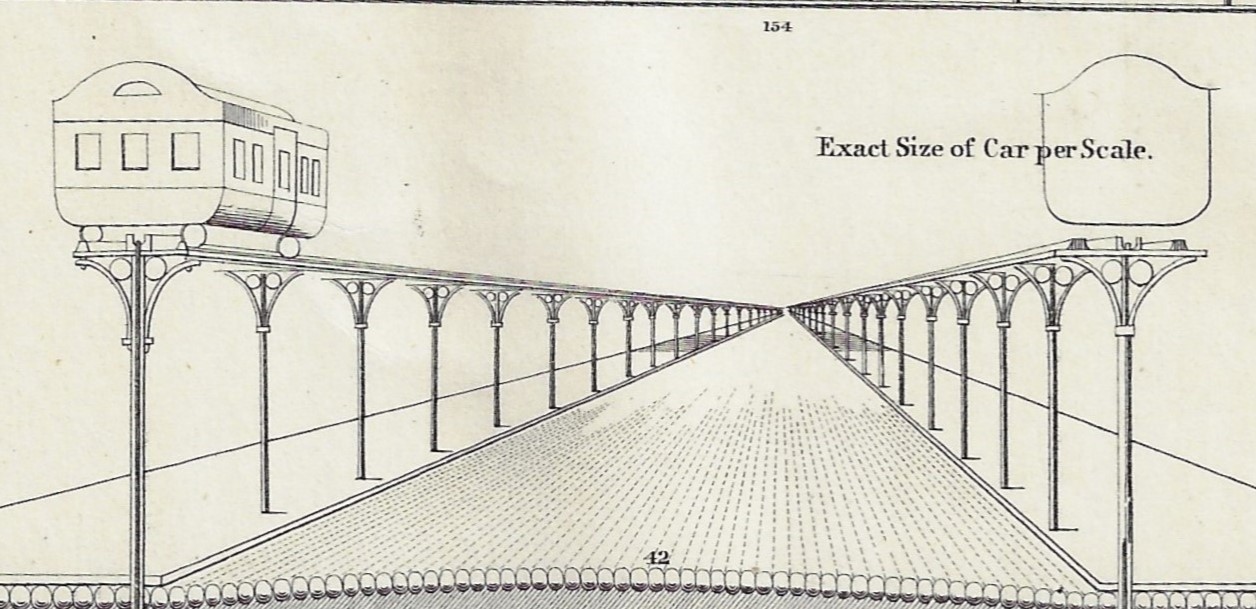
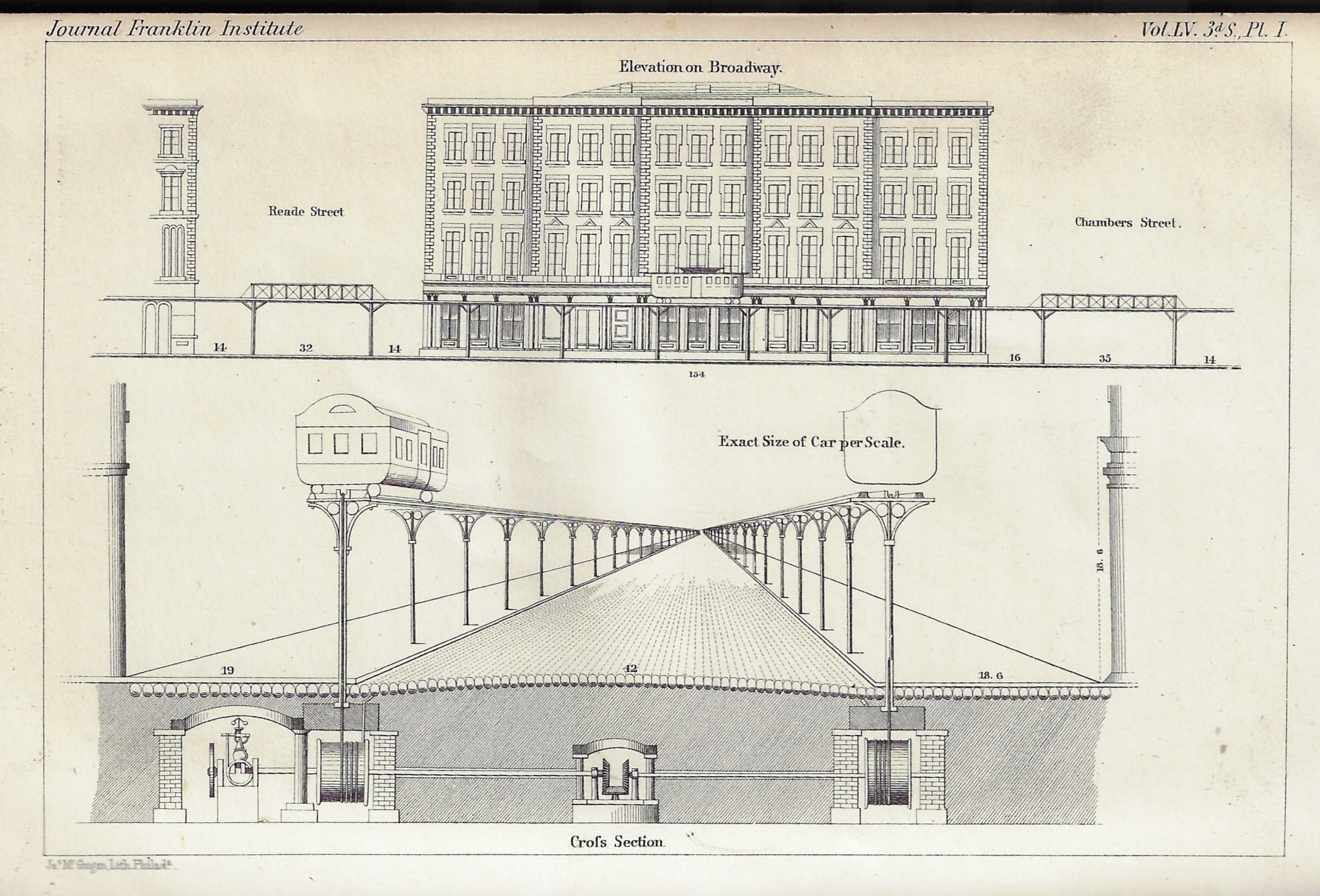
    Anyway, it was he who popped into mind when I came across this noteworthy image in the 1868 volume of Journal of the Franklin Institute.  It is a lovely piece of Found Art, the perspective part of which looks to be not so correct, the vanishing point appearing on a horizon only 500′ away. But no matter, I may be wrong, and the point of all of this is the “found art” aspect, which I think is very strong, and lovely. 

    JFI 1868 railway vanishing point _2_

    [Detail] The image appears in “West Side and Yonkers Elevated Patent Railway” and comes right after a long and heavy mathematical treatment on transferring power on belts and pulleys.  

    JFI 1868 railwaY vanishing point


  • The Department of Upside-Down–Fishing (1920)

    JF Ptak Science Books  Quick Post

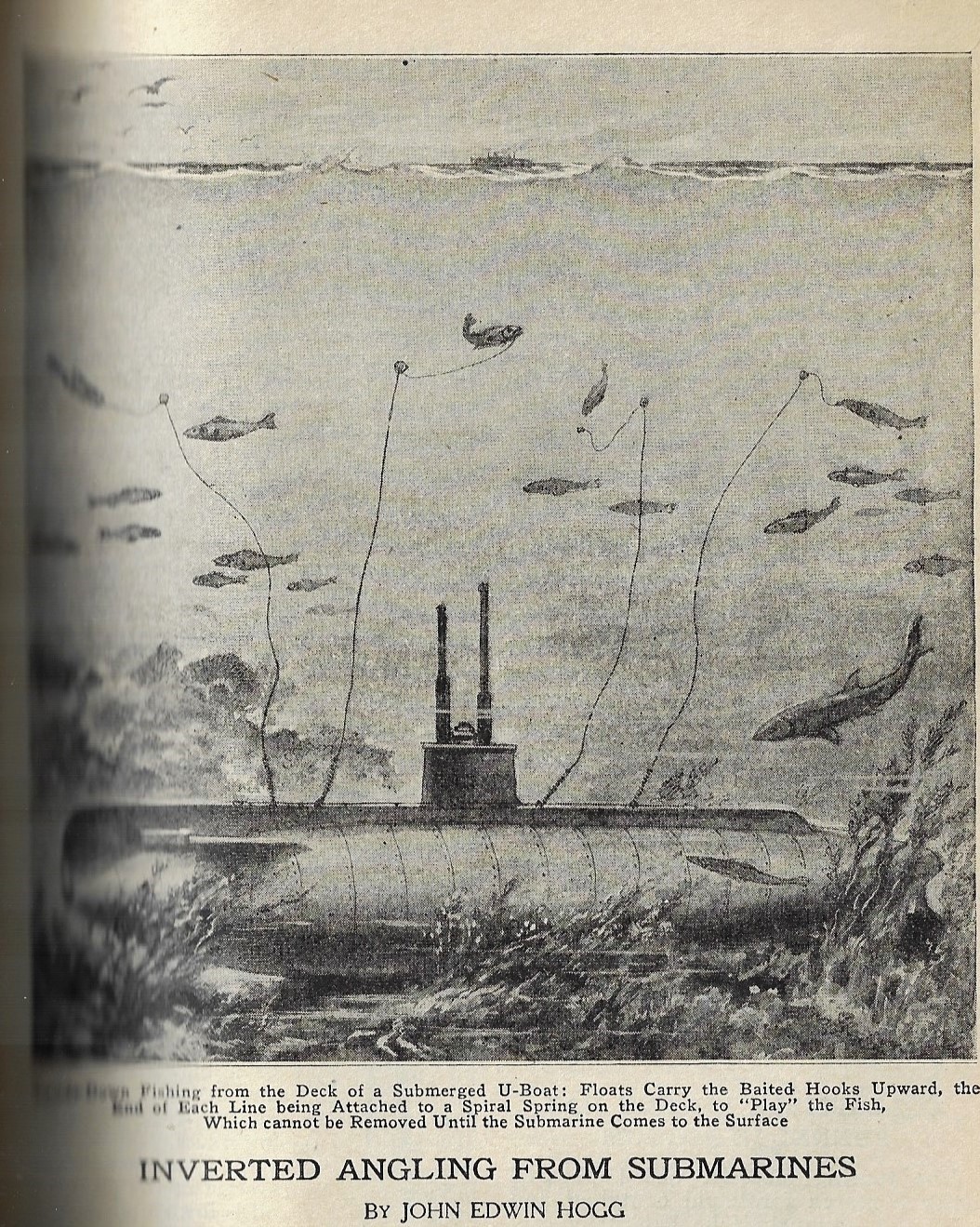
    I should have begun this category/department long ago for the bits and bobs I’ve seen along the way on this blog. It fits in nicely with the categories on the History of Anticipation, the Department of Found Art and Poetry, the History of Nothing, and that sort. In any event, I’ll start it off right here (1.5 million words late) with this unlikely story and fascinating image regarding underwater fishing from a submarine:

    Pop Mech 1920 upside down fishing

    Source: Popular Mechanics, October 1920. 

    ·Posted by :

    ·in:


  • Found Sci-Fi: Proto-Robot Head (1866)

    JF Ptak Science Books  Quick Post

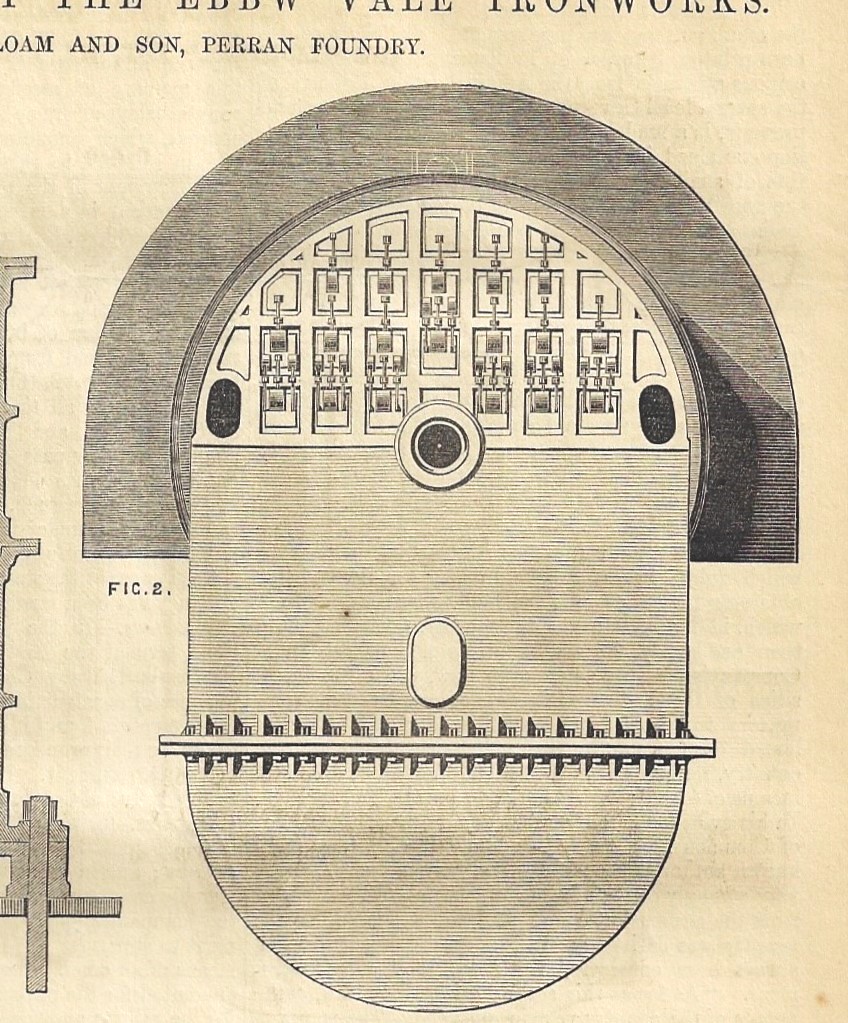
    Anthropomorphic images make their sudden appearances now and again in technical illustration, though they do less so when they surprise the viewer with a simultaneous endo/exo view of the “head” of such pre-vizualization robots. The image here is the view of a plan of “the Darby Blowing Engine at Ebbw [sic] Vale Ironworks” and appears in the second volume of Engineering, September 7, 1866.  The engraving bears a faint resemblance to the Iron Giant, giving both an internal and external view of the workings of the head. Anyway, that’s what I see in it…

    Engineering 1866 proto robot