A Daily History of Holes, Dots, Lines, Science, History, Math, Physics, Art, the Unintentional Absurd, Architecture, Maps, Data Visualization, Blank and Missing Things, and so on. |1.6 million words, 7500 images, 4.9 million hits| Press & appearances in The Times, Le Figaro, Mensa, The Economist, The Guardian, Discovery News, Slate, Le Monde, Sci American Blogs, Le Pont, and many other places… 5000+ total posts since 2008.

Author: JF Ptak

  • A Crowd of Smiles (1945)

    JF Ptak Science Books  Quick Post 

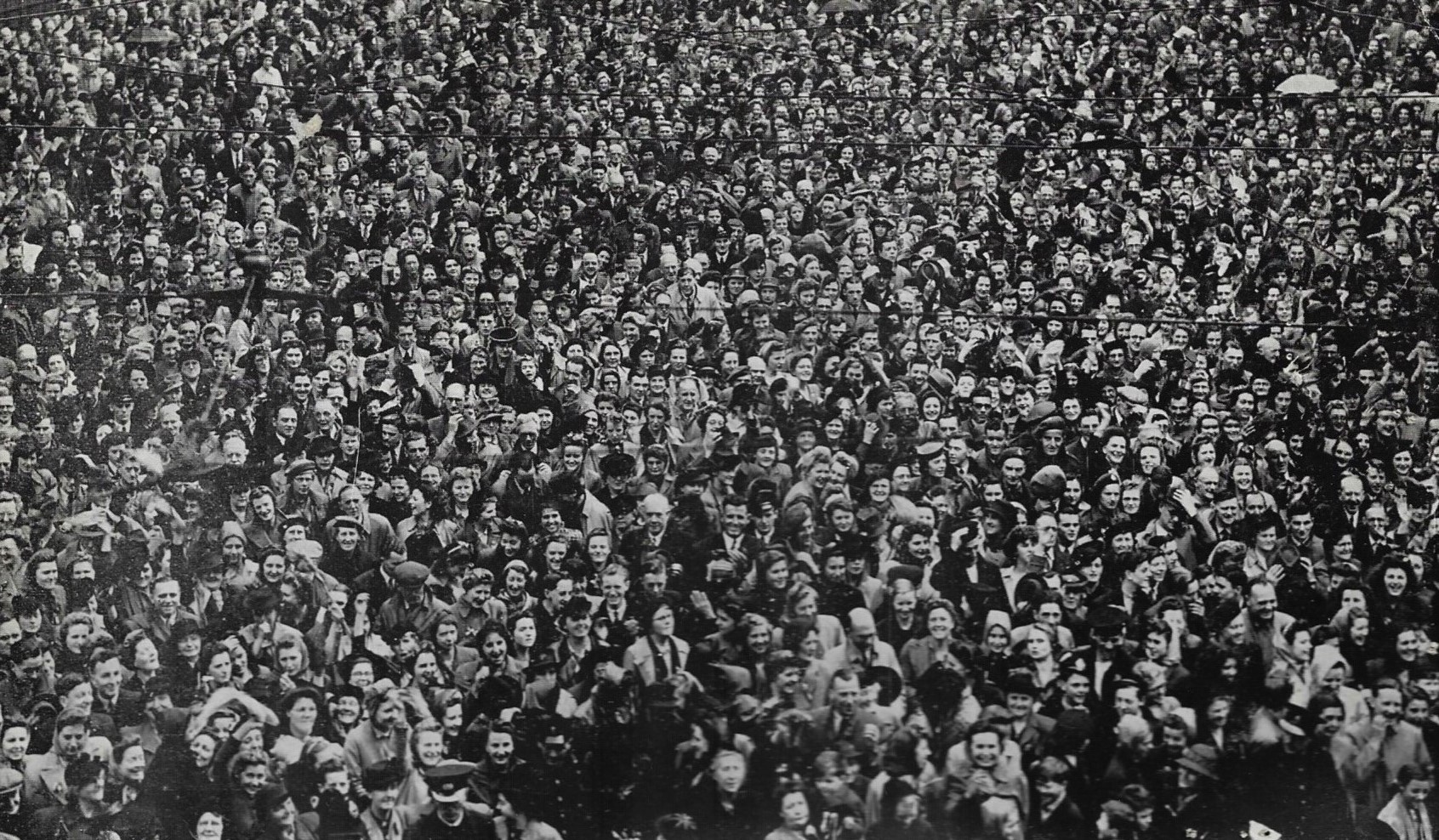
    I’ve written a number of posts on this blog on dense crowd imagery in photographs–parades, armies, union marches, protests, celebrations, work environments, and so on,not the least of which are the famous Weegee million-person-Coney-Island beach scenes.  (All of these are findable via the Google search box at right.)  Today’s installment is the back cover of a small pamphlet called Your City, a Handbook for the Citizens of Liverpool, which is a short guide to the nuts-and-bolts of living there. The remarkable thing about the dense crowd photo is that so many of the people are smiling, which to my experience is not a common thing. Since this pamphlet was published in October 1945 my guess is that the crowd formed in celebration for the end of WWII in Europe or Japan, resulting in this photograph of 2,000 smiles.  

    Books covers your city crowd detail

    Books covers your city crowd detail

    ·Posted by :

    ·in:


  • Flying to India from London at 93 mph (1928)

    JF Ptak Science Books  Quick Post

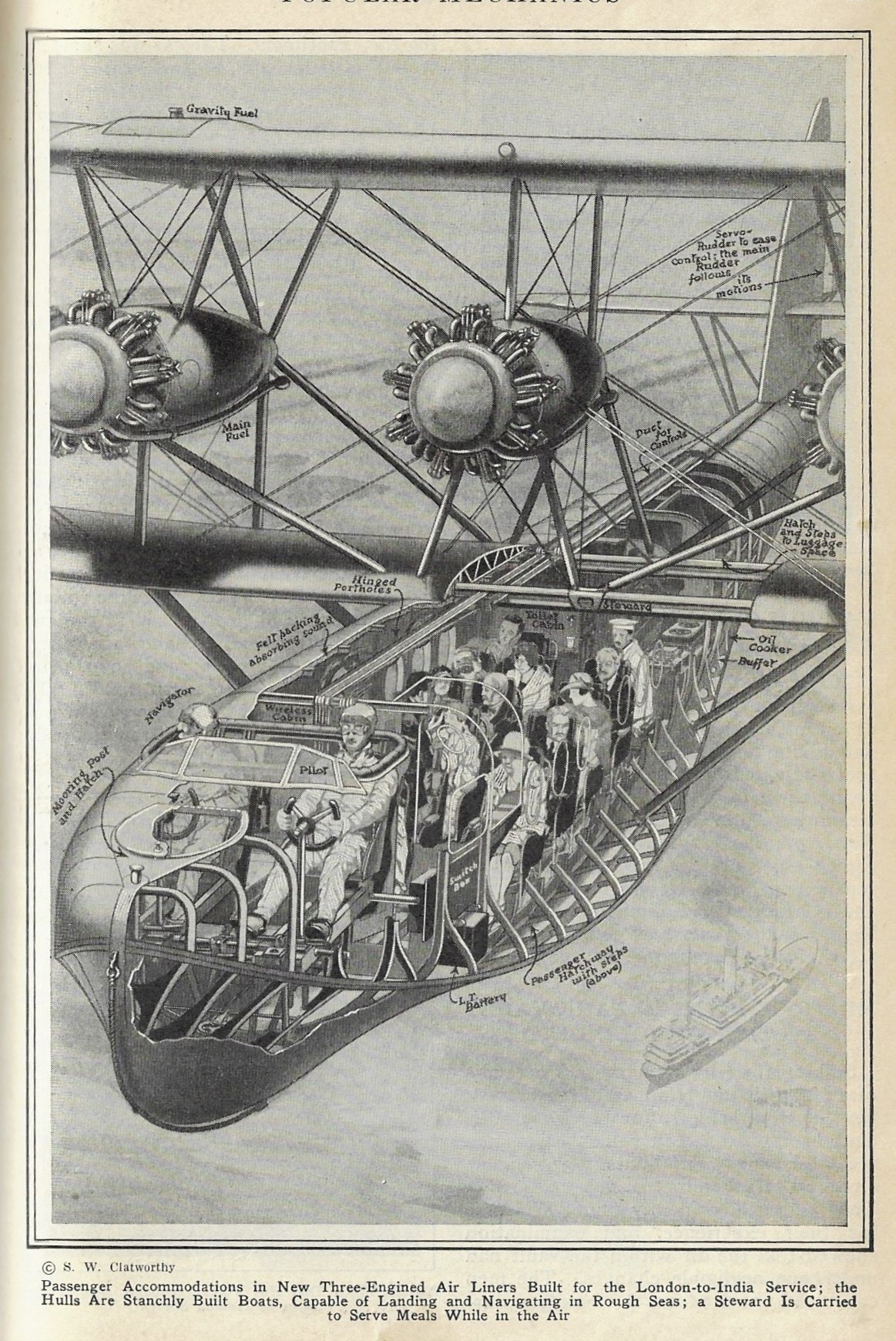
    These oblique cross-section and cutaways have been near-and-dear imagery for a long time, and I’ve probably made 50+ posts on this blog sharing them. This drawing is by S.W. Clatgworthy and appears in Popular Mechanics for March, 1928– it depicts the not-identified and brand-new “Short S.8 Calcutta”, which made its first flight the month before.  The airplane was designed for the Mediterranean leg of the London-India service of British Imperial Airways (1924-1939 when it merged into BOAC and then in 1974 became British Airways) and was the first stressed skinned metal hulled flying boat, and was constructed by Shorts1. Its three Bristol Jupiter engines pulled the aircraft along at about a 100 mph cruising speed, which no doubt made for an exciting and relatively fast (by 1928 standards) trip to the East.  The aircraft was pretty large for the day: 66′ long with a wingspan of 93′ and a height of 23′. It was probably noisy but relatively comfortable, the passengers being served food and drinks by a steward. Far less comfy were the pilot and navigator, who as you can see were in an open cockpit. 

    Pop Mech 1928 cross section airplane

    Notes:

    1. Shorts was the firm started by the Short brothers in Battersea in 1908 and which was the first aircraft manufacturing company to make production airplanes. 


    ·Posted by :

    ·in:

    —

  • A Tank at an Amusement Park (1920)

    JF Ptak Science Books  Quick Post

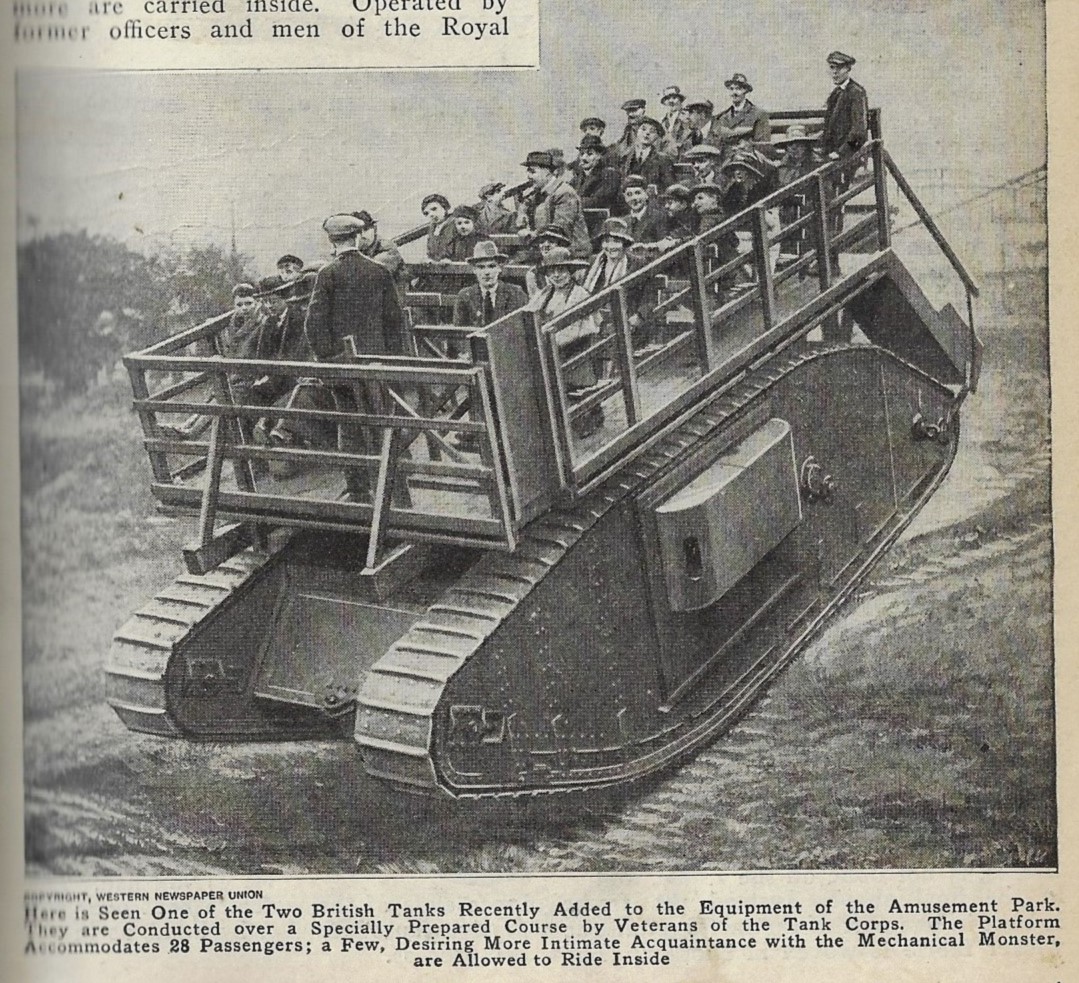
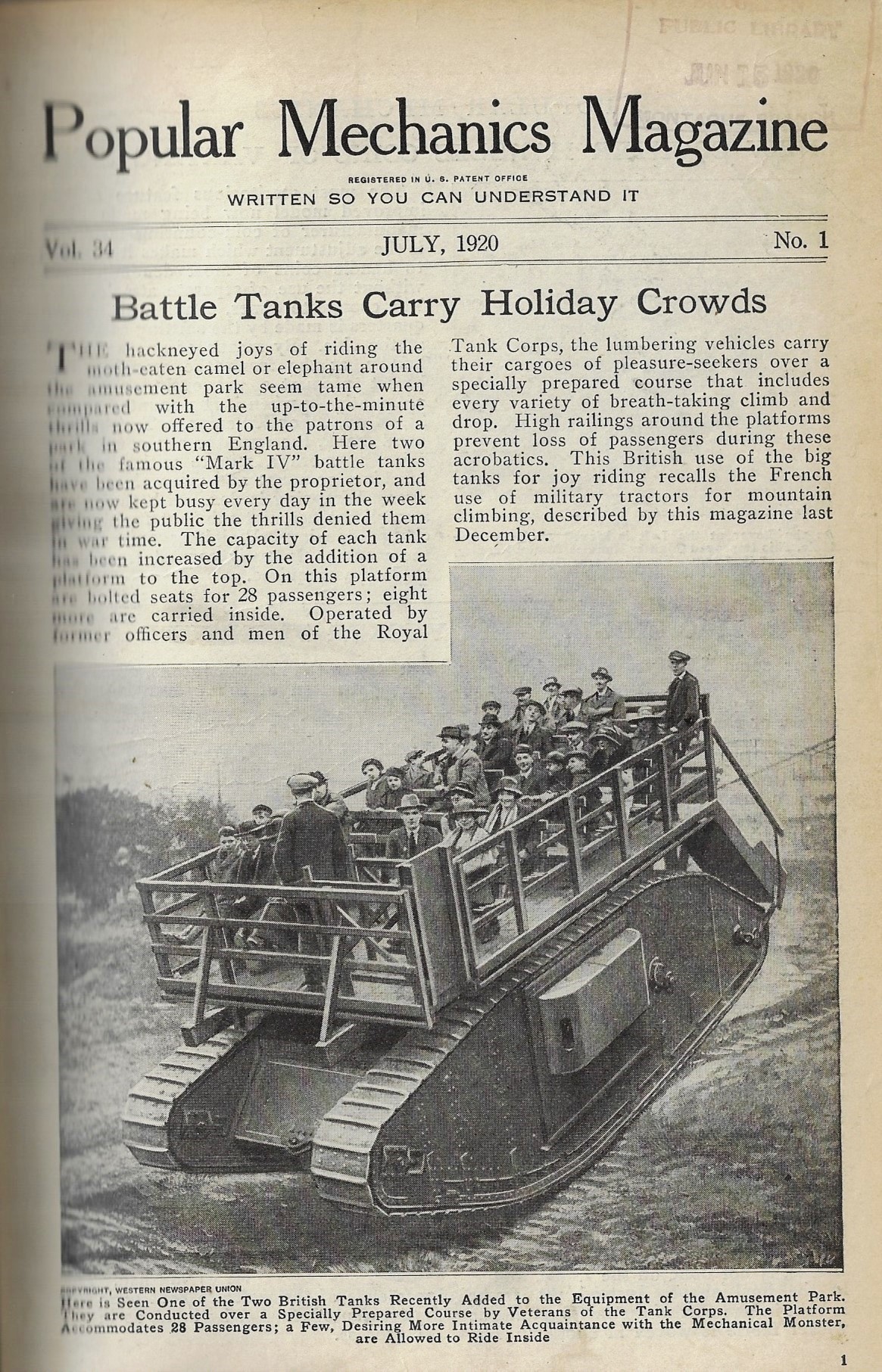
    Pop Mech 1920 tank amusement park_2_There is something lingering and heartbreaking about this image found in Popular Mechanics for July, 1920. The image shows a refitted tank being used as a curious ride at an amusement park. No doubt people wanted to put WWI behind them, as the end of the war was still only two years old or so, and the imagery of millions of people killed during the conflict was still very recent, with the hardships and loss still quite present in the minds of nearly everyone in the world.  That said, the image of the smiling faces on the retrofitted tanks a bit much, seeming to be this side of disrespectful. Seeing the “Jeep” brand doesn’t affect me like this–as the logo has almost nothing left in connection to the WWII vehicle, though I do feel a bit annoyed when I see a deluxe High Mobility Multipurpose Wheeled Vehicle  HMMWV, or Humvee) tooling around in the suburbs, begging attention in its mostly-useless incarnation, carrying with them the memory of hundreds of U.S. soldiers being killed in them. I just don’t like the idea of desensitizing the imagery of these vehicles into something sugary. 

    Pop Mech 1920 tank amusement park

    ·Posted by :

    ·in:

    —

  • A Peep into the Future, Technology, and Socialism (1901)

    JF Ptak Science Books   Post 2815  (Thanks to Cosmo Rare Books, where I saw a reference to this work; all images and text for the Wintle article are found at Hathi Trust.) 

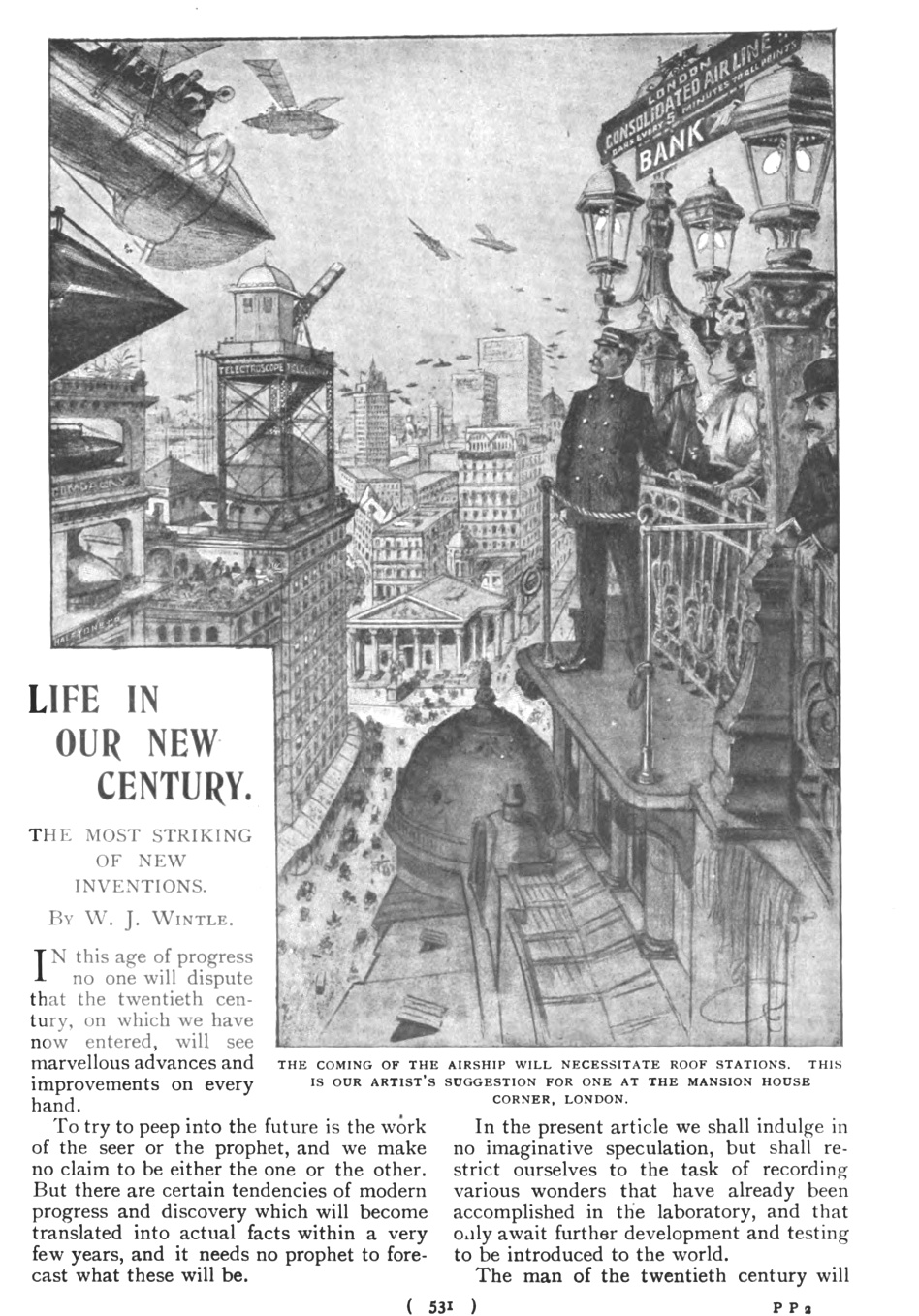
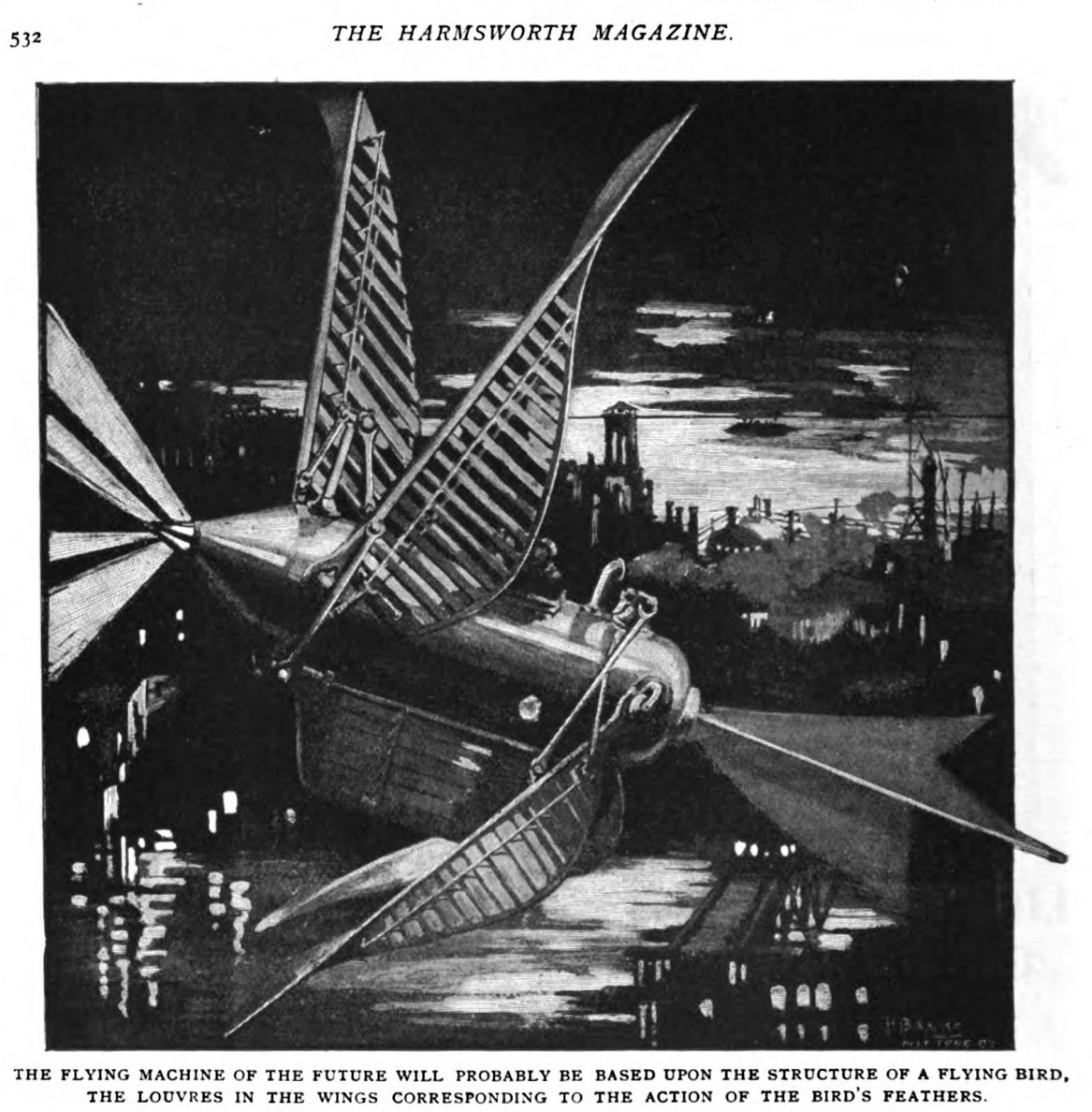
    Future 20th c WIntle Peep _1_ (1)W.J. (William James) Wintle, “Life in our New Century”, in The Harmsworth/London Magazine, volume 5 (new series) #30, pp 531-538, 1901.

    (Source with full text and other illustrations at Hathi Trust.)

    W.J. Wintle contributed a sober look into the near-future of technology and society, basing his outlook not so much on possibilities but on existing (or nearly/possibly so) tech, which is a smart move for trying to access the expansion of human knowledge: “To try to peep into the future is the work of the seer or the prophet, and we make no claim to be either the one or the other. But there are certain tendencies of modern progress and discovery which will become translated into actual facts within a very few years, and it needs no prophet to fore cast what these will be.”

    The author (who contributed regularly to the magazine) raises some interesting and reasonable technical points which for the most part are mostly correct, in a larger and more general sense. The details of the technical developments miss the point and in many cases are superseded by far more elegant inventions and discoveries that would take place in mere decades, if not sooner, rushing the “future” of Mr. Wintle (1861-1934) into a timeline within his own lifetime…which happens all of the time.

    For example his discussion of “Hertzian waves” soon gives over to the development of the pocket telegraph. Here though he does raise a very interesting point which to my experience is very scarce—he points out that with this pocket telegraph it makes it possible for a person to communicate with another person without knowing where they were. (“…a system of pocket telegraphy, by means of which a man may carry his own apparatus in his pocket and receive messages even from people who. do not know where he is”).

    That idea would certainly have been a shocking revelation to the high Victorian.Future 20th c WIntle Peep _5_


  • On Not Discovering X-Rays (1890)

    JF Ptak Science Books  Quick Post

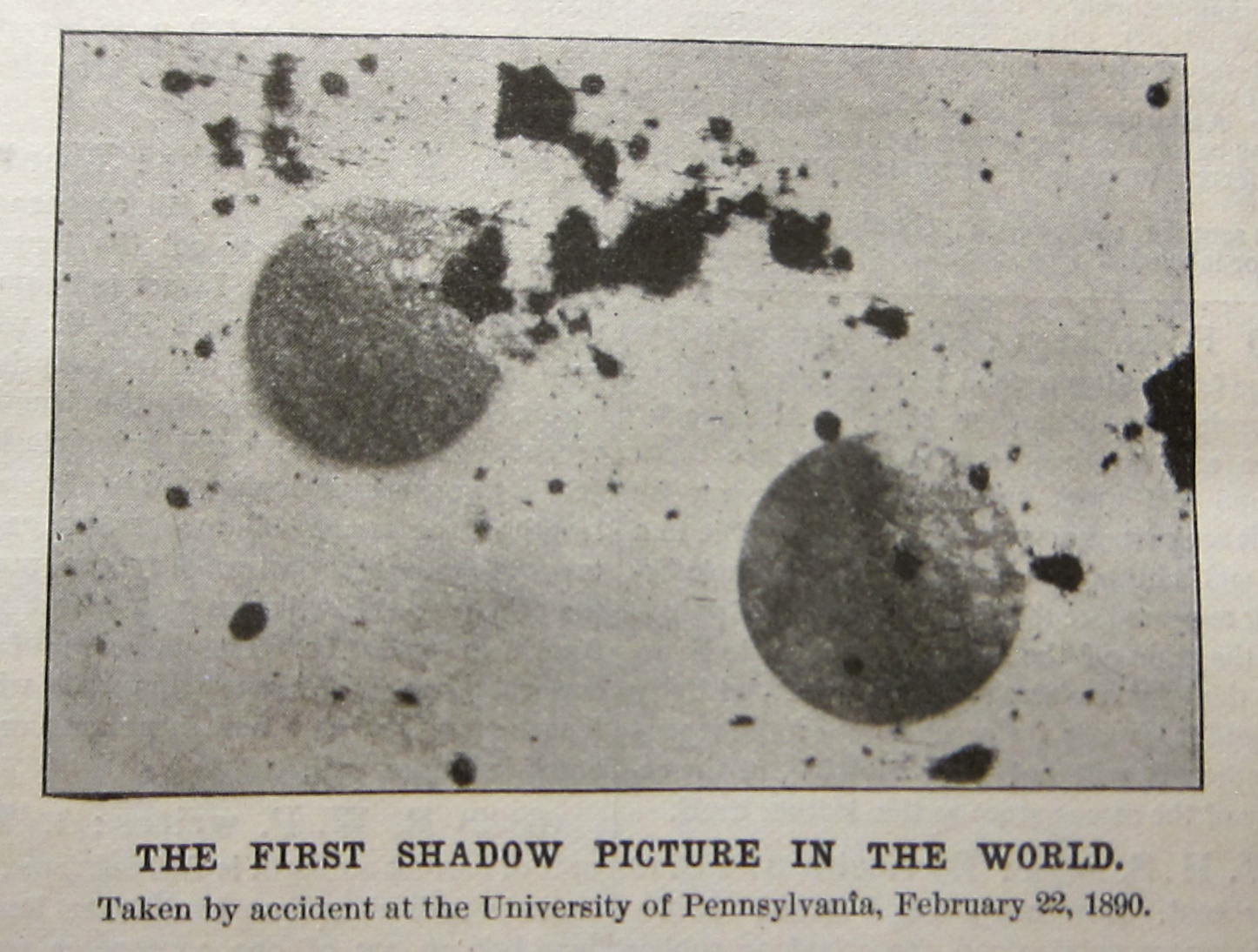
    In the long list of “photographic firsts” the following is a rare case–a first that wasn’t a first that may have became a first, though no one recognized it as such until the true first was recognized. Huh?

    Sci Am 1896 shadow pic

    This is the story of Arthur W. Goodspeed (1860-1943) and William Jennings (1860-1946) and their brief brush with immortality. While using a Crookes tube and  photographing electric sparks and brush discharges in their lab at the University of Pennsylvania in 1890 they produced a photograph of unknown certainty and imagery. They did not pursue the anomaly and stowed the photographic plate away in archives. After the Roentgen discovery in 1895 and seeing the first results in early 1896 they knew exactly what it was they had photographed, and just hadn’t recognized that what they were seeing was revolutionary. They retrieved and published the photograph along with their story in Science on February 14, 1896 (vol 3 #59), and a short account of the narrative was published in Scientific American on April 11, 1896, along with the photograph. To their great credit the two physicists made no claim to discovery:

    • “We can claim no merit for the discovery—for no discovery was made. All we ask is that you remember, gentlemen, that six years ago. day for day, the first picture in the world by cathodic ray was taken in the Physical Laboratory of the University of Pennsylvania.”

    I reprint the article and the photo below.  


  • Bomb-Dropping Torpedo Plane Guided by Wireless (1917)

    JF Ptak Science Books  Quick Post

    Pop  Mech 1917  aerial maps

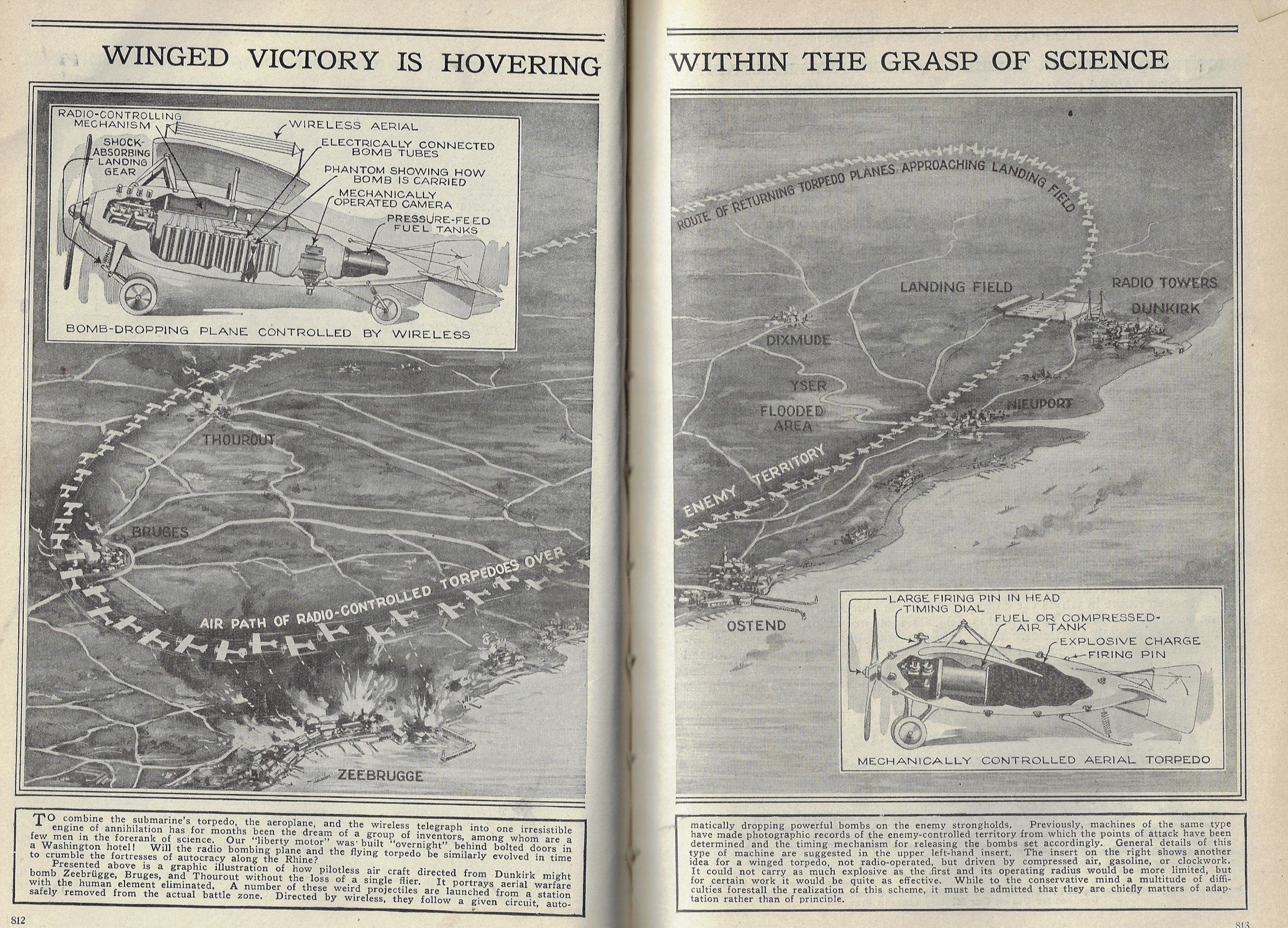
    This illustration appeared in the December 1917 issue of Popular Mechanics, just a year away from the end of WWI. This was a promotion for the idea of a remote-controlled miniature-aircraft, which was equipped with bombs and suggested to be an “irresistible engine of annihilation”.  The map displays how the aircraft–or multi-squadrons of them–could be controlled from Dunkirk to bomb targets in Zeebrugge, Bruges, and Thourout, “without the loss of a single flier”. 

    • “Will the radio bombing plane and the flying torpedo be similarly evolved in time to crumble the fortresses of autocracy along the Rhine?”.

    The small inset of the flying machine at bottom right seems to be little more than a bomb (a “mechanically controlled aerial torpedo”).


  • J. Robert Oppenheimer on the Economics of Atomic Bombing (1945)

    JF Ptak Science Books  Post 2811

    On the heels of the sale of a letter [https://historyofideasblog.com/thesciencebookstore/2013/03/william-shockley-on-the-economics-of-atomic-bombing-1945.html] written by transistor pioneer and then mega problem child William Shockley on the economics of atomic bomb a friend told me about a potentially similar account by J. Robert Oppenheimer. Leaving the modern racist Shockley behind in this post for time consideration, the Nobelist (sharing the 1956 award with co-workers Walter Brattain and John Bardeen), the man wrote an appraisal on the monetary aspect of conventional vs. atomic attack for one of the Vannevar Bush groups in 1944/5. It may seem pretty harsh—especially when he came out with the unsurprising finding that the economics of the situations were firmly positive for the use of nuclear weapons—but it was a job that someone had to do, somewhere, and Shockley turned out to be that person, probably to the surprise of very few.

    Oppenheimer is a different story. Philosophically conflicted and occasionally torn, the man who announced himself as the “destroyer of worlds” while still bathed in the light of the successful atomic test shot in the Jornada del Muerto also contributed some thought to this issue. The original reference to this was told to me to be in Scientific Information Transmitted to the United Nations Atomic Energy Commission…June 14, 1946, a set of seven slender volumes prepared under the direction of the always-present Bernard Baruch. The reference came in the first volume (which also has a short and simple and brilliant 18-page history by Richard Feynman and Robert Bacher of atomic energy and the building of the atomic bomb) in a paper by Philip Morrison in which he records a one-line quote of Oppenheimer’s overall assessment of the dollars and cents of atomic bombing. The Oppenheimer quote was referenced to its source in a Congressional special report on atomic energy published a few months earlier in 1946, and there he speaks for about one page on these explosive economics.

    As I said it is far easier finding this thinking in Shockley—but for Oppenheimer as disagreeable as this thinking might’ve been, it was still a pertinent question and one that needed to be researched and answered, and I believe Oppenheimer did just that, with no extra-emotional attachments to the issue. It was an issue/problem/question, and the scientist answered it.

    So for the general interest I’m reprinting Oppenheimer’s testimony on this one aspect of the use of the atomic bomb, which you will find below.

    • The source: Hearings before the Special Committee on Atomic Energy, United States Senate, 79th Congress, first session, pursuant to S. Res. 179, A resolution Creating a Special Committee to Investigate Problems Relating to the Development, Use, and Control of Atomic Energy. Part 2: December 5,6,10 and 12, 1945. USGPO 1946.

    “Senator Hart [Thomas C. Hart of Connecticut]. Doctor I think perhaps you may be misunderstood at one point on account of brevity.

    You said that atomic weapons can be cheap instruments of devastation and then explained it briefly.

    I think it would be better for purposes of the record if you expanded that.

    Dr Oppenheimer. Well I have seen a figure I don t know whether it is a reliable figure but it is surely not a crazy one that it has cost us in this war $10 a pound to deliver explosive on the enemy. I am unable to give an accurate cost figure on atomic weapons partly because I don t know and partly because if I did know it I would be prevented by that knowledge from saying it but I think that I can say that even taking account of the in some ways diminished effectiveness of concentrated bombing it is somewhere between 10 and 100 times cheaper to deliver atomic weapons which is simply in terms of the area destroyed it is 10 or 100 times cheaper.

    I don t know if it is 10 times or 30 times and this will depend on policy but it is an enormous factor. It is not a trivial change.

    Senator Hart. Cheaper for instance than TNT?

    Dr Oppenheimer. That is right and I am using a figure which may well be criticized but which is I believe the figure used by Army Ordnance for over all cost of delivering a pound. You can see what that means if you take a round figure of 10,000 tons as a possible effective equivalent for an atomic bomb. That is 20,000,000 pounds which is $200,000,000. Now without revealing any secrets I can say that an atomic bomb and the equipment for delivering it is not going to cost that by an enormous factor.

    Senator Hart. But those large TNT bombs which are the usual comparative figure though the destruction in any one point any one small area is by no means as great it is sufficient and is spread over a wider area is it not?

    Dr Oppenheimer. I used a somewhat conservative figure of the 10,000 tons rather than the actual equivalent in part to take this into account. The actual atomic bomb releases more energy than this.

    Senator Hart. But it is true that the comparison as is usually made is a little faulty because of the respective areas involved?

    Dr Oppenheimer. What I would say is this and I will be somewhat sharper about it if you wish. For the equivalent tonnage the factor of cost will be more than 100. For equivalent area it will be somewhere between 10 and 100 and that is to try to take account of this effect which you mentioned. Of course if you want to knock out three houses somewhere you will not use an atomic bomb.

    Senator Byrd [Harry Flood Byrd, Virginia]. Doctor, when you spoke of destroying the stock pile of bombs would that mean too destroying the organization and the factories that made the bomb?

    Dr Oppenheimer. In the first place I did not speak of destroying it. I was asked about it.

    Senator Byrd I understood you to say that if you had faith in other nations you would then favor the destruction of the bombs we accumulate during this period before we can ascertain what other nations are going to do.

    Dr Oppenheimer I would say this country should do for the problem of atomic armament what we expect other nations to do If we expect them and are convinced that they wish not to arm atomically then I think that we should not arm atomically and if we want to keep the plant some place. I think we should have that plant completely open and should allow the representatives of the powers with whom we are dealing to know as much about what we are doing as we would want to know about their plants…”

    ·Posted by :

    ·in:


  • A Massive Triple Tandem Triplane (1921)

    JF Ptak Science Books  Quick Post

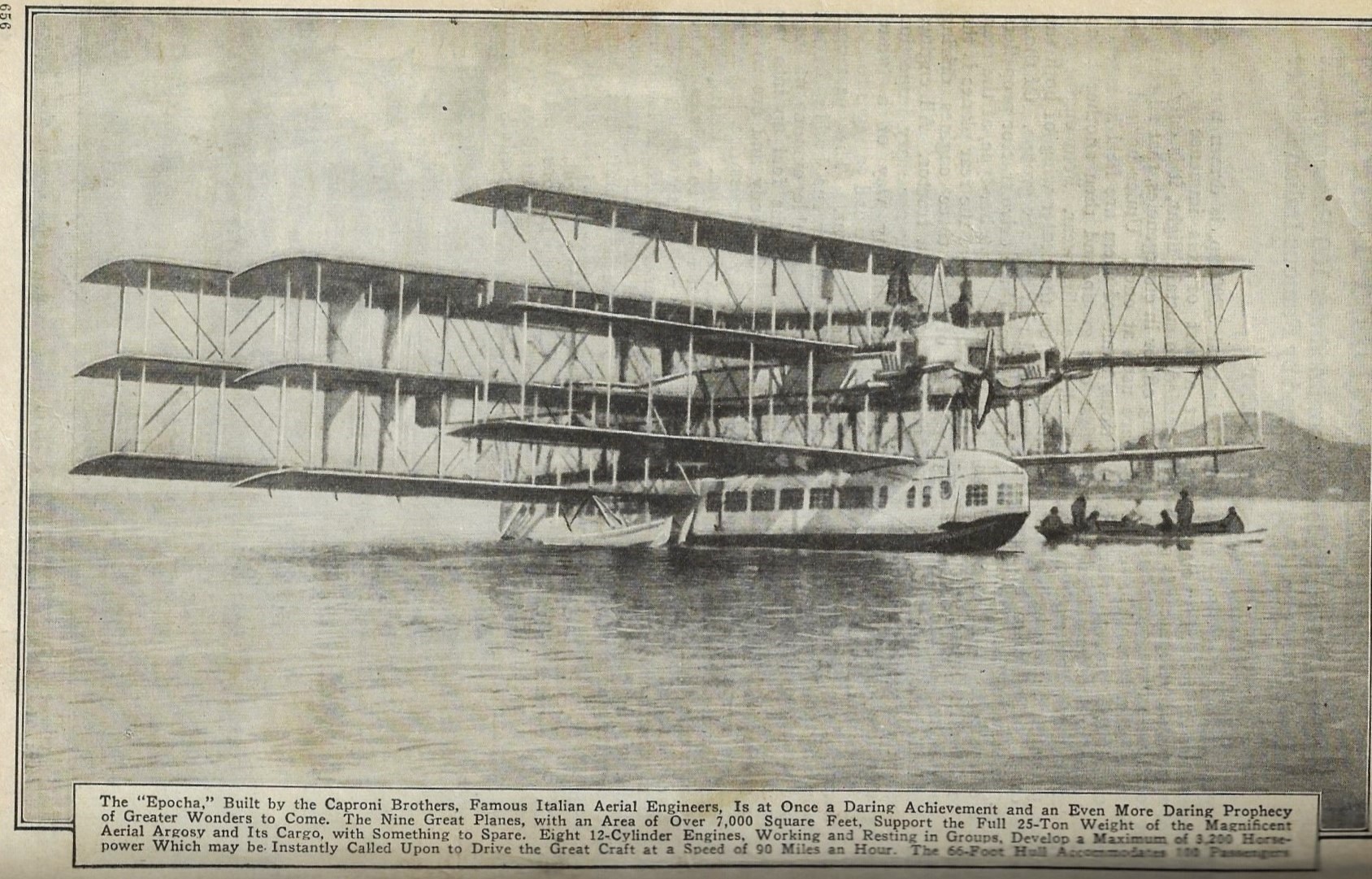
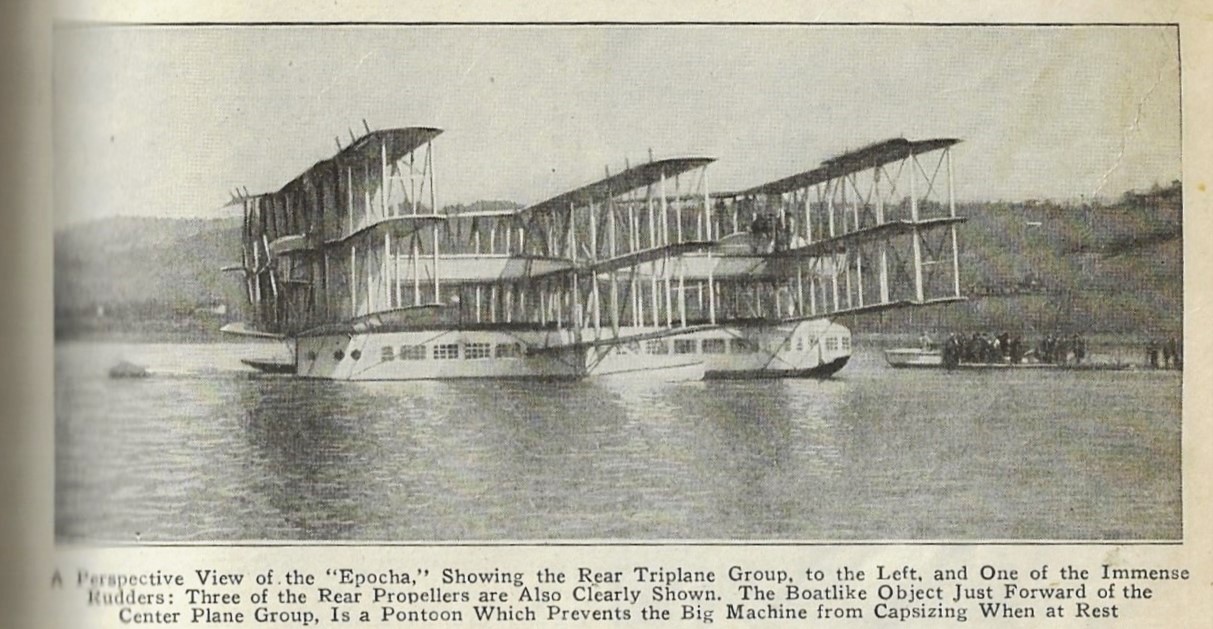
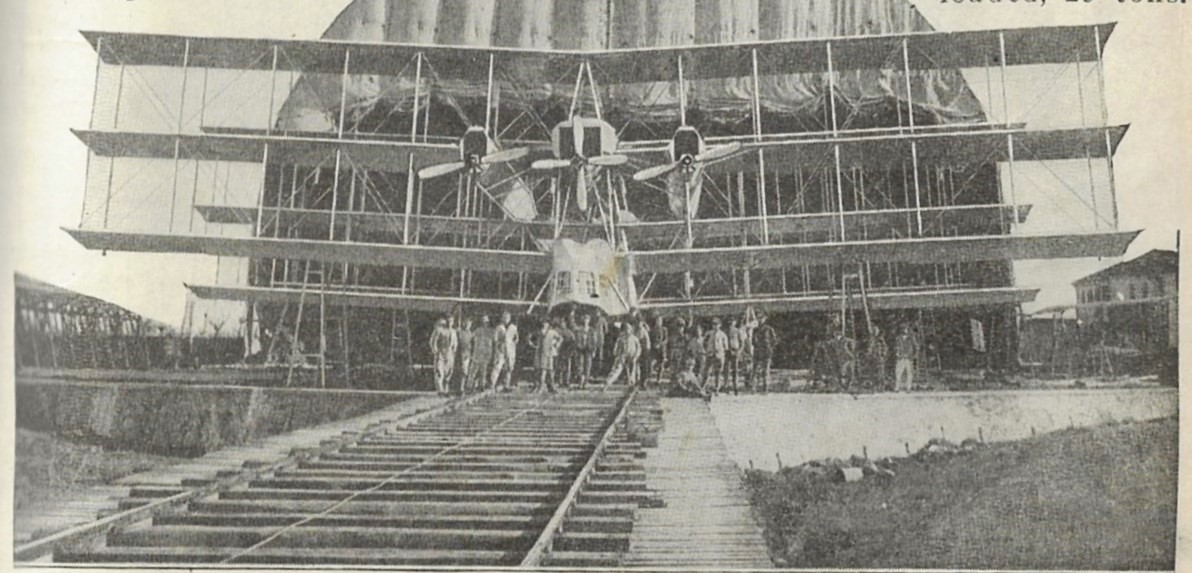
    What we see here, below, is a rather extraordinary flying machine, a mammoth beast with 8,000 square feet of wings (more than 40% greater than that of a 747). It was a triple tandem triplane, which is a glorious-sounding and possibly epic description of the aircraft—a plane with three independent triplanes fixed to one fuselage. The article appears in Popular Mechanics for May 1921, and describes this aeronautical attempt as the work of Giovanni (Gianni) Caproni (1886-1957), which was to be a transport for 300-mile round trip excursions at about 80mph cruising speed. It was powered by 8 12 cylinder 400 hp Liberty engines operating on push/pull arrangements on different wings, carrying a crew of eight and 100 passengers. Unfortunately the flying boat crashed on its second test flight, and then the remains were towed badly toward shore, and that was the end of the plane.

    Pop Mech 1921 massive flying boat caproni _2_


    Pop Mech 1921 massive flying boat caproni _3_
    Pop Mech 1921 massive flying boat caproni _3_

    ·Posted by :

    ·in:


  • When the Opposite of an Idea is the Better Idea (1922)

    JF Ptak Science Books  Quick Post

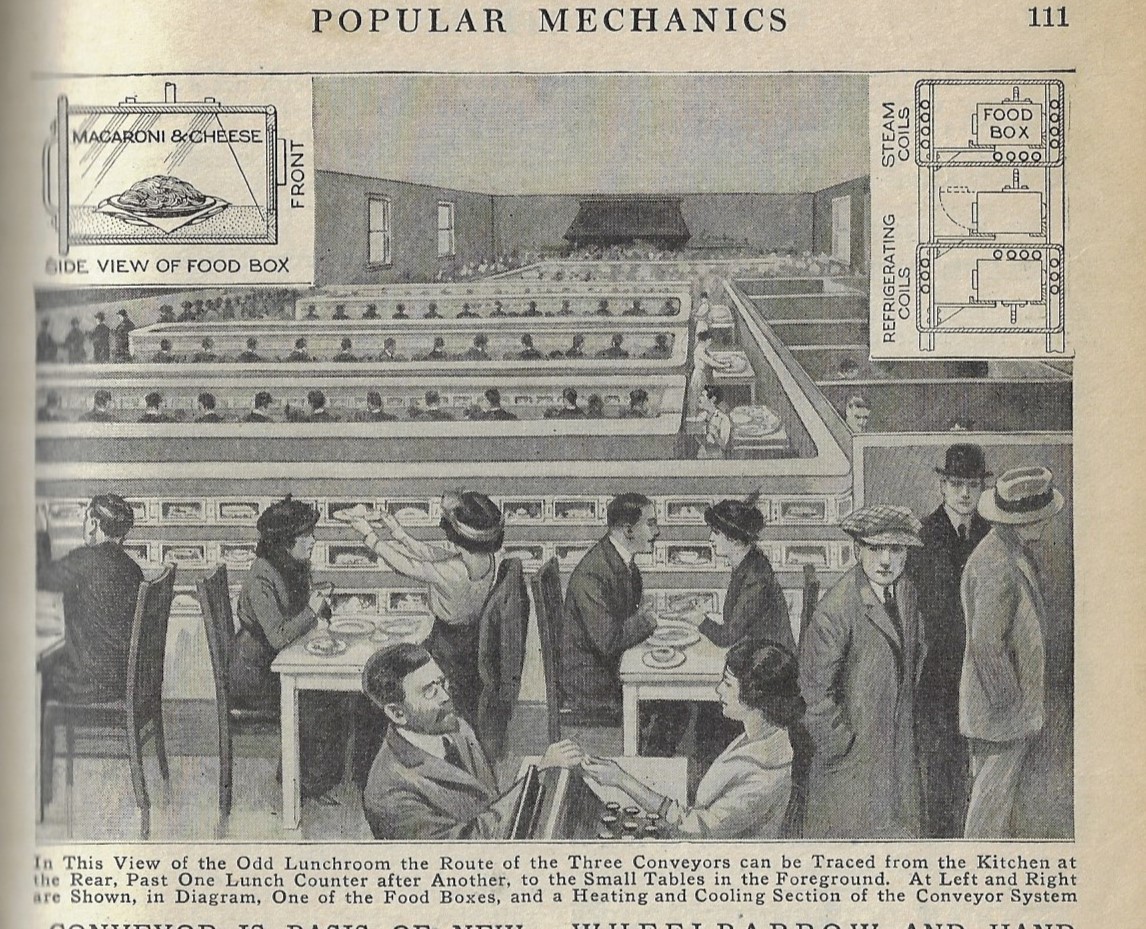
    Here’s a suggestion for a new category for this blog: Ideas That May Be Better Backwards. The idea is presented in this wonderful image from Popular Mechanics in 1922 and features an endless trolley/conveyor of food that moves past stationary diners at a restaurant. You’d sit down, and gobs of food would be presented on an endless conveyor, moving along at probably 1 mph. This idea makes sort of very quick 3-beer sense, until you think of the probable waste and the cost of machinery and energy that it took to trundle the food along, and then replacing all of it that went cold, and so on. It seems to me the opposite might be the better if not still-bad idea: putting the patron seating area on a revolving stage and have a central location for the food where they’d take what they wanted. The conveyor-of-food idea withers next to the great Automat, where people would simply walk up to a long bank of small windowed receptacles with different foods inside, drop a few coins into the slot opening the lovely little (but thick) door, after which you’d simply find a place to sit and eat. (This automat was a German 19th c idea, and it became popular in the U.S. in the 1930s’-1960’s, with Horn & Hardart leading the way with 30 or so locations in NYC. The H&H variety closed up by the early 1990’s, their locations converted into Burger King meat/fat/carb slingshops.) Here it is:

    Pop Mech 1920 luncheon

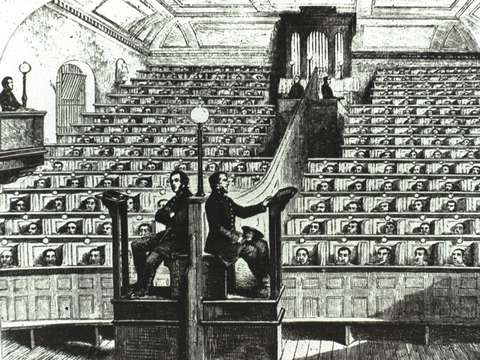
     The image reminded me of one I saw for the very restrictive penitent/observer prisoner in chapel at Pentonville Prison in 1855–I know it is hardly similar whatsoever to the food-on-a-belt, but the two did come together somehow in my head:

    Prison chapel Pentonville

    [Source: lost! Apologies.]

    ·Posted by :

    ·in:


  • The Jevons Logic Machine (1870)

    JF Ptak Science Books  (This is a null post, carried over from the bookstore section of this blog–I’m sharing it in the bookseller format to simply share the info on this fascinating machine.)

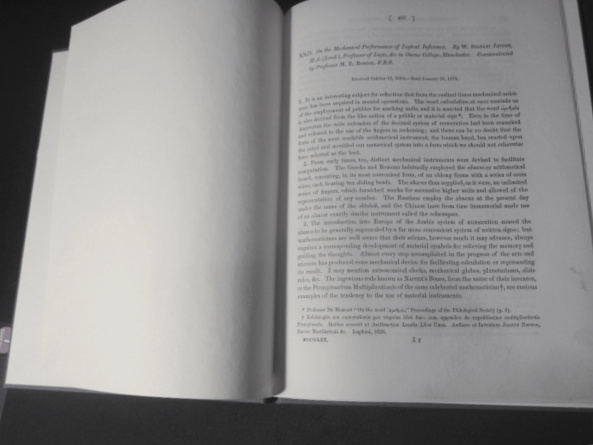
    Jevons logical _4_W. Stanley Jevons, On the Mechanical Performance of Logical Inference, in Philosophical Transactions of the Royal Society, 1870, pp 497–518. This is an extract from the volume, containing the entire article, plus its three engraved plates showing the works and interior of the machine. This is very tastefully bound in paper covered boards with a paper spine label. This is the first description of the one the preeminent. 

    Jevons was a polymath and one of my favorite thinkers of the 19th century. He worked across many fields but seems to be remembered today mostly and unfortunately for his theory of the relationship between sunspots and economics cycles. He is not so well known as the inventor of one of the earliest pre-modern computers and particularly for it being the fastest machine of its kind ever invented.

    “In 1870 a British scholar, W.S. Jevons, built the first computer designed to solve logical problems. Inspired by Boole and Babbage, Jevons built a mechanical device implementing automated deduction…”–Paul Amblard, “A Finite State Description of the Earliest Logical Computer: The Jevons’ Machine”, in the Springer International Series in Engineering and Computer Science book series (SECS, volume 434)

    “The creation of analog computing devices is both relevant and significant to the development of modern computers, but was there no early pure mechanical digital apparatus, given the advent of Boolean logic and Venn diagrams in the 19th century? One individual in particular began a small, but significant movement that transformed digital theory into mechanical devices that, while lacking the sophistication and power of later electronic digital computers, did, nevertheless, function in a digital mode. The person responsible was the Englishman W. Stanley Jevons (1836–1882).”–George Buck and Stephen Hunka, “W. Stanley Jevons, Allan Marquand, and the Origins of Digital Computing” in IEEE Annals of the History of Computing, Vol. 21, No. 4, 1999.