A Daily History of Holes, Dots, Lines, Science, History, Math, Physics, Art, the Unintentional Absurd, Architecture, Maps, Data Visualization, Blank and Missing Things, and so on. |1.6 million words, 7500 images, 4.9 million hits| Press & appearances in The Times, Le Figaro, Mensa, The Economist, The Guardian, Discovery News, Slate, Le Monde, Sci American Blogs, Le Pont, and many other places… 5000+ total posts since 2008.

Author: JF Ptak

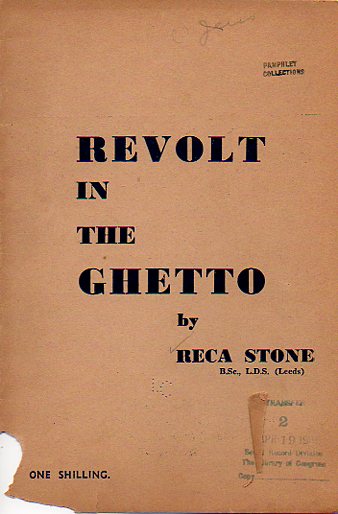
  • Warsaw Ghetto Uprising–Full Text of a Rare 1944 Pamphlet

    JF Ptak Science Books  

    “There will be a dawn.”–Dorothy Thompson, 1943

    “The former Jewish quarter in Warsaw is no longer in existence”–Jurgen Stroop, liquidator of the Warsaw Ghetto.

    Dorothy Thompson got that one wrong–or so at least got the “dawn” wrong when it comes to the Jewish uprising in theWarsaw Ghetto in 1943.  There wouldn’t be a dawn, there, mainly because there would be hardly any Jews, or Warsaw.  [This battle took place about three years after the Nazis established it as a means of control for the city’s 400,000 or so Jews. In the intermediary years hundreds of thousands of Jews had been “deported” (that is, sent to the concentration camps to be exterminated or worked to death), so that by the time of the Uprising only 60,000 people remained in the Ghetto.  And by this time there was no doubt in anyone’s mind who lived there (and perhaps too in Warsaw as a whole) what the euphemism of “deportation” actually meant.  The battle started off well for the home defence (the ZOB) but, ultimately, with little access to resource and with nowhere to actually retreat or regroup in the few acres that remained of the original Ghetto, whoever was left in the Ghetto were either killed or captured by 16 May.  The German commander, SS Brigadefuhrer Jurgen Stroop reported on that day that “the former Jewish quarter in Warsaw is no longer in existence”.]

    This small pamphlet was written by Reca stone in 1944 on the Jewish counter-attack against the Nazis in the ghetto of Warsaw. It is one of not-many that documented not only the resistance in Warsaw, but also of the wholesale liquidation going on in that city and in the concentration camps. in general.  (Again, this was written in 1944. )

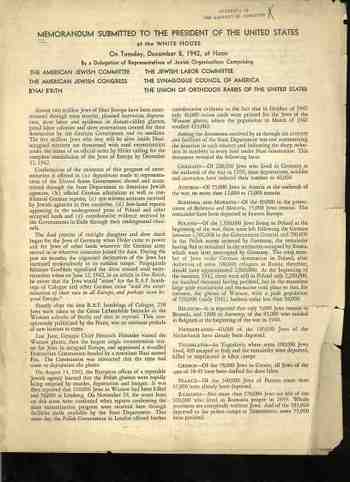
    There weren’t many accounts like this, but there were enough, certainly enough to have made a difference, I think, in how the leaders of the war effort approached whether concentration camps existed or not.  Franklin Roosevelt had exactly one meeting on this topic (which I wrote about here), while many others decided that the idea of exterminating all of European Jewry was so enormously bad and so gigantic that it could not possibly be true.  

    Felix Frankfurter famously replied to a first-hand report on the extermination from the great Jan Karski that he just couldn’t “beieve” Karski’s story–not because the Supreme Court Justice (and Jew)  thought Karski wasn’t telling the truth, just that the story itself was unbelievable.  And whether people thought that the stories were the truth but unbelievable (like Frankfurter) , or whether they thought they to be exaggerations, or whether they thought it was impossible, the responses and the subsequent actions mostly seem to have come to the same end of nothingness. Even after years of reports of extermination and brutalities and millions of people missing (as FDR was warned of in that1942 meeting), the actual eyewitness accounts of the concentration camps were still received as being unbelievable.
    Blogsept5_memorandum_1494_2

    This is one of the reasons why General Eisenhower–when viewing the  concentration camp at Ohrduf in April 1945 with Generals Patton and Bradley–suggested that world leaders and other high-rankers come to the camps to bear witness so that future generations would know that such a thing actually existed.  And so we come to the Reca Stone pamphlet.  There are many other accounts of course of the uprising, and many of those are available on-line–but the Stone account, which is a rare thing in itself (only seven libraries worldwide having a copy of the work) is not on-line, but it is now.  I think that it is a significant report, and it should have a wide audience–things like this should reach as large a readership as is possible. 

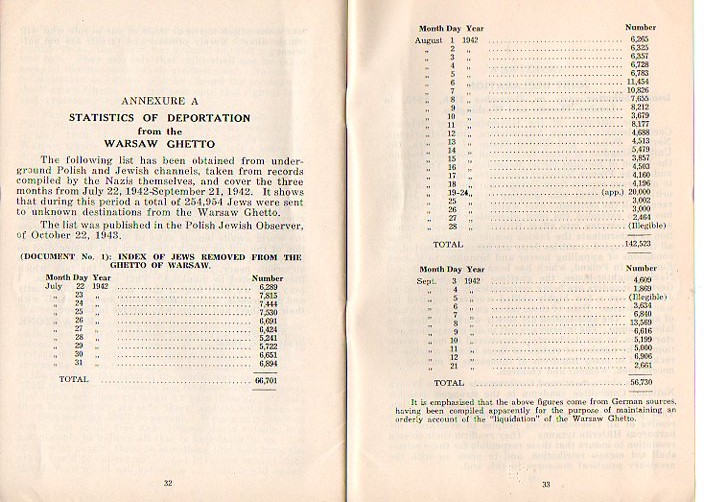
    An example of Stone’s reporting, coming from Underground sources and the Polish Jewish Reporter, on the number of Jews “removed” from the Ghetto of Warsaw between July 22 1942 and September 21, 1942–254,954 over a period of about three months:
    A--warsaw ghetto213

    But Stone gives no sentiment to the idea of Jews “perishing”.  On page 20 she describes the death camp Treblinka, and how thousands and thousands of Jews met their death in the gas chambers, or by suffocation and scalding, or by execution, or by live burial.  

    She writes boldly: In this manner 250,000 Jews were transported from the Warsaw Ghetto…and in this manner tjhey met their death”.  Period.  No euphemism here.

    She also quotes Washington sources that “two million” Jews had “perished” (the Federal term, not Stone’s), and that “five millions were imminently threatened with death”.  She pretty much got everything correct, as unbelievable as it sounded, then.  Or now.  
    A--warsaw ghetto196


    ·Posted by :

    ·in:


  • Women’s Land Army of England, 1918

    JF Ptak Science Books   Quick Post

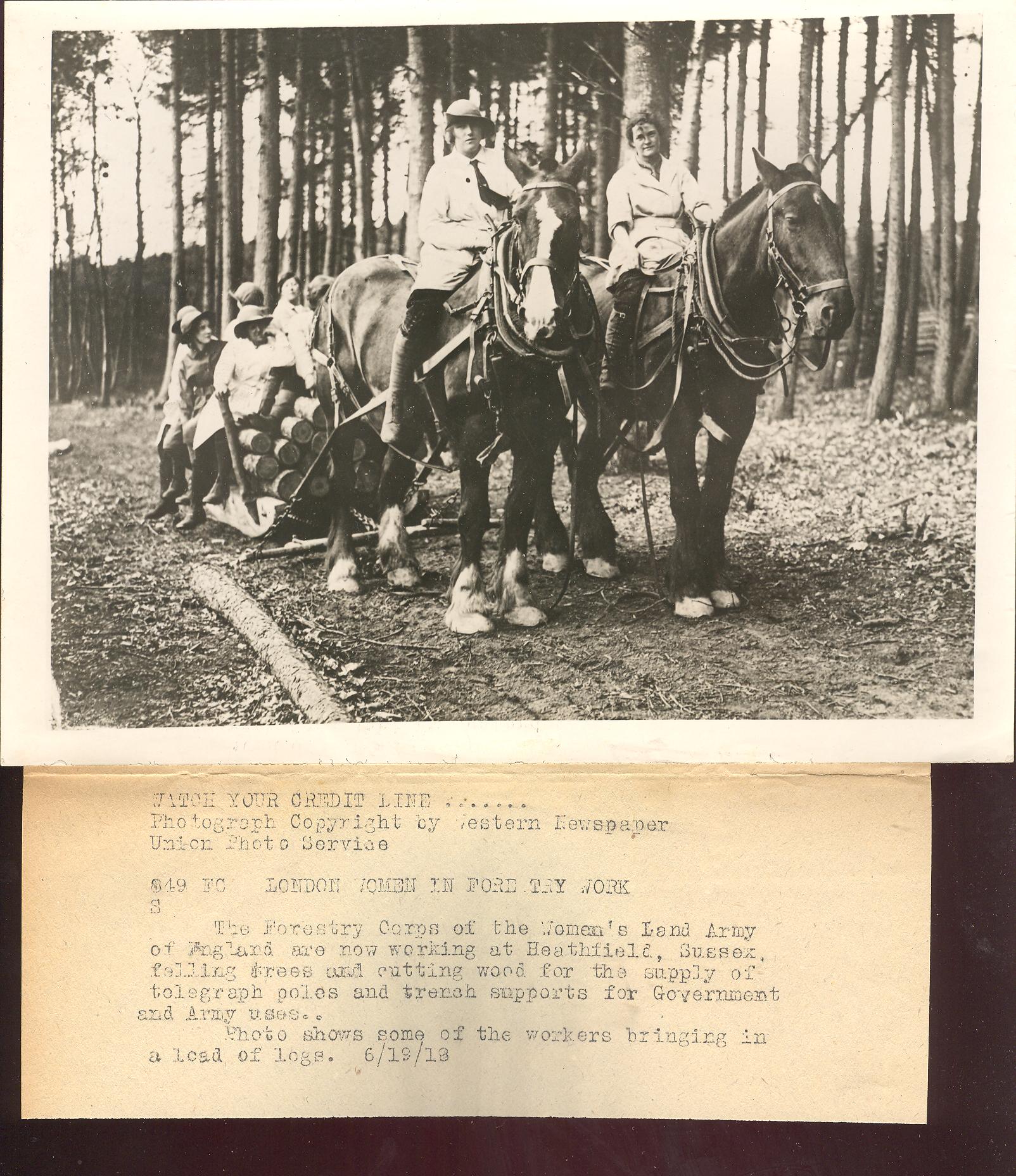
    What a great name–the Women’s Land Army of England.  This was a voluntary service that recruited women to work in jobs (generally in agriculture and forestry and such) that were left unfilled by men going into military service.  The “Land Girls” performed a huge variety of work and were a very necessary part of the economic and social structure of the U.K., a Florence the Farmer response to Rosie the Riveter.

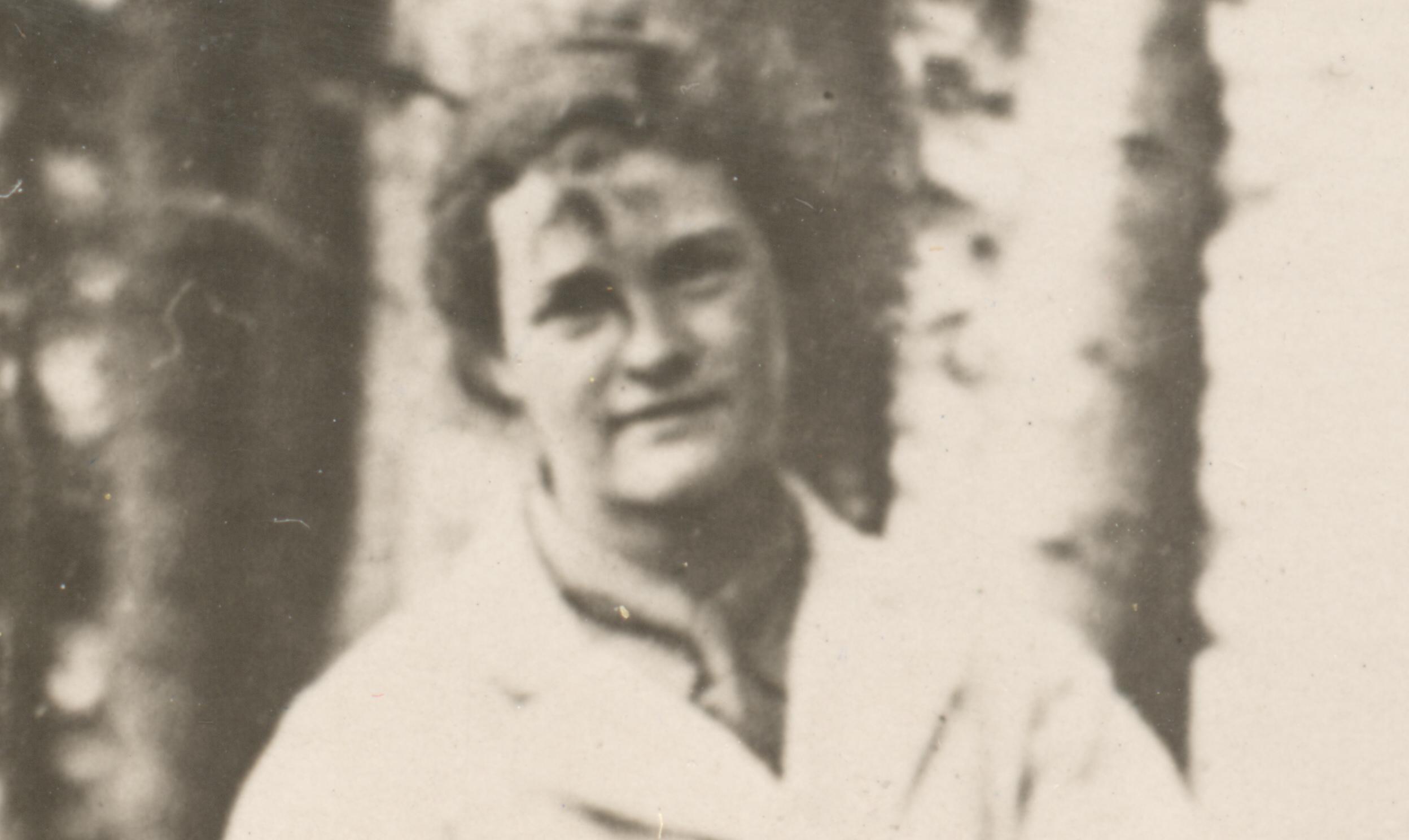
    The image below is of  a continent of the Forestry Corps of the Women’s Land Army of England, working at cutting telegraph poles, and commanding some great-looking draft horses.  (The horse on the right–ears back–looks big and perhaps a little sensitive.)  The horses are pulling a land sled filled with at least five other women and a load of telegraph poles that don’t look particularly long…

    I love that the women are wearing ties.

    [The original photograph can be purchased via this blog’s store, here.]

     
    1 april 27 women horses

    1 april 27 women horses det

    ·Posted by :

    ·in:

    —

  • When Catalog Cards Were Card Catalogs

    JF Ptak Science Books   Post 2287

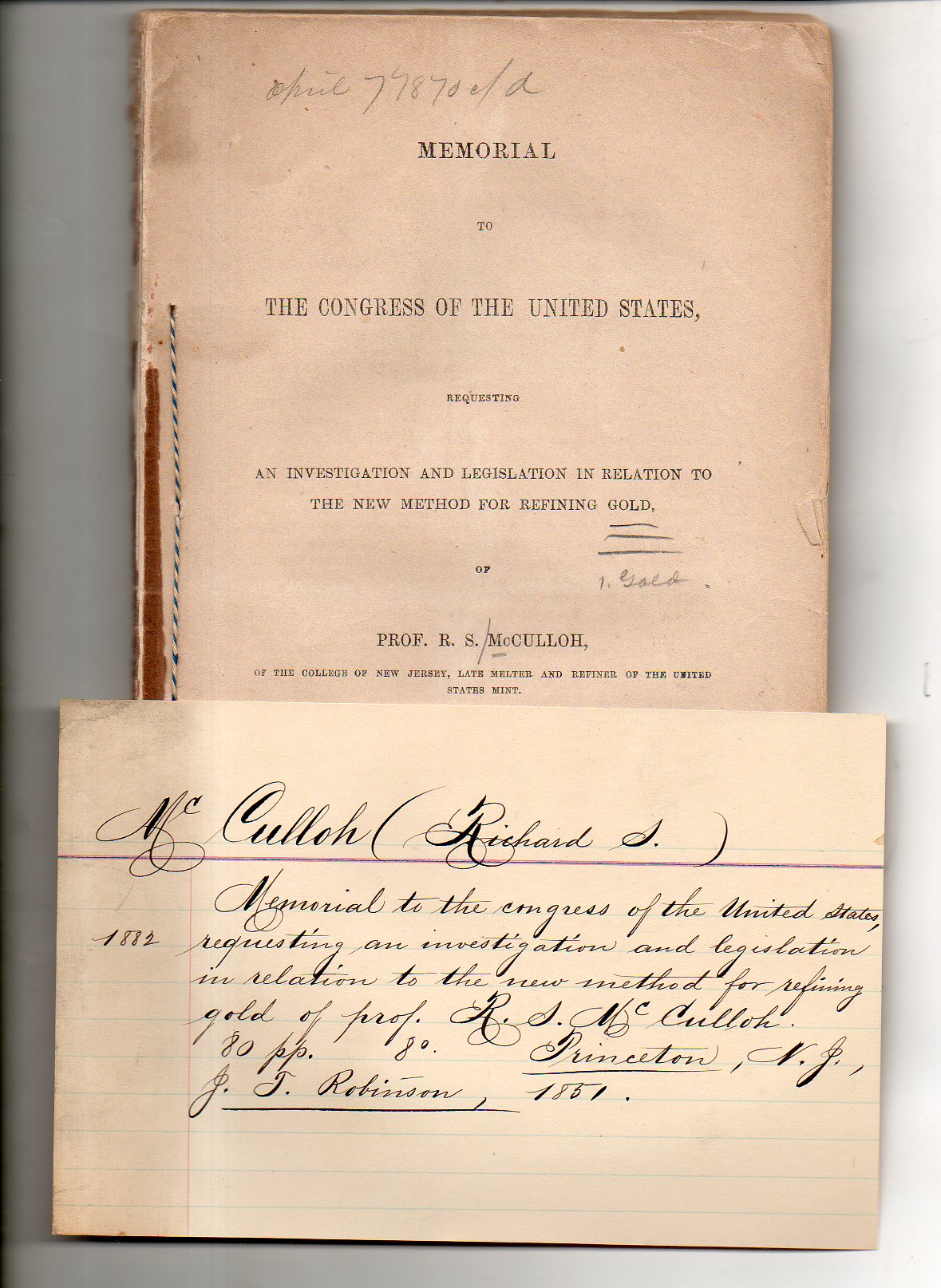
    This is a short and stubby flare sent up 200 feet into the dark, a little missile celebrating the card catalog.  I remember being so heartbroken seeing the individual drawers of the Library of Congress card file up int he stacks, way back in the day when they’d still give you orange stacks passes if you could present an admirable-enough case for needing access all on your own–I imagine that the file drawers were stored away near the Qs which is what I usually wanted to see.  Anyway there they were, hundreds of them no doubt, hundreds and hundreds.  They were there because the cards had been photocopied, or something, and the entire rig on the reading room floor replaced, opened for more space.  I don’t recall the disposition of them for certain but I do believe they didn’t last very long, sent to the great card catalog in the sky where the manuscript entries on the backs of the cards, notes made by librarians and scholars over the years, are housed in a secret tower of lost information, because as we know it was only the fronts of those cards that were copied.  

    Here is what the “flare” is about, a lonely hand-written catalog card for a surplus(ed)/duplicate pamphlet from the Library of Congress.  The work is by Richard S.  McCulloch, and called Memorial to the Congress of the United States Requesting an Investigation and Legislation in Relation to the New Method for Refining Gold (printed by John T. Robinson in Princeton, N.J., in 1851). 

    McCulloch221

    There is another slip of old paper in the pamphlet with a tiny annotation, “McCulloch/not in L.C.” It was, for 100+ years, but not any more.  

    I purchased this along with dozens of thousands of other pamphlets (in a collection called, yes, The Pamphlet Collection) years ago when the library determined that the material was not needed.  I was very happy to need them, and I’m still going through the process of finding other needy recruits for them.  

    But it is that card that makes me like a border person of some sort, of having used the old-time systems and then benefited greatly from the new and replacement systems.  For example doing searches in what is a very useful tool for me–the WorldCat database–for finding holdings of libraries for a particular title is now an instantaneous thing, whereas in the not-so-misty past (in terms of human years) this search would have involved going through several iterations of the multi-hundred-volume National Union Catalog.  The time I’ve saved looking up bibliographic references and using online reference tools probably has given me several lifetimes of look-up compared to the 1979 me.  

    Still and all, I think I’d like to see the card catalog.  

    Notes on the McCulloch book: 


  • Out-of-Context Department: the Flat Iron Building Infographic, 1910

    JF Ptak Science Books   Quick Post      

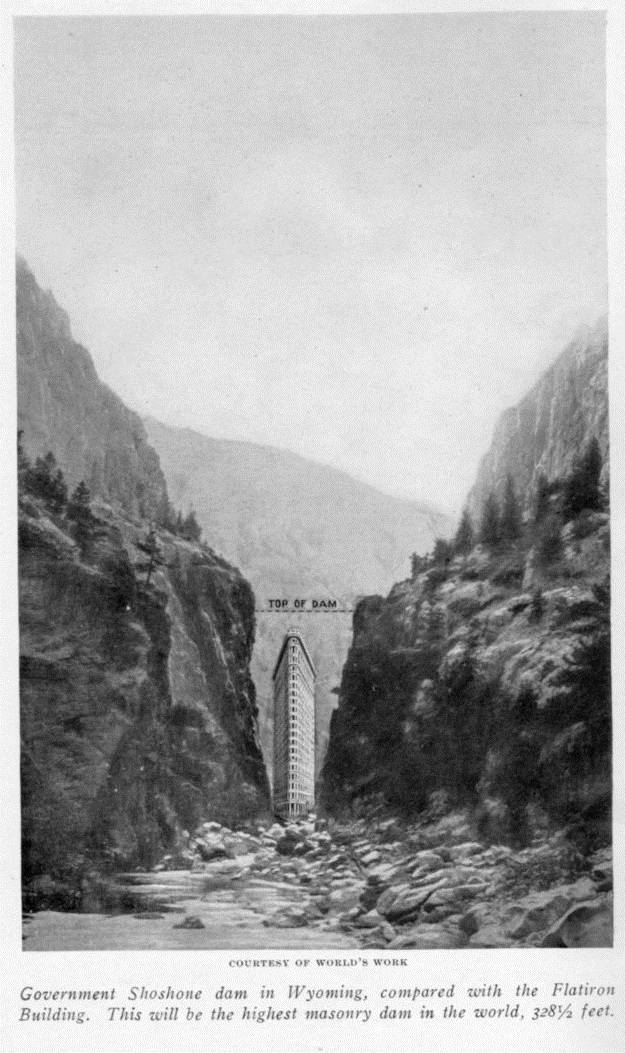
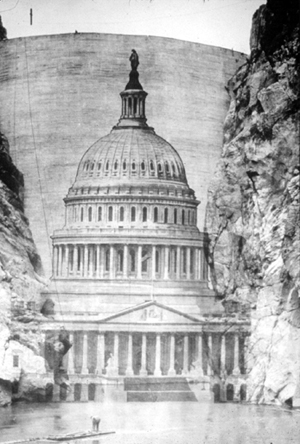
    I do enjoy infographic presentation that employ well-known and/or iconic bits from the environment as measuring implements.  Like using the Eiffel Tower for gauging heights, as shown earlier in this blog (see The Eiffel Tower as a Unit of Measurement, here) and St. Peter’s  cathedral for showing the depths of oceans (here). This surprising images appears in a simple pamphlet called The Conquest of the Desert (and which starts with a quote from Herodotus), published in 1910, and written on the subject of the Shoshone Dam (the Buffalo Bill Dam), which was opened in that same year.  It was a monster at 328′ high, and one of the best ways for the author to show what 328′ tall mean was to compare it to something very well known–and at thee time one of the most famous skyscrapers in the world was the Flat Iron Building in NYC, which stands three feet shorter.  And I’m pretty sure I’ve not seen too many images of famous buildings out-of-context and out-of-place as this.  

    Flatiorn222

    In 1910, in the heady just-getting-started days of skyscrapers coming into full view, and with structures like the Singer building topping out at over 600′, it ws legislated in Washington D.C. that no building in the city would be taller than the Washington Monument, for fear of the thing strapped with teh shadow of something larger.  That’s about the only thing that came to mind seeing this alternative measurement of the Shoshone Project dam:

    [Source: http://www.nps.gov/nr/travel/ReclamationDamsAndWaterProjects/Buffalo_Billl_Dam.html]

    Shoshone Project  capiotl

    ·Posted by :

    ·in:


  • What Victory Looks Like When You Really Can’t Tell (1917)

    expanded Post 317 (2009)

    00blogoct_14somme850_2

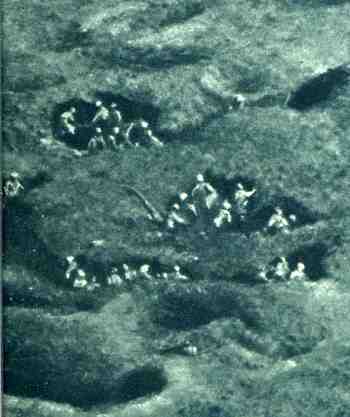
    In a play on the concept of the Powers of Ten, I had a look at a photograph depicting the French victory at the Somme; or was it a British victory?  Or German, via the lure of the others to a semi-victory?  Its hard to say who won, or if there really was a winner.  The Battle, which looks to me to be a sub-war within the war, occurred over the period of July through November 1916.  When the smoke settled, there were some 1.5 million casualties on both sides.It has long been held that the battle really was won by someone, the British, the French; but there was so little that was accomplished by the action that there probably wasn’t a winner, just losers. 

    And big losers, at that: Great Britain, Canada, Australia, New Zealand, Ireland, South Africa and Newfoundland lost 419,654 casualties, with 95,000 killed; the French lost 204,000 casualties and 50,000 killed.  That made a total of 623,000 casualties and 146,000 killed for the allies; Germany lost 465,000 casualties and 164,000 dead.  The advances made along the battle front went a few miles one way and then the other along a 12-mile stretch of battlefield, which four lives were traded for every inch gained along that porous front.

    The first image here (above)  is a very sharp detail from the overall picture published in The Illustrated London News for 6 January 1917, representing about 1% of the entire photo

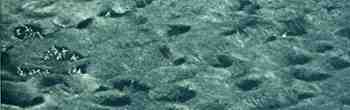
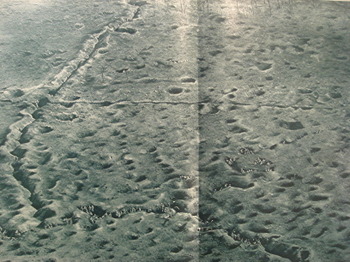
    The next image places the micro-detail in more context; this detail is itself about 5% of the main image, which is found just below this one.

    00blogoct_14somme849_2

    The overall image from which these two details are removed is below. In turn, this large image is but a small detail of the greater overview of the battlefield, making up perhaps a few percent of the field of operations. 

    I’m trying to get a feel for the enormity of the battle, but I really can’t, not even via powers of ten, manipulating the idea of orders of magnitude.

    In one last try, I hypothesize that the 1.5 million casualties could not be displayed in 10 of these large images.  .

    That wouldn’t look like victory at all. 


    Ballistics_123

    (An “oh, shit” picture if there ever was one.)

    ·Posted by :

    ·in:

    — —

  • Smash the 7th Column–U.S. WWII Home Front Propaganda

    JF Ptak Science Books   Quick Post

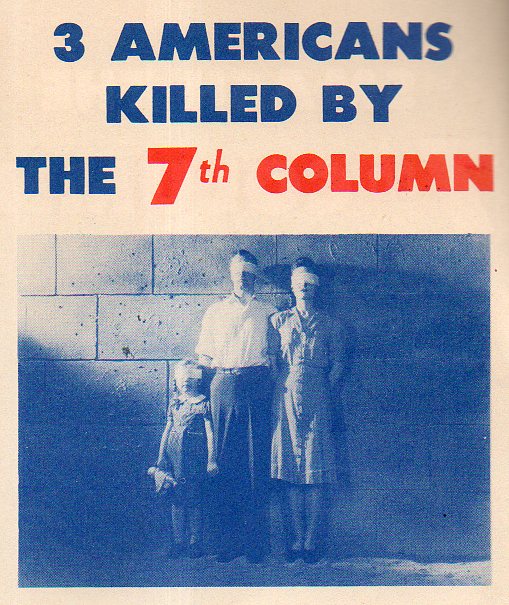
    7th column214

    No, this family wasn’t killed by a firing squad, but according to the pamphlet they might as well have been.  By the 7th column.

    The 5th Column is the army of spies and saboteurs infiltrating a country; the 6th Column helps this action along, (according to Webster’s):  “the aggregate of persons in a country at war who assist the subversive activities of the fifth column by defeatist talk, the spreading of rumors, and other activities that weaken resistance or appease the enemy”.  

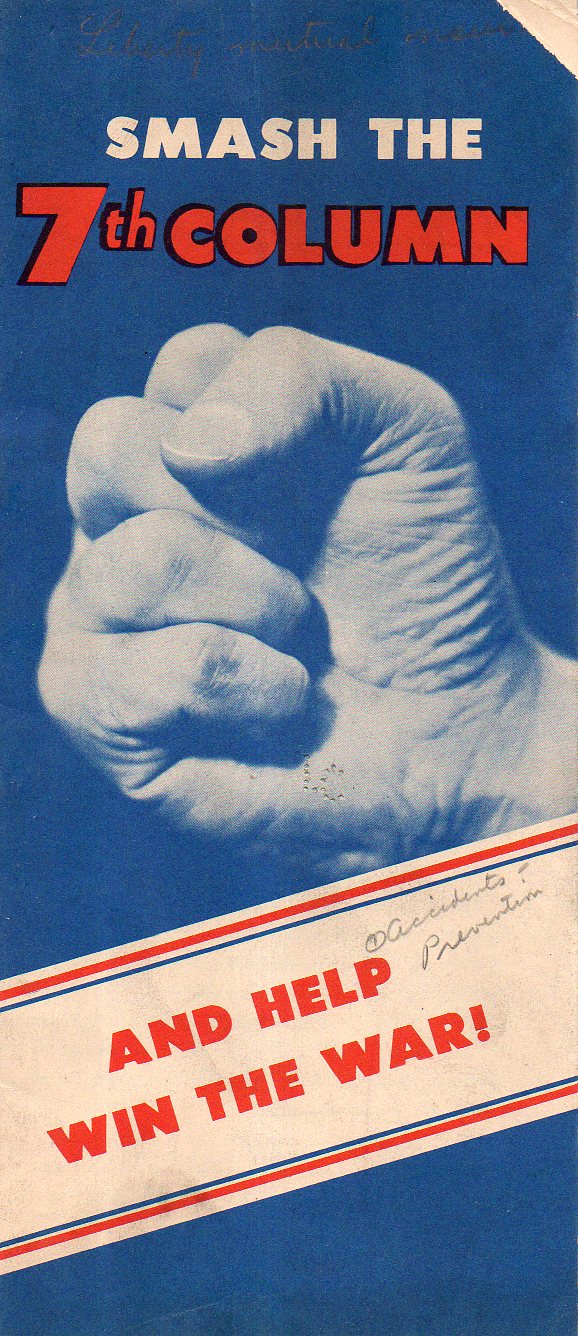
    The 7th column was carelessness–and evidently this was a push to roll back the tide of accidental death and injury in the U.S., something that was particularly important during wartime.  According to this tract 102,500 Americans were accidentally killed every year, with another 350,000 becoming permanently disabled and 9,000,000 being injured.  “We must stop burning down our factories” says the author, for these injuries and deaths would be along the same lines (in some fashion) of the U.S. being bombed. 

    7th column cvr215

    This seems as though it could have been an effective tool in getting the view across of fighting the sub-rosa enemy of carelessness in wartime.

    ·Posted by :

    ·in:


  • The Tools of a Scientist, 1700

    JF Ptak Science Books    Quick Post

    Friedlein941

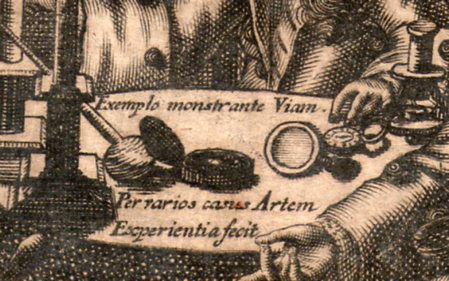
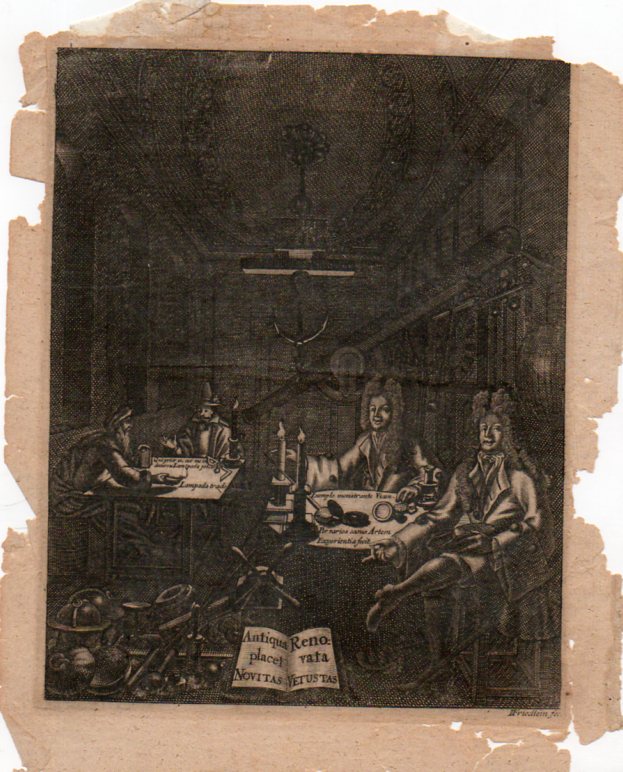
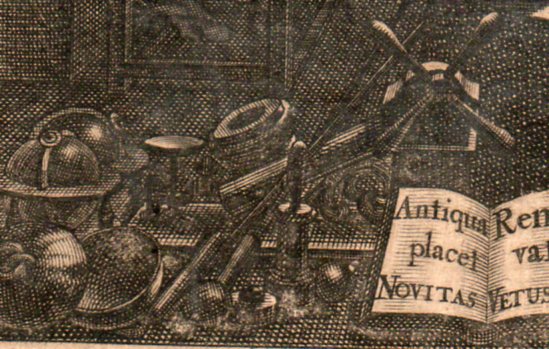
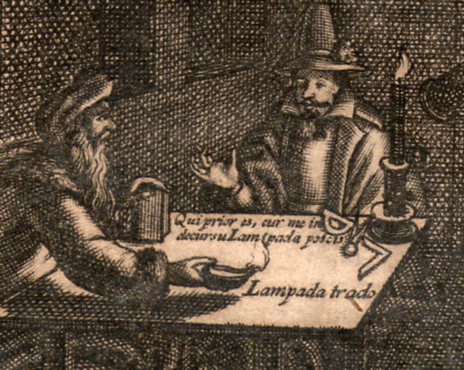
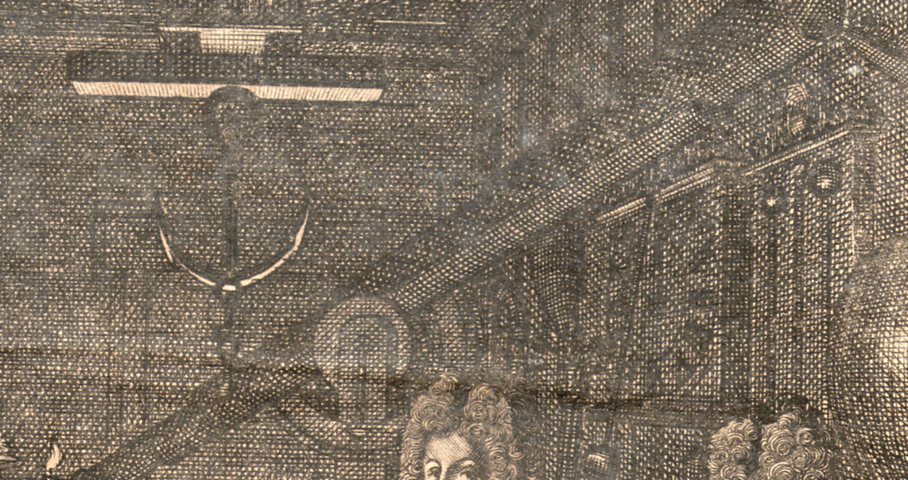
    This is an image of a  philosopher’s cabinet, an engraving (on copper?) by “I. Friedlein fec”, who was actually Johnann Friedlein, an emigree from North Germany to Denmark, and who worked ca. 1680-1705. It shows the tools of the trade for someone working in natural philosophy (the name “scientist” would not come into use for another 150+ years or so) and is an interesting insight into a small, polite gentleman’s club for experiment and investigation.

    Friedlein938

    The men surround a decent collection of scientific instruments–I can locate a compass, dividers, oil lamp, magnifying glass, compass, microscope  (at the right elbow of the figure on the right), terrestrial and celestial globes,  a (large) clock, barometer and various weights and scales.  And behind it all looms a fairly large refracting telescope (is it 6 six inches?) which also has mounted alongside of it a smaller sighting telescope. 

    Friedlein939


    Friedlein940

    Friedlein942

    Nyt dansk kunstnerlexikon: bd. Indenlandske kunstnere (fortsættelse …)by Philip Weilbach:


  • Graphical Display of Data–Profiles of British Destroyers, 1949

    JF Ptak Science Books  Quick Post     

    Display of Quantitative Information series.

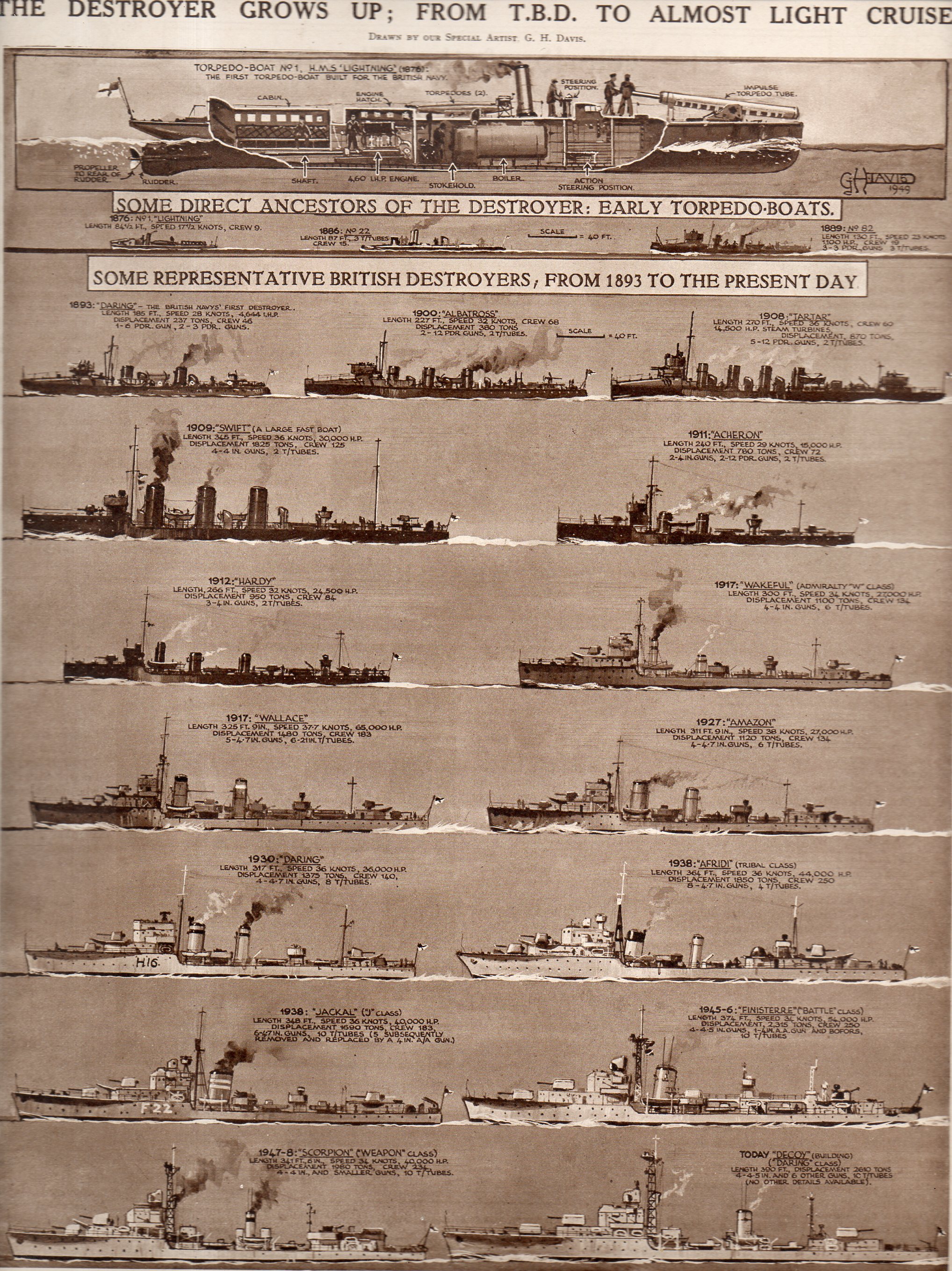
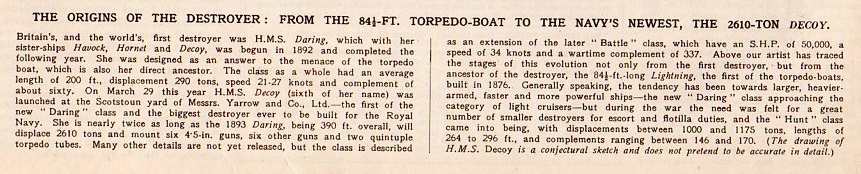
    I found this interesting and lovely display of empirical data, and I like it quite a bit, even though it really isn’t a good example of a graphical display of information.  The chart was intended to show the differences in the profiles of British destroyers, and not much more.  The image appeared in The Illustrated London News, April 23, 1949.  

    Hic--the Destroyer191

    And the text:

    Hic--the Destroyer text192

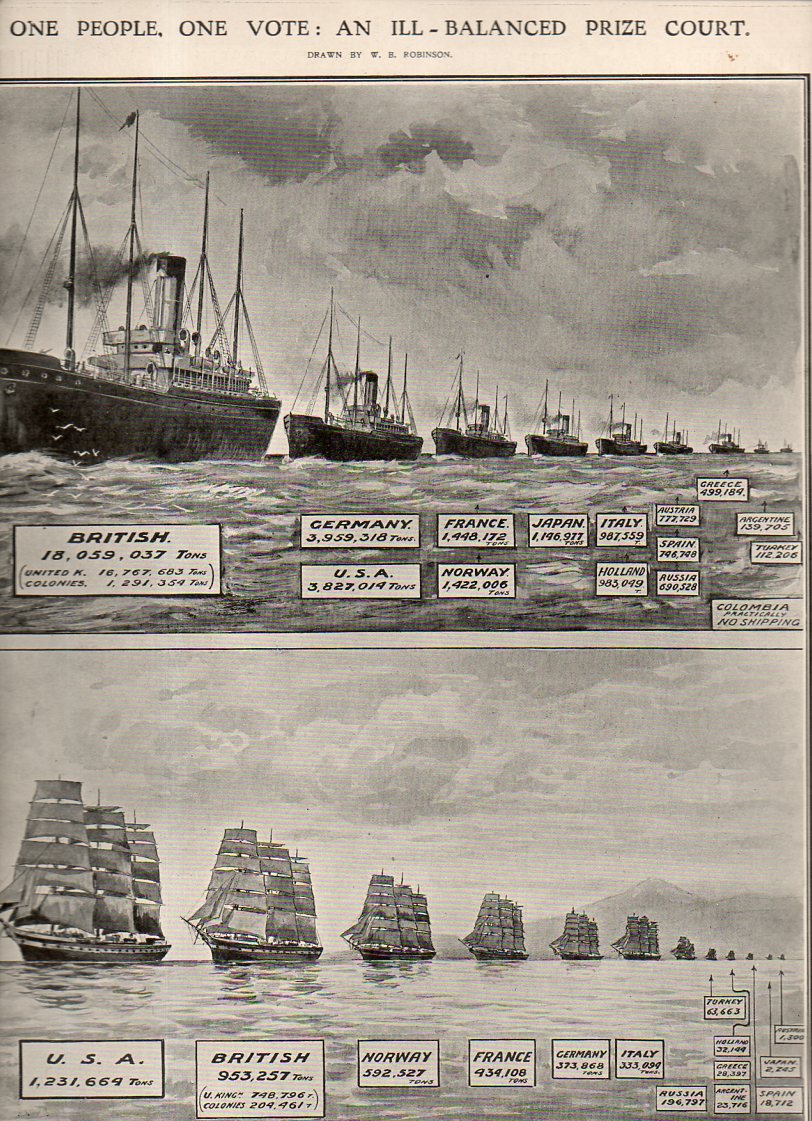
    Then there’s this (below) a good graphical representation of the size of fleet strengths, steam and sail, appearing in The Illustrated London News  for January 28, 1911, just a few years before the start of WWI:

    Graphic fleet size193


  • Women in the Kingdom of Clothing, 1918

    JF Ptak Science Books   Quick Post

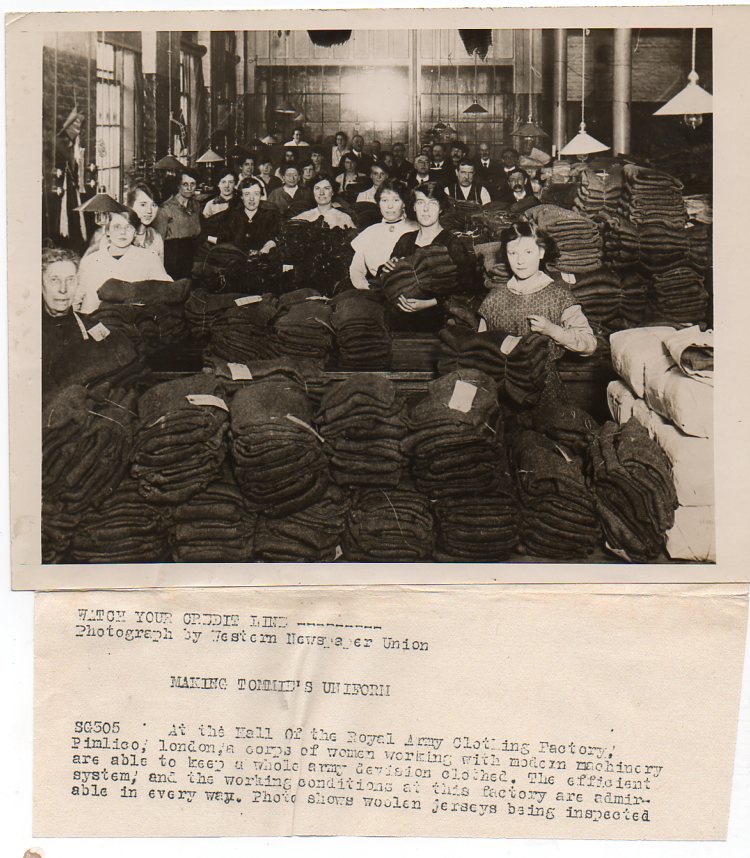
    This is another in a long series of posts on my collection of WWI news service photos–there’s 75 or so up already though mostly in the WWI photography part of the blog’s bookstore.  Mostly the images were very heavily controlled by censers as to what content was allowable or not, and there was also very strict control of access to battlefield actions.  Simply put there was a long hearts & minds campaign of positive reinforcement exercised by allied high command in controlling wartime images–with the deaths of tens of millions of people there was simply no room to be let for any chance illustration of the great bleakness of this war to escape a censor’s detection.  Imaging the war would come in due course, but not necessarily during the fighting; and the coverage wasn’t necessarily “imaginative”, as it tended to be more exclusive and myopic. 

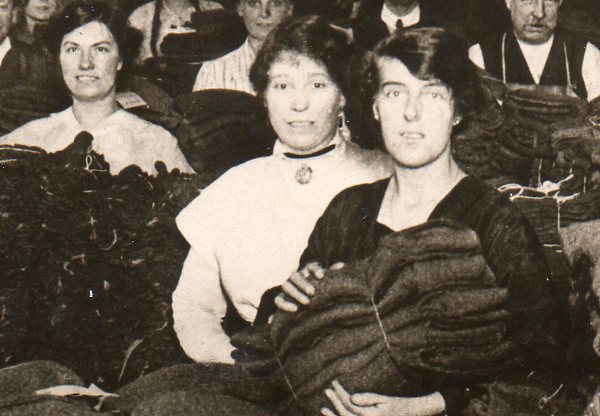
    This photo is pretty upbeat, full of positive energy and life, and shows a group of female volunteers in a sea of clothing, having created the articles they are now folding the jerseys for shipment.  The faces are fresh, inviting, full, hopeful. 

    WWI--e--women pants683
    WWI--e--women pants det682

    The original photograph is available here.

    ·Posted by :

    ·in:


  • The Belgian Collector of Life, 1918

    JF Ptak Science Books  Quick Post                

    Part of the World War I  Photography series

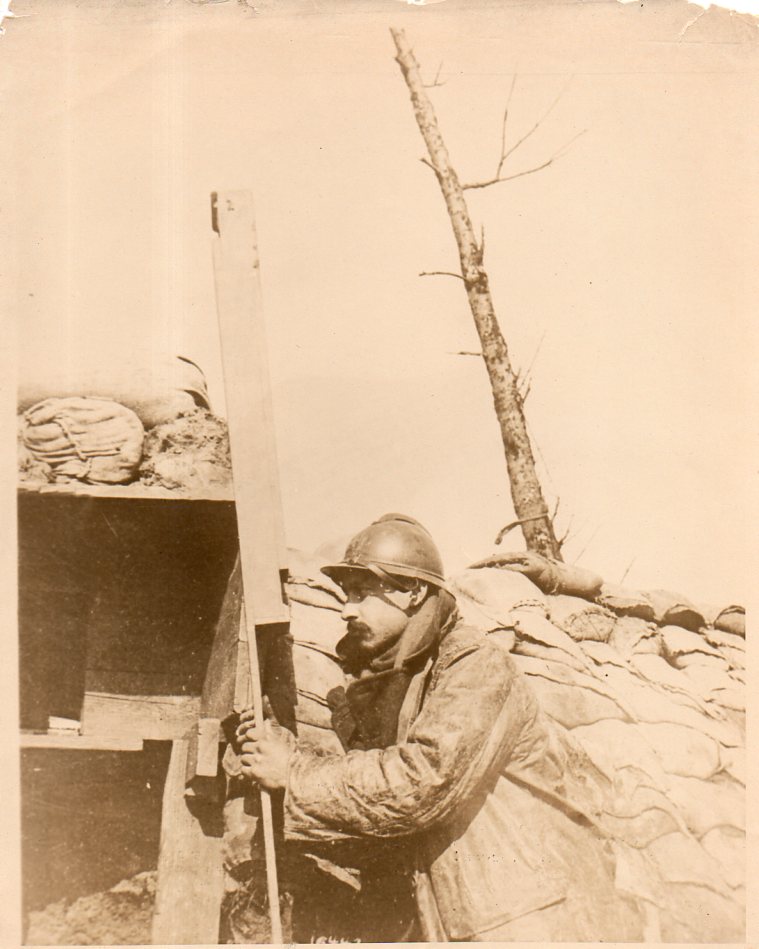
    WWI Sniper198

    This is an excellent example of appreciating images in context.  The photograph seemed line an ordinary image of a soldier peering through a periscope on action ahead of his trench, in some miserable battlefield, somewhere in Europe, 1918.  The image is the product of a photographic pool, the photographers working in semi-unison to produce acceptable images to be used in publications illustrating the war.  The images could not be too terribly graphic, and must not relate any useful military intelligence–they would pass through the hands of very active censors whose job it was to slightly inform the reading public and to also keep morale high, a difficult balancing act.

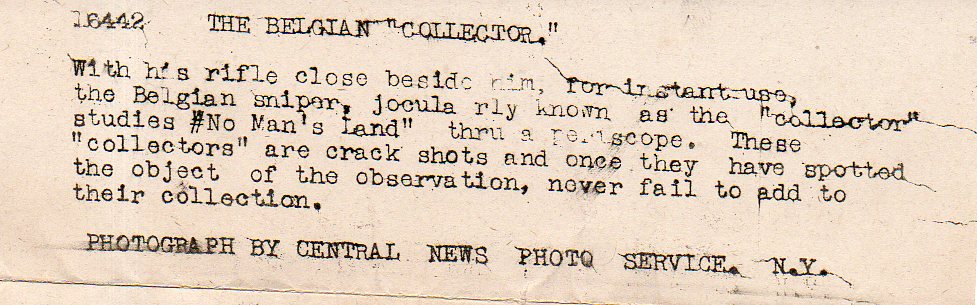
    And so I thought my thoughts. Until I turned the image over–it was stamped “Photo by Central News Photo Service”. It was also accompanied by a typed caption, the bit of text that was to be the standardized caption for this photograph when and if it was used by a magazine or newspaper.

    The title is “The Belgian Collector”. 

    The Belgian collector was a sharpshooter. He would scan the field looking for any unfortunate who might have left themselves exposed.  Then he would shoot at them. Collect them.

    In a  sense, “collect” like “John Fowles The Collector, only killing them with a rifle.

    But that was his job. And it was war. And if he was on your side, then you’d want him there.  

    I found “the collector” name to be poetical, and chilling.  

    WWI Sniper det199

    So, combining the context with the image in this case was a truly sensational thing.  

    The original photo may be purchased from this blog’s bookstore, here.

    ·Posted by :

    ·in:

    — —