A Daily History of Holes, Dots, Lines, Science, History, Math, Physics, Art, the Unintentional Absurd, Architecture, Maps, Data Visualization, Blank and Missing Things, and so on. |1.6 million words, 7500 images, 4.9 million hits| Press & appearances in The Times, Le Figaro, Mensa, The Economist, The Guardian, Discovery News, Slate, Le Monde, Sci American Blogs, Le Pont, and many other places… 5000+ total posts since 2008.

Category: World War I

  • Full Metal Jacket, 1918

    JF Ptak Science Books   Quick Post

    WWI Photos Blindfold077

    WWI Photos Blindfold078

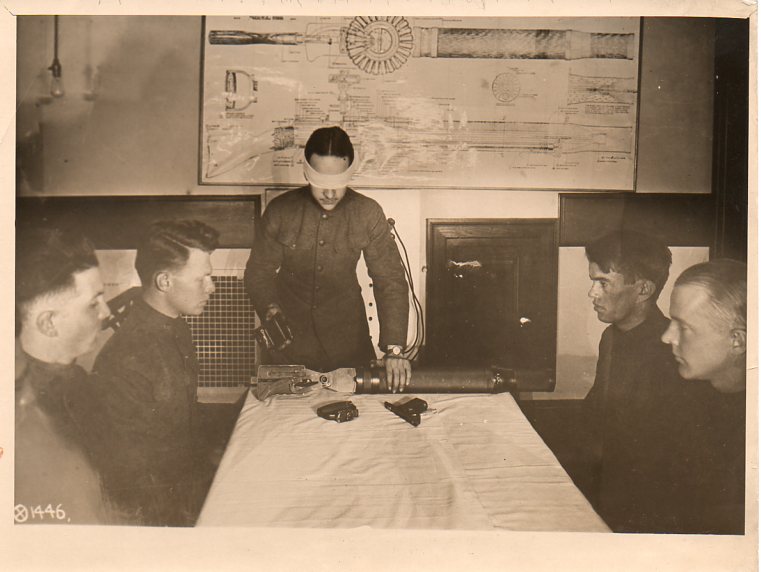
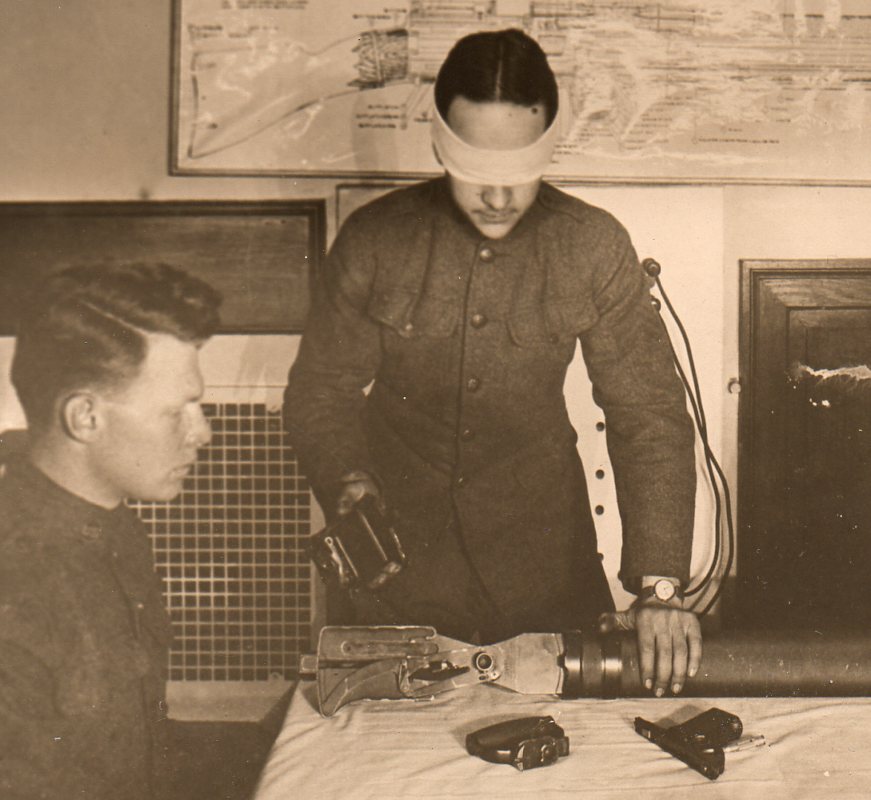
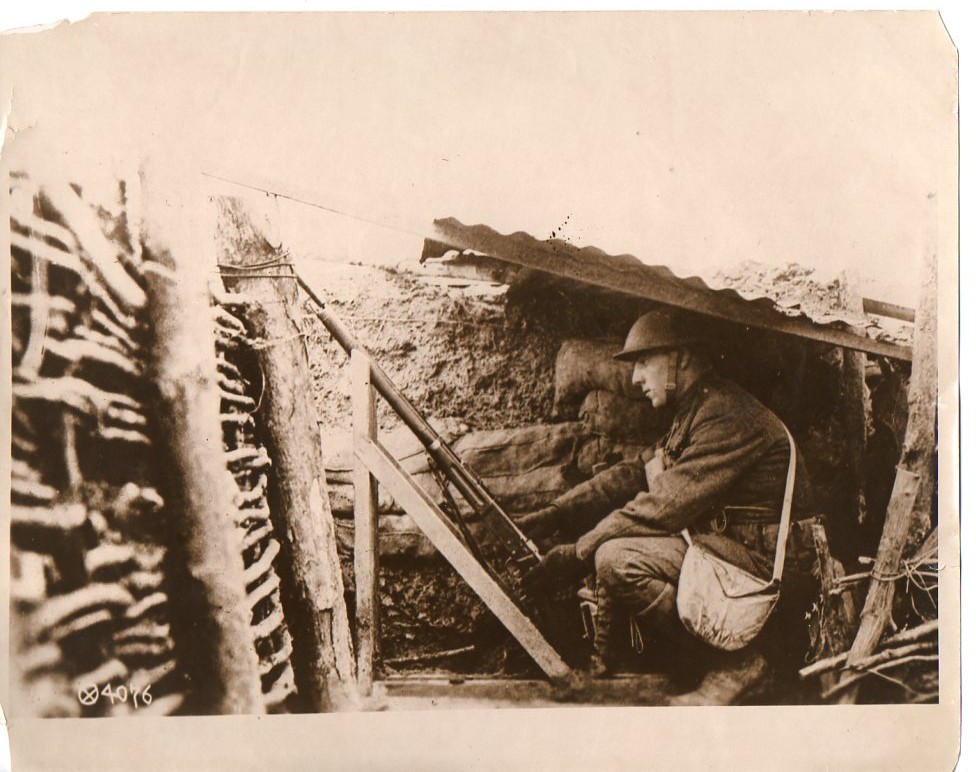
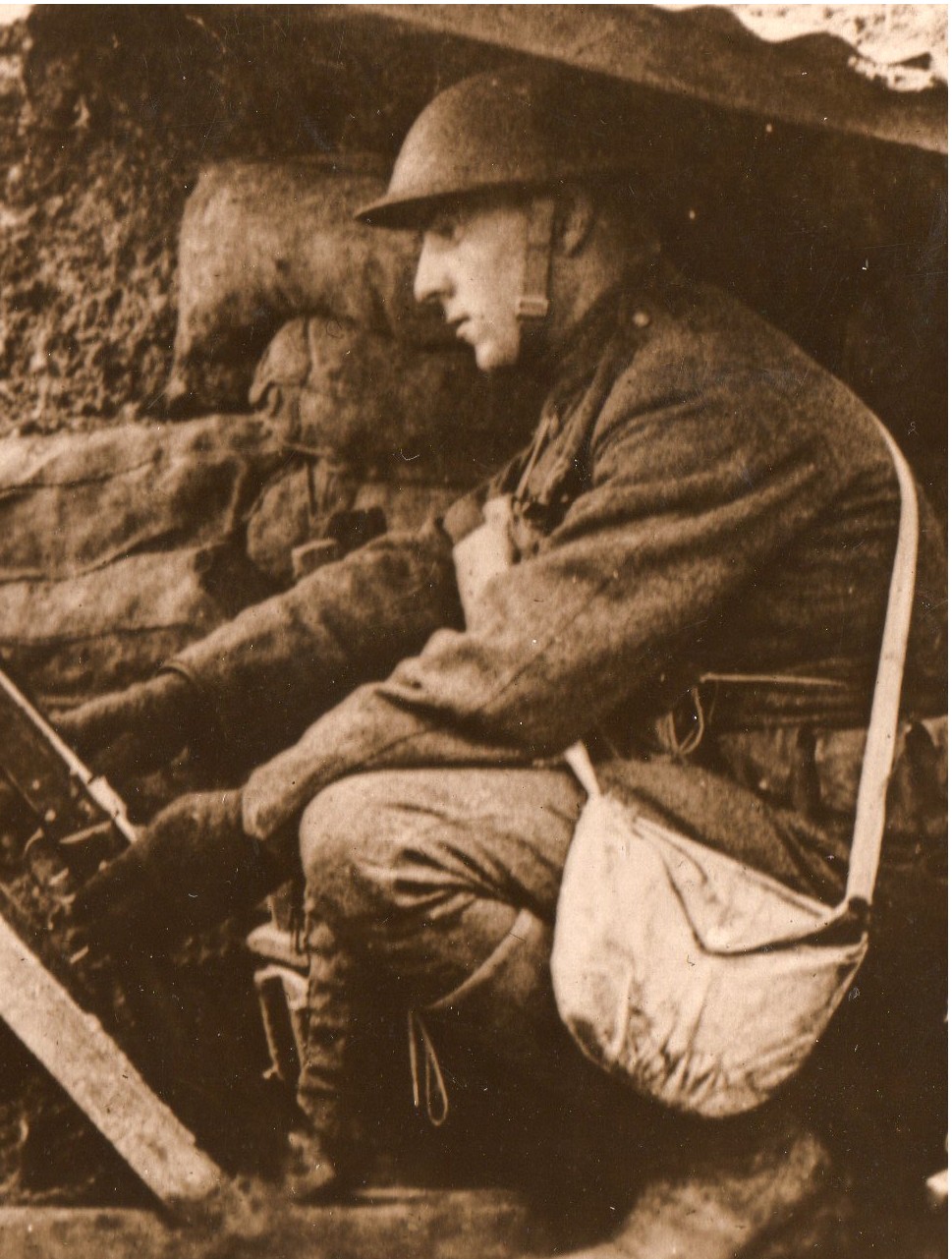
    I do believe that this is a Lewis Machine Gun, one of the most popularly-used automatic weapons by the BEF (and of American design). It was a gas-operated weapon firing a .30-06 Springfield at 500/600 rpm withan effective range of about a half-mile.  The drum magazine (not present here so far as I can see) held 47 and 97 rounds.  These soldiers were all business. (Source: this is one of perhaps 400 WWI news service photos down in the warehouse…)

    ·Posted by :

    ·in:

    — —

  • Being in Regret–Verdun, 1916-1918

    JF Ptak Science Books  Post 2215

    IMG_6842

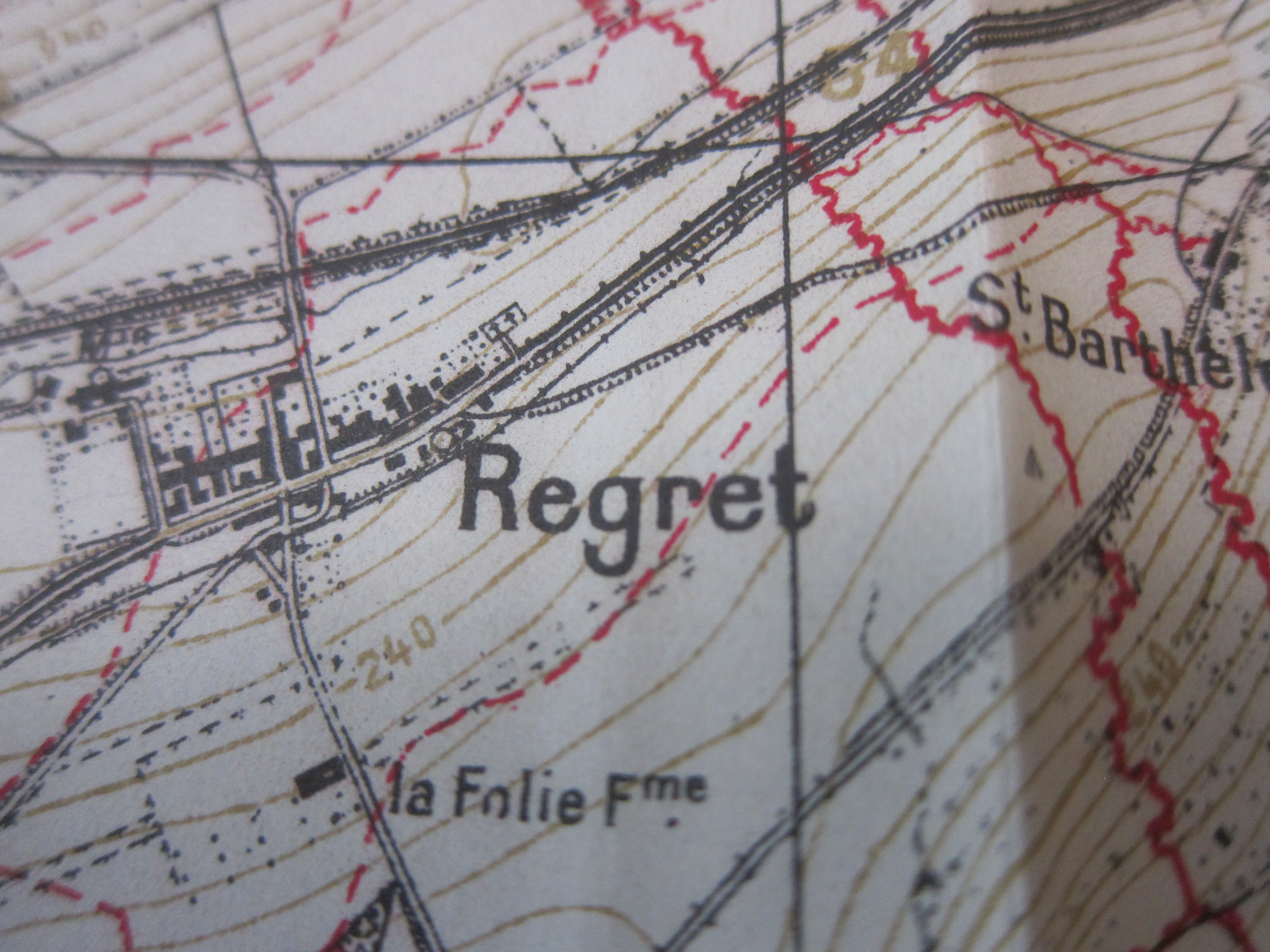
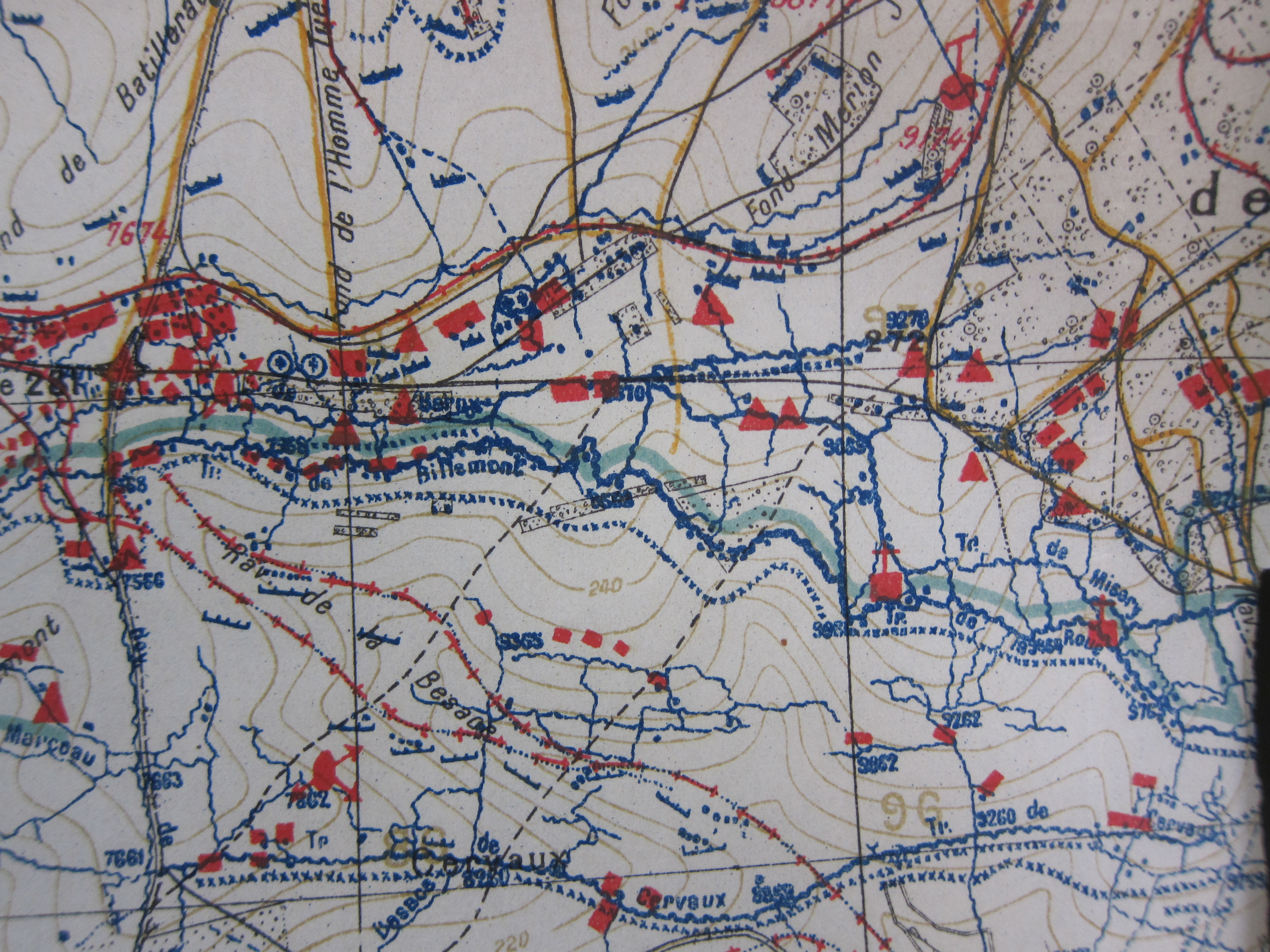
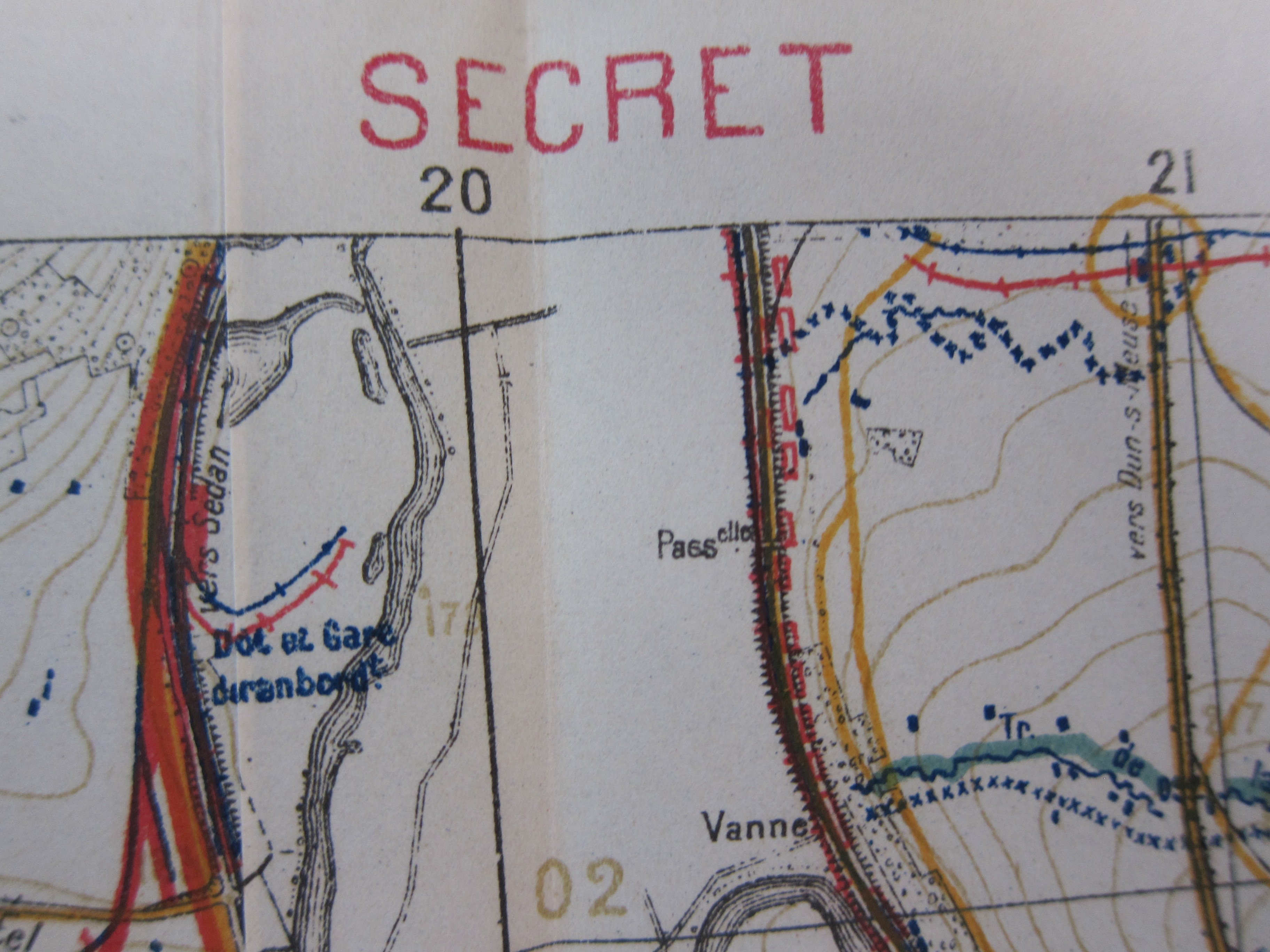
    I was looking through a very heavy volume from 1924 of Military Engineer and came upon a very large folding map1.  It was vanilla on the outside and stayed so, opening only the back of the map through one, two, three, four (!)  unfoldings,  not yet revealing itself, until it was at it full width, and then unfolded once down, which opened to the middle of the map, which was a mass of lines and shading of brown and gray.  Another unfold up, and then another down, and more of the same, so much detail that the context still was hidden. I unfolded the bottom half of the map three more times and at the bottom was the town “Regret”.  My right hand obscured the name of the much larger and antique-fortified town, which turned out to be the military-sacred city of Verdun.  When I unfolded the top of the map–making it about four feet long–I saw that it was for development of the battle and lines of communication and placement of troops and so on for part of the Autumn of 1918. And trenches.  

    (This was actually “Verdun B”, the mate of “Verdun A”, which together form a huge and wildly complex 4×4′ map. )

    IMG_6843

    This was a reprint six years later of the 34th edition of this particular map–that is a lot of editions.  But this was a lot of place, Verdun.  A fluid place of ordered killing chaos that was as dynamic as it was occasionally static, starting in a very contained space of massive fighting that took place from 21 February to 18 December, 1916. The map is of a place that was about the longest, costliest, and deadliest battles that humans have come to, so far.   Casualties were about the same on each side (370,000 French and 340,000 German) and totaled about 710,000 people, though scholars argue the point, some coming to a figure much higher, approaching a million.  That makes 70,000-100,000 per month for the battle, which was like a war in itself. 

    There were probably two million soldiers in motion here, at Verdun, in a relatively tiny area, with front lines extending about five miles or so, the battlefield being fairly narrow from point to point, perhaps totaling 20 square miles of heavily bombarded/shelled ground.  It was a terrifying place to be, and I’m certain that it must have scarred forever hundreds of thousands who survived the ordeal.  

    IMG_6844

    Unfortunately Verdun 1916 was only about the half-way point of the war, with these maps generated to show artillery targets for the American entry in the war for action that would take place just before the end of the war on the 11th hour of the 11th day of the 11th month of 1918. This was the French Fourth Army and the American First Army which attacked on a front from Moronvillers to the Meuse on 26 September 1918 through the end of September, and from which the German army began its gradual withdrawal from the area, continuing right up to Armistice Day.  

    Ultimately whenever I think of this war things usually boil down to Dalton Trumbo’s Johnny Got his Gun, which was required reading in my freshman year of high school in 1970.

     Verdun


    Notes:

    1.  Journal of the Society of Military Engineers, volume 16, 1924; the map titles are “Tranchee Francaise schematique a la date de 1er Sept 1918″ and “Carte Generale des Objectifs d’Artillery”.  


  • Mending Socks on the Western Front, 1918

    JF Ptak Science Books    Post 2213

    World War I photos--sewing in field297

    World War I photos--sewing in field298
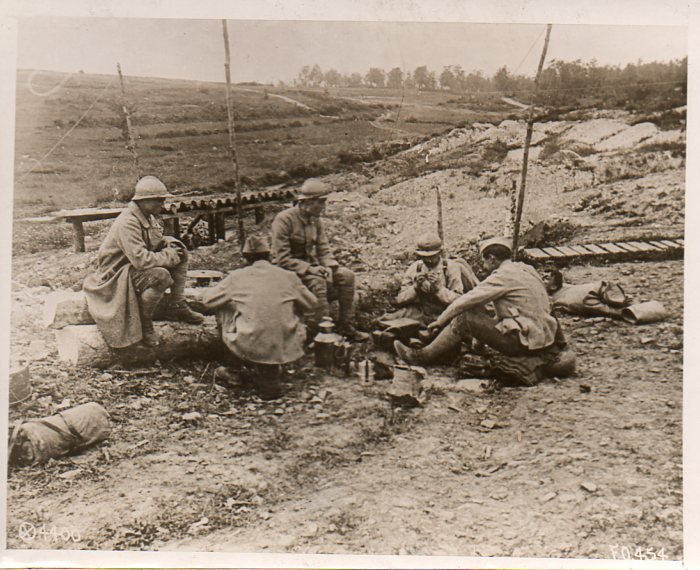
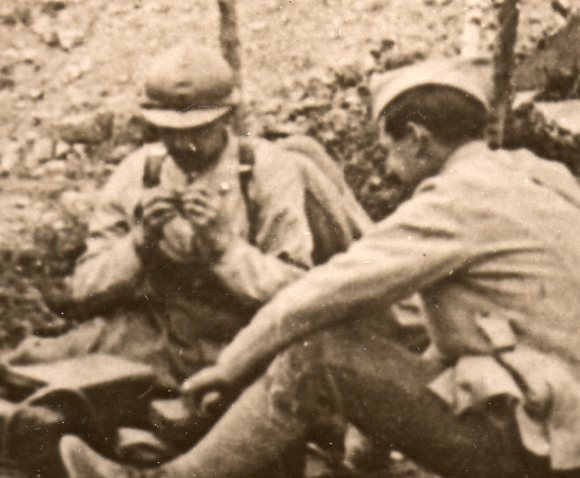
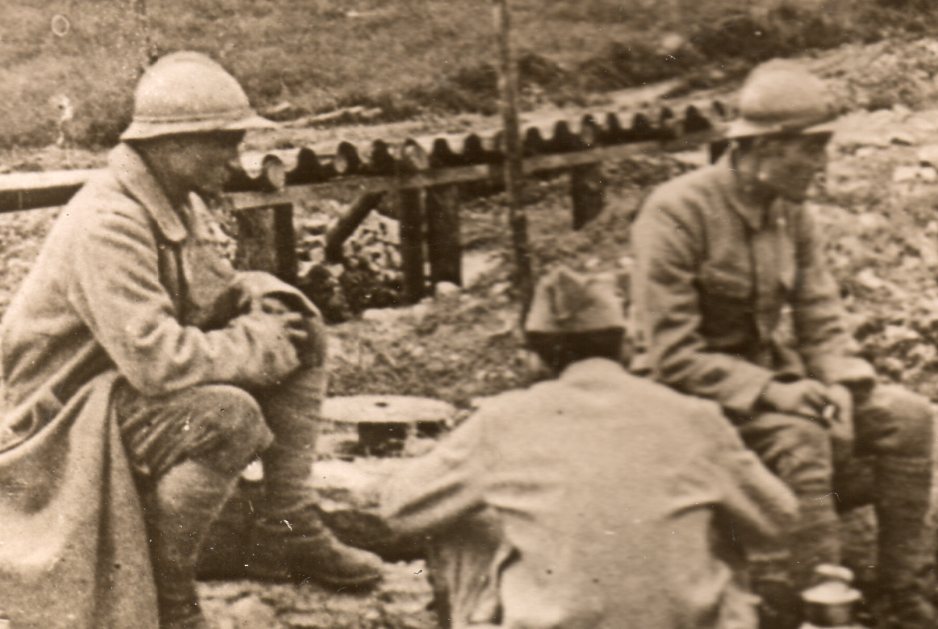
    This fantastic photograph calls to mind the importance of the little things of battle–dry socks, headgear, water, food, scissors.  And of course a good coat in the winter–a good coat that can be kept closed to allow the body to stay warm, or dry.  I mentioned in an earlier post here that it was a small thing that may have led to the demise of Napoleon’s army in Russia in 1812–the buttons on the overcoats of the soldiers were made of tin, and as tin becomes brittle in severe cold, it is conceivable that the buttons failed and therefore allowed the jackets to blow open much more easily than normal.  Little change that has an enormous impact.  

    World War I photos--sewing in field299

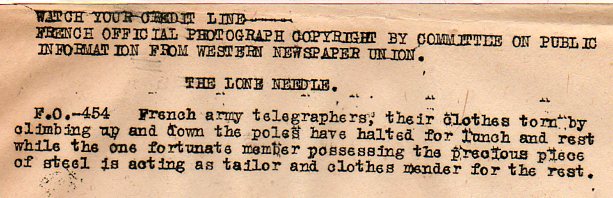
    This photograph–an official French photo published by the Western Newspaper Union in November 1918–shows a group of French telegraphic soldiers, taking a break, and mending their clothes.  The original text for the photograph (below) points out that their uniforms were torn and made shabby by continuously running themselves up and down telegraph poles.  It is important to keep yourself fit and fed and your uniform in good order, so they calmly awaited the repair of their uniforms y the one man with a needle and thread. 

    World War I photos--sewing in field txt300


    ·Posted by :

    ·in:

    — —

  • A March of Millions to Berlin, 1917

    JF Ptak Science Books  Quick Post   World War I Photography series

    Authorization hotel011

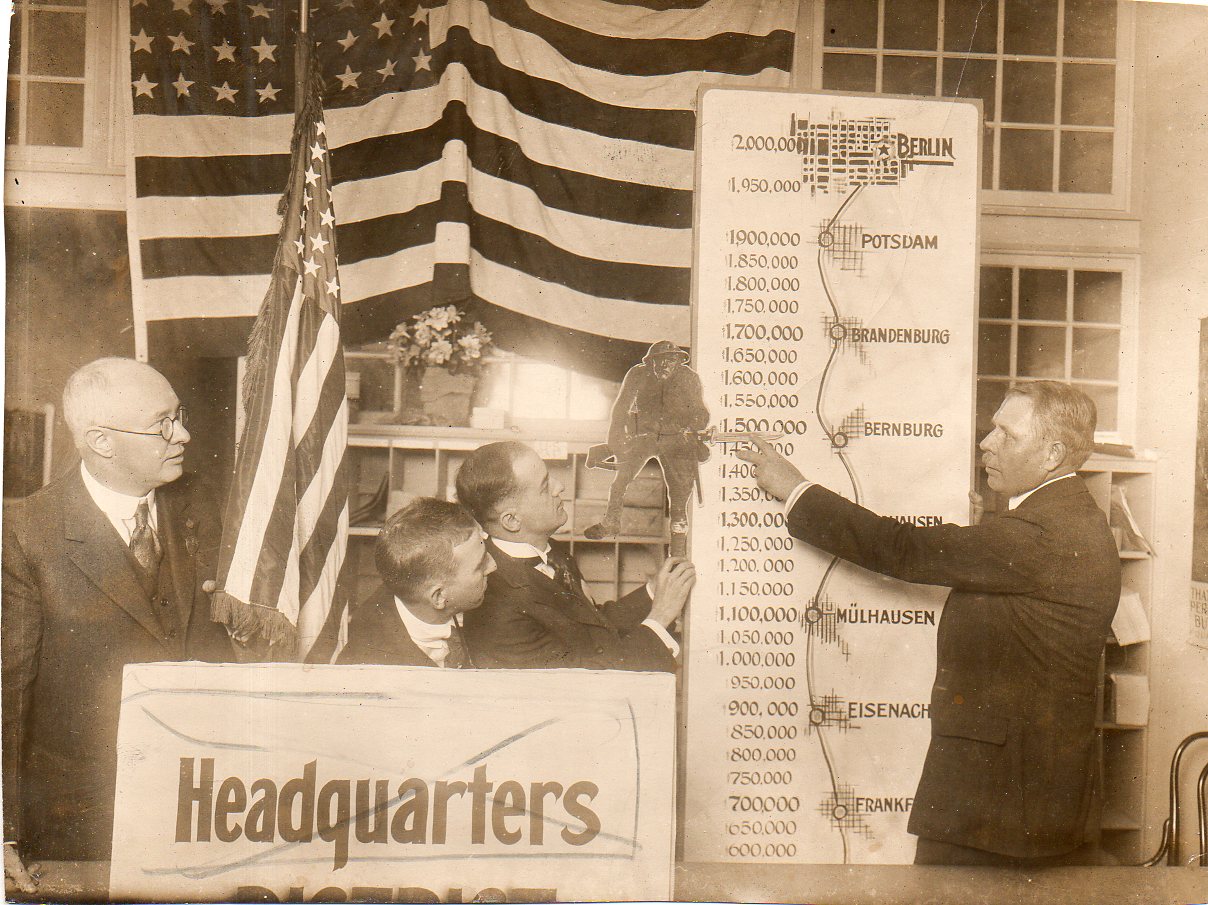
    I’m not sure at what point during the War this image  was made (though I suspect it was midway through the American experience) and shows what I think is the enlistment and draft numbers for U.S. soldiers. The progress of the growth of the Army is charted against German cities that were to be conquered or had already been engaged.  The Doughboy in the graphic along with everything else looks clean and hopeful and determined–the end result of all of this determination was Victory and Defeat and people dead everywhere.  

    ·Posted by :

    ·in:

    —

  • An Image of the Enormity of War, 1918

    JF Ptak Science Books  Quick Post     Part of the series of WWI Photography

    WWI riqueval1918
    [Source:  Wikipedia  and originally from the  Imperial War Museums]

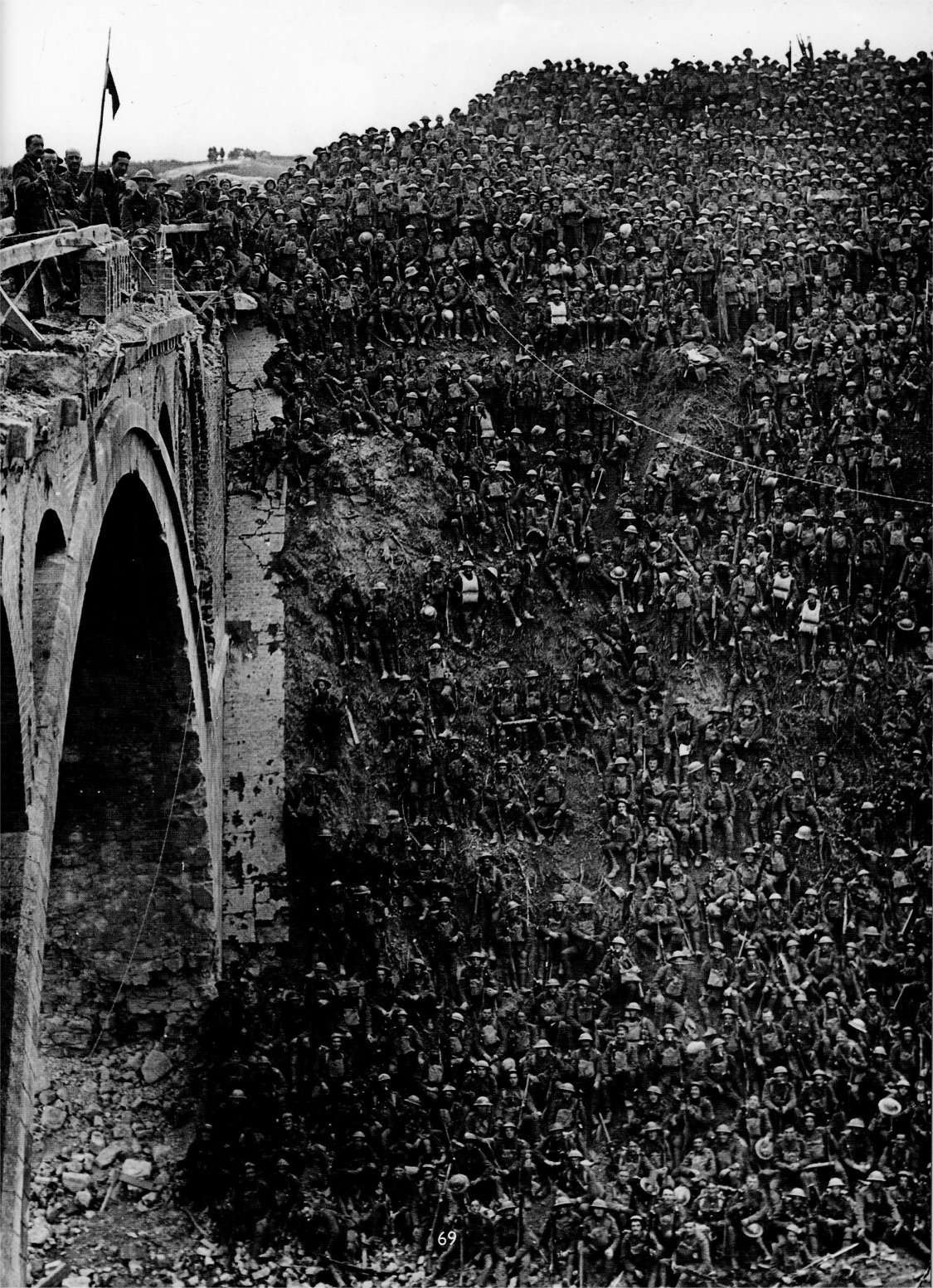
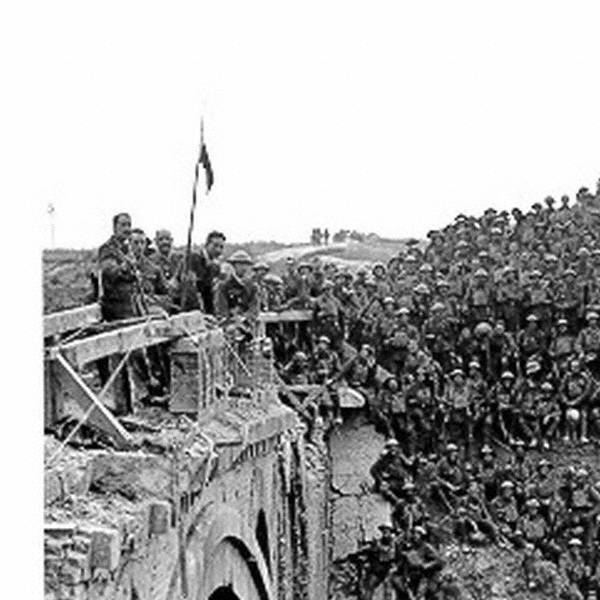
    This increible image shows an enormous gathering of the 137 Brigade, 46th Division, gathered post-battle on the banks of the St Quentin Canal, next to the Riqueval Bridge. It was one in a series of pivotal battles to bring the war to a close, this breaking the Hindenburg Line (a major element of the German defence system) which came which formed part of the German defence system, the Hindenburg Line, which was broken on 29 September 1918. They are being addressed by Brigadier General J C Campbell VC CMG DSO on the Riqueval Bridge.

    The close-up below was taken directly from the Imperial War Museum (here), and shows the reason or major reason for the assembly, which was an address by Brigadier-General J.C. VC CMG DSO Campbell to his  troops, more visible with his cap off, at extreme left on the bridge.  

    Riqueval bridge closeup


    ·Posted by :

    ·in:


  • Thirst and Defeat–the Somme, 1916

    JF Ptak Science Books  Post 2180

    WWI--German THirsty124

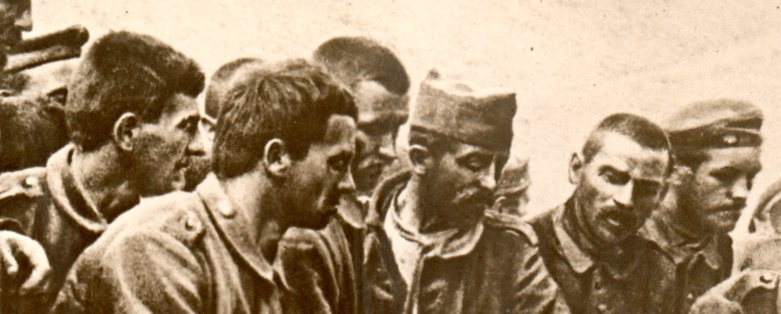
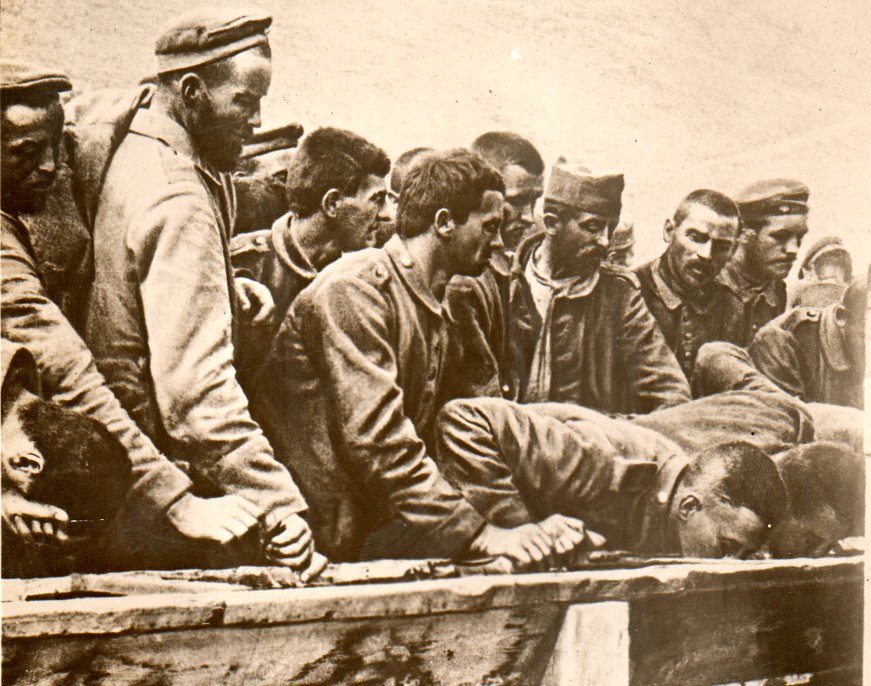
    TO have been on the River Somme, in France, in the summer of 1916, and to be in uniform, and carrying a gun, was perhaps the worst place to be in the whole of World War I.  More than one million soldiers were killed or wounded in that time, with millions more engaged.  It was impossible.  

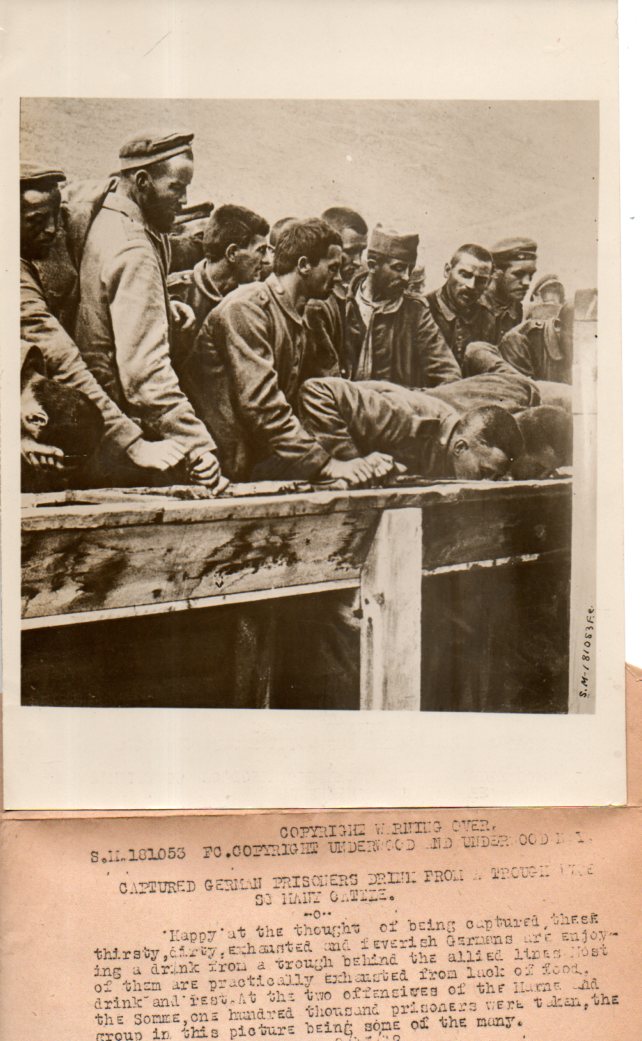
    This photograph tells part of the story. It was released September 27, 1918, by Underwood and Underwood, a news photo service agency that distributed sanctioned photographs of war action to newspapers and other periodicals.

    The photograph was accompanied by a caption supplied by U & U (bottom) and tells the story of these captured German soldiers–dazed, starving, frightened, hungry, thirsty, and were part of a group of more than 100,000.  They were offered water from a trough, and in spite of it all, they were so thirsty that they were desperate for whatever they could get.  

    WWI--German THirsty123

    For whatever reason, the entire trough was not filled with water–only limited sections were.  The soldiers were holding their place in line with their hands on the empty trough, inching slowly forward. In my collection of these photographs it is rare to see faces in despair or pain like this, and these faces are definitely telling stories.  (This is another example of the unusual display of emotion in WWI news service photographs.)

    WWI--German THirsty122


    ·Posted by :

    ·in:

    —

  • Cold, Cramped, in a Ditch and Under Fire: France, 1918

    JF Ptak Science Books   An earlier post (#1308) expanded
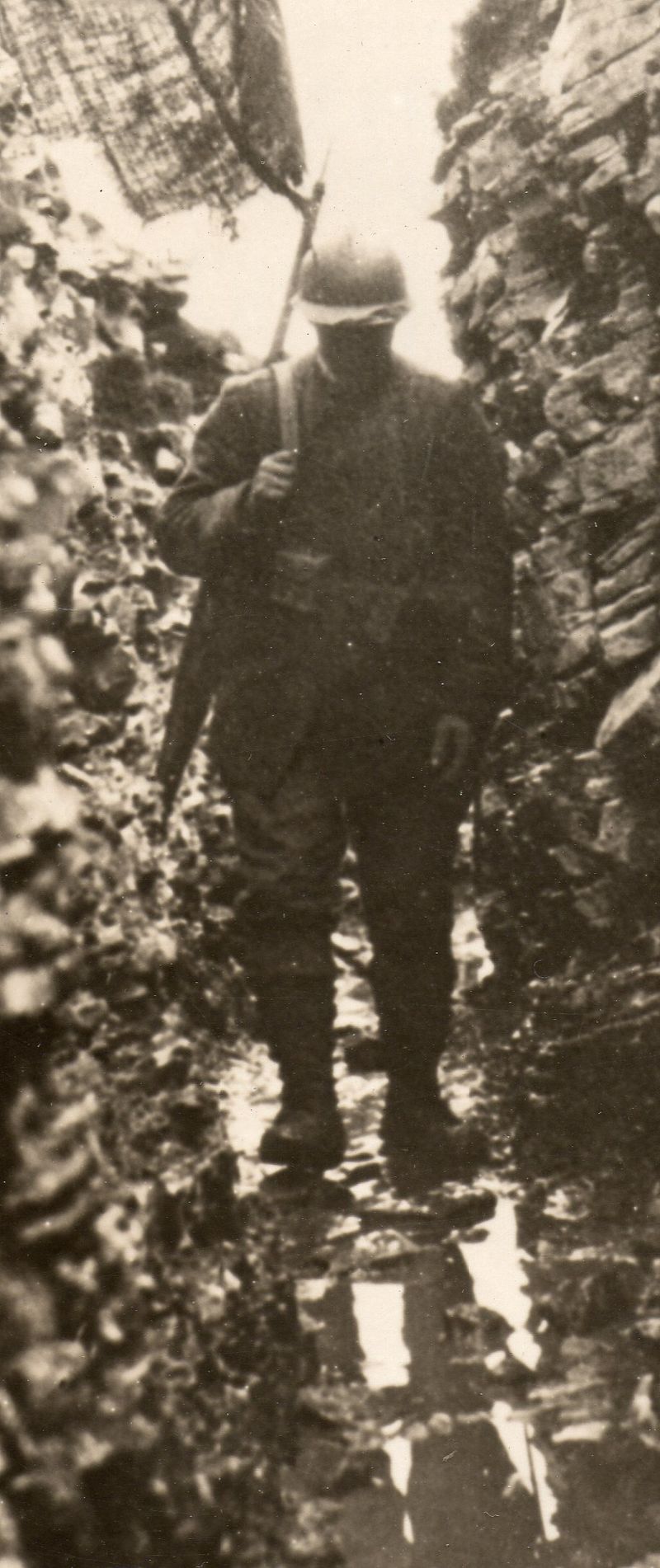
    WWI photo--trench note detail047

    If I was in a time machine, stepping back through a wormhole and into another segment of another reality, one of the places I’d least want to step into would be a cramped, cold, wet, dirty and dangerous place.  Like this American soldier, waiting for a German attack to begin so that he could launch a warning flare to the rest of the soldiers, hunkered down in a cold wet place in the front line along the Lorraine section in France, mid-way through 1918 and almost all-the-way-through WWI.  

    And even though this soldier looks far too clean, and his uniform far too spotless and pressed-ish, and his calf-skin gloves too calf-skinny, and his duffle too unmarred, and his helmet chinstrap too perfect for this man to actually have been fighting, the sensation of cold/bad/dangerous still gets through the whitewash.
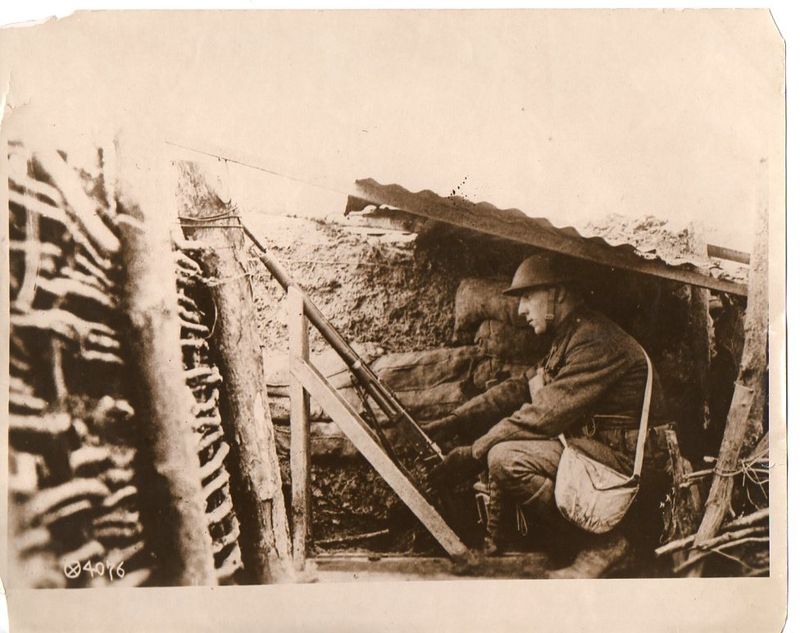
    World War I photos--Cold in trench306

    There are of course much worse places to be, but I think if I limited my time travel to include what I would be on the other end–a U.S. soldier–one of the places at te top of te list would be a generic trench in the front line of a battle late in the fighting in WWI.  Sitting there, watchful, waiting for the advance of thousands of German troops, charging over a ruined and sulfurous landscape, waiting for the ruination to begin as it churned its way through  No Man’s Land.  Of course it could be worse–one could be going “over the top”, charging across the Desolate Place towards a line of thousands of entrenched soldiers all of whom were trying to kill. you. 
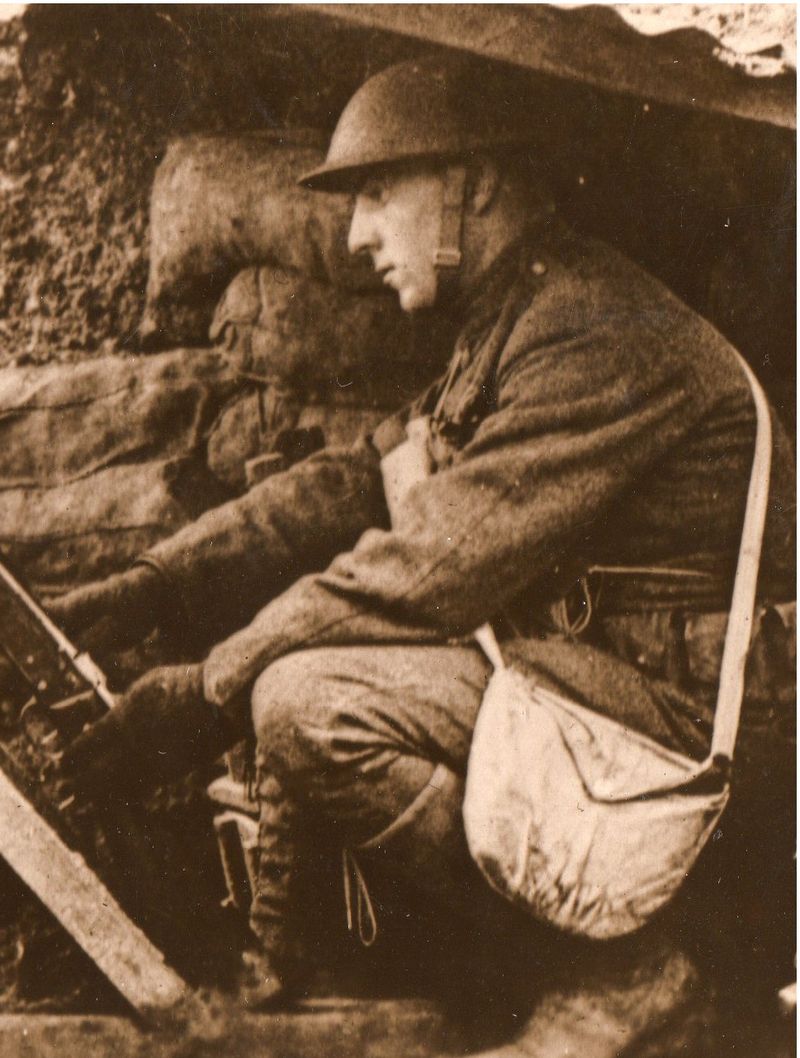
    World War I photos--Cold in trench307

    Or of course you could be in a blue coat marching in a straight line towards a series of long lines of men in red coats, everyone getting ready to get close enough to discharge an 69-calibre (or thereabouts) ball across an open plane of hundreds of feet into the ranks of the opponent.  Or being in a Marine uniform in Tarawa, in the Gilberts, in November 1943. Or being in Butternut, crossing the Emmitsburg Road on the way up Cemetery Ridge on 3 July, or being in any uniform whatsoever at Antietam.

    The places and times get worse I think once you allow yourself to be any other solider in any other uniform.  A French soldier, for example, sitting in a similar spot in the same battle along a front line as our American Doughboy, above, would’ve been worse.  A Belgian soldier virtually anywhere also would have fared worse, statistically, than just about anyone else in WWI.  Being a newly-minted soldier wearing the uniform of the Soviet Socialist Republics in the Summer of 1941 would probably have been half-a-death-sentence.  Of course the list goes on, and on. 

    Perhaps one of the worst inventions in the history of warfare was The Trench. Millions of men were wounded or met their ends while defending one, or attacking one, or being in-between two of them.  Hundreds of thousands of troops spent months charging back and forth between opposing lines, the ground over which they fought made uninhabitable for almost any form of life. Cold, wet, bad.
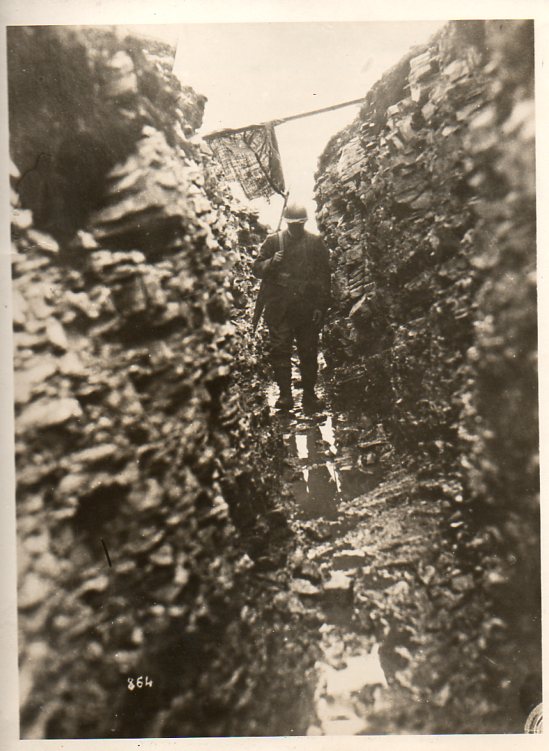
    WWI photo--trench045
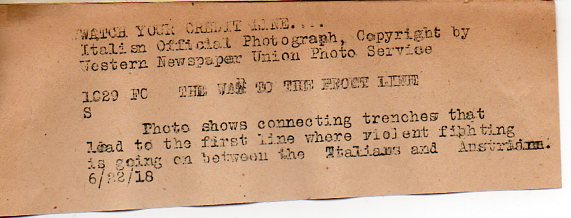
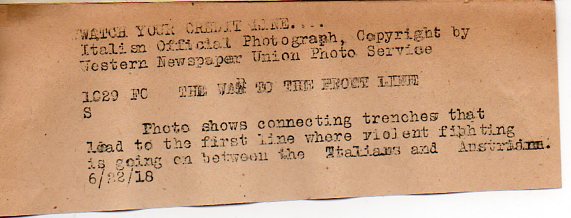
    Here’s another original photograph made by the Western Newspaper Union Photo Service, as a “British Official Photograph”  (with the “British” part penciled out and replaced by an unknown hand, “Italian”),  The photo agency supplied a caption for the image (that was supposed to have been used by the newspaper or magazine that published the picture) as follows:
    WWI photo--trench note046

    And the detail:
    WWI photo--trench note detail047


    ·Posted by :

    ·in:

    —

  • An Interesting Photo of False Safety and Loneliness, 1918

    JF Ptak Science Books  Quick Post  Part of the series on World War I    
    Follow Me on Pinterest

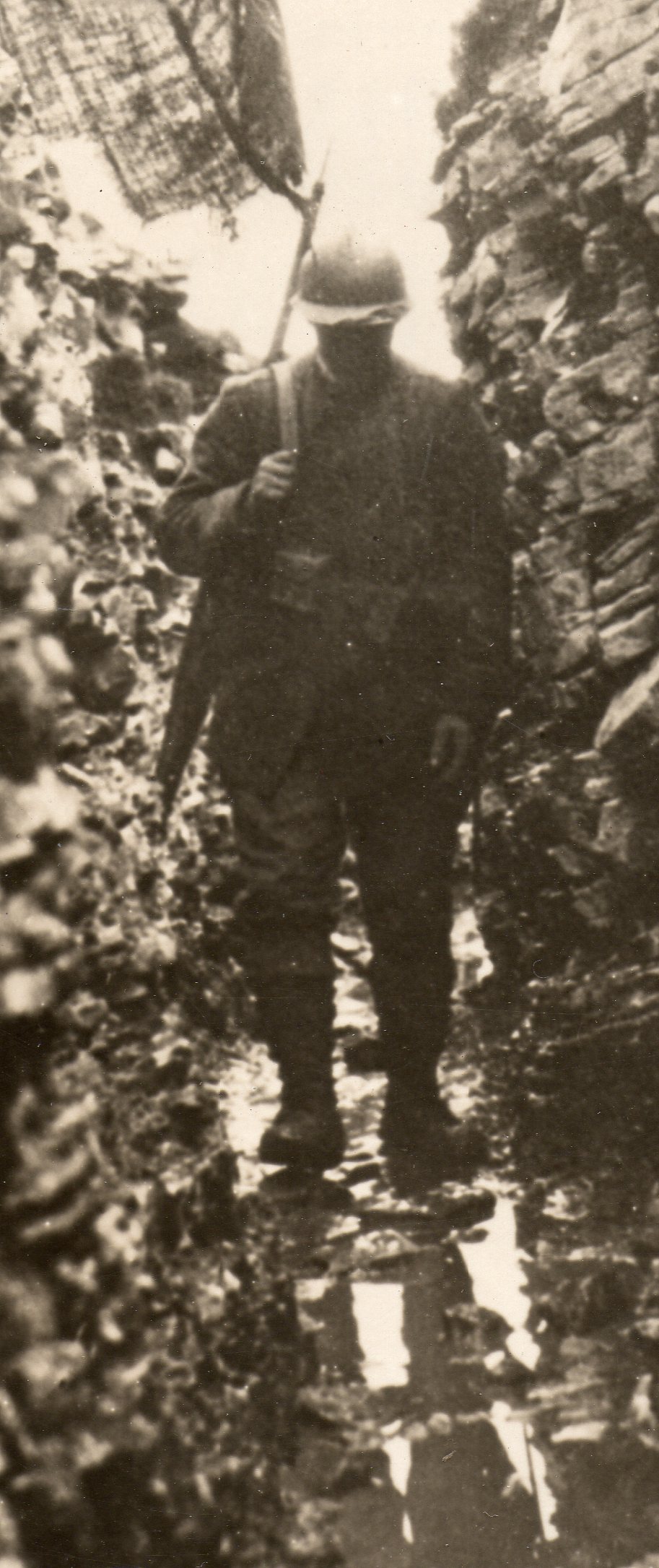
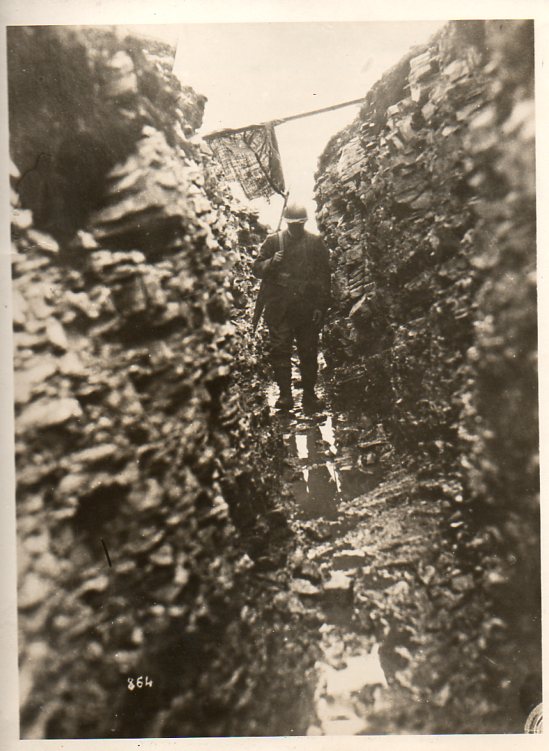
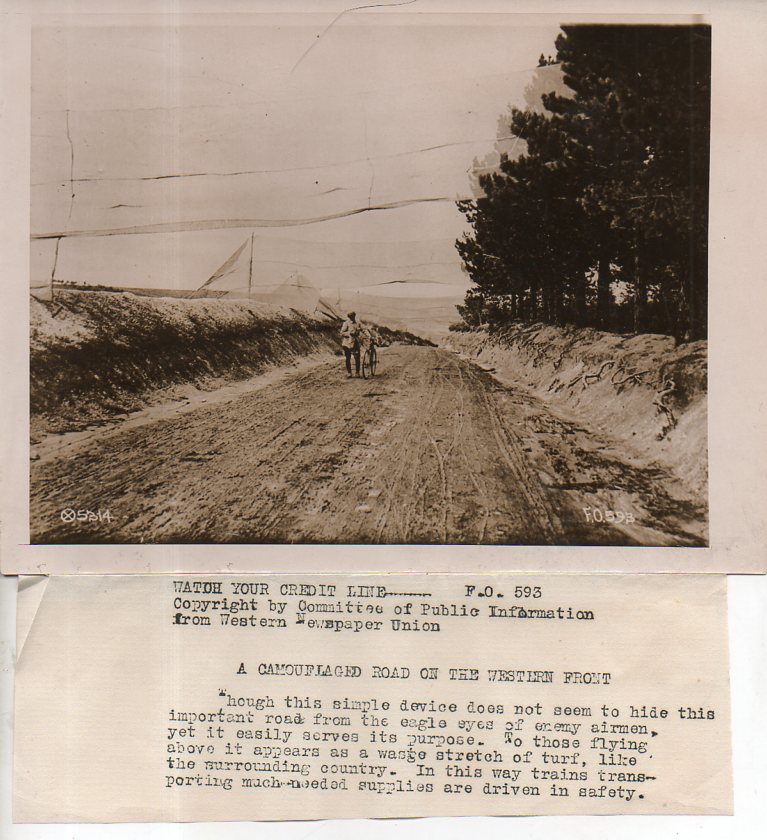
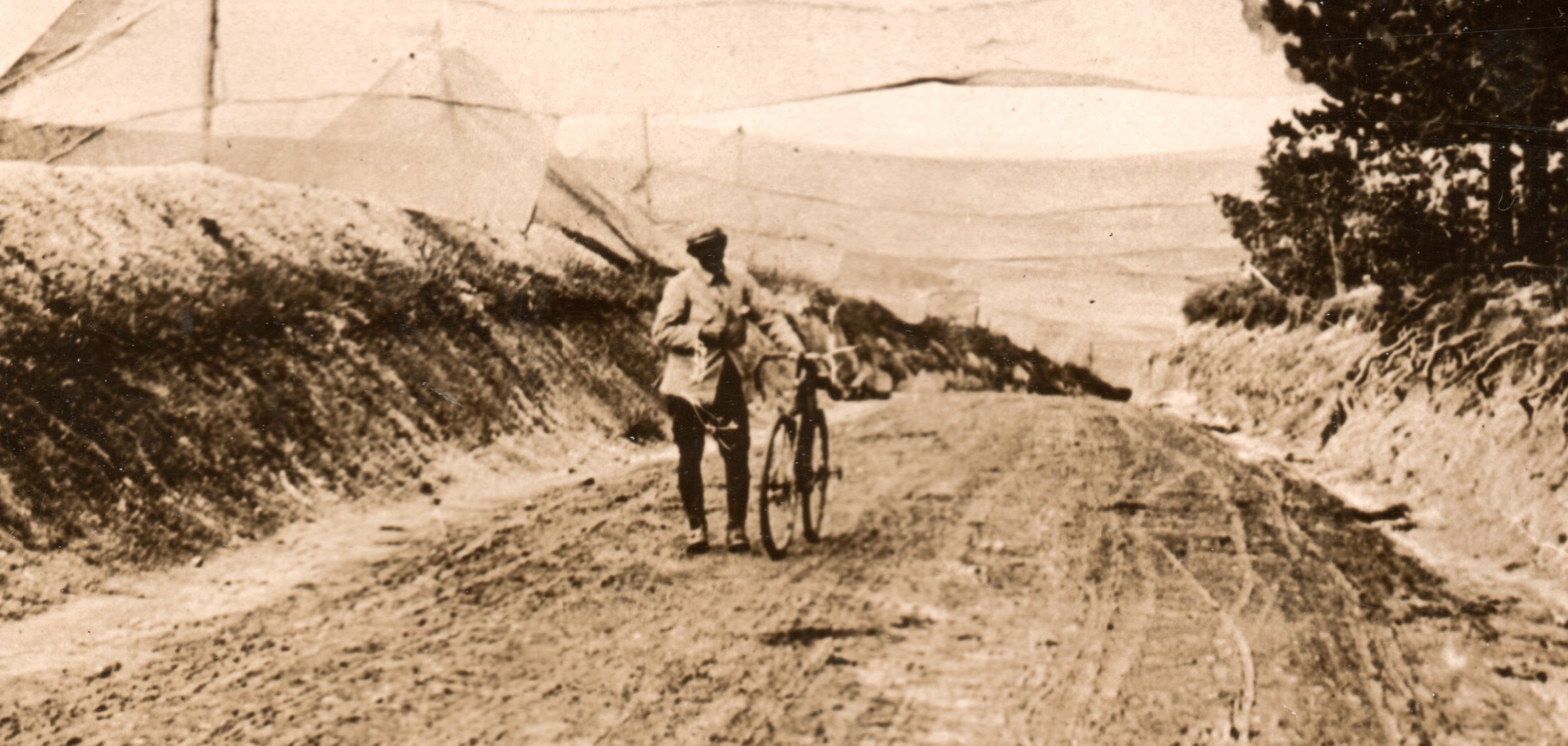
    This wonderful, contemplative, lonely, sad, and ultimately draining photograph depicts a camouflaged road somewhere on the Western Front.  That’s rather a prosaic term for that atrocious line of battle that stretched from the North Sea to Switzerland, where hundreds/thousands of miles of trenches were dug and filled and fought over, where millions of shells were shot and exploded, and millions of soldiers and civilians killed and wounded. 

    Camouflage bike822The “Western Front” really doesn’t quite do as a descriptor.

    But here we are, just the same.  And so the image above, with the man on a bicycle on a well-used road–he’s moving along under a long canopy of netting designed to obscure/hide the road from telescopic viewing or eyes-in-the-sky.   When this photo was made for the Western Newspaper Union, mid-1918, the war was nearly over.  But still there was the fighting, and the supply lines for the millions of troops, right to the bitter end at the 11th hour of the 11th day of the 11th month. 

    And the full version:

    Camouflage bike820

    The photograph itself is one from a collection of hundreds here from news photo service agencies, images made of the War from a pool of photographers who covered the action for American newspapers and magazines, and whose work was necessarily censored. The photographs would be selected/ordered by a news agency, and the caption of explanation would be provided by the news photo service (as seen above). 

    ·Posted by :

    ·in:

    —

  • Big Time Big Bombs–Great Infographic, 1917

    JF Ptak Science Books   Quick Post 
     
    Follow Me on Pinterest

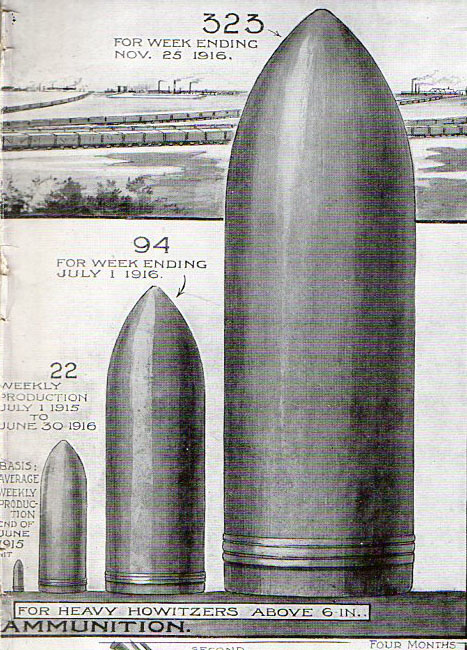
    I don’t often see graphical displays of quantitative data utilizing quite so many images of shells, even when the image is comparing ammunition production.  This striking example is found in The Illustrated London News for July 15, 1917. 


    Bombs994


  • Paper Microscope: a 10 Millimeter Photographic View of Great Complexity, 1917

    JF Ptak Science Books   Quick PostFollow Me on Pinterest

    Wwi stereo194

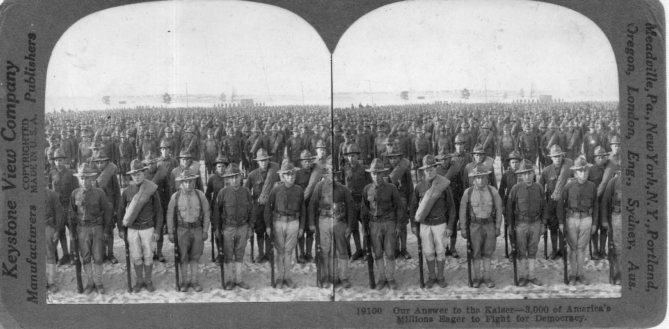
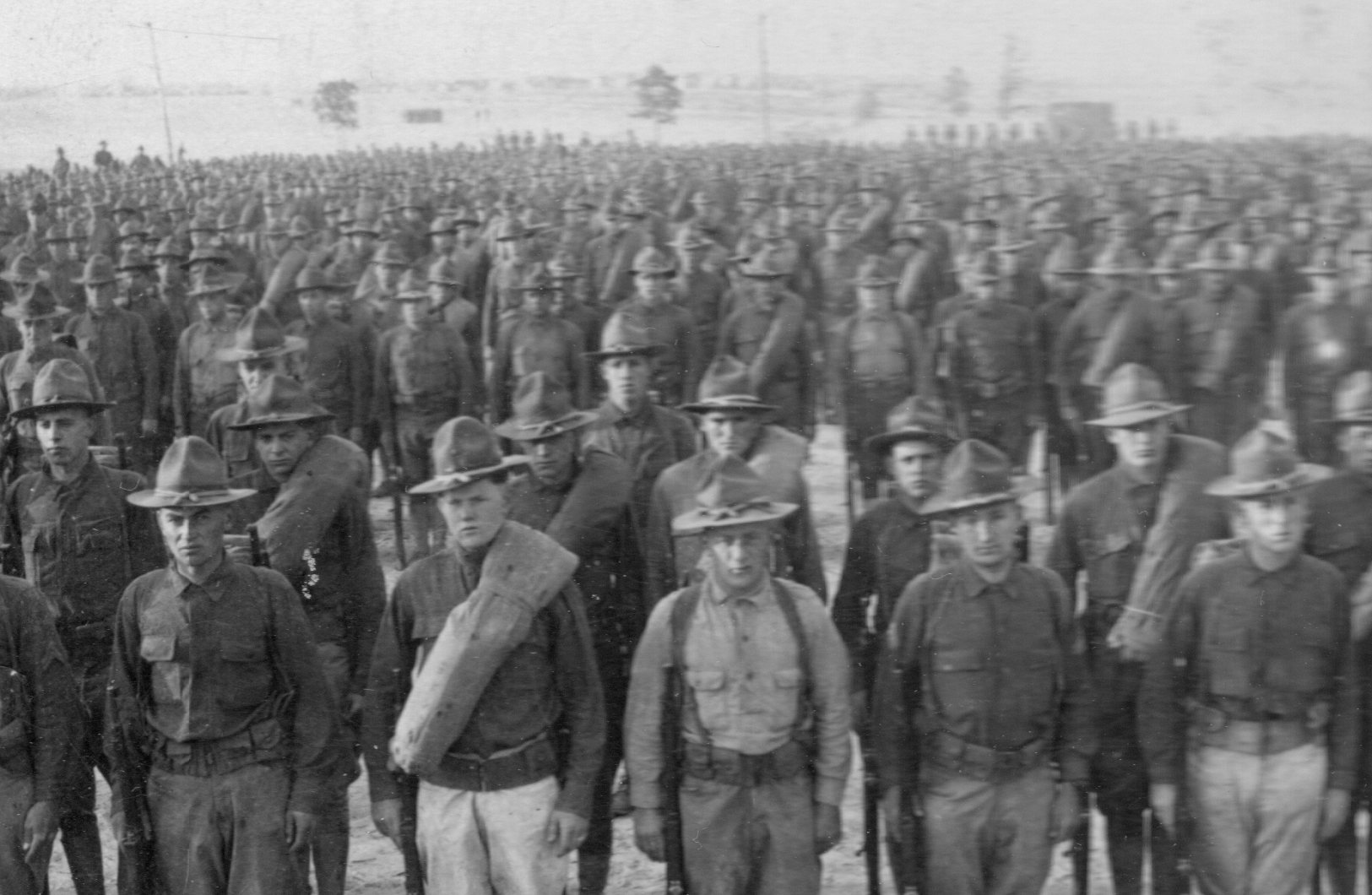
    In this stereographic photograph of a group of 3,000 U.S. soldiers (prepared to fight in Europe in WWI, ca. 1917/1918), there is a smaller contingent in two rows, in front, consierably removed from the rest of the formation.  This is difficult to see in the first image.  However, with a more concentrated view and deeper scan, this is a little more evident, below:

    Wwi stereo195
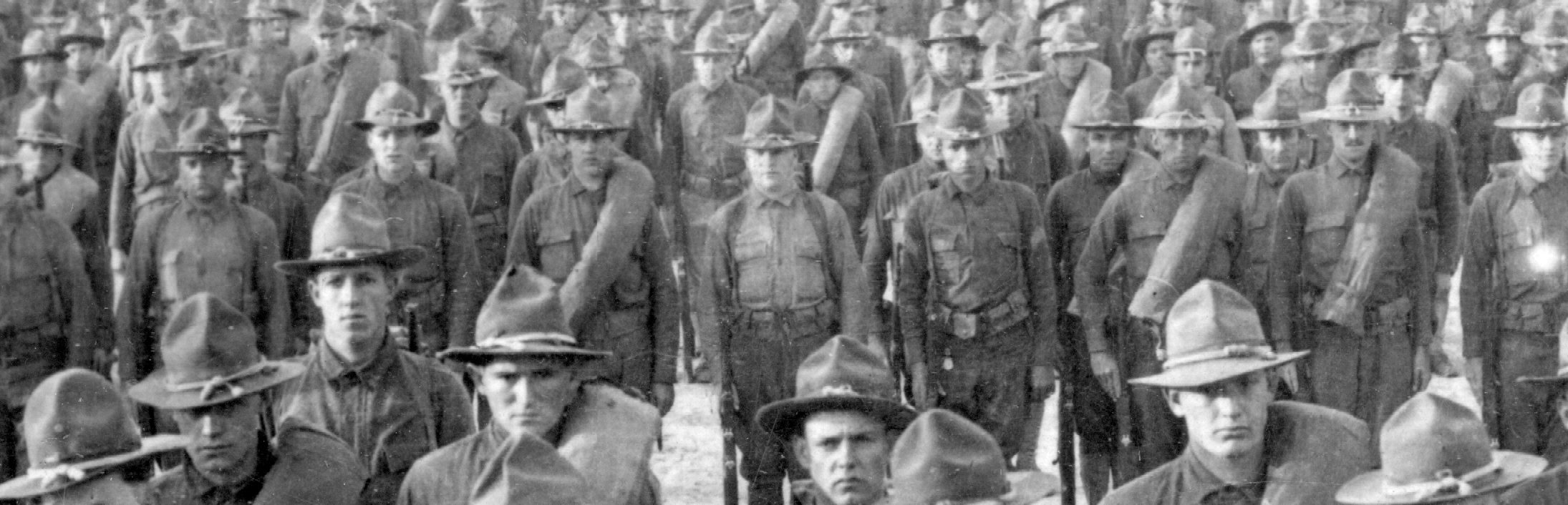
    This view still shows the first row of soldiers; that more-distant third row differentiation is much more defined here–the depth of the mass of the formation is starting to really come into focus.  The next image shows the heads of the men in the second row, but mostly concentrates on that third row, and beyond:

    Wwi stereo196
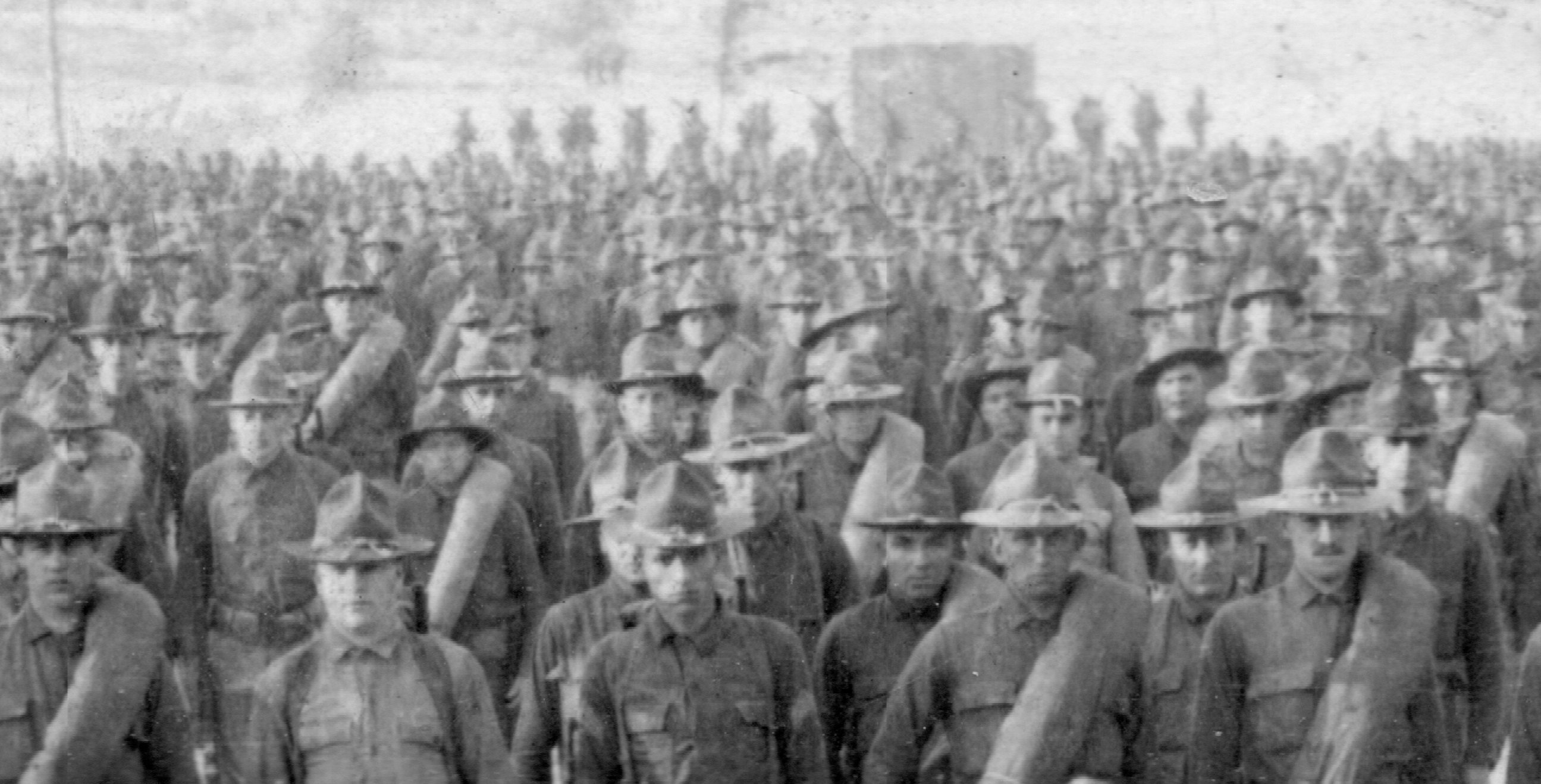
    The final view is just above the heads of the sldiers in the third rank, and more clearly shows the those men in the rear of the formation, including that final rank, which is a profile of men marching.  This enlargement represents a section in the original photograph that measures less than 10x6mm–60 square millimeters of great density, complexity, insight, and beauty. 

    Wwi stereo197

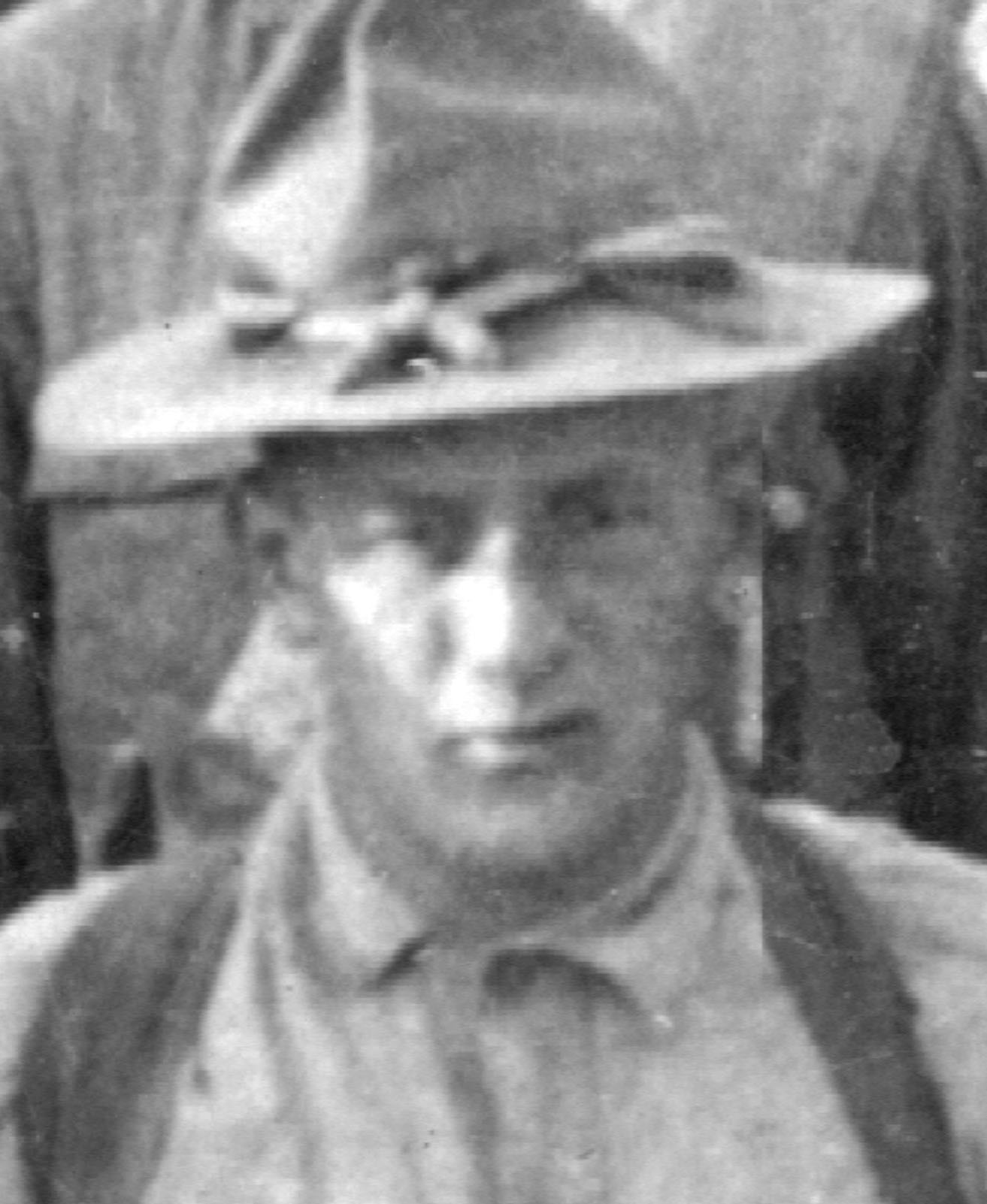
    And finally,

    Wwi stereo198

    ·Posted by :

    ·in:

    — —