A Daily History of Holes, Dots, Lines, Science, History, Math, Physics, Art, the Unintentional Absurd, Architecture, Maps, Data Visualization, Blank and Missing Things, and so on. |1.6 million words, 7500 images, 4.9 million hits| Press & appearances in The Times, Le Figaro, Mensa, The Economist, The Guardian, Discovery News, Slate, Le Monde, Sci American Blogs, Le Pont, and many other places… 5000+ total posts since 2008.

Category: World War I

  • Verticals, War, Reims

    JF Ptak Science Books  

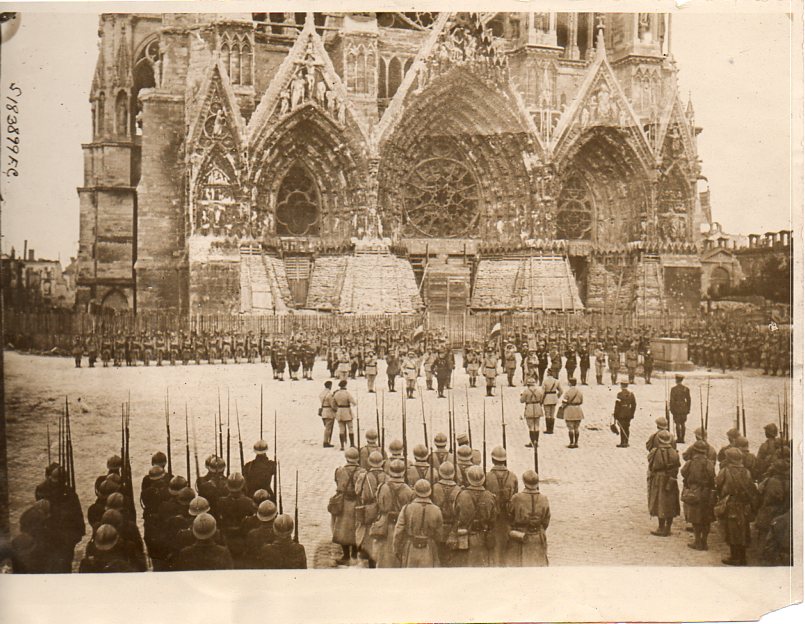
    In developing a history of vertical lines I thought that I would look at single vertical lines, but having just stumbled across this in our WWI News Photo Service archive, I just could not resist.  There is of course plenty of vertical arrangement here–just orders of magnitude more than what I was setting out to find.  So it goes.
    WWI photograph--spires071

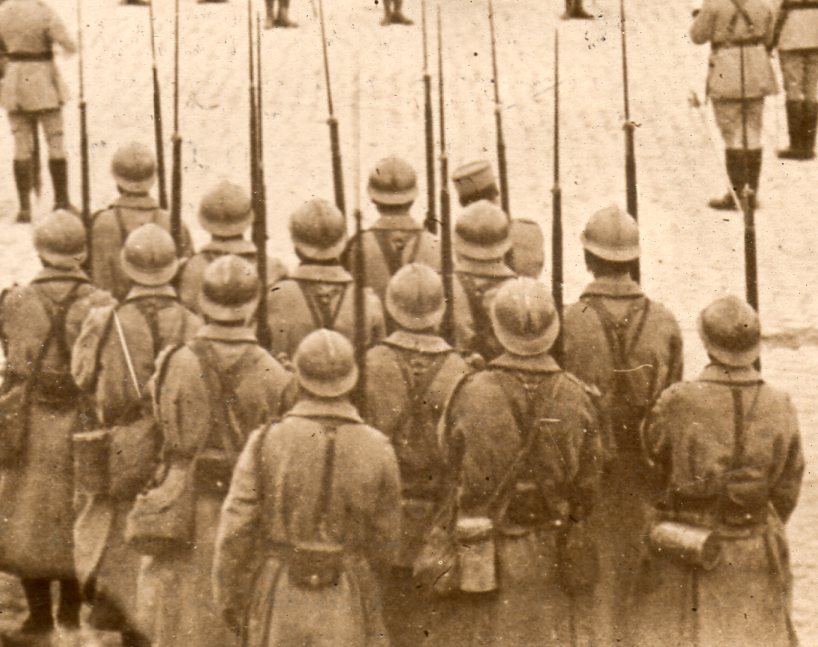
    (The image is available from our blog bookstore, here.) And the detail:
    WWI photograph--spires det072
     And another:

    WWI photograph--spires det073

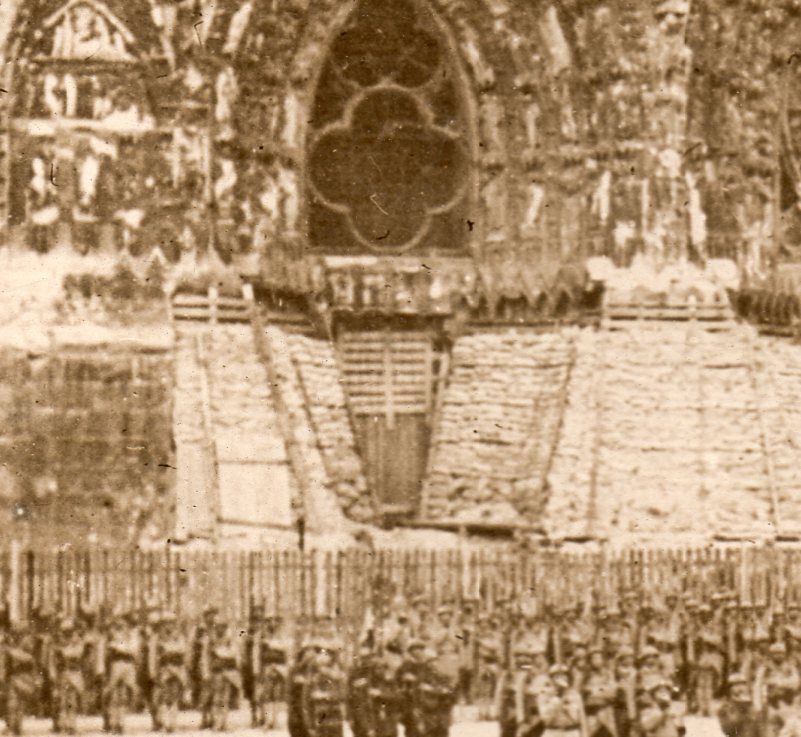
    I find this a soaring image, in its own odd way–this is a celebration scene, after,all, a decoration exercise, a military display of French forces that liberated the town of Reims, all taking place in front of the battered cathedral. Notre-Dame de Reims was the place of the coronation of French kings, and was a spectacular 13th century structure built on top of other buildings stretching back the site’s inhabitation to at least the 5th century.  

    But German artillery shelling caught the cathedral right at the beginning of the war and very nearly wrecked it.  The building was badly damaged by fire, a fire caused by the Germans, which spread along the scaffolding on the building which fed the wooden supports and superstructures, the flames finding its way throughout the building.  The fire was hot enough to melt the lead in the roof, which poured down as molten rain and out of the mouth-spouts of the building’s gargoyles. 

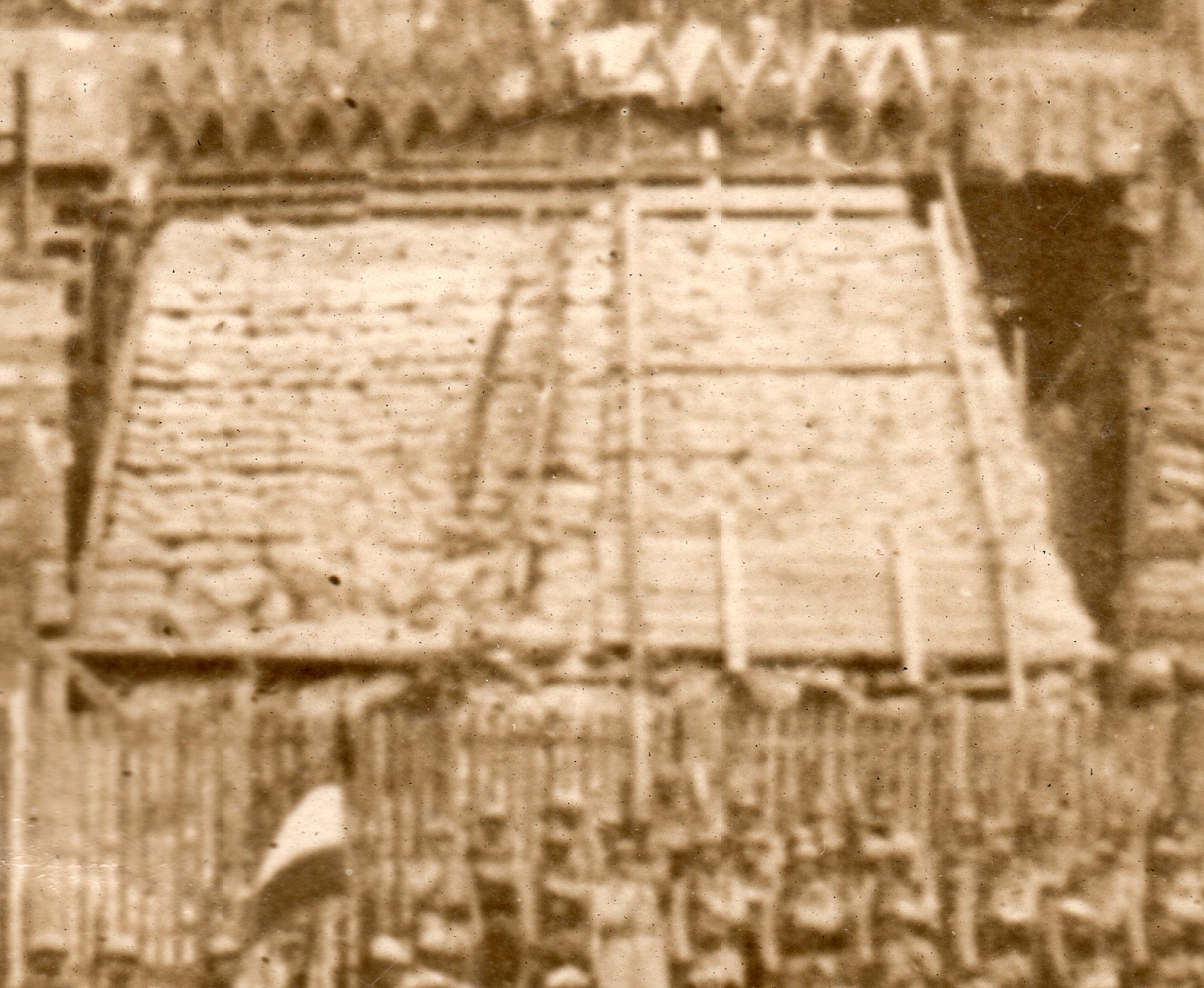
    As I brought out the further figures against the base of the cathedral one can clearly see the enormous stands of sandbags, the piles stacked up twenty feet or so behind the makeshift wooden fence.  IT was some sort of protection for the building, but not muc. 
    WWI photograph--spires det074

    This was yet another battle for the city, this one taking place 1550 years or so after the first, the Alemanni defending against the Romans; and then 104 years after the next major encounter, this between Napoleon and a Russian/Prussian force.  The liberating battle (the Battle of Reims, or the Second Battle of the Marne) took place 15 July 1918 to 6 August 1918, and it was a major failure for the German army, and spelled the collapse of the Spring Offensive, opening the door to the end of the war.  There were more than 135,000 Allies killed or wounded in this campaign (including 95,000 french troops), plus another 130,000 German troops.

    The process of victory in front of the wounded church seems exhausting and exhilarating, but not without a good sense of anticipation.
    ·Posted by :

    ·in:

    —

  • An Extraordinary POW Postcard 1918

    JF Ptak Science Books   Post 2316

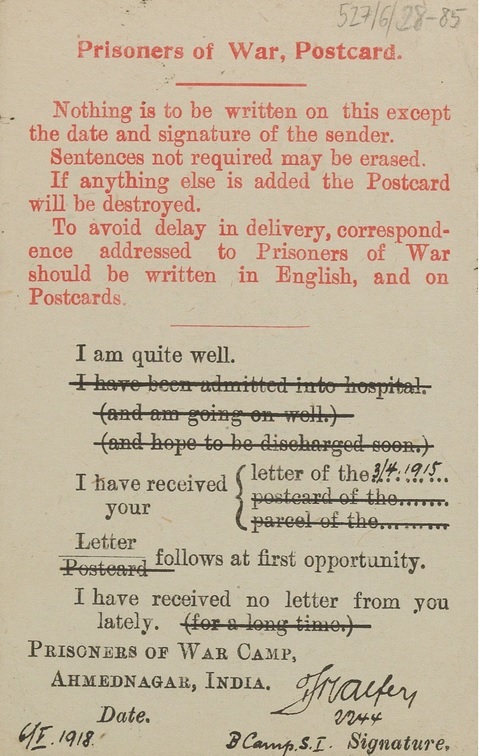
    There is a small collection of WWII propaganda here, mostly Allied-based surrender leaflets and battlefront newspapers. One that I am trying to identify is something simply called “Volksstimme” (“voice of the people”) a very home-made-looking production published in 1944 and which has the feel of being Soviet-produced for German soldiers but which is also extremely anti-Semitic.  As an offshoot of looking for “Volksstimme-ery” things (“Volksstimme” not being a very small handle for a very wide search) I came across a website for the German National Library’s World War I collection, and in one section it displayed this extraordinary postcard:

    WWI POW Postcard

    The German POWs (here based in India) were allowed very limited contact with anyone who had somehow found and written to them.  The instructions were explicit and took up almost as much space on the postcard as the allowed response.  And the response was limited to the POW being well or in hospital, or the status of letters received or not.  It was all attested by an administrative signature, and signed and dated.  And that was it.  

    But, it was at least something.

    “Ahmednagar, a city and fort in India, was the site of one of Great Britain’s prisoner of war camps during World War I. This camp held both prisoners of war and German and Austrian civilians from 1914 and 1918. In contrast, German officers were first sent to Tabora and later usually conveyed to a transitional camp inEgypt or India. The biggest camp was located in Ahmednagar, India, and could accommodate more than 2,000 German prisoners. According to reports from the Red Cross, there were few reasons for complaint. The food was plentiful and housing was acceptable. There were even tennis courts,soccer fields, and billiard tables for the amusement of officers…”–Source

    “Postcard from a British prisoner-of-war camp in India to Gustav Wahl, the Director of the Deutsche Bücherei in Leipzig, 1918”–German National Library, First World War Collection

    [Source: here (http://erster-weltkrieg.dnb.de/WKI/Content/EN/Topics/Kriegsalltag/alltag-kriegsgefangenschaft-en.html)]


  • Usherettes, Elevator Operatorettes, and Baseball, Part II

    JF Ptak Science Books   Quick Post

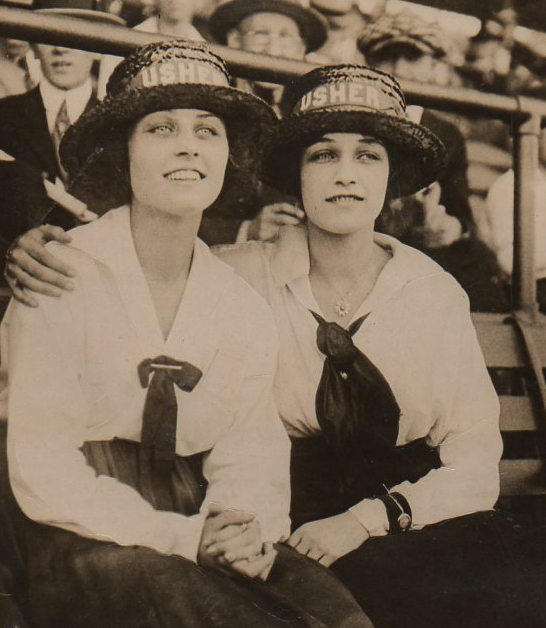
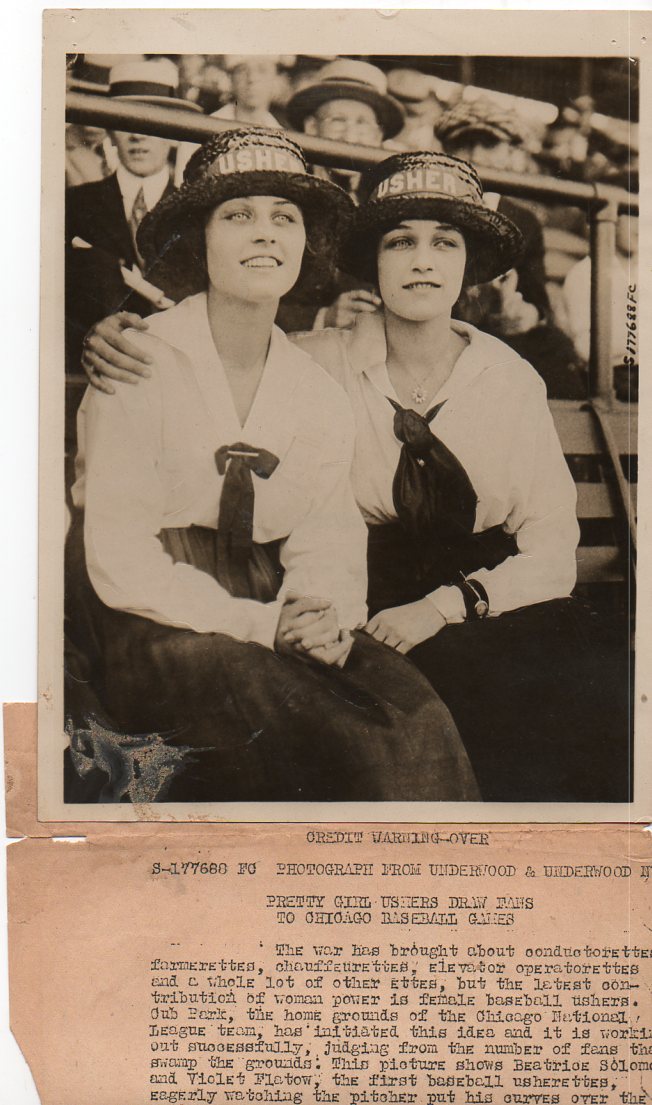
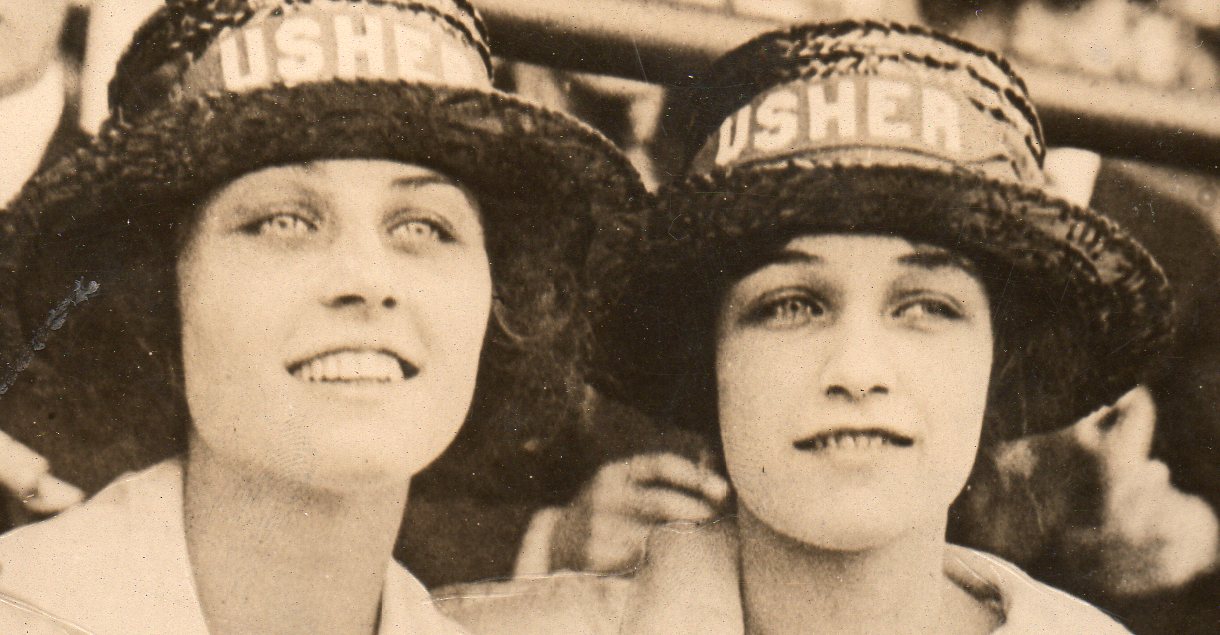
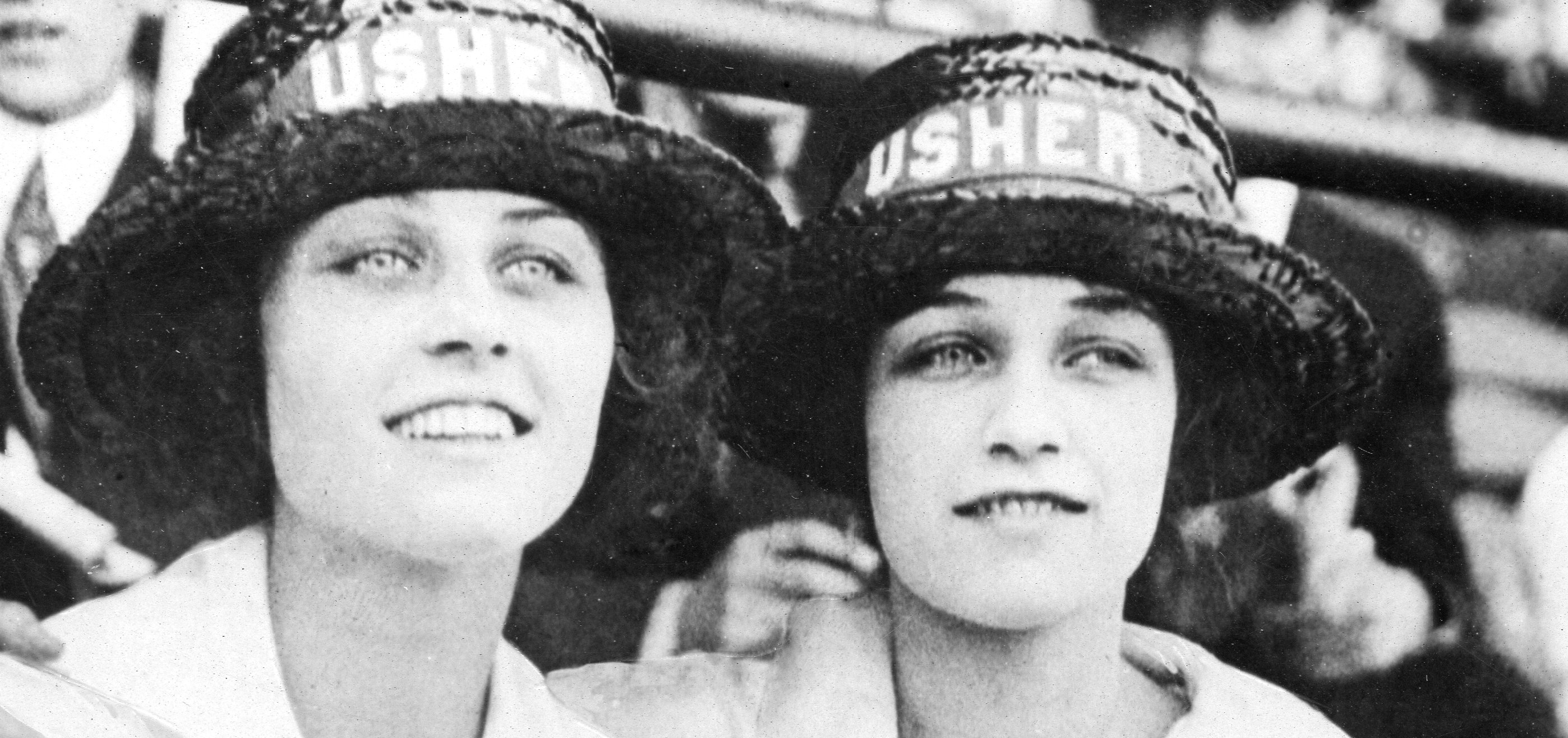
    One of the images that appeared in a post a few days ago (Baseball and World War I) became very popular, appearing in a number of other blogs and retweeted and shared in a number of media. The image was the “Usherettes” of the Chicago Cubs, and the photograph was made by a photographic pool by Underwood & Underwood (N.Y.) and was published July 12, 1918.  Its a wonderful image of two young women–both lovely, with the one of the left having no doubt crystalline light-blue eyes–who were identified as replacements for the male ushers who may have gone off to war.

    POSTER Usherettes detail

    The photograph was made by one a number of news photo service agencies who submitted their wartime work to censorship so that (basically) only mostly-positive images of the war was shared. This image was not of that particular concern, being made in Chicago at a ballpark and all, but it was still produced  by the photographic group of Underwood & Underwood.  And as was the common practice for this sort of photography the photo was accompanied by a slip of paper that was to be used as a caption for the work. So, if the Asheville Times was interested in using a photo illustrating women in the U.S. doing the work of men who had gone off to war, they’d contact a group like Underwood & Underwood who would supply them with the image as well as the description, both of which would appear in the Asheville paper.  

    Ushettes for blog image

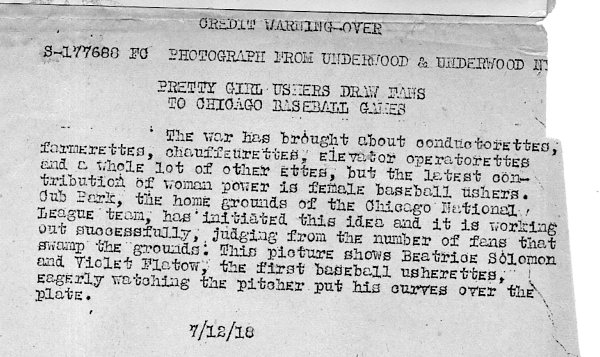
    In any event, the caption (reproduced below) reads in part:

    “the war has brought about conductorettes, farmerettes, chauffeurettes, elevator operatorettes, and a whole lot of other ettes” and which would now include female ushers.  

    ANd just so we’re ont he same page, the Oxford English Dictionary defines the suffix “-ette” so:  

    “Forming nouns denoting small or brief examples of the thing denoted by the first element, as diskette, essayettes, kitchenette, towelette, etc.”   As well as:

    “Forming nouns denoting women or girls linked with, or carrying out a role indicated by, the first element, majorette, suffragette, usherette…”etc.

    It turns out that the use of “usherette” for this image predates the “usherette” first usage in the O.E.D., which gives a date of 1924 for the first appearance of the word.  

    It should be stated that the two women in the photograph above were Beatrice Solomon and Violet Flatow, “the first baseball usherettes”.

    Usherettes text294

    ·Posted by :

    ·in:


  • Baseball and World War I

    JF Ptak Science Books   Post 1262 (from 2010)–expanded

    The following photographs are part of a large-ish archive of news photo service images for the years 1917 and 1918–all are made by American firms, and almost all are related in one way or the other to WWI.  The images below are among the very few depicting wartime sports, and in all cases, these sports was baseball.

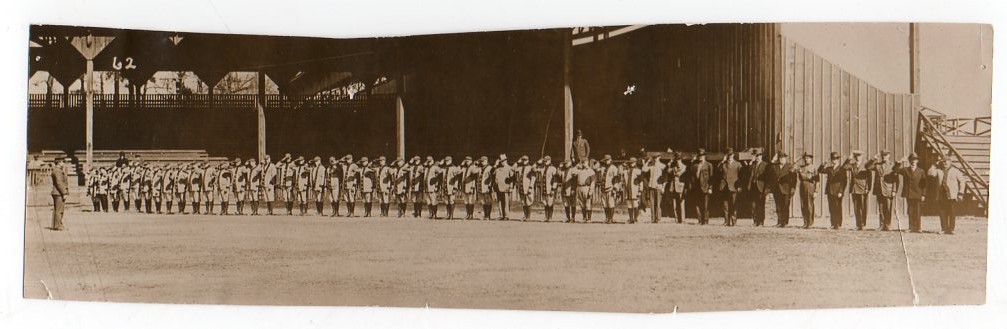
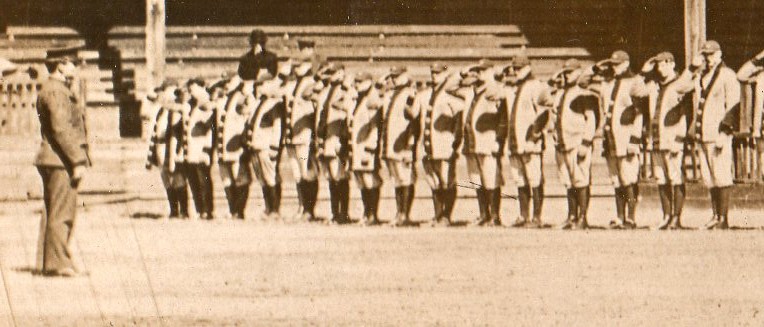
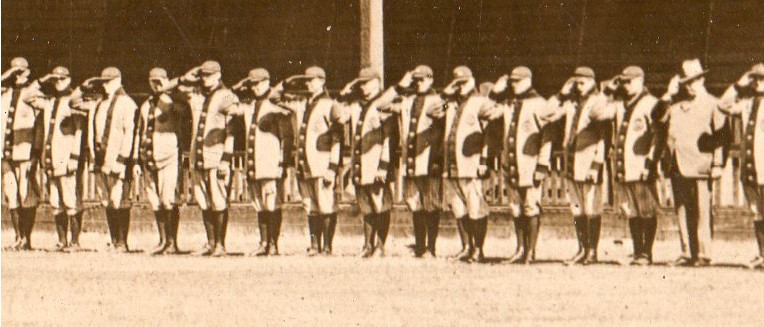
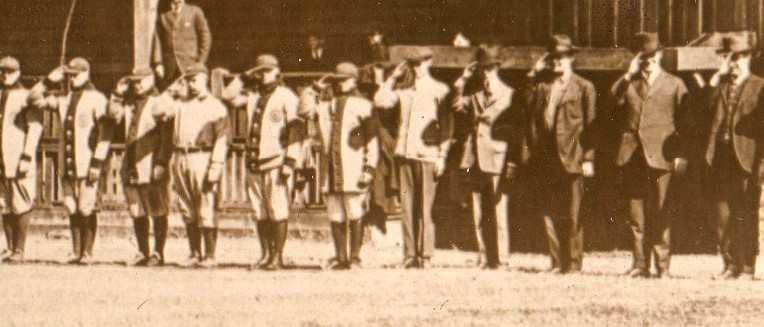
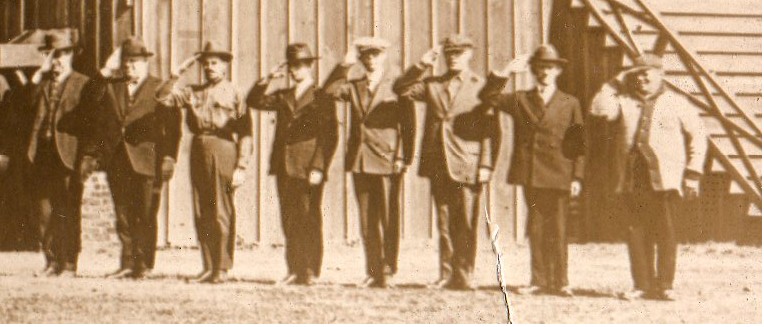
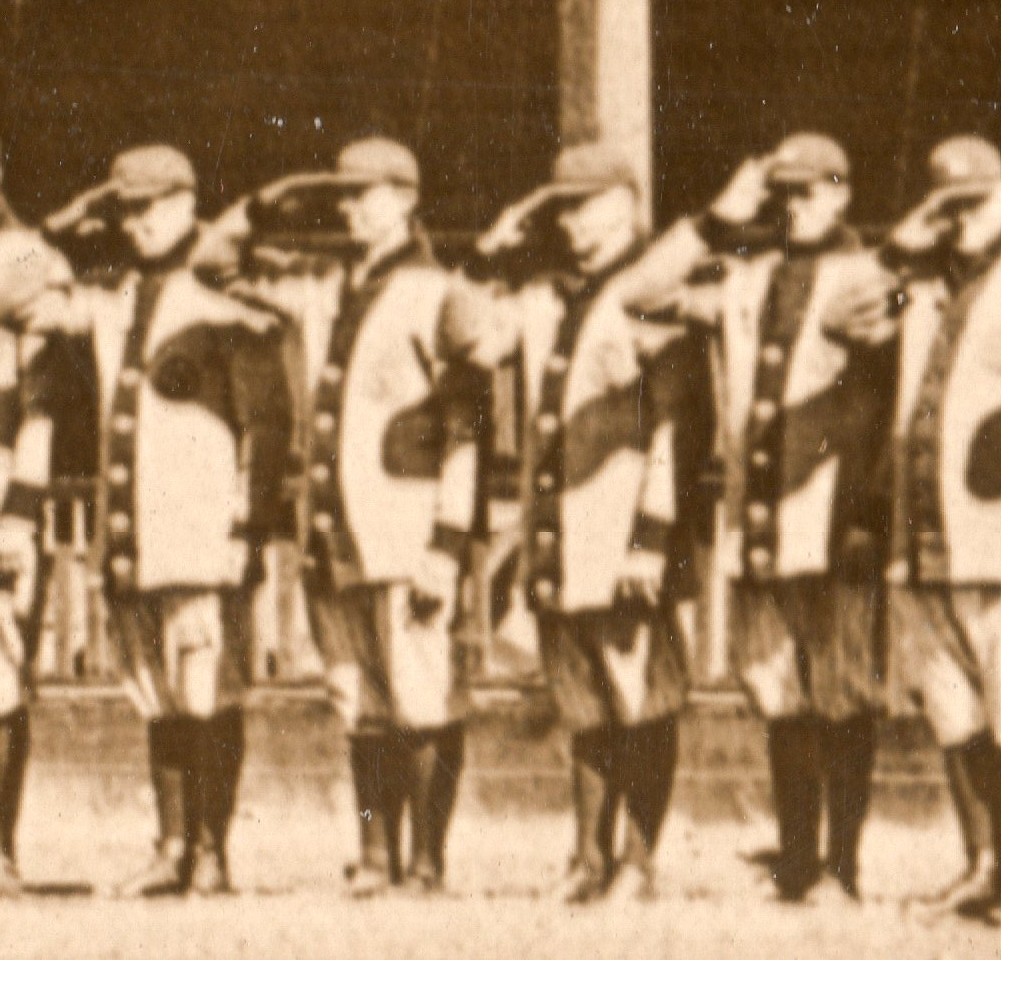
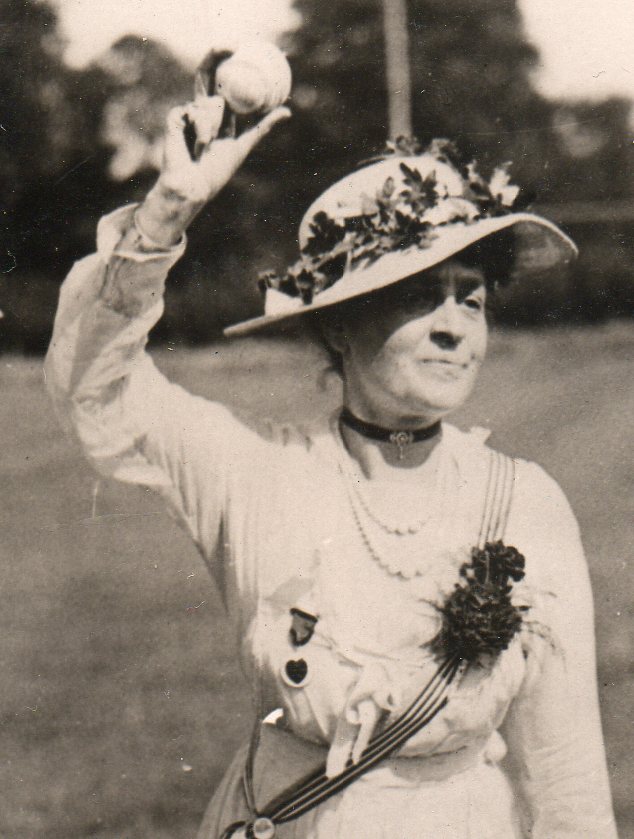
    The first photo is a rather remarkable image of summer training for (as is stamped on the back of the image) “the New York Americans” baseball club, which would be more famously and more continuously called the New York Yankees.

    The identifying stamp on the back also records that among the saluting folks is a sportswriter, Jerry Donovan, “(Wild Bill’s father)”–that “Wild Bill” was also “Smiling Bill”  Donovan (1876-1923), the New York Yankees’ manager for 1915-1917, being replaced in 1918 by Miller Higgins. (Huggins was famously more successful, managing some famous Yankees teams from 1918-1929, winning three World Series, taking six first place finishes, and a .597 career winning percentage with the New York club.)  Donovan was an average manager in his four MLB managerial years (including a last year in 1921 with the Phillies), finishing out with a .479 winning percentage. (He was evidently on his way to a new start with Clark Griffith’s Washington team when he was killed in a train wreck.) Among the other members of the ’17 squad were the beautifully-named Urban Shocker and Slim Love.  

      Baseball 1918022

    And the details:

    Baseball 1918 b023

    Baseball 1918 c024

    Baseball 1918 d025

    Baseball 1918 e026

    Baseball 1918 f massive027

    In 1918 many teams involved their players in “military training”, and this picture shows the Yankees (along with coaches and writers) doing their part to make it look as though they were making some sort of good effort having to do with the war. During the 1918 most teams mostly/sorta let the season go–not so for the Yankees or for Boston (which one its only 20th century World Series title that year).

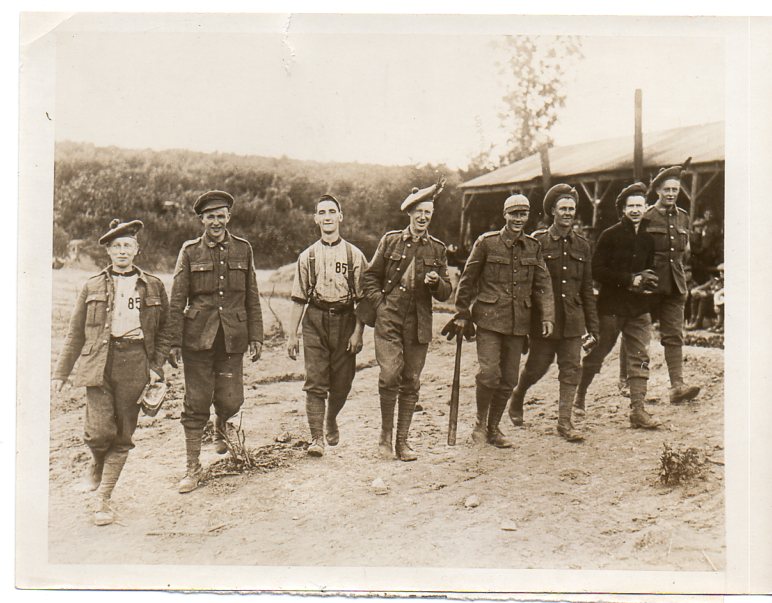
    Lovely image of two baseball ushers, 1918:

    WWI--e--women ushers684
    WWI--e--women usher dets685

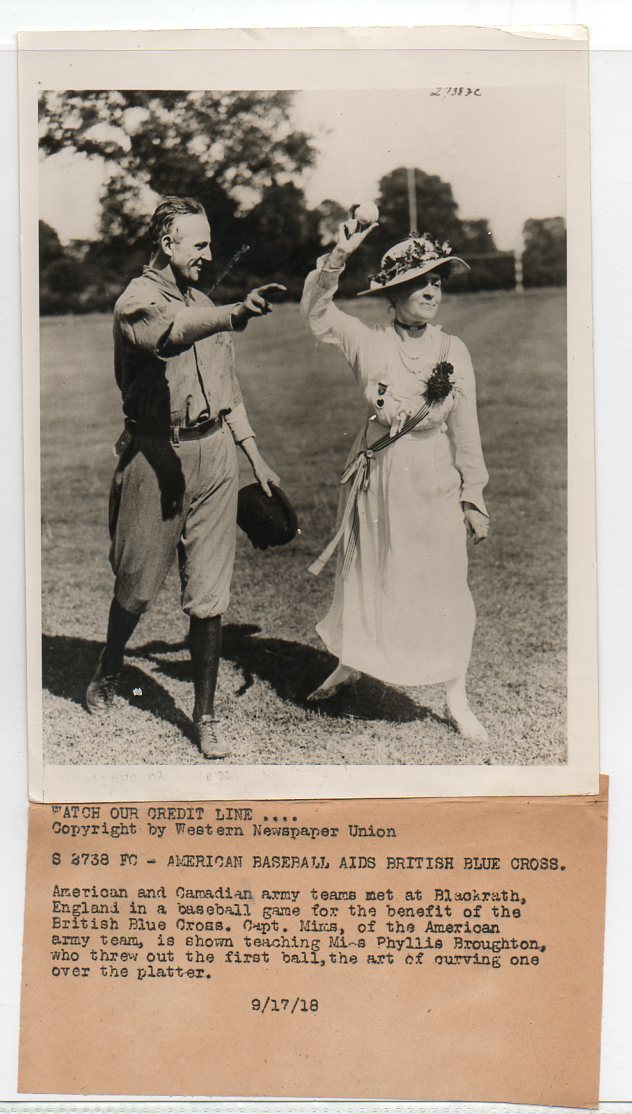
    Also, this lovely picture:

    WWI--e--women-baseball672

    WWI--e--women-baseball det673


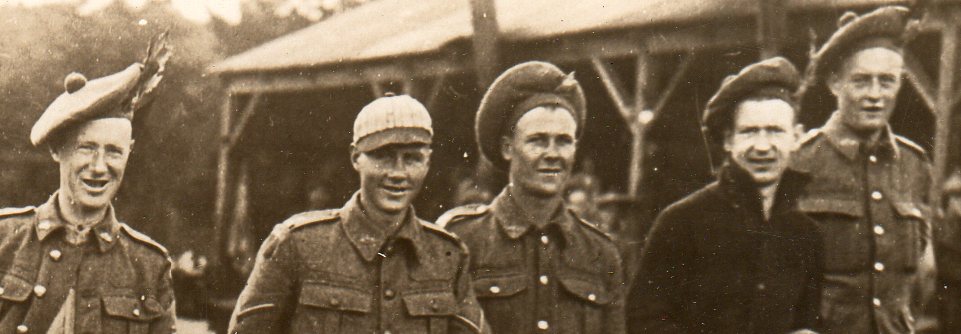
    And lastly, this:

    Baseball 1918 happy faces028
    Baseball 1918 happy faces b029

    ·Posted by :

    ·in:


  • The Small Comfort of the Wounded: ElectroPhones, 1917

    JF Ptak Science Books    Post 2296  (WWI Photo #82)

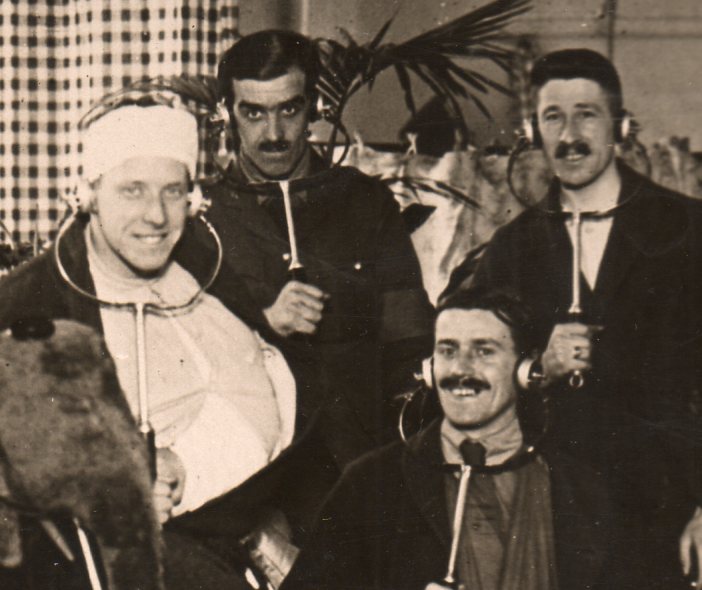
    WWI Electrophone267

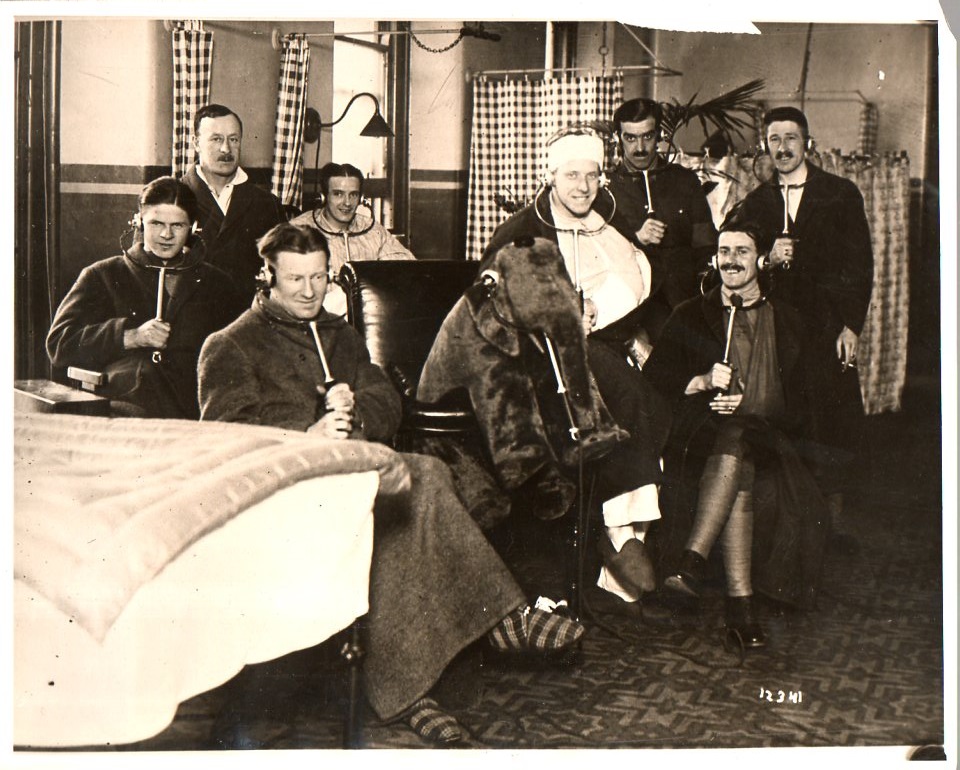
    Overall, these soldiers look to be in pretty good spirits, even if they were told to be so, they still looked fairly genuine. And who wouldn’t be, at least to some degree?  They were a few of the millions of soldiers who were wounded in WWI, which means at least that they were among the millions of the dead. 

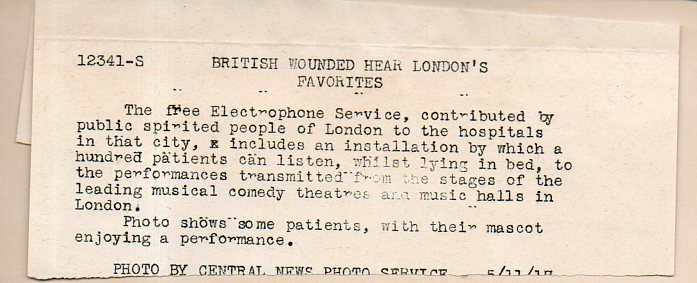
    The caption that accompanies these News Photo Service image (made by the Central News Photo Service and dated May 11, 1917, says that they were enjoying the donated headsets–Electrophones–and represented a few of the hundreds that received them.  This device was basically a telephone receiver, and years after Bell and Edison dreamed of social integration and advancement and wide-ranging culture, of delivery literature and music to people flung near and far, these soldiers were enjoying the benefit of limited concerts and other entertainments via telephone lines.  

    WWI Electrophone266

    Here’s a very good quote on the electrophone from the highly interesting The Cat’s Meat Shop, written by Lee Jackson, author of Dirty Old London, the Victorian Campaign Against Filth. (It is an interesting topic–filth and its control–because you really can’t have an Industrial Revolution without lots of workers living close to their jobs, which means that lots of people live close together, and you can’t have that unless you somehow control for good sanitary conditions, which means you’ve got to take care of filth.)  

    • The original image is available for purchase via the blog’s bookstore, here.

    WWI Electrophone265

    “The most picturesque and entertaining adjunct of Telephone London is the electrophone. There is not a leading theatre, concert-room, or music-hall but has the electrophone transmitters – in shape like cigar-boxes – installed before the footlights, out of sight of the audience. They are at the Royal Opera, Covent Garden; and in many of the principal places of worship a wooden dummy Bible in the pulpit bears the preacher’s words, by means of the N.T.C. telephone lines, to thousands of invalid or crippled listeners in bed or chair in their homes or hospitals. It was thus that Queen Victoria, seated at Windsor Castle, heard 2,000 school children in Her Majesty’s Theatre, in the Haymarket, cheer her and sing “God Save the Queen” on her last birthday. King Edward was likewise relieved from ennui at Buckingham Palace during his illness, for the brightest music, mirth, and song of London were ever on tap at his side. Queen Alexandra is also a devotee of the electrophone, more especially throughout the opera season. On the other hand, the cruel lot of certain hospital patients, of the blind, and even the deaf – for the micro-phonic capacity of the electrophone enables all but the stone-deaf to hear – is thus greatly brightened by science. The sadness of the bedridden, the incurable, or the sufferer from contagious disease is enlivened by sacred or secular song and story, and, as a much-to-be-welcomed addition to the alleviations of London’s strenuous life, the benefits of the electrophone are innumerable. It may be added that in the imposingly decorated salon in Gerrard Street from time to time fashionable parties assemble and “taste” the whole of London’s entertainments in one evening. Thus, over mammoth aerial and subterranean wire-webs does London, annihilating distance, work and play by the aid of Science.–George R. Sims (ed.), Living London, 1902

    ·Posted by :

    ·in:

    —

  • Women’s Land Army of England, 1918

    JF Ptak Science Books   Quick Post

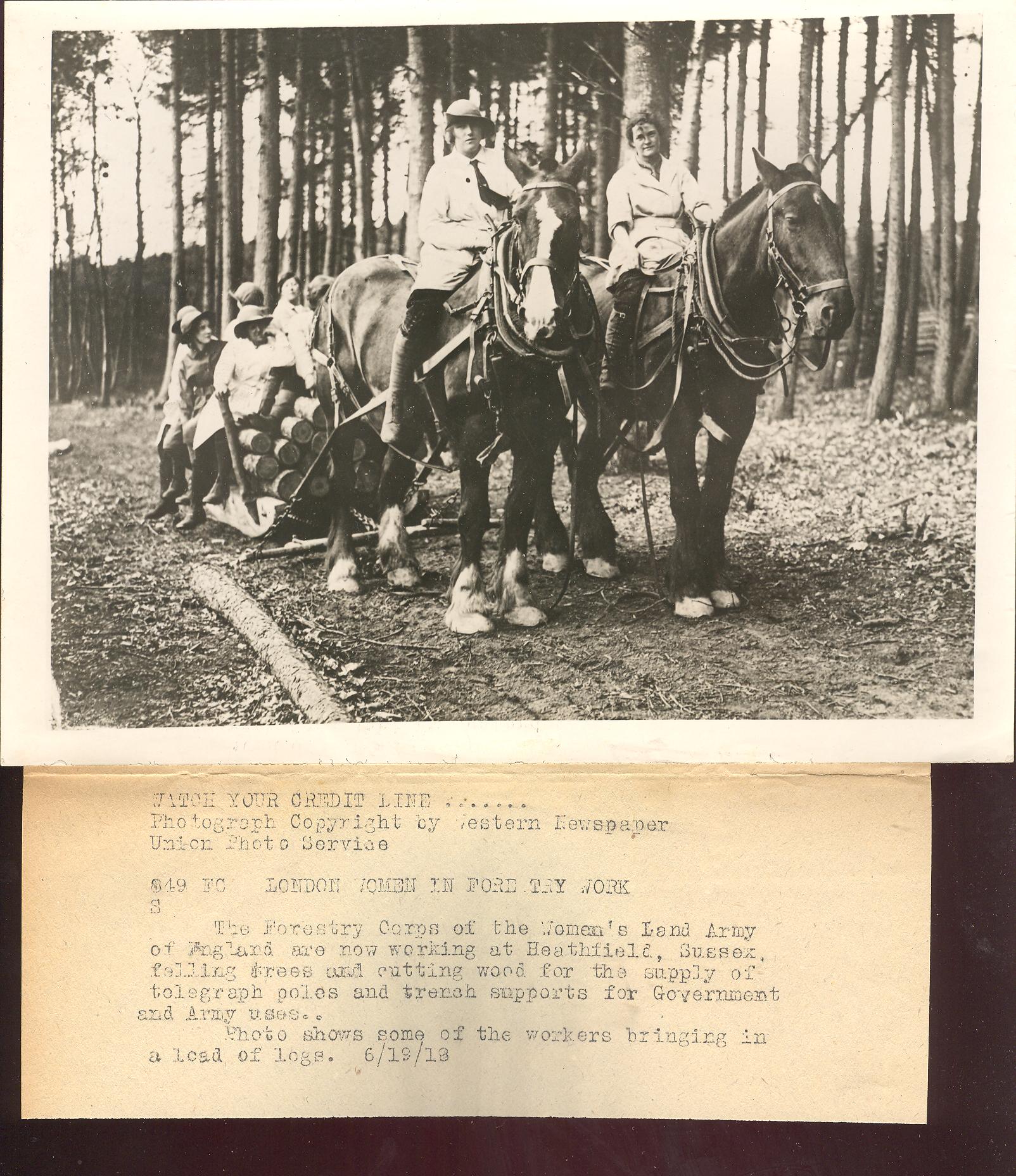
    What a great name–the Women’s Land Army of England.  This was a voluntary service that recruited women to work in jobs (generally in agriculture and forestry and such) that were left unfilled by men going into military service.  The “Land Girls” performed a huge variety of work and were a very necessary part of the economic and social structure of the U.K., a Florence the Farmer response to Rosie the Riveter.

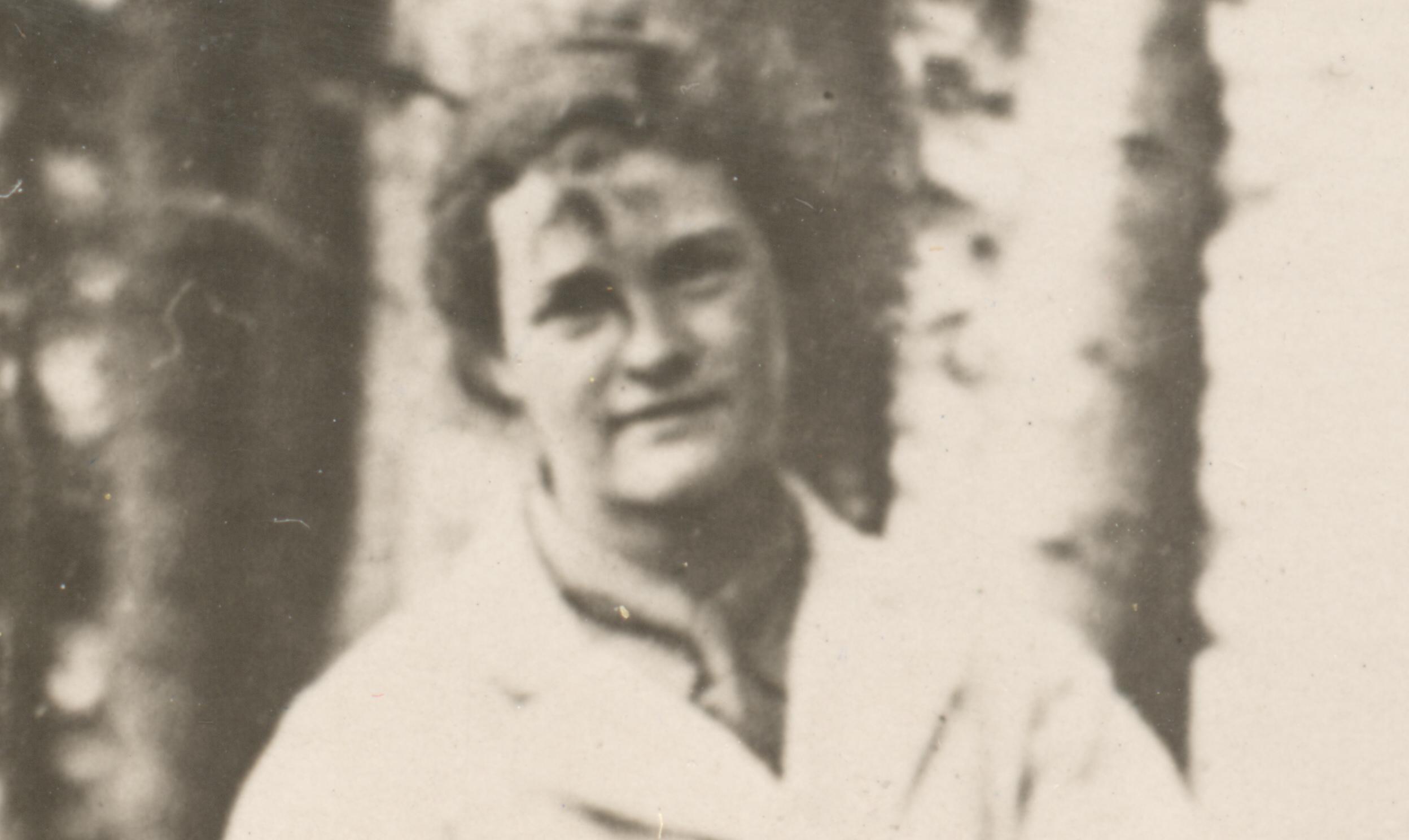
    The image below is of  a continent of the Forestry Corps of the Women’s Land Army of England, working at cutting telegraph poles, and commanding some great-looking draft horses.  (The horse on the right–ears back–looks big and perhaps a little sensitive.)  The horses are pulling a land sled filled with at least five other women and a load of telegraph poles that don’t look particularly long…

    I love that the women are wearing ties.

    [The original photograph can be purchased via this blog’s store, here.]

     
    1 april 27 women horses

    1 april 27 women horses det

    ·Posted by :

    ·in:

    —

  • What Victory Looks Like When You Really Can’t Tell (1917)

    expanded Post 317 (2009)

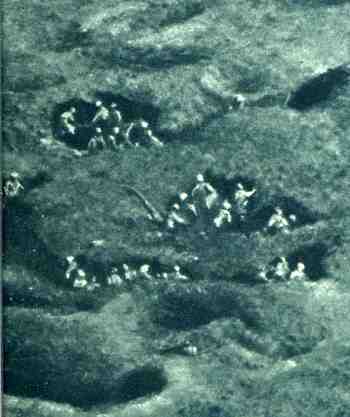
    00blogoct_14somme850_2

    In a play on the concept of the Powers of Ten, I had a look at a photograph depicting the French victory at the Somme; or was it a British victory?  Or German, via the lure of the others to a semi-victory?  Its hard to say who won, or if there really was a winner.  The Battle, which looks to me to be a sub-war within the war, occurred over the period of July through November 1916.  When the smoke settled, there were some 1.5 million casualties on both sides.It has long been held that the battle really was won by someone, the British, the French; but there was so little that was accomplished by the action that there probably wasn’t a winner, just losers. 

    And big losers, at that: Great Britain, Canada, Australia, New Zealand, Ireland, South Africa and Newfoundland lost 419,654 casualties, with 95,000 killed; the French lost 204,000 casualties and 50,000 killed.  That made a total of 623,000 casualties and 146,000 killed for the allies; Germany lost 465,000 casualties and 164,000 dead.  The advances made along the battle front went a few miles one way and then the other along a 12-mile stretch of battlefield, which four lives were traded for every inch gained along that porous front.

    The first image here (above)  is a very sharp detail from the overall picture published in The Illustrated London News for 6 January 1917, representing about 1% of the entire photo

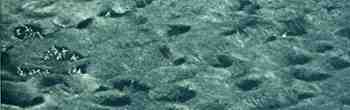
    The next image places the micro-detail in more context; this detail is itself about 5% of the main image, which is found just below this one.

    00blogoct_14somme849_2

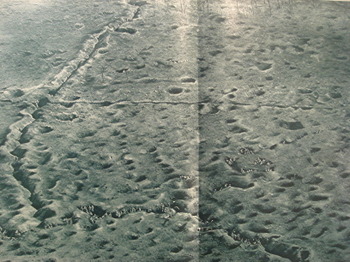
    The overall image from which these two details are removed is below. In turn, this large image is but a small detail of the greater overview of the battlefield, making up perhaps a few percent of the field of operations. 

    I’m trying to get a feel for the enormity of the battle, but I really can’t, not even via powers of ten, manipulating the idea of orders of magnitude.

    In one last try, I hypothesize that the 1.5 million casualties could not be displayed in 10 of these large images.  .

    That wouldn’t look like victory at all. 


    Ballistics_123

    (An “oh, shit” picture if there ever was one.)

    ·Posted by :

    ·in:

    — —

  • The Belgian Collector of Life, 1918

    JF Ptak Science Books  Quick Post                

    Part of the World War I  Photography series

    WWI Sniper198

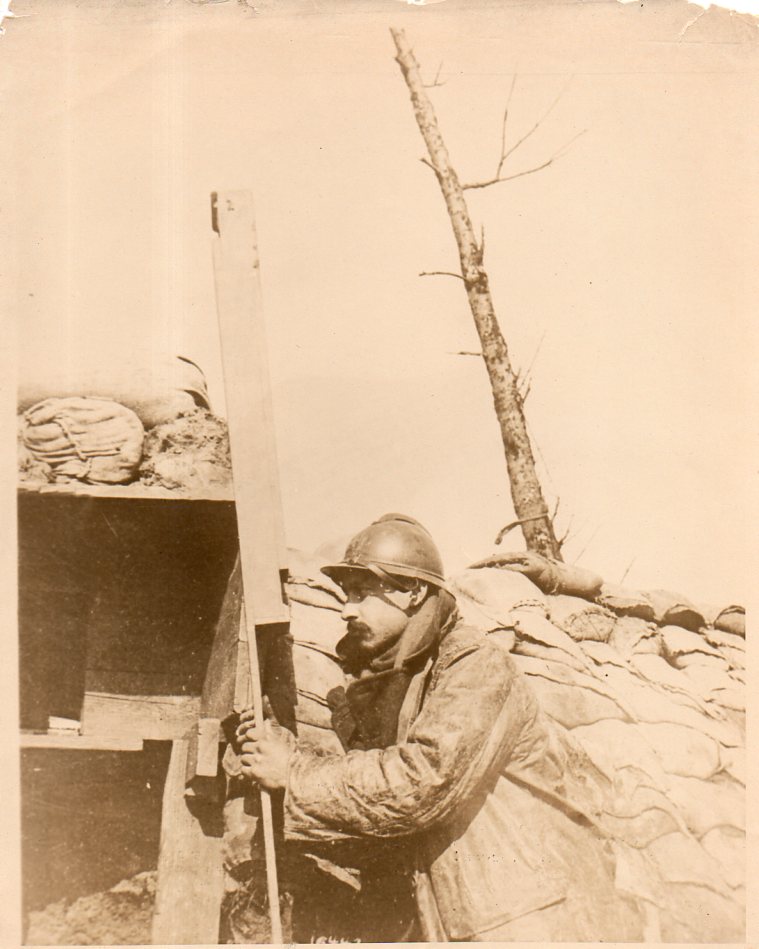
    This is an excellent example of appreciating images in context.  The photograph seemed line an ordinary image of a soldier peering through a periscope on action ahead of his trench, in some miserable battlefield, somewhere in Europe, 1918.  The image is the product of a photographic pool, the photographers working in semi-unison to produce acceptable images to be used in publications illustrating the war.  The images could not be too terribly graphic, and must not relate any useful military intelligence–they would pass through the hands of very active censors whose job it was to slightly inform the reading public and to also keep morale high, a difficult balancing act.

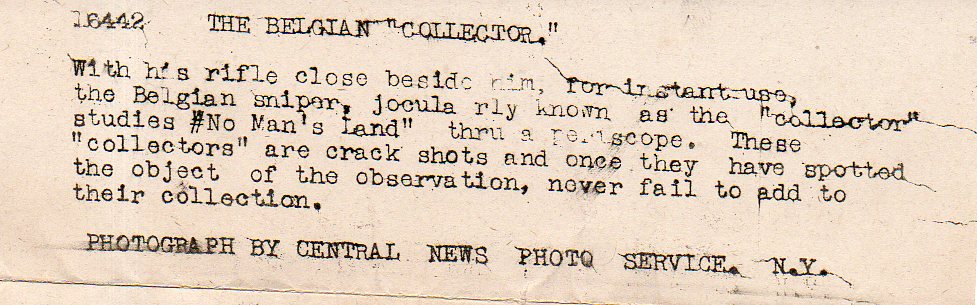
    And so I thought my thoughts. Until I turned the image over–it was stamped “Photo by Central News Photo Service”. It was also accompanied by a typed caption, the bit of text that was to be the standardized caption for this photograph when and if it was used by a magazine or newspaper.

    The title is “The Belgian Collector”. 

    The Belgian collector was a sharpshooter. He would scan the field looking for any unfortunate who might have left themselves exposed.  Then he would shoot at them. Collect them.

    In a  sense, “collect” like “John Fowles The Collector, only killing them with a rifle.

    But that was his job. And it was war. And if he was on your side, then you’d want him there.  

    I found “the collector” name to be poetical, and chilling.  

    WWI Sniper det199

    So, combining the context with the image in this case was a truly sensational thing.  

    The original photo may be purchased from this blog’s bookstore, here.

    ·Posted by :

    ·in:

    — —

  • Illuminated Night-time Aerial Bombing (1918)

    JF Ptak Science Books  Post 2282

    WWI airwar Italian night bombing

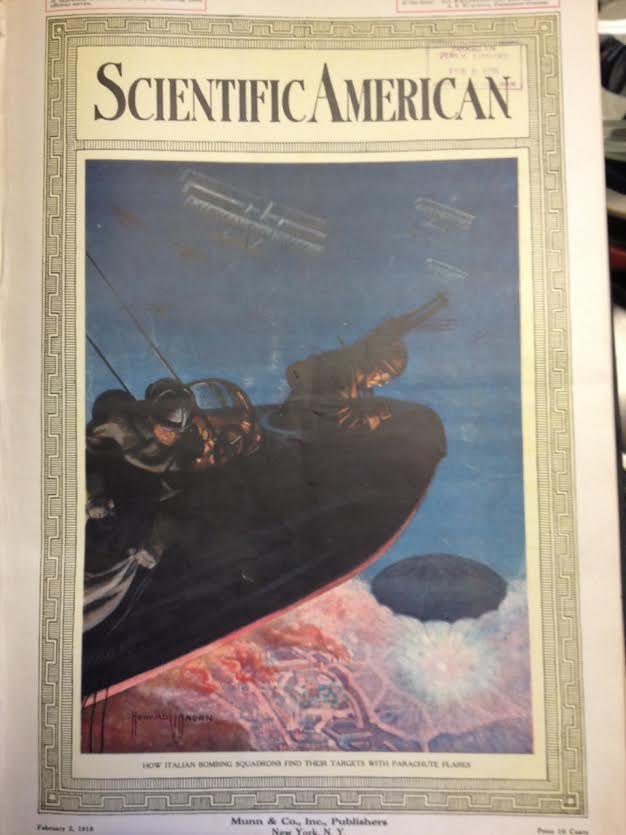
    As I assemble the WWI stuff here for a possible anniversary blog of interesting war and homefront images (nothing like planning and foresight for these things) I was putting together the war years for some of the journals, including the magnificent Scientific American.  Flipping open the top volume (1918) revealed a big blue/dark print that was entirely unexpected–an Italian bomber carrying out a mission at night using flares to illuminate the target area.  

    At first I had an irrational serendipitous memory of Santa Claus using a lantern to find his way, but, well, as I said it was an irrational association.  (There’s another odd memory of a picture of Santa in 1917/18 delivery his presents on a flying tank, but that’s another story…)

    I had only once before seen a portrayal of an aerial night attack, depicting a futuristic flying machine–a dirigible in this case–using electric lights to target fleeing villagers and warriors of an African town.  My memory is not working on this one, so unfortunately I cannot date and reference it, though I do believe it appeared in the Illustrated London News around 1907 or so, just a few years before someone started dropping explosives from planes for real.  

    But this image (appearing in the February 2 1918 issue)  is for something quite real, though its effectiveness (to me, as a non-historian of this field) seems highly suspect.  What we see are three airmen in an Italian Caproni1 releasing flares above what they assumed to be a target.  The gunner at front watches closely as the co-pilot (there are two men in that cockpit, one being mostly obscured) readies another flare.  

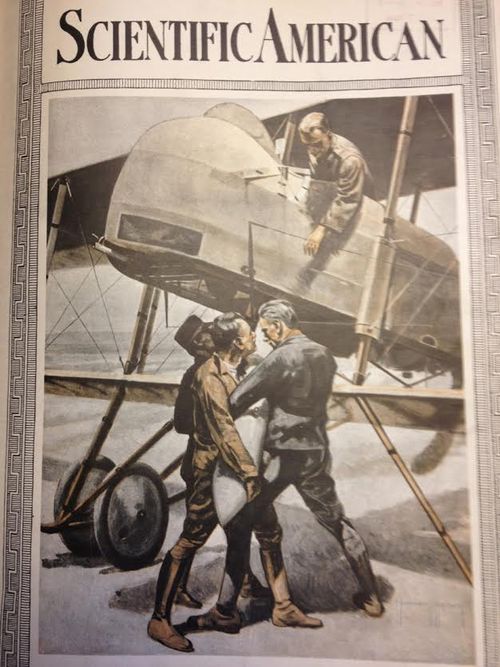
    By the way, here’s one way of loading the payload (from a few issues later):

    WWI Airwar 1918 bomb load

    The general characteristics of the Caproni (3) aircraft, via Wikipedia:

    ·Posted by :

    ·in:

    —

  • WWI Photographs–Women, Soldiers, Hair (1918)

    JF Ptak Science Books   Quick Post

    WWI Photo  Lice197

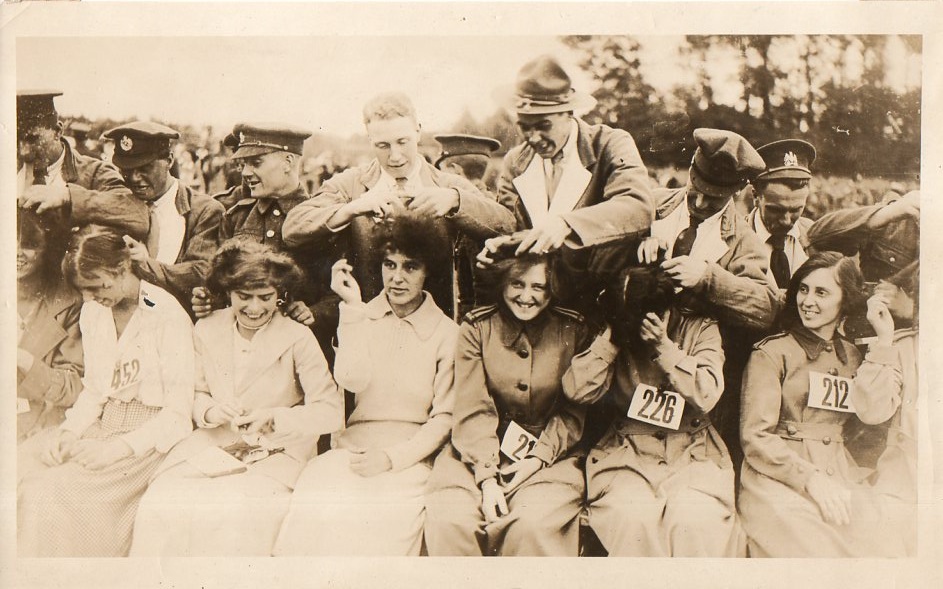
    I’m not sure that I understand this photograph and what is going on in it.  I do know that it was made in 1918, and that the back is stamped “Photo by/Central News Photo Service/26-28 Beaver St., N.Y….”, a product of not-very-discrete control of war images.  The vast majority of photographic efforts of WWI were very deeply controlled, with little left to chance and uncontrolled.  This lively image may be Doughboys inspecting female volunteers for lice–perhaps that was a job performed by these volunteers.  Or something else, though I  can’t see what–the soldiers aren’t using clippers, and they seem to be separating the hair….  So the subject matter isn’t scrumptious, but the faces are–a break in the not-routine routine business of war.  

    [Doughboy:  The origin of the term “Doughboy” is unclear, or varied, or rich, but it is at least pretty oldm beginning around the time of the Mexican American War in 1846-1848–evidently when the soldiers marched through dry, tough terrain they wound up being covered by earth with the color of dough.  Doughboy.]

    ·Posted by :

    ·in:

    —