A Daily History of Holes, Dots, Lines, Science, History, Math, Physics, Art, the Unintentional Absurd, Architecture, Maps, Data Visualization, Blank and Missing Things, and so on. |1.6 million words, 7500 images, 4.9 million hits| Press & appearances in The Times, Le Figaro, Mensa, The Economist, The Guardian, Discovery News, Slate, Le Monde, Sci American Blogs, Le Pont, and many other places… 5000+ total posts since 2008.

Category: World War I

  • Doughboys Marching into the Mist of the Past

    JF Ptak Science Books   Post 1328 (from 2011, revised)

    .003%  That’s what I reckon this column of soldiers would represent of the total casualties of WWI.

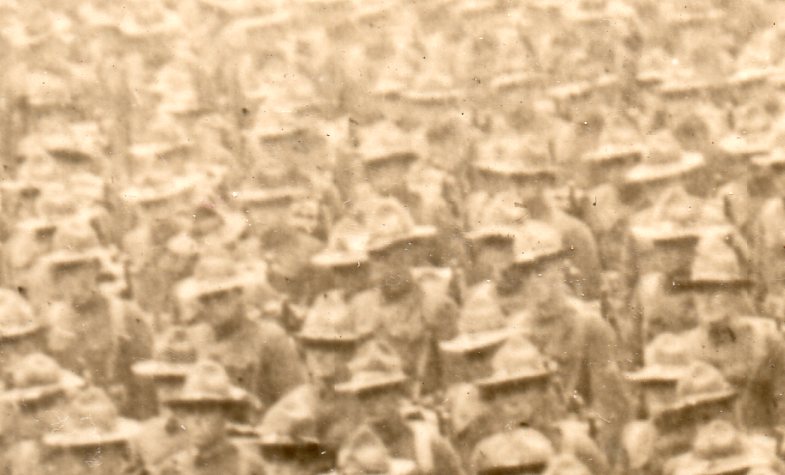
    Generally images like this are a virtual image-host for me, a bucket of ice cold water thrown onto a sizzling summer sidewalk, all sorts of ideas steaming from it.  But for photographs of Doughboys1 marching, especially assembling for parade, this one struck me a little more oddly than most, giving instant pause, making me concentrate on the haze, or dust, that allowed the columns of soldiers to blend into one another and fade, losing their boundaries with their mass receding into a dull blur. 
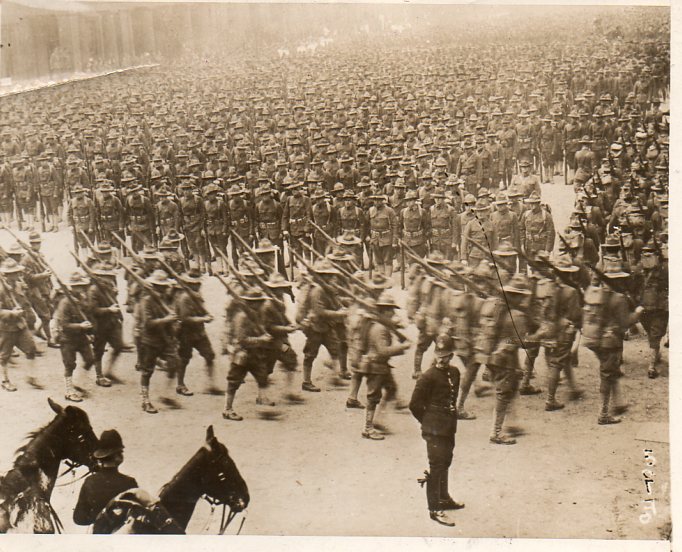
    Marching london 350

    The Western Newspaper Union was selling this image for insertion in newspaper or journal stories about the war, for a small use fee.  There were a few American organizations like Western Newspaper that were created to photographically cover the war, using pools of photographers who would distribute their work anonymously and which was available for common, general use for a small charge.  The photographs allowed out were certainly restricted and censored, though in my stash of these of objects (numbering about a thousand) I’d say that 10% of them look pretty edgy to my eyes.  Most of the action of war was not covered, but then again this aspect was still fairly technically difficult in 1918.  Images of pain were almost never allowed, and certainly not pain of Allied troops.  Aid stations were almost never covered as well, as were dead bodies, or at least those again of Americans or Brits or French or Canadian.  The imaging of the war was certainly under a fair amount of supervision and control. (The original is available for purchase through our blog bookstore. here.)
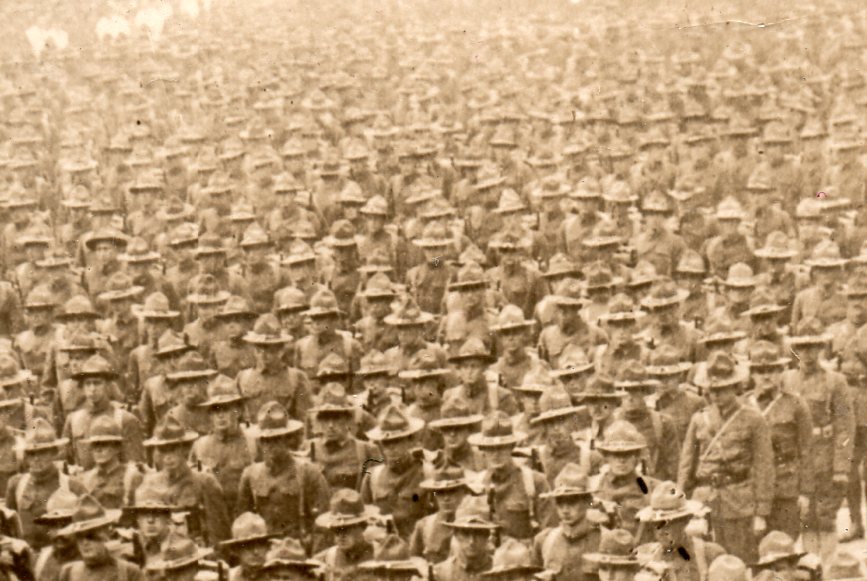
    Marching london det352

    The image shows American troops assembling for a parade through the streets of London before being deployed.  The mistiness of the composition looks like a statistic to me, these men standing for those who had come before and fallen.
    Marching london det353

     The U.S. lost .13%  of its population to casualties (125,000 killed and 205,000 wounded) during the war–a war which by the time America got here had already been visciously fought for three years, costing dozens of millions of lives.  The figures for everyone else weren’t nearly so “fortunate” as the U.S.:  New Zealand’s 18,000/41,312 killed/wounded amounted to 1.6% of its population.  The U.K. lost 2.19% (964,000/1,663,000), Italy was 3.48% (650,000/953,000 plus 650,000 civilian casualties), while France suffered a 4.29% (1.4 million/4.27 mil) blow of its total population to war.  Things were worse on the other side:  Germany 3.82% (2 mil/2.4 mil plus 426,000 civilian deaths, and the Ottoman Empire 12% (400,000/771,000 plus 2.1 million civilian deaths.   Worst of all was the Ally  Serbia, suffering a catastrophic 16% loss of its population to war, including 275,000/725,000 plus 426,000 civilian casualties.  As gruesome as the numbers were, the Americans felt only a small percentage of the total sting of war–by 11 November, more than 21 million soldiers would have been wounded, with 9.7 million soldiers and 6.8 million civilians killed.  It was an enormous price.

    And that’s what I see in the mist of what may be something like 10,000 soldiers on display n this photograph.  .003%  That’s two of these columns every day, twice a day, for the entire 1550 or so days of the war.   

    Notes

    1.  The origin of the term “Doughboy” is unclear, or varied, or rich, but it is at least pretty oldm beginning around the time of the Mexican American War in 1846-1848–evidently when the soldiers marched through dry, tough terrain they wound up being covered by earth with the color of dough.  Doughboy.
    ·Posted by :

    ·in:


  • WWI Parade in a Deep Big Snow

    JF Ptak Science Books      Post 2402

    WWI--great imagessnow parade059

    • The original of this photo is available on the blog’s WWI Photography site; it is also available now as a 13×19 inch reproduction from a 1200 dpi scan.  

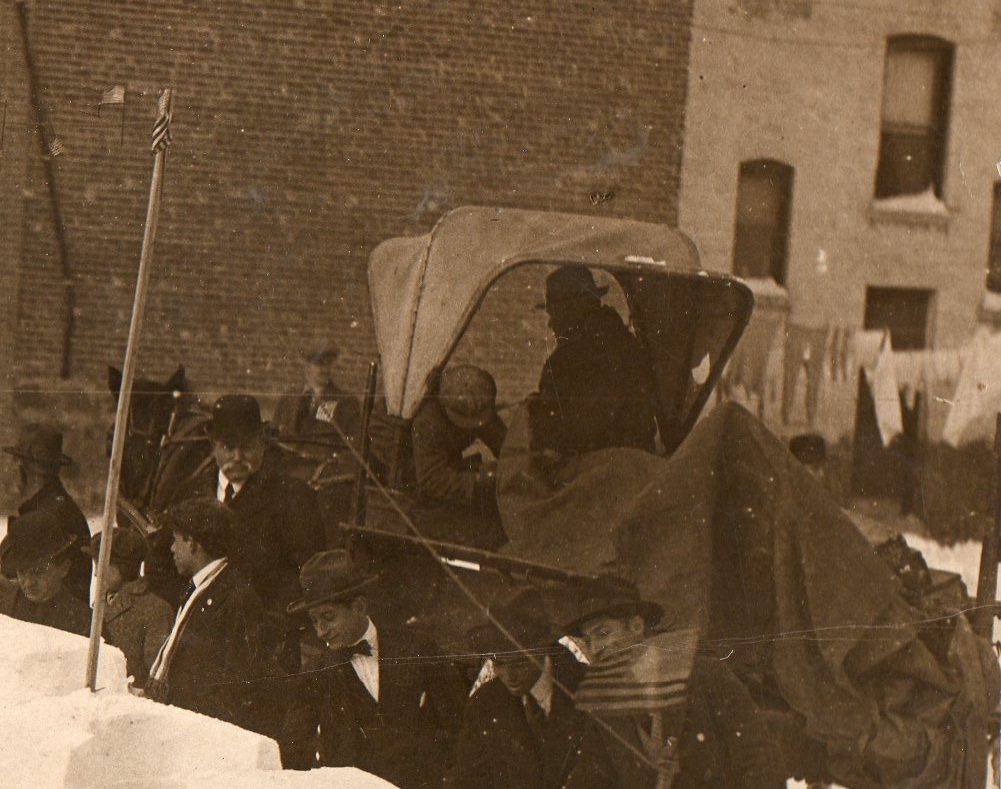
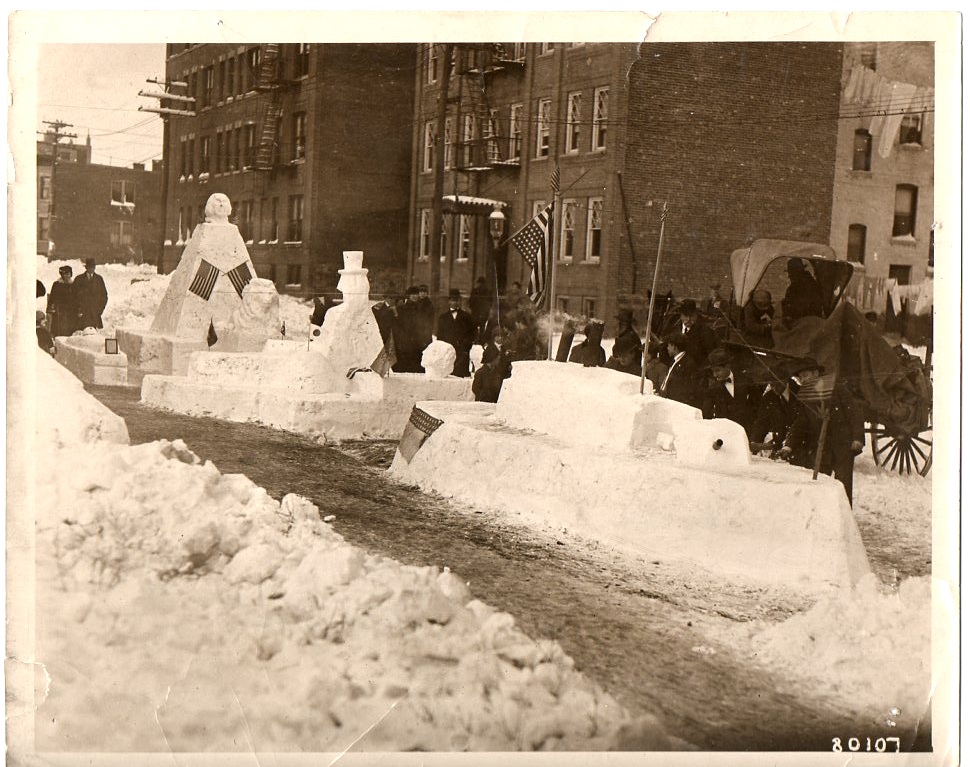
    This news photo service image–stamped “Hearst-Pathe News Agency” on the back–is frm the winter of 1917/1918 and shows a patriotic snow parade somewhere in the United States.  The snow looks prodigious, judging from the piles in the foreground and also the accumulated snow on the windowsills, and I imagine that all of the snow floats were sculpted mainly out of exiting snow in the street.  It is a delightful scene, to me, and hosts a variety of smaller, lovely images in vignette. For example:

    WWI--great imagessnow parade060

    The man in shadow and sleeping figure (boy) in the buggy complement the white-mustachioed bowler-wearing man to the left; the men looking on in the foreground are interesting, too–plus there’s that laundry in the background.  Given that the laundry is out (and wasn’t just left out during the storm) and that no one seems to be particularly bundled up against cold, I’m going to guess that there was a break in the weather that pushed the temperature higher than normal, with almost everyone taking advantage of the warm snap, as people do everywhere, all the time.  I also like the tiny American flag on the tall pole at left.

    ·Posted by :

    ·in:


  • German Soldier, Worn and Worked, November 18, 1918

    JF Ptak Science Books  Post 2401

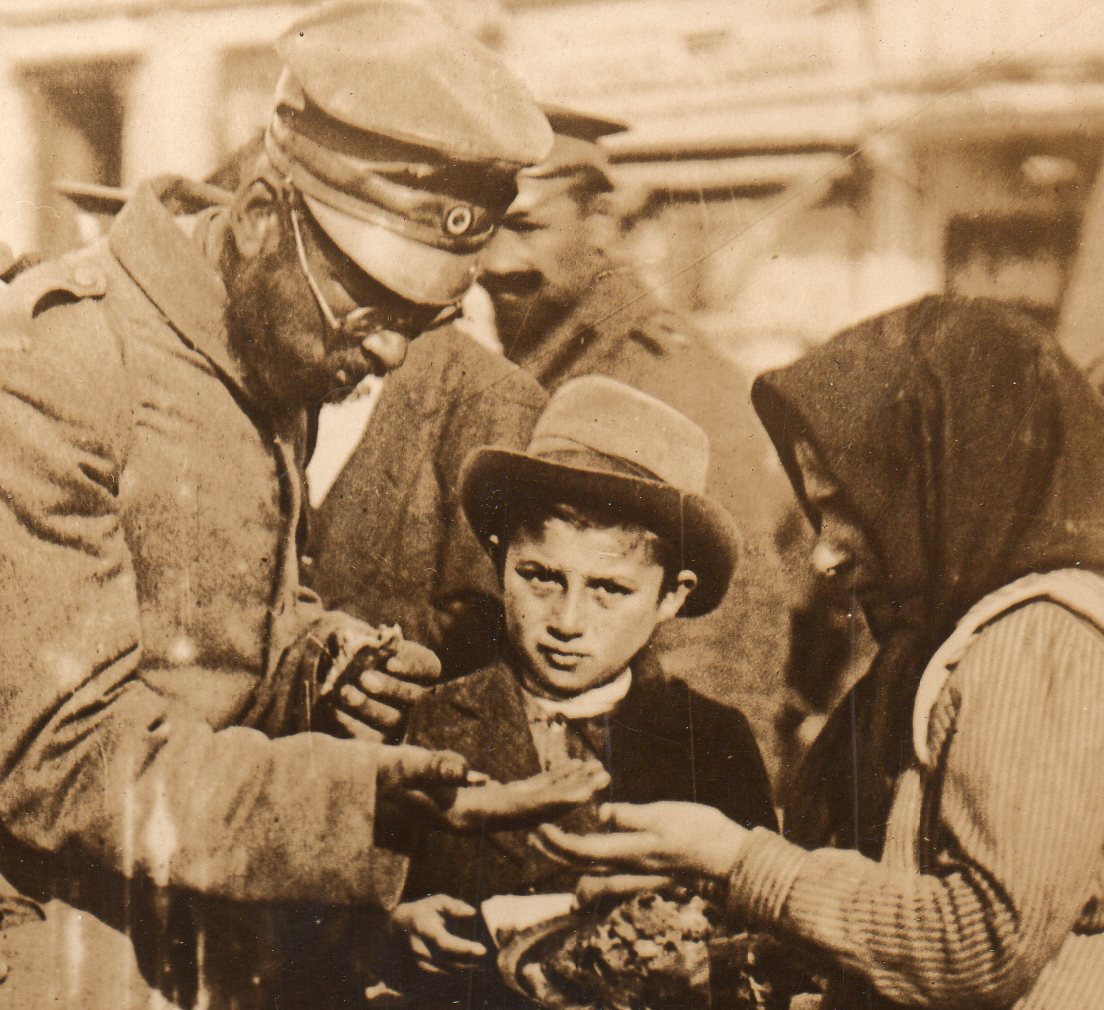
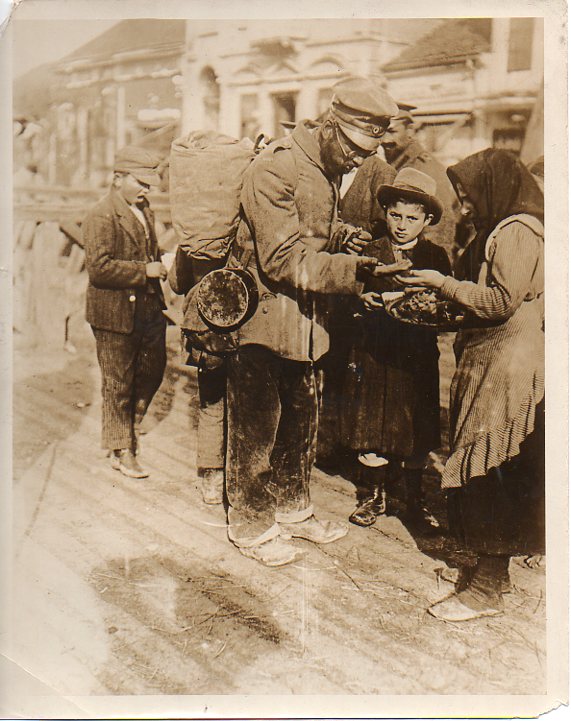
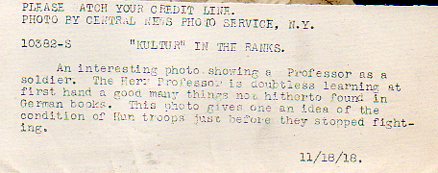
    I’m not sure what this photo depicts specifically but in general it sends an image of exhaustion and wear.  The caption for the image says that it shows “the condition of the Hun troops” and that the subject “Herr Professor” is learning “a good many things not hitheroto found in books”.  Maybe he was a teacher, maybe not.  Machts nichts. His pants looks velour-like and his boots (if that’s what his footware was) look very thin.  He is ragged, his double-fold glasses look like they’re at their limit, his face looks swollen behind his beard, and he just looks “done”, in general. 

    WWI--german--beggar det326
    [Original photograph available for purchase via the blog’s WWI Photography site]

    I’m not sure what he is doing, or where he is.  He may be trying to figure out local currency to purchase whatever it is the vendor-woman has on the tray at her hip–she os holding out her hand, and looking at his.  The soldier definitely has something there, and he looks basically too weary to comprehend it.  the hand language is ambiguous to me.  He may have received something already, some sort of food, and he is staring at it now, thinking perhaps how little of it there was.  He’s eating, and already has taken a bite of whatever bread-like thing is in his left hand.  I’m not sure what attracted the attention  of the boy in the center–perhaps it is simply the camera, and he wanted to be in the shot. 

    WWI--german--beggar325

    There’s a shadow in the foreground-left of what looks like someone making a photograph of teh scene–probably not our photographer, but another, with a brownie or some such smaller camera.

    At the end of years of fighting every general soldier deserves respect and, at least, some free food–I hope this guy got his.

    And the accompanying text to the news photo service image, to be used if published:

    WWI--german--beggar text327

    ·Posted by :

    ·in:

    —

  • On Making Things That Are There Not There: Camouflage, 1917

    JF Ptak Science Books   Post 2400

    Its a little difficult to think of Ellsworth Kelly, Jacques Villon, Grant Wood, Laslo Moholy-Nagy and Thomas Hart Benton as painters-for-war.  But its true, and true for many of hundreds of other artists in the 1915-1918 era. Its not as though they were in the trenches gunning down the enemy or lobbing hand grenades into the swirling gunsmoke. They were camofleurs, camouflage1 experts, artists employed as magicians, Wartime Magi, employed/drafted to make ships and such disappear. 

    Ever since it was (sort of) first noticed in 1915 that designs odd to the environment, stark geometric patterns and such, were capable of fooling the eye, people with  design capacity were pressed into service, rendering offensive and defensive instruments of war optically semi-impervious with variations of the then-five-year-old modern nonrepresentational art. That must’ve been a very odd position to wake up to every morning. 

    Of course the idea of camouflage in the animal world is probably 250 million years old–animals and insects have been blending into their environment for eons, and I’m sure too that early hominids did their fair share of walking behind brush.  But the idea of hiding great amalgamations of very heavy metal with paint is really quite modern.

    World War I photos--Camouflage291 [The original photograph is available for purchase at the blog’s bookstore, here.]

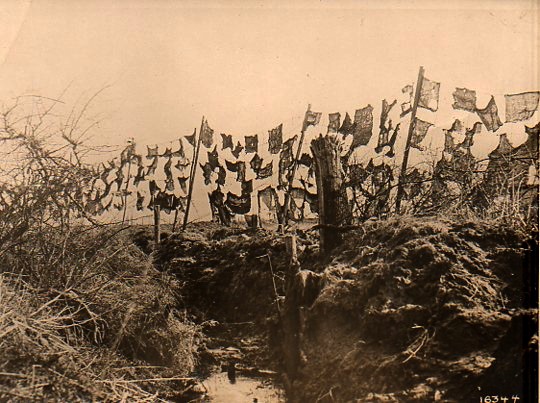
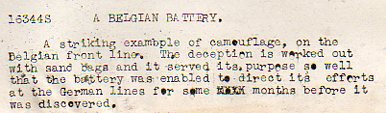
    In this photograph the camouflage is more a more futuristic conception of art than the abstract and cubist approaches that were taken during the war, this looking more like assemblages of found material more than anything else.  And, according to the text that accompanied the photograph (which comes from 1918, from the Underwood & Underwood news photo service agency), the camouflage–empty sandbags thrown on a barbed wire fence) successfully concealed a gunnery emplacement for months on end. 

    World War I photos--Camouflage det292 

    Notes

    1. A fine bibliography on camouflage appears here, at Leonardo Online.

    The definition of “camouflage” from the Oxford English Dictionary shows that it is a young word, in English:
    “(n) The disguising of any objects used in war, such as camps, guns, ships, by means of paint, smoke-screens, shrubbery, etc., in such a way as to conceal it from the enemy; also, the disguise used in this way; freq. attrib.


    1917    Daily Mail 25 May 4/4   The act of hiding anything from your enemy is termed ‘camouflage’.
    1917    Daily Mail 16 July 5/3   The King paid a visit to what is called a camouflage factory.
    1922    C. E. Montague Disenchantment viii. 108   A French aerodrome across which the French camouflage painters had simply painted a great white high-road.

    ·Posted by :

    ·in:

    — —

  • Panoramic Periscope, 1915

    JF Ptak Science Books   Quick Post

     
    Periscope613good
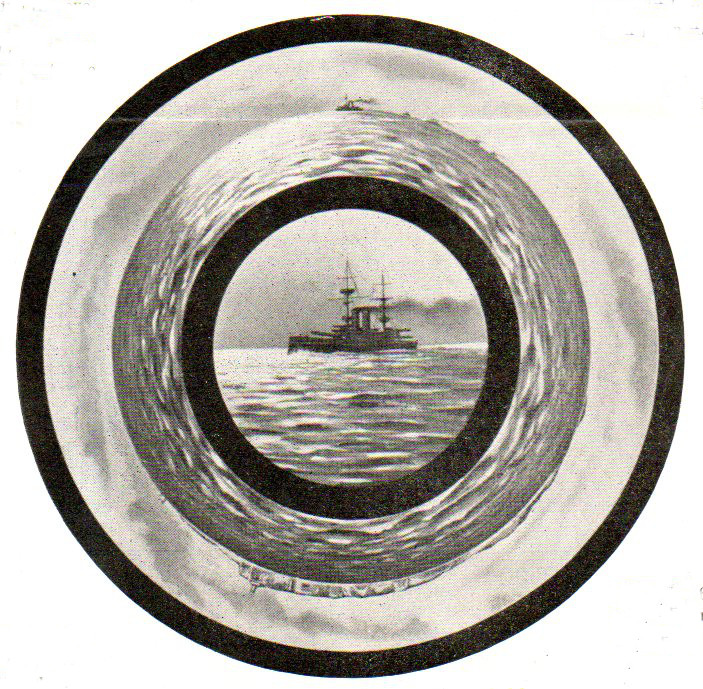
    This interesting and arresting images appears in Scientific American Supplement, October 23, 1915 (page 269).  It is an excellent view of topside from 30′ or so below.  The article describes simple, compound, tele-objective, direct-reflected, panoramic, and periscopes with annular fields–sort of simple, but not really.  In any event the panoramic periscope gave a view of a directed point-of-view as well as a slender (but versatile) 360o.

    ·Posted by :

    ·in:

    —

  • French Soldiers Working at Fortifications, 1917

    JF Ptak Science Books   Quick Post

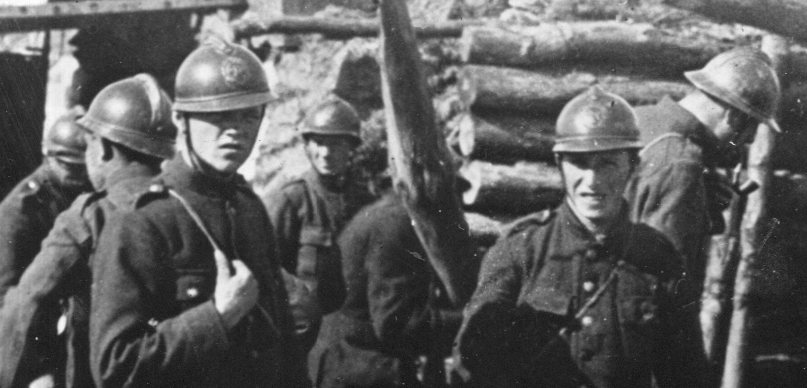
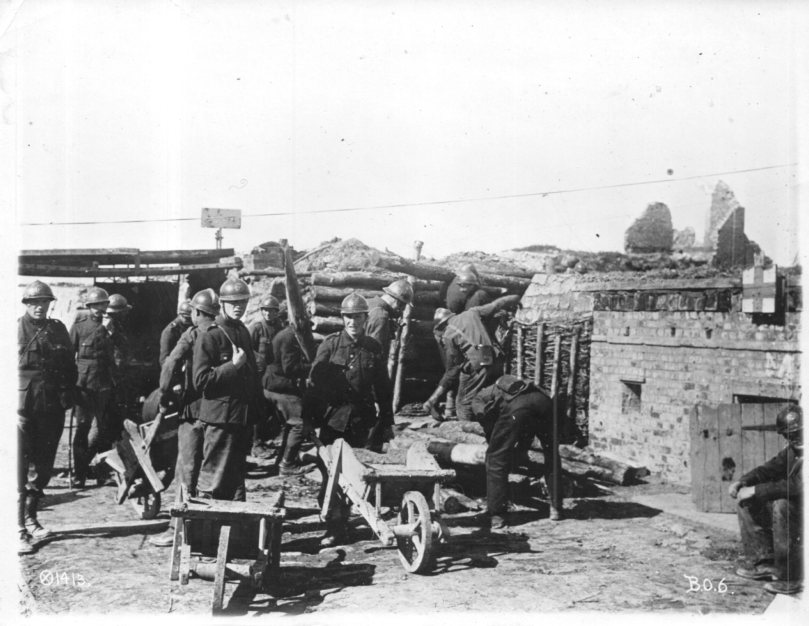
    Here’s another in a long line of images from my WWI news photo service photographs.  So far as I can determine what we see here is a group of French soldiers engaged in redoubt or perhaps trenchwork construction.  To the right we see a crudely-marked Red Cross, perahps for a not-front-line position.  The photo is stamped “Committee on Public Information, Washington, Copyright 1917” and has a dated stamp for “Dec 21 1917”. Fo rmore information on this series see the long threads on World War I and particularly World War I Photography (which is our sales site).

    WWI Photos dig tench red cross607

    And the full image

    WWI Photos dig tench red cross606

    ·Posted by :

    ·in:


  • Comfort Kits for the Front Line, 1918

    JF Ptak Science Books  Quick Post

    WWI--e--women--kitchenerdet668


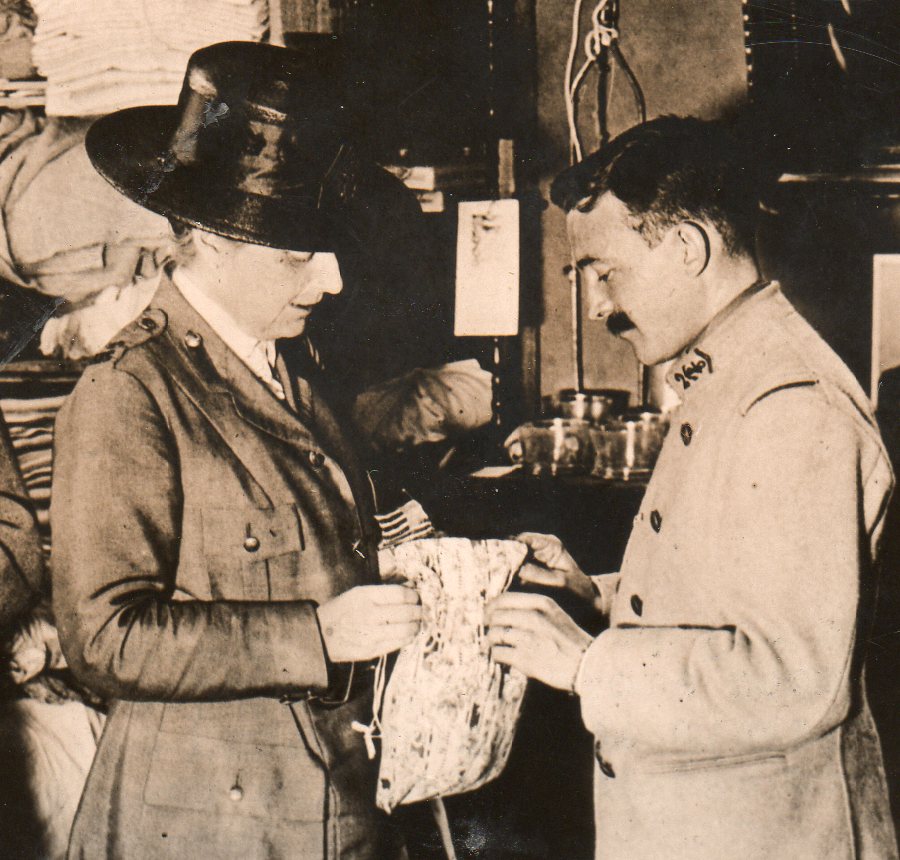
    This is a detail from the following photograph made by the pool of photographers working for the Western Newspaper Union, and issued for public consumption (and passed by the censors) on October 14, 1918.  It shows a goodwill mission of soldiers along with Mrs. Parker, the sister of Lord Kitchener, inspecting “comfort bags” for the troops at the front. Everyone here seems to be daintily inspecting the bags with fingertips, Mrs. Parker seeming to be the only one in conversation.

    There is a portrait of her brother in the background–he had been dead for more than two years at that point, drowned along with 600 others when the ship he was aboard, the HMS Hampshire, struck a German mine.  No doubt that anything the Red Cross could muster for the battlefield troops was absolutely appreciated.  

    At this point, the war was nearly over, with less than a month of fighting to play out.  

    ·Posted by :

    ·in:


  • Small Comforts of the Wounded, 1917: Electrophones

    JF Ptak Science Books  Post 2377

    WWI Electrophone267

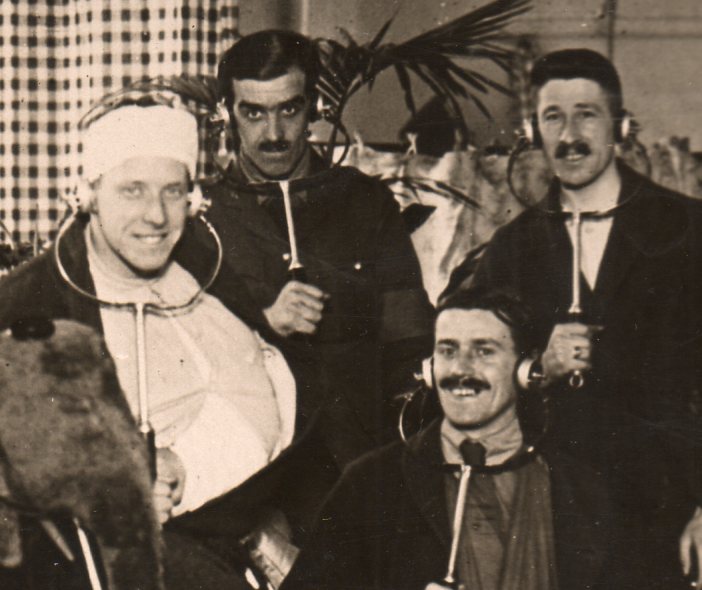
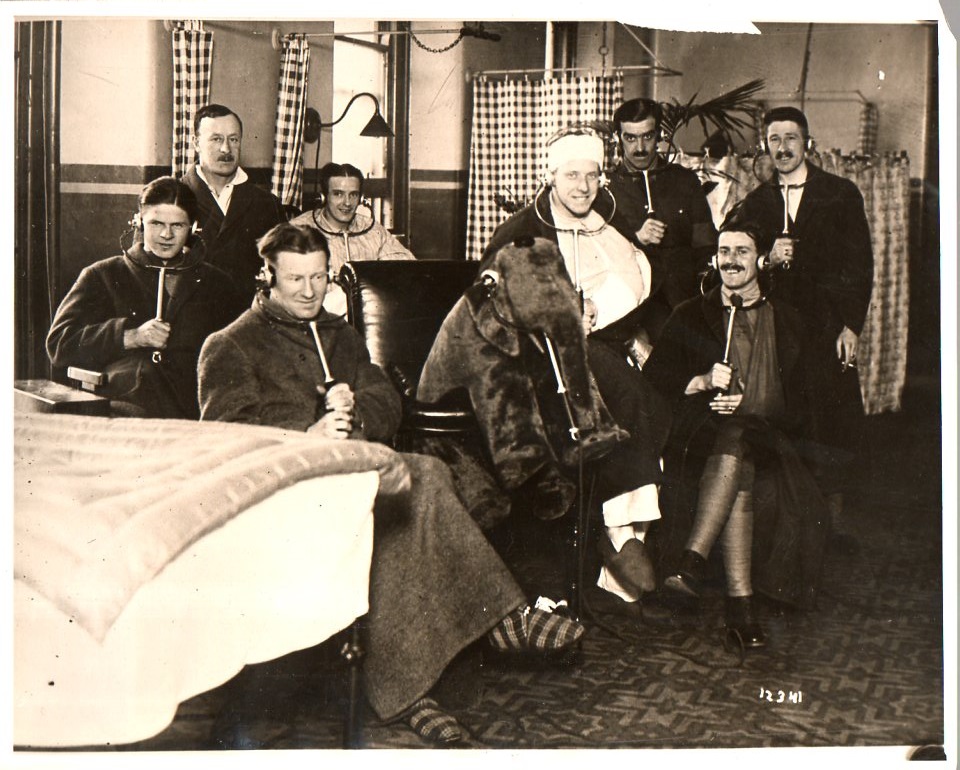
    Overall, these soldiers look to be in pretty good spirits, even if they were perhaps told to be so, they still looked fairly genuine. And who wouldn’t be, at least to some degree, being survivors?  They were a few of the millions of soldiers who were wounded in WWI, which means at least that they were among the millions of the dead.

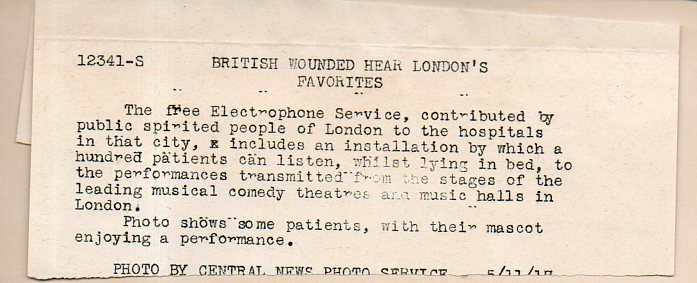
    The caption that accompanies these News Photo Service image (made by the Central News Photo Service and dated May 11, 1917, says that they were enjoying the donated headsets–Electrophones–and represented a few of the hundreds that received them.  This device was basically a telephone receiver, and years after Bell and Edison dreamed of social integration and advancement and wide-ranging culture, of delivery literature and music to people flung near and far, these soldiers were enjoying the benefit of limited concerts and other entertainments via telephone lines.  

    [This lovely photograph is available at the blog’s bookstore, here.]

    WWI Electrophone266

    Here’s a very good quote ont he electrophone from the highly interesting The Cat’s Meat Shop, written by Lee Jackson, author of Dirty Old London, the Victorian Campaign Against Filth. (It is an interesting topic–filth and its control–because you really can’t have an Industrial Revolution without lots of workers living close to their jobs, which means that lots of people live close together, and you can’t have that unless you somehow control for good sanitary conditions, which means you’ve got to take care of filth.)  

    WWI Electrophone265

    ·Posted by :

    ·in:

    —

  • I’ve Never Done This Before, and I’ll Never Do It Again (1918)

    JF Ptak Science Books   Quick Post

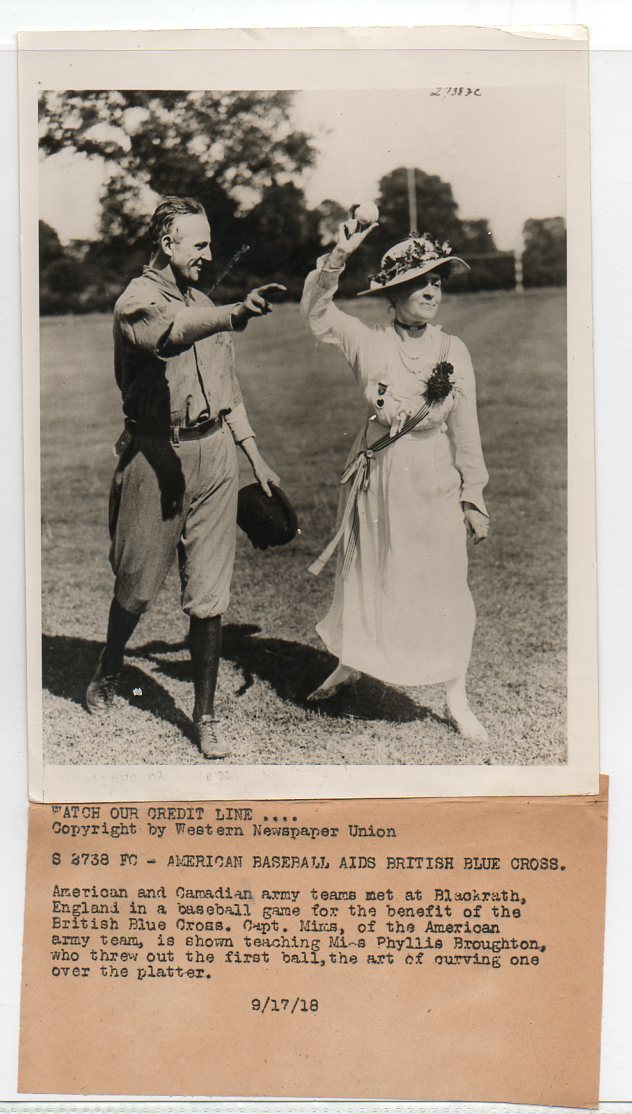
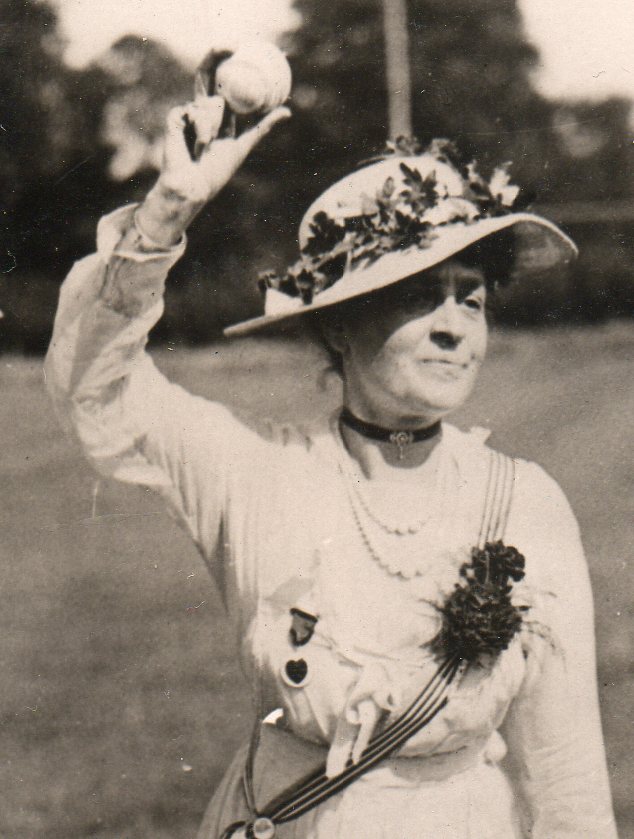
    All in fun and all for the charity of the British Blue Cross, Ms. Phylis Broughton joins the festivities, though whether see is entirely reluctant or determined, we’ll never know.  Perhaps both.  

    WWI--e--women-baseball672


    This lovely photograph is available from our blog bookstore, here.  

    WWI--e--women-baseball det673

    ·Posted by :

    ·in:

    —

  • Measuring Things with Mountains & the German Big Gun of WWI (1918)

    JF Ptak Science Books  Quick Post

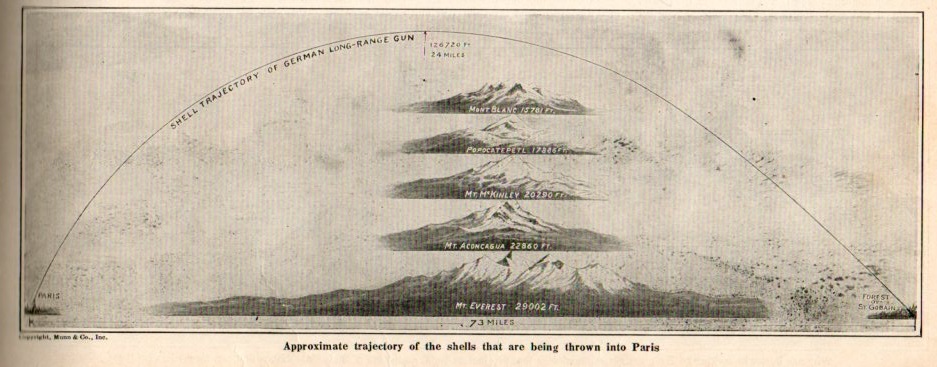
    The story of the (very) long-range bombardment of Paris from points unknown is filled with questions in this article that appeared in the Scientific American on April 6, 1918.  The writer hadn’t an idea of the type of gun being used, the weight of the shell (yet), and just about all other details.  The author did wonder about the reasons for such a gun–that the idea of a long-range indescrimient bombing from a great distance just seemed to be beyond the wanting capacity of the countries fighting Germany.  

    The big gun was The Big Gun, later identified as the Paris Gun–a mysterious entity during the war, and after the war as well.  It turns out that when the Germany army retreated beginning in August that they also destroyed the weapon and just about anything connected to it.

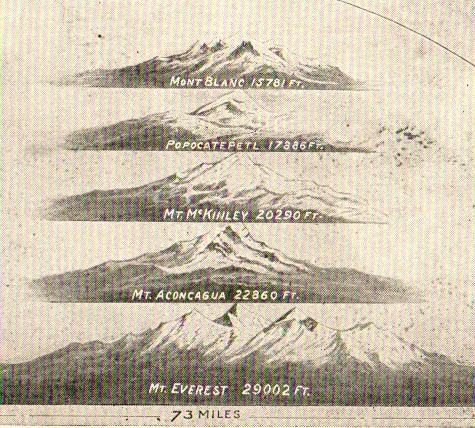
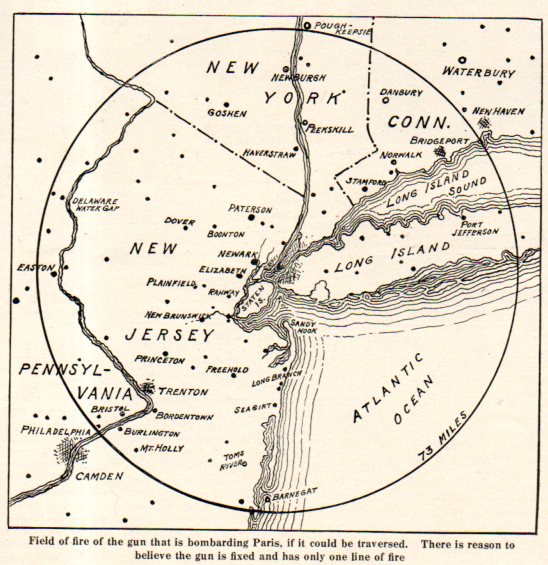
    The gun was extremely powerful.  At 256 tons it launched a 236-pound shell to a height never before achieved by humans launching/propelling stuff into the air–it left the barrel of the gun at about 1 mile/second, traveled 75 overland miles, reached a height of 26 miles…and then came down, exploding, killing.

    One very effective way of explaining the incredible height that the shell reached was measuring the zenith of its trajectory in terms of mountains:

    WWI--german gun569

    Which is a detail from:

    WWI--german gun568

    And to give a more local understanding of the range of the gun:

    WWI--german gun567No doubt this map gave a true flavor and sense of dread to American readers on exactly what it meant to have to deal with a cannon whose reach was 75+ miles.