A Daily History of Holes, Dots, Lines, Science, History, Math, Physics, Art, the Unintentional Absurd, Architecture, Maps, Data Visualization, Blank and Missing Things, and so on. |1.6 million words, 7500 images, 4.9 million hits| Press & appearances in The Times, Le Figaro, Mensa, The Economist, The Guardian, Discovery News, Slate, Le Monde, Sci American Blogs, Le Pont, and many other places… 5000+ total posts since 2008.

Category: Social History

  • On Forming a National Database of “Mental defectives” (1931)

    JF Ptak Science Books   Post 2702 (with additions) 

    Here’s a title that should stop you: 
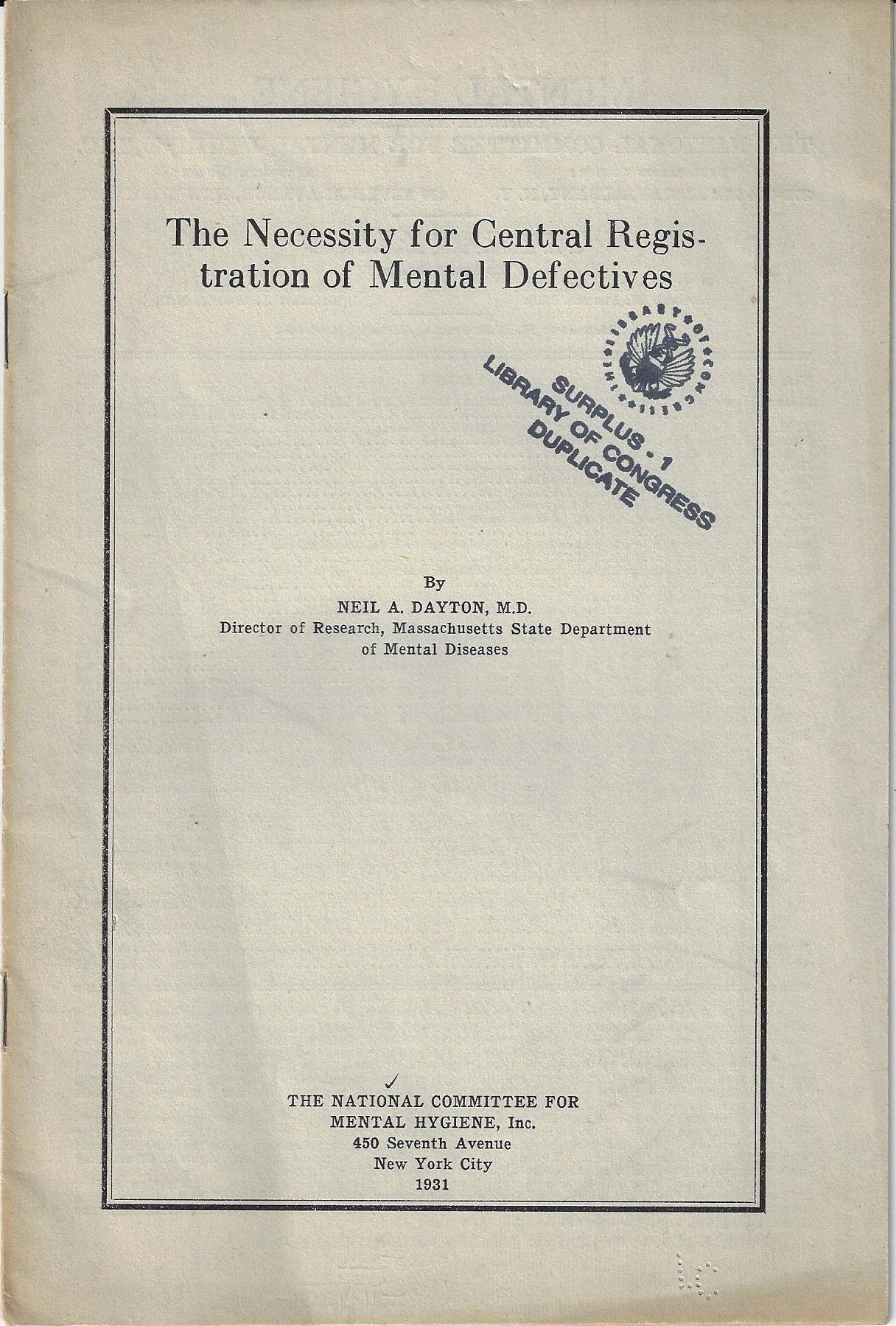
    Mental defectives

    [Source: Neil Dayton, “The Necessity for Central Registration of Mental Defectives”, published as an offprint by the National Committee for Mental Hygiene, NYC, 1931, and printed by the William Boyd Printing Company, Albany, NY. ]

    Of course, it was 1931, and the Eugenicists were running free and easy, the stiff wind of their convictions running freely through their imaginary hair…and what would we all do with this gathering of information on mental defectives1 once that was done? And what was the definition of mental defective, anyway? thirdly of course–what do we do with the mental defectives once this energy of definition and collection had been done?  well, a new group would come to power in two years’ time from the publication of this article, and in their own right they did these things and then decided to kill many of the people that they cataloged. That’s one example. I’m not saying that the well-meaning people like the author of this paper would be anywhere near this horrible, not at all; I just don’t know why they would want to gather this information.  There wasn’t a discussion of collection of treatment of these people, just their registration in one large database. Every time I see in this pamphlet the statement on the need for such a registry, I expect to see why–but that never comes, only the repetition of a phrase like “that a central registry for mental defectives is desirable, and that it should be organized and operated by an established state department” and its variations.

    Finally, at the end of the short 14-page pamphlet, in the final paragraph, something appears close to explaining the “why” issue–but it winds up being a little tautological, stating that the need for gathering the names of all mental defectives is “to make available authorized agencies and individuals definite information on known mental defectives”

    Basically–at least so far as this pamphlet explains–the reason for gathering all of these names into a system of state-wide databases is to have the names in state-wide databases. 

    Notes:

    1.  “Mental defective” seems to make its first appearance in English in 1899, according to the Oxford English Dictionary: 

    •  Designating a person suffering from an illness or impairment of the mind. Esp. in mental case,mental defective. A use now increasingly avoided.
      • 1899   Appletons’ Pop. Sci. Monthly Apr. 747 (title)    Mental defectives and social welfare.
      • 1904   Lancet 17 Sept. 838/1   The Home Secretary..has at last been impressed with the total inadequacy of the provision made for..mental incapables.
      • 1908   Lancet 12 Sept. 813/2   Dr. W. C. S. Clapham..had many suspected mental cases sent to his out-patient department.

    By 1960 it was seen in the U.K. that “the most important change in terminology made by the new Act [sc. the Mental Health Act, 1959] is that the expressions ‘mental deficiency’ and ‘mental defectives’ should be abolished… ‘Mental disorder’ is introduced as a new term covering all forms of mental ill health.”–Oxford English Dictionary (“Mental”)
    ·Posted by :

    ·in:


  • The Unions and Tear Gas Propaganda

    JF Ptak Science Books   Quick Post

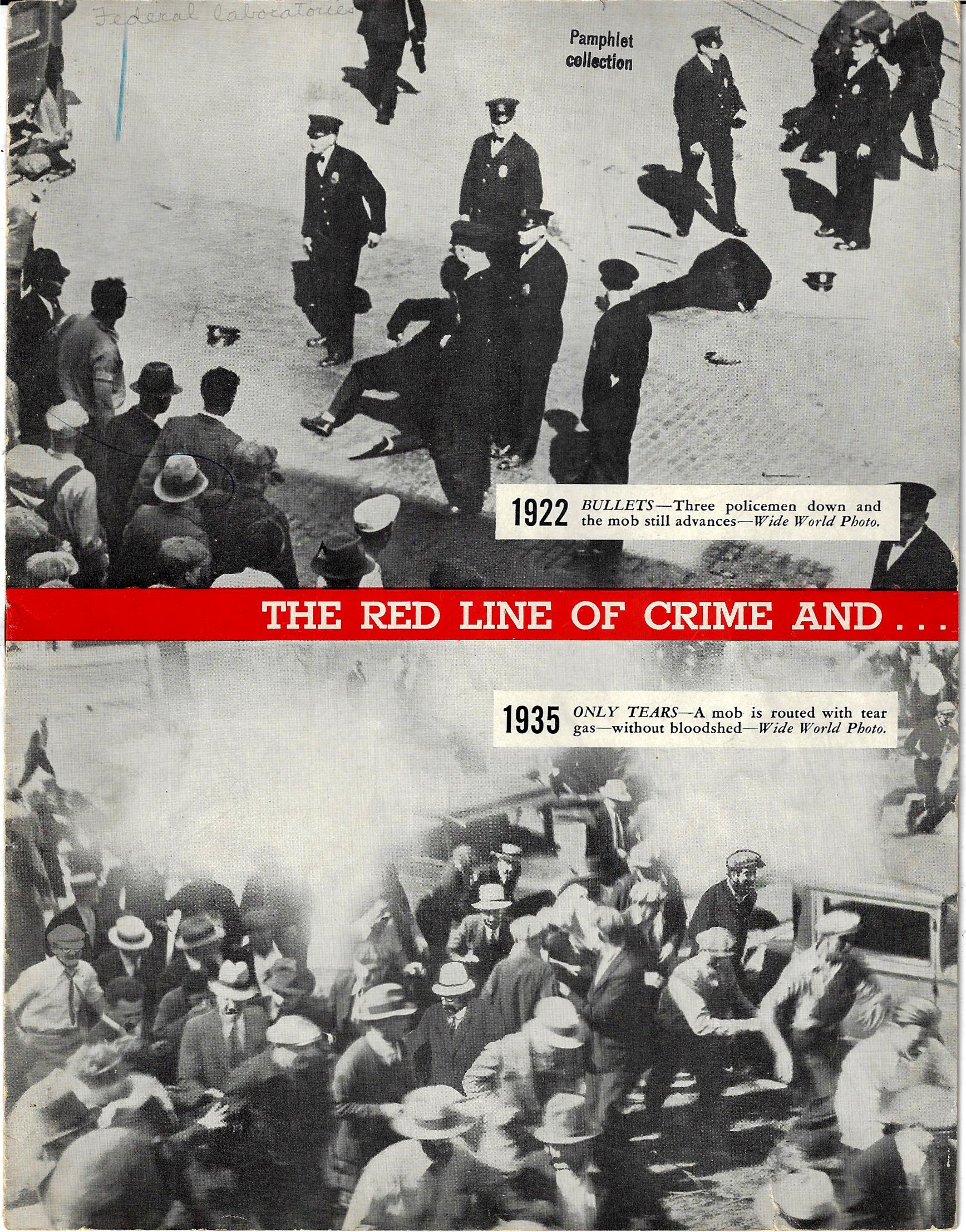
    The “sublime mundane” probably isn’t the correct category for this pamphlet, though I think it comes close. The illustrations and the text are squint-inducing, both unusual in peculiar ways, and all for the purpose of selling tear gas.  

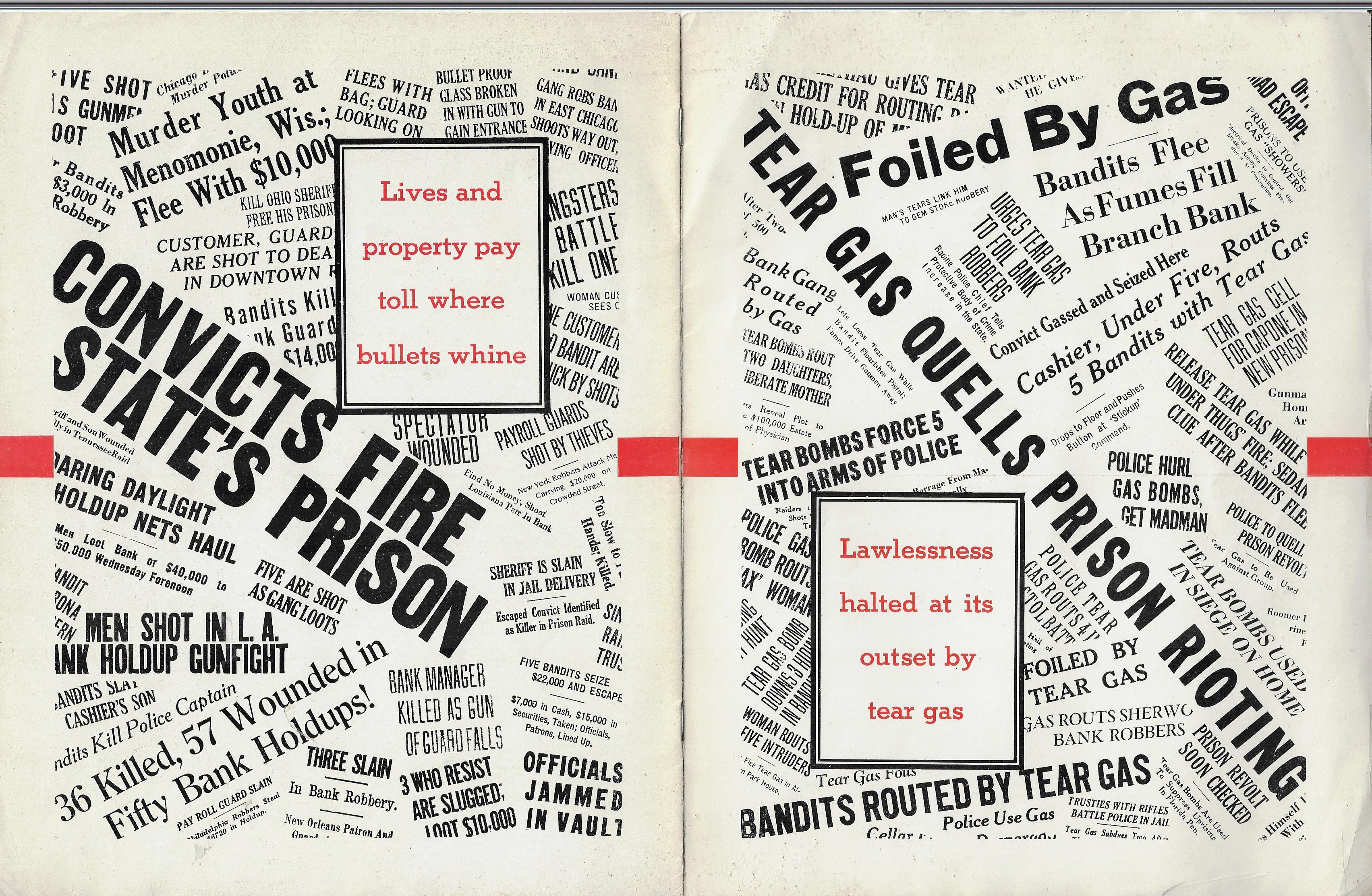
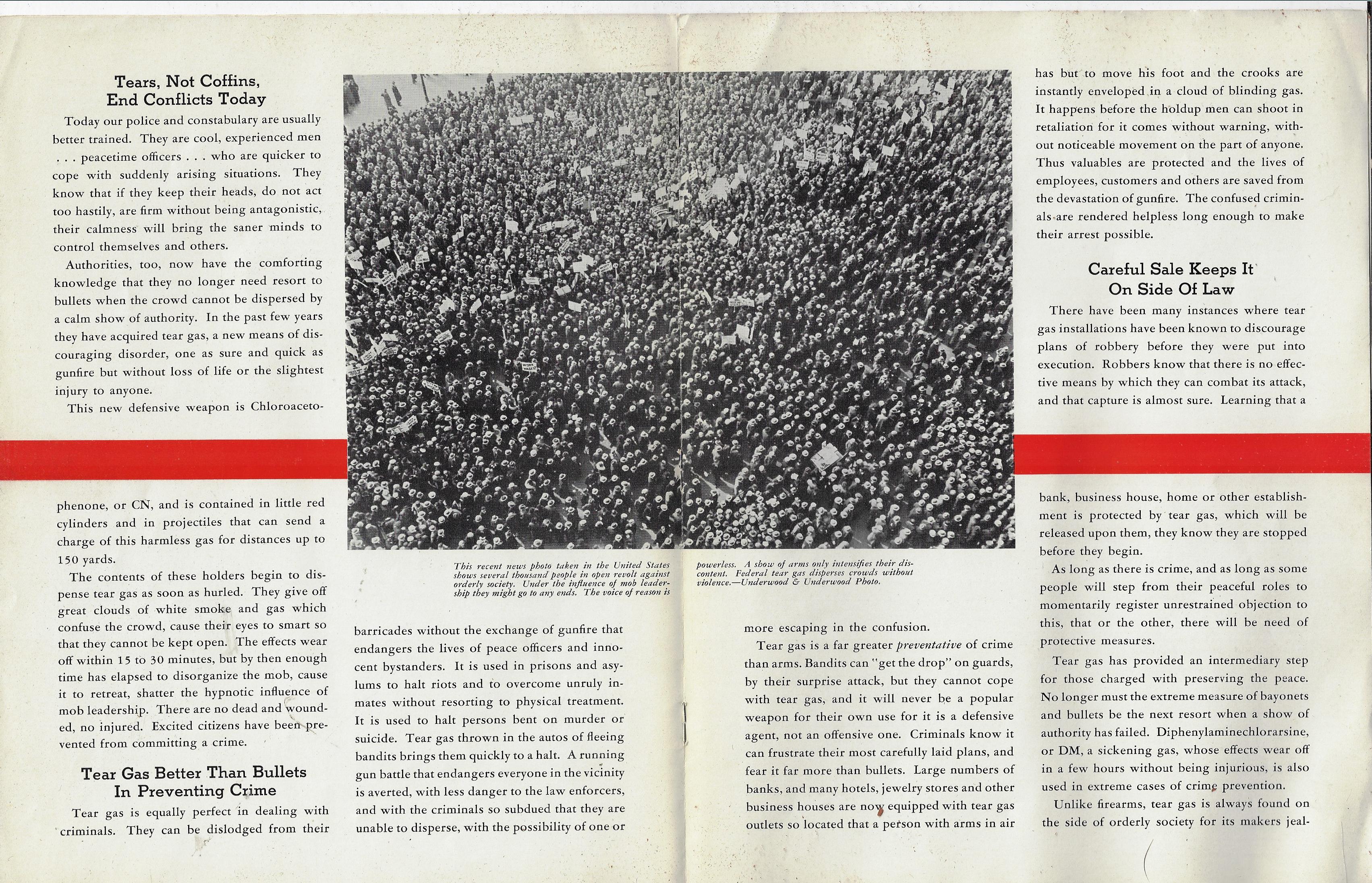
    The Red Line of Crime and…Civil Disorder is the pamphlet, and it was published in  Pittsburgh and printed by Federal Laboratories  in 1934. It makes the case for tear gas over bullets in response to civil disobedience/riots/unrest, a good part of that being described sotto voce (and not so much so) as the work of unions. In any event, tear gas is prescribed as the reactive agent to the reaction, being more humane and less fatal…anyway, that is the sales pitch. 

    I’m sharing the pamphlet here mainly for its illustrations and design. Here’s the very arresting front cover:

    Books covers red line _1_

    • A description of Federal Laboratories from Wiki:  “In the 1930s, custom gas guns by FedLabs were adopted by the New York Prison department, following a sales pitch made before the APA by the president of FedLabs in Baltimore in 1931. Also in the 1930s, Federal Laboratories actively worked to sell gas guns for the purpose of strikebreaking, with one FedLabs representative firing a tear gas grenade during the 1934 West Coast waterfront strike, resulting in the death of a striker due to skull fracture. Auerbach notes, however, that despite FedLabs stated opposition to “communist” strikers, the firm continued to sell tear gas to the Soviet Union even during 1933.”

    And the center illustration, a montage of newspaper clippings:

    Books covers red line _2__0001


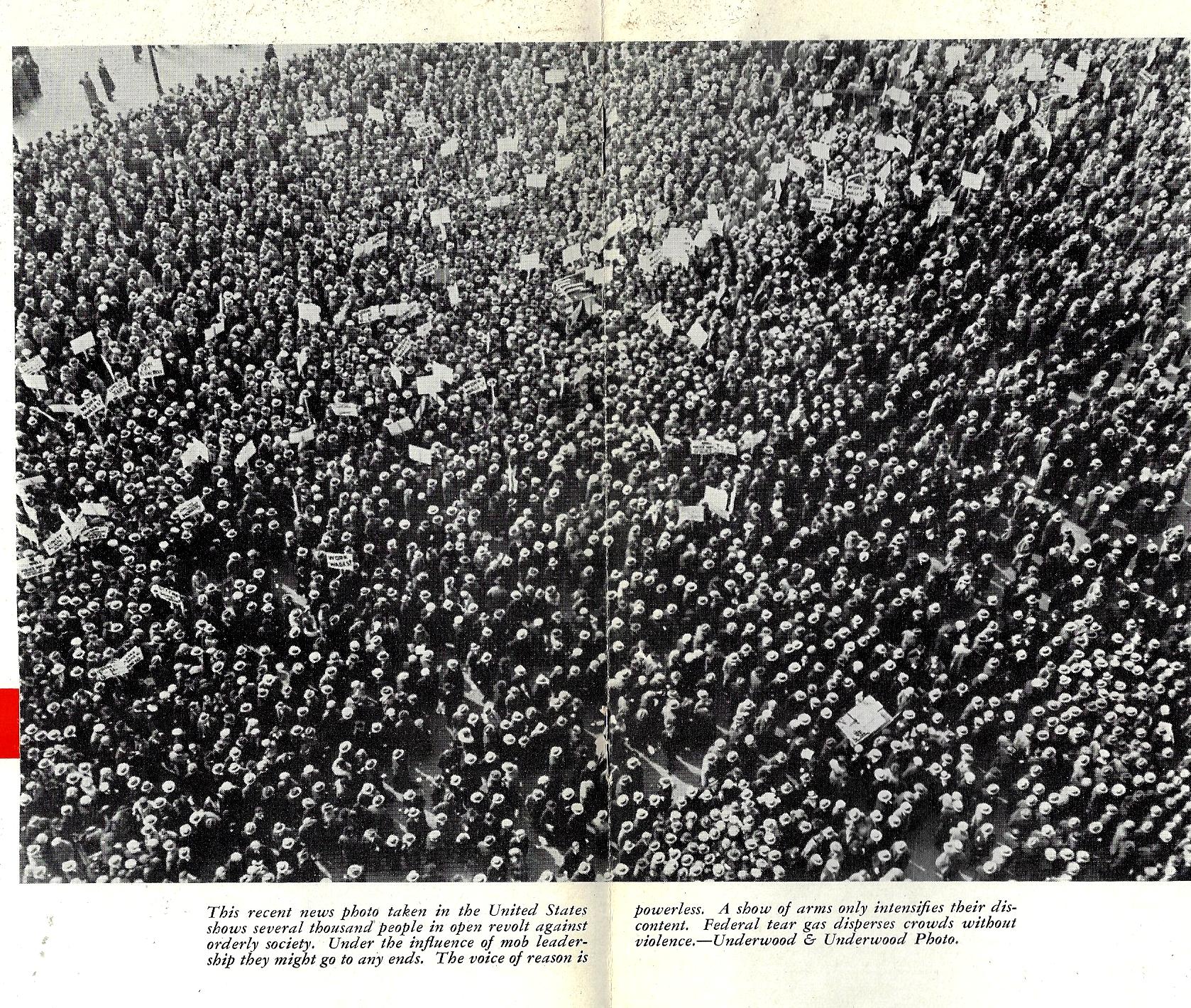
    And in this image, a worker’s strike is described as “an open revolt against orderly society…under the influence of such leadership they might go to any ends”, which is as great a propaganda statement against unions as I have seen:

    Books covers red line _4_ detail


    Books covers red line _3_

    ·Posted by :

    ·in:

    —

  • The K.K.K., the Catholic Church, and (Badly) Organized Labor (1923)

    JF Ptak Science Books   Quick Post

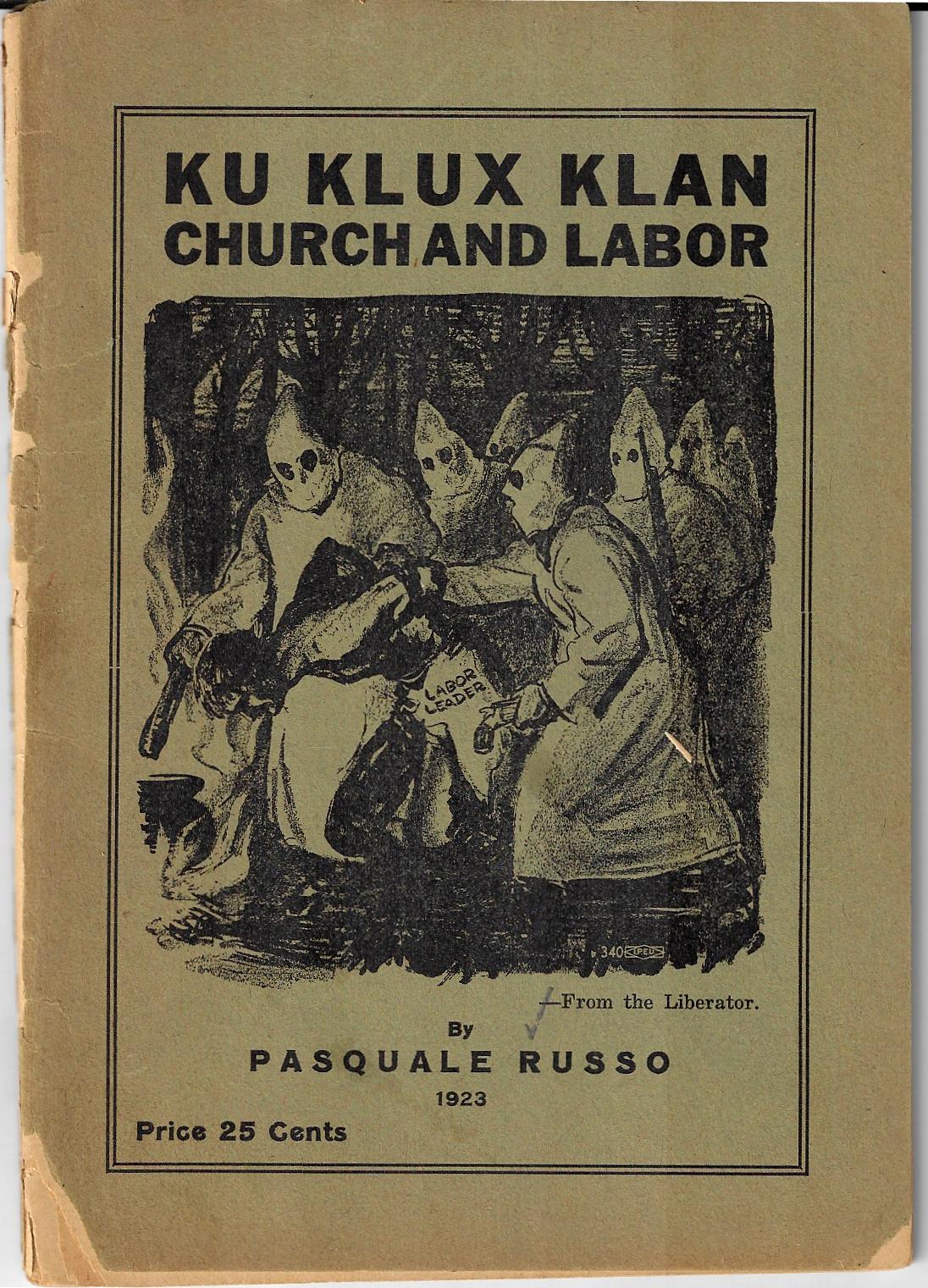
    KKK Church and Labor 1923The author of this curious work1, Pasquale Russo (who also wrote “Negro Slavery or Crime of the Clergy” and “Tony the Immigrant” among others) makes a case against the K.K.K., and also manages a conjoined condemnation against the “Church”–and that being, so far as I can tell, the Catholic Church–all the while building a very strong pro-labor (Socialist?) overview for the improvement of the condition of the working classes. This seems a little unusual to me as the K.K.K. was also anti-Catholic, making similar arguments against that religion as Mr. Russo. Mr. Russo’s reasoning behind the attack here seems to be that the Church was in its way complicit with the actions of the K.K.K. by being against labor, as was the Klan, and so with this thinking the Church was pro-K.K.K. and anti-working class by restricting the freedom of the laborer, and against “the solidarity of the white and colored”.  There is very strong support in the pamphlet for the Negro worker (the “N” in “Negro” being capitalized at a time when even that small dignity was rejected by many in the publishing industry), railing against the  segregationist policies of the “United Federation of Scabs” (the American Federation of Labor, A.F.L.) and Samuel Gompers and for being the “lickspittles” of the ownership class. The pamphlet was published at an interesting time–1923–for the main aspects of the work: there was significant anti-Catholic leanings high and low throughout the country; the K.K.K. was about halfway through its second very short-lived revival before its collapse later on in the decade; the African American as a race and as a worker class was still very abused; and the infatuation with Socialism and the newly-formed Soviet Union was young and growing. So the pieces of history were there, though they are in a jumble. 

    The pamphlet is a highly problematic but forensically-interesting work, and speaks to its times in a number of ways–that said, I am not sure where this fits in with anything, and how much of Mr. Russo’s self-published philosophy was shared and how much of it was simply an externalized internal insight. 

    Overall my little graze through this pamphlet left me a little tired and depressed–it did give me some sort of understanding of something, but I don’t know what. 

    Notes:

    1.  Pasquale Russo, Ku Klux Klan, Church and Labor, 1923; published by Mr. Russo in Chicago (833 Sedgwick Street). 7×5″, 59pp.   Provenance: Library of Congress, with their surplus/duplicate rubber stamp on the rear cover.  WorldCat/OCLC locates 16 copies.

    When I looked up 833 Sedwick on Google it seems as though it is just an empty lot wit a fence made of found bits of corrugated metal and chain link. 

    ·Posted by :

    ·in:


  • The Fate of the Future & the Ironies of Artistic “Futurism”

     JF Ptak Science Books

    “The oldest of us is thirty: so we have at least a decade for finishing our work. When we are forty, other younger and stronger men will probably throw us in the wastebasket like useless manuscripts—we want it to happen! They will come against us, our successors, will come from far away, from every quarter, dancing to the winged cadence of their first songs, flexing the hooked claws of predators, sniffing doglike at the academy doors the strong odor of our decaying minds, which will have already been promised to the literary catacombs.”–from the “Futurist Manifesto”, by F.T. Marinetti, 1909

    They came for Mr. Marinetti (1876-1944) a little earlier than that, and continued to come, though whoever it was that came couldn’t quite reach the founder of Futurism, who seemed to be one invisible step ahead of oblivion.  Or perhaps it was behind?  I’m not sure.

    But futurism as a movement was more in the past than in the future, barely lasting long enough to have anything but a past.

    Mussolini

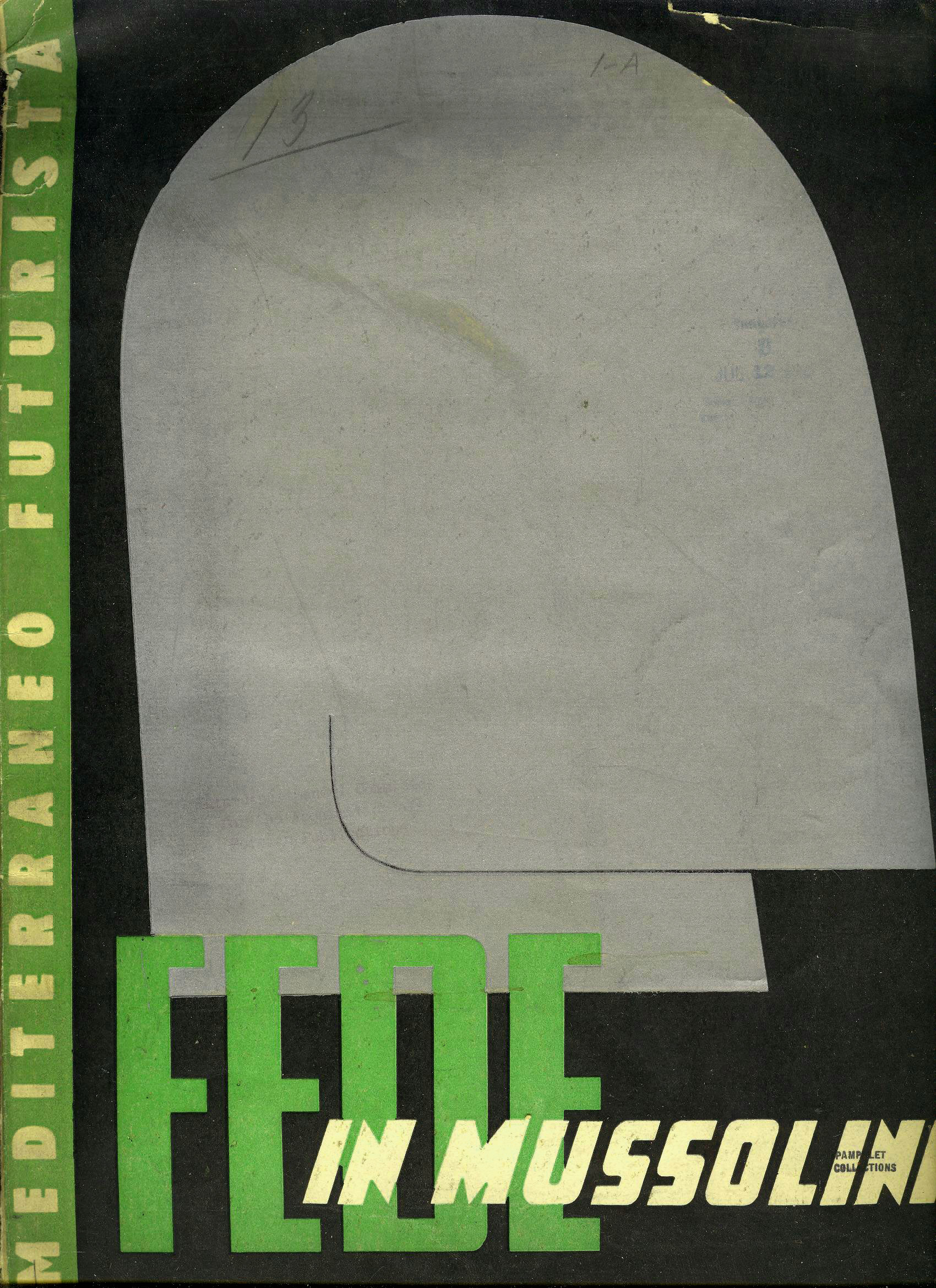
    • This is the cover of a magazine edited by Marinetti and others, a hagiographic-porn hommage to the leader of the Italian fascist government, Benito Mussolini, featuring a very striking portrait of the leader on the cover. (I’ve seen a note elsewhere stating that the image on the cover is by (Mari Biazzi (1880-1965)) though I could not find any other references for that. Also I’m not sure about the journal, as it comprises the names of two Futurism journals, Mediterraneo Futurista and Fede in Mussolini (“Faith in Mussolini”).Apologies for this incompleteness. Mostly I just wanted to share the image given its particularly brutal Brutalist aspects.)

    Not that the movement wasn’t important–it was, obviously–its importance branched out into other areas and movements, morphing into necessary branches, leaving behind a shell of the original tended by the originator.  (It can be argued that this movement helped create the environment for Dadaism and Cubism [or at least Cubist-futurism as in the Russian sense of that art].)  Marinetti had some unsavory and some just downright weird political and social ideas, having a long and vested interest in fascism.1  And not only the earliest part of Italian fascism –founded in 1919 with an interest in expanding the democratic process–but the later, Mussolini-controlled Italian fascism as well.  Marinetti sought the protection of Il Duce,2 and even so during the war, when he sought to protect his movement’s art from being designated as “degenerate ” and therefore unacceptable and existence-deniable by Adolf Hitler.

    And so the unlikely prolonged existence of futurism–a movement transformed far beyond itself in a matter of years, held together by pieces of fluff and dust, supported in its old age on the hopes of a noxious political system which was itself doomed to rapid failure.

    “At last they’ll find us—one winter’s night—in open country, beneath a sad roof drummed by a monotonous rain. They’ll see us crouched beside our trembling aeroplanes in the act of warming our hands at the poor little blaze that our books of today will give out when they take fire from the flight of our images.”  –F.T. Marinetti, from his “Futurist Manifesto”, 1909

    Notes

    1. Marinetti’s goal was to establish futurism as the official art movement of the government–something he specifically wrote against in earlier incarnations of himself.  He would come to loggerheads with much of his earlier social opinions, abandoning his beliefs in his never-ending quest to promote his movement.  I must say though that Marinetti did publicly speak against anti-Semitism.

    2. Marinetti sought to have the Nazi traveling exhibition of degenerate art–which included works by futurists–banned from Italy.  So even though the Nazi fascists established futurism as degenerate, Marinetti was able to enlist the aid of Mussolini to shield Italians from what the Nazis thought of the art.  But the futurist manifesto seemed comfortable with the while idea right from the start, as we can see in proposition #9 of its self-proclamation: “We will glorify war – the world’s only hygiene – militarism, the destructive gesture of freedom-bringers, beautiful ideas worth dying for and scorn of woman…”


  • “The Fatal Deadfall of Abolition”–Threatening the Newly-Freed Southern Slaves, 1867


    JF Ptak Science Books 

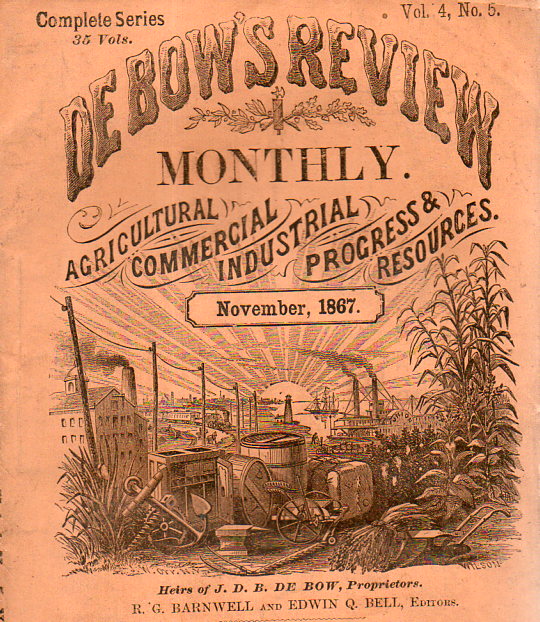
    De Bow’s Review in 1867–in the dire straights of Southern doom and despair of the just-finished war, lashed out like a wicked conspiratorial rant against the Northern states and anyone who comforted them.  Published in Nashville, all I have of the magazine presently is this loose issue for November 1867, and in spite of the energetically positive view depicted on the cover of the magazine had little to do with what you found in the writing inside.  

    De Bow175

    The leading article is an odd one, yelling about Great Britain manufacturing the cause of anti-slavery in the United States, which pretty much is made abundantly clear in the title,  “Black Republicanism, the Dupe and Agent of British Policy in Respect to American Interests”. The “scheme of so-called Negro Emancipation…is a British Invention” crushing the U.S. which “suffered immeasurably” under the Abolition Program, “the fatal deadfall of the abolition trap“, all of which in the end will “crush the innards out of the “Black Republican Yankee”.  It was the Brits according to the writer of this article who FORCED THE UNITED STATES TO ABOLISH SLAVERY” [caps in the original]. 

    The second article is called “No Treason” and makes the case for the Confederacy for not having committed treasonous acts.  

    The article ends with the following enormously assumptive and categorical statements:

     This might be the bones of this issue, but the next article, comes the marrow: “The Future of the Blacks”. It is here where “the Blacks” are threatened with death as a race should they become politically and economically mobile, and threatened in such a way that they were being given advice for their own good should the “blacks” (with a little “b”) “forget their true position”:

    The short article was long on advice for the newly-freed slaves of the United States to abide. For example, in citing a letter to the freedmen of Lowndes county, Mississippi (by the same author as this article, still unnamed), the writer admonishes “Mingling in politics never did any man any good, and may prove your ruin”. And more:


    Add on it goes, this bitter article, into its long, fearful, vengeful, and sweaty night.  

    Notes:

    1. The variations in the title of the magazine gives you a pretty good idea of what they’re about: 1846-June 1850, The Commercial review of the South and West (caption title, 1846-Jan. 1847, July 1848-June 1850,  The Commercial Review; from  Feb. 1847-June 1850: De Bow’s commercial review of the South and West)–July 1850-Dec. 1852, De Bow’s review of the Southern and Western States (caption title: De Bow’s southern and western review); 1853-July/Aug. 1864, De Bow’s Review and Industrial Resources, Statistics, etc.’ 1866-Dec. 1867, De Bow’s review, devoted to the restoration of the Southern States, and the development of the wealth and resources of the country…

    ·Posted by :

    ·in:


  • The Burning of the Books, May 1933

    JF Ptak Science Books   Quick Post

    The infamous book burnings as we knew them started in their earnest wickedness on German university grounds and city squares on May 10, 1933.  The attempt in destroying intellectualism, history, science, philosophy, beauty, and many other aspects of culture was to protect Germany from past and present destroyers of Teutonic legacy and anything that threatened Hitler’s brand-new German reich. So to that end the Nazis in control thought the best way to approach works like these was to burn it all.  

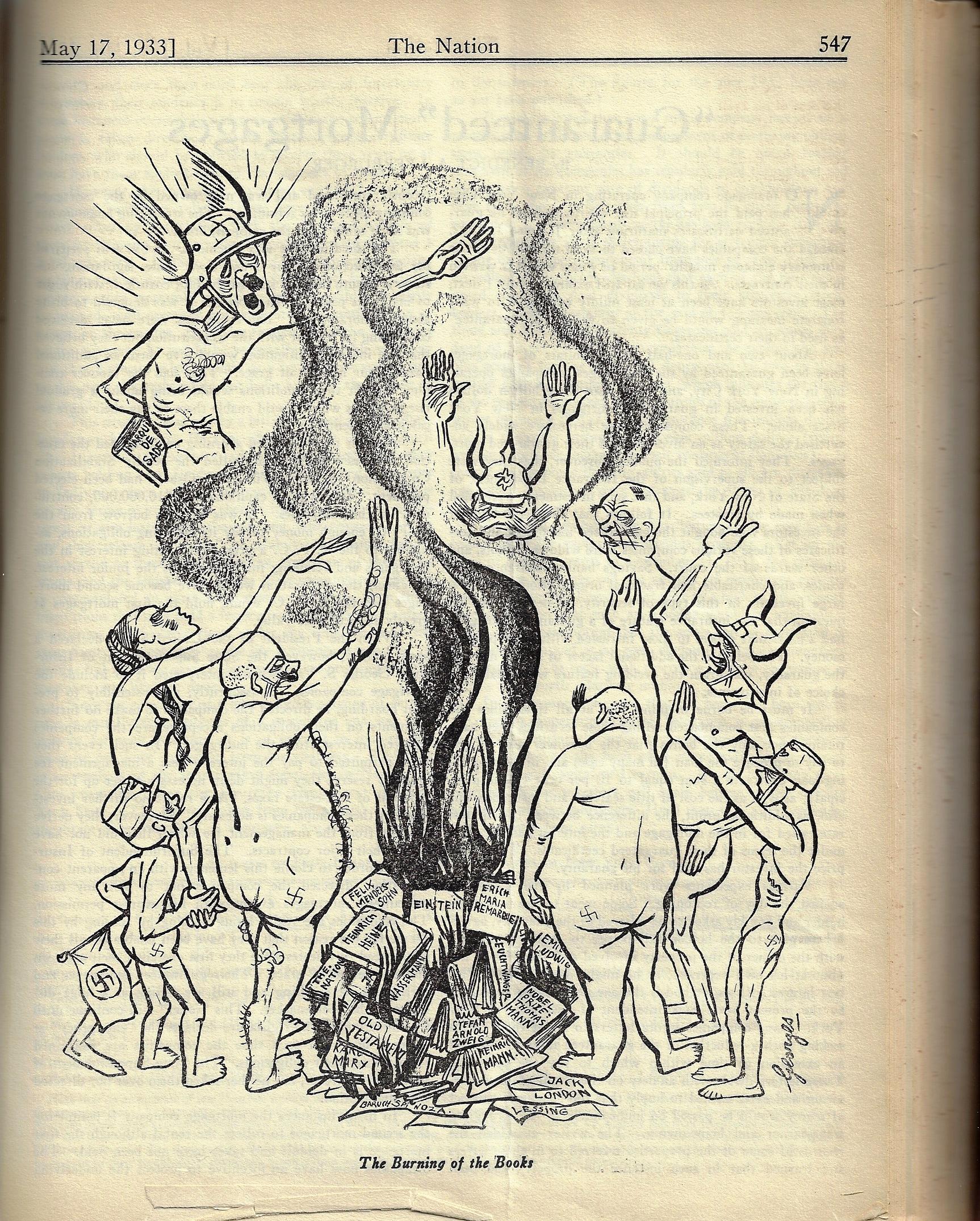
    In this editorial cartoon drawn by Georges Schreiber the Nazis are portrayed in a bestial, devilish,  and accurate light. The image appeared in The Nation (volume 136 no. 3541) on May 17, 1933, and as we can see a zombie-ish Hitler is seen in the upper left, with an aged Paul von Hindenburg to his right. The flames are built on a pile of some of the damned books, featuring Einstein front and center (as the representative of the “degenerate Jewish science”), surrounded by works id Remarque, Ludwig, Heine x2, Mendelssohn, Spinoza, London, and others:

    Burning books

    For an  example of the targeted books have a look at the following  list (from Wolfgang Herman’s “Prinzipelles zur Säuberung der öffentlichen Bücherein,”  Börsenblatt für den deutschen Büchhandel 100 (5/16/1933):, 356-358 [Principles for the Cleansing of Public Libraries] was for the use of librarians in keeping their collections free from various types of art/science/tech/literature/art/music, and needless to say anything that was written by a Jewish author):


    “1. The works of traitors, emigrants and authors from foreign countries who believe they can attack and denigrate the new German (H.G. Wells, Rolland) ; 2. The literature of Marxism, Communism and Bolshevism. 3. Pacifist literature. 4. Literature with liberal, democratic tendencies and attitudes, and writing supporting the Weimar Republic (Rathenau, Heinrich Mann); 5. All historical writings whose purpose is to denigrate the origin, the spirit and the culture of the German Volk, or to dissolve the racial and structural order of the Volk, or that denies the force and importance of leading historical figures in favor of egalitarianism and the masses, and which seeks to drag them through the mud (Emil Ludwig); 6. Writings of a philosophical and social nature whose content deals with the false scientific enlightenment of primitive Darwinism and Monism (Haeckel); 7. Books that advocate “art” which is decadent, bloodless, or purely constructivist (Grosz, Dix, Bauhaus, Mendelsohn); 8. Writings on sexuality and sexual education which serve the egocentric pleasure of the individual and thus, completely destroy the principles of race and Volk (Hirschfeld); 9. The decadent, destructive and Volk-damaging writings of “Asphalt and Civilization” literati! (Graf, H. Mann, Stefan Zweig, Wassermann, Franz Blei). [transl. note: a derogatory term for writers dealing with upper middle class urban society]; 10. Literature by Jewish authors, regardless of the field; 11. Popular entertainment literature that depicts life and life’s goals in a superficial, unrealistic and sickly sweet manner, based on a bourgeois or upper class view of life.”

    • [Source: When Books Were Burned, University of Arizona Library, for the source and for the translation:   http://www.library.arizona.edu/exhibits/burnedbooks/documents.htm#guidelines ]

    ·Posted by :

    ·in:

    —

  • A Striking Example of Superior Marginalia (1923)

    JF Ptak Science Books   Post 2640

    I bought this pamphlet many years ago in a very large collection of other pamphlets. Pamphlets in stacks are nearly impossible to identify individually because, well, they are mostly indistinguishable from one another in their slim anonymity…especially so when their in boxes. Seriously, though, it is very easy to lose track of these when there are many thousands of them waiting or attention.

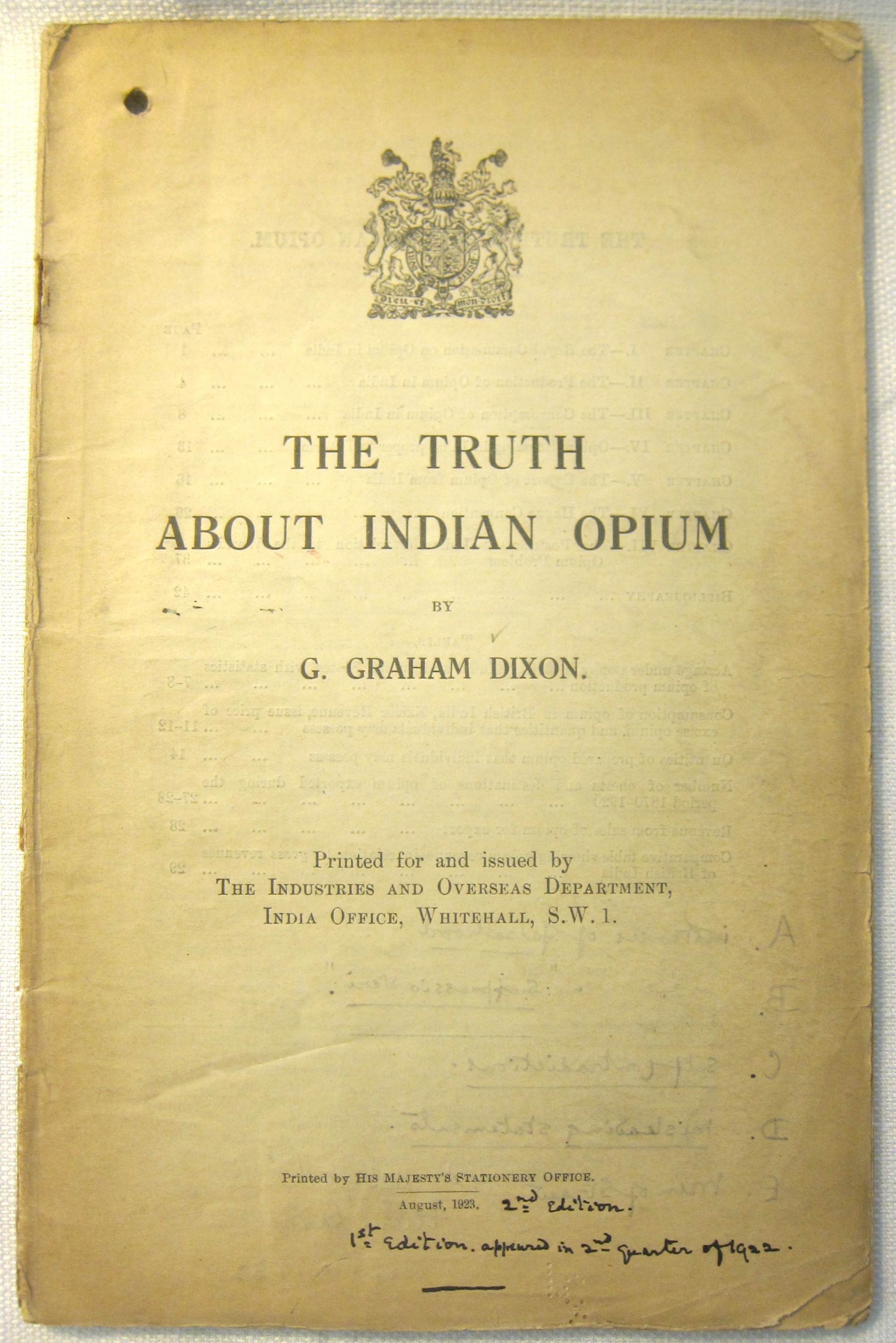
    And so with this one, an interesting-looking/sounding work written in 1923 by G. Graham Dixon, The Truth About Indian Opium, had its chance in the light yesterday.

    I ‘ve seen this pamphlet before, taking note of it, but never opened it.

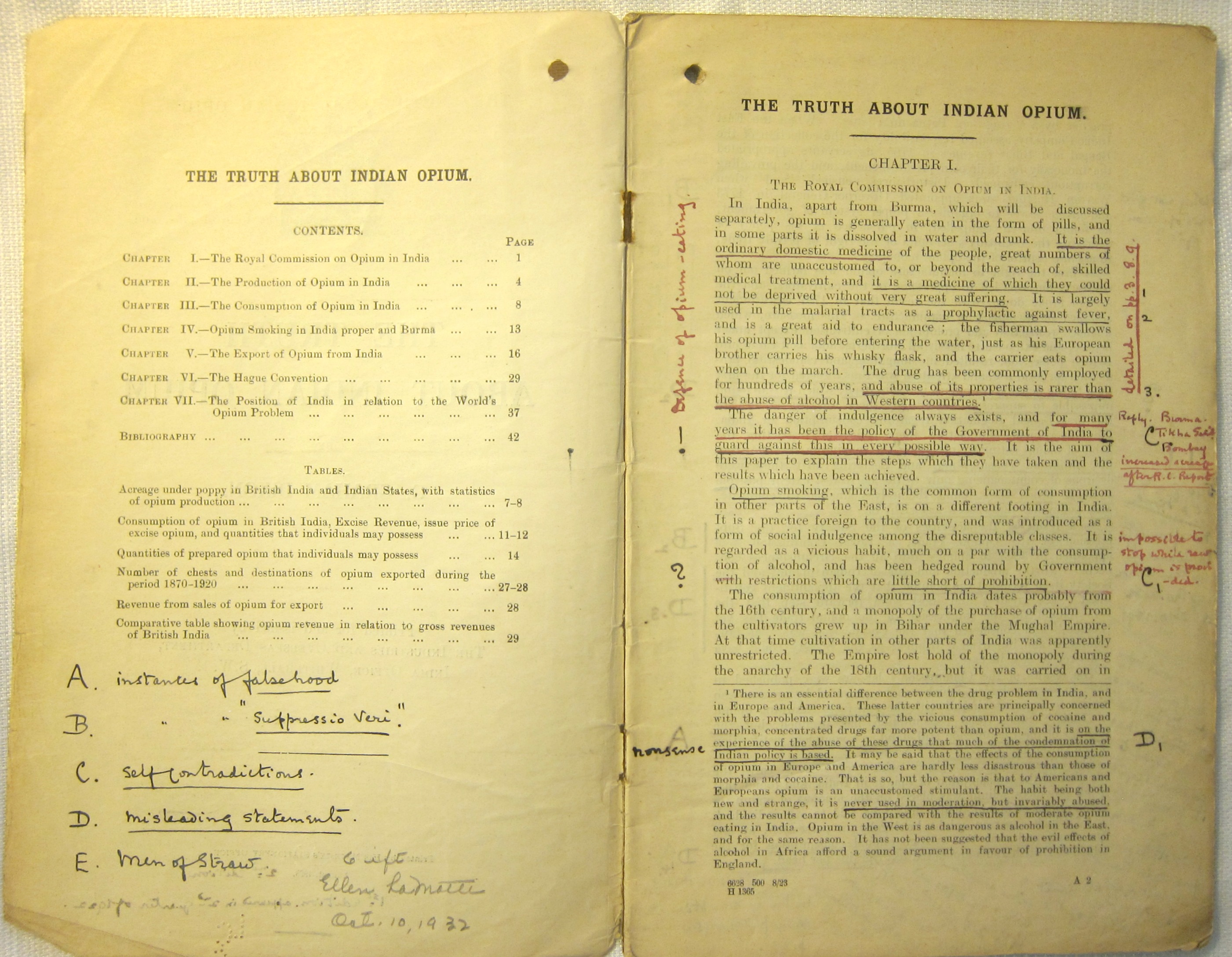
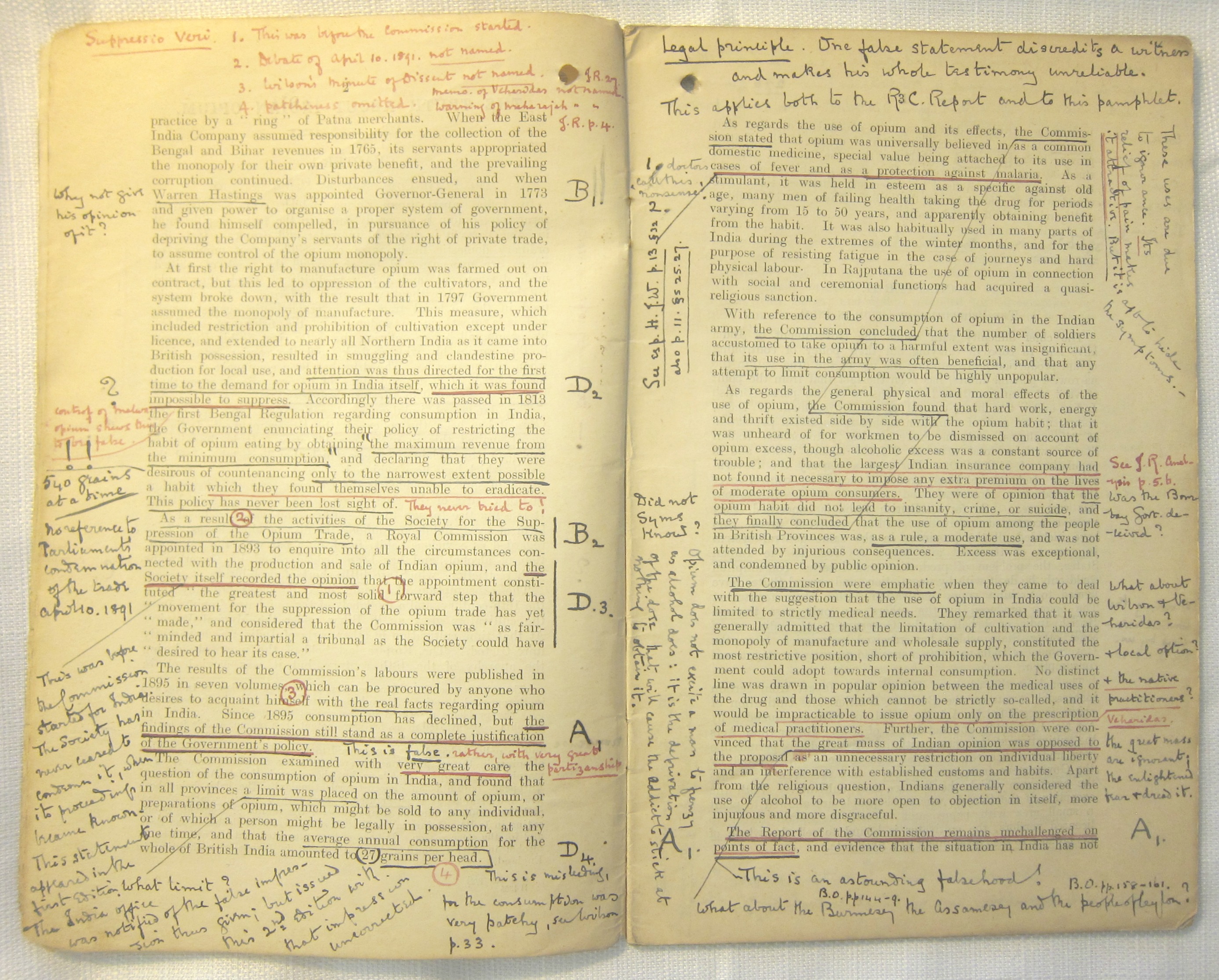
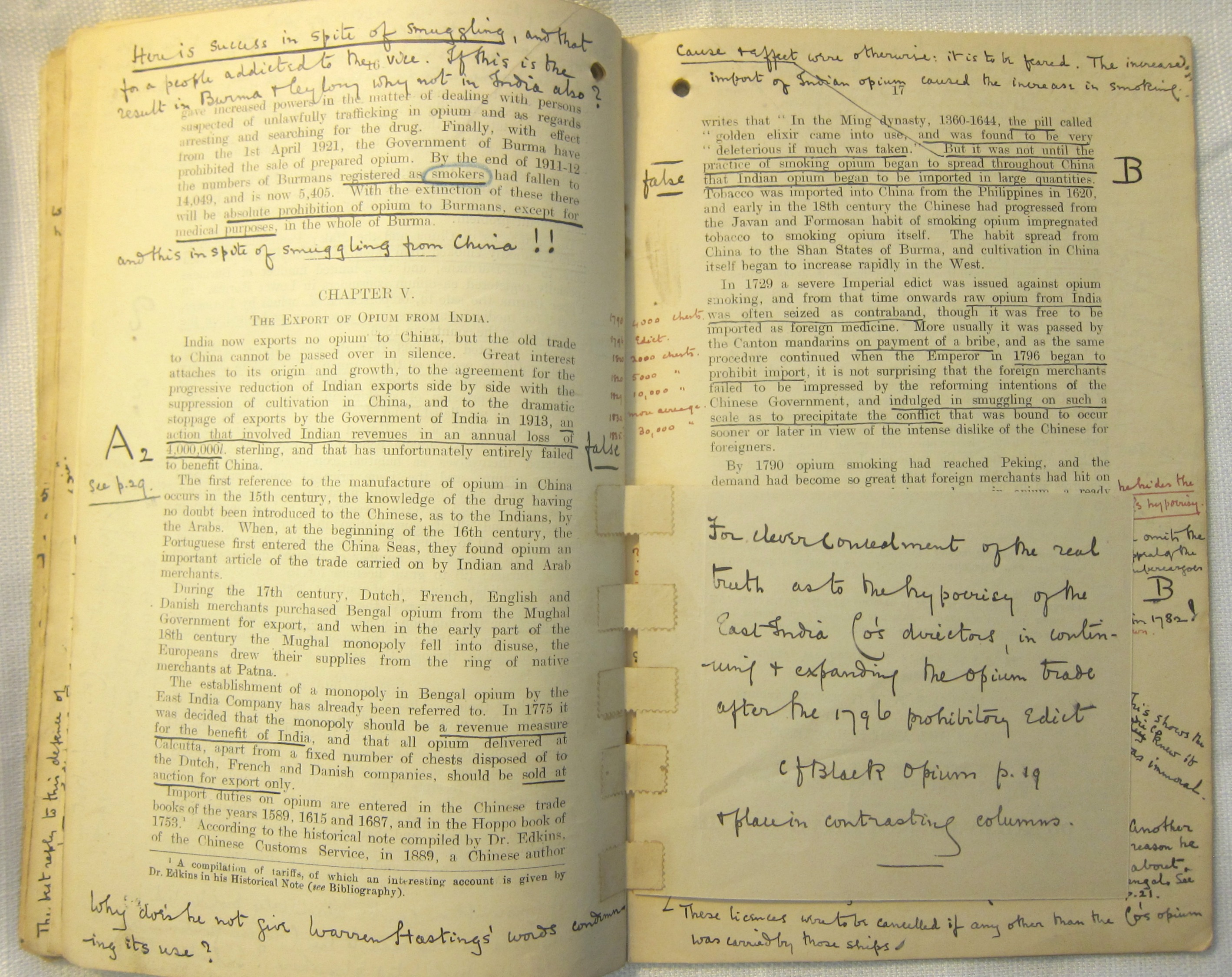
    When I did I was shocked to see that it was very heavily annotated by the last owner. As you can see, this was far beyond marginalia—the reader took the author to task on a lot, everywhere. This practice was so extensive that the reader/annotator had notations and marginalia for her (as it turns out) marginalia.

    LaMotte _1_

    The notes were provocative, insightful, incisive. My copy came from the Library of Congress, and I could see on the back of the title that the pamphlet was given to the LC by “Ellen LaMotte” in 1932. Ms. LaMotte, born in 1870, was quite a person: among other things she was a nurse who was among the first to U.S. Citizens to volunteer for battlefield duty in WWI, arriving there in 1915 (at age 45). Her experiences were wide and traumatic, and she expanded her diary into a book The Backwash of War, The Human Wreckage of the Battlefield as Witnessed by an American Hospital Nurse.

    LaMotte _2_

    that was published in 1915, though evidently it was too truthful and brutal a story for general consumption and was therefore lifted from publication, and didn’t see republication until 1932. There’s much in this book to recommend itself, from an overall sense of this nurse’s view of the war to the details of the minute. (For the later, I found out from Ms. LaMotte that in her experience lightning speed for the delivery of a severely injured man at the front line to an aid station where he could receive proper treatment for a major wound was six hours.)

    LaMotte _4_

    She went on to become an expert in the opium and drug problem then existent in England, publishing six books on the topic during the 1920’s and 1930’s. I assume that this was a source for a part of her work, and certainly explains the deep insight and knowledge evident in her annotations.

    She did not think much of this work by Graham Dixon, who it seems to make the argument that alcohol and cigarettes were a more pressing problem than opium—LaMotte did not agree, and pressed her opinions, questioning the unattributed quotations and statistics and assumptions and conclusions. As annotated/marginalia goes, this is a tour de force.

    LaMotte _5_

    Notes:

    LaMotte’s WWI book is available in full text online at Project Gutenberg http://www.gutenberg.org/files/26884/26884-h/26884-h.htm

    Also see: Hazel Hutchinson, The War That Used Up Words: American Writers and the First World War. New Haven, CT: Yale University Press, 2015.


    ·Posted by :

    ·in:


  • One of the Earliest Popularly-Published Eyewitness Accounts of the Armenian Genocide (1916)

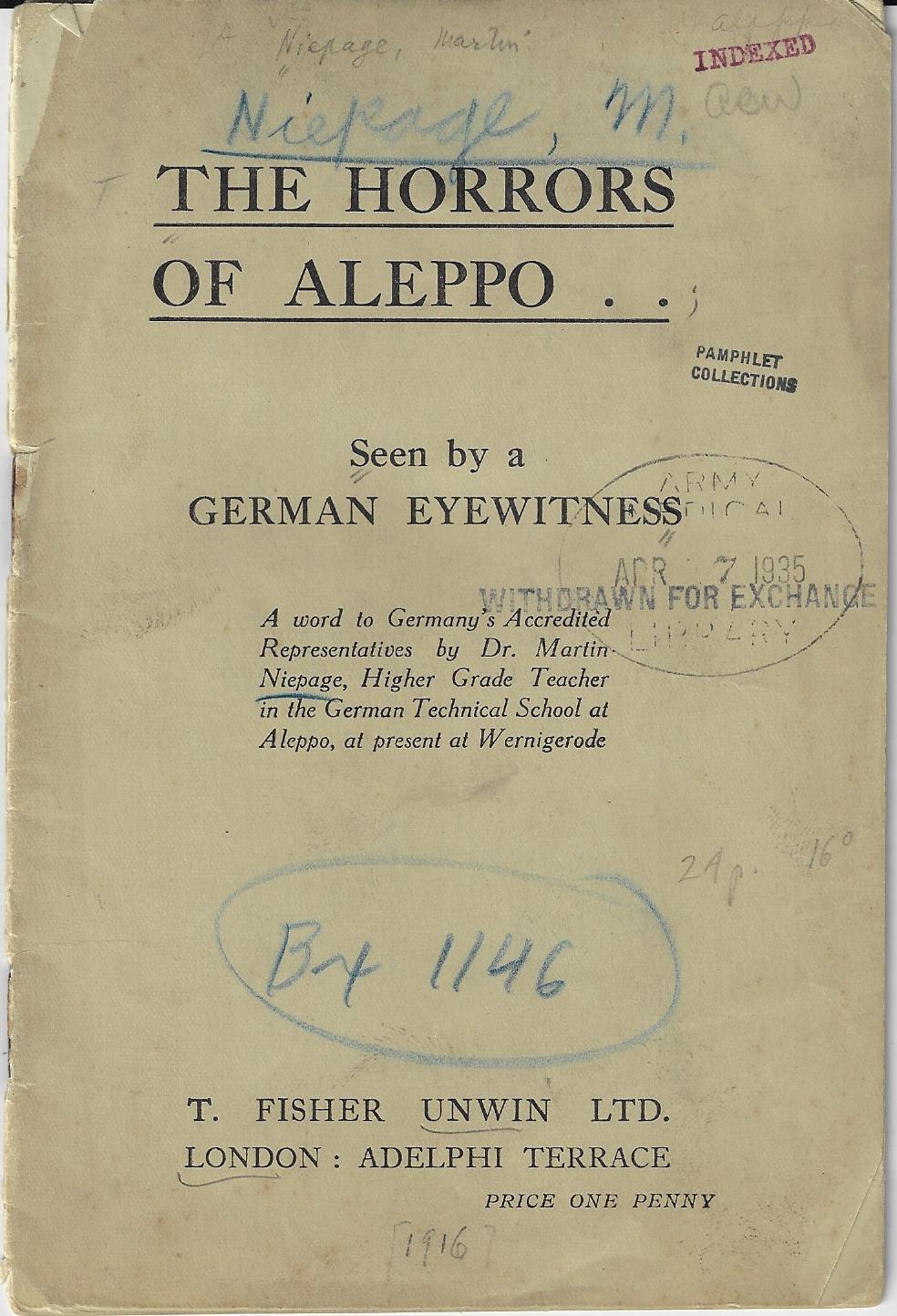
    Horrors of AleppoThis is a well-traveled pamphlet1, its face showing its miles.

    The author, the “German Eyewitness”, was Dr. Martin Niepage2, a school instructor at Aleppo, who wrote what was to become (apparently) the first popularly-published account in the West of the Armenian Genocide.  The pamphlet was published in 1916 and begins the story in 1915, getting quickly to the terror stories of chopped-off children’s hands. 

    “In April 1915 the Ottoman government embarked upon the systematic decimation of its civilian Armenian population. The persecutions continued with varying intensity until 1923 when the Ottoman Empire ceased to exist and was replaced by the Republic of Turkey. The Armenian population of the Ottoman state was reported at about two million in 1915. An estimated one million had perished by 1918, while hundreds of thousands had become homeless and stateless refugees. By 1923 virtually the entire Armenian population of Anatolian Turkey had disappeared.”–Armenian Genocide Organization

    The full text is located at archive.org  https://archive.org/stream/horrorsofaleppos00niep/horrorsofaleppos00niep_djvu.txt

    From the Niepage text:


    ·Posted by :

    ·in:


  • Lubricating the Machine–a Map of Domestic Sewage (1892)

    JF Ptak Science Books   Quick Post

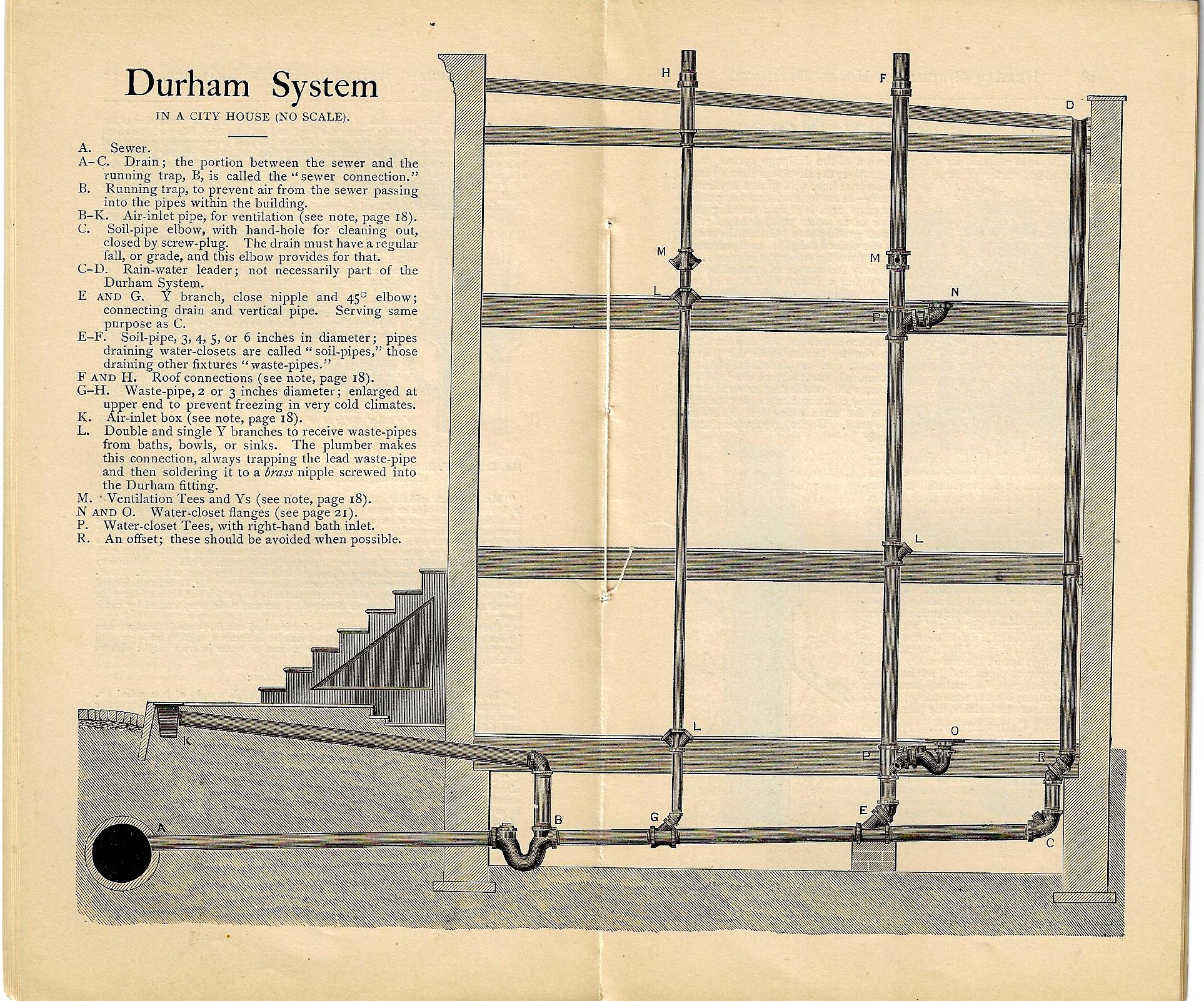
    You can’t have a Second Industrial Revolution without people living closely together, and you can’t have that without cities, and you have cities without water, and you can’t have any of that without a way of getting rid of the water and what all of those people were evacuating. And so the issue of “drainage” takes on a lot of powerful meaning–in getting rid of sewage, and rainwater, and a host of other things.  

    Now 1892 is already decades past the Second Industrial Revolution (as was indoor plumbing) and of course cities continued to grow, and so did the needs for plumbing in delivering the byproducts of consumption and maintenance of the city. The Durham system–manufactured in NYC–was one of these responses, and the image below shows a cross section of a multi-story structure with a several toilets, basically a map showing the flow of the exuded lubricant of the great machinery of the city.  That prose was a little purpley, but it is sorta true. 

    The Durham Patent System of Screw-Joint Iron House Drainage addressed this issue, manufacturing the pipe and all of the other necessaries, ready for you to install:

    Durham drainage _1_


  • The Great Passaic Textile Strike of 1926–H.L. Mencken’s copy

     JF Ptak Science Books   Post 2705

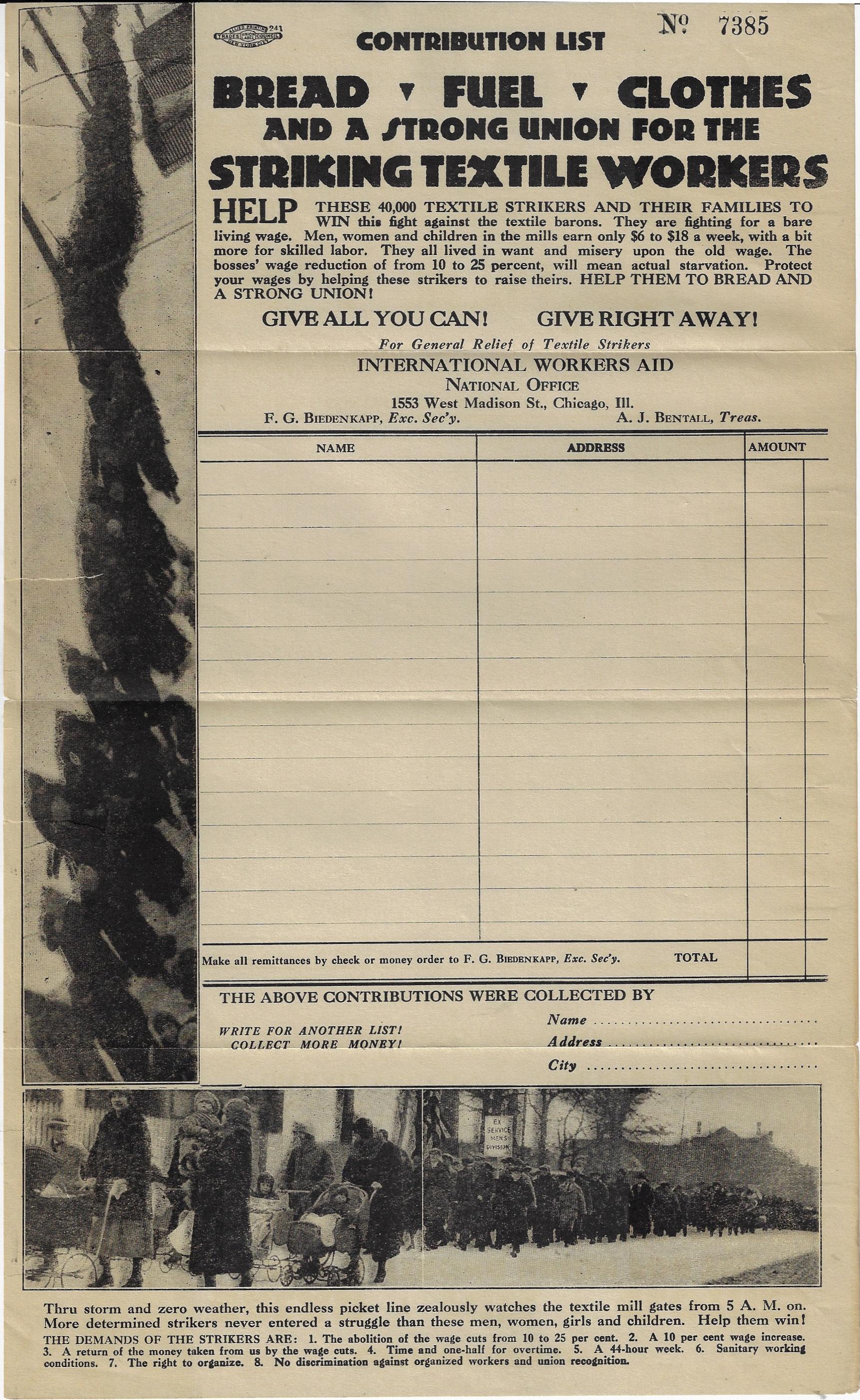
    This broadside was an appeal to like-minded people to contribute to a fund to help relieve thew dire conditions of textile worker strikers in Passaic, New Jersey, in 1926.  There were more than 16,000 people involved in this sometimes-brutal strike, people who were trying to stay even in their lives, looking for a little more money and a little better working conditions than what they had.  The Passiac (a working city just south of Patterson in an industrial triangle section of the state) strikers were moving against a number of textile (wool and silk) mills there, trying to force management to pay them something closer to the $1400 annual income for a family of four to survive. \

    Most workers there were making $1,000-$1,200 a year ($800-$1,000 if the worker was a woman, and about half of them were) for 50+ hours of labor per week.  The result was that the workers could not afford good housing and food, and those disadvantages paid off in high rates of tuberculosis, very high incidence of child mortality, and a low average life expectancy.  The strike began slowly in January 1926, with the mills responding with vicious attacks by paid thugs and by police. 

    Passaic Strike

    [Measures 8.5×14″]

    There’s quite  a bit written on this strike, and most seem to say that it was an important event in the history of “labor relations”, and that it was the first time that a Communist-led strike succeeded in the United States, (There is a complex legacy as to who the leadership was for this strike, but the end result is that, at the end, the Communists were in charge.)

    But what I wanted to say here about this broadside was the communal effort involved with keeping the strikers (and the strike) going.  The strikers needed money to live, as there was certainly no money coming in, and since there was obviously no union, there was no general fund from which any of these families could draw food money from). they needed money just to buy food and pay for housing.  SO the call for “Give all you can!” and “Give right away!” were as desperate as they sounded.  My guess is that there would be a representative of the International Workers Aid society national office going from factory to factory, or door-to-door, soliciting for money for the Passaic workers’ relief.  The strike was no doubt a very nasty business, with a victory only a victory once there was more food on the table, less illness, and far fewer babies dying from preventable causes. Probably this looked like a victory to others so far as the future of fair labor/pay was concerned, but not so much for the strikers who brought this about. 

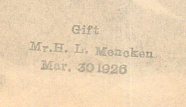
    It is also interesting to note that this copy was given at some point to H.L. Mencken, who gave it right away to the Library of Congress, where it wound up in a forgotten “Pamphlet Collection”, and then sold to me (years afterwards).

    Passaic strike279