A Daily History of Holes, Dots, Lines, Science, History, Math, Physics, Art, the Unintentional Absurd, Architecture, Maps, Data Visualization, Blank and Missing Things, and so on. |1.6 million words, 7500 images, 4.9 million hits| Press & appearances in The Times, Le Figaro, Mensa, The Economist, The Guardian, Discovery News, Slate, Le Monde, Sci American Blogs, Le Pont, and many other places… 5000+ total posts since 2008.

Category: Social History

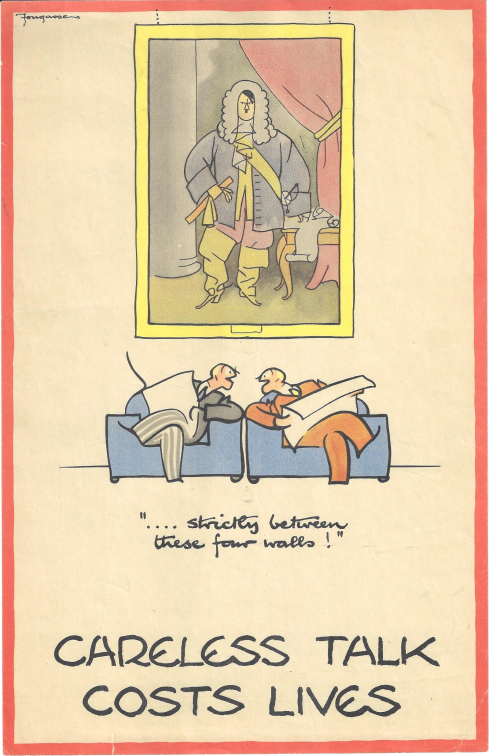
  • Iconic WWII Propaganda–Great Britain, 1940 (“Careless Talk Costs Lives”)

    JF Ptak Science Books    Post 2727

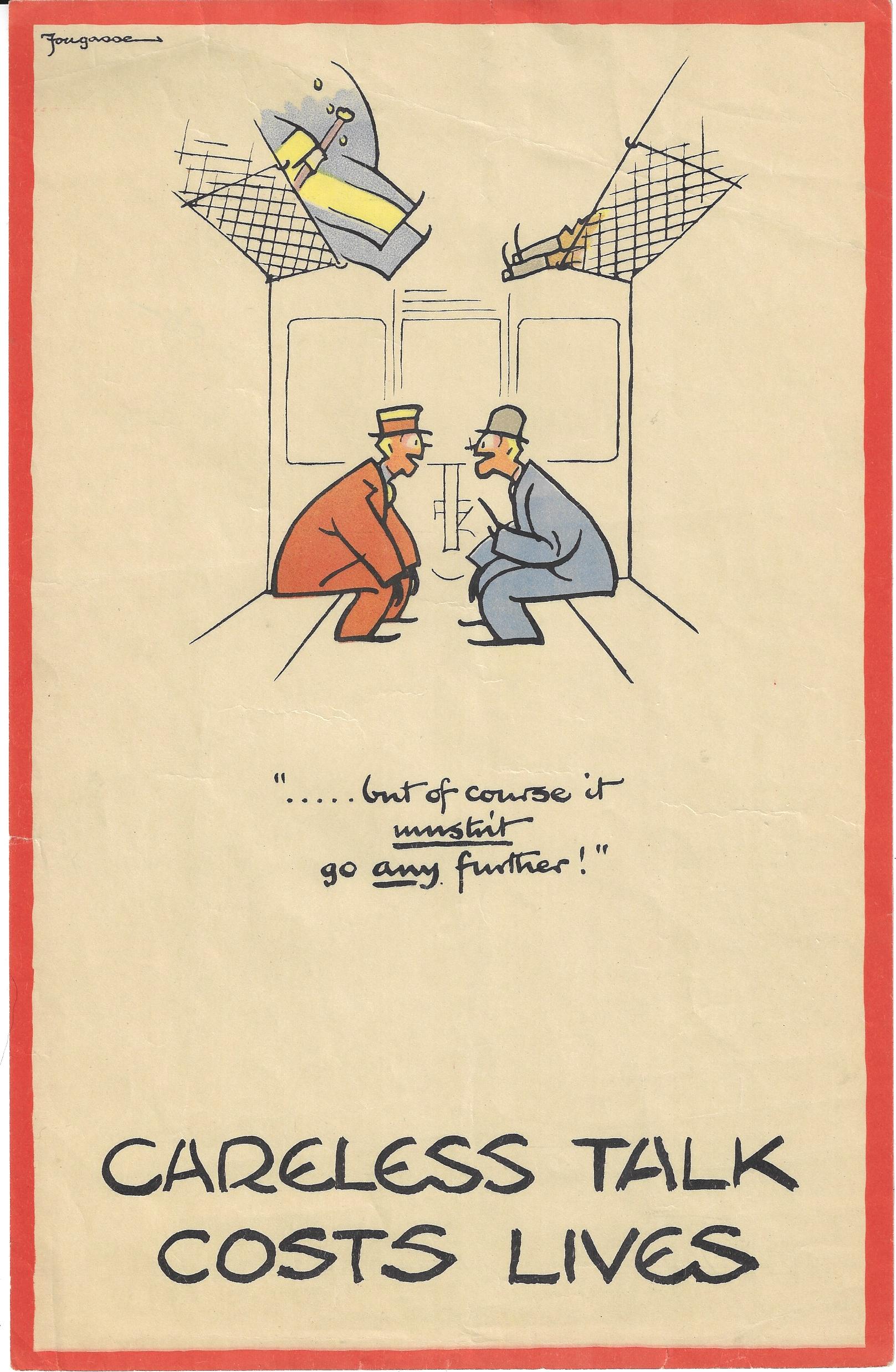
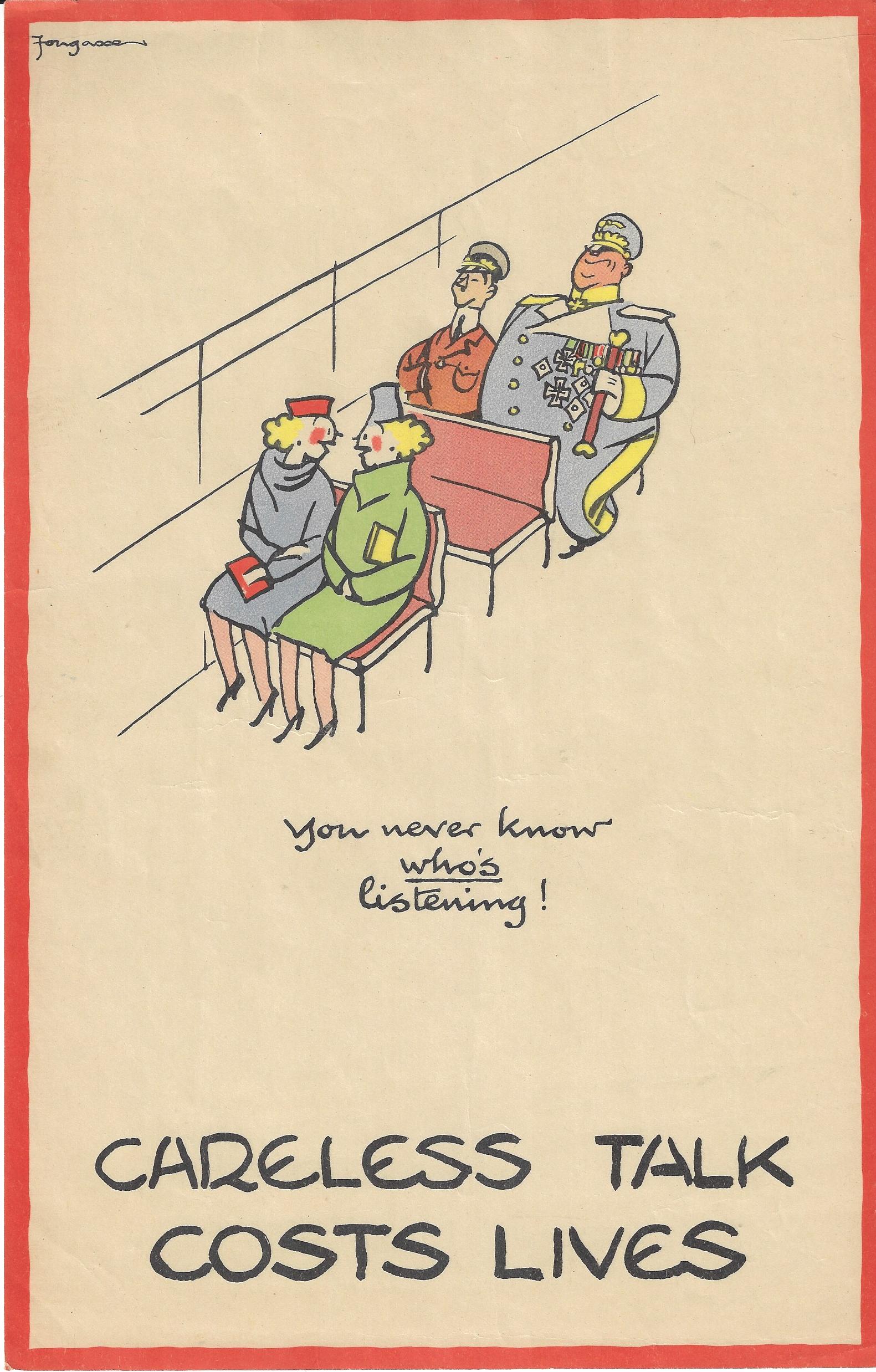
    I found these images years and years ago, and evidently had forgotten them–they surface yesterday from a long slumber, and immediately put me into mind of the very real hearst and minds campaign and of keeping secrets secret in the terrible and great struggle in the U.K. in 1940.  These are four of eight posters in the very popular “Careless Talk Costs Lives” wartime propaganda series issued by the Ministry of Information and printed in 19401. They are the very stylized work of the illustrator “Fougasse”, who was Cyril Kenneth Bird, (1887-1965), an illustrator for Punch (from 1937 to 1949) and other journals and magazines, and also a wounded vet of Gallipoli in the First War. 

    The series in general depicts people sharing a piece of possibly sensitive information that in the wrong hands and together with other pieces of info could reveal devastating secrets—and in each case there are figures lurking/loitering/disguised in the background waiting to collect the data, and generally a poorly disguised Hitler or Goering or both. Fougasse was able to make his message immediately memorable and understood because I think of his understated over-the-top visual humor. The images were funny, but the message was deadly serious. Also, you really didn’t even need to read the text to understand the message. (This is in the same vein as some of Thomas Nast’s finest work, conveying social content and a political message to the illiterate, making his devastating (and usually highly textual) cartoons understandable without needing to read them.) 

    (1) “Strictly Between Four Walls”.  In this poster (made a convenient size to be useful in virtually any small area and also abiding the wartime paper shortage) we see two men in big club chairs about to share some bit while the artwork-ensconced Hitler waits to hear the interesting parts. 

    Fougasse but of course it mustnt


    ·Posted by :

    ·in:

    —

  • Technocracy, Debt, and the Glorious Inferno

    JF Ptak Science Books   Quick Post  

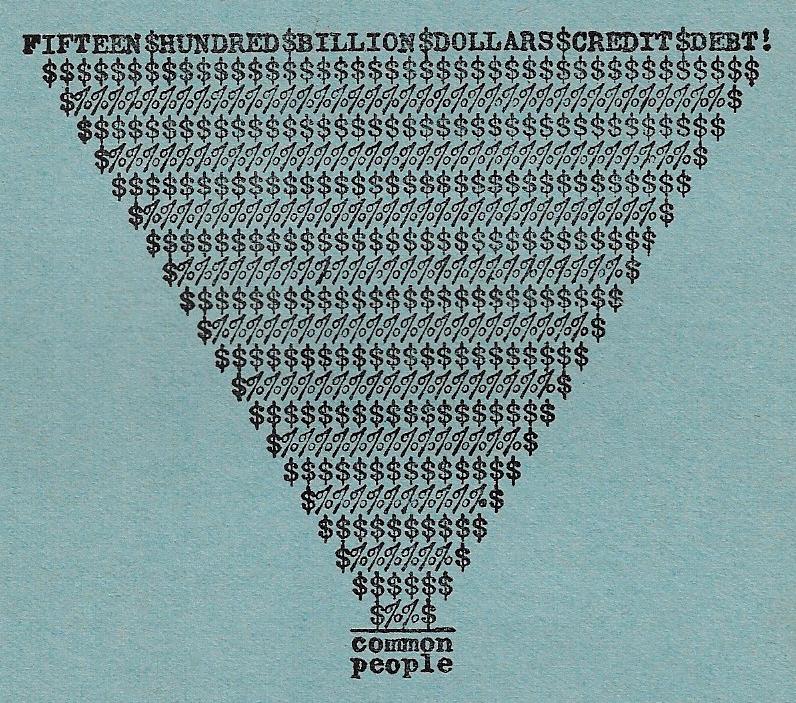
    Smyth inverted pyramid

    There’s was something striking in this representation of Big Money and the Common People that reminded me of other inverted pyramids. The weight of debt image appears on the back cover of what might well be an Outsider approach to reorganizing society, created  by William H. Smyth and surfaced in a number of slim pamphlets in the 1920’s and ’30’s. Smyth is all but forgotten save for the word he coined–“Technocracy”–which itself is not too-well remembered; Technocracy itself was a form of (somehow) democratic form of government ruled by engineers and scientists, and so on, who would somehow relieve us all of the tremendous burden of national debt.  And since this particular pamphlet Technocracy Explained by its Originator William H. Smyth (and then re-titled on the next page as Technocracy by its Originator Reorganization of National Energy Aim of Theory [sic] was printed in 1933 in a particularly bad year of the Great Depression, Smyth might have attracted a number of other-involved citizens who were now paying attention for some sort of anything that might relieve society of its monetary golem. 

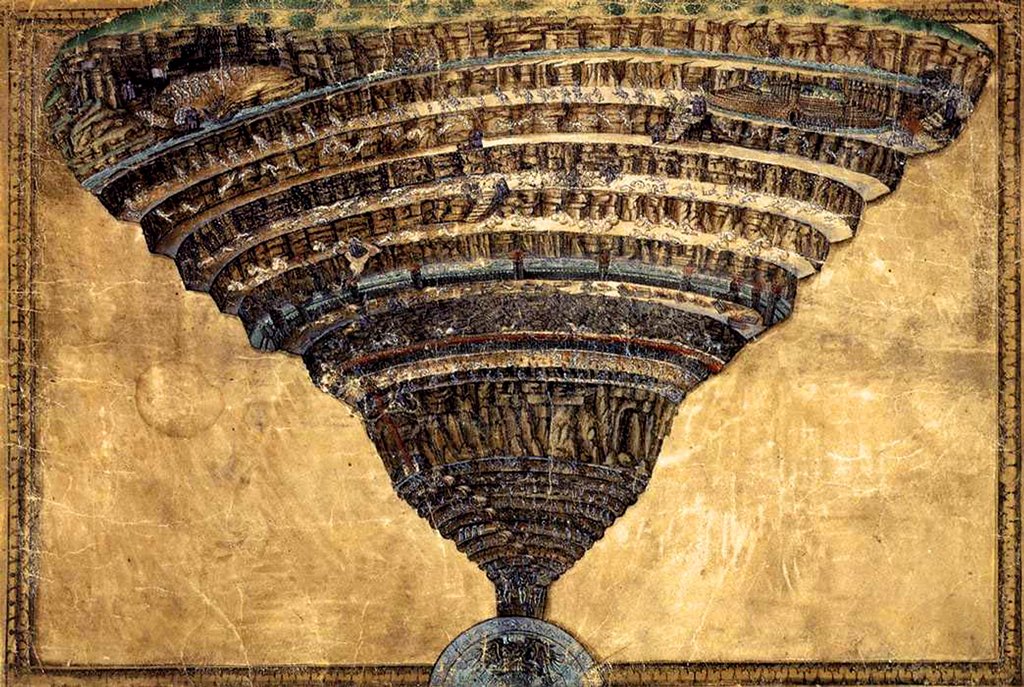
    In any event, the image on the rear cover was pretty striking, though I can’t find reference to it in the text (even though there is a reference here to this book itself, a piece of advertising in the book that someone has already found and perhaps purchased). It reminds me slightly of something else, a popular renaissance depiction of Dante’s inferno, by Sandro Botticelli:

    Inferno botticelli

    [Source: https://commons.wikimedia.org/wiki/File:Sandro_Botticelli_-_La_Carte_de_l%27Enfer.jpg]

    It is common to see the Inferno structured this way, as is the depiction of debt heaped on the back of ordinary people, another inverted pyramid–now that I said that, I can’t think of another image. That said, I know it has nothing to do with the pyramid on the U.S. one dollar bill, as that didn’t make its first appearance for another two years after the Smyth paper. So there’s that.  

    ·Posted by :

    ·in:


  • On Children’s Games in NYC, 1914

    JF Ptak Science Books  Post 2724
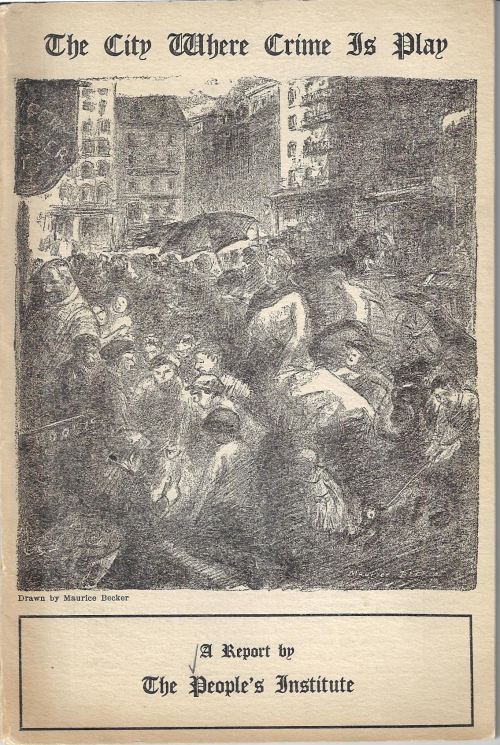
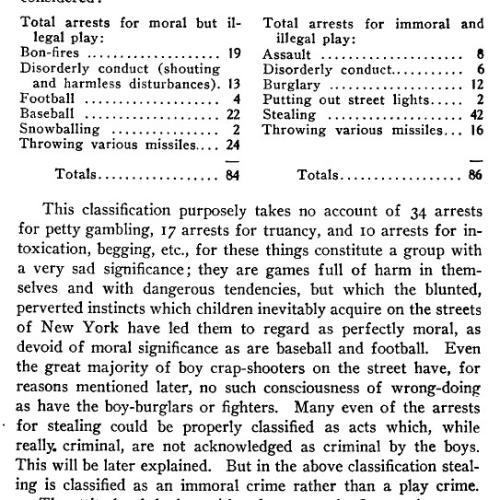
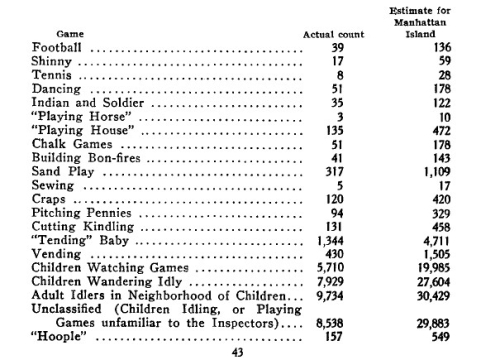
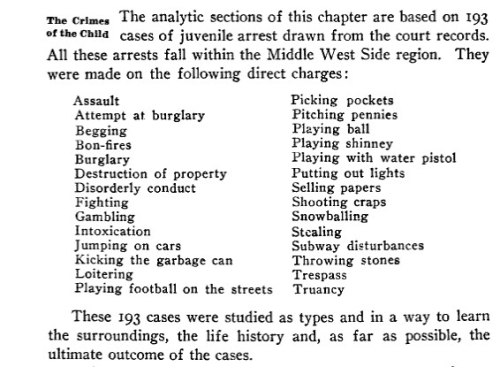
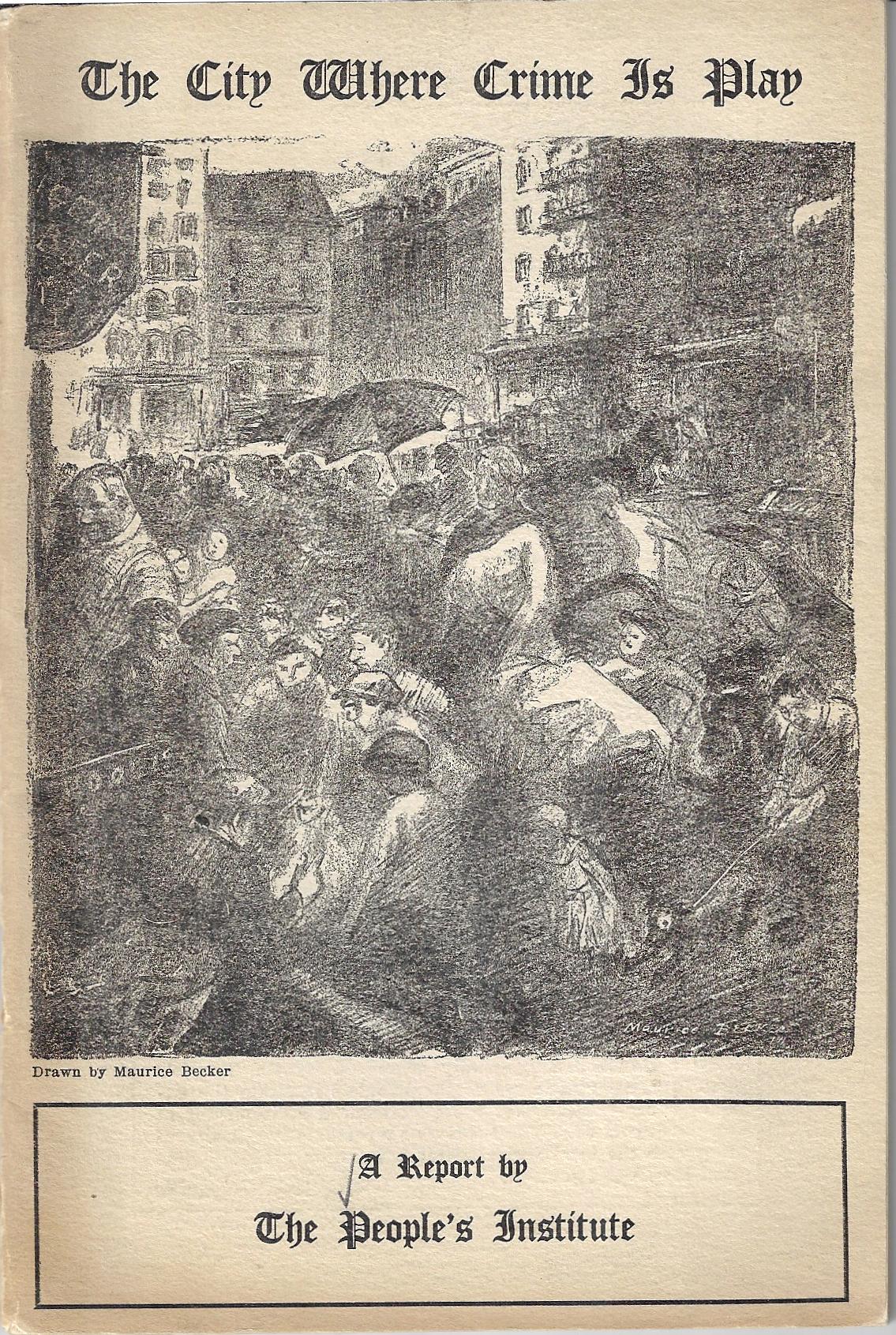
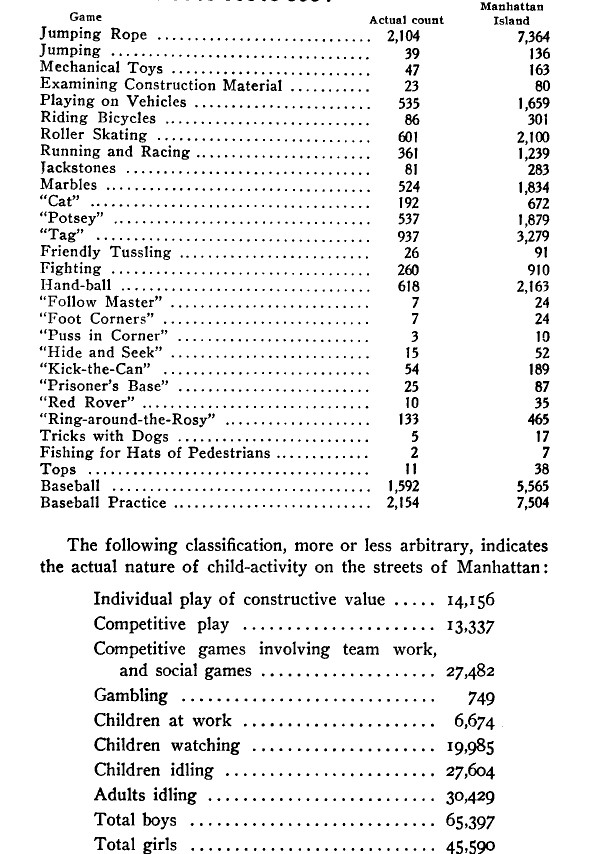
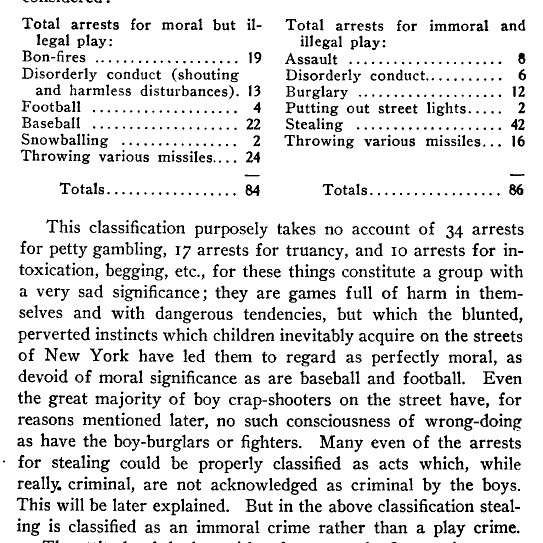
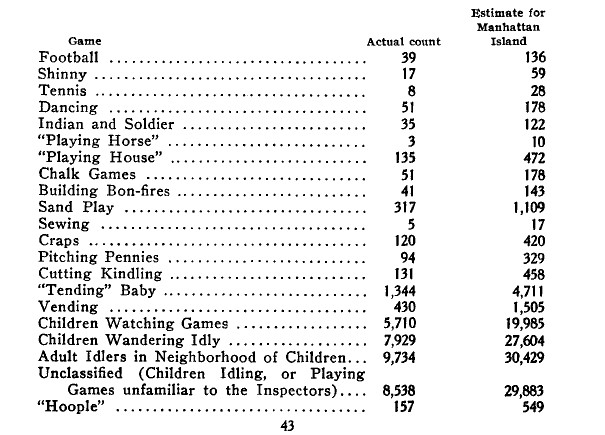
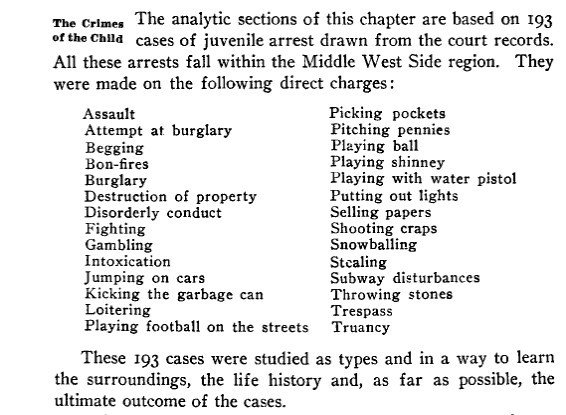
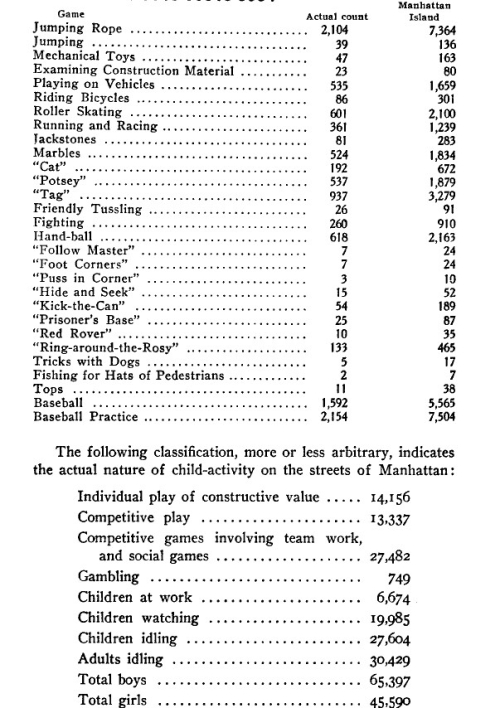
    City where crime is play _5_ cvrIt was the provocative and strong cover art was the work of Maurice Becker, 1889-1975, ( who “…was a radical political artist best known for his work in the 1910s and 1920s for such [seminal] publications as The Masses and The Liberator”–Wikipedia) that drew me into this pamphlet. John Collier’s1 The City Where Crime is Play, a Report by The People’s Institute2 is a slim pamphlet with an odd and I thought metaphorical title, though it turns out that this is exactly the subject of the work. Collier collected data from 400 or more collectors who made what sounds like fairly unscientific surveys of children’s games in the Middle West Side of Manhattan on how kids played and the possible connection between that “play” and crime. He evidently finds something there, some sort of correlation that I do not understand and really don’t need to, presently, though the games that he collected where of interest. In general though The People’s Institute and Collier worked for the social welfare, and especially so for immigrants (Collier going on to become the Commissioner of Indian Affairs under FDR), and perhaps this was a simple work to parents on keeping a watchful eye out on the kids so that their play didn’t veer into truancy, or something along those lines.


    In some ways the listing of children’s games and gamey-truancy and petty crimes, as well as the quality of the morality of their play puts me in mind of the vast and complex paintings of the Netherlandish Renaissance master Brueghel the elder in depicting the very busy town life and children’s games of 16th c Holland. The 80 or so identified games in the Brueghel are indeed games, and is a more complete identifier of children’s activities in 1560 than the lists that appear in the Collier work.  Sending out hundreds of people to observe or question kids about the games they were playing on the streets of Manhattan in 1914 sounds a bit like a time capsule, and so the connection to Brueghel, who definitely painted a time capsule encyclopedia of the games children played.Collier’s is not nearly as complete, and Brueghel made no connection to crime 
    City where crime is play _4_
    City where crime is play _4_
    City where crime is play _4_

    City where crime is play _4_

    Notes

    1. John Collier (May 4, 1884 – May 8, 1968), a sociologist and writer, was an American social reformer and Native American advocate. He served as Commissioner for the Bureau of Indian Affairs in the President Franklin D. Roosevelt administration, from 1933 to 1945. He was chiefly responsible for the “Indian New Deal,” especially the Indian Reorganization Act of 1934, through which he intended to reverse a long-standing policy of Cultural assimilation of Native Americans.” “From 1907 to 1919, he worked as secretary of the People’s Institute, where he developed programs for immigrant neighborhoods, emphasizing pride in their traditions, sponsoring lectures and pageants, and political awareness…”–Wikipedia

    2. “The People’s Institute was founded in 1897 by Charles Sprague Smith to teach the theory and practice of government and social philosophy to workers and recent immigrants in New York City. It sponsored lectures, classes, concerts, and other community activities at Cooper Union and throughout New York City, though principally on Manhattan’s Lower East Side. The Institute ceased operations in 1934. The People’s Institute is recognized most often for its contribution as a community educational center for working class adults and immigrants. It sponsored lectures, craft guilds, art and music leagues, a training school for community workers, and adult education classes in history, social science, literature, as well as nutrition and health…The Advisory Council comprised over forty [strong]  individuals including Lyman Abbott, R.R. Bowker, Nicholas Butler Murray, Andrew Carnegie, R.W. Gilder, Samuel Gompers, Jacob A. Riis, Jacob H. Schiff, Anson Phelps Stokes, J.G. Phelps Stokes, Oscar S. Straus, and Lillian D. Wald.”–Historical note on the People’s Institute Archives at the NYPL. 
    ·Posted by :

    ·in:


  • A Unique Copy of a Rorschach Test Interpretation Tool (1947)?

    JF Ptak Science Books   Post 2721

    Yesterday I wrote about a problem I was having in understanding a difficult-to-understand document on applying a computer in creating a bibliography of meteorology from 1949. Today the nature of the object is just completely outside anything I know about, and I thought if I posted something here and other palces in the Great Social Media that someone out there in Webtopia will know exactly what this thing is.

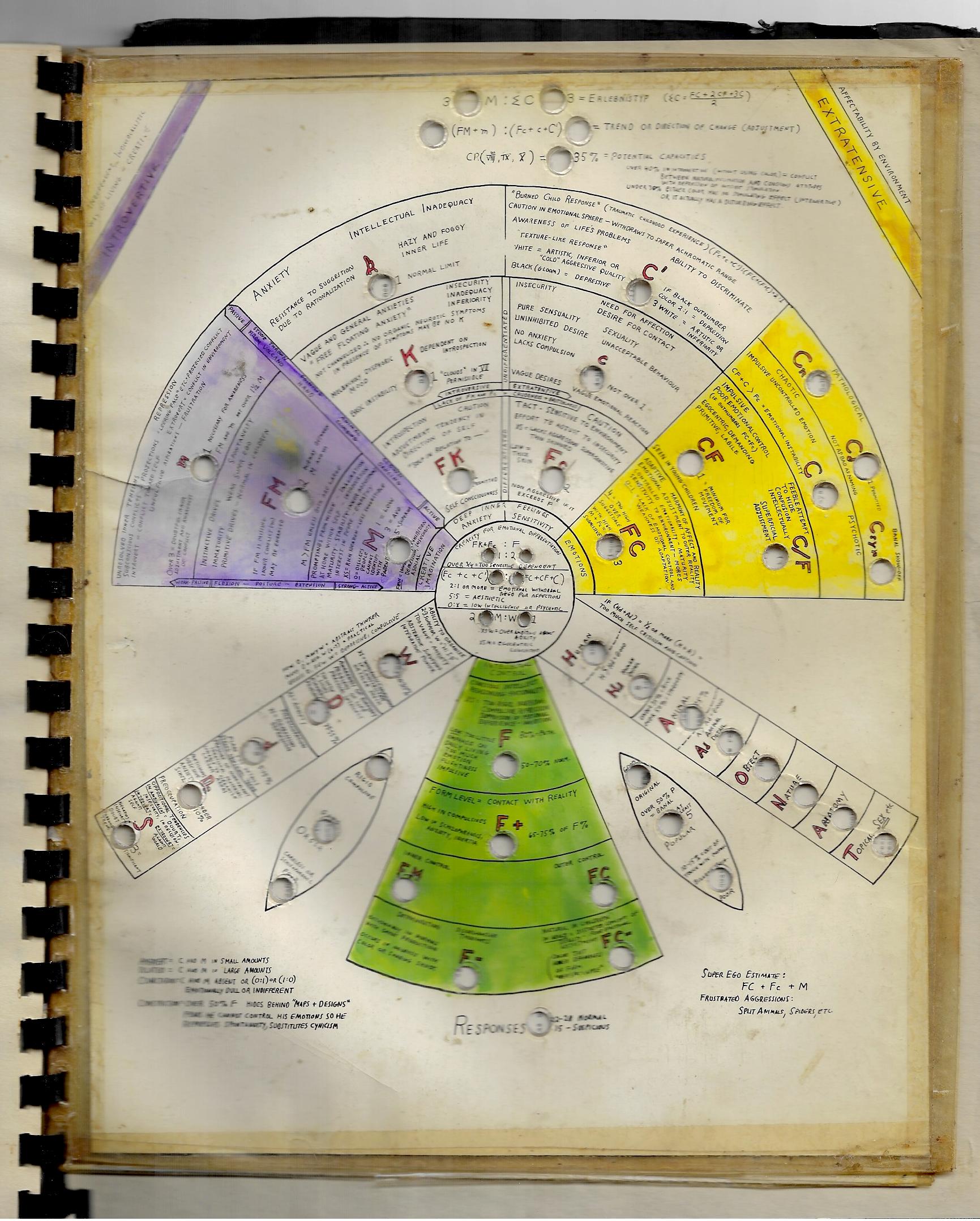
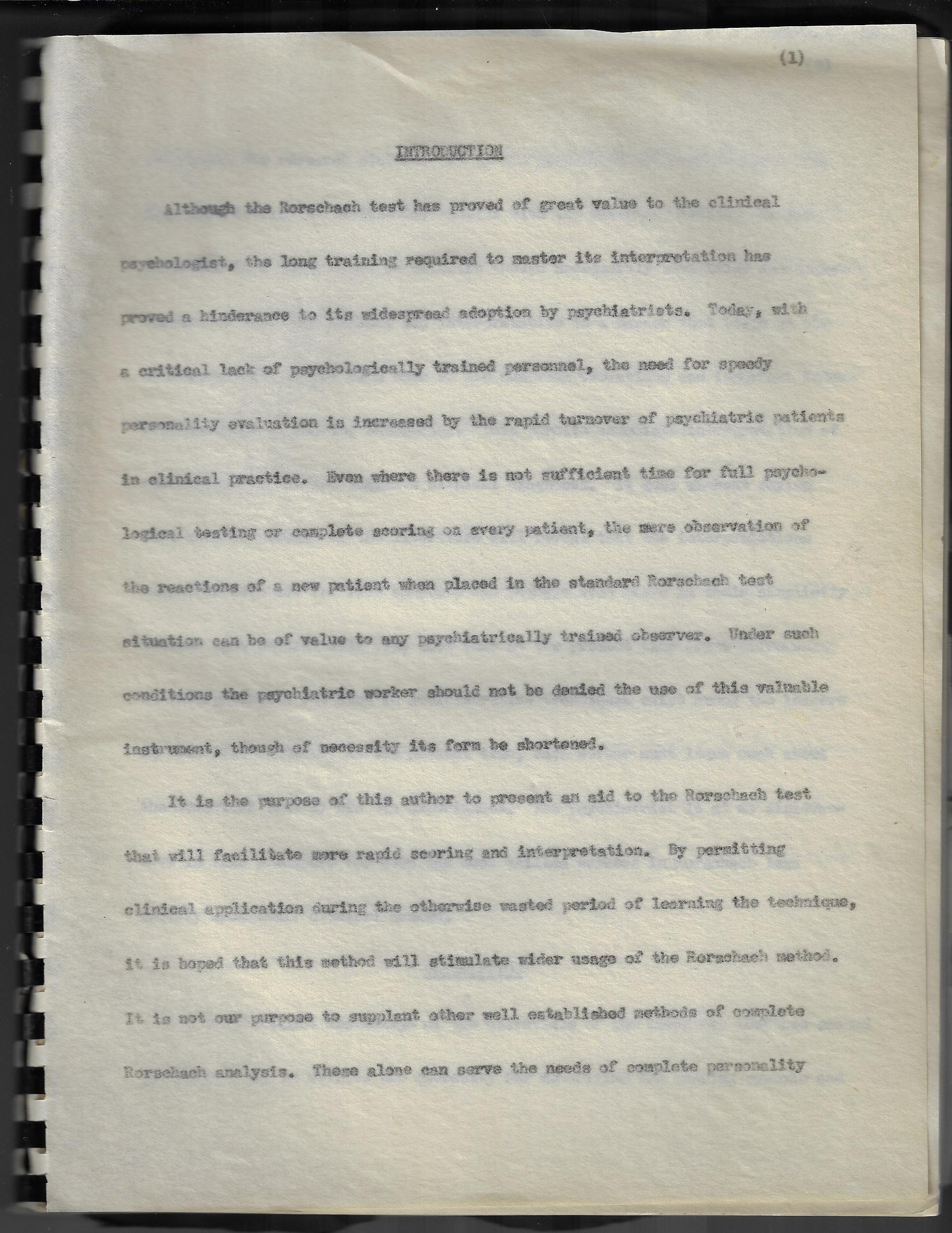
    The subject here is a paper by Dr. George Ulett called A Rapid Method of Rorschach Analysis, which was created in 1947. The whole production is obviously home-made, the text being some generation of carbon copy from the typed original, with the “calculator” or rapid-method template being hand made. I can find no evidence in WorldCat/OCLC that this work was published as it stands. I also cannot tell if it was incorporated in a later work. I also cannot tell its utility, but given Dr. Ulett’s achievements in the field, and particularly within the Rorschach specialty, he must have seen a use for this tool.


    Ulett rorschach _1_

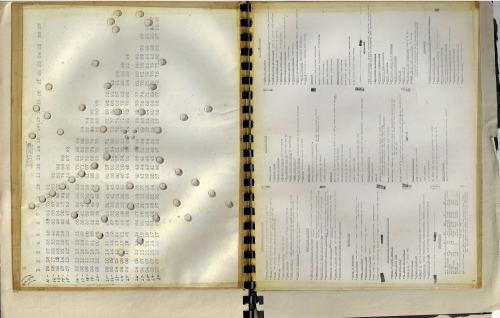
    And the notes on the reverse of the Rorschach tool:

    Ulett rorschach _2_

    Notes:

    Ulett, George A.: “…former director of the Missouri Division of Mental Diseases where, under his leadership, Missouri went from one of the worst-funded mental health programs to a national leader. He founded what is now the Missouri Institute of Mental Health. He was former medical director of St. Louis City’s Malcom Bliss Hospital. He was instrumental in setting up alcohol and drug abuse treatment programs at city and state hospitals. One of his proudest achievements was to bring racial integration to the city’s mental health system. He was a professor of psychiatry at Washington University, Directory of Psychiatry at Deaconess Hospital, and was in private practice for over three decades.”from obituary at Legacy dot com

    Dr. Ulett was also the author of books and numerous papers, including a number on the Rorschach test, including: Rorschach workbook : a primer for the psychiatrist, with interpretive diagram to permit clinical use while learning the ink-blot test, 1948, and Rorschach introductory manual : a self-teaching primer of Rorschach for the clinical psychiatric worker, 1960.

     (Provenance: Library of Congress, undoubtedly from the author, received May 1947. From the “Pamphlet Collections”, and stamped on the title page with the LC/ surplus/duplicate stamp. 11×8.5”, 18, 2, pp, plus a plastic-encased (though retrievable) cardboard hole-punched enumerator for recording Rorschach responses. GVC bound in manila wrappers, both of which are detached, though present.)


  • The Perfect Cherry to Top Off a Piggery Pie (1845)

    AJF Ptak Science Books   Quick Post

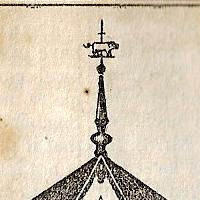
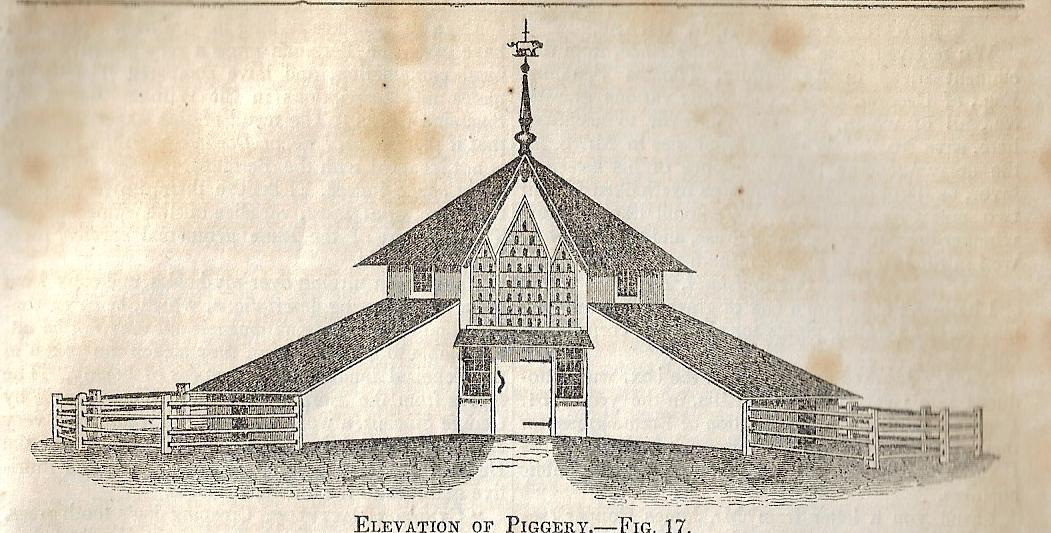
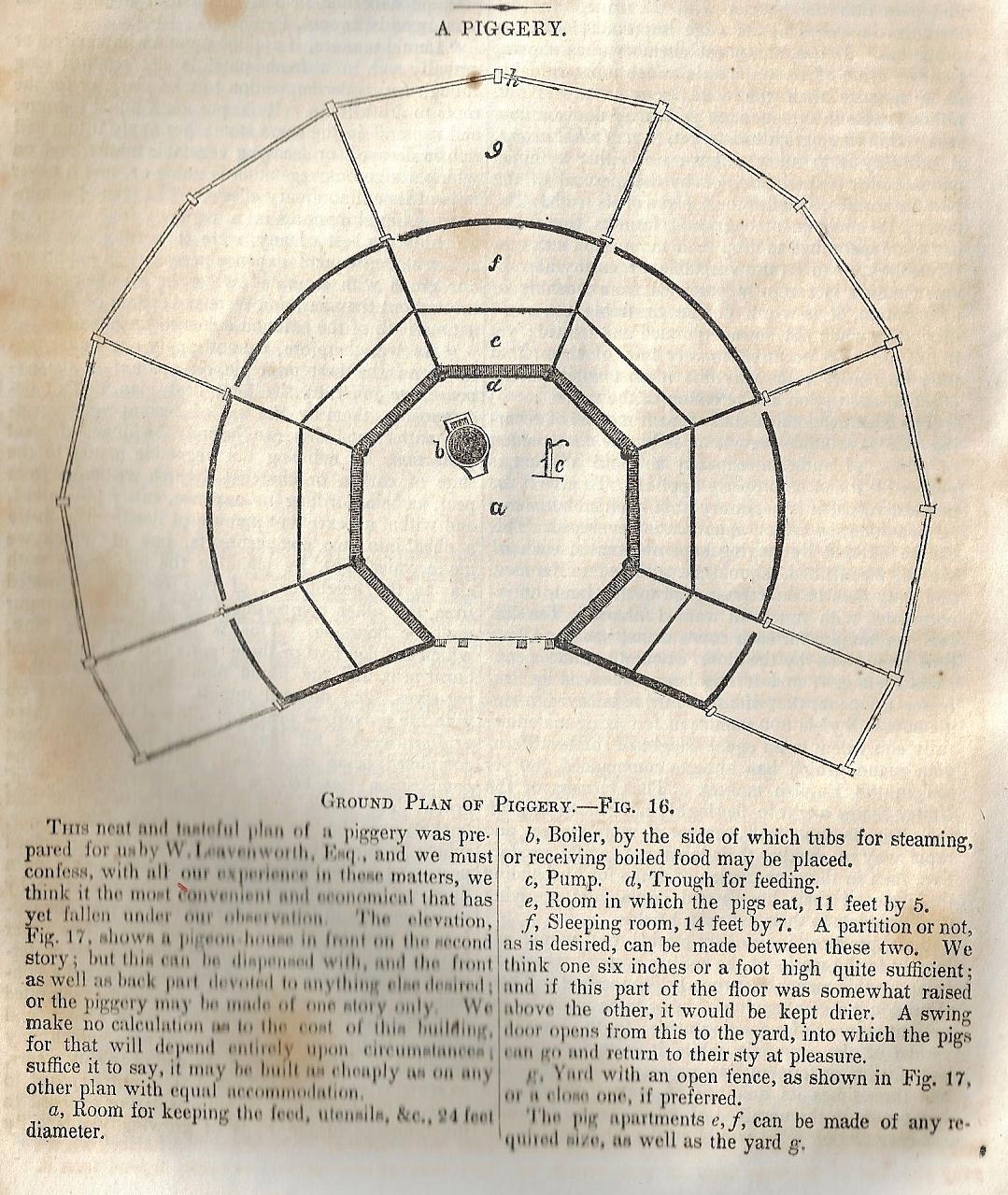
    In the history of humans building things there is a tendency to engage in celebration for the completed job, an effort well done. These victory monuments can be a flag, or spire, or dirigible mast, or lightning rod, or transmitters, or small statues, and so on. There was another example of this, unexpectedly found in the pages of endlessly interesting and resourceful American Agriculturalist, this one from volume 4, 1845.  This was another in a series of articles on farm buildings, and the building in question was a piggery. Now the plan for the piggery seemed a little uneven, and not very clear, and not all that interesting, even for a piggy. But the elevation revealed the early-Victorian beauty of the structure, which was a real surprise. The fabulous aspect of it though was the figure in the weather vane, which, upon close inspection, revealed:

    Piggery _3_

    And the full image (which in real life was only about 50mm tall):

    Piggery _2_ elevation

    And the plan, with explanatory accompaniment:

    Piggery _1_


  • Anti-Nazi Christmas Pastoral Letter from the Bishop of Berlin, 1942

    JF Ptak Science Books   Quick Post

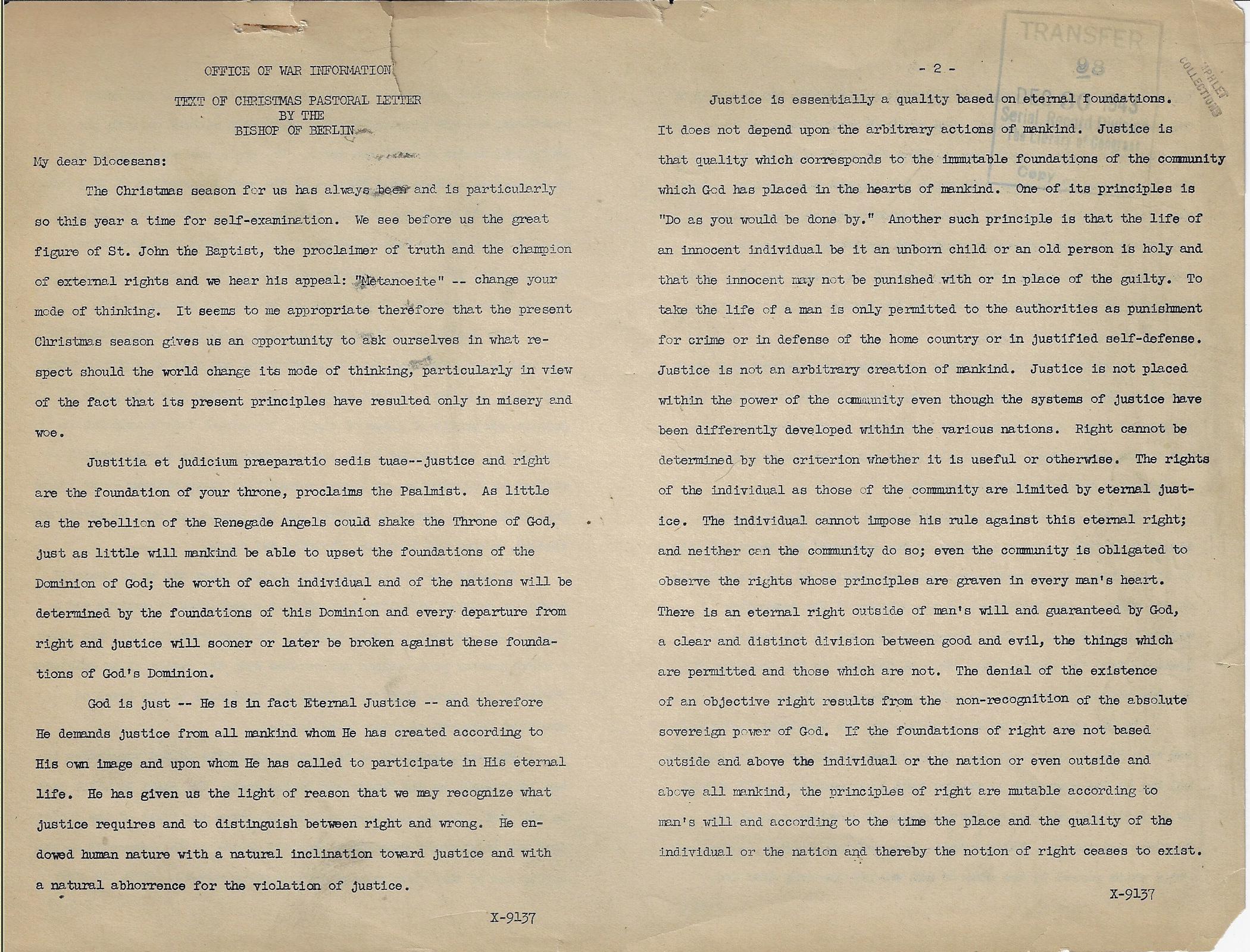
        “(T)he foulest of carrion are those who come clothed in the cloak of humility and the foulest of these Count Preysing! What a beast!”–Adolf Hitler on Konrad von Preysing

    I tried to find the text of this sermon by Dr. C(K)onrad Graf von Preysing1, Bishop of Berlin, for December 12, 1942 online but could not–there was a much more famous address made by Pope Pius at about the same time (which was much longer and well worn in history), but so far nothing for the von Preysing. So, since I have a reprint of it right here (made by the U.S. Office of War Information) I’ll just present the very short document here.  At this point in the war, int eh winter of 1942, Hitler and the Nazis were on the other side of the height of power, the efforts in the East becoming the total defeat that had been awaiting them for most of the year, and the surrender of what was left of the decimated 6th army just weeks away. But there was still another 2.5 years before the final downfall, during which many millions of people will be murdered and killed. So, making such comments in Berlin in the winter of 1942 was still very dangerous, and Bishop von Preysing was a courageous man.

    Some points from the Pastoral Letter:

    • “…(I)n wartime, when might confronts might and when power seems to be supreme, we are in danger of despising justice…only by acknowledging and respecting right can we hope for a better future for everyone and a just peace for all. Let us examine ourselves and see how far the idea of an eternal, immutable right lives in us and how strongly we are convinced that certain  primeval rights may not be denied any man, regardless of his origin. We must be perfectly clear that the absence of such rights or even a violation of the rights of our fellow man is an injustice towards the alien nation as well as against our own nation. It is the curse of an evil deed that it must continue to conceive more evil…”
    • “Change your mode of thinking.”
    • “Let us always remember that respecting alien rights we acknowledge and profess God’s sovereign rule.”

    Bishop of Rome 1942 _1_

    ·Posted by :

    ·in:


  • A Penetrating Appraisal of Hitler, 1934

    JF Ptak Science Books   Quick Post

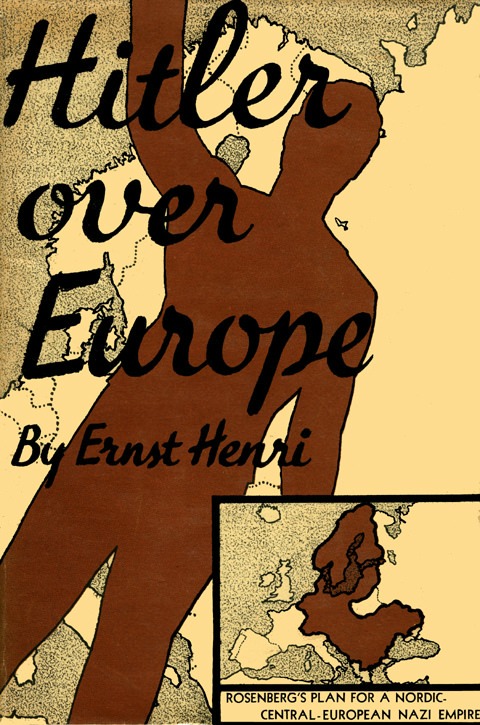
    Books cover Hitler over Europe“Ernst Henri” (a probable pseudonym?) wrote Hitler Over Europe in 1934–it is a very insightful appraisal of Nazism written early in the history of the newly-presiding party of German politics and life. This book was published in 1934 by Simon and Shuster and translated by Michael Davidson, and then published in Argentina and China the following year, and then in England by Dent in 1936. (I’ve checked WorldCat/OCLC and find the printing history a little confusing, but I think that this is about right–also there are more than 240 copies located in libraries worldwide, which means that it is or was a popular title.) 

    It is in the very first paragraph (below), where you can easily see that the author is using high octane. 

    It is interesting to set this appraisal of Hitler’s background and politics against the great Dorothy Thompson’s insights into the man when she interviewed him in 1932…and read him right and then very wrong. (“He is formless, almost faceless, a man whose countenance is a caricature, a man whose framework seems cartilaginous, without bones,” she wrote. “He is inconsequent and voluble, ill-poised, insecure. He is the very prototype of the Little Man. A lock of lank hair falls over an insignificant and slightly retreating forehead. . . .The nose is large, but badly shaped and without character. His movements are awkward, almost undignified and most un-martial. . . .The eyes alone are notable. Dark gray and hyperthyroid—they have the peculiar shine which often distinguishes geniuses, alcoholics, and hysterics…There is something irritatingly refined about him. I bet he crooks his little finger when he drinks a cup of tea.”–quote from Historynet.com http://www.historynet.com/encounter-dorothy-thompson-underestimates-hitler.htm)

    Henri, whoever he was, seems to have clenched his fist around the heart of Nazism. The book is at least worth a good solid browse:

    • The full text, Hitler Over Europe, can be found at the Internet Archive:  https://archive.org/details/hitlerovereurope009891mbp?q=%22Ernst+henri%22+hitler

    “Thyssen”

    “WHO sent Hitler?”

    “Many believe that it was the German middle class, that
    forgotten social force, which nobody thought about and
    which suddenly, in a rapid awakening, burst on to the
    political scene and smashed everything around it. So it
    seemed from without. This is an illusion.”

    ·Posted by :

    ·in:

    —

  • Weekly People, 1942–definitely Not “People Magazine”

    JF Ptak Science Books  Quick Post

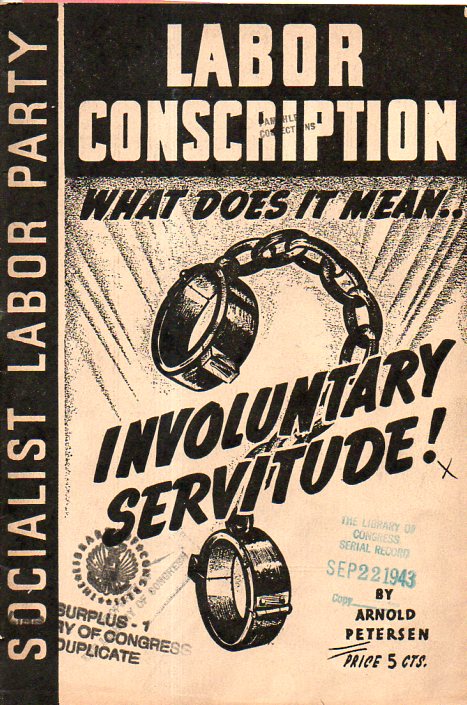
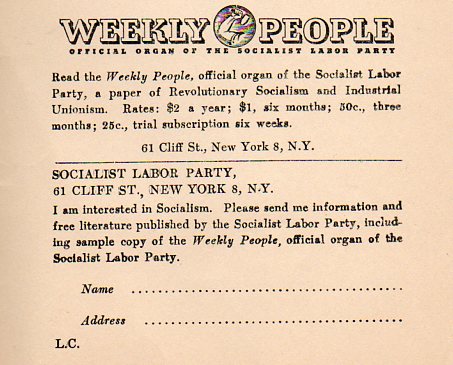
    I have developed a sort-of  collection in the History of Blank and Empty Things series of not-filled-in applications and diaries and questionnaires and such, from Hitler Jugend diaries to notebooks for Nazi Warsaw telephone directories to applications for membership in the Women’s KKK, and so on.  This small installment comes on the back inside cover of Labor Conscription, What Does it Mean…Involuntary Servitude!, a hopeful ad for the reader who might be interested in Socialism and receive the magazine People Weekly, as this far Left pamphlet was after all published by the New York Labor News Company on behalf of the Socialist Labor Party U.S.A. This of course in no way bears any resemblance to the modern People Magazine, the fruits and labor of that periodical being sweets and fats.

    Labor Conscription761 Labor Conscription762


  • Internment Camp in Germany for British Civilians, 1915

    JF Ptak Science Books   Quick Post

    WWI POW civilians Ruhleben _2_ detail

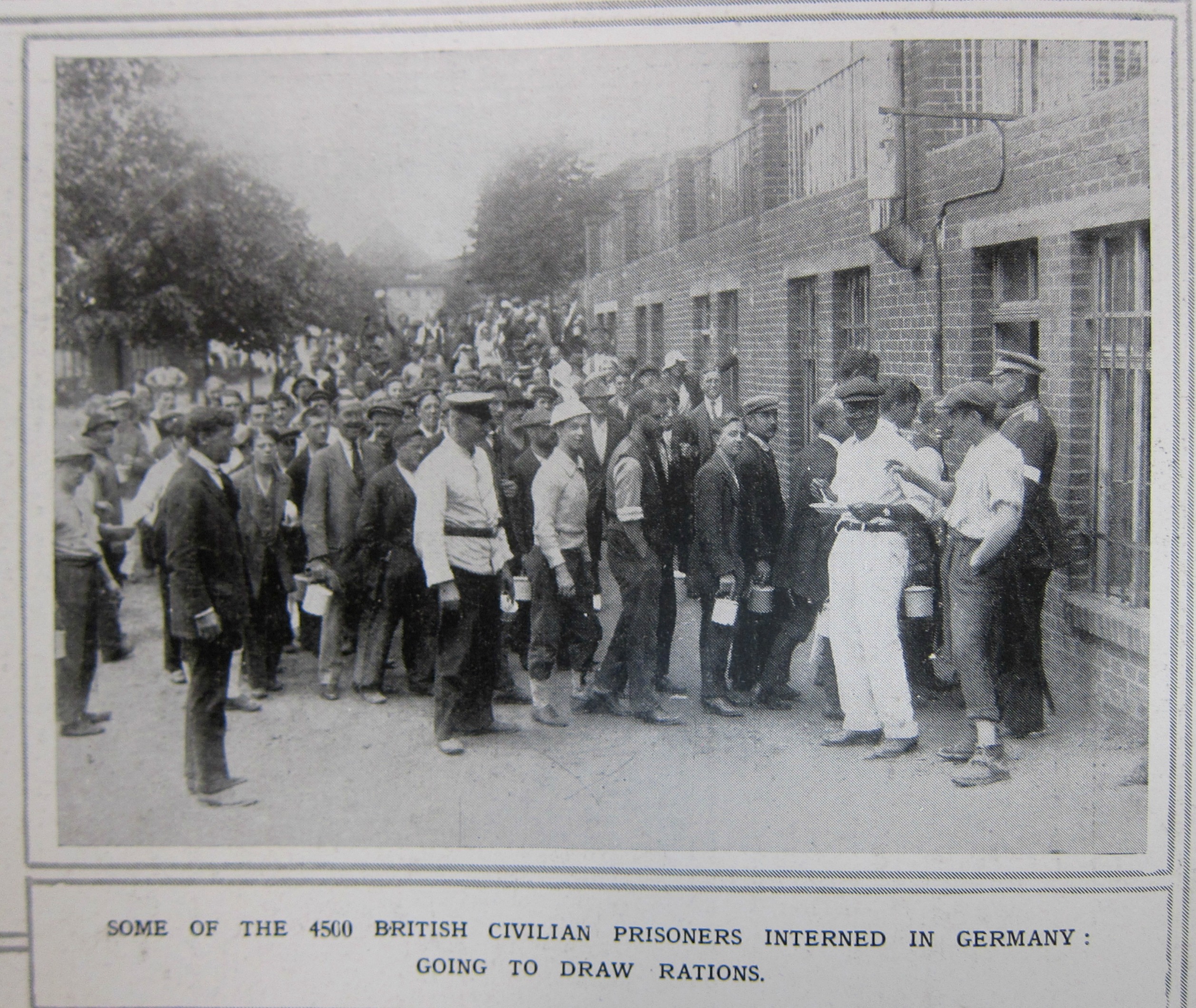
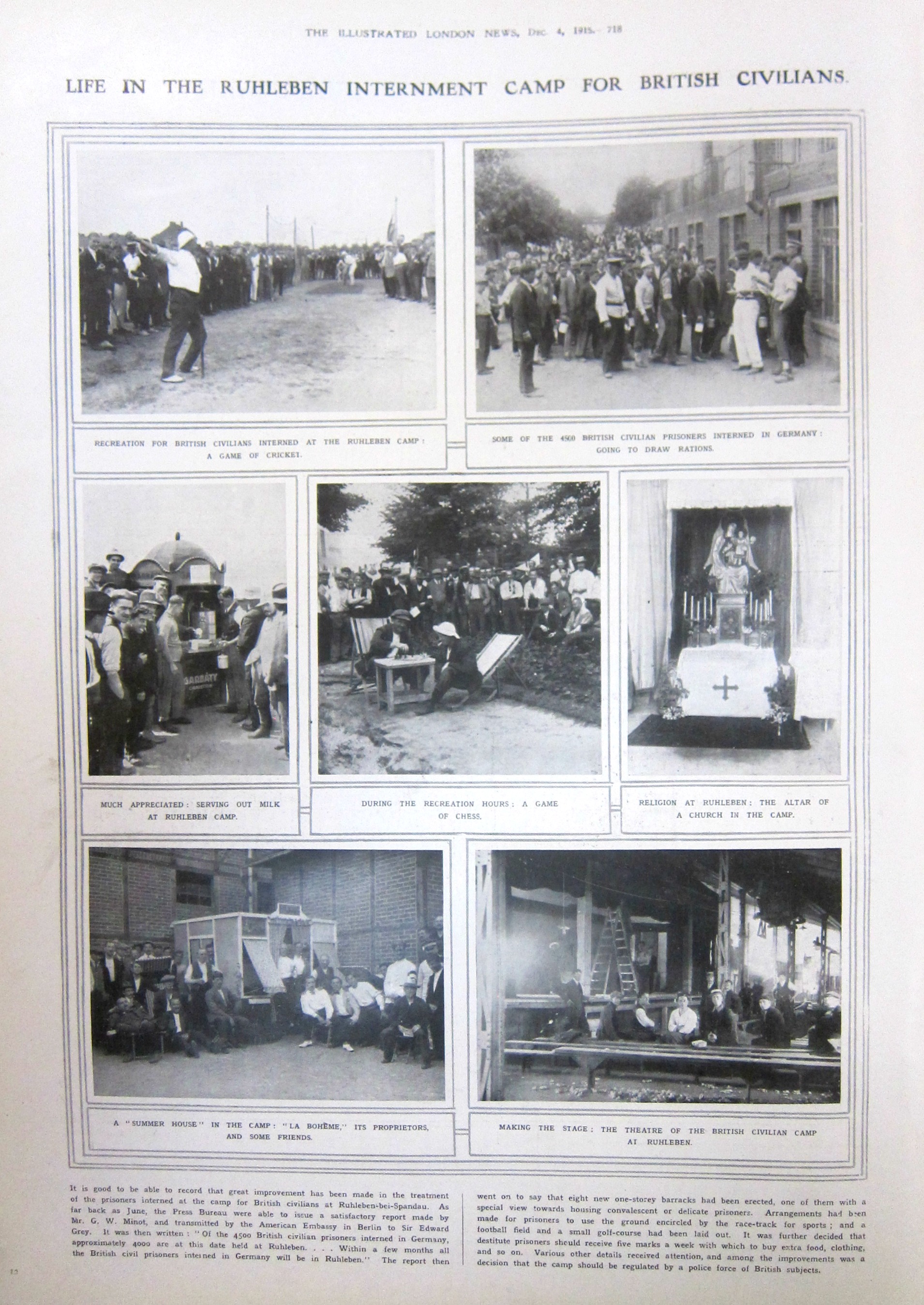
    This image was a little surprising to me when I saw it this afternoon–it occurs in the Illustrated London News for 1915 and even though I have been through all of the issues for that journal for WWI I had no recollection for it…and I certainly do not recall other similar pictures. And so there it is, a collection of photos of life inside Ruhleben Detention Camp, near Berlin, as published on December 14, 1915. (I don’t think “Ruh” is a word in German, but if it was “Ruhn” then the camp would be “Resting Camp” or “Living Camp” or some such.)   In any event the detention camps for Brits in Germany in WWI is something that is not commonly mentioned, so I thought I’d share this find. As it turns out, Ruhleben was a harness racing compound, with people housed in converted stalls–this is something I’ve encountered semi-frequently, this use of horse racing venues as detention centers, as with the internment camps for the Japanese in the western U.S. in 1942+.) Ruhleben seems to have been open and used for the duration of the war, and housed on average about 4-5,000 people at a time. (At one point one of those imprisoned here was James Chadwick, who would discover the neutron in 1932 and be awarded the Nobel Prize in physics in 1935.) 

    WWI POW civilians Ruhleben 1915

    I know that these places existed, of course, though I just do not recall seeing anything about it in the Illustrated London News or the Illustrirte Zeitung (Leipzig). 

    ·Posted by :

    ·in:

    —

  • Electric Biometrics (1921)


    JF Ptak Science Books   Post 2710

    The use of finger prints in identification is fairly old, used in Asia and India long before it became a popular practice in the West.  Also it seems that finger prints as forensic instruments occurs in literature before it occurred in actual police work. Mark Twain uses finger prints as essential legal elements (as well as comic relief) in his novels Life on the Mississippi (1893) and Puddn’head Wilson (1894), no doubt inspired by Francis Galton’s pioneering work on the subject (Finger Prints, published in 1892). Conan Doyle takes things a step further and describes the forging of finger prints, which I think was a brilliant idea.  All of this takes place before finger prints were more or less firmly established as an identifying tool, as the first conviction based on finger print evidence did not occur (in Great Britain) until 1902, while its weight in the conviction of murderers wasn’t felt until a first conviction was made using them in 1905 (and then 1910 in the U.S.). 

    Finger prints _1_

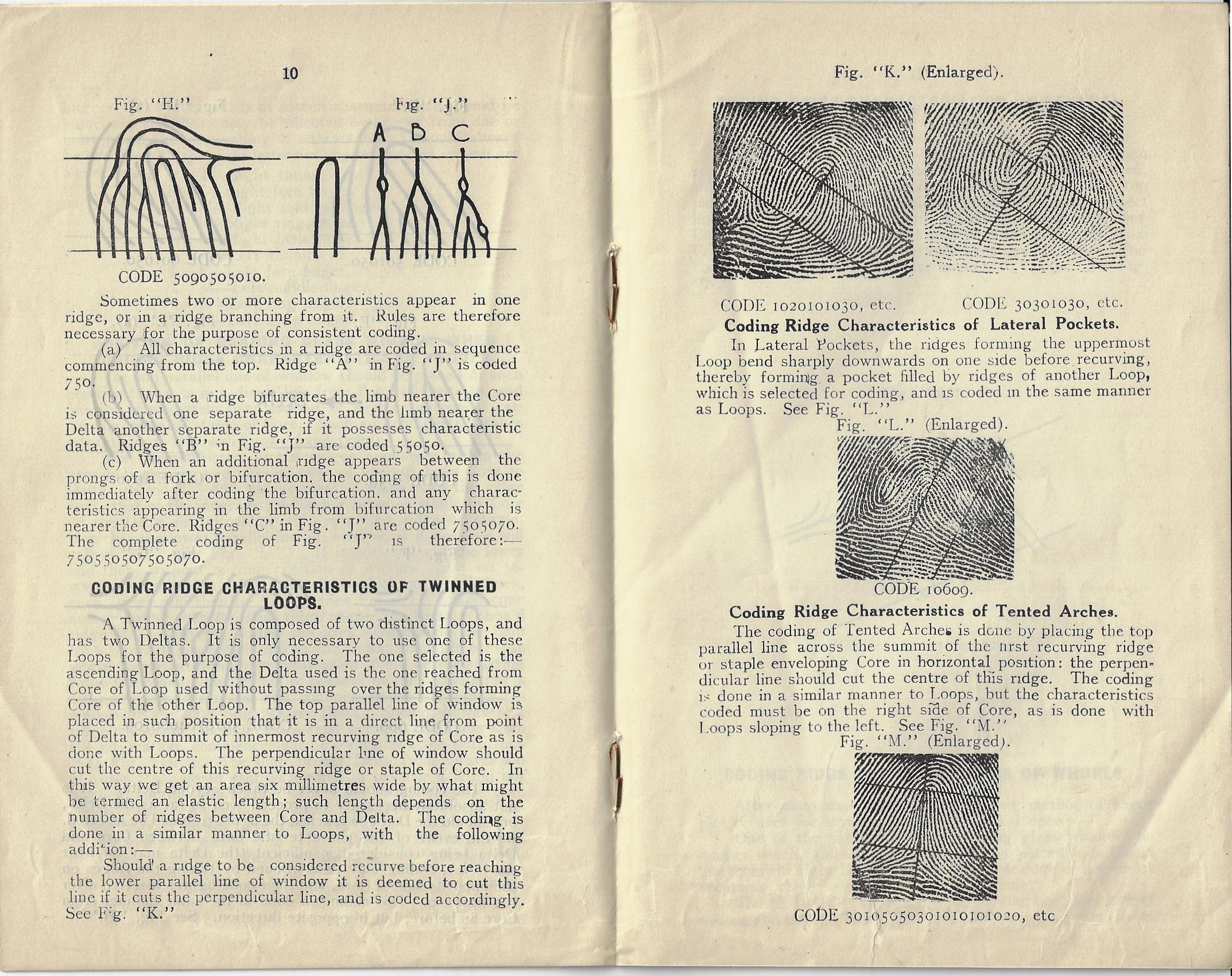
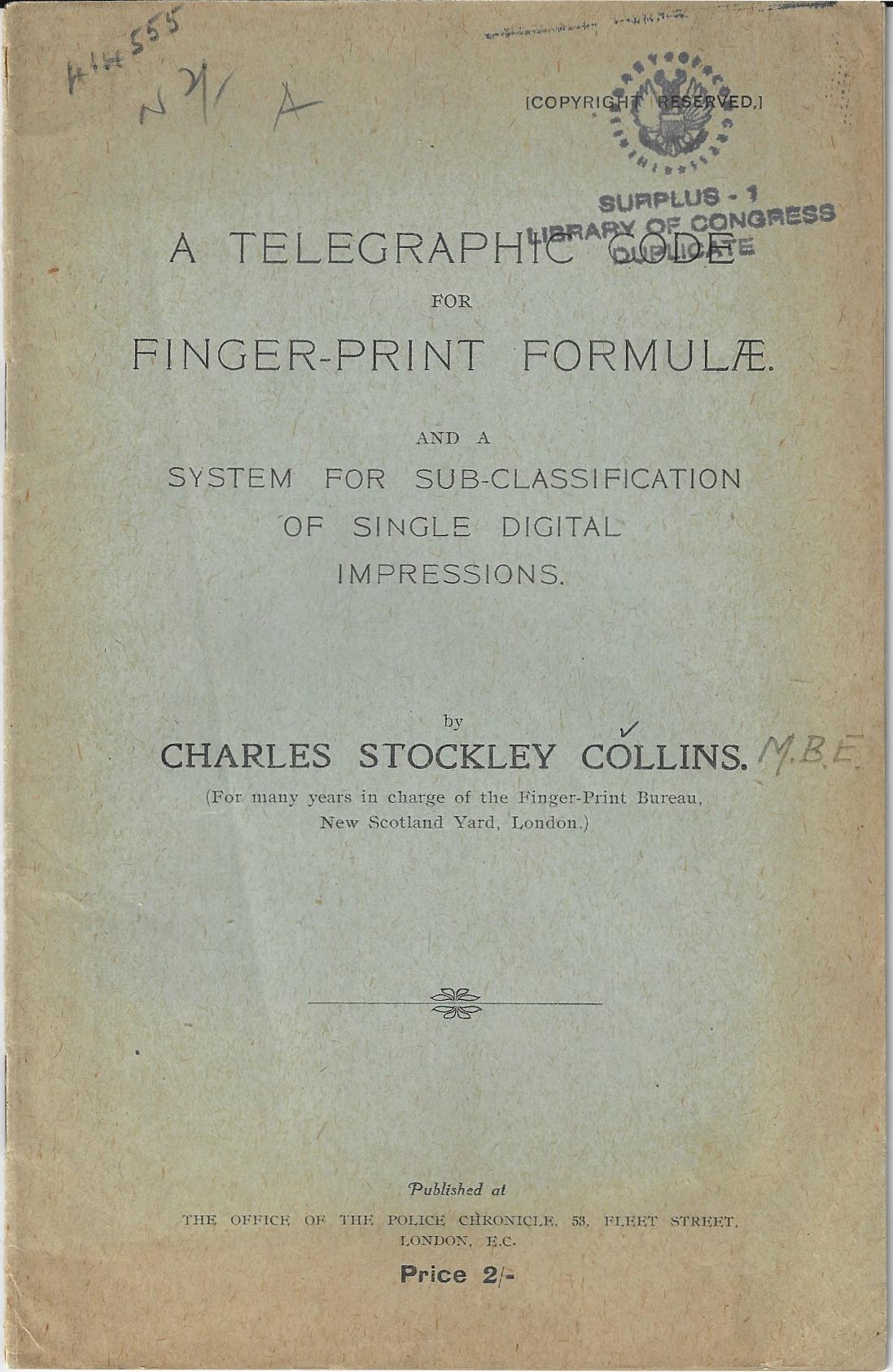
    Which brings us to these fascinating images1 of finger prints and their enumeration and transmission by wire,  which was the brainchild of the foremost finger print expert in the U.K., Detective Chief Inspector Charles Stockley Collins (M.B.E.), chief of the Finger Print Bureau at the New Scotland Yard.  I cannot determine how long in advance of this publication that he employed the idea of transmitting finger print data by telegraph, but it seems to be an excellent idea, sending important information relatively instantly over distances to help in conducting criminal investigation. It may be that this idea–far in advance of modern transmission practices, even though Arthur Korn’s first “facsimile” images were made as early as 1902–was seen at the time as both fantastic and obvious, the second impression coming almost immediately on the heals of the first, like one of those terrific ideas that seemed “obvious” once it was first stated. 

    Notes:

    1. Charles Stockley Collins. A Telegraphic Code for Finger-Print Formulae and a System for Sub-Classification of Single Digit Impressions. Published at the Office of the Police Chronicle, London, (1921).  9×6″, 17pp, with two plates and 15 illustrations/drawings in text. There are only two copies of this work located in WorldCat/OCLC (Cornell and the British Museum); for all of what Mr. Collins accomplished, this seems to be his only publication outside of journals. 

    Finger prints _2_