A Daily History of Holes, Dots, Lines, Science, History, Math, Physics, Art, the Unintentional Absurd, Architecture, Maps, Data Visualization, Blank and Missing Things, and so on. |1.6 million words, 7500 images, 4.9 million hits| Press & appearances in The Times, Le Figaro, Mensa, The Economist, The Guardian, Discovery News, Slate, Le Monde, Sci American Blogs, Le Pont, and many other places… 5000+ total posts since 2008.

Category: Social History

  • On Nationalizing Essential Industries and Resources of the U.S. (1934)

    JF Ptak Science Books   Quick Post

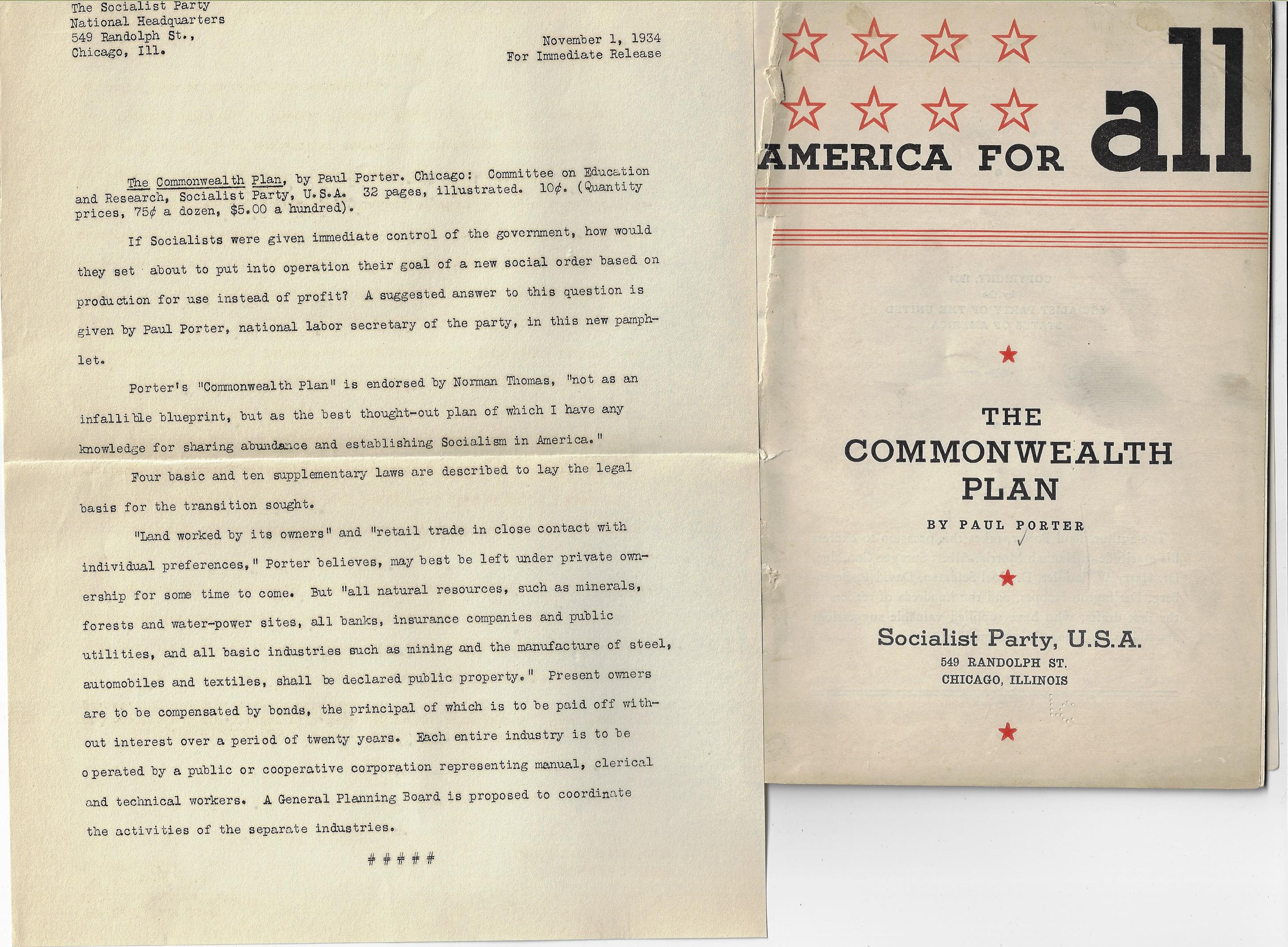
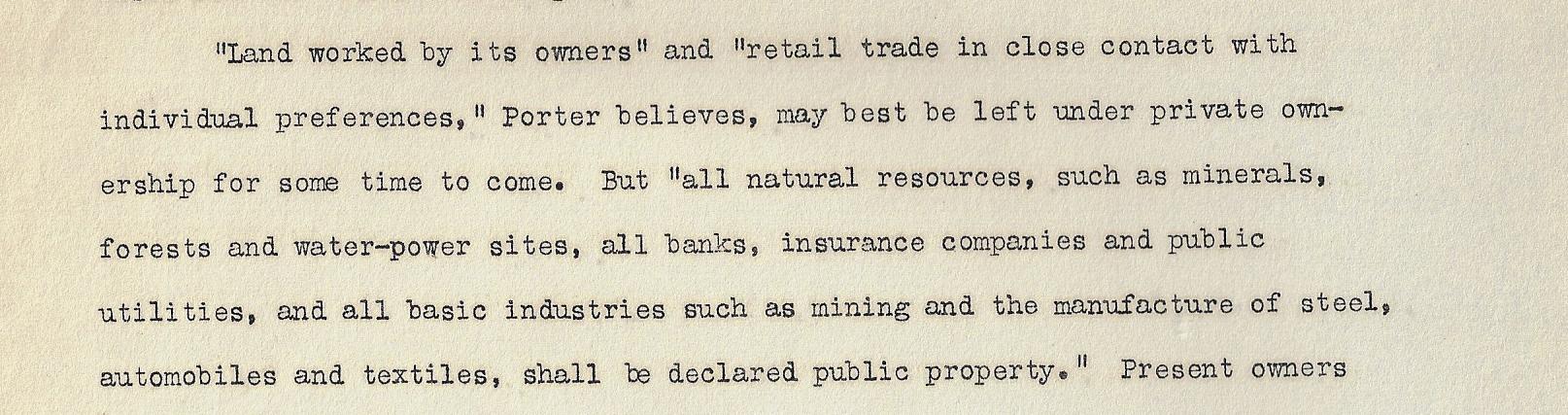
    Here’s an idea that didn’t go very far, brought to you by the Socialist Party, U.S.A. in 1934. Paul Porter’s America for All took a little too much liberty with the existing sentiment that “America” should be owned by “all”, and applying it very liberally (sorry) and literally:

    Socialist _3_


    Socialist part 1934 _2_

    ·Posted by :

    ·in:


  • Anti-Irish Propaganda–the “Irish Frankenstein”, 1882

    JF Ptak Science Books   Quick Post

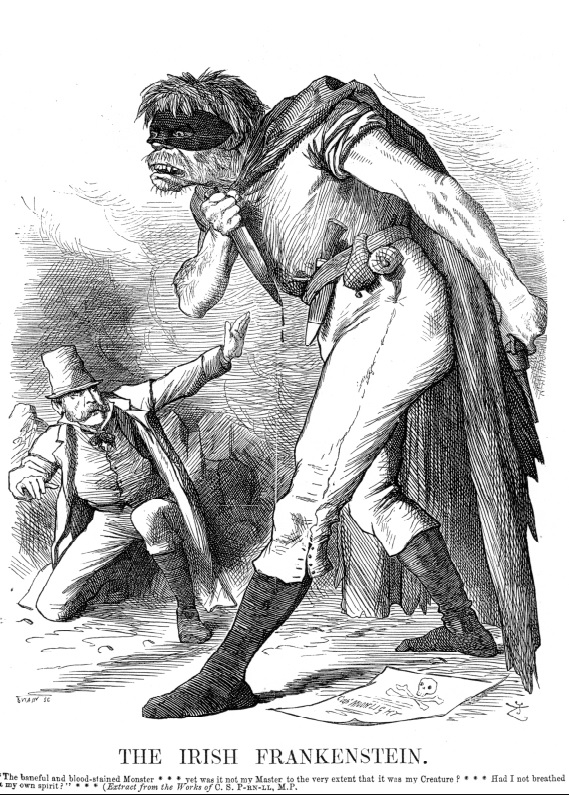
    Is is easy to say that the editors here made a mistake labeling a monster “Frankenstein” as the Mary Shelley creation was only called by its creator’s name by popular usage–but no matter, the message to the readers of Punch magazine where this full-page political cartoon appeared in May 1882 was very clear, and as damaging as it could be short of baby-eating. I think though that the title was referring to the cowering figure in the background, who is supposed to be Charles Stuart Parnell, as “Frankenstein”, and the “monster” was a radical aspect of the Irish Nationalist movement. The image was made in response to the Phoenix Park assassinations which occurred just weeks earlier, and Punch no doubt wanted to send a hard message to its readers.  In any event, I usually come back to the defense of the original “monster”, who was thoughtful, well-read, and philosophical, and not much like how he would be later portrayed. 

    Punch Irish frankenstein


    ·Posted by :

    ·in:


  • Abbreviating Auschwitz: a Construction Agreement for the Construction of the Buna Works (FULL DOCUMENT)

    JF Ptak Science Books   Post 2676 (Note: I wrote about this elsewhere on this blog seven or eight years ago–at that time I reproduced only a handful of pages, beign cautious about damaging the document. I reproduced the whole thing here because, well, it should be, whether the original is damaged or not. I can find no other copy listed in the WorldCat/OCLC, and searches of other sources reveal no other copies as well.)
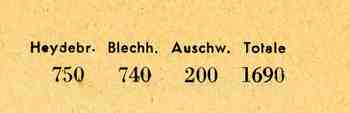
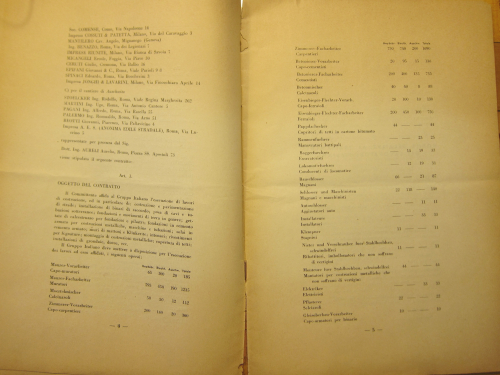
    Auschwitz abbreviation
     

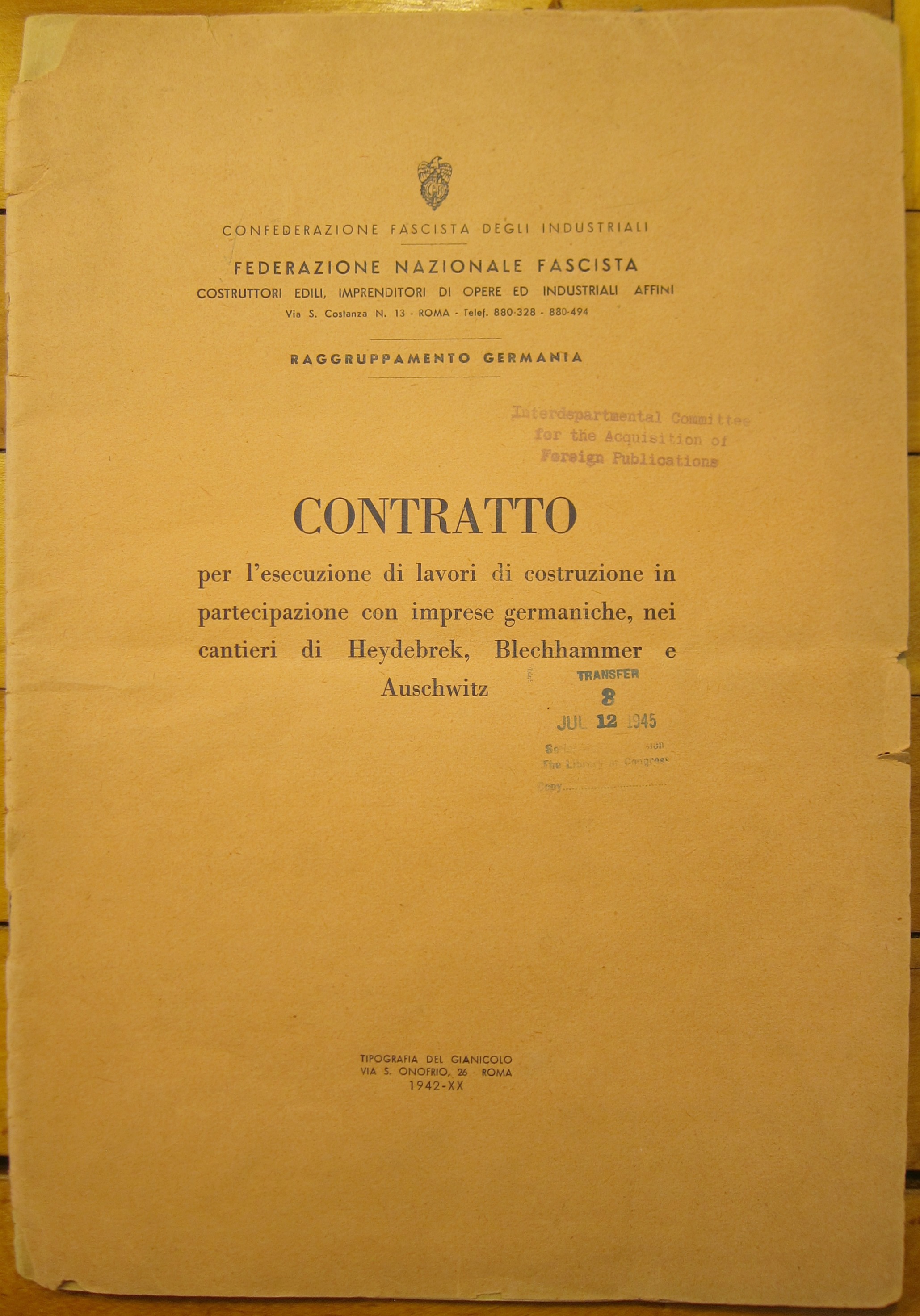
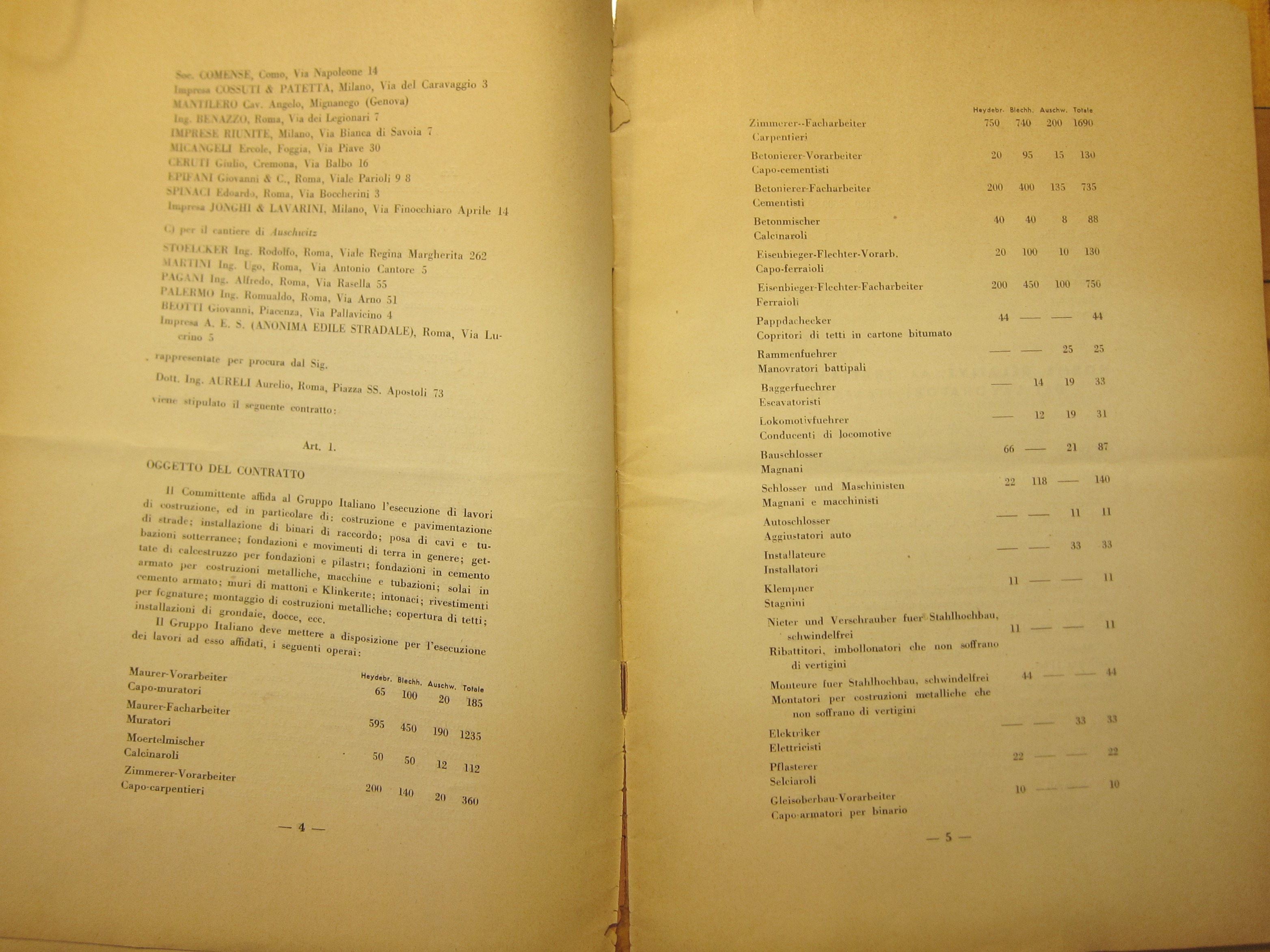
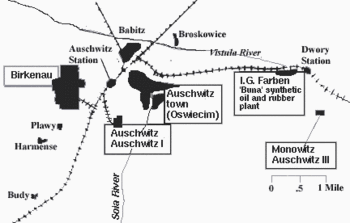
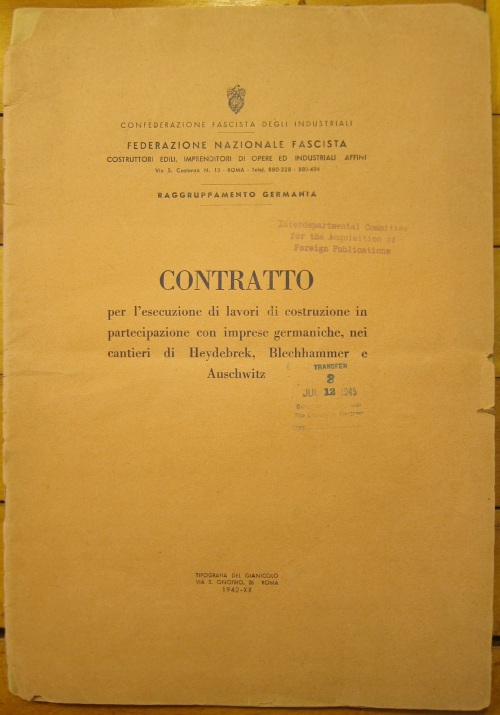
    This seemingly innocuous 1942 pamphlet is an outline of agreements for a contract of labor. The people contracting the work is IG Farben, and the laborers are “foreign worker” Italians (represented by the Confederazione Fascista degli Industriali), and the work to be completed is the Buna Works at Auschwitz (part of a vast complex of slave labor, industry, and death, constituted by as many as supporting camps), as well as other work at the forced labor camps at Heydebrek and Blechhammer.

    The full title reads of the work reads:

    Contratto per l’escusione di lavori di construzione in partecipazione con imprese germaniche, nei cantieri di Heydebrek, Blechhammer e Auscwitz (contract to perform construction work in participation with German companies, in the yards of Heydebrek, Blechhammer and Auschwitz) It was printed by Tipografia del Gianicolo, in Rome, 1942, by the Confederzione Fascista degli Industriali, Federazione Nazionale Fascista Raggruppamento Germania.  The document measures a fragile 30.5 x 21 cm,  and is 29 pages long.  Like dozens of thousands of other things here at the store, this was formerly in the “Pamphlet Collection” of  the Library of Congress (which received the publication 12 July 1945) until we purchased the collection at the end of 1999. The full document is reproduced below. 

    Quite apart from what was happening at these place, the Italians and the Germans were doing the complex but simple business of figuring out where to put the thousands of workers, making sure that they get paid, providing for some sort of maintenance for the workers’ health, salaries, benefits, work schedules, breaks, vacations, incentives, mailing and the post, and so on.  All of the bits of the most mundane things that go into a large construction projects, like building a high rise, or a tunnel, or a highway, or a bridge to hell.  This contract could’ve been for just about anything at all.  But it isn’t.  Its for building a part of the Auschwitz complex when anyone with any sense whatsoever knew what was already going on there.

    I suspect that the vast majority of the Italian workers didn’t expect what they were getting into–and from what I have read, they were badly treated, even more poorly fed.

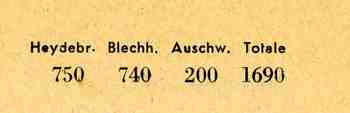
    Of the many terrible things in this document I was really bothered to see Heydebrek, Blechhammer and Auschwitz abbreviated at the top of some of these pages.    This is just so wrong. Wrong on every level, being an attribute of the nothingness, of the emptiness, of this document. 
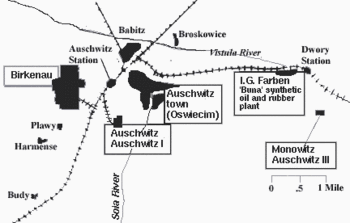
    Auschwitz map

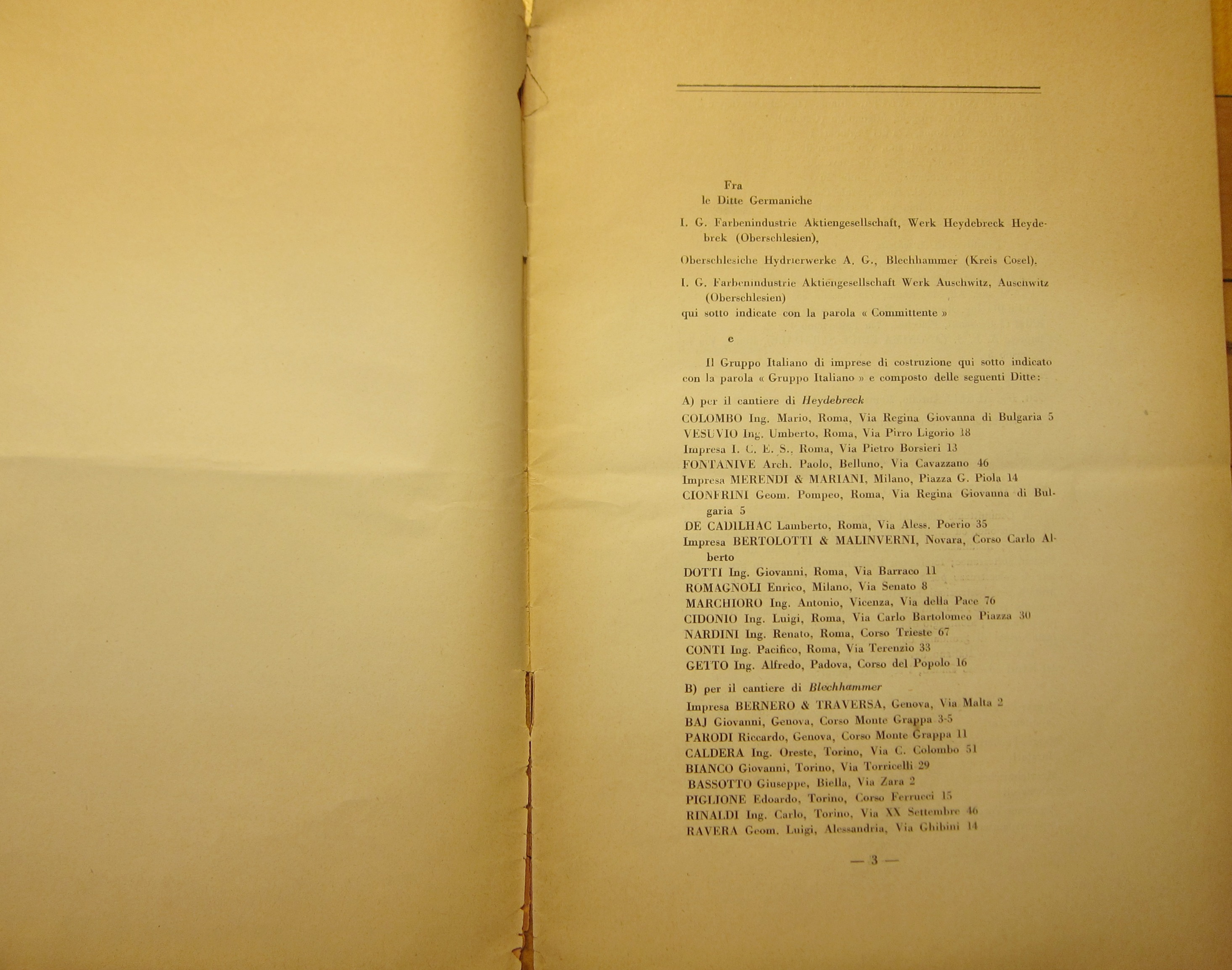
    It is a simple, basic document on one of the least simple and basic things of the 20th century.  The contract detailed labor expectations, needs and regulations from both the German and laboring Italian sides for the construction of these three concentration and slave labor camps in 1942.   Subjects of interest in this document include salaries, housing, vacations, health care and insurance, as well as the application of German laws to the workers, qualifications, and classification of occupations.

    NOTES

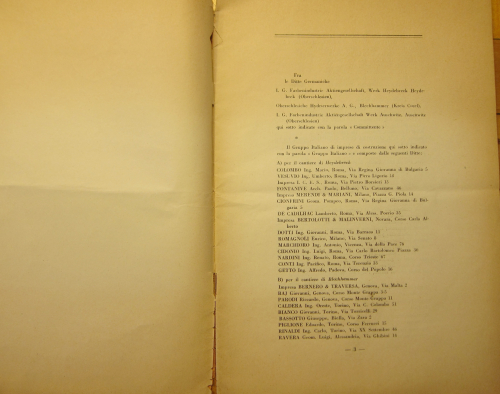
    The names that are attached to this document and signing off on the contract of this agreement (of 2 March 1942  which provided 8,636 Italian laborers for this construction) include:

    1)    for IG Farbenindustrie AG, Heydebreck, Heydebreck OS: Adolf Mueller and (Hans) Deichmann (Hans Deichmann served as (senior) legal representative for IG Farbenindustrie in Rome and Milan from 1942 to 1945 and in 1942 was responsible for recruiting Italian workers for construction in the above-named concentration camps.)

    2)    for Oberschleische Hydrierwerke AG, Blechhammer, Kreis-Consei Schlick

    3)    for IG Farbenindustrie AG Auschwitz, Auschwitz OS: Adolf Mueller and (Hans) Deichmann

    The signatures representing Italian interests include: Aurelio Aureli and Giacomo Milella

    Other Notes:

    –Blechhammer was a satellite camp of Auschwitz III (Monowitz)
    –Auschwitz III, also called Buna or Monowitz, was established in nearby Monowice to provide forced laborers for the Buna synthetic rubber works. The German conglomerate I.G. Farben established a factory in order to take advantage of cheap concentration camp labor and the nearby Silesian coalfields. It invested more than 700 million Reichsmarks (about 1.4 million U.S. dollars in 1942 terms) in Auschwitz III.

    On Italian labor being used at Nazi Concentration camps, as found in Vol  VIII, pg 749, 
    Nuremberg War Crime Tribunals:

    Q. Did you go to ter Meer* to get Italian workers — I am thinking of a prosecution exhibit, the one which was shown to ter Meer on cross examination.

    A. I was told at the time by an official source that Italian industry, after the collapse, would no longer produce because there was no coal, no current, or something. I was also told that since the Italian State obtained goods from Germany — buna, for example — the Italian State would be willing to enter into an agreement with Germany to make labor available, as was always the case from Italy. I said to him: “In case that is so” — neither ter Meer nor I knew whether that really would be the case — I said, “help the people at Auschwitz; help them to get workers if now” — I believe this was in 1944 — “the plants gradually go into operation.” For in these plants we wanted to have skilled workers — as I said yesterday, it is very important whether or not the man in charge has knowledge of the work he is doing.   –Vol  VIII, pg 749,  Nuremberg War Crime Tribunals. 

    *”Fritz ter Meer served on the IG Farben [Farben was Hitler and Hitler was Farben. (Senator Homer T. Bone to Senate Committee on Military Affairs, June 4, 1943.] board of directors from 1926 to 1945 and was the head officer directing the operations of the IG Farben factory at Auschwitz. The Nuremberg War Crimes Tribunal sentenced him to seven years in prison. He was released after serving only four years. Not long after, in 1956, Ter Meer was elevated to the chairman of the supervisory board at BAYER, a position he held for seven years. His grave in Krefeld has a meter-high wreath on it – donated by BAYER in recognition of his services.”
     

    Auschwitz cover

    Auschwitz _3_

    Auschwitz _4 5_


    ·Posted by :

    ·in:


  • Varieties of Victory–Being Prepared for the Victor of the Philippine Presidential Election of 1946

    JF Ptak Science Books   Quick Post

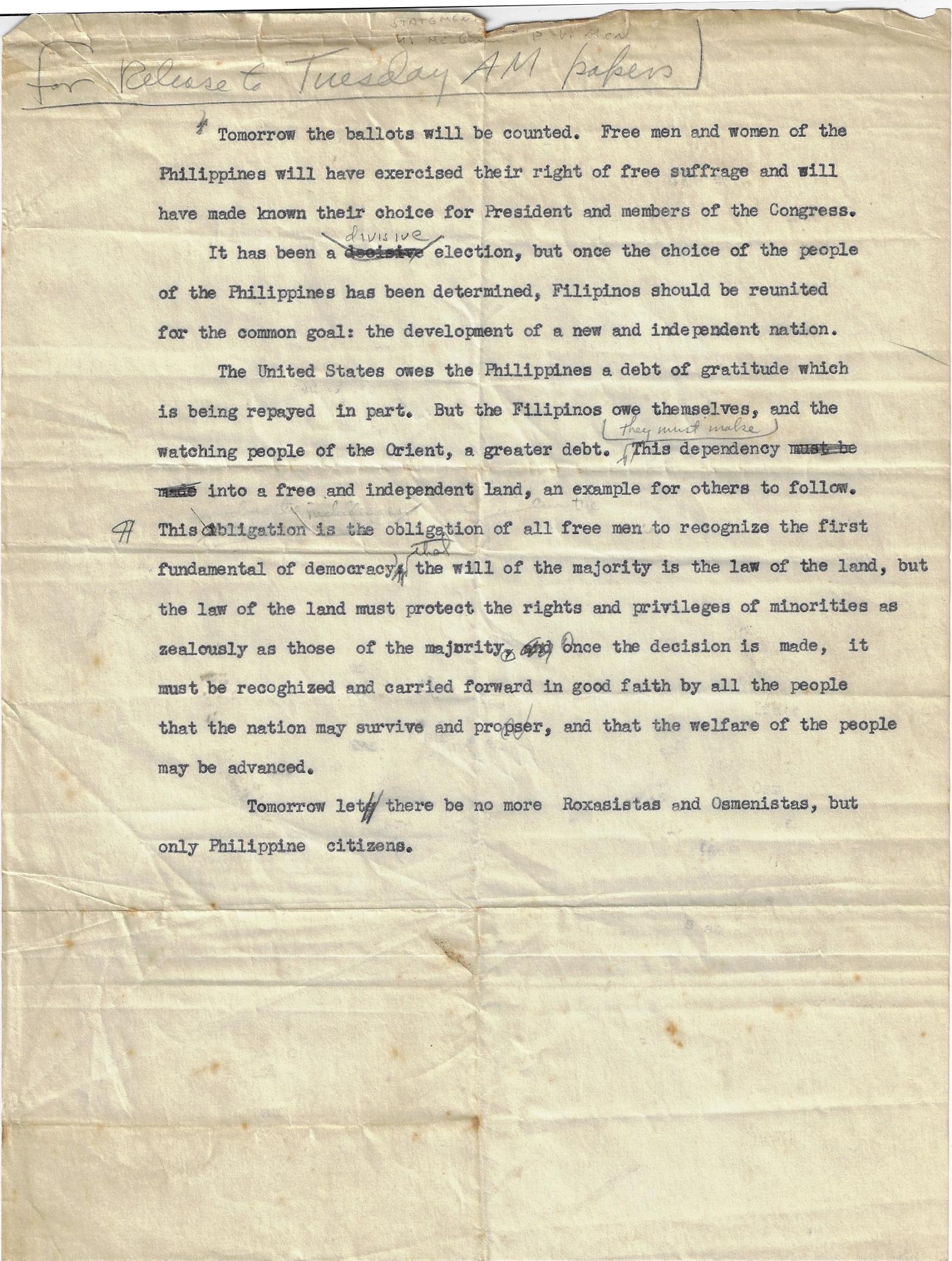
    Here we have two versions of a press release prepared for U.S. High Commission to the Philippines for congratulating the victor of the Philippine presidential election of April 23, 1946.  The first notes that Manuel Roxas (the actual winner) had conceded, while the second did the same for the incumbent Sergio Osmena, who served as the fourth president of the Philippines from 1944-1946. Each is one page long and contains numerous manuscript additions and corrections. “President Manuel Roxas was inaugurated as the 5th President of the Philippines and the first president of the Third Republic on July 4, 1946 at the Independence Grandstand (now Quirino Grandstand), Manila.”–wiki

    No doubt this was a sensible preparation.

    There is also a cover note for the day before the election “Tomorrow the ballots will be counted” and marked in pencil “for release Tuesday AM papers”. “Tomorrow there will be no more Roxasistas and Osmenistas”, it reads, “only Philippine citizens”.  


    • From the estate of David Katcher, who served as a Public Relations Assistant to High Commissioner Paul McNutt in Manila, Philippines during and just after WWII. He later went on to be the founding editor of the journal Physics Today and served as a senior policy analyst in the White House Office of Science and Technology.

    Philippine letter _1_

    ·Posted by :

    ·in:


  • Hate Movements: the German-American Bund (1936)

    JF Ptak Science Books   Post 2672

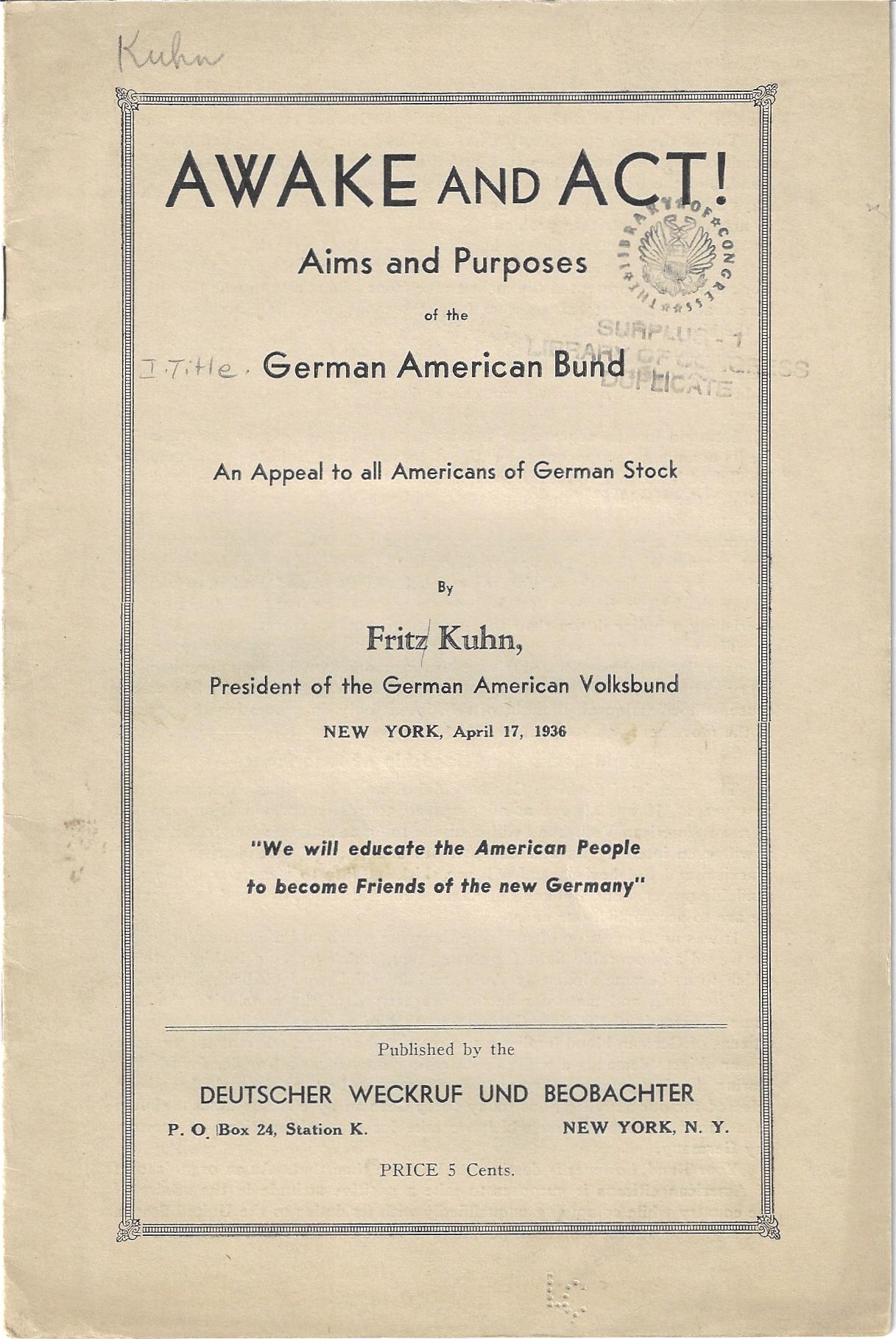
    WWII German American BundAwake and Act! Aims and Purposes of the German American Bund, an Appeal to all Americans of German Stock, Published in New York, N.Y.  by Deutscher Weckruf und Beobachter in 1936. 

    Fritz Julius Kuhn was president of the German American Volksbund and a nasty, hateful character who worked in service of National Socialism in the United States. He wound up in trouble and in jail for mishandling funds, and once the U.S. got into the war, he found himself arrested as an enemy alien and sent to spend time in the interment camp on Ellis Island. He was kicked out of the country, and then arrested again by U.S. Occupation Forces and sent to Dachau in 1947 as part of the Denazification effort of Gen. Lucius D. Clay. Of course Dachau wasn’t the Dachau of Kuhn’s idol, so he unfortunately did not experience the camp of his intentions. He died in 1951, and that was that. Provenance: the Library of Congress, the pamphlet being a gift from the Bund.

    In 1936 Kuhn wasn’t yet interested in taming the U.S. for the Nazis, though he was interested in protecting it from the greatest evil of mankind–Communism.. Actually, it turns out to be Bolshevism, but the controlling power to this is”the war battalions of the Jewish capitalists of the stock exchange” which was “the international (J)ewish attack of world Marxism”, which he said is what was attacking Germany, presently. There’s a lot more of this rhetoric in the pamphlet…actually, that is all there is in it, this sort of language, written by a non-native speaking chemist walking in Hitlerian glory and not all that smart. He was smart enough though in his rants, and tirades, and his anger was such that he was able to get 20,000 people to attend a rally at Madison Square Garden in 1939 where amidst his adjectival malignancies he ranted against “Franklin Delano Rosenfeld” and his “Jew Deal”, much like the language used in someone else’s beloved Ezra Pound’s traitorous broadcasts from Italy during the war. This was the straw that broke the stinking fascist’s back, though, terminally pissing off Mayor Laguardia who went after Kuhn’s taxes and found fraud and embezzlement. And so off he went.  But not before ruining the memories of those people who witnessed their friends become engorged by his wrath and hatred, a ruined man with ruinous ideas who ruined people. 

    • Specifics: 23x15cm, and 7pp.  Very surprisingly there are only two copies located in the WorldCat/OCLC, with one in the NYPL system and the other in the University of Texas system. I figured that there would be a lot of them–looking around now, there aren’t, so it seems.  

    ·Posted by :

    ·in:


  • Women In The Sub-Kingdom Of Pants 1918

    JF Ptak Science Books   Quick Post

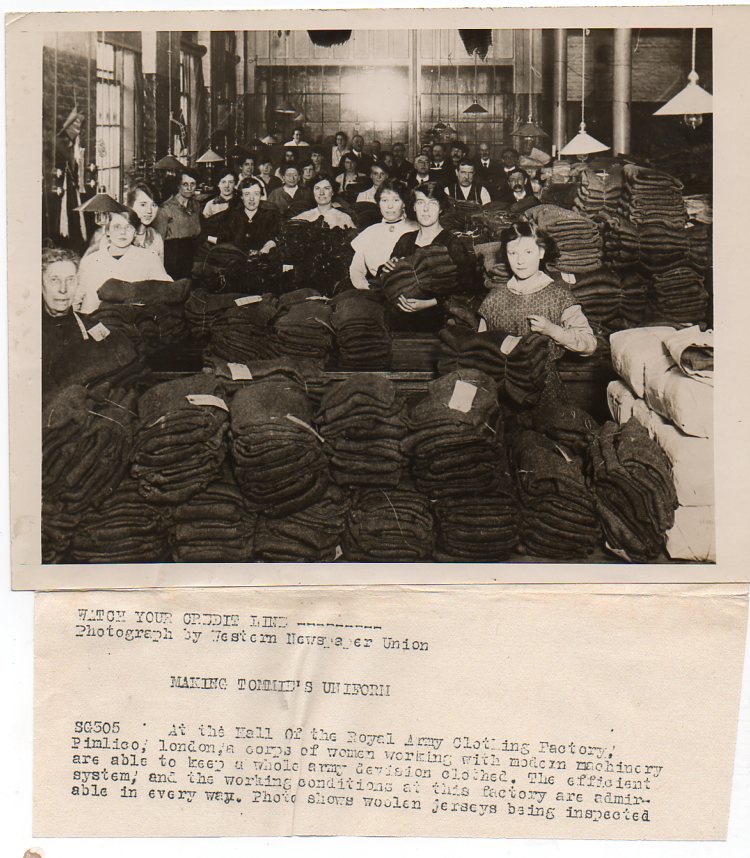
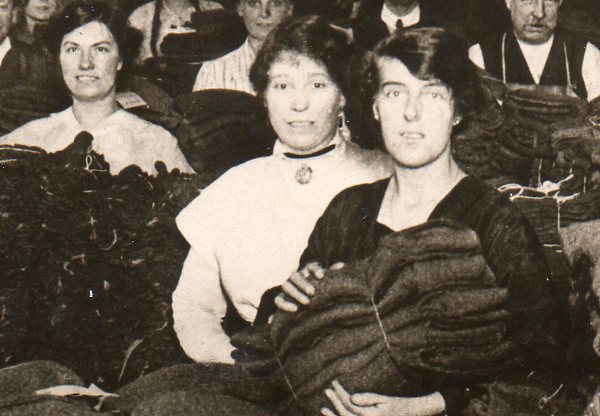
     This is a photo of a tiny piece of the army behind the army–in this case women preparing clothing for the British Expeditionary Force in 1918.  The trousers that they are handling in this image represent–in an offhand calculation–about one one hundred thousandth of one percent of the trousers that just the BEF would have worn. .00001, or some such number. When the photograph was made in late 1918, the U.K. had about four million men in uniform, which was not the total of all those who served; in the end, nearly 2.6 million U.K. soldiers were killed or wounded from 1914-1918. It took millions of people in a vast coordinated effort to support a n army of this size, and so far away. 

    WWI--e--women pants683

    Source:  part of the 500+ image collection of news photo service photographs, many of which would have the paper description attached to the image for inclusion as a caption to the image when it was published in a magazine or newspaper.

    WWI--e--women pants det682

    ·Posted by :

    ·in:

    — —

  • Color as a Secret Weapon–Air Recon, Camouflage, and Color Film (1939)

    JF Ptak Science Books   Quick Post

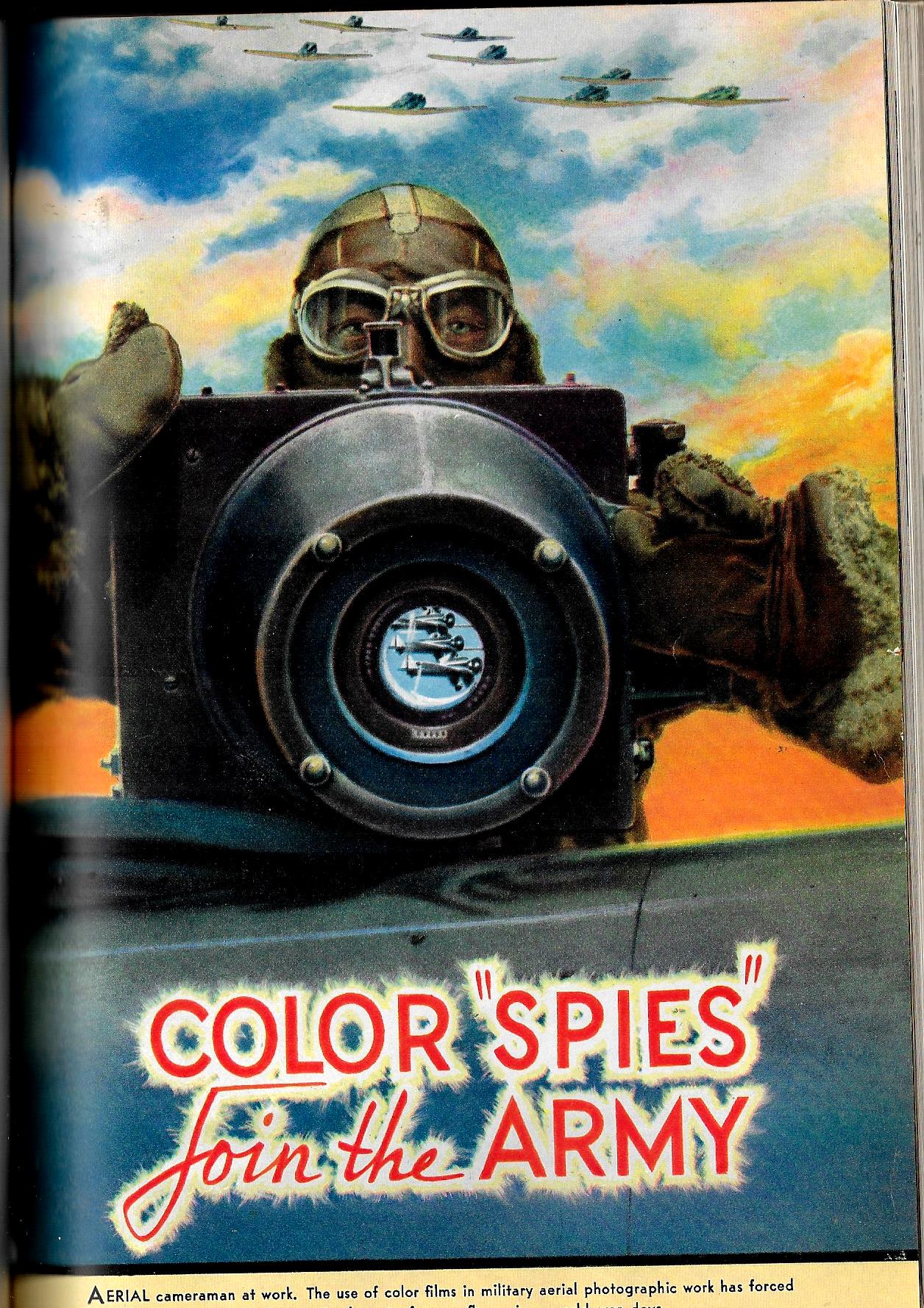
    Here’s something I never thought of before–how color air recon photography changed the application of camouflage.  Aerial photography used to reveal the hidden segments of an enemy’s position was almost exclusively limited to black and white film in the two decades or so following WWI. Color films were far slower and evidently not suited to the task until the late 1930’s–therefore, it seems, camouflage was prudently directed to disguise objects from aerial surveillance with those limitations in mind.  As this cover for an article in Popular Mechanics suggests, all that changes with the invention of faster color film that made the b+w film obsolete, and changed the way camo was used to confront mile(s) high observation.  (I also suspect that this was available to the U.S. armed forces well before this article was published…)

    Camouflage aerial recon

    [Popular Mechanics, April, 1929, page 497.]

    ·Posted by :

    ·in:

    — —

  • An Appeal for Help for War Horses, 1915

    JF Ptak Science Books  Quick Post

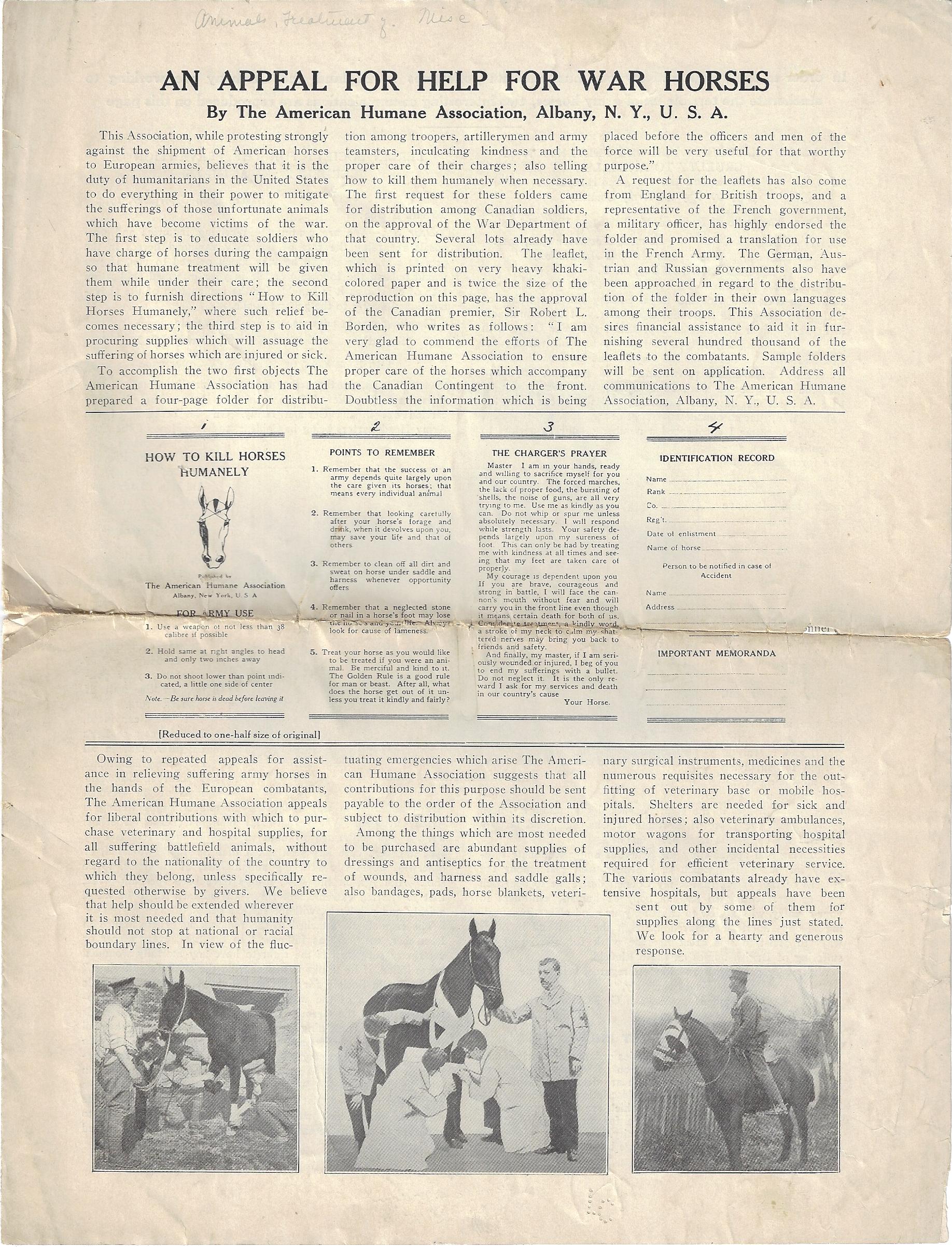
    I’m just sharing this document on a subject that I’ve never thought about, and now that I have a chance to think about it, I really don’t want to…it is just a tough go, especially considering myself part of what is a horse family with two dogs and four cats.  At the very least I can reproduce the document for this rather forward idea, which was published in 1915, one year into WWI.  


    War horses_1_


    ·Posted by :

    ·in:

    —

  • How to Deal with Female Traitors (1861)

    JF Ptak Science Books   Quick Post

    Harpers Weekly female traitor detail

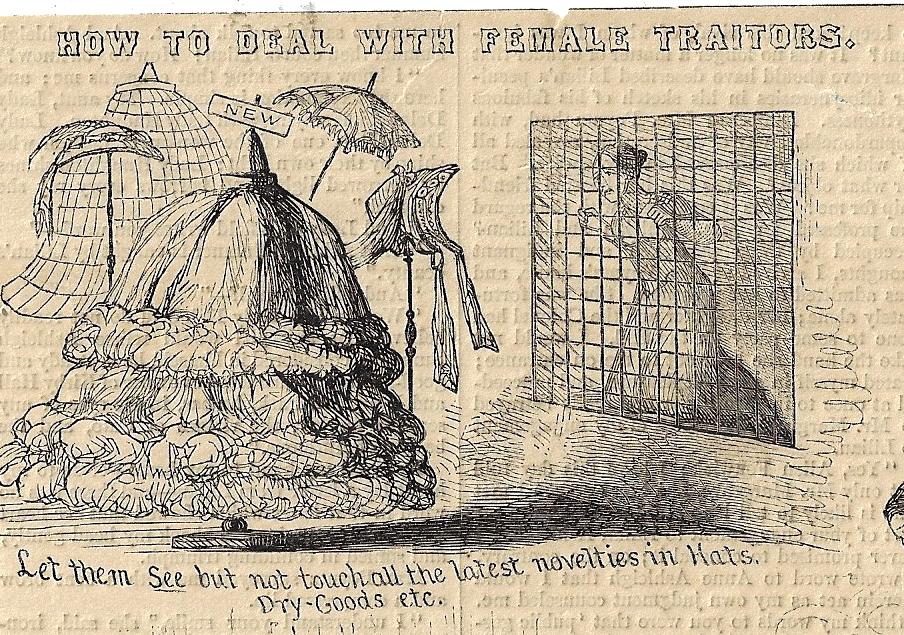
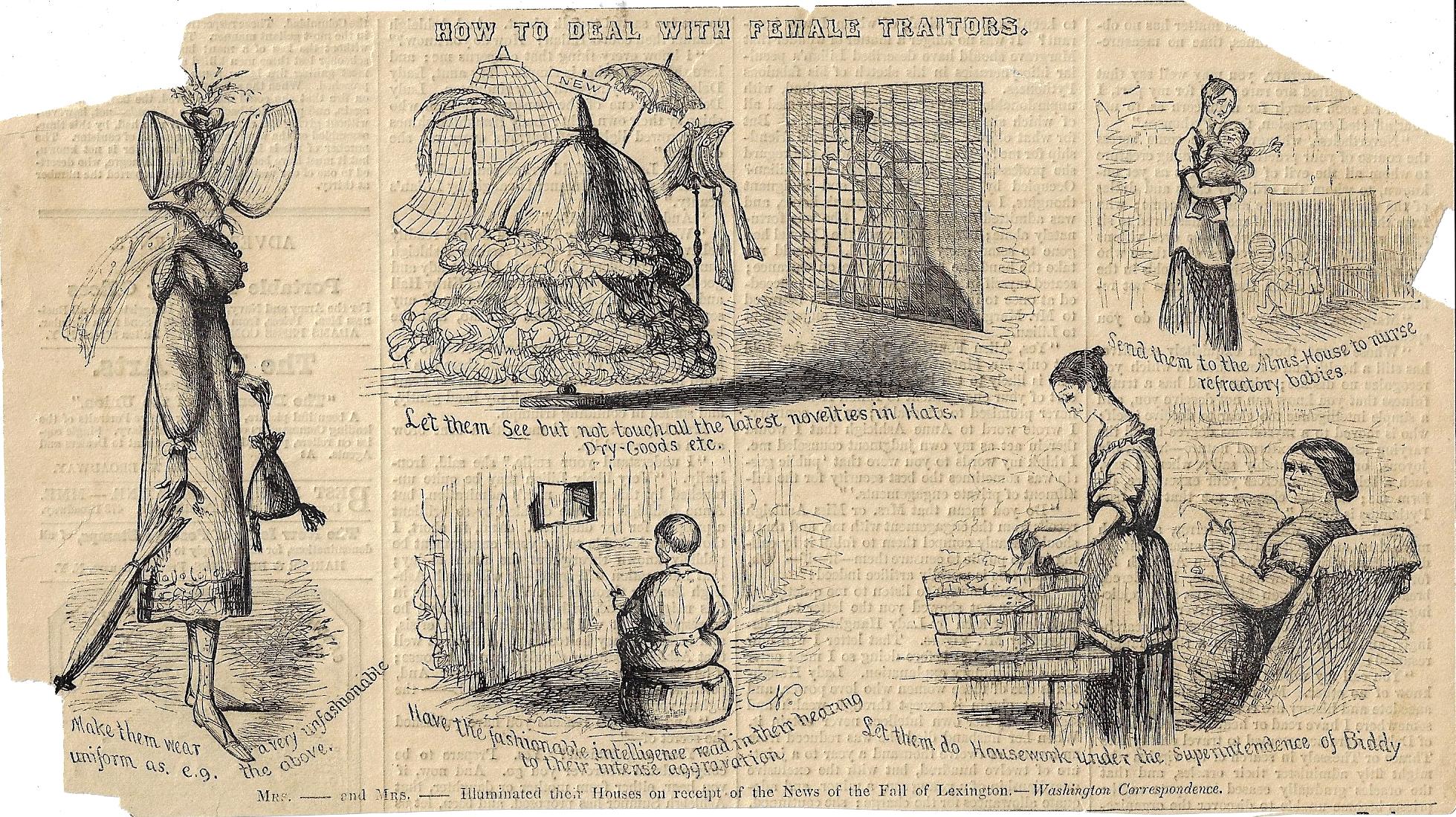
    I found this in the files this evening, a cartoon from Harper’s Weekly from October 26, 1861, from when the Civil War was but half a year old or so and there was still three and a half years of fighting to go. This was a modest suggestion on what to do with female traitors–the sections are pretty self-explanatory, and I’ve provided a transcription for them if difficult to read in the original:

    Harpers Weekly female traitor

    The captions:

    • “Let them See but not touch all the latest novelties
      in Hats, Dry Goods, etc.”
    • “Send them to the Alms House to nurse refractory babies”
    • “Have the fashionable intelligence read in their hearing to their intense aggravation”
    • “Make them wear very unfashionable uniform as e.g. the above”
    • “Let them do Housework under the Superintendence of Biddy”


    ·Posted by :

    ·in:

    —

  • How Much it Cost to be a Drug Addict in the 1930’s

    JF Ptak Science Books   Post 2570

    I’m not sure that I’ve ever seen a list of the personal daily cost of antique drug use, though I did manage to stumble across one in a remarkable little pamphlet by Edward C. Jandy called Narcotic Addiction as a Factor in Petty Larcency in Detroit (published by the Narcotic Committee of the Wayne County Medical Society, et al. in November 1937). There’s a lot packed into its 23 pages, not the least of which is a pretty sophisticated look at how to examine the costs of drug addiction to the sales economy of that city.

    Narcotic Addiction as a Factor in Petty Larcency in Detroit: Edward C. Jandy

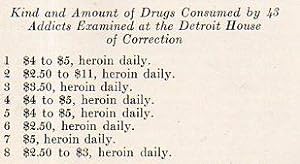
    One of the interesting historical bits that emerges from it is a list of the daily cost of the addiction of one of the target study groups–a selection of 43 local addicts with a combined 673 years of addiction (averaging an unholy 15.5 years of addiction/person). There are immediate limitations to this info–for example there is no correlation to the number of years of addiction to the individually-reported daily drug costs–but since this data seems to be fairly rare it does at least give some idea of the strain of usage per person. And what does it mean to spend $5/day on your heroin habit? CPI is useful, but it is better to look at what that figure means in terms of the average salary and costs of basic goods. If you were working back there in a bad spot of the Depression in 1937 the average salary was about $1,700/year, which means that if these addicts were working (and the great majority wasn’t) then they would be spending about 1/3% of their annual income per day–or a little more than all of their daily salary–on their everyday habit.

    Spending $1,800 a year on drugs on a $1,700 salary leaves not-so-much-room for anything else but crime, and not having any income at all would mean that all of that money would have to be from criminal activities. In another (potentially gross) way of thinking about this expense is by looking at the average salary in 1937 being about 1/30th of what the average American family income is in 2012, so the daily $5 heroin hit would be something like $150 today, which sounds about right. And if you applied that multiplier to some other standard 1937 prices, the numbers are fairly constant from then to now–the big exception being postage stamps (which would be $1.50 for a first class stamp) and gasoline ($6/gallon), both of which would show a decline. Again, that’s a very crude approximation, but it does pause. The author then does some tricky and interesting semi-statistical work with the bottom line showing that drug addicts stole a total of about 3% of the total retail sales (of $545 million) in the U.S. That’s a big number–in today’s economy, which currently stands at about $33 billion in thefts (or 1.5%) that would 3% for just addicts would be an enormous number, twice the national general total which would spike drug losses at $100 billion for theft alone. I’m thinking that these 1937 stats might be a little (or a lot) loose, but it the report still is decently argued and nicely presented though the data might be not-great–and the daily/habit numbers are a fine thing to find. 

    ·Posted by :

    ·in: