A Daily History of Holes, Dots, Lines, Science, History, Math, Physics, Art, the Unintentional Absurd, Architecture, Maps, Data Visualization, Blank and Missing Things, and so on. |1.6 million words, 7500 images, 4.9 million hits| Press & appearances in The Times, Le Figaro, Mensa, The Economist, The Guardian, Discovery News, Slate, Le Monde, Sci American Blogs, Le Pont, and many other places… 5000+ total posts since 2008.

Category: Social History

  • Women In The Sub-Kingdom Of Pants 1918

    JF Ptak Science Books   Quick Post

     This is a photo of a tiny piece of the army behind the army–in this case women preparing clothing for the British Expeditionary Force in 1918.  The trousers that they are handling in this image represent–in an offhand calculation–about one one hundred thousandth of one percent of the trousers that just the BEF would have worn. .00001, or some such number. When the photograph was made in late 1918, the U.K. had about four million men in uniform, which was not the total of all those who served; in the end, nearly 2.6 million U.K. soldiers were killed or wounded from 1914-1918. It took millions of people in a vast coordinated effort to support a n army of this size, and so far away. 

    WWI--e--women pants683

    Source:  part of the 500+ image collection of news photo service photographs, many of which would have the paper description attached to the image for inclusion as a caption to the image when it was published in a magazine or newspaper.

    WWI--e--women pants det682

    ·Posted by :

    ·in:

    — —

  • Color as a Secret Weapon–Air Recon, Camouflage, and Color Film (1939)

    JF Ptak Science Books   Quick Post

    Here’s something I never thought of before–how color air recon photography changed the application of camouflage.  Aerial photography used to reveal the hidden segments of an enemy’s position was almost exclusively limited to black and white film in the two decades or so following WWI. Color films were far slower and evidently not suited to the task until the late 1930’s–therefore, it seems, camouflage was prudently directed to disguise objects from aerial surveillance with those limitations in mind.  As this cover for an article in Popular Mechanics suggests, all that changes with the invention of faster color film that made the b+w film obsolete, and changed the way camo was used to confront mile(s) high observation.  (I also suspect that this was available to the U.S. armed forces well before this article was published…)

    Camouflage aerial recon

    [Popular Mechanics, April, 1929, page 497.]

    ·Posted by :

    ·in:

    — —

  • An Appeal for Help for War Horses, 1915

    JF Ptak Science Books  Quick Post

    I’m just sharing this document on a subject that I’ve never thought about, and now that I have a chance to think about it, I really don’t want to…it is just a tough go, especially considering myself part of what is a horse family with two dogs and four cats.  At the very least I can reproduce the document for this rather forward idea, which was published in 1915, one year into WWI.  


    War horses_1_


    ·Posted by :

    ·in:

    —

  • Stalin and France, 1945 (And a Mention of the “Great Terror”)

    JF Ptak Science Books   Quick Post

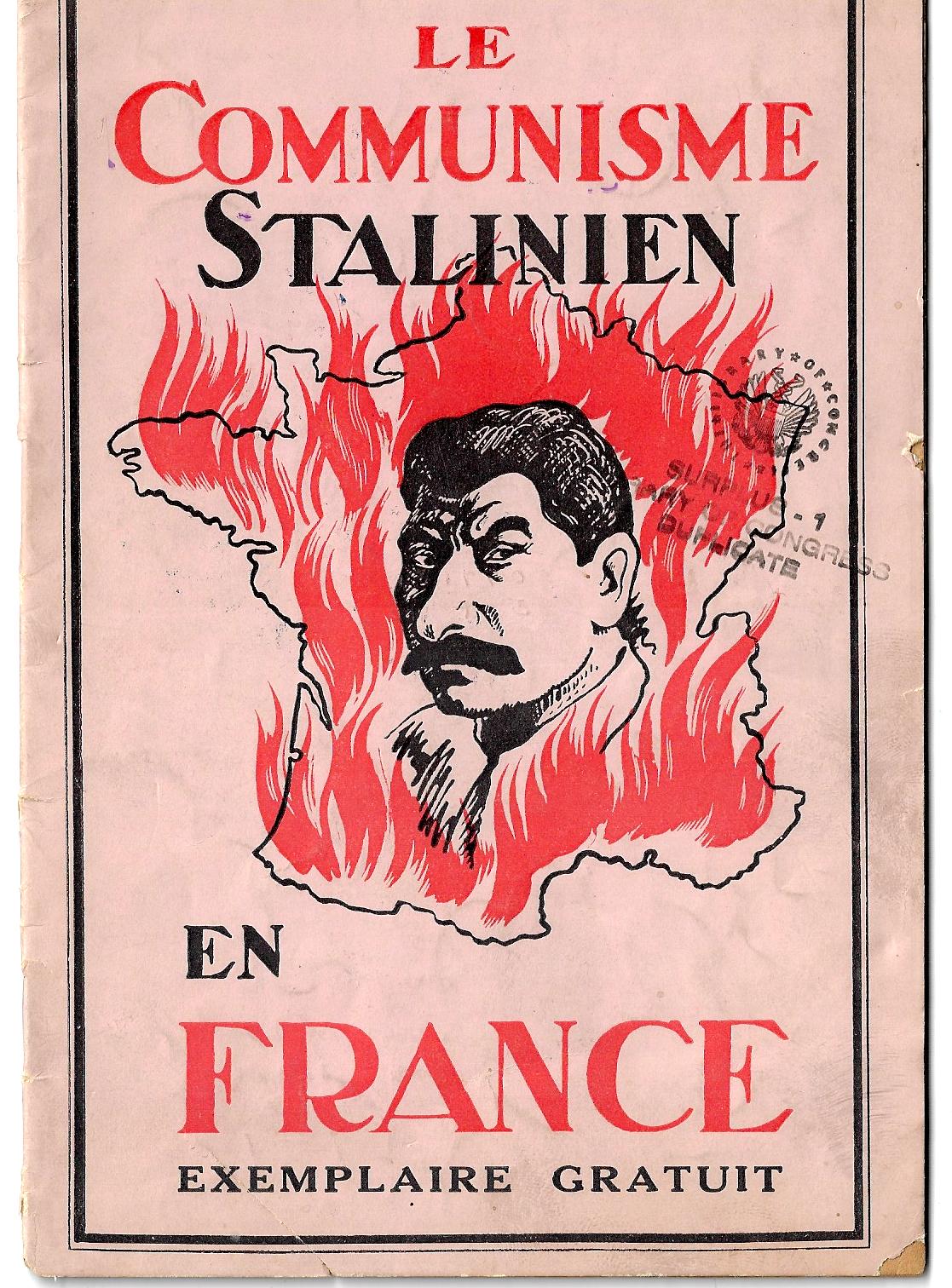
    Stalin in FranceG. Sudiene’s Le Communisme Stalien en France certainly has a great piece of design for its cover.  The pamphlet was printed–it looks like–in May 1945, right at the time of the Allied victory in Europe. By this time Stalin had bullied his way halfway across eastern Europe and certainly was no longer the friendly face of an ally as it may or may not have been in 1942/3. In any event, I found it interesting that while thumbing my way through the pamphlet I bumped into a section heading called “La Grande Peur des Communistes Staliens”, which uses the intellectually-straightening phrase, “the Great Fear” or “the Great Terror”.  I’m familiar with the phrase mostly because of the title of the 1968 Robert Conquest book, and so far as I can recall I hadn’t encountered it much during the contemporary-ish time in which the plague of terror was occurring. This one comes close, coming six years or so after the end of that particular piece tragedy (the Great Terror ranging from 1936-1938 in Conquest’s book). In this pamphlet this period is expanded to 1933-1939. I couldn’t find anything about the author in a quick-search, and the pamphlet itself nearly escapes mention. (On the other hand I did see the phrase “judeo-Comministe”, which is usually meaning “Jewish Bolshevism”, which is a standard and long-established piece of anti-Semitic propaganda, though I didn’t see anything in the text to support it…that’s a pretty big bomb to drop, though, on an unsuspecting reader.

    ·Posted by :

    ·in:


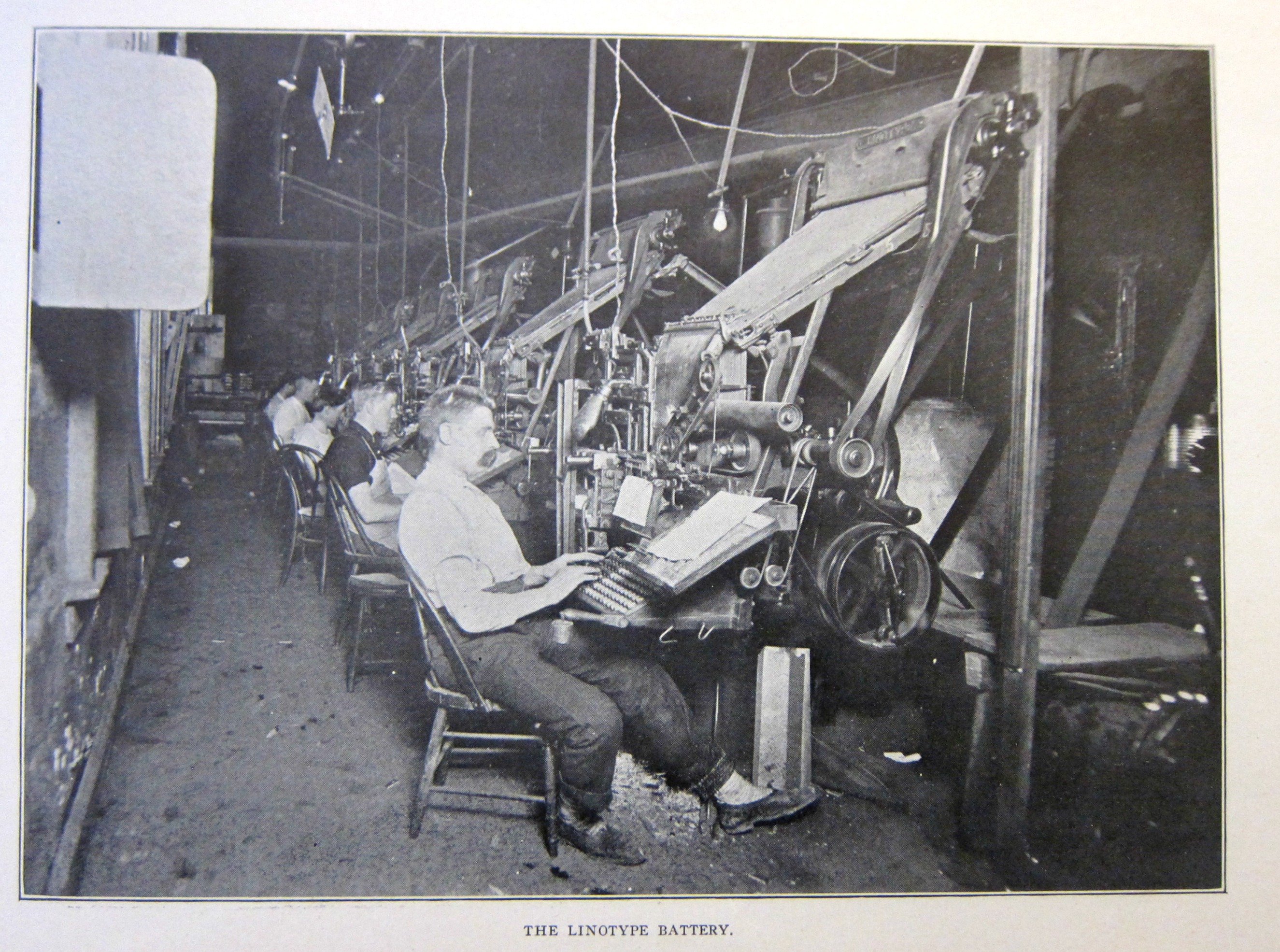
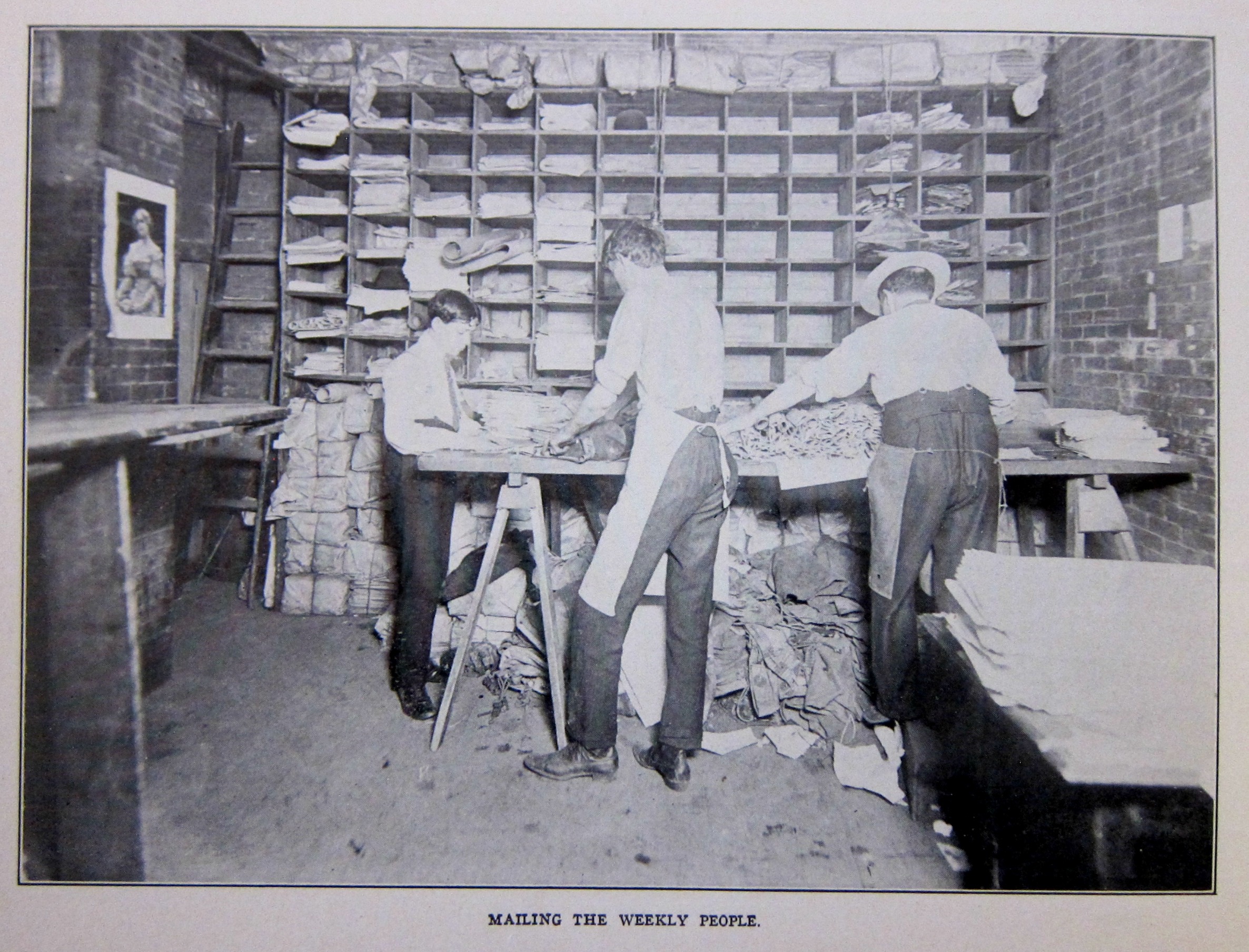
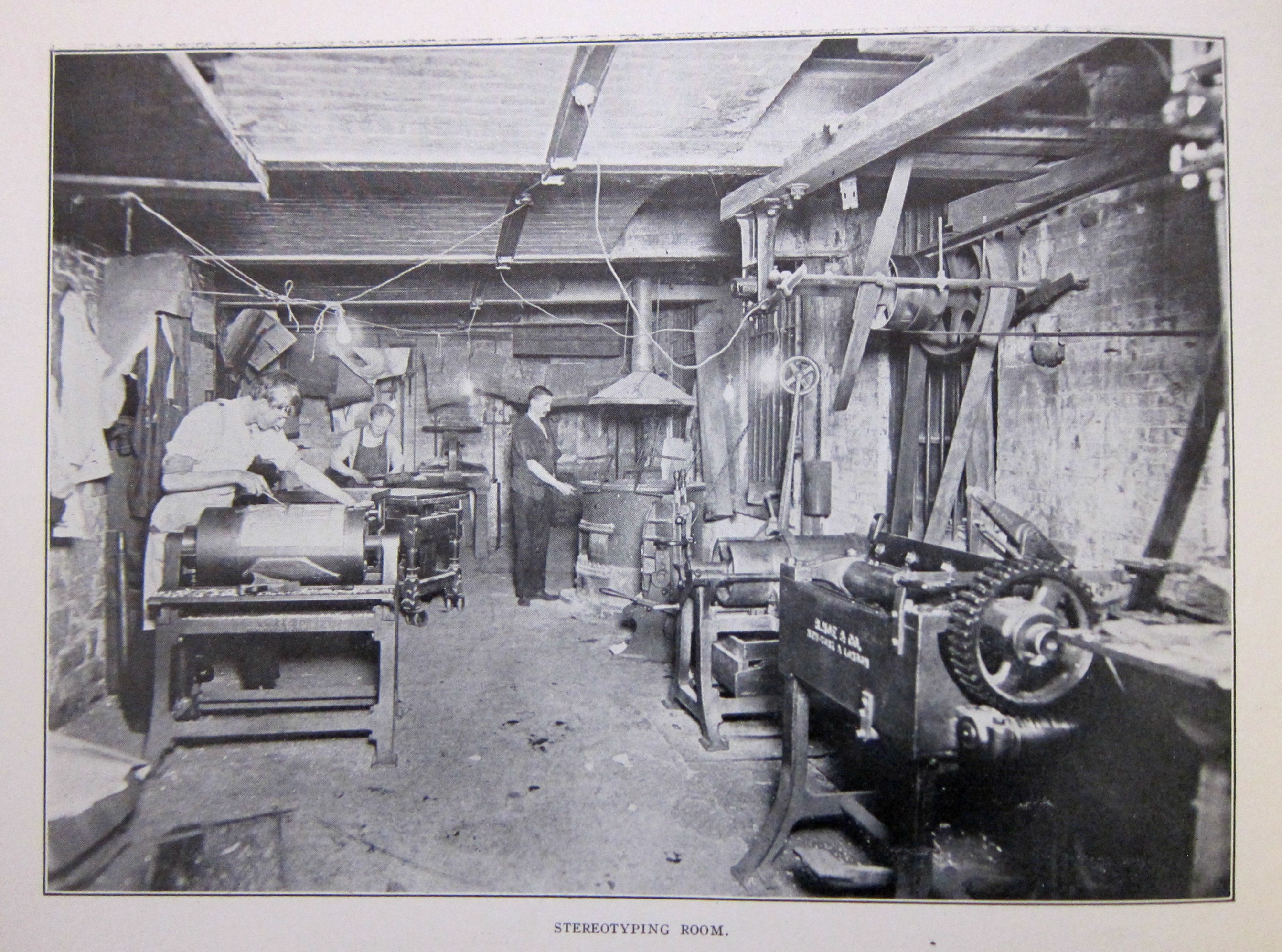
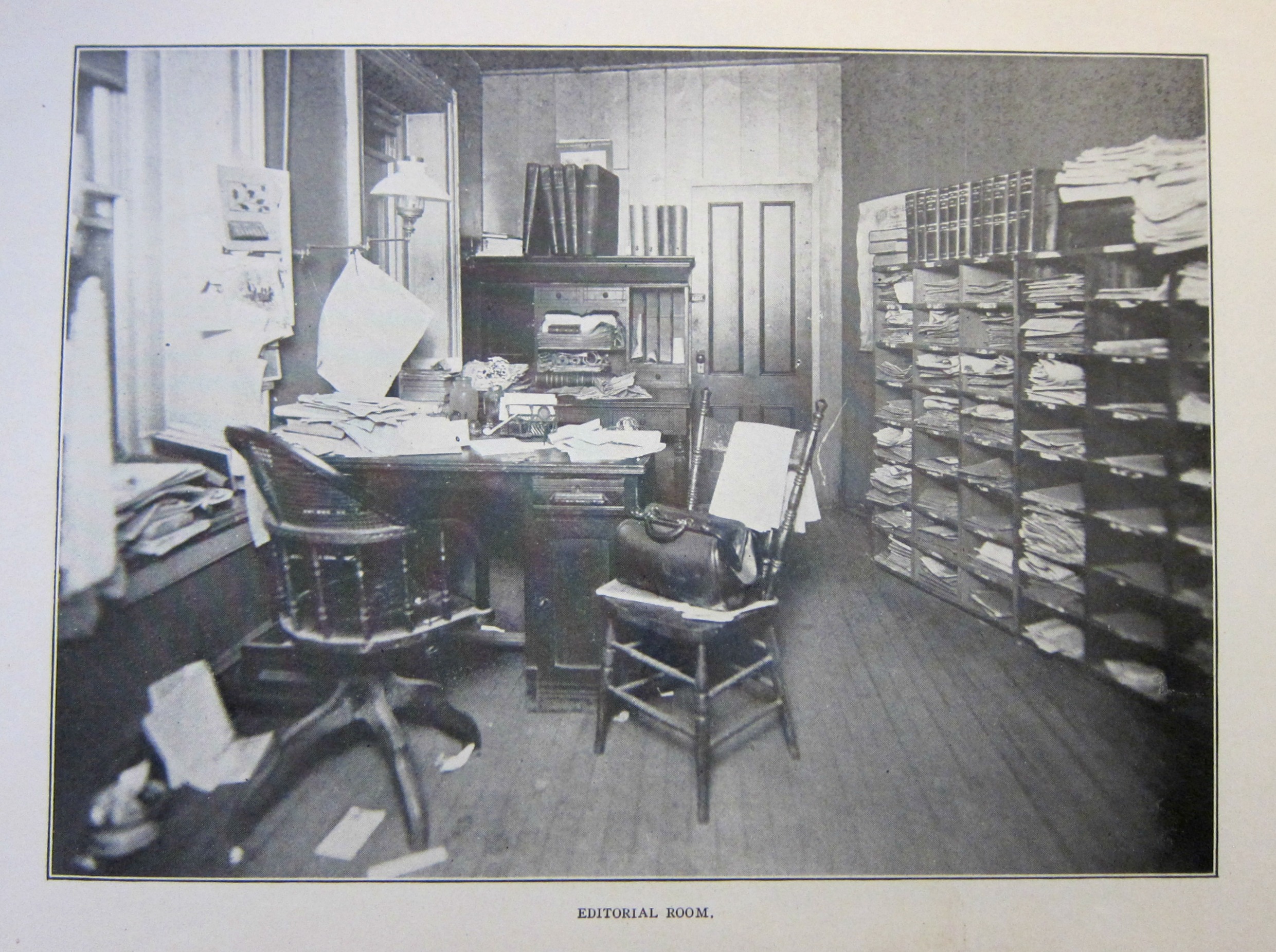
  • Inside the Sausage Factory–Images of the Socialist Press at Work, NYC, 1904

    JF Ptak Science Books   Post 2655 (Honestly I’ve lost track of the full posts and the 2000 or so unnumbered “Quick Posts”, though this is close to being correct.)

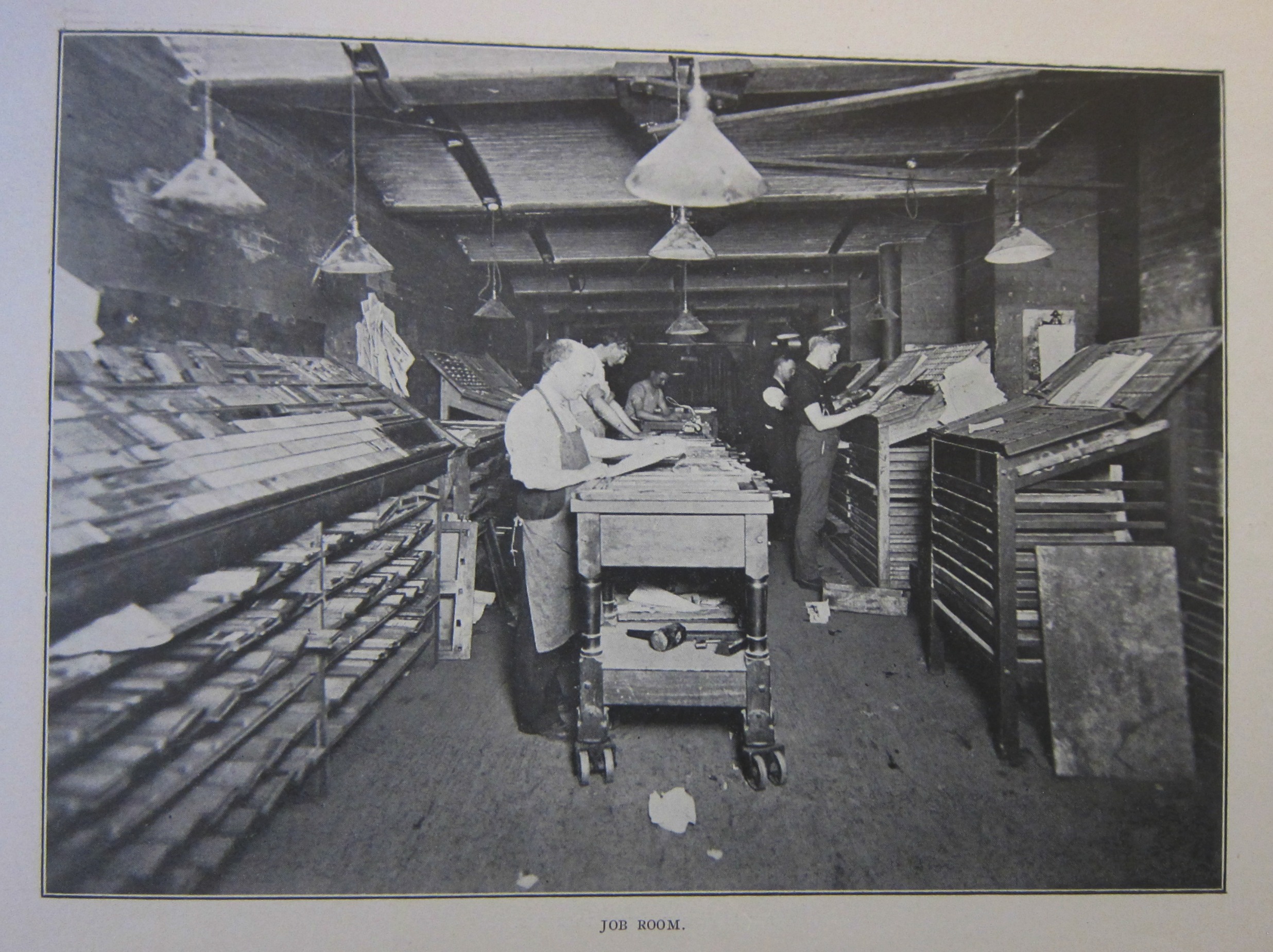
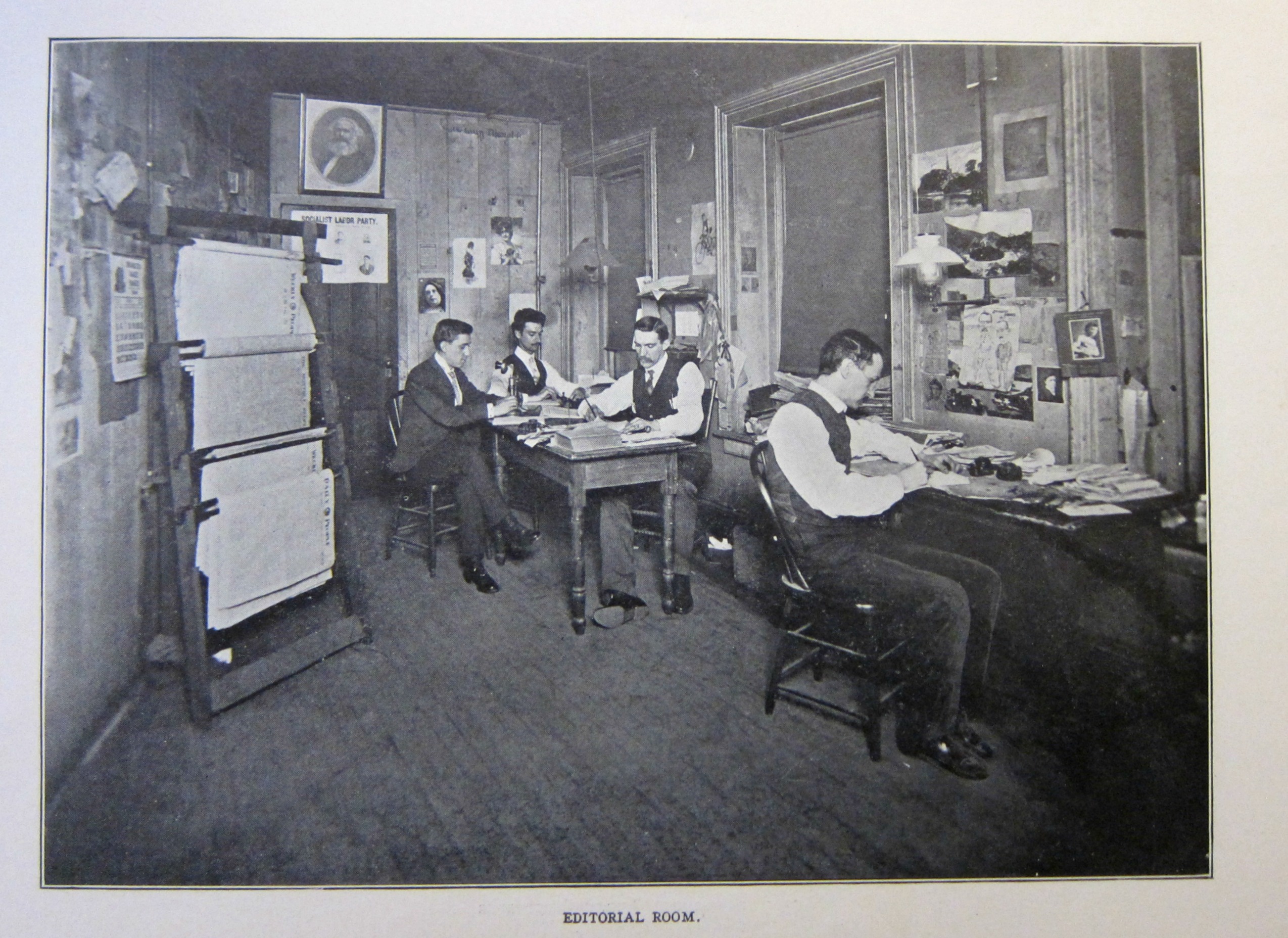
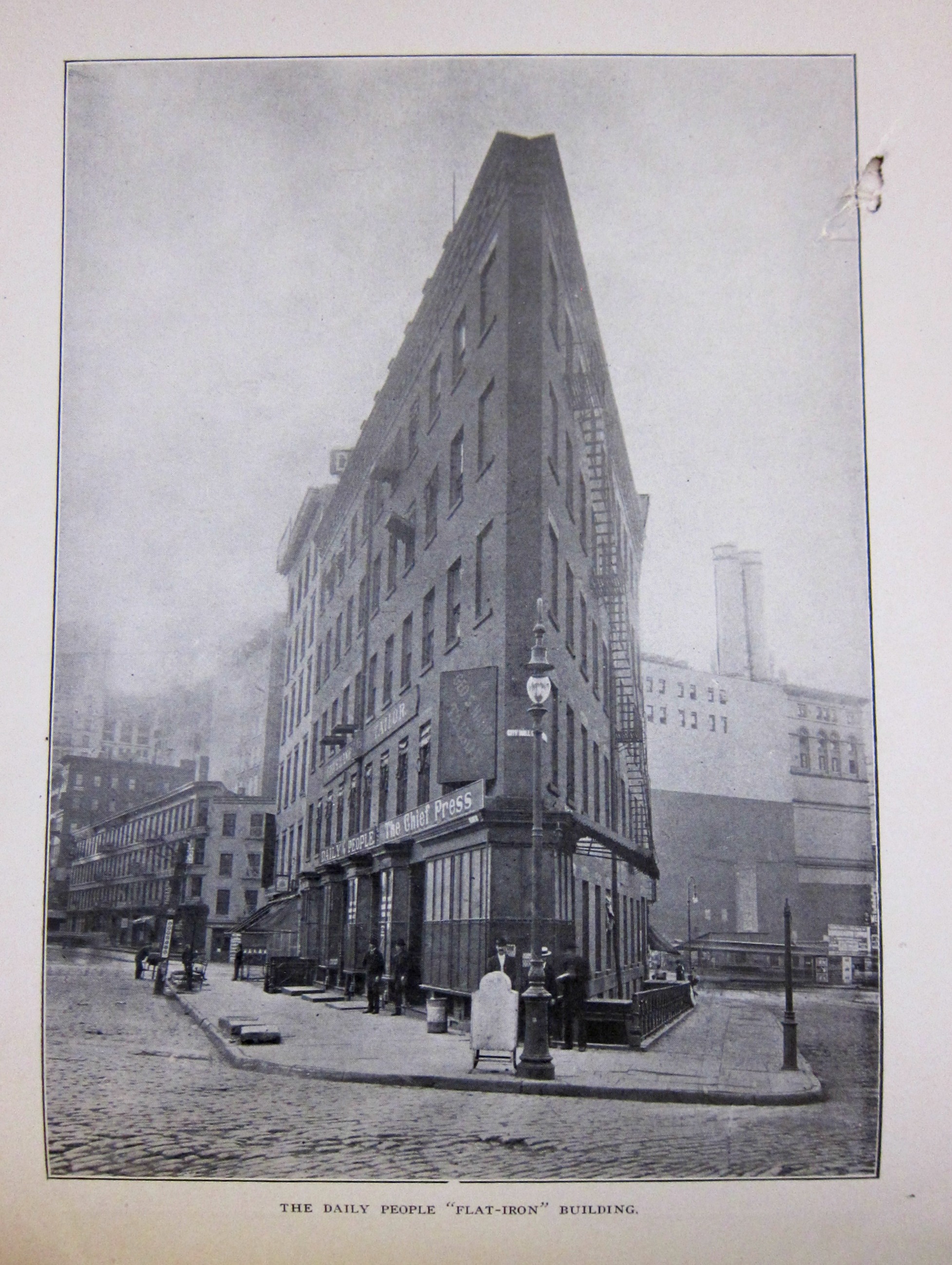
    No doubt that when these photos were made the working conditions, equipment, and so on were at least “standard” issue–nothing too fancy, nothing too crowded, nothing too dirty, nothing too rough, nothing too grubby. The overall sense of the series of images though is definitely Grub Street. The photos were made for the  pamphlet The Party Press, 1900-1904 which celebrated the first and at the time only Socialist daily newspaper the “Daily People”1, and showed the guts and glory of the Beast. It all seems rather tatty, and soiled, and threadbare, and cramped, and probably very oily–all of this was either offset or enhanced by the fact that the newspaper was located in several floors of “a” but not “the” Flat Iron Building. 

    For example: 

    Daily People Job Room

    Daily PEople Editorial Room crowded

    Daily People Linotype

    Daily People Mailing

    Daily People Stereotyping

    Daily PEople Editorial Room

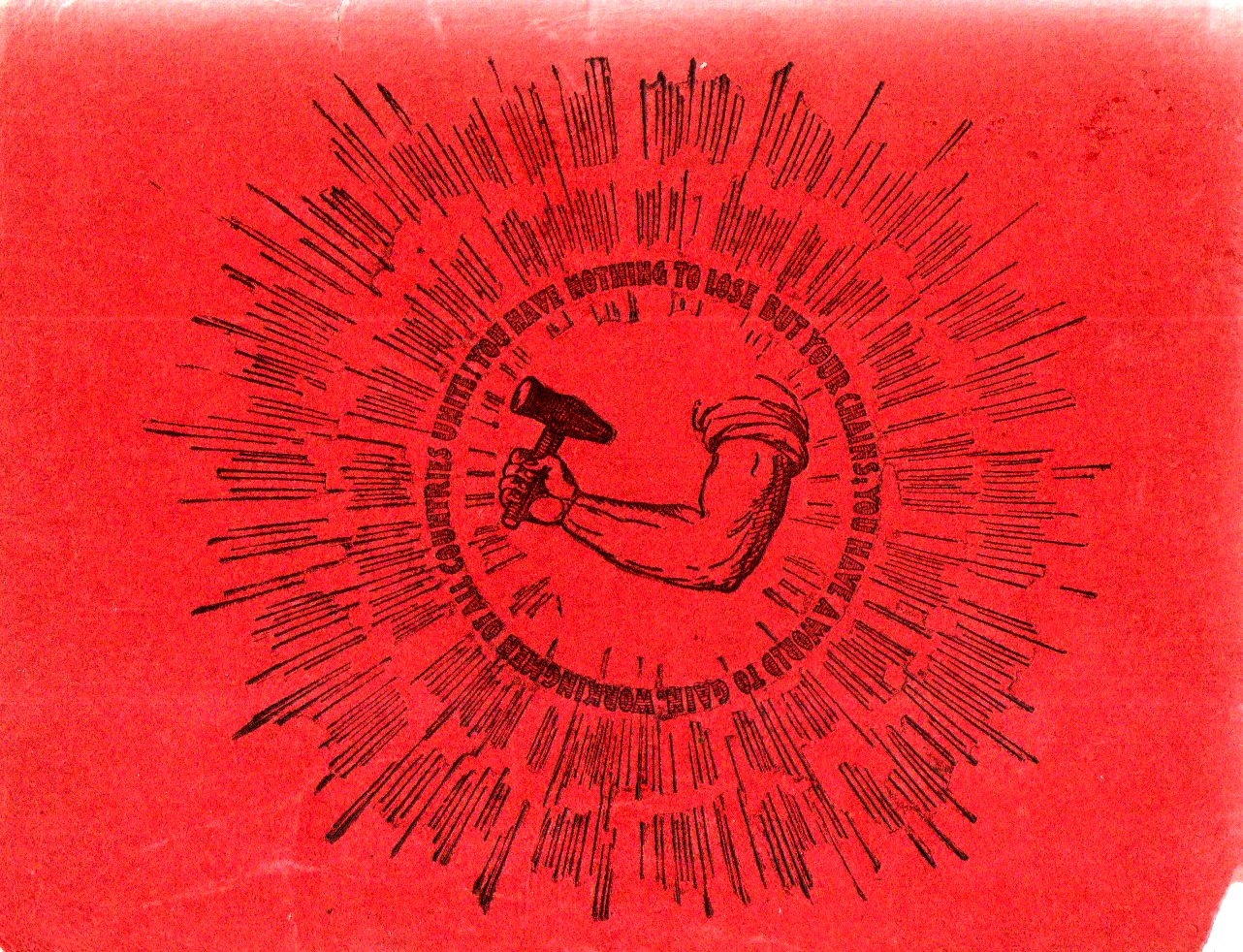
    This is the back cover for a little pamphlet celebrating the Social Labor Party’s daily newspaper, The Daily People, the front being not nearly as well designed:

    Daily People Back Cover822

    It is a little difficult to read, but there is an idiom ringing the arm and hammer: “You have nothing to lose but your chains, you have a world to gain; workingmen of all countries unite!” This is derived from a similar quote in the Marx and Engels Communist Manifesto where it is better said.  In any event, it is a pretty good and striking design. 

    And of course the non- Flat Iron Building, here photographed without elan as just some other building: 

    Daily People Flat Iron

    Notes: 

    1.  “The devotion the sacrifices the work in behalf of the maintenance of the Daily People will forever remain the brightest day in the life of the party. On the day of its birth after a march through the streets several hundred comrades waited until four o clock in the morning to receive the first copy of the paper the first and in fact the only Socialist daily ever published in the English language. The building situated at 2 6 New Reade street the birthplace of the Daily People was torn down several years ago. The party members named it the Daily People Flatiron Building and it saw many of the struggles that followed the ones of 1899. All party institutions were housed in this building. The basement was used by the mechanical department the ground floor by the Labor News Company the party’s literature agency while the third floor was occupied by the editorial rooms. On the top floor were the offices of the national secretary also of Section New York and the national office of the Socialist Trade and Labor Alliance.”–from Daniel DeLeon, a Symposium, published by the Socialist Labor Party, New York, 1919

    ·Posted by :

    ·in:


  • Dickens and the Ragged School (1852)

    JF Ptak Science Books  Quick Post

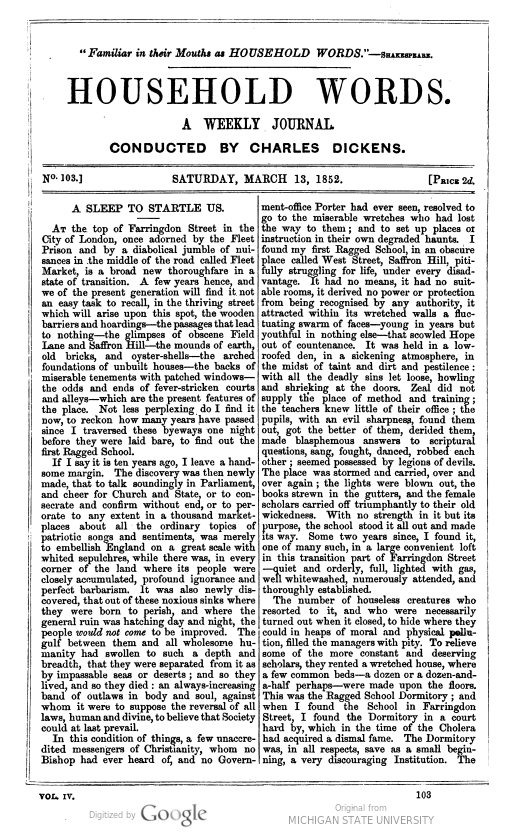
    As impossibly busy as Charles Dickens was–and this mostly throughout the course of his writing life–there was always something else going on for him beyond that tirelessly-busy stage.  He always seemed to have time, too, even beyond all of this, to help people in need, physically and through his words. Dickens’ interest and care for the poor, the working class, the sick, the abandoned, the beggars, the children, exposing them to the reading public, expressing care and understanding and sympathy, is perhaps unmatched in the 19th century.  

    I found this piece–new to me–in Dickens’ edited (“conducted”) Household Words, in the March 13, 1852 issue.  It discusses the concept of the “Ragged School” in Dickens’ visit to the Field Lane Ragged School, an institution for educating all-comers, including the homeless, the indigent, the sick, abandoned children, all done for free by volunteer teachers.  

    I wanted to reproduce the Household Words article, below. 

    There’s a fine article explaining the ragged school available at the British Library site, here: https://www.bl.uk/romantics-and-victorians/articles/ragged-schools

    Another–cleaner–version of the Household Words article appears on the site Infed, here: http://www.infed.org/archives/e-texts/dickens_a_sleep_to_startle_us.htm

    Image sources: Hathi Trust https://babel.hathitrust.org/cgi/pt?id=msu.31293028986887;view=1up;seq=589;size=75

    Dickens ragged


    ·Posted by :

    ·in:


  • Technology and the Dust Bowl, 1930’s

    JF Ptak Science Books   Quick Post

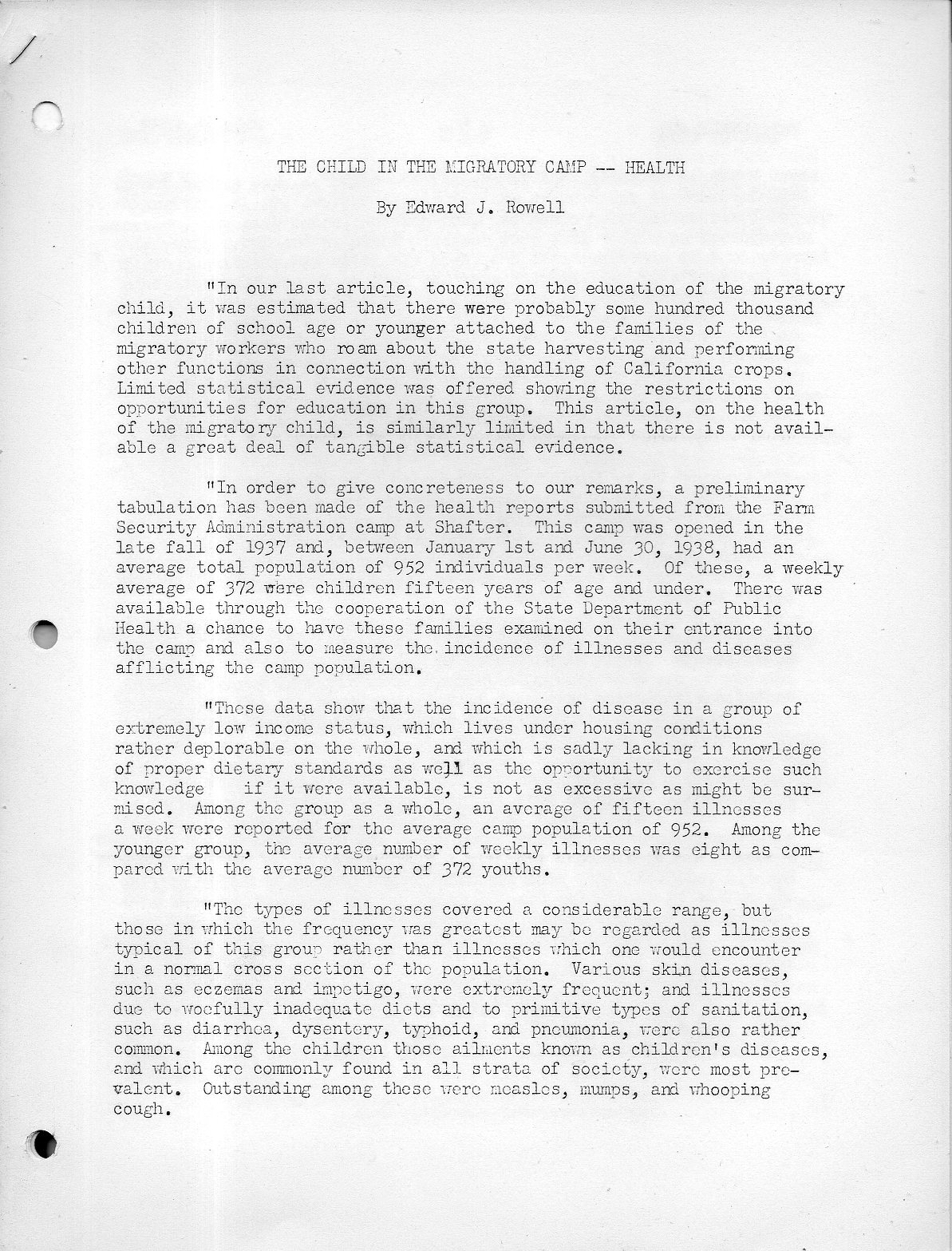
    Surfacing today in the warehouse was a collection of papers, all bound together punch-bound in a makeshift manila binding, all on the subject of mechanization and its impact on the migrant worker, and all from 1936-1938 or so.It was the mechanization of farming chores following the recession after WWI which contributed to over-farming and over-production of farming land, and that, combined with with this soil erosion with drought, contributed to the Dust Bowl and the vast migration of the Great Depression.

    Steinbeck langeAmong the papers on new farm implements and the millions of people on the move was “The Child in the Migratory Camp—Health”, by Edward J. Rowell, a slim but telling four pages on the plight of kids in migrant camps. This paper was published in California Children, Sept 1938, pp 1-4, and is referenced in James Noble Gregory, American Exodus: The Dust Bowl Migration and Okie Culture in California, p 289. It is a very sobering read, and I reproduce it below in full as there are but a few references to it. 

    • [As one migrant child told John Steinbeck, “When they need us they call us migrants, and when we’ve picked their crop, we’re bums and we got to get out” (Steinbeck, “Harvest Gypsies” 1. after his In Dubious Battle, a work that deals with the migrant worker and which was published in 1936, Steinbeck was given an assignment and space to further document the situation of the mobile workers in the San Francisco News, the stories appearing October 5-12, 1936. These seven articles were later published together—along with 22 photographs by Dorothea Lange—in a work called Their Blood is Strong, appearing in 1938.)]

    Migratory camp798


    ·Posted by :

    ·in:


  • Highlander Folk School Publications, 1940-1942

    JF Ptak Science Books  

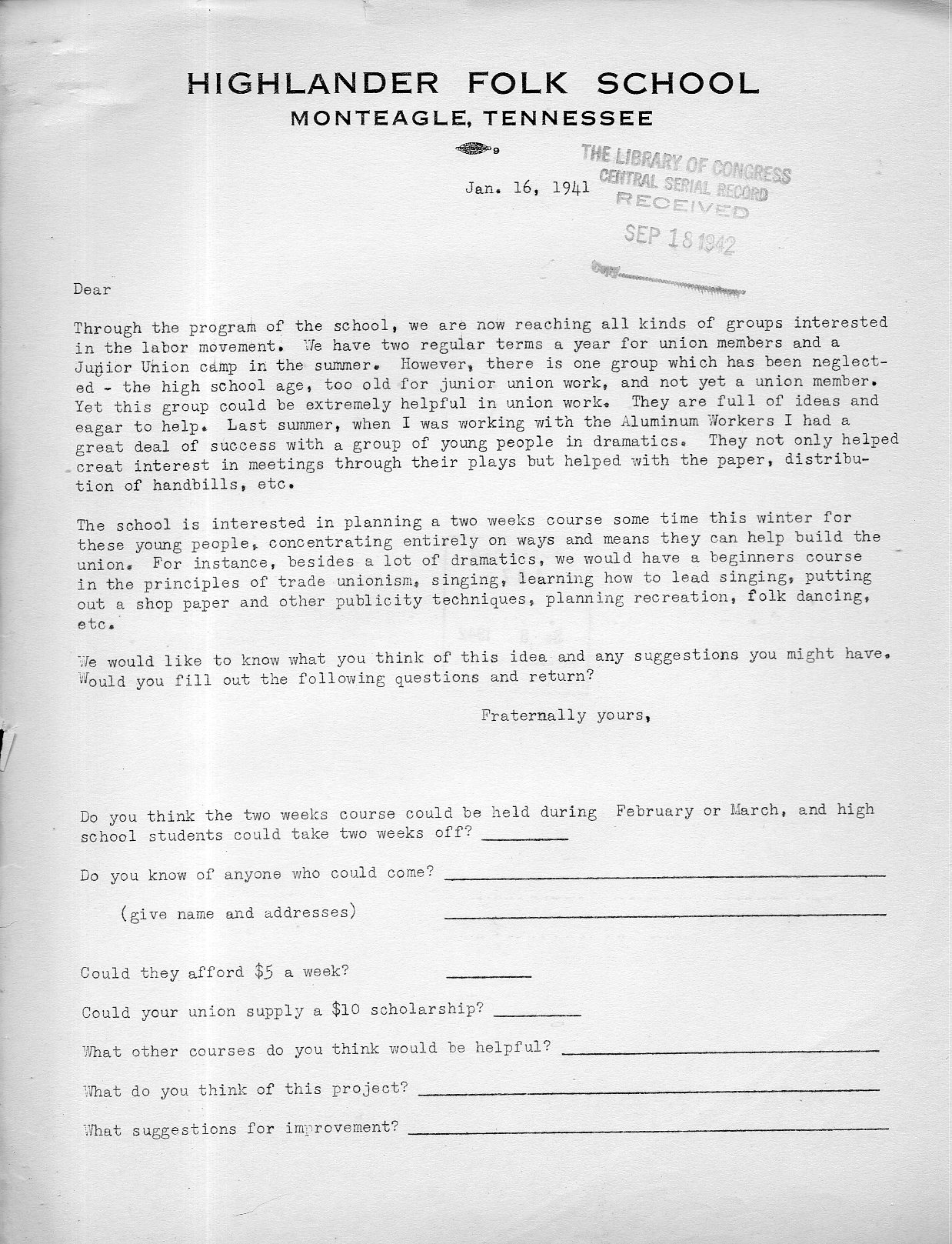
    I’ve uncovered today a small packet of mimneographed publications from a famous labor/civil rights school in the mountains of Tennessee. The Highlander School in Monteagle, Tennessee, was a training/leadership/educational center founded in 1932 for Southern labor activists and, later in the 1950’s, a training center for civil rights activists. One of the categories that this post has been filed in is “A History of Blank, Empty, and Missing Things” but really only for the document displayed below, which is an unfilled-in form for attending one of the sessions at the school–there’s a curious collection of such things here, from naval sea logs to Nazi diaries for Warsaw and other such things. It is an interesting experience to look at such a blank-filled document, a document that doesn’t bear someone else’s marks and expectations, and imagine your own answers to it, unencumbered. 

    Highlander794

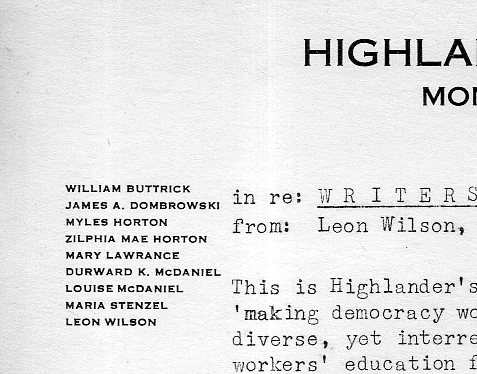
    The letterhead on one of the publications including the governing body of Highlander, including the well-known names of Dombrowski, Myles Horton, and Zilphia Mae Horton–that last name is probably familiar because of her work in folk/civil rights music like her reworked  versions of “Keep Your Eyes on the Prize,” “We Shall Not Be Moved,” and “This Little Light of Mine”, and then most famously (with Pete Seeger, Frank Hamilton, and Guy Carawan) on “We Shall Overcome”.

    Highlander797


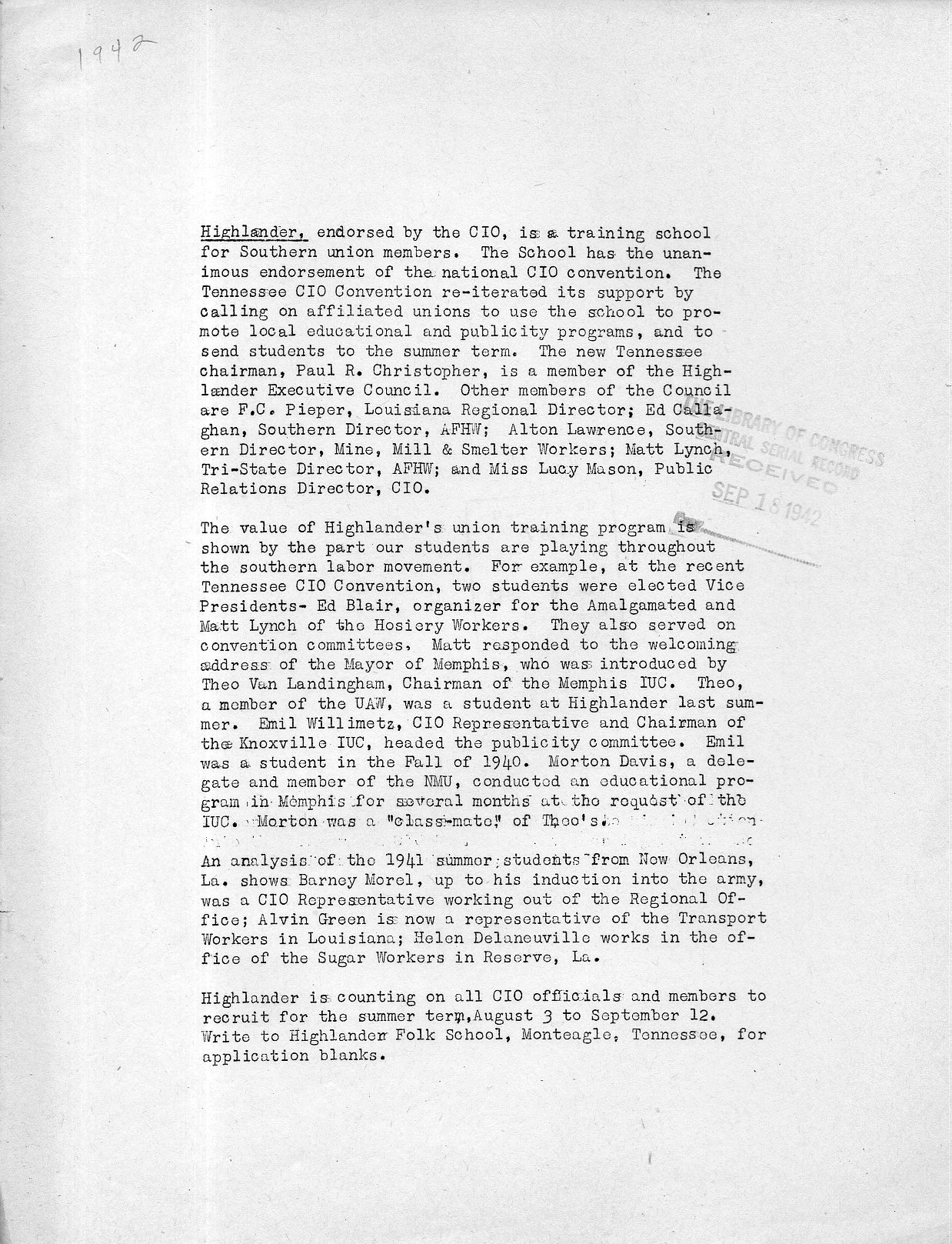
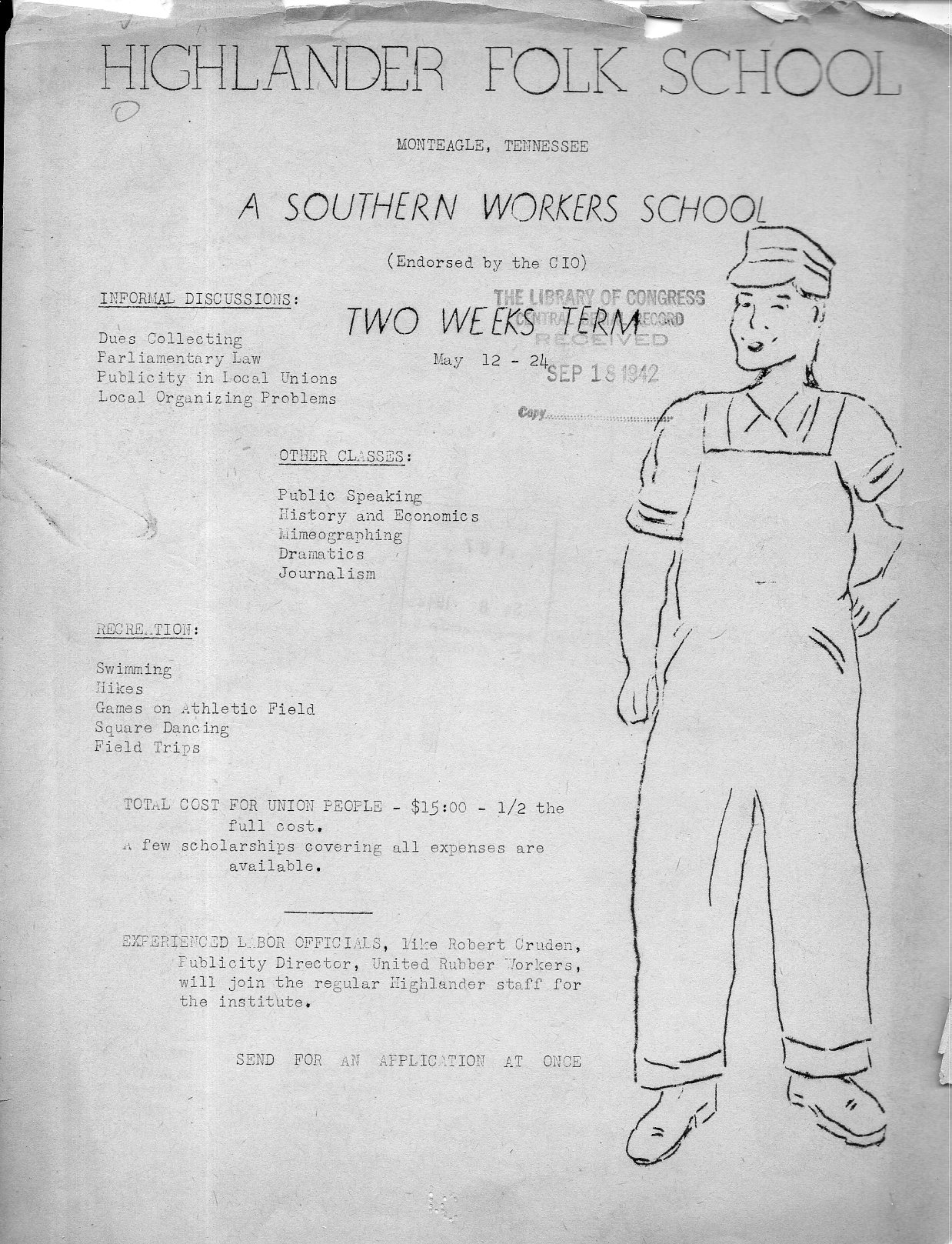
    Also from the group I’ve included scans (on the left, below) of a summary of what the Highlander School was (in 1942), and then (at right) the covering title and art for the May 1942 “Southern Workers School).  

    Highlander795

    Highlander796


    ·Posted by :

    ·in:


  • Hitler and U.S. Racism (ca. 1944)

    JF Ptak Science Books   Quick Post

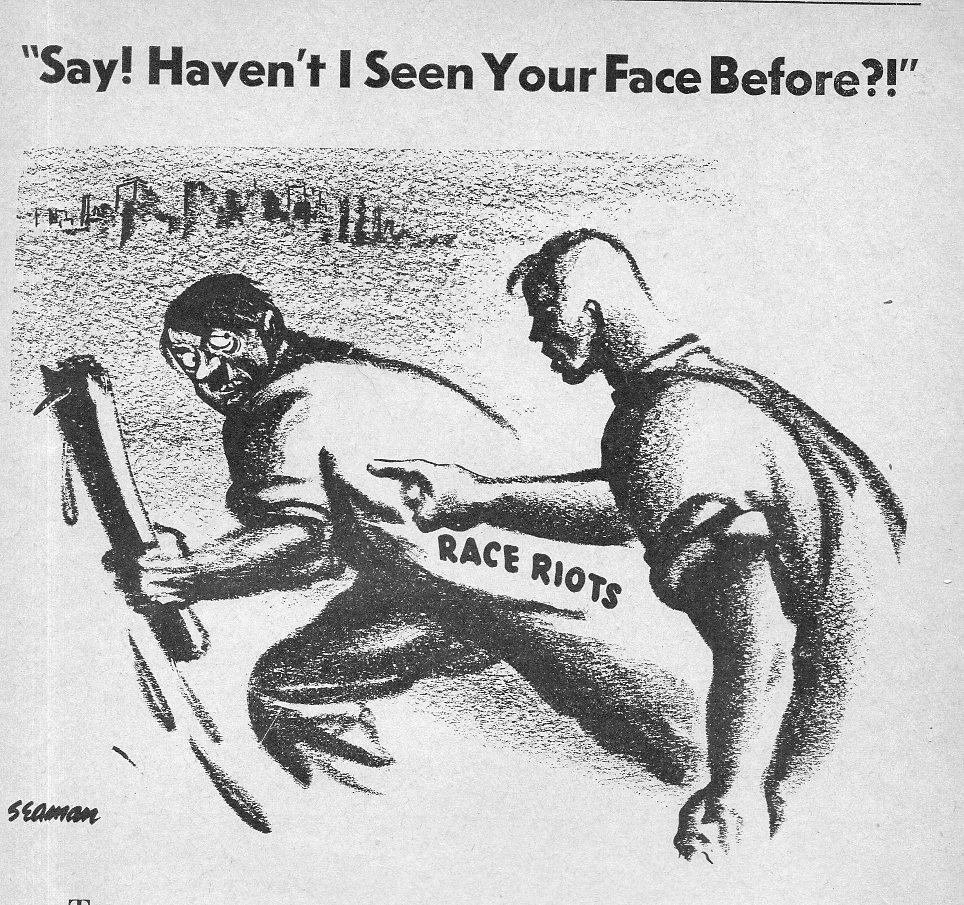
    I can’t recall seeing Adolf Hitler portrayed in an editorial/political cartoon as being part of a race riot in the U.S., though it does make sense, and also makes for a very strong message.  The artist here–Bernard Seaman–was a busy guy working for labor and social organizations like the ILGWU (International Ladies’ Garment Workers Union) and newspapers like the superb leftie PM, and he chose Hitler to exemplify  the great divisive wrong in U.S. society, “the foul blot upon our best American traditions…” and quote President Roosevelt to underline it all: “Remember the Nazi technique: pit race against race; religion against religion; prejudice against prejudice; divide and conquer”.  

    Hitler racism793

    This image appears in a pamphlet without a clear, recognizable title, and was published ca. 1943/4.  

    ·Posted by :

    ·in:


  • Hanging the Catatonic (1922)

    JF Ptak Science Books   Post 2641

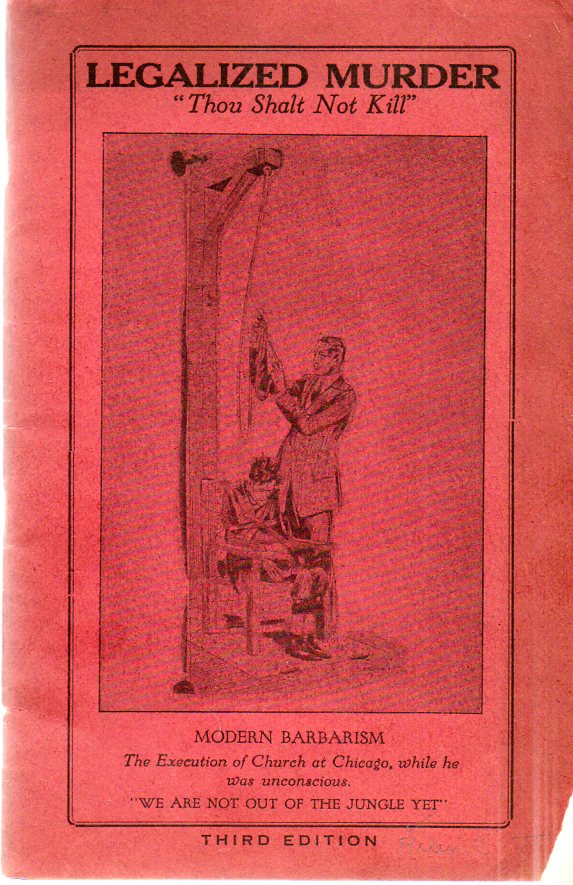
    Execution catatonia753I came upon a reference to hanging an unconscious man sentenced to death in a roller-coaster presentation of a pamphlet called Legalized Murder, “Thou shalt Not Kill”1 (or thereabouts).  It is the work of Dr. C.T. Riley (of New Matamoras, Ohio), and the “thereabouts” title is on the front cover of the pamphlet, and there is no title page per se, so the title may this or something else (like walking into someone else’s conversation mid-way and needing to title it).  It is, well, a highly individualized work, very vehemently against the death penalty, citing scripture and medicine and law and just about anything that Dr. Riley could get his hands on, while on occasion slipping in an advertisement for his medical practice and Gall Stone Cure. He is very passionate, and though his arguments seem very disjointed to me, when approached on the paragraph level he can make a very convincing argument.

    What was remarkable to me in this pamphlet was the cover illustration, which shows a hangman about to fix a noose around the neck of an unconscious man tied to a chair and placed on the scaffold’s trap door. The livid caption identifies the execution of “Church of Chicago” but so far as I can tell the subject is not again mentioned in the pamphlet. A little research reveals that this was a Mr. Harvey Church, who murdered two men to steal a $1500 Packard, and who was sentenced to death for his crime in 1922. It turns out that Church was a “dementia praecox catatonia”, and forty days before his execution, he entered a catatonic state. 

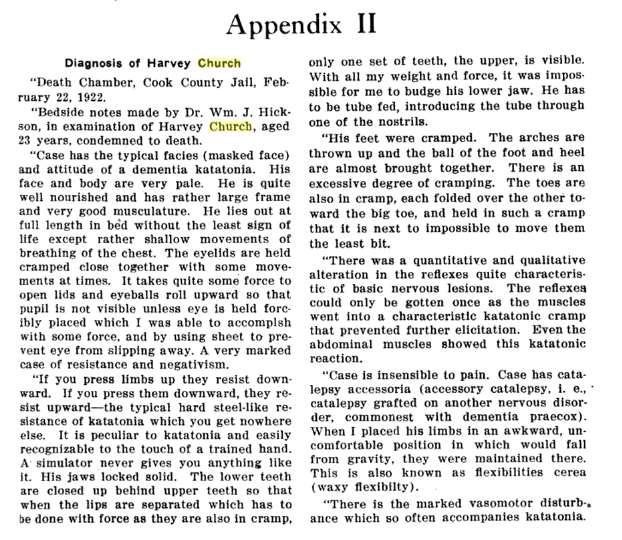
    There is a remarkable report by an unnamed physician published in the  Journal of the American Judicature Society, to Promote the Efficient Administration of Justice, vol 7/2, August 1923, documenting the condition of Church “in the death chamber”.  He of course was completely unresponsive, impervious in reaction to pain; the doctor reported clenched fingers and toes that were so cramped together that the doctor could not move them using all of his strength; nor could he part Church’s lips, except after exertion, and them only revealing the top teeth.  Here is most of what the doctor reported:

    Execution church katatonia

    This is the state in which Church was sent to the gallows.

    This case was probably enough to force a discourse on the issue of capital punishment. I knew that there was extreme treatment like this of people with similar disorders–epileptics for example were treated far more harshly than the general population–and in general pleas were made for sterilization of people with a wide range of disorders as well as the establishment of “colonies” for the rest of that population.  Hanging the unconscious (if that is what Mr. Church was) was something I had never heard of before. 

    Notes:

    1.  C.T. Riley,  Legalized Murder, “Thou shalt Not Kill, printed by the Baptist Banner, Parkersburg, West Virginia, 1930 (third edition), 69pp. 

    ·Posted by :

    ·in: