A Daily History of Holes, Dots, Lines, Science, History, Math, Physics, Art, the Unintentional Absurd, Architecture, Maps, Data Visualization, Blank and Missing Things, and so on. |1.6 million words, 7500 images, 4.9 million hits| Press & appearances in The Times, Le Figaro, Mensa, The Economist, The Guardian, Discovery News, Slate, Le Monde, Sci American Blogs, Le Pont, and many other places… 5000+ total posts since 2008.

Category: Social History

  • History of Children, 2/7–the First Illustrated Rendering of the World for Kids: Anatomy

    JF Ptak Science Books  Post 1286    Continuing the post 1285

    “Taking the Scarecrows out of Wisdoms Gardens”

    This is Part 2/7 of John Comenius’ great work, the first illustrated instructional to children, first written in 1676 and then translated into English in 1726–it is from this translation that all of the images (below) are taken.  This is the second of seven installments on introducing 17th and 18th century children to wide ideas, the other sections including: Part 1, Occupations; Part 2, Anatomy; Part 3, Books and Book Arts; Part 4, the Sciences; Part 5, Morals and Philosophy; Part 6, Games and the Arts; and Part 7, the Military.  

    The work itself: John Amos Comenius’ Orbis Senfualium Piélus: Omnium Principalium in Mundo Rerun/ &f m Vita АШопит,  translated as Pictura et Nomenclatur, the Visible World, or A Nomenclature, and Pictures of all Chief Things that are int he World, translated into English by Charles Hoof…1726.

    The purpose of the book, writes the translator in the introduction of the 1726 12th edition, is:  

    To entice witty children to it, that they may not conceit a torment to be in the school, but dainty/are., For it is apparent, that children (even from their infancy almost) are delighted with Pictures, and willingly please their eyes with these fights: And it will be very well worth the pains to have once brought it to pafs, that fcare-crows may be taken away out of Wifdom’s Gardens…”

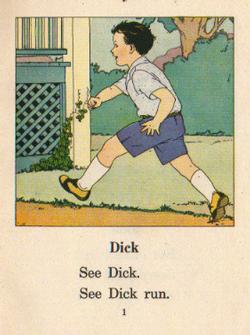
    Even at this early stage of publishing books for children it was easily recognized that children learn better when eased into their subject with pictures.  This is not so far off the mark with the moderns, and in its own way a precursor to the Dick and Jane and Dr. Seuss books–not so much for subject matter, but for the very act of putting a book into the hands of a child and getting them comfortable wit the idea of reading.  It seems to me that this is by far the most important lesson-the actual content at tis point is secondary to the act of holding a book.  

    [graphic]

    Septan Mtaies Hominis. A Man is ßrjt un Infant, 1. j Homo di primum Infasts, 1.

    tien

    [ocr errors]

    [merged small][merged small][ocr errors][ocr errors][merged small][graphic][merged small][merged small][ocr errors][ocr errors][ocr errors]
    [graphic]
    [ocr errors]
    [ocr errors]

    [merged small][graphic][ocr errors][ocr errors]

    a Tongue and Palate,
    and Teeth, 16.
    in the Cheek-hone.

    A Man s Chin
    is covered ivith a Beard, 14.
    mnd the Eye
    {in •which is the White
    and the Apple)
    •with Eye-lids,
    and an Eye-hrow, 15.

    The Hand heing clofed, is a Fift, 17. heing of en ira palm, i8, in the midß is the hollow, 19. of the Hand i the extremity is the Thumh, 10.iviehfour Fingers, the Fore-finger, 2s. the Middle-finger, гs. the Ring-finger, 23 and the Little-finger, 24. .

    In every one are three ]o\ms, a. h. C. and asman knuckles, d. e. f. ivith a nail, 25.

    [ocr errors][ocr errors][ocr errors]

    [merged small][graphic]

    In the Body are the Skin .nvith the Membranes, the Fleih ivith the Mafcles, the Chanel;, .,

    the Griffles,
    tie Bones andthe Boweli.

    The Skin, i: heing puttV ef, the Fleih, 2. appeareth, vol in a continued lump, Lut heing diftnhuled, es it ‘were in ßufi puddings, fuihuh they callMukks, ivhireof1here aie reckoned four hundred and five, heing the Chañeis cf the Spirits to move the Members.

    The Bowels are the inward Members:

    As in the Head,th.rBrains, 3. heing compajfed «bw with a Skull, and

    In Corpore funt Cutis cum Mimhranis, Caro cum Mufcults, ..’

    Canales,
    Cartilagines,
    Oßi & Vecera.

    Cute, 1. detraíla,
    Ca”o, 2. appaiet,
    non continua raafsâ,
    fed dil.tributa,
    tanquam in farcimina,
    quos vocant Mu/tules,
    quorum numerantur
    quadringenti quinque,
    canales Spirituum,
    ad movendum Memhra,

    Vijcera funt Memhra interna:

    Ut in Capite, Cerehrum, 3. cire umda tum Crem», Sc
    [ocr errors][ocr errors][ocr errors][graphic][merged small]

    The Arteries currying Blood from the Heart;

    4’he Veins returning the Mood to the Heart}

    The Nerves carrying Setife and Motion throughout the Body from the Brain.

    You jkallßnd thefe three, 1. t’very inhere joined together.

    Beßdes, from the Mouth into the Stomach it the Gullet, 2,

    the way of the meat and drini, and-hy it to the Light!, the Wezand, 5. for hr.athing; f cm the Stomach to the Arfe it a great Gut, 3. to purge out the Ordure; from the Li-ver to the Bladder, the Ureter, 4. for making ‘wJter. .

    Tie Bones are in the Head, the Skull, 6. the ttuo Cheek-bones, 7. with thirty tTvo Teeth, 8. Then the Back-bone, 9. the Pillar of the Body, tonfifling of thirty four turning Joints, that the Body may hend itfelf

    The Ribs, re. ,uihereof there are twenty four.

    The Breaft-bone, 11. the five Shoulder-blades, ii. the Buttock-bone, 13.. the bigger Bone in the . Atta, 15. *W/¿/kfi’crBone inthi Arm.

    V-Л ù •;

    vi;

    [ocr errors][ocr errors][merged small]

    [merged small][merged small][merged small][merged small][graphic][merged small][merged small]

    Mußcal Типа.

    The Nofe, 3. fcenteth fmelh and ßinhs.

    The Tongue, 4. •with the reef of the Mouth taßet Favours, •what is fweet or hitter, keen or hiting, four or каф.

    The Hand, 5. hy touching difcerneth the quantity and q: ality of things; the hot and cold, the moifl and dry, She hard andfft, the fnooth and rough, the bsavy and light. The in•ward Sen fes are three. . The Common Senfe, 7. under the forepart of the head, afprehendeth i

    t/.ings taken from the oufward Senfes.

    The Phantafye, 6. under the crown of the head, judgeth ofthefe things, t hinket h and drcameth

    The Memory, 8. under the hinder part of the head, layeth up every thing end fctcbeth them out; it Ufethfome, and this is forgetfulnefs.

    Sleep, is the reft of the Senfes.

    [ocr errors][ocr errors]

    [merged small][graphic]

    The Soul is the Life tf the Body, oie in the ivhole. Only Vegetative in Plants;

    Withal Seníltive in Animals;

    And alfo Rational in Men.

    This confifteth in three things;

    In the Underftanding, wherehy it judget h, and underßandethy – a thing good and evil, or true, or apparent.

    In the Will, •whereby it choofeth, and deßreth, tr rejeéleth, er mißiketh a thing knovn.

    In the Mind, •whereby it purfueth

    Anima eft vita corpoiii, una in tota.

    Tantum Vegetativa In Plantis;

    Simul Senßtinsa in Ahímalibus J,

    Etiam Rational is in Hernie/i

    liaec coniiftet in trihu»;

    In Mente (Intelleflu) qua cognofcit, & intelligit, honum ac malum, vel verum, vel apparent»

    In Voluntate-, qua eligir, Sc concupifcit, aut rejicit, & averfatur cogniuim.

    In Animo, quo prpfequituv

    [merged small][merged small][merged small][graphic][merged small][table]


  • Blank, Missing & Empty Things: German Soldiers, November 1918

    JF Ptak Science Books   Post 1305

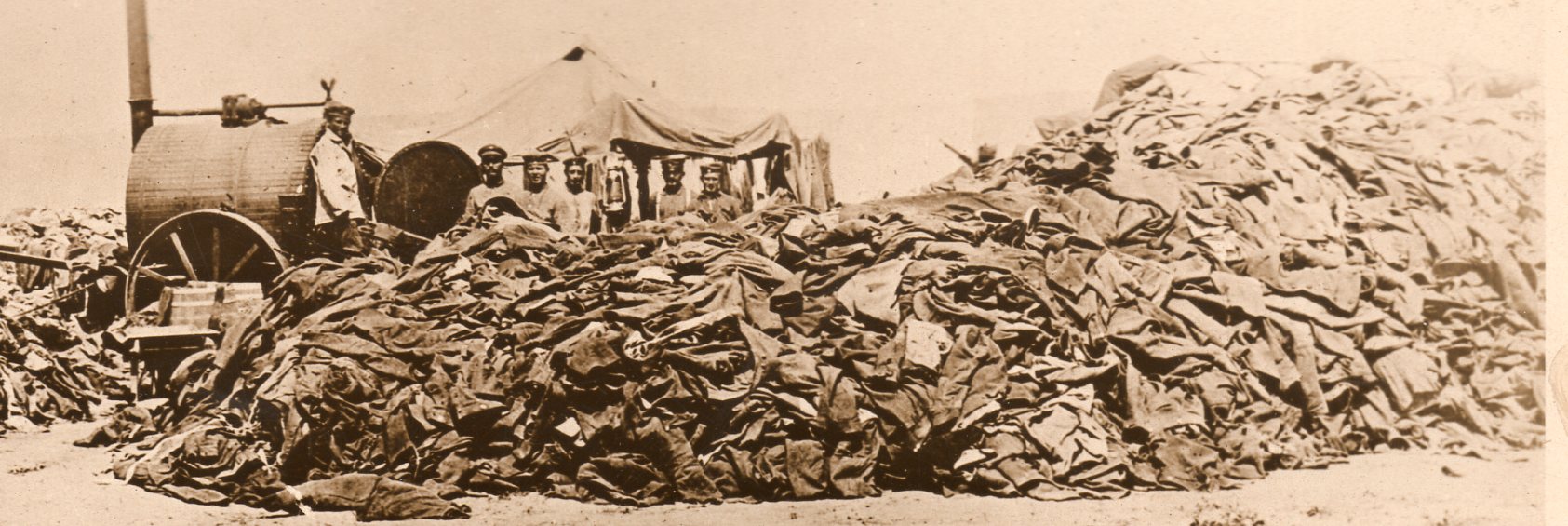
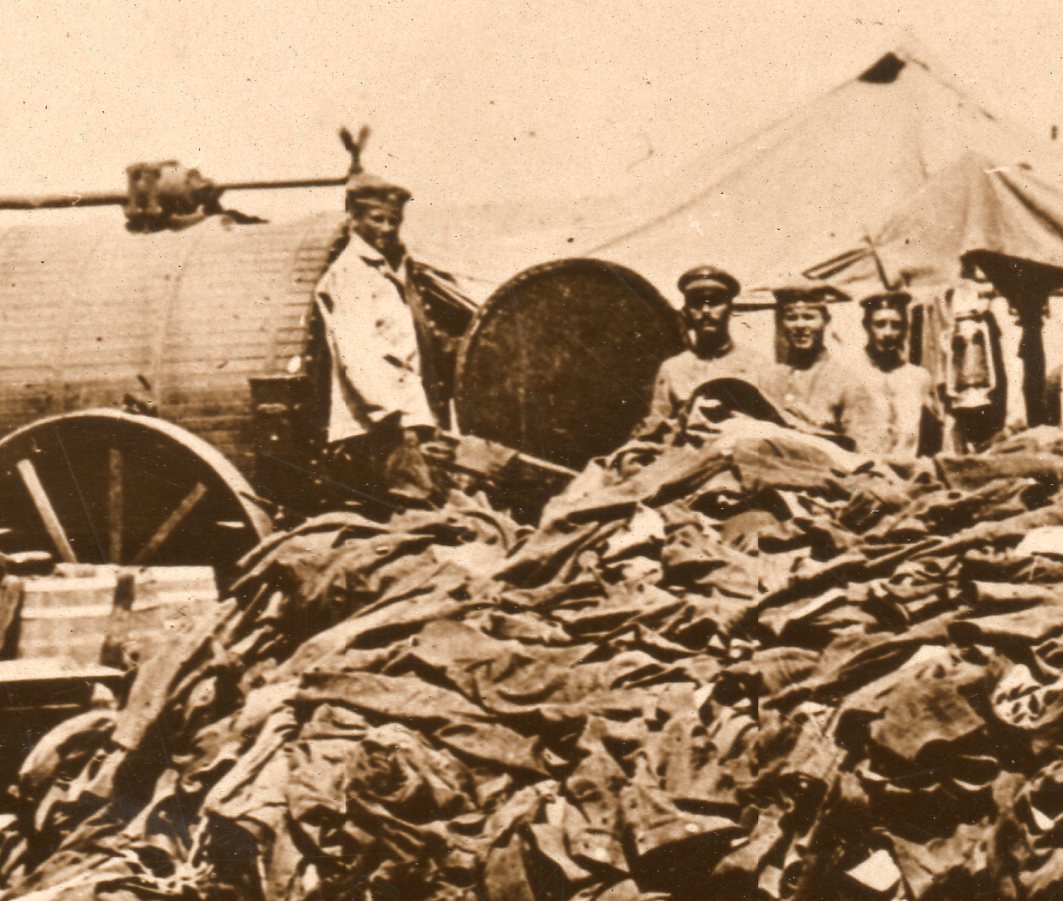
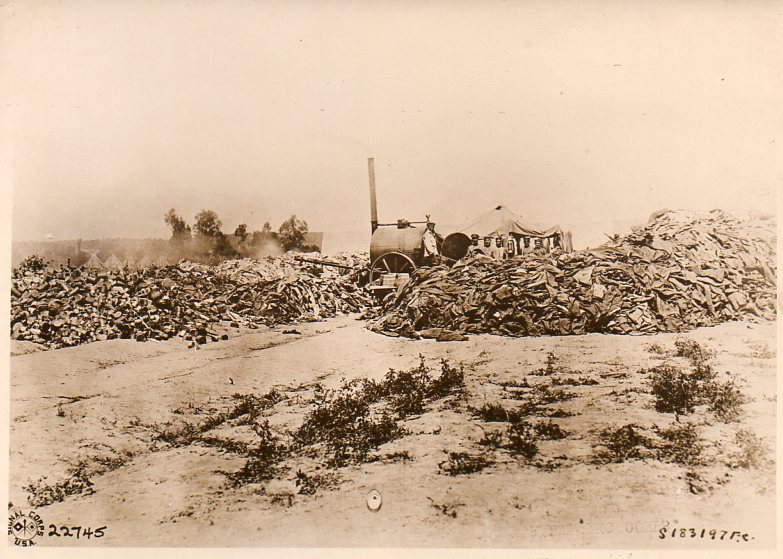
    This remarkable photograph is part of an archive of World War I Underwood & Underwood News Photo Service photographs I purchased many years ago.  It shows a pile of German soldiers’ uniforms–thousands of them–taken from German prisoners, the clothing headed for “cleaning and repair”. 

    World War I photos--empty uniforms287

    [This photo, along with mnay others, is available for purchase from our blog bookstore.]

    I didn’t know before this that the uniforms were repaired–I can imagine the cleaning part, since the prisoners must wear something, and deep into the fifth year of the war it seems hardly the case that they would be given anything at all to wear except for what they were captured in. the cleaning part sounds logical too, especially as the cleaning was being done by the prisoners themselves (pictured here).  Clean clothing makes for more sanitary conditions in mass compounds for thousands of prisoners, and lowers cost for the health maintenance for the prisoners in the short and long run.  And so far as repairing goes:  attached buttons make for closed coats; closed coats allow prisoners to have a better chance at staying healthy in the coming cold months. Just ask Napoleon about the cost of thread on the buttons of his army’s overcoats in the march towards Moscow.  (The thread that wasn’t used cost very little; the cheaper thread that was used cost everything.)

    And the detail:

    World War I photos--empty uniforms det288
    And closer still:

    World War I photos--empty uniforms detb290
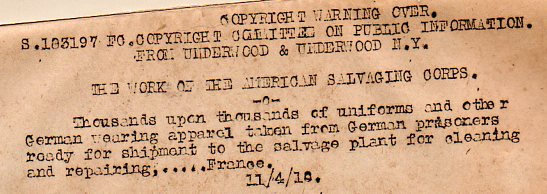
    And the text that was provided by the photo service company to be used along with the photo wen (or if) it was published. 

    World War I photos--empty uniforms txt289

    The cleaning and repairing went on, the prisoners kept coming in–even for those involved, the scent of the end of the war was in the air, though I doubt that the majority felt that it was only a week away. 


  • An Alphabet of Giants, Part II–Under and Over the Volcano with Rabelais

    JF Ptak Science Books Post 1278
    Gluttony127
    Rabelais may be that man who lived under/in/over the volcano.

    Francois Rabelais (1490-1553, writing under the anagram Alcofribas Nasier)   was perhaps as gigantic a man in spirit, need, want and appetite as his greatest creations, Gargantua and Pantagreul, and may well be the greatest ex-monk of ex-monks, a bubbling Renaissance Humanist.  I’m not saying that Rabelais spent 11 months in the womb or smoothed his hair with a 900′ comb or drank the milk of 17,000 cows like his creation Gargantua,  but he did have a staggering appetite for life.  He ate life as Honore de Balzac ate food.  Rabelais seemed to know no boundaries, and neither did Balzac, who would typically eat a hundred oysters,  twelve lamb cutlets, a duckling, partridges, fish, fruits, assorted vegetables, coffee, liquor, liquer, wine and so on, at one sittng.  Every day. Nor did Rabelais  necessarily drink like Eugene O’Neill or F.Scott or Edgar Poe or Hart Crane or Jack London or Dylan Thomas, though he did drink beond the boundaries.Thomas, though he did drink beyond the boundaries.

    One of my favorite writers–George Orwell–didn’t have much use for Rabelais, repulsed by his abuses, but that was to be expected.  So it goes.

    File:Francois Rabelais - Portrait.jpg

    The beginning and end of Epitaph for Rabelais, by Peirre de Ronsard:

    If anything can sprout
    From  a dead man  rotted out,
    And  if further generation
    Arises  from stagnation,
    A  grapevine will  surely take birth
    From  the belly and  the girth
    Of  good Rabelais, who  contrived
    Always  to drink while  alive…

    All you who  pass his grave,
    Be  you nobleman  or knave,
    Hang  cups on  this, his shrine
    To  vessels and sparkling wine;
    Hang  sausages and ham:
    For  if he  still has sensation,
    His  soul prefers potation
    To  lilies as a gift,
    And wine  gives a better lift


  • The Lost Memories of Things in the Way of the Horizon–Ugly Roads, 1922

    JF Ptak Science Books   Post 1303

    “There’s nothing so perfect as imperfection.”–Somebody.

    “The great unconquerables in the geography of human thoughts and ideas are the bad ones.”–Nobody.

    Bad ideas don’t so much go away as they get recycled. They can be replaced by good ideas or bad, but the ”original” bad ideas seem to linger on and on.  They are perhaps the indomitable inheritance of society, real and imagined.   

    Bad human-produced landscapes are an outgrowth of bad ideas, calamities large and small that come and go, the old replaced by something new that is good or bad or indifferent. With the landscape, the original landscape itself–apart from the idea that brought it about–is generally lost forever once it has been replaced.  There is no Bad Idea Spirit that brings it back whole again, unlike the generic Bad Idea, which can live on and on, unencumbered by history, like a Greek play or some deeper mythology.

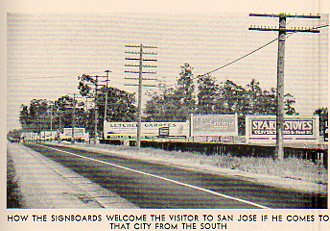
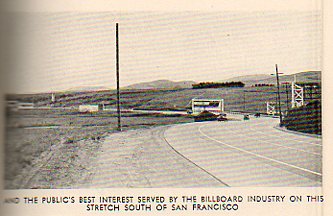
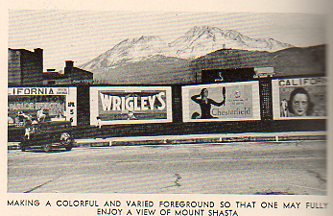
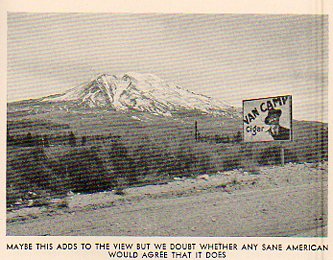
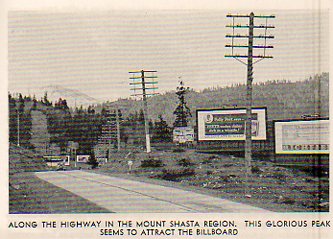
    Roadside billboards 273 Theoretically society is supposed to learn from recognized bad ideas, so as to not repeat them etc., which is one reason why we keep track of them, in the vain hope that someday someone somewhere in the history of our future will kill particular bad ideas off one by one. 

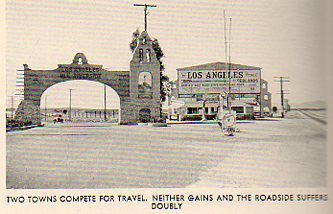
    Roadside billboards 274 In the meantime we can dwell on what we have, though with the removed bad idea landscape, it is more difficult.  That’s why it is important every now and then to familiarize ourselves with them when the opportunity arises, which is just what happened with this innocuous-sounding pamphlet, The Roadsides of California, a Survey1 (1922, and available for purchase at our blog bookstore)  Its not like it’s Pandora’s box–we can open this one and just a few, limited baddies come out, and fall limply to the floor.  But what we see is interesting, a slice of our memory of the horizon–a part of our “progress” that we’ve tried to excise–and what we can see now are the removed and forgotten things. 
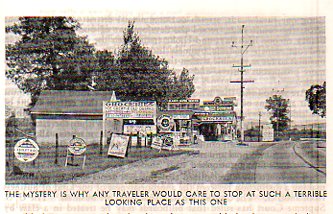
    Roadside billboards 275 Roadside billboards 276

    Roadside billboards 278
    Roadside billboards 280 Roadside billboards 281 Notes

    1. This is actually an interesting pamphlet, an early attempt at removing the quickly generated ugliness that was cluttering new roads for the explosion of automobile travelers.  As quickly as cars were made in the new decade of the automobile, billboards and roadside attractions followed.  This pamphlet identified this phenomenon as a problem.


  • Why Kindle is No Good for Kids

    JF Ptak Science Books  Post 1277

    Dick Words without Books–Kindle et al as a Dim Shadow in the History of Reading to Children The Kindle and its relatives may be a poor choice for reading to children–it’s a book and not a book, a collection of words without a wrapping, a constant reminder for what it isn’t, a cold remedy for warm memories.

    There have been a number of books “written” now that have no words.  Elbert Hubbard charmingly put one together in 1898 (called Essay on Silence).  More recently, there was The Nothing Book (1970), which was precisely that, and which found its way into the NYTimes book review section (“we have nothing to add”). Elsewhere in the arts John Cage produced a four and a half minute piece on nothing, while Samuel Beckett takes far less time to produce his ode to nothing in his play Breathing–all fine examples of nothing.

    There are more-lesser examples of nothing in literature, with books produced using nothing but the letter “I”, or commas, or periods/dots, or plus/minus signs.  They soberly add a little something to nothing and somehow come up with less than “something” and more than “nothing”, floating in a briney failed no-man’s-land of not-nothingness. Others have taken a different route around nothingness by simply dropping the use of a single letter in the formation of their novel–the lipogram isn’t even a stutter to nothingness, just a hollow something. 

    And that’s where the Kindle comes in, in the hollow somethingness. 

    Dick and Jane are something.  Or at least the physicality of reading them to children is something. The stories aren’t important, really–the handling of the book, the feel of the pages, the jumbling of position, the steadying of the text, the turning of the pages, trying to navigate the swirl of motions, the feel of the whole thing as a voice deciphers the tracks along the pages.  

    It’s the act of reading that might be the most mportant thing in getting children to appreciate the whole idea of reading. 

    Reading from a Kindle just won’t do, it can’t accommodate the range of differences, the cascade of varying stimuli, that comes from holding a book.  Books are always the same size inside a Kindle–I know t hat my own children love some books because of their shape, or they just like feeling something different in their own hands as they skip from title to title.  

    You also can’t give your kids the book that you had when you were little, seeing the way your name changes in your books as you grew older.  You won’t have a Kindle with your kid-scrawl on the flyleaf identifying the child-you in 1962.  The kindle has no personality of its own–which may be fine for people already reading, but not so for people just starting out.  

    You also can’t press a much-loved, hard-read copy of a favorite Kindle into your kid’s hands and expect some sort of response to it. There’s just too much missing from the reading experience with a not-a-book–you just don’t want to institute a sameness when what is needed is difference


  • Mrs. Kennedy’s T.V. Show, 1960

    JF Ptak Science Books   Post 1239

    “Much of what we used for Caroline will serve for the new baby, too. Any new things I buy, I choose in neutral shades, being completely impartial as to whether it’s a boy or a girl”–.Jacqueline Kennedy, on how she will dress her coming baby, November, 1960.

    Kennedy 4.3

    The Kennedy presidential campaign of 1960 was certainly of a different era–it had its fair share of good and bad, but what it lacked was the noble predator of massive television coverage.  There’s was a minor major attempt at utilizing the new medium, and certainly from where we sit today, the effort looks quaint, naive.

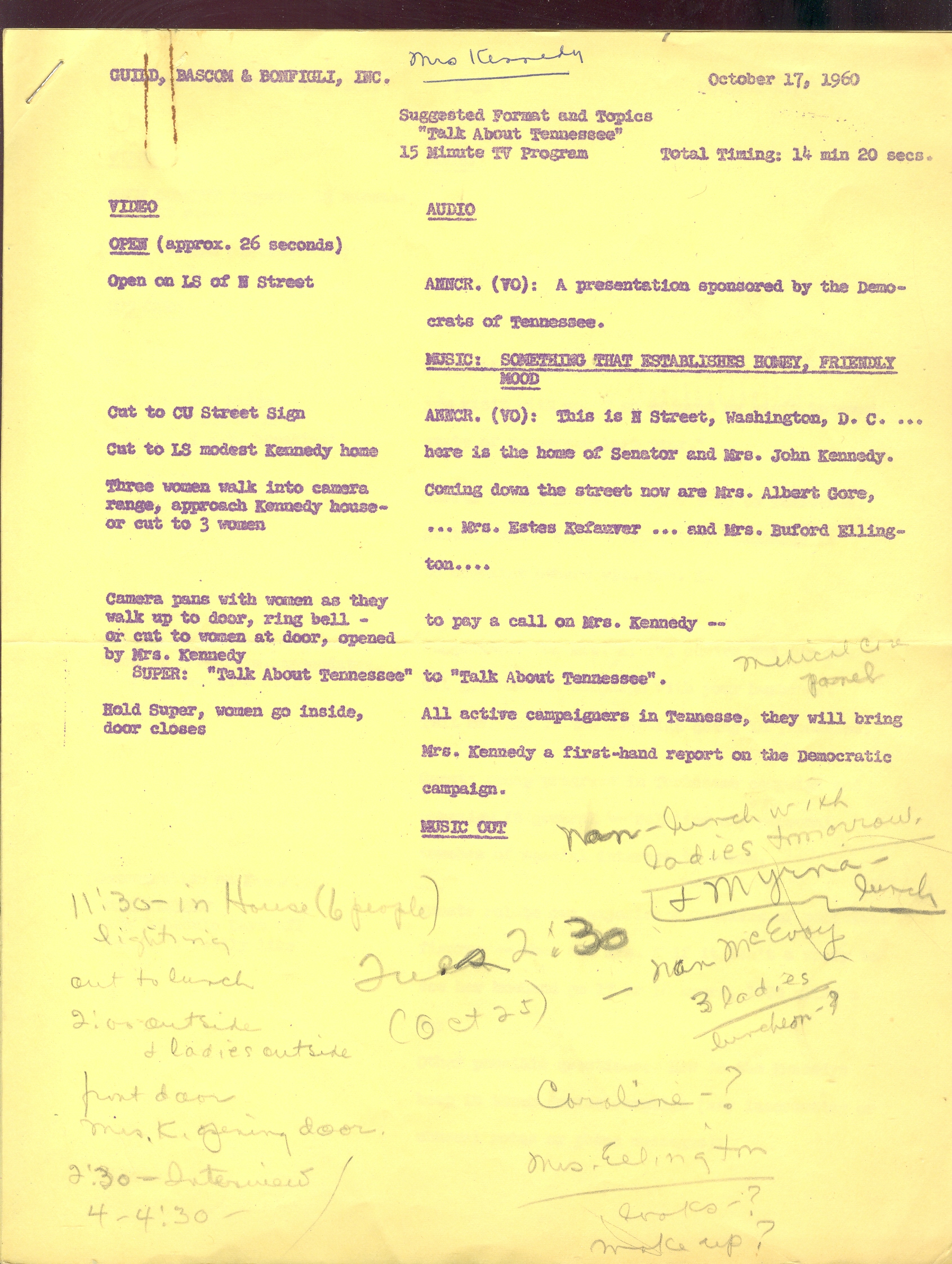
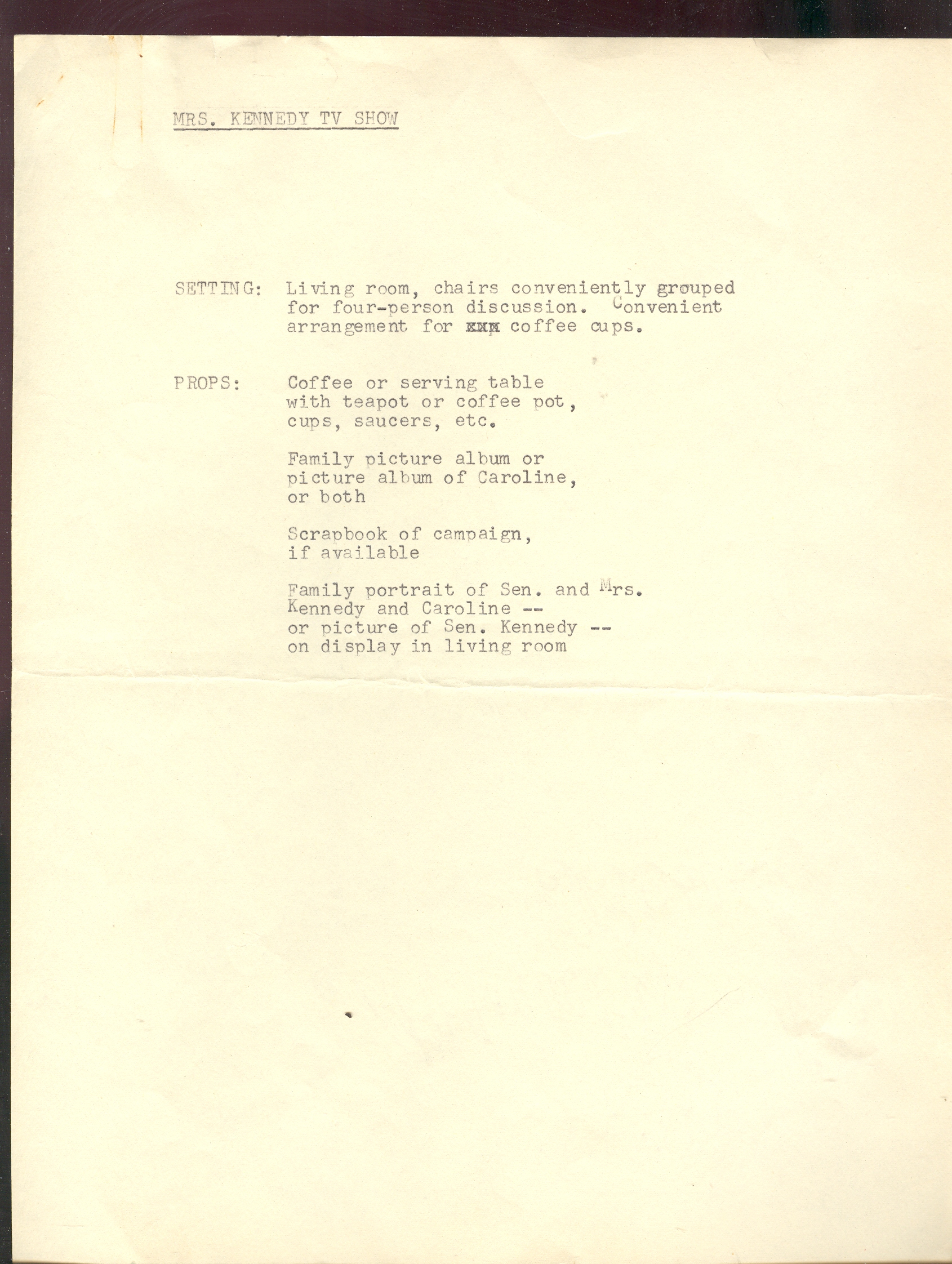
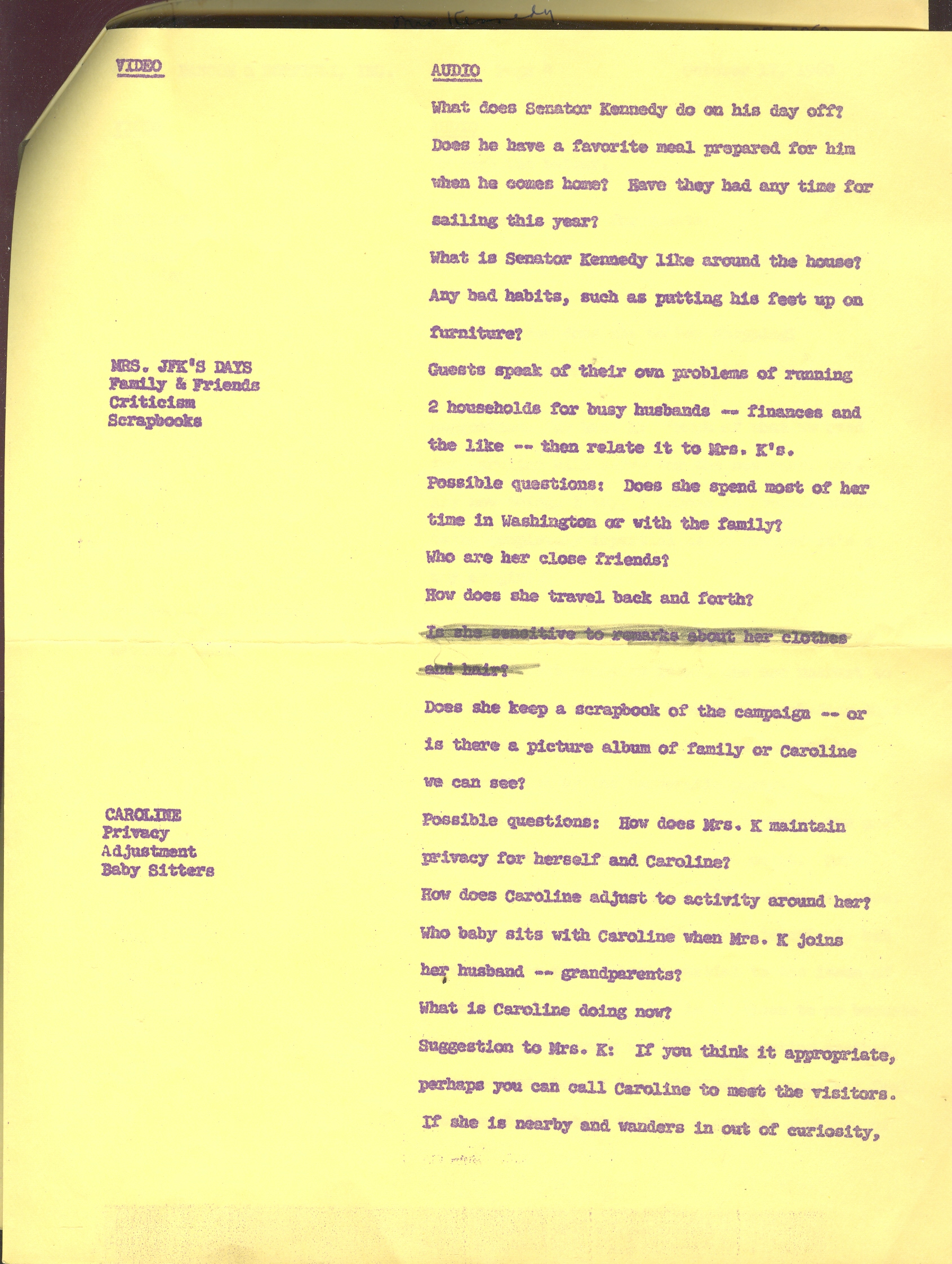
      What we have here is Jackie Kennedy’s copy of a script entitled “Talk About Tennessee”, (dated  Oct 17, 1960) for a 15-minute television endorsement for John Kennedy’s presidential campaign. Its a six-page insight into the workings of the campaign,  an x-ray of fifteen minutes of Jackie Kennedy talking with the leading ladies–featuring Mrs. Kennedy, Mrs. Albert Gore, Mrs. Estes Kefauver, and Mrs. Buford Ellington.of Tennessee–in a hearts-and-minds attempt for women’s votes. In fact, the scripts are titled “Mrs. Kennedy TV Show” in the hand of her acting social/press secretary, Gladys Uhl–it is in fact a full-fledged commercial spot, a long advertisement, though called something a little higher-minded than that.  But an ad is an ad, and this is definitely an ad. We see the enterprise from the director’s eye, who arranges the motion of the camera, the arrangement and style of music, and suggestions for conversation. [This document is available for purchase from our blog bookstore.]

    In the current era of micro-micro-management of micro-details, created nuance, utterly lost spontaneity, carefully crafted breathing and absolutely scripted off-the-cuff remarks, this effort seems extraordinary to the room that it left for instantaneous discussion.

    This material is from the estate of Mrs. Gladys Uhl, who served as the press liason and secretary for Mrs. Kennedy for a short time at the end of the election during the fall of 1960, though she did not follow Mrs. Kennedy into the White House. (Mrs. Uhl was the wife of Alexander Uhl, a very prominent and superb reporter who covered the Spanish Civil War in the front lines for several years, and who reported first hand on action during WWII, and covered many early civil rights movements for the Associated Press, the far-ish Left PM Newspaper, and many others. Her second husband, David Katcher, was the founding editor of Science Today magazine and who served a number of administrations in various high-level capacities.)

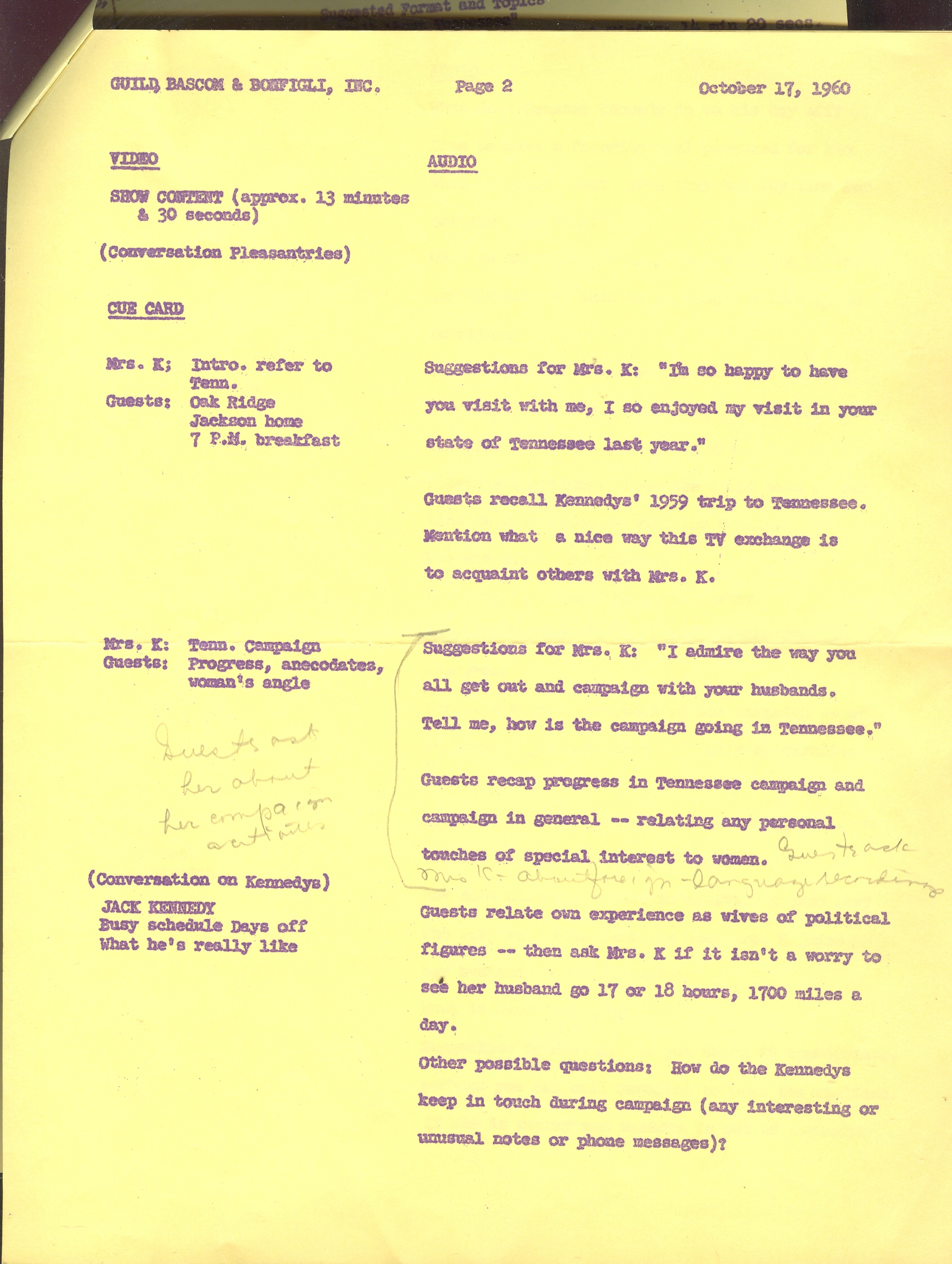
    The document, purple ink printed on yellow paper, and was evidently produced by Guild, Bascom and Bonfigli, Inc., and dated 17 October 1960, and is inscribed (in Uhl’s hand) “Mrs. Kennedy” in ink at top center of the document.  It details the look, feel and sound of the “TV show”, and also has suggestion about the content of the conversation. There are outlines for conversation *only* as there appears not to have been a definite script for each of the women. The entirety of the show does seem to be here, though, directing how the show should look to the viewer. The document is essentially divided into two sections, left and right, one side describing the video segment and the other describing the audio. A sample as follows:

    VIDEO (pg 1). “Open sequence on N street” (home of the Kennedys during this period was 3307 N in Georgetown, DC)

    AUDIO (pg 1). Music: “something that establishes homey, friendly mood”.

    VIDEO (pg 1): “camera pans with women as they walk up to door, opened by Mrs. Kennedy”.  [The conversation is mostly directed towards Jackie and the campaign.]

    AUDIO (pg 2): “guests relate own experiences as wives of political figures, then ask Mrs. K if it isn’t a worry to see her husband go 17 or 18 hours, 1700 miles a day”. 

    AUDIO (pg 2): “Other possible questions: how do the Kennedys keep in touch during campaign (any interesting or unusual notes or phone messages)?”.  Other questions put to Jackie: –what does Senator Kennedy do on his day off? –does he have a favorite meal? –how does Mrs K spend most of her time? –how does Caroline adjust to the activity around her? –has Mrs. K had time to fix up nursery, gather baby clothes? –where does she do her shopping? Then there is this nugget (on page 4) about a possible response for Mrs. Kennedy on her impending childbirth: “Much of what we used for Caroline will serve for the new baby, too. Any new things I buy, I choose in neutral shades, being completely impartial as to whether it’s a boy or a girl”.

    VIDEO (pg 5): “suggested to close program: if there is a family picture, or a picture of Senator Kennedy in the room, someone might draw attention to what a good picture it is. Mrs. K could either bring it in closer or rise and walk over to it. Women would then continue in conversation, silent footage, while the announcer concludes the show, voice over.”

    VIDEO (pg 6): “Drop super, camera cuts to picture of Sen. Kennedy, if possible within the Kennedy household”. VIDEO (pg 6.) “Super: Vote Kennedy-Johnson the Democratic Ticket. Ending.”


    Kennedy 4.1 

    Kennedy TV SHow, pg 2

    Kennedy 4.2

    Kennedy TV SHow page 3

    Kennedy 4.3

    Kennedy TV SHow 4

    Kennedy 4.4

    Kennedy TV SHow 5

    Kennedy 4.5


  • Trying Hard Not to See the Jews: American Immigration Practices, WWII

    JF Ptak Science Books LLC  Post 1237

     This pamphlet holds an insight into a period, and also to one of he greatest stains of American foreign policy/humanitarianism of the last seventy years. And somehow this prolonged act is still a semi-secret, still I think not very widely known or acknowledged.

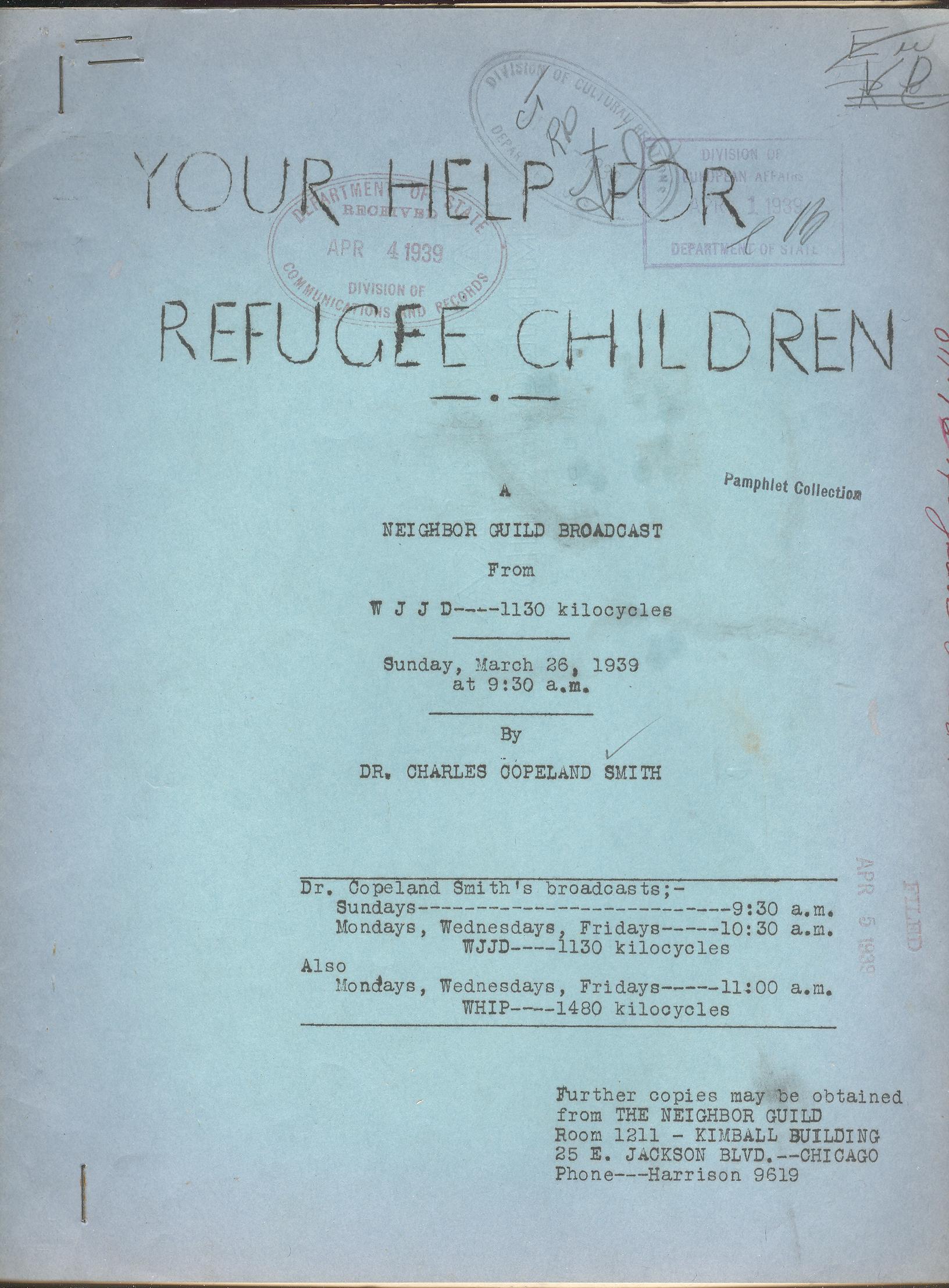
    April 17 jewishYour Help for Refugee Children (March 1939)  is the text for a radio broadcast by Chicago-based Dr. Charles Copeland Smith for his “The Neighborhood Guild” series.  (The document is also available from our blog bookstore.) Actually, Smith gave the broadcast over to his wife (for some reason) to make this appeal– I guess because the subject was children, and that it would best be made by a woman.  Mrs. Smith made the case for the relaxation or extension of American immigration policy to accommodate the newly-minted refugees of Hitler’s Nazi Germany. 

    The European war was just about started by the point–Czechoslovakia and Austria were already done, and Poland and the rest of the beginning of the war was just six months away.  By this point, however, the war was considered a foregone conclusion by most thinking people.  

    I have to give credit to the Smiths, as they did recognize the coming threat of Nazism, and did make the appeal for a more expansive inclusive of the relatively stingy American immigration policy.  They figured that the children of refugees would be their main concern, and that accommodation should be made to accept 10,000 of them per year.  

    That would be 10,000 “extra” children, I’m assuming, since the Smiths make the case that the current levels for allowable immigration was an at “inadequate” 27,000 per year.  In 1938 there were more than 300,000 applications for U.S. visa from German Jews alone, about 20,000 of which were accepted.  In 1939, a smaller number of Jews would find themselves allowed into the United States. From 1933 onwards, the case can be clearly made for the State Department, Congress and the Executive branch actively engaged in restricting immigration to the U.S. by many hundreds of thousands of European Jews.  Even after it became apparent that not only were Jews being sent to concentration camps by the millions, but they were also being exterminated , that the U.S. policy for acceptance of Jewish refugees barely changed.

    It is at the Jewish question that the Smiths got things wrong in their broadcast.  Mrs. Smith made “another attempt” to make the case for the refugee issue was not “predominately a Jewish problem”, the argument being that there were so many more Catholics than Jews in places like Czechoslovakia and Austria.  She went on: “I believe that Nazism is determined to stamp out liberalism.  The movement is political, not racial, not religious.”

    The undercurrent of their argument for saving (“not just”) Jewish children was based on a very selective use of out-of-context statistics, concentrating on numbers of refugees coming out of Austria and Czechoslovakia, and not, somehow, out of Germany.  I’m not sure how they could have gotten to their argument on refugee status for Europeans while ignoring the six years worth of anti-Jewish legal abominations perpetuated upon the German Jewish population.  

    The “Law for the Restoration of the Professional Civil Service” was passed in April 1933 (the first official banishment of the Jewish people as menials, second-class citizens,  banning them Jews from government jobs). The Jews had already been established by the Nazis as being the cause for the loss of WWI, the debacle at Versailles, the ruination of German culture and mortal enemy of the Aryan German. Many hundreds of laws like this would be instituted over the coming few years, establishing the legality of the supposed inferior nature of the Jewish people.  (Also in July 1933 came the underpinning legislation of some future nasty thinking, Ernst Rudin’s “Law for the Prevention of Hereditarily Diseased Offspring”, which established health courts and compulsory abortion and sterilization for a variety of physical and hereditary traits found to be unacceptable for the promulgation of a superior German race.) And this is all before the Nuremberg Laws of 1935/1936, (specifically the “Reich Citizenship Law” 1936)  which basically established the fate of the Jews, removing their citizenship and making them “subjects of the state”.Do I really need reiterate the case for the Nazi subjugation of the Jews, and their making the social and legal basis for the coming extermination policies which were codified at Wansee in 1942?  I think not–though it seems to me that for whatever reason the Smiths decided to not utilize this already well established (even by 1939) information.I think that at the very least they did not want to know.
                                        
    I’d like to focus on this self-deception, the welcoming of not knowing something, of not wanting to know, of stopping: of doing nothing in the face of something needing to be done.

    The destruction of the Jewish people during World War II is a history with many bearings, a complex of actions that seem to have been both elusively unstoppable and eminently addressable.  The psychology of why this occurred is forensically comprehensible; the ultimate question, after everything is said and done, is why the extermination was allowed to continue for years on end. There is a considerable catalog of demons of non-actions and deceits that I just can’t address now in a short post like this. Though I would like to know why was it so difficult/impossible for the British government (and in particular, Anthony Eden) to allow Palestine as a safe haven for desperate Jews, engaging in torturously long non-decisions and bureaucratic inscrutability to emergency situations?  Why did Franklin Roosevelt take so long to come acknowledge the documentation of the Holocaust and then cause almost nothing to be done about it?  Why did Sumner Welles act decidedly against any real action in presenting the full case of the Holocaust to American leaders?  Why would the War Department (represented by Assistant Secretary McCloy) respond in 1944 that  Auschwitz was both beyond the reach of tactical bombers and not be of sufficient military interest to divert Air Force resources away from other areas of interest?  The knowledge of vast extermination of Jews in Europe was known by early 1943, and yet, there was little action taken to do anything to stop it.  Not only that, the issue of emigration for Jews to the United States or any other country that would have them was caustic and slow; it was in short a history of the use of the word “no”.

    Henry Morgenthau (1891-1967), an old-line politician, was Secretary of the Treasury under Roosevelt and was also the only Jew in the cabinet.  It was he who in 1944 produced one of the most compelling, and damaging, documents questioning the American government’s culpability in doing nothing concerning the Holocaust, when “officials dodged their grim responsibility, procrastinated when concrete rescue schemes were placed before them, and even suppressed information about atrocities.”

    Its title left nothing to question:

    Report to the Secretary on the Acquiescence of this Government in the Murder of the Jews (1944).

     It starts so:

    “One of the greatest crimes in history, the slaughter of the Jewish people in Europe, is continuing unabated.

    “This Government has for a long time maintained that its policy is to work out programs to serve those Jews of Europe who could be saved.


  • Evil Replaced by Evil: The Baltics, the USSR and the Nazis. An Anniversary, 25 November 1940

    JF Ptak Science Books   Post 1234

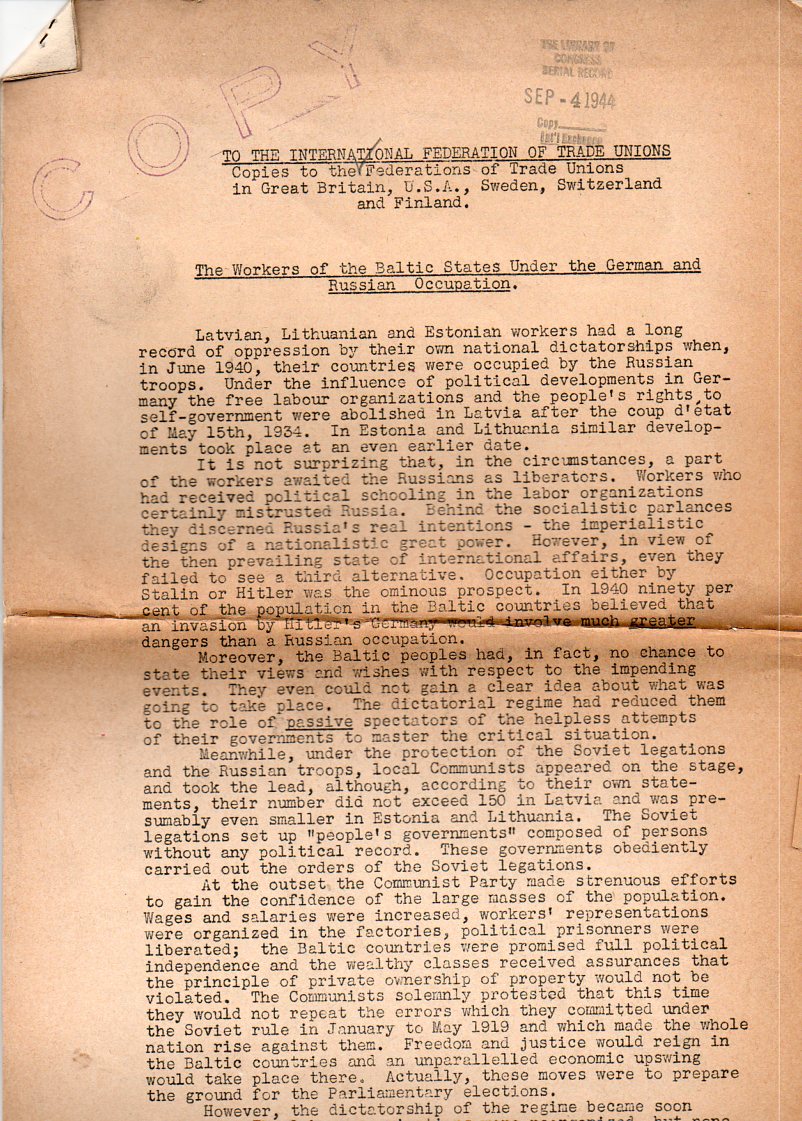
    This rare, offset-printed publication comes from the representatives of the Free Trade Unions of the Baltic States–a part of the International Federation of trade Unions (IFTU)–and is dated December, 1943, and is a witness to the brutal regimes that illegally and maliciously subverted the countries of Estonia, Latvia and Lithuania.
    (The IFTU was a social democrat-like organization that existed from 1919 to 1945, and which was a largely European body after 1925 when its main American counterpart, the AFL, chose to disengage.)

    Balticsb874
    [This document is available for purchase from our blog bookstore, here.  I would gladly reproduce the entire document except that given the nature of its reporduction the pages are brittle, meaning that the document could no tbe scanned unless taken apart, which I do not want to do, presently.]

    The six-page pamphlet is interesting to me because it provides some details on the rape of the Baltics–the theft of their legal status as nations, the murder and deportation of those who disagreed with the ruling Soviet and then Nazi occupiers, and then, lastly, the murder of the Baltic Jews–which, in December of 1943, was not common reading material.

    As a result of the Molotov-Ribbentrop pact, the Soviet Union moved into the Baltic states in June, 1940, after having compelled the thre nations to allow the establishment of Soviet bases on their soil.  In June of 1940 the life of the Baltics changed dramatically, when the U.S.S.R. overtly took control in the three countries. At the beginning of the Soviet brutalities, elections were stolen, military forces were moved, and murder and deportations and arrests began in earnest. In beginning to kill the soul of these countries, the Soviet union established a “Commissariat of the Interior…was a powerful apparatus for carrying out persecutions and taking reprisals”, a euphemism of the early part of the pamphlet which would be replaced by mor direct language just paragraphs later.

    But 25 November 1940 marked the final destruction of the independence of these countries when their national currencies were replaced by the ruble, allowing complete control by the Soviet Union, and plunging the countries into a malicious chaos, with the citizens now faced with an almost-order of magnitude change in their buying power.

    The report continues on the disappearances of workers and intellectuals, which came quite early in the Soviet occupation.  According to the document, tens of thousands of workers who were opposed to the new changes by the Commissariat of the Interior were arrested and deported to “enjoy a happy life” in prison.  More shocking details would come, highlighting the deportations, arrest and executions of thousands of people–tens of thousands who would be sent to “labor camps” in northern Russia, selected from”secretly drawn-up lists by the Communist Party”.

    There is in particular the mention of 14 June 1941–a bitter day in the history of the first Soviet occupation, though it seems that the author of the present paper did not yet have a full appreciation of the event, yet. Here the author mentions specially “equipped” railway cattle cars brought in from Latvia and used to deport 21,000 people from Lithuania, 11,000 from Estonia and 15,000 from Latvia.  In point of fact the period of 14-17 June 1941 was when the Soviets imprisoned/deported/murdered 100,000 Balts.

    After the Nazis trashed their non-aggression pact with the USSR and began their invasion (known as “Operation Barbarosa”) of the Soviet Union on 22 June 1941the Russians began to run, replaced very quickly by the advancing German armies. The author writes that “we have no exact data” on the deportation and execution in the earliest days of the Nazi occupation, but the conservative guess was that 50,000 had been deported and 10,000 executed.

    And then on to the Jewish question, where this paper reports that almost all of the Baltic Jews–by December 1943–were gone.  “Gone”in being  deported to   work camps, or collected in slums, or murdered.

    In the only underlining done in the printing of this pamphlet, we read that ‘All these murders are on the German conscience”, and then goes on to name the German officials responsible for the crimes. 

    In December 1943, when it was becoming apparent that the Germans were being turned in Russia, and that the Russians might return, there is this final plea from the pamphlet’s author:

    “Do not allow the red Army to occupy our countries.  Save our people from physical and legal annihilation.” OF course the Soviets who were replaced by the Nazis were again occupied by the Soviet Union in 1944–the Baltics would not see the Soviet Army leaves until 1995.

    This was a fast summation of a complex and complicated situation I the Baltic states for these years, but I just wanted to give the flavor for the background of this December 1943 pamphlet.  There were hundreds of references to mass killings and deportations (and vast rages of murders) that appeared in the press during this time period, but there was certainly not a collected resource for them all.  This pamphlet–quite rare in itself, as I’ve found no copy in any world-wide library holdings referenced in WorldCat–is another example of disparate reporting on what would be seen just 20 months later as a monumental climax of injustices.

    ·Posted by :

    ·in:

    —

  • Modern Antique Occupations

    JF Ptak Science Books   Post 1233

    Earlier in this blog I looked at the diminishing importances in antiquarian times–some occupations, formerly integral and important, have now become sufficient, occasionally a luxury to be afforded by folks who can pay for reigniting past importance.  This earlier example was found in William Pyne’s great-ish 1845 work, Picturesque groups for the embellishment of landscape..– it was a work of clip art for its day, really, showing, detailing, the attitudes and occupations of working people.  It was a book filled with the people who might ordinarily have gone missing from the work of the artists needing their images displayed in their brains by someone else’s labor; a book filled with figures to plug-up the blank spaces, round out that unkind bits that called out for a human touch. This new example’s lists (below) are interesting in this same way, though the jobs listed are less general and more “professional”, or technical, than the Pyne work–fishmongers and rat-catchers are not listed here. 

    The work is that of Edward Hazen who in 1837 described 68 specialized jobs in his Panorama of Professions and Trade. Unlike many other occupations from a less specialized list, nearly all of these jobs still exist, though many have been lowered to deep depths of obscurity (say, for “lithographer”), while others are changing whole-cloth but still quite popular (like my own profession as “bookseller”.  A bookseller from 1837 could see that some small percentage of the booksellers he met were indeed selling books in a way he recognized–but then there’s that knotty majority who even though were brothers-in-trade would seem I think to be almost entirely foreign to his antiquarian eyes.)

    Of all the professions listed below, only five, I think, are almost entirely removed from the public picture–jobs held by people now but by people who would be difficult to find. The short list–type founder, turner, wheelwright and stereotyper.  As I said, there are people who practice these positions, but their services are more luxuries than necessities, now.  Whereas my earlier post on the Pyne occupations was listed as a “Domesday tour” of disappeared professions, it it remarkable to see how many of the Hazen jobs continue to survive. 

    http://krisdedecker.typepad.com/.a/6a00e0099229e888330120a5f04659970b-pi

    http://krisdedecker.typepad.com/.a/6a00e0099229e888330120a6473e20970c-pi

    http://krisdedecker.typepad.com/.a/6a00e0099229e888330120a6473e20970c-pi


  • Inauguration Gowns, “Buying American”, & Jackie Kennedy: the Kennedy Inauguration of 1961.

    JF Ptak Science Books   Post 1229

    [JFK Election/Inauguration rarities may be purchased through our blog bookstore.]

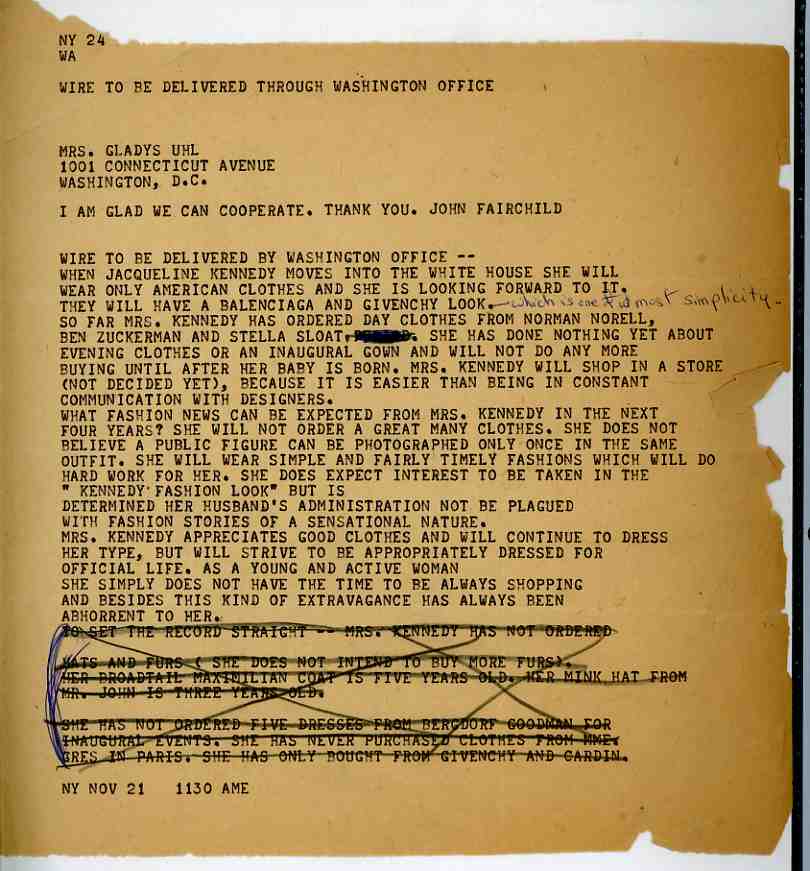
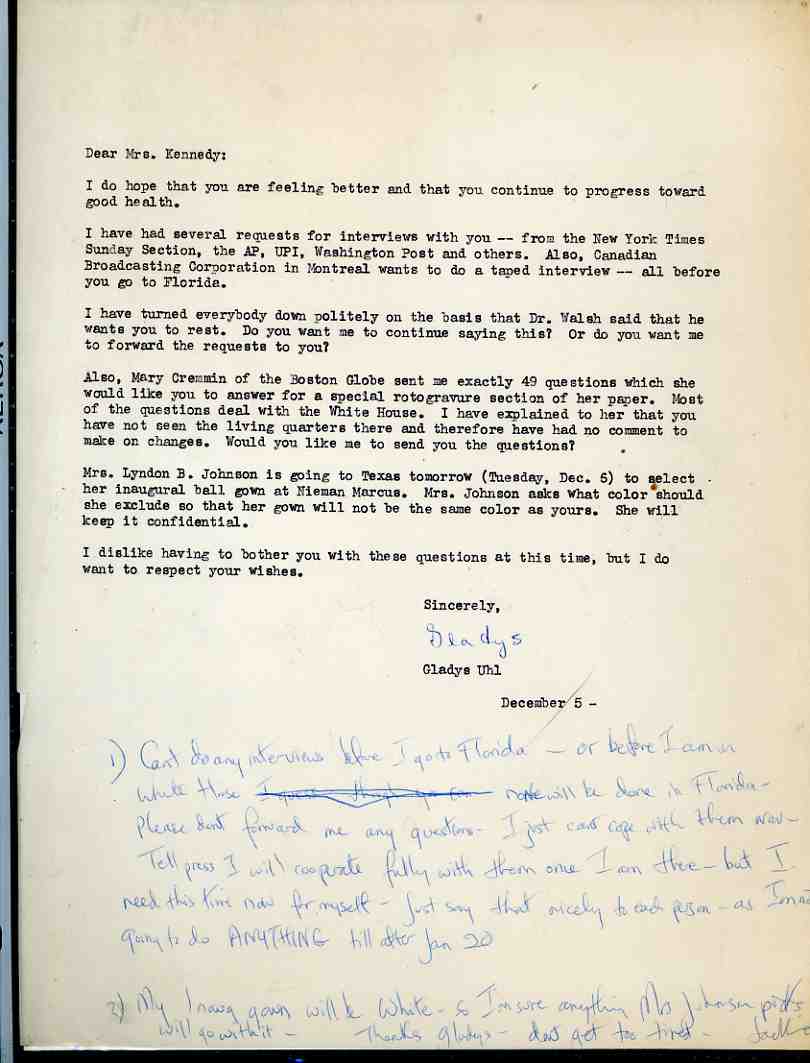
    0 blog jan 16 kenn inaug gown383 Some years ago I purchased a small archive of documents relating to the public appearances of Jacqueline Kennedy, wife of President John Kennedy.  The material is all pre-inaugural, almost all 1960, and  loaded with interesting unpublished nuggets.  One such bit is this telegram sent by the Kennedy camp to Mrs. Kennedy’s first (?) social/press secretary (who did not follow the Kennedys to the white House), Gladys Uhl, the content of which was to be reorganized and matured by Mrs. Uhl  for public distribution.  The subject here was Mrs. Kennedy’s coming fashion sense, in general, and of her inaugural gown, in particular.

    And what is interesting here is that “when Jacqueline Kennedy moves into the White House she will wear only American clothes and she is looking forward to it”.  A fine sentiment; a bolder one too for today if Mrs. Obama decides to follow suit.  It will be much more difficult though for that to happen in 2009 than it would have been in 1961:  this is an age when even some of the most classic “\American” brands of clothing have been moved offshore, made for the USA in China (or Indonesia, or Pakistan, or Vietnam, or wherever the work can be delivered cheaper.  Mrs. Obama has said something about wearing simple clothing, as from a store (chain) like J. Crew–it would be nicer if she were to decide to go with another New York-based clothing store whose goods weren’t made in China, though.  I could cozy up to that.  I could also cozy up to the “American Owned” supermarket that I bounce into every other day if that had more American-made products.  I can understand off season veggies and such, but does good-old Motts Apple Juice really need to be made from apple concentrate imported from China (for crying out loud?)?  I remember on 9/13/01 that the Giant Foods supermarket in my neighborhood in Cleveland Park, D.C., started selling American flags–all made in China.  This was just so entirely wrong that a protest was waged, the flags were removed, and then replaced days later with flags made in the USA.  But it is difficult to find American-made clothing in stores–even a so-called “iconic” Appalachian “general store” and landmark in Asheville, a store that wraps itself in folkiness and homespun regional taste, has, I would say, less than 5% American-made goods. 


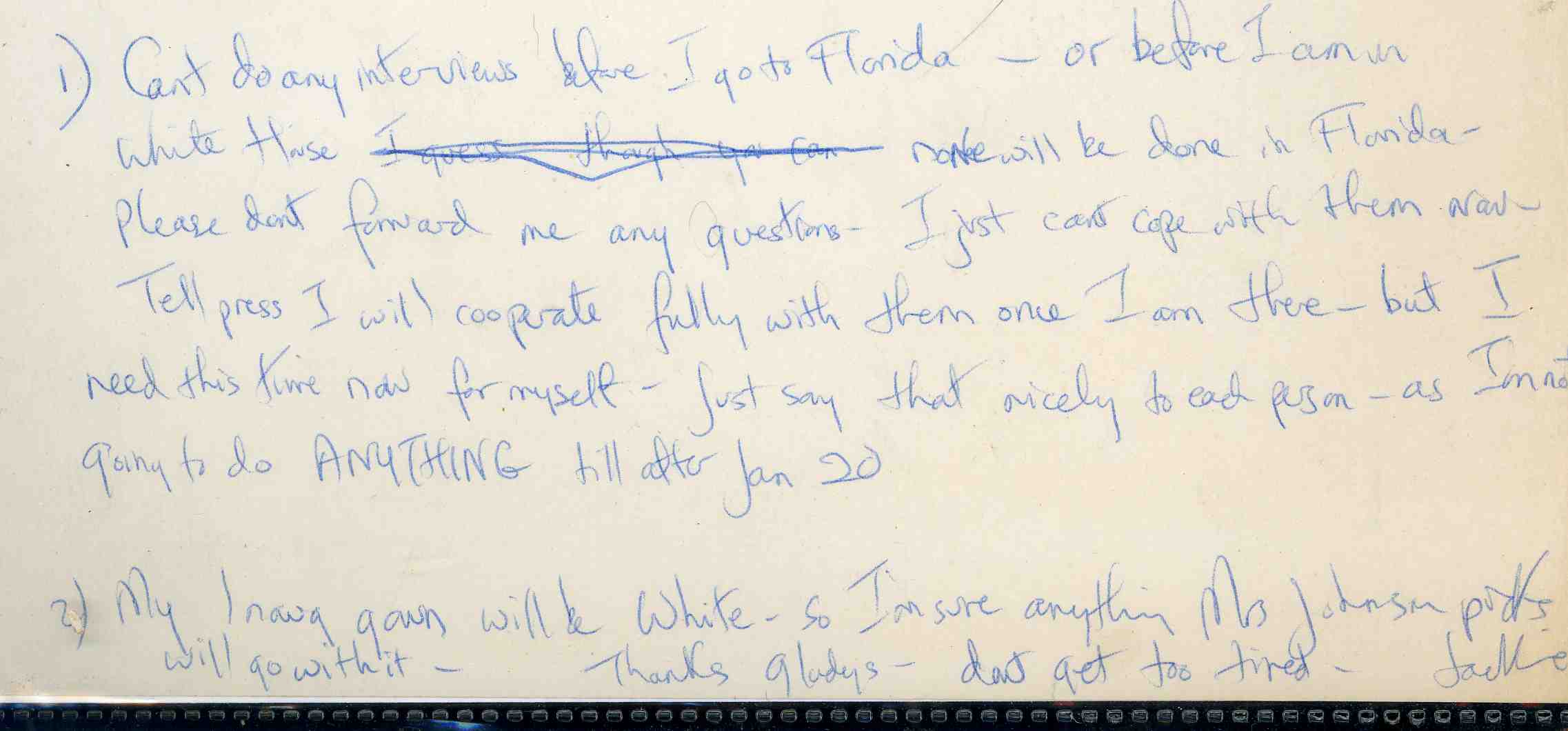
    0 blog jan 16 kenn inaug gown note384But I digress. I really just wanted to talk about Jackie Kennedy and her inaugural gown and her interest in ‘buying American”.  In another piece from this modest archive, Jackie sends back her response to Mrs. Uhl’s questions, and one in particular about color.  Seems as though Lyndon Johnson’s wife, Lady Bird, was going to go shopping at Nieman Marcus for her inaugural gown and wanted to know what color Mrs. Kennedy was going to wear so that she could avoid buying that same color.  Jackie responds at the bottom:  “My Inaug gown will be White–so I’m sure that anything Mrs. Johnson picks will go with it”.  

    There are other interesting items in this collection that I’ll get to soon–several of which are Mrs. Kennedy’s copies of some scripts for television commercials for her husbands campaign.  They’re actually pretty interesting, and a nice insight into the packing of the President in 1960. 


    0 blog jan 16 kenn inaug gown note det385