A Daily History of Holes, Dots, Lines, Science, History, Math, Physics, Art, the Unintentional Absurd, Architecture, Maps, Data Visualization, Blank and Missing Things, and so on. |1.6 million words, 7500 images, 4.9 million hits| Press & appearances in The Times, Le Figaro, Mensa, The Economist, The Guardian, Discovery News, Slate, Le Monde, Sci American Blogs, Le Pont, and many other places… 5000+ total posts since 2008.

Category: Militaria

  • The Bombing of Britain, 1942: Visual Display of Quantitative Data

    JF Ptak Science Books  Post 424

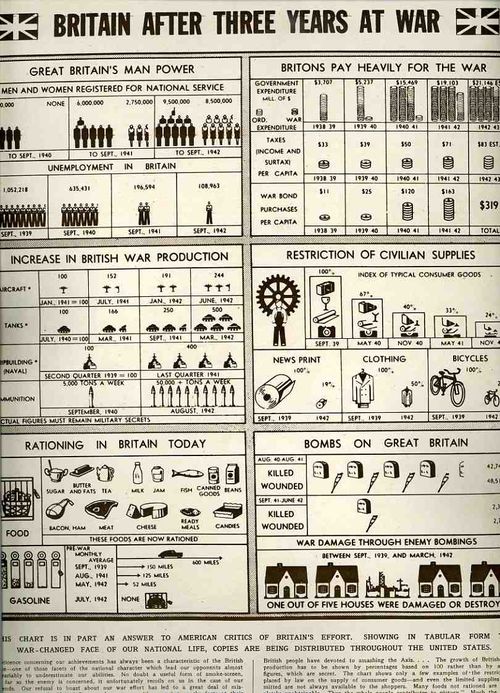
    This chart, appearing in The Illustrated London News for 19 December 1942 is in part a righteous propaganda effort, a response to a criticism evidently boiling in the United States about a “failing” in the British effort to prosecute the war.  Honestly, I was not aware of this sentiment being hosted in the U.S. in the winter of ’42.  The text accompanying this chart explains that the misunderstanding of perception is partly due to British “reticence” concerning their achievements and “an [American] opinion based on ignorance of the true situation”. 
    00-blog-Oct 27Britain 1942 graphic934

    This chart was actually a publication that was distributed “throughout the United States” to alter the public opinion there and to show “in tabular form something of the achievements–and sufferings–of Britain during three years of war.  “Those cold figures barely hint at the three years of fighting sacrifice which the British people have devoted to smashing the Axis.”

    There are some truly extraordinary figures here:  for example, in September 1940 there were 4.2 million men (and no women)  registered for national service; by September 1942 the number of men more than doubled, and there were 8.5 million women now registered. Unemployment sunk to 108k  in Sept ’42 from 1 million in Sept ’39. War damage (which I’m guessing was in the London area) is listed at 20% of all houses (!?); war deaths from the Battle of Britain and the V-1 raids fell from 42k killed and 48k wounded in the year ending Aug ’41 to 2k killed and wounded in the year  ending June ’42 (showing extreme hardship, sacrifice and progress). 

    Overall the rest of the stats speak for themselves, and I was a little surprised that the British government found it necessary to launch a propaganda effort in the U.S. a year after Pearl Harbor.  Eleanor Roosevelt said just before this brochure was issued, Britain has given ten times what we have given, because people there know what it means to be without.  There is much more equality of sacrifice in Britain than in this country”.  The article finishes: “A more forceful propaganda directed from Britain to the United States and a few more Americans speaking their minds as Mrs. Roosevelt spoke hers, would go a long way–perhaps the whole way–towards removing a possible cause of misunderstanding between the two great nations”. 


  • Bags, and Lots of Them: U.S. Navy Inspection, San Diego, 1935

    JF Ptak Science Books   Post 414

    0--ebay---dec 4 bag inspewction178

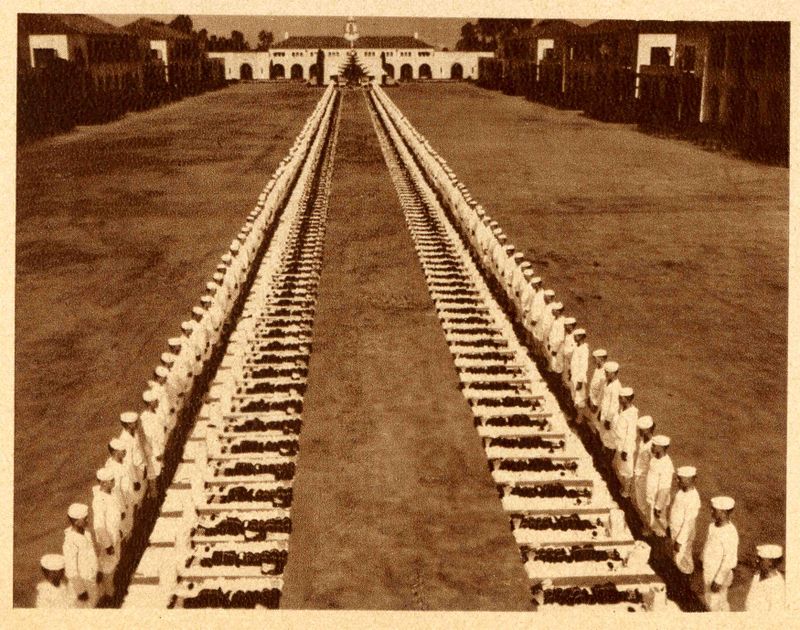
    This wonderful image is found in California and the Navy, a souvenir of America’s Exposition in San Diego for 1935.  I liked the long lines of white and the displayed sea bags.  As it turns out there are only about 200 sailors in this picture, the near horizon then being about, say, 1800 feet in the distance.  The bags, I must say, are lined up remarkably straight.

    The U.S. Naval Base in San Diego–the largest in the country nowadays–would be exceptionally busy in just eight short years from the time of this picture.  By the end of the war, in addition to all of the servicing of the American naval needs, this naval base serviced something on the order of 5,000 ships.  The story of the San Diego Naval Base during WWII was nothing short of remarkable


    ·Posted by :

    ·in:

    —

  • Our Kind of Reader: a Library in the Fields of War, 1918

    JF Ptak Science Books LLC  Post 412

    “Tel fruit porte l’arbe de la guerre.”  Charles the Bold, (“Such are the fruits of war”, observing the town of Montdidier set ablaze by the Burgundians in 1472.

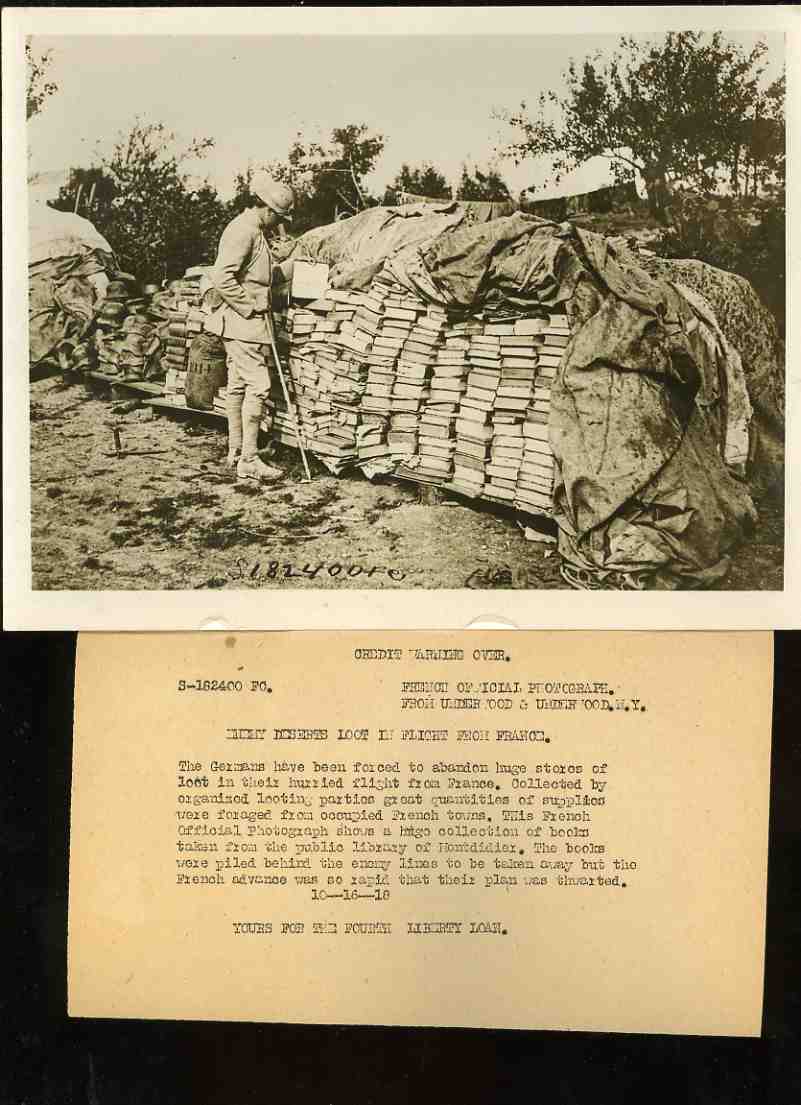
    This photograph, taken near the French town of Montdider in October 1918, reminded me straight away of a photo that my friend Andy Moursund had hanging for many years in his store, the Georgetown Bookshop (for many years one of the most literate, most-intelligently-stocked used/rare bookshops in the DC and Maryland region). Andy’s photo was of the interior of a British library, its roof lost to a Nazi V-2, with stacks of books in a smokey rubble, and with several men standing and reading atop the charred ruins.  His caption for it was “Our Kind of Reader”.  A voracious and terrific reader with tremendous insight, Andy (a Student Nonviolent Coordinating Committee vet (SNCC, perhaps the leading student civil rights organizations in the 1960’s)) really, truly meant and felt the sentiment.  (Or means its and feels it, I should say.)  and here I am surprised to see something similar–let

    0--ebay---dec 5 books185 me just say that images such as these were not very commonly made or published. Different war, same sentiment. 

    This time though the location of the books is outdoors and in France.  the books were looted by the “Huns” as the caption says, and taken from the library at Montdidier.  This is one of the many towns that suffered greatly during the First World War, and especially so during the first Battle of the Somme in 1916, and then again in the battle of Noyan-Mntdidier, in 1918.

    Montdidier is very old and has been deeply scarred by wars over the last 1200 years.  The town’s name comes from the Didier, who as King of the Franks was imprisoned in this community in 774, soon to celebrate the 1,235th anniversary of the event. And on and on.

    I’d be curious to know what was in those piles under the heavy sacking, and how many of those piles there were–we can see the beginning of another just to the left.  I don’t see any thin volumes of whispy poetry or skinny wanting limpnovels. Most of them look pretty stout, three of them together seemingly as big as the soldier’s head.  I am relieved to see that the books were raised off the ground on their pallets–there was a war going on and all of that, but someone took the time and effort to get the books up and off of the ground.  That’s my kind of reader.

    I should point out that this was a News Service Photograph, this one supplied by Underwood & Underwood.  The photo would be sent to newspapers/magazines that requested, say, a photo of a soldier reading; U&U would send it on along for publication, along with mandatory caption. 


  • A Wartime Census of War Dogs: Verdun, 1916

    JF Ptak Science Books Post 405

    0--blog---dec 2 dog census172

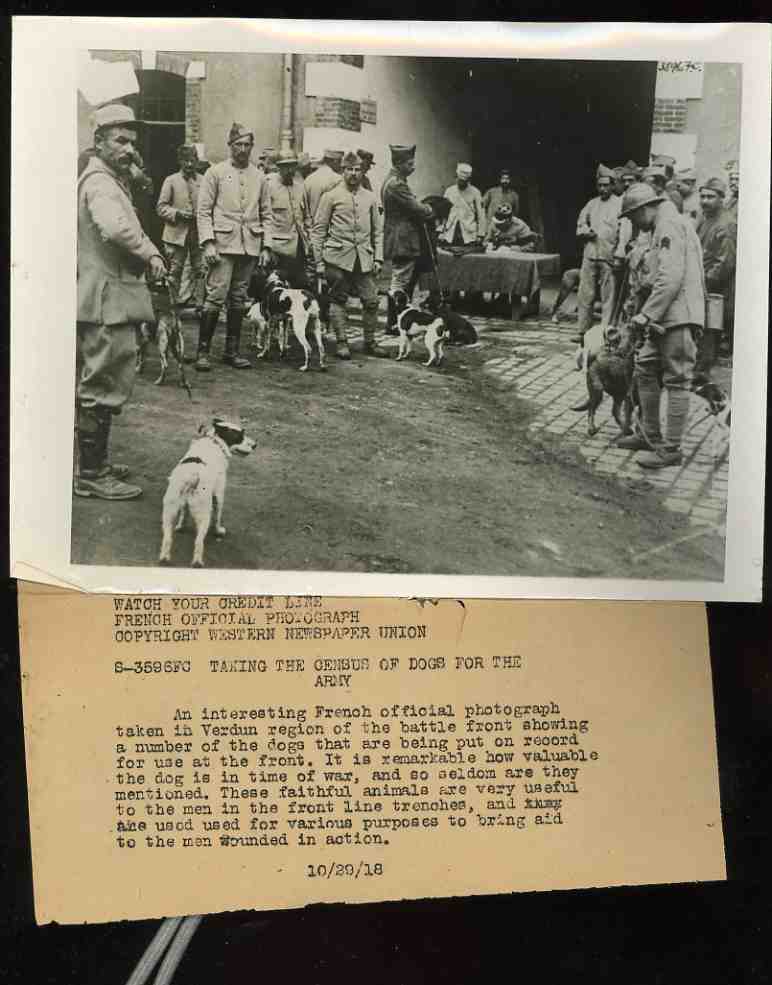
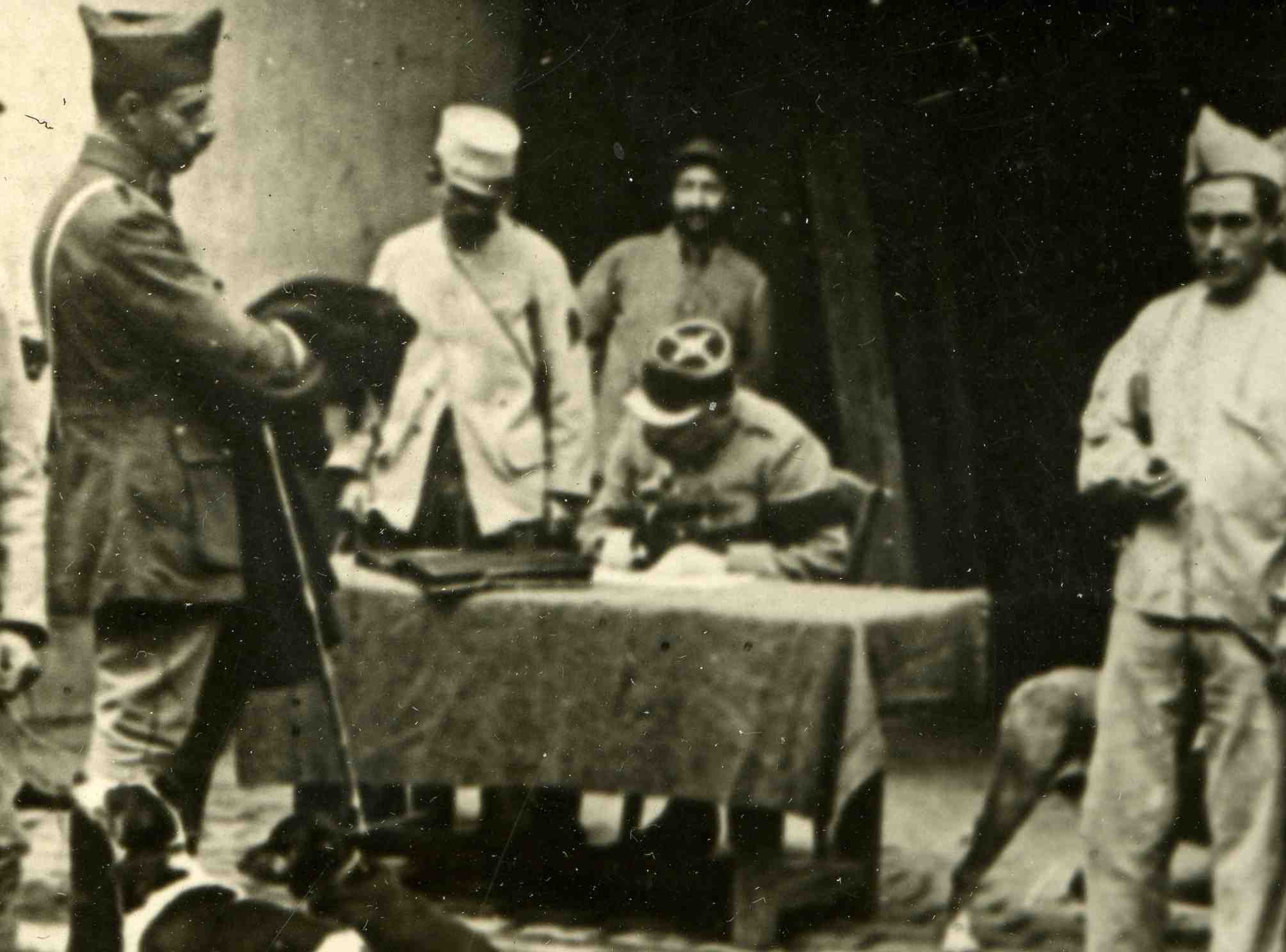
    I wonder what the French officer sitting behind the table at the center background thought about at night, after his day was done.  I wonder what it was that went through his head, his eyes fluttering, as he slipped into sleep?  As the accompanying caption of this photo states, this was a census of dogs, a census of army dogs in the French army, taken at “the battle front” of Verdun, and dated 10 October 1918.  Did he think of his duties expended throughout the day, and weeks and months?  Counting dogs as a war effort may have been a hard thing to consume.  Perhaps this officer had already seen his share of war, perhaps he had fought from 1914 and onwards, this position being relatively benign, a reward for years of impossibly difficult service in a bloody war. Or perhaps not.

    “Taking the Census of Dogs for the Army”, an official French war photograph and copyrighted and distributed by the Western Newspaper Union (a news photo service supplying photographic images for newspapers around the country), gives us a peek at what had been an largely untold story about digs in war.  As it turns out, the French started early on in the war training and using dogs to track and aid wounded soldiers on the battlefield; the Germans did so too, their dogs rescuing some 6,000 wounded soldiers by war’s end.  And this continued a story of dogs in wars that’s at least 2,000 years old.

    0--blog---dec 2 dog census173 .  The photograph, though dated 1918, was taken in 1916, during the horrific Battle of Verdun.  IT was yet another enormous battle at Verdun, which had seen more than its fair share of military action over the centuries, owing to the city’s strategic location on the Meuse River.  The men in the photo look worn, as well they should–evidently, owing to replacements and rotation, something like 70% of the entire French army fought in this battle, with 24 French divisions fighting there.  The French lost 161,000 men dead and 101,000 missing, with 216,000 wounded; the Germans lost about 142,000 dead and another 187,000 wounded.  That’s coming up close to 3/4-million men in one battle over several months in 1916, most of which were the victim of the 30 million rounds of artillery shells.


  • A War by Many Other Names: the Japanese Invasion of China, 1931-1945; How to Trivialize 20 Million Killings Without Really Trying

    JF Ptak Science Books Post 404

    I have forced myself to contradict myself in order to avoid conforming to my own taste.
    –Marcel Duchamp
    0--blog---dec 2 china168

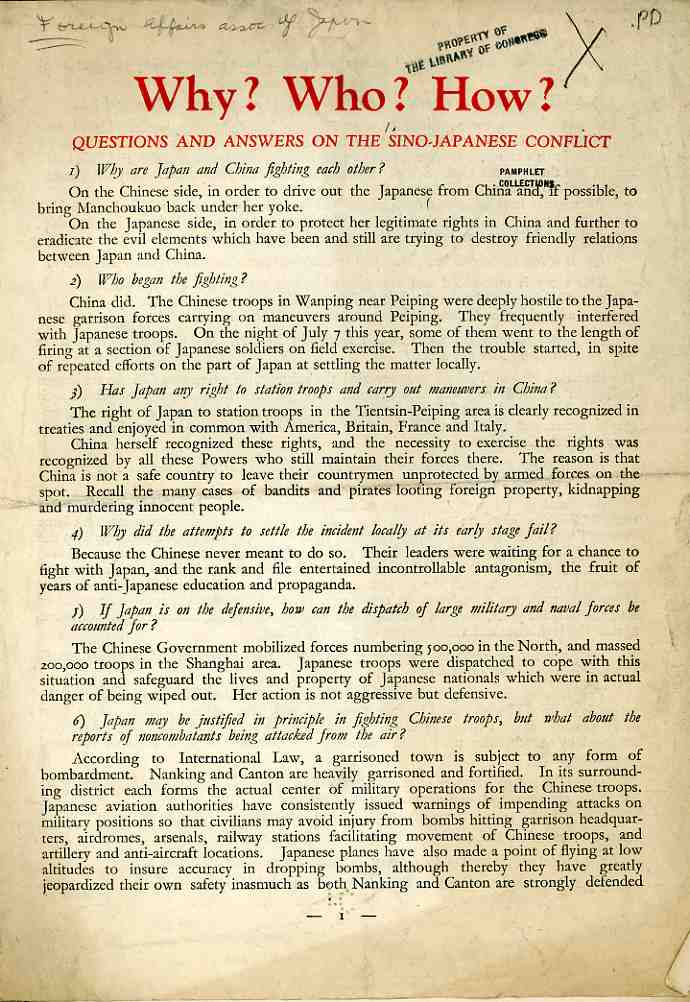
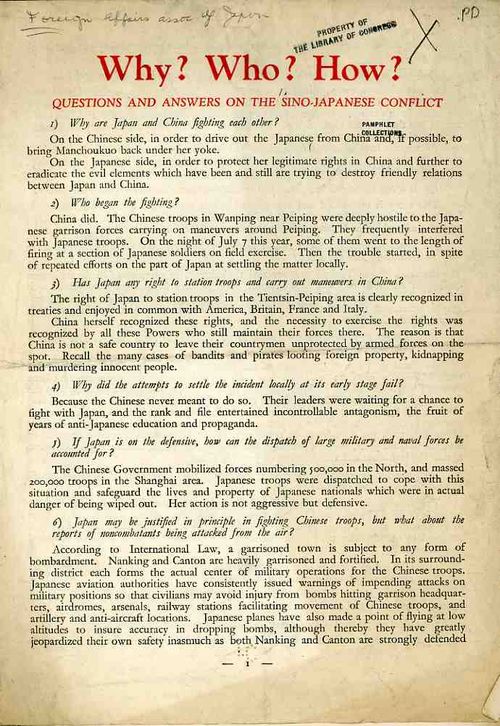
    I have a good number of English-language propaganda pieces published by such Hearts and Minds institutions as the Foreign Affairs Association of Japan describing, through the merriest and most defensive eyes, the Japanese viewpoint of exactly what it was that was going on in China between 1931 and 1945.  This leaflet, Why? Who? How? Questions and Answers on the Sino-Japanese Conflict (1937), is particularly worth noting because of how quickly and cleverish-cleanly the issue of the war and the fault of fighting was dispatched, and done with such astonishing condescending alacrity, and with such an enormous bodyguards of lies,as to be staggering.  I guess this is why the Duchamp quote came to me just now.  Old Marcel, the supremely gifted magician, certainly meant to be an enormous, itchy pain in the butt and a source of confusion, an artistic anarchist;  the thinking behind the quote served him well, and I think that it can be well-applied here.                             

    The first issue is in the subtitle:  the “Sino-Japanese Conflict” implies that the Chinese were at fault for having the Japanese invade Manchuria back in 1931; secondly,  the Chinese started a conflict and not a war. 

    Actually, the naming of the war there is quite an issue, and an issue still—and an issue at it most base level:  the word “war” is not generally used in Japan.  It wasn’t used in Japan during the war, or at least until the bombing of Pearl Harbor.  Until 1941, the millions of Chinese who were being killed by the Japanese armed forces were the result of a series of ”incidents”.  Even though there was a war raging from the beginning in 1931 to the start of total Japanese-Chinese war on 15 July 1937, the stuff that was happening from ’37 to ’42  was still an “incident” except for a period of 1940-ish to Pearl, when the idea of the Holy War (“Seisan”, eight corners of the world under one roof, etc.) was introduced by the Japanese Diet in 1940.  After that there was the occasional use of the “Great East Asian Conflict”, with the word “war” not being the part of any Japanese vocabulary.

    An interesting phrase that entered into the parlance though, if not “war”, was “Sanko Sakusen”, the “Three Alls”, as in KILL All, LOOT All, BURN All.  The Japanese wound up getting part of the Chinese All, eventually killing 20 million people or so in those 15 years.  But it wasn’t a war.

    This four-page document asks twenty questions, and answers them usually, emphatically, with simplicity, starkness, and with total complicity of innocence on the side of Japan.  For example, in discussing the “incident” in Beiging in 1937 which led to the total war between the two countries, asking the reader “why did the attempts to settle the incident locally at its early stage fail?,  we are told “Because the Chinese never meant to do so”.  Which of course is not the case.

    An incredible bit of thinking comes next, when the question “If Japan is on the defensive, how can the dispatch of large military and naval forces be accounted for?” Indeed!  Its hard to explain the invasion of another country as a purely defensive action. (We have seen this rather recently ourselves, the fictionalized account of terror-sponsorship in Iraq being about the only fuel necessary for a full-fledged defensive invasion and 2000-day long war.)  But the answer in 1937 was the Chinese defensive maneuver of massing troops for an impending invasion of China by Japan was then threatening Japanese interests in China, thus necessitating a defensive invasion of China which was mobilizing to defend itself from a Japanese offensive, which wouldn’t have come if the Chinese hadn’t adopted a defensive posture.  Basically, to paraphrase the immortal Mayor-for-Life of Washington, D.C, Marion S. Barry, “basically, the man dead”. (This was Barry’s response to reporters who were clamoring to find out what exactly had happened to a crazy man who climbed into a step van in a Buck Rogers suit and threatened to blow up the Washington Monument with a bucket of pee, an old rifle, and spray paint and then was shot about 200 times by cops of every shape and description. True story.)
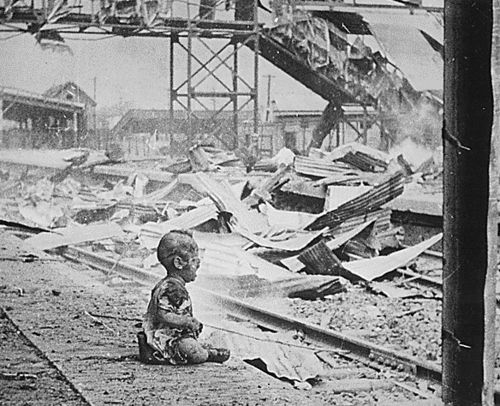
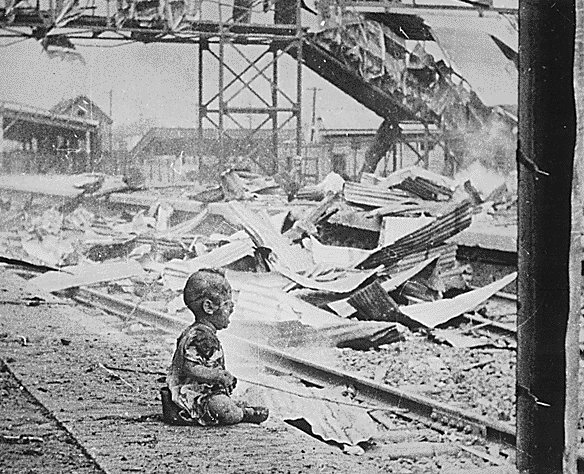
    War_shanghai-baby_Japan_bombing_shanghai_south_station_1937 (This is a picture of a baby survivor of a Japanese bombing “incident” at  South Station, Shanghai, 1937–sometimes it is better to see what something is than have someone define it for you..)

    We further find out that the attacks on the schools and hospitals in China were carried out, somehow, by Chinese troops; that a Chinese fishing fleet that was attacked and pulverized by Japanese submarines really wasn’t, and that they just disappeared; that Japan was protecting the rights of third party powers by “removing” Chinese troops occupying foreign-owned properties; that the Japanese fight against the “Sovietization” of China would “protect” foreign democracies, and so on.  The questions hardly matter, as the answers are all sort of the same.  Japan would “reach a settlement” (the word “peace” is not used anywhere here) however, if China “realized the error if her ways”. 

    Word do control mental images, and the further you get away from the situation described the more powerful the words become.  Somehow the Korean Conflict seems less so than a war because it wasn’t “legally” so; it was a “police action”.  And the Japan-China War isn’t a “war” in name in most Japanese histories of the period.  I think you can dissolve things with loose undefined language to such a point that the thing itself no longer exists; the only stuff that survives are the words used to hide it. 
    ·Posted by :

    ·in:

    — —

  • The Air Bridge to Nowhere: the Friendly Skies, Chicago to Moscow, 1944

    JF Ptak Science Books LLC  Post 449

    0 blog dec 29missing men327
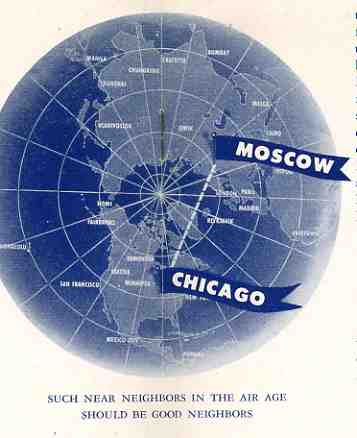
    This hopeful and terrifically unbalanced homage to wistful loveliness of the Soviet Union, The Businessman’s Stake in American-Soviet Friendship,
    by Harland Allen, was published in Chicago in 1944, and seems to me a
    small prayer for what the post-war world might bring about.  Allen
    forced the then-popular economic thought that the people dangling from
    the visor of Uncle Joe Stalin’s cap were money angels rather than
    Russian corpses, and that the air lane shown in the trans-polar map at
    right would soon be filled with American exports headed to Moscow.
    (Little did he know that in  a decade this line would be the distance
    traveled by ICBMs, or close enough to it.)  At least that seems to be
    the hope here, Stalin forcibly melted into the Big Board, the Soviet
    Union trading on the DOW as CCCP (Inc.).

    The small pamphlet
    received some spirited review support from the Northwestern University
    School of Law, the Des Moines Register and Tribune,the Society for the
    Advancement of Management, the Meadville Theological School, and Laird
    Dell Attorney at Law. And that’s about it. But these were ripe times
    for this sort of pro-Soviet thought:  after all, dozens of millions of
    Russians had been killed in the fight in the East against their former
    Nazi allies, and without all of that blood sacrifice I have no doubt
    that the war would’ve lasted for some years to come.*  The U.S. had a
    powerful ally in the Soviet Union regardless of what had happened there
    in the 1930’s and regardless of their attack on Finland and regardless
    of their Pact with Hitler–from 1942 onward they would hinder and halt
    the Nazi army and nearly ground the whole thing down to a nub, crushing
    the German capacity to fight in the west. The atomic bomb was to be
    untried until July 1945, and the outcome of the war was not yet known. 
    Love for the Soviet Union was high in the sky at this point, FDR making
    many airy and superior statements about our new ally, while the rest of
    the propaganda machine was lubed and oiled for the coming fight.  LIFE
    magazine went so far as to pronounce Lenin as “perhaps the greatest man
    of modern times” and that the NKVD was analogous to the FBI.  Even old
    anti-Soviet hawks like MacArthur publicly pronounced their admiration
    for the new regime.  (George Patton famously did not.)

    Back to
    our pamphlet: aside from some romantic vision of the Soviet Union,
    Allen maintained that the U.S. needed to deal with the CCCP because of
    its enormous army (which he did not want to annoy and fight) and its
    impending “mastery o the air”–it would be better to trade and make
    money than it would be to make war.  Allen pointed out that some of the
    problems of Americans dealing with the political system in the Soviet
    Union were inadequate reports on what he described as the country’s
    economic “principle of national planning“. .(I hardly know what
    George Orwell might’ve said about the supremely understated summation
    of the Soviet system as “national planning” and the fruitless and
    embarrassingly weak attempt at  controlling language to describe the
    monstrously repressive regime.)  He continues:  “Journalists have been
    positively fearful of open-minded reporting in Russia lest they get
    tagged–or tarred–with the familiar epithet “communist”, and then goes
    on to describe the similarities of the “two great peace-loving
    peoples”. 

    And so it goes, on and on in this pamphlet–it just
    isn’t worth going into any further than this.  The euphoric sheen of
    pro-Soviet sentiment and appreciation wore thinner as the war
    progressed, truer feelings becoming more exposed as the German army
    retreated westward, reproducing the famous Minard chart of Napoleon’s
    disappeared army in a war 130 years earlier.  The endgame for European
    real estate, fumbled badly by the dying FDR at Yalta, brought out the
    cardboard smiles between the US and the Soviet Union, relations
    strained to the point that the military employment of the atomic bomb
    was in some not-minor sense made to bridle Soviet intentions.

    But that was still two years hence for Mr. Allen, who I guess couldn’t see into the future that far, even if his work was heralded by the Des Moines Register.  He just didn’t do a very good job of withstanding the test of time, even though that test ended in 1946.


  • The Face of War: the Child-Soldier, 1918

    JF Ptak Science Books LLC  Post 361

    000-ebay--Nov 7war trench013
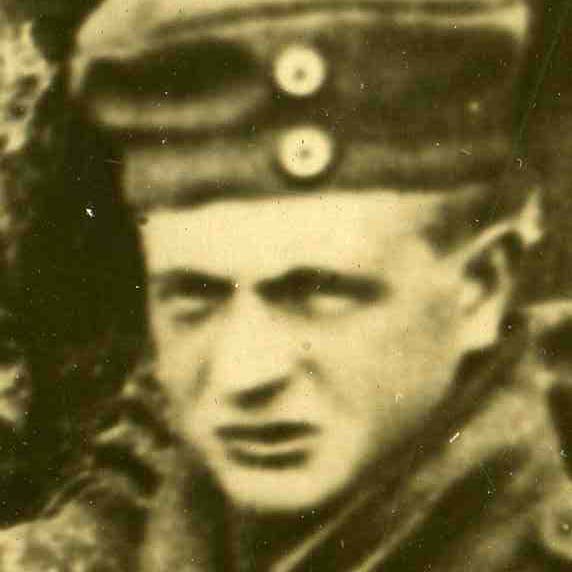
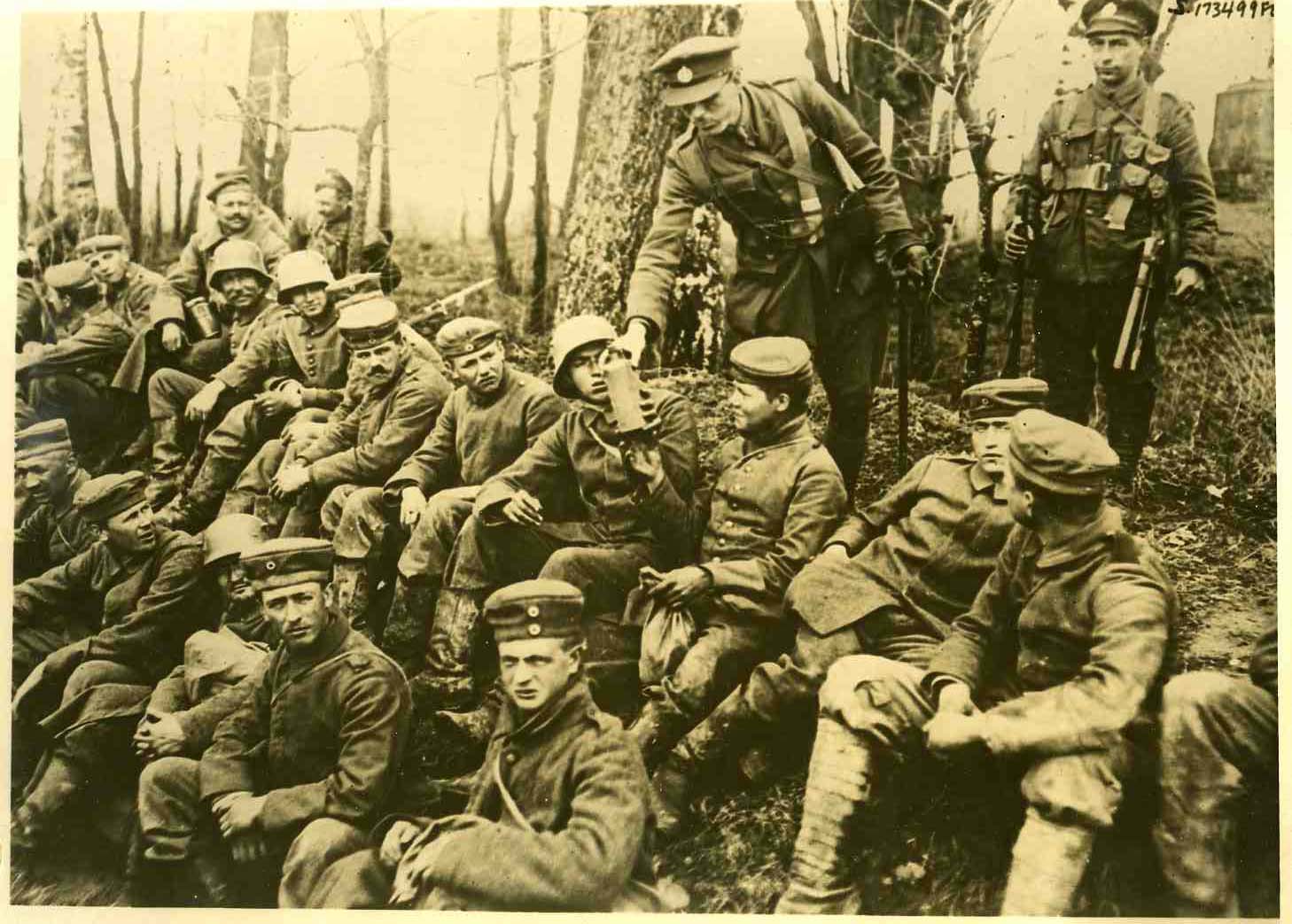
    This is a picture of a captured German soldier, somewhere in France in the middle of 1918, months away from the finale in November.  His tunic is still clean, his buttons as shiny as his baby-fat face, happy to be receiving something–a canteen?–from the British officer, an object of strict attention.  Except that the more our dour soldier to his right has his fingers around the thing and will probably take it from the boy, who looks not only young, but small.  As a matter of fact, most of these soldiers look very young, too young:  sopranos. 

    As the soon-to-be-defeated experience in every war, as the ranks of suitable, able-aged soldiers slim and shrink, the military hand grabs up whatever is available, or left.  I guess this makes sense as most folks in the industrial world didn’t debate child labor laws–with energy, anyway–until the 1920’s.  If you an work in a cotton mill at 8 or 10 or 12 years of age, why not get these workers to carry guns?  The answer is that they’re not capable, for the overwhelming majority, and would make a

    000-ebay--Nov 7war trench014
    000-ebay--Nov 7war trench012 poor soldier, possibly costing more effort and life on his own side
    than on the enemy’s.  But at the tail end of a brutal conflict like
    WWI, the grim matter is that general conscript had been gobbled up and
    fed into the grist mill that had already cost millions of lives. This
    phenomenon is not just a WWI problem, and not an old problem, either: 
    you could construct an alphabet of abusers, and apply it by century: 
    Burundi, Chad, Ivory Coats, Rwanda, Somalia, Sudan, Burma, China, Sri 
    Lanka, Columbia, the Soviet Union, the United States, all pressing
    children into the front line, or as drummer boys, powder boys, cannon
    fodder, mine-clearers, and on and on. Run out of men, and the
    13-year-old boy was next in line, the face filling out any sort of
    uniform at any point in time.


  • The Detail in the Detail: 20,000 Soldiers & 1 Mule, 1918

    JF Ptak Science Books  Post 358

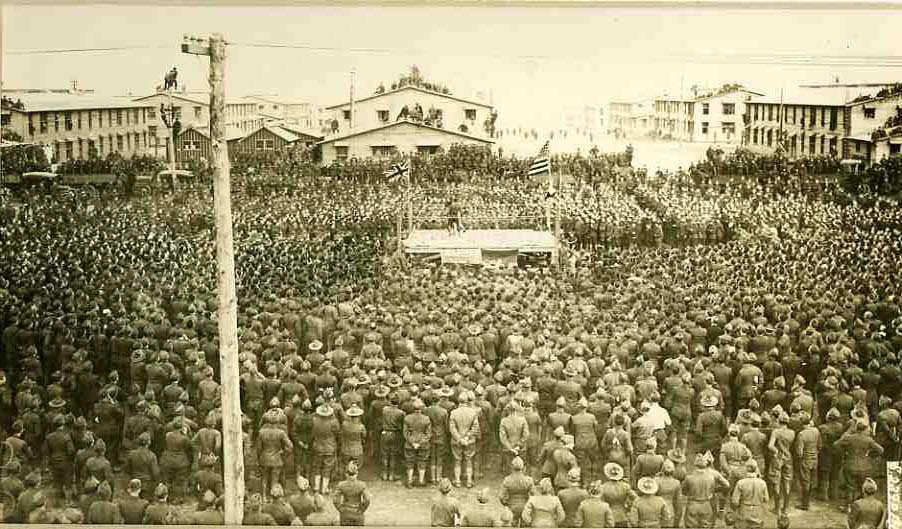
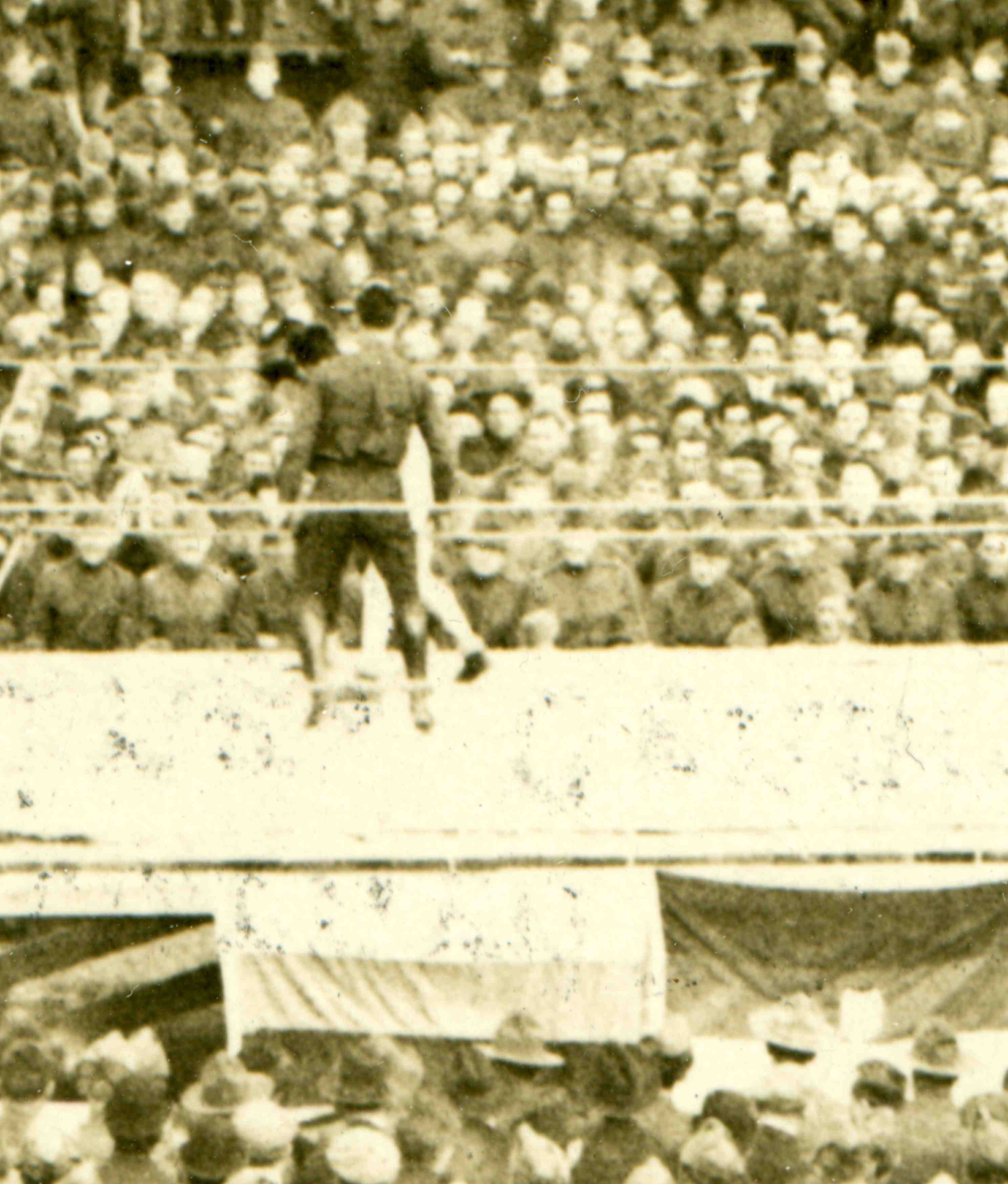
    I’ve made several posts on images of large crowds (most recently on the incredible aerial photograph of the crowd of 100,000 spectators at the Dempsey-Carpentier fight), sometimes using the crowds to put a fleshy face on an otherwise forensic statistic, and sometimes because, well, the photograph is simply beautiful or extraordinary (or both). The later is the case here with this news service photo from Underwood & Underwood (NYC), titled “Boxing Contest Viewed by Twenty Thousand Soldiers”, and published in the middle of 1918.  It depicts a fight between featherweights Hank Schroeder and Jimmy Smith, with the referee being the legendary fighter, Benny Leonard.  (The way that the news photo service worked was that if a newspaper needed a picture, say, of 

    000-ebay--Nov6 boxing crowd997


    American soldiers watching a boxing match to illustrate a story they would have contracted with a company like Underwood and Underwood who would supply the photo and the caption.)  It looks as though Schroeder (who must’ve had a hard time during the war with his name) fought and was defeated by Johnny “The Kid” Troy for the American Expeditionary Force featherweight title–which means that Schroeder may have been the champion, or perhaps not, if the title was vacant).  I couldn’t find anything out about Jimmy Smith, though I did uncover many other Smiths who were boxers in the ‘teens and ‘twenties, including Cyclone Cy, Sgt. Ray, Willie, Petey, Frankie and Buggy. 

    The text that accompanies the image states that “this was one of the most picturesque boxing tournaments ever held”, and I don’t doubt it, as the composition of the crowd, the closeness of the soldiers, and the numbers contained in such a small area, are all pretty singular factors making this an extraordinary photograph.  The fight took place at Camp Upton, ( Suffolk County, Long Island, and named for the great American western explorer and Civil War general), which at the time was still processing troops for the fight overseas. (Camp Upton would be laid to rest after the war until it was reactivated for training for WWII, eventually winding up as part of the Brookhaven National Lab grounds.)

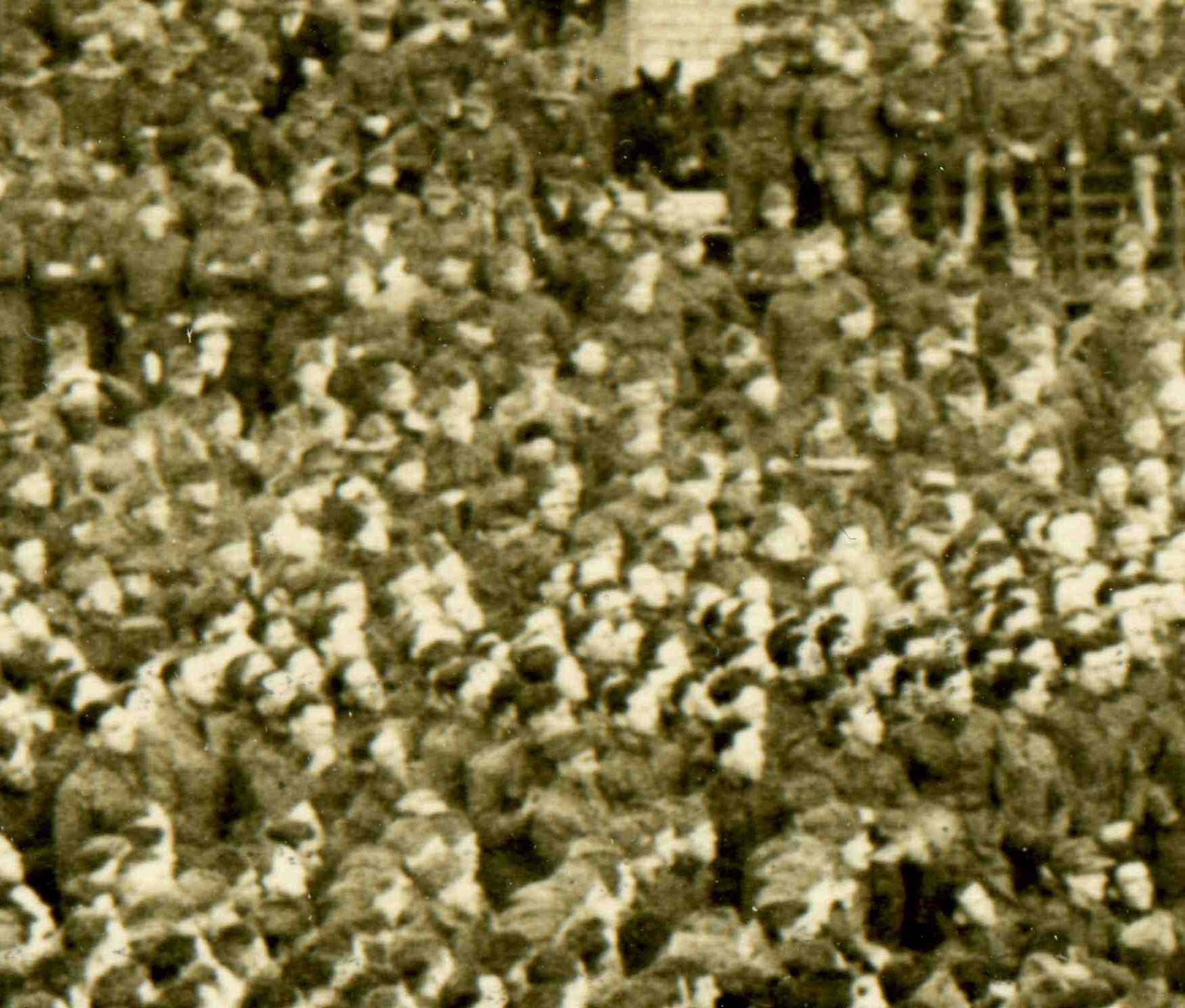
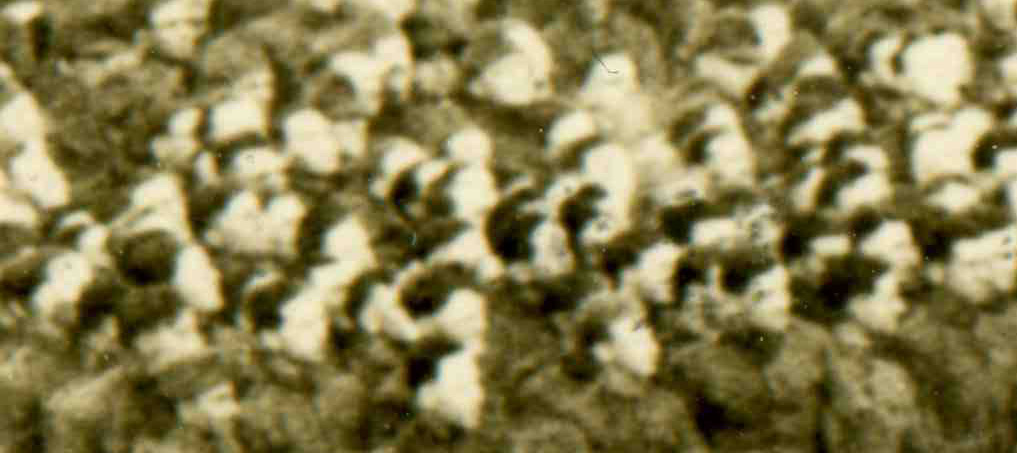
    This detail is from a 5% portion or so of the image from the middle-upper-left, and, I see, happily, includes a mule with the rest of the soldiers.
    000-ebay--Nov6 boxing crowd999

    This is a close-up of the ring itself, where we see Bennt Leonard as the ref with his back to the camera, with the two fighters mixing it up in a tight little one-man ball. I reckon that there must be 300 soldiers in the background of this tight view. 

    000-ebay--Nov6 boxing crowdXYZ002

     000-ebay--Nov6 boxing crowd999XX


  • History’s Heaviest Bad Idea: Maginot, the Million Ton Line in the Sand

    JF Ptak Science Books LLC  Post 396

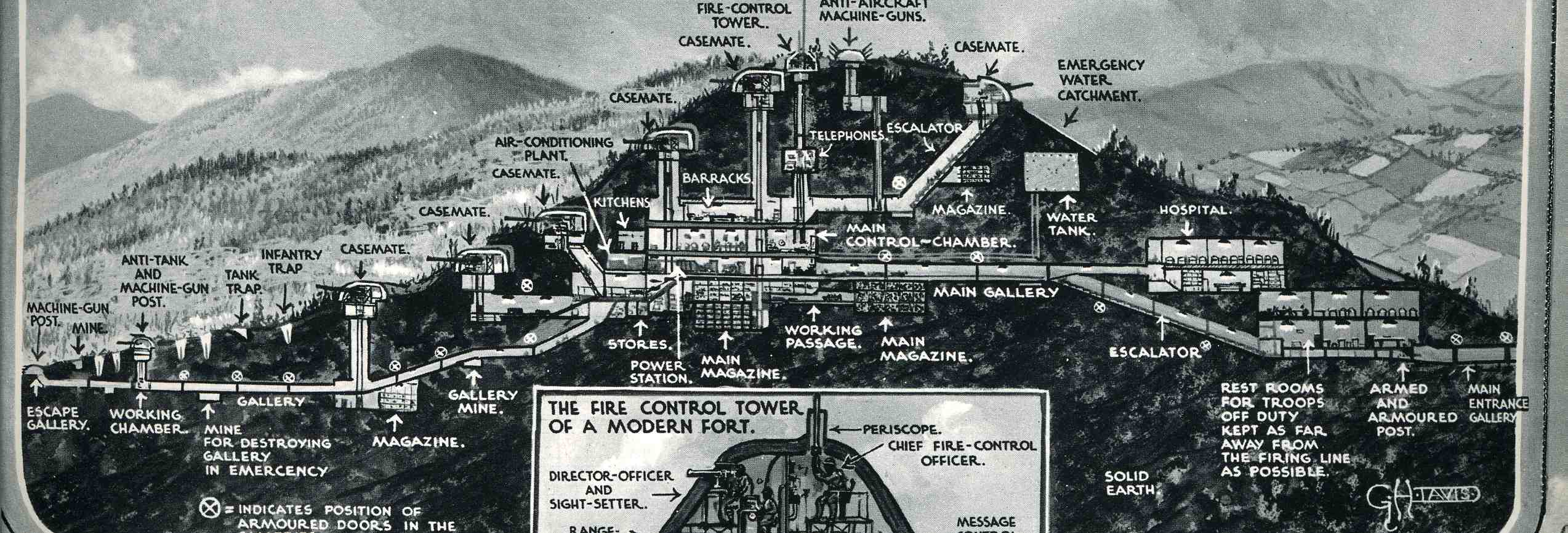
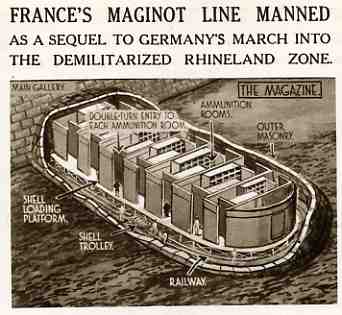
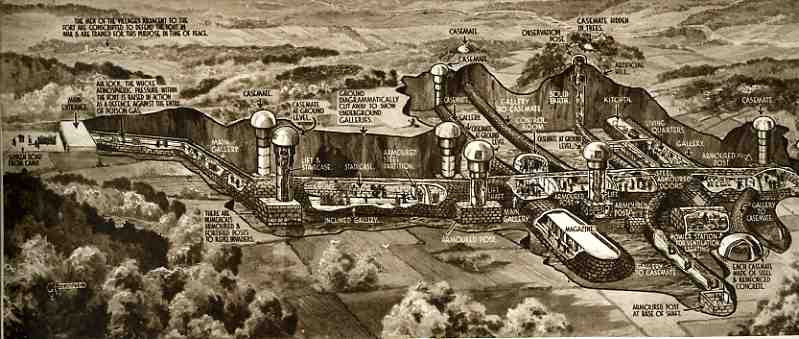
    Poor Andre Maginot–his is the name behind what must be the heaviest bad idea in history–or at least among bad ideas that can have weight.  The Ligne Maginot, or Maginot Line, was probably better referenced as the Maginot Hole, as once the advance came from the East, the “Line” was completely and totally ineffectual, and the soldiers in the miles of tunnels and fortifications became, simply, men in a hole.  The thing about the Maginot Line was that it pointed to exactly the spot where the French Army could be found; therefore, the Germans avoided it. 

    0--blog---Nov 24-maginot111 

    It is difficult to believe that when all of this concrete was being poured and tunnels being dug along the German border between Switzerland and Luxembourg between 1929 and 1936 that someone, somewhere in France wasn’t reading the Illustrirte Zeitung, watching the growth of the Luftwaffe. 

    0--blog---Nov 24-maginot112

    However, as much as that should’ve stopped this massive and insane project, it was not the airplane that buried the buried defenses–it was indeed the feared tanks.  But the Panzers of Heinz Guderin and Erwin Rommel didn’t go through the Maginot Line, they went around it, passing through the supposedly impassible  Ardennes.  Case closed.  Paris gone.

    At least someone in France should’ve been reading their Clausewitz: “If you entrench yourself behind strong fortifications you compel your enemy to seek a solution elsewhere.”

    0--blog---Nov 24-maginot109

    But the drawings are pretty.  And if you moved everything back in time 30 years the idea would’ve made more sense. 

    0--blog---Nov 24-maginot108

    ·Posted by :

    ·in:

    — —

  • Swimming Soviets and the Great Patriotic War, 1939

    JF Ptak Science Books LLC  Post 395

    0--blog---Nov 26 soviet swimming134


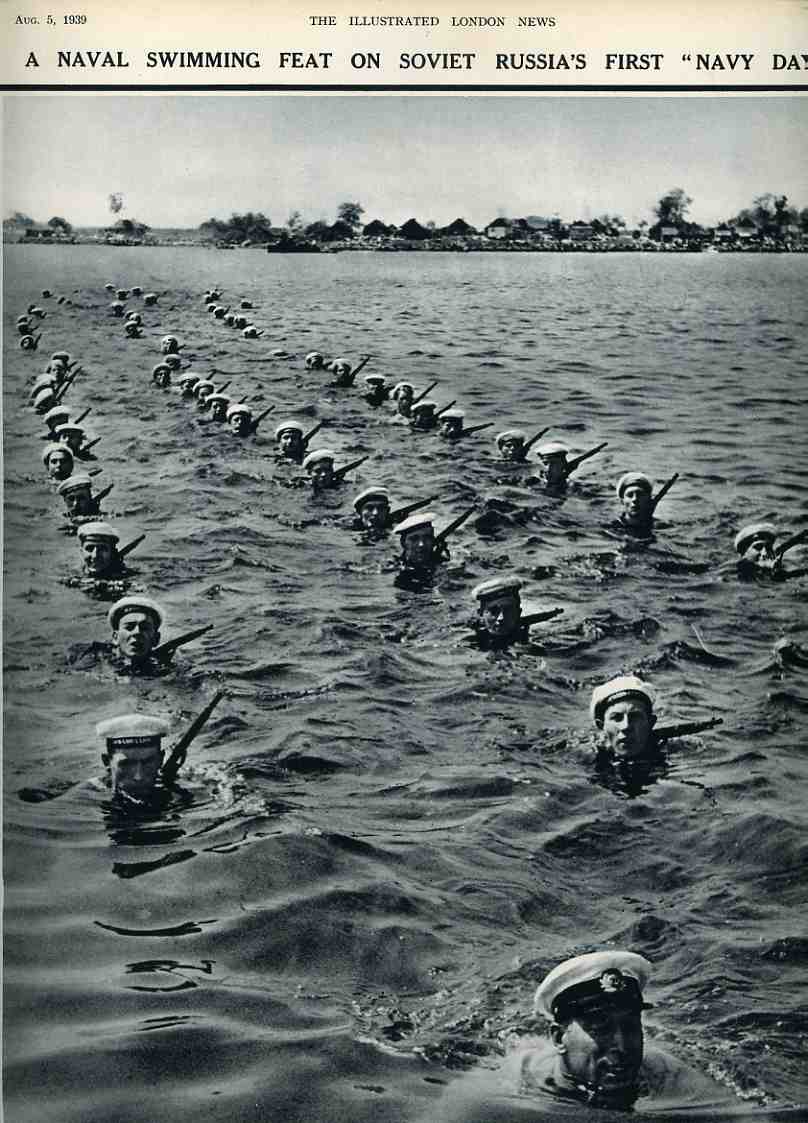
    This image of swimming Soviet sailors of the Baltic Fleet is from The Illustrated London News for August, 1939.  The sailors were “celebrating”  the first Navy Day for the Soviet Navy, and no other way was better to do this than to swim 400 meters in formation and fully clothes–with rifles on their backs with no water protection whatsoever.  Perhaps this group was just standing in 5 feet of water near the shore–I suspect not, though, because a bunch of these guys look as though they’re really struggling.  We’re about a month away from the German invasion of Poland and the official start to the bigger part of the war that went global:  Czechoslovakia and China had already experienced war for some time now. 

    0--blog---Nov 26 soviet swimming133 On November 30 the Soviets would launch their own hideous offensive, though against Finland:  the Winter War would bring international condemnation of the Soviet Union and give their new ally in Nazi Germany considerable pause.  The Red Army was decimated by the wicked Stalinist purges of the late 1930’s–as much as 50% of the senior military cadre were disappeared and executed–and the army as a whole suffered.  The early result of this action was that the Finns, though vastly out-manned and out-teched  (the Soviet forces had four times as many soldiers as the Finns, 30 times as many aircraft and 200 times as many tanks), were able to last against the Red war machine until March.  An end to hostilities agreement was reached in which Finland maintain its sovereignty and gave away 20% of its industrial base and 9% of its territory.  The Soviets achieved a phyrric victory, the Finns achieved a major success, and the Nazis figured out that perhaps rather than keep the Soviets as a weak ally they might be able to make them into a dead -state enemy (turning against them with  Operation Barbarossa).

    In any event by 1945 my suspicion is that most of these men would be dead.

    Most of the Great Patriotic War of the Soviet Union would take place on land, with Russian military war dead amounting to a staggering 65% of all Allied deaths, with something like 13 to 15 % of the entire population (totaling 168 million) of the Soviet Union being killed during the conflict.  The Soviet sailors would’ve had a better chance of survival, but not by much.

    ·Posted by :

    ·in: