A Daily History of Holes, Dots, Lines, Science, History, Math, Physics, Art, the Unintentional Absurd, Architecture, Maps, Data Visualization, Blank and Missing Things, and so on. |1.6 million words, 7500 images, 4.9 million hits| Press & appearances in The Times, Le Figaro, Mensa, The Economist, The Guardian, Discovery News, Slate, Le Monde, Sci American Blogs, Le Pont, and many other places… 5000+ total posts since 2008.

Category: Militaria

  • Manuscript Outline Diagrams of the Organization of the Major Air Forces, 1944

    JF Ptak Science Books   Quick Post

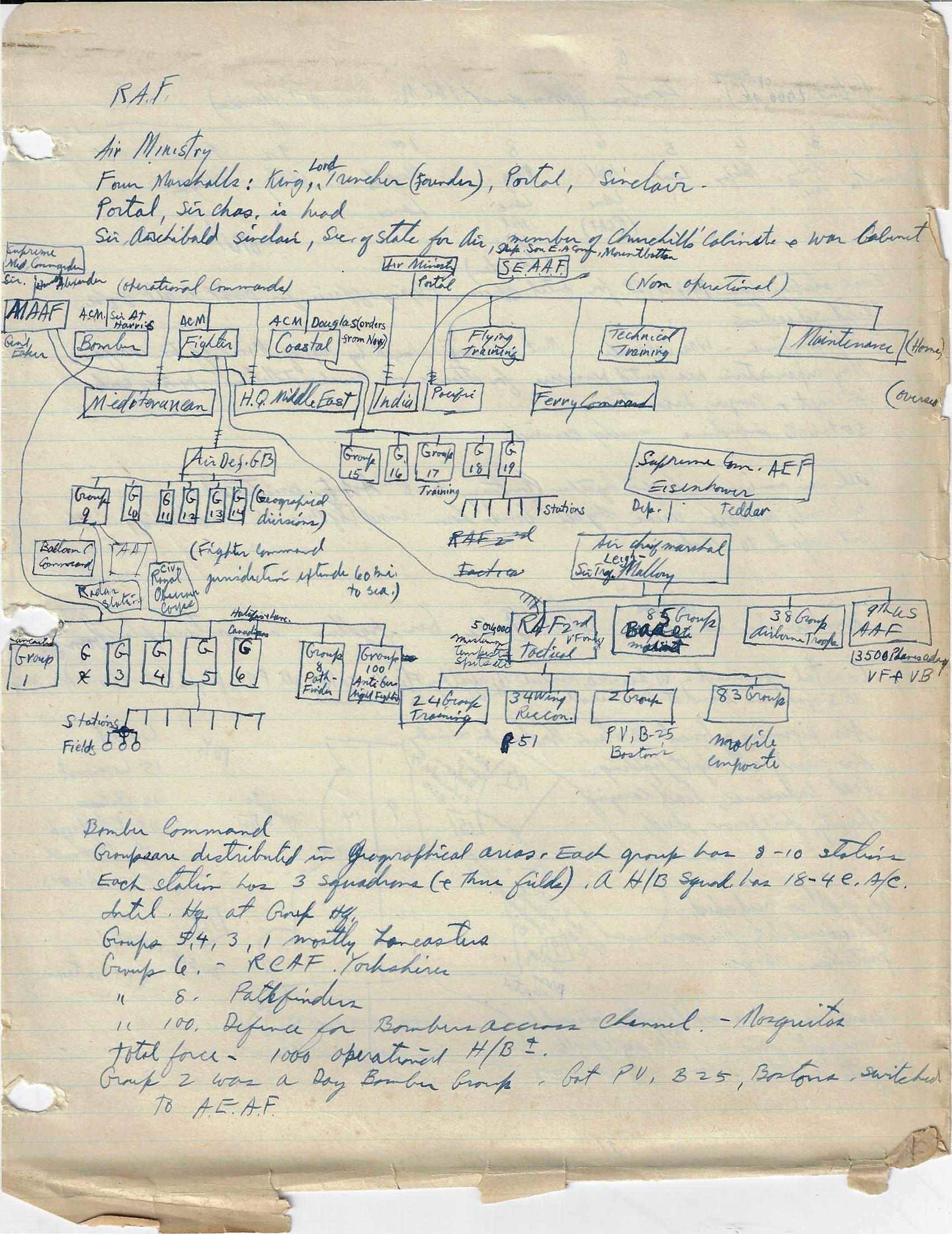
    The following diagrams are details from the manuscript sections of a notebook written as classroom notes (ca. 1944) by a naval student of the Naval Air Combat Information School at Quonset Point, Rhode Island. Generally the diagrams are relatively small for the amount of information conveyed. The printed text for the curriculum and classes are nearly all marked “RESTRICTED” in the typed original of the offset pages.  The entire document is about 150pp long, and if there is interest in the contents I’d probably reproduce the entire thing–it is surprising how much can be learned and how much is revealed even in the multi-page lecture descriptions.

    The air forces outlined in diagrams in the notebook include the U.S. Army Air Force, the Luftwaffe, the air forces of the Soviet Union, and the air force of the Imperial Army of Japan, which I reproduce below. I’m not saying that these notes are significant, just that they are from an unusual source, and so from that perspective alone they are interesting–that and the fact that the person who made the notes and took the classes became the head of the chief nuclear weapons preparedness organizations in the U.S.

     R.A.F. (1944):

    RAF diagram

    ·Posted by :

    ·in:

    —

  • Interesting Manuscript Outline of the Japanese Air Force, 1944

    JF Ptak Science Books   Quick Post

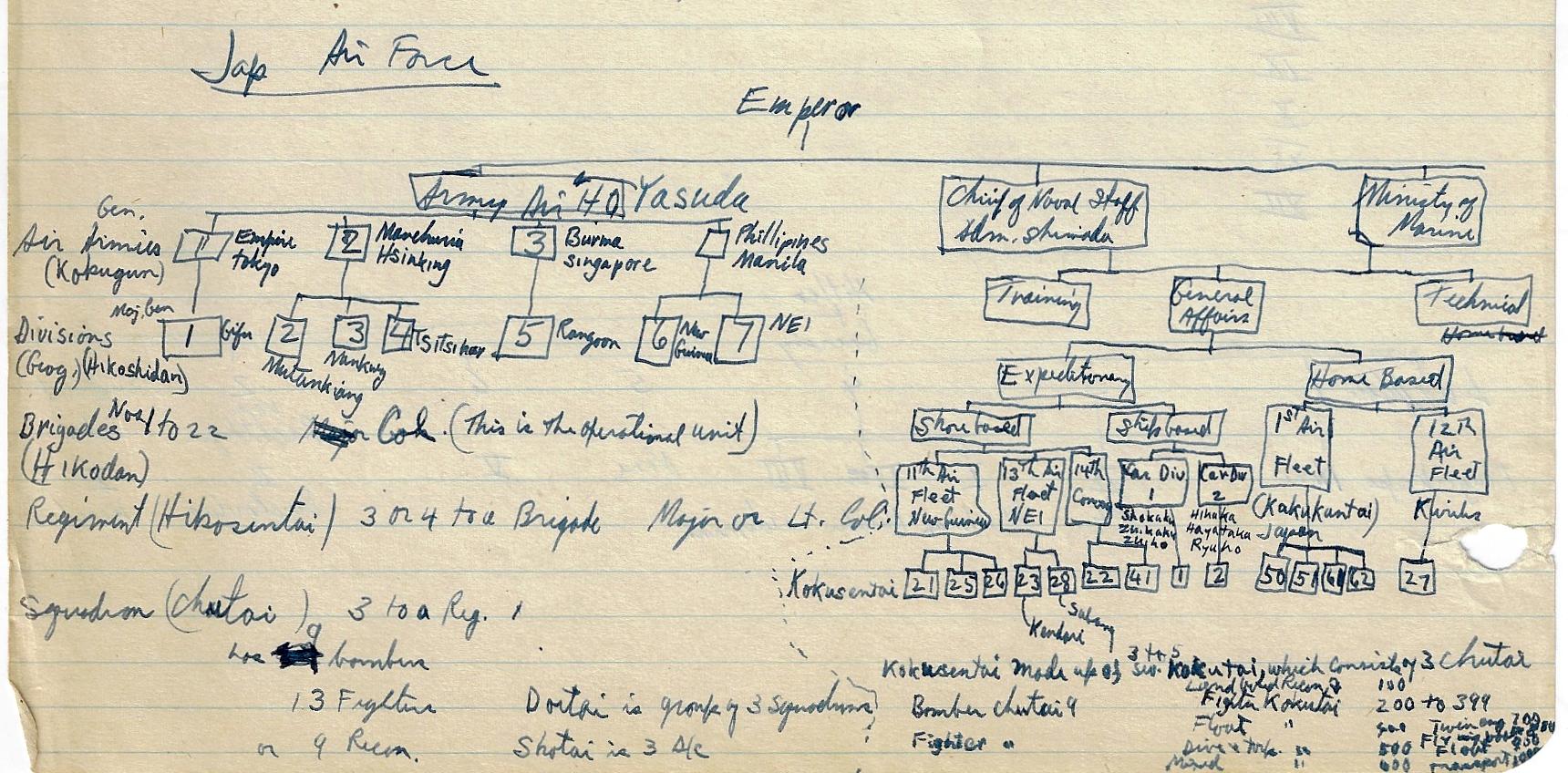
    “Jap Air Force”  is a short outline on the structure of the air force of the Japanese Imperial Army, written as classroom notes (ca. 1944) by a naval student of the Naval Air Combat Information School at Quonset Point, Rhode Island.  It is a section of a larger notebook from the class of February 1944, with nearly all of the offset pages from type originals are marked as “restricted”.  The diagram that leads the three pages of notes is 3″x8″ in the original, and is a bit remarkable for how much information it contains and organizes in such a small area.  I reproduce the text below:

    Japanese Air Force ms _1_

    ·Posted by :

    ·in:

    —

  • Debriefing Life Raft Usage by Air Combat Intelligence (1944)

    JF Ptak Science Books  Quick Post

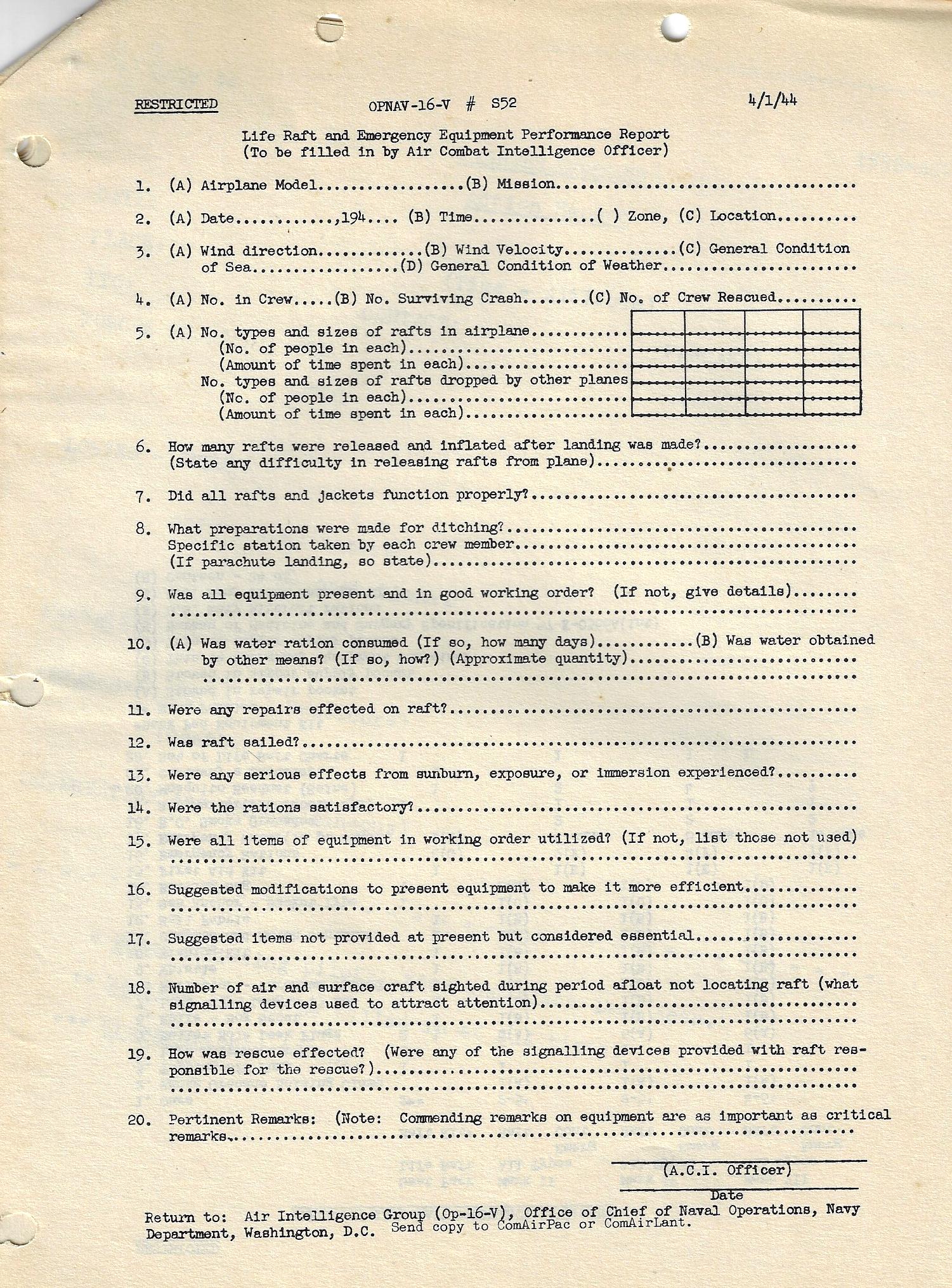
    I was so surprised to find this 1944 checklist and review for an “Air Combat Intelligence Officer” of “Life Raft and Emergency Equipment Performance Report” (!).  It was in  a notebook prepared (ca. 1944) by a naval student of the Naval Air Combat Information School at Quonset Point, Rhode Island. The printed text for the curriculum and classes for an intelligence officer given during the summer of 1944 are nearly all marked “RESTRICTED” in the typed original of the offset pages.  The entire document is about 150pp long, and if there is interest in the contents I’d probably reproduce the entire thing–it is surprising how much can be learned and how much is revealed even in the multi-page lecture descriptions. 

    The document below addresses an odd internal issue of mine, something that I’ve sort of followed around in some fashion in reading about WWII in the air, and especially in the Pacific, and especially for the precautions and supplies aboard USAAF aircraft in the event of a ditching. I knew from incidental and second-hand reading exposure that these supplies changed quite a bit from 1942 to 1943, but I had no idea that there was such a debriefing schedule established for life raft usage. 

    I would really be interested in the answers to #17.  No doubt there is a collection of those answers, but I think I’ll just have to leave those to mystery. 

    NACIS Lifeboat

    ·Posted by :

    ·in:

    —

  • Allied Nicknames for Japanese Aircraft, 1944

    JF Ptak Science Books   Post 2712   

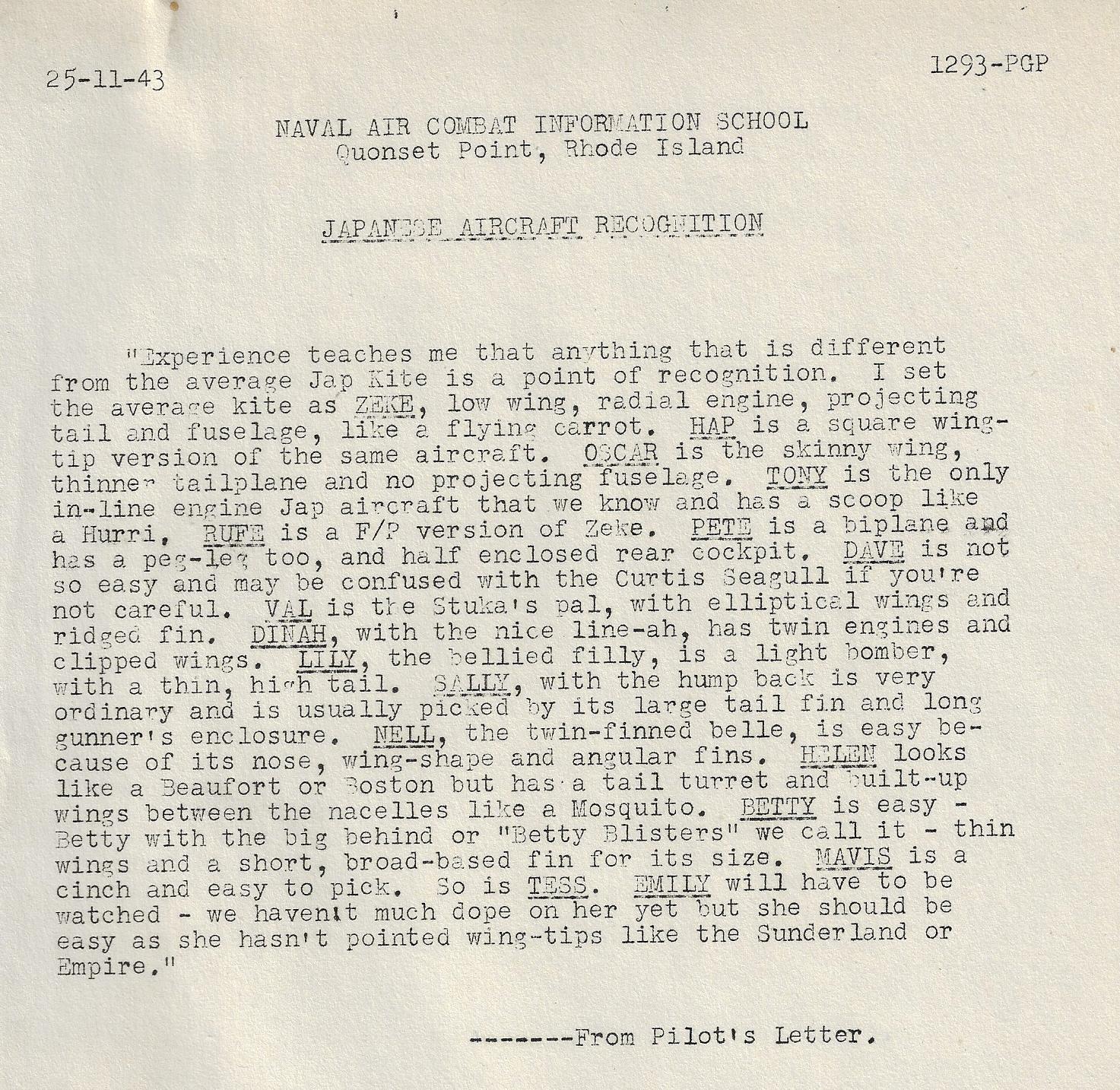
    The outline are details from a notebook written as classroom notes (ca. 1944) by a naval student of the Naval Air Combat Information School at Quonset Point, Rhode Island. Generally the diagrams are relatively small for the amount of information conveyed. The printed text for the curriculum and classes are nearly all marked “RESTRICTED” in the typed original of the offset pages.  The entire document is about 150pp long, and if there is interest in the contents I’d probably reproduce the entire thing–it is surprising how much can be learned and how much is revealed even in the multi-page lecture descriptions.

    This is an extract “from Pilot’s letter” describing the Japanese aircraft encountered and using the McCoy/Williams/Grattan shorthand-slang method for identifying the aircraft. Evidently using the Japanese names and designators was clumsy and complicated, so an alternative means was developed using common given names, trees, and birds to identify Japanese aircraft.

    NACIS Japanese plane names

    “In mid-1942, Captain Frank T. McCoy, a United States Army Air Forces military intelligence officer from the 38th Bombardment Group assigned to the Allied Technical Air Intelligence Unit in Australia, set out to devise a simpler method for identifying Japanese aircraft. Together with Technical Sergeant Francis M. Williams and Corporal Joseph Grattan, McCoy

    • divided the Japanese aircraft into two categories; fighters and everything else…
    • boys’ names to the fighters,
    • names of girls to the others…
    • training aircraft were named after trees.
    • single engine reconnaissance aircraft were given men’s names…
    • multi-engine aircraft of the same type were given women’s names.
    • (t)ransports were given girls’ names that all began with the letter “T”
    • Gliders were given the names of birds.”–edited, from Wiki https://en.wikipedia.org/wiki/World_War_II_Allied_names_for_Japanese_aircraft

    Here are the “translations” of the U.S. Names for Japanese aircraft in this short report in order of appearance

    • ZEKE: Mitsubishi A6M, Navy Type 0 Carrier Fighter. [This is the legendary “Zero” aircraft, so called as it was manufactured in the Imperial Year of 2600, or 1940, and adopting the final zero (or two) as a nickname in its Japanese designation. The “Zero” was “Zeke” for another six months or so before it was widely switched out. By the time of this report—November 1943—the “Zero”, which was recognized as the finest and most lethal carrier-launched fighter plane in then world, was decidely less so than, the Allies catching up by mid-1942 to make it roughly the equal of the best Alied fighter planes, and then increasingly less so until in 1944 it was considered outdated.
    • HAP: Mitsubihi AGM3, Navy Type 0 Carrier Fighter Model 32
    • OSCAR: Nakajima Ki-43, Army Type 1 Fighter
    • TONY: Kawasaki Ki-61, Army Type 3 Fighter
      RUFE: Nakajima A6M2-N, Navy Type 2 Interceptor/Fighter-Bomber
    • PETE: Mitsubishi F1M, Navy Type 0 Observation Seaplane
    • DAVE: Aichi D3A
    • VAL: Aichi D3A, Navy Type 99 Dive Bomber
      DINAH: Mitsubishi Ki-46, Army Type 100 Command Reconnaissance Aircraft
    • LILY: Kawasaki Ki-48, Army Type 99 Twin-engined Light Bomber
    • SALLY: Mitsubishi Ki-21Army Type 99 Dive Bomber
    • NELL: Mitsubishi 3GM, Navy Type 96 Attack Bomber
    • HELEN: Nakajima Ki-49, Army Type 100 Heavy Bomber
    • BETTY: Mitsubishi G4M, Navy Type 1 Land-based Attack Aircraft
    • TESS: Douglas DC2, Navy Transport
    • EMILY: Kawanishi H8K, Navy Type 2 Large Flying Boat

    ·Posted by :

    ·in:

    —

  • Name, Rank, and Serial Number (1945, with the Audio for the Radio Play)

    JF Ptak Science Books

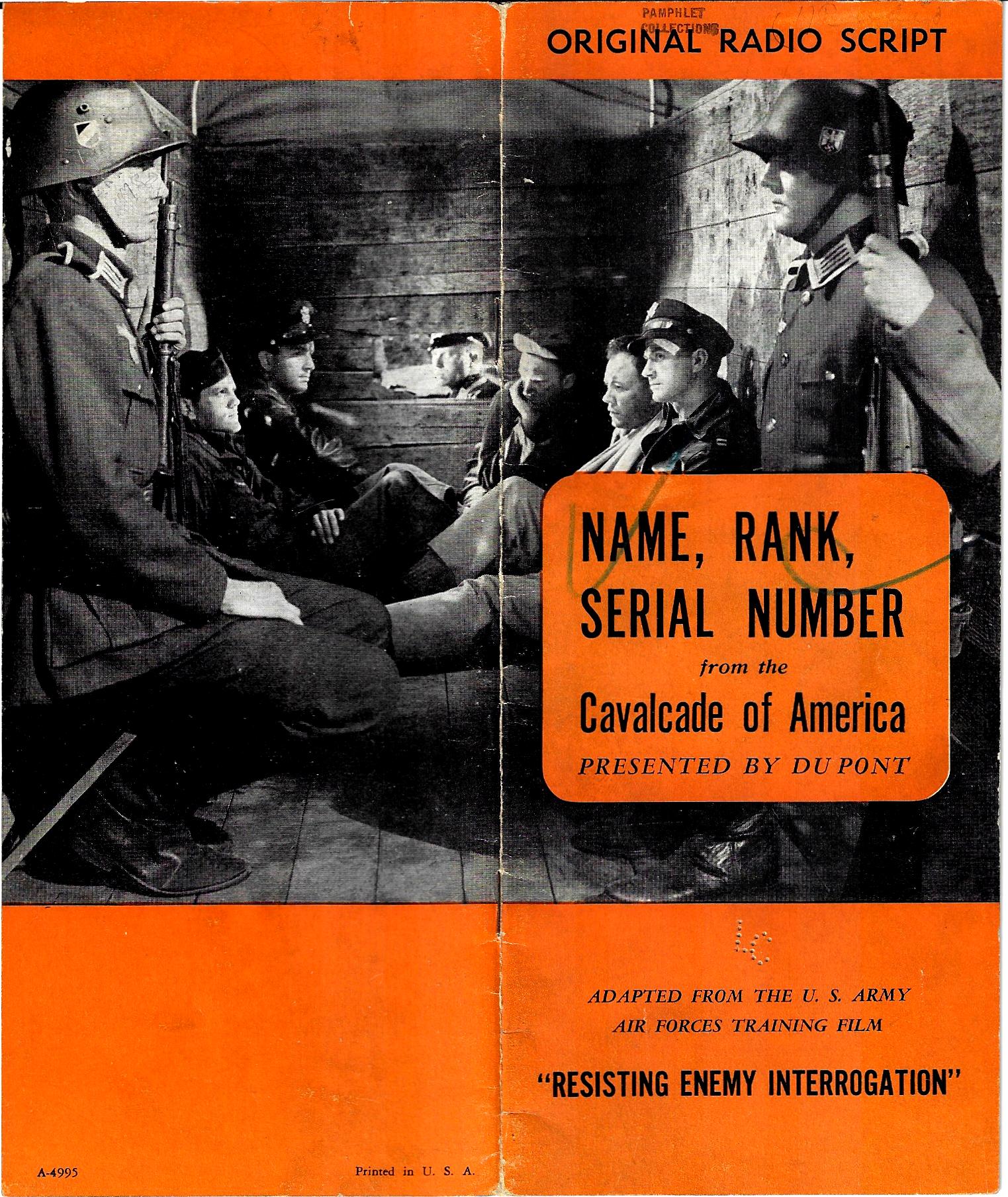
    Name rank serial numberName, Rank, and Serial Number is a tough-love drama produced by Du Pont (“Better things for better living…through chemistry“) for the Cavalcade of America, sharing the critical importance of leaked and mistakenly volunteered information and the foul end that might come to. The play was based on a training film for the USAAF called “resisting Enemy Interrogation”, which was one of certainly hundreds of such films produced by the armed forces during the war to try and prepare members of the military for situations A to Z. Name, Rank, Serial Number was the public demonstration of one of these films, and this slim pamphlet contains the script. There is nothing quite like listening to the original, though, which can be found on the American University Digital Archive site, here: http://auislandora.wrlc.org/islandora/object/hickman%3A250

    This is the story of four captured U.S. airmen  in a German POW camp, and how they faced skillful and then brutal interrogators, and how even the smallest bit of misspoken or half-volunteered mistake can lead to terrible consequences. 


    ·Posted by :

    ·in:

    — —

  • The Other Three German “B”s: Berlin, Barbed Wire, & Bayonets (1944/5)

    JF Ptak Science Books   Post 2700

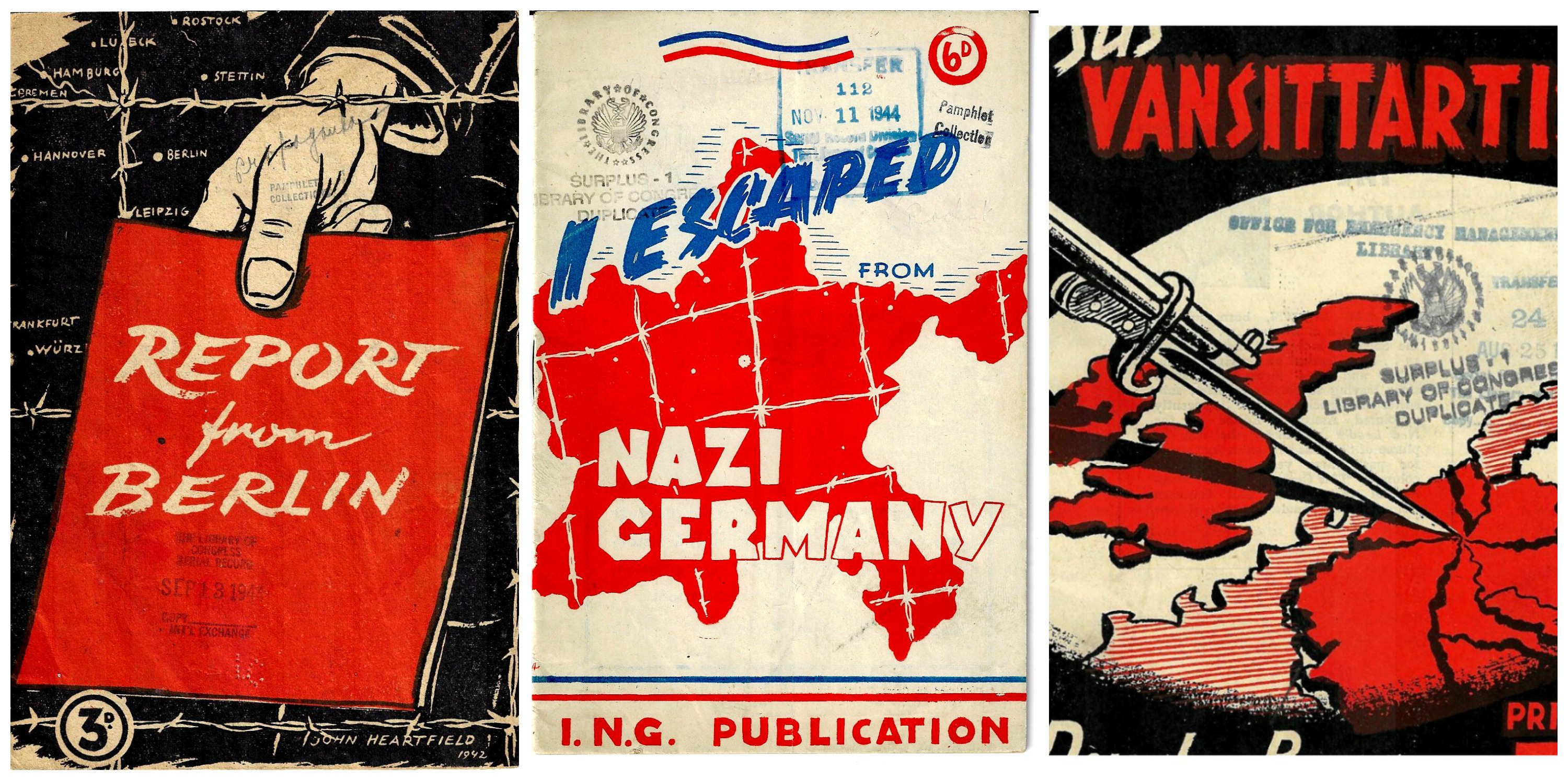
    There is probably no doubt that a lot of book and pamphlet cover art printed during the war would feature plenty of Berlin/Germany/Barbed wire/Bayonets and other sharp and pointed things leading their dagger-y way to the hearty of the country. I really hadn’t recognized it as a motif despite its pretty obvious design implications until I had three examples from my own collection right in front of me.  I’ve written about the first two on the blog before for various reasons unrelated to the sake of its design. The third, Report from Berlin ” by a German Communist” is something I thought I had addressed earlier but hadn’t, and presents a strong case in itself, as with the others.

    Germany 3 Bs


    The overall tenor in the pamphlet shows the position of doomed Germany from the inside out,  and starts the whole thing noting that “June 22 [1941] was the most fateful day in Germany’s history”, stating that “at 6 a.m.” Hitler gave a speech announcing the invasion of the Soviet Union, which the writer in 1942 finds the beginning of the end for Germany, and in this was mostly correct.  The author goes on to describe the food shortages, working conditions, morale and teh consequences of bombing, the fear and loathing of the secret police, and so forth.

    The “author” end of this equation is not clear: outside of “German communist” the writer isn’t explicitly identified. There is an “introduction” signed by Hans Kahle, who was a very prominent figure as an anti-fascist in the history of modern Germany, an impressive force, and he may well be the author of the entire text.  WorldCat/OCLC–which finds about ten copies of this work in libraries worldwide, and those mostly overseas–lists Kahle as an author, and then in another listing also lists the illustrator of the cover, the great John Heartfield, as an author as well. (Heartfield is remembered as with Georg Grosz as elevating the use of art as a political weapon, exercising it in both wars as well as the rise of Hitler and the National Socialists, and as a photo-montagist and Dadist.) In any event, the pamphlet was published by this German Communist whilst in exile in London in 1942, and was a general screed on the doomed damnation of the Nazis.  

    ·Posted by :

    ·in:

    —

  • The End of the War for Engalnd: Nazi Propaganda, 1941

    JF Ptak Science Books    Post 2694

    Blog--May 24--map2

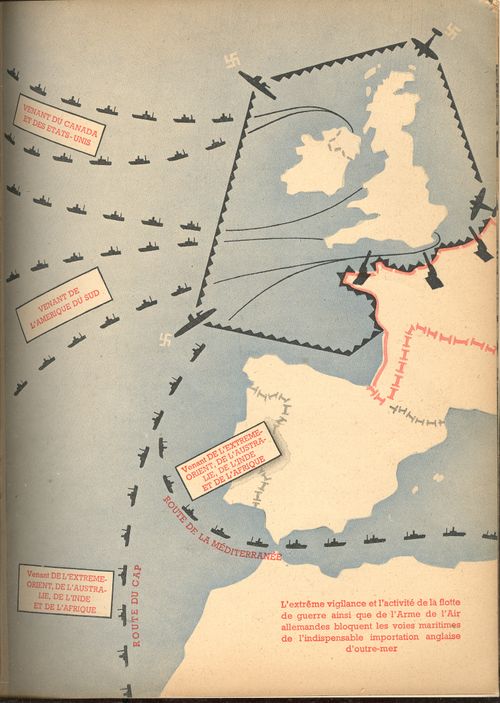
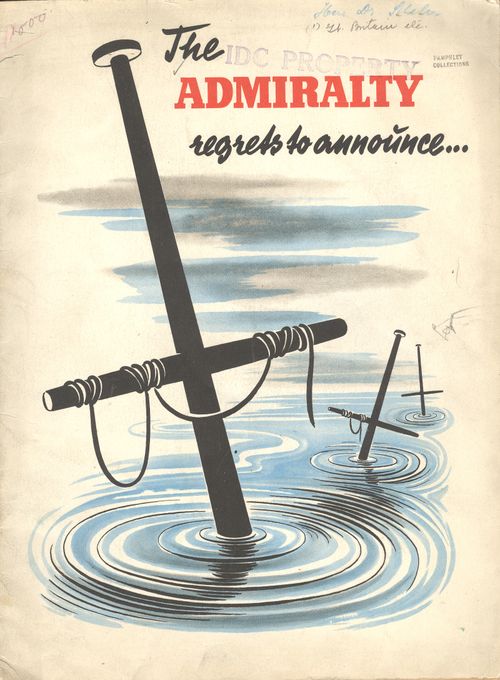
    The Admiralty Regrets to Announce… was for years the standard beginning to an official British announcement concerning the loss of ships and sailors.  The phrase is used as the title to this work (by an unattributed writer known only as “an expert”) to immediately introduce the reader to the failings of the British navy.  It is of course a piece of Nazi propaganda, issued some time in 1941. (My copy is he U.S. copyright deposit copy and is stamped with a transfer date of September 1942; the pamphlets reads to me as though the U.S. had not yet entered the war.)  The great strengths of the German air force and navy are extolled and the failings of the British mercantile elaborated at great—and sometimes greatly imagined—lengths.  The booklet was published in French (except for the title) and answers its own repetitive question: “quelle est donc la situation relle de la marine commerciale anglais?”

    Blog--May 24--map1

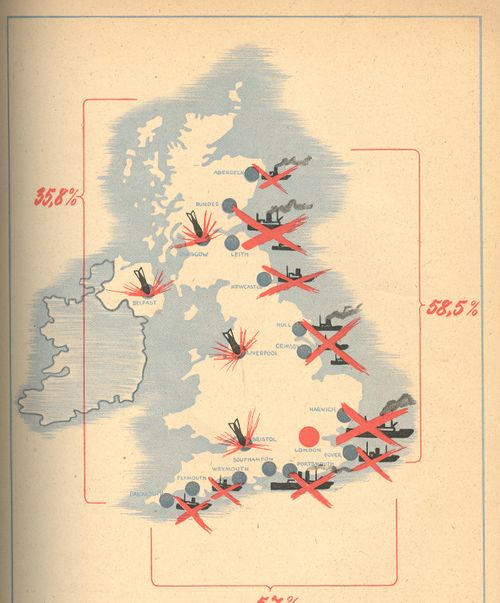
     The pamphlet’s 32 pages (illustrated with 24 photographs of various explosions and bombings, plus one graph and three maps) are dedicated to winning the French hearts and minds, trying to convince the conquered population that there really wasn’t any help coming, and that the British could not even supply themselves with the necessaries to run a country, let alone a war.

    In the map above we see the  ports and shipping centers that were bombed by the Luftwaffe (with London located by a big red dot).  Another map (at top) shows the stockade-like presence of the Nazi navy securing its impregnable wall against the arrival of foreign trade and supplies to Britain.  

    This post is one of a series on propaganda maps which occasionally appear in this blog.   Like Thomas Nast political cartoons and war photography, a map can instantly and overwhelmingly display not only data but sentiment as well. The maps published in this pamphlet by the Nazis are were certainly immediately understandable to just about anyone, French-reading or not, literate or not–the images needed no words, especially when surrounded in the text by vicious images of German military might.  Overrun
    or not, Petain-ized as it was, France was still offering aid to its allies and resistance to the Germans–the more minds that could be won over with propaganda of this sort meant one less to have to worry about as an active enemy.

    This is the back cover of the pamphlet, showing the final disposition of the British fleet:


    Blog--May 24--map2 001

    And the front cover:

    Blog--May 24--regrets


  • Prison Camp Music of Stalag VIII B (1944)

    JF Ptak Science Books  Post 2693

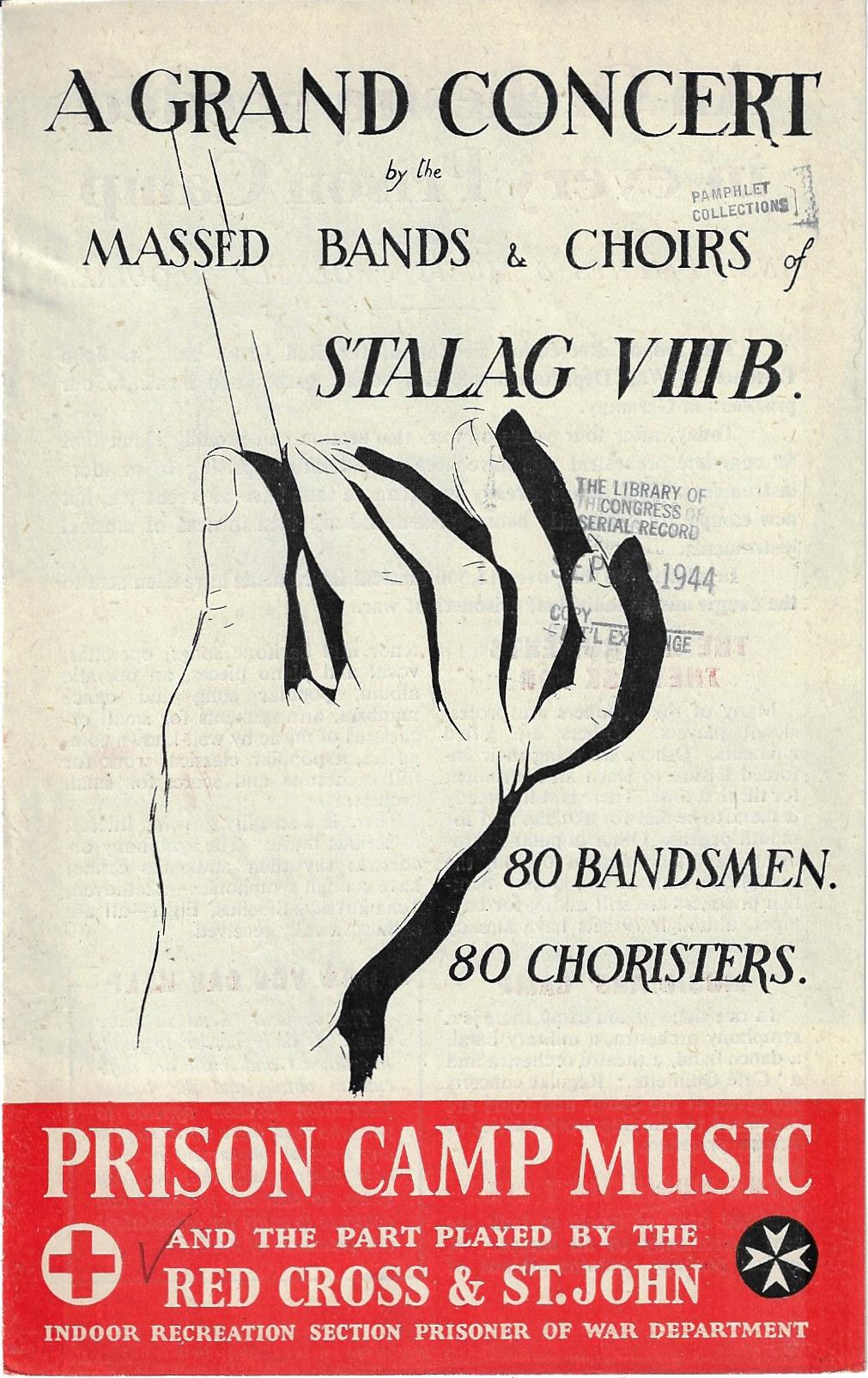
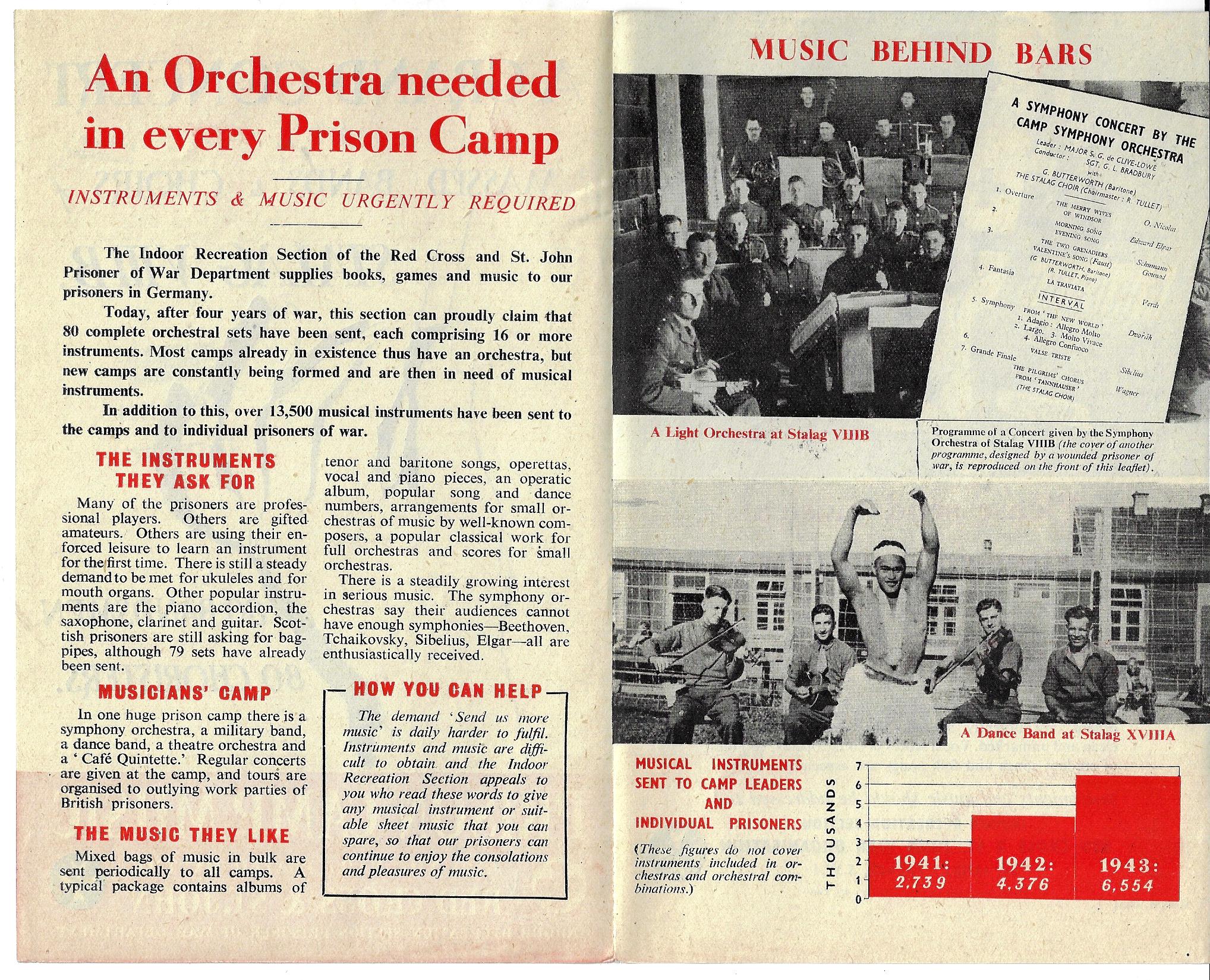
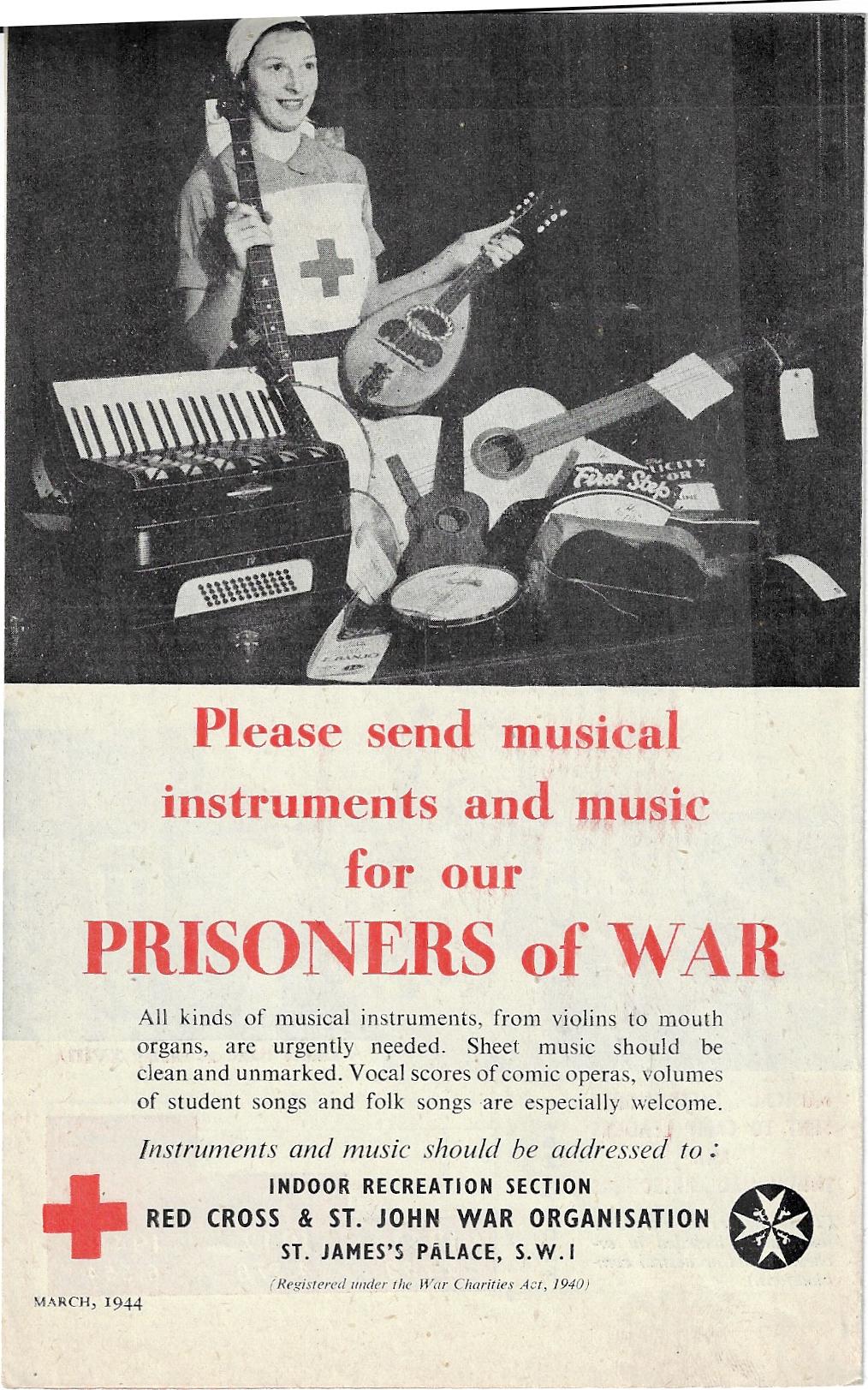
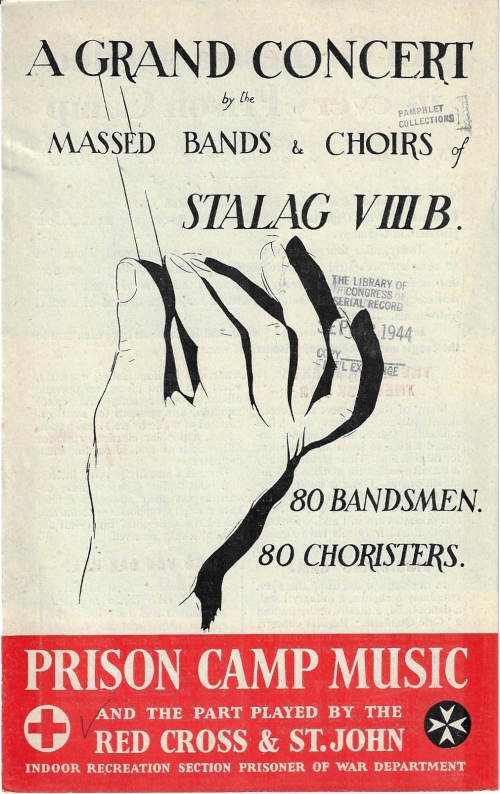
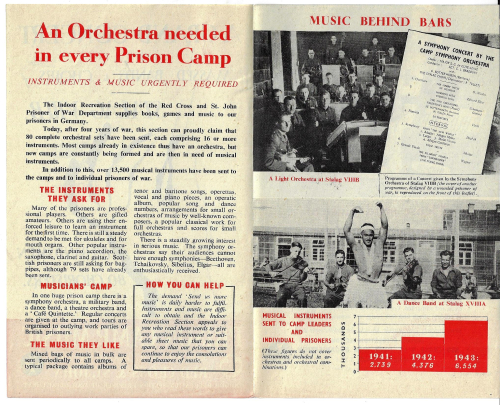
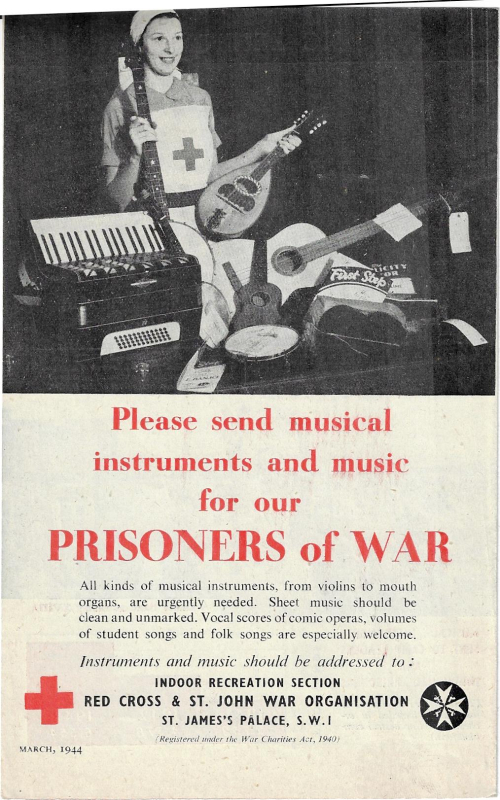
    I found this unexpected leaflet this morning, the title of which is enough to stop anyone: A Grand Concert by the Massed Bands & Choirs of Stalag VIII B. 80 Bandsmen, 80 Choristers. PRISON CAMP MUSIC and the Part Played by the Red Cross & St. John. It was printed in London in 1944, and printed by by the Red Cross and St. John War Organization and is a leaflet (20x13cm, 4pp, single sheet folded vertically) which I reproduce in full below.  (Provenance: Library of Congress, received by them September 1944, with their rubber stamp on the front cover.)

    There are no listings for this item in the WorldCat/OCLC, and a google search has one hit, finding the leaflet at the National Army Museum in London–outside of this, I cannot find it. This is a little surprising given that it was sued to raise awareness and funds; that said, it was also highly ephemeral, meaning it was probably thrown away very easily and often.  
    Prison camp orchestra _1_I am not an expert in this field, though one thing that can be said for sure was that overall British and U.S. held as POWs by the Germans were treated much more humanely than other nationalities of soldiers (particularly the Russians), and so it was possible for some POWs to enjoy receiving Red Cross packages while interned. I did not know about an orchestra with 80 instruments and a choir of 80 voices. At first blush this seems like a work of home front propaganda, an attempt to establish hope for normalcy for the families of soldiers taken prisoner, though it seems as though these accommodations were made by the Nazis in deference to the British and Americans. (Again, this is a broad generalization and no doubt those enjoying POW music at Stalag VIII B were in the distinct minority. At Stalag VIII B it looks as though the main group of POWs were British, and then segregated in different parts of the camp were Indians, and then another section for Greeks, Cypriots, and Palestinians, and then in an entirely different section of the camp under lights and interior barbed wire was a camp for the RAF. British airmen were treated “differently” than the rest given at that time the terrific damage being inflicted upon Germany from endless nighttime British bombing raids. 

    On the reception of Red Cross packages at Staalg VIII B and other Stalags in general, from “MEDICAL SERVICES IN NEW ZEALAND AND THE PACIFIC: CONDITIONS AT STALAG VIIIB, LAMSDORF”, from New Zealand Electronic Text Collection:
    Prison camp orchestra _2_

    “Owing to a Red Cross parcel bottleneck at Lisbon there was a complete parcel failure from January 1942 until May 1942…Regarding Red Cross parcel shipments: “The year 1943 was relatively full, except for three months following the German occupation of Italy…During early 1944 Red Cross supplies were adequate, and, in fact, most camps, both large and small, endeavoured to build up a three months’ reserve of their Red Cross food. Unfortunately, on …17 September 1944)…most Wehrkreise (war districts) came an order from the Oberkommando der Wehrmacht: ‘All prisoner of war tinned food must be destroyed forthwith.’ This order was ruthlessly enforced, particularly on the many (over 600) working parties of Stalag 344 [part of Stalag VIII B], with the result that, whilst there was a week’s feasting on salmon, sardines and meat roll, lean and hungry months followed. Even in the Lazarett at Lamsdorf, where the patients and staff enjoyed community messing, much of their tinned food was destroyed, with the resulting onset of semi-starvation, which did not abate till the end of the war.”
    Prison camp orchestra _3_

    “The Russian prisoners had no Red Cross food and they were starved on bread and turnip soup. In vain did the British medical officers at Cosel plead with the German medical authorities for food, rather than drugs, to treat their Russian patients. Only after a change of senior German medical officers and the start of the Russian offensive towards the Reich in March 1943 did the German attitude change and the health of those miserable Russians improve.”–


    Also this story at the end of the war should be shared (although it has nothing to do with this leaflet): “In January 1945, as the Soviet armies resumed their offensive and advanced into Germany, many of the prisoners were marched westward in groups of 200 to 300 in the so-called Long March. Many of them died from the bitter cold and exhaustion. The lucky ones got far enough to the west to be liberated by the American or British armies. The unlucky ones were ‘liberated’ by the Soviets, who instead of turning them over quickly to the western allies, held them as virtual hostages for several more months, until the British agreed to release to the Soviet Union POWs of Soviet origin who had been fighting on the German side, which left the British Government with little choice on the matter, even though they were understandable reluctant to hand these men over to the Soviet Union for their inevitable execution. These soldiers from states such as Latvia, Lithuania and Estonia for example, had fought with the Germans in an effort, as they saw it, to release their own homelands from Soviet occupation and oppression.”–lamsdorf dot com
     

    ·Posted by :

    ·in:

    —

  • Classic Work on the French Resistance, 1944

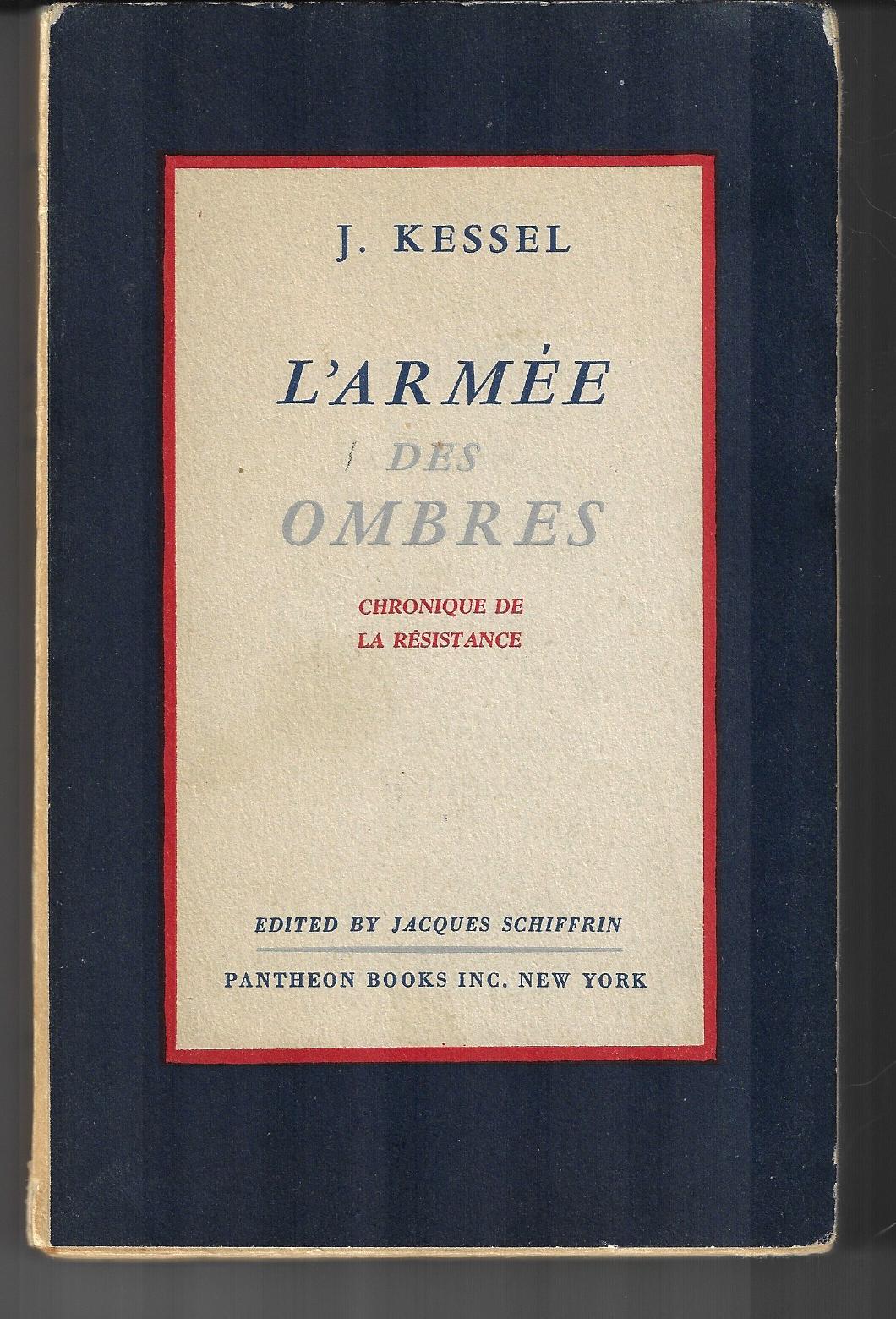
    Kessel armee des ombresJoseph Kessel, L’Armee des Ombres, Chronique de la Resistance. Pantheon Books, New York, 1944, edited by Jacques Schiffrin.  185x18mmm 266pp. Written in London, completed in the summer of 1943.  Original red, white, and blue wrappers, and printed on a nice paper stock, and mostly unopened. Overall a nice production, in a “paperback” size but hardly a paperback format. Rather thick for this format, which usually means that the spine is cracked, though in this case, it is not. Very nice copy.  About Fine. $75

    Kessel (1898-1979) was a very interesting man of long accomplishment, a significant figure in the history of modern French literature, and a patriot, and a resistance fighter. He wrote this book using himself as a model for the main character (named “Philippe Gebier”), and used his experiences along with those of others to create this story of resistance–it seems that while the characters were composites, the overall story was real and accurate. As he states in the opening sentence of the book, “Il n’y a pas de propaganda dans ce livre et il n’y a pas de fiction” (“This is not a work of propaganda nor a work of fiction”). He makes it abundantly clear in this book that the absolute duty of all French citizens was civic disobedience and resistance, period. 


    ·Posted by :

    ·in:

    —

  • Rare and Unusual Work on RAF Paratroopers, 1943/4

    JF Ptak Science Books   Quick Post

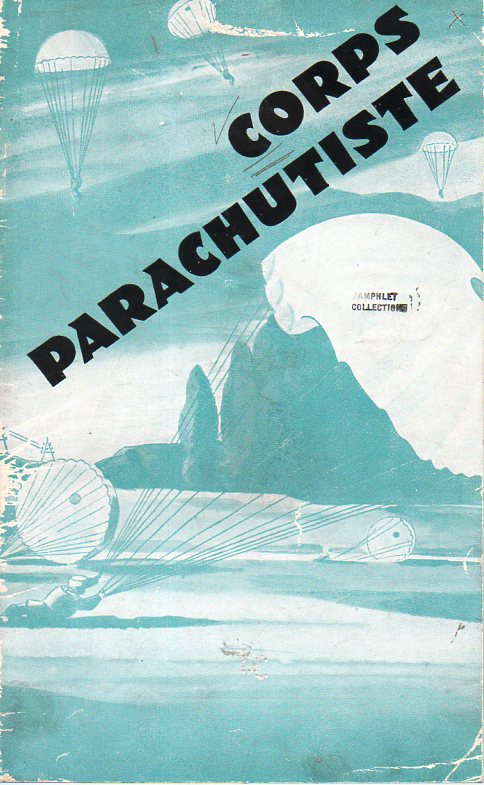
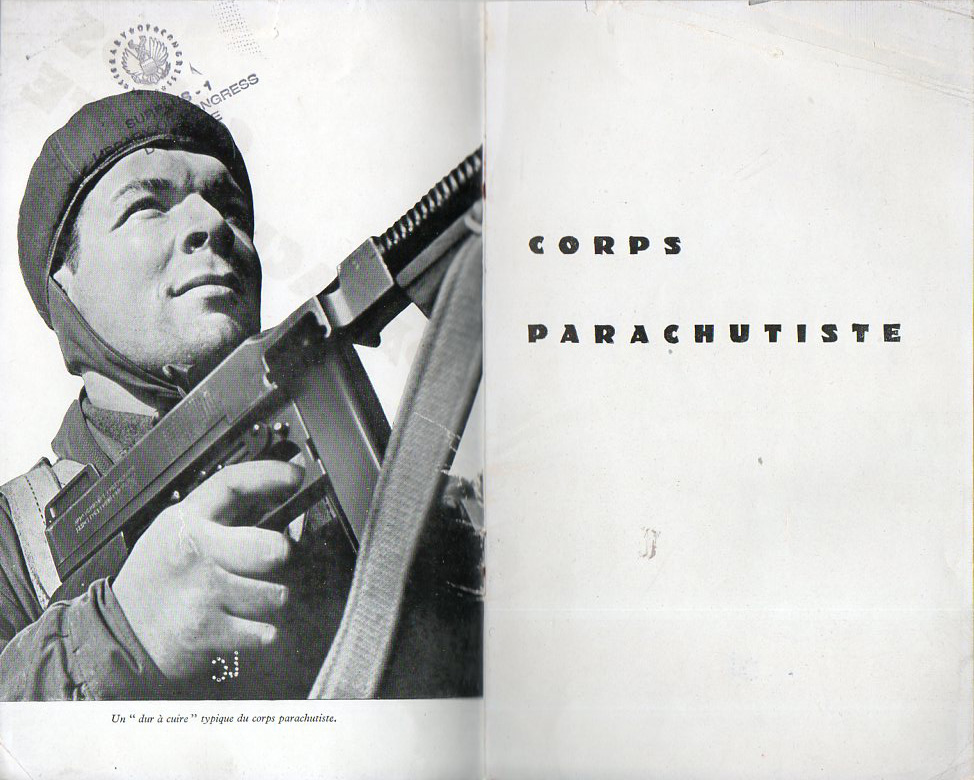
    This pamphlet turned up in my Library of Congress “Pamphlets Collection” collection-it had the feel of something that was widely distributed as a home front piece of positive news, but it turns out that it does not show up cataloged in the usual places (like WorldCat/OCLC).  There is no printed date and no place of publication other than “Imprime en Angleterre” (stamped on the back cover). There is a LC cataloging stamp of 17 April 1944, which means it may have been first issued in late 1943.

    There are no copies whatsoever located in WorldCat/OCLC. 

    I’ve reprinted the full work (below) for those with an interest in Airborne:

    Corps parachutiste265


    Corps parachutiste b266

    ·Posted by :

    ·in: