A Daily History of Holes, Dots, Lines, Science, History, Math, Physics, Art, the Unintentional Absurd, Architecture, Maps, Data Visualization, Blank and Missing Things, and so on. |1.6 million words, 7500 images, 4.9 million hits| Press & appearances in The Times, Le Figaro, Mensa, The Economist, The Guardian, Discovery News, Slate, Le Monde, Sci American Blogs, Le Pont, and many other places… 5000+ total posts since 2008.

Category: Militaria

  • Classic Work on the French Resistance, 1944

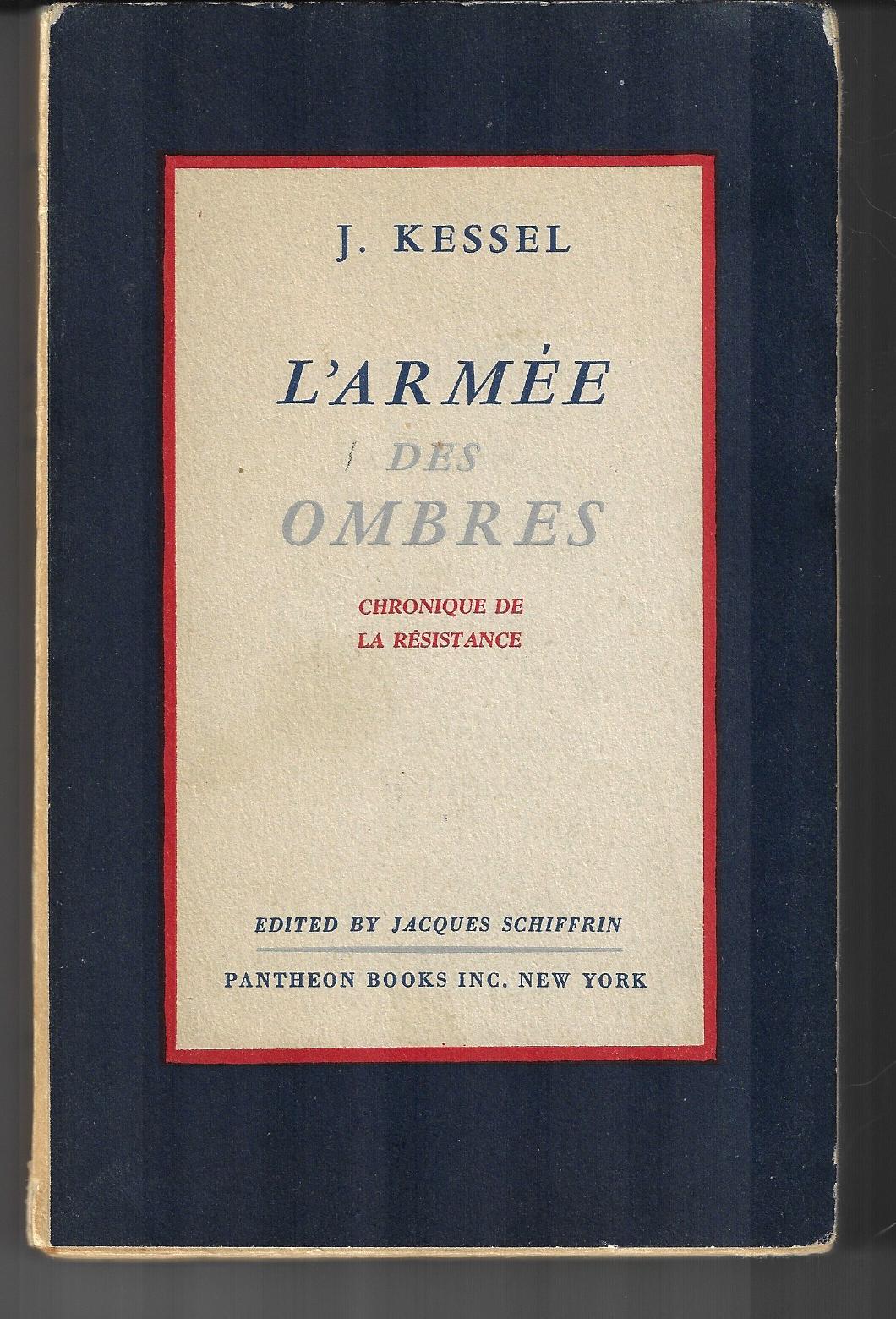
    Kessel armee des ombresJoseph Kessel, L’Armee des Ombres, Chronique de la Resistance. Pantheon Books, New York, 1944, edited by Jacques Schiffrin.  185x18mmm 266pp. Written in London, completed in the summer of 1943.  Original red, white, and blue wrappers, and printed on a nice paper stock, and mostly unopened. Overall a nice production, in a “paperback” size but hardly a paperback format. Rather thick for this format, which usually means that the spine is cracked, though in this case, it is not. Very nice copy.  About Fine. $75

    Kessel (1898-1979) was a very interesting man of long accomplishment, a significant figure in the history of modern French literature, and a patriot, and a resistance fighter. He wrote this book using himself as a model for the main character (named “Philippe Gebier”), and used his experiences along with those of others to create this story of resistance–it seems that while the characters were composites, the overall story was real and accurate. As he states in the opening sentence of the book, “Il n’y a pas de propaganda dans ce livre et il n’y a pas de fiction” (“This is not a work of propaganda nor a work of fiction”). He makes it abundantly clear in this book that the absolute duty of all French citizens was civic disobedience and resistance, period. 


    ·Posted by :

    ·in:

    —

  • First Beer in Manila Post War, 1945

    JF Ptak Science Books  2689

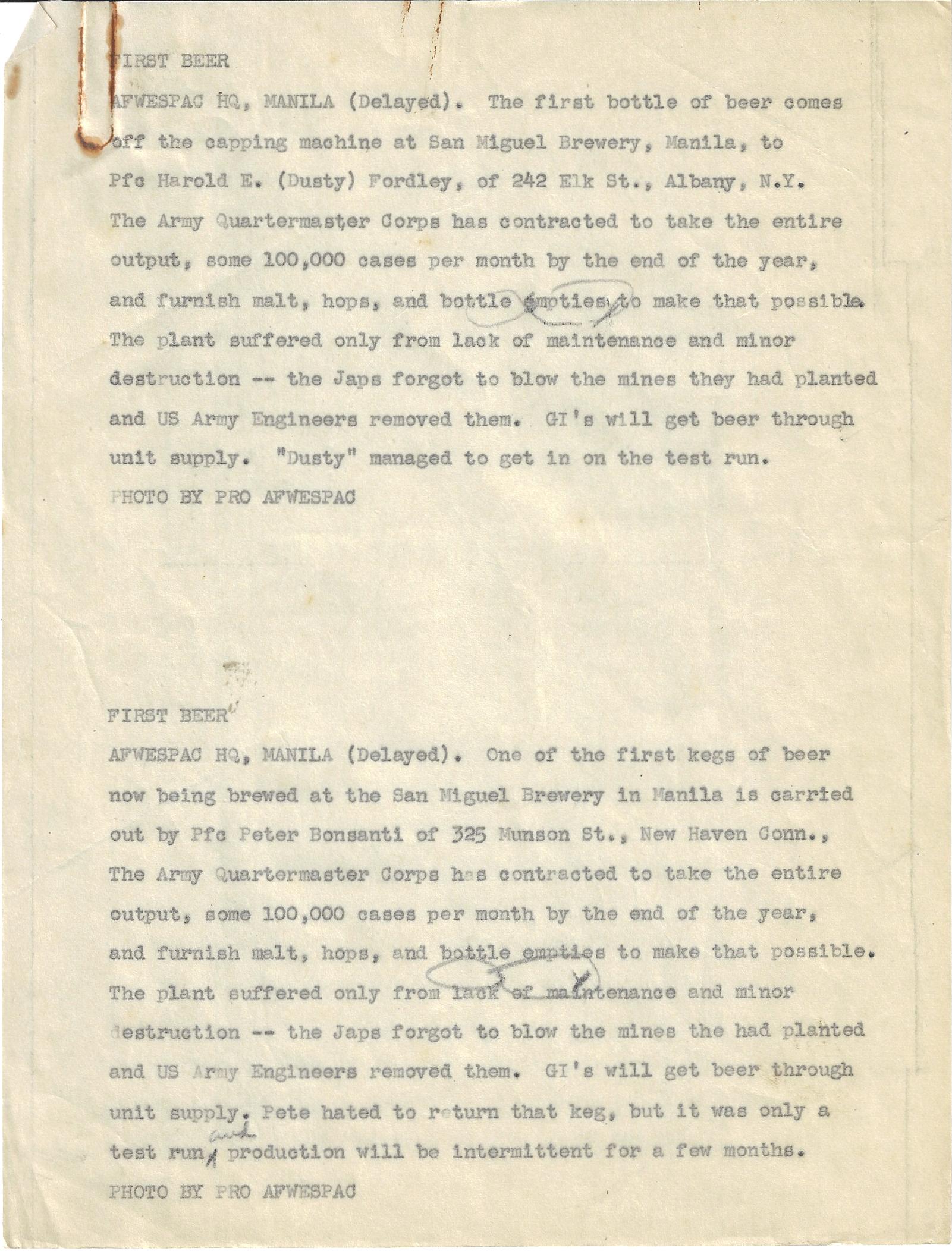
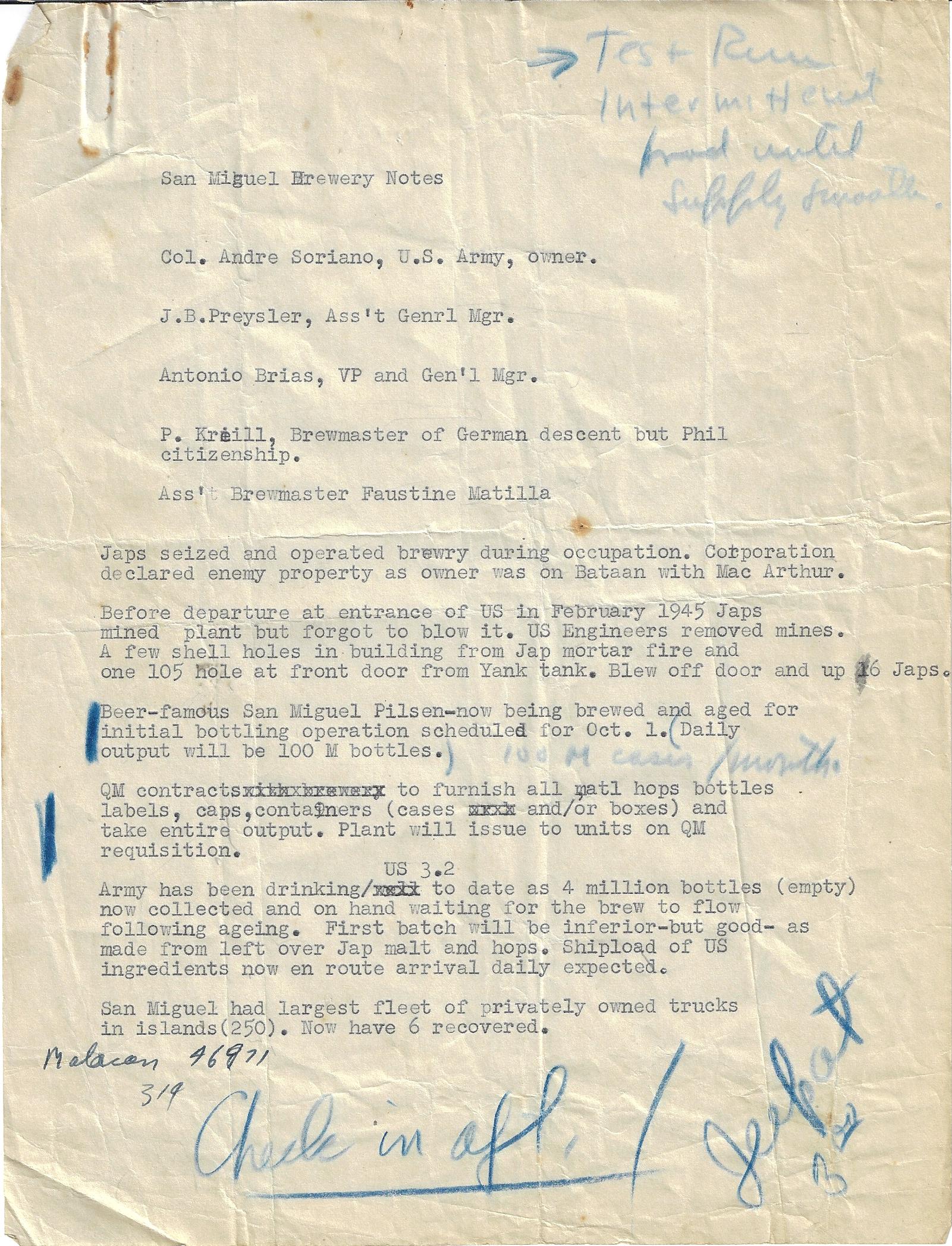
    Several years ago I purchased part of the papers of David Katcher, who was the founding editor of the journal Physics Today. Before that, several years before that, in 1945, David Katcher was Lt. Katcher, serving as a correspondent/writer in the public relations office of the U.S. Army Headquarters of the Western Pacific (GHQ USAFPAC), and seems to have worked closely with the U.S. Commissioner to the Philippines, Paul V. McNutt. There was a 6-inch stack of paper here of mimeographed offprints of the daily grind of running the PR department of the Army in the Philippines, which, taken as a whole, is pretty interesting, showing the concerns and trials of the Army in reestablishing the government and infrastructure of the country.  Some of the individual reports/publications are stand-alone, straight-up f interesting things, and so far as I can determine, have not been published anywhere else.  The item I’m about to describe is one of those stand-alones.

    This two-page document seems to have been the draft for a press release on re-starting the formerly Japanese occupied San Miguel Brewery in Manila. (I don’t need to say very much about how tremendously devastated Manila was after MacArthur came back and reclaimed the city, as I think that this is generally understood and a given. It was enormous amount of loss of life to Philippine civilians, with estimates of those killed in Japanese massacres at 100,000+, plus battle casualties, and of course a tremendous amount of destruction laid to the once-beautiful Manila that went along with that.) Putting the city back together again after the end of the war was obviously essential, and the movement with the brewery was evidently very quick. The brewery evidently suffered minor destruction (I suspect in the final fight as the Japanese occupied and ran the brewery during the war) and although the structures were lined with explosives, “the Japs forgot to blow the mines”.

    There were a million things to do in Manila in 1945, and the resurrection of the San Miguel Brewery was one small part of that. It is interesting to see this internal U.S. Army document to see how this was refitting was being transacted.  


    San Miguel _1_


    SAn Miguel 2_


    ·Posted by :

    ·in:

    —

  • A Fire Ship of 1818

    JF Ptak Science Books   Quick Post

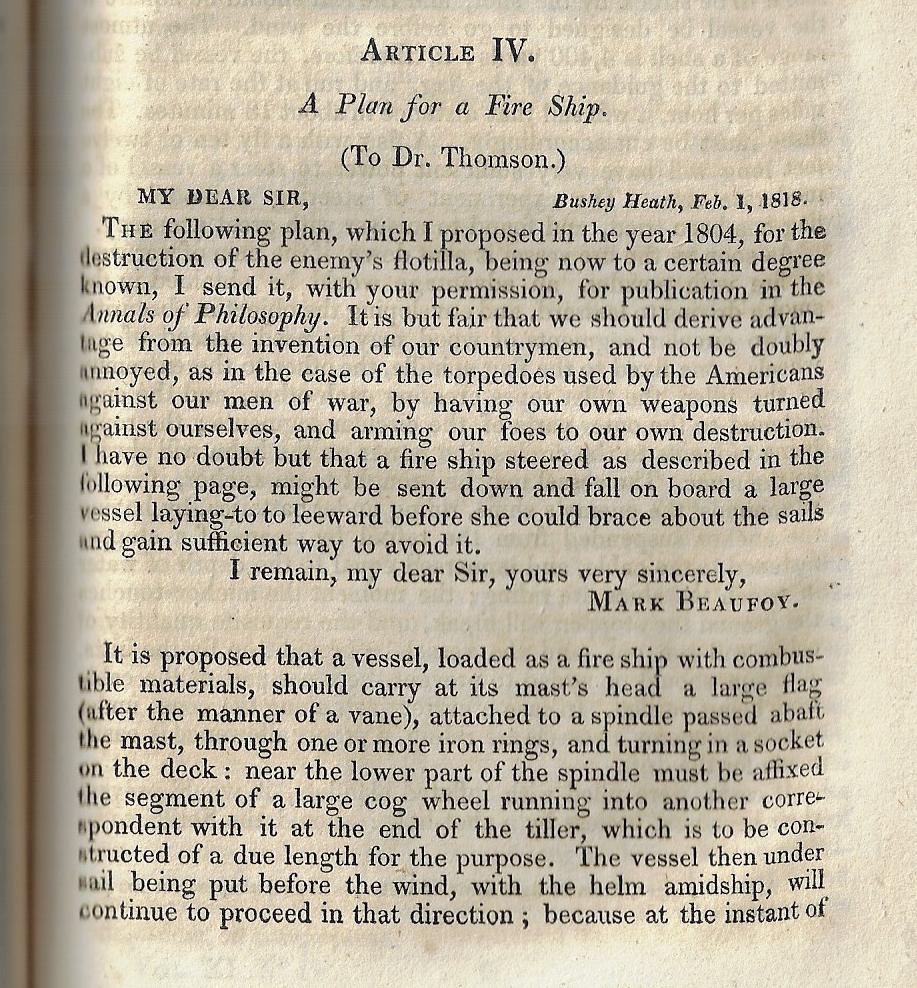
    I came upon this article in The Annals of Philosophy for April 1818, suggestively entitled  and not-ignorable “A Plan for a Fire Ship”, by Col. Mark Beaufoy.  It turns out to be a simple plan with a not-so-simple way of guiding in a ship meant take fire/explode amidst an opposing fleet/flotilla. I am far from knowing anything about naval history, so all I am doing here is reporting on this interesting article, though I have no little doubt that there is a rich history of remotely-guided bomb ships in the history of naval warfare. (The idea sounds pretty expensive to me…)

     “[Beaufoy, 1764-1827]…devoted much of his life to naval experiments at the Greenland Dock with James Scott and Captain John Luard of the “Society for the Improvement in Naval Architecture”. He published the results of his work in one of the leading scientific journals of the day, The Annals of Philosophy. In 1815 he described a recording tide meter, and in the same article went on to describe the power of the wind on square sails and the resistance to motion both in air and water of different shapes.”–Wikipedia  (Beaufoy does mention the use of square sails in the article.)

    Flame ship _1_

    ·Posted by :

    ·in:


  • Public Instruction on Gas Attacks (1939)

    JF Ptak Science Books  Quick Post

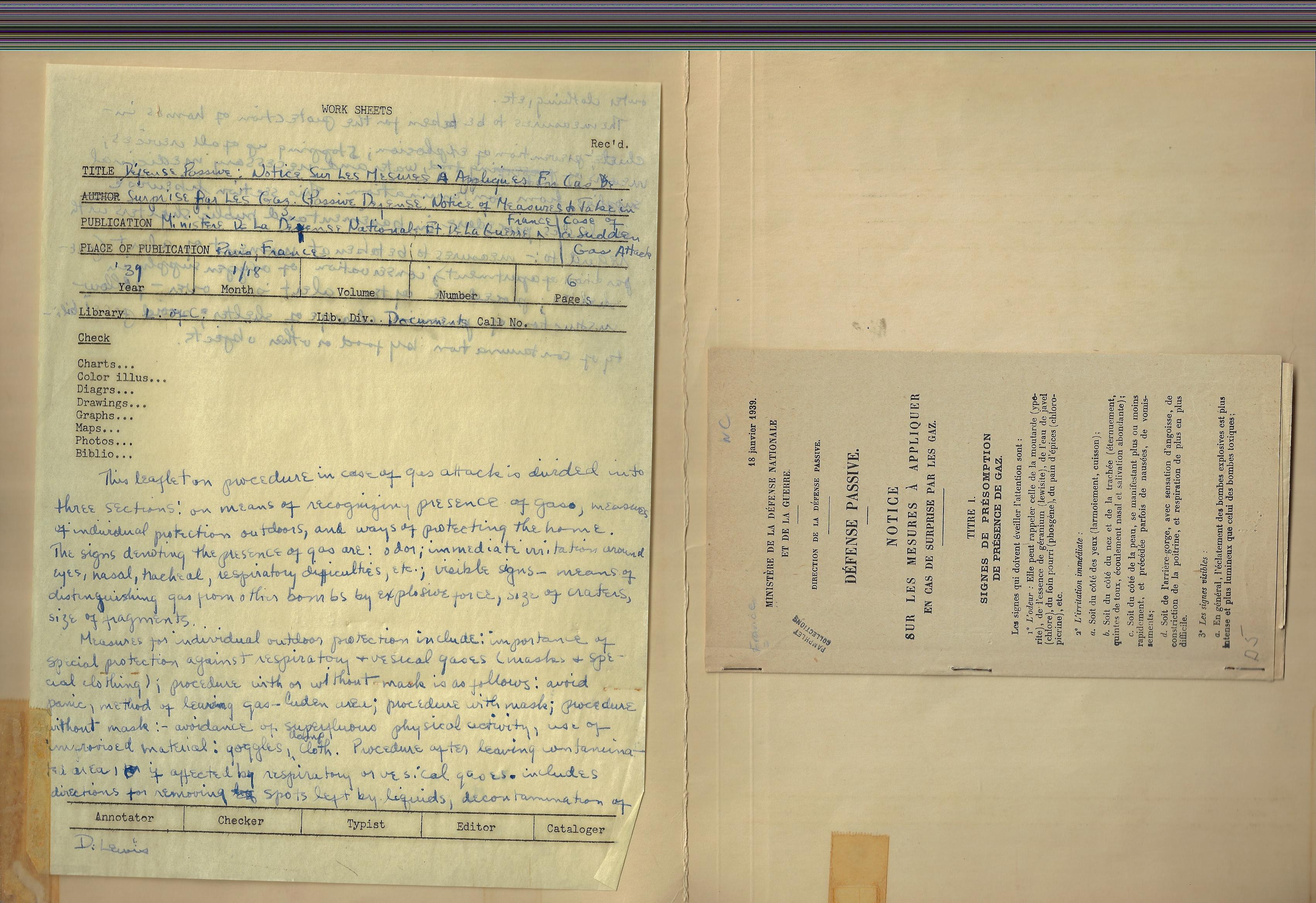
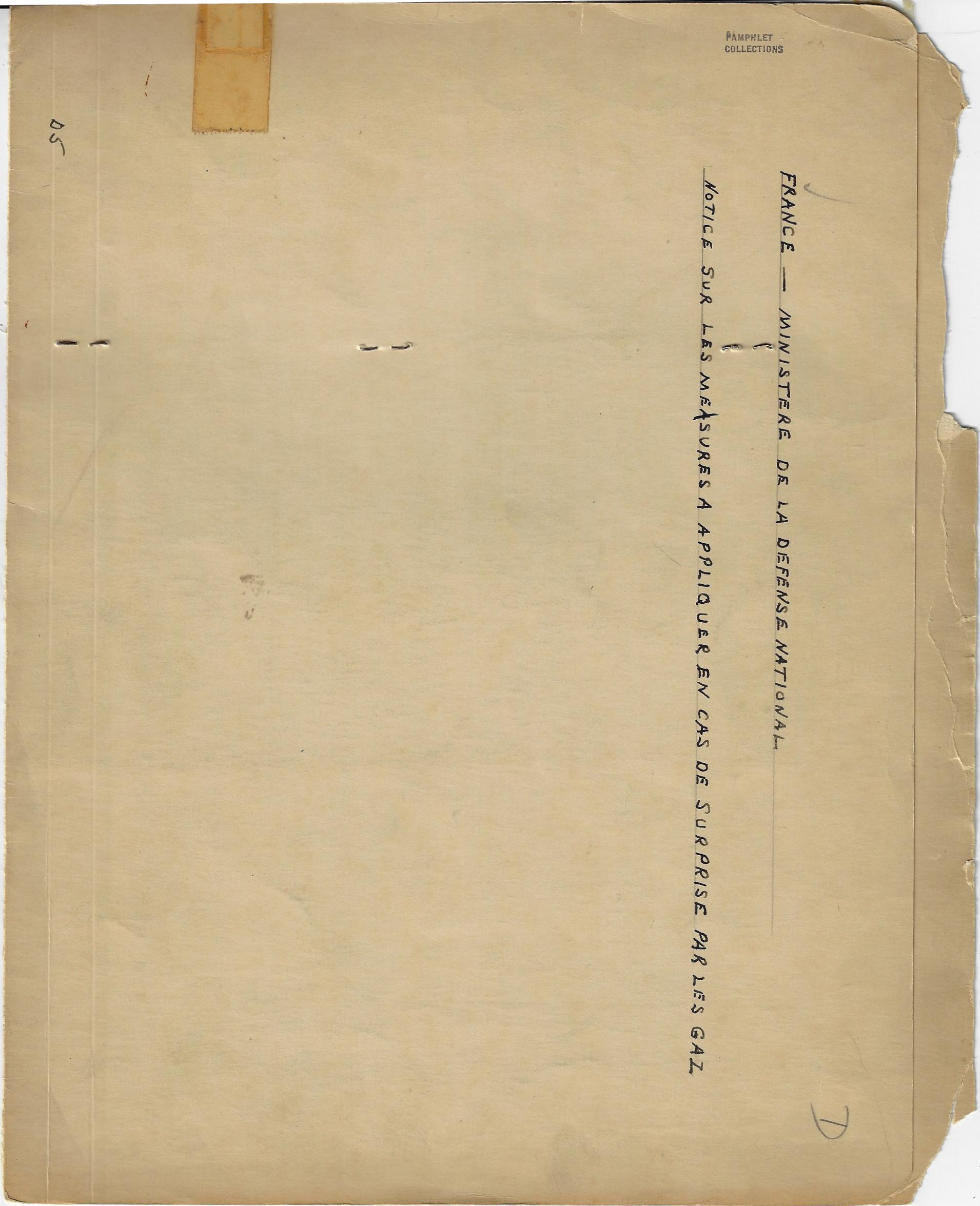
    I have perhaps four or five pamphlets on gas attacks presented int eh manner of the one I’m displaying today–someone, somewhere did a good and thorough job of cataloging these instructions for a general population on what to do in the event of a poison gas attack.  There are also 50 or so items that had once been in the library of the OSS that are similar in presentation/preservation to the gas attack pamphlets, though those all have at least two indications (a stamp and hand written cataloging) stating their point of origin, and the one below does not.  The pamphlet is stapled into a manila folder,and opposite it is a worksheet with cataloging details and a fairly extensive abstract of the pamphlet (by hand) in English.  Very curious, and interesting.  

    The pamphlet:  Notice sur les Mesures a Appliquee en cas de Surprise par les Gaz, printed in France in January 1939 by the Ministere de la Defense National.  There is still eight more months of peace to be waged and lost, Hitler already on the move in Czechoslovakia and Austria, and of course Japan already fighting their all-out war in China already for seven years. 

    [Images are very expandable.]

    WWII gas attack france _2_


    WWII gas attack france _1_

    ·Posted by :

    ·in:

    —

  • Facts and Requirements of Recruitment in the U.S. Army, 1935

    JF Ptak Science Books    Quick Post

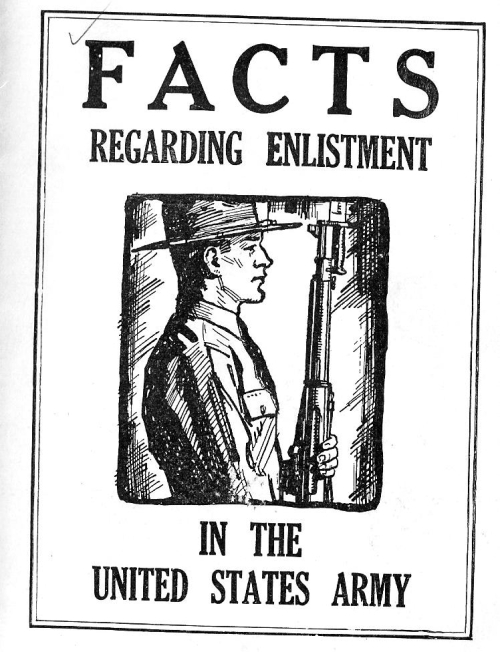
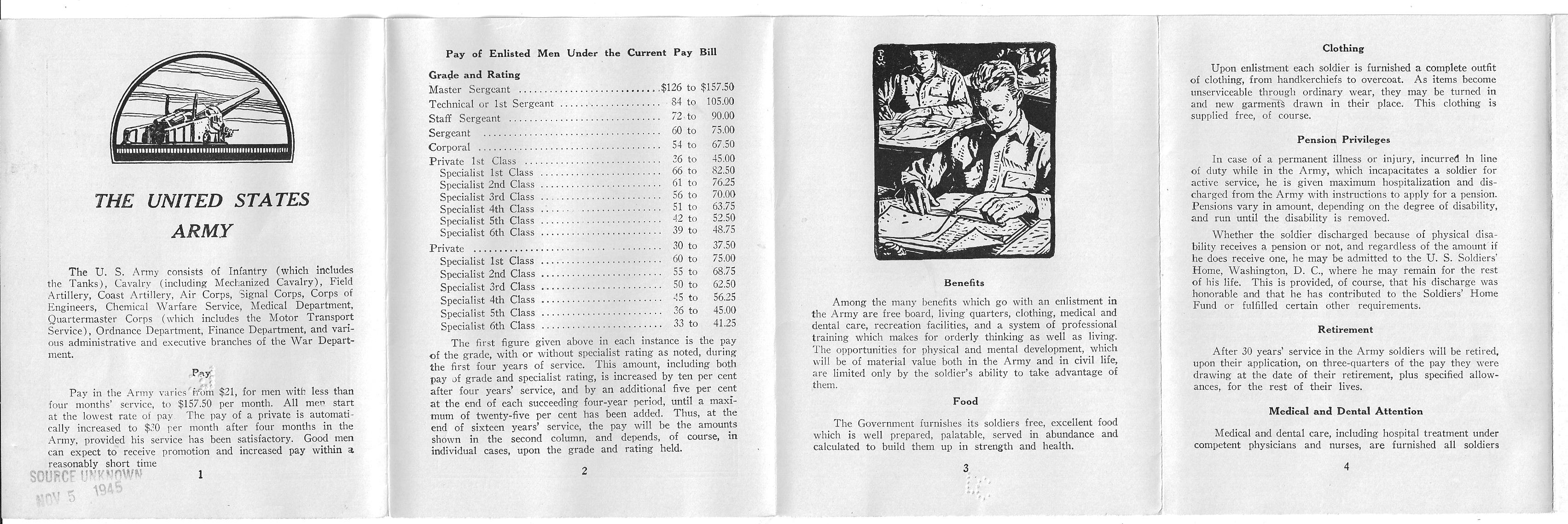
    This bit popped up this afternoon in a browse through some military material: Facts Regarding Enlistment in the United States Army seems to have been printed in the mid-1930’s, the illustrations have a sort of WPA feel to them, or at least they do not have a standard green sensibility. In any event. I’ve reproduced the pamphlet here, with all of its interesting facts and factoids, not the lest of which are the pay grades for non-com and enlisted men.  One thing that stopped me was the dental requirement–the army needed recruits to have at least 12 teeth, which doesn’t really sound like very many. (I think I remember–perhaps in Donald L. Miller’s history of WWII?–that in the bad part of the war the Marine Corps, in 19043/4, lowered that 12-tooth requirement to 8. It was a very tough time for the Corps.) By the way the whole document is printed on one piece of paper, 5″x18″, printed in both sides.

    Army recruit cover 

    Click on each for a clear much expanded view of the pages:

    Army recruit _1_

    ·Posted by :

    ·in:


  • The Heavy Stuff, #16–the Big Boom (1872)

    JF Ptak Science Books   Quick Post

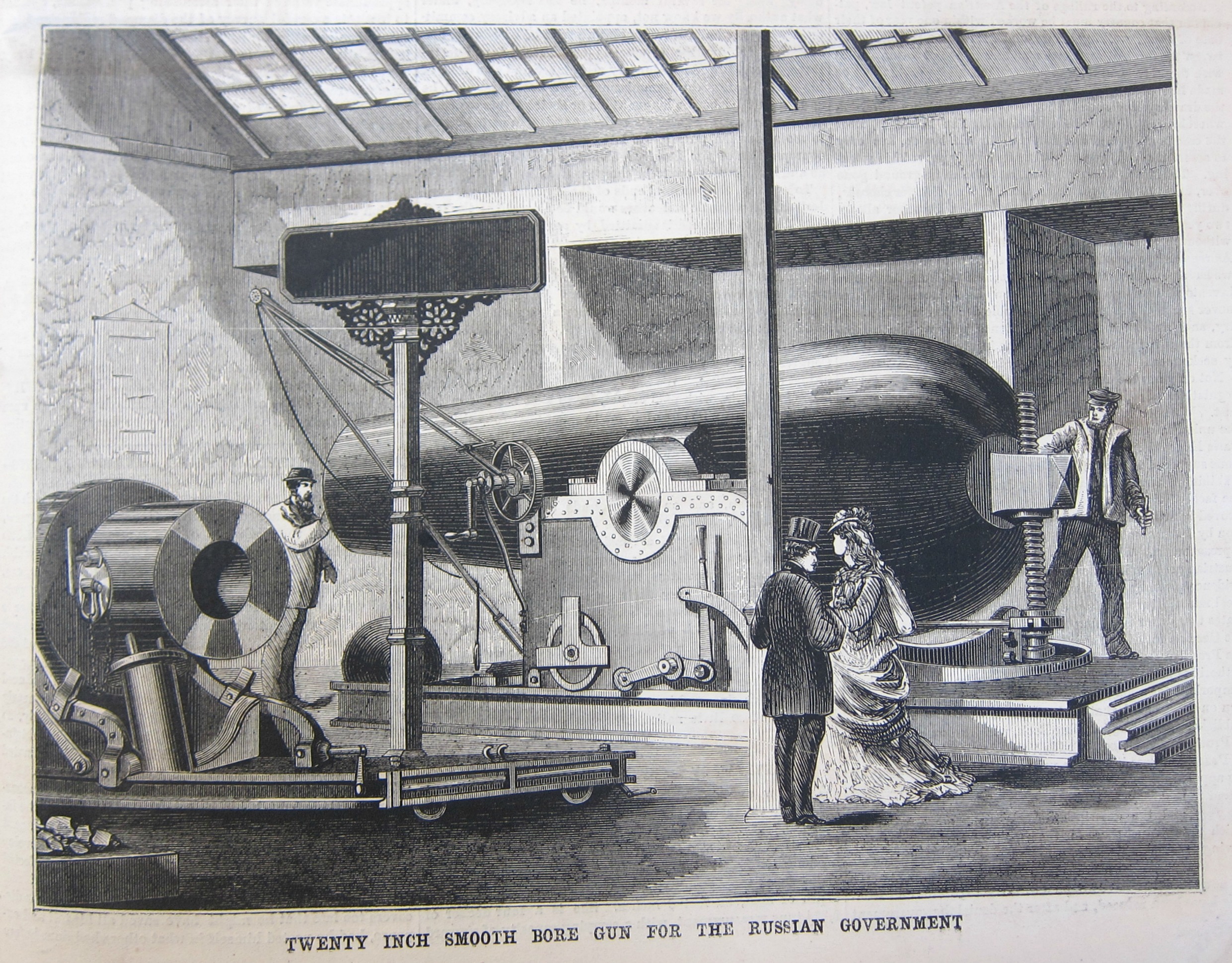
    This Russian 20″ smooth ore cannon weighed 44.5 tons and shot a 900-pound projectile and used 117 pounds of explosive charge to do that. The concussion wave from the firing of this beast was said to be felt 1/3 of a mile away where it would topple bad chimneys.  

    Source: Scientific American, December 14, 1872.  

    Sci Am 1872 Big Cannon

    ·Posted by :

    ·in:

    —

  • You-Are-There View from Charleston Harbor, Fort Sumter, 1863

    JF Ptak Science Books   Quick Post

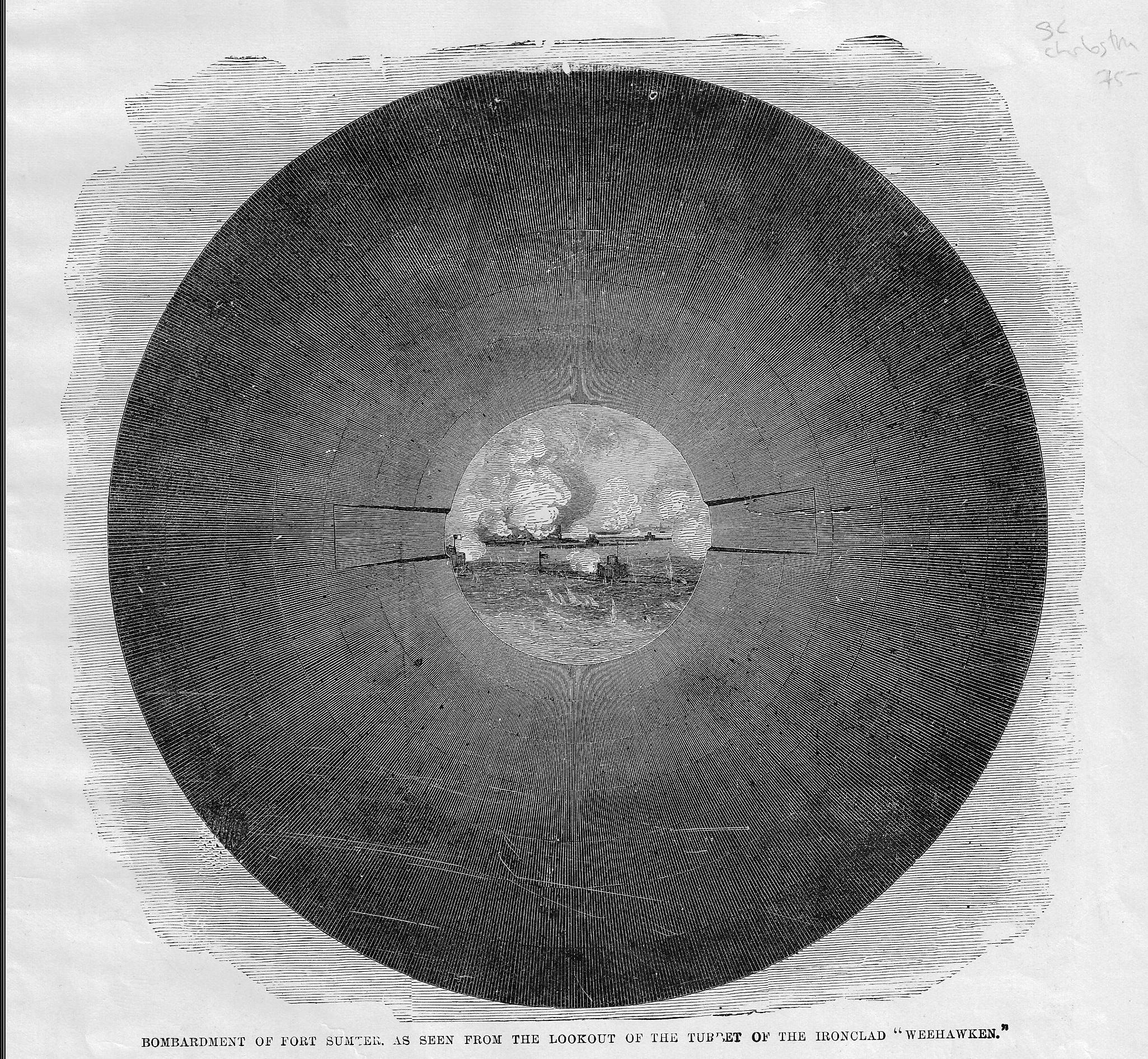
    Here’s an unusual and somewhat startling point of view from the Civil War–the target of Fort Sumter, Charleston Harbor, South Carolina, (probably for the attack of 7 April 1863).  I assume that this was first published in Harper’s Weekly, though my copy is found in The Soldier in Our Civil War, Volume II, page 173, (1878) which is spilling over with reprints from Harper’s.  There wasn’t very much of Ironclad Weehawken that was above the water, most of its 200′ and crew of about 70 being below the water line. This view is from an observation port on the turret of the ship, and  it looks like you’re looking down a well because the iron armor of the turret was 11″ thick.  The first attack that the Weehawken participated in was in April, 1863, though that was a pretty distinct failure; after repairs, the ship was in the Charleston theater for pretty much the rest of its career, which lasted until December 1864, when she sunk from what seems to be a problem developed by being overloaded with heavy ordnance. In any event, it is a very interesting you-are-there perspective, rare in my experience.

    Charleston Harbor Weehaken


    ·Posted by :

    ·in:

    — —

  • Nerves of Steel–Human-centric Target Practice from 1934

    JF Ptak Science Books  Quick Post

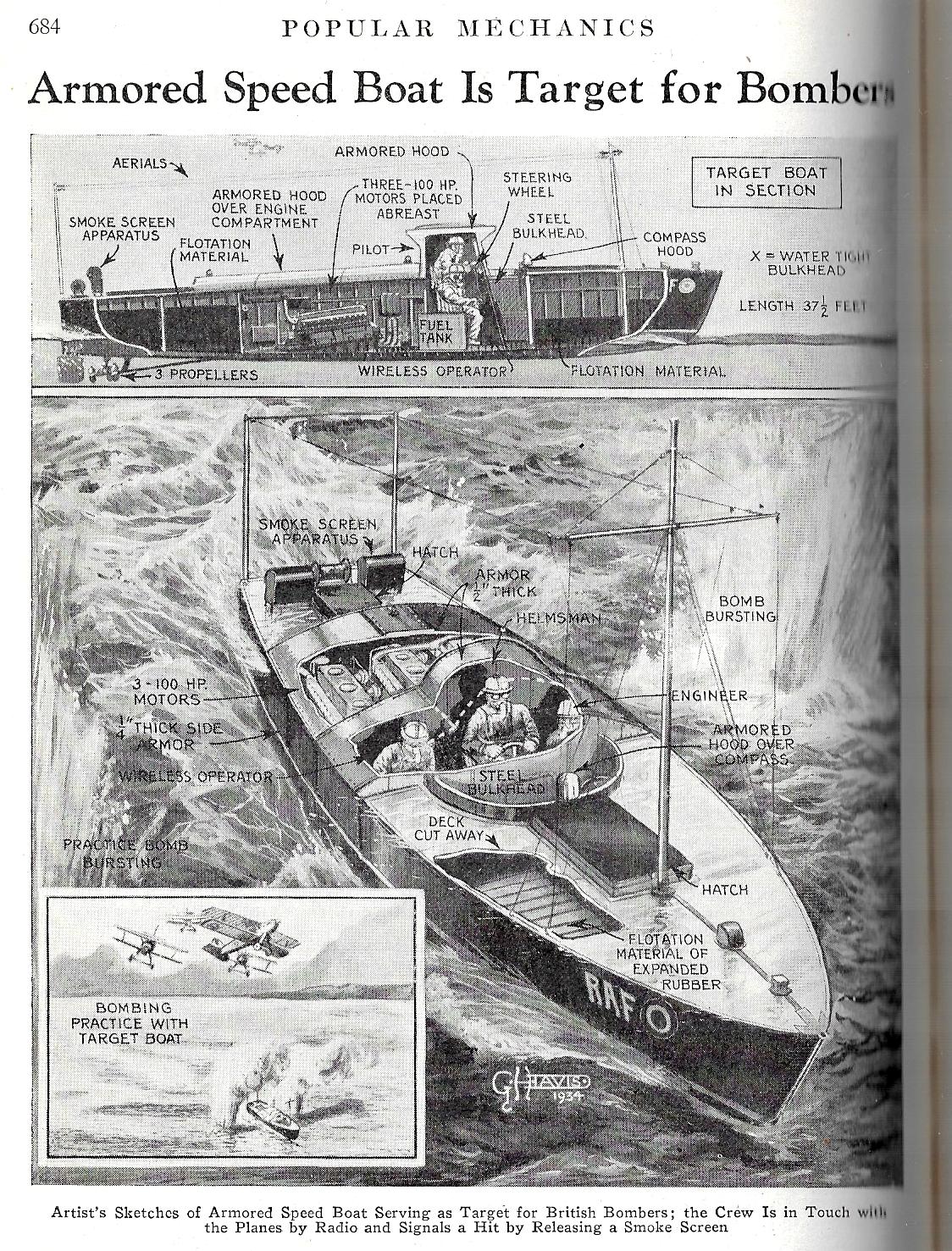
    This illustrated story from Popular Mechanics for May 1934 seems almost nominal–“Armored Speed Boat is Target for Bombers”–until you realize that it is piloted, and has an engineer and a wireless operator on board. This British crew of three would run around, powered by three 100-hp engines and serve as target/bait for bombers, trolling around, waiting for the aircraft to attack and strike.  Evidently the boat was screamingly fast at 30 knots, and was constructed to both protect and fail: the crew and engine compartments were shielded by half-inch iron plate and shock absorbers, while most of the rest of the 37′ boat was made of lighter material encasing rubber flotation devices. The boat was actually made to be hit by a bomb from the aircraft–if so, the bomb was supposed to pass cleanly through the fore and aft sections, with the rubber parts supposedly keeping the boat afloat. In the event of strike, the wireless engineer would both radio the plane pilots of their success as well as release a smoke screen.  Quite right.  Seems that you’d need steel fibers for nerves in this operation.

    Pop Mech 1934 speedboat target

    The drawing and cutaway were made by George Davis, a highly prolific and skilled artist who made hundreds of these drawings over the decades.  

    ·Posted by :

    ·in:

    —

  • Lazare Carnot’s “Vertical Fire” and the Wanting Rain of Death (1820)


    JF Ptak Science Books   Post 2571    

    Lazare Carnot (1753-1823) is a justifiably revered and famous person in the history of science and engineering, though not I think for the paper that I stumbled upon in a volume of The Quarterly Journal of Science, Literature, and the Arts1 for 1820.  The article “Theory of Defence by Vertical Fire” (pp 200-295) sounded mysterious at first, though it was quickly revealed that the “vertical fire” related to the extreme angle for firing canons and mortars and such and not to a burning fire. This vertical firing of projectiles was reserved for opposing siege force of a fortification, fired at an angle so extreme that given the height of the charge and the extreme closeness of the enemy that it would seem to be raining bullets and shells upon them. Given that the opposing force would be entrenched and largely impervious to a more “horizontal” line of fire, the metal rain seems a consideration. Carnot described this as  an “impregnable” defensive position. Others saw it differently:  

    “M Carnot boldly and ingeniously proclaimed the discovery of a new mode of defence by which fortresses might be rendered absolutely impregnable and by means so simple as to be easily adapted to all places. In promulgating this new doctrine Carnot introduced some useful materials and observations calculated to excite protracted defence but his general reasoning is quite delusive. He wrote as a political engineer or rather he compiled the treatise which he informs us. Napoleon sketched and the deduction drawn from it is perhaps one of the most curious and interesting passages that ever emanated from the imperial press. From what we have just read says the author “results I think very evidently this tranquillizing truth that the barriers of the French empire are absolutely inexpugnable by any power or coalition of powers whatever if well defended”.-Observations on modern systems of fortification: including that proposed by …1859, by General Sir Howard Douglas.  And:

    This line of defense would be enacted against a siege force against a fortification, meaning that the line of the attacker would be close at  100+yards away (or hundreds of yards away) given the ballet of how these things were supposed to be done in the history of sieges. The”vertical fire” is the fortified force using mortars and etc. launching their shot with lots of powder at an extreme angle  because it seems as though Carnot somehow depended on the velocity of the shot falling from the vertex of the curve to inflict the damage on the soldiers of the opposing side. Terminal velocity being what it is, a major league pitcher could almost pitch a bullet as fast as the falling projectiles. To have a rain of such things–even by the tens of thousands–doesn’t seem to be very practicable. I think this just goes to show that in spite of the enormity of Carnot’s name and achievements, this part of his engineering career doesn’t seem to be very distinguished–unless I’m wrong about this, and if so I hope someone will point that out to me and explain how the rain of fire made sense. 

    Notes:

    The Quarterly Journal of Science, Literature, and the Arts, volume VIII, London, John Murray, 1820. iii,iii, 412pp, with five engravings, three folding.  Nicely bound in calf backed marbled boards, with calf tips, with gilt-stamped paneled spine. There is a gilt-stamp on the spine reading “Ex lib Soc Reg Sco”. Also included in this volume: “On the Mammoth, or Fossil Elephant, found in the Ice, at the Mouth of the River Lena, in Siberia. From the Fifth Volume of the Memoirs of the Imperial Academy of Sciences of St. Petersburg”, pp 95-107; [Laplace] “On the Figure of the Earth”, pp 108-114 (from the Annales de Chimie, volume XI); William Philip, “Some Observations relating to the Agency of Galvanism in the Animal Economy…”, pp 72-83; “Description of Messrs. Taylors and Martineau’s Patent Apparatus for the Production of Gas from Oil…”, pp 120-124 (that would be John Martineau and John Taylor, who joined in a company to produce machines and fuel flourishing in the 1815-1830 period, though for most of that time Taylor would not be a part of it), among others.  
    ·Posted by :

    ·in:


  • A Landmark Study in the History of Integration (1953)

    JF Ptak Science Books   Post 2561

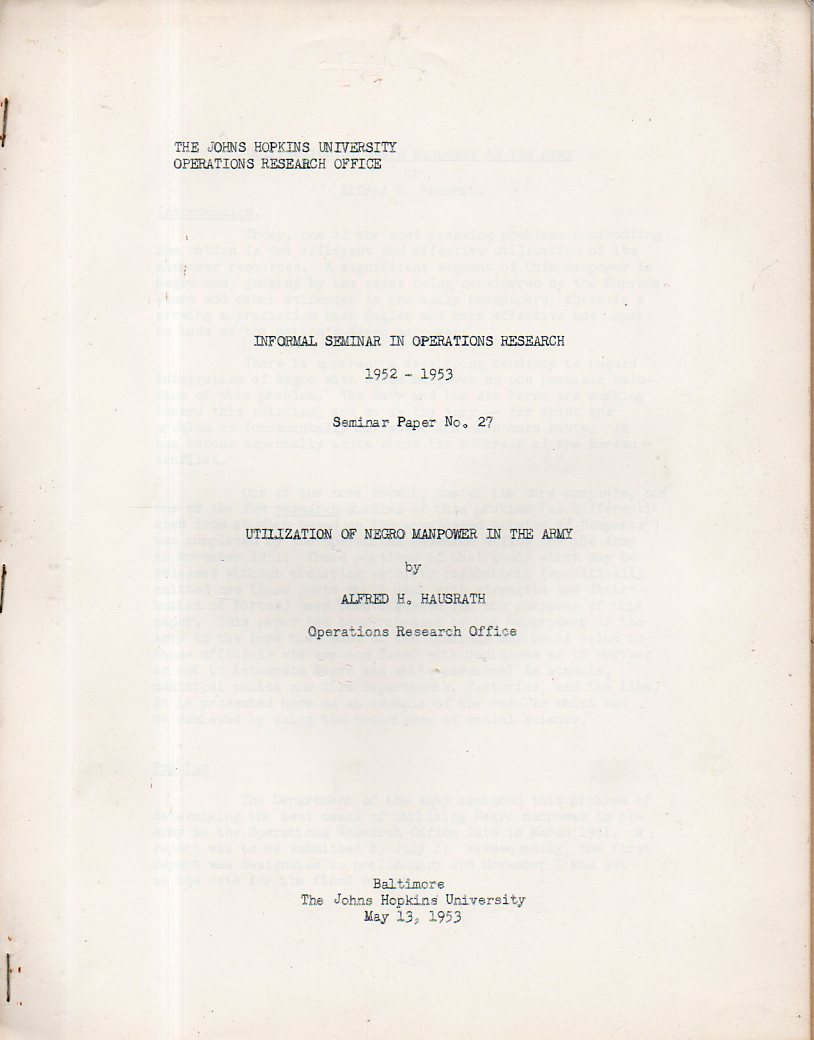
    The desegregation of the executive department and the U.S. Army began under Harry Truman in 1948, which for the military was formalized in the Army Reorganization Act of 1950, which called for the end of the need for segregated armed forces.  Following the disaster in the Korean War in late 1950 (the Chinese Counteroffensive causing the retreat of U.N. forces south of the Yalu River in November 1950), and finding it difficult to replace soldiers with nothing but white fighting men, the Army began to integrate fighting units by March 1951. The ORO instituted a study in 1951 by a team of five analysts headed by Dr. Alfred Hausrath (a war games researcher) to study the effects of integration, part of which was published in the report “Utilization of Negro Manpower in the Army”1,  with the full three-volume publication of the study coming slightly later in 1954.   (Two earlier interim reports were issued in July and December 1951.) Basically, after everything was said and done, the Hausrath and his team found that integrated units work much better than segregated units. 

    The report “provided policymakers in the Army with the objective arguments in favor of integrated units”, and the policy changes for full integration of the Army were issued jsut months after this report was rendered, in July 1951. This document was printed for the first time in a general format for OR folks in 1953.  (The term “landmark” was used to describe this paper in Saul Gass’ An Annotated Timeline of Operations Research, an Informal History, page 80.)

    • Abstract:  “In connection with a basic policy decision by the Army in 1951 on the utilization of Negro manpower, a partly quantitative operations research study was made. Factors affecting the decision to integrate Negroes into previously all-white. Army units included statistics of scores on the Army’s General Classification Test, Negro and white performance in combat, and interactions between Negro and white soldiers as determined from attitudes, opinions, critical incidents, and actual behavior. It is concluded that integrated (white and Negro) units can make more effective use of available manpower than segregated units, that resistance to integration is reduced as experience in integrated units is gained, and that levels of 20 per cent Negroes and more are acceptable. The time required to extend integration to the whole Army is discussed, and difficulties presented in such a manner that a sound program can be devised.” –Operations Research, Informs/Online

    Notes:

    1. HAUSRATH, Alfred H.  “Utilization of Negro Manpower in the Army.” Informal Seminar in Operations Research, 1952-1953, Seminar Paper No. 27.  The Johns Hopkins University Operations Research Office (ORO), Baltimore, May 13, 1953.  

    “Alfred Hausrath, the one-time director of military gaming for the Research Analysis Corporation (RAC), the successor civilian contractor for the Army, recounted the details of a little known simulation developed at the ORO in 1948.  (The simulation also served as a model for a Naval anti-aircraft guided missile system.)  Staff members of the Applied Physics Laboratory at the Johns Hopkins University worked in conjunction with the ORO in its design. What resulted was a computer game.  Hausrath asserted that its successor model, a study of the air defense of North America, which was inaugurated in 1953, was the first computer simulation in the history of operations research.  ORO also originated the first digital computer game, CARMONETTE I, (played from 1956-60.)”–this from the very interesting StrategyPage  https://www.strategypage.com/wargames/articles/wargame_articles_20049715.asp#_ftn43

    ·Posted by :

    ·in:

    —