A Daily History of Holes, Dots, Lines, Science, History, Math, Physics, Art, the Unintentional Absurd, Architecture, Maps, Data Visualization, Blank and Missing Things, and so on. |1.6 million words, 7500 images, 4.9 million hits| Press & appearances in The Times, Le Figaro, Mensa, The Economist, The Guardian, Discovery News, Slate, Le Monde, Sci American Blogs, Le Pont, and many other places… 5000+ total posts since 2008.

Category: American History: Western Exploration & Native Americans

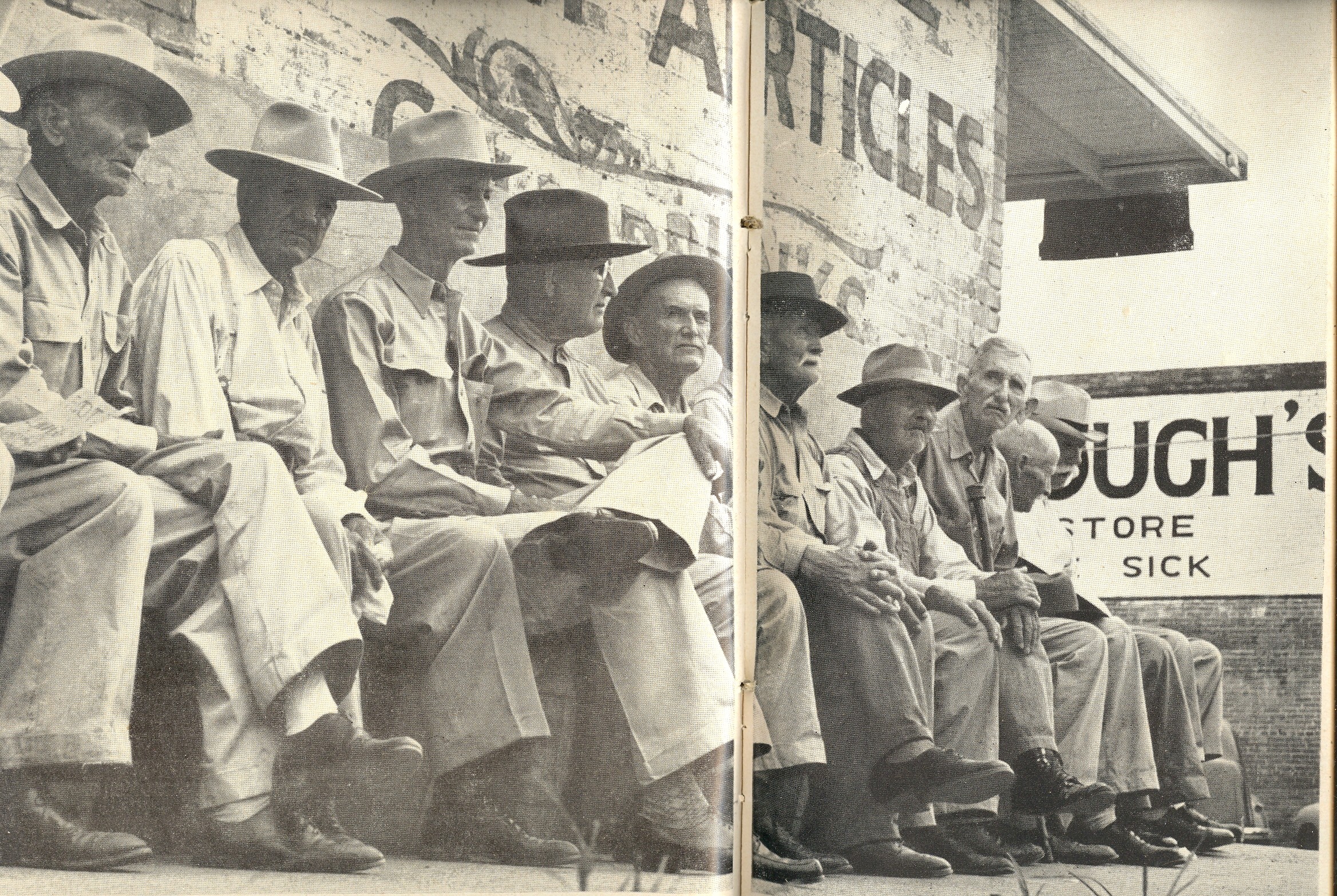
  • The Great Battle of Sitting and Spitting: Whitney, Texas, 1949.

    JF Ptak Science Books, LLC   Post 953 

    “Why,
    they must spit two or three gallons a day! 
    They ain’t died fast enough, these old men!”—Mrs. T.E. Bagley, Whitney, Texas,
    1949

    0--whitney 01

    This
    is a great small America story about sitting. Or old men sitting, and spitting.  Sitting and spitting on a long piece of thick
    timber outside a drug store, bricks and advertisements as back support, in
    Whitney, Texas (population ca. 1,500), in 1949. 
    I can just about hear them on a hot summer evening, right now, only
    probably I couldn’t—they’d probably’ve shut up until the stranger walked by,
    giving me their silence and keeping their confidences.  Or not. 
    Maybe I would’ve been invisible, and the whittled bits would’ve fallen to the street along with the tobacco juice, cusses and gossip, unabated.
    Maybe they surrounded themselves with a stained-moat of spittin’s across
    or close to which no one would stray. 

    It
    isn’t, I guess, so much a story about their sitting as it is a story about
    their not sitting, about how it came to be that their lumber was removed and
    the men forced to find another place to take in the sights and construct their
    great edifices of commentary and asides.0--whitneydetail 3 men 01
    The
    story appears in LIFE Magazine of 15 August 1949, and lays the whole drama out
    in two splash pages, with bare editorializing and some great photos.

    The
    story goes like this: “In 1922 D. (Doctor Dee) Scarborough,
    the druggist in Whitney,
    Texas
    , put
    up a bench outside his store, and immediately it became a loafing headquarters
    for the gaffers of .the Brazos
    River Valley
    .
    ‘Year after year they sat there looking like a jury of irritable terrapins,
    whittling, spitting and passing judgment on everything that passed. But finally
    reform caught up with them.” It caught up to them, even if everyone was wearing a collared shirt.
    0--whitney 02 sherrif

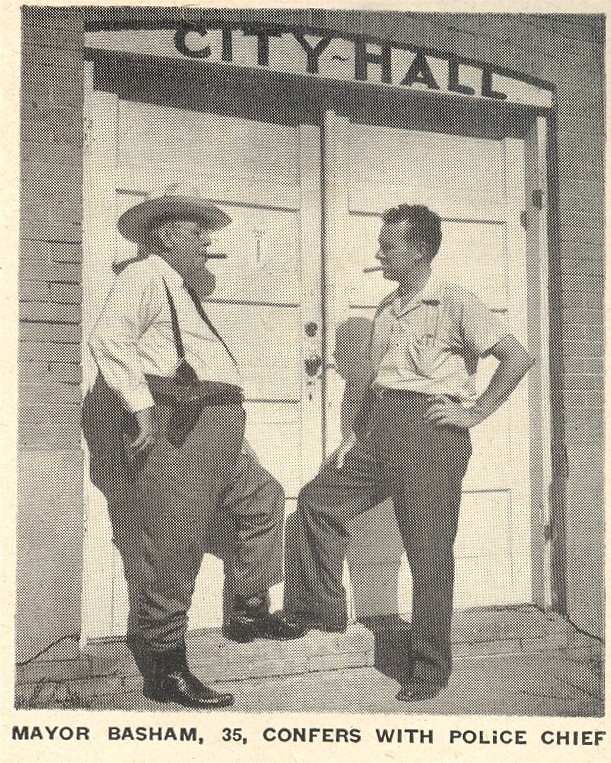
    It came to the mayor of Whitney, Frank Basham, to appease “a
    delegation of local housewives” who were fed up with the old men, and wanted
    the “unsightly bench” gone.  It was
    probably a lot more than the bench, as the quote above by Mrs. T.E. Bagley contends:

    “Why, they must spit two or three gallons a day!  They ain’t died fast enough, these old men!”.
     Perhaps a dozen old
    farmers/ranchers/cowboys sitting on a bench all day long spitting and watching
    the world go by wasn’t the most attractive thing for downtown Whitney.0--whitney 02 sherrif fat close up
    And
    so it came to pass that the lumber was removed, but not the men—they returned
    with nail barrels and took up residence, unabated, “sitting wrathfully” on the
    kegs.  The police then threatened to
    confiscate the kegs, and then the men: tensions flared, and a special election
    was held, a referendum on whether or not to restore the bench.
    0--whitney 03 old lady

    “I’ve
    never heard of such foolishness”, ‘cried 97-year-old Tom Rose, dean of the
    bench sitters’. “Come here in ’77 from Tennessee.
    Been married 76 years, and my wife ain’t whipped me yet.”

    The
    vote was held and the forces of bench-removal-evil were “horribly” beaten, the
    vote for favoring restoration coming in at a convincing 124 to 67.

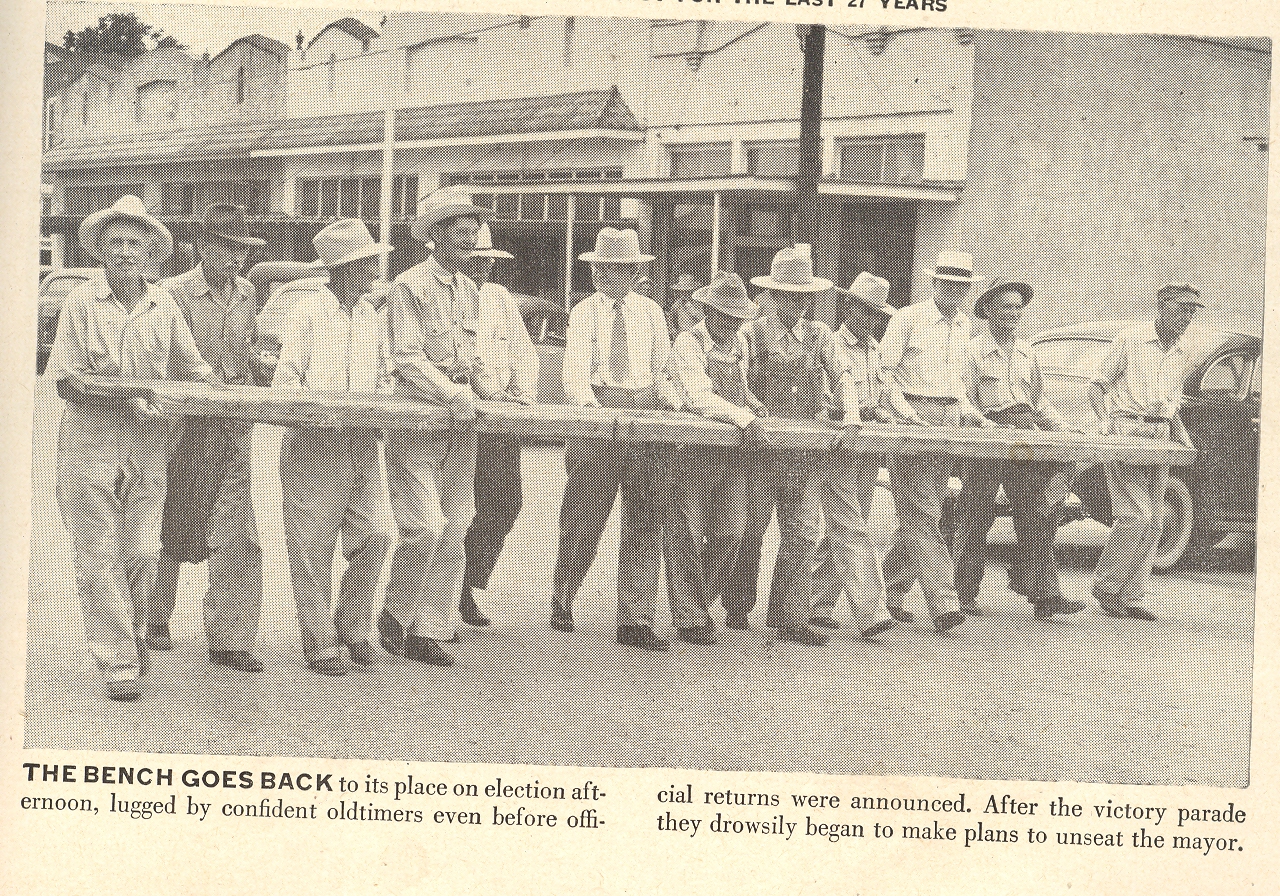
    The
    picture below shows the men “triumphantly” hauling the bench back into
    position, sitting back down once more, “loafing, whittling, spitting and
    passing judgment on everything that passed”.

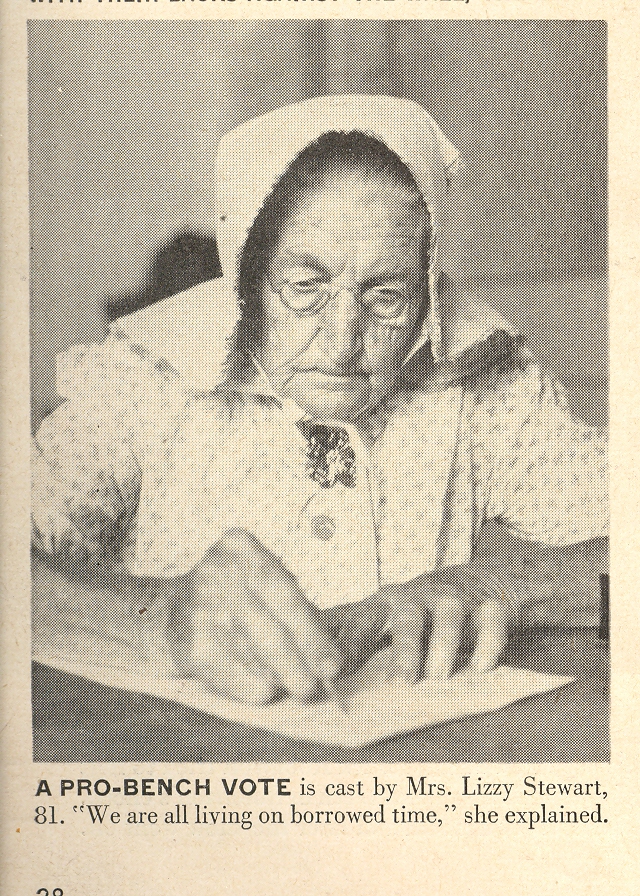
    As I said, this is a beautiful drama of high emotion, way-of-life small consequence played big, a heaping slice of American life witnessed in a small East Texas town just after World War II.  I would love to hear the voice of Mrs. Lizzy Smith (pictured here) as she was thinking-out-loud, casting her vote in this debate with a pencil no longer than a finger joint. (Where did that hat/shawl come from? Is it her mother’s? Mrs. Stewart’s  mother would’ve been born around 1840, which means that the sensibility for that head cover was at the very least of pioneer vintage, and possibly older. It looks like living history to me, a snapshot into something from the deep past, right there in the present. This doesn’t happen very often; but when it does, it is a celebration.)

    “We’re all living on borrowed time” she is quoted as saying, and I imagine that she voted for the men to be able to return to their bench to use what time they had left to holding up the walls of that pharmacy.  [I made a call to Whitney, this morning, and spoke with a gentleman about the Battle of the Bench.  He eloquently relayed the story, and the place that it holds in the town’s history, its small action carried into the future as a very large sensibility– I’m thankful for his insight.  I couldn’t resist asking what it was that was directly opposite the bench; what were these men looking at when they weren’t looking down.  “Not very much” he said. But the story isn’t in the looking, its in the talking; and as my wife Patti Digh finely points out, stories seem to be best told side-by-side.

    And
    in here is a great little play. Maybe not so little.
    0--whitney 03 carrying bench


  • Selling to “Simple” Women, 1939: “She’s Not Interested in Bloody Meat”

    Post 882 (revised; part of the History of Women Series; also see Women Meat Pioneers.)

    Women--bloody meat
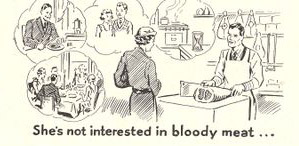
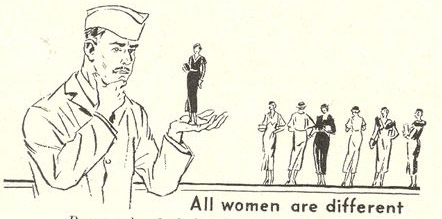
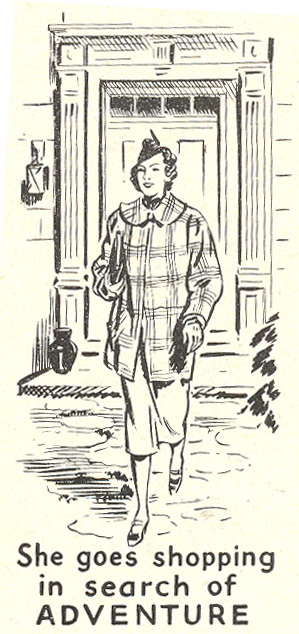
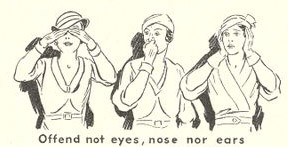
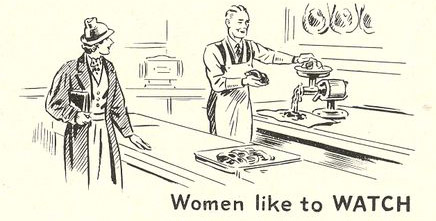
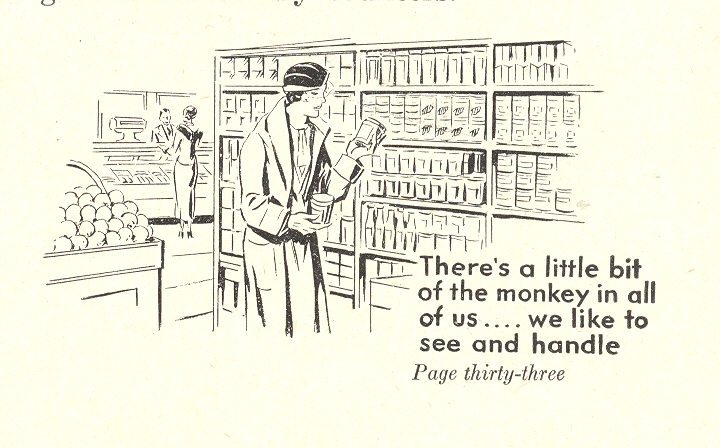
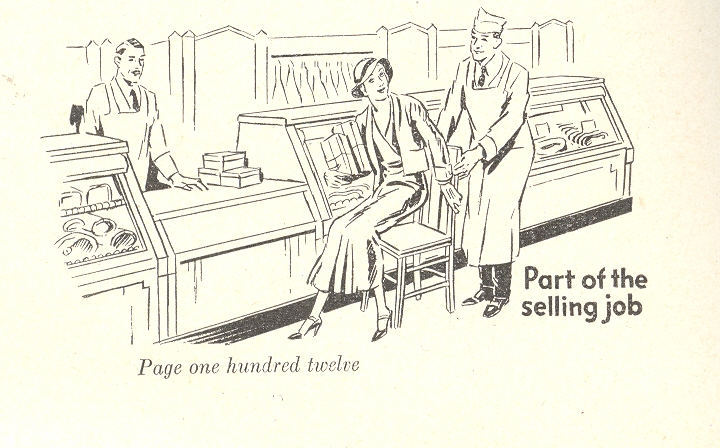
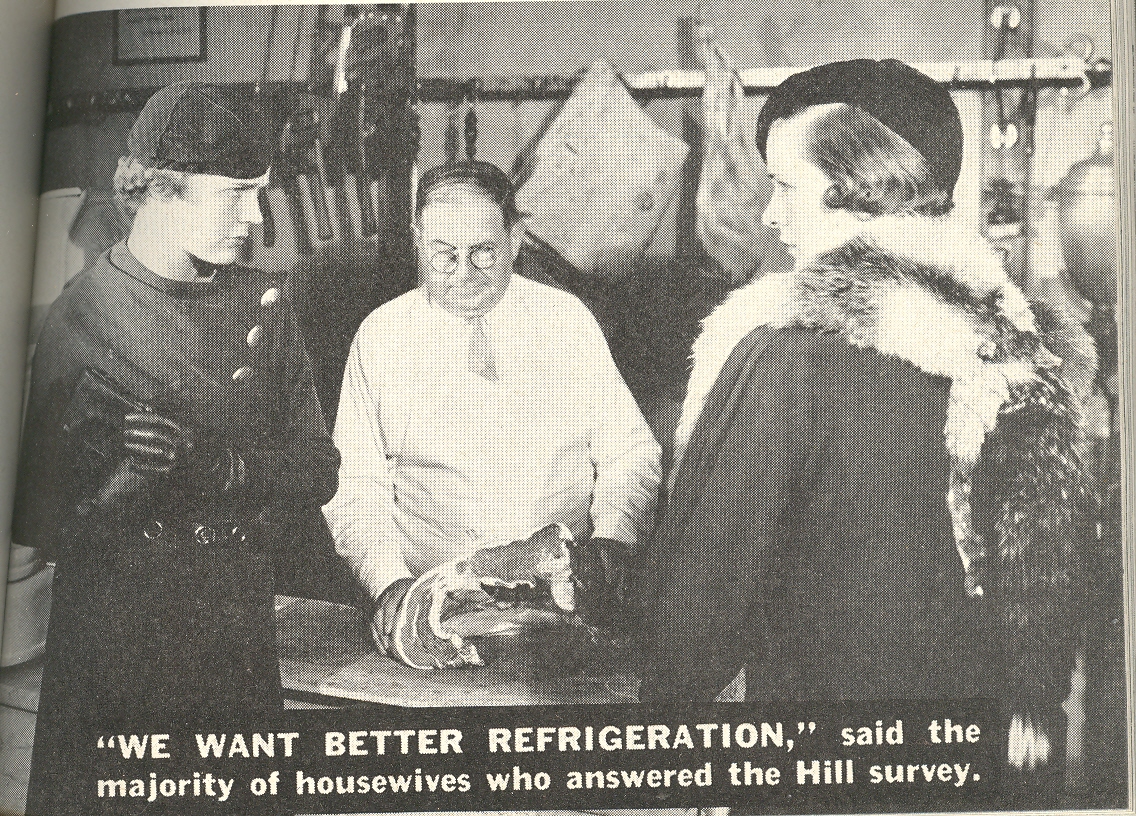
    These sales-happy customer relations images from a  modern food merchandising catalog (Modern Merchandising, 1939) come at an interesting time in the history of eating—or lesser yet, the history of buying food.   The pamphlet addresses the growing idea of the super market, a notion still new in the minds of consumers —it seemed as large to the consumer familiar with the 1920’s concept of a market as it seems tiny to the megamarket people of the present.The illustrations–all quite small, margin-inhabiting affairs, space killers, no bigger than 1×2 inches–are there to help the grocer deal with women customers and better understand “them”. 


    Women--all different 

    Women--shopping


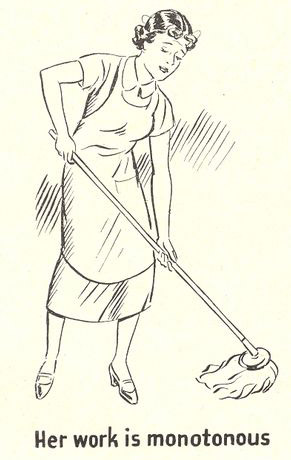
    I’ll address the interesting merchandising changes here in another post—right now I’d like to focus on the marginal drawings in the bottom corners of the text.  They may be small and offhanded–generally they are less than two square inches–but the messages they delivered, marginalia or not, were very strong.  Over and over again these bits demand the sub-class of women, emphasizing their trivial, ephemeral interests—bits of Nothing reinforcing large bits of Something.  

    Women--offend not eyes

    The messages beneath the images, collectively: “women judge meat by appearance:; “there a little bit of the monkey in all of us…we like to see and handle”; “offend not eyes , nose nor ears”; “part of the selling job”; “women like to WATCH”; “her work is monotonous”; “she goes shopping in search of adventure”; “she’s not interested in bloody meat”. They present cascading reactions: they’re somewhat funny to my eyes, and then uncomfortable, and outrageous, and then simply sad that their solemn pronouncements on the status of women would be so acceptable, their as-yet unidentified sexism and bitter “racism”a non-sequitur.

    Women--like to watch
    .

    + women monkey 


    + women sitting down 


    Women--her work


    + women want more refrig


  • Cutting Texas Exactly in Half: the Newspaper Frontier, 1880

    JF Ptak Science Books LLC  Post 676  Blog Bookstore

    The idea of the frontier in American history
    has been around for quite some time, made famous and mostly-invented (and
    closed) by Frederick Jackson Turner in 1893, and expanded, imagined, enticed,
    magnified, micro-analyzed, and   generally messed with ever since.  There have been all sorts of frontiers
    introduced into the study of the birth, expansion and filling-up of this
    country, from the very earliest colonial periods of Indian frontiers, “far-western”
    river frontiers of the Connecticut, Delaware, Hudson (!) and Susquehanna, to
    the Appalachian frontier of the early western reaches of the colonies, to the
    transportation frontier, the slavery frontier, the gold and mining frontier,
    the gun frontier and so on.  

    Blog==July 6=texas

    I’ve got another bit to add:  the newspaper frontier. 

    I just happened upon a volume of the US
    Census of 1880, with a special report by S.N.D. North entitled History and Present Condition of the
    Newspaper and Periodical Press of the
    United States…and published in
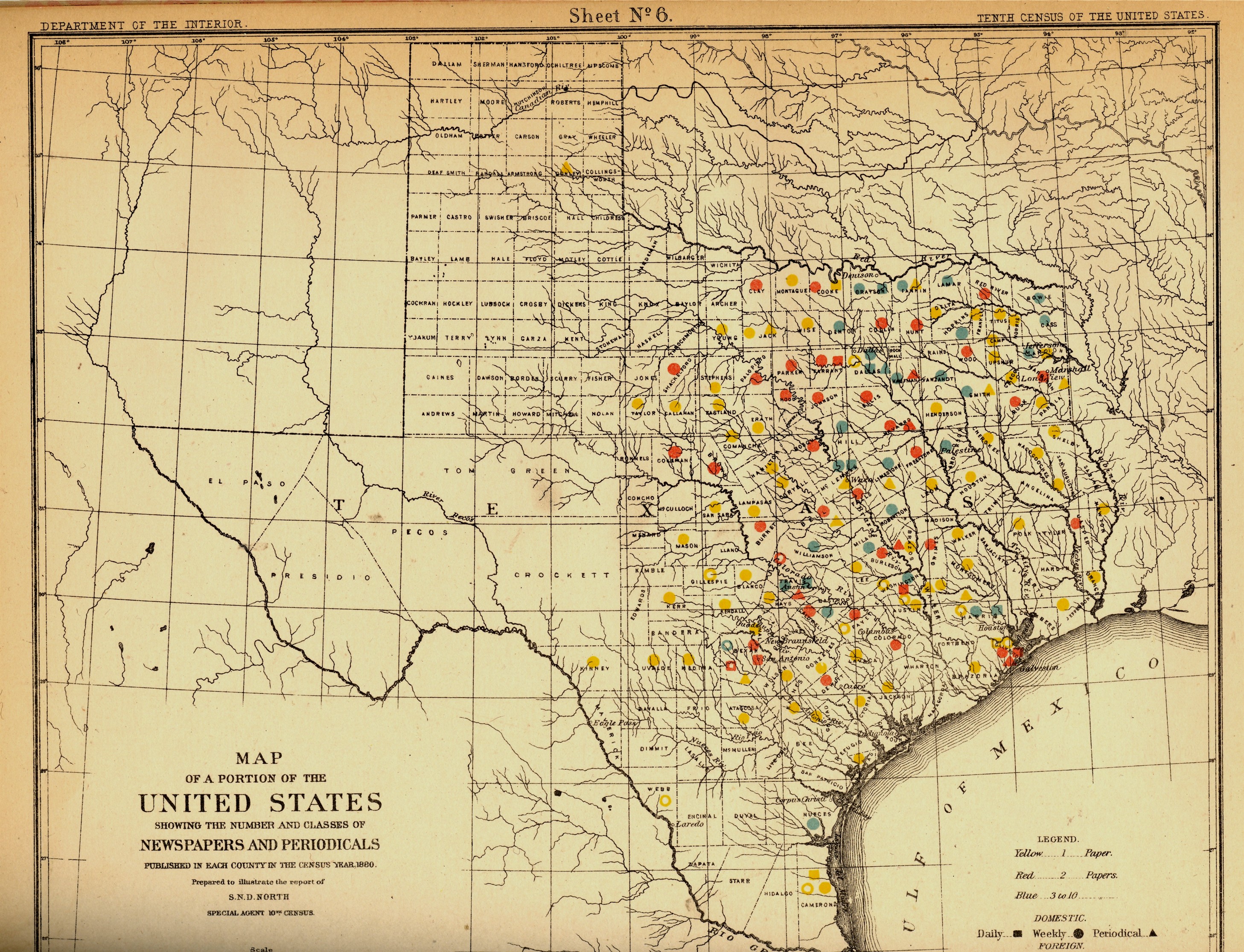
    1882.  What provoked me was the map of Texas newspapers for
    1880.  It very clearly, and like no other
    map of its kind, delineates a fantastic line/frontier between the
    Texas with newspapers and the Texas without newspapers. We see very
    clearly that the frontier of the newspaper stops fairly abruptly and
    wonderfully at the 100th meridian, with only two newspapers in all of
    the rest of Texas found beyond that point (and those just barely beyond the 100th.  And it’s the 100th meridian that
    mostly marks the vertical middle of the country, running through North and South
    Dakota, Kansas, Nebraska, the Texas/Oklahoma borders, and so into Texas—if you
    folded this map vertically in half it folds virtually on the 100th meridian.  An odd bit, it is, half of the country and
    then half of
    Texas. 

    Of course the population and easier-natural-resources
    are located east of this point, I know, but it is still quite a jolt to see the
    line of newspapers get drawn in the sand so vividly.  There isn’t anything else quite like this so
    far as the newspapers go, except, a little, for Florida, where the line gets
    drawn north and south, splitting the peninsula roughly in half, the southern
    part holding only five counties at this point.. 
    But it is a much more robust image for Texas given the number of
    newspapers that were being published—280 periodicals and newspapers for Texas
    versus 45 for Florida, with 11,374 in the entire country*—so that the
    difference between the have-newspapers and haven’t-newspapers in Texas is that
    much more vivid. 

    Texas needed more papers:  there were 1.5 million people living in the
    massive state in 1880, almost twice as many as there were in 1870, and almost
    half of what there would be there in 1900. 

    Florida was another story, entirely—even in 1880, which is only 130 years ago, there
    were only 270,000 people living in the entire state, not even close to half of
    the county population of Pinelas today.

    I’m just enjoying the surprise of the
    straight-edge frontier in Texas. 


    *Just for the sake of comparison, the number
    of periodicals per state for 1880 was as follows:
    Illinois,
    1017;
    New York, 1411; Pennsylvania,
    973;
    Ohio,  774; New
    Jersey
    215. 
    Also, oddly, the average circulation of the
    Florida and Texas papers was roughly the same: 1,282
    for
    Texas and 1306 for Florida (with an average for the country at
    4137). 


  • Lincoln and the Hanging of 38 Sioux, 1862

    JF Ptak Science Books LLC  Post 669 

    The great mystery was how those
    Indians were smuggled out of the grave, in spite of the watchfulness of those
    guards. 
     From the Autobiography of Theodore Edgar
    Parker

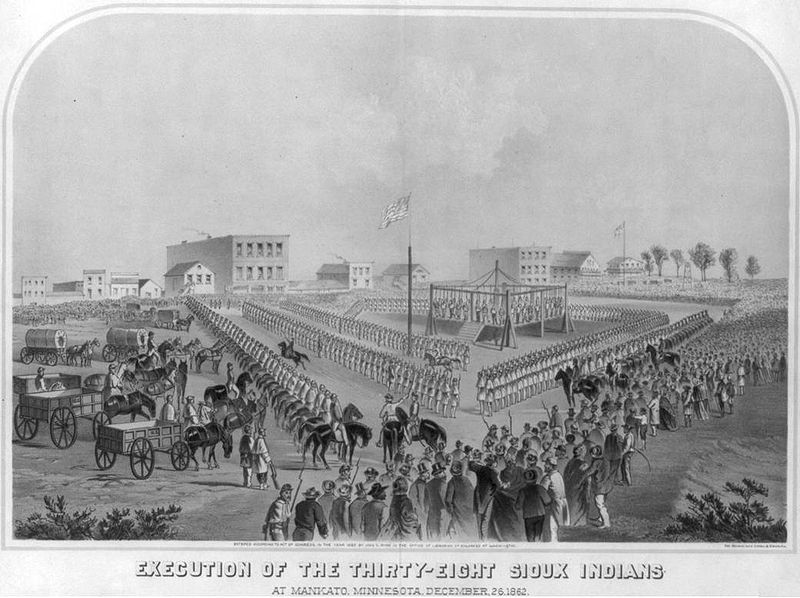
    One of the darkest moments of the spectacular Lincoln presidency came on 26 December 1862 when the president chose to not interfere with the vengeful hanging of 38 Santee
    Sioux just south of St. Paul, Minnesota.  This was the legal outcome of a short-fought “war”(known as “The Great Sioux Uprising”, “the Dakota War of 1862” and “Little Crow’s War”) 
    fought between U.S. soldiers and several Siouan tribes—a war brought on by the
    desperate tribes after suffering failed crops and the reneged treaty obligations
    (including a long-overdue payment of $1.4 million for the purchase of 24
    million acres, or about a nickel an acre) of their Great Father in D.C.  It was really more like a hunting expedition—the
    Indians, who had rampaged and taken hostages and so forth, were at the end of
    their endurance. The warriors were ill-equipped for almost anything, with little
    food and failing horses, and were positively no match for the federal troops who
    would hunt them down and destroy them. 

    Blog==july 1==mankato

    “Destroy” isn’t my choice for words—it is used over and over again in the
    communications between the field commander General Henry Sibley and the
    general in charge of the entire region, General John Pope.  It turns out that Pope was of the Tecumseh Sherman
    school of Indian relations, writing for the record

    “It
    is my purpose to utterly exterminate the Sioux. They are to be treated as
    maniacs or wild beasts, and by no means as people with whom treaties or compromise
    can be made.” 


  • San Francisco, 1906: Pictures within Pictures. The Great Earthquake and Fire.

    JF Ptak Science Books Post 623  Blog Bookstore

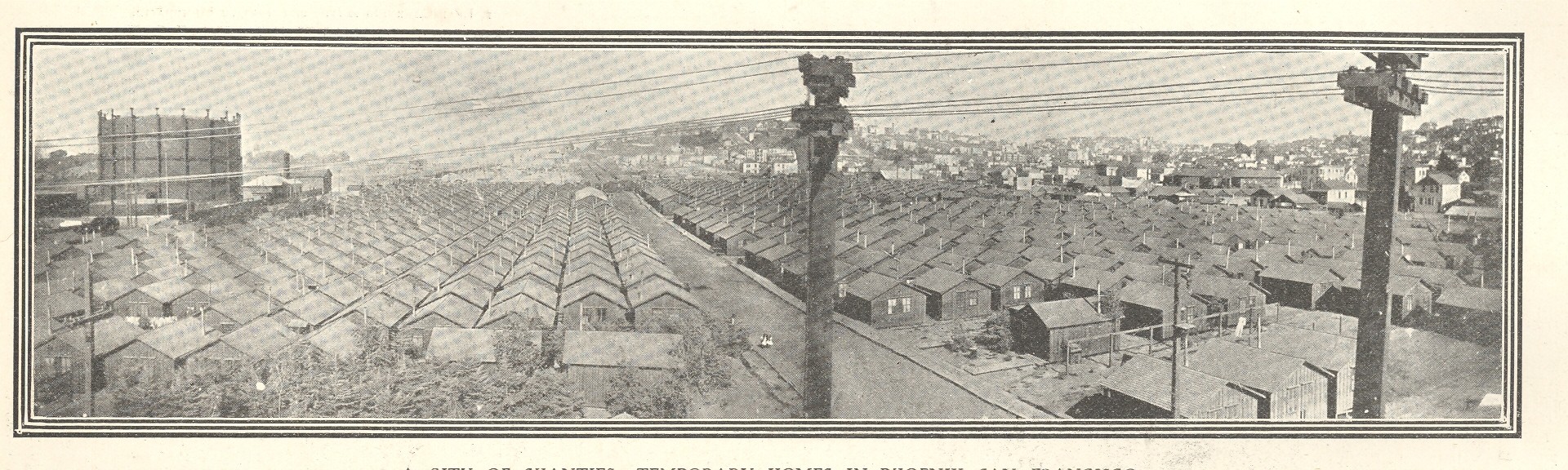
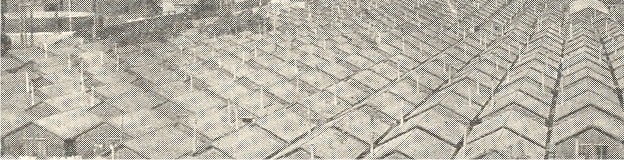
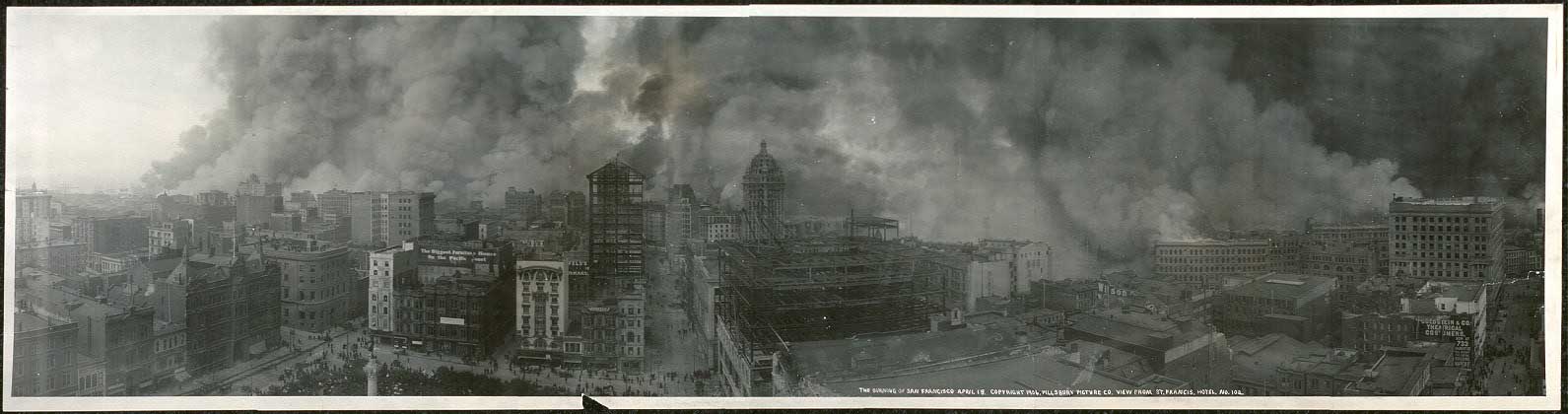
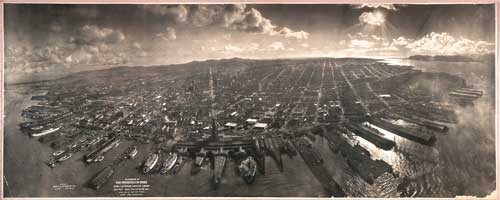
    The following two images were found in the Illustrated London News for 30 April 1906, and shows the “shanty town” built near the site of the major destruction in San Francisco following the earthquake of 18 April 1906.  Actually the tragedy is more appropriately called the “San Francisco Fire” of 1906, as the major destruction was caused by the raging fires set off by the earthquake.  The end result was 485 or so blocks of the city were destroyed leaving a quarter-million people homeless.  That this orderly development was referred to as a “shanty town” by a sniffy Brit reporter is appalling–unless of course the offending word meant something different 103 years ago.  It looks orderly and well-developed to me.  I also happened to notice two small girls in the detail–just about the only people in the picture.  They could still be alive….

    Blog--May 22--san fran

    Blog--May 22--san fran2

    Blog--May 22--san fran3


    The bottom two pictures were taken during the conflagration:  the first was the fire still raged, and the second was made days after the fire  from a  tethered balloon observation point. 

    I made myself 6-foot-long prints of these images; nearly every 2×2 inch area of the enlargement is a picture in itself.  These images are clickable and will expand if you click in the expanded version.  


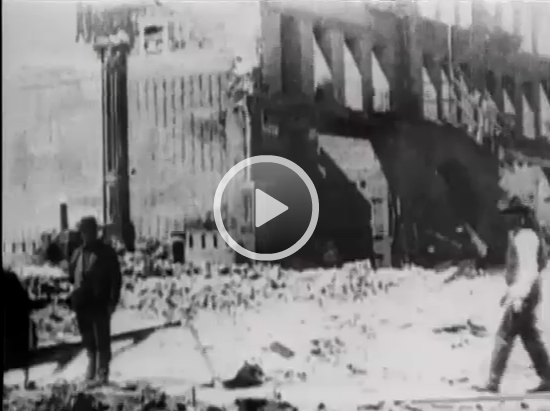
    For a contemporary film of the event via the Library of Congress, see here: http://loc.gov/item/00694425

    San Francisco film 1906 still

    SanfranciscoiburningT1

    SanFRansmallT2


    Panoramic images via the Library of Congress Prints and Photographs Division, see the following link for these and a number of others:  http://loc.gov/search/?in=&q=panorama+san+francisco+fire&new=true&st=

    A few eyewitness reports, from the Eyewitnesstohistory.com website: 

    “Of a sudden we had found ourselves staggering and reeling. It was as if the earth was slipping gently from under our feet. Then came the sickening swaying of the earth that threw us flat upon our faces. We struggled in the street. We could not get on our feet. Then it seemed as though my head were split with the roar that crashed into my ears. Big buildings were crumbling as one might crush a biscuit in one’s hand. Ahead of me a great cornice crushed a man as if he were a maggot – a laborer in overalls on his way to the Union Iron Works with a dinner pail on his arm.” (P. Barrett).

    “When the fire caught the Windsor Hotel at Fifth and Market Streets there were three men on the roof, and it was impossible to get them down. Rather than see the crazed men fall in with the roof and be roasted alive the military officer directed his men to shoot them, which they did in the presence of 5,000 people.” (Max Fast).

    “The most terrible thing I saw was the futile struggle of a policeman and others to rescue a man who was pinned down in burning wreckage. The helpless man watched it in silence till the fire began burning his feet. Then he screamed and begged to be killed. The policeman took his name and address and shot him through the head.” (Adolphus Busch).


  • Living Past an Iconographic Prime: Modernity Welcomes the Past

    JF Ptak Science Books LLC  Post 446

    Roybean
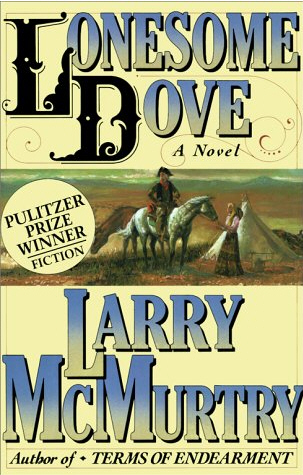
    Woodrow Call, the
    major and surviving figure in the four volumes of Larry McMurtry’s  Great
    American Novel/tetraology,  Lonesome Dove, is in his early seventies (about 73 years) old
    when we see him in the premier volume  Streets of Laredo.  (He is born ca. 1823 and is approximately 20
    years old when he first teams up with Gus McCrae in the series’ premier installment, Dead Mans Walk (which takes
    place ca. 1843).  Although he seems to be
    an old man who is not a part of the times in which he lived, he is far from
    being without company.  It is easy to
    think of frontier legends like Pat Garrett and Charles Goodnight as being a
    part of ancient modern American history—and they were, temporally, but not
    physically.  Even though Pat Garrett
    kills Billy the Kid in 1882, Garrett lives until 1908;  Charley Goodnight helps begin the concept of
    the cattle drive in Texas in 1860, and then lives another 69 years.  Bat Masterson and Wyatt Earp became famous in
    the 1870’s, and both lived until what seems to be an incongruously close
    time—the 1920’s. It just seems incredible to me that figures like this survived nearly into the lifetime of my father.

    LarryMcMurtry_LonesomeDove

    The frontier legends
    below all transcended their place in history by many decades, and brought the
    idea of a living history just a little closer to comprehension; their
    survivability brings to bear  how close
    the grand epoch of the frontier is to America, even in 2008.


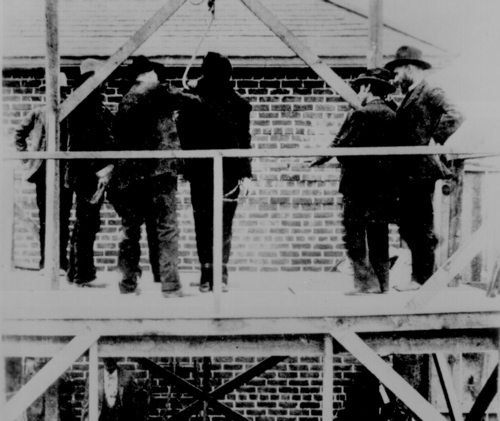
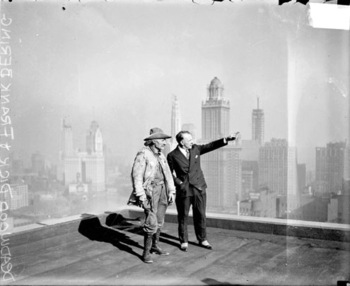
    Hanging Judge Isaac Parker, (b. 1834) dies 1896Hanging500

    Shanghai Peirce, (b. 1834), dies in 1900.

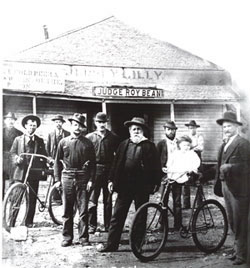
    Judge Roy Bean (b. 1825) lives until 1903

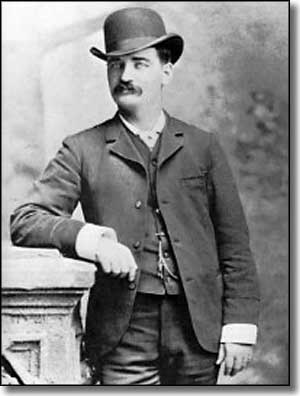
    Pat Garrett (b. 1850), dies in 1908Batmasterson1879

    Billy Dixon, 1850-1913

    George Bent (Fort), 1843-1918

    Bat Masterson, 1853-1921

    Thomas Moran, the great painter and the illuminist who
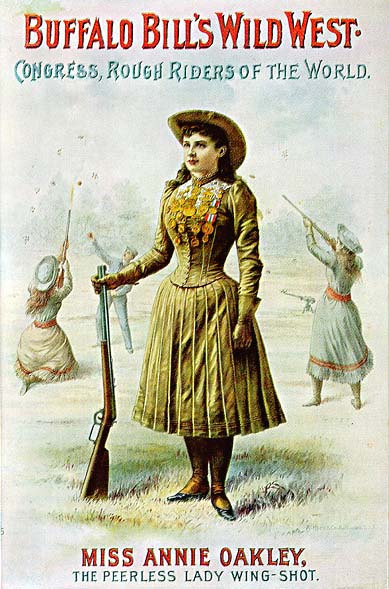
    brought the West back East before photography, lived 90 years to 1826Annie-Oakley-peerless-wing-shot
    .

     Annie Oakley (the”peerless Lady wing-shot”), born just before the war,  height.

    Big Tree (Adoeettee) Kiowa Chief, born 1845, lives until 1929.

    Black Elk, the great chief, (“Black Elk Speaks”),
    was born in 1863 and died in 1950.


  • Another Debate: Lincoln Douglas Debate Wordle Word Cloud

    JF Ptak Science Books 

    Listening tonight to the McCain/Obama debate (nicely moderated by Bob Schieffer, Old School) reminds me of other political debates.  This one at least was not terrible (Dan Quayle, Sarah Palin [which is Latin for what exactly?], poor Jerry Ford and the Poland freedom question, and so on) and at least as good as most of these things have been during my lifetime (Kennedy Nixon).  [Click on the word cloud to enlarge.]
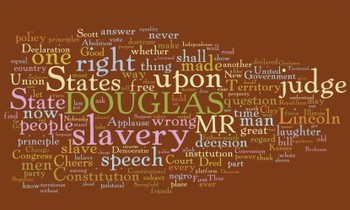
    Wordlelincoln_douglas

    It does put me in a longing piece of mind for Lincoln Douglas 1858, mainly because tonight’s debate was reasonably glib if not long in logic; Lincoln Douglas had it all, especially the logic bit.  If you read the 200,000-odd words of that six-debate series, (taking place from August through November 1858, located mainly around the perimeter of their battleground state, Illinois) you can’t help but be impressed by how long and deep and considered their memories and logical structures were as the two men fought over the morality and logical structure of slavery.  Of course they weren’t fighting over the prime 15 second spot the next day; their debate was covered in full in newspapers (on the front page even!), their constituents taking their time to read the exchanges, and then have the luxury of time to think about what had been said.

    So above is a word cloud brought to you via WORDLE.  There are a few repetitive words that were just part of the structure of the debate verbiage:  “Mr.”, “laughter”, “cheers” are the main examples.  Otherwise you can pretty well tell that t he broadest, most often used words in the debate reflected the slavery issue, though it doesn’t relate the sentiments to the contestants.  (It would be very interesting for someone to do two wordles, one for each man.)  But the overall patina of the debate was overwhelmingly slavery-related.  I’d particularly like to see the Douglas end of the debate, as he was pretty problematic on the slavery issue, and I’m not sure at all (even given where he was from) that the man actually was anti-slavery–he argued in the debates for instance that the founding fathers didn’t extend their thoughts on the Constitution to encompass minorities.   Or at least anti-slavery before the beginning of the war, as he was outspoken on what he saw was the “criminal” activity of the Southern secessionist states. But he was dead almost right away after the war started. 

    Douglas won the Senate seat but Lincoln won attention of the country; perhaps it was due to this that Lincoln defeated Douglas and the other two Democrats in such a spectacular (electoral) fashion in their rematch presidential race of 1860.  (Lincoln still trumps the badly divided Dems even if you cobbled together the votes of Douglas, Breckenridge and Bell.)  In any event, if you read through the Lincoln/Douglas debates. you can see right away that there was some pretty strong thinking going on…


  • A Short Note on Kit Carson: Heroic Beginning and His role in the Murder of the Navajos

    JF Ptak Science Books   Post 310


    Kit Carson (1809-1868) was an iconic American frontiersman and guide, a brevetted general as a result of soldiering in two wars, and lived with extreme fame for twenty-five years. He explored and was a guide through most of the western states and territories, and served a very significant role as a scout for the first three (1843-1846) of J.C. Fremont’s enormously important expeditions across the west, covering wide areas of the western country along the Oregon trail, across the Great Basin, through the Rockies and through the arid regions. As a guide with Stephen W. Kearney (1846-1848)

    Navajo

    At the end of the war, Carson returned to  New Mexico and took up ranching. By 1853, he and his partner were able to drive a large flock of sheep to California, where gold rush prices paid them a handsome profit. This same year  Carson was appointed federal Indian agent for Northern New Mexico, a post he held until the Civil War imposed new duties on him in 1861. Carson played a prominent and memorable role in the Civil War in New Mexico  He helped organize the New Mexico volunteer infantry, which saw action at Valverde in 1862. Most of his military actions, however, were directed against the Navajo Indians, many of whom had refused to be confined upon a distant reservation set up by the government. Carson’s eroding and toxic use of sheer military might and starvation tactics eventually brought the Navajos to submission, and he was not beyond bearing shock-and-awe techniques against women, children and the elderly. He began a military campaign against the Navajo Indians and their supposed impregnable Masada in the gorgeous Canyon de Chelly in the vicinity of Four Corners, Arizona. After revealing the myth of this fortress he waged a long and bitter campaign to bring the Indians—under any of (their) cost—to a reservation at Bosque Redondo, 200 miles away. After surrender, the Navajos, under Carson, were marched to their new lands, with fully one third of the 8,000 of their number dying along the way, succumbing to cold, malnutrition, incident raids by rival tribes, exhaustion and sheer brutality by the U.S.troops, who certainly treated the Indians as less than human. The experiment at Bosque Redondo was a total failure, with the Navajos suffering ever greatly at the hand its General Carleton, the imperious and misguided post commander. The Navajos were returned to their original lands 1300 days and 3000 lives later.

    Carson would survive this debacle by a few years, dying on a pile of buffalo robes at his doctor’s house, just a month after his wife succumbed to complications of childbirth. He was 58, and lived a little ten years too long.


  • The Geometry of American Western Expansion: Lines in the Sand, Lines in the Air

    JF Ptak Science Books LLC   Post 181

    Lines

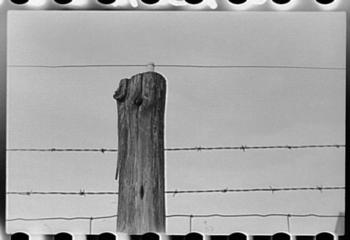
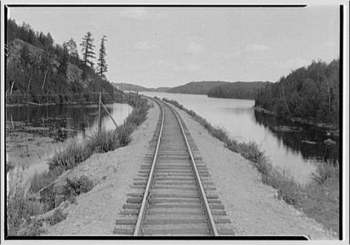
    The story of the West getting filled up in the 1870s and 1880’s is a story of lines—railroad track, telegraph wires, barbed wire fences, and words on a page; big changes from disparate but related areas in technology and legislation, but when you looked at them from a distance and in the proper perspective, they all looked exactly  the same.

    The greatest of these was probably the invention of barbed wire in 1873, with Joseph Glidden, Jacob Haish and Isaac Elwood all managing to independently come upon the idea at about the same time.  What barbed wire brought to the West was control and settlement.  Prior to barbed wire there was open range grazing of cattle and extensive cattle drives, mainly because there was no fencing. There were also few farms due to this sort of grazing—the only thing a farm was here was in the way, and there was no recourse for the farmer to protect his lands from a grazing herd.  There was no fencing because there were no materials for the fence.  Fencing was made almost entirely with lumber and stone, and on the treeless plains and the vast non-New England tracts of land, it was simply an impossible task.  The introduction of barbed wire changed all of this very quickly, with thousands of miles of new fencing strung in the 1870’s alone.  Fencing meant control, restriction of the use of land, of access to water, and to a way of life.  It also meant that the farmer was now free to make a claim at a way of life on the plains, beginning a torrent of settlement and farms.

    Barbed_wire_2

    Settlement was enormously aided in this period by three major acts of legislation over a sixteen year period, the first of which was the Homestead Act of 1862. This was a revolutionary concept, legislated in 1358 words, effectively turning over 270 million acres, or about 8 percent of the country, of public lands to private citizens (“actual settlers of the public domain”).  A claim could be made for a farm of 160 acres, for free, provided a structure was built on the land and it was maintained for five years.  One could buy the parcel outright for $1.25 an acre as well.   The Desert Land Act of 1877 opened drier lands, selling 640 acres at $1.25 an acre with three years to pay, so long as the land was irrigated by the end of the three years.  Land that was deemed “unfit for farming” was sold to those who might want to “timber and stone” (logging and mining) upon the land with the Timber and Land Act of 1878. The act was used by speculators who were able to get great expanses declared “unfit for farming” allowing them to increase their land holdings at minimal expense.  The Homestead Act alone accounted for the creation of almost 400,000 farms in the West by 1890.

    Rr

    Settlement was dramatically increased by the promise of mineral wealth—not necessarily just by the introduction of miners, but by securing the lands from and removing its Indian owners.  The Custer expedition into the Black Hills in 1873, for example, reported some hope for finding gold in the sacred mountains of the Sioux. Thousands of miners responded to possibility of wealth, and Custer was again dispatched to secure safety for them in the restricted lands.  This in turn lead to more settlers and coincidentally to the debacle of the Little Big Horn, which was the beginning of the end of the Siouian control over vast amounts of land.  From prospectors to protection to conflict, ultimately making land more available for more people. 

    The spread of the railroads was also an enormous settlement factor, with the number of miles of track being laid in Texas and the Great Plains doubling in just 5 years.  Not only could you get West more easily, and quickly, and with less pain and suffering, but you could also be much more easily re-supplied.  Telegraph wires tripled, making it easier to control events:  and this means from being able to respond to Indian attacks more quickly to ordering boxes of nails, or beer, or shipments of newly-invented canned food. 


  • The Advancing Frontier and the Increase in Bloody Names of Literary Heroes

    JF Ptak Science Books LLC  Post  180

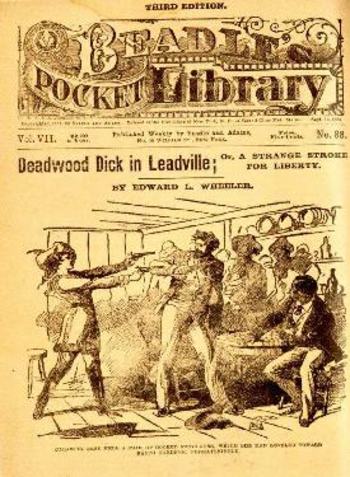
    Deadwood
    The names of the American Western hero in the first half of the 19th century were, largely, more common, even a little reserved, underlying their more careful, thoughtful nature:  David, Leatherstocking, Natty, Jack, Hicks, Kit, and even Nate (later “Bloody Nate” ), all from come, famously, from the 1830’s-1860’s.  They were replaced in the late 1860’s through the end of the century with folks whose names told much more of their story without the reader having to open the book:  Deadshot Dave, Deadwood Dick, Daring Dick the Apache Killer,  Roaring Ralph Rockwood the Reckless Ranger, Calamity Jane, Edna the Girl Brigand and Hurricane Nell all appeared in the endless pages of the Dime-Novel, cranked out at furious rates for 40 years, changing the literary landscape of the West forever.  The House of Beadle and Adams were that major force that produced this new variety of Western Hero, stripping away, for the most part, the philosophical reticence and even careful adventure of the earlier prototypes, leaving mostly bloody escapism and thrills.  I wonder if this had anything to do with the familiarity of the event, or the ending of the Civil War, or the

    Cowboy_rooftopending of the last Native American resistance, or the more common nature of the westward expansion history, or even the possible thirst for more adventure once the frontier had been declared official closed by Frederick Jackson Turner in 1892. 
    A Very Short Look at American Western Literature:

    Cowboy
    1833.  David Crockett, Sketches and Eccentricities of Colonel David Crockett.  There were several books about Crockett’s adventures published in the early 1830’s; after his death at the Alamo in 1836 Crockett was lionized, and became the stuff of truth, lore and legend for 150 years.

    1837.  Nathan Slaughter, “Bloody Nate”, the hero of Robert Montgomery Bird’s Nick of the Woods, a hugely popular work enjoyed a large print run encompassing at least 24 American editions. 

    1841.  First appearance of James Fenimore Cooper’s Natty Bumpo in The Deerslayer. 

    1848+  Charles Webber, Texas ranger and passed minister, wrote (with difficulty) a number of westerns praised as authentic, including Jack Long, or a Shot in the Eye (1846) and Old Hicks the Guide (1848).

    1850’s.  Emerson Bennett, League of the Miamis, and The Prairie Flower

    1850’s. Capt Mayne Reid busily wrote 90 books, including 12 Westerns from The Scalp Hunter (1851) to the Free Lances (1884) with 10 more Westerns in between. 

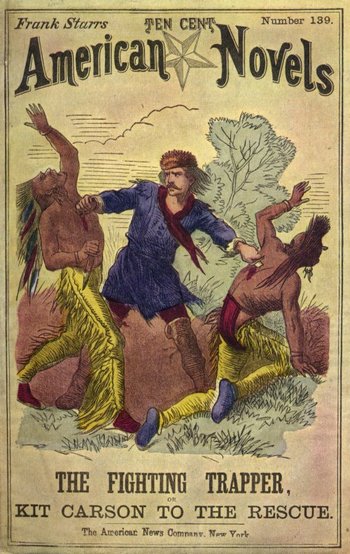
    Western_nameskit_carson
    1850’s. Kit Caron, real-life soldier and adventurer and mass murderer whose exploits were explored and exploded by Dr. DeWitt Peters (for one) in such works as The Life and Adventures of Kit Carson, Nestor of the Rocky Mountains (1858). (Yes Carson was important and yes he did great stuff with Kearny and Stinky Fremont, but it all gets covered over liked boiled glue with his so-called “campaign” against the Navajo Indians and their forced death march to Bosque Redondo.  I think he died a miserable, stupid death with a Sam Houston hole in his belly on the floor of an army barracks.  Good riddance.)

    1870.  Bret Harte’s Luck of the Roaring Camp.

    1871.  Mark Twain Roughing It.

    1885.  T. Roosevelt Hunting Trips of a Ranchman  TR was among the earliest of cowboys and among the top percentage of teh top percent of the most privileged cowboys.  Still in all he was a good writer, and one can’t fault him for having money. 

    1887.  Colonel Prentiss Ingraham, Buck Taylor, King of the Cowboys; or, Raiders and Rangers.  Ingraham may well have written over 600 novels (including200 Buffalo Bill stories) under his own name and under the pseudonyms of Dr. Noel Dunbar, Dangerfield Burr, Major Henry B. Stoddard, Colonel Leon Lafitte, Frank Powell, Harry Dennies Perry, Midshipman Tom W. Hall, and Lieut. Preston Graham.  This was a busy man.

    1897.  Alfred Henry Lewis The Old Cattleman

    1907. O’Henry Heart of the West