A Daily History of Holes, Dots, Lines, Science, History, Math, Physics, Art, the Unintentional Absurd, Architecture, Maps, Data Visualization, Blank and Missing Things, and so on. |1.6 million words, 7500 images, 4.9 million hits| Press & appearances in The Times, Le Figaro, Mensa, The Economist, The Guardian, Discovery News, Slate, Le Monde, Sci American Blogs, Le Pont, and many other places… 5000+ total posts since 2008.

Author: JF Ptak

  • POWs in WWI (1916-1918)

    JF Ptak Science Books  Post 2789

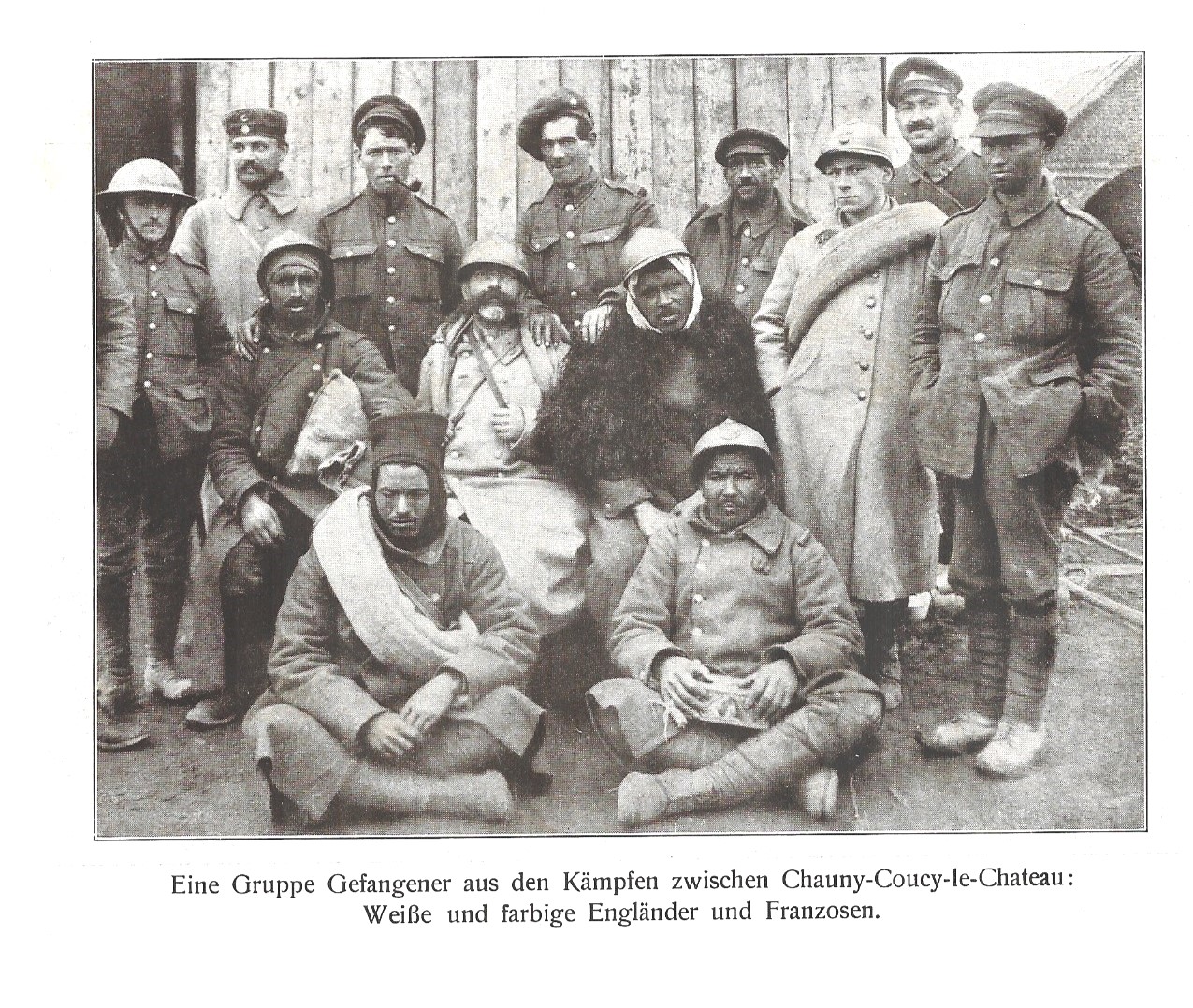
    This extraordinary photograph shows prisoners of war taken by the German army near Chauny-Coucy-le-Chateau and published in the unblinking photographic history of WWI by Hermann Rex called Der Weltkrieg in Seiner Rauhen Wirklichtkeit (printed by Herman Rutz in Oberammergau eight years after the end of the war). It is unusual to my experience to see a work like this with such an unofficial character to it. During the War the U.S. population was mostly given approved photos of the conflict, passed through censors and for the large part made by photographic pools (with ready-made captions for publication). The German side of photos in the popular press seems to me to have been grittier–this is hardly an academic appraisal, though I have leafed through every page of the war years for several journals like The Illustrated London News and Illustrirte Zeitung (Leipzig), and that is the general sense that I take away with me. The work by Herr Rex is about 600pp long, and if you work your way through the whole thing in an hour, it is a somewhat exhausting experience. Unlike most work that was done during the war, this book has a definite you-are-there quality to it, and is in many parts aggressively observational.

    The 13 soldiers were British and French including several French Colonial soldiers (differentiated by Rex as “weisse und farbige “)–they represent  .0000016% of the 8,000,000 prisoners taken on all sides during the course of the war):
    WWI Photos Rex prisoner

    Also, here’s the very striking cover for this book–its one you won’t soon forget:

    WWI Rex cover (1)

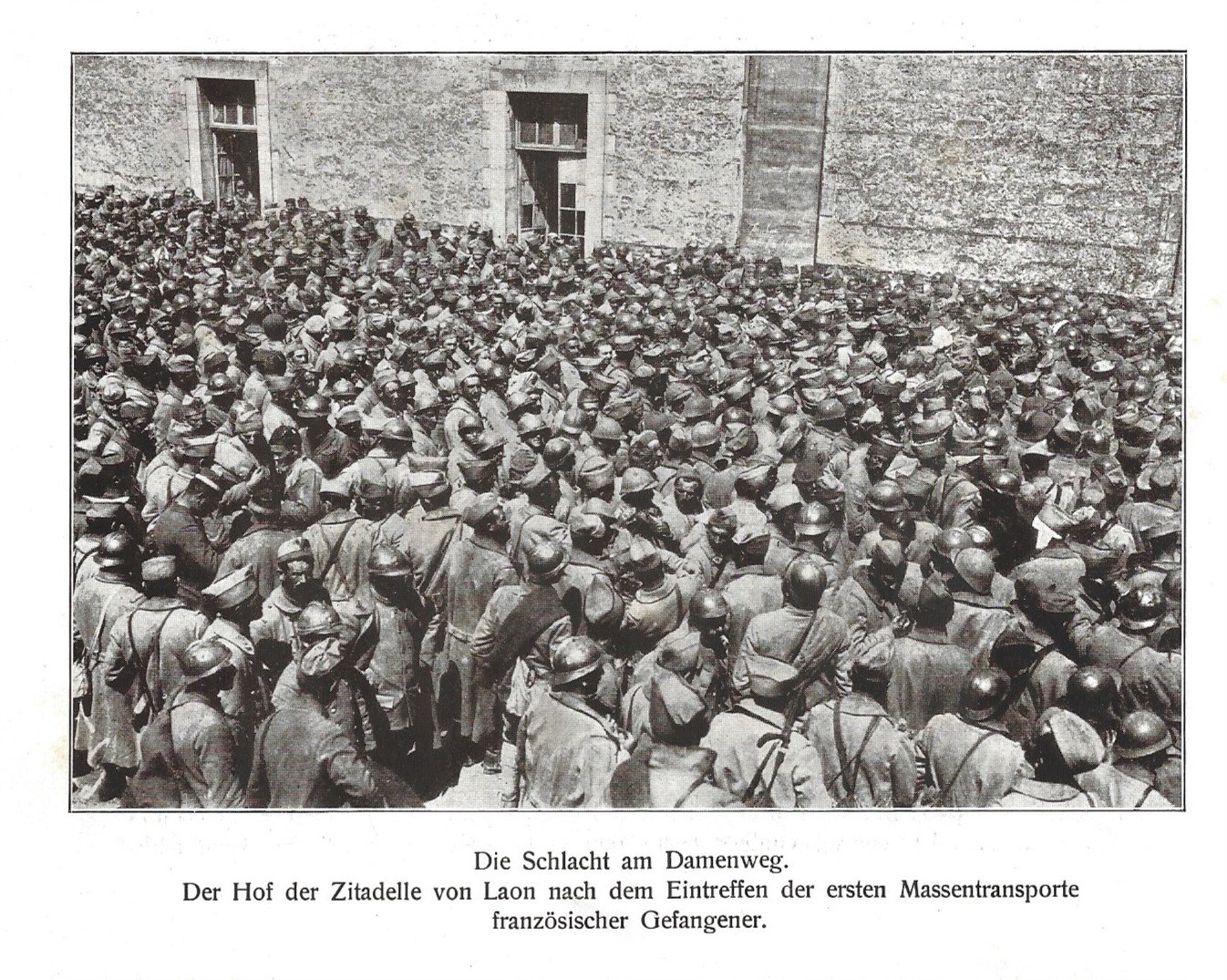
    Another image from the same source shows the movement of a large number of French prisoners–another photo of dense humanity:
    WWI Photos rex prisoners mass French

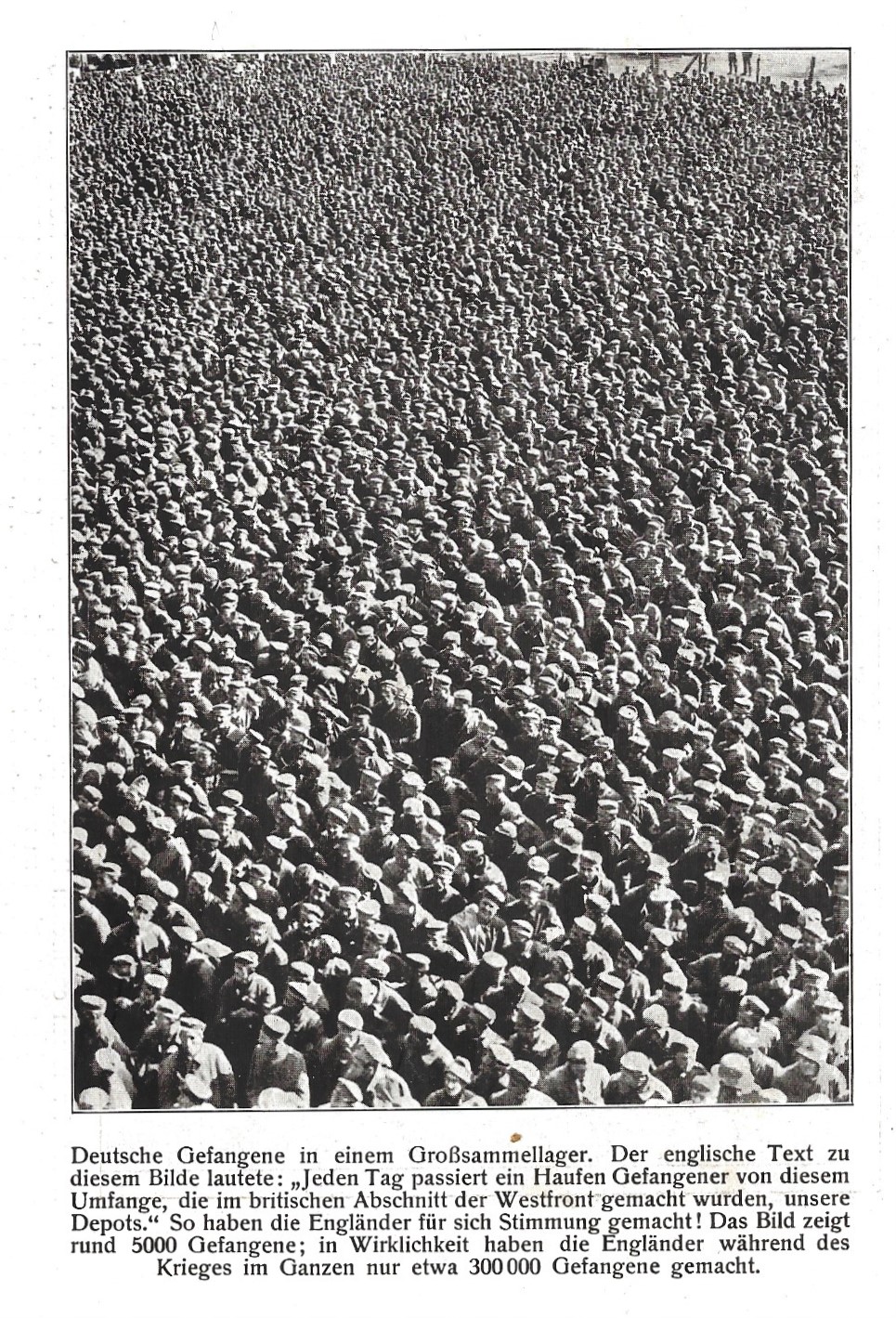
    And this extraordinary photo showing 5,000 German prisoners (or .000625% of the total number of POWs 1914-1918): 
    WWI Photos Rex German prisoners

    This is not a war-as-glorious sort of book, though I’m not so sure that it is necessarily/overtly an anti-war Johnny Got his Gun book, either; at least not so much as Ernst Friedrich’s definitely anti-war book Krieg dem Krieg! (“War Against War!”) that appeared on the 10th anniversary of the beginning of the war and which was badly received by Weimar officialdom. The 200 or so photos in the Friedrich book are exactly those that would never have been published during the war, especially in the ending sequence that shows very disturbing facial wounds. The overall effect of Rex’s book–not nearly at the same level of Friedrich’s–is very effective, and definitely does not fill you with the spirit to sit down and wrap up your leggings to join your comrades in a trench. 
    ·Posted by :

    ·in:

    —

  • The Occassionally Poet Nature of the Names of the Dunkirk Small Boat Fleet (1940)

    JF Ptak Science Books   Quick Post

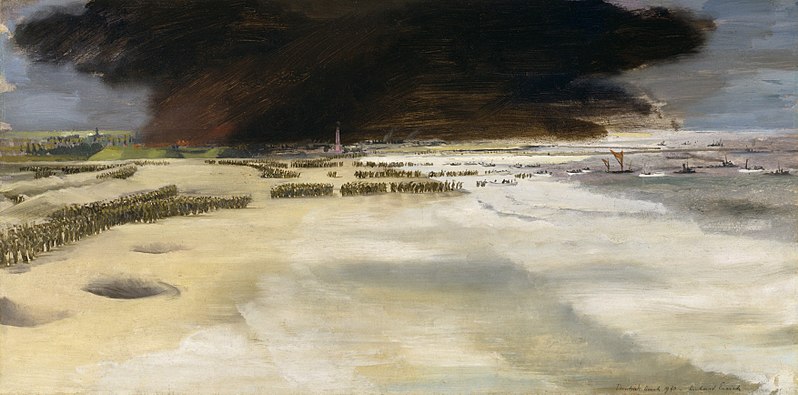
    I don’t know why, but I think that I’ve never looked at any lists of the boats and small ships used in Operation Dynamo, the rescue/evacuation efforts of Britain to relieve the surrounded forces at Dunkirk. All together there were about 850 boats/ships put into service for the 28 May-4 June 1940 action—more than 200 were lost, though through this extraordinary effort more than 330,000 troops were saved from capture or annihilation, taking them from the beaches and harbor and mole, though there were something on the order of 70,000 troops who were killed there. Additionally one must never forget that something like 40,000 French troops stayed behind to protect the very considerable front at Dunkirk, which ranged from that city to Nieuport, some 25 miles long and 10 miles deep.

    Dunkirk beaches 1940

    • “Dunkirk Beaches, 1940”, Richard Ernst Eurich. From Wikicommons, from the original at the Imperial War Museum. 

    In any event the great retreat and resurrection from Dunkirk is told in many places and I’m not going to tell it here—I’m just stopping by to have a look at some of the names of the boats that made way from Ramsgate in those eight days. Some of the names are straight-away prophetic or specifically appropriate (like the Inspiration and Endeavour); others have a longer and deep connection (Papillon, New Britannica); some are antithetical (Lazy Days, Omega) while others are simply charming (Pug, Jeff ).  I simply wanted to reflect on these names of heroic boats, with heroic crews, performing heroic duties, and saving heroic soldiers who would be able to go on and stand to an heroic fight. 

    Following list of boats taken from a much longer list at the website for the Association of Dunkirk Little Ships, here: http://www.adls.org.uk/t1/:

    Abdy Beauclerk, Aberdonia, Alusia, Aquabelle

    Beatrice Maud, Bessie, Bluebird of Chelsea, Bounty, Brown Owl;


    ·Posted by :

    ·in:


  • On the Speeds of Things (1883)

    JF Ptak Science Books  Quick Post

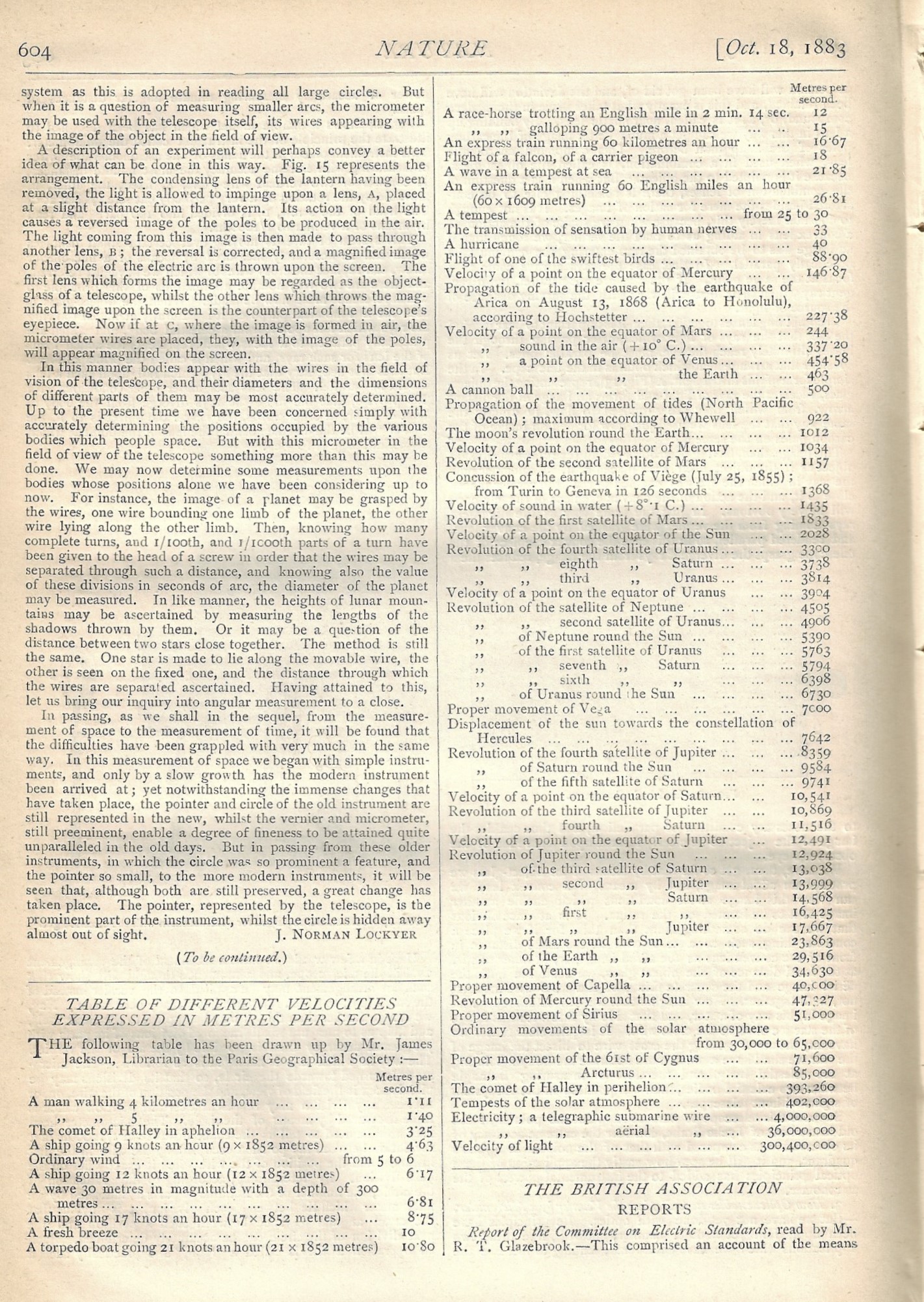
    Here’s an interesting collection of bits that I just came across in the October 18, 1883 issue of Nature, showing the speed of things.  Some of the examples are quite charming, showing the velocities for an “ordinary wind”, a “fresh breeze”, “a race horse trotting an English mile”, “flight of a falcon”, “flight of one of the swiftest birds”,  and “a tempest”; others show the speeds of things that are quite antique, like the velocity of “a cannon ball”, and “an express train travelling at 60 kph”. Then of course we get into the high velocity astronomical examples, all brought to a close by the speed of light. I like the list, and so I share it here:

    Nature 1883 veocity of stuff


  • Scientific Instrument Display (1711, with Key)

    JF Ptak Science Books  Quick Post

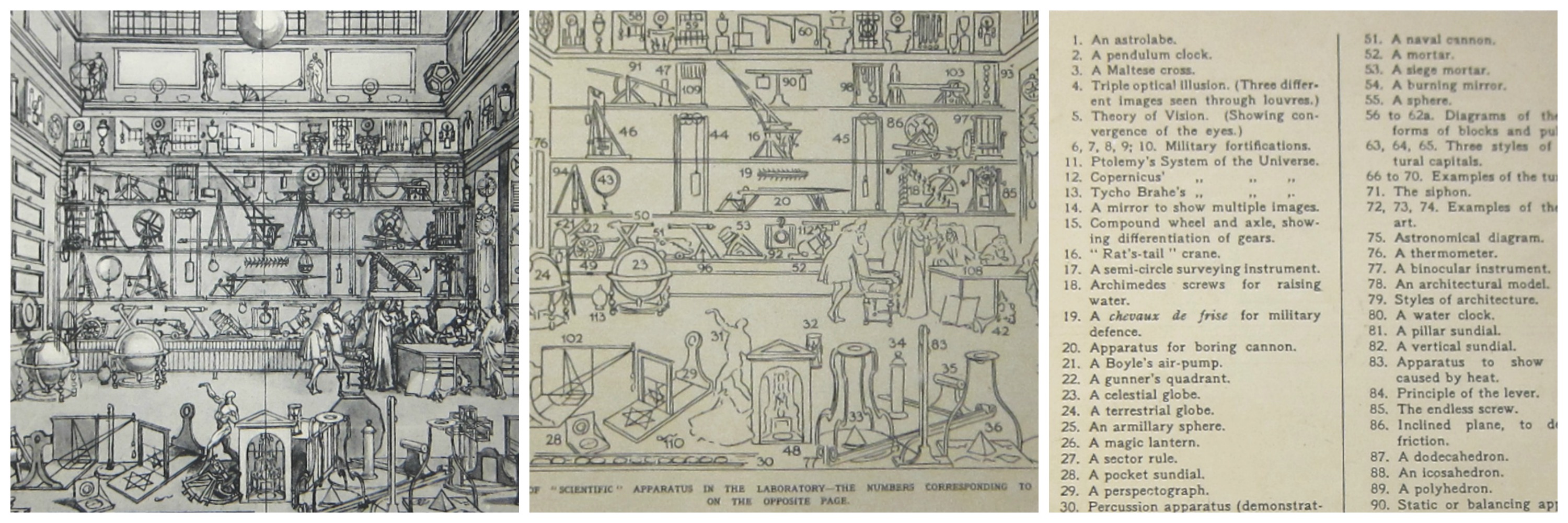
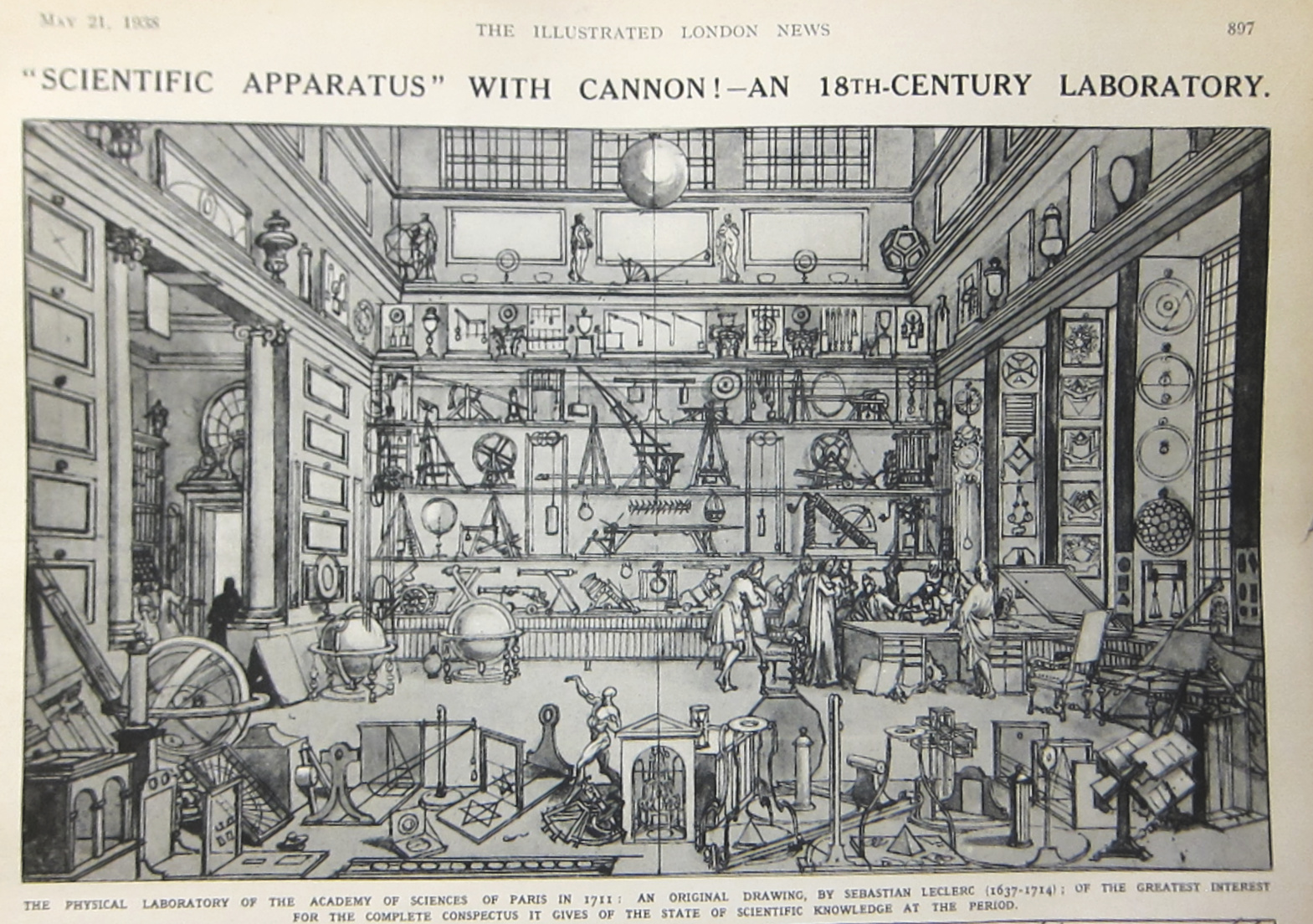
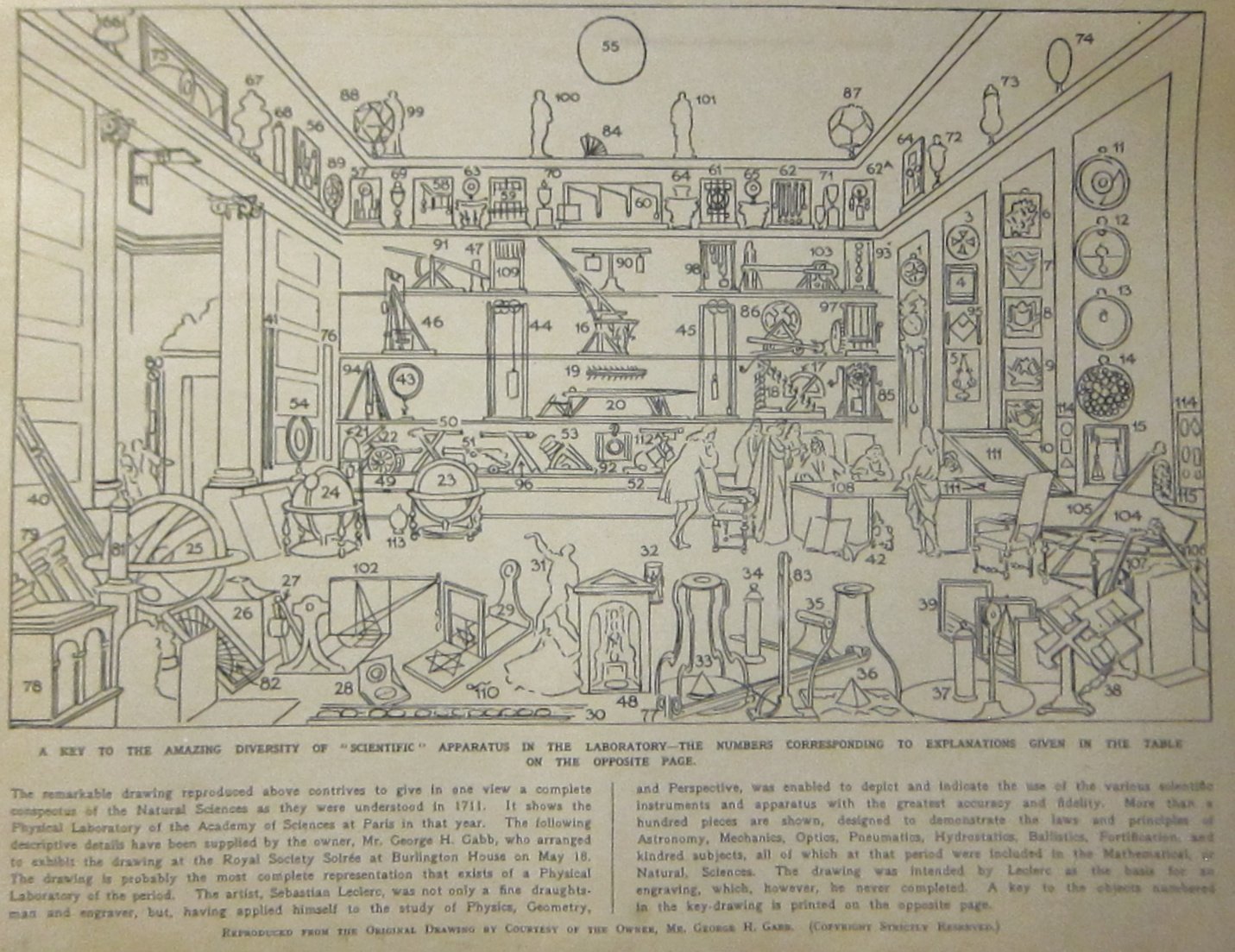
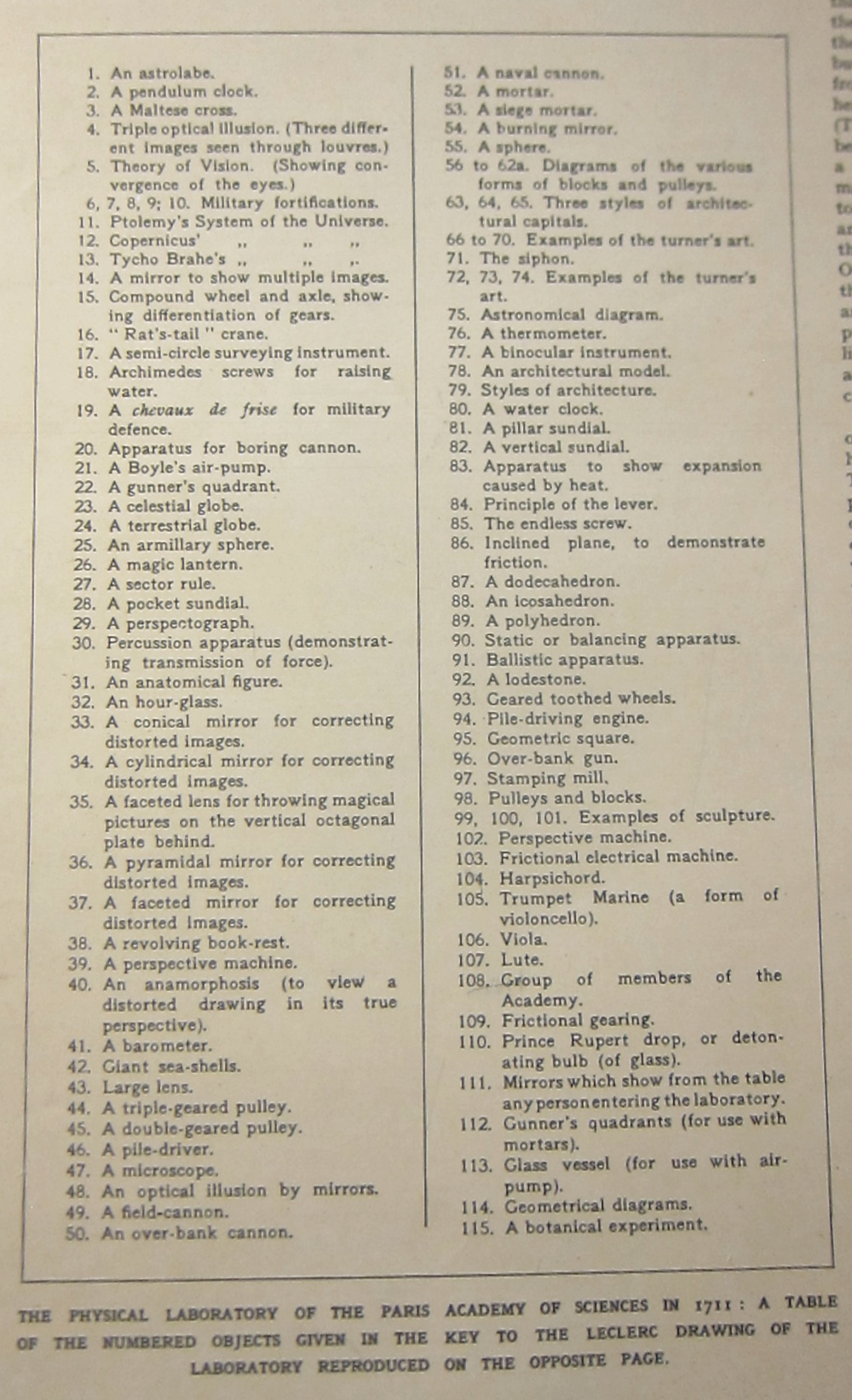
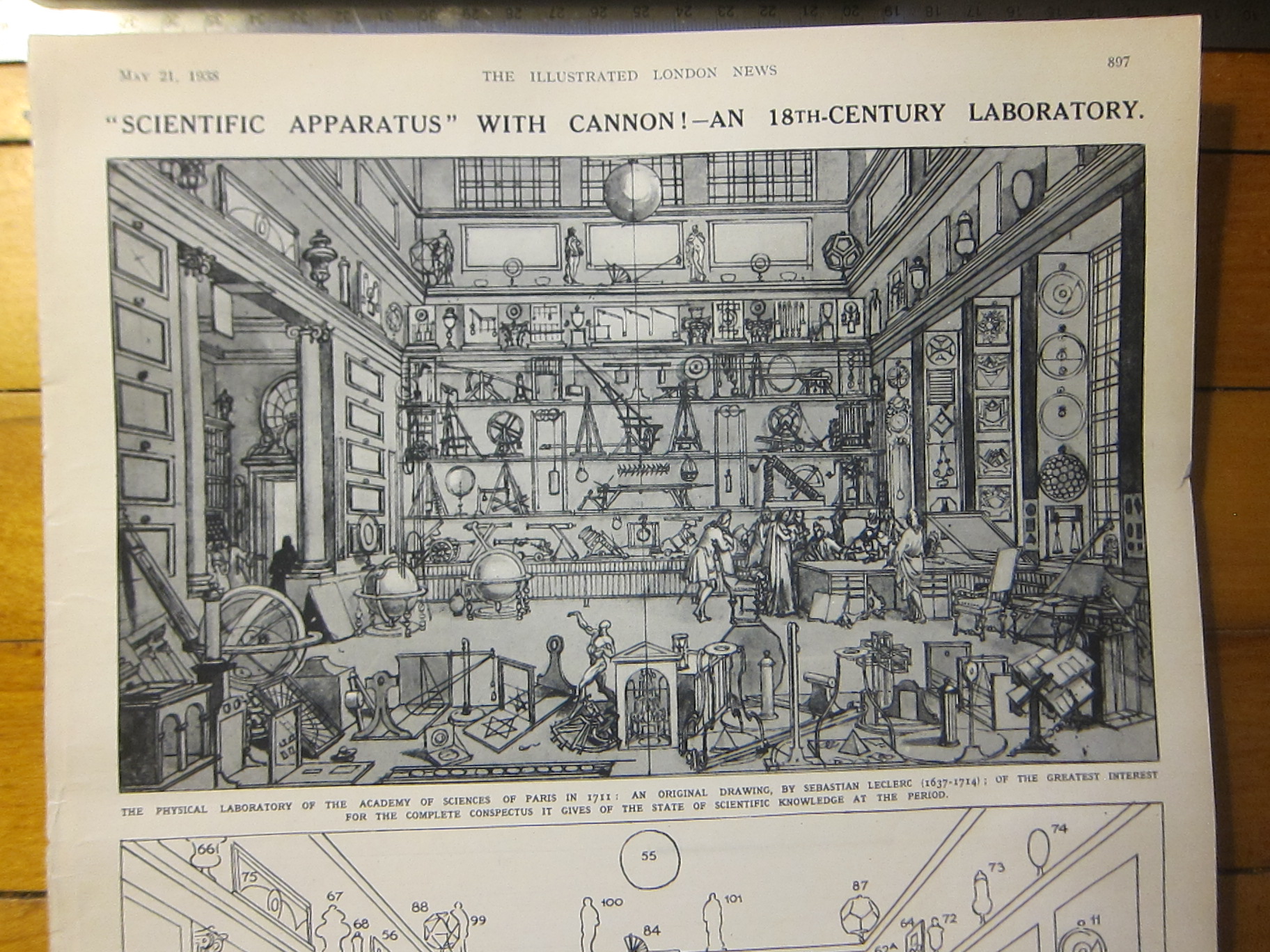
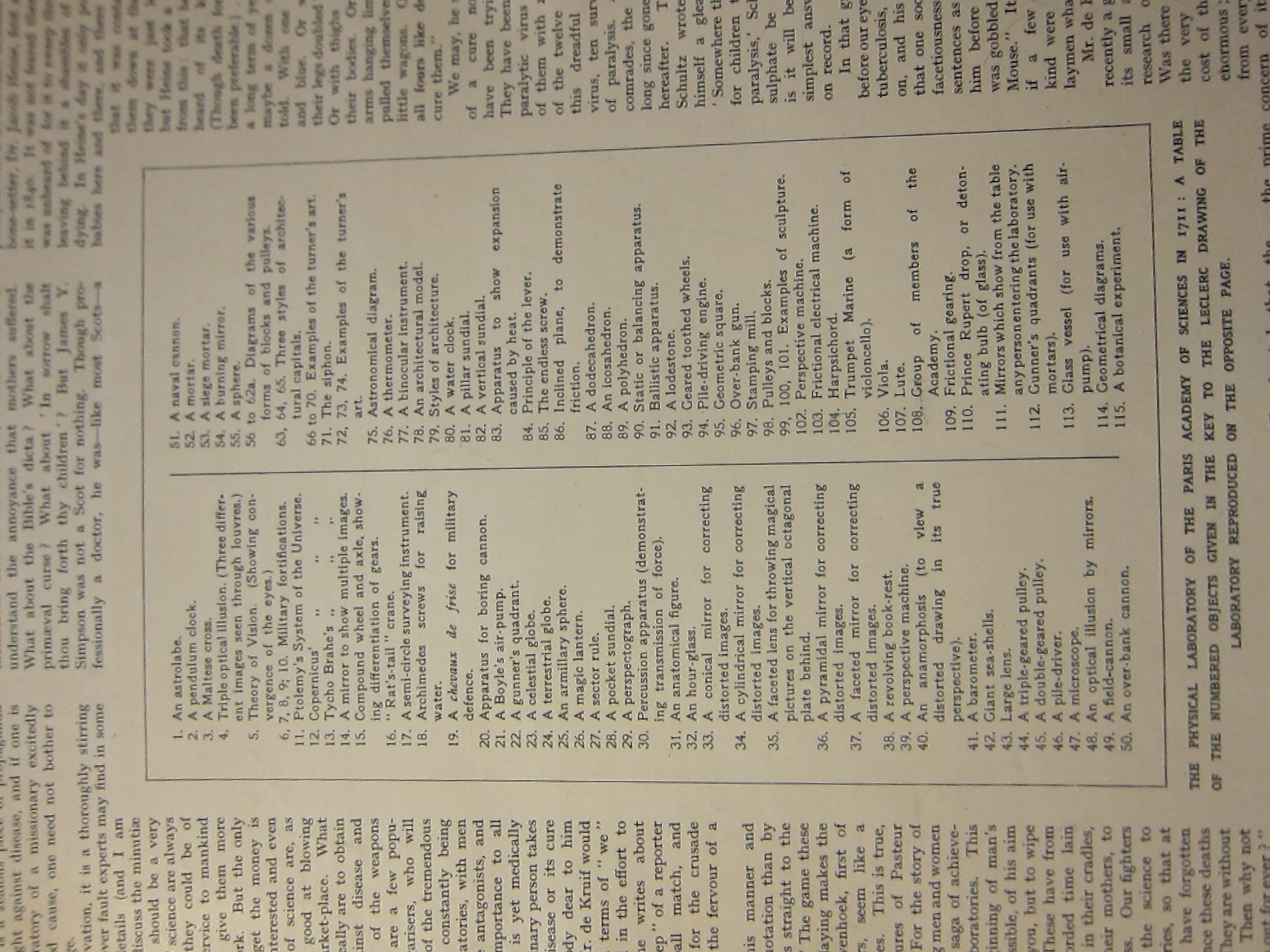
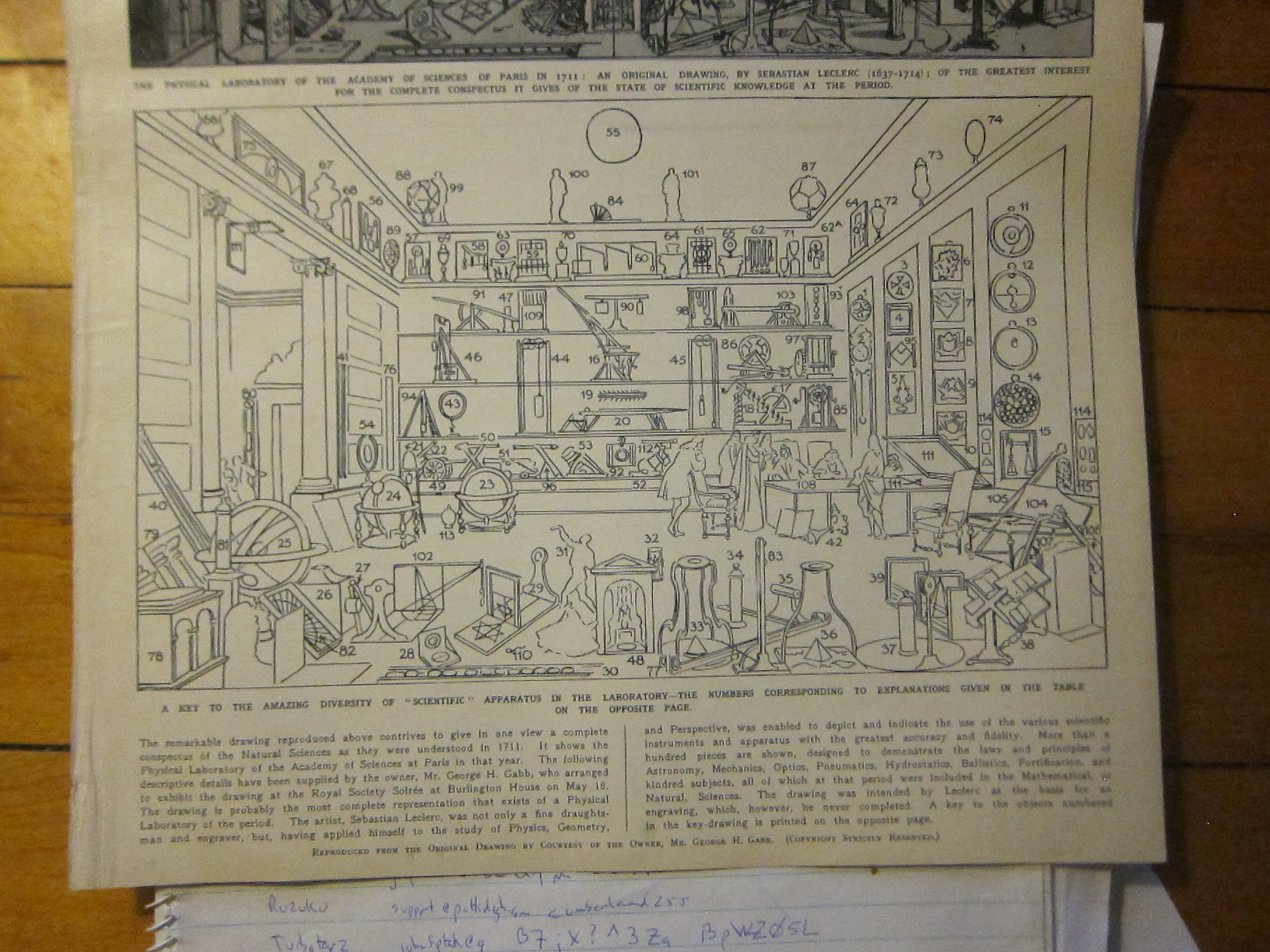
    This interesting image appeared in the Illustrated London News for 21 May 1938 (p 897) and it shows “the Physical Laboratory of the Academy of Sciences in Paris” in 1711, rendered by Sebastian Leclerc (1637-1714).  The nice thing here is that is comes with a key and explanation for the 115 (!) displayed instruments. For some reason the editor decided to put scientific instruments in quotation marks, as if to differentiate those instruments from 1711 from the modern standard of 1938 as not being worthy of the title when compared to modern instrumentation. Its an unfortunate display of evaluating and judging the achievements of one period in relation to those of a particular present without regard to context and the capacity of what came before.  Apart from the unfortunate title, these are useful images:

    Physical Lab collage


    Physical lab view 1938
    Physical lab view 1938

    Physical Lab legend


    ·Posted by :

    ·in:


  • Very Early Published Works on the Holocaust (1942)

    JF Ptak Science Books   Quick Post

    After reading my quick post from yesterday (on Oswiecim, Camp of Death, March 1944, a very early work published on the Holocaust) my friend Andy Moursund made several good points on other pieces of very early Holocaust literature (those being books or pamphlets rather than newspaper or journal articles), which I note below with links to their full text. 

    Andy went directly to Jan Karski’s extremely early (1942 and 1944) works–they were potentially momentous, though they missed their true moment, the reasons of which will no doubt be long discussed and debated. Karski (1914-2000) performed an heroic duty reporting on the mass extermination of Jews, ethnic Poles, and other nationalities in Poland in 1942-3, and wrote on the destruction of the Warsaw Ghetto. He was a professor at Georgetown University for a while, and lived on or near MacArthur Blvd–I saw him a couple of times in Georgetown (where my store was for years) back in the mid/late 1980’s but never spoke to him…he had very penetrating eyes in a sharp and angular face, exceptionally striking in a Samuel Beckett sort of way–his Story of a Secret State was well known to our circle, and Karski was very easily recognized, but not necessarily easily approachable. In any event, I regret not speaking with him. 

    The earliest work by Jan Karski is The Mass Extermination of Jews in German Occupied Poland. First official government-documented alert about the Holocaust and genocide of Poles addressed to the wartime allies of the then-United Nations.Government of the Republic of Poland, Ministry of Foreign Affairs MSZ, published in 1942. I should point out that “extermination” used in the description of mass execution of human beings seems to predate the recorded OED first-usage by three years.  (“Extermination, attributive, as  extermination camp n., a concentration camp for the mass murder of human beings, applied esp. to the camps set up by Nazi Germany in the war of 1939–45.1945  [First usage] Atlantic July 55,  “Among the workers a threat of being sent to an extermination camp has its uses.”–OED)


    ·Posted by :

    ·in:


  • One of the Earliest Appearances of “Arbeit Macht Frei” (Spring, 1944)

    JF Ptak Science Books   Post 2788

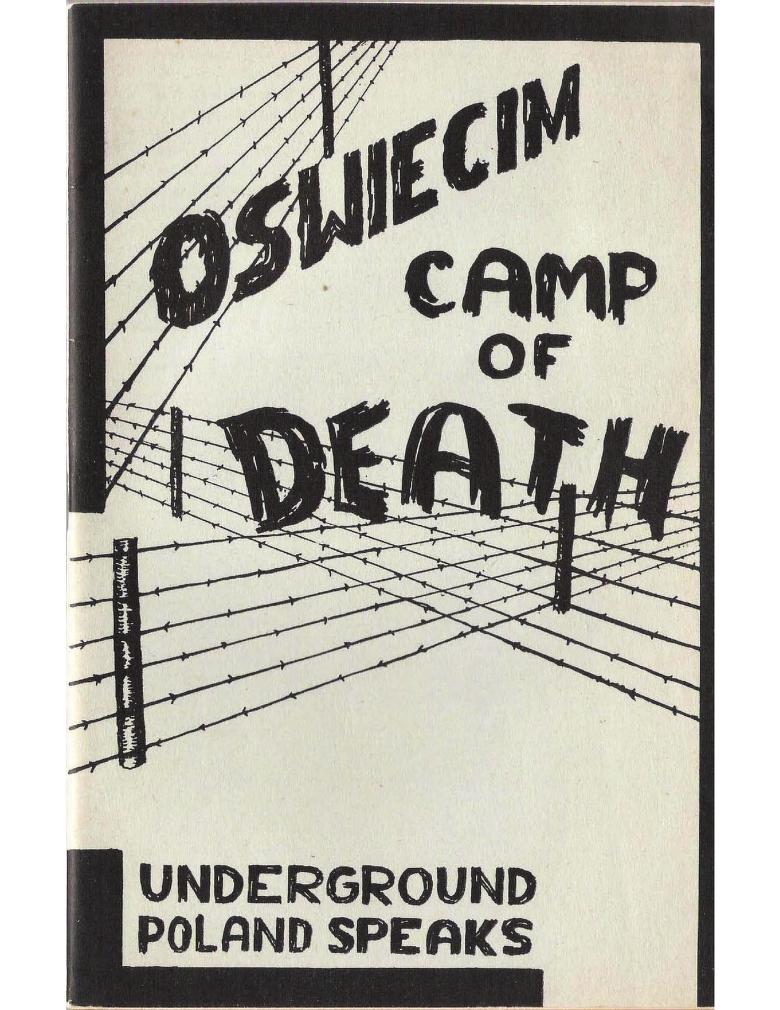
    Auschwitz 1944 English titleI stopped by my old friend the amazing Andy Moursund’s fantastic Flickr site, where in just the first 30 seconds or so I needed to stop and follow Andy’s lead on an astonishing book. The cover1 is stark, and justifiably so as  Oswiecism—Camp of Death. (Underground Report)2 is one of the earliest separately published reports on Auschwitz, published in March, 1944. (Auschwitz, which is the German rendition of the Polish “Oswiecism”, comes into being in May 1940, grows by 140,000 prisoners in March 1941, another 200,000 in 1942, and then many more until the end, when something on the order of 1.1 million people were murdered there, 90% of them being Jewish.)

    See Andy’s site here: https://www.flickr.com/photos/145907841@N08/albums/721577056751817750

    I checked the title on the internet archive, where there is a full-text copy available to read (here:

    https://archive.org/details/OswiecimCampOfDeath/page/n1

    Reading this pamphlet is a very stiffening experience, even if you have a background in reading about the Holocaust.

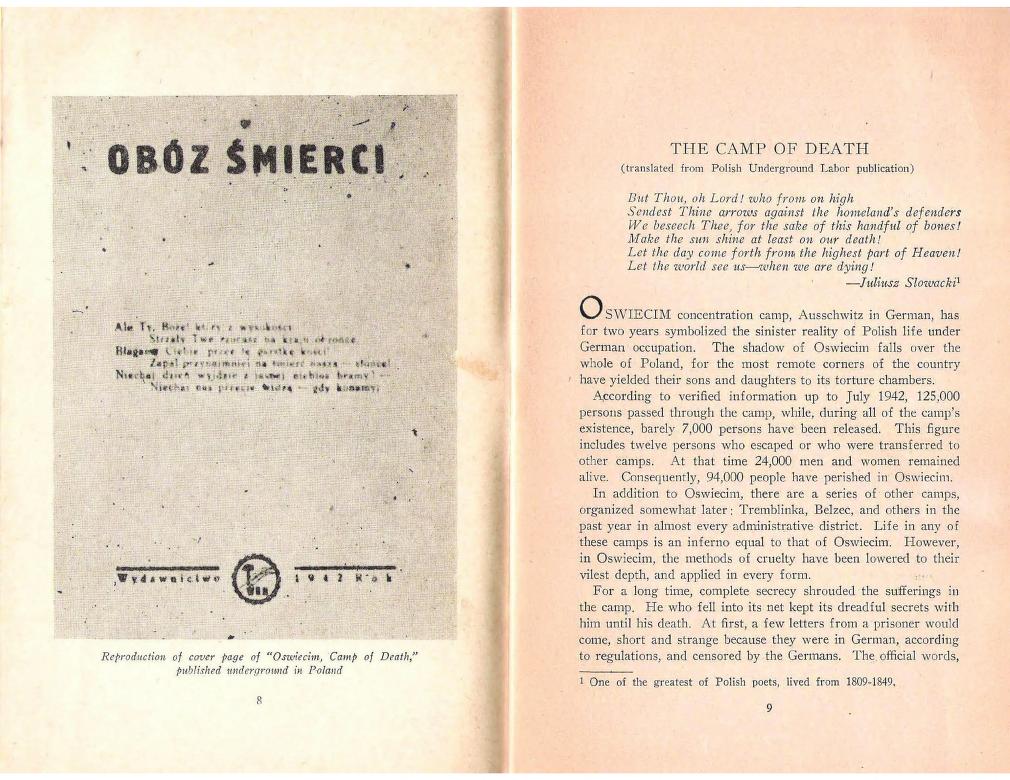
    I imagine too that this may be one of the earliest appearances in print of the hellish sign at the entrance to the KZ, “Arbeit Macht Frei” (“Work Brings Freedom”).

    We read of it on page 24 of the pamphlet:

    “HERE is a large sign over the camp entrance with the words “Arbeit Macht Frei”, (“Work Brings Freedom”), while from any spot in the camp one can see the huge chimney of the crematory. It is an ugly, brownish red.”

    “A prisoner’s life moves between these two points — the sign and the chimney —from the moment he “loses” his life when he enters the camp until the moment he “regains” it as a bit of ashes coming from the crematory.”

    “Surrounding the camp for an area several miles in width are cultivated fields from which the previous owners have been evicted. Many farm buildings and workshops adjoin the camp and its barracks. Scores of miles beyond the actual camp boundaries are the coal mines. All work, above ground or underground, is done by prisoners. They till fields, build houses, mine coal, load and unload trains. They produce goods of which only a part is for the camp; the major share goes to the German army…”

    Auschwitz 1944 polish version

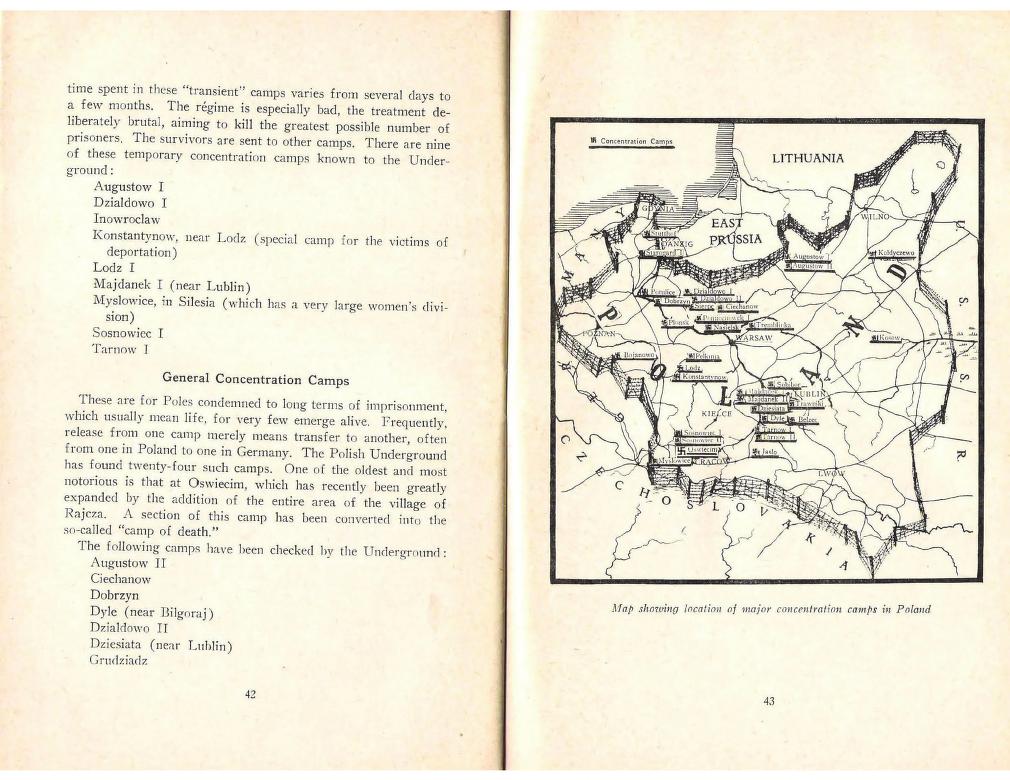
    And of further interest is this map of concentration camps in Poland:

    Auschwitz poland map

    Notes

    1. Cover by Teresa Zarnower (Teresa Żarnowerówna was a Polish avant-garde artist, painter, sculptor, scenographer, and architect). “One of the most important artistic personalities of the Polish constructivist avant-garde in the 1920s…” (Jewish Women’s Association Archive)
    2. Oswiecism—Camp of Death. (Underground Report), Sponsored by NATIONAL C.I.O. War Relief Commission, First Edition: March 1944. Copyright 1944 by Poland Fights New York, N. Y. Sponsored by American Friends of Polish Democracy; Published by Poland Fights, 55 West 42 Street, New York 18, N. Y. Assisted by Polish Information Center

    ·Posted by :

    ·in:

    —

  • The Belgian Collector of Life (1918)

    JF Ptak Science Books  Quick Post

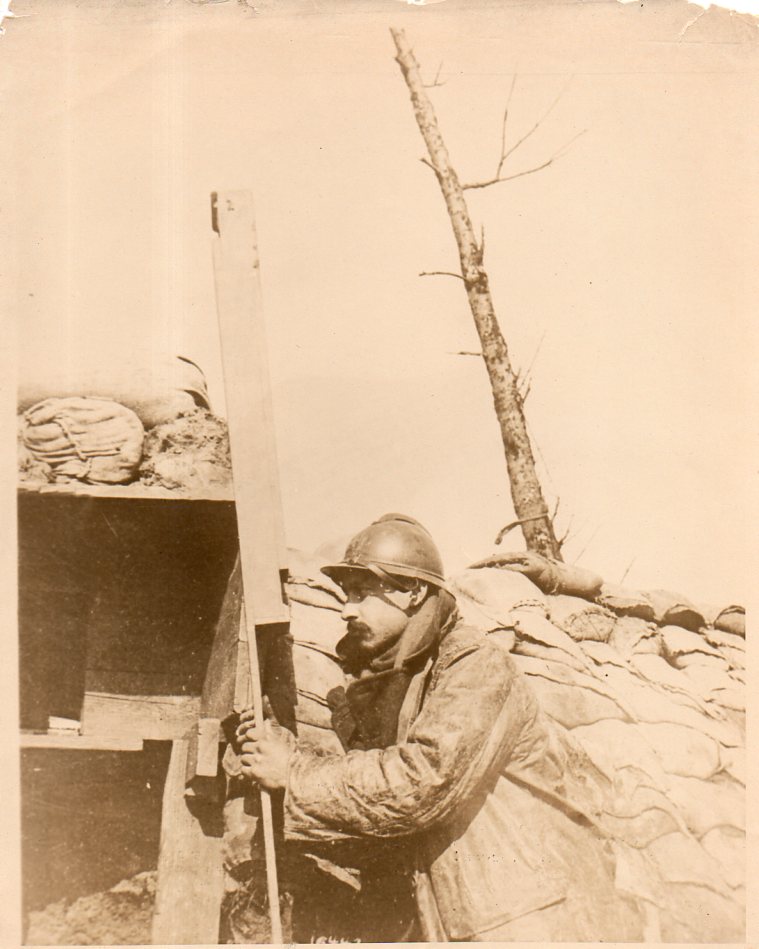
    This is an excellent example of appreciating images in context.  The photograph seemed line an ordinary image of a soldier peering through a periscope on action ahead of his trench, in some miserable battlefield, somewhere in Europe, 1918.  The image is the product of a photographic pool, the photographers working in semi-unison to produce acceptable images to be used in publications illustrating the war.  The images could not be too terribly graphic, and must not relate any useful military intelligence–they would pass through the hands of very active censors whose job it was to slightly inform the reading public and to also keep morale high, a difficult balancing act.

    WWI Sniper198

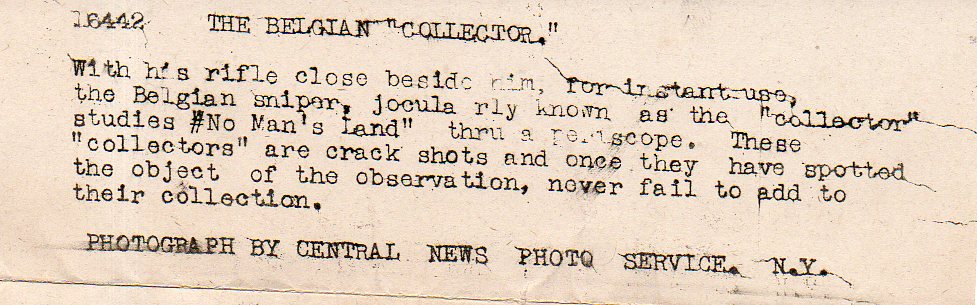
    And so this is what I thought–until I turned the image over–and saw that it was stamped “Photo by Central News Photo Service”, and was accompanied by a typed caption (below), the bit of text that was to be the standardized caption for this photograph when and if it was used by a magazine or newspaper.

    The title is “The Belgian Collector”. 

    I was surprised to read that the Belgian collector was a sharpshooter. He would scan the field looking for any unfortunate enough to spend a moment of thoughtless to leave themselves exposed for one brief moment.  In that moment the exposed soldier could/would die, collected. 

    In a  sense, “collect” like “John Fowles The Collector, only killing them with a rifle.

    But that was his job. And it was war. And if he was on your side, then you’d want him there.  

    “The Collector” title was chilling, and poetical.  

    WWI Sniper det199


    ·Posted by :

    ·in:


  • Extreme Bird’s-Eye Views of NYC

    JF Ptak Science Books  Quick Post

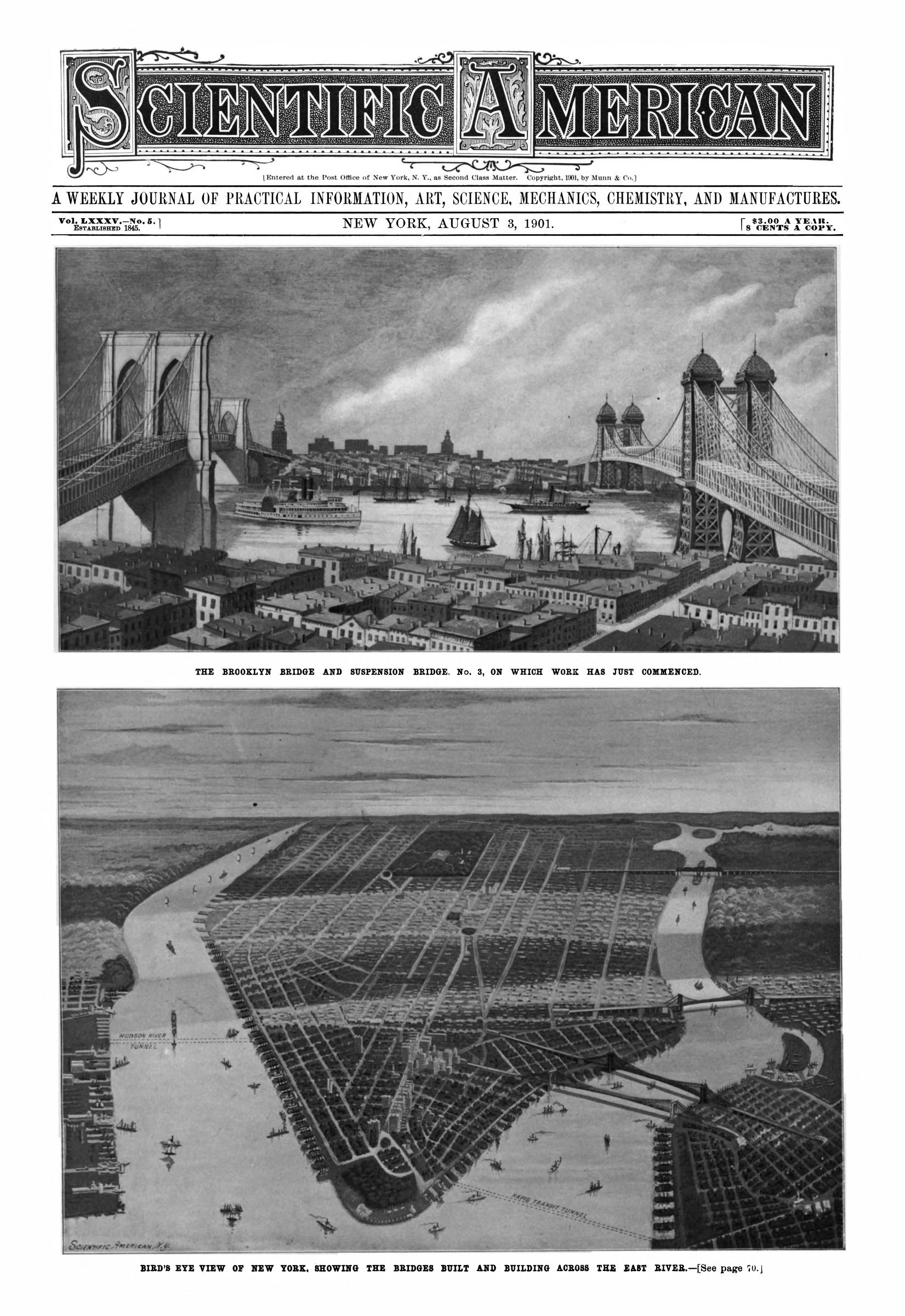
    I found this fine bird’s-eye view in the 8 August 1901 issue of Scientific American (the lower image is what I’m referring to).  It is a low-level oblique that shows about the entirety of Manhattan, from South Ferry to what is probably Harlem, and it seems to be an image that is not often reproduced.  While looking around online for something similar I found a great selection (19 maps, documented and linked) at the terrific (and now on hiatus) Bibliodyssey website. There’s no sense to reproducing all of the hard work that PK (Mr. Bibliodyssey) did in assembling his view selection, so just follow the link to his site and enjoy.

    Well, now that I think of it, I do want to share just one of them here and make a few comments on the thing here because it is just a terrific image:

    Sci Am 1901 Agust Birds Eye View Manhattan

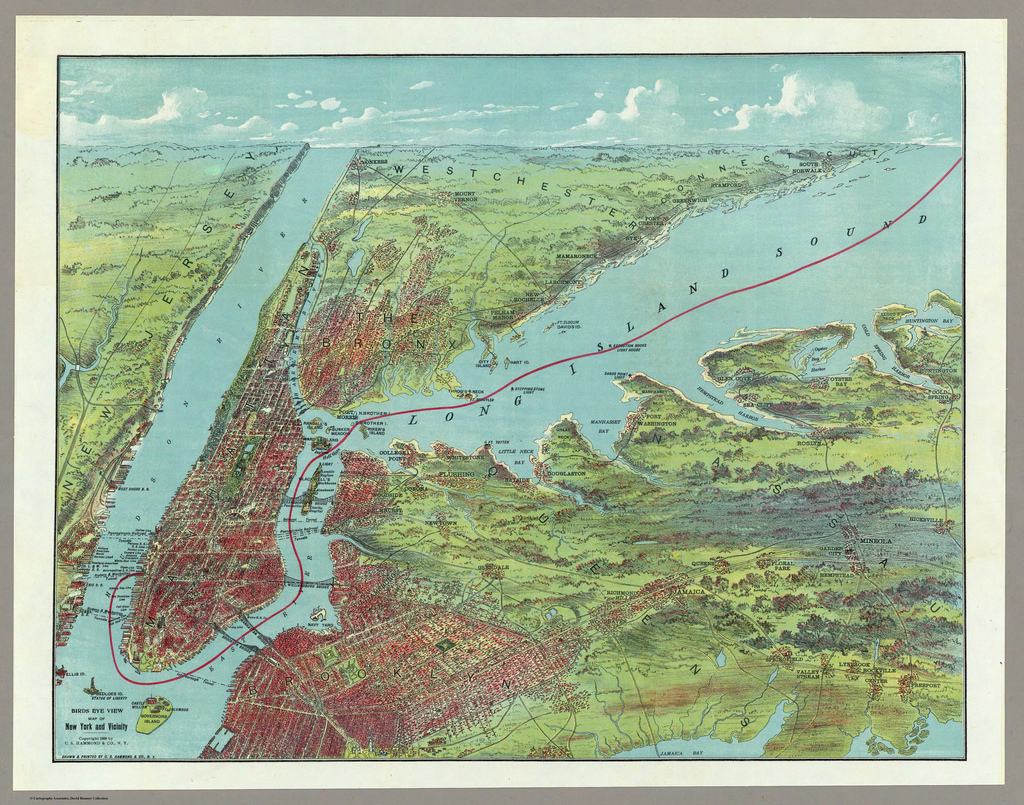
    The Bibliodyssey image:

    Brooklyn Birds Eye 1909

    [Bird’s Eye View Map Of East And North Rivers And Long Island Sound Price 10 Cents – New York C.S. Hammond & Co. Publishers. Scale 1:80,033.]

    [Source: http://bibliodyssey.blogspot.com/2011/09/birds-eye-new-york.html]

    This view reaches from Grand Army Plaza all the way to Yonkers, and it shows that even in 1909 there were some green areas left in Brooklyn in the south towards Jamaica Bay and out east (my mother’s mother was from Brooklyn who as a girl didn’t have to go far from Boro Park to go sledding on an open hill). Also it looks as though the Sci Am image also reaches almost to the Grand Army Plaza, but not much else in Brooklyn.  Anyway, its a beauty. 

    Okay! One other that I’d like to draw attention to:

    Brooklyn birds eye 1873[Source: http://bibliodyssey.blogspot.com/2011/09/birds-eye-new-york.html]

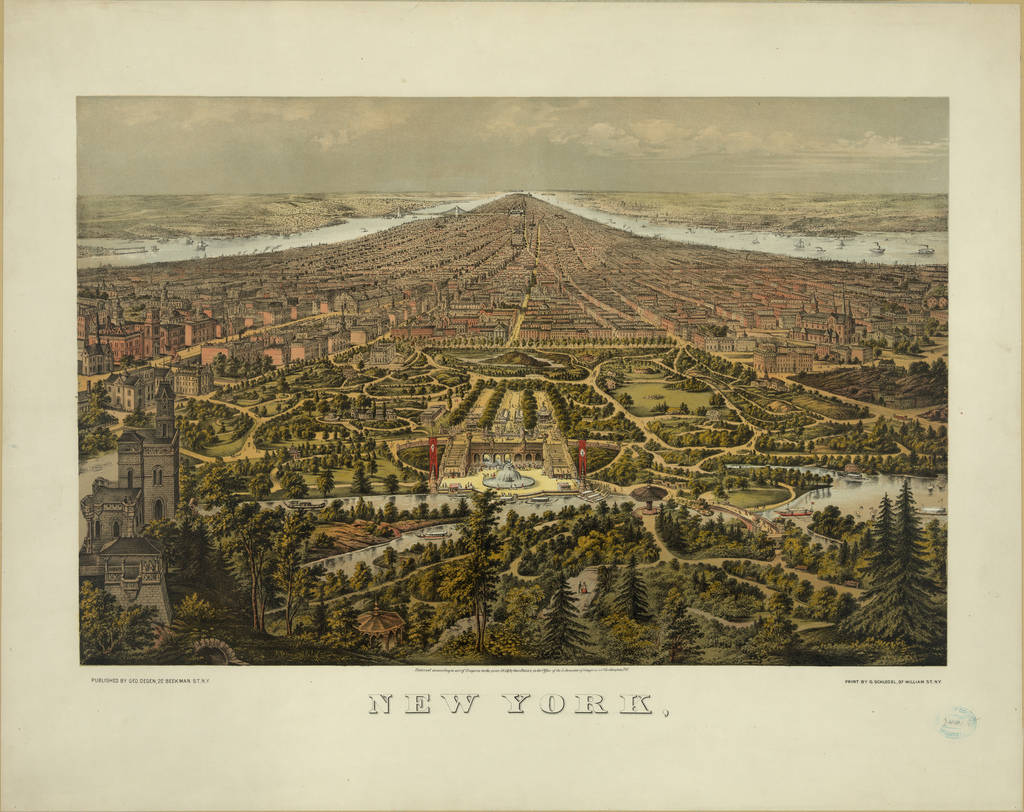
    This is a “Bird’s-eye view of New York with Central Park in the foreground”, by George Schegel, published by George Degen in 1873.  This is sort of the opposite of the Sci Am image, though the perspective is not quite right and the point of view is much closer to the ground–still, we see all of Manhattan from Central Park south to the Battery and beyond. This view has an odd feel to it, as though you’re looking through the wrong end of a binoculars–still a fantastic piece of work. 


  • Life Expectancy–a Useful Collection of Numbers

    JF Ptak Science Books  Quick Post/Reference Post

    I was having an interesting conversation with my friend, Andy Moursund, who asked if we are better off now or 50/60 years ago. That was the basic premise from which MANY qualifications were made, including who “we” are, where that “we” is, what they do, and so on, and then followed by defining “better” in a number of different ways, and then creating relative measures and measurements, and etc. It is a very complicated question–Andy says it is his favorite question for a long car ride with someone, and I like it. Anyway, in checking out one point I needed to consult numbers for human life expectancy, and since it took a little poking around, I thought I’d collect a useful selection of them and share it here. 

    (One definition by Encyclopedia Britannica: https://www.britannica.com/science/life-expectancy)

    Life Expectancy (current) by Country (wikipedia)

    Life Expectancy 1850-2015

    • https://www.infoplease.com/us/mortality/life-expectancy-age-1850-2011

    Life Expectnacy, Worldwide, 1850-2015

    • https://ourworldindata.org/life-expectancy

    Life Expectancy U.S., 1900-2000 (including by race)

    • https://www.seniorliving.org/history/1900-2000-changes-life-expectancy-united-states/

    Life Expectancy at Various Ages, 1800-1920, Great Britain

    Life Expectancy 1950-2050

    • https://en.wikipedia.org/wiki/Life_expectancy

    Actuarial Tables

    Also:

    Net Worth by Age and Percentile Calculator

    • https://dqydj.com/net-worth-by-age-calculator-united-states/

    ·Posted by :

    ·in:


  • Infiltrating Fascist Sympathizer Groups in the U.S. (1943)

    JF Ptak Science Books  Quick Post

    UndercoverJohn Roy Carlson (the pseudonym of Arthur Derounien, 1909-1991) was an investigative journalist and during WWII he went undercover and infiltrated many of the right wing/fascist/”patriot” groups operating in the U.S.  The result of that work as a  well-received book called Undercover, My Four Years in the Nazi Underworld of America1, which was published by Dutton in 1943 and which went through seven printings in its first two months of publication.  It wasn’t yellow journalism, either–it was an expose of Nazi and fascist sympathizers, who–even after Pearl Harbor–supported the ideas of fascism.

    Derounien was a busy man, joining and infiltrating such groups as:

    • National Socialist White People’s Party (formed by George Lincoln Rockwell in a shabby store front on Wilson Blvd in Arlington,Virginia, and renamed the American Nazi Party in 1960);
    • Christian Mobilizers (allied with the Bund, this was a militant arm of the Christian Front which had a more-militant spin-off in the American Unity Party);
    • America First Committee (a mixture of patriotic, isolationist far right-wing and Nazi sympathizers, infamously spearheaded by Lindbergh, the group disappeared on 7 December 1941; 
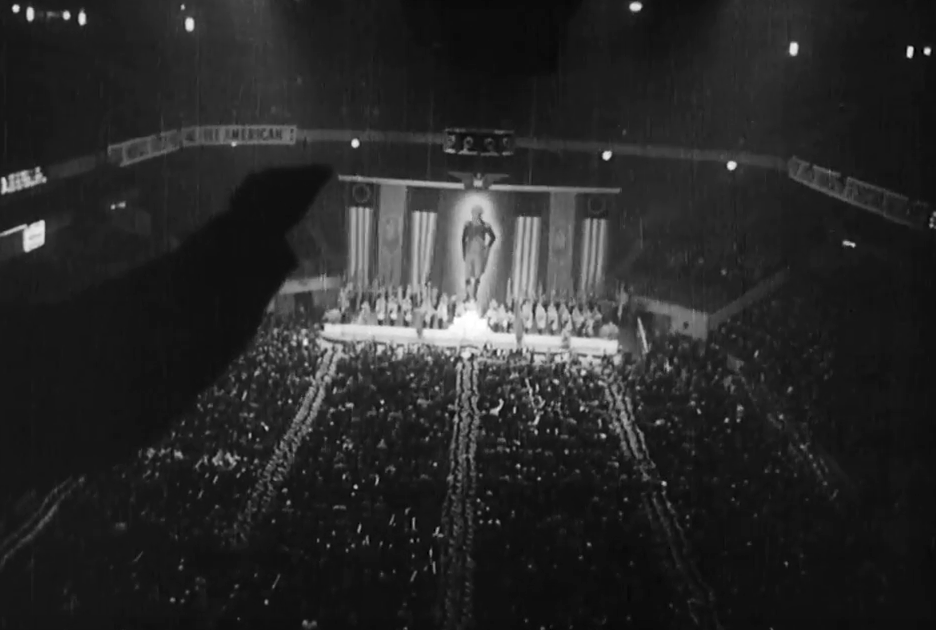
    • German American Bund, (a loud German-patriotic pro-Nazi group which filled Madison Square Garden in 1939 with 20,000 members, sweatily drenched in Hitler rhetoric, an enormous portrait of G. Washington, Brownshirts,  and swastikas: https://www.theatlantic.com/video/index/542499/marshall-curry-nazi-rally-madison-square-garden-1939/);

    plus the Gray Shirts (not to be confused with local boy Pelley’s Silver Shirts, abandoned after his jail sentence for sedition and replaced in the 1950’s with his new religion of UFOs and religious-something called “Soulcraft”), American Nationalist Party, American Women Against Communism, The American Defense Society, Anglo-Saxon Federation of America, National Workers League, Yankee Freemen, Flanders Hall, American Patriots, and others2–it was a very impressive undertaking. 

    Nazi Madison Square[German American Bund at Madison Square Garden, 20 February 1939.  Source: https://youtu.be/WpaYQqzFouw]

    His book had a very wide impact, contributing to some degree in bringing together thirty leaders of such groups to trials for sedition during wartime. Carlson had in the intervening year or so, 1943/4, been subject to many accusations and charges of being an enemy alien himself, or Communist, or something–accusations initiated by many of the groups that he exposed. So it seems that in preparing himself for the trials to come that in anticipation of more libels to come Carlson published this short broadsheet call Under Cover News, which appeared five days before D-Day, June 1, 1944.  In it he asked himself questions that he thought his detractors might ask, and answered them. 

    Note:

    1.  Full text is available here: http://dlib.nyu.edu/undercover/sites/dlib.nyu.edu.undercover/files/under_cover-%20john%20roy%20carlson-1b.pdf

    2. A fuller list of the organizations:
    American National-Socialist Party, German-American Bund, Christian Front, The Ultra-American, Nationalist Party,
    American Nationalist Party, American Women Against Communism, The Gray Shirts , America First Committee,
    No Foreign War Committee, Christian Mobitizers, American Destiny Party, American Brotherhood of Christians
    Congress, The Ethiopian Pacific Movement, Citizens Protective League, Social Justice Distributors Club,
    The American Defense Society, Anglo-Saxon Federation of America, Paul Revere Sentinels, Ra-Con Klub,
    Crusaders for Americanism, Inc.


    ·Posted by :

    ·in:

    — —