A Daily History of Holes, Dots, Lines, Science, History, Math, Physics, Art, the Unintentional Absurd, Architecture, Maps, Data Visualization, Blank and Missing Things, and so on. |1.6 million words, 7500 images, 4.9 million hits| Press & appearances in The Times, Le Figaro, Mensa, The Economist, The Guardian, Discovery News, Slate, Le Monde, Sci American Blogs, Le Pont, and many other places… 5000+ total posts since 2008.

Author: JF Ptak

  • A Grant Wood Landscape in a Renaissance Painting

    JF Ptak Science Books   Quick Post

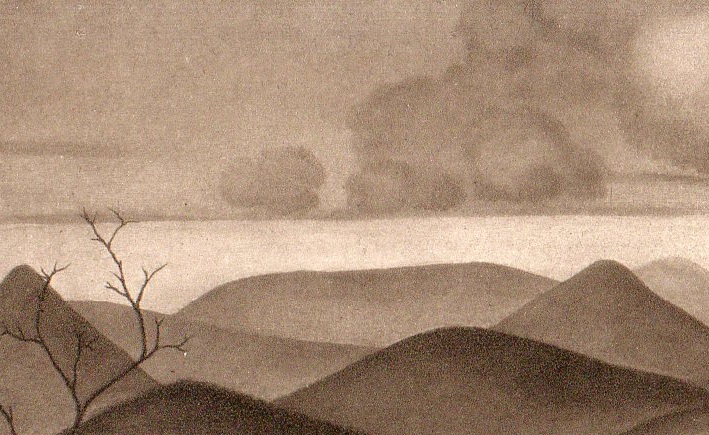
    This landscape brings to mind a certain style if not a particular artist, someone working  a lonely, cool-if-not-cold landscape, and although the terrain is certainly representational nothing on the hills seem to be, save for the tree in the foreground. It seems a little in the school of Grant Wood, or 1930’s, or something along those lines.


    Bellini_3_414


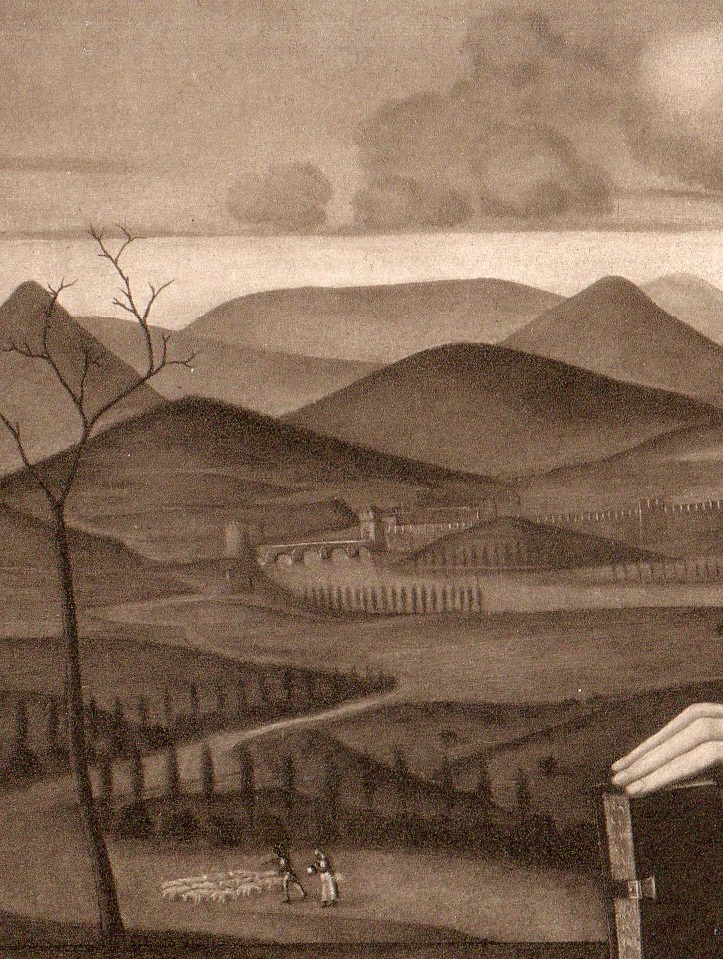
    The image is a detail, and when you pull back a little, there is more a suggestion of time and place:

    Bellini414


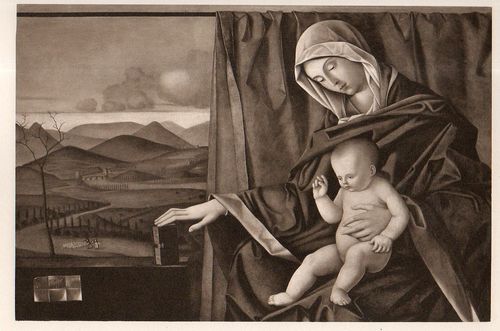
    When I look at the scene in context, it becomes very confusing, because it is sitting in the background of a painting by Giovanni Bellini, which was painted ca. 1500. There is no doubt that this is a Renaissance painting–but for me, seeing this grab of a modernity 400 + years into the future, I wonder what it was that moved Bellini in this way.  


    Bellini413

    [Source:  a catalog for the sale of the paintings collected by the Bourgeois brothers (which is also a good band name), Catalogue des Tableaux Anciens et Modernes composant la Collection Bourgeois Freres .printed in Cologne, 1904, painting number 3. ]


  • Rare Eyewitness Holocaust Account Reproduced in Full (1945)

    JF Ptak Science Books   Post 2618


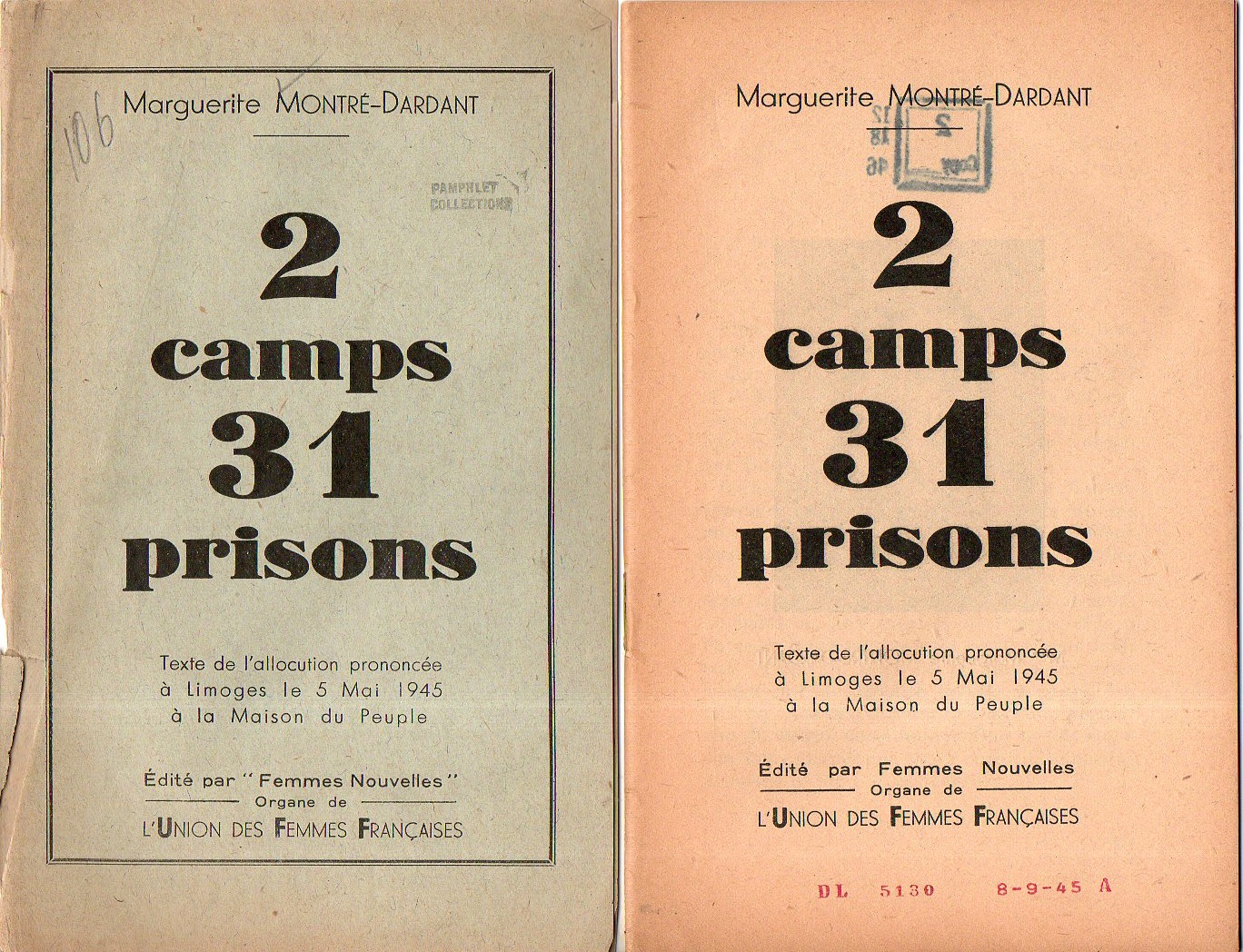
    I recently unearthed this rare eyewitness account of Nazi concentration camps, printed in 1945.  Since there are only two copies of it located by WorldCat/OCLC, and I’m finding no mentions for it online, I’ve decided to reproduce it online.

    2 camps 31 prisons305


    2 camps 31 prisons i313


    The work:   Marguerite Montré-Dardant,  2 camps, 31 prisons,  texte de l’allocution prononcée à Limoges le 5 mai 1945.. préface de Fonvieille-Alquier. 32pp. (with sections on Auschwitz, Ravensbruck, Mauthausen).

    Full text (4 meg file) :  Download Montre-Dardant


    ·Posted by :

    ·in:


  • Glorious Astronomical Gearworks

    Glorious Gearworks, Extended–Models of the Solar System, 1817-1821

    JF Ptak Science Books  Quick Post

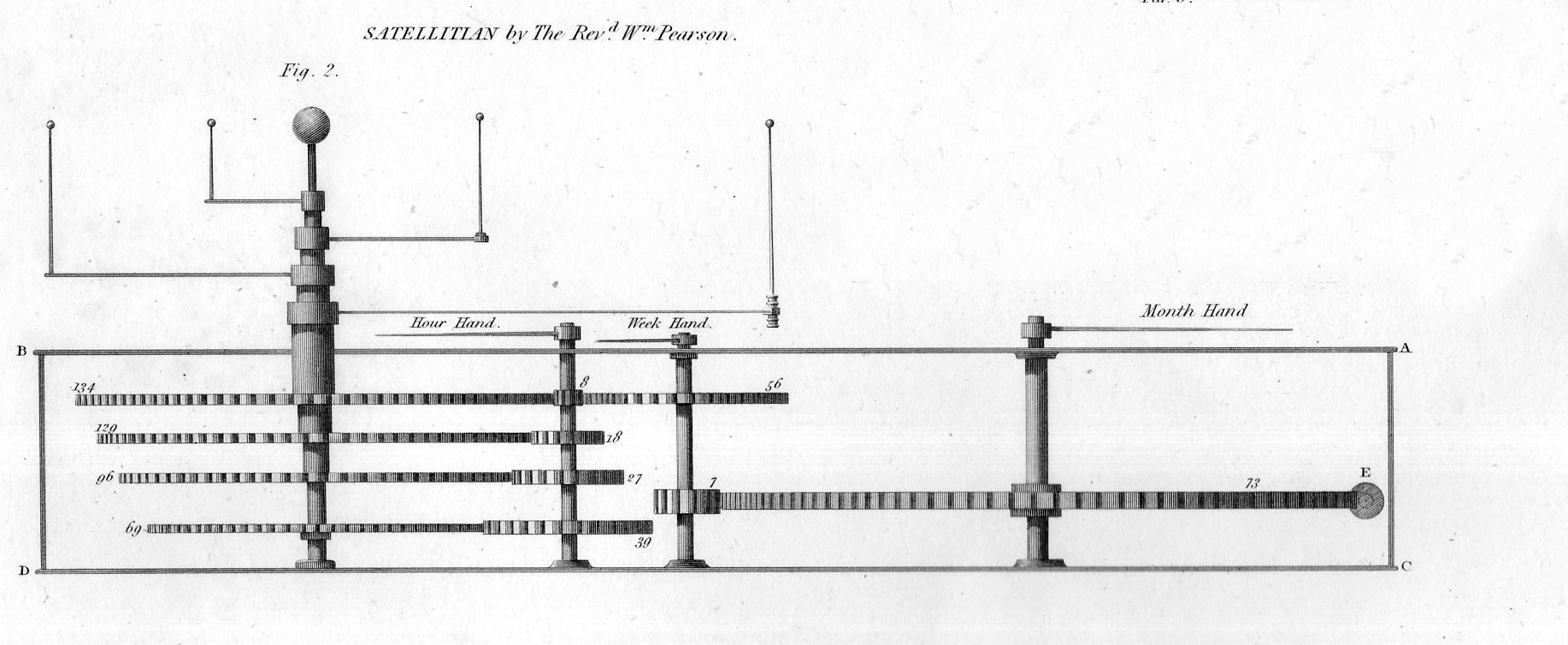
    I’d like to make a quick addition to an earlier post on a form of  Pearson’s planetarium.  This is from the same source, though from a few years later, and involves Pearson’s Satellitian, which was a differently-abled device.  All of the images appeared in the magisterial if not occasionally problematic Cyclopedia of Abraham Rees (1743-1825).

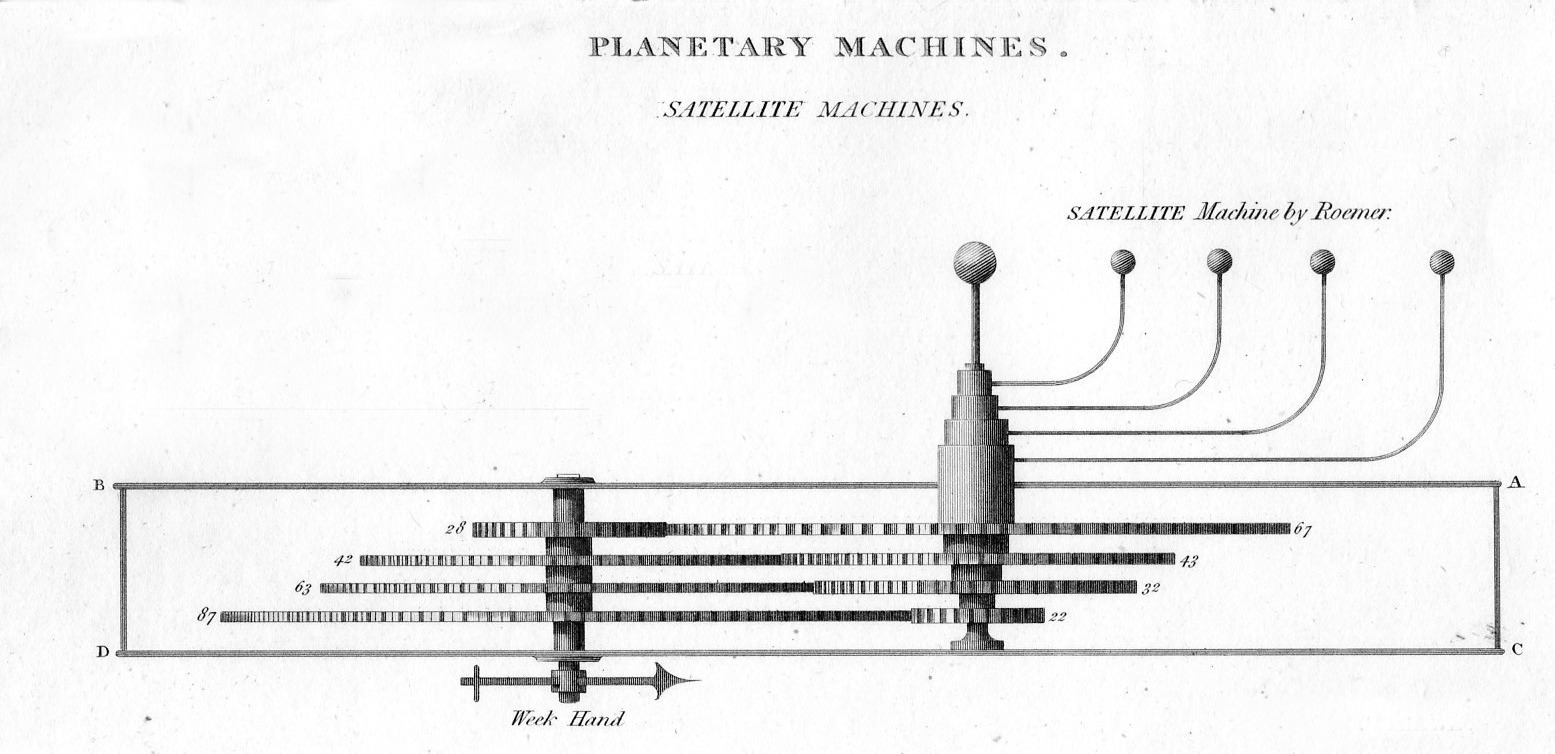
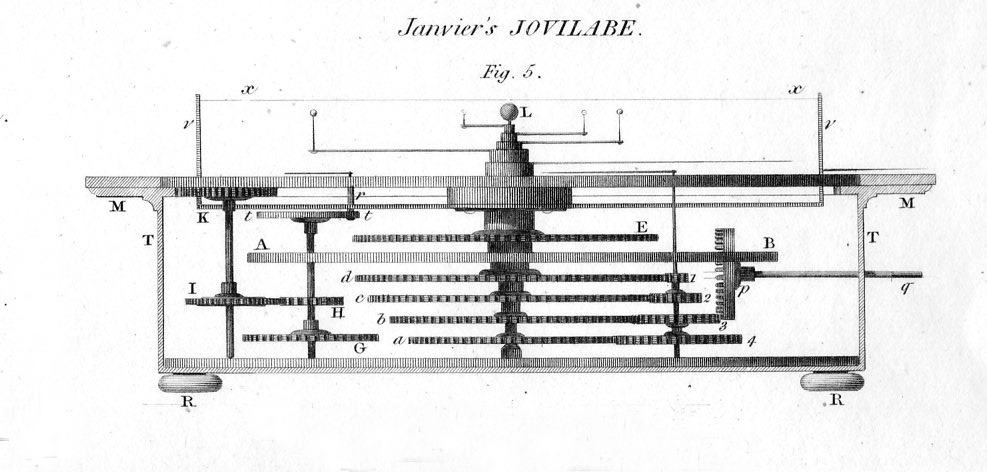
    The first image is a cross section for he “Satellite Machine by Roemer”, followed by “Janvier’s Jovilabe, and the with Willliam Pearson’s “Satellitian”, all appearing on the same 11×8″ sheet and printed in 1820.

    First, the Roemer:

    Planetary MAchine Roemer

    Here’s a description from Rees on the Roemer instrument (this courtesy of Google Books; the images are my own):

    • A good article on the Roemer and the Pearson machines appears in the Edinburgh Magazine, volume 15, 1832,  http://tinyurl.com/ogo36n9 

     And the Janvier:

    Planetary MAchine jANVIERb

    And the Pearson machine:

    Planetary MAchine Pearson

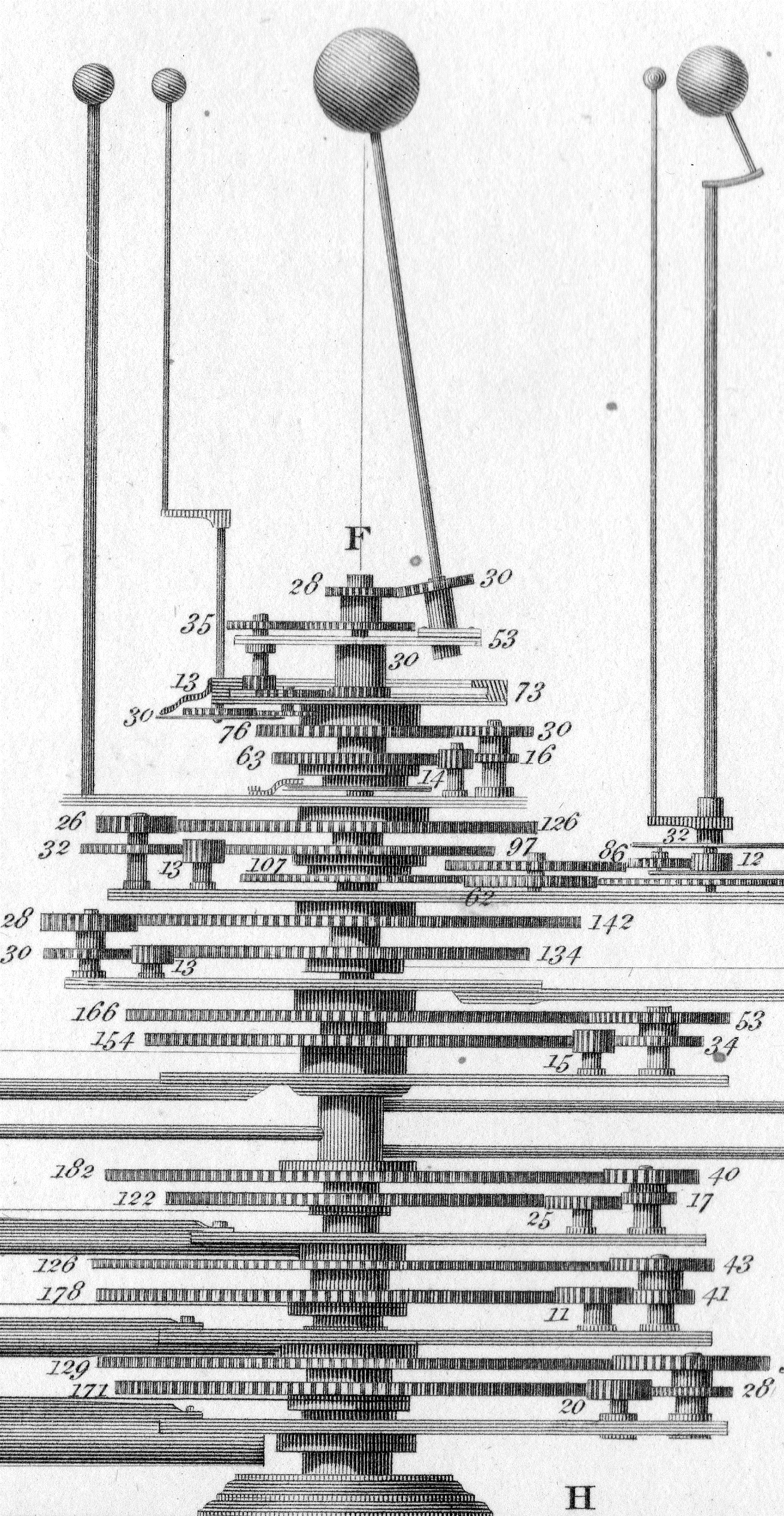
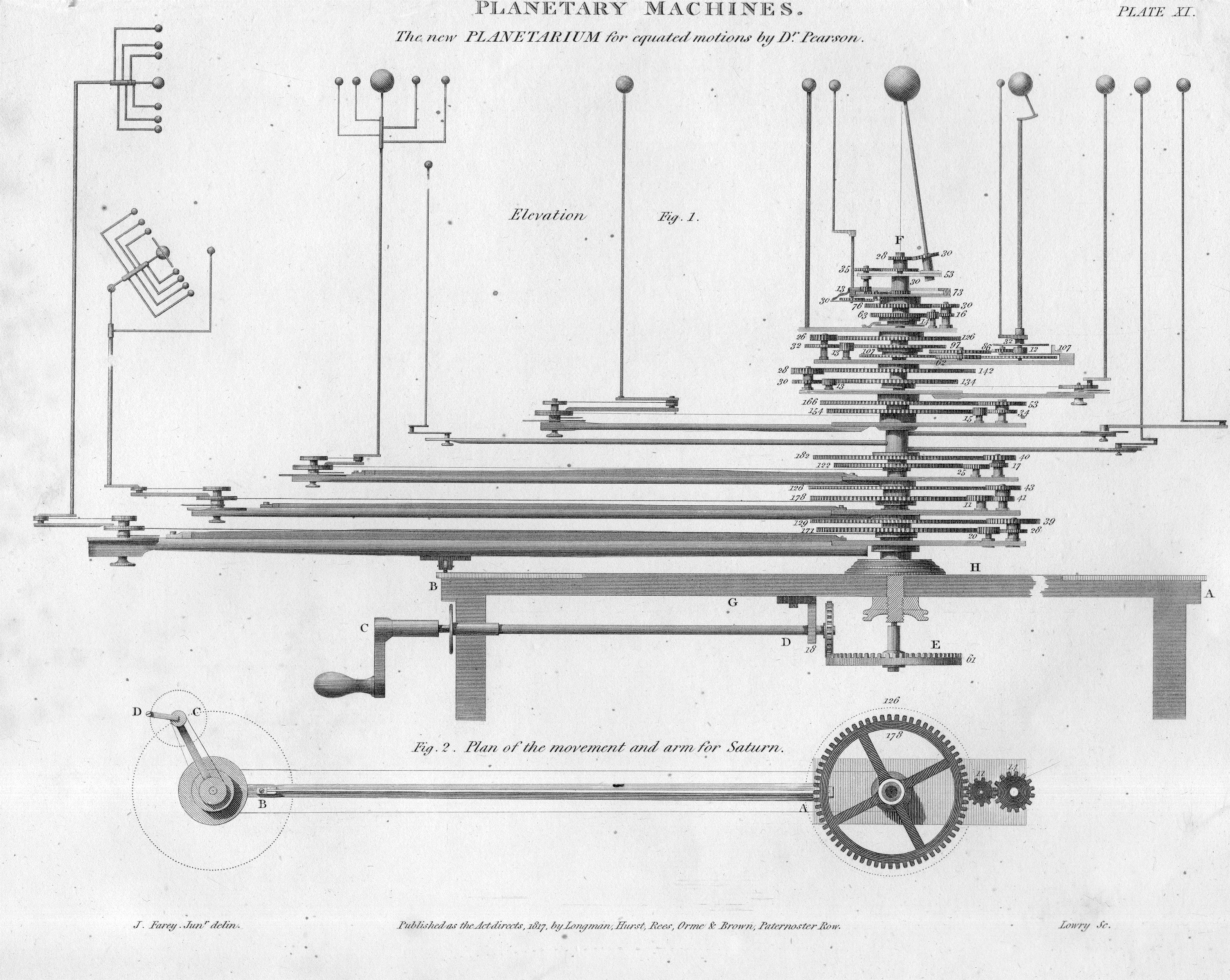
    This is the second Pearson instrument, the heart of  a beautiful orrey created by William Pearson (1767-1847, and one of the founders of the Royal Astronomical Society) as found in the 1817 volume of Rees, and features the main gearing for a mechanical display of the functioning of the Solar System:

    Planetarium916

    This is the detail from the following, full-length version, which is 8″x10″–so there’s a fair amount of detail in a limited field:

    Planetarium914

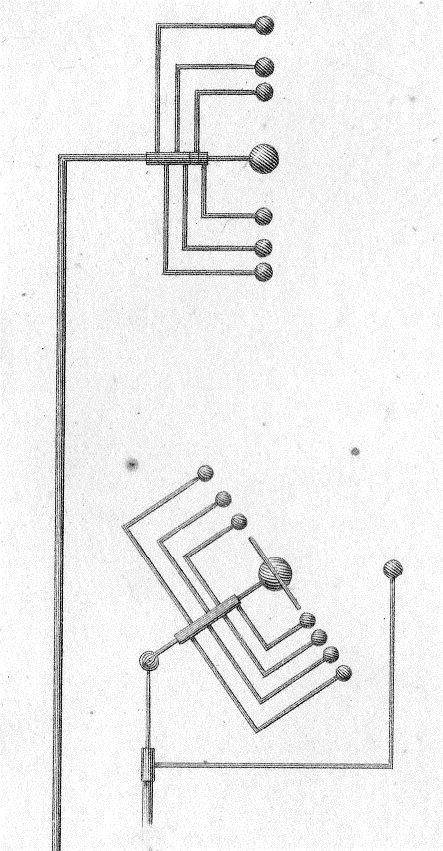
    And the beautiful Dadaist detail of Jupiter and Saturn:

    Planetarium915


  • On Not Seeing the Jews–continued (1938)

    JF Ptak Science Books   Quick Post

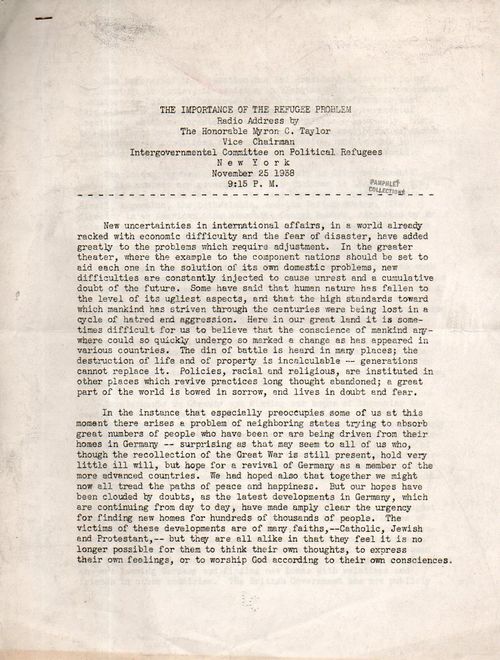
    Today this document put the “living” into history–or at least it did for me.  Given how much reading I’ve done in this area and the amount of exposure I’ve had to the literature, I knew a fair amount around the edges of this publication.  I remember Myron Taylor–a major domo FDR fixit favorite, a wealthy industrial, who was sent on missions for Roosevelt through the mid-1930’s and throughout the war. The “refugee problem” referred to in the title was not the internal U.S. dustbowler issue but the gigantic European refugee catastrophe that was very well established by the date of the publication of this paper for Taylor’s address on November 25, 1938. I guess that “problem” was not incorrectly used in the title though by 1938 what was happening to stateless and endangered populations in Europe was far more than that, given  what was happening in Germany in 1938, all of which was bad for the Jewish population there–and then in Austria, and then Czechoslovakia.
    Refugee problem _1_ 405

    [Scroll down to the end for the rest of the report.]

    I hadn’t realized how close in time this was to the failed international conference at Evian, where Taylor was the U.S. representative.  Evian was the 32-nation conference in which critical interest was expressed in the refugee disaster, but after a week spent on the topic, and in spite of a wide expression of sympathy for the situation of the Jews, there was hardly any actual movement to do anything about the crisis of saving those people–only two countries (Equador and Costa Rica, I think) agreed to expand their immigration quotas.  This outcome of course was perfectly well designed for the Nazis, who made a large journalistic play of the affair, citing that national representatives got together and expressed some concern for the Jews but didn’t care enough about them to actually do anything. 

    None of this came out in the Taylor address (reproduced in full, below).  In discussing the refugees he says “The victims of these developments are of many faiths,–Catholic, Jewish and Protestant” and mentions the “urgency” to find homes for hundreds of thousands of people.  

    He goes on to say that chances for helping the afflicted in Germany within Germany were “dimming”–and what he was talking about was the bettering treatment of these groups of people by the Nazis so that a more orderly multi-year emigration plan could be worked out.  

    Given that in March of 1938 the Nazis annexed Austrian and made another 200,000 Jews stateless by enacting the Nuremberg Laws of 1935, and that the Nazis seized the Sudetenland in August 1938 making another 120,000 Jews stateless, and that just weeks before this address the massive Kristallnacht Pogrom was initiated throughout Germany–that, yes, there was reason to believe that figuring out a four-year evacuation plan was “dimming”.  For whatever reason, Taylor mentions none of this in this speech. 

    On the immigration issue in general Taylor tells his audience not be afraid of a “flooding” of immigrants (“with aliens of any race or creed”), as he thinks that it is possible to work with the refugees within the existing highly restrictive quota State Department framework.  Given the numbers of people in question and the relatively paltry numbers allowed by the quotas, I do not have any idea as to how Taylor at this point could hope to achieve any of his goals except by somehow cajoling Hitler into giving a suitable number of years allowance to the problem so that the rest of the world could work stuff out.

    And even though Taylor was freshly returned from Evian and the issue of the Jewish plight in Germany and its conquered lands, there is only one mention of Jews in this address.

    The response of the U.S. to the refugee problem and then to the Holocaust is Very Highly Problematic, or at least so until 1944, when the mass extermination of the Jews and other people was a know quantity for at least a full year, and the U.S. began to act with real urgency.

    How Taylor spoke with such a vanilla nothingness at such a pivotal time is unknown to me.  

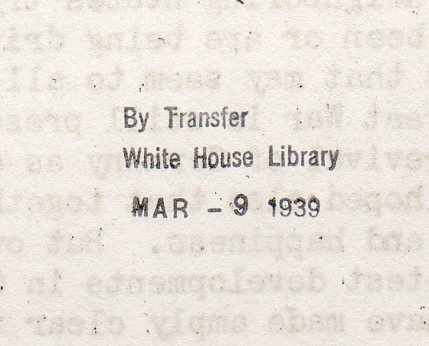
    My copy of this paper was in the White House library for a little while–it was sent from there to the Library of Congress after keeping it for four months or so–presumably the WH had another copy, or had absorbed it, or felt it not-useful, or something else.  No one will ever know. 
    Refugee problem _1_ 408


    ·Posted by :

    ·in:

    —

  • Underwater Curtains, 1942-3

    JF Ptak Science Books  Quick Post

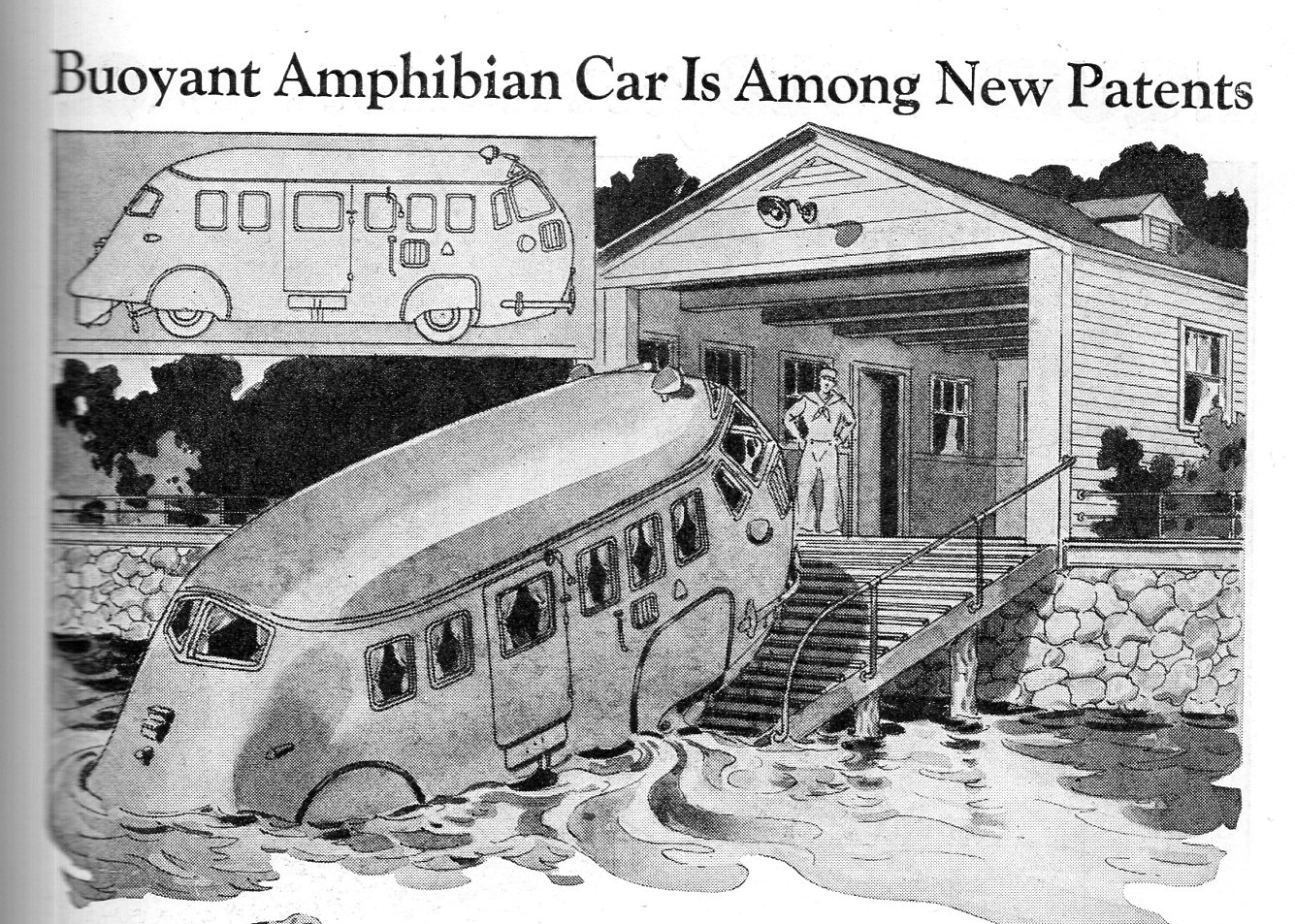
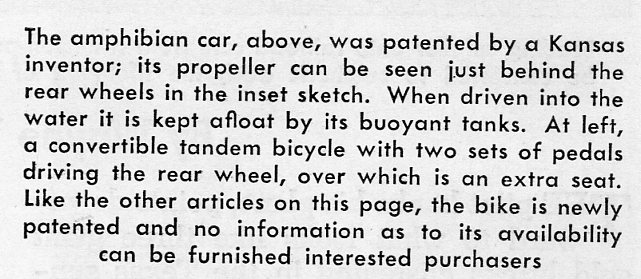
    One thing is for certain with this dream of an amphibious car  (Popular Mechanics, July 1942)–it certainly has a lot of curtains. I looked around a bit for the patent on this vehicle in the obvious places/keywords for patents 1935-1942 but couldn’t find it. I did however bump into some other interesting amphibious craft, two of which I’ve reproduced below for their spherical natures and lack of curtains.  

    Amphibious car 409


    Amphibious car 410

    A spherical amphibious craft with no curtains: 


  • What Things Aren’t and What They Might Be

    JF Ptak Science Books   Post 2616  (Another in a series of “Found” Things–“Found-Poetry”, “Found Landscapes in Antique Images”, etc.)

    “If I had a world of my own, everything would be nonsense. Nothing would be what it is, because everything would be what it isn’t. And contrary wise, what is, it wouldn’t be. And what it wouldn’t be, it would. You see?” –  Lewis Carroll, Alice’s Adventures in Wonderland & Through the Looking-Glass

    There are times when great expanses of seeming nothingness in prints is disgracefully overlooked, simply because they usually have nothing to do with the subject matter and are meant not to be an interrupting influence–that, or they are slightly more than the almost-nothing that they are to provide perspective or depth or contrast or an object for comparison.  These are moments in art for wide interpretation, since they have so little value in themselves. It would be interesting, I think, to treat these are runaway pieces from their artwork, open to a found-experience–and so, in this case of Roman architecture, the solids of nothing become a frammenti, and can be described in found narrative of visual escapes, or even by simply giving the fragment its own title, so that it can have an independent existence.    

    The following four details are from engravings (all reproduced in full, below, in a montage) from Ruinarum variarum fabricarum delineationes pictoribus caeterisque id genus artificibus multum utiles, ca.1550:


     The Aphrodesia of Ancient Air; or, a Macro Microcosm Awaiting a Sky Microscope:

    Ruin visual poetruy detail _1_


    ·Posted by :

    ·in:


  • A Slab of Nothing Suggesting Something

    JF Ptak Science Books   Quick Post 

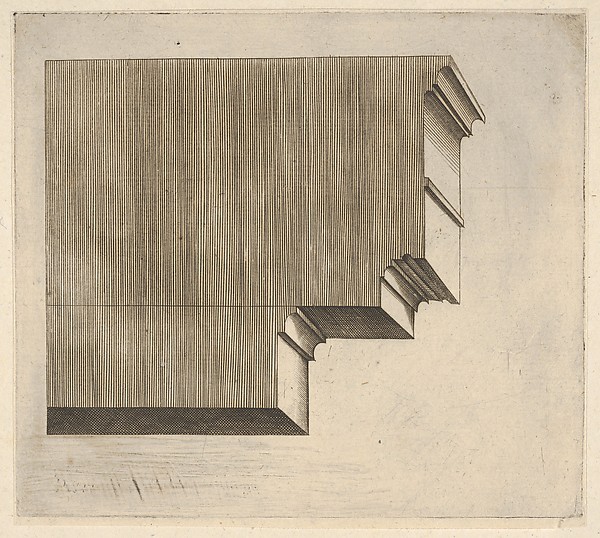
    There is hardly anything that is nothing, or a hardly-nothing that is nothing, because the more of a suggestion that in something exists nothing than we are forced to consider the nothingness which of course defeats the cause of identifying that something as a nothing.  The image below is a good example of the greater expanse of a supposed nothingness–it is a simple cross section of a doric entablature (“a horizontal, continuous lintel on a classical building supported by columns or a wall, comprising the architrave, frieze, and cornice”) or more simply put, the stuff between the pediment and the column.  In this case we see the anatomy of the entablature more so than anything else, most of the decoration and design pretty much left aside.  We are left with a map of lines, a picture of stability, firmness, and a cold comfort, somehow.  

    I just like the engraving.  

    Doric entabalur

    Master G.A. (Italian, active ca. 1535) Doric entablature 

    [Source:  Metropolitan Museum of Art, http://metmuseum.org/art/collection/search/415345?sortBy=Relevance&ft=doric+entablature&pg=1&rpp=20&pos=1]


  • Extraterrestrial Views of the Sun, 1870-1875

    JF Ptak Science Books  Post 2615

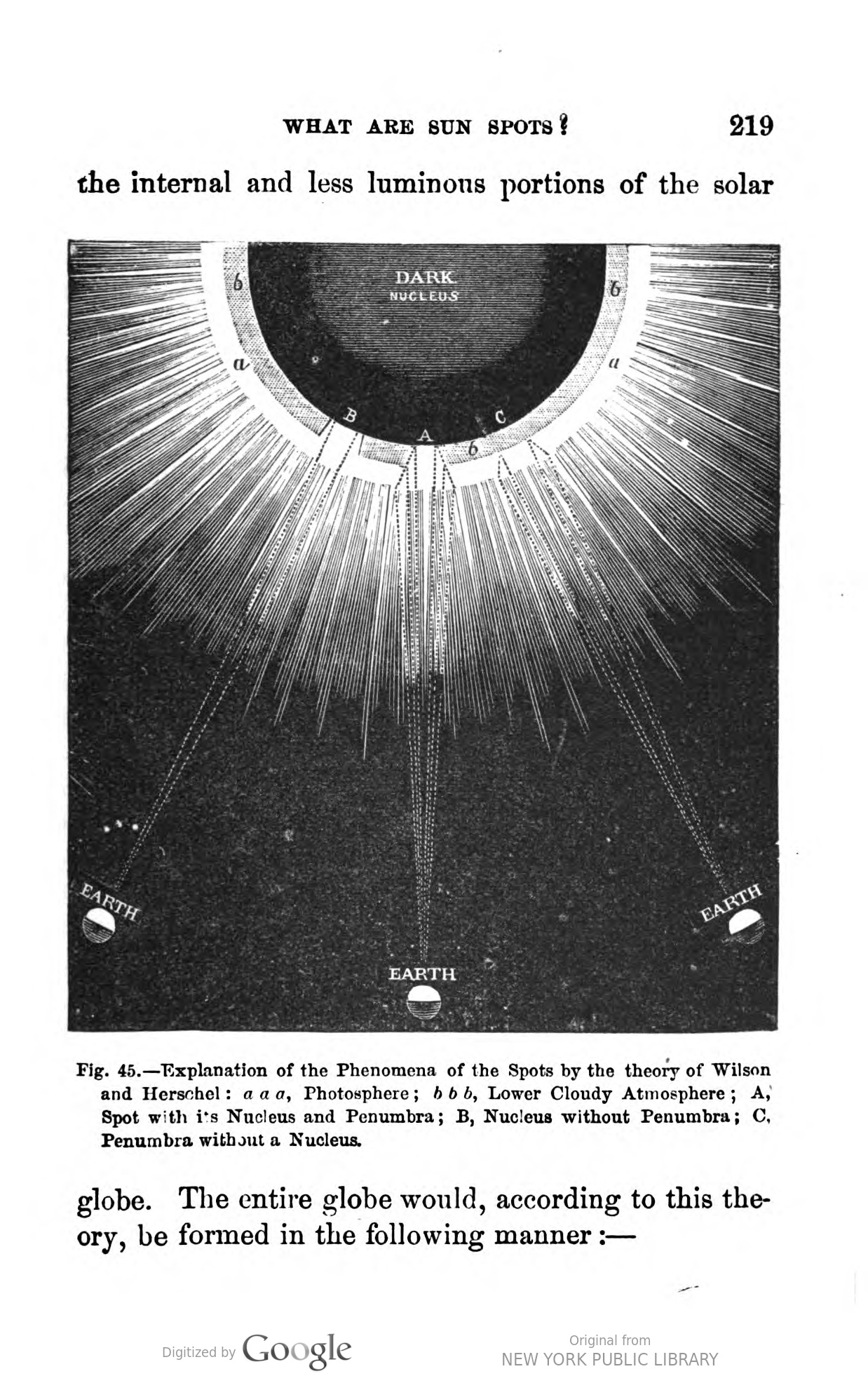
    This beautiful illustration displays the 1774 sunspot theory of Alexander Wilson (1714-1786) of the University of Glasgow, who hypothesized that they were “holes” in the surface of the sun.  The holes or cavities (A and B in this case) were an opening in the shining brilliance of the supposed surface of the sun, and revealing the true surface of the sun underneath the floating layer. This image is found in Amedee Guillemin’s The Sun (1870 and 1875), found in Google Books/Hathi Trust (https://babel.hathitrust.org/cgi/pt?id=nyp.33433057659199;page=root;seq=224;view=plaintext;size=100;orient=0)   

    • Wilson, Alexander (1774) “Observations on Solar Spots”, Philosophical Transactions of the Royal Society of London 64, part I.

    ‘Others,’ continues Cassini, ‘have imagined that the centre of the Sun is an opaque dark nucleus, entirely covered by luminous fluid matter; that in this opaque body there exist volcanoes similar to Vesuvius and Etna, which throw out, from time to time, masses of bituminous matter, which find their way to the surface of the Sun, where they produce the effect of spots, in the same manner that a new island was formed in the Archipelago near Santorin and another near the Azores; that this bituminous matter is altered or decomposed by that which covers the surface and which gradually consumes or dissolves it, forming those nebulosities and transformations which are remarked in the spots; the latter disappearing when this bituminous matter is completely consumed or destroyed; that they appear again, however, at the same points of the solar disc, when the volcanoes throw up another lot of bituminous matter.”


    SUn guillemin Wilson

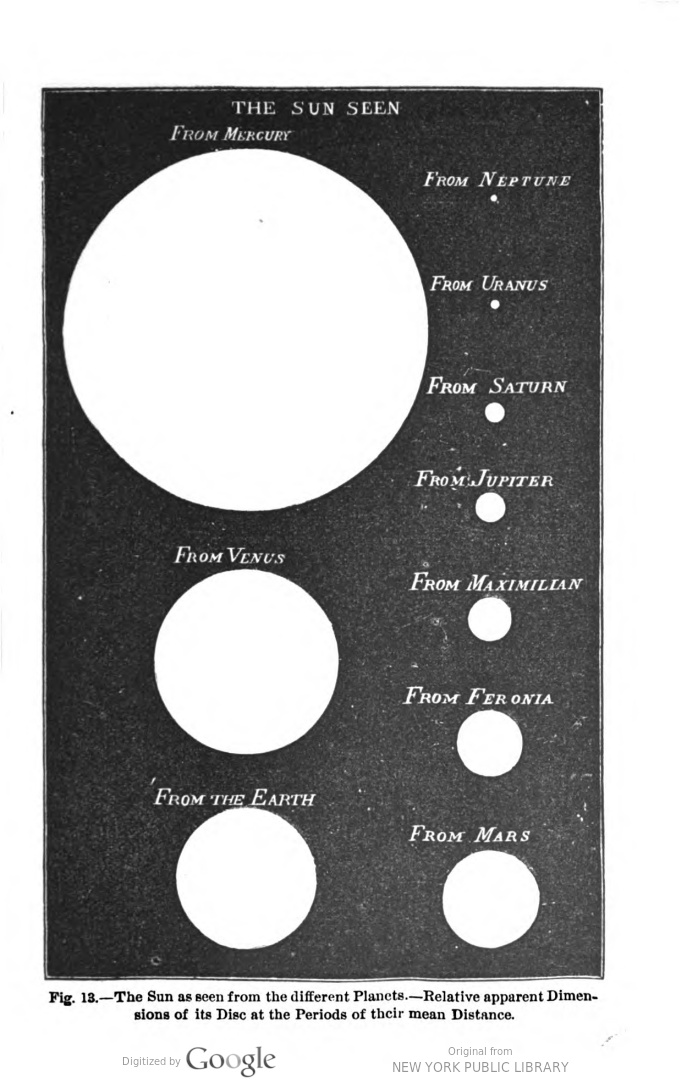
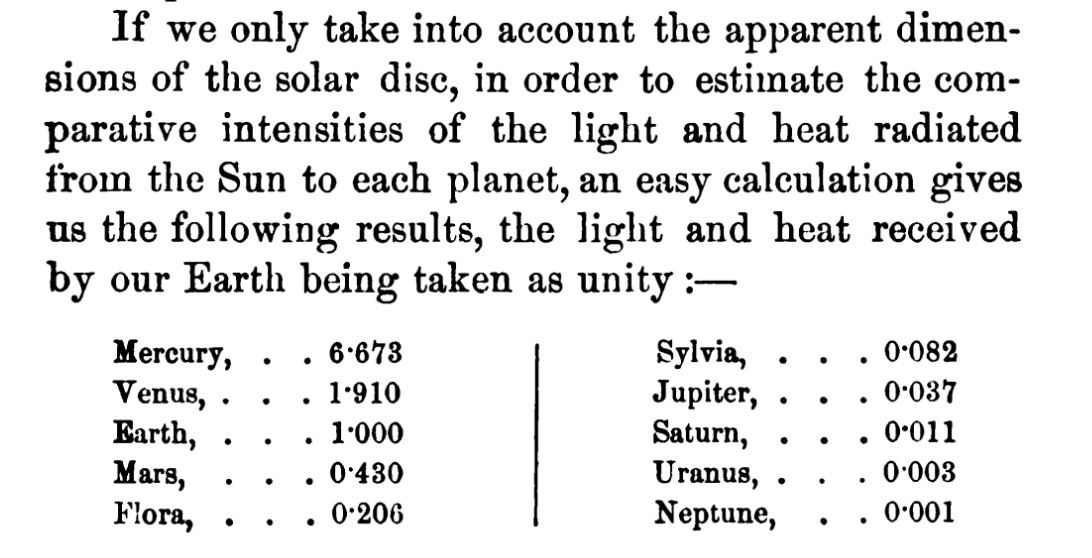
     And just for good measure (and from the same source) here is an unusual comparison of what the Sun looks like from the surface of eight planets as well as asteroid Feronia (which I imagine must be the asteroid 72 Feronia discovered by CHF Peters in 1861) and from “Maximillian”, which I have to admit escapes me.  The interesting part here is that “Maximillian” and Feronia and Sylvia and Flora are all named in images or data boxes but are not mentioned or identified in the text, which means that they were known well enough in 1870 to not need any explanation, and were simply a part of a popular astronomical conversation on minor planets and asteroids.  I’m not sure what the minor planet count was in 1875 or so but today the number is nearly 500,000 (numbered), of which about 20,000 have names.

    Sun Guillemin


    And also the following, listing “Flora” and “Sylvia” in a planets list though they are 8 Flora and 87 Sylvia, asteroids in the main asteroid belt:

    Sun minor planets Guillemin

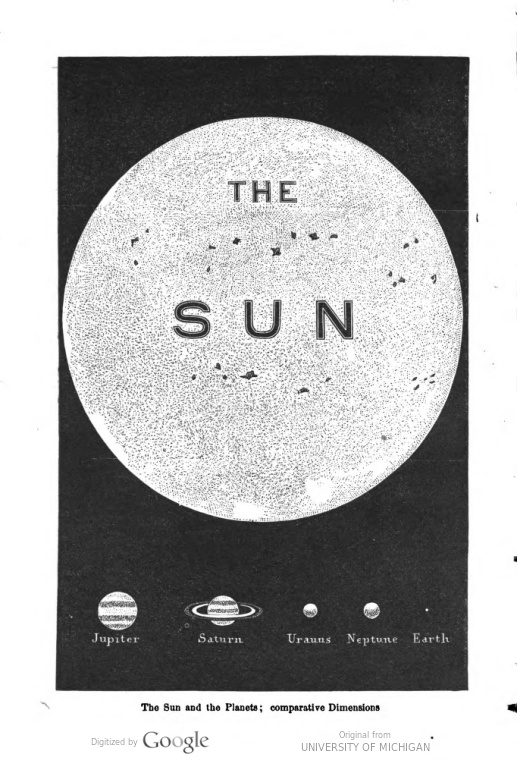
    And the frontispiece, which names the Sun very non-marginally, as though it needed such an identifier:

    Sun THE SUN Guillemin

    Source: Amedee Guillemin’s The Sun (1870 and 1875), found in Google Books/Hathi Trust (https://babel.hathitrust.org/cgi/pt?id=nyp.33433057659199;page=root;seq=224;view=plaintext;size=100;orient=0)   


    ·Posted by :

    ·in:

    —

  • Joie de Huh? Abstract Transcendental Outsider Found-Poetry on Pamphlet Covers

    JF Ptak Science Books  Quick Post

    The following pamphlet covers are just a few of the hundreds of Joie de Huh? examples of Pamphlets With Big and Cumbersome Titles Collection.  They have a sustained abstract poetic transcendental-Outsider feel to them, which certainly fill up a page with their confusing bigness.  I might be able to make a whole wall of these things, which I would suggest to be a bad wall for a bedroom.  

    The first has a definite feel of 1918 to its design, but was actually published in 1940, before the U.S. was actually at war.  There is an inescapable feel of an uncorrected take-home assignment for a logic course to it:

    WWII Kelso382


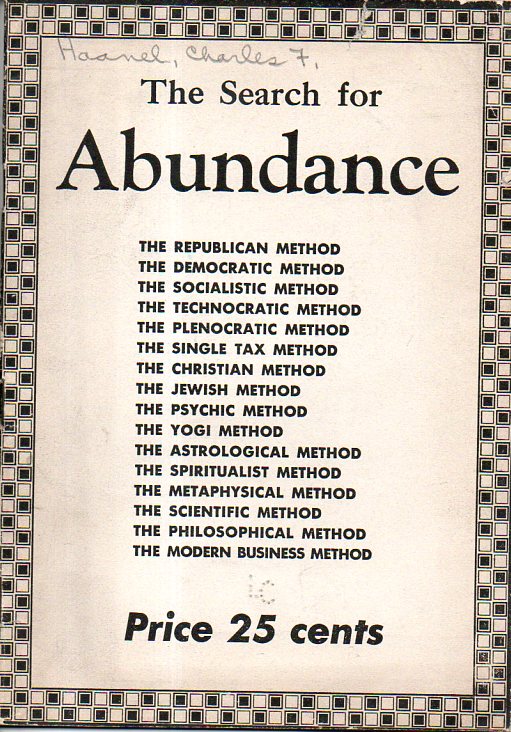
    Next, Charles F. Haanel’s  abbondanza-y  The Search for Abundance, which was published in St. Louis, Mo. in 1937, and seemingly so by the author. (It is a simple 31 pages long, and didn’t seem to get spread out very much–there are no copies located via WorldCat/OCLC, and my copy from the Library of Congress seems to be one of the copyright deposit copies. After considering the list of names on the front cover for their attainment of “abundance” the writer decides that none have been successful, and that the true method is via an AynRandian Natural Law something, which really doesn’t get explained.  The work may have been swallowed up by the abundances of the future that it tried to portray. 

    WWII  abundance377

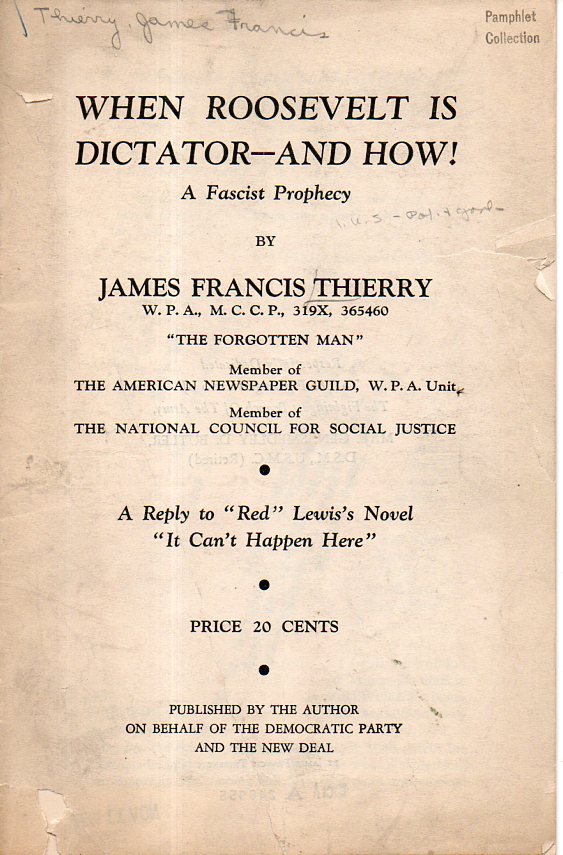
    And to go with your next sip of coffee/tea (Mr. D.) is this bouncing title, which is sort of the way the entire pamphlet reads.  There are many exclamation points inside along with a lot of very (to me) obscure references to not-obvious political figures, all of which is wrapped around a comedic sense of irony that makes it very difficult to figure out exactly what the complaint is, and on what side of the aisle the author comes down on. Nowadays that would be a masterful stroke by a politician, but the author here definitely had an agenda, though given everything I can’t really determine what it was.  


    WWII Thierry376

     (This one didn’t seem to survive, either–again my copy appears to be a copyright deposit copy, and WorldCat/OCLC lists only one lonely copy in the Yale library.) 


  • The High Majesty of Magisterially-High Kitchen Appliances (1935)

    JF Ptak Science Books  Quick Post

    Not only do the following illustrations appear in very uncommon muted pastels (for a high Depression-era publication1) it also seems as though the subtle colors underline and accentuate the screaming boasting nature of their images.  That’s the way it seemed to me when I flipped through the pamphlet and came upon Babel-like kitchen appliances. Perhaps it is the color, plus the design, and the odd perspective that give the stuff a regal/towering impression.  Or it is something else. 

    And so, the Zenith Unction of Refrigerator Beauty:

    Refrigerator400

    And the Withering Beauty of Pastel Height:

    ·Posted by :

    ·in: