A Daily History of Holes, Dots, Lines, Science, History, Math, Physics, Art, the Unintentional Absurd, Architecture, Maps, Data Visualization, Blank and Missing Things, and so on. |1.6 million words, 7500 images, 4.9 million hits| Press & appearances in The Times, Le Figaro, Mensa, The Economist, The Guardian, Discovery News, Slate, Le Monde, Sci American Blogs, Le Pont, and many other places… 5000+ total posts since 2008.

Category: Technology, History of

  • Remote Control Warfare, 1917

    JF Ptak Science Books   Quick Post

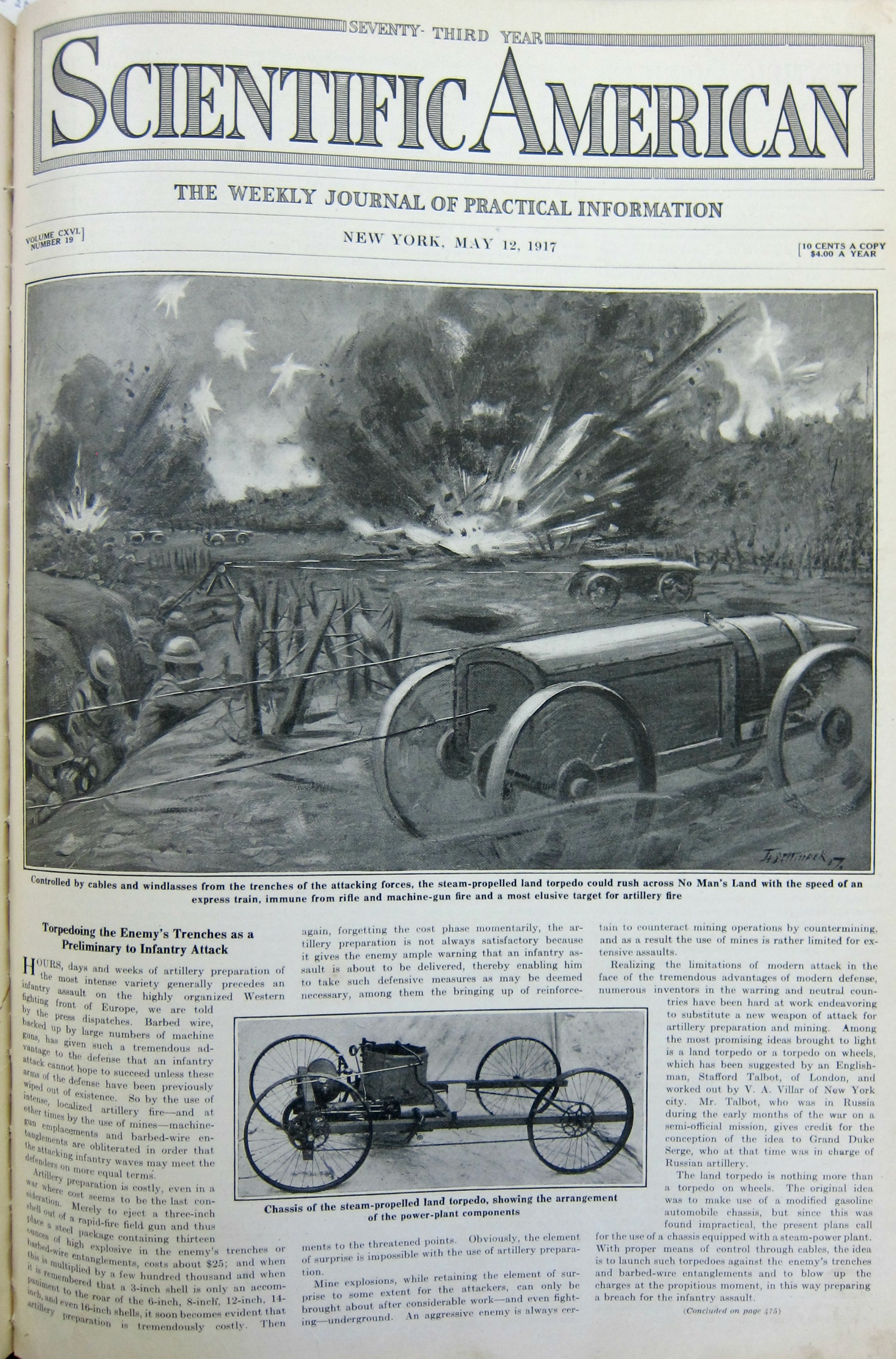
    “Torpedoing the Enemy’s Trenches as a Preliminary to Infantry Attack” is a short but powerful article on the possibility of drone strikes in 1917. Actually, it was more like a wire-guided war robot, steam-driven, trundling across No Man’s Land in a whirl of steel wheels and steam, guided from one trench to attack another, on the other side. The thing doesn’t look so functional, given the varied and terrifically uneven ground it had to traverse with a heavy (and explosive) load and its carriage and powertrain. In a way it reminds me of a Bangalore torpedo, except mobile–on the other hand, the Bangalore actually worked. 

    Ironically, the torpedo was being operated across land from one land-submerged army to another; the colorful cover of this issue pictures finding submarines by air patrol, and then eventually killing the sub with an air-launched torpedo. 

    WWI Project land torpedo


    ·Posted by :

    ·in:

    —

  • The Only Plan of a (?) Illustrated in the 219 Years of the Great Journal, Annalen der Physik (1816)?


    JF Ptak Science Books  Quick Post

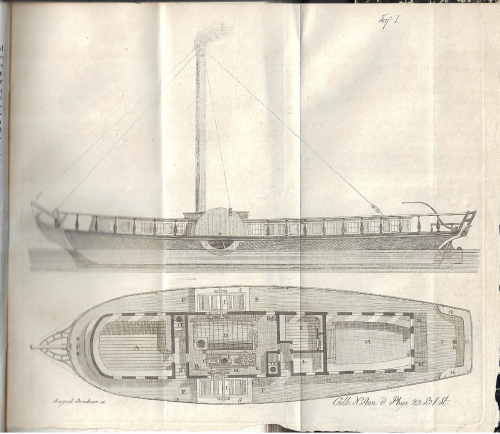
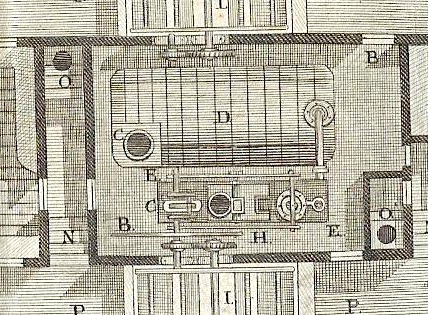
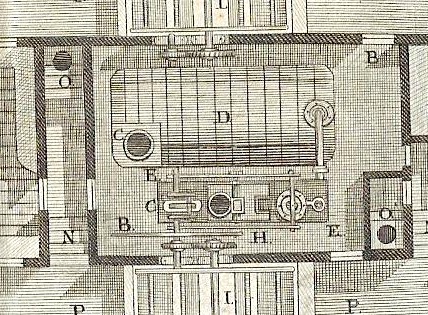
    There aren’t many illustrations of steamboats in the great physics/chemistry journal, Annalen der Physik. Rarer still is seeing a plan for such a vessel that includes something that is seldom included–can you find it? I’ve made an enlargement of it and posted it below the first image.

    Annalen 1816 steamboat

    Here it is (“O”):

    Annalen 1816 steamboat detail

    This identifies the “water closet”, the bathroom, noted as “O”, in two locations.

    It seems to be little more than a tiny closet with a box with a hole in it, but, well, there it is.

    I suspect that this is the first and last time a W.C. is pictured in one of the most important scientific journals in history.

    Notes: 

    The engraved plate is found in Annalen der Physik, series I, vol 53; vi, 446pp., 1816, in the article “Noch einige neuere Zeitungs-Nathrichten, Dampfshiffe betreffend… (with a small folding plate, with two views of the vessel), pp 110-119.  The volume also includes the following steamboat-related papers: 

    • “Einige geschichtliche Nachrichten von der Erfindung der Dampf-Schisffahtr…” pp 63-70;
    • Robertson Buchanan, “Ueber die sogennten Dampfboote…”, pp 70-77; 
    • Isaac Weld. “Die erste Serreise mit einem von einer Dampsmachine bewegetn Schiffe, vom Glasgow in Schotland um Cap Landsend nach London”, pp 77-102;
    • “Zwei schriben an Herrn Isaac Weld…die Dampf-Schiffharht und dem merkwurdigen…pp 102-110; 


  • A Fine RADAR Map of NYC, 1945

    JF Ptak Science Books

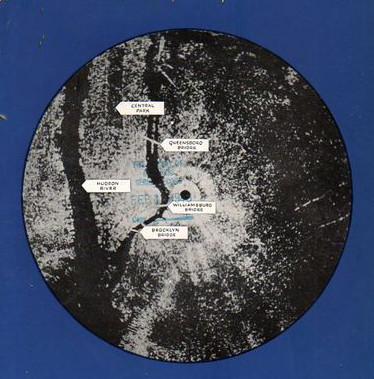
    Radar map nyc

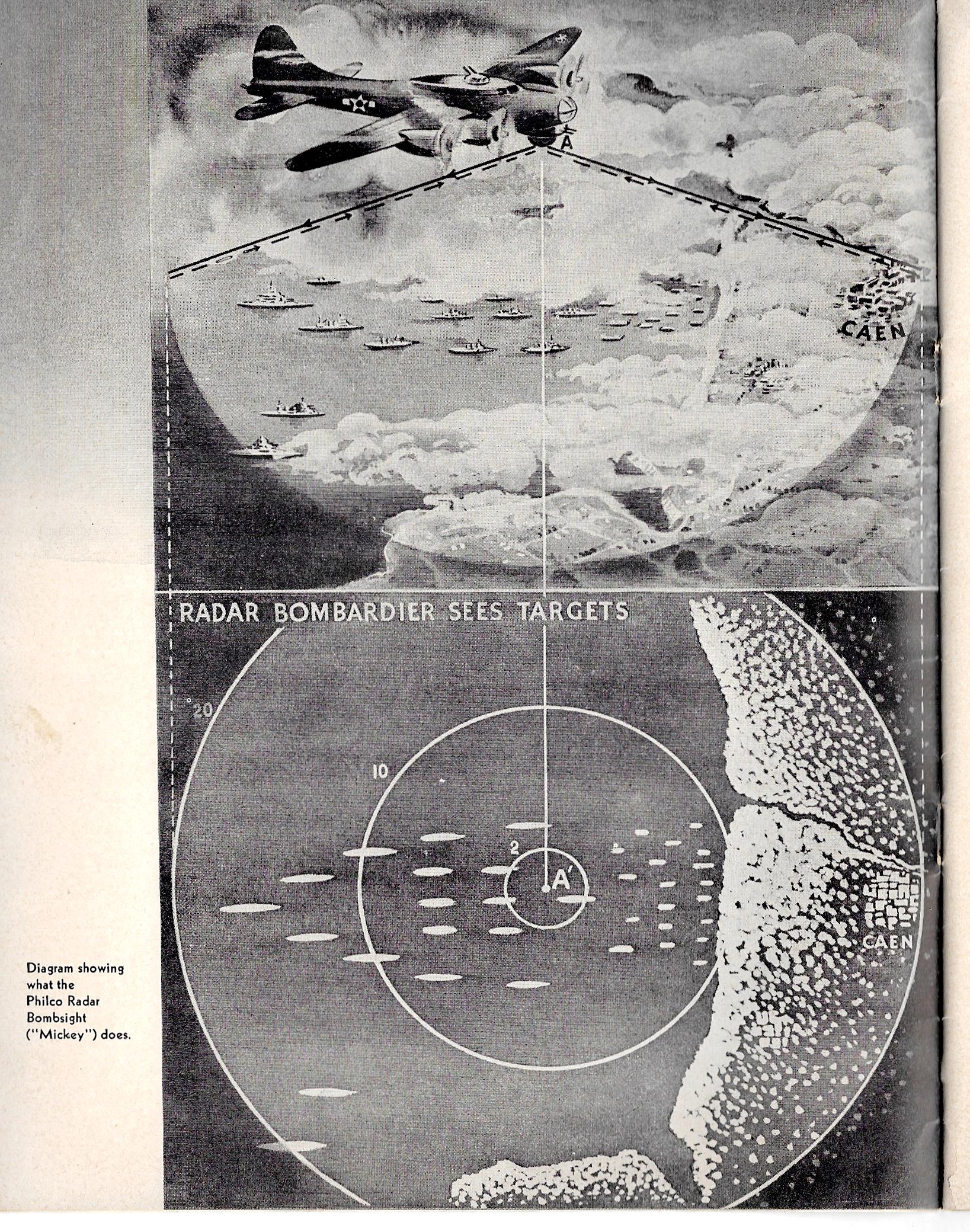
    The history of RADAR (RAdio Deection And Ranging, and something I’ve always written in caps, for whatever that is worth) is absolutely not what I’m thinking about now–that is a long story with lots of twists and turns, complicated, complex–and it ranges depending upon location as for the most part RADAR (from the 1930’s anyway) was developed in secret, kept as a military secret.  And that’s because it was a very important development, with the victor of the Battle of the Beams being the possible victor, period.  

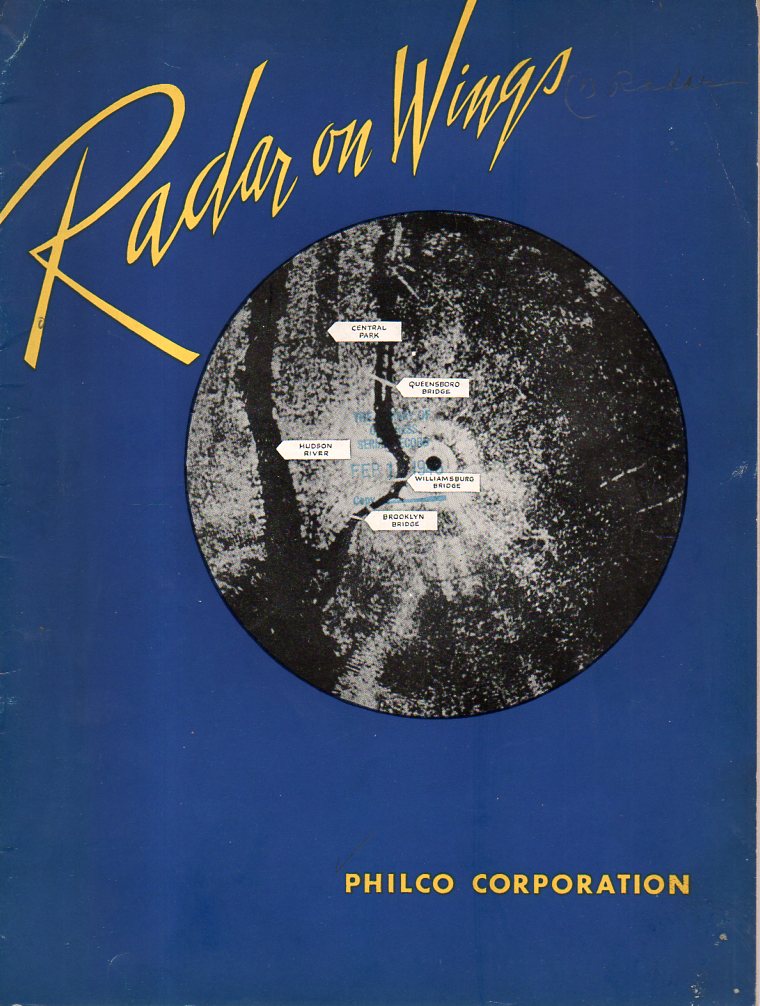
    Radar246

    All I want to do presently is note the significance of this particular pamphlet in the history of RADAR. This work was printed by PHILCO Corporation, (and dated December, 1945), and has an inserted leaflet stating that this “makes public for the first time the salient facts about the Corporation’s development and production of airborne radar equipment for the United States Army and Navy”.  PHILCO and other companies made significant contributions to the war capacity of the Allied forces, and–for this company in particular–much of that went unknown for quite some time afterwards, and of course there are some stories that just won’t get told. But for PHILCO the story gets told here.   RADAR 1945

    This is also a fabulous nighttime map of NYC–produced by RADAR.  

    [RADAR on Wings, Philco, 1945.  10×8″, 30pp (unpaginated) with lots of photographs and an occasional schematic.]

    ·Posted by :

    ·in:

    —

  • The Ineffable Beauty of Traffic Signals (1936)

    JF Ptak Science Books   Quick Post

    This is another in the Ineffable Series of common but unspeakably lovely things, coming just on the heals of a post a few days ago on the ineffable beauty of pile drivers. 

    Blogtraffic262

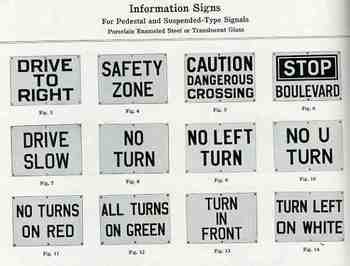
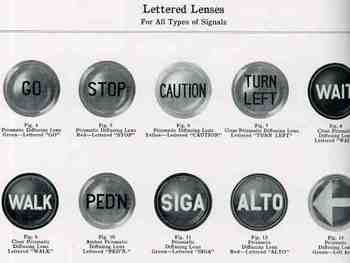
    These images are about as basic as it gets for the common, everyday, overlooked objects from the disappeared past.  They come from the Course-Linds manufacturer’s catalog for traffic lights and other control systems called, yes, Traffic Signals and Controls, published in Syracuse (NY) in 1936. It is a beautifully designed catalog—excellent illustrations laid out perfectly on their pages, with all of the data you’d ever need to order these things for your municipality.  

    Blogtraffic263
    What I find so fascinating about the images here is that they depict ubiquitous objects that today would today—given their ephemeral nature—be exceptionally difficult to find.  
    Given this catalog, today they are not.


    Blogtraffic260

    Blogtraffic259_2

    ·Posted by :

    ·in:


  • The Sudden, Unexpected, Ineffable Beauty of Pile Driving (1950)

    JF Ptak Science Books   Quick Post

    I was making my way through the IBM  Proceedings of the Industrial Computation Seminar for September, 1950, after having reported on the article by pioneer Wallace Eckert1 on the role of punched cards in scientific computation, when I read down the contents list and found a paper titled  “Pile-Driving Impact”.  The contents page listed the author (Edward A. Smith) but not their association, and so when I turned to the article I expected a vision-of-the-future-world-of-computer sorta paper. 

    Wrong! 

    The paper was far more interesting than that, and Mr. Smith–from the Raymond Concrete Pile Company–was writing about piles, pile driving, and the impact of the application of computing in the course of doing pile driving…and teh people who loved them. Well, not that last part, but everything preceding it. Of course it makes sense to be writing about this, though I had never before considered the role of computation on pile-driving before this–and I must report that Smith’s paper was sort of beautiful, in its way.  I was very happy to have read it.  

    Here’s a part of the Smith piece to enjoy, followed by a link for the rest of the paper.

    • Pile-Driving Impact, by EDWARD A. SMITH (Kaymond Concrete Pile Company ) “[Calculations] performed in the IBM Technical Computing Bureau, provided a complete numerical analysis of the behavior of a pile when struck by a pile-driving hammer. The results indicated what stresses occurred within the pile and capblock, as well as the penetration of the pile into the earth. This is an example of the replacement of costly experimentation by economical calculations…”
    • “Previously, using only key-driven calculators, it has been possible to study only partially a few isolated cases of the behavior of a pile under an impact. This was due to the high cost in time and money associated with each case studied. By employing the high speed and accuracy of IBM electronic calculating machines to perform this repeated formula evaluation, it is possible to study the behavior of numerous pile types. The cost of each case studied thereby will be substantially reduced.”
    • Source, and for the rest of the paper, see Internet Archive: https://archive.org/stream/bitsavers_ibmproceedmputationSeminarSep50_8283585/IBM_Industrial_Computation_Seminar_Sep50_djvu.txt

    Notes: 
    1. Eckert was professor of astronomy at Columbia from 1926 to 1970 (!), as well as the Director of

    the US Naval Observatory Nautical Almanac Office, and founder and Director of the Watson
    Scientific Computing Laboratory at Columbia University).

    "As Director of Watson Lab and IBM's Director of Pure Science, he oversaw construction of the SSEC
    (arguably the first true computer) and NORC (less arguably the first supercomputer), the most
    powerful computers of their day, as well as of the IBM 610 – the world's first "personal
    computer" – and he installed the first computers at Columbia open to research and instruction,
    meanwhile initiating what might very well be the first computer science curriculum, in 1946,
    including his own course, Astronomy 111-112: Machine Methods in Scientific Computing, along
    with other courses that same year taught by Watson Lab scientists Grosch and Thomas."
    --http://www.columbia.edu/cu/computinghistory/eckert.html

  • Artwork for Detecting Nuclear Explosions in Outer Space (1960)

    JF Ptak Science Books   Quick Post–continued

    I do not have the source for this though I believe it is from Science Magazine from 1960.  The ad was placed LANL looking for new hires, and employed the artwork of Emil Bisttram1 (Taos, New Mexico), representing the new ARPA (pre-DARPA) work for the detection of nuclear explosion tests conducted in outer space, Project VELA. 

    “In a continuation of presidentially-directed programs, Eisenhower assigned ARPA in the summer of 1959 the task of developing the technologies necessary for the detection of nuclear tests, what would become Project VELA (Vela means watchman in Spanish). This program would examine technologies for detection space and atmospheric tests by satellites (VELA , undertaken by the High Altitude Detection panel (the Panofsky panel) of PSAC, which recommended that a satellite system be employed to detect atmospheric or space nuclear tests as part of a verification system for a possible nuclear test ban treaty.”–“DARPA Space History”, here: http://qnet.me/legal/DARPA%20-%20Background.pdf

    Ads  VELA371

    Notes:

    1. “Hungarian born, James Emil Bisttram (1895-1976) attended the National Academy of Art and Design, Cooper Union Art School, Parson’s School of Design, the American Student’s League, and the New York School of Fine and Applied Arts. Bisttram studied mural painting by Diego Riviera’s side. After moving to New Mexico he started the Taos School of Art, where he founded the influential Transcendental Art movement.”–from the Sullivan Goss Gallery, http://www.sullivangoss.com/James-Emil_Bisttram/


    ·Posted by :

    ·in:


  • On the Economic Efficiency of Poison Gas in Wartime (1921)

    JF Ptak Science Books 

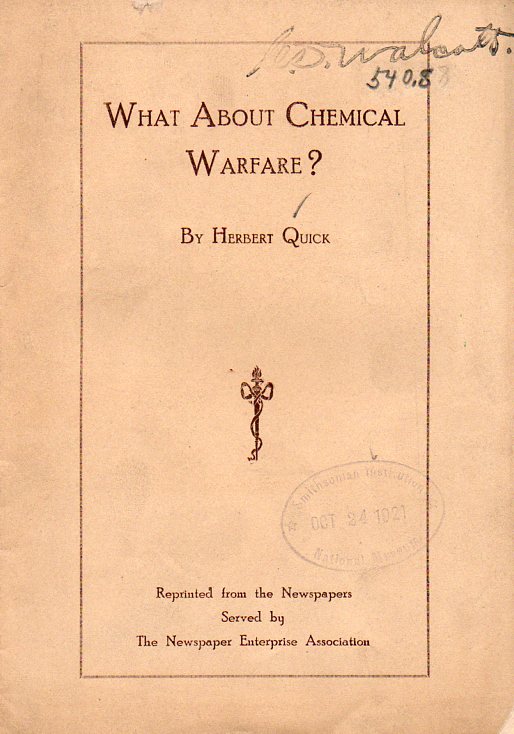
    • Review: QUICK, Herbert. What About Chemical Warfare? The Newspaper Enterprise Association (1921) 15pp.
      7×5 inches. Fine condition. WorldCat/OCLC locates 6 copies. 

    WWI--gas machine gunb712

    [Image: Illustrated London News, October 30, 1915, detail of photo on front cover.]

    Herbert Quick did a fair amount of thinking about the military use of poison gas, and it winds up, in the
    final analysis, thinking that it was tolerable. What About Chemical Warfare? (published by the
    Newspaper Enterprises Association in 1921) is certainly a possible title for a Duck-and-Cover A-Bomb
    or You and Your Hormones kind of film. But Mr. Quick took the slow boat around his issue, thinking
    about it a little long and out loud, before coming to his final conclusion in the chapter titled “Gas
    Warfare Cheapest and Most Effective Arm of Defense”.
     

    [Internet Archive offers the full text : https://archive.org/stream/whataboutchemica00quic/whataboutchemica00quic_djvu.txt]

    He points out the enormous impact in the war effort that relatively small chemical corps played in
    WWI–something on the order of hundredths of one percent of all serving soldiers were employed in
    the combined chemical corps, saying “how small a body to produce such great results!” Which is true,
    assuming that by “great” he meant ‘widespread’, though it is unclear exactly what he was talking about.
    Quick does make a case for poison gas being not so inhuman as presented by most civilized people,
    pointing out both its high quick-death rate and survivability/recovery rates, which seems to be
    giving/taking at the same time. No matter: “But woe to the army or nation that does not keep up with
    the times. The Angel of Death will breathe in their faces” he writes.

    The author also warns that though Germany was “stripped” of her war-making capacities, he thought it
    was not so of the industries necessary to produce poison gas. He points out that Germany can produce
    these munitions in secret, and that if any “militaristic nation conquers the world in the future”, it will be
    through the use of the poison gas it developed in secret.

    Defense was also important: “in the absence of efficient defense worked out beforehand, our great
    cities might be wiped out with gas bombs dropped from aircraft”. Mr. Quick believes that protecting
    cities is possible, writing simply “preparation will prevent such a crisis”. Indeed. Unfortunately no
    ideas about this defensive posture were forthcoming, though he did bring himself around to writing
    about gas as a defensive tool. Against looters. And rioters. And snipers. “Gas puts the sniper in the
    power of his enemy” Quick writes, using the Marine action in Vera Cruz, Mexico, as a good example of
    where gas (“gas grenades”) would have come in handy.

    The bottom line is of course the bottom line, practically stating that poison gas as a weapon was
    indisputably more cost-conscious than anything else, by far, each dollar spent on chemical warfare
    being worth “from three to five hundred for the army”. Poison gas services Quick says should be
    pursued, because “gas warfare cannot be stopped until all war is stopped”.
    Gas warfare “gives the educated, intelligent nations the advantages over the people of lower
    civilizations”.

    “When both sides are prepared it is much less inhumane than war with bullets and high explosives; but
    it means horrible annihilation to the army which is unprepared.”
    It is an interesting exercise to replace “poison gas” with other types of weapons, just to see how it
    reads.

    Mr. Quick was up and down in his treatment of poison gas and war, though almost entirely down. One
    thing he didn’t see, that no one saw, really, was the use of a particular gas that was used to destroy
    millions of people, and which was developed quite in the open in Germany for many years, used for
    killing rats. The Nazis simply used it instead on people. No one saw Zyklon-B coming, and no one
    could have, even when they did.

  • The Steel Tree of Sheffield, ca. 1935

    JF Ptak Science Books  Quick Post

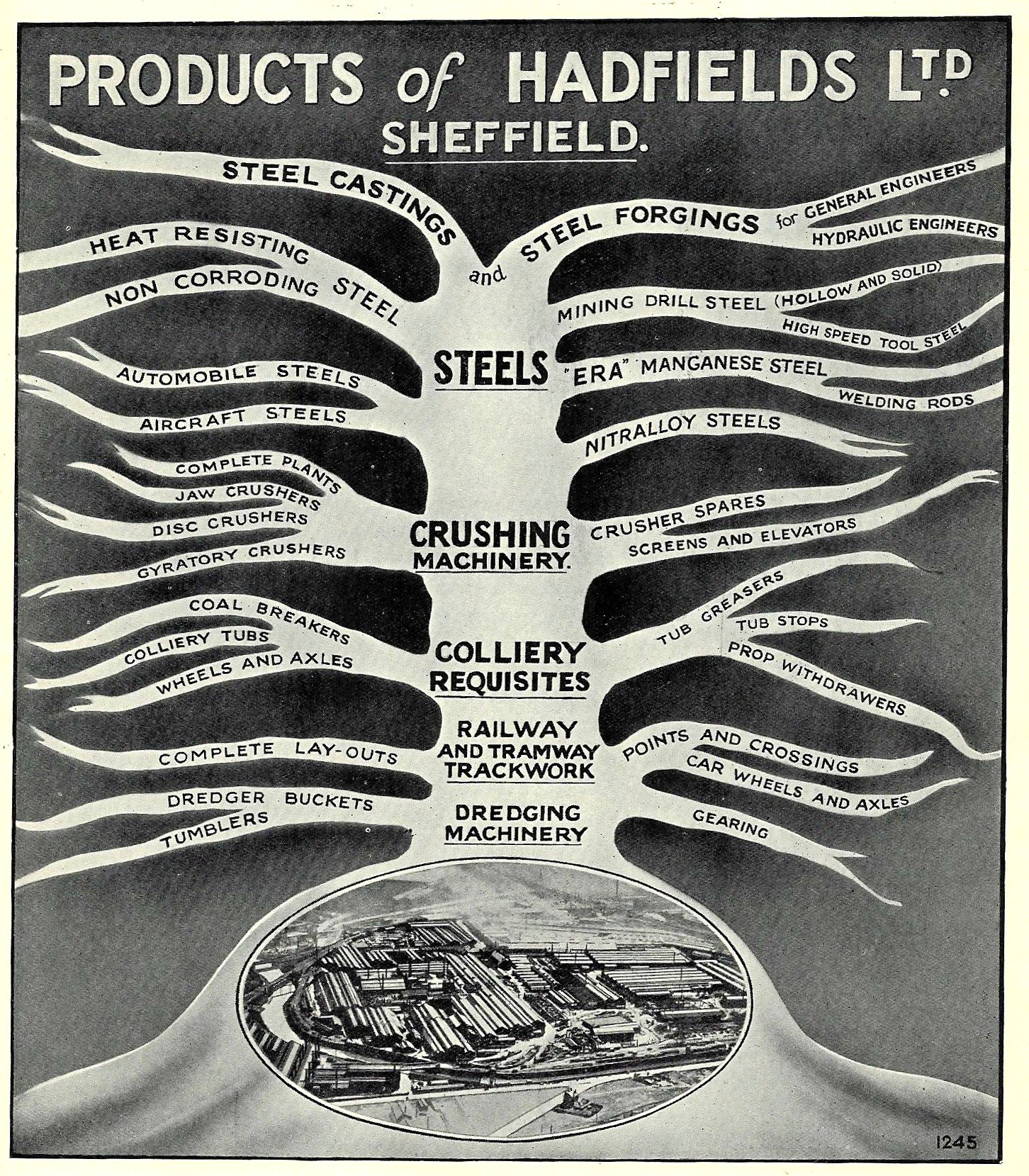
    I really should have kept track of this genre of design, the “tree of ______”,  as I’ve encountered this iconic method of data visualization  probably dozens of times, though I’ve only collected fewer than ten of them. The tree designs are relatively ancient, as with Porphyrys tree ( a hierarchical organizer based upon the then Aristotlean categories like substance, quantity, relation, quality, doing, undergoing, place where, time when, position and having), the standard and famous tree of Darwin and Haeckel, scientific organizing schemes (like the tree of the history of computers), as well as advertising vehicles (like Steinkohle of Essen’s tree of the derivatives of gas and coal and coke) and bits to display ideas good and bad (like the eugenic tree of human evolution, looking for their converts).  In any event, I’d say that this design has been used hundreds of times, if not more. 

    This evening’s sample comes from a heavy and slick publication for “Sheffield Week”, showcasing producers in that city and surrounding area, and printed about 1935.  There are many ads from manufacturers and sellers, and this example is one of them. Hadfields Ltd., which produced a lot of heavy goods, many of the genres of which are the heavy limbs of this heavy tree:

    Tree evolution

    ·Posted by :

    ·in:


  • Display of Information: the Naval Power of Principal Nations (1903)

    JF Ptak Science Books   Quick Post    

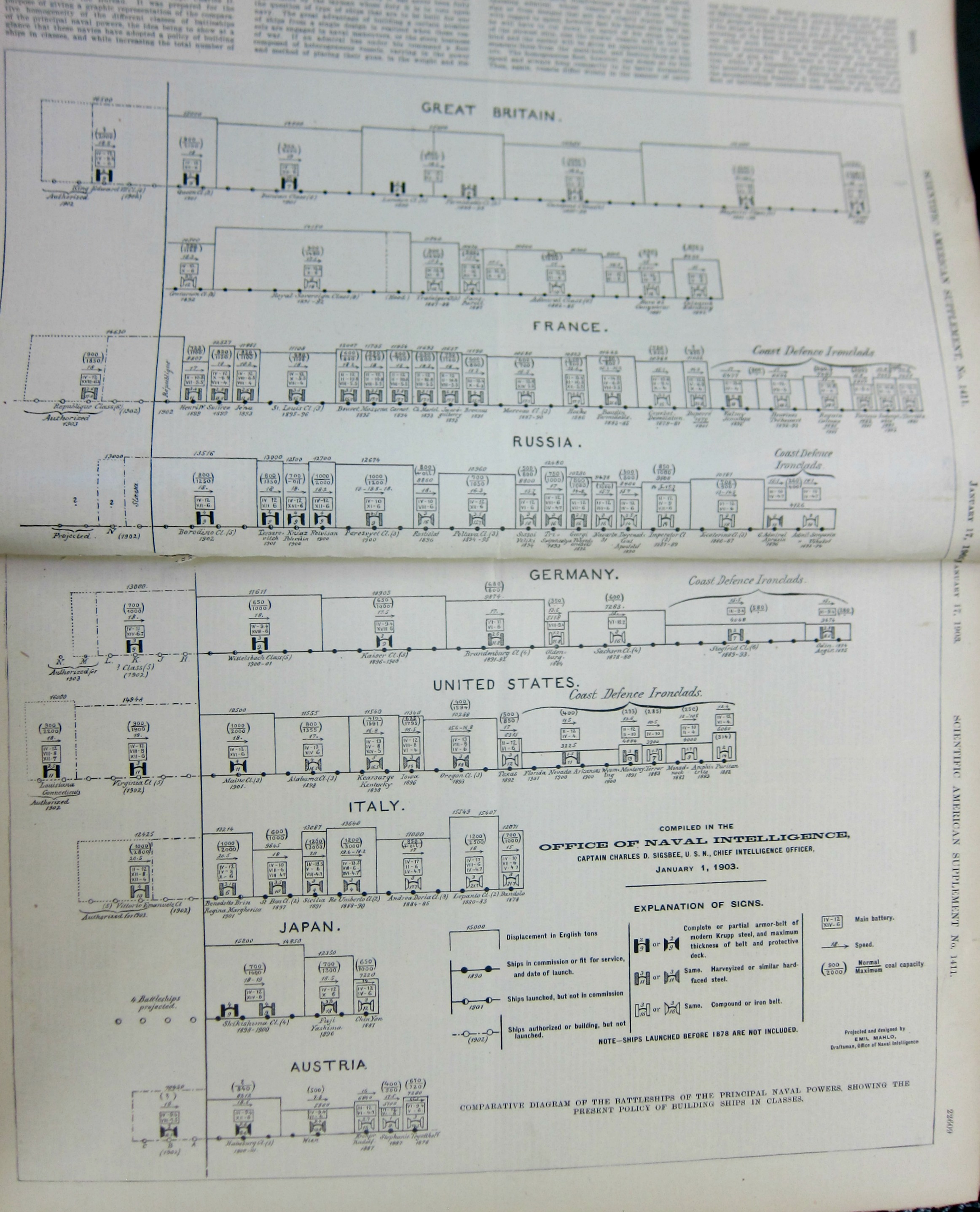
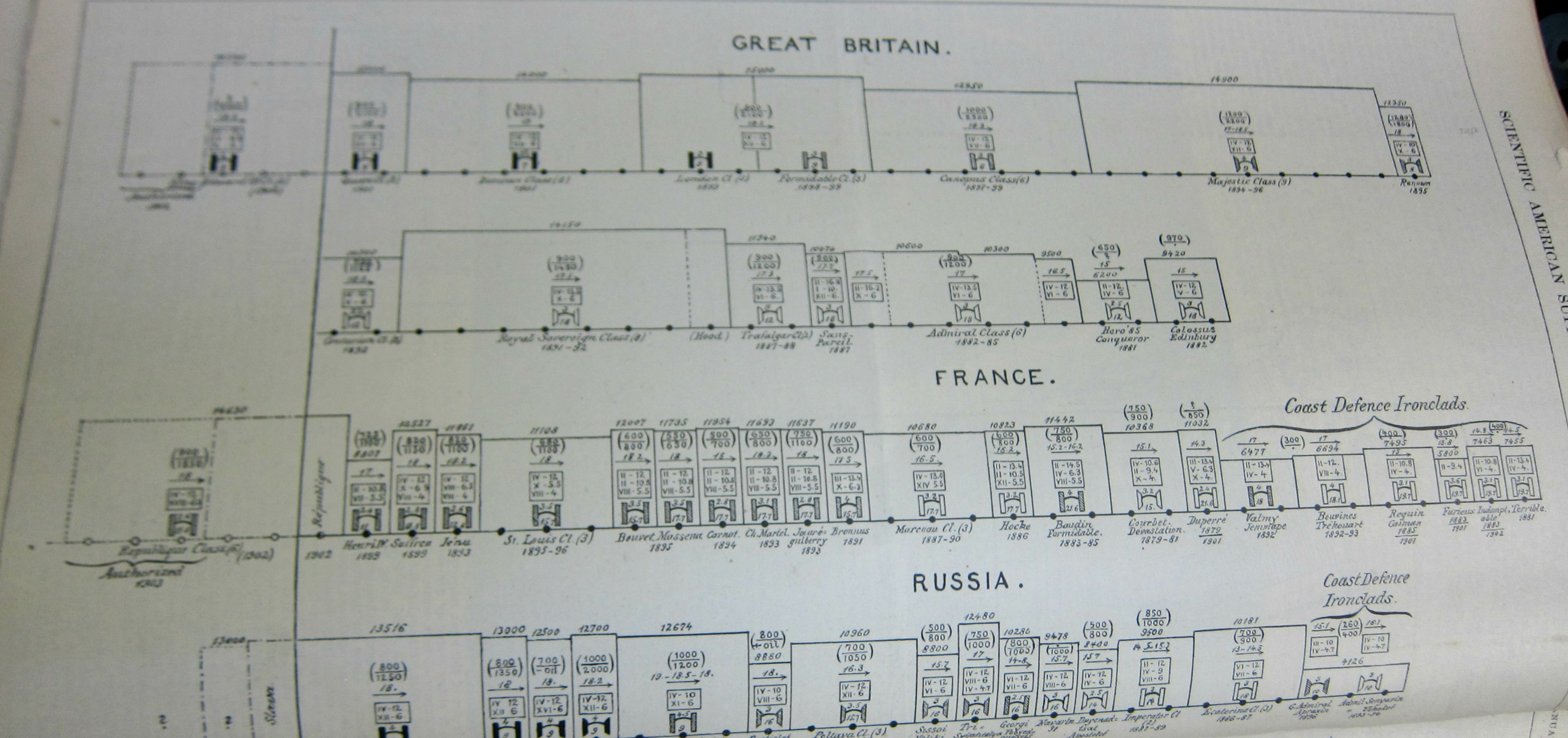
    I came upon this fine display of info this evening, a big two-page spread in the Illustrated London News, opening up to an impressive 16×26″ or so. The chart shows relative naval power (measured in this case in terms of battleships) between Great Britain, France, Russia, the U.S., Italy, Japan, and Austria. It appeared in Scientific American Supplement issue 1411, January 17, 1903 (pp 22608-9). The images are greatly expandable: 

    Datviz naval power 1903 ILN

    And in parts:


  • Beautifully Design Railway Lights (1874)

    JF Ptak Science Books   Quick Post

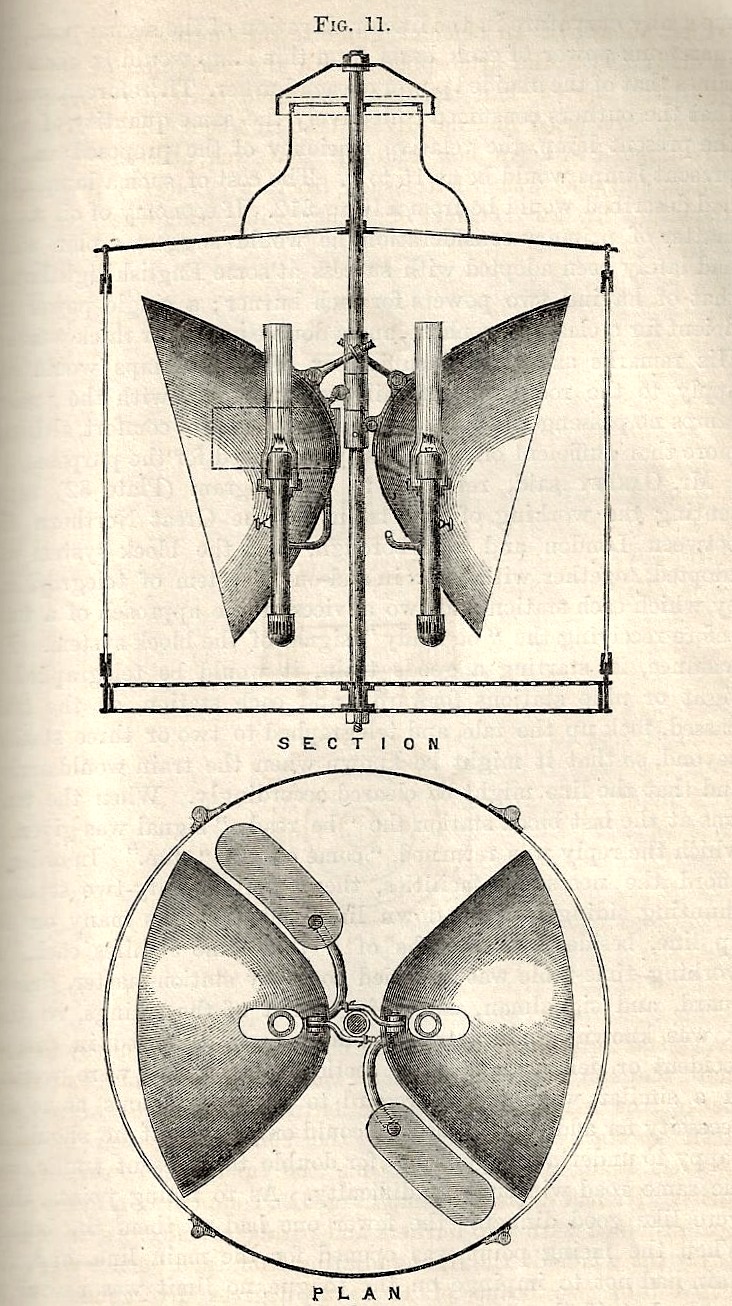
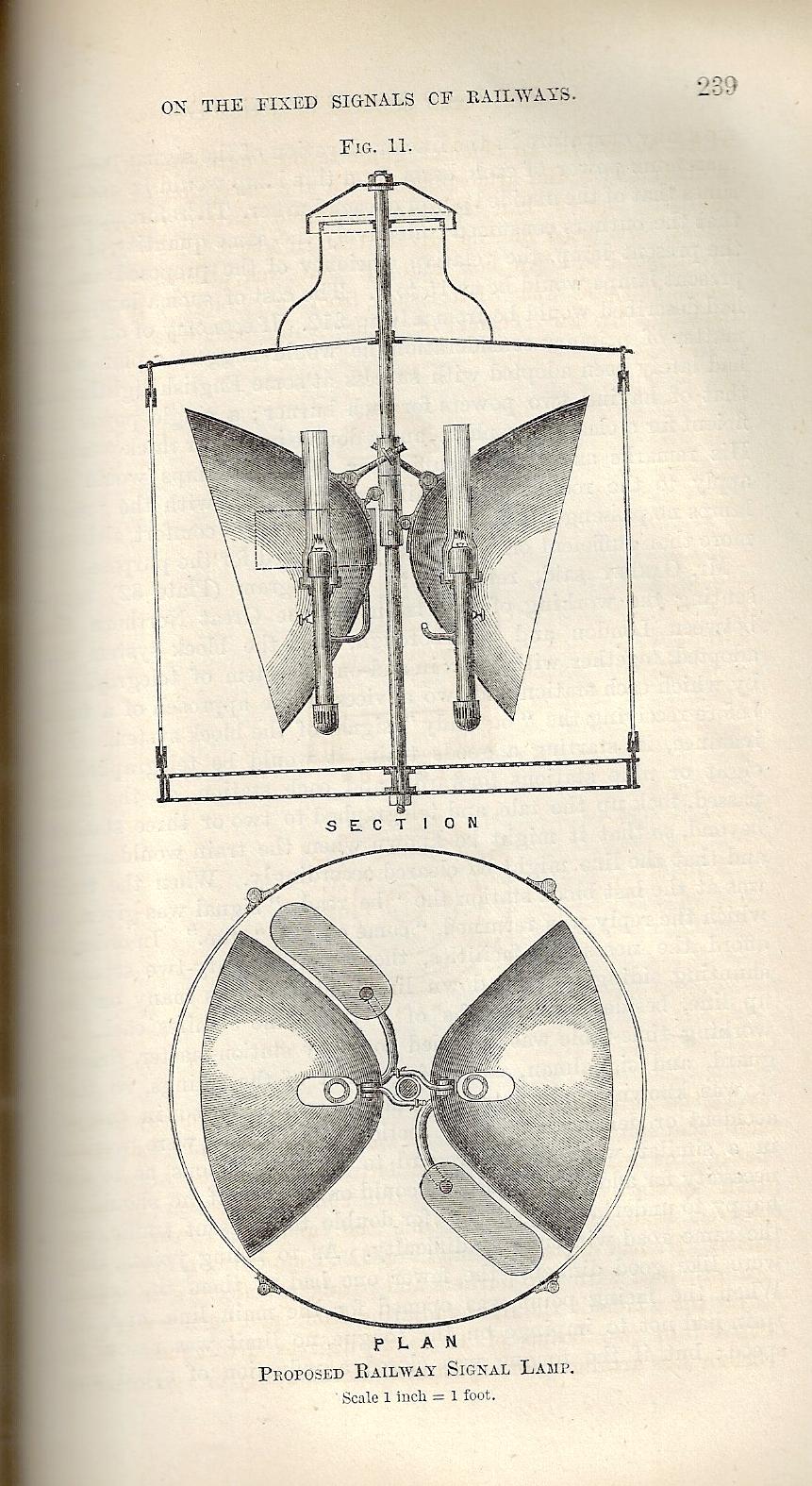
    I find this cross section and plan of a railway signal light to be spare, elegant, and beautiful. Just enough work was done to the detail, with all extraneous matter left behind. It is one of those excellent pieces of thinking that pop out all of the time in the 19th century engineering journals that I have here–this one really made an immediate impression. The work is that of Richard Rapier, and appears in the Proceedings of the Institute of Civil Engineers and published in London in 1874.  

    Civil Engineers 1874 RR lights

    ·Posted by :

    ·in: