A Daily History of Holes, Dots, Lines, Science, History, Math, Physics, Art, the Unintentional Absurd, Architecture, Maps, Data Visualization, Blank and Missing Things, and so on. |1.6 million words, 7500 images, 4.9 million hits| Press & appearances in The Times, Le Figaro, Mensa, The Economist, The Guardian, Discovery News, Slate, Le Monde, Sci American Blogs, Le Pont, and many other places… 5000+ total posts since 2008.

Category: Future, History of the

  • The 50 Million Volt Dust Curtain of Nikola Tesla (1934)

    JF Ptak Science Books  Post 2709
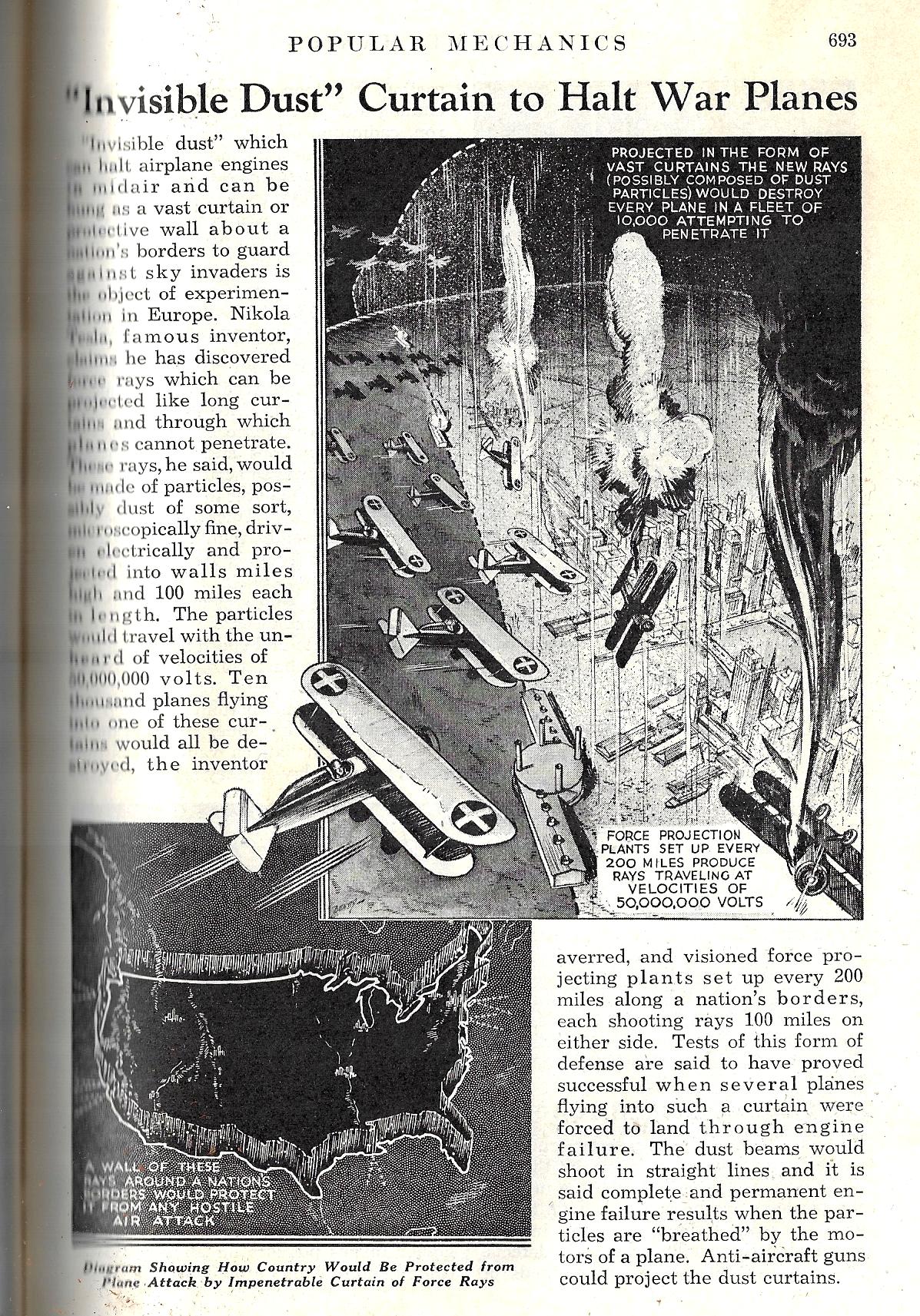
    Pop Mech 1934 TeslaThe “dust” in question here is not intended to be weaponized versions of those famous dancing bits of Brown and Einstein, but a very very high voltage-invisible-something that would obliterate any attacking air force or army. The idea is one in a long history of “death rays”, though this one belonged to Nikola Tesla (who had a much earlier outline for an idea on militarizing wireless telegraphy technology) and as such was received with considerable respect in the public and scientific spheres—or, at least in scientific areas, the low/no detail plan was given inspection and testing before it was dismissed.

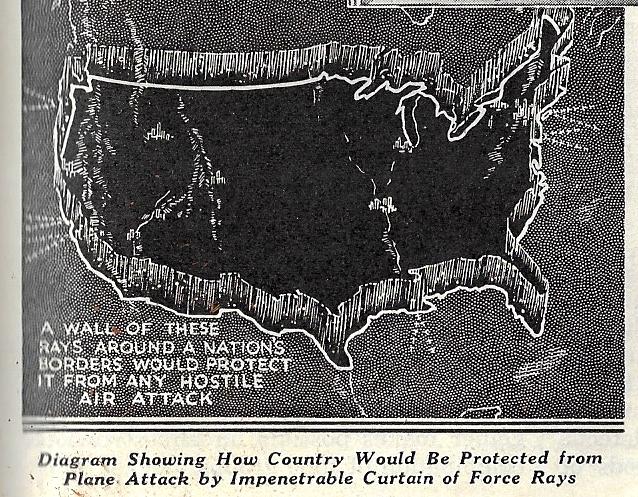
    The popular press (Chicago Tribune, New York Times, Newsweek) reported that Tesla had plans for a country-wide defensive network that would basically make the U.S. Impregnable and put an end to war. One problem was that there were nearly no details offered for the plan—at least until this article (“Invisible Dust Curtain to Halt War Planes”) appeared in Popular Mechanics in November 1934. Even though this as an extended version of the idea, there’s scant detail in this article as well. But, Tesla being Tesla, the idea was given wide circulation.

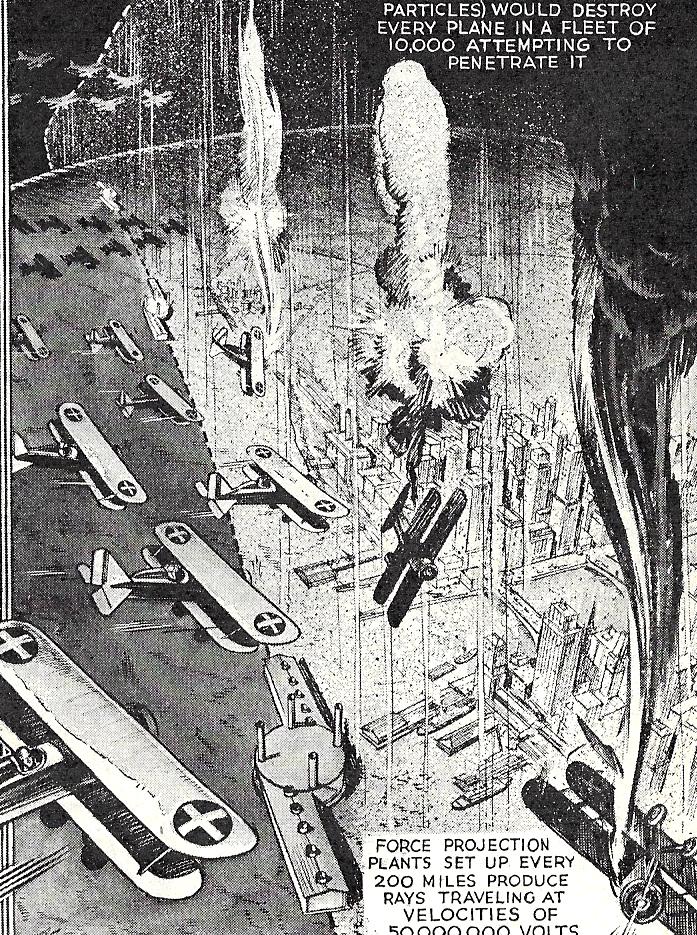
    Simply put, the article reports that Tesla “discovered force rays which can be projected like long curtains and through which planes cannot penetrate” which was composed of “microscopically-fine” “possibly dust of some sort”bits “driven electrically” at “velocities” of 50,000,000 volts and which would form invisible walls that were miles high and surrounded the country. And so thus powered the weapon could destroy an army of one million and an attacking air force of 10,000. Somehow all of this would permanently disable aircraft engines as well as destroy soldiers.
    Pop Mech 1934 Tesla _2_

    Evidently the plan for this invention was based upon four other inventions which hadn’t yet been invented, which would explain the lack of details. Nevertheless, the National Bureau of Standards did investigate and attempt to reproduce something resembling the results that Tesla was trying to bring about, but obviously failed, even though Popular Mechanics had reported some successes in experimentation.

    It seems to me that Tesla’s technology was far more powerful and advanced than many of its fictional rivals like Flash Gordon and Buck Rogers, and maybe even so of the Martian weapons from Wells’ The War of the Worlds.
    Pop Mech 1934 Tesla _3_

    Notes:

    For an interesting read in this area I was surprised to what looks like a thorough and engaging work by William J. Fanning, Jr.: Death Rays and the Popular Media, 1876–1939: A Study of Directed Energy Weapons in Fact, Fiction, and Film (McFarland, 2015) page 95

    Also, it is a curious thing that when I googled “tesla” the first reference to Nikolai was at the bottom of the 9th page, nearly 100th in line after the car/company–and that is just all sorts of wrong.
  • Another Episode in Our Bulbous Future (1931)

    JF Ptak Science Books   Quick Post    

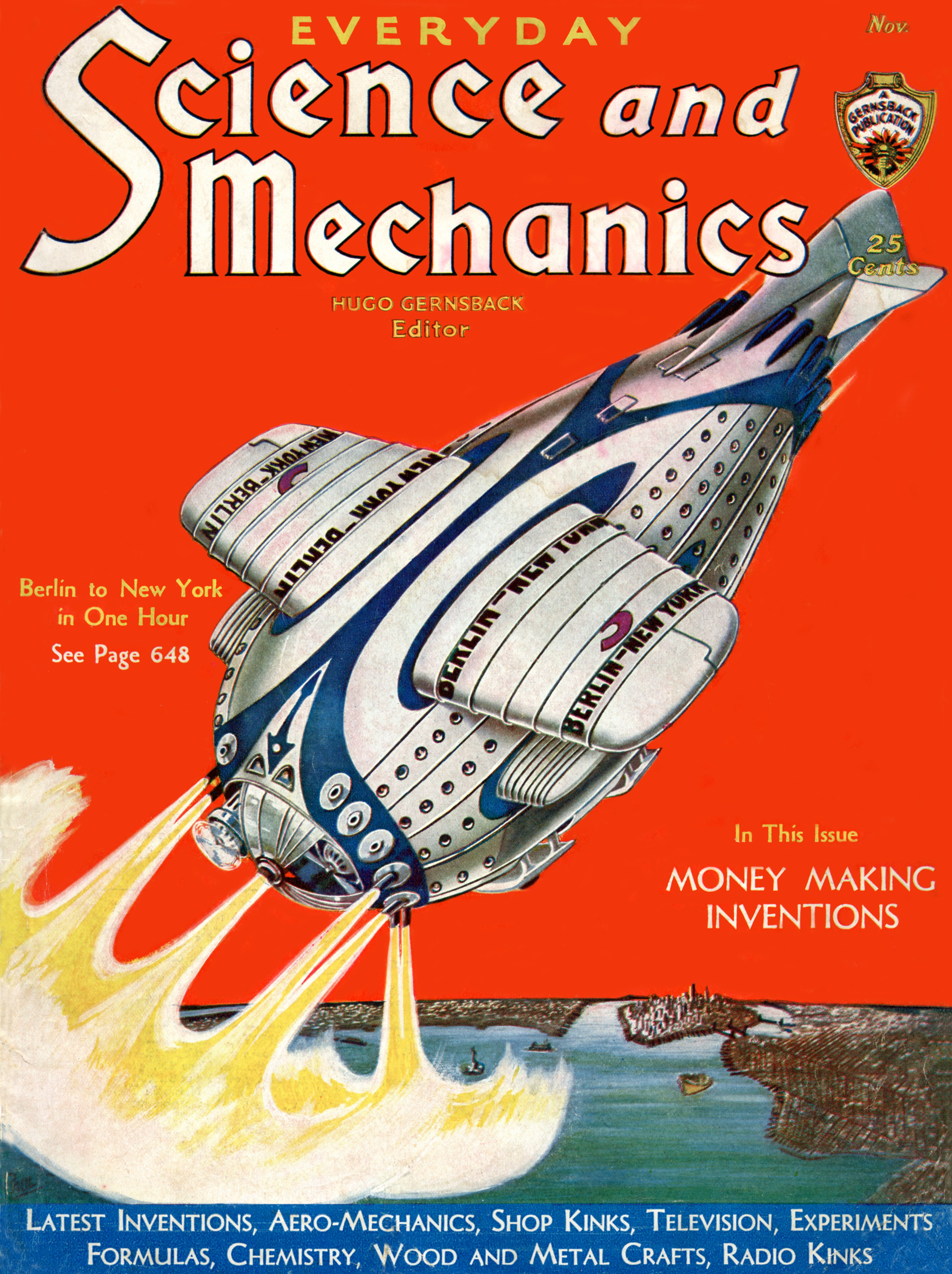
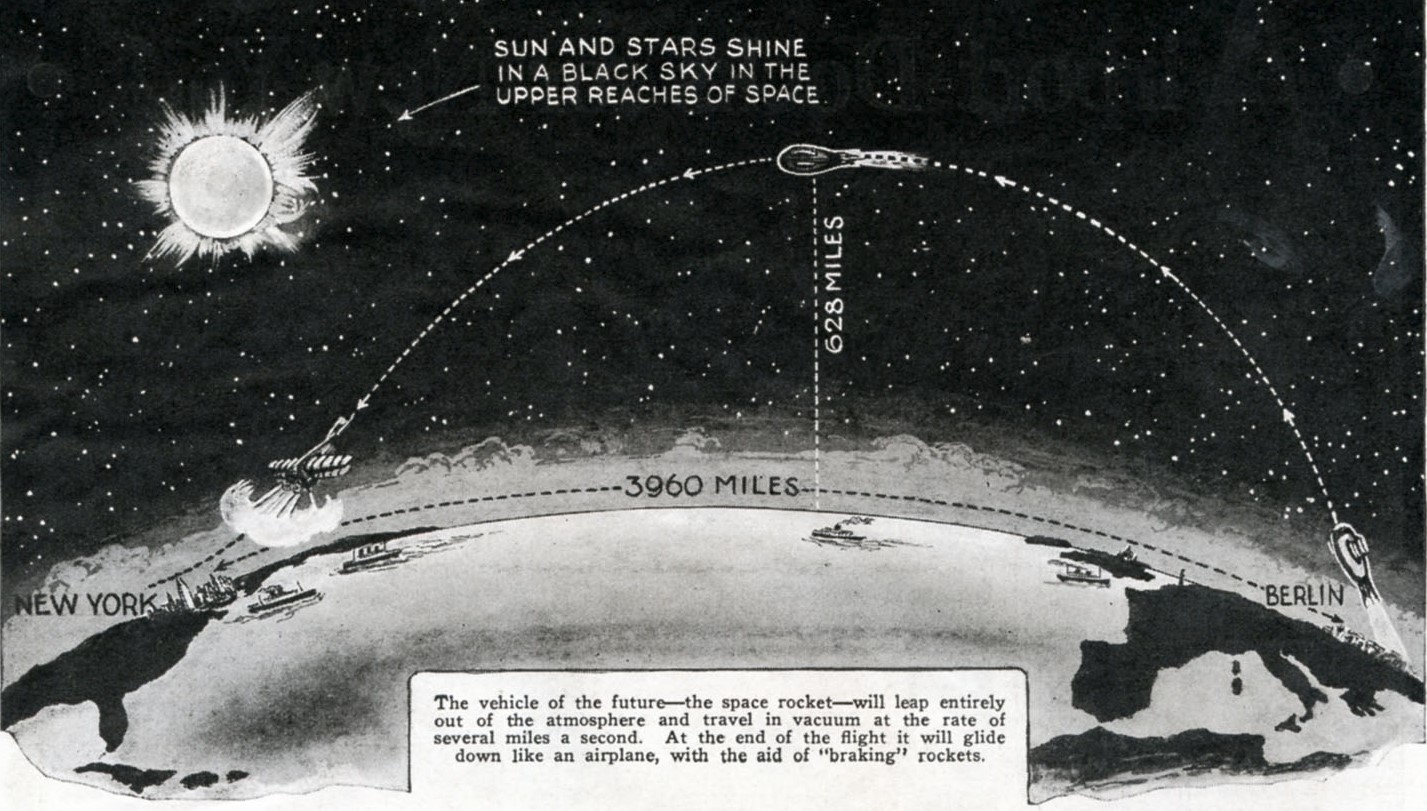
    I’ve written several posts here on the great science fiction/speculative science illustrator Frank R. Paul, and I am returning to him now with this glorious image of spaceflight commercial services. It appears in Everyday Science and Mechanics, published in November 1931 (volume 2/12), and the great Bulbosity is featured splashily on the cover. The airship was supposed to get its passengers 628 miles into space to complete a one-hour arc from Berlin to New York City, and the image shows us the end of a flight,  the craft slowing above the bay, just south of Manhattan and Brooklyn and north of Staten Island:


    Everyday Science_and_Mechanics_Nov_1931_cover bulbous

    Image source: Wiki Commons, https://commons.wikimedia.org/wiki/File:Science_and_Mechanics_Nov_1931_cover.jpg

    Text: https://commons.wikimedia.org/wiki/File:Science_and_Mechanics_Nov_1931_pg648.jpg

    And the cross section of the journey:

    Everyday Science_and_Mechanics_Nov_1931_text

    Hugo Gernsback–the author, editor, creator, publisher, and major force in the history of science fiction–wrote the article, and although many problems associated with space flight had already been at least semi-solved, there was still a big hurdle to go: fuel.  Yes, and the engines that the fuel would power.  There are no specs for the ship, but offhand –judging the portholes to accompany a seat–I’d guess that the ship was at least 200′ long and 80′, and was getting into orbit under its own power. And by the looks of things, there wasn’t much space for the engines that would do that. It seems that Mr. Gernsback was confident that the problem would be solved by 1946.  I know that the facts and figures don’t have much to do with the actual vision, because those are the things that could get in the way of visionary thinking, sometimes. Seems that here there would be no real encumbrances like that here to get in the way of this lovely idea.   


  • The Rolling Houses and Glass Homes of Futurlandia


    JF Ptak Science Books   [Part of a series on the History of the Future]

    The rolling house of the future (offered in the September, 1934 issue of Everyday Science and Mechanics) promised at least one thing–the ability to be towed by a tractor.  (And seeing that the thing is being pulled along by chains, let’s make sure that there’s no downhill towing, yes?)

    Rolling_house_large

    [Image source originally located via  Retronaut though now I cannot find the correct links for them. Sorry!]

    The spherical houses seemed to come with their own railroad tracks for easier motion–a continuously self-laying track, which would make the new American suburbs a Suburbia Mobilia.  Cheap cars, cheap houses, and a Great Depression might have made for a picture of the future that was very self-sustaining.  On the other hand, the one thing that would not have been in the gunsights of the American manufacturing center is the size of the houses, which seem to me to be on the order of 500 square feet or so, which does not make for a lot of room to store all of the consumables that were waiting just around the next decade or so, waiting for the first real generation with a large amount of disposable income to loosen on all manner of never-to-be-purchased-before-by-the-working-classes consumers.  In this respect I am sure that these small buckets for human life would seem unacceptable, leaving little room for purchases. 

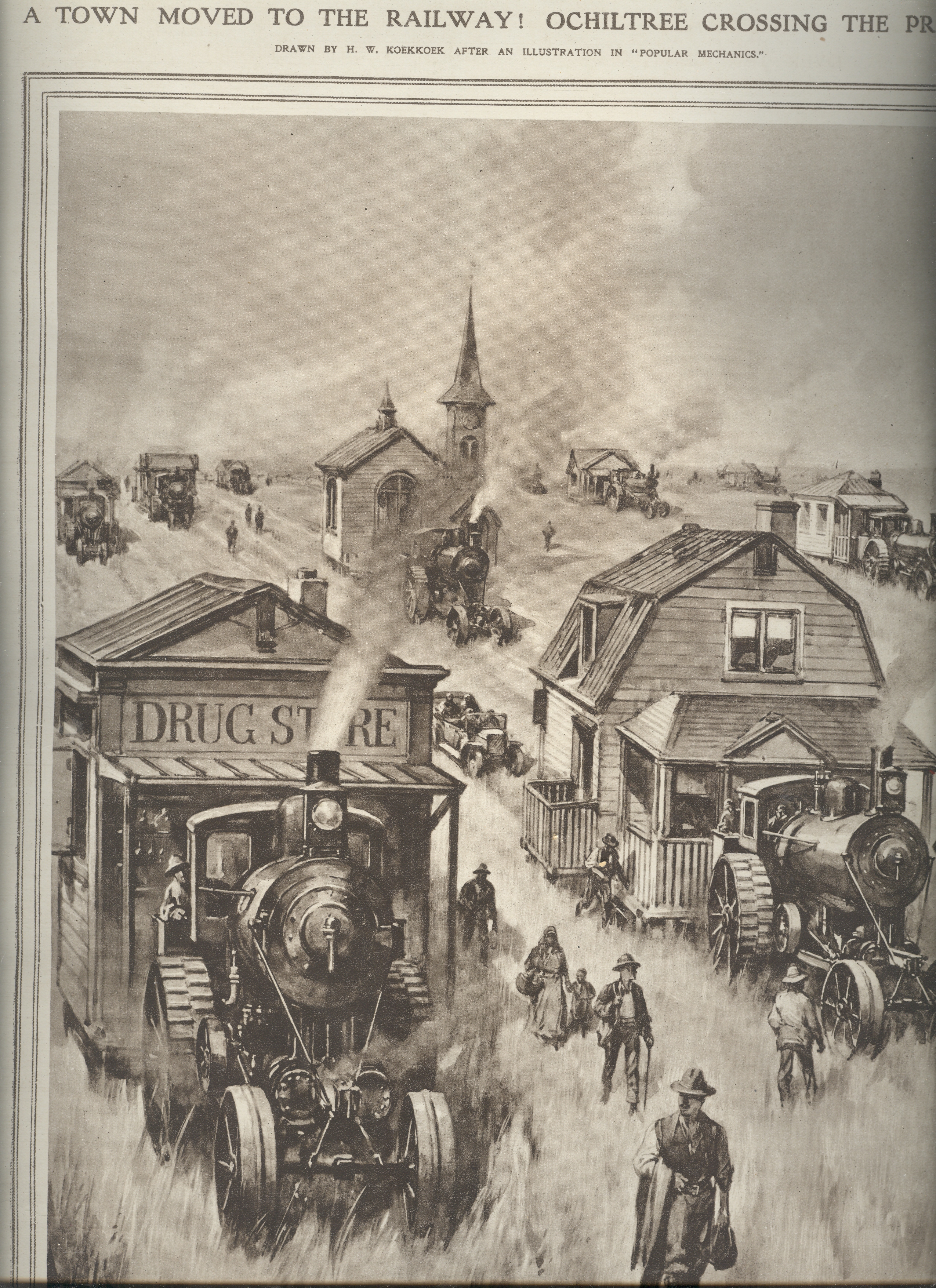
    ++00++ 9.25 ochiltree, texas

    It does remind me of wholesale town-moving, but from the past–real-life stuff, things that happened.  Like here, for example, in  Ochiltree, Texas, 20 October 1920.  This was a rare occurrence–to move a town–though it is hardly unique, particularly if moving the town closer to a railroad line that had decided to pass it by meant the difference between life and death of the town, then, well I guess you moved the town if you could.  Cemeteries included, sometimes; and sometimes not.

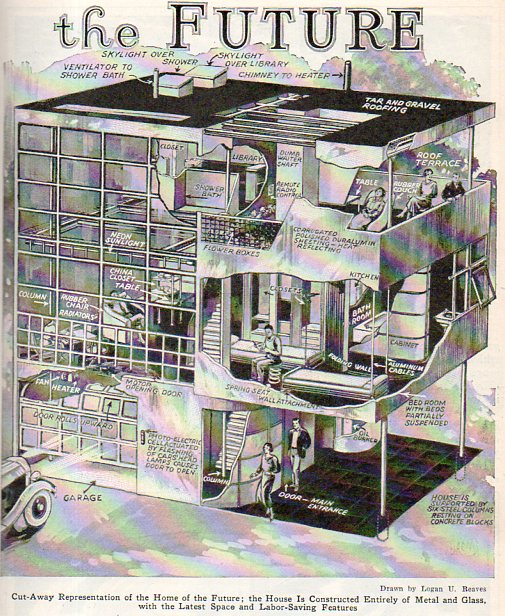
    A memory of another image of a futuristic future house of the future pulled my recent memory to a volume of Popular Mechanics for 1931, the August issue, featuring a “Home of the Future” speculation–this one was also small, but far less mobile, being constructed of metal and glass; and from what I can see, the common home’s exterior walls were mostly glass.

    Future house514

    It looks like a small place–I’m not sure that the car would actually fit in the glass garage.  And it doesn’t look all that comfortable, either, especially in regard to having no walls for bookcases.  (A wall of shelving for a collection of Kindles?)  There *is* a “skylight over the”library”, but it looks like the library isn’t more than a half case of books.  But perhaps in the future we are all entering a world where something is whatever we call it.  Oh, yes, I think that part of the future has already arrived in 2012, and I doubt seriously that the folks writing this article for a popular audience had anything more than a droll popularity in mind in their authorship.  In any event, this future house wasn’t mobile, was small, and looked pretty uncomfortable. And I also bet that the roof gave them problems up there in Futurlandia. 


  • The Fate of the Future & the Ironies of Artistic “Futurism”

     JF Ptak Science Books

    “The oldest of us is thirty: so we have at least a decade for finishing our work. When we are forty, other younger and stronger men will probably throw us in the wastebasket like useless manuscripts—we want it to happen! They will come against us, our successors, will come from far away, from every quarter, dancing to the winged cadence of their first songs, flexing the hooked claws of predators, sniffing doglike at the academy doors the strong odor of our decaying minds, which will have already been promised to the literary catacombs.”–from the “Futurist Manifesto”, by F.T. Marinetti, 1909

    They came for Mr. Marinetti (1876-1944) a little earlier than that, and continued to come, though whoever it was that came couldn’t quite reach the founder of Futurism, who seemed to be one invisible step ahead of oblivion.  Or perhaps it was behind?  I’m not sure.

    But futurism as a movement was more in the past than in the future, barely lasting long enough to have anything but a past.

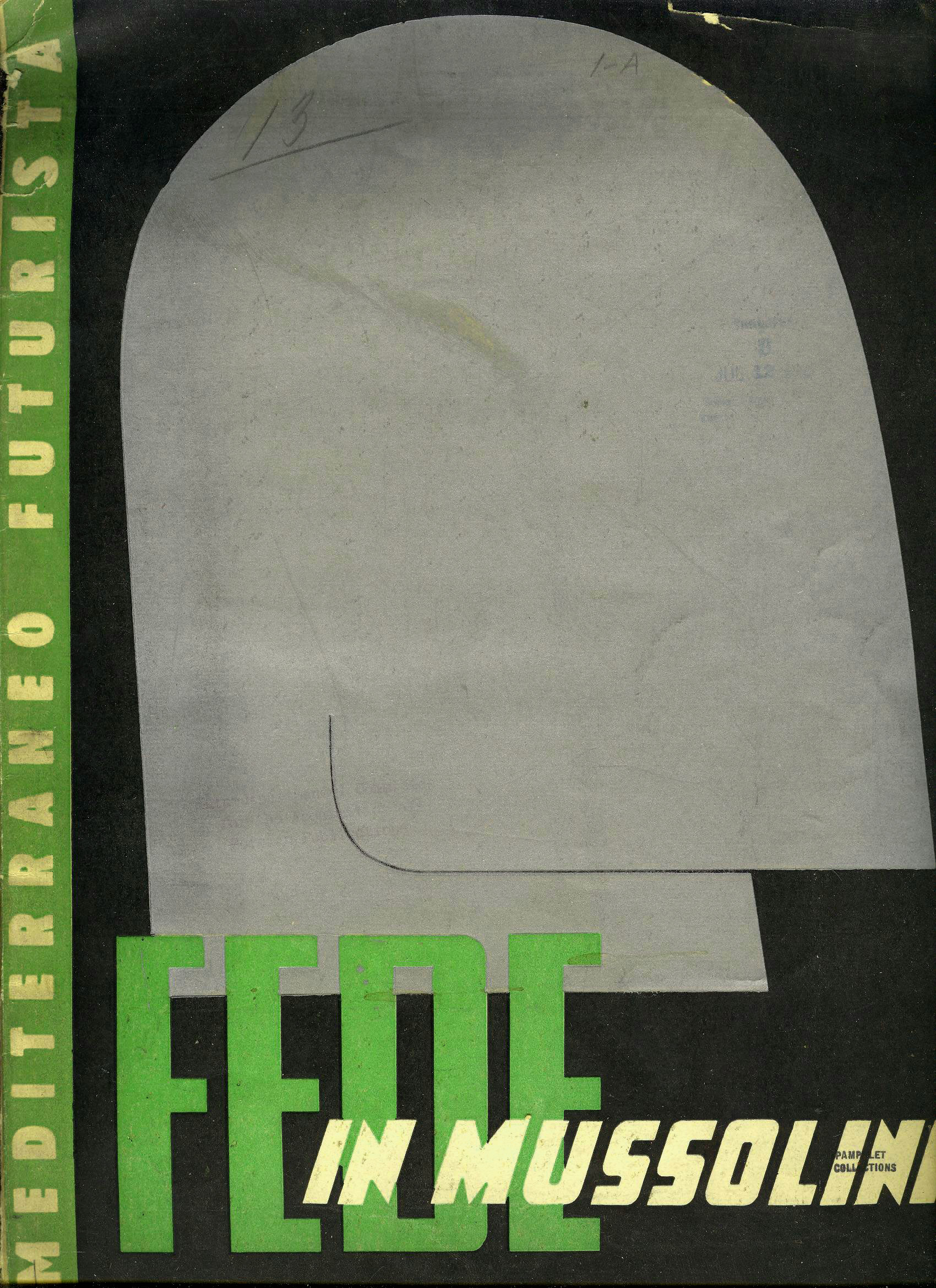
    Mussolini

    • This is the cover of a magazine edited by Marinetti and others, a hagiographic-porn hommage to the leader of the Italian fascist government, Benito Mussolini, featuring a very striking portrait of the leader on the cover. (I’ve seen a note elsewhere stating that the image on the cover is by (Mari Biazzi (1880-1965)) though I could not find any other references for that. Also I’m not sure about the journal, as it comprises the names of two Futurism journals, Mediterraneo Futurista and Fede in Mussolini (“Faith in Mussolini”).Apologies for this incompleteness. Mostly I just wanted to share the image given its particularly brutal Brutalist aspects.)

    Not that the movement wasn’t important–it was, obviously–its importance branched out into other areas and movements, morphing into necessary branches, leaving behind a shell of the original tended by the originator.  (It can be argued that this movement helped create the environment for Dadaism and Cubism [or at least Cubist-futurism as in the Russian sense of that art].)  Marinetti had some unsavory and some just downright weird political and social ideas, having a long and vested interest in fascism.1  And not only the earliest part of Italian fascism –founded in 1919 with an interest in expanding the democratic process–but the later, Mussolini-controlled Italian fascism as well.  Marinetti sought the protection of Il Duce,2 and even so during the war, when he sought to protect his movement’s art from being designated as “degenerate ” and therefore unacceptable and existence-deniable by Adolf Hitler.

    And so the unlikely prolonged existence of futurism–a movement transformed far beyond itself in a matter of years, held together by pieces of fluff and dust, supported in its old age on the hopes of a noxious political system which was itself doomed to rapid failure.

    “At last they’ll find us—one winter’s night—in open country, beneath a sad roof drummed by a monotonous rain. They’ll see us crouched beside our trembling aeroplanes in the act of warming our hands at the poor little blaze that our books of today will give out when they take fire from the flight of our images.”  –F.T. Marinetti, from his “Futurist Manifesto”, 1909

    Notes

    1. Marinetti’s goal was to establish futurism as the official art movement of the government–something he specifically wrote against in earlier incarnations of himself.  He would come to loggerheads with much of his earlier social opinions, abandoning his beliefs in his never-ending quest to promote his movement.  I must say though that Marinetti did publicly speak against anti-Semitism.

    2. Marinetti sought to have the Nazi traveling exhibition of degenerate art–which included works by futurists–banned from Italy.  So even though the Nazi fascists established futurism as degenerate, Marinetti was able to enlist the aid of Mussolini to shield Italians from what the Nazis thought of the art.  But the futurist manifesto seemed comfortable with the while idea right from the start, as we can see in proposition #9 of its self-proclamation: “We will glorify war – the world’s only hygiene – militarism, the destructive gesture of freedom-bringers, beautiful ideas worth dying for and scorn of woman…”


  • The Invasion of Musical Robots, 1929

    JF Ptak Science Books    Quick Post

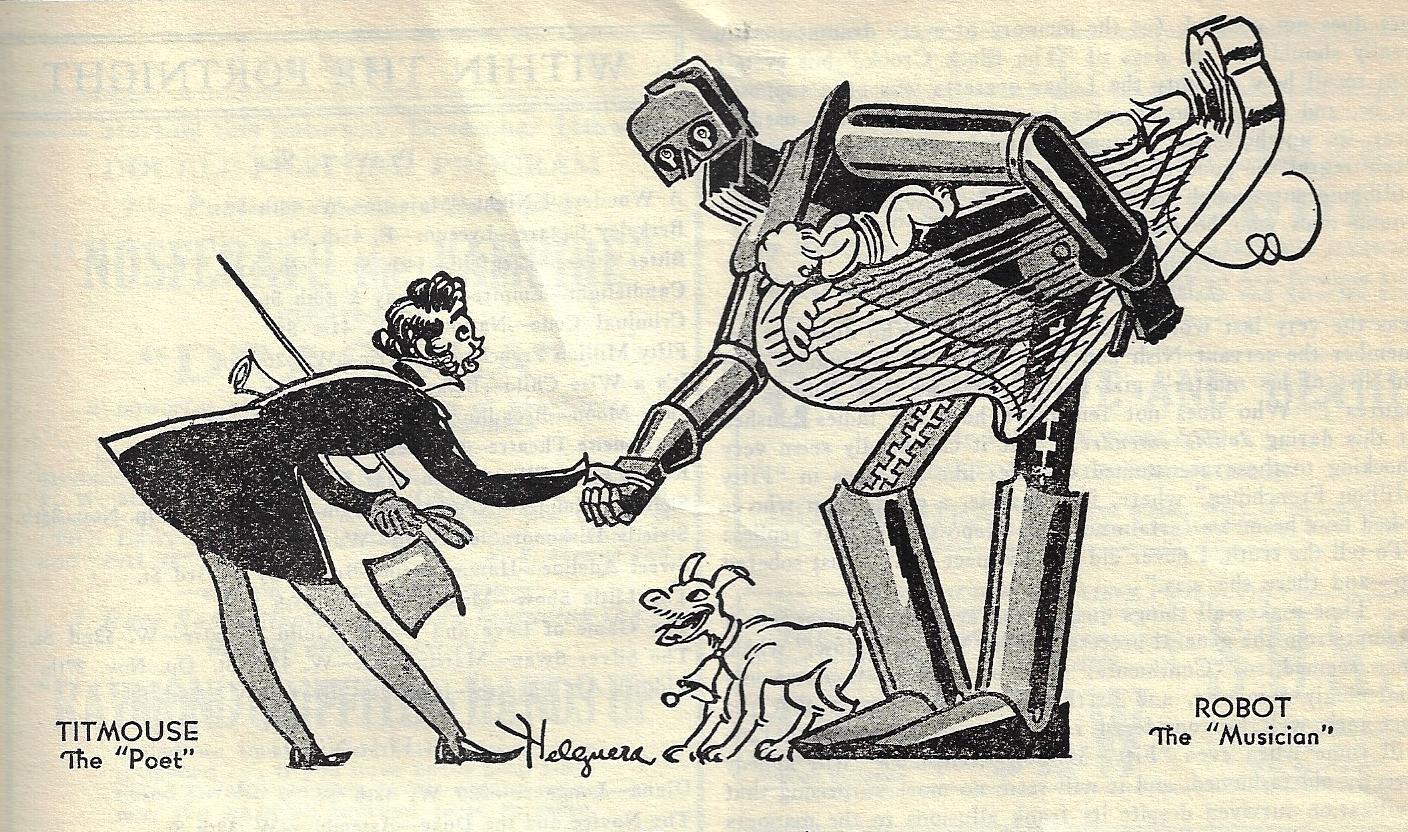
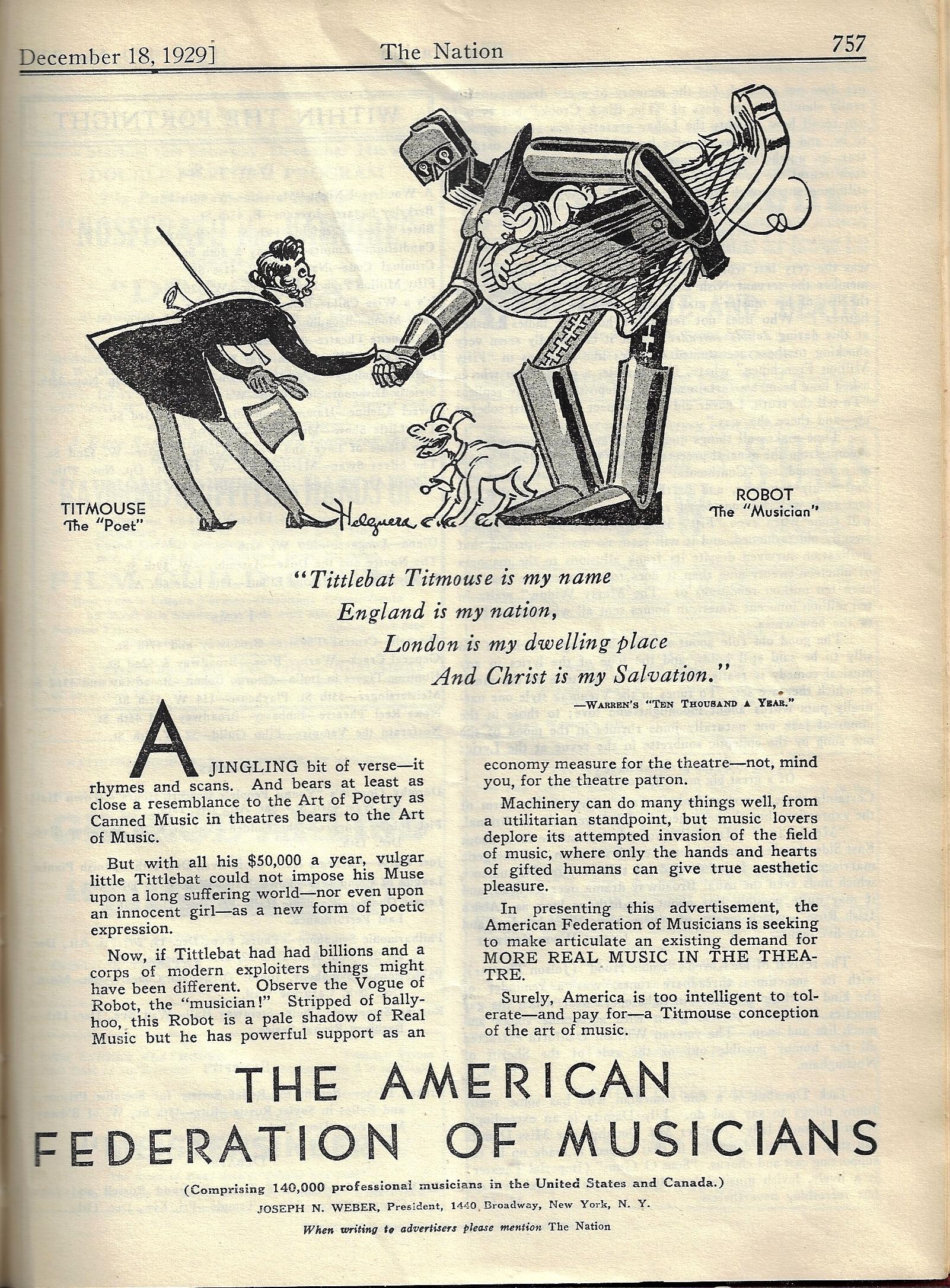
    Robot music _2__0001

    There is little doubt that scribes and woodblock cutters and such absorbed the stab of the movable type printing press, and that stationers felt the stab of modernity when the telegraph came into play threatening sales of paper generally used for letter-writing, an art form that they felt would be diminished by the new technology. At about the same time though came the second revolution in mail delivery, which made it cheaper and more regulated in using a more-competent mailing system, which meant an increase in letter writing. Ditto that for the telephone, which again would threaten written communication. Movies too threatened the theater, and on and on.  

    And so too for music, the musician, and recorded music. I suspect that in the 53 years since Mr. Edison’s invention of the phonograph that not many musicians made very much in the way of royalties for their recorded music, at least not at this early date. (On the other hand my guess is that there was a different economic experience in the sheet music department.)  On the other hand, there was a popularization of music far beyond what had been possible in the period before recorded music, so there was at least that direct and enormous benefit.

    Then came recorded music in theaters, which was a different thing entirely, as there was no real direct benefit to musicians–in this instance, live accompaniment would disappear in favor of recorded music, and so to the jobs of thousands of players.  

    And so the reason for this advertisement in The Nation, placed by the American Federation of Musicians, which found the idea of “canned music” to have nothing to do with “the Art of Music”, and representing it as a robot, “a pale shadow of real Music”. “Machinery can do many things well, from a  utilitarian viewpoint, but music lovers deplore its attempted invasion of music, where only the hands and hearts of gifted humans can give true aesthetic pleasure.”

    “Surely, America is too intelligent to tolerate–and pay for–a Titmouse conception of the art of music.”

    Robot musical _1__0001


  • A Peek at the Future in Which Jobs Are Not Threatened by Machines (1940)

    JF Ptak Science Books  Quick Post

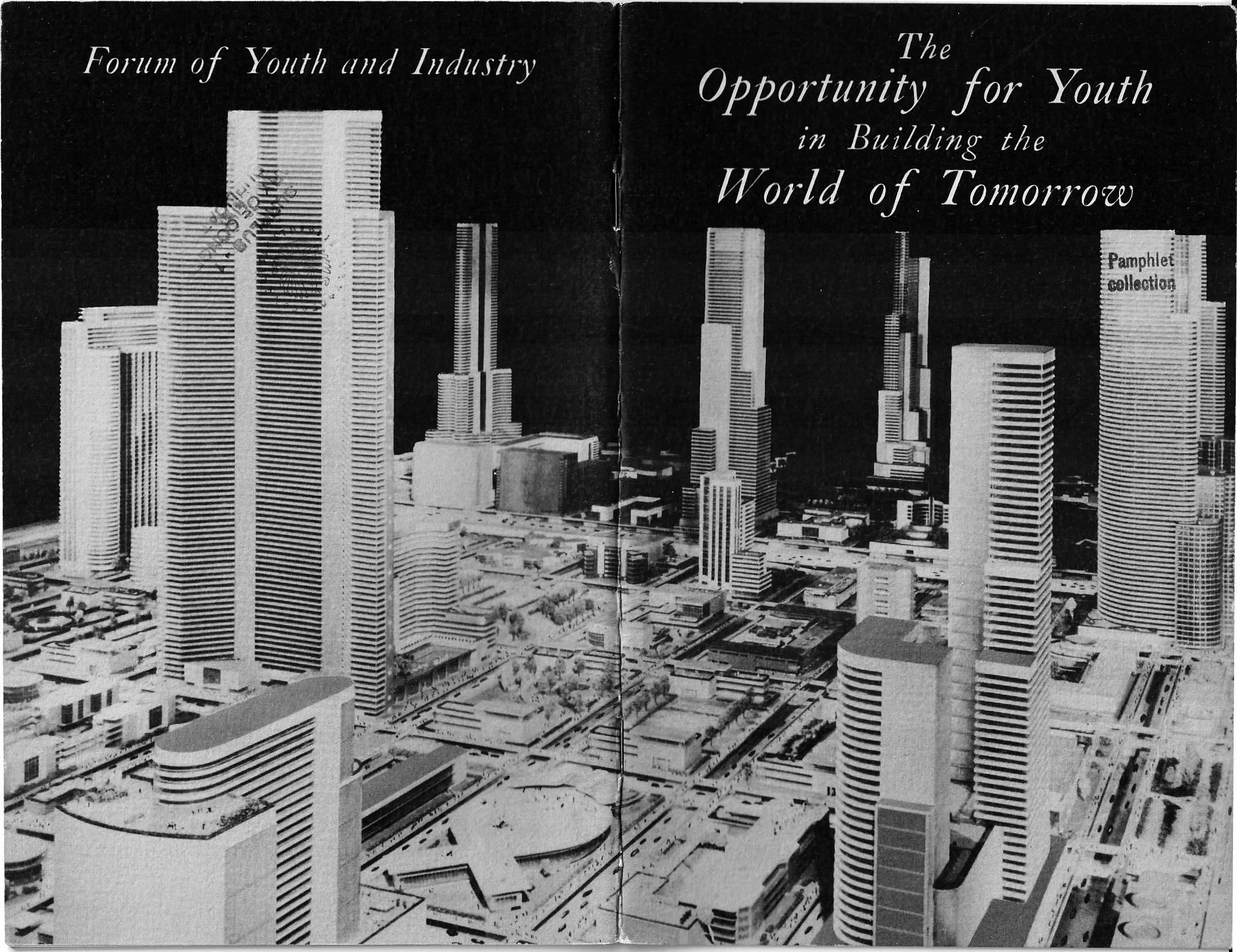
    Book covers world future architecture opportunity youth

    This is the front and back cover of a little work directed at upper-aged kids in 1940 about how they might be employed and what life might be like in the future.  The Opportunity for Youth in Building the World of Tomorrow, published by General Motors in 1940, is a lot more sanguine and less interesting than its cover, sorry to say–but the cover is enough to reprint here, all on its own.  

    There is one odd thing, one missed peep into the future, and it is made by a great figure in the history of 20th century science, Karl T. Compton, who at the time was president of MIT. He responded to a question about the impact of mechanization in a short section labeled “Man vs. Machine”. Dr. Compton got a lot right in his life and saw a lot of things that other people didn’t or couldn’t, but in 1940, he couldn’t see very far into the future of the machine.  Of course there’s a particular irony with this vision and what would happen with humans v. robots at GM.  So it goes. 


  • The Highways of Tomorrow 1937 (and 1938)

    JF Ptak Science Books    Post 2701

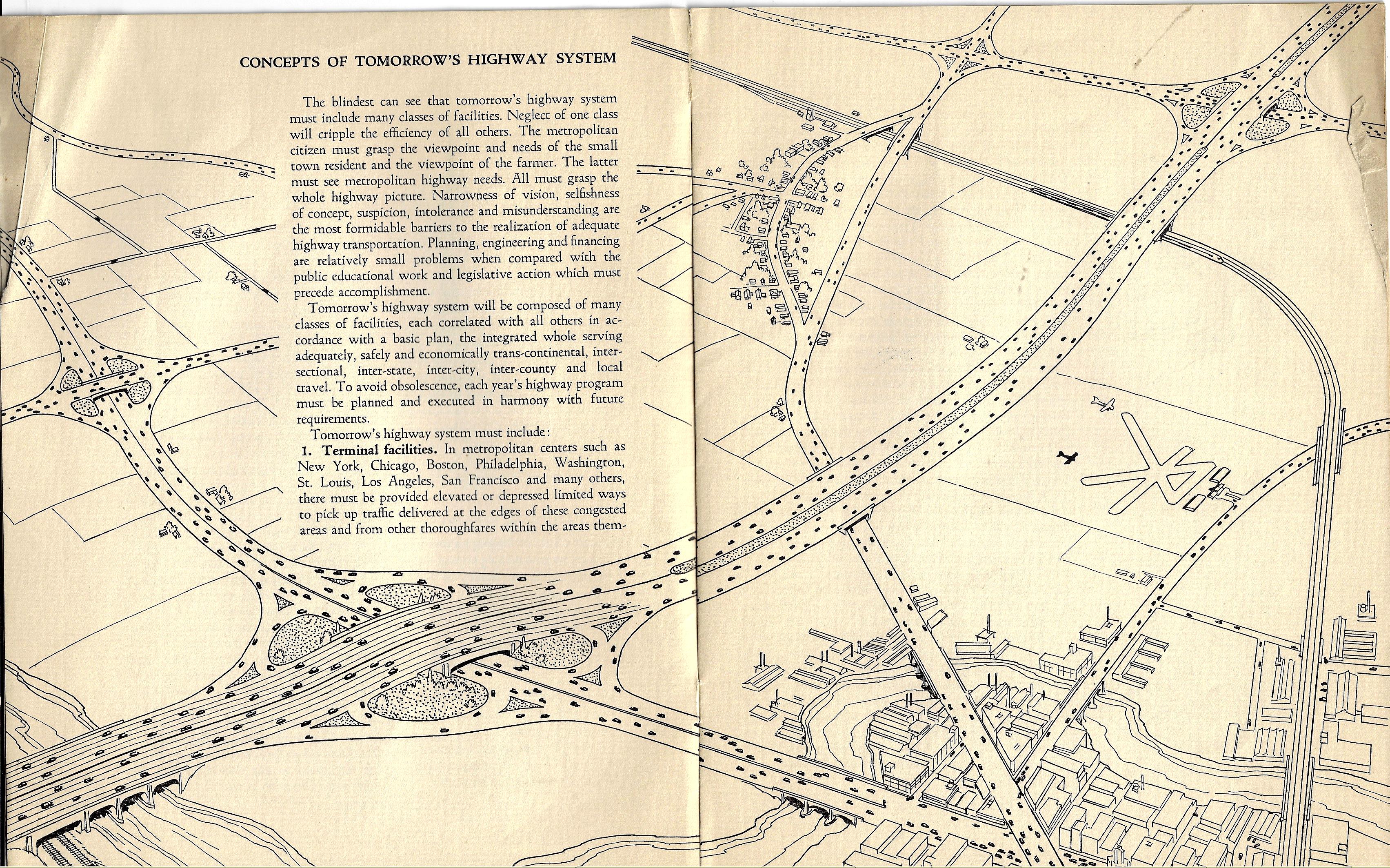
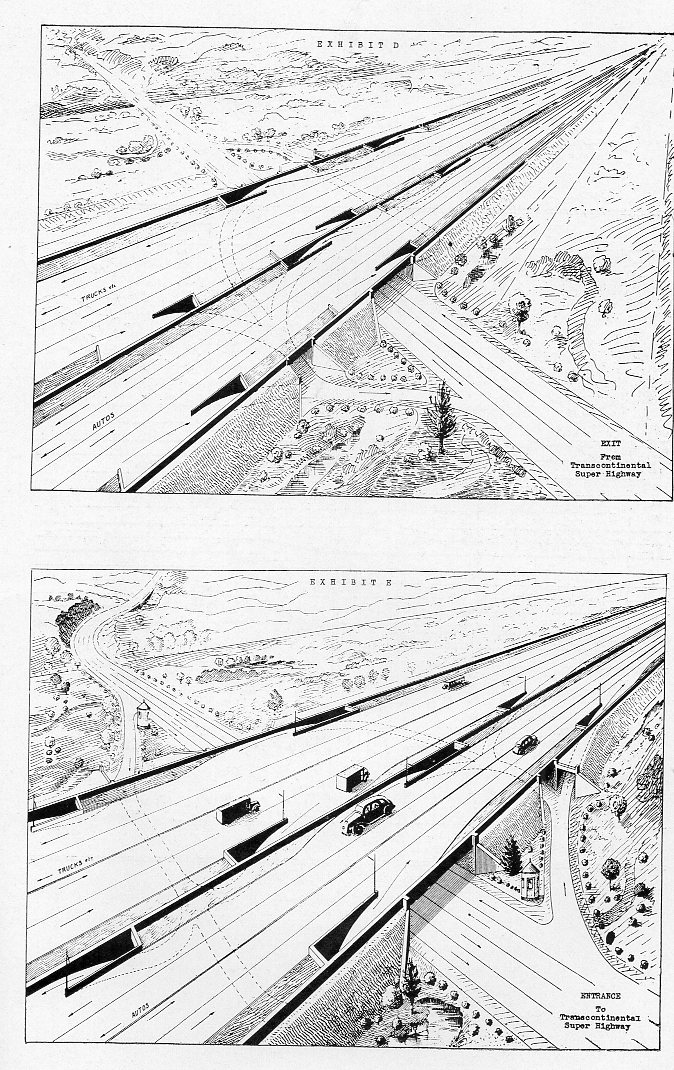
    The future–as presented in the following two pamphlets–was coming, and it was guided on a 100′-wide flat ribbon of cement, with a life-blood moving along it at 45 mph.  It is presented by Frank Sheets (president of the American Association of State Highway Officials), and the world looked like the cement that would be produced and purchased from the publisher of this pamphlet, the Portland Cement Company. And they’d be right, there would need to be something for the exploding auto market to get to and fro on the expanding horizon of city- and suburb-spread. To that end there exists in this work a proposal for 3 million miles of highways at a cost of $57,000,000,000, which was equal to about 75% of the entire budget of the U.S. government. It was a big plan–the proposal itself can’t be found in the pamphlet.

    Highway of the future

    [Source: Frank T. Sheets, The Highway of Tomorrow, Delivered at the Annual Meeting of the Greater New York Safety Council at Hotel Astor in New York City, April 14, 1937.] 

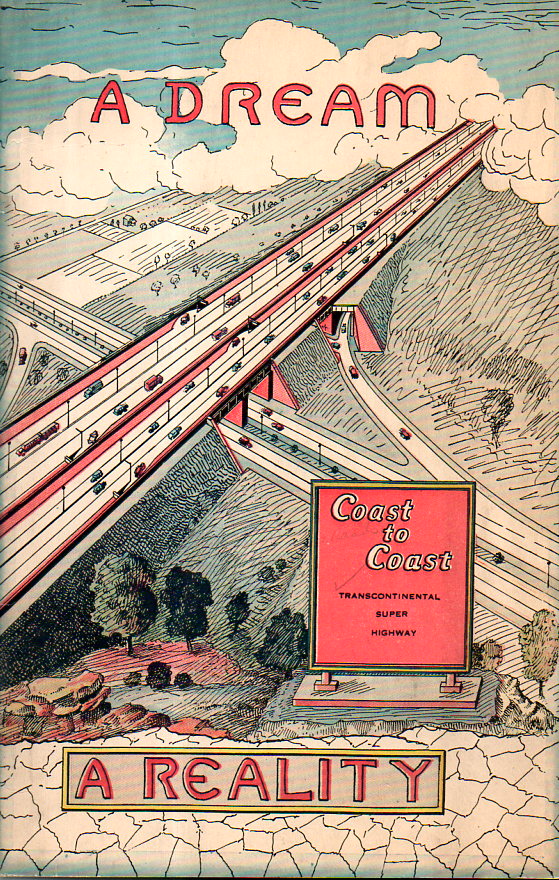
    Another vision of the future A Dream, a Reality” and/or “Coast to Coast Transcontinental Super Highway isn’t actually the title of this work even though they are on the cover; it is mostly a caption for an interior image though it somehow percolated topside.  The real title is The Highway of Tomorrow made Possible by the Ideal of Today, which gets to the subject of the work even though it is slightly unwieldy. It is difficult to say who wrote this though Mr. T.E. Steiner (“Sponsor”, of Wooster, Ohio) and which somehow found its way to a fourth edition in its two years of existence, published and promoted in undoubtedly small numbers by the “Transcontinental Stream-Lined Super Highway of the United States of America” in 1938.

    Highway visionary120

    This is all about super-highways, and mainly replacing the old roads with four new roads that are as straight as straight could be. A map of the proposals features one line of the highway is straight from San Francisco to Boston; another from Laredo, Texas (!) direct to International Falls, Minnesota (!);  a third not-straight shot from Boston-Allentown-near-Valdosta Ga-Miami; and another from near-Valdosta to Cleveland. A schematic of this map though drops near-Valdosta for Jacksonville, and has the Boston-Miami route further east to include NYC and D.C., which are omitted from the map.  Ah, well.

    I think that the author–an accomplished “business man” was was the head of a “manufacturing company” in Ohio and a coal company in West Virginia (and “employer of labor”) –was not much of an engineer, because the plan ignores topography and the highway design itself is pretty bad, especially the parts on exit/entrance (which the author takes particular care to note are separately copyrighted (?)) bits, which are killers. 

    Highway visionary121

    In any event, the super highway extending into the clouds on the cover is all I’m here for.  Mr. Steiner no doubt attracted some attention for the project because of the enormous pork and public works potential, what with the building of 6,000 miles or whatever of an 8-lane highway, which is billions of square feet of paving times some multiplier.  So a lot of money would be spent, which means, well, a lot of possible interest–after all, it did get so far as a hearing before the Committee on Roads, U.S. House of Representatives, on May 18, 1937.

    This no doubt was a “visionary”proposal of some sort, though the engineering aspects of it were more imaginary than anything else. 


  • Moving Stationary People on a Moving Sidewalk and Not Moving People on a Stationary Sidewalk (1903)

    JF Ptak Science Books   Post 2684

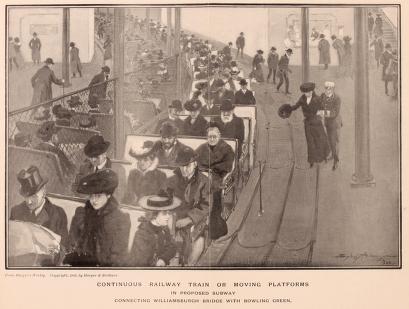
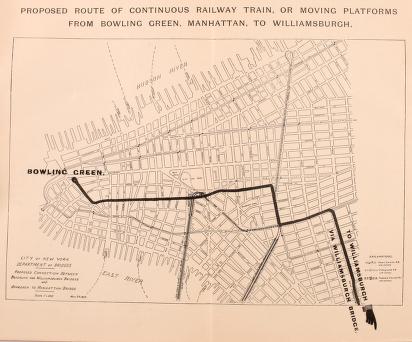
    I came upon this interesting pamphlet and thought to share it: Transportation of Passengers in Greater New York by Continuous Railway Train, or Moving Platforms.  Argument in favor of equipping the East River Bridges, and connecting subway to Bowling Green, Manhattan, with a continuous railway train or Moving Platforms. It was prepared by Schmidt & Gallatin, of New York, and printed in 1903. (Oddly it is the pamphlet that I started working on directly after working through a 1903 double-brick volume of the Journal of the American Chemical Society.) It is only 20 pages long, but decorated with four folding plates, including two maps, and two drawings of the envisioned walkways. 

    Sidewalks 3

    This seems a wonderful example of future thinking and city planning–but just not a very good idea.  It is hard to imagine a continuously moving sidewalk functioning in lower Manhattan. 

    From the pamphlet: 

    “Moving Platforms for the conveyance of passengers were recommended by Mr. Horace Greeley thirty years ago. They were successfully operated, first, at the World’s Columbian Exposition of 1893, where 2,700,000 people were transported. In 1896 they were installed at the Berlin Exposition, and again at the Paris Exposition of 1900, where they carried over eight million passengers. Few persons know what Moving Platforms are. From the face that sometimes they are called ” Moving Side- walks,” it is believed that they must be some sort of a pavement on rollers, on which it is difficult to step with safety and maintain equilibrium. The Moving Platforms are to all intents a railway, operated like other railways, propelled by electricity, with cars, seats, motors, passenger stations, ticket booths, guards, electric lights — in fact, everything belonging to a first-class railway.” 

    Sidewalks map

    “Where it differs from the ordinary railway is that the cars, or trains, are not running at intervals, but are coupled up continuously, so that there is no interruption of traffic at any time, but a large seating capacity at all times. It differs also in the construction of the cars, which are mere flat cars, provided with seats placed crosswise, and so arranged that all passengers face in the direction of motion. Each of these seats may be made wide enough to accommodate one, two or more persons. The most approved plan is to provide seats on one side of the cars only and leave the other for passengers to walk, thus giving them an opportunity to further accelerate their speed if they so desire…”


  • Dumping Garbage in the Sky and Other Visions of the Future, (1906)

    JF Ptak Science Books  Post 2685

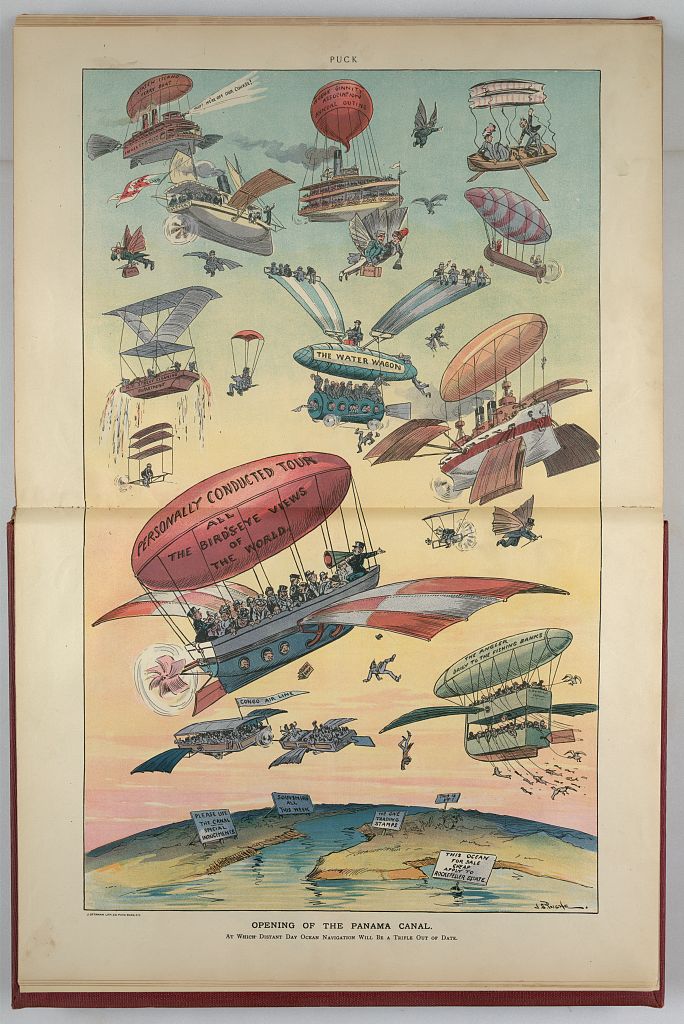
    Airship LC PuckGov. Jerry Brown (D, CA) once had a vision of getting rid of nuclear waste–load it into rockets and shoot it into space. Dumping radioactive materials in the sky was at least a novel idea though not a very good one, what with the possibility of imperfection built into sending the highly dangerous material from the ground and out of orbit. He was not the first to suggest getting rid of unwantables (excluding burning things) in the sky.

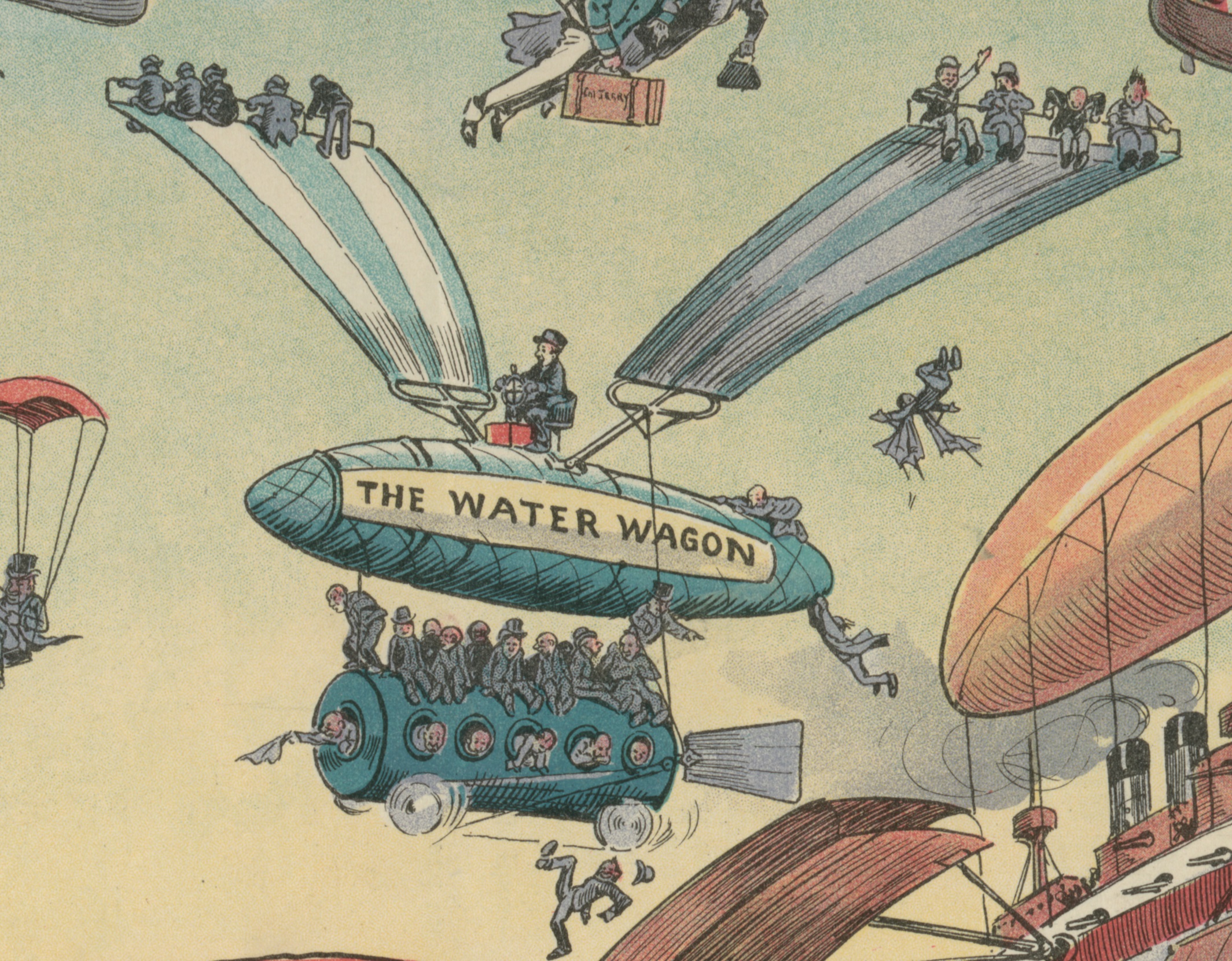
    An earlier and perhaps weirder (though I doubt it) idea came in a section of this image of the future, found in the pages of Puck magazine in 1910.  The illustrator, J.S. Pughe1, had a pretty high time picturing the future, and was probably half-right, in a way. The cartoon came out at the time that the Panama Canal was under constructed (it was completed in 1914), and Pughe thought that–given the new advances in flight in the few years following the Wright’s first heavier than air flight–the canal would be made obsolete in short order. To that end he depicted what might be a common use of the airship, the most prominent being the touring vessel, offering its passengers a true “bird’s-eye” view of whatever there was to see.  There’s also the Cong Air Line just below it, dinghy in tow, and an conventioneer airship for “Hughie Ginty” whatever that might be.  There’s also a floating battleship, and up in the left-top corner there is a way off course Staten Island Ferry, thousands of miles from home, having missed its visual clues in navigating the Narrows. Oddly there are no depictions of freight aircraft, which is probably themost essential aspect of the canal (after military purposes). 

    Airships future panama canal water wagon

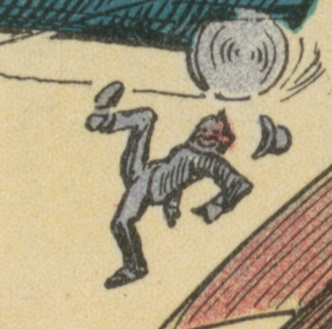
    Overall, it is a pretty light-hearted view of the future. we even seen a “water-wagon” floating on by, filled to capacity with people with generally non-committal expressions. I do believe that this is the famous “wagon” onto which people with a drinking problem would ride on the road to sobriety.  One version of the “on the wagon” expression dates back to the late 19th c and the Salvation Army, the members of which would drive a wagon looking for folks in need of cleaner leaving and a perhaps-salvation, offering them a ride back to headquarter/church/whatever and the promise of drinking water and not booze.  It is I think that this interpretation of this particular water wagon being a sobriety ride is hammered down when you look closely at the face of the guy falling off the wagon, because he looks to be happy and a little on the drunky side of things.

    Airships future panama canal water wagon detail smile

     There’s some dark bits to this haphazard scene as well. There seem to be a lot of falling people. At least six people are headed down, including a couple at top-right in a rowboat under a failed balloon (with a sky-cop in pursuit), and another person falling with his failed bird wings. For a whimsical peep into a contentious future, the artist may have decided to add an aerial version of the commonplace tragedy of being run over by a streetcar. 

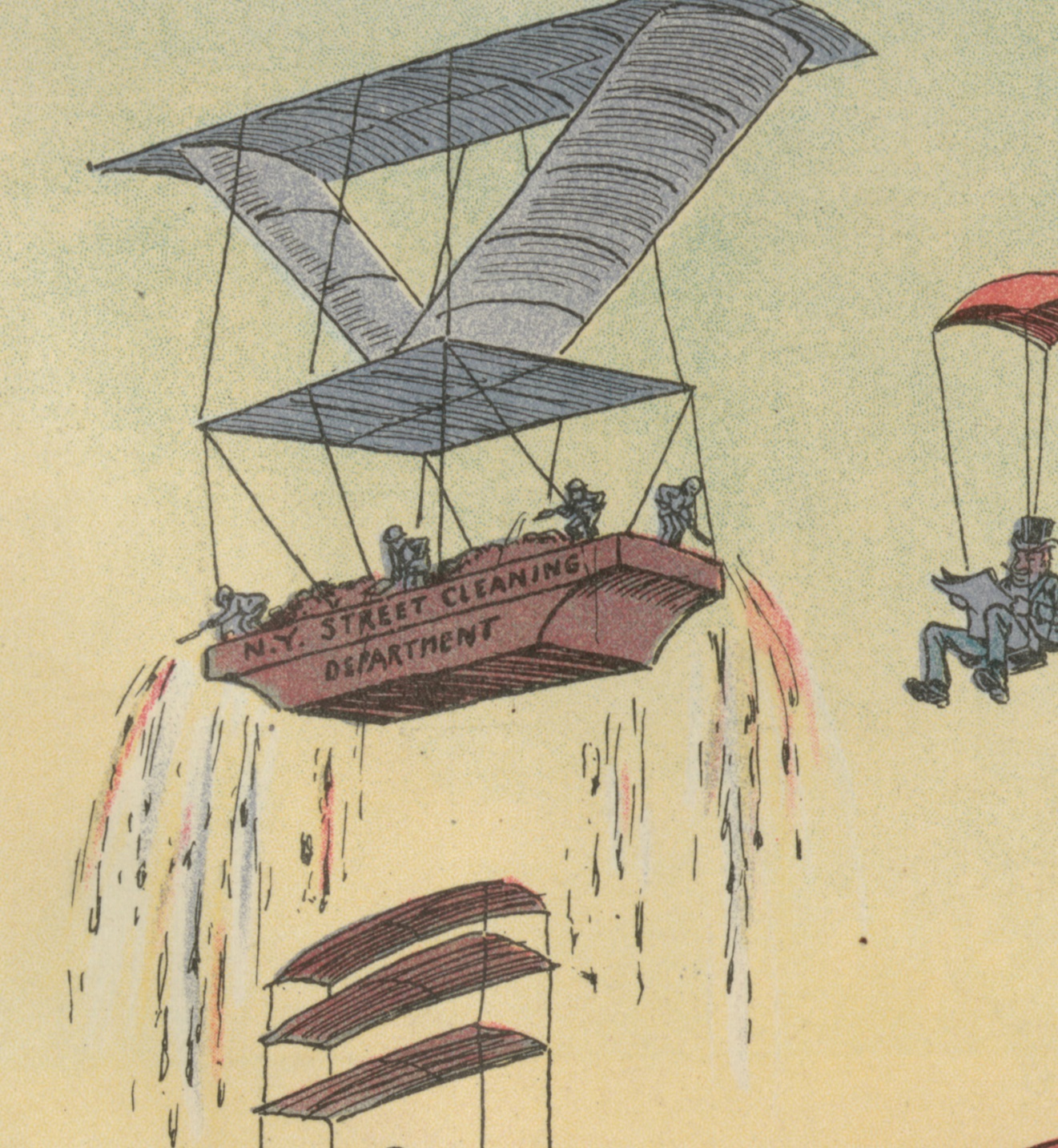
    The oddest thing, though (and this gets us back to Jerry Brown) is the much-magnified “N.Y. Street Cleaning Department” dumping refuse over the side of an airship (of unknown propulsion and engineering). Perhaps the artist decided that In The Future the use of the sky will be so commonplace that people will use it as they had streams and harbors and other bodies of water–as a dumping ground. On the other hand maybe it is just showing that this is exactly what is happening, again, only from a height, and into the Panama Canal.  

    Airships future panama canal waste

    [Image source: Library of Congress, https://www.loc.gov/resource/ppmsca.26030/   My details are taken from the 132 meg download available on their site.]

    Notes:

    1. John Samuel Pughe, Welsh-born U.S. artist, 1870-1909.  He joined Puck in 1894 and worked there until his early death in 1909. Puck, v. 59, no. 1509 (1906 January 31), centerfold.

    Before writing this post script this blog entry ended at 713 words–that’s the final tally of Babe Ruth’s home runs, which is a good place to end. 


  • Rocket to the Moon, 1930

    JF Ptak Science Books  Post 2683

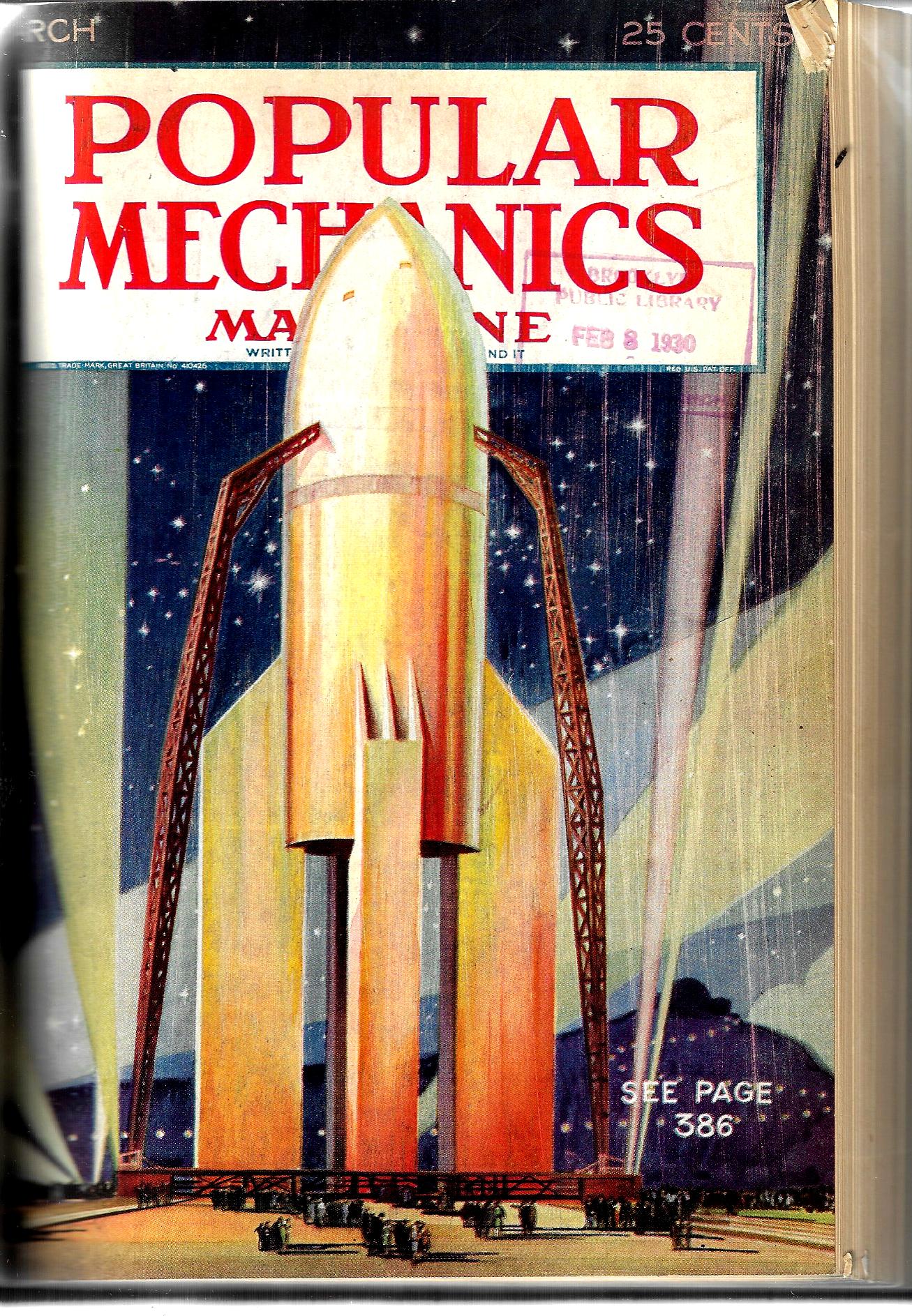
    This is a king-hell cover for Popular Mechanics, appearing in March, 1930, and I was about to say it reminded me of other rocket ship designs from that era except that this one is actually earlier than those I was thinking of, which were generally technical and tech-pop.  When I read the article it turns out that this was a riff on the rocket that had just recently appeared in the Fritz Lang movie, Die Frau im Mond (“Woman in the Moon”, October 15, 1929). The article was about the “realistic” nature of the film and the possibilities it displayed for actual space flight–as it turns out folks who know something about this genre contend that the Lang film may be the first serious sci-fi movie about sending people to the Moon.  

    Rocket Pop Mech 1930

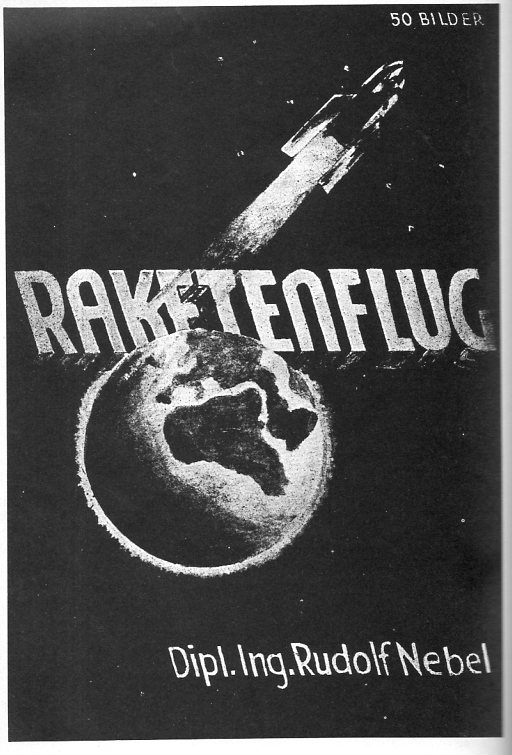
    This looks somewhat like the design of a ship on the front cover of Raketenflug, by Rudolf Nebel . (Nebel. 1894-1978, was a very early member of the Raketenflugplatz, assistant to Hermann Oberth and very nearly the first to successfully conduct an experiment with a liquid-fueled rocket, beaten to the finish line by a man whose work he was not familiar with, Robert Goddard.  He defined right-wing in the Weimar era, and was part of a paramilitary organization called Stralheim; Wernher von Braun seems to have succeeded in the avenue that Nebel tried to travel along.  Nebel published this work in 1932, a year before the Nazi party came into power, and before his crotchety problems with the SA began.

    Rocket nebel

    And also like Otto Gail’s ship: 

    Rocket Gail

    Gail (1896-1956)  was more a science journalist, popularizer, science fiction and fantasy writer than anything else, though his descriptions of preparations for launching a spacecraft to the Moon as well as the experiences of the crew were fairly lifelike.

    And the original culprit (via Wiki):

    Rocket frau im Mond