A Daily History of Holes, Dots, Lines, Science, History, Math, Physics, Art, the Unintentional Absurd, Architecture, Maps, Data Visualization, Blank and Missing Things, and so on. |1.6 million words, 7500 images, 4.9 million hits| Press & appearances in The Times, Le Figaro, Mensa, The Economist, The Guardian, Discovery News, Slate, Le Monde, Sci American Blogs, Le Pont, and many other places… 5000+ total posts since 2008.

Author: JF Ptak

  • Picturing What a Nightmare Looks Like Outside Itself (1878)

    JF Ptak Science Books   Post 2650

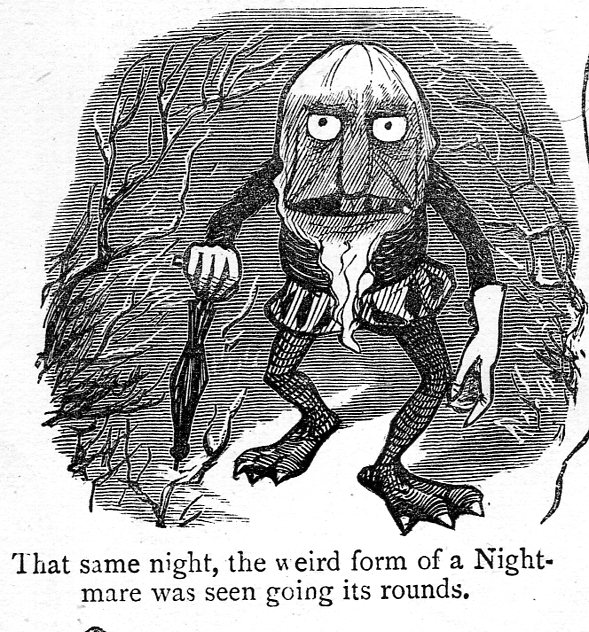
    In my career of looking-at-things it is becoming an easier job to recognize something that is out of place, or uncommon, or wrong–far more so I think than the opposite, because the “expected” happens to be expected, and so fits right into place, somewhere.  So it came to be that this cartoon featuring the depiction of an anthropomorphic nightmare stood out so clearly and oddly. It is the work of James Francis Sullivan (and published in 1878 in a volume of his darkly humorous single-page six-ten panel cartoons ungainly titled The British Working Man by one who does Not Believe in Him, and other Sketches) and in my experience is a very early depiction of the nightmare itself as a corporeal thing. There have been untold numbers of depictions of the contents of nightmares in literature and art and such, but I’m having a hard time of picturing another source that would stand as a dictionary illustration of what a nightmare looks like devoid of its content. 
    Nightmare803

    I checked in with the Oxford English Dictionary and found to my surprise that the nightmare started out at some point in English to be a “female spirit or monster”–it was not surprising to see the definitions stretching back to Chaucer and earlier1. Next stop was the cataloging and reference tool WorldCat, where I searched for the appearance of “nightmare” in the title of a book and found nothing (seemingly) published so until John Bond’s  An essay on the incubus, or nightmare, in 1753. This is just a casual search, and nothing very scientific, but at least at this level there isn’t much to see, perhaps six titles only until 1800, after which the use of the word grows. In contrast, titles appearing using the word “dream” are a solid+ order of magnitude beyond “nightmare’. 

    Nightmares and dreams abound everywhere but in the titles of books, and sometimes actually lead to a chain of events in the waking world.  Ramanujan famously dreamed mathematical dreams (in addition to hearing solutions to massively complex problems from “angels” in a waking state); R.L. Stevenson dreamed the premise for Mr. Hyde; Socrates used the medium (dreampt or not); Mary Wollstoncraft nightmare lead to her big nightmare book, and so on, on and on, into the dream/nightmare-filled night.  In my memory of such stories, though, the nightmare or dream never seems to have its own face, and that nothing exists beyond the contents of the thing beyond itself–this is what makes the nightmare-catcher story by Sullivan so unusual to me.  

    I don’t have anywhere to go with this, presently, beyond simply reporting it.

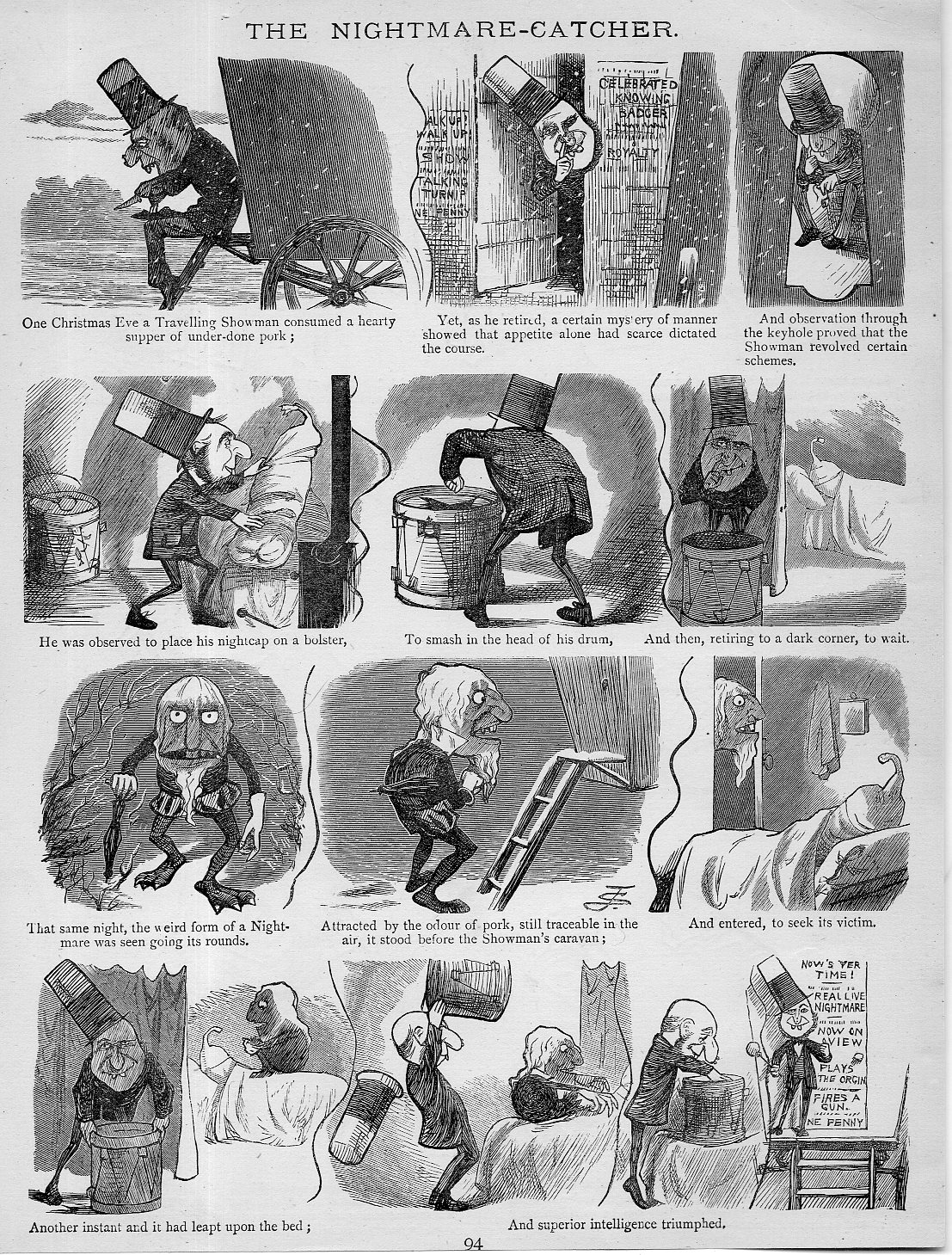
    In any event, the cartoon goes as follows: a travelling showman (already evidently entertaining people with a “talking turnip” and a “celebrated knowing badger”) resolved to capture a nightmare for his show. In that he mocks up a sleeping version of himself in his bed, and waits upon the nightmare, and when the nightmare makes his appearance the showman captures him with a broken drum. The nightmare is then put on display in the travelling show (also playing the “orgin” and firing a gun) for all to see for the cost of one penny. 

    This all happens on Christmas Eve–I can think of better stories than this to share on that or any night.  
    Nightmare802

    Notes:

    1. “Nightmare” from the OED:

     a. A female spirit or monster supposed to settle on and produce a feeling of suffocation in a sleeping person or animal. Also fig. Now rare.

    c1410  (▸c1390)    Chaucer Miller’s Tale (Cambr. Dd.4.24) (1902) 3485   Blisse this hous fri euery euyl wyght ffor the nyghtesmare [c1390 Hengwrt nyghtesuerye] the whȝt Pater noster.

    1440   Promptorium Parvulorum (Harl. 221) 356   Nyghte mare [v.r. Nyhtmare], Epialtes.

    1530   J. Palsgrave Lesclarcissement 248/1   Nightmare, goublin.

    1608   E. Topsell Hist. Serpents 173   The spirits of the night, called Incubi and Succubi, or else Night-mares.

    1696   J. Aubrey Misc. (1721) 147   It is to prevent the Night-Mare (viz.) the Hag, from riding their Horses.

    1770   T. Chatterton Compl. Wks. (1971) I. 211   The dethe-owle loude dothe synge, To the nyghte-mares as heie goe.

    1804   J. Collins Previous Apostrophe in Scripscrapologia p. x,   Let thy Pegasus then, spurn the Nightmare of Sloth, Nor by Day let her hag-ride thy Pen.

    1822   Shelley Prince Athanase in Posthumous Poems (1824) 110   Like an eyeless night-mare grief did sit Upon his being.

    1851   N. Hawthorne House of Seven Gables xvi. 270   So heavy and lumpish that we can liken him to nothing better than a defunct nightmare, which had perished..and left its flabby corpse on the breast of the tormented one.

    1886   R. L. Stevenson Kidnapped x. 92   There was that tightness on my chest that I could hardly breathe; the thought of the two men I had shot sat upon me like a nightmare.



  • Technology and the Dust Bowl, 1930’s

    JF Ptak Science Books   Quick Post

    Surfacing today in the warehouse was a collection of papers, all bound together punch-bound in a makeshift manila binding, all on the subject of mechanization and its impact on the migrant worker, and all from 1936-1938 or so.It was the mechanization of farming chores following the recession after WWI which contributed to over-farming and over-production of farming land, and that, combined with with this soil erosion with drought, contributed to the Dust Bowl and the vast migration of the Great Depression.

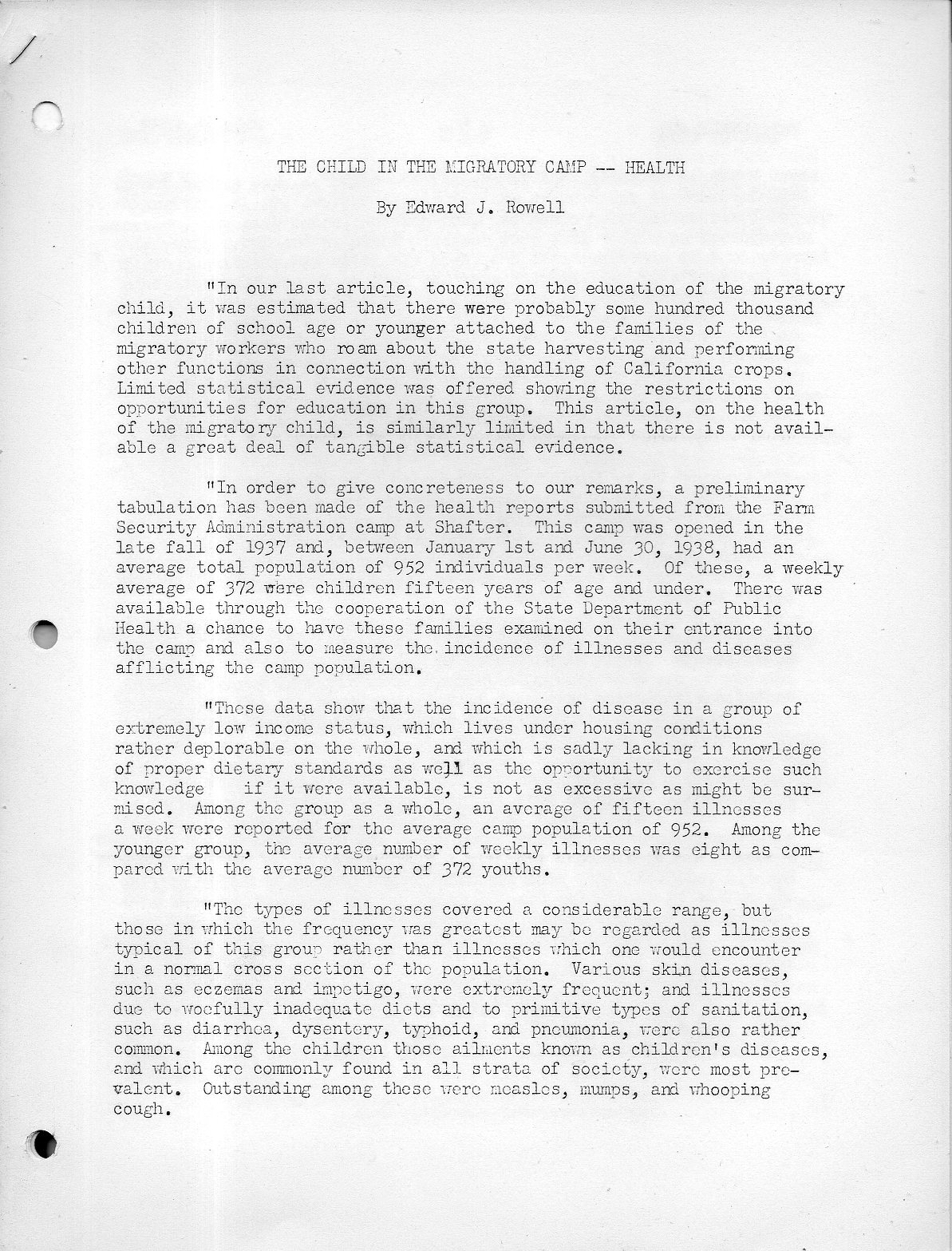
    Steinbeck langeAmong the papers on new farm implements and the millions of people on the move was “The Child in the Migratory Camp—Health”, by Edward J. Rowell, a slim but telling four pages on the plight of kids in migrant camps. This paper was published in California Children, Sept 1938, pp 1-4, and is referenced in James Noble Gregory, American Exodus: The Dust Bowl Migration and Okie Culture in California, p 289. It is a very sobering read, and I reproduce it below in full as there are but a few references to it. 

    • [As one migrant child told John Steinbeck, “When they need us they call us migrants, and when we’ve picked their crop, we’re bums and we got to get out” (Steinbeck, “Harvest Gypsies” 1. after his In Dubious Battle, a work that deals with the migrant worker and which was published in 1936, Steinbeck was given an assignment and space to further document the situation of the mobile workers in the San Francisco News, the stories appearing October 5-12, 1936. These seven articles were later published together—along with 22 photographs by Dorothea Lange—in a work called Their Blood is Strong, appearing in 1938.)]

    Migratory camp798


    ·Posted by :

    ·in:


  • Beautiful Data Circles (1898)

    JF Ptak Science Books  Post 2646

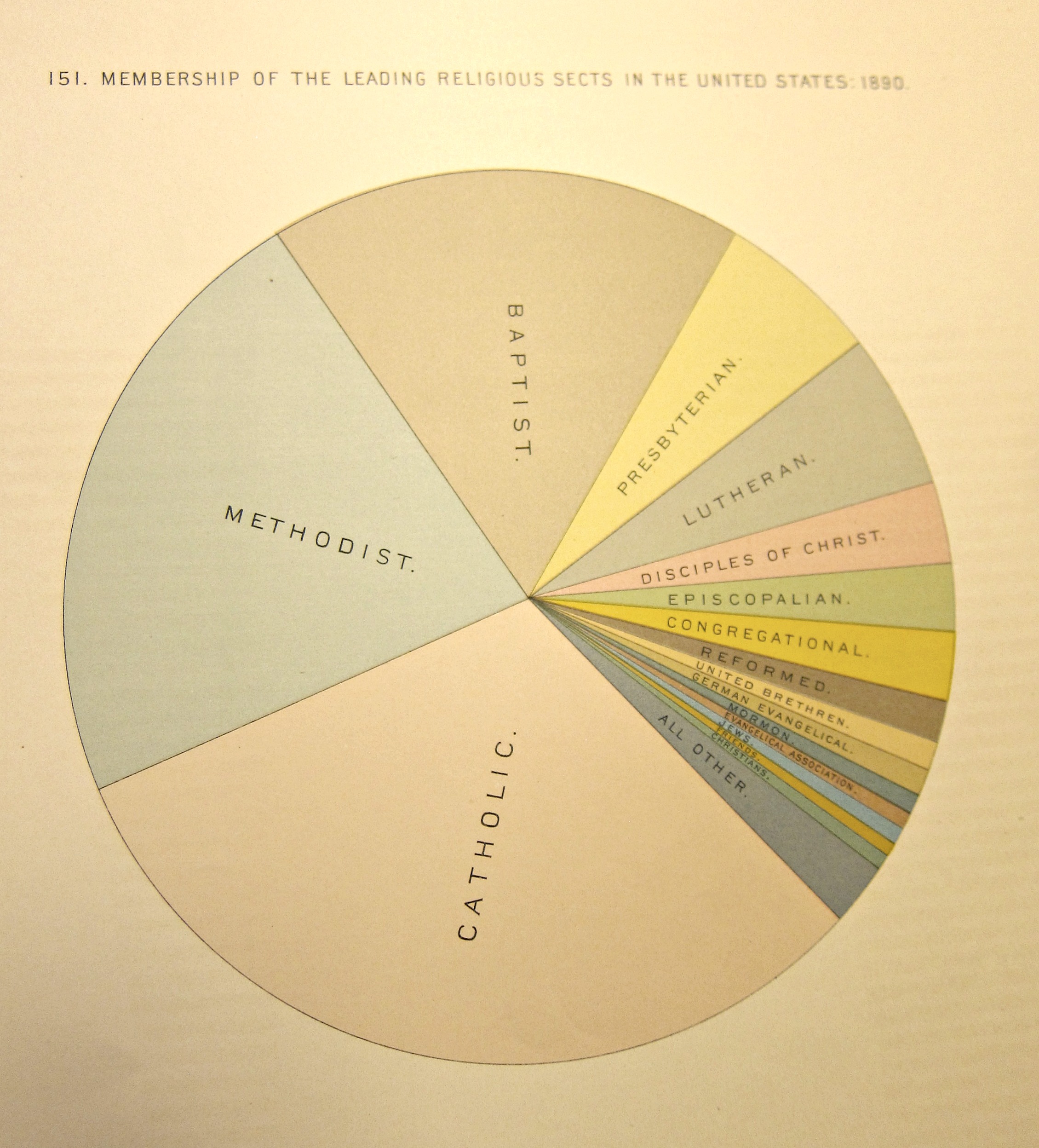
    Displayed below is one of the many dozens of graphs/charts/maps created with the data collected for the 1890 and tabulated by William Hollerith’s glorious machines. It was the first use of the machines for the U.S. census and they offered a far-reaching and increased ability to tabulate and organize the data.  The 1880 census had cost about $6 million and took 9 years to tabulate; the 1890 census using the Hollerith machines cost $10 million and took seven years.  The main focus of many in government was the cost differential—not the incredible amounts of new controllable information.  The rent of the Hollerith machines was only $750,000 for the conduct of the entire census, so the differential must’ve been in the extra utility costs (for electricity, for example, which was used for the first time to run the tabulators) and for the small army of statisticians and data entry people.  Be that as it may, the government was not amused, particularly when Hollerith figured that he had actually saved the government $5 million.    The two parties left each other grumbling, though the roar of the trickle down from the Hollerith success drowned it out.  The tabulating system was quickly exported, and large private concerns in the U.S. saw a savior in the system that would soon rescue them from the sea of paper in which they were beginning to drown.   The Hollerith company did very, very well for itself, and soon merged with three other companies (in 1911) to ease the burden of success.  The resulting company was called the Computing-Tabulating-Research Company (CTR), which after a short while became the International Business Machine Corporation (IBM).  

    The beautiful circle appears on page one and occupies the full 20-inch tall sheet.  This could have been more complex, but as it stands it is a very fine piece of the artfully-enhanced representation of data.  (As a pie chart the image isn’t very old, though the genre is a little uncommon in the 19th century.  Pie charts appear at least as early as  William Playfair’s Statistical Breviary in 1801 and then probably more famously in the work of Charles Minard and Florence Nightengale in the 1850’s–this work to me seems cleaner and brighter, and definitely “modern”.)

    DATAviz 1890 census leading religious sects


  • Maps with a Message–WWI Advertisement with Map Propaganda

    JF Ptak Science Books   Quick Post

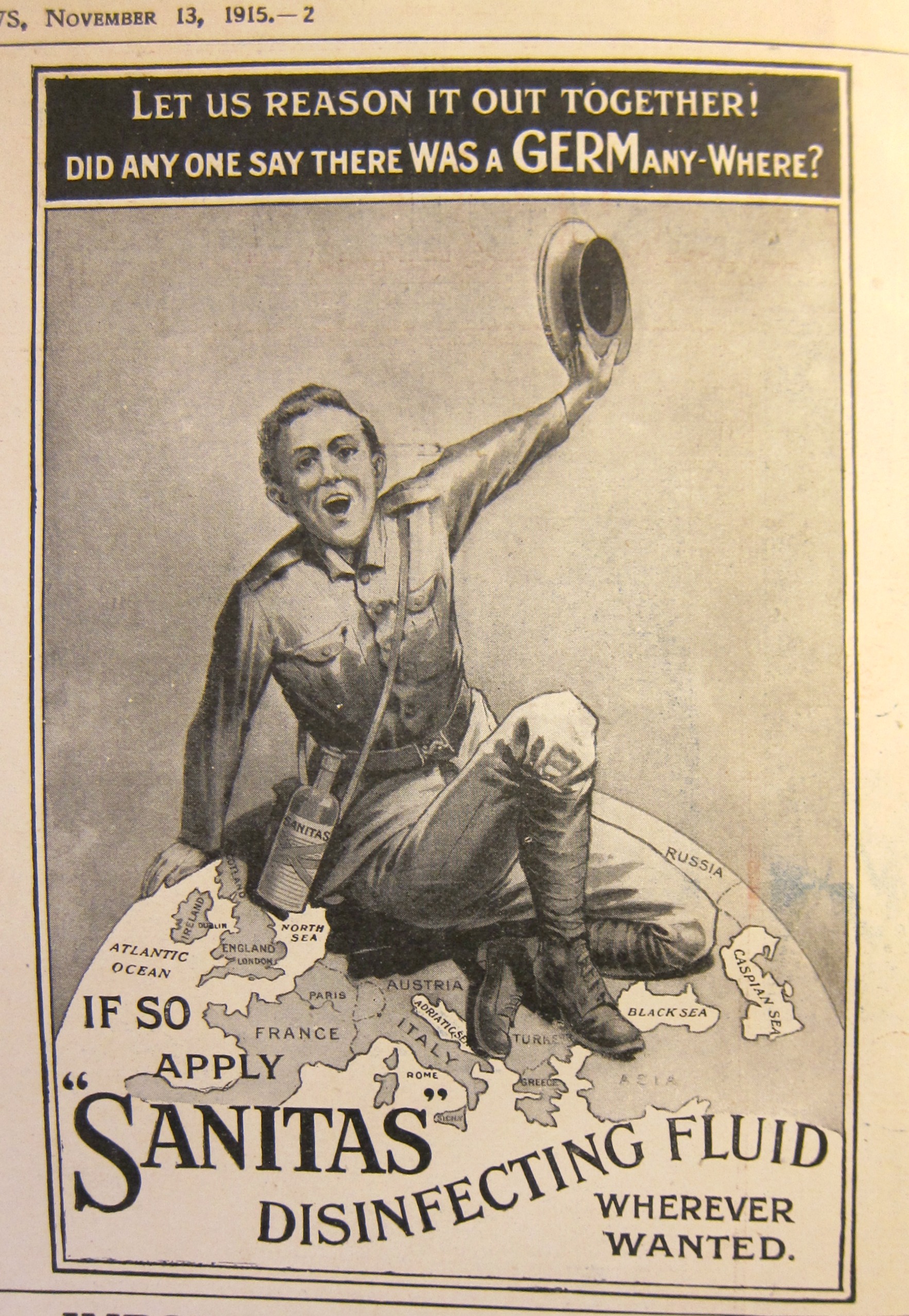
    This small ad for Sanitas (a non-poisonous”the disinfecting fluid”, composed of hydrogen peroxide and camphor as main ingredients) appeared in the quarter panel of the Illustrated London News on November 13, 1915, and told a definite story. Here we see a British soldier, sitting squarely on Germany, asking the reader “Did any one say that there was a GERM anywhere?” in a not-subtle connection between the German enemy and disease.  I hadn’t noticed this before, and so thought I would share…

    Maps WWI propaganda  Sanitas


  • Gas Masks and Coraline-Like Fear (1915)

    JF Ptak Science Books   Quick Post 

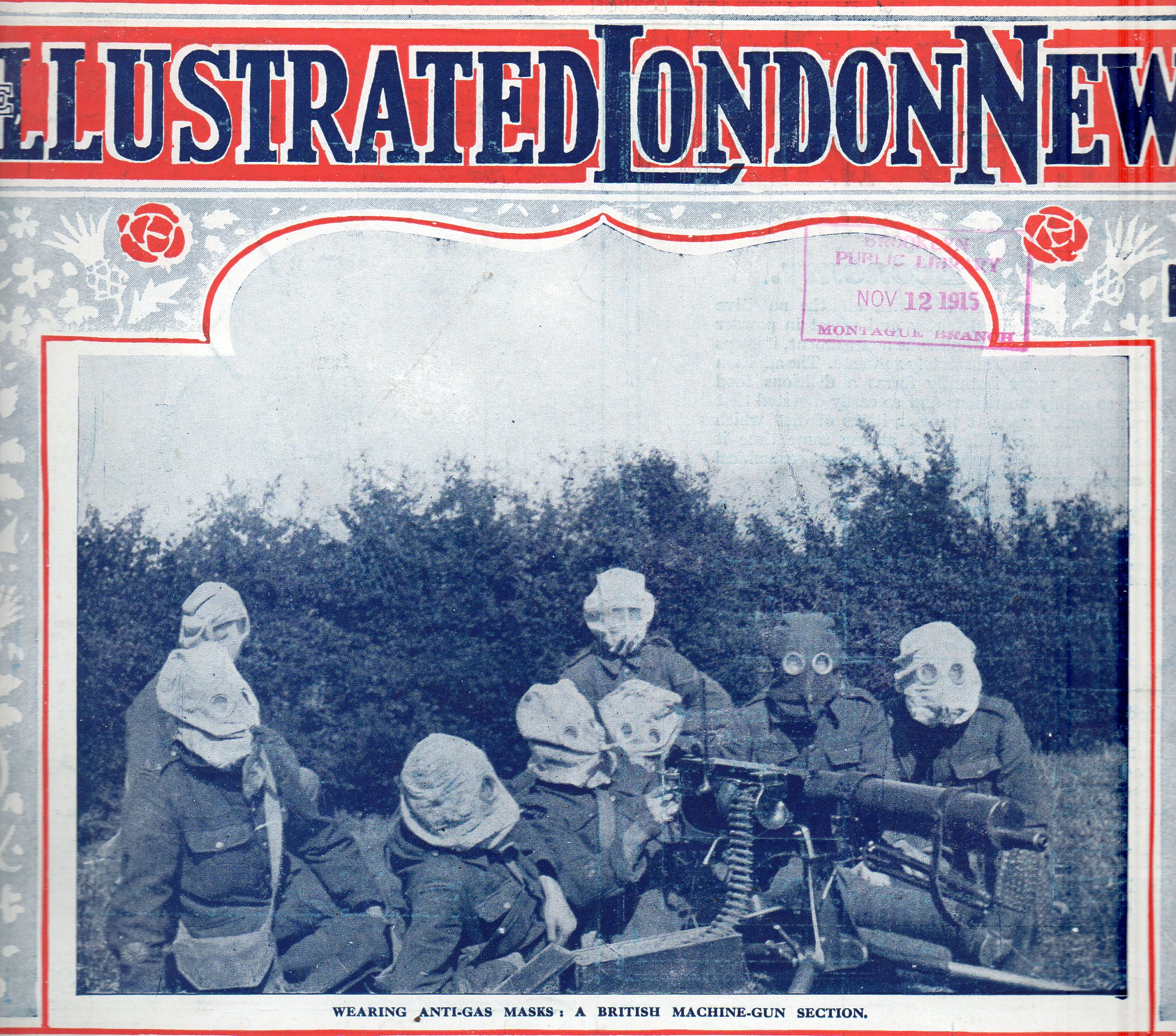
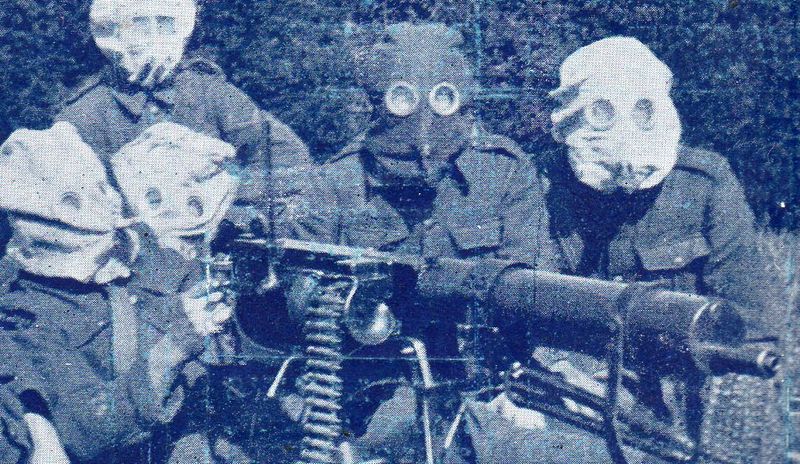
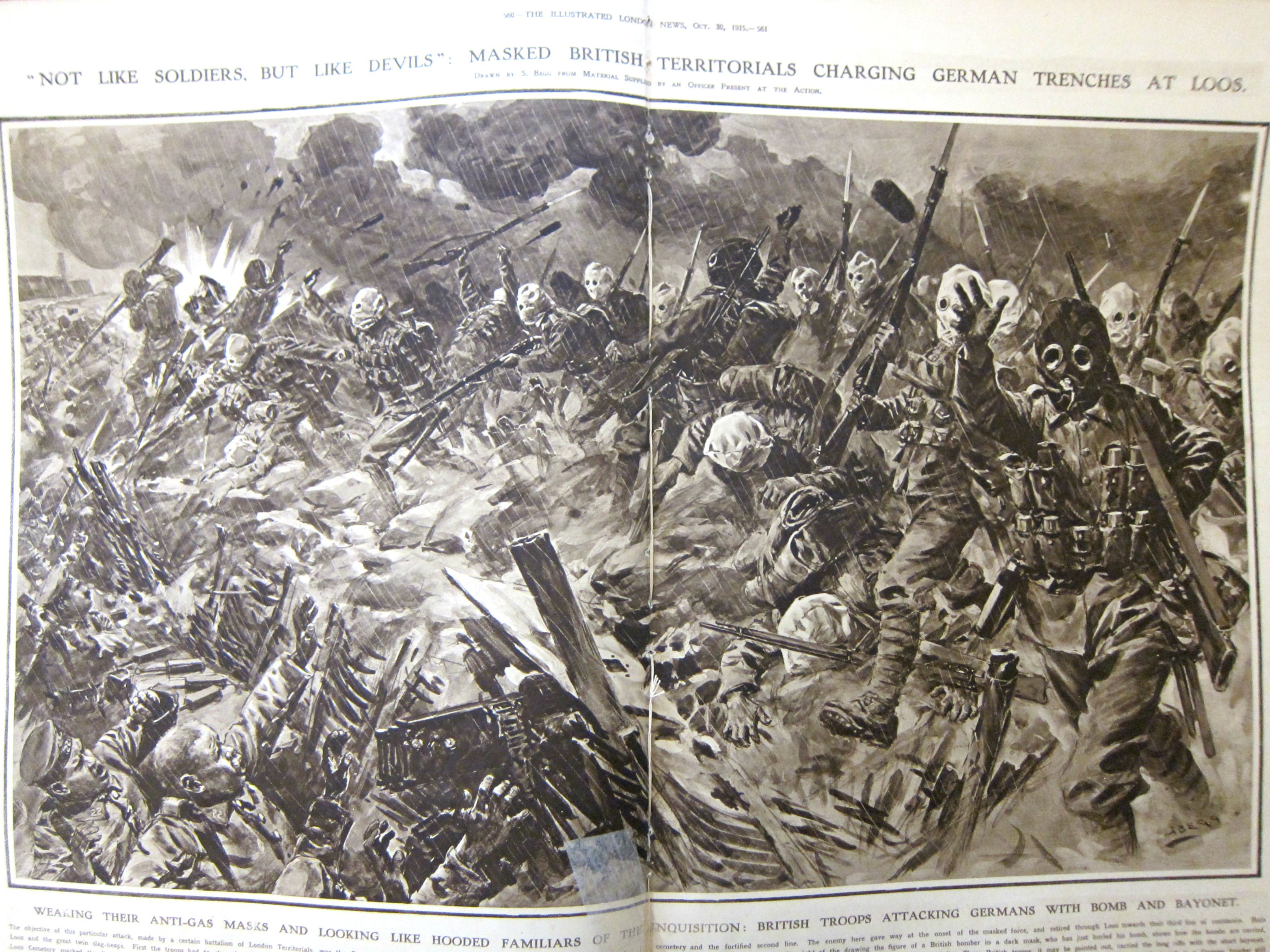
    The masks devised to deal with the gas attack of WWI were sometimes effective, sometimes not–and sometimes they were occasionally lethal enhancers.  The earliest masks were creepy, unworldly, Coraline-like burlap-and-button-faced affairs–I’d hardly want to imagine seeing thousands of these guys come running up to me with rifles and grenades in their hands attacking my position (as we can see in the image below of an attacking British force at Loos in 1915).

    And yes, of course, they started out as “anti-gas masks” because that is what they are–the “anti-” prefix is dropped not  long afterwards.  

    WWI--gas machine gun711


    WWI--gas machine gunb712

    And the attack on German lines at Loos, from the Illustrated London News, October 30, 1915:

    WWI Project Attacking gas masks


    ·Posted by :

    ·in:


  • An Ingenious Field Shower at the Front, 1915

    JF Ptak Science Books   Post 2466

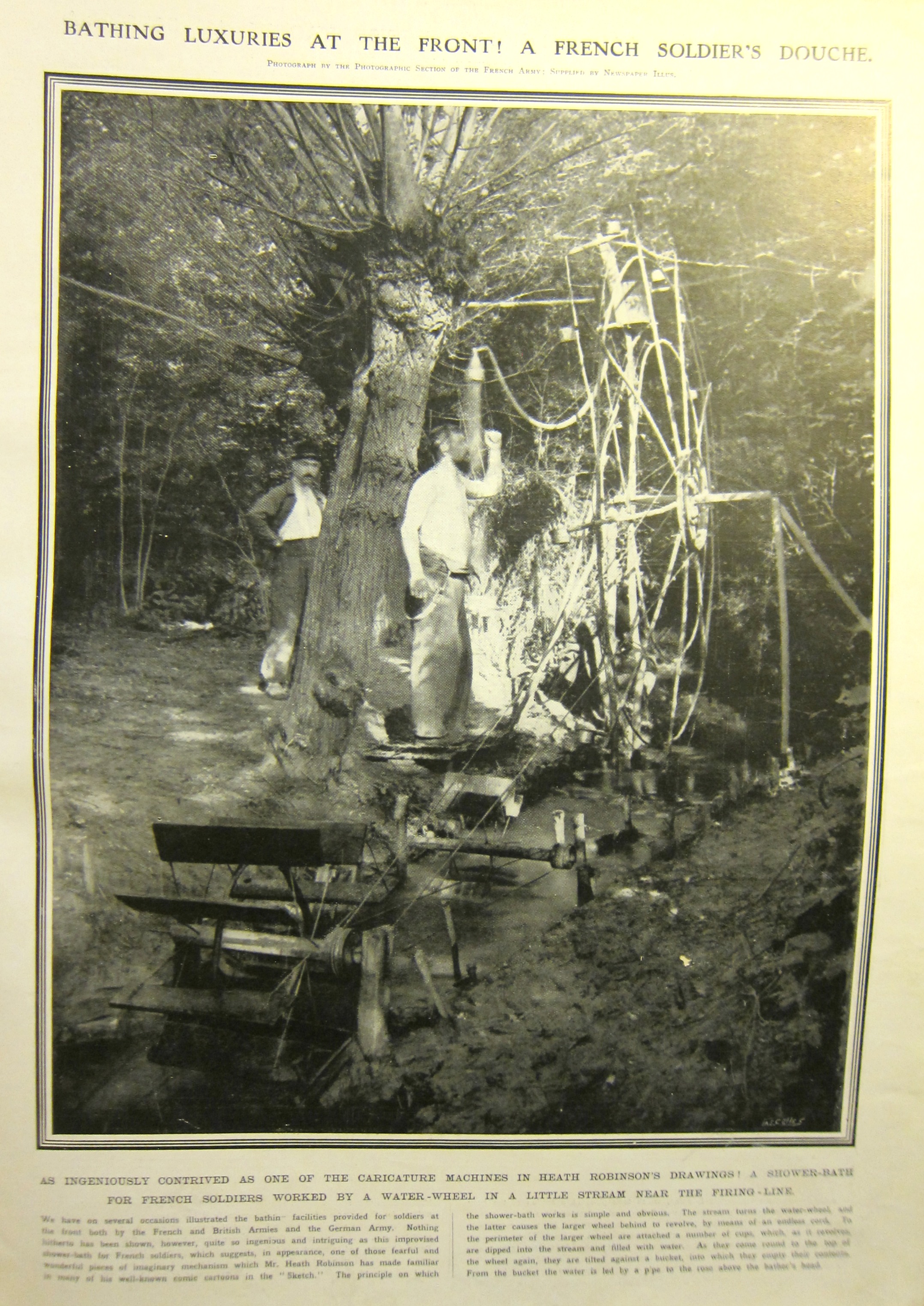
    There is almost nothing so spirited and heartbreaking and proud than people who find themselves in very difficult situations and who try to provide for themselves some comfort of a peaceful time, something far away from what they are experiencing, something that calls to some sort of peace and normalcy. An this is what we have here, for me, in this picture of a French soldier and his unit’s jury-rigged automatic shower. From the looks of the engineering, I’m assuming that the ting worked just fine, and I am certain that it provided no end of relief for those able to use the machine.  You’ll notice that teh soldier is also standing on a very small piece of wood elevated above the ground, so that the bather’s feet don’t become muddy. 

    WWI Project FrenchSHower 1915

    [Source: Illustrated London News, November 13, 1915–there would be nearly three more years of war to go. This image is very expandable.]

    The caption makes note of the drawings of Mr. Heath Robinson (1872-1944) who was a lovely, quirky, charming, skewed, dark, stiff-bouncing and creative illustrator capable of considerable whimsy (light and complex) and deep skepticism. It really does a small disservice to the battlefield engineers who built the shower–the thing is really pretty elegant, and seems to be quite light in spite of its size. Those guys did a good job.

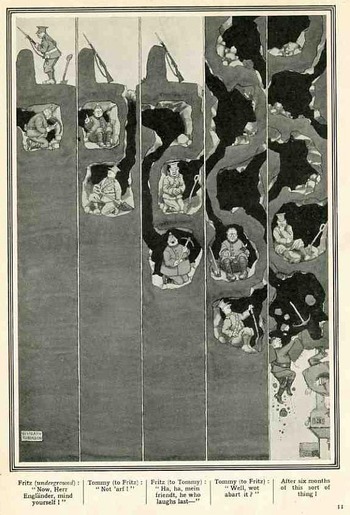
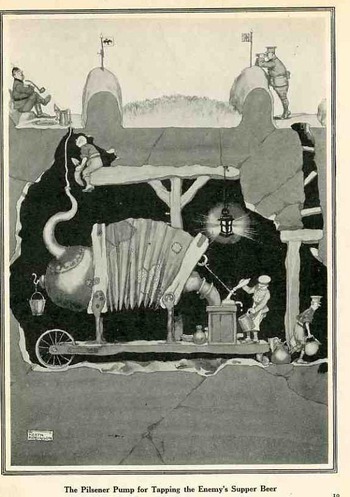
    The two following images  are from one of his three WWI books, Hunlikely, published in 1916 (Some “Frightful” War Pictures (1915), and Flypapers (1919), were the other two) and depict scenes from the intra-trench tunnel wars, which were battles fought in the midst (or, actually, beneath) other battles.  This was a savage, grueling, post-adjectival affair—exceedingly dangerous, difficult, awful.  And it happened a lot during the war, given the experience of stalemates between vast armies sunk into mole city trenches, with no one going anywhere for long periods because there was nothing in between the two impervious lines but a death vacuum. 

    Blogjuly_18_mining_robinson338

    So one of the solutions was to try and tunnel underneath the opposing army’s defenses, fill the far end with high explosives, and blow them up.  The other side was doing it too, and in the middle of it all was the incorporation of newer/better listening devices to detect forces rummaging around underneath your position dozens of feet into the ground.  It was a bad business. (One of the other means of breaching the trench lines was aerial combat, but bombers carrying tons of HE were still yet to be invented; poison gas was another.  Most of the time the armies would just meet in the middle  in wide plains of nothingness in a sea of hot, expanding metal,  where to this day in many of those places nothing can live).

    Robinson’s illustrations are odd, and oddly funny, the dark humor coming at the expense of both sides of the conflict, piercing each.   This one is more in line with the French battlefield shower, and shows Robinson’s over-the-top (so to speak) apparatus for stealing German beer:

    Blogjuly_18_tunnel_2_robinson340


    ·Posted by :

    ·in:

    —

  • A Radium Shadow (1920)

    JF Ptak Science Books   Quick Post

    Undark.

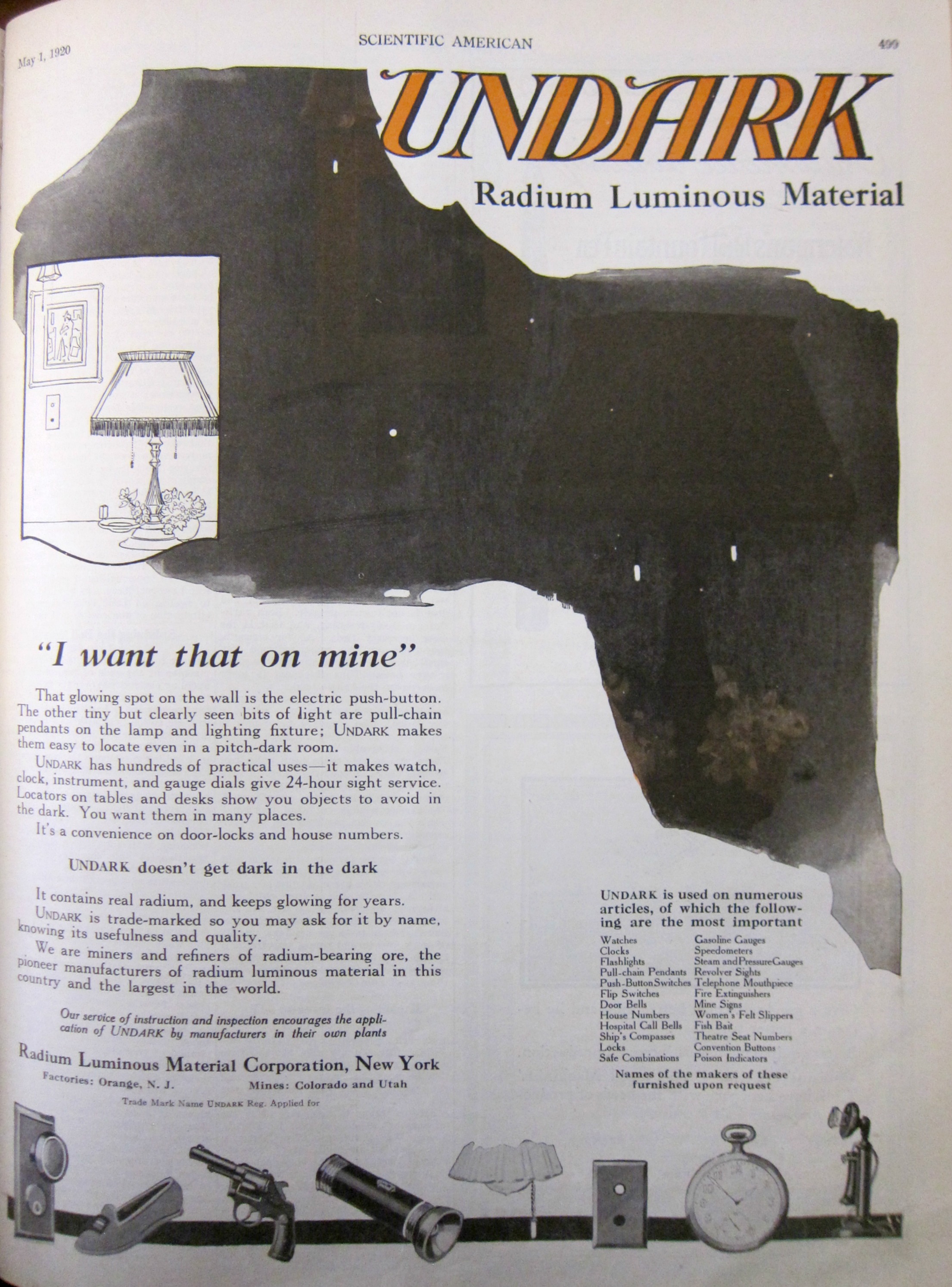
    UndarkNow, that is quite a name for a product–for a glow-in-the-dark product, for something that will not darken. The advertisement displayed here was for a product that “doesn’t get dark in the dark”, and appeared in the Scientific American on May 1, 1920.  The particularly cringeworthy part of Undark, viewed from the future of this advertisement, is that the spots of light on the wall and etc. that make Undark what it was was an applied radium paint. And it was the famous or infamous case of “The Radium Girls” (that really brings the cringe into sharp focus, as it was this same company and product that was being advertised (left) that brought all of those workers into their sometimes-lethal encounter).  

    [It is a little difficult to make out what is going on in that dark patch, but essentially it is the room at left, in the dark, and the little specks of white are the items on which the Undark has been painted. So if you needed to find the fobs of a lamp or the edge of a table or a gun in the dark, Undark will get you there.]

    The women were workers for the U.S. Radium Corporation–which started out its business life as the Radium Luminous Materials Corporation–who worked with radium and luminous paints and who contracted radiation poisoning from their close contact (and ingestion) of the paint, a result of  “sharpening” their paint brush tips by touching it to their lips and tongues.  The injurious effects of radium was well known to the chemists and executives at U.S. Radium, but that information was kept from the women hired to apply the paint to (in this case) watch dials. 

    Historic litigation ensued in the early 1920’s, and when the case was settled in 1928 the workers received relatively modest settlements–the result of the case though was wide-reaching in labor rights law and also in occupational health and safety–all of that was a lot more valuable than the $10k payment and $660/year annuity awarded to the Radium Girls. 

    Evidently the inventor of the first radium-based luminescent paint, Sabin Arnold von Scohocky (1883-1928) developed aplastic anemia (a developing deficiency and failure to produce all three blood cell types) most probably as a result of his prolonged exposure to radioactive material. Marie Curie, Max Valier, Otto Lillienthal (and so on) also died as a result of working on their discoveries/breakthroughs, though what ultimately cost von Scohocky his life was nowhere near as significant as the work of the other three.  


    ·Posted by :

    ·in:


  • Selling Never-Flown U.S. Navy Aircraft, 1920

    JF Ptak  Quick Post

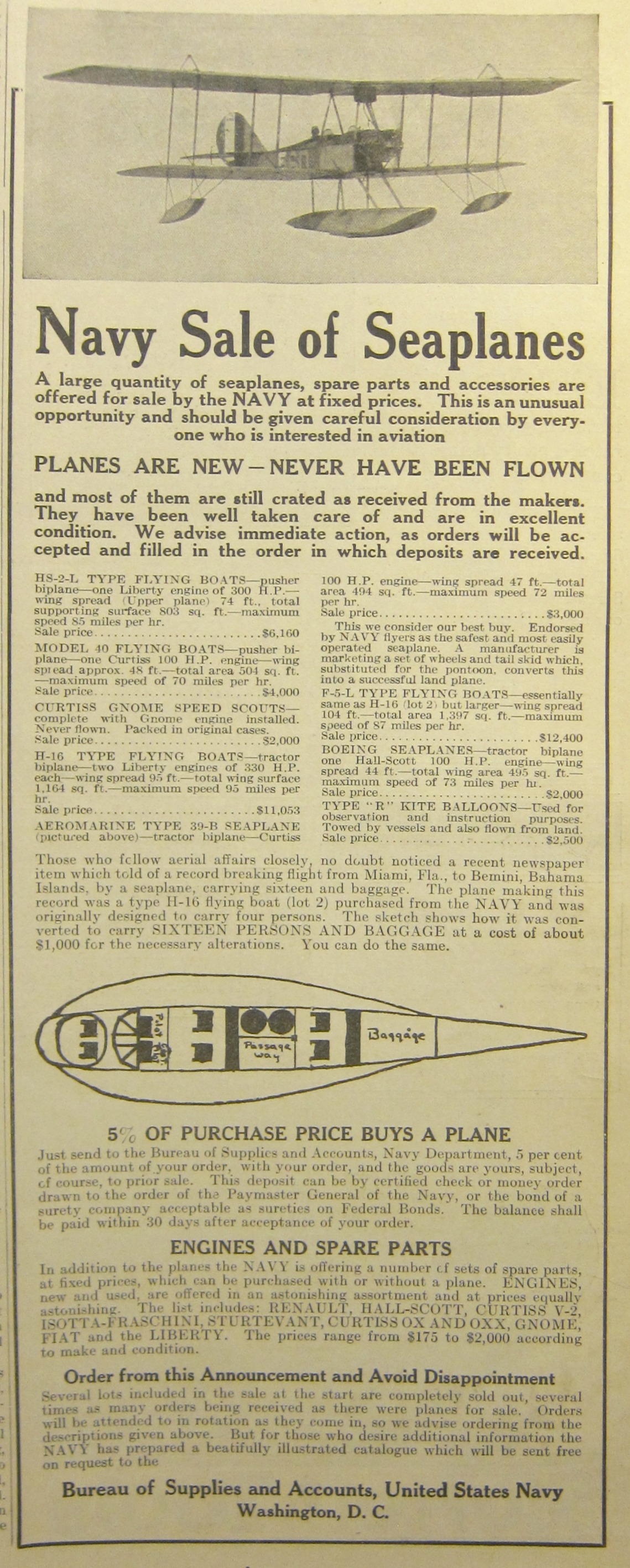
    Evidently the U.S. Navy determined to sell off some segment of its seaplanes 18 months after the end of WWI. The half-page advertisement appeared in Scientific American for May 1, 1920, and promised “planes are new–never have been flown”. There is no mention of how many complete aircraft were available for purchase, though it is stated (with a little detail) that eight different types of seaplanes and flying boats, priced from $2000 to $12,000, were available–all of which could be purchased with just 5% down (and the balance paid out to the U.S. Navy in 30 days). 

    NAvy plane sale 1920

    ·Posted by :

    ·in:


  • The Geologic Clock (1920)

    JF Ptak Science Books   Quick Post

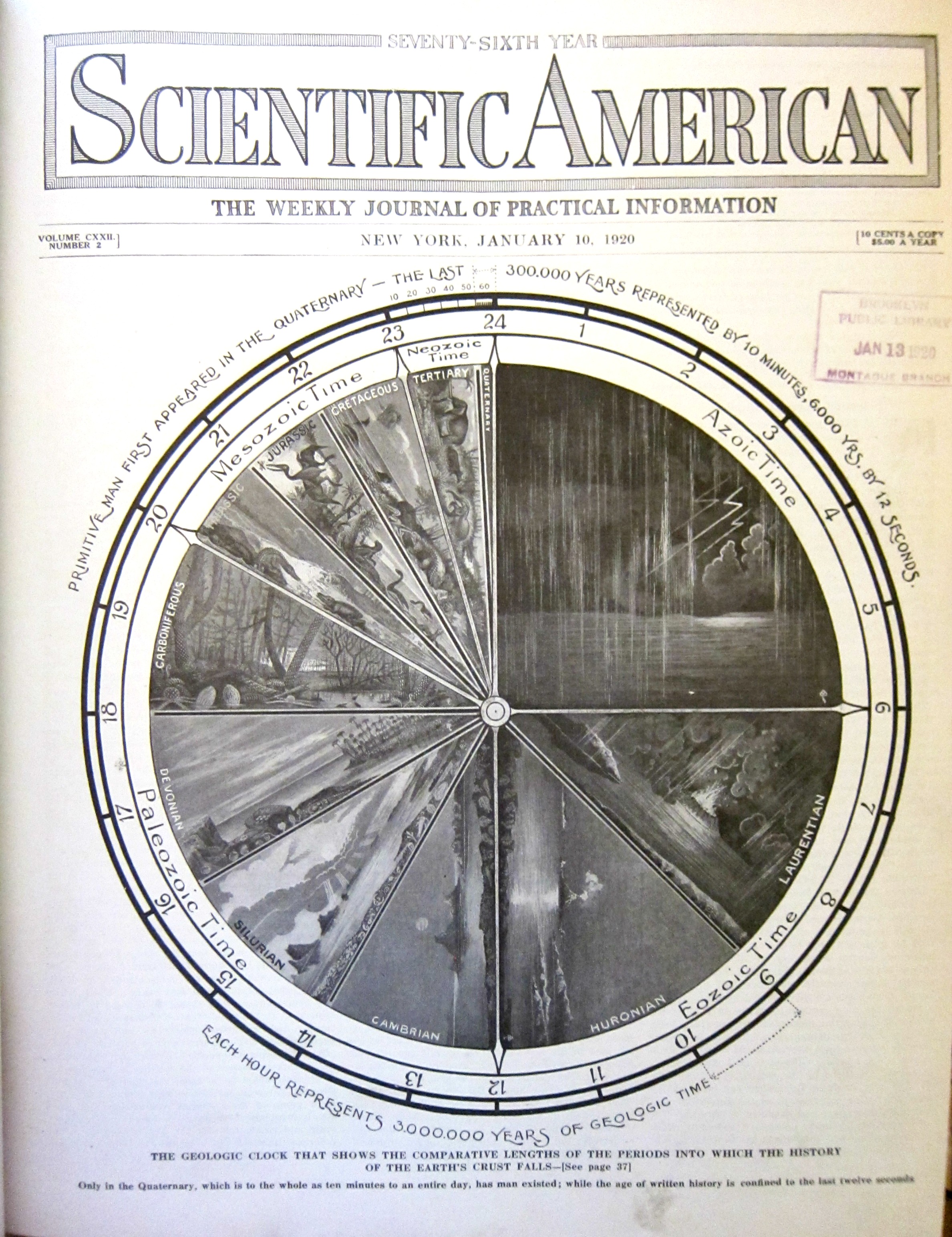
    Here’s another found bit whilst looking for an article in the 1920 Scientific American by Robert Goddard–no Goddard though I did find this fine “geologic clock” in the January 10 issue for that year.  As you can see if you look a little closely, the Quaternary is about the last 10 minutes of the 24-hour clock of existence on Earth, with the last 6000 years occupying the last 12 seconds.  In any event,it is an artistic and informative representation of data, created nearly 100 years ago.  (It would be interesting to know when the first graphical representation of geologic time as a clock face appeared–offhand, I do not have that answer.)

    Dataviz geological time


  • Measuring Things with Mt. Everest (and the Empire State Building), 1933

    JF Ptak Science Books  Post 2465

    I was just looking for a good link for the full text of Donald Knuth’s 1965 paper on “Very Magic Squares” when instead I found mention of his earliest publication, a playful paper that was published in MAD magazine in issue #33 for June 1957.  The work by the 19-year-old Knuth, “The potrzebie system of weights and measures”, suggested that, among other things, the “potrzebie” as a standard unit of measure–and that was equal to the width of the issue #33 or  2.263348517438173216473. There were more fanciful measures for Knuth, which suggests that these “standard” units are infinite, one measure of infinite being the length of the finite over its negative.  

    Dataviz Measuring with Mt  Everest787

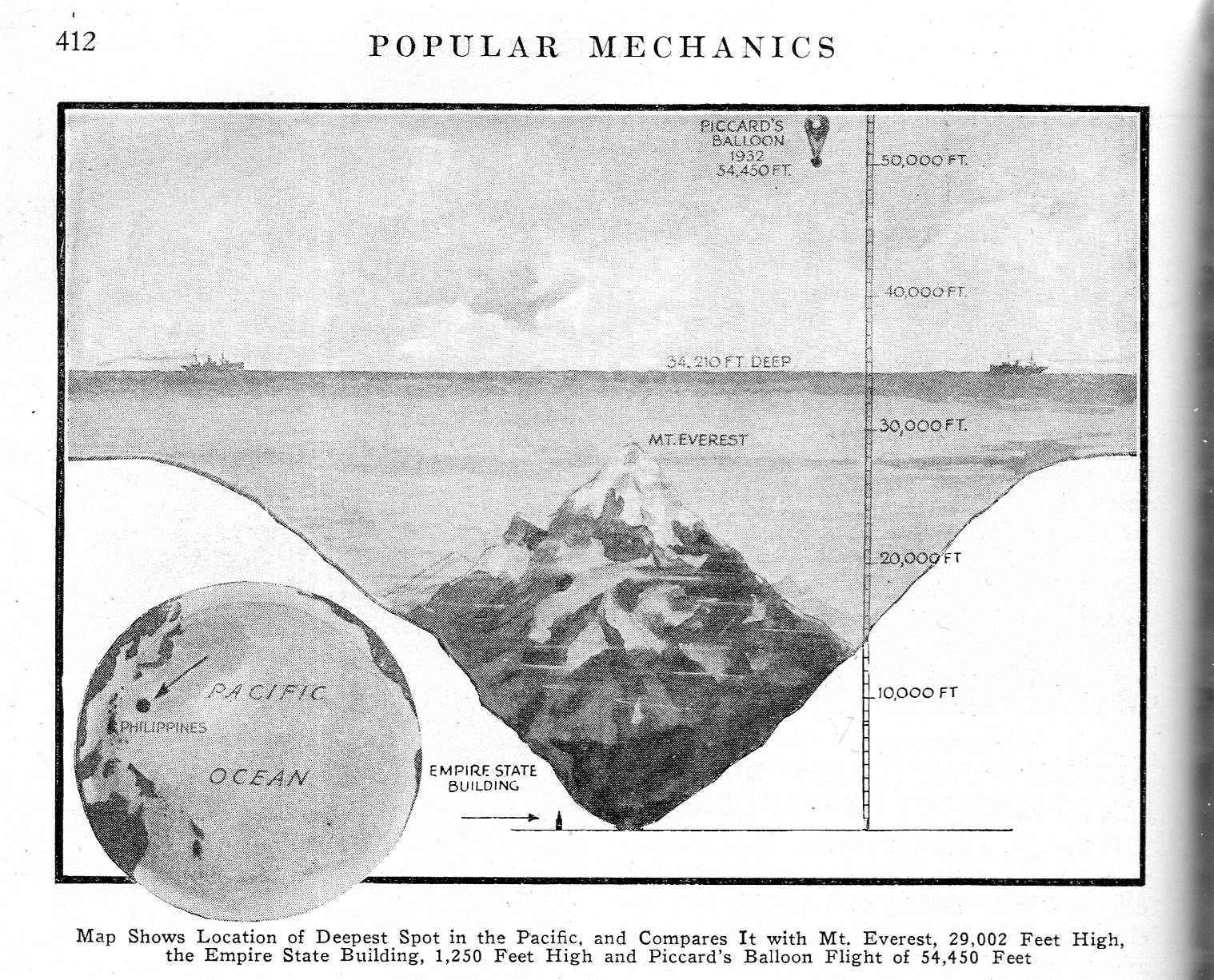
    This brings us to measuring things in terms of units of Mt. Everests found in this short notice in Popular Mechancis for September 1933. Truthfully this is a simple dataviz tool, comparing the depth of one unknown and not visualized entity–in this case, the “deepest spot in the Pacific”–with another that is known and highly visible (after a fashion), and so we get to appreicate the great depth  by comparing it to Mt. Everest.  There are no stackings of Everests in this image though I can see a future use for the visual–I have after all posted many unusual pieces to this blog where heights/depths are measured in terms of stacks of Eiffel Towers, or mammoth bread, or gigantic piles of wood, or nails, and uprighted ships, and of course numerous Great Pyramids filled with excavated dirt from the digging of the Panama Canal and stretched over the island of Manhattan.  Those are more involved, while the present unit of measure is just suggesting itself for future use.

    On the other hand it might be more beneficial to use stacks of the Empire State Building to convey the sense of deep depth.  In 1933 it was just two years old and a world-wide sensation as an icon art deco building and the tallest building in the world, so if you said that the deepest depth could absorb 32 Empire State Buildings one on top of the other, there may have been a greater understanding of the consequences of that much depth.  In any event, I like that more as a unit of measure.  

    Notes:

    Knuth. Selected Papers on Fun and Games, http://www-cs-faculty.stanford.edu/~uno/fg.html  (From the website: “I’ve never been able to see any boundary between scientific research and game-playing. … The topics treated here were often inspired by patterns that are visually compelling, or by paradoxical truths that are logically compelling, or by combinations of numbers and/or symbols that fit together just right. These were papers that I couldn’t not write.)

    Knith’s c.v. http://www-cs-faculty.stanford.edu/~uno/vita.html