A Daily History of Holes, Dots, Lines, Science, History, Math, Physics, Art, the Unintentional Absurd, Architecture, Maps, Data Visualization, Blank and Missing Things, and so on. |1.6 million words, 7500 images, 4.9 million hits| Press & appearances in The Times, Le Figaro, Mensa, The Economist, The Guardian, Discovery News, Slate, Le Monde, Sci American Blogs, Le Pont, and many othr places… 5000+ total posts since 2008.

Category: Lines, History of

  • History of Lines–the Heart, Arteries and the Circulation of the Blood, 1628 (1639)

    JF Ptak Science Books     Post 1570

    Harvey635
    I think that if I had a sense for design and some artistic talent that I could perhaps make something interesting out of bits and pieces of the details of a hundred famous lines.  Or two hundred.  Unfortunately, I don’t possess those talents, so I’ll just have to write about it as though it has been done, already.  If we could whisk ourselves away 50 years into the past to the great world of early broadcast television, back into the days of glorious black and white, it would be interesting to present the details singly and first on a game show like the lovable “What’s My Line” show. (Another guest, another one of the hundred or two that could appear, can be seen below*, though I think this one is a dead giveaway.)

    http://vintage45.files.wordpress.com/2011/04/whats-my-line.jpg

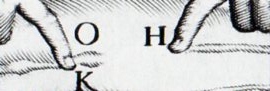
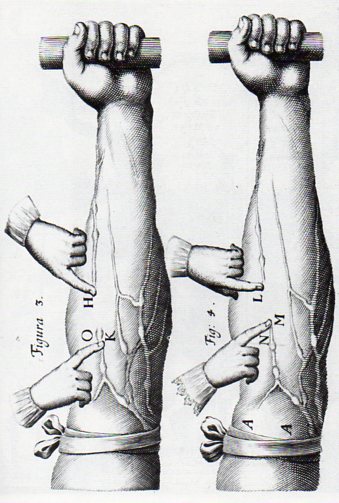
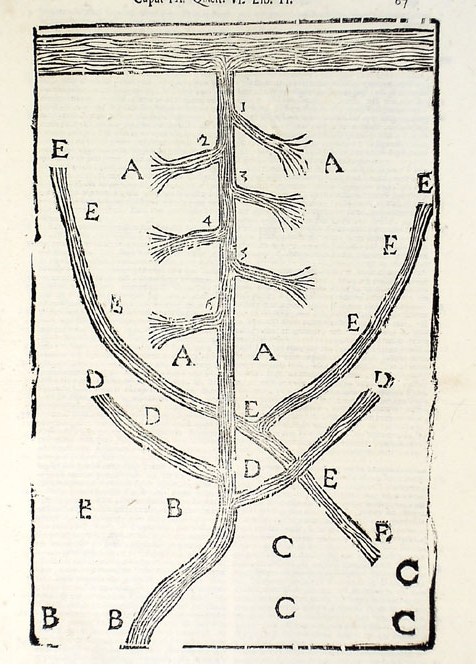
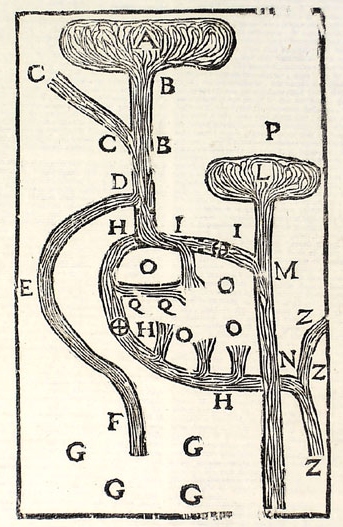
    Today’s line section from this blog’s History of Lines series comes to us from William Harvey, being an illustration in his epochal Exercitatio anatomica de motu cordis et sanguinis in animalibus (or On the Movement of the Heart and Blood in Animals).  It was in this book that Harvey published his experimental results on how blood moved through its course in the body, showing that the 1400-year-old Galenic idea concerning the movement of blood was all wrong. 

    Harvey634
    Harvey had conducted experiments via the scientific method–and was among the earliest to do so–and established early on, by 1615 or thereabouts, that the Galen theory regarding the movement of the blood was incorrect. He found that contrary to long-established belief the liver did not convert food into blood, and that the lungs did not push the blood through the  body, and that blood was not continuously generated.  Why wait until 1628 to publish his results?  I suspect that he was not looking forward to the problem and notoriety of publishing results that went against the medical grain–actually some of which were the exact opposite of the accepted practice–which in fact was the case for decades after the first edition appeared.  But Harvey presented his results in his short book in a concise way, explaining how it was that the heart and arterial systems functioned, and then in a second section of the work displayed how the blood was circulated rather than produced. (He was able to establish that if Galen’s theory was correct that the liver would have to produce 540 pounds of blood every day–a simple impossibility.)

    Harvey’s work had a revolutionary effect on the study of physiology and medicine at the same sort of level as Copernicus or the use of the telescope by Galileo–I think that there is little doubt in that.  Harvey was able to produce his results through experimentation and without the benefit of the microscope, which would have helped him enormously had he been able to identify capillaries–something that would have to wait for Marcello Malpighi and his publication in 1673, sixteen years after Harvey’s death. 

    Notes:

    Lines copernicus b

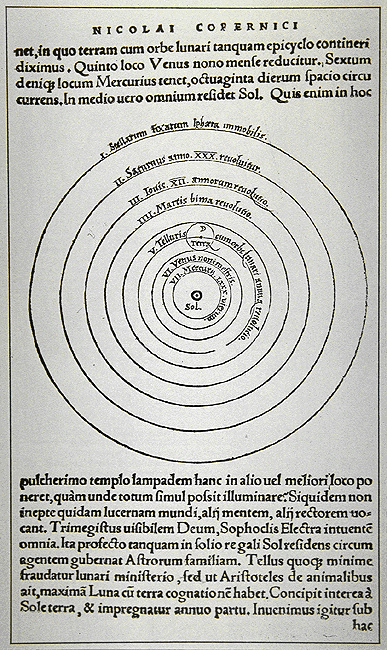
    The detail from the big image in Copernicus’ De revolutionibus orbium coelestium (On the Revolutions of the Heavenly Spheres), 1543.

    Lines copernicus


  • History of Lines–Naive Rivers and Trees, 1670

    JF Ptak Science Books   Quick Post in the History of LInes series.

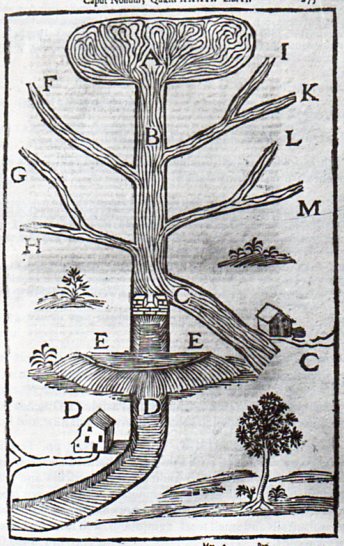
    River629 This lovely river/tree appeared as a woodcut in Franciscus Maria Pecchius’ Tractatus de Aquaeductus, which was printed in 1670-1673.  It actually is nothing of the sort, as it depicts the construction of a dam in a busy river and forms part of a four volume work on the building of aqueducts–ranging from the selection of sites, to financial considerations and of course engineering and materials studies.  Pecchius’ work was the standard of its day, and it also was the cornerstone work on the (Roman) law of such things, presenting a jurisprudence that stretched back a thousand years.

    But the way that the flow of the river is represented makes the image look very much like a tree, in a lovely, naive way.  It might seem a horrible sleight to a work of this importance, but, well, sop it goes–the images, removed from their appropriate context, take on a life of their own…

    River aquaduct 2
    River aquaduct 3


  • A Forty-Year Precursor to Modernism–Found Cubism in 1870

    JF Ptak Science Books  Quick Post     [History of Lines #18]

    I was very surprised to come across this illustration while browsing the (3 April)  1870  volume of Punch, or the London Charivari .

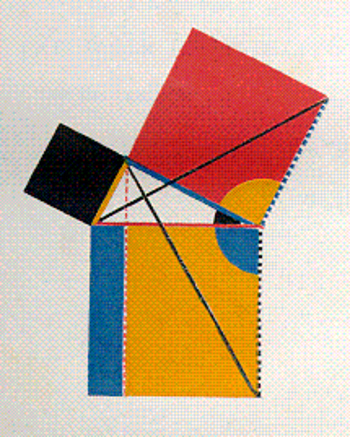
    I cannot think of any particular peculiar or unusual edition of Euclid that was published at about this time to demand such an unusual illustration. (The only newish edition that comes into any possible play here is Oliver Byrne’s semi-insane First Six Books of Euclid, published by the Chiswick Press in 1849 and one of the most unusual and beautiful books of any sort printed in the 19th century–but then again that was 21 years before this volume of Punch.) And by “unusual” what I really mean to say is “highly unexpected” , as this all-angular depiction of a woman appears for all the world to be a Cubist- or Expressionist-like image, predating those movements by four decades. 

    But the Angular Woman just seems to be happenstance, a happy precursor to a revolution-in-the-making, an accident forty+ years too early.  She is extraordinary–and for some reason she is smoking a cigarette. 

    [Below–an illustration from Oliver Byrne, illustrating the propositions of Euclid via the use of color rather than words, a beautiful but non-functioning work.]

    Blogrealbyrne


  • History of Lines, #17: the Artist Painting the Negative, Camille Corot, 1874

    JF Ptak Science Books   Post 1584   [Part of the History of Lines series]

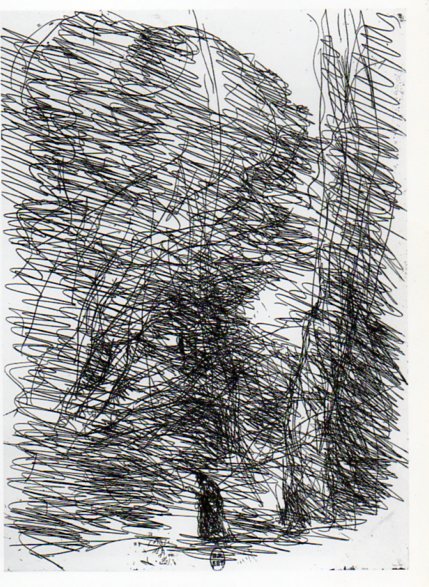
    Corot657 An interesting appearance of lines in art that seemingly crosses several disciplines and chronological development is Jean-Baptiste Camille Corot’s The Dreamer and the Large Trees (1874).  It is vivid artwork full of motion, expressing itself in an impressionistic sense that seems almost more abstract expressionist than mid-early Impressionist. (As an Impressionistic work it would be well into the second decade of the movement; if Abstract Expressionist, it is three decades early.)  It is a brusque, almost savage portrayal of a somber person in a deep wood, though the lines that is is composed of say anything but that. 

    The print was made via the cliche verre process1–Corot used a semi-photographic medium in which there was no camera, as it was the artist who drew the negative, who created the image from nature without a lens and without a camera body (thus eliminating lensless photography like pinhole), drawing directly on the medium (which in this case is glass, insinuated by the cliche) and then exposed/printed onto a photo-sensitive paper (the verre).  The artist is in a sense making a photograph directly of the image in their mind, recording it on the medium, and then printing it from there. 

    Of course there are other important lines in the history of art: Vincent Van Gogh Starry Night (1889), Giacomo Balla, Street Light (1909), Umberto Boccioni States of Mind (1911), Michael Larionov’s Rayonist Painting (1913),   Robert Delaunay Windows, (1912), Roberto Crippa (1921-1972), Jackson Pollock (1912-1956, particularly Number 1, 1948), and any numbers of works by Barnet Newman.  And of course the Cubists: Braque, Gris, Picasso, and the rest; the Constructivists like Malevich, and on and on into the sunset.  But the reason I’ve chosen Corot is because of the unexpected, wildish impressionist qualities that seem so far out of place, even with the movement. 

    Notes:

    1.  Cliche Verre was quite popular with French artists of this period, used by Theodore Rousseau, Charles Daubigny, Charles Jacques, Francois Millet and others.  The process itself appeared very early on in the history of photography, being described in Robert Hunt’s technical manual on artistic photography as early as 1841, two years after photography’s beginning.

    The images:

    ·Posted by :

    ·in:

    — — —

  • The History of Lines: Lines Come and Gone.

    JF Ptak Science Books  Post 1546    [Part of the History of Lines series.]

    Ines union pacific 573

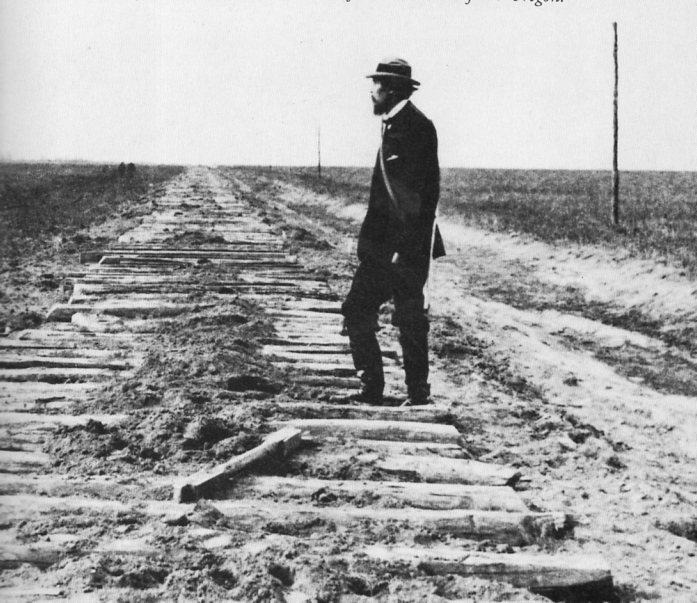
    This picture tells as much about the making lines–railroads pushing their way  towards one another, the Union Pacific and the Central Pacific, pushing on towards one another to complete a rail line that connected the American coasts–as it does in covering them up.  The photograph is of a Union Pacific supervisor named Samuel Reed, who was inspecting the rail bed–in 1868/9 it was not uncommon for one team to clear the land and lay down the ties miles ahead of the track layers.  Miles of bits of wood, waiting for their iron.

    But most roads, or at least most early roads, were in their places for a reason, and generally that reason was because it was a good way for getting from Point A to Point B.  This photograph, along the way of the Old Platte Valley route,  seems to be a mid-way point between the old and the new, or between the old and the old, lines of communication and lines of travel.  These timbers are laid down on top of the old immigration route from the east to California and Oregon, which in turn were laid on top of the trails of fur traders, which were on top of those of Indians, which were on top of those of the buffalo herds, and so on, all the way down. 


  • The History of Lines, an Introduction: Barbed Wire, Telegraphs, Treaties and Railroad Rails

    JF Ptak Science Books   Post 1539
    LINES--POLYTECHNIQUE566
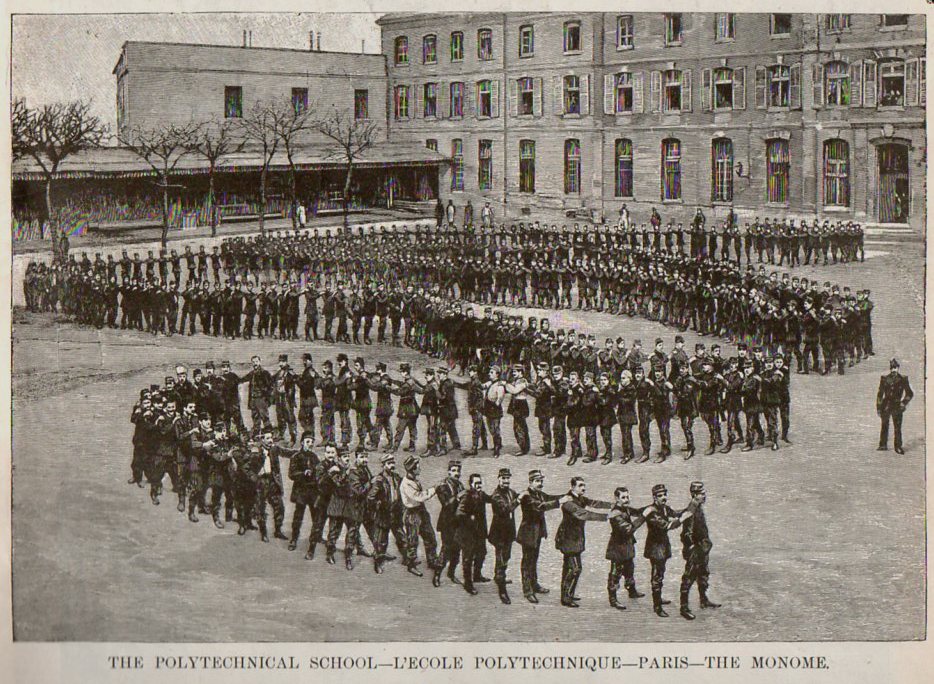
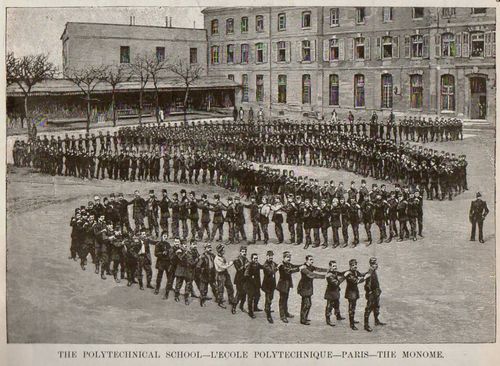
    I’m about to start a series on this blog on a great constituent part of the concerns here of two other series: the History of Lines.  This new bit will sit along next to the History of Dots and the History of Holes, and will begin to mention just some of those things that will bridge the gap among the three categories. 
    LINES--POLYTECHNIQUE DET567

    A lot of that–the History of Lines business–has to do with the interpretation of things on paper:  heart rate, “brain waves”, the motion of a bumble bee, navigation, and of course, words.  (The great Kickapoo tracker Famous Shoes  in Larry McMurtry’s Streets of Laredo, one of the Lonesome Dove tetralogy, found that the one thing he couldn’t track in this world were the marks on the pages of a book.)

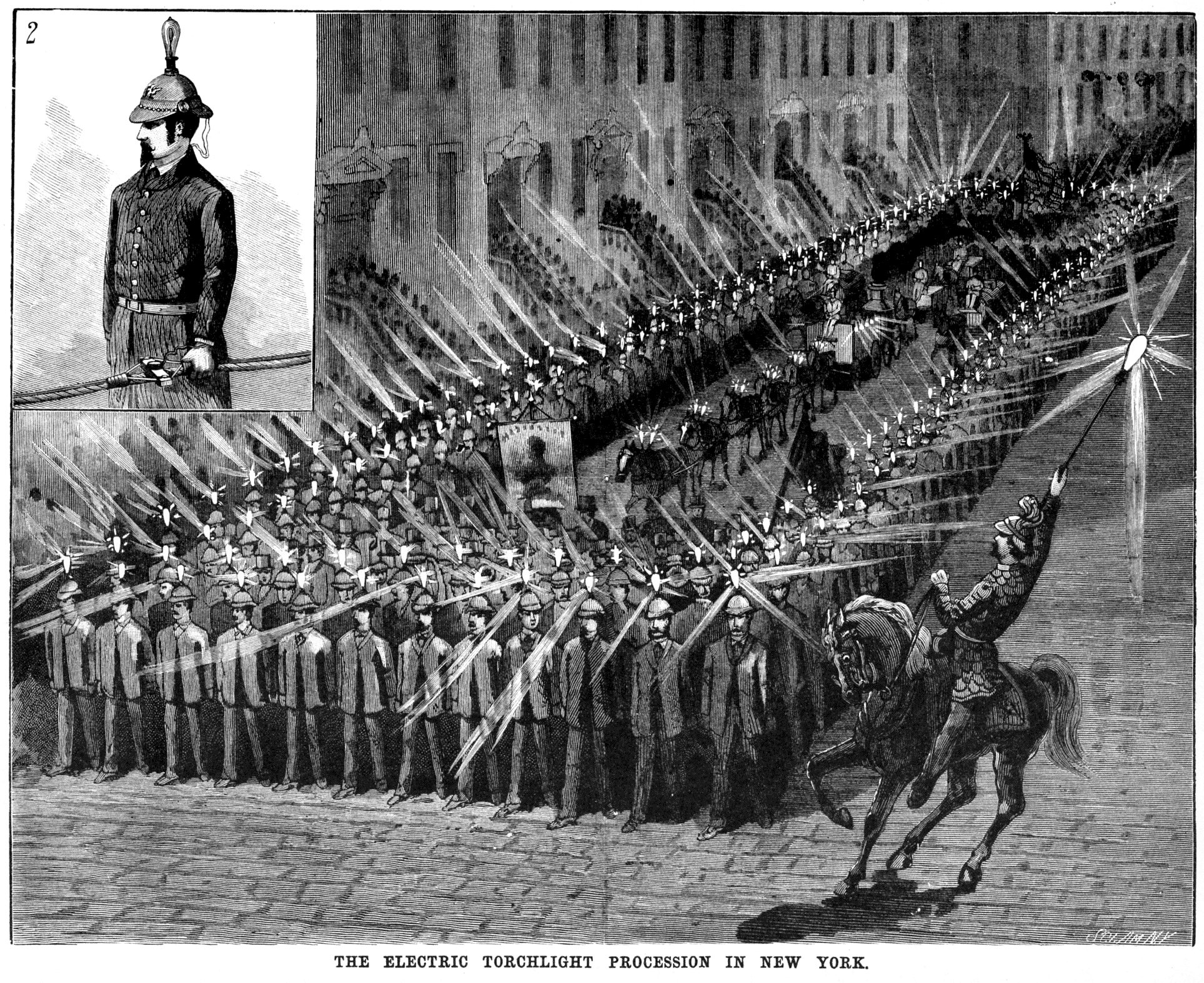
    The business of lines is like that of dots and circles, together describing much of the physical world.  For “lines” alone there’s just so much, an  entire encyclopedia waiting to be written. There are unique lines, such as we see below from The Scientific American for 28 March 1885, in a line of workers for the Edison Electric Company holding an (electric) torchlight parade, the men attached by electrical wires that were in turn attached to the electric light bulbs on their helmets.
    LINES-eLECTRIC TORCH568 There are lines of succession, code and graphs; Battle Lines, the Maginot Line; fishing lines, units of poetry, lines of a play; there’s waiting on lines, breaking the line, party lines; lines of fortifications, the lines on which music is written, and the foundations of geometry, and much more. 

     There were lines that occupied only a minute percentage of the landscape in which they were found, but were among its major controlling influences–such was the case in controlling the American West, except that one of the greatest of these lines, once completed and seemingly impenetrable, was briefly destroyed by its builders. 
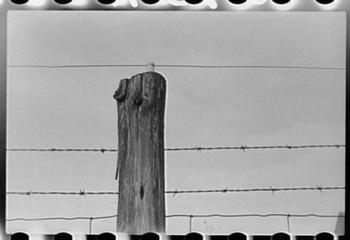
    Barbed_wire The story of the West getting filled up in the 1870s is a story of lines—railroad track, telegraph wires, barbed wire fences, and words on a page; big changes from disparate but related areas in technology and legislation, but when you looked at them from a distance and in the proper perspective, they all looked exactly  the same.

    The greatest of these lines may have been the invention of barbed wire in 1873, with Joseph Glidden, Jacob Haish and Isaac Elwood all managing to independently come upon the idea at about the same time.  What barbed wire brought to the West was control and settlement.  Prior to barbed wire there was open range grazing of cattle and extensive cattle drives, mainly because there was no fencing. There were also few farms due to this sort of grazing—the only thing a farm was here was in the way, and there was no recourse for the farmer to protect his
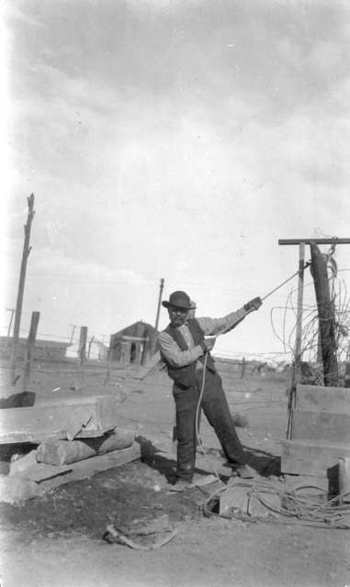
    Blogludlowlands from a grazing herd.  There was no fencing because there were no materials for the fence.  Fencing was made almost entirely with lumber and stone, and on the treeless plains and the vast non-New England tracts of land, it was simply an impossible task.  The introduction of barbed wire changed all of this very quickly, with thousands of miles of new fencing strung in the 1870’s alone.  Fencing meant control, restriction of the use of land, of access to water, and to a way of life.  It also meant that the farmer was now free to make a claim at a way of life on the plains, beginning a torrent of settlement and farms.

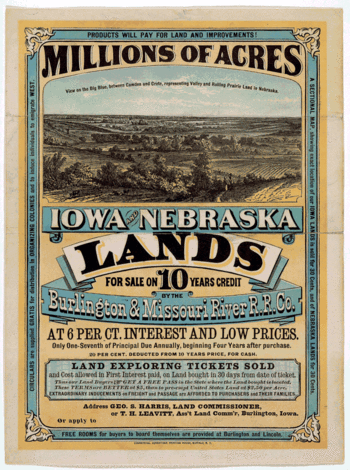
    Another big line element of settlement were the texts (lines-on-paper)  of three major acts of legislation which, over a period of just sixteen years, were responsible for moving more people than just about anything else in American history. The first of these was the Homestead Act of 1862. This was a revolutionary concept, legislated in 1358 words, effectively turning over 270 million acres, or about 8 percent of the country, of public lands to private citizens (“actual settlers of the public domain”).  A claim could be made for a farm of 160 acres, for free, provided a structure was built on the land and it was maintained for five years.  One could buy the parcel outright for $1.25 an acre as well.   Next was the Desert Land Act of 1877 which opened drier lands, selling 640 acres at $1.25 an acre with three years to pay, so long as the land was irrigated by the end of the three years.  Land that was deemed “unfit for farming” was sold to those who might want to “timber and stone” (logging and mining) upon the land with the third major piece of legislation, the Timber and Land Act of 1878. The act was used by speculators who were able to get great expanses declared “unfit for farming” allowing them to increase their land holdings at minimal expense.  The Homestead Act alone accounted for the creation of almost 400,000 farms in the West by 1890.  Farms meant parceling out land, “settling” it, having people on it, waiting when they weren’t working. 
    Blogpeopling_upmillions_acres

    Settlement was dramatically increased by the written and published promises and speculations of mineral wealth—not necessarily just by the introduction of miners, but by securing the lands from and removing its Indian owners.  The Custer expedition into the Black Hills in 1873, for example, reported some hope for finding gold in the sacred mountains of the Sioux. Thousands of miners responded to possibility of wealth, and Custer was again dispatched to secure safety for them in the restricted lands.  This in turn lead to more settlers and coincidentally to the debacle of the Little Big Horn, which was the beginning of the end of the Siouian control over vast amounts of land.  From prospectors to protection to conflict, ultimately making land more available for more people. 

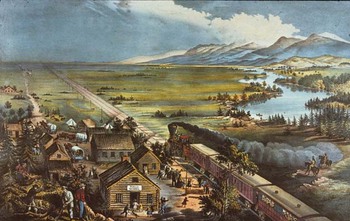
    The spread of the railroads was also an enormous settlement factor, with the number of miles of track being laid in Texas and the Great Plains doubling in just 5 years.  Not only could you get West more easily, and quickly, and with less pain and suffering, but you could also be much more easily re-supplied.
    Blogwestward_the_course_2


    Telegraph wires tripled, making it easier to control events:  and this means from being able to respond to Indian attacks more quickly to ordering boxes of nails, or beer, or shipments of newly-invented canned food. 

    One of the greatest and most infamous of these lines-controlling-the-West concept were the pieces of legislation and agreements and other legal and binding documents, between the U.S. government and every Indian tribe in the U.S. Promises were made to the Indians and of course not one of these treaties were ever actually realized.  It was these written lines that even the greatest of Indian intentions could not penetrate, and that in the end, after everything was said and done and written, after hundreds of treaties, not one was ever followed. 

    And at the end of tying the first metal ribbon across the country, the meeting of the Central Pacific and the Union Pacific railroads at Promontory Point (Utah) in 1869, after the locomotives  Jupiter and No. 119 touched cowcatchers, after the driving of the golden spike, after the completion of the massive effort to complete the railroad line, some men of the 21 U.S. Infantry (and others) hammered away at the rail to chip away some souvenir pieces of the occasion.  So, the moment the great undertaking was finished, it was put out of commission, possibly by a coronet player from the regimental band, or whomever.  Of course the line was only very briefly pu tout of service, and the damaged rails quickly replaced, but the folks celebrating the completion of the uniting of the rail line were the only ones who were really able to also prevent its completion. 

    Of course in the end all of the lines applied and enabling  the closing of the West were personified by smaller and more precise lines:  maps.

    NOTES

    The full text of the “Millions of Acres” (seen above) broadside is as follows: